
Independently Owned, Locally Grown, Community Loved
.jpg)

Motorists travelling along the Bruce Highway south of Ayr can expect delays of up to five minutes when pavement strengthening works begin next month.
The Department of Transport and Main Roads will carry out the works between the 70km/h speed sign south of Conlan Street and Kilrie Road from early to mid-November, weather and construction conditions permitting.
Work will take place between 7pm and 6am to minimise disruption to daytime traffic.
Motorists can expect single-lane closures, reduced speed limits and traffic controllers directing vehicles through the work site.
Two-way traffic will be maintained outside construction hours, while access to nearby properties will remain open throughout the works.
Nearby residents may also experience noise and artificial light from trucks and machinery during construction.
TMR said the works would strengthen the road pavement to improve safety, reliability and the road network’s long-term performance.
Motorists are urged to follow road signage and traffic controller directions.
For updates on road closures, hazards and traffic conditions, visit QLDTraffic.
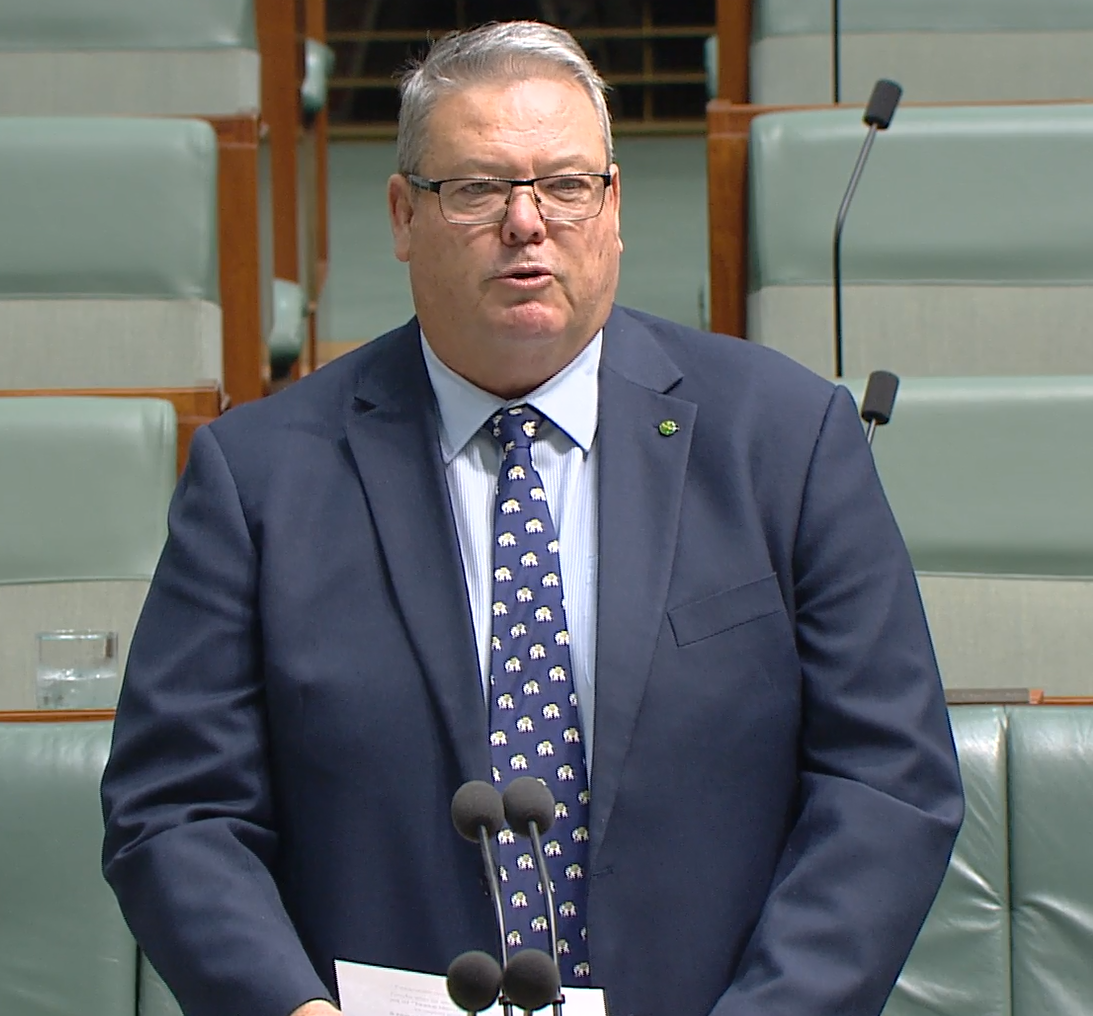
Opinion Piece By Andrew Willcox MP, Federal Member for Dawson
Apparently, when the Albanese Government doesn't like the answer, it simply asks the question again.
Less than 24 hours after the Senate delivered a resounding rejection of Labor's assault on older Australians' private health insurance rebates, Health Minister Mark Butler was back in Parliament introducing the very same legislation.
The arrogance is astounding.
Yesterday, the Coalition, the Greens and independent senators stood together to stop Labor's rebate cuts, with the Senate voting 38 to 23 to remove the Bill from its agenda.
Today, Labor decided that message wasn't worth listening to.
Not the Senate. Not its own concerned backbenchers. Not the thousands of Australians who signed the Coalition's petition. Not the health organisations warning about the consequences.
Just who does this Government think it answers to?
Labor has turned parliamentary democracy into a game of political stubbornness, where the Senate's verdict is treated as an inconvenience and the only opinion that matters is the Government's own.
Across Dawson, I've personally responded to hundreds of emails and met with older constituents terrified of what these changes could mean for their finances.
I promised them I would fight this assault on their retirement security. And the Coalition has fought it every step of the way.
Labor's proposal would remove the additional private health insurance rebate available to Australians aged over 65.
For some older couples, that could mean paying more than $1,600 extra every year. Around 3.2 million older Australians would be affected, including pensioners and self-funded retirees who have spent decades planning carefully for retirement.
These are people with limited disposable income.
They are Australians who have worked, saved, paid their taxes and maintained private health cover, often precisely because they don't want to become another patient waiting months for treatment.
Yet Labor wants them to help deliver $3 billion in Budget savings over four years.
The Government calls this equity. I call it an assault on older Australians who have done everything right.
And the consequences won't stop at their bank accounts.
The Government's own modelling reportedly anticipates up to 78,000 fewer older Australians holding private health insurance by 2029–30 than otherwise expected.
Where will many of those patients go?
Into public hospitals already struggling with elective surgery waiting lists, ambulance ramping and exhausted healthcare workers.
This is cost-shifting dressed up as reform. State governments, taxpayers, nurses and doctors will be left managing the consequences.
Minister Butler called the Senate's decision an "absolute travesty".
I would suggest the real travesty is expecting pensioners to shoulder another financial burden while refusing to reconsider a policy that has attracted such widespread opposition.
The Coalition attempted to stop the legislation being brought back through the House this morning, with Dan Tehan moving to suspend standing orders. Labor pressed ahead.
It's Groundhog Day, except older Australians are being asked to pay for every repeat.
There is a disturbing habit developing in this Government: announce a controversial policy, dismiss the warnings, ignore the backlash and press ahead regardless.
What sort of Government looks at a pensioner struggling to afford their health insurance and decides the problem isn't that they're paying too much, but that the Government isn't taking enough?
Older Australians deserve better than a government that treats their concerns as an inconvenience.
The Senate has spoken. The community has spoken. Labor should listen.
And if this Government insists on continuing its assault on older Australians' retirement security, the Coalition will continue fighting it every step of the way.
Opinion Piece by Andrew Willcox MP, Federal Member for Dawson
In a world of social media, AI and ever-evolving technologies, the digital landscape can be imposing. We all want to feel safe online, protect our children and control what appears on their devices. Protections should be strengthened and big tech held accountable.
But the price should never be our freedom of speech and personal expression.
The Labor Government says its proposed Digital Duty of Care laws are about keeping Australians safe and giving users more control over online feeds through algorithm opt-outs. It sounds reasonable, until you dig deeper.
What the Albanese Government actually wants is control, bringing back its previously failed misinformation agenda by stealth and giving government greater influence over what Australians can view online.
During a speech at the UN, Albanese revealed just how broadly his government views these laws:
“Whilst today we're concentrating on the impact on children, the truth is this is having an impact on our entire society and how it functions with misinformation, disinformation. With the increased polarisation that we'reseeing as well in the political system, where people are moving away from the centre and more and more to the extremes, be they of the left or the right. And that is why we think that this is a very positive move that'sbeing put forward.”
That raises serious concerns about government using online safety laws to influence what Australians see, read and debate.
The Government says the legislation shifts the focus from reacting to harms to preventing them. But who decides what is “harmful”?
The proposed legislation would give government regulators greater powers over how online platforms manage content.
This is too much power in the hands of government and every Australian should be alarmed.
Consider debates about climate change or the definition of gender. If platforms fear regulatory consequences for allowing controversial opinions, they may restrict lawful content rather than risk penalties.
That could stifle debate and diminish voters' access to differing opinions.
We already have laws governing what Australians can publish online. People should be free to challenge government policy, question experts and disagree with others without fear that lawful views will be suppressed.
Protecting Australians online matters. Protecting children matters. But online safety and freedom should never be competing values.
We can keep Australians safe without handing government the power to control the conversation.
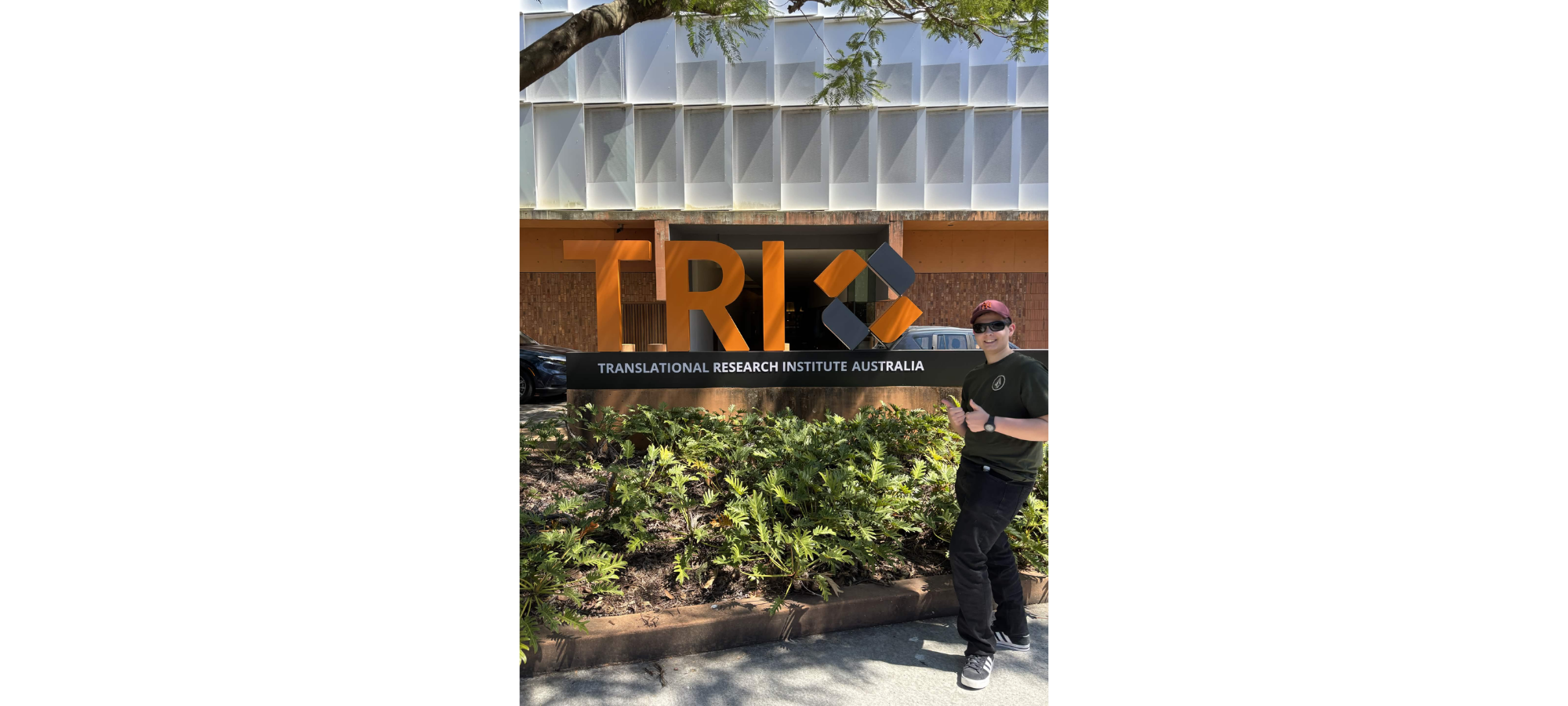
Year 12 student Brayden Becke was chosen from 150 applicants to participate in the SPARQ-ed Senior Research Immersion Program at Brisbane’s Translational Research Institute. Photo supplied
An Ayr State High School student was one of just 20 across Queensland selected to investigate cancer treatments in a prestigious biomedical research program.
Year 12 student Brayden Becke was chosen from 150 applicants to participate in the SPARQ-ed Senior Research Immersion Program at Brisbane’s Translational Research Institute.
Across the five-day program, Brayden worked alongside teachers and research scientists in TRI’s purpose-built PC2 laboratory, using specialist equipment to conduct experiments, analyse results and develop his research and communication skills.
Intrigued by scientific research since primary school, he called the opportunity “amazing”, albeit somewhat unexpected.
“Getting selected felt like a fever dream … It felt like I had truly earned my place among the best and the brightest,” he said.
“Living in such a small town, it can be hard to be passionate about my career when there is so little opportunity to express that passion. But being in Brisbane surrounded by people who are all equally as driven by their love of biomedical science as I was? It was amazing.”
The first three days of the program saw students complete two experiments. The research focused on oxidative damage caused by certain cancer treatments, examining whether two laboratory assays could kill HeLa cancer cells while leaving HEK293T cells largely unharmed.
Brayden worked with laboratory samples and chemicals, using pipettes and microscopes to assess the effects of the treatments on the cells before presenting findings to Professor Brian Gabrielli.
With limited laboratory experience before the program, he said the opportunity gave him an unprecedented look into the field he hopes to pursue professionally.
“One of my biggest takeaways from the programme is that science takes time,” he said.
“But it was also great to see just what needs to be done to do even the simplest toss in a lab. The cleaning, the preparing, the safety checks, you need to leave as little room for error to get the best possible results.”
Brayden said he applied for the program to gain a better understanding of what a career in health sciences could look like after high school, encouraged by his school’s head of science.
Already accepted into James Cook University’s Bachelor of Biomedical Science/Bachelor of Laboratory Medicine, Brayden hopes to one day research DNA and genes to develop treatments for genetic disorders.
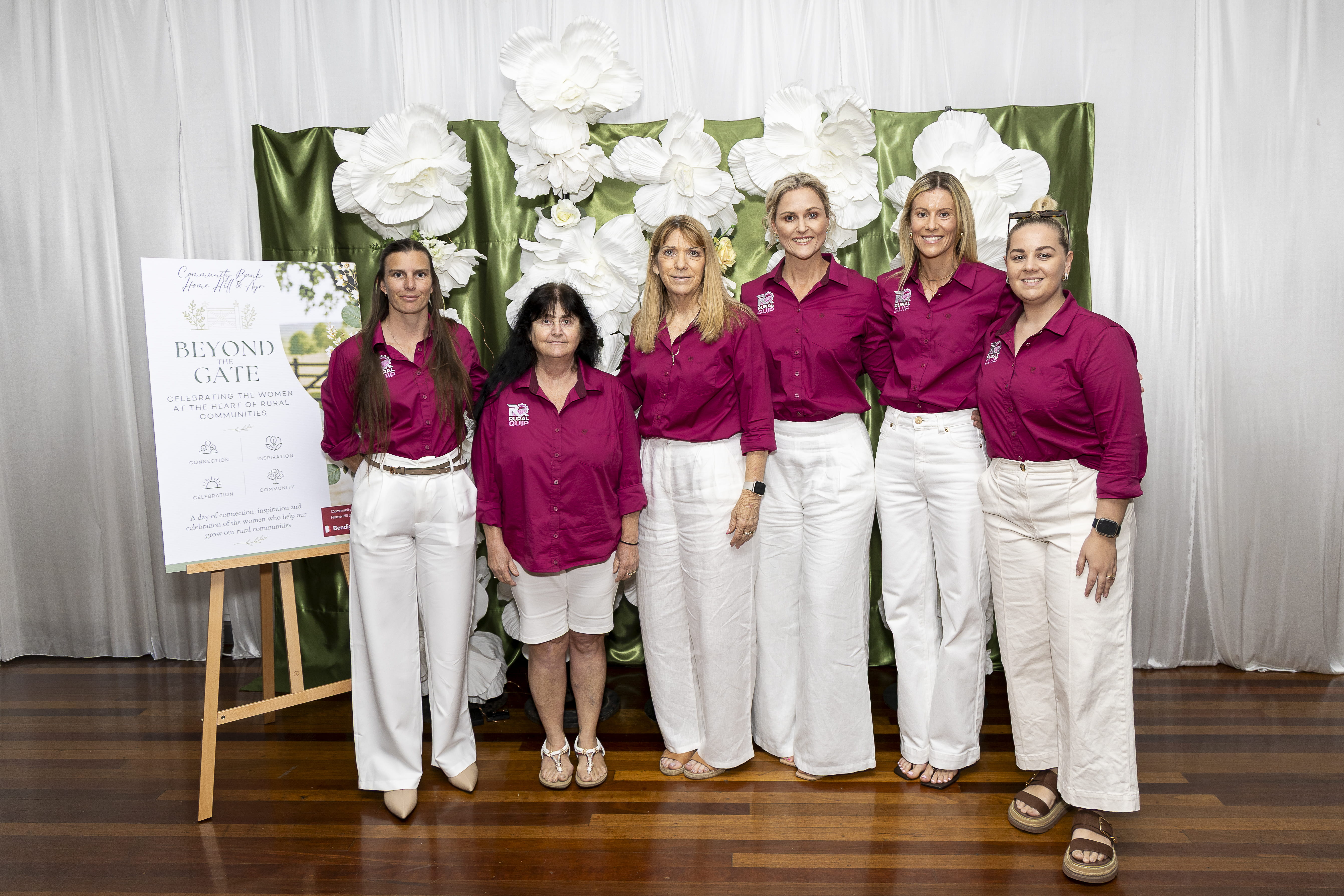
The Rural Quip team. PHOTO CREDIT: Melanie Napier Memories & Photography
It was all about Burdekin women last Friday, with a special luncheon in Ayr marking the International Day of Rural Women.
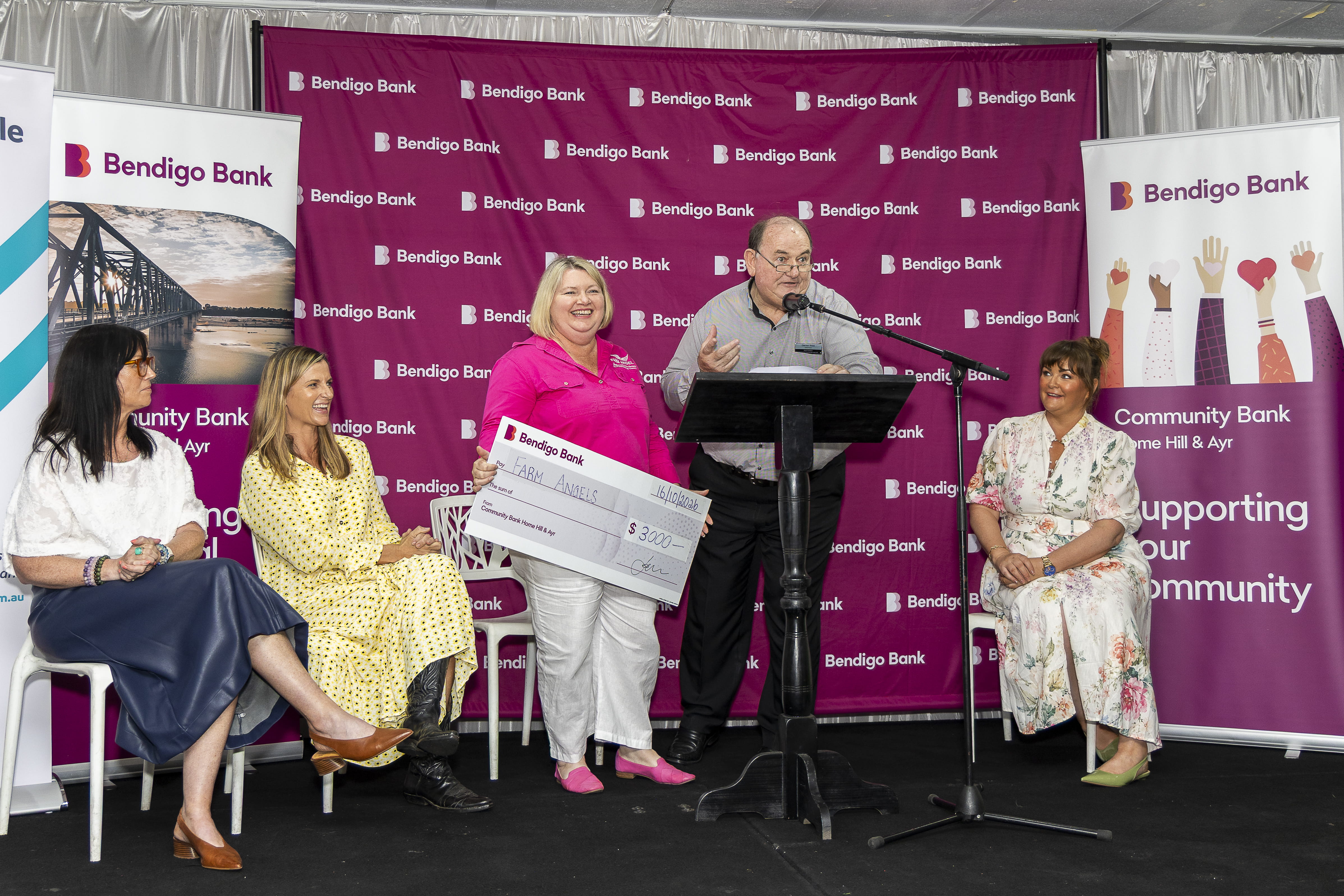
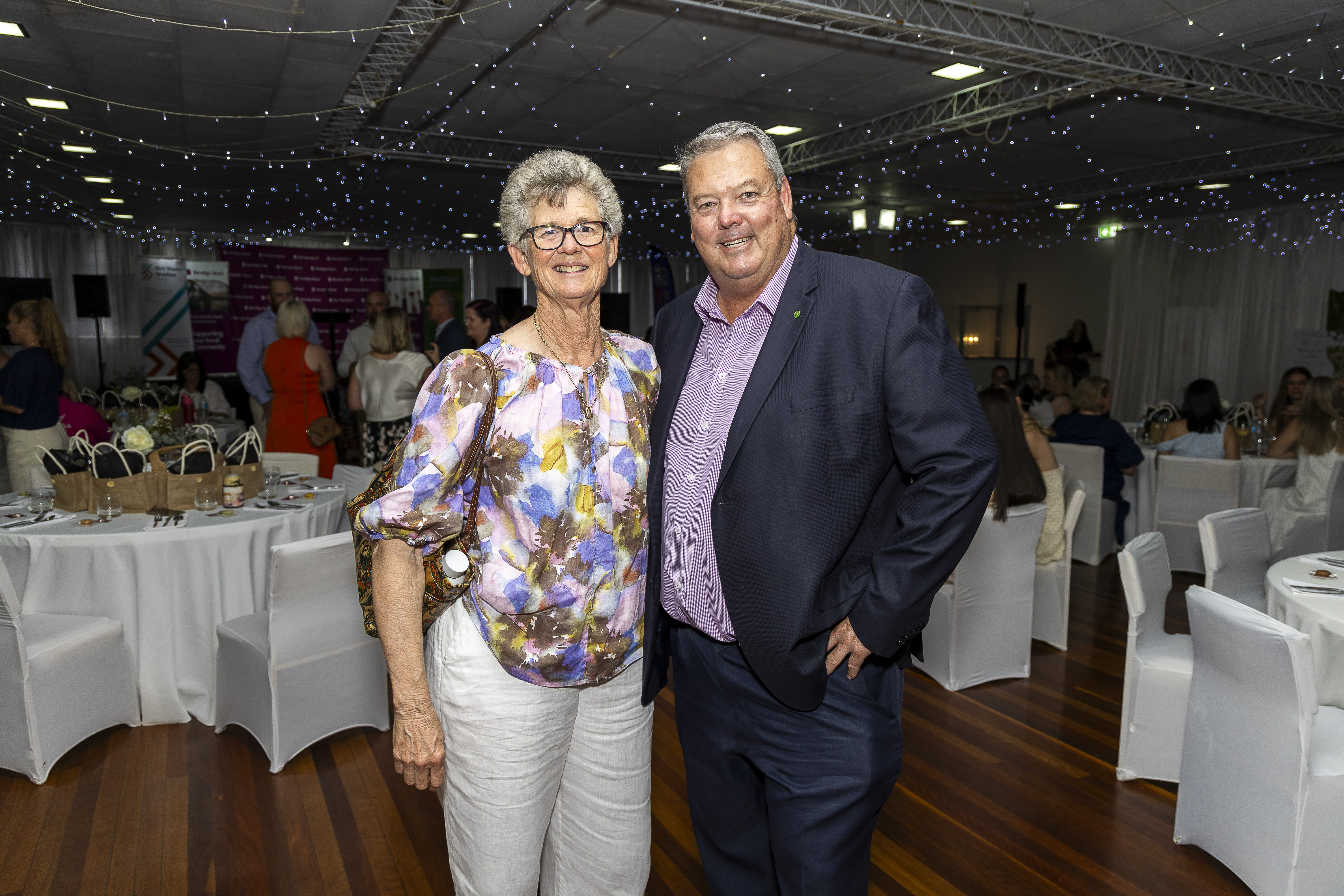
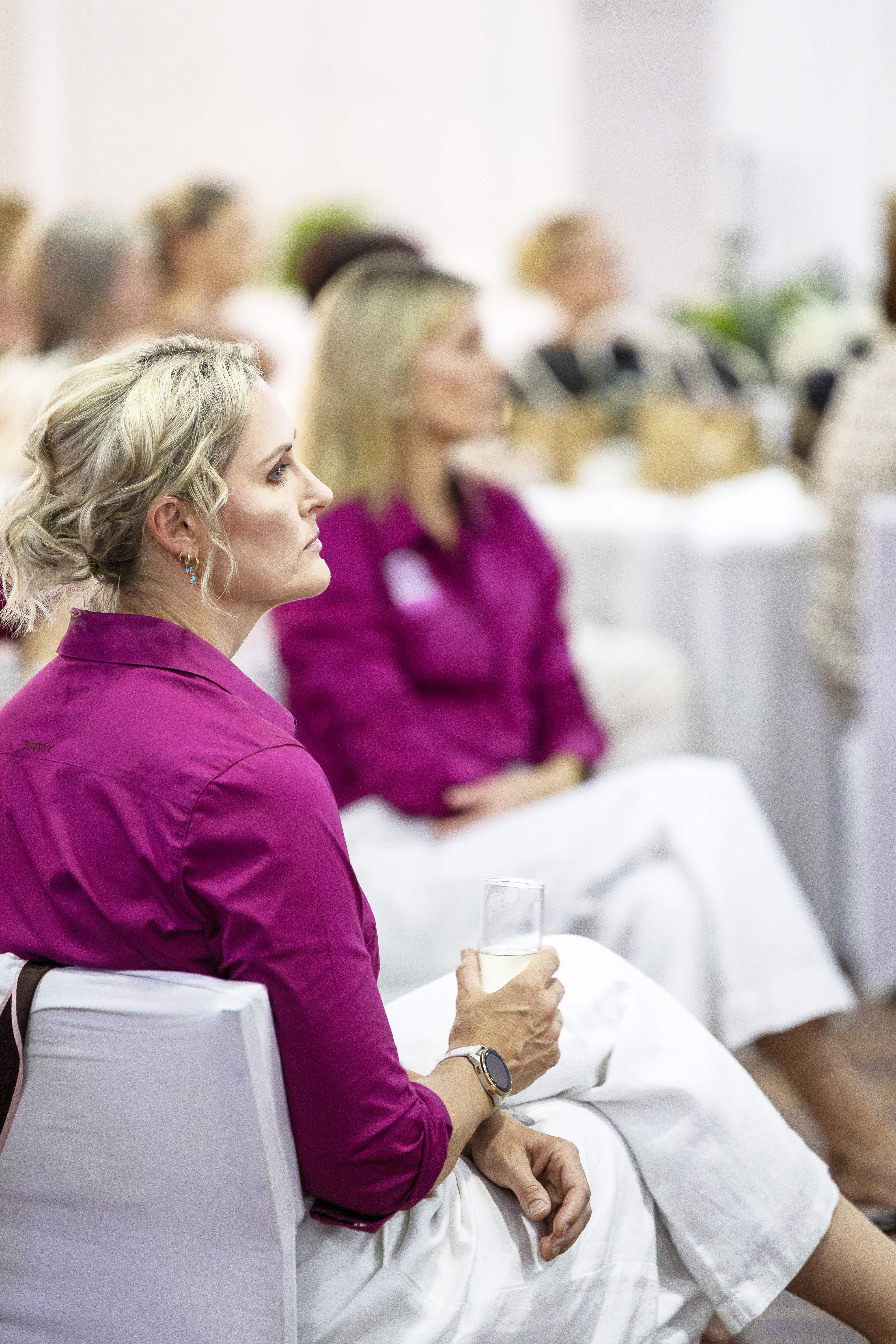
‘Beyond the Gate’, a Community Bank Home Hill and Ayr endeavour, welcomed roughly 120 attendees to Populins Hall to celebrate rural women and their contributions to their communities.
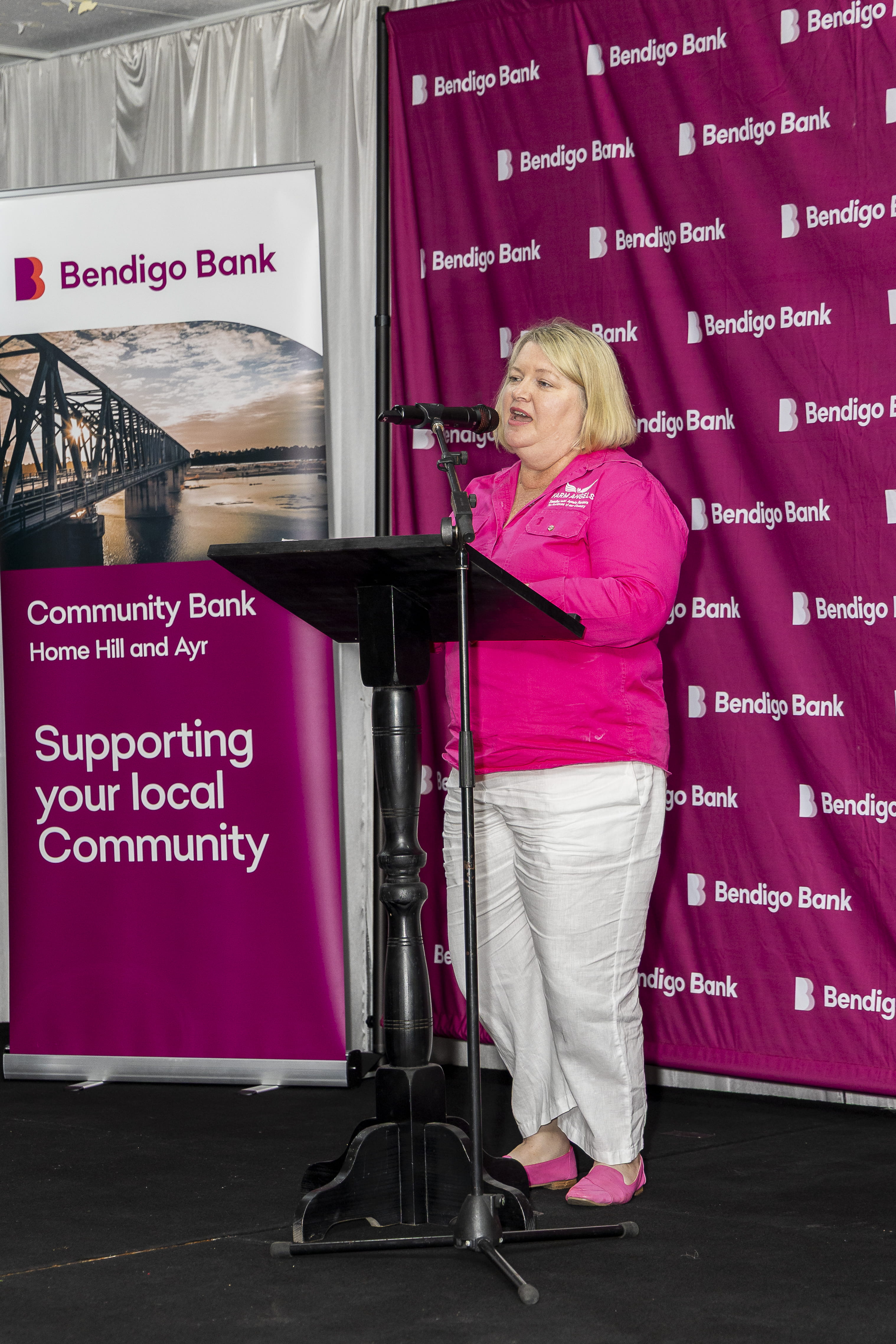
Headlined by guest speaker Tash Johnson and an ‘On the Couch’ panel session, the event encouraged rural women to listen and engage in raw, intimate conversations about their experiences.
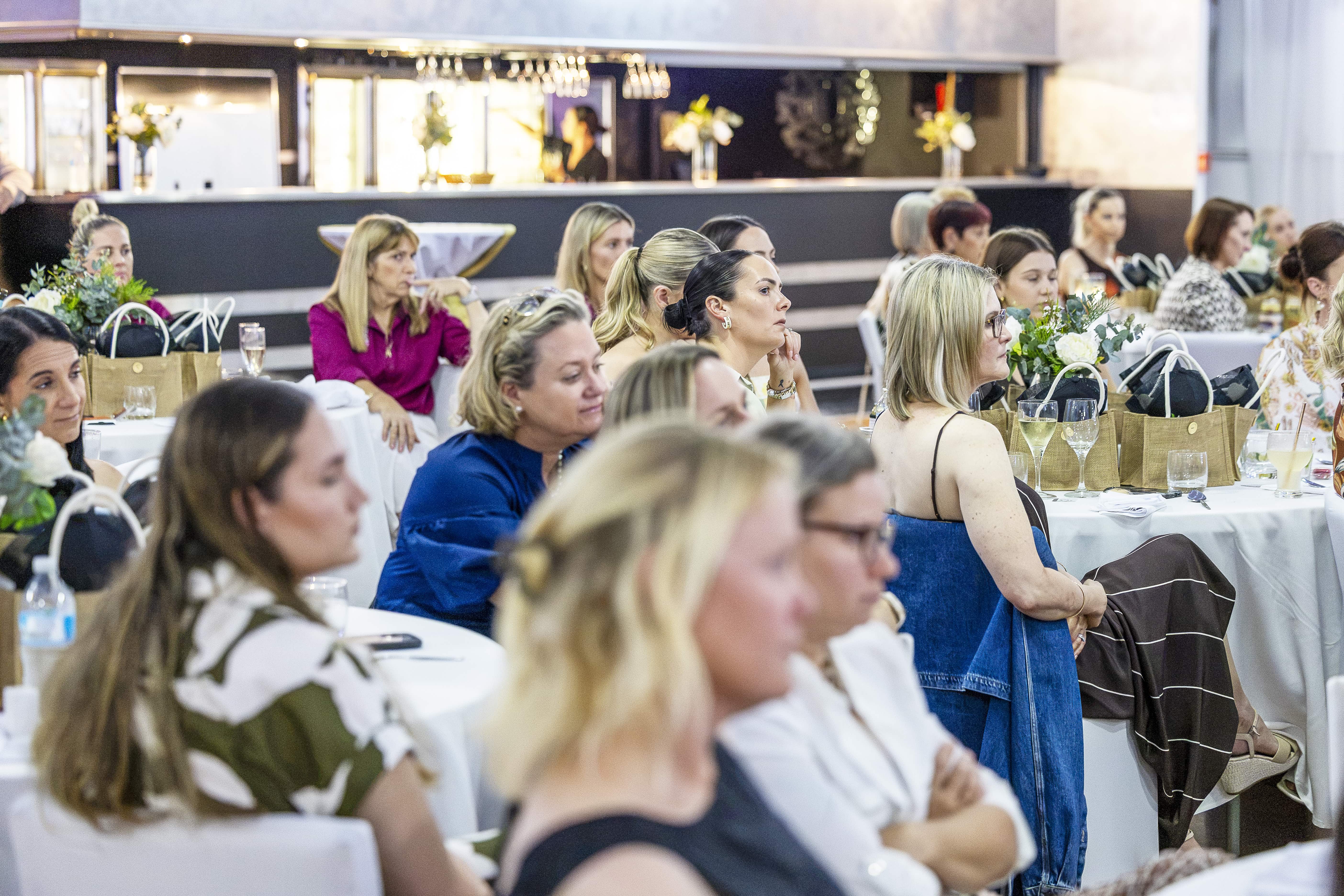
“There is nothing stronger than a group of women who empower each other,” said Community Bank Home Hill and Ayr Branch Manager Sally Smith.
“I think what resonated the most was having those guest speakers talk about life in general—how we cope as women in business, running our families, and the daily struggles we all have.
“It’s just about supporting each other and letting each other know that we’re not alone.”
.jpg)
Ms Smith particularly praised Ms Johnson’s keynote. Community Bank also presented a $3,000 donation to Farm Angels, a charity co-founded by Ms Johnson that provides financial and practical support to farming families affected by natural disasters.

The event was sponsored by Rural Quip, Keir Steele Waldon Lawyers, Nutrien Ag Solutions and Community Bank.
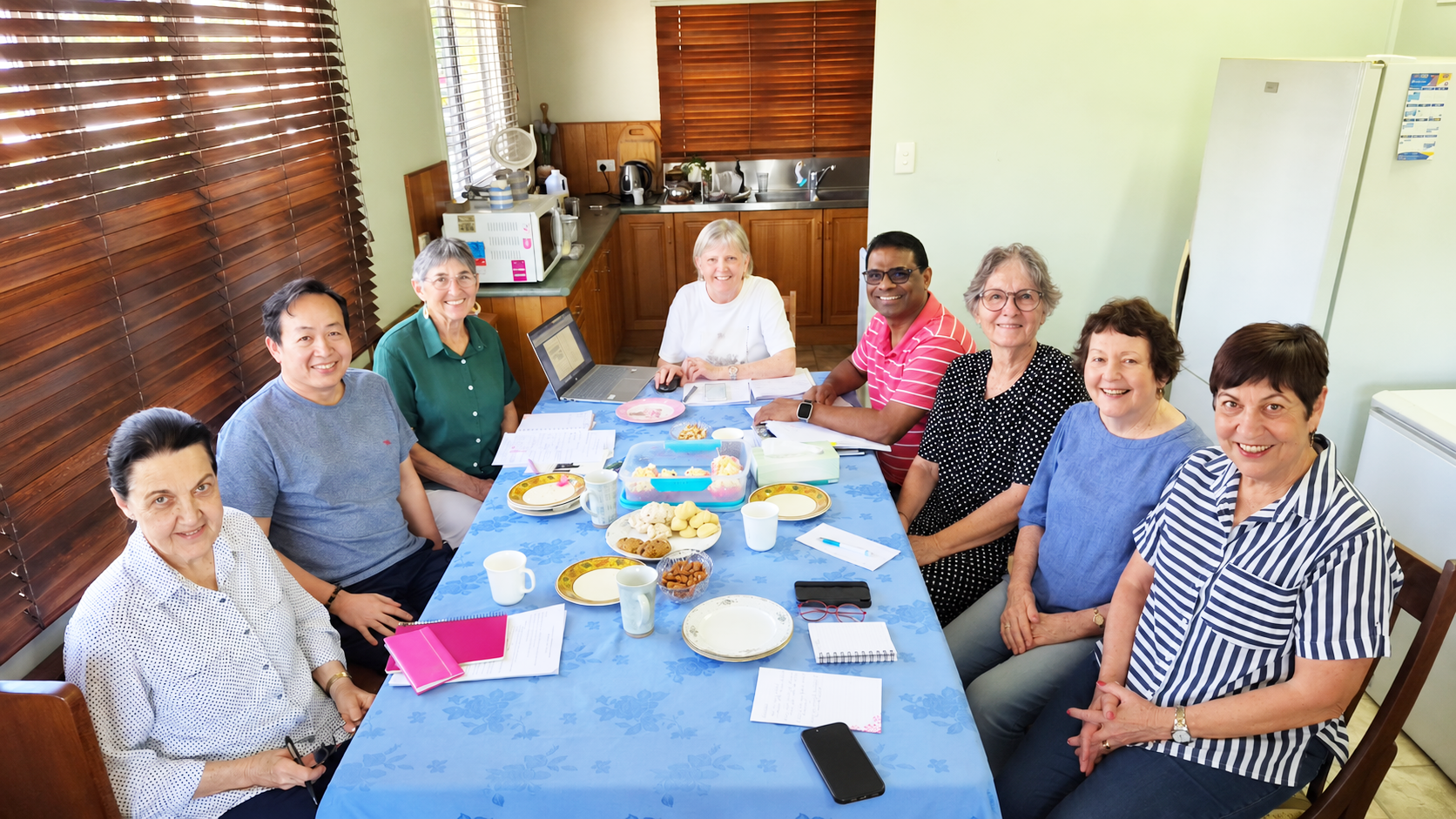
(L - R) Grace Corica, Fr. Truong, Gloria Vass. Louise Simeoni, Fr. Manoj, Rhonda Mann, June Zanella, Lyn McLaughlin. Photo supplied
Contributed by the St Colman’s 100 organising committee
The St Colman’s 100 organising committee has been extremely busy over the past few months in preparation for Sunday 25th October’s celebration of 100 years since the establishment of the Catholic Parish in Home Hill and district.
A booklet covering the history of the Parish from the early 1900s to the present day has been produced. Much of the information has come directly from the Townsville Diocesan Archives, a momentous task for which we are very grateful.
The history has recorded numerous snippets of interesting facts, together with transfers of priests in and out of the Home Hill Parish plus details of various functions, balls, organisations and changes in Parish and Diocesan life throughout the span of the last 100 years.
Local Parishioners have also contributed photographs to a digital display of different aspects of the Parish with an emphasis on the Priests and Bishops who have made such an imprint on this Parish.
Parish Priest from 1992 to 2009, Father Don Smith, once remarked that the Church was named after one of the 300 Irish Saints named Colman! We are gladly celebrating the contributions of past and present clergy with sincere gratitude for the inspiration they have provided for our Home Hill and district community.
Celebrations on Sunday 25th October will start at 9.00 am with Mass concelebrated by Bishop Tim Harris, Bishop of Townsville. The congregation will then move to the Parish Hall to enjoy remembrances and fellowship.
Everyone is invited to join with the Burdekin Catholic Parish and especially the St Colman’s Home Hill and district community for the morning, as we remember the 100 years of our history.
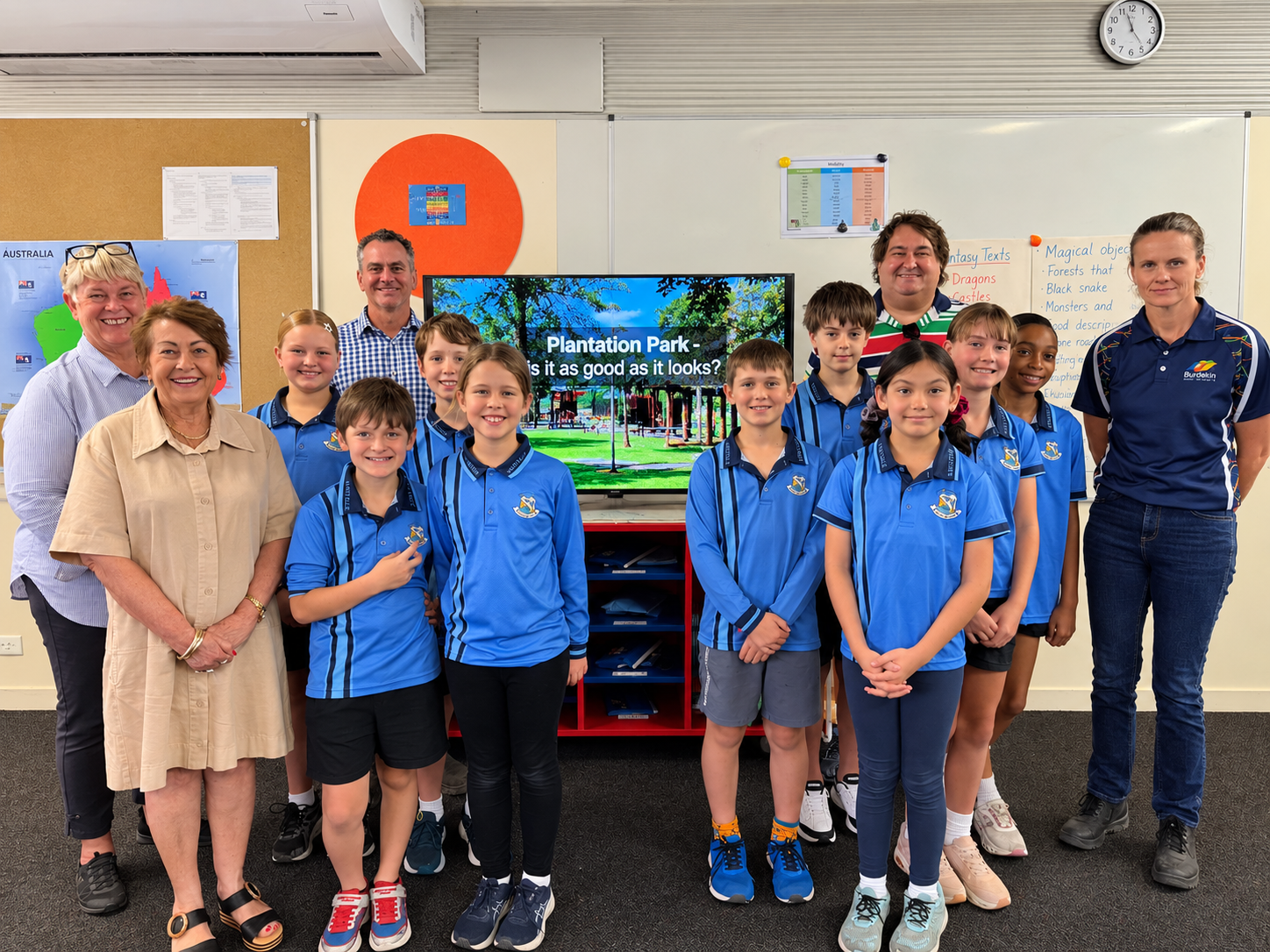
Principal Mrs Bugeja (left), Mayor Dalle Cort (second from left) and Deputy Mayor Musumeci (back left), and Mr Keioskie (back right) with Airville State School students. Photos supplied
Airville State School students proved that you are never too young to shape your community during a special visit from local leaders last Wednesday.
Burdekin Shire Council Mayor Pierina Dalle Cort, Deputy Mayor Max Musumeci, and Council Parks Coordinator Jaime St John visited the rural school to hear presentations from senior students regarding potential improvements to Plantation Park.
As part of a classroom writing project, each student identified three potential enhancements for the popular local destination. Their practical proposals ranged from installing shade covers over sun-heated playground equipment to upgrading the park’s water features and establishing a student clean-up squad for the Juru Walk.
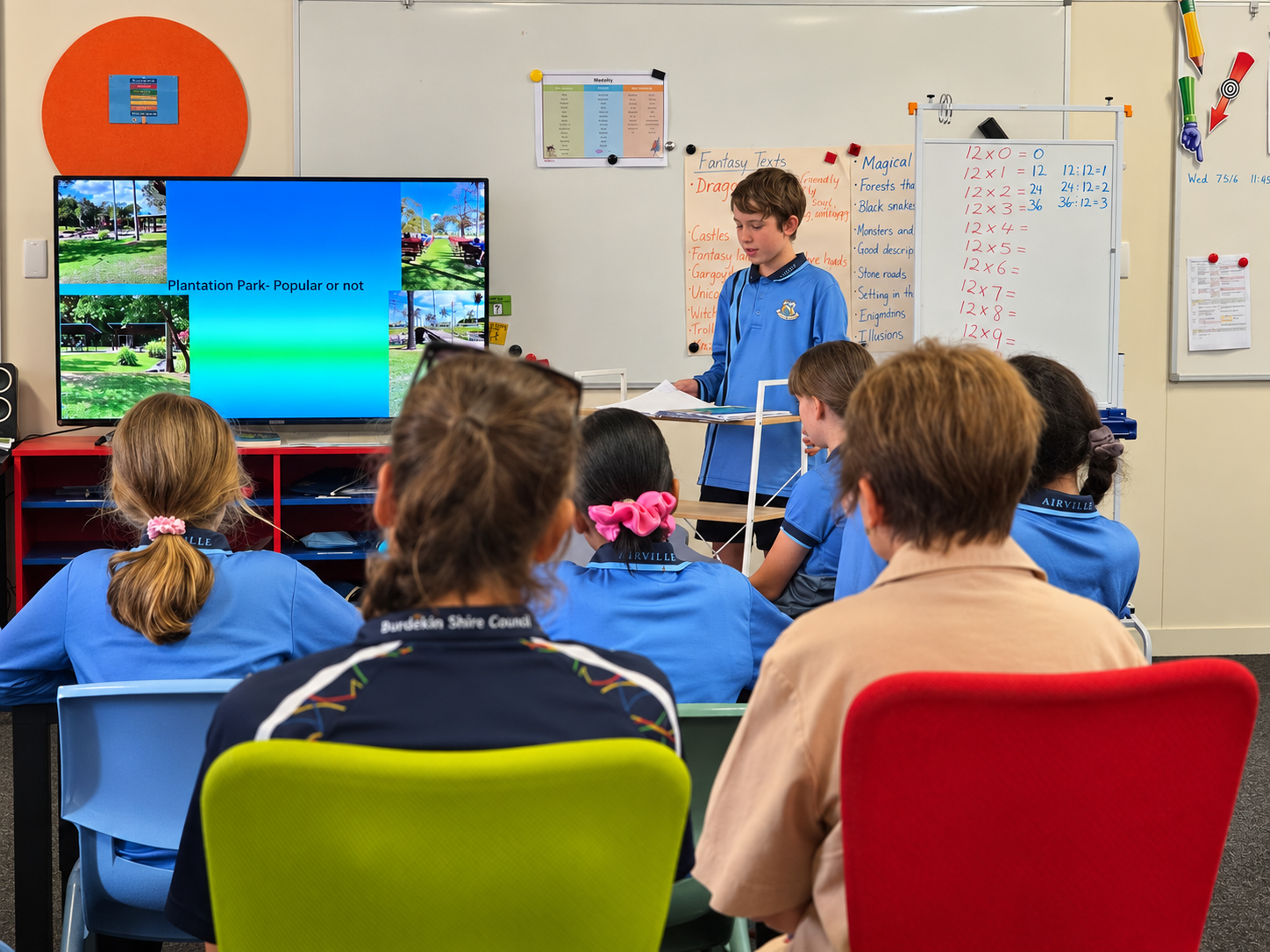
The students also highlighted existing features that make Plantation Park a community favourite.
Following the speeches, Mayor Dalle Cort discussed the inner workings of local government and emphasised the vital role resident feedback plays in council decisions, commending the students as the "young voices of the Burdekin."
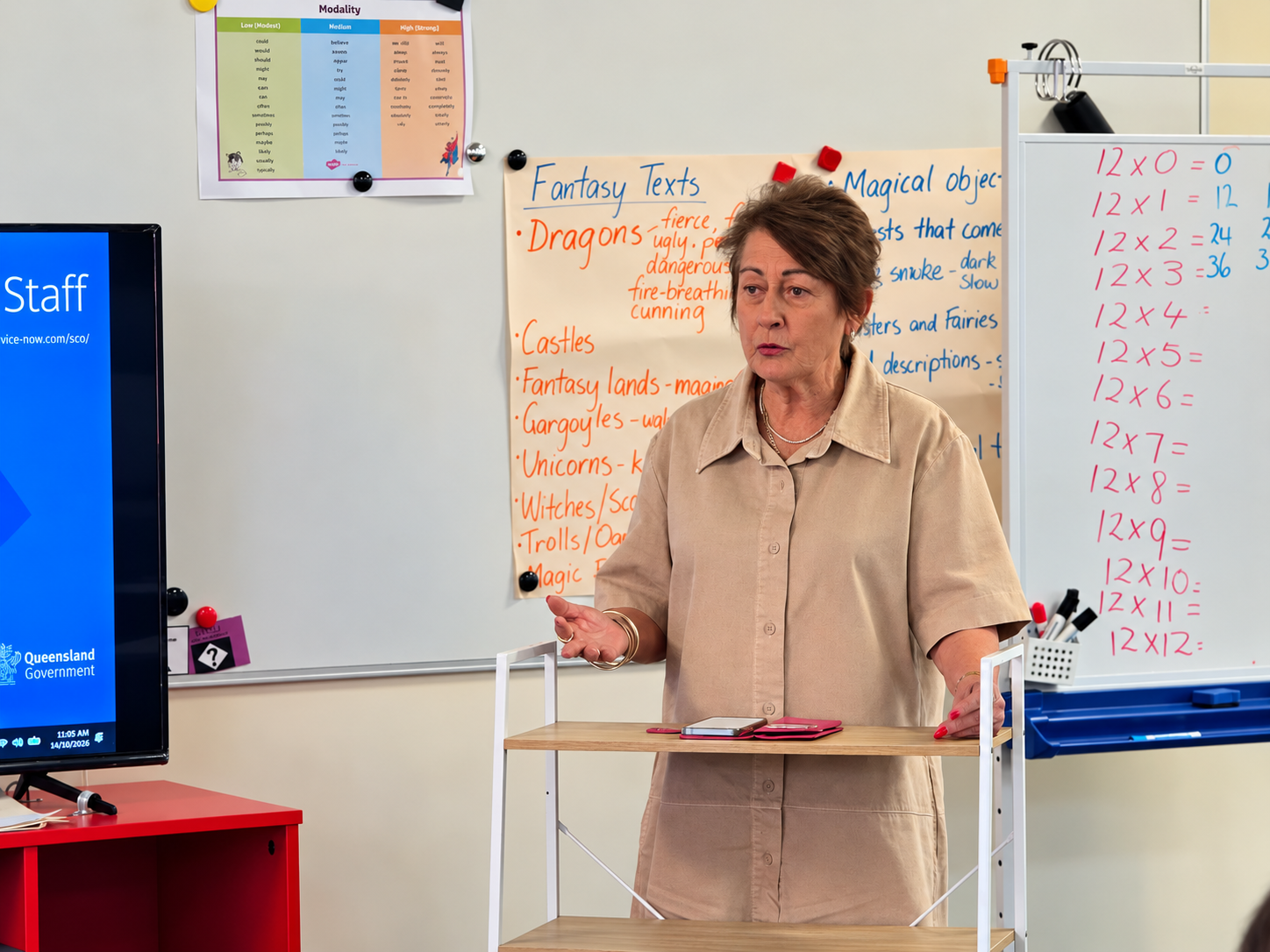
For the senior cohort, the visit turned an English unit into a real-world lesson in civic engagement, community pride, and public speaking.
School officials expressed gratitude to the council representatives for taking the time to encourage young learners, praising the students for representing Airville State School with confidence and maturity.

Burdekin farmers and fishing operators are being urged to prepare for bushfires and severe storms ahead of summer, with active El Niño conditions increasing the risk of challenging weather across Queensland.
The Queensland Government is encouraging primary producers to review emergency plans, assess risks and secure essential supplies before severe weather strikes.
Department of Primary Industries Deputy Director-General Agriculture Peter Donaghy said now was the time for producers to begin preparations.
“Taking action now, whether that's reviewing emergency plans, securing fodder supplies, preparing livestock movement arrangements or protecting critical infrastructure, can make a significant difference when disaster strikes,” Mr Donaghy said.
Producers are encouraged to check plans for bushfires, floods, cyclones and severe storms, ensure livestock can be moved quickly and have access to food and water, maintain firebreaks and secure fodder supplies.
Keeping emergency contacts, business records and photographs of assets up to date can also help with recovery after a disaster.
Mr Donaghy urged producers to contact their local Industry Recovery and Resilience Officers for advice on managing climate risks, strengthening business resilience and developing recovery plans.
The officers provide face-to-face support across primary industries, including information about recovery grants, concessional loans and wellbeing services.
The program is jointly funded by the Australian and Queensland governments under the Disaster Recovery Funding Arrangements.

Photo sourced: Pexels
The Burdekin Neighbourhood Centre is hosting two free community education workshops on Monday 26th October to give local residents the practical skills to navigate end-of-life care and difficult family discussions.
Delivered by Palliative Care Queensland through its PalliLEARN program, the initiative aims to build local resilience, foster community support networks, and highlight self-care strategies during challenging times.
The morning schedule opens at 9 am with Palliative Care: 5 Steps to Planning Ahead, offering actionable advice on advance care planning and recent research findings. Following a morning tea break at 10 am, the second session, Talking to Children about Dying, runs from 10:30 am to 11:30 am.
BNC co-ordinator Natalie Saroglia said the initiative forms part of the organisation’s commitment to bringing death, dying and grief learning opportunities to the Burdekin.
“Death is something that no one particularly likes to talk about; however, it is the one thing that will happen to all of us,” she said.
No prior experience or health sector training is necessary to participate. Organisers designed the content specifically for everyday people living and working throughout the Burdekin Shire region.
Palliative Care Queensland facilitator Deb Durso will present both sessions live online via Microsoft Teams. Residents can join remotely from home or attend the live stream at the Burdekin Neighbourhood Centre, located at 40 Chippendale Street, Ayr.
To register or find out more details, contact event organisers on 07 3842 3242 or email hello@palliativecareqld.org.au.
The initiative is funded by the TRACC (Tackling Regional Adversity through Connected Communities) grant program.

It was great to meet with residents who stopped by my recent Catch Up with the Mayor in Brandon. These informal conversations give me the opportunity to hear directly from our community and gain a better understanding of the issues that matter most to you.
While I may not always be able to provide the answers people are looking for, I am always happy to listen and do what I can to help.
This Saturday, I'll be in Giru for the next Catch Up with the Mayor from 8.00am to 10.00am at the Giru Store. If you have a question, suggestion or idea for the Burdekin, please come along for a chat. I look forward to seeing you there.
Recently, I had the pleasure of visiting Airville State School, where students presented their ideas on how Plantation Park could be improved. It was rewarding to hear both the positives and the challenges they identified. Our young people have valuable perspectives, and it is encouraging to see them taking an active interest in the future of our community.
I would also like to remind residents that nominations are now open for the 2027 Australia Day Awards. These awards recognise the outstanding individuals and groups who make a positive contribution to the Burdekin through their dedication, achievements and service to others. If you know someone deserving of recognition, I encourage you to submit a nomination.
Nominations close on Monday 7 December 2026 and can be lodged via the nomination form on Council's website or with assistance from our Customer Service team. Winners will be announced at the Australia Day Awards Ceremony at the Burdekin Theatre on 26 January 2027.
Around the Shire, drainage upgrade works continue in First Street, Home Hill and within the original stage of the Industrial Estate. Improvements are also underway at Ayr Cemetery, while progress continues at the Home Hill Swimming Pool project, which is shaping up well.
Thank you for your continued support, and I look forward to catching up with many of you around the community. As always, if you have any questions or would like to discuss any Council matters, please contact me directly by phone on 0447 150 582 or by email at mayor@burdekin.qld.gov.au.
As storm season approaches, now is the time to prepare. Good preparation is the key to staying safe during natural disasters and protecting your family, pets and property when severe weather strikes.
Residents are encouraged to take simple steps now, including cleaning gutters, trimming overhanging branches, securing loose outdoor items, ensuring vehicles are fuelled and making plans for pets if evacuation becomes necessary. These practical measures can reduce damage, improve safety and help ease the pressure when a disaster is imminent.
One of the most important preparations is having a well-stocked emergency kit. An emergency kit helps households remain safe, comfortable and self-sufficient if power, water, roads or communication networks are disrupted.
Every household should have an emergency kit stored in an easily accessible location. Essential items include drinking water, non-perishable food, a battery-powered or wind-up radio, torch, spare batteries, first aid supplies, essential medications, phone chargers or power banks, important documents stored in a waterproof container and basic hygiene items.
Families should also consider their individual needs by including cash, spare clothing, bedding, baby supplies, pet food and any other necessities required in an emergency. It is equally important to check kits regularly and replace expired food, medications and batteries.
Most importantly, stay informed and act quickly when warnings are issued. Official advice from the Bureau of Meteorology and local disaster authorities should always be followed. Preparing early and responding promptly to warnings remains the best way to protect lives, property and our community during severe weather events.
For further information on disaster preparedness, emergency planning and severe weather updates, please contact Burdekin Shire Council on (07) 4783 9800.

The third-year Ferguson Plumbing apprentice earned the award ahead of a pool of 80 nominees, one of 12 major category winners announced at last week’s Townsville Trade Excellence Awards. Photo supplied
Burdekin plumbing apprentice Scarlet Jenkins has been named TAFE Queensland Townsville’s Female Trade Student of the Year.
The third-year Ferguson Plumbing apprentice earned the award ahead of a pool of 80 nominees, one of 12 major category winners announced at last week’s Townsville Trade Excellence Awards.
The award recognises Scarlet’s efforts both in the classroom and on the ground, with a nomination by her TAFE teacher and a glowing review from her boss helping her secure the feat.
It comes after Apprentice of the Year recognition for her at last year’s ceremony—which, she says, added to the surprise of hearing her name called again.
“I got the award last year, so I didn’t think I’d get it again,” she said.
“I was up against a hairdresser and a beauty technician—and I'm just a plumber. Then they called my name and I didn’t even have a speech planned.”
Scarlet began her plumbing apprenticeship in 2024 after plans to become an electrician fell flat. She has since built up an affection for the dynamic nature of the job.
“Every day is different, which is what I like,” Scarlet said.
“You’re always meeting new people, and every day is a new challenge that you need to try and solve. I’ve enjoyed learning how to solve them.”
She said she hopes to finish her plumbing apprenticeship and remain in the industry.
A 33-year-old Home Hill man has become the first person in the Burdekin charged with coercive control since the offence came into effect in last year, following allegations of a five-month campaign of domestic violence against his partner.
He also faces two counts of threatening violence, one count of common assault and four counts of assault occasioning bodily harm.
Police opposed his bail and he has been remanded in custody. He is due to appear in Ayr Magistrates Court on the 2nd of November.
Queensland criminalised coercive control on the 26th of May 2025.
The offence covers patterns of physical or non-physical abuse used to hurt, humiliate, isolate, frighten or threaten a victim-survivor, and carries a maximum penalty of 14 years' imprisonment.
As of May 2026, 127 people had been charged with coercive control across Queensland, with 10 convictions resulting in prison sentences.
Queensland Police recorded 351 victims during the reported period.
If you or someone you know is experiencing domestic and family violence, contact police on 131 444. In an emergency, call Triple Zero (000).
“Protecting Queensland’s children and vulnerable people is one of government’s key responsibilities,” Mr Last said. Photo supplied
Contributed by the Office of Member for Burdekin Dale Last MP
The establishment of the Queensland Protection Commission is another step in addressing failures that resulted in Queensland’s children and vulnerable people being put at risk according to Member for Burdekin Dale Last MP.
“Protecting Queensland’s children and vulnerable people is one of government’s key responsibilities,” Mr Last said.
“The Crisafulli government made a commitment to strengthening the child protection system and we are delivering on that commitment with nation-leading laws.
“Just 10 days after taking office the review was underway and what was revealed was a litany of failure. The system was riddled with gaps when it came to sharing information and responsibilities were fragmented across agencies causing confusion and delaying action.
“The review centred around the case of Ashley Paul Griffith who had slipped through the net despite committing more than 300 offences against children over a 20-year period.
“Flaws in the sharing of information meant that he worked at several childcare centres without a valid Blue Card and that reports of unacceptable behaviour were not actioned because he was no longer working at the centre where the behaviour occurred.”
“All in all, the review identified five opportunities where Ashley Paul Griffith could have been stopped. The reality is missing those opportunities resulted in real harm that will impact those children and their families for the rest of their lives.”
The passing of the Legislation follows the government bringing forward implementation of Queensland’s Reportable Conduct Scheme, but Mr Last would not rule additional action to keep children safe.
“We make no apology for prioritising the safety of Queenslanders,” he said.
“We have significantly strengthened current protections and have a plan in place for improvements but, if more needs to be done, then we will do it to protect children and vulnerable Queenslanders from those who seek to prey on them.
“The Reportable Conduct Scheme means certain actions or behaviours must be reported, regardless of whether it seems like a minor or isolated incident. People who fail to disclose reportable conduct allegations or knowingly providing false information will be held accountable, and so they should because the community expects everyone to play their part.
“We are also progressing the creation of an Intelligence Hub which will collect information from across various agencies with the goal of preventing offending.
“Up until now the system has responded after harm occurs. By being proactive the aim is to prevent abuse before it happens and give Queensland families the confidence that their children can safely achieve their full potential.”

Queensland state schools will celebrate their students, staff and communities during State Education Week from 26th to 30th October.
Queensland state schools will celebrate their students, staff and communities during State Education Week from 26th to 30th October.
The annual event recognises the work of public schools in helping students reach their potential, with schools encouraged to share stories highlighting achievements and initiatives within their communities.
Schools can celebrate by recognising high-achieving students, dedicated staff, former students giving back to their communities and projects making a difference to young people.
Parents, carers, community members, local businesses and other schools are also encouraged to get involved in celebrations and planning.
Queensland state schools can share their stories through words, photographs and videos on social media using the hashtags #StateEdWeek and #GreatStoriesStartHere.
Schools can also submit stories to communication@qed.qld.gov.au for the opportunity to be featured on Queensland Department of Education social media channels.
The department encourages schools to highlight the different ways public education supports students to fulfil their potential.
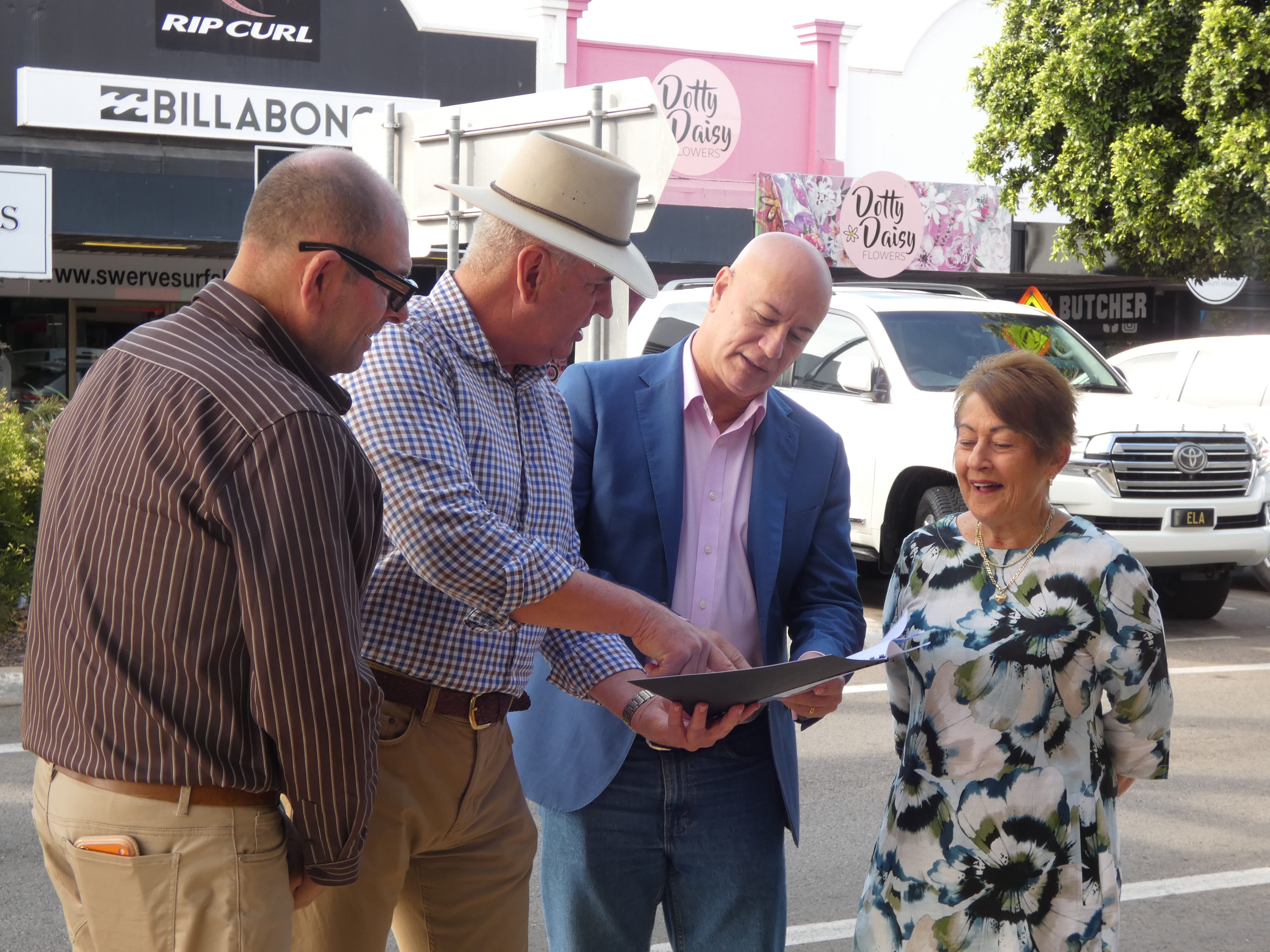
Minister for Small and Family Business Steve Minnikin (pictured with Burdekin Shire Council Mayor Pierina Dalle Cort, Member for Burdekin Dale Last and Burdekin Chamber of Commerce president Eusebio Aguirre) visited small businesses in the Burdekin ahead of Round 2 works. Photo: Jacob Casha
CCTV upgrades for small businesses in Home Hill and Ayr will target loitering, vandalism and theft.
Delivered under Round 2 of the Queensland Government’s Secure Communities Partnership Program, the upgrades will strengthen surveillance across the region’s two central business districts, particularly along Queen Street in Ayr and Eighth Avenue in Home Hill.
The latest works will build on Round 1 upgrades, completed in July, which saw CCTV cameras, radio links and supporting network infrastructure installed at select areas across the region.
Almost $400,000 is being invested across both rounds in partnership with Burdekin Shire Council.
Minister for Small and Family Business Steve Minnikin visited both Ayr and Home Hill last week to announce the partnership ahead of Round 2 works, which he says will “protect not only the property of small and family businesses, but their staff as well.”
Burdekin Shire Council Mayor Pierina Dalle Cort welcomed the upgrades.
“These on-going upgrades form an important part of our security network and support local small and family businesses,” she said.
“We welcome the joint funding to upgrade security in the region.”
Member for Burdekin Dale Last said the projects would allow small businesses to create jobs and driving the local economy forward.
"Small business is the backbone to our region delivering growth, employment and supporting local community events and clubs,” Minister Last said.
“It is good to see both state and local government working together to give support to our business community and deliver the Crisafulli Government’s plan to improve safety for small businesses, their staff and their customers.”
Ms Dalle Cort said the projects are part of Council’s ongoing efforts to prioritise community safety.
“Safe and welcoming public spaces are essential to maintaining the quality of life our residents enjoy in the Burdekin,” she said.
“While CCTV is not a replacement for community vigilance, it is an important tool that supports the safety of residents, visitors and Council assets."
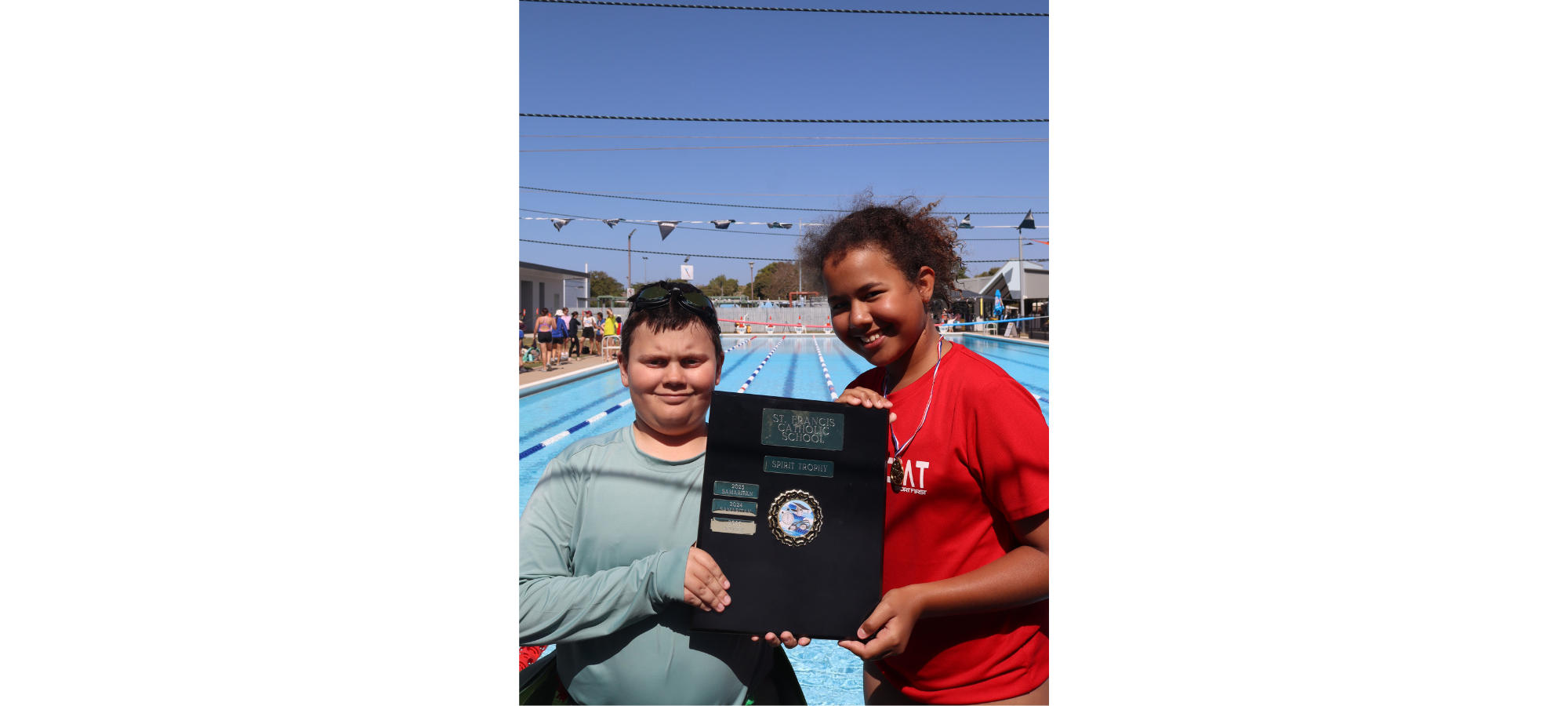
Contributed with thanks by St Francis Catholic School
St Francis Catholic School students made a splash in Week 10 of Term 3, with Prep to Year 6 participating in a week of Water Safety lessons.
The program provided students with valuable opportunities to build confidence in the water, develop swimming skills and strengthen their understanding of water safety. The week concluded with the Annual School Swimming Carnival, which brought a new format to the event this year with the entire school community, from Prep to Year 6, participating together.
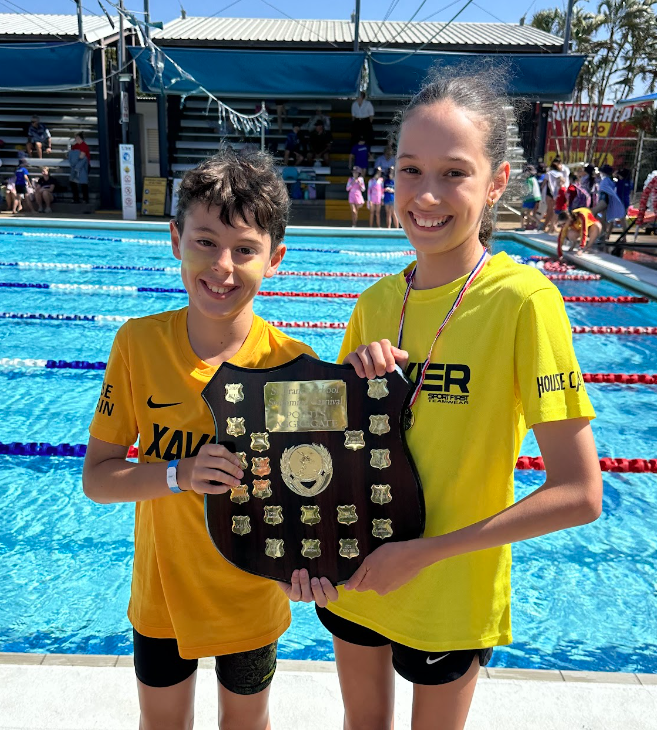
The carnival was a fun-filled day of swimming, friendly competition and House spirit. Students competed in a range of events, contributing valuable points towards their House. The encouragement and enthusiasm shown throughout the day highlighted the importance of participation, teamwork and good sportsmanship.
Congratulations to the 2026 Age Champions and Runners Up across each age group:
· 9 Years: Mia and Kartah – Age Champions; Shaela and Noah – Runners Up
· 10 Years: Sahra and Henry – Age Champions; Adele and Henry – Runners Up
· 11 Years: Mahli and Joey – Age Champions; Koa and William – Runners Up
· 12 Years: Mia and Chad – Age Champions; Jessica and Jonah – Runners Up
A special congratulations goes to Xavier House, winner of the Aggregate House Trophy, and Champagnat House, recipient of the Spirit Trophy.
The Swimming Carnival provided a wonderful celebration of the students' swimming abilities, participation and House spirit, bringing the school community together for a memorable end to Term 3.
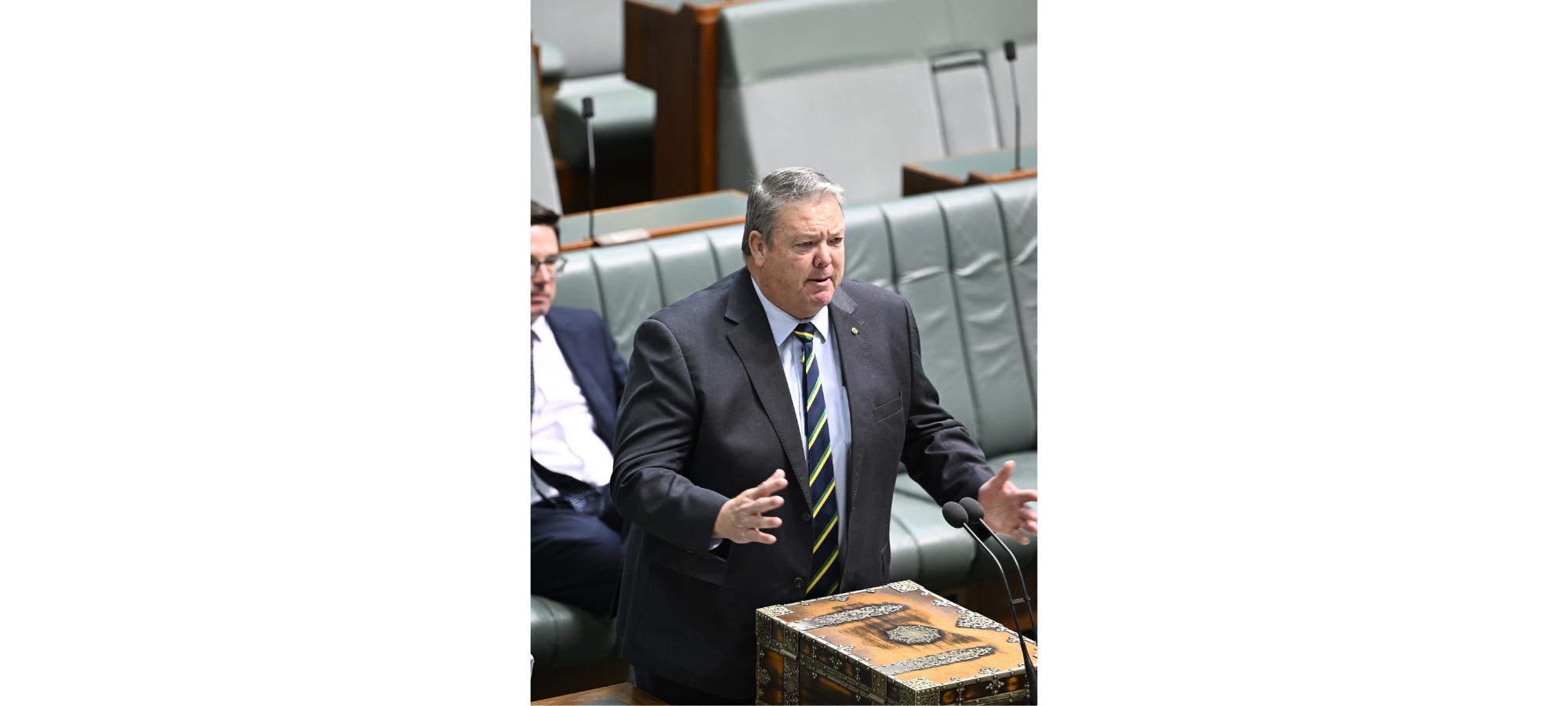
Federal Member for Dawson Andrew Willcox has backed a Coalition plan to cut Australia's migration numbers while promising to protect regional industries reliant on overseas workers. Photo supplied
Federal Member for Dawson Andrew Willcox has backed a Coalition plan to cut Australia's migration numbers while promising to protect regional industries reliant on overseas workers.
The Liberals and Nationals' Australia-First Migration Plan would reduce net overseas migration to 100,000 people a year for the first two years before increasing it to about 160,000 in the fourth year.
The proposal comes amid concerns from Burdekin businesses about Federal Government changes to the Working Holiday Maker visa system, which would require backpackers to win a ballot to secure second- and third-year visas, even after completing their regional work requirements.
Ayr Backpackers owner David Esler previously warned the changes could leave regional employers struggling to find workers, while local businesses have relied on working holidaymakers to fill staffing gaps.
Mr Willcox said the Coalition's plan would reduce the number of temporary visa holders by about 650,000 over four years, while maintaining the permanent migration program at 185,000 places a year.
“Migration is important, but it needs to put Australia first,” he said.
The plan would prioritise higher-skilled migrants, including employer-sponsored workers, with stronger requirements around income, age, English proficiency and full-time employment.
It would also establish 15,000 Skilled Project Visas annually to address workforce shortages on major projects.
However, the Coalition said regional migration programs supporting agriculture, health, tourism and hospitality would be protected where there were genuine workforce needs.
The plan would also abolish Temporary Graduate Visas, reduce international student migration and tighten temporary visa rules.
Mr Willcox said the changes would bring migration in line with Australia's ability to provide housing, infrastructure and essential services.
“If you’re struggling to buy a home, find a rental or get the services you need in our community, Australia’s migration program matters to you,” he said.
Opposition Leader Angus Taylor said the system should prioritise skilled workers who could contribute to the country.
“We need skilled migration, not mass migration,” Mr Taylor said.
The Nationals' leader, Senator Matt Canavan, said the current system had put pressure on Australian workers and living standards.
“Labor has let too many people into our country,” he said.
The Coalition said its plan would ensure migration addressed genuine skills shortages without placing further pressure on housing and essential services.
However, the announcement did not specify whether the proposed regional protections would cover working holidaymakers or how the plan would affect the visa ballot previously criticised by Burdekin employers.

Nestled amongst the farming landscapes of the Burdekin, just 10 minutes from both Ayr and Home Hill, Airville State School offers families the charm and close connections of a country school without having to travel far from town. Photos supplied
Contributed by Airville State School
Just 10 minutes from Ayr or Home Hill, Airville State School is showing why some things are worth the drive.
There's something special about a country school. Perhaps it's the familiar faces greeting children each morning, the friendships that stretch across year levels or the sense of community that extends well beyond the school gates. For families choosing a school, it's often these little things that make the biggest difference.
Nestled amongst the farming landscapes of the Burdekin, just 10 minutes from both Ayr and Home Hill, Airville State School offers families the charm and close connections of a country school without having to travel far from town. It's a little school with a big story to tell, and one that gives new meaning to the idea that some things really are worth the drive.

Small class sizes are at the heart of the Airville experience, allowing staff to get to know students as individuals, recognise their strengths and celebrate their achievements. Friendships extend across year levels, with younger children learning from older students who, in turn, develop leadership, responsibility and confidence. It's a school community where every child has the opportunity to contribute and belong.
One of Airville's proudest achievements is its zero-bullying environment. The school places great importance on positive relationships, kindness and mutual respect, supported by the Bullyproof program and the Airville Way. These guiding values encourage students to be confident, respectful, responsible, positive and proud, while always striving to be their best. Together, they help create a school culture where children feel safe, included and comfortable being themselves.
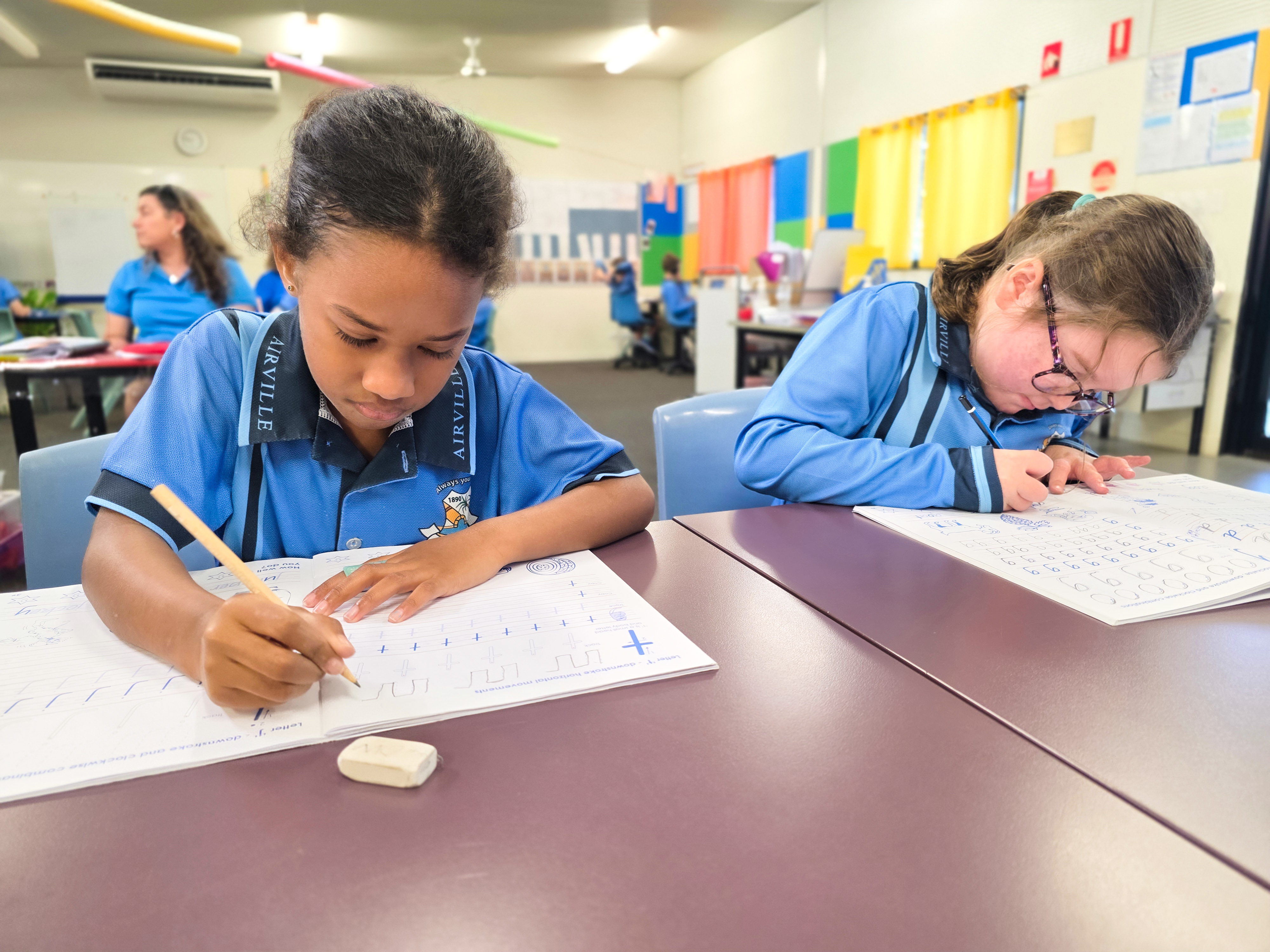
For parents preparing to send their little ones off to Prep, knowing their child will be welcomed and supported can make those first school mornings a little easier. A familiar face, a friendly greeting and the reassurance of being known as an individual can make a world of difference. And with Airville only a short drive from either town, families can enjoy the benefits of a rural school community while remaining close to home.
But the Airville experience extends well beyond its welcoming atmosphere.
From swimming and music to Japanese, Science, sporting opportunities and visits from specialist coaches and educators, students enjoy a varied and engaging education. Hands-on learning, excursions and community experiences encourage children to discover new interests, build confidence and embrace opportunities beyond the classroom. It's a reminder that a small school can open doors to a big world of possibilities.
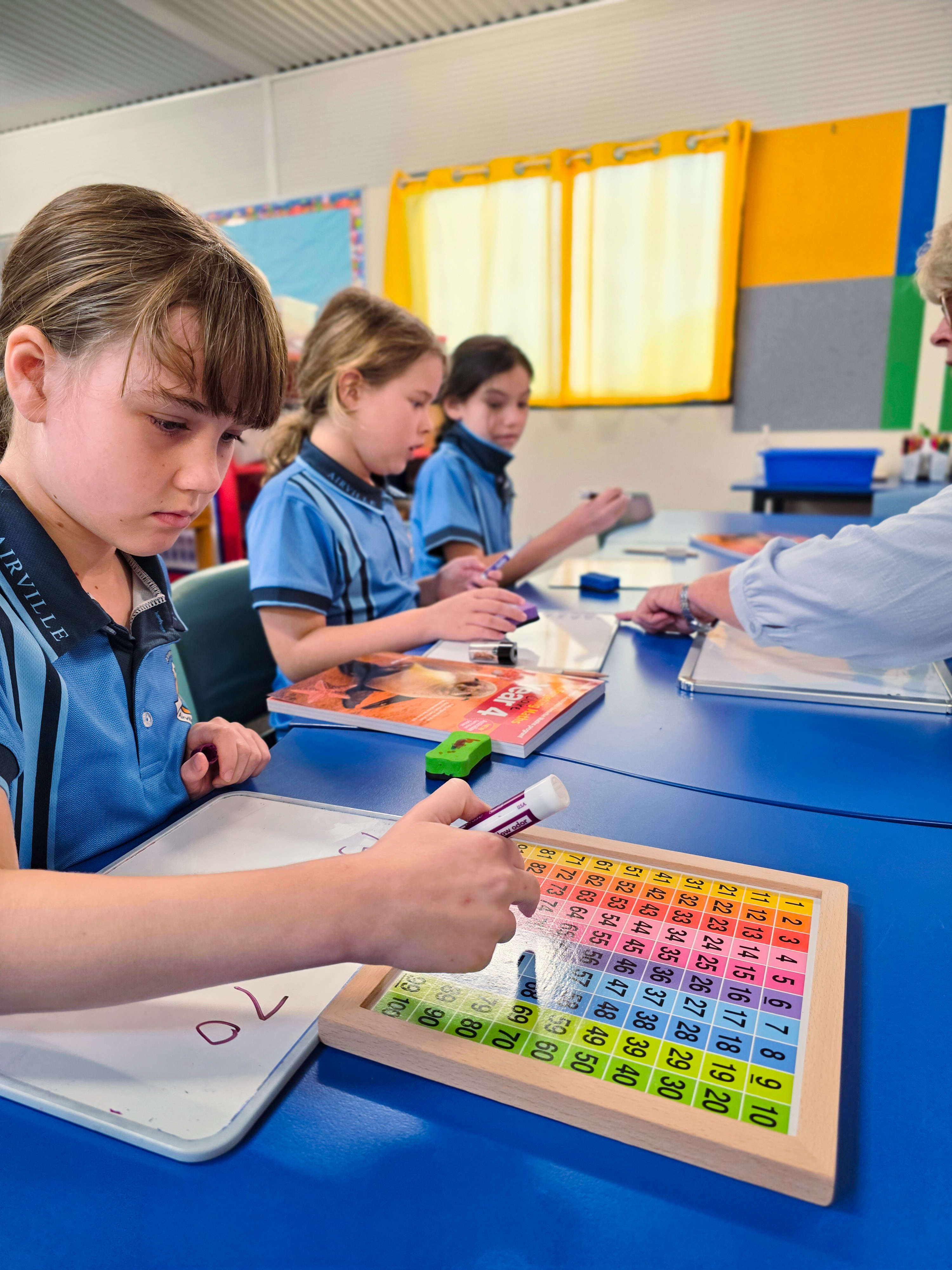
That sense of connection extends to families, too, who play an important role in school life. Strong relationships between home and school help create a supportive community, continuing a tradition that began when Airville first opened in 1890. While education has evolved over the generations, the school's country spirit and commitment to its students remain at its heart.
As 2027 approaches, Airville is preparing to welcome its next generation of learners. Prep transition days are taking place this term, giving children and families the opportunity to visit, meet the staff and experience the school environment firsthand.
For families exploring their options, Airville is a reminder that finding the right school doesn't necessarily mean travelling far. Sometimes, a short journey can lead to something truly special.

Just 10 minutes from both Ayr and Home Hill. And every minute worth the drive.
Discover the Airville difference in 2027.
Enrolments are welcome for Prep to Year 6. Families are warmly invited to attend our Prep transition days or arrange a school visit to experience the Airville Way firsthand.
No bookings required for Prep transition days. Tuesday to Friday from 13 October to 20 November. 9:00 – 10:30am
Phone: (07) 4790 7333 Website: www.airvilless.eq.edu.au
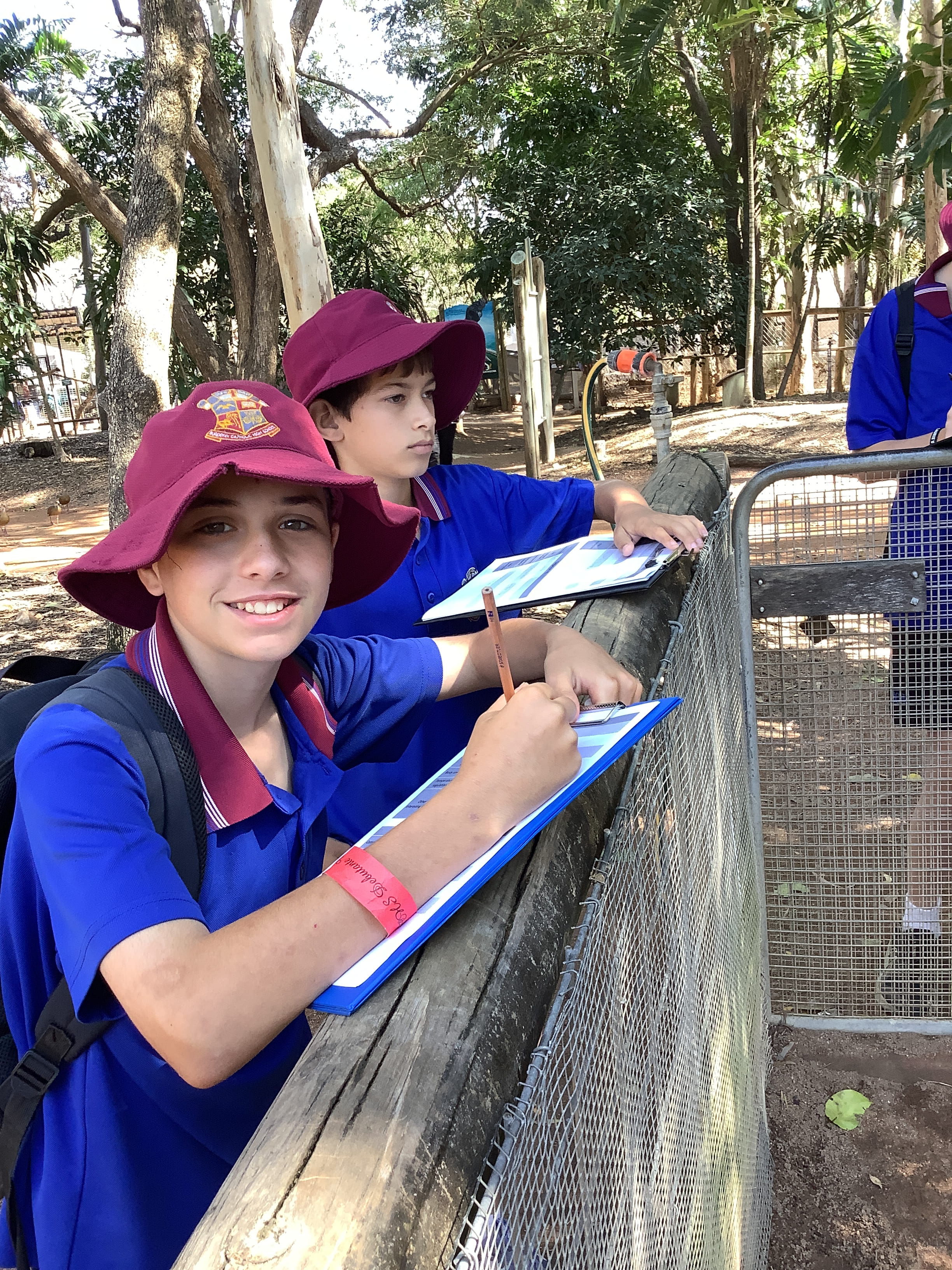
With enrolments now officially open for 2027, Years 7 – 12, BCHS continues its strong tradition of delivering a quality Catholic education. Photo supplied
Contributed with thanks by Burdekin Catholic High School
Burdekin Catholic High School (BCHS) warmly invites parents and carers to explore a school where students are not just educated, but known, nurtured, and empowered to excel.
With enrolments now officially open for 2027, Years 7 – 12, BCHS continues its strong tradition of delivering a quality Catholic education. The school blends academic engagement, personal growth, and spiritual development within a safe, encouraging environment where every young person can flourish.
At BCHS, students are never just numbers in a classroom.
“Our school is a vibrant community where every individual is known and valued reflective of our Marist tradition,” says Principal Lorraine Wolffe.
“We aim to shape young people into confident, compassionate, and resilient leaders who are ready to make a positive impact on the world.”
The school is renowned across the region for its welcoming, family-oriented atmosphere grounded in shared values and a genuine sense of belonging. From the moment students step into Year 7 through to their final days in Year 12, they are guided by dedicated educators who take the time to mentor them according to their unique talents and aspirations.
Burdekin Catholic High School provides a forward-looking, comprehensive curriculum designed for the modern world. Whether a student aspires toward university, specialised trades, or direct entry into the workforce, BCHS crafts tailored learning pathways that foster critical thinking, creativity, and strong core literacy and numeracy skills.
State-of-the-art facilities, technology-enabled learning spaces, and dynamic co-curricular opportunities across sports, the creative arts, and student leadership ensure every child receives a vibrant, well-rounded education.
Grounded in Catholic values, BCHS embeds integrity, service, and mutual respect into everyday student life. Religious education and a rich liturgical tradition help students build a solid moral compass and deep personal character.
Central to the BCHS experience is a proactive approach to student mental health and wellbeing. Through structured pastoral care programs, house spirit, and on-site support services, BCHS ensures every student feels securely connected, heard, and supported through every milestone of their teenage years.
Choosing the right high school is one of the most important decisions a family can make. Parents and carers are invited to book a personal campus tour, meet our passionate team, and feel the BCHS spirit firsthand.
Information packs and enrolment applications for 2027 are available now through the school office or online at www.bchs.catholic.edu.au.

At Ayr State School, we believe a child's beginning should open doors to possibility. Photo supplied
Contributed with thanks by Ayr State School
For generations of Burdekin families, Ayr State School has been part of the story of growing up, learning and belonging.
Today, that story continues—built on a proud history, strengthened by community connections and guided by a shared ambition to give every child the foundations for a bright future.
At Ayr State School, we believe a child's beginning should open doors to possibility. Our vision, From Small Seeds to Big Dreams, reflects our commitment to nurturing confident learners, building strong foundations and helping children discover what they are capable of achieving.
A strong future starts with strong learning. Through a focused commitment to reading, purposeful teaching and opportunities to develop independence, resilience and curiosity, our students are supported to grow their skills and confidence.
Learning extends beyond the classroom through sport, camps, cultural experiences and connections that help children discover their strengths and broaden their horizons.
While the world continues to change, some things remain timeless: the importance of belonging, the value of education, the power of encouragement and the belief that every child deserves the opportunity to succeed.
As Ayr State School looks towards 2027, we are proud to build on the foundations laid by generations before us while creating new opportunities for the children who will shape the Burdekin's future.
For families preparing for Prep, choosing a school is about more than the first day. It is about finding a place where learning takes root, confidence grows and a child's possibilities are nurtured.
With Prep enrolments now open for 2027, we invite Burdekin families to discover Ayr State School — where a proud history meets big dreams for tomorrow.
Because the next generation's story is waiting to begin, and every great future starts somewhere.
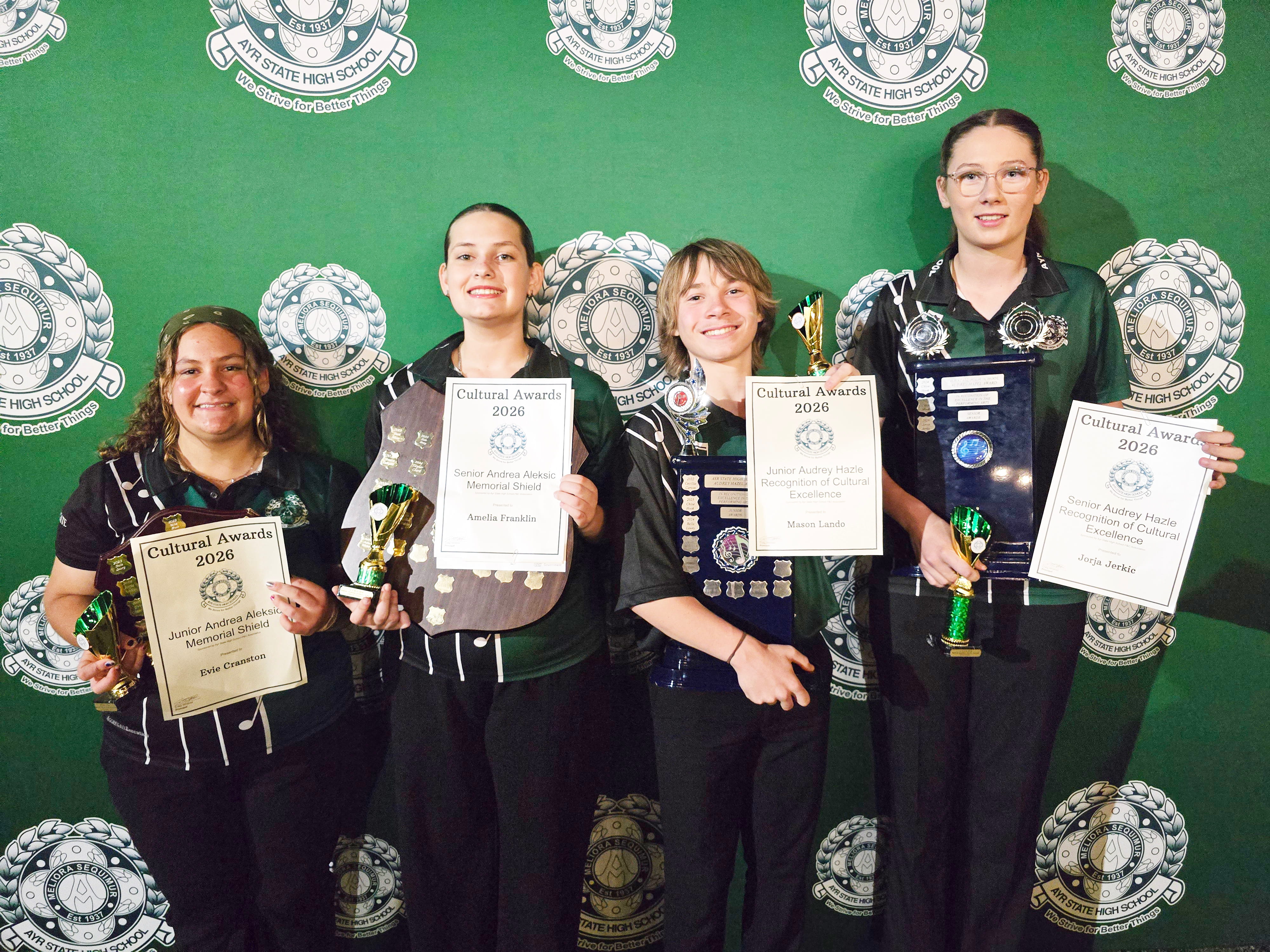
All major award winners. Photos supplied
by Ms Courtney Carrigan, HOD - HPE, The Art, LOTE & Sport
Ayr State High School’s annual Cultural Awards, hosted by Cultural Captain Sarah, was held on Thursday 8th October, celebrating the incredible talent, creativity and achievements of our students across the performing and visual arts.
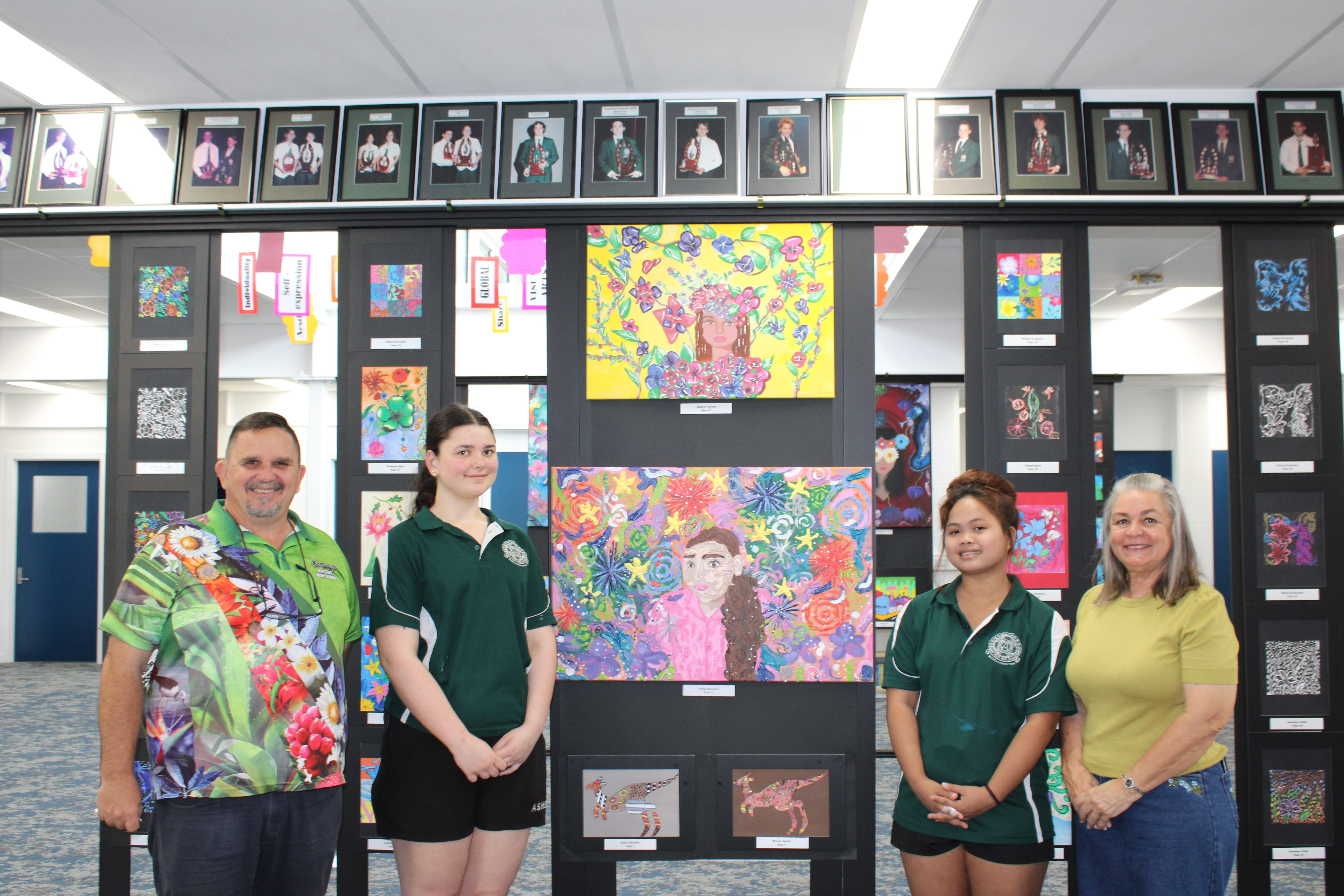
The evening began with the opening of the Art Exhibition, where our talented visual arts students showcased an impressive collection of work across drawing, painting and sculpture. Their creativity, imagination and willingness to challenge conventional ideas were evident throughout the exhibition, highlighting the diversity and originality of artistic expression at Ayr High.
The awards ceremony continued the celebrations, recognising students for their dedication and achievements in extra-curricular cultural activities and Instrumental Level Achievements. The evening was filled with outstanding musical performances, with Destiny Dennis, Evie Cranston, Chloe Scrivener, Deon Ferrando, Evana Bello and Sonja Martin, Mason Lando and various ensembles providing memorable opening and closing performances. The Choir and Concert Band also impressed audiences with their exceptional performances, showcasing the hard work, commitment and remarkable growth of our musicians throughout the year.
A highlight of the evening was the announcement of our prestigious major cultural awards:
Junior Andrea Aleksic Memorial Shield: Evie Cranston
Senior Andrea Aleksic Memorial Shield: Amelia Franklin
Junior Audrey Hazle Recognition of Cultural Excellence: Mason Lando
Senior Audrey Hazle Recognition of Cultural Excellence: Jorja Jerkic
Yr 12 Medallions: Destiny Dennis, Sarah
The evening was a wonderful celebration of artistic expression, musical talent and student achievement, and a proud reminder of the vibrant cultural community we continue to nurture at Ayr High.

𝗘𝘅𝘁𝗿𝗮-𝗖𝘂𝗿𝗿𝗶𝗰𝘂𝗹𝗮𝗿 𝗖𝘂𝗹𝘁𝘂𝗿𝗮𝗹 𝗔𝘄𝗮𝗿𝗱 𝗔𝘄𝗮𝗿𝗱𝗲𝗲𝘀:
Drama A.C.E. (Acknowledging Cultural Effort) – 𝗖𝗵𝗮𝗿𝗹𝗶𝗲 𝗦𝗵𝗲𝗮𝗿𝘀
Junior Performer of the Year – 𝗠𝗮𝘀𝗼𝗻 𝗟𝗮𝗻𝗱𝗼
Senior Performer of the Year – 𝗖𝗮𝗶𝘁𝗹𝘆𝗻 𝗖𝗵𝗲𝘆𝗻𝗲
‘ROADIE’ (Backstage) Award – 𝗠𝗶𝗮 𝗙𝗼𝗿𝗺𝗶𝗹𝗮𝗻
Choir A.C.E. (Acknowledging Cultural Effort) – 𝗗𝗲𝗼𝗻 𝗙𝗲𝗿𝗿𝗮𝗻𝗱𝗼
Junior Choralist of the Year – 𝗠𝗮𝘀𝗼𝗻 𝗟𝗮𝗻𝗱𝗼
Senior Choralist of the Year – 𝗗𝗲𝘀𝘁𝗶𝗻𝘆 𝗗𝗲𝗻𝗻𝗶𝘀
Instrumental A.C.E. (Acknowledging Cultural Effort) – 𝗧𝗵𝗼𝗺𝗮𝘀 𝗔𝗽𝗽𝗹𝗲𝗳𝗼𝗿𝗱
Junior Instrumentalist of the Year – 𝗛𝘂𝗴𝗵 𝗦𝗮𝗹𝘁𝗲𝗿
Senior Instrumentalist of the Year – 𝗝𝗼𝗿𝗷𝗮 𝗝𝗲𝗿𝗸𝗶𝗰

Contributed with thanks by McCathies Furniture Plus
For more than 50 years, McCathies Furniture Plus has been helping Burdekin families turn their houses into homes, and with the release of their latest catalogue, there's plenty of inspiration for every room.
The family-owned business has been part of the Burdekin community since 1974, growing and changing over the years while remaining committed to the friendly, personal service that locals have come to know.
Owners Kari and Rob Ravizza, and Lyndy and John McCathie understand that furniture is more than just something to fill a room. It's where families come together, where memories are made and where everyday life happens.
"Your home is your comfort, your space and your style. Everyone's home is different, and we love helping people find furniture that suits their needs, their lifestyle and the way they live.” Kari said.
“Whether it's furnishing a whole house or finding that one special piece, we want our customers to feel comfortable asking questions, exploring their options and love nothing more than helping them to make the right choice."
Their latest catalogue, Our Story, Our Home, is packed with fantastic, discounted prices across a wide range of furniture, including comfortable recliner lounges, stylish dining suites, bedroom furniture, occasional pieces and practical storage solutions.
But the catalogue is only a small part of what's available at McCathies.
"We have so much more in store than what's featured in the catalogue. We encourage people to come in, have a look around and see what's available. Sometimes you don't really know what you're looking for until you see it," Kari said.
One of the things that sets McCathies Furniture Plus apart is its extensive range of furniture available to take home straight away.
"If you see it in store, it's in stock and available to purchase straight away. There's no waiting weeks for your furniture to arrive. And if we don't have exactly what you're looking for, we'll do our very best to find it for you," Kari said.
"We want to make buying furniture as easy as possible. Sometimes people know exactly what they're after, and other times they need a little help working out what will suit their home. That's what we're here for, and we're always happy to help."
The team also offers delivery, assembly and removal of old furniture, helping to make the whole process that little bit easier.
McCathies understands that customers like to shop around and compare their options. That's why they're also happy to look at competitors' written quotes to see if they can match the price.
"We know people like to shop around, and we completely understand that. If you've received a written quote elsewhere, bring it in and we'll see what we can do. We'd love the opportunity to help you shop locally," Kari said.
To make larger purchases easier to manage, McCathies also offers humm finance and convenient in-store layby on all full-priced items, giving customers more flexibility when planning their purchases.
As a third-generation family business, McCathies Furniture Plus is proud of its long history in the Burdekin and the relationships built with customers over the years.
"One of the nicest parts of being in business in a small community is getting to know our customers. We have families who have shopped with McCathies for generations, and it's lovely to see them coming back as their families and homes change over the years," Kari said.
Whether you're looking to update a room, replace a well-loved piece of furniture or simply gather a few ideas, the team welcomes you to pop in, browse the latest catalogue and see what else is available.
Visit McCathies Furniture Plus at 262 Queen Street, Ayr, opposite McDonald's, or browse online at www.mccathiesfurnitureplus.com.au.
McCathies Furniture Plus – Locally owned since 1974.
Finance is subject to approval and applicable terms and conditions. In-store layby is available on full-priced items only and excludes catalogue sale products.
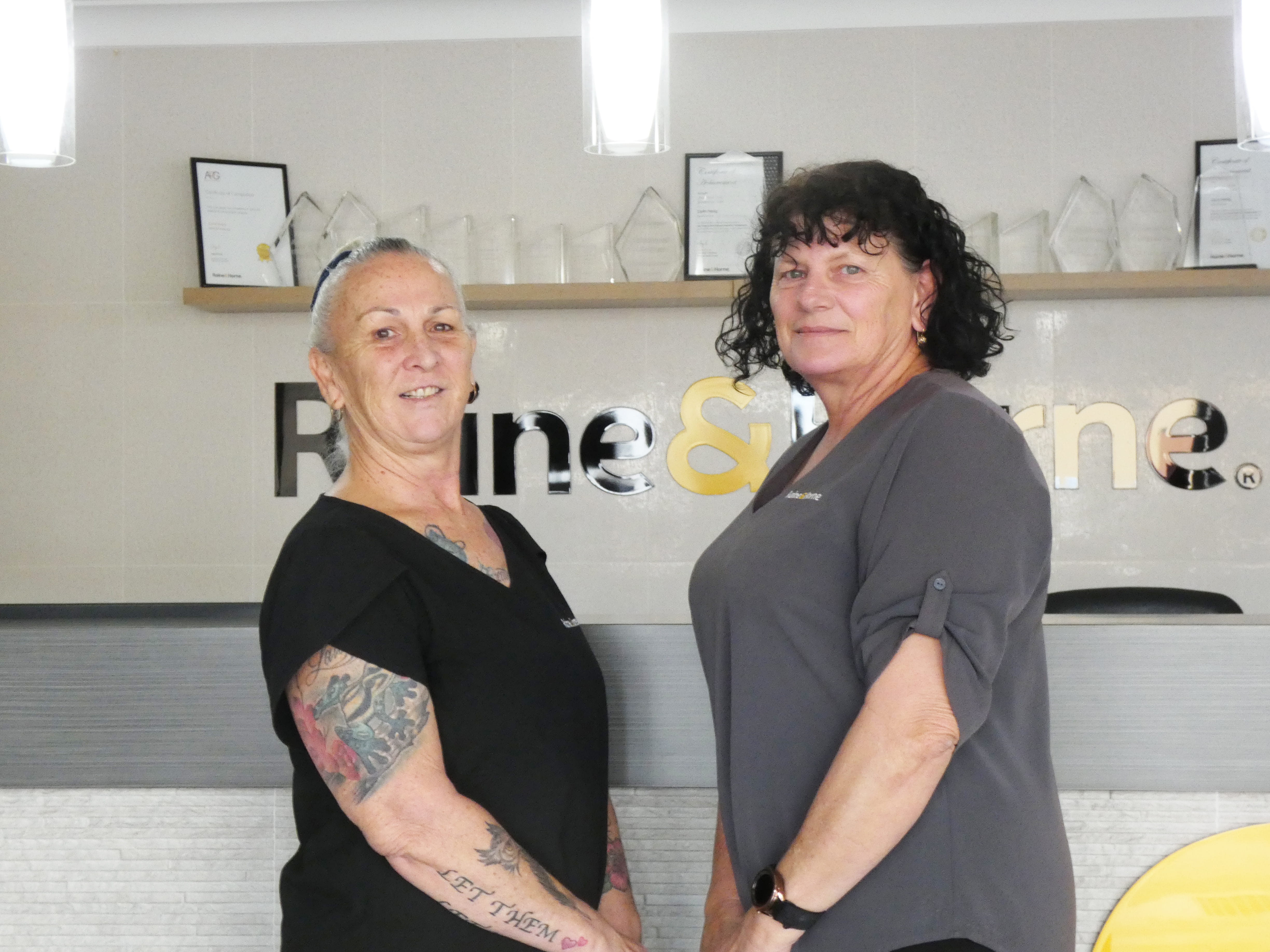
If you’ve walked through Raine & Horne’s doors in Ayr over the past three months, you may already have met Debbie Shanahan and Dee Farley. Photo: Jacob Casha
If you’ve walked through Raine & Horne’s doors in Ayr over the past three months, you may already have met Debbie Shanahan and Dee Farley.
But beyond what meets the eye are two different journeys that led to one formidable work friendship.
Debbie, a North Queenslander all her life, settled in the Burdekin in 2010, where she eventually joined the team at Raine & Horne after stints as a veterinary nurse, swimming coach, teacher’s aide and childcare worker.
She made the transition to administration after previously serving as property manager upstairs, and hasn’t looked back since.
Dee's story began a little further away, in Wollongong, New South Wales. She’s spent over 35 years between managing bars and nursing before making her way up to the Burdekin—which she calls her “new home.”
Ironically, it was when buying her new home that she was asked about working at Raine & Horne, kicking off her journey at the company seven months ago.
That’s when the pair met, and they’ve “had a good working relationship ever since,” says Dee.
Debbie said the catalyst of their chemistry isn't all that complicated: “Communication. Sick sense of humour.”
Dee added: “We like to make light of things—sometimes you’re under the pump, and if you can’t have a laugh, you’ll end up in tears.
“We do look at things very similarly in the office and outside in life. We can look at each other sometimes and know exactly what the other is thinking.”
They both share a love for animals outside of work—Debbie with her horses and dogs, and Dee with her Neapolitan Mastiff-cross, Nash.
On the job, the pair’s easy rapport doesn't mean they never get on each other’s nerves.
“We bounce off each other, we communicate, we get the poos with each other—but we get over it,” Dee said.
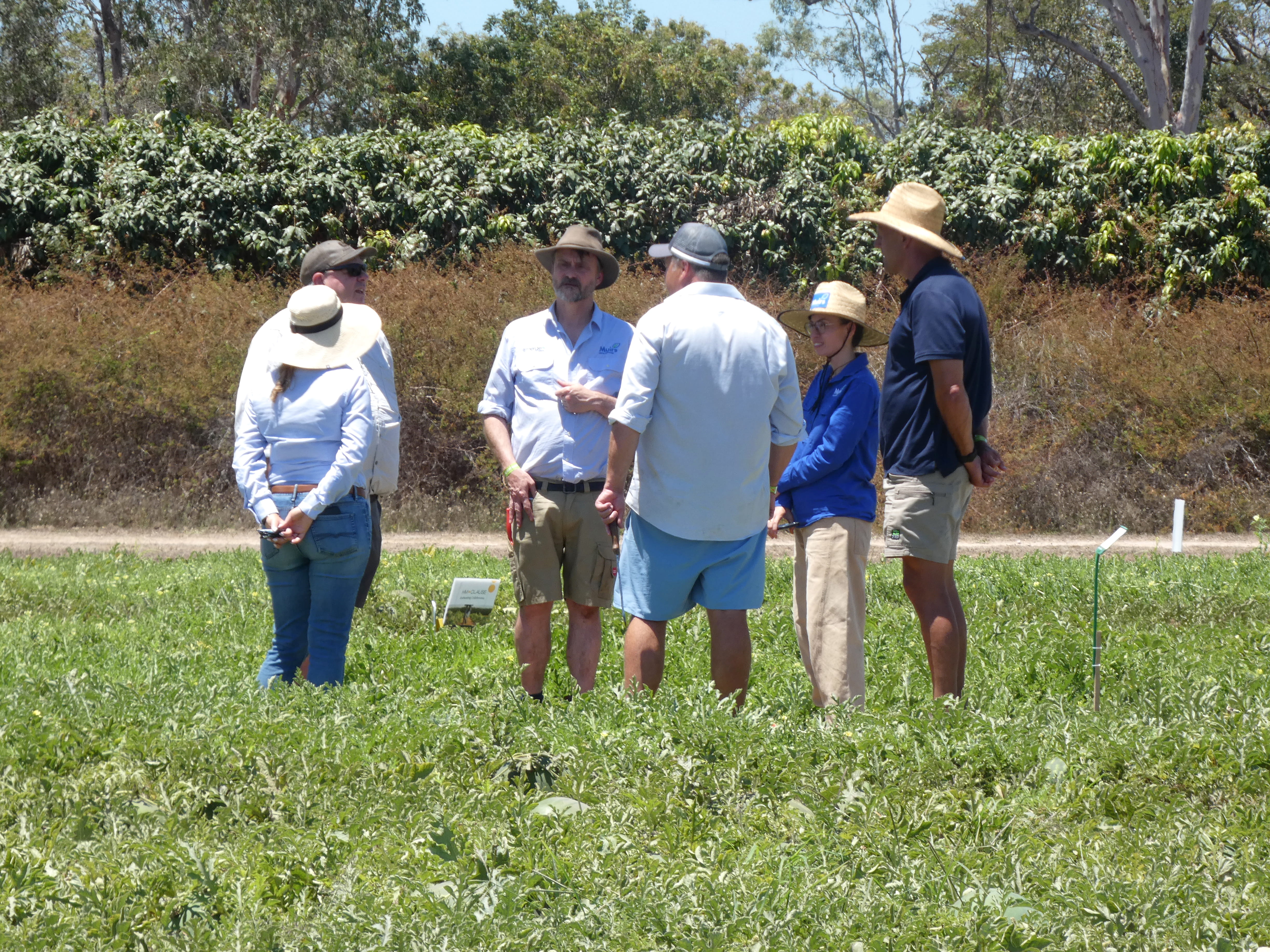
Last Wednesday’s Australian Melon Field Day in Ayr was a chance “to bring our industry back together” to discuss cost-of-labour challenges and the industry’s long-term future, say organisers. Photo credit: Jacob Casha
Last Wednesday’s Australian Melon Field Day in Ayr was a chance to bring the industry back together, discuss cost-of-labour challenges and the industry’s long-term future, organisers said.
The field day, held at the DPI Research Station, attracted roughly 200 growers and students—the first event of its kind since 2018.
“The industry has been knocked from pillar to post lately; pricing, biosecurity incursions, you name it, they’ve endured it,” Melons Australia chief executive Johnathan Davey said.
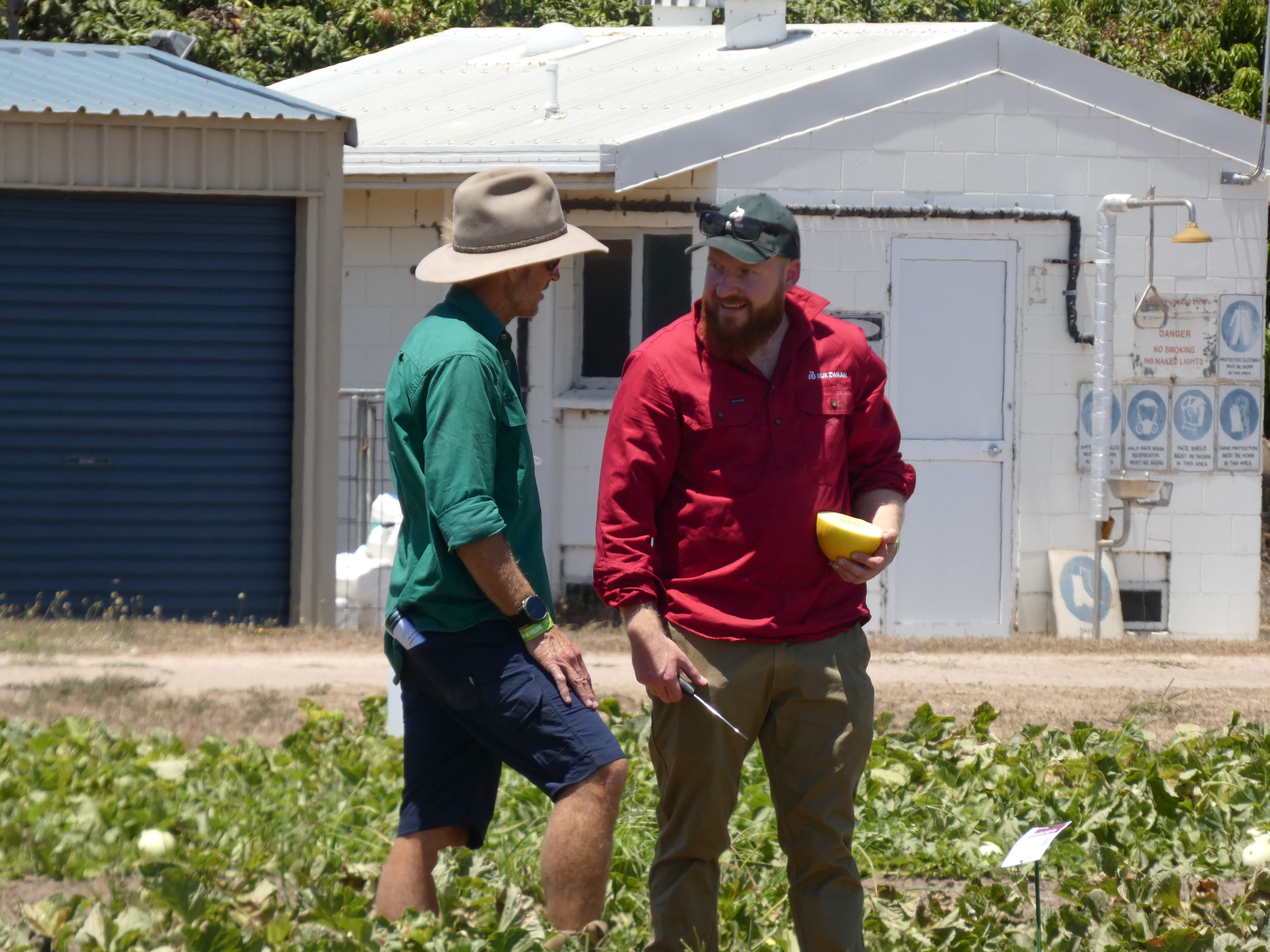
“We need to work out who we are and what we want to be in the future and today was just the start.”
Mr Davey said labour costs had long been a concern for growers.
“We’ve heard over the last couple years that our growers need support in reducing workforce costs; automation, mechanisation, the whole concept of being able to support your crops and do weeding at the same time,” he said.
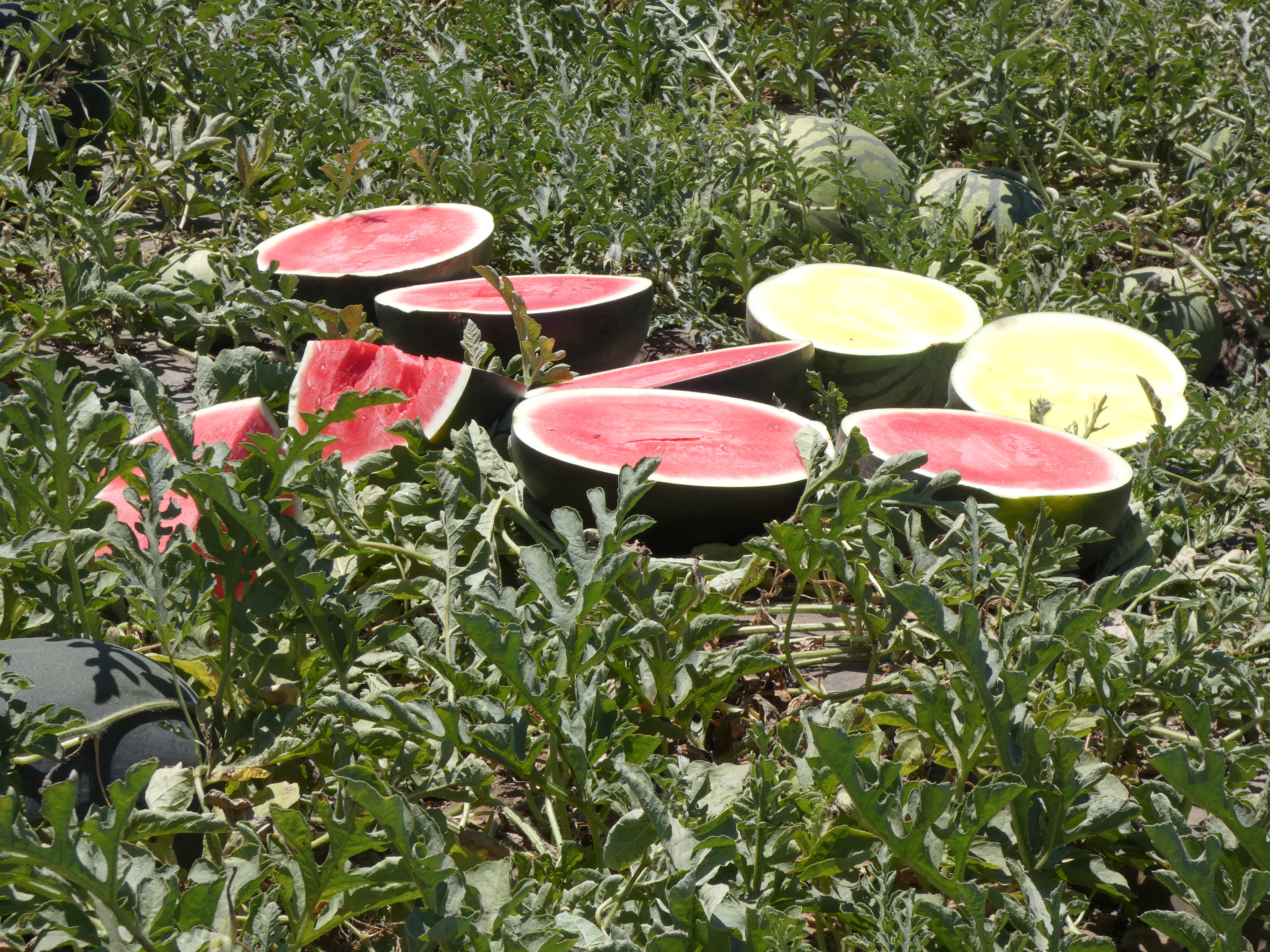
“40-odd dollars an hour for wages, the labour cost of doing business—it’s something that’s going to drive people out in the near future.”
Despite the challenges facing growers, Mr Davey said emerging melon varieties and projects by Burdekin students offered reasons for optimism.
Home Hill State High School students showcased their melon-growing project, developed over two years with the Department of Primary Industries’ Protective Cropping Team.
The school's agriculture and horticulture students have used their on-site protected cropping facility to grow melons, learn about fertigation, plant development and production data, and trial varieties supplied by seed companies HM Clause and Rijk Zwaan, with support from Melons Australia.
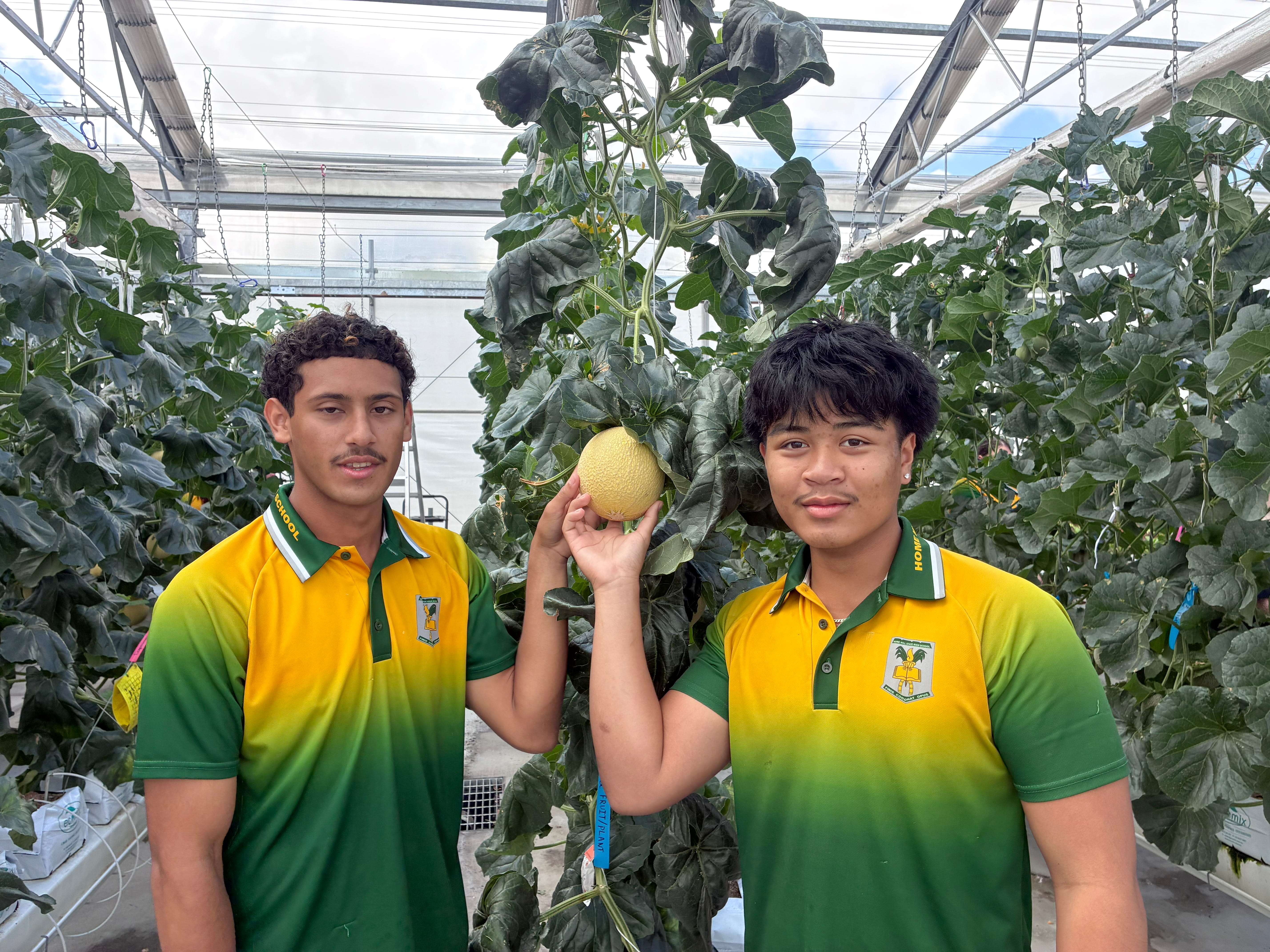
“To be able to showcase the work of the next generation was fantastic,” Mr Davey said.
“We need to be identifying and working with the next generation of farmers, of wholesalers, and people who have a passion in the industry.
“A lot of people thought it was amazing to see young faces having an interest.”
He also praised DPI Research Station staff, saying their contributions to the industry “can’t be understated.”
.jpeg)
Biosecurity Queensland has reported recent detections of JEV in commercial pigs in Queensland.
Burdekin residents and livestock owners are being urged to take precautions against Japanese encephalitis virus (JEV) as mosquito activity increases across North Queensland.
Biosecurity Queensland has reported recent detections of JEV in commercial pigs in Queensland, following earlier detections in a person and commercial pigs in May and a feral pig in June.
JEV is spread by infected mosquitoes and naturally circulates between mosquitoes, birds and pigs. It cannot be transmitted directly from infected animals to people or from person to person.
Residents are being encouraged to use insect repellent, wear protective clothing outdoors and remove standing water around homes and properties where mosquitoes can breed.
Livestock producers, horse owners and others involved in animal care are also being urged to maintain strong biosecurity practices and monitor animals for signs of illness.
In pigs, JEV can cause reproductive losses, while infected horses can develop neurological symptoms including incoordination, difficulty swallowing and impaired vision.
JEV is a reportable disease in Queensland, with suspected cases required to be reported within 24 hours.
Anyone who suspects JEV in an animal should contact their veterinarian or Biosecurity Queensland on 13 25 23.
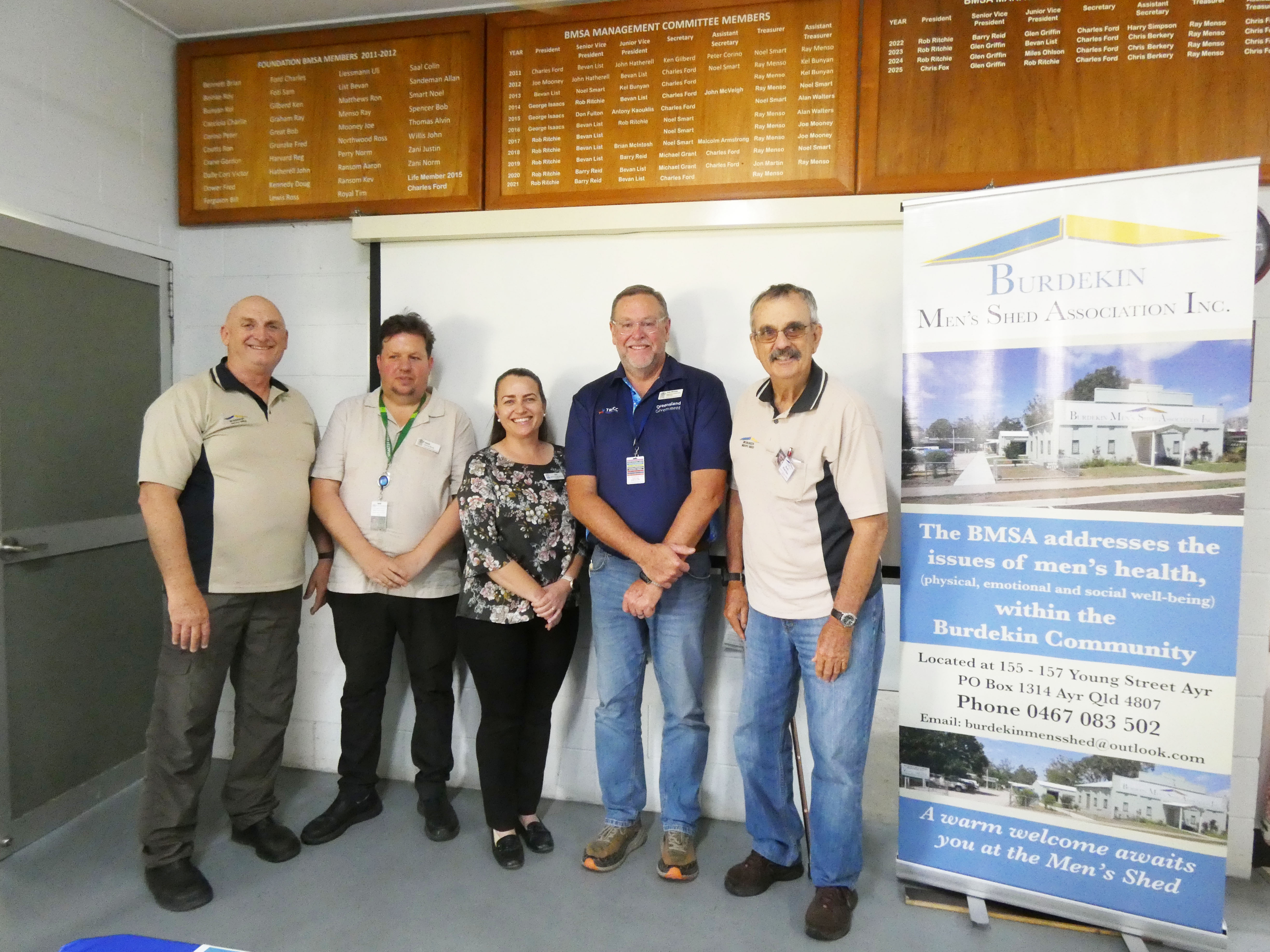
BMSA members John Furnell (left) and Rob Ritchie (right) with guest speakers Joseph McCormack, Amy Goodhew and Sean Winning. Photos: Jacob Casha
Mental health was brought to the fore last Wednesday as Burdekin locals gathered for a community event highlighting support services available across the region.
Hosted by the Burdekin Men's Shed Association (BMSA) as a joint Seniors Week and Queensland Mental Health Week initiative, the event featured guest speakers from three North Queensland-based mental health organisations, reminding locals that support is always within reach.
The morning's keynote speaker, Joseph McCormack, a mental health clinician with the Townsville Hospital and Health Service's Disaster Recovery Team, discussed mental health and wellbeing challenges experienced by people of all ages, prevention strategies and the role physical illness can play in mental health.
Regional clinician Sean Winning from TRACC (Tackling Regional Adversity through Connected Communities) and ADA Link Community Connector Amy Goodhew also gave brief presentations about their respective organisations and the services they offer locals.
BMSA secretary Charles Ford said the day was an opportunity to connect the community with services that could make a difference.
“Mental health is a big thing today,” Mr Ford said.
“Days like today are our way of introducing the Burdekin community to all these facilities that are there to help. Hopefully now people have some contacts to turn to.”
He said the event formed part of the association's broader mental health mission.
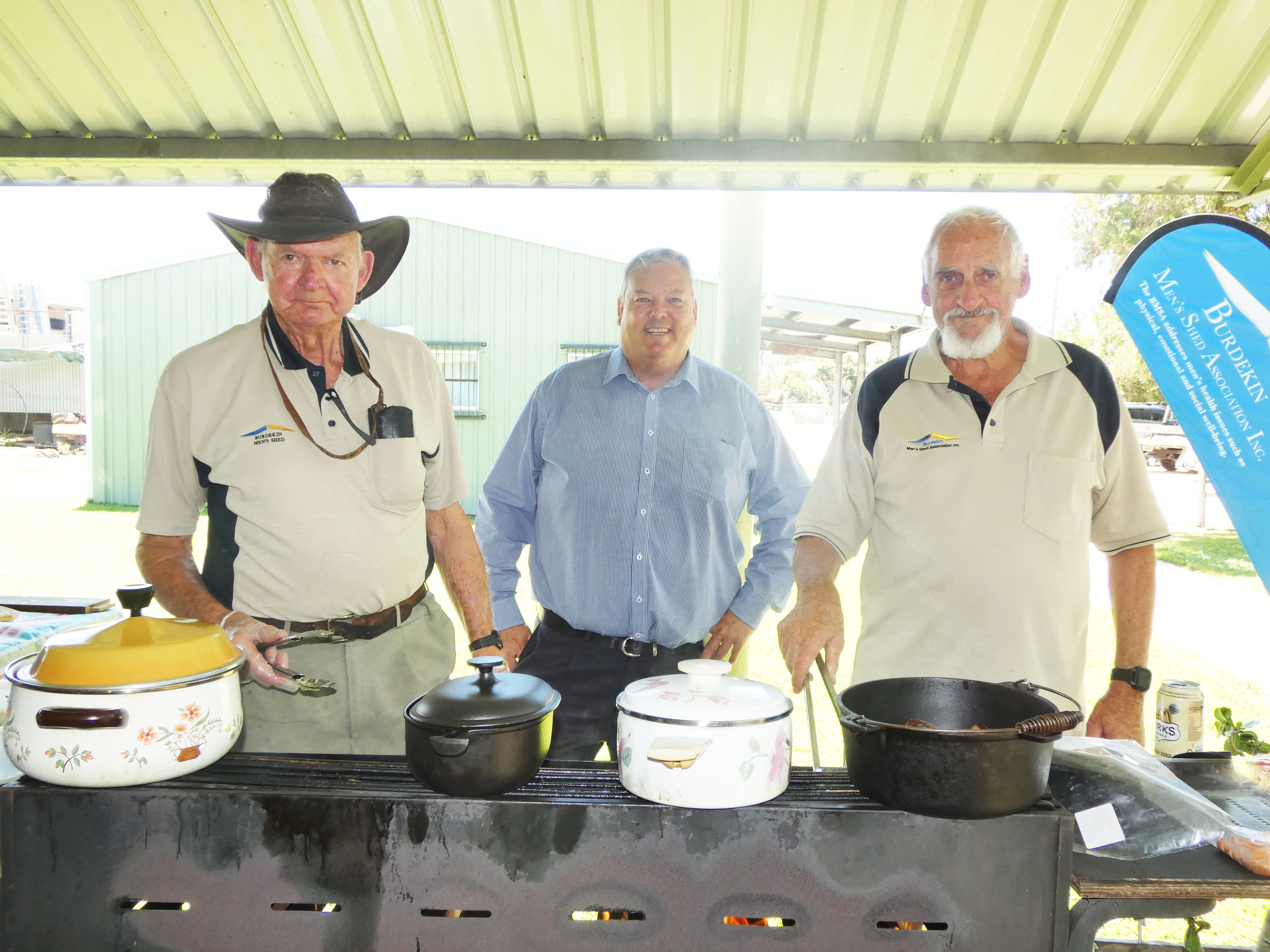
“We said that our main objective, right from day one, was that we address men's health issues--depression, mental health, loneliness. A lot of [other Men's Shed] clubs are only looking inward at themselves and their members--we're different. We look at the whole community and give back to them, and they give back to us,” he said.
“We are looking after our members, but we're also looking out for future generations of our men.”
Federal Member for Dawson Andrew Willcox, who attended the event, said it served a twofold purpose for him.
“It's just a good opportunity for me to call in, get some knowledge, and say thank you to the beautiful citizens that help shape this country of ours,” Mr Willcox said.
He said the visit also provided an opportunity to discuss the issues facing Burdekin locals and gain a better understanding of their experiences and concerns.
At the conclusion of the official proceedings, attendees were invited to socialise and explore the BMSA facility over a sausage sandwich.
A raffle was also drawn, with the winner taking home a bench seat crafted in-house and valued at more than $100.

For Jade Bywaters, the Home Loan Specialist at Community Bank Home Hill & Ayr, listening is exactly where successful home ownership begins. Photo supplied
Contributed with thanks by Community Bank Home Hill & Ayr
In today’s fast-paced banking world, finding someone who genuinely listens can feel like a rare commodity. But for Jade Bywaters, the Home Loan Specialist at Community Bank Home Hill & Ayr, listening is exactly where successful home ownership begins.
Since joining the Community Bank team in 2019, Jade has built her reputation on a simple but powerful philosophy: understanding the person behind the financial conversation. She knows that every local family, first-home buyer, and investor walks through the door with a unique story, set of priorities, and set of dreams.
For Jade, the Burdekin region is much more than just a place of work—it is home. Having moved to Ayr at just eight years old, she has deep roots in the community. Outside the branch, she is a proud local mum raising her two daughters, Kayley and Larah, alongside her partner Shaun and their busy family collection of animals.
It is this firsthand local connection that Jade brings straight to her lending desk. She understands the local property market, appreciates the unique Burdekin lifestyle, and knows just how momentous buying or building a home is for families in the area.
“The absolute best part of my role is getting to help our locals bring their property dreams to life,” Jade says. “It is a true privilege to walk alongside our community members through every stage of their journey.”
Taking the first step into the property market can often feel overwhelming and complex. Jade prides herself on breaking down the jargon, offering a patient, approachable, and highly personalized experience that turns a stressful transaction into an exciting milestone.
Whether you are looking to secure the keys to your very first property, upgrading to fit a growing family, or simply exploring your next investment move, Jade’s focus remains steadfast: listen carefully, understand what matters to you, and support you every step of the way.
“Buying a home is so much more than just a transaction,” Jade explains. “It is a life-changing milestone. I love being a trusted, friendly guide who can bring absolute clarity and confidence to the process.”
Ultimately, Jade's commitment to the Burdekin is about being available, approachable, and genuinely invested in the success of local people. When you work with Jade, you aren't just getting a home loan specialist; you are gaining a lifelong local partner for your financial journey.
Ready to take your next step?
If you are ready to discuss your home loan needs with someone who truly understands the local community, contact Jade Bywaters directly today.

The group says volunteering offers opportunities to learn new skills, spend time outdoors and build connections within the community. Photo supplied
The Lower Burdekin Scout Group is looking for volunteers aged 18 to 88 to help guide the region’s next generation of Scouts.
Volunteers can contribute as little as one to two hours a week or a few hours a month, working with adult members, young Scouts or both.
No previous experience is required, with the group providing training and opportunities to gain further qualifications in areas of interest. A Working with Children card is also provided free of charge.
The call comes as the group rounds off a busy 2026, which has included weekend camps and sleepovers, hikes, abseiling days and trips to Townsville and Magnetic Island.
Members have also taken part in community events, including Clean Up Australia Day, National Tree Planting Day, the Anzac Day parade and the Home Hill Harvest and Burdekin Water Festivals.
The group says volunteering offers opportunities to learn new skills, spend time outdoors and build connections within the community.
Those interested in volunteering can contact Rikki on 0419 104 035.
Get Ready Week is an important reminder for all of us to prepare for the unexpected events that can occur during disaster season. Even if you have lived in the area all your life, it is important not to become complacent. The Disaster Dashboard now also gives you the option to choose your preferred language, making important information easier to access. If you have a new neighbour, please encourage them to contact Council for information on how they can prepare.
If you have a question, suggestion or idea for the Burdekin, I’d love to hear from you. I’ll be at the Hotel Pioneer in Brandon on Saturday 17 October from 8.00am to 10.00am for our next Catch Up with the Mayor. Come along for a coffee and a chat about local issues, share your feedback and find out what’s happening across the Shire. There’s no need to make an appointment. Everyone is welcome, and I look forward to seeing you there.
We received welcome news when the Australian Government reversed its decision to reduce its share of disaster funding from 75 per cent to 50 per cent. The change would have placed significant pressure on state and local governments. Followingthe January and February 2025 disaster event, Burdekin Shire Council claimed $22 million, with the Australian Government contributing $16.5 million and the Queensland Government $5.5 million. Under a 50–50 arrangement, the Australian Government’s contribution would have fallen to $11 million, leaving an additional $5.5 million to be found. For Council, that amount is equivalent to a 17.46 per cent rate rise, based on each 1 per cent raising about $315,000. We simply could not absorb that cost without risking lengthy delays to the repair or replacement of Council infrastructure. Thankfully, the current funding arrangements will continue, which is welcome news for councils and disaster-affected communities like ours.
As always, if you have any questions or would like to discuss any Council matters, please contact me directly by phone on 0447 150 582 or by email at mayor@burdekin.qld.gov.au.

Something I feel strongly about is the role of councillors in holding Council accountable.
Council's CEO, directors and management are responsible for running the day to day operations of the organisation. These people are appointed to their positions, not elected by the community.
As ratepayers, you don't get to vote on who runs the organisation. Instead, you elect councillors to represent you and make sure the organisation is being run in your best interests.
That doesn't mean councillors and management can't have a good working relationship. We need to work together while maintaining our independence and being prepared to question things, consider alternatives and challenge the way things have always been done. This shouldn't be seen as creating problems.
Above all, I believe councillors should have an enormous respect for the ratepayer's dollar. It's not our money, and if we ever lose sight of that, we need to seriously question whether we're still doing the job we were elected to do.

Following completion in 2022, all-tide access at Molongle Creek suffered significant damage from subsequent flooding and severe weather.
Contributed by the Office of Member for Burdekin Dale Last MP
Futureproofing access to more than 200 holiday huts at Cape Upstart remains at the fore following recent discussions between stakeholders and Member for Burdekin Dale Last MP.
Following completion in 2022, all-tide access at Molongle Creek suffered significant damage from subsequent flooding and severe weather with stakeholders now actively working to progress interim repairs as well as long term plans for the facility.
Mr Last said a recent meeting with Molongle Creek Boat Club members had been a proactive
opportunity to not only continue advocacy for improving boating access to Cape Upstart but to allow for future planning and safety improvements.
“It’s disappointing for members of the community who rely on Molongle Creek and have been left with the consequences of this mess by the former government. This should have been a project the community was still reaping the benefits of four years down the track.”
“What we don’t want to see is millions of dollars spent on a project that doesn’t take into account the views and advice provided by locals or requires significant ongoing work at the expense of the taxpayer.”
“At the heart of this remains the safety of our boating public and the safety of those property owners on Cape Upstart. We know Molongle Creek provides the nearest access to respond in times of emergency which is why I have ensured this matter has continued to receive attention by all levels of government.”
Mr Last said the recent meeting made clear that while there remained advocacy for some interim dredging to occur, consideration needed to be given to the time of year in order to effectively undertake the access repairs.
“Ultimately any work on Molongle Creek needs the support of all levels of government to ensure the necessary approvals are in place.”
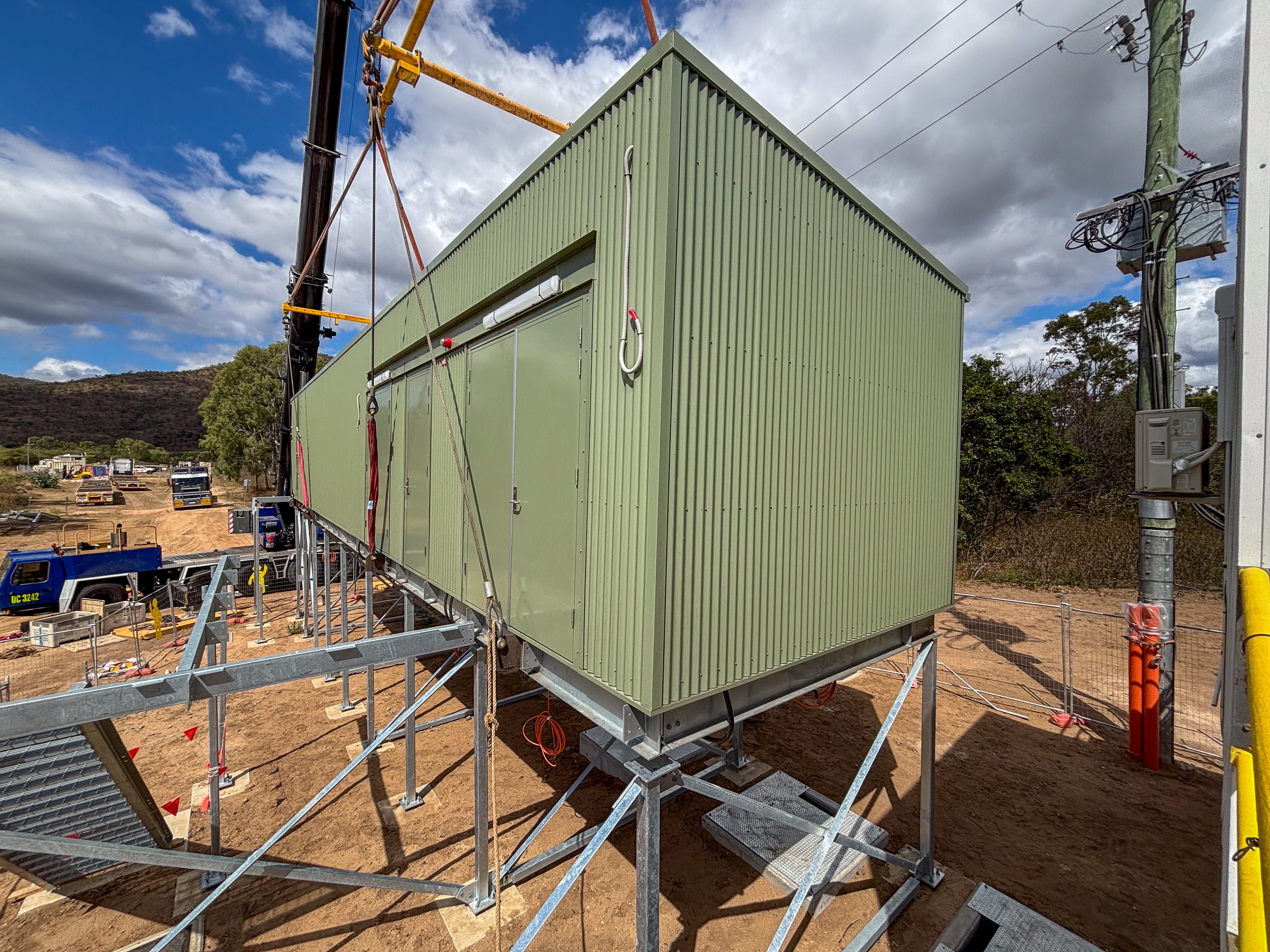
The works included the installation of a new electrical switch room, replacement cabling, updated control and monitoring systems, and new safety measures to mitigate electrical hazards for site workers. Photo supplied
A major upgrade to Sunwater's Elliot Pump Station south of Clare is now complete, replacing original equipment that had been in service for nearly four decades.
The Sunwater facility, located on the Burdekin River about 10 kilometres south of Clare, plays a central role in delivering water to Lower Burdekin irrigators.
The works included the installation of a new electrical switch room, replacement cabling, updated control and monitoring systems, and new safety measures to mitigate electrical hazards for site workers.
Despite extensive works, crews managed to keep water flowing to regional farms without interruption throughout the entire project.
Sunwater Burdekin Whitsundays Operations Manager Aaron Elphinstone said the modernised facility reinforces long-term reliability for local agriculture.
“The original pumps have been in operation since the late 1980’s, providing a reliable water supply for the past four decades before reaching end of life,” he said.
“With the capability to support a long design life, the upgrade provides a safe and resilient asset that will continue to deliver reliable water.”
The project relied on regional trades and suppliers, with Townsville-based Minelec serving as principal contractor alongside CivilPlus Constructions. Fabrication and construction support were provided by Powerhouse Switchrooms, Crisp Power and Control, and Woodfield Engineering.
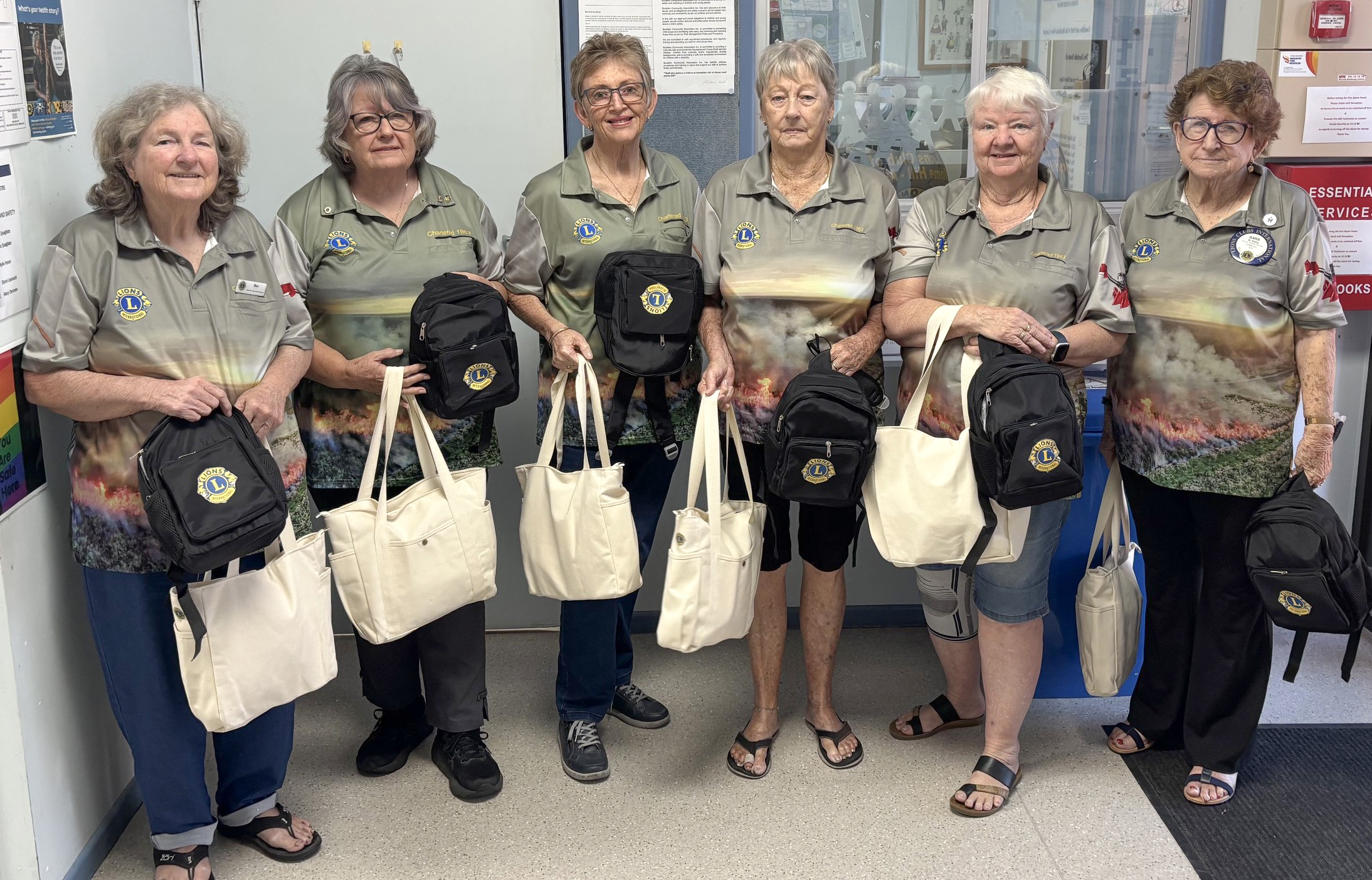
(L-R) Bev Ruth, Rhondda Ware, Jenny Donald, Lynn Hutchings, Nola Nendick (President) and Barb Early Photos supplied
Ten bags filled with essential items and small comforts will help women and children leaving homes affected by domestic and family violence, thanks to a donation from the Home Hill-Ayr Lions Club and its ladies craft group.
The group recently donated 10 complete bag sets to the Burdekin Community Association (BCA), which will distribute them to people in need as situations arise.

The sets contain three bags each, with toiletries and personal care items in white bags, toys, books and pencils in black bags, and clothing, toiletries and comfort items, including a teddy bear, in coloured bags.
The Lions craft group spent many Thursday sessions assembling the sets, attaching Lions logos and making toys for the black bags.
The Lions Club purchased the contents of the white bags, spending more than $300 on supplies, while the Alannah & Madeline Foundation donated the coloured bags and their contents. The Lions Club donated $500 to the foundation in recognition of its work supporting children across Australia.
BCA chief executive Debra Cochran thanked the Lions for their contribution.
“BCA is very grateful,” Ms Cochran said.
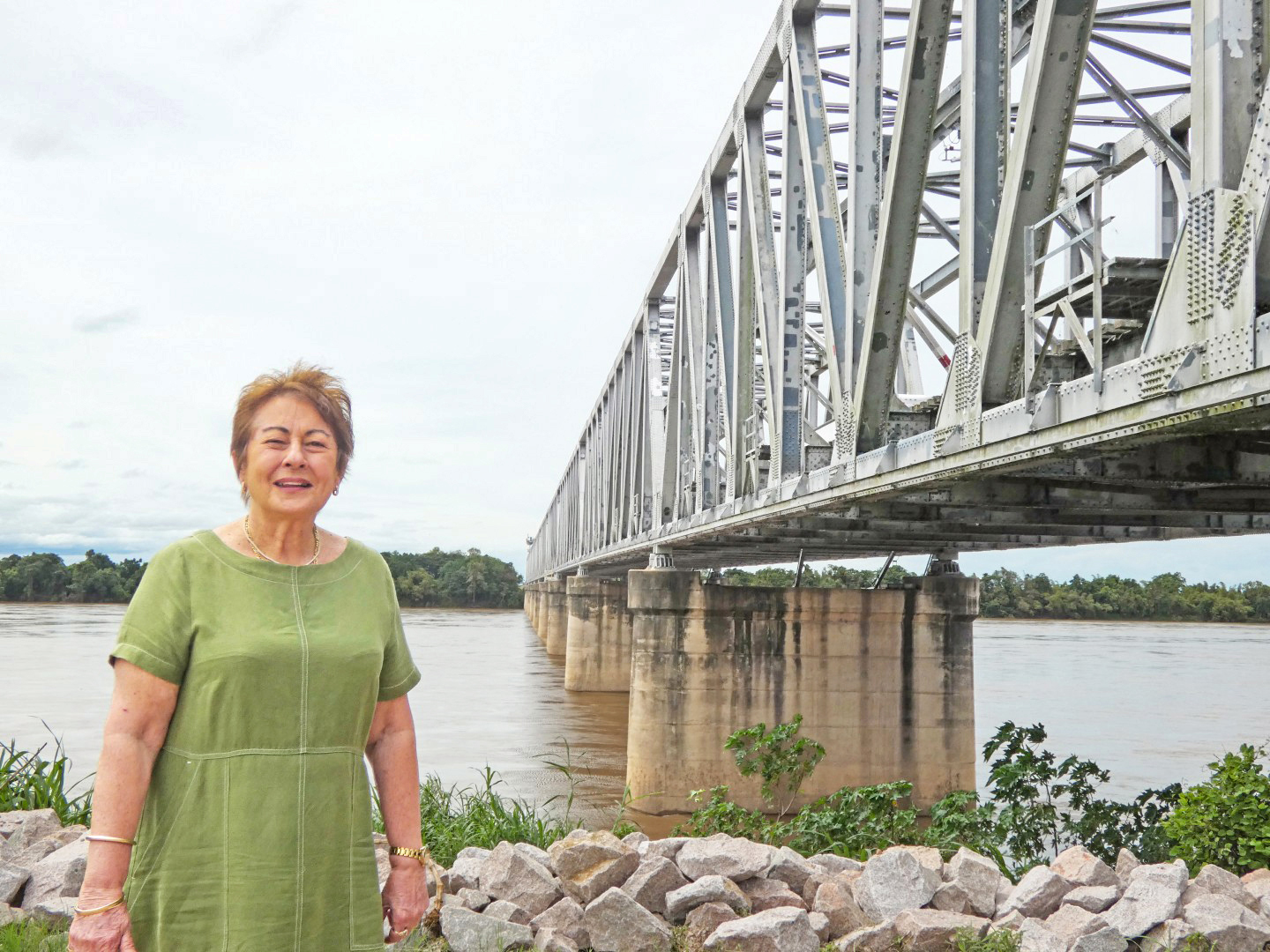
Burdekin Shire Council Mayor Pierina Dalle Cort called the decision a “win” for the Burdekin. Photo: Jacob Casha
Months of calls to ‘dump the deal’ have convinced the Federal Government to bin a proposal that threatened to leave North Queensland communities facing millions of dollars in additional disaster recovery costs. Burdekin Shire Council Mayor Pierina Dalle Cort called the decision a “win” for the Burdekin.
The Federal Government has backflipped on a proposal to slash its share of disaster recovery funding after unified pushback from regional North Queensland communities, including the Burdekin.
The Commonwealth last Friday confirmed it would retain its contribution of up to 75 per cent of eligible disaster recovery costs, abandoning a proposed 50-50 State-Commonwealth funding split that could have left the Burdekin shouldering millions in additional disaster recovery costs.
“[This decision] is the direct result of strong advocacy from councils and Queensland federal Labor colleagues,” Federal Treasurer Jim Chalmers said.
“When disaster strikes, we will be there with the funding to help people get back on their feet, and that’s what these changes are all about.”
Burdekin Shire Council Mayor Pierina Dalle Cort called the decision a “win” for the Burdekin.
“I don’t know why [the Government] even considered the proposal or where it came from,” she said.
“We [regional councils] had to get the message loud and clear —we suffer more than other places … It’s a great outcome.”
Council CEO Matthew Magin said the proposed 50-50 split would have placed a substantial burden on the Burdekin and its ratepayers.

Under the proposed reforms, the Burdekin’s $22 million disaster recovery claim from January-February 2025 would have received $11 million in federal funding, down from $16.5 million. Mr Magin said covering half the remaining $11 million locally would have meant a 17.46 per cent rate rise.
“Our ratepayers would have copped a real blow—or we wouldn’t have been able to fund the recovery work, which would make the Burdekin community look like a disaster in itself,” Ms Dalle Cort said.
Ms Dalle Cort was among the panellists at the Local Government Association of Queensland’s (LGAQ) Coastal Leaders Forum in the Whitsundays in July, where councils discussed the DRFA changes proposed by the Federal Government a month earlier.
The forum was part of a broader, months-long LGAQ campaign, which included a protest by six Queensland mayors in Melbourne, a unanimous Townsville City Council motion calling on the Prime Minister to reconsider the changes, and a statewide campaign backed by all 77 Queensland mayors.
Minister for Emergency Management, Kristy McBain, argued the proposed reforms were designed to shift disaster management towards risk reduction and faster response, describing the model as “simpler and fairer for all Australians.”
Following consultation with councils around Australia, as well as recommendations from the Independent Review of Commonwealth Disaster Funding, the Government ultimately scrapped the proposal.
The decision means councils also retain their ability to claim costs for counter disaster operations, with funding activation thresholds to be revised.
Biosecurity Queensland has reported recent detections of JEV in commercial pigs in Queensland.
Burdekin residents and livestock owners are being urged to take precautions against Japanese encephalitis virus (JEV) as mosquito activity increases across North Queensland.
Biosecurity Queensland has reported recent detections of JEV in commercial pigs in Queensland, following earlier detections in a person and commercial pigs in May and a feral pig in June.
JEV is spread by infected mosquitoes and naturally circulates between mosquitoes, birds and pigs. It cannot be transmitted directly from infected animals to people or from person to person.
Residents are being encouraged to use insect repellent, wear protective clothing outdoors and remove standing water around homes and properties where mosquitoes can breed.
Livestock producers, horse owners and others involved in animal care are also being urged to maintain strong biosecurity practices and monitor animals for signs of illness.
In pigs, JEV can cause reproductive losses, while infected horses can develop neurological symptoms including incoordination, difficulty swallowing and impaired vision.
JEV is a reportable disease in Queensland, with suspected cases required to be reported within 24 hours.
Anyone who suspects JEV in an animal should contact their veterinarian or Biosecurity Queensland on 13 25 23.
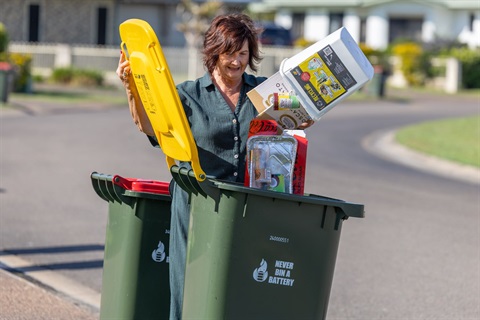
More than a quarter of the material being put into Burdekin recycling bins cannot be recycled through the kerbside service, according to a recent audit. Photo: Burdekin Shire Council
More than a quarter of the material being put into Burdekin recycling bins cannot be recycled through the kerbside service, according to a recent audit.
The audit found 28 per cent contamination across the region’s yellow-lid bins, with bagged recyclables, soft plastics and non-recyclable plastic items among the most common contaminants.
Mayor Pierina Dalle Cort said the result showed residents needed to take more care when sorting their household waste.
“The Burdekin is fortunate to have a three-bin waste collection system, with separate services for general waste, recycling and green waste. This provides households with more opportunities to divert material away from landfill and recover valuable resources,” she said.
“By placing recyclable items loose in the yellow-lid bin, keeping plastic bags and soft plastics out of the recycling stream, and taking a moment to check which bin an item belongs in, residents can make a significant difference to the quality of recycling collected across our community.”
Council said incorrect items can contaminate recyclable material, increasing processing costs and reducing the amount of material that can be recovered and reused.
Residents are reminded to place recyclable household packaging and containers loose in yellow-lid bins, including paper and cardboard, glass bottles and jars, aluminium and steel cans, and plastic bottles and containers.
Plastic bags and soft plastics should not be placed in recycling bins.
Households that regularly fill their recycling bin can also apply to upgrade to a larger 360-litre recycling bin.
Residents unsure where an item belongs can use the Recycle Mate app for recycling advice.
Contributed by Zarraffa’s Coffee Ayr
Coffee and something freshly baked on the side? That sounds like a pretty good way to start the day.
Zarraffa’s Coffee Ayr Drive Thru has welcomed two delicious new pastries to their Freshly Baked range, giving locals even more reasons to make a stop on the morning commute, school run or next afternoon coffee break.
If you’re in the mood for something a little indulgent, say hello to the Portuguese Tart. With a silky caramelised custard centre nestled inside a sweet, flaky pastry shell and finished with a beautifully caramelised top, it’s crisp, creamy and made for pairing with your favourite coffee.
More of an apple and cinnamon fan? The Apple Cinnamon Twist might be calling your name. Sweet apple and gently spiced cinnamon come together in a golden lattice pastry, finished with a light dusting of icing sugar. Warm, comforting and just the thing when you’re craving a little treat. Of course, the hardest part might be choosing which one to try first!
So next time you’re passing through, swing by Zarraffa’s Coffee Ayr Drive Thru, grab your go-to coffee and add something freshly baked on the side. The team will be ready to welcome you with a friendly smile.
Zarraffa’s Coffee Ayr, located at 125 Edwards Street. Open from 5am – 8pm daily.
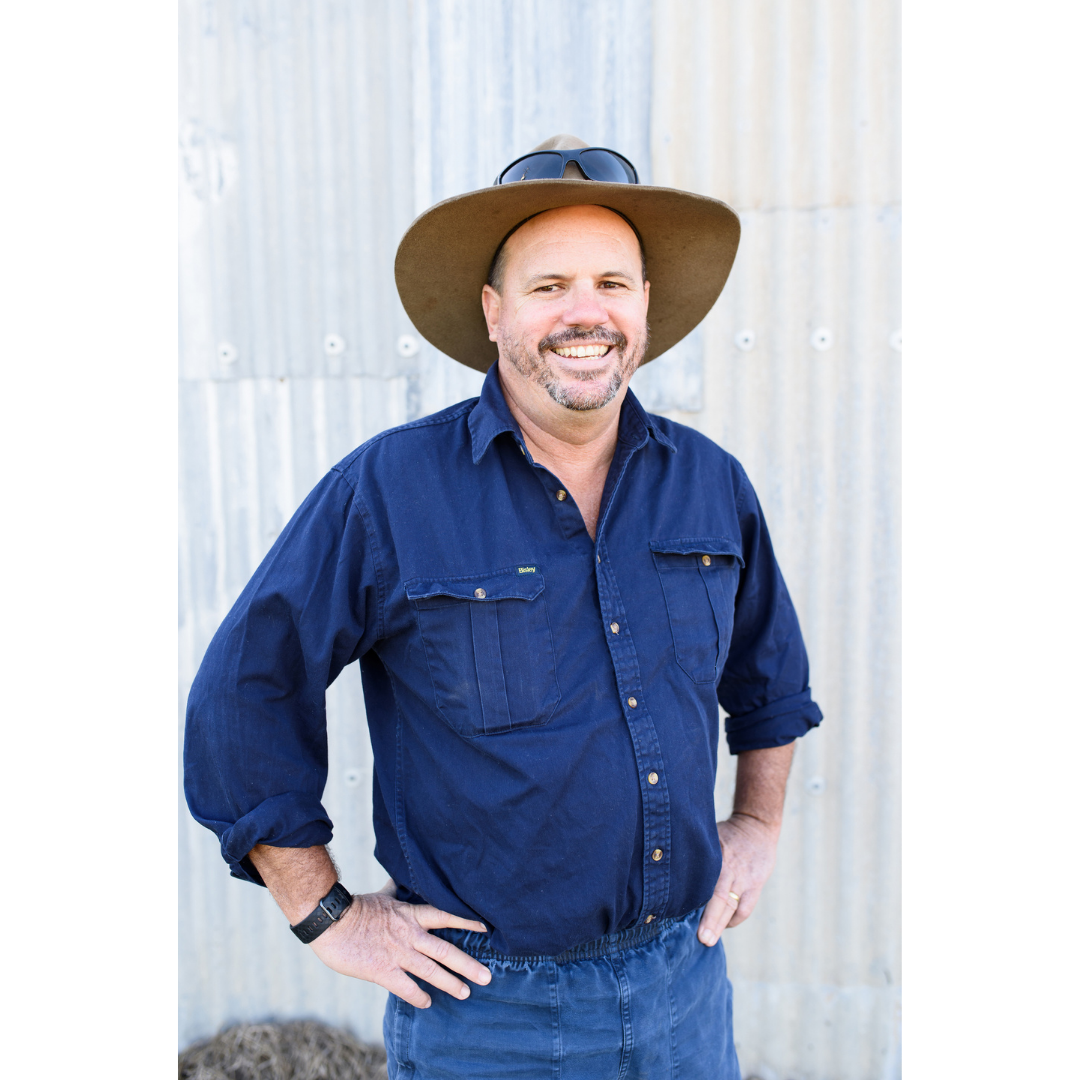
Burdekin Grower and Queensland Canegrowers Chair Owen Menkens is the industry-preferred candidate for the upcoming STL G-Class Director position. Photo credit: QCGO.
By Joseph Borg, Chairman, CANEGROWERS Mackay
The upcoming Sugar Terminals Limited (STL) Grower/G‑Class Director election, to be decided at the company’s Annual General Meeting on 21st October 2026, has unexpectedly become one of the most closely watched governance moments in Queensland’s sugar industry recent history.
With major shareholder Queensland Sugar Limited (QSL) announcing its support for CANEGROWERS Chairman Owen Menkens, the contest has highlighted deeper questions about grower representation, terminal strategy, and the future direction of one of the industry’s most important infrastructure owners.
STL oversees Queensland’s bulk sugar terminal network which is a system of storage and loading facilities that underpins the state’s export driven sugar sector. For growers, the terminals are not just physical assets but are a critical choke point: the backbone of the industry’s logistics chain. Decisions made at the STL board table can influence marketing efficiency, shipping schedules, and long‑term investment in infrastructure.
QSL—itself a major player in sugar marketing and, up until 1st July this year, the operator of the terminals—has made it clear that they believe, along with the vast majority of growers and some milling companies, that Queensland CANEGROWERS Chairman Owen Menkens brings with him extensive knowledge of Queensland’s sugar industry and the vital role the bulk sugar terminal network plays within it. As Chair of Qld CANEGROWERS, also president of the World Beet and Sugar Association and a Burdekin cane farmer, Menkens has long been regarded as one of the industry’s most experienced grower leaders. Former CANEGROWERS Chairman Paul Schembri already serves as a Grower Director on the STL Board, and Menkens’ election would place another seasoned grower voice in a key governance role.
Most of the industry believes that this year’s election carries unusual weight. STL is navigating a period of significant challenge, including rising maintenance costs, evolving export requirements, and ongoing debate about the future configuration of the terminal network. Growers have expressed concern that decisions made now will shape the competitiveness of Queensland sugar for decades.
Against this backdrop, the decision by the CEO of Tully Mill to nominate for the Grower Director position in competition with Menkens has drawn attention and disappointment from some grower groups. While the CEO has not released detailed reasoning, the move has been interpreted by many as a sign of growing tension between some milling companies and certain growing sectors of the industry.
It could be argued that the G‑Class Director role exists specifically to ensure grower perspectives are not overshadowed by mill interests. Growers rely on STL to protect the integrity of the terminal network, so when a respected grower leader puts his hand up, it’ssurprising to see a mill CEO try to oppose that.
Disagreement is not unusual in an industry where marketing, logistics, and governance responsibilities are shared across multiple organisations with differing commercial priorities. The Tully Mill CEO’s action in nominating for a grower role may be considered to reflect broader debates about how STL should evolve and who should guide that evolution.
Despite the controversy, the election has prompted renewed discussion about the importance of strong grower representation. Many growers argue that having experienced industry leaders on the STL Board helps ensure decisions remain grounded in the realities of farming, harvesting, and delivering cane into a complex supply chain.
I would encourage all G‑Class shareholders to support Owen Menkens as this election is shaping up as a defining moment for STL governance. As the AGM approaches, growers and the broader public will be watching closely. The decisions made on 21st October will influence not only who sits at the board table, but how the industry navigates the challenges ahead.
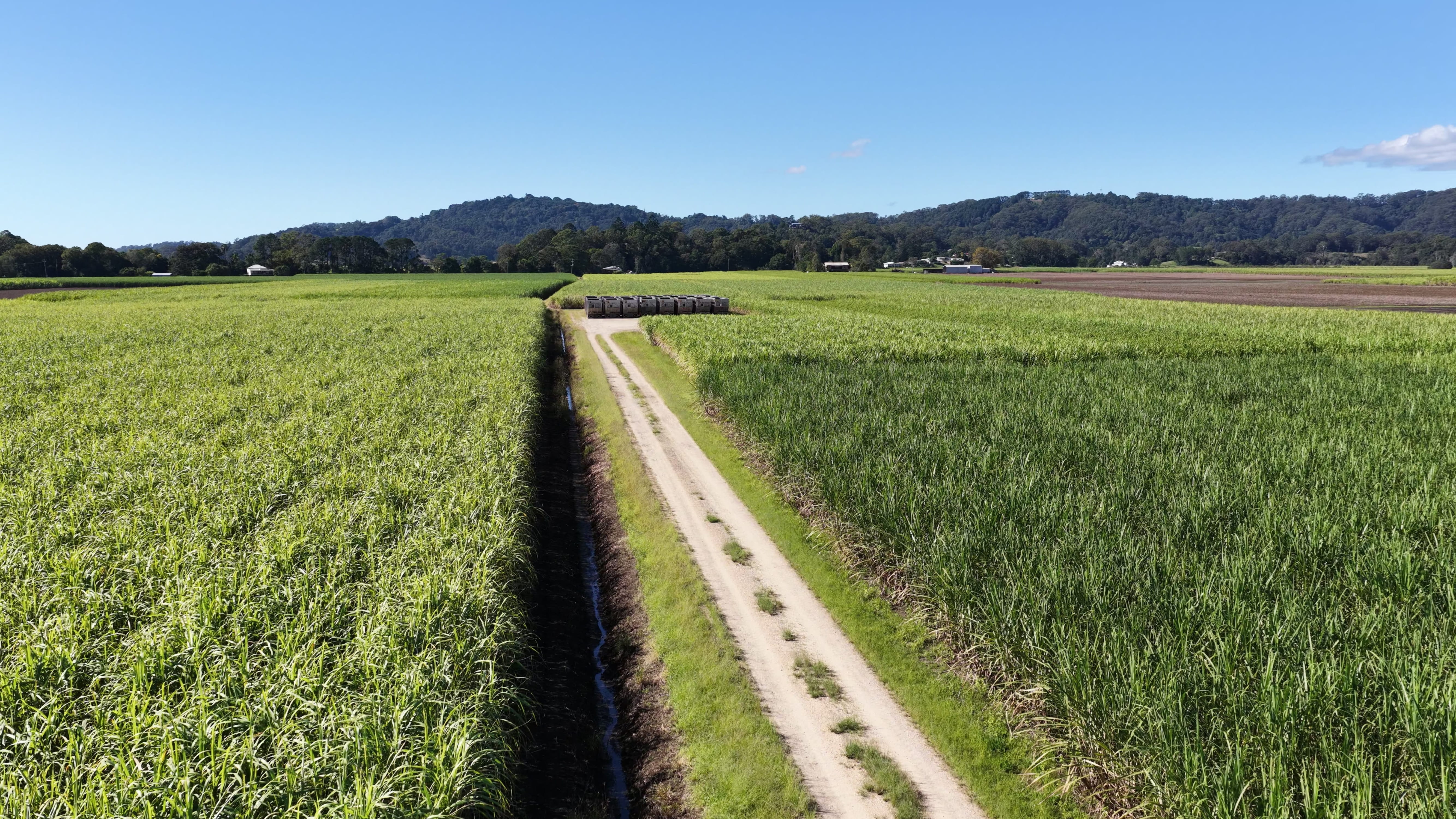
Photo source: Shutterstock
Sugar Research Australia has launched new research into Fusarium wilt after repeated reports of crop decline across other cane-growing regions; with researchers now working to establish what the disease means for districts including the Burdekin.
SRA Manager Biosecurity and Disease Screening Dr Shamsul Bhuiyan said Fusarium wilt was not currently considered a significant issue in the Burdekin, but one local field had shown symptoms consistent with the disease.
“No further investigations have confirmed the extent of the disease in the region,” Dr Bhuiyan said.
“Consequently, there is currently insufficient evidence to determine whether Fusarium wilt poses a significant risk to Burdekin growers.”
The uncertainty is one reason SRA's new research project is examining the disease across Australia's sugarcane-growing regions. Fusarium wilt is caused by fungi including Fusarium sacchari and can affect the health and longevity of sugarcane. Symptoms can include yellowing leaves, patchy or poor growth, reduced ratooning, stunted plants, root decline and unexplained areas of crop deterioration.
Dr Bhuiyan said these symptoms could easily be mistaken for other issues including soil compaction, nutrient deficiencies, soil toxicity, Pachymetra root rot or nematodes.
The research was prompted by increasing reports of poor germination, crop establishment failures, reduced ratooning, crop decline and stool mortality, particularly in Central Queensland and New South Wales. SRA investigations of affected crops had repeatedly identified Fusarium species over the past five to six years, with pathogenicity testing confirming the fungi can cause disease in sugarcane.
A major focus of the new project will be determining how widespread the disease is and identifying which Australian sugarcane varieties may be more resistant or susceptible.
“There is limited information on the susceptibility or resistance of Australian commercial sugarcane varieties to Fusarium wilt,” Dr Bhuiyan said.
There are currently no plans for field screening trials in the Burdekin, although SRA may establish local trials if future investigations indicate the disease is becoming more prevalent. For now, Dr Bhuiyan said vigilance was the most important tool for Burdekin growers.
“Early reporting will help researchers better understand the distribution and impact of the disease and ensure that any emerging issues are identified as quickly as possible.”
Growers noticing unexplained crop decline are encouraged to contact SRA for further investigation. SRA will also provide an industry update during Fusarium Wilt: Australian Industry Update, an online session on Tuesday, October 13 from 11am to 11:30am. The session is open to Australian sugarcane growers, millers and industry participants, with registration required.
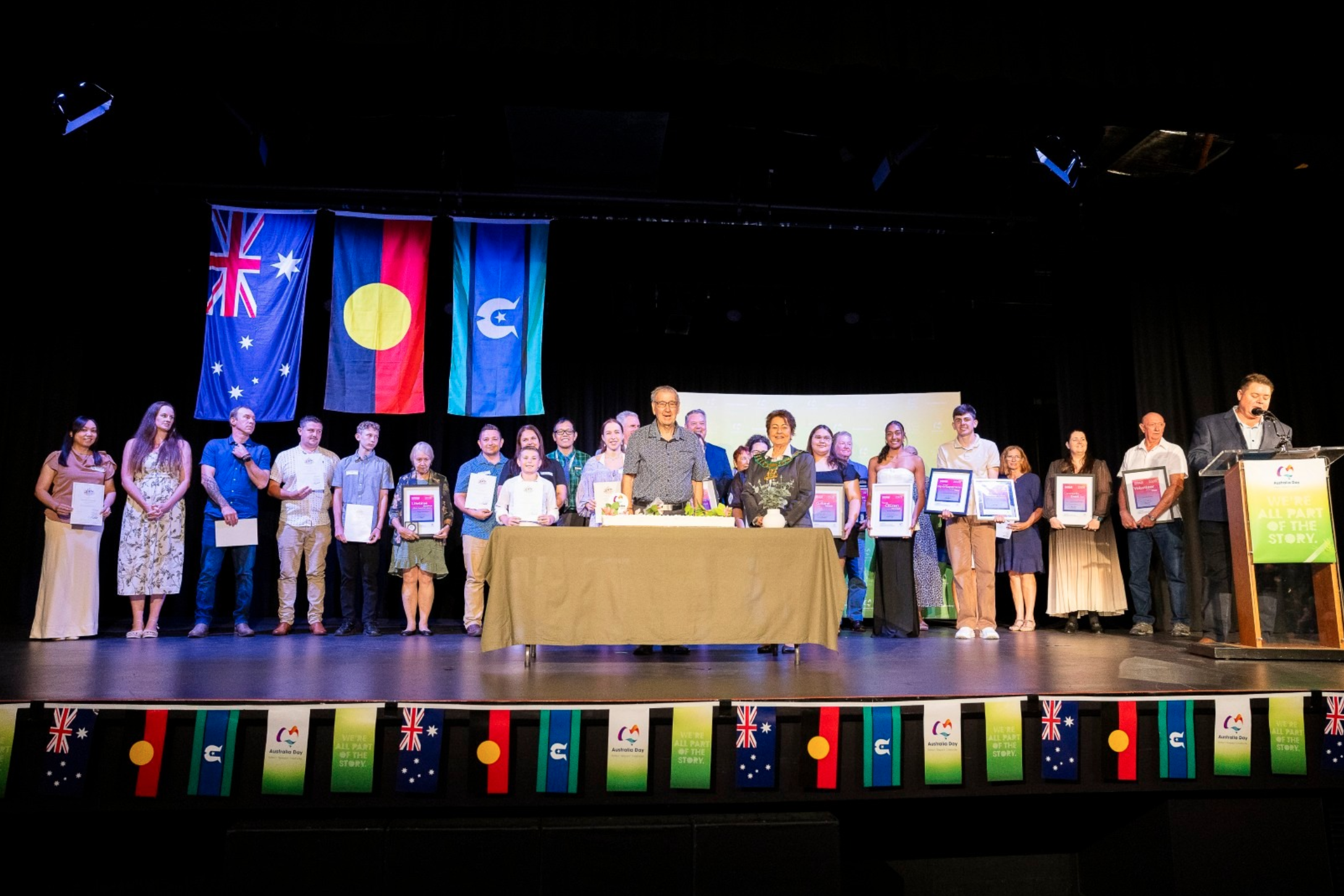
Burdekin residents have until 7th December to nominate a local person, group or event for recognition at next year’s Australia Day Awards. Photo: Melanie Napier Memories & Photography
Burdekin residents have until 7th December to nominate a local person, group or event for recognition at next year’s Australia Day Awards.
Burdekin Shire Council has opened nominations across 10 categories, covering community service, volunteering, sport, culture and the environment.
The awards include Citizen of the Year, Young Citizen of the Year, Lifetime Service Award, Volunteer of the Year and Community Event of the Year, along with senior and junior awards for sport and culture and an Environment Award.
Mayor Pierina Dalle Cort encouraged residents to nominate someone they believe has made a significant contribution to the community.
“Often the people most deserving of recognition are the ones who are quietly making a difference behind the scenes, which is why community nominations are so important,” she said.
“If someone has inspired you, supported your community or gone above and beyond for others, I encourage you to nominate them for a 2027 Australia Day Award.”
Winners will be announced at the Australia Day Awards Ceremony at the Burdekin Theatre on Tuesday 26th January.
Nominations can be submitted through the Burdekin Shire Council website, with assistance available from Council’s Community Development team on 4783 9800.
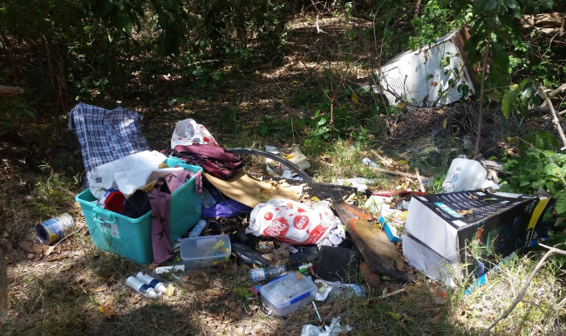
Mayor Pierina Dalle Cort said the funding would help provide “certainty” in the region. Photo: Burdekin Shire Council
The Burdekin’s battle against illegal dumpers has received a $270,000 boost, helping the region double down on enforcement and prevention efforts while saving ratepayers “thousands of dollars” in clean-up costs.
The funding boost, secured through the Queensland Government's Fighting Illegal Dumping Partnership Program, will support Burdekin Shire Council initiatives aimed at reducing illegal dumping, including support for its dedicated Illegal Dumping Officer.
Mayor Pierina Dalle Cort said the funding would help provide “certainty” in the region.
“This three-year funding commitment will support the continuation of Council's dedicated Illegal Dumping Officer role, ensuring Council can maintain a strong focus on investigating offences, educating the community and responding quickly to reports of illegal dumping," Mayor Dalle Cort said.
“Illegal dumping is not only unsightly, it can damage our natural environment, create public health risks and result in significant clean-up costs for Council and the community.
Council has previously identified illegal dumping hotspots across the Burdekin, including the river, bushland, roadsides and footpaths.
In 2025, it said several offenders had been fined more than $2,500 each, with Council estimating illegal dumping costs local businesses and residents thousands of dollars in clean-up and waste management each year.
“Every illegally dumped trailer load, mattress, appliance or pile of green waste costs the community. These clean-up costs are ultimately borne by ratepayers and divert resources away from other important services,” Mayor Dalle Cort said.
Member for Burdekin Dale Last MP said empowering Burdekin Shire Council to take proactive action on illegal dumping was a crucial step towards providing cleaner community spaces that everyone can enjoy.
“The new Illegal Dumping Compliance Officer will have the tools at their hands to properly investigate incidents and hold those offenders to account,” Mr Last said.
“It’s no secret the Burdekin is renowned for the lifestyle it provides especially when it comes to our beaches, creeks and river systems. By doing our part to mitigate illegal dumping we ensure our favourite spots to get outdoors with our family remain pristine for generations to come.”
I hope everyone enjoyed the long weekend and had the chance to spend some time with family and friends. With the children now back at school, I am sure it will not be long before they start counting down to the Christmas holidays, which will be here before we know it.
The Burdekin is proudly known as the sugar capital of Australia, and over the coming weeks there will be plenty happening to celebrate the industry that has shaped our region and continues to play such an important role in our community.
This week I bought a copy of Big Drama Cane Farmer, the follow-up to No Drama Cane Farmer. The young ones in my family absolutely love these books. I always write a little story inside for them, reminding them of their great-grandfathers, where they came from and the proud farming history that is part of their family.
There are some wonderful events on the horizon. On 25 October, the community can enjoy a free screening of Just a Farmer at the Burdekin Theatre, with tickets available online at https://bit.ly/JustaFarmer_Tix. The Home Hill Harvest Festival Parade will bring the streets of Home Hill to life on 7 November, while excitement is already building for the 2027 Sweet Days Hot Nights Festival. Festival dates will be shared soon, along with the release of the very first Sweet Days, Hot Farmers Calendar for 2027.
I have mentioned Snap Send Solve before, but I still come across many residents who have not heard of it. I encourage everyone to download the app and see for themselves just how useful it can be.
If you notice an issue around the Burdekin whether it is illegal dumping, a damaged road, graffiti or another local concern, Snap Send Solve is a quick and easy way to let Council know. Simply take a photo, add a brief description and send the report directly to Burdekin Shire Council from your smartphone.
The free app can be used anytime, anywhere, and is available from the App Store and Google Play Store. It is a simple and practical way for residents to work alongside Council and help us look after the Burdekin. Remember, if you can see it, you can Snap it, Send it and Solve it.
As always, if you have any questions or would like to discuss any Council matters, please contact me directly by phone on 0447 150 582 or by email at mayor@burdekin.qld.gov.au.

How excited am I for the proposed “Meet Ya on Eighth” event in Home Hill?! If, like me you grew up in Home Hill, you will remember the days of thriving businesses, the Italian men sitting on the seat outside Rodney Prescott’s Corner Pharmacy, the busyness of Musumeci’s shop and their incredible fish and chips… There were no vacant, run-down shops. I say, bring it back! Congratulations to the Home Hill Chamber of Commerce for their pro-activeness in attempting to revitalize the main street. If you are interested in sponsoring this fantastic event or would like to simply be a part of it, go see Candace at Salted Roots in Home Hill. “Meet Ya on Eighth” takes place on Saturday 5th December, 4pm-9pm on Eighth Avenue Home Hill.
Looking to clear out, make some extra cash, or score a bargain? The Burdekin’s Biggest Garage Sale returns to the Ayr Showgrounds Hall on Saturday 7th and Saturday 14th November 2026, from 8am to 1pm. Take a wander around up to 50 stalls or have your own and make a few bucks before Christmas. For more information visit: burdekin.qld.gov.au or give the Council a call on 4783 9800.
With Sweet Days Hot Nights returning to the Home Hill Showgrounds in May, the search is on for the Burdekin’s hottest personalities with the introduction of the first ever Sweet Days, Hot Farmers Calendar. It’s about more than just good looks though! We’re looking for the people who make our region what it is. Seasoned farmers, contractors, next-generation growers and local legends who help keep Australia sweet. DON’T BE SHY! To enter:Send your (or your nominee’s) name, phone number and a photo to sweetdays@burdekin.qld.gov.au by Sunday 18th October.
Since my last Councillor Column, the Burdekin has lost some much-loved residents. My sincerest condolences to their families and loved ones and may they Rest peacefully forever in the arms of God. God Bless.

Police reported extensive damage to both vehicles. Photo: Jacob Casha
A Burdekin intersection notorious for collisions and near misses was the site of another crash on Thursday, 1st October, when two vehicles collided, leaving one on its side.
The incident occurred at about 3pm at the intersection of the Bruce Highway and Giddy Road.
Initial investigations indicate the driver of a vehicle entering the Bruce Highway from Giddy Road and intending to travel south failed to give way.
The vehicle collided with another vehicle travelling north along the highway.
Police reported extensive damage to both vehicles, with one driver sustaining minor injuries.
The crash follows a period of extensive surveillance at the intersection, with a mobile CCTV trailer monitoring the site during three separate periods since the beginning of last year.
A Department of Transport and Main Roads (TMR) spokesperson said investigations into the intersection remained ongoing.
“All speed limit changes on the state-controlled road network go through a formal review and endorsement process by the local Speed Management Committee,” the spokesperson said.
The regional committee comprises representatives from TMR, Queensland Police and Burdekin Shire Council.
Investigations have identified driver behaviour as the primary safety issue, particularly gap acceptance, where a driver misjudges whether a gap in traffic is large enough to safely turn or merge, as well as failing to give way when entering the highway.
The spokesperson said data from the most recent footage will “contribute to the development of a range of treatments to improve safety at this intersection and its approaches.”
“As the review is still underway, TMR is not in a position to comment on potential outcomes,” the spokesperson added.
.jpg)
On 28th September, a 62-year-old Ayr man was intercepted on a motorbike. He was issued with a Notice to Appear in Court for drug driving, disqualified driving, driving an unregistered and uninsured vehicle, and using false plates.
On 30th September, a 38-year-old Ayr man was intercepted riding a pushbike on Victoria St, Ayr. A search located methylamphetamine and drug utensils. He was charged with possessing drugs, possessing drug utensils and failing to disposeof needles and syringes.
On 1st October, police intercepted a vehicle at McDesme. A subsequent search located drugs and drug utensils. The 62-year-old Giru man was issued with an official Drugs Offence Warning for the matters.
Also on 1st October, a search warrant was executed at an address in Ayr. Firearms parts and drug utensils were located.
A 31-year-old man was charged by Ayr detectives with trafficking dangerous drugs (methylamphetamine), 20 counts of supplying dangerous drugs and unlawful possession of weapons. Police opposed the man's bail.
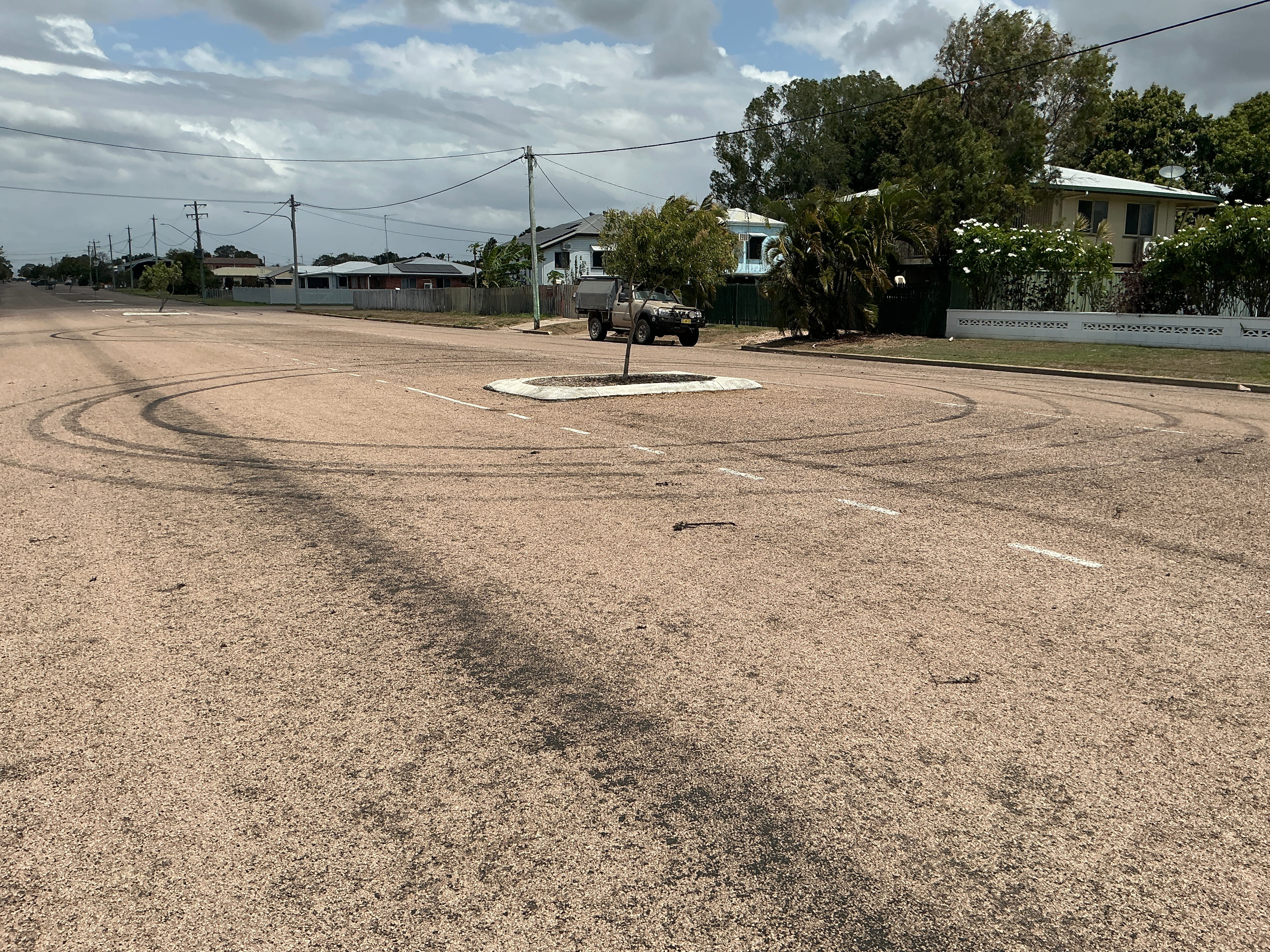
Home Hill has seen an increase in hooning within the township. Photos supplied
By Home Hill Police Station Officer-in-Charge Sam Pyke
Of late, Home Hill has seen an increase in hooning within the township. If you only take a drive down Tenth Avenue, do you see the remnants of burnouts on just about every crossroad?
On 24th September, 2026, police responded to a sedan doing burnouts on Eleventh Avenue, which police received numerous calls for service for. Home Hill Police are aware numerous incidents that have occurred recently and are actively trying to gather evidence to identify the offenders.
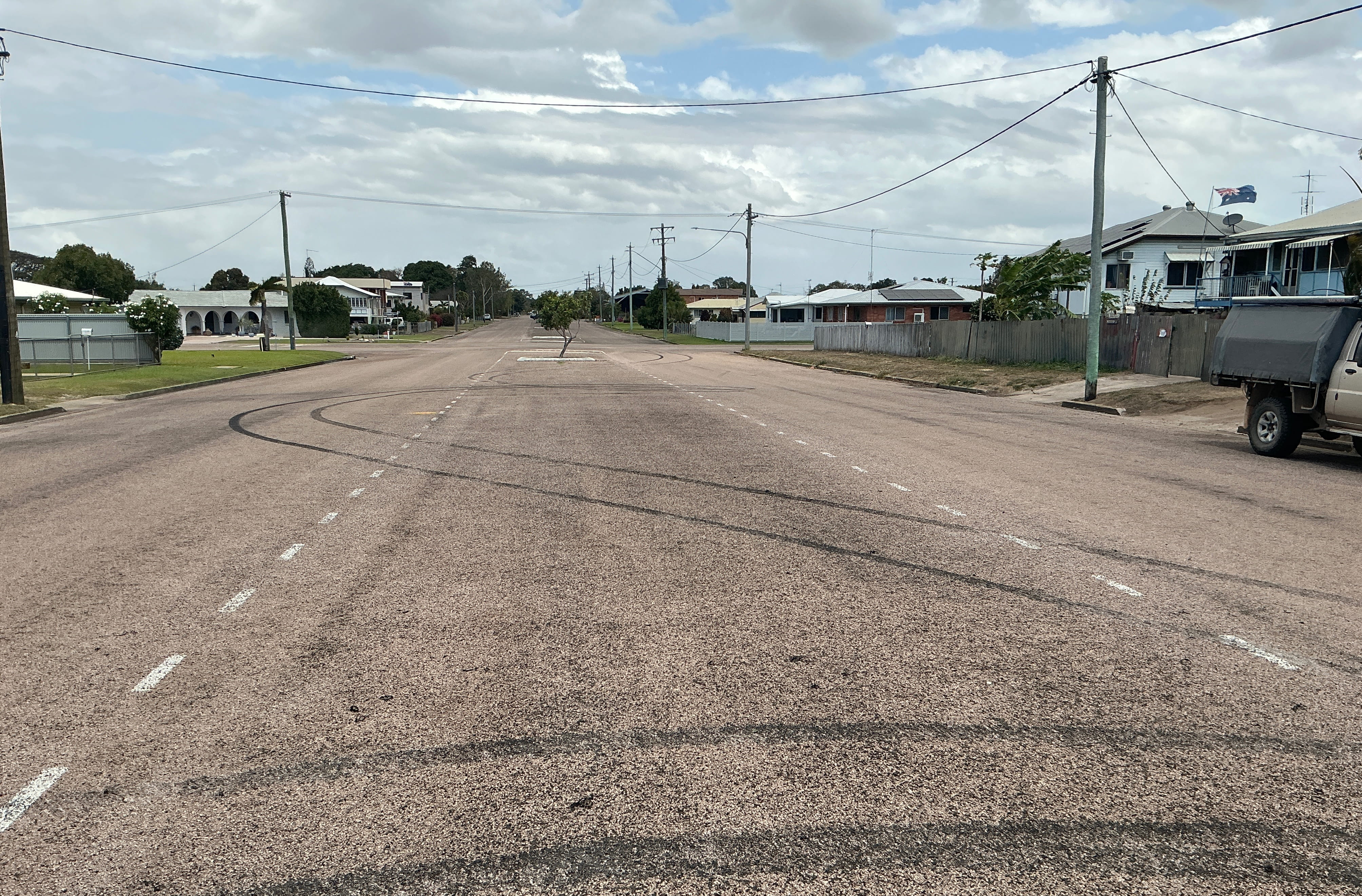
Hooning behaviour is not only annoying, but extremely dangerous. It goes without saying, if you are doing a burnout, you are not in proper control of the vehicle. Our streets are busy with pedestrians (including children) at all hours of the day and night.
‘Burnouts’, ‘skids or any sustained loss of traction is an offence and carries a maximum penalty of up to 20 penalty units ($3, 200) and a mandatory disqualification from driving. Your vehicle will be subject to a 90 impoundment for a first offence and forfeited to the state on the second.
Reporting and commenting on things on a Facebook community group doesn’t actually inform the police that something has happened. If we don’t know, we can’t do anything. If you need to report any hooning offences, please contact Home Hill Station or the Hoon Hotline 134 666.

Opinion Piece By Federal Member for Dawson Andrew Willcox
As of October 1, consumers are no longer charged a surcharge to use a credit or debit card. For many who like to know the cost of their meal before they head to the front counter, this will be a welcome change.
However, the charge has not disappeared. The cost of processing these transactions has not gone away. Businesses, particularly small businesses, will need to decide whether to absorb these costs or build them into the price of their goods and services.
Small businesses across Dawson have some real concerns. Many have told me that while they understand customers don't want unexpected fees at the checkout, they now have to deal with being left to absorb another cost. For a business operating on already tight margins, even relatively small transaction fees can add up over multiple sales.
That is why reform must address the underlying cost of card payments, rather than simply moving that cost from one place to another. For the privilege of providing customers with card payment options, businesses must factor in merchant fees, terminal rental fees and gateway charges. For larger businesses like supermarkets and airlines, there is greater power to negotiate with payment providers. Small businesses though, do not have the same bargaining power.
Then there’s the other side of this change. When businesses are no longer able to apply a surcharge to customers who choose to pay by credit card, an important element of consumer choice is removed: pay by cash and avoid the surcharge or pay by credit card and accept the additional cost associated with that payment method. Removing that choice does not make the cost disappear; it simply moves the cost from an individual transaction, into the broader cost of doing business, where it can ultimately be spread across all customers.
Small businesses in our region are already doing it tough. The cost of doing business has risen dramatically in the last few years. They are paying higher rents, higher electricity prices and facing more regulation.
For many businesses, it feels like every time they open their inbox there is more bad news – more tax, more government regulation, more green and red tape, more complex industrial relations rules and more bill pain.
Margins are shrinking and keeping the doors open is becoming more challenging. The changes to card surcharges are just another impost, another cost, another stress point these businesses have to contend with.
Government should be playing their part in reducing the burden on small business, so business owners can get back to working in their business, not working on just paperwork. Unfortunately, under the current Labor government, the opposite is happening.
Removing the surcharge line on the customer receipt does not remove the cost of accepting card payments. For businesses already facing rising costs and shrinking margins, adding another cost is another pressure on their ability to stay viable.
The Government should ensure that removing card surcharges does not simply mean small businesses are left carrying the cost.
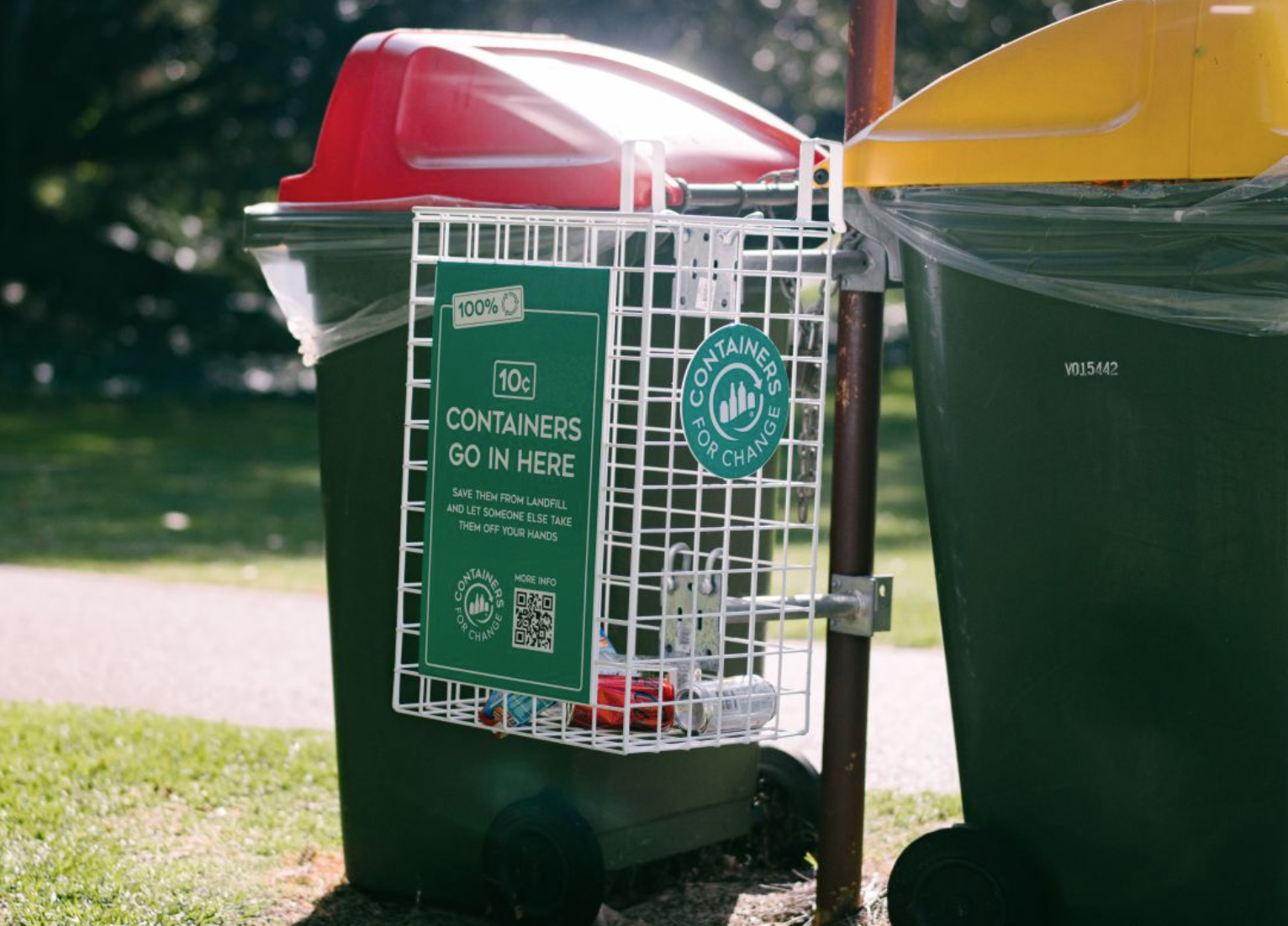
A simple act can make a big difference! Burdekin residents have returned millions of containers through Containers for Change, supporting local fundraising, employment opportunities and the wider community. Photosupplied
Over the past 12 months, Burdekin residents returned 14 million containers through Containers for Change, putting around $1.4 million in refunds back into local hands.
The impact goes beyond the 10c returned for each container, with 57 community accounts registered across the Burdekin, giving residents the opportunity to turn their recycling into fundraising for local groups and organisations.
In Ayr, North Queensland Green Solutions shows how recycling can create opportunities for people in the community. The social enterprise operates a Containers for Change refund point while providing employment and training opportunities for people living with disabilities, injuries or health conditions.
The initiative has become a familiar part of the Burdekin community, with North Queensland Green Solutions reaching the milestone of processing its 50 millionth container in May 2025.
For every bottle and can returned, residents are not only keeping waste out of landfill, but helping create jobs, support community groups and put money back into the local economy. It is a simple act that continues to make a meaningful difference across the Burdekin.
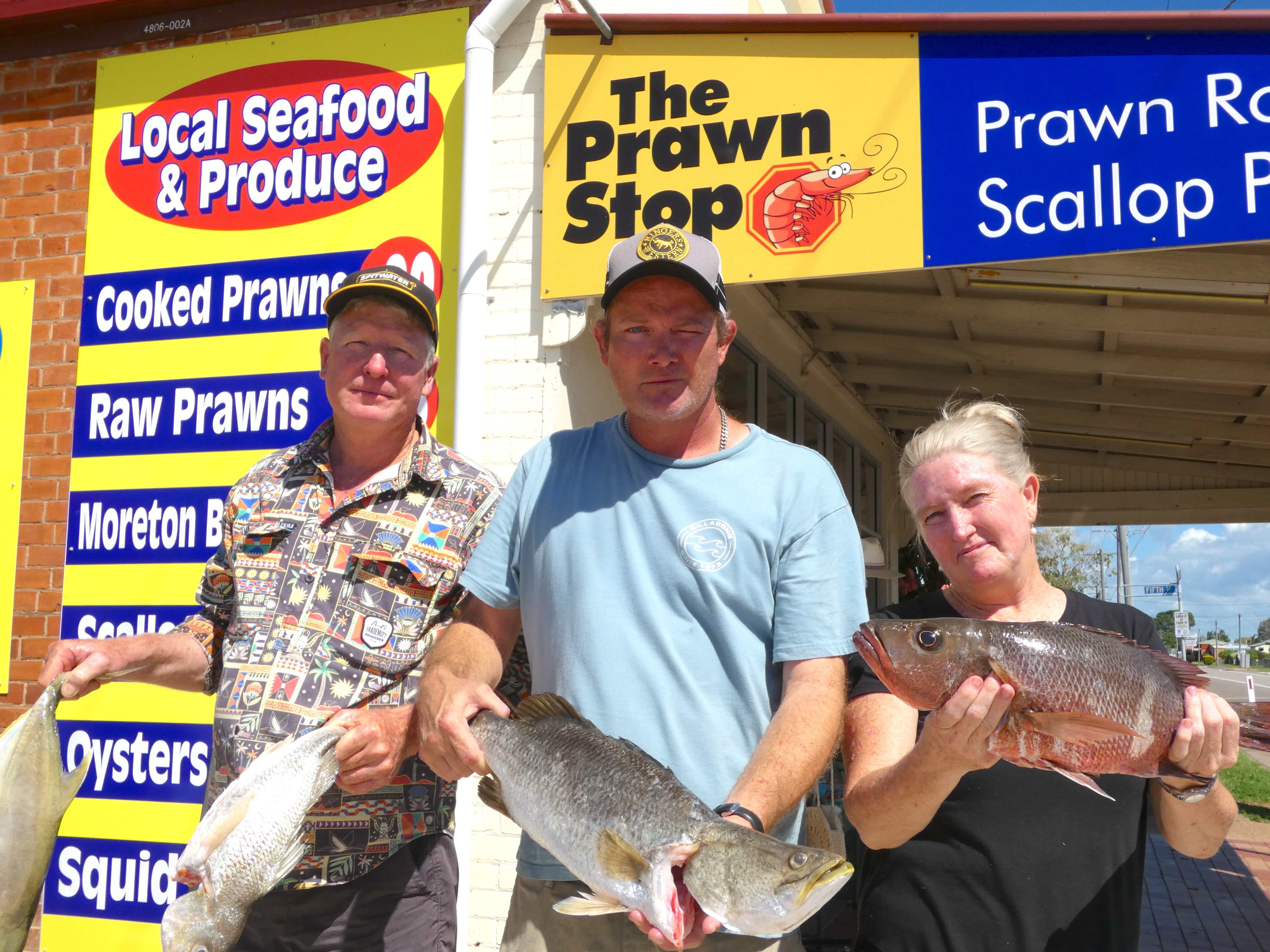
Stakeholders met at Burdekin Shire Council Chambers last week to discuss the local ramifications of the gillnet phase-out. Photo: Jacob Casha
Burdekin seafood retailers, small businesses and consumers will be among the biggest losers when commercial fishers are forced to give up their gillnets on 30th June next year—and with a $9 million Government-backed research effort for viable replacements yet to come up trumps, fears for the industry are mounting.
“If commercial net fishing ceases as planned … our business will be forced to close,” a local retailer said.
A gillnet ban scheduled for June next year could see Burdekin seafood supply, jobs, and livelihoods taken down with it, stakeholders have warned.
Gillnets—vertical mesh netting walls used to entangle target species by their gills—have long been used by commercial fishers to target a range of species including barramundi, salmon and mullet.
Now set to be phased out by the Queensland Government, local fishers fear a lack of commercially viable alternatives could render them jobless come next year's deadline, leaving Burdekin businesses and consumers without access to locally caught seafood.
“At this stage, the net fishing is gone. We're saying we want an extension until [the Government] can replace it with something that's going to be equally as good. It’s that simple,” veteran Burdekin fisherman Neil Green said.
The phase-out, announced in 2023, is part of Queensland's broader reforms to the east coast inshore fishery, with the Government citing concerns about interactions between gillnets and threatened and protected species.
The transition has seen the commercial fleet reduced through a Government buyout program, with six Burdekin operators remaining under transitional NX arrangements until the fishery's scheduled expiry on 30th June next year.
Meanwhile, a six-year, $9 million joint initiative between Queensland's Department of Primary Industries and the Fisheries Research and Development Corporation, known as Fish-LIGHT, is trialling alternative fishing gear as potential replacements for gillnets.
But with next year's deadline looming, Burdekin fisher and Fish-LIGHT trial participant Cameron Pugh remains unconvinced of the alternative options being tested.
“I don't think we've had a viable catch yet in the 18 months I've been doing it. Maybe one out of 20 times,” he said.
“I trialled the fish traps—that was no go. I’m still currently trialing the trap nets, which they think are going to get us through, but I can't see it. Not as yet.
“I don't think the alternative gear is going to cut it at all. If they bring that gear in, I won't be going for it. I'll be looking for another job.”
Mr Green said net fishing accounts for about a third of local commercial fishers' income, with the remainder split between reef fishing and mud crabbing.
“If you take the net fishery third away, the government would just be putting more effort onto another fishery, which is not needed,” he said.
“It’ll have a huge impact—more for the next generation than for mine.”
Local seafood retailers have also voiced concerns about becoming caught in the crossfire.
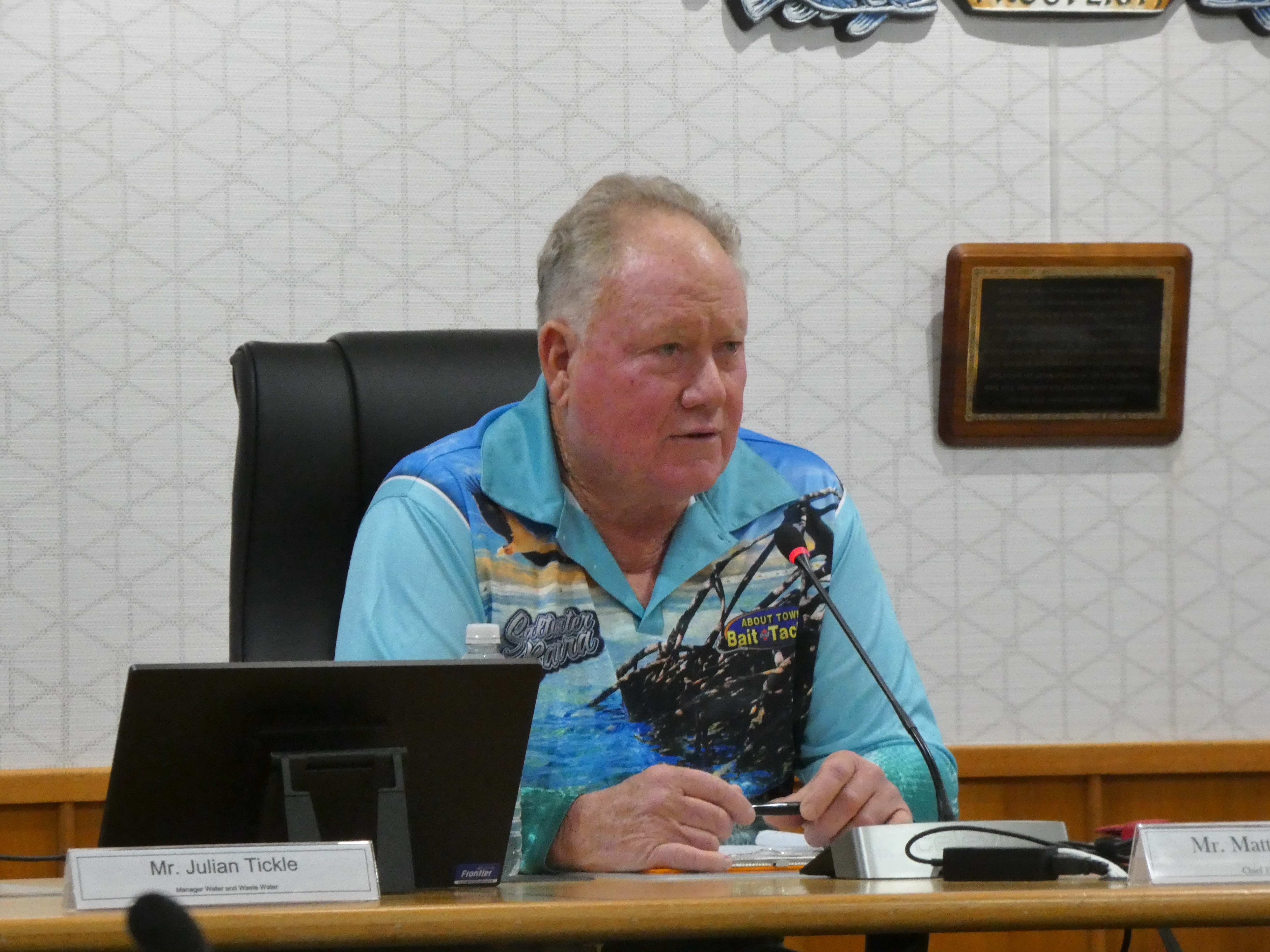
Braddy's Quality Seafood in Ayr released a statement last month claiming the proposed changes would “force” the store, which employs three full-time workers, to shut its doors.
“We specialise in supplying locally caught estuary fish, including barramundi, salmon, and mullet, to more than 300 local families each week,” the statement read.
“If commercial net fishing ceases as planned … our business will no longer be viable and will be forced to close. This would not only remove an important source of fresh, locally caught seafood, but would also result in the loss of three full-time local jobs.”
Melissa Wiles, owner of The Prawn Stop in Home Hill, added she would have to source products from as far as Brisbane if local suppliers were no longer available.
“You can tell the difference straight away. Who wants to eat barramundi that's not local?” she said.
“I’d have to up prices at least $10-15 a kilo just for the freight.”
The phase-out came under renewed scrutiny late last month when stakeholders gathered at Burdekin Shire Council Chambers to discuss its potential ramifications.
Among issues discussed was a $25,000 study—funded by local fishers—which challenged the findings of a Queensland Government ecological risk assessment that identified intermediate to high risks to threatened species including dugongs and turtles.
The research, undertaken by independent fisheries consultancy FishListic, used data gathered by commercial fishers through onboard cameras, vessel monitoring systems and electronic catch reporting, including records of their catch and interactions with protected and non-target species.
The assessment found the fishery could meet several Marine Stewardship Council sustainability standards, while identifying areas requiring further work before the remaining standards could be met.
John Byers, a commercial fisher based at Alva Beach, said his experiences on the water largely concurred with the report's findings.
“We’re under camera now, so everything’s open and transparent. There’s nowhere to hide,” he said.
“I haven’t caught any dugongs. I've encountered turtles, but I've released them all alive. The camera footage speaks for itself.”
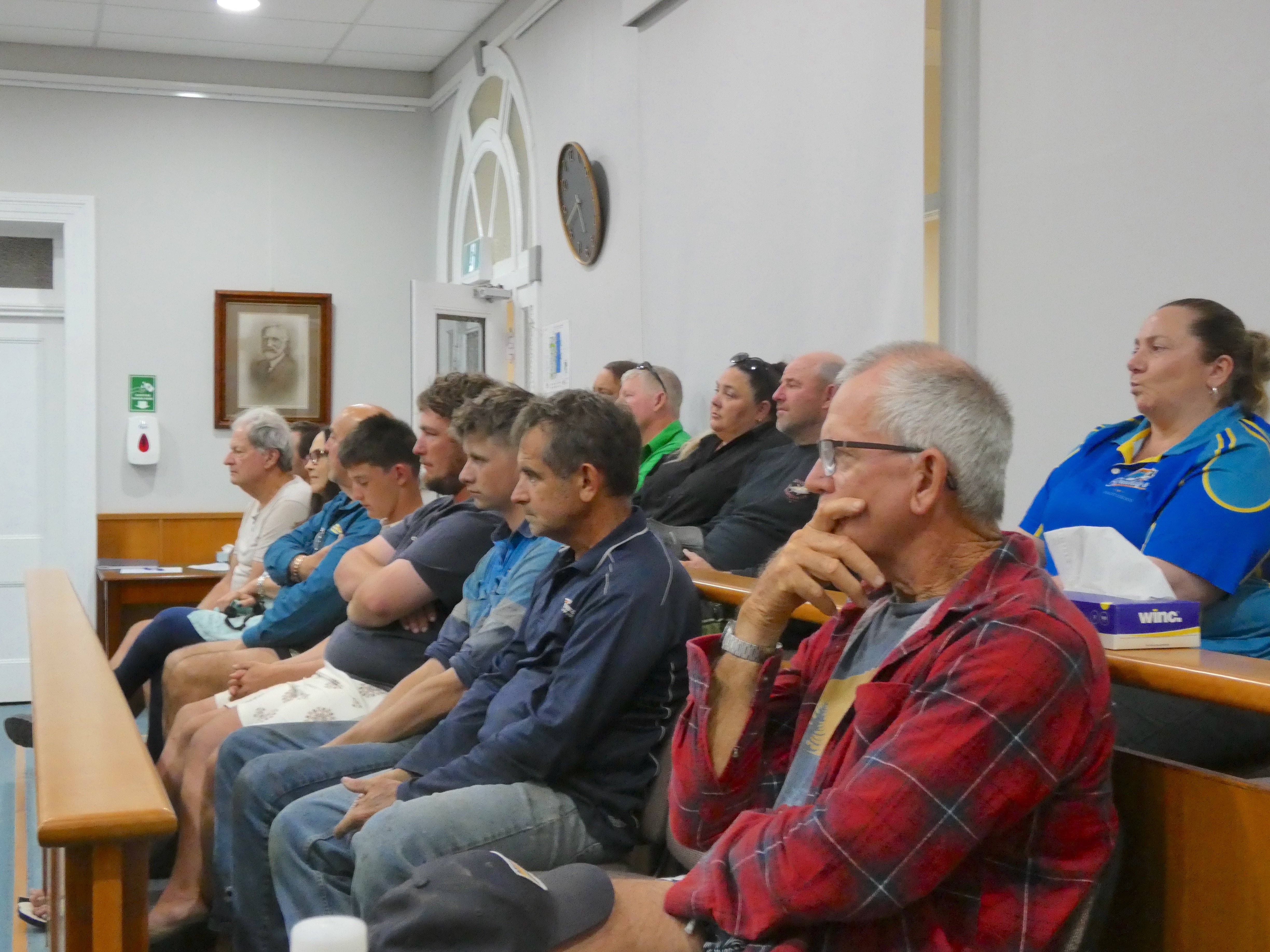
However, conservation groups, including WWF-Australia and the Australian Marine Conservation Society, along with UNESCO assessments, have maintained that gillnet removal is non-negotiable to protect vulnerable dugong, turtle, and sawfish populations.
That stance spurred a joint $160-plus million Federal and State policy package aimed at staving off an “In Danger” World Heritage status downgrade.
The Queensland Government has confirmed the NX fishery will expire as legislated next year.
Member for Burdekin Dale Last said the Government would only support changes backed by “robust science.”
“The commercial fishing industry has a long history in the Burdekin as a valuable primary industry in our community, which is why I have continued to advocate on their behalf as the local member,” he said.
“The Crisafulli Government has committed to supporting Queensland's fishing sector by only legislating changes backed by robust science, and fairly compensating all fishers for any changes required and we continue to deliver on that commitment.”
Mr Last did not confirm whether he supported the phase-out proceeding as planned.
Mr Green said requests for an extension to the NX fishery had been sent to Queensland Primary Industries Minister Tony Perrett.
“I don't care what they come up with. They can come up with a fish pot—as long as it works,” Mr Green said.
“That keeps us on the water. That keeps businesses happening—but if this stops in July, so does everything.”
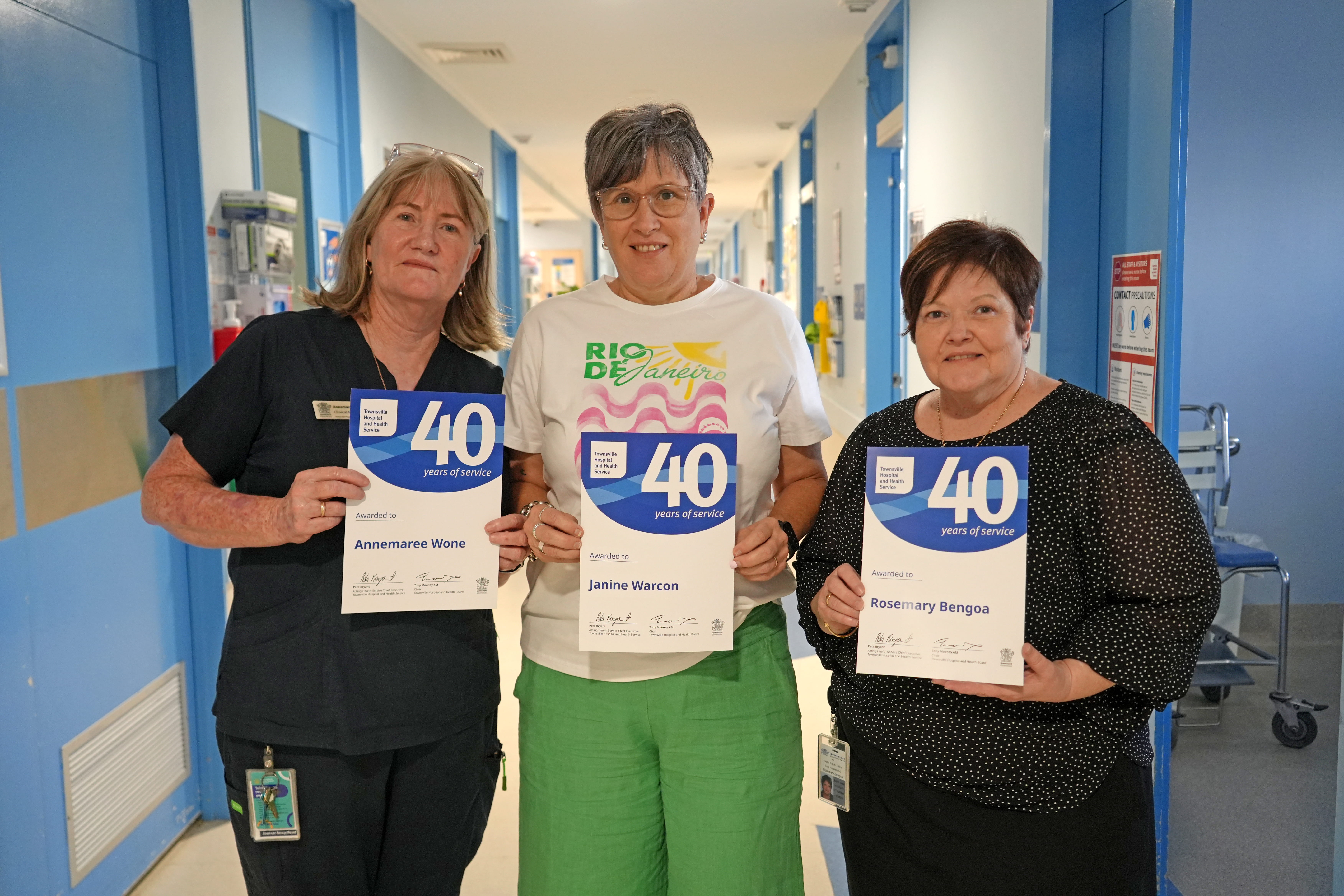
Rosemary Bengoa, Janine Warcon and Annemaree Wone have each reached 40 years of service, with the milestone recognised at local staff thank-you events. Photo supplied
Three Burdekin hospital workers have clocked up 120 years of combined service to the Ayr and Home Hill communities.
Rosemary Bengoa, Janine Warcon and Annemaree Wone have each reached 40 years of service, with the milestone recognised at local staff thank-you events.
Rosemary began at Ayr Hospital in 1985 in the front office before moving into medical records, accounts payable, assets and finance.
Janine started in the Home Hill Hospital kitchen and has since worked across kitchen, cleaning and laundry roles at both Ayr and Home Hill. She later became an orderly before moving into her current role as an assistant in nursing at Home Hill.
Annemaree began her career at The Prince Charles Hospital in Brisbane, working as an enrolled nurse for four years before completing her registered nurse training in Townsville.
She returned to the Burdekin after the birth of her first child and now works across the dialysis unit and emergency department at Ayr.
The three staff members said their connection to the community, colleagues and variety of work had kept them in the health system for four decades.
“Your work colleagues and the friendships you make along the way keep you in the role,” Rosemary said.
For Janine, working in her own community and caring for patients has been a key part of her career.
“We’ve had some funny moments; just the other night one patient was disco dancing in the hallway with me,” she said.
Annemaree said working across different areas had kept her career varied.
“I work in dialysis, sometimes in the emergency department, and sometimes on the ward, and because I have always worked across multiple areas, I’ve never felt stuck in one place,” she said.
The breadth of responsibilities is a common feature of working in rural hospitals, Ms Wone said.
“You need to know lots of different things when you work in a rural or remote hospital setting, so we are very busy,” she said.
“But even with how much we have all achieved, I can’t believe it’s been 40 years; it feels like it happened overnight.”
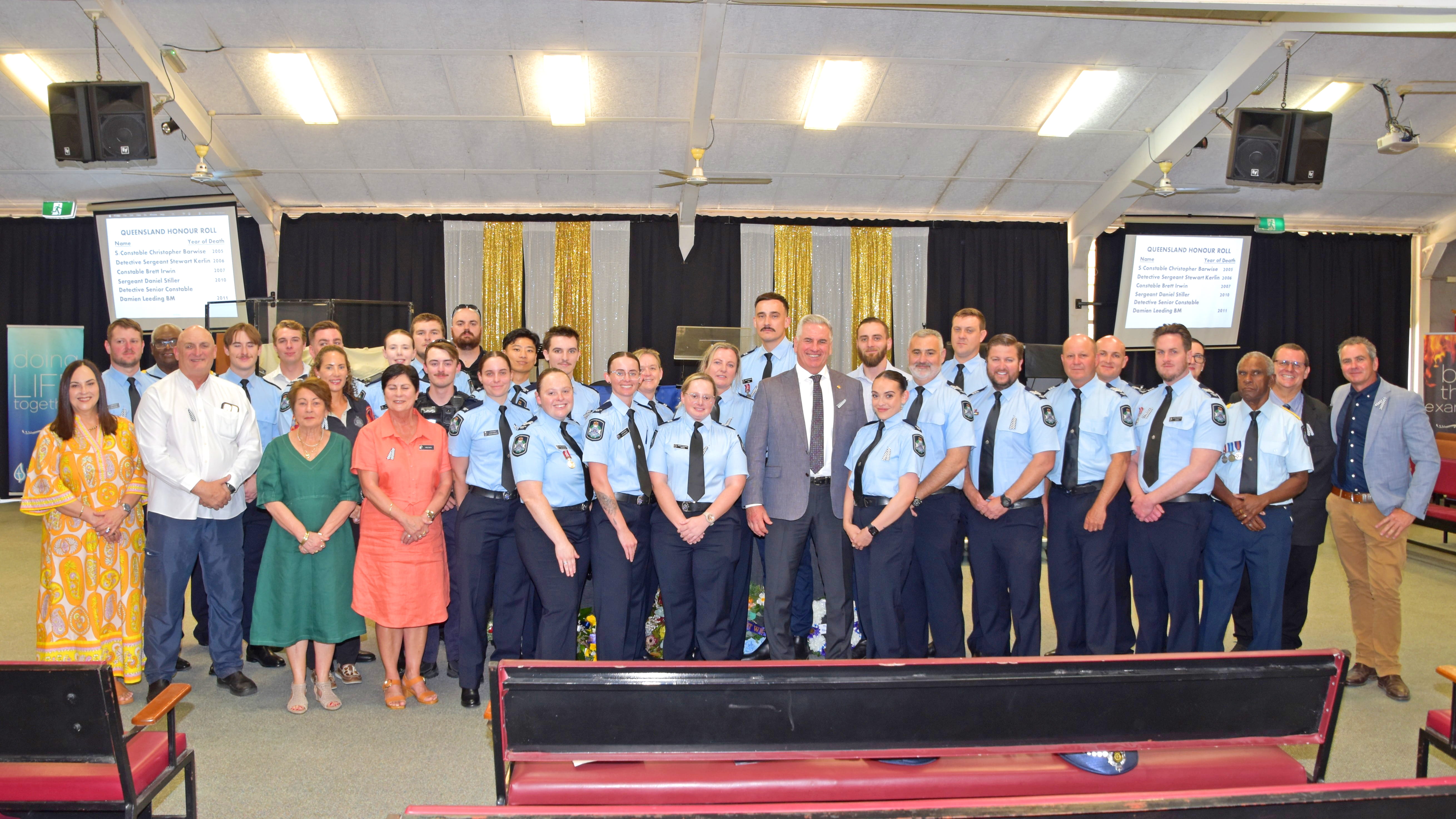
Burdekin police, dignitaries and community groups gathered Tuesday morning to honour officers killed in the line of duty. Photo: David Cooper
Burdekin community members, local dignitaries, and police gathered at Ayr's Burdekin Community Church on 29th September to commemorate National Police Remembrance Day. The solemn service honoured officers who made the ultimate sacrifice in the line of duty, featuring a wreath-laying ceremony and a reading of the Roll of Honour.
Read more here: www.burdekinlife.com/article/burdekin-honours-fallen-officers-on-remembrance-day

This week’s Good Deed goes out to all the good-looking farmers out there! If you’re up for a bit of fun, all in the name of community spirit, put your hand up to participate in the Hot Days, Hot Farmers Calendar.
As part of the countdown to the 2027 Sweet Days Hot Nights Festival, returning to the Home Hill Showgrounds on Friday 28 and Saturday 29 May, organisers are looking for locals to feature in their first-ever calendar project.
Think firefighter’s calendar… but Burdekin style.
“Now, when we say hot, we’re talking about more than just good looks. We're looking for the people who make our region what it is. The seasoned farmers, the contractors, the next generation of growers and the local legends who help keep Australia sweet,” said a Council spokesperson.
“Although, bonus points if you’re easy on the eyes too!”
Men and women. Young and old. Farmers and contractors. Whether you're behind the wheel, in the paddock or running the operation, you're eligible. Think you’d look like in a calendar? Send your name and photo to sweetdays@burdekin.qld.gov.au and throw your hat in the ring by Sunday 18 October. And yes, nominating your mates is highly encouraged.
The shortlist of finalists will be announced on Facebook before the decision is handed over to the community to choose the twelve faces of the 2027 calendar. Those hot twelve farmers will take part in a professional photoshoot and earn their place in Burdekin history as the Sweet Days, Hot Farmers Calendar stars.
Farming has never looked so good.
Local officers stand for the Roll. Photos: Jacob Casha
Burdekin police, dignitaries and community groups gathered on Tuesday morning to honour officers killed in the line of duty.
Held at the Burdekin Community Church in Ayr, the service formed part of National Police Remembrance Day, observed each year on 29th September.
Pastor Peter Holmes, who led the service, said it was a chance to pay tribute to the bravery and service of the fallen.
“Someone has to protect those who cannot protect themselves. Someone has to step into the disorder and work to restore order—and that is one of the responsibilities entrusted to our police,” he said.
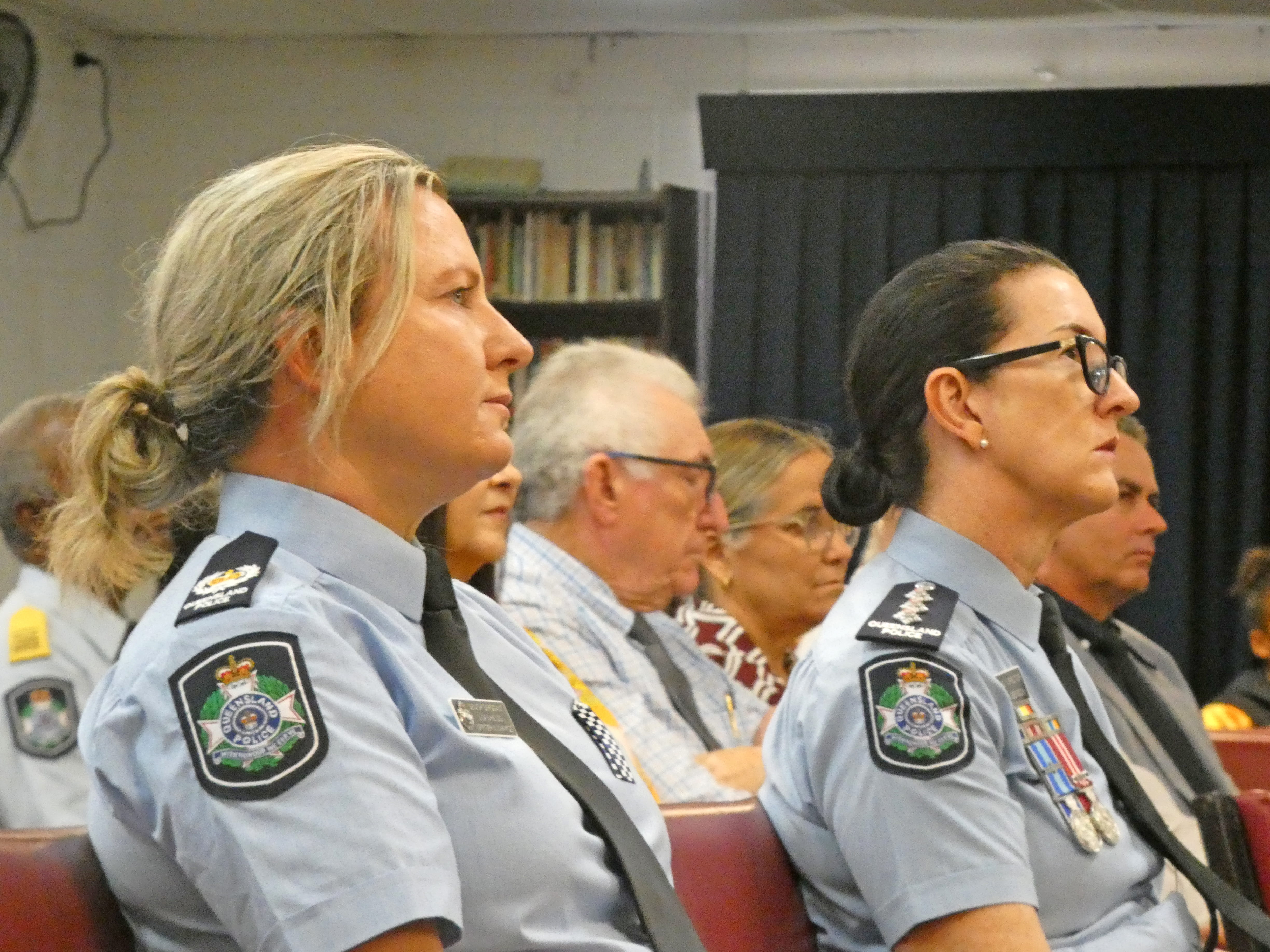
“Today, we honour those who stood. Some stood in circumstances that ultimately cost them their lives, and this day each year ensures that their courage will never be forgotten.”
A Police Commissioner’s Address was delivered by Acting Inspector Megan Benson before local officers read the Roll of Honour, commemorating police officers killed in the line of duty.
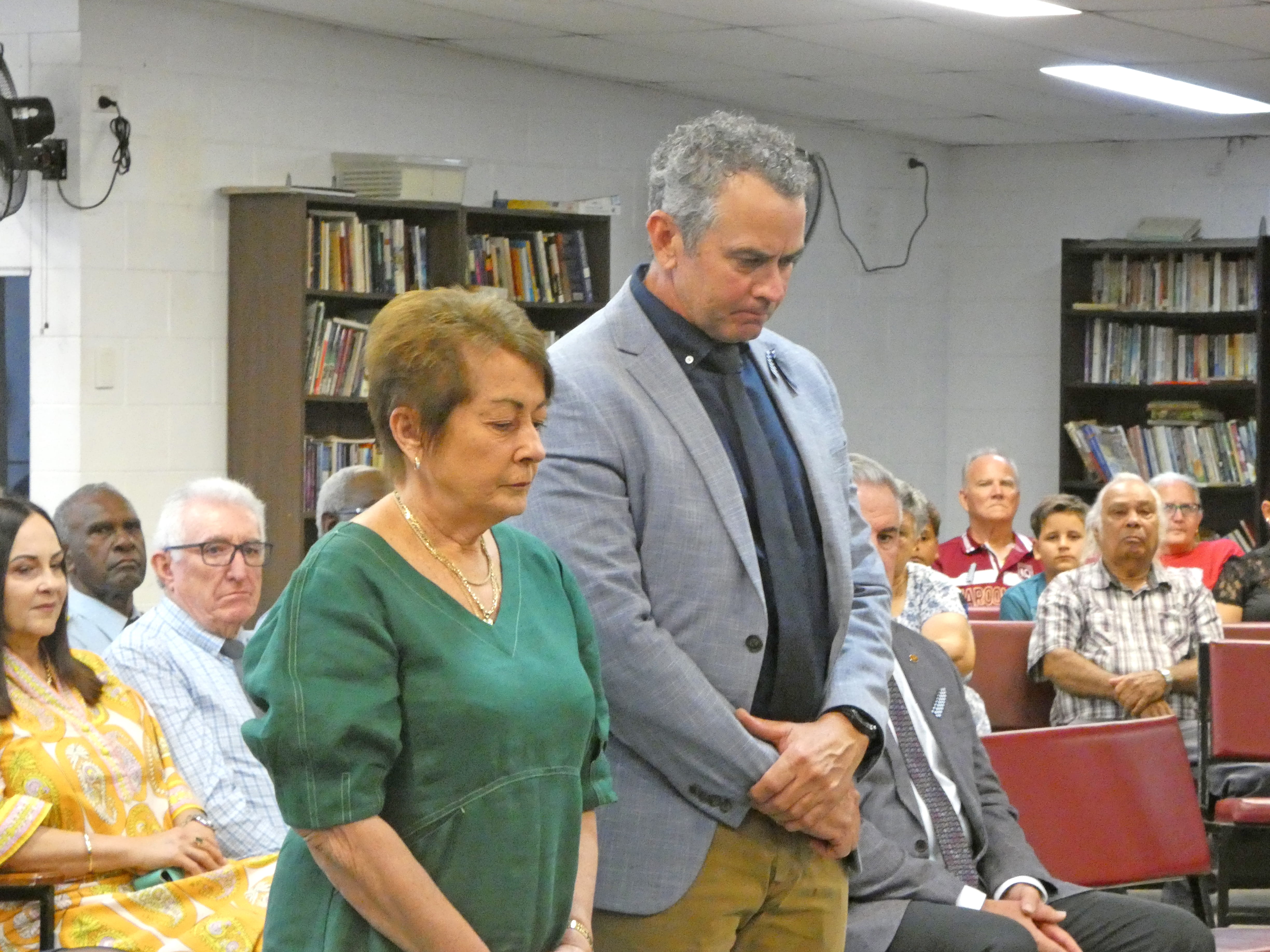
Officers then lit memorial candles, before community groups joined police and dignitaries in laying wreaths.
Among dignitaries were Burdekin Shire Council Mayor Pierina Dalle Cort and Member for Burdekin Dale Last, who called it a “privilege” to join local police in their commemorations.
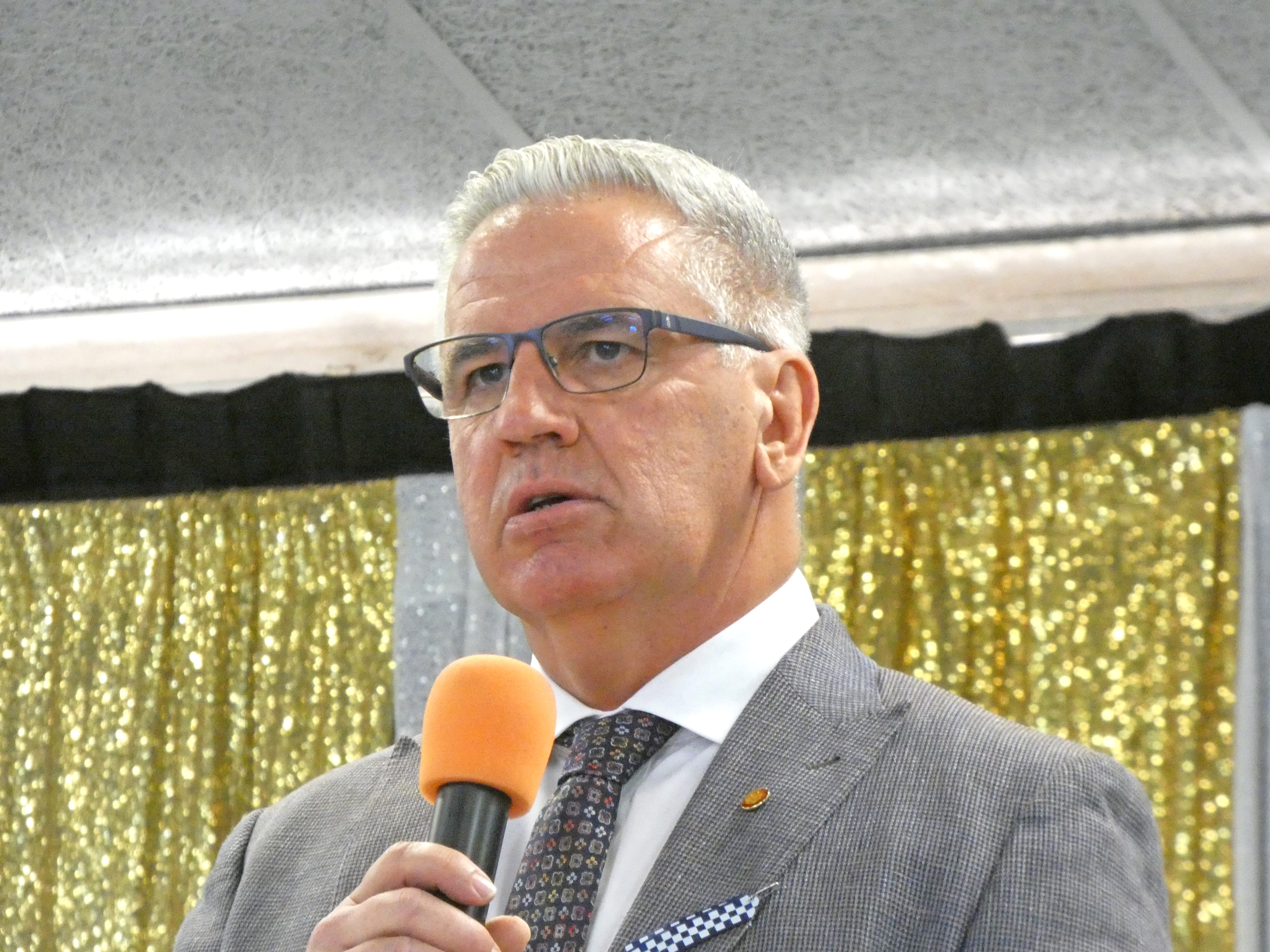
“As a former police officer, National Police Remembrance Day is an incredibly important opportunity to remember those officers who lost their lives while serving their community and to show our support to those who continue to keep our communities safe today,” Mr Last said.
“Small regional towns like the Burdekin mean our police officers become involved in a variety of facets in our community and it is part of what makes these roles in our small communities so unique.”
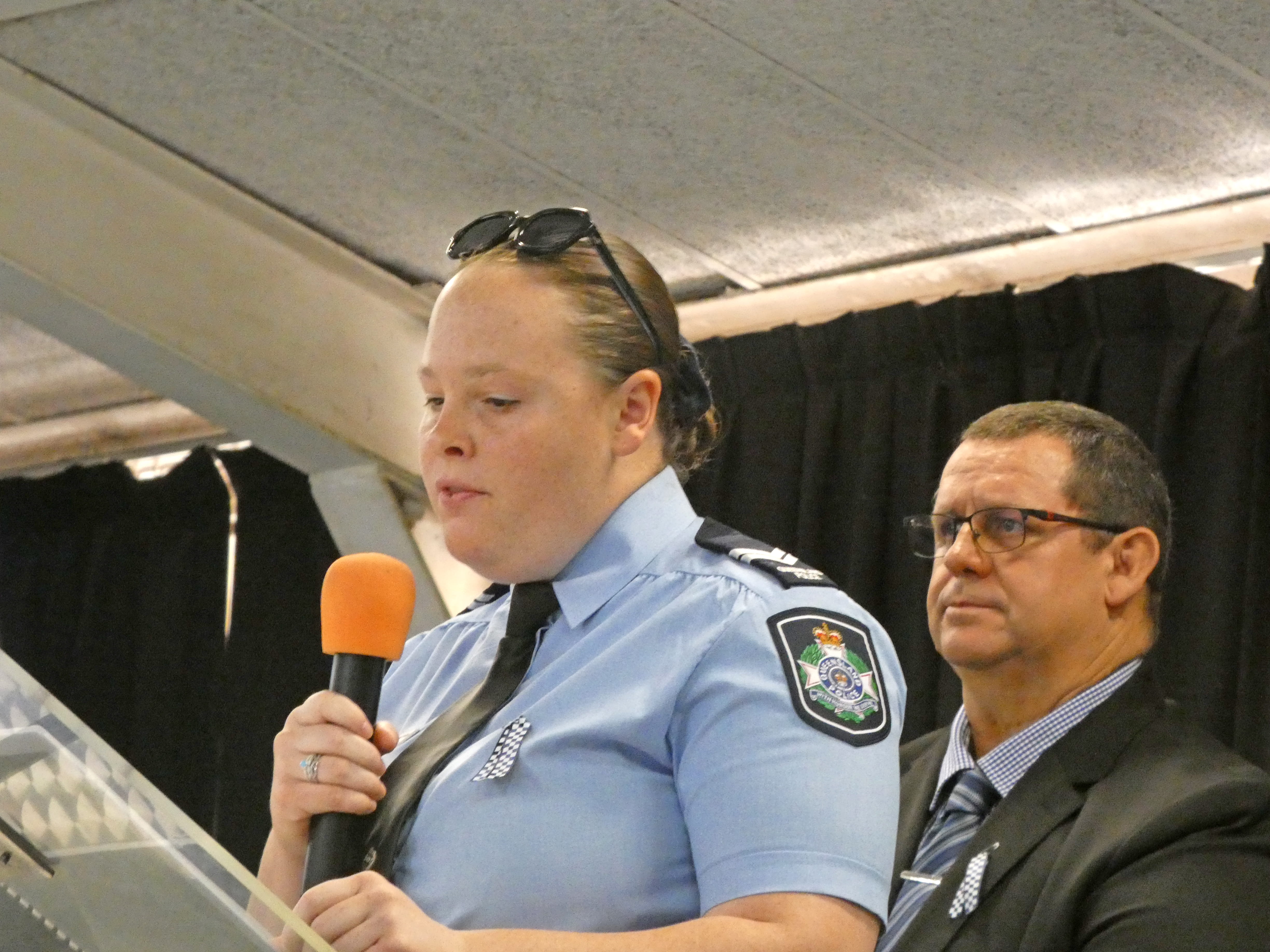
“It also means that chances to stand with our men and women in blue should not be overlooked.”
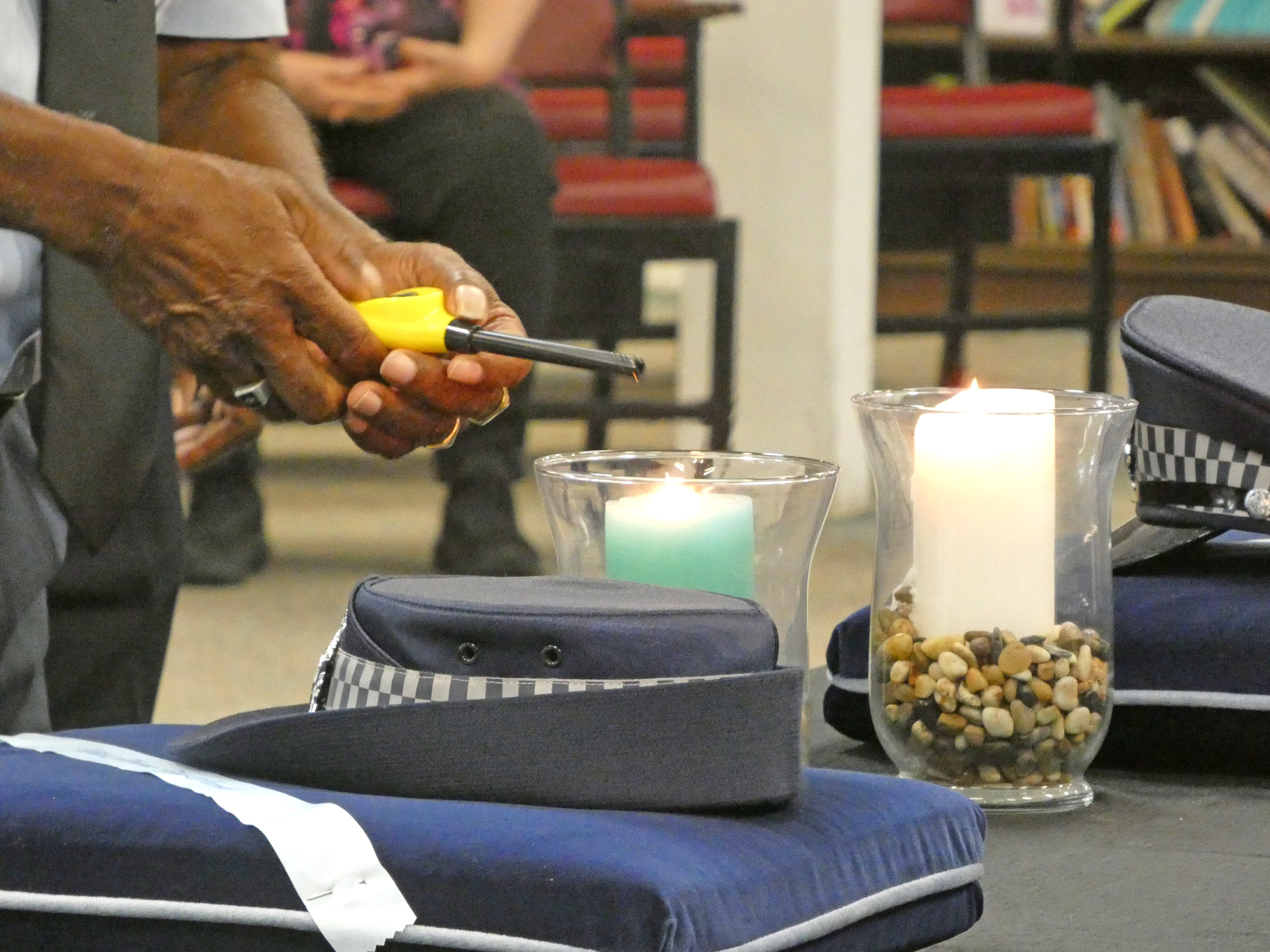
A morning tea was held in the church hall following the service.
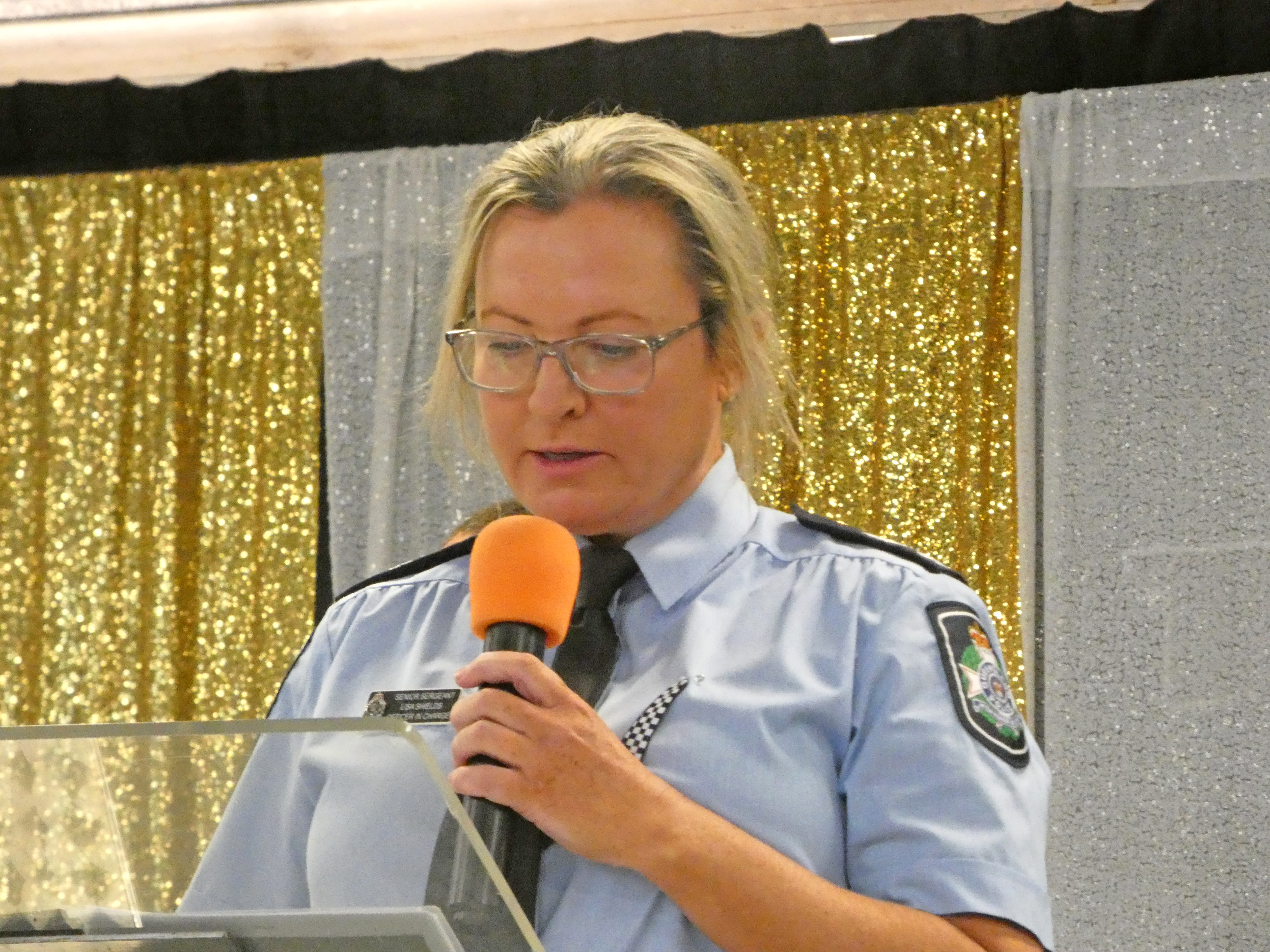
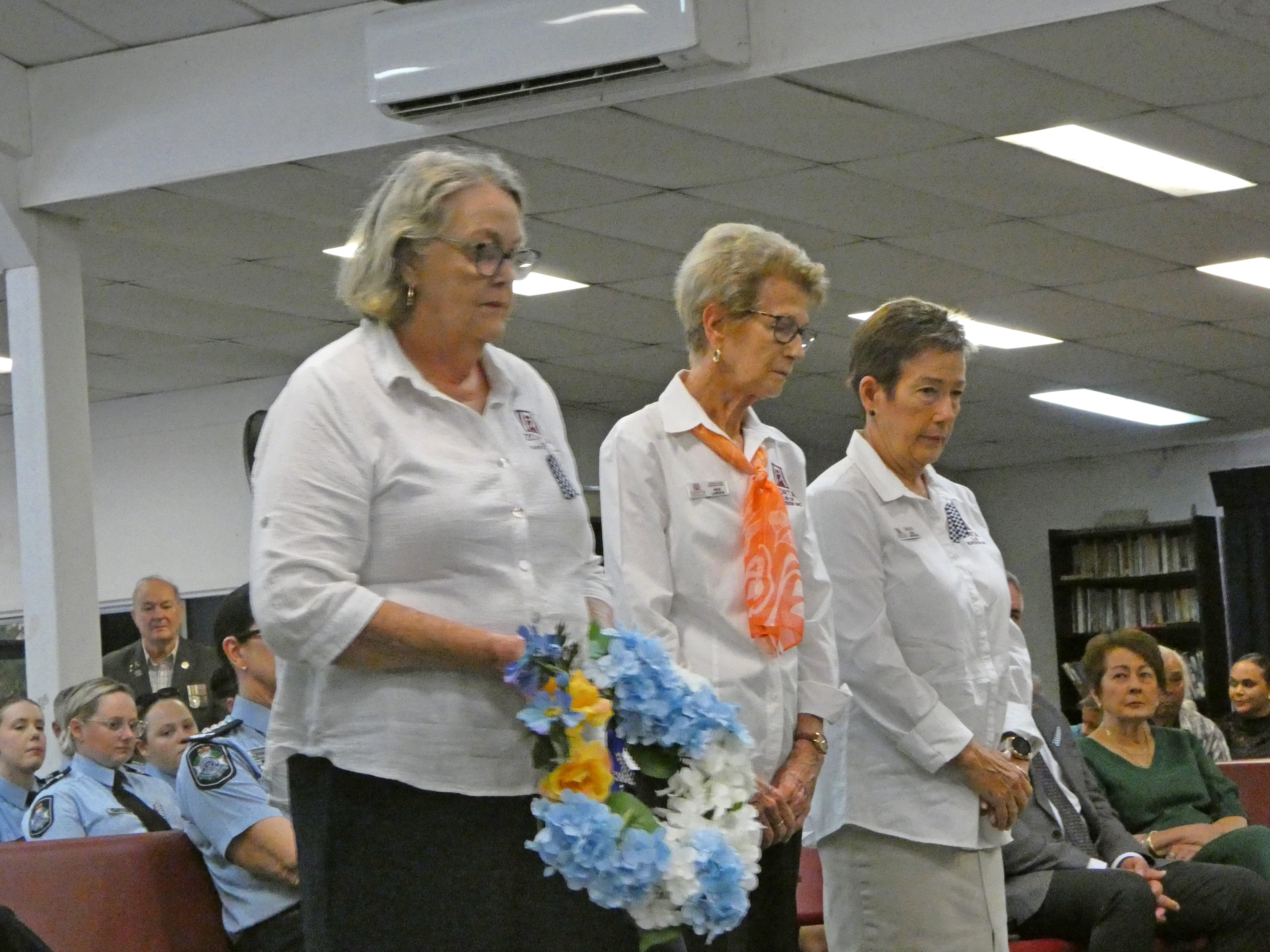

New research into how nitrogen moves through soil could offer useful lessons for Burdekin cane growers; but Professor Mike Bell says findings from rainfed wheat country cannot simply be transferred to the district’s irrigated sugarcane systems.
Bell, from The University of Queensland, led a project through the Australian Government’s $20 million Soil Science Challenge Program examining nitrogen movement in clay soils used for rainfed grain production in southern Queensland. Bell said applying the findings directly to flood-irrigated cane would be “a fair stretch”, however, the research does provide insight into how soil type, water and nitrogen interact.
Nitrogen moves through soil with water, meaning the way it behaves can vary considerably depending on the soil. In freely draining soils, nitrogen can potentially move below the active root zone, while heavier clay soils can hold water for longer and create conditions where nitrogen is lost through denitrification.
Bell's research tested whether applying nitrogen to dry soil soon after a previous crop was harvested could improve nitrogen recovery in the following wheat crop, rather than applying it close to planting. Across two seasons, the approach produced better nitrogen recovery in a dry year without additional losses in a wetter year. However, Bell stressed that further testing is required before the approach becomes mainstream.
In the Burdekin, local agronomist Jayson Dowie said the research reinforced principles already relevant to cane production, while highlighting the differences between farming systems.
“There really isn't one nitrogen story for the Burdekin,” Dowie said, pointing to the district’s diverse soils and fully irrigated production system.
He said nitrogen use efficiency was influenced by more than fertiliser rates, with soil health, compaction, drainage, irrigation, weeds, crop establishment and seasonal conditions all affecting how effectively a crop could use available nitrogen. Dowie also pointed to local research into nitrogen timing.
“In one of our larger nitrogen trials we saw better crop responses where nutrition was applied after the first irrigation, and again with later application, compared with applying it immediately behind the harvester,” he said.
While the result raised questions around timing, Dowie cautioned against attributing the response to a single mechanism. He said later applications could also create additional labour and operational challenges, particularly where irrigation fluming needs to be moved. Irrigation itself remains an important part of the nitrogen equation.
On heavier soils, prolonged saturation can increase the potential for nitrogen loss through denitrification, while excessive water movement through lighter soils can increase the risk of nitrogen moving below the active root zone.
Dowie said the next challenge for local research was understanding how nitrogen and irrigation management could be better matched to individual soils and crops.
“The bigger question is how much better we can become at matching nitrogen and irrigation management to what the crop actually needs across the Burdekin's different soils and landscapes, while improving productivity and profitability.”
For Burdekin growers, the national research therefore provides useful evidence about the relationship between nitrogen, soil and water; but not a one-size-fits-all prescription. Further local testing will be needed to determine what strategies deliver benefits under the district’s specific soils, irrigation systems and commercial cane-growing conditions.
Photo source: Shutterstock
Burdekin manufacturers could be in line for a share of a $12.5 million Queensland Government funding round aimed at helping regional businesses invest in new technology and improve productivity.
Round Two of the Transforming Queensland Manufacturing Grants Program is now open, with at least half of the available funding reserved for projects located in regional Queensland.
The Department of Natural Resources and Mines, Manufacturing and Regional and Rural Development has confirmed Round One attracted 119 applications across Queensland, with 18 businesses receiving funding. Eleven of those recipients were based in regional Queensland, but the Department has not disclosed any Round One application or recipient figures specifically for the Burdekin.
The latest round offers eligible manufacturers grants between $100,000 and $1.5 million, covering up to 50 per cent of eligible project costs. Applications close at 1pm on 25th November.
The program is aimed at established small and medium-sized manufacturers looking to invest in advanced equipment or manufacturing technology, including robotics, automation, artificial intelligence and systems designed to improve production processes.
Businesses must have between five and 200 full-time equivalent employees, a majority of their turnover must come from manufacturing, and they must have operated in Queensland for at least three consecutive years.
For the Burdekin, manufacturing opportunities are closely tied to the region’s broader agricultural economy, including engineering, fabrication and businesses supplying equipment and services to primary industries.
The Townsville Manufacturing Hub, which services the Burdekin, has also been increasing its focus on technology and workforce capability.
In August and September, subsidised two-dimensional and three-dimensional computer-aided design training was offered in the Burdekin for the first time, including training at the Home Hill campus. The program was designed to help local manufacturers improve digital design capability, accuracy and product development.
The Queensland Government says Round One projects across the State are expected to create more than 300 new jobs and upskill more than 550 existing workers, although those figures are projected outcomes rather than jobs already created.
For Burdekin businesses, the next question will be whether local manufacturers put forward projects capable of competing for the funding.
Round Two is being delivered through a single-stage competitive process, with $12.5 million available and at least 50 per cent allocated to projects located solely in regional Queensland.
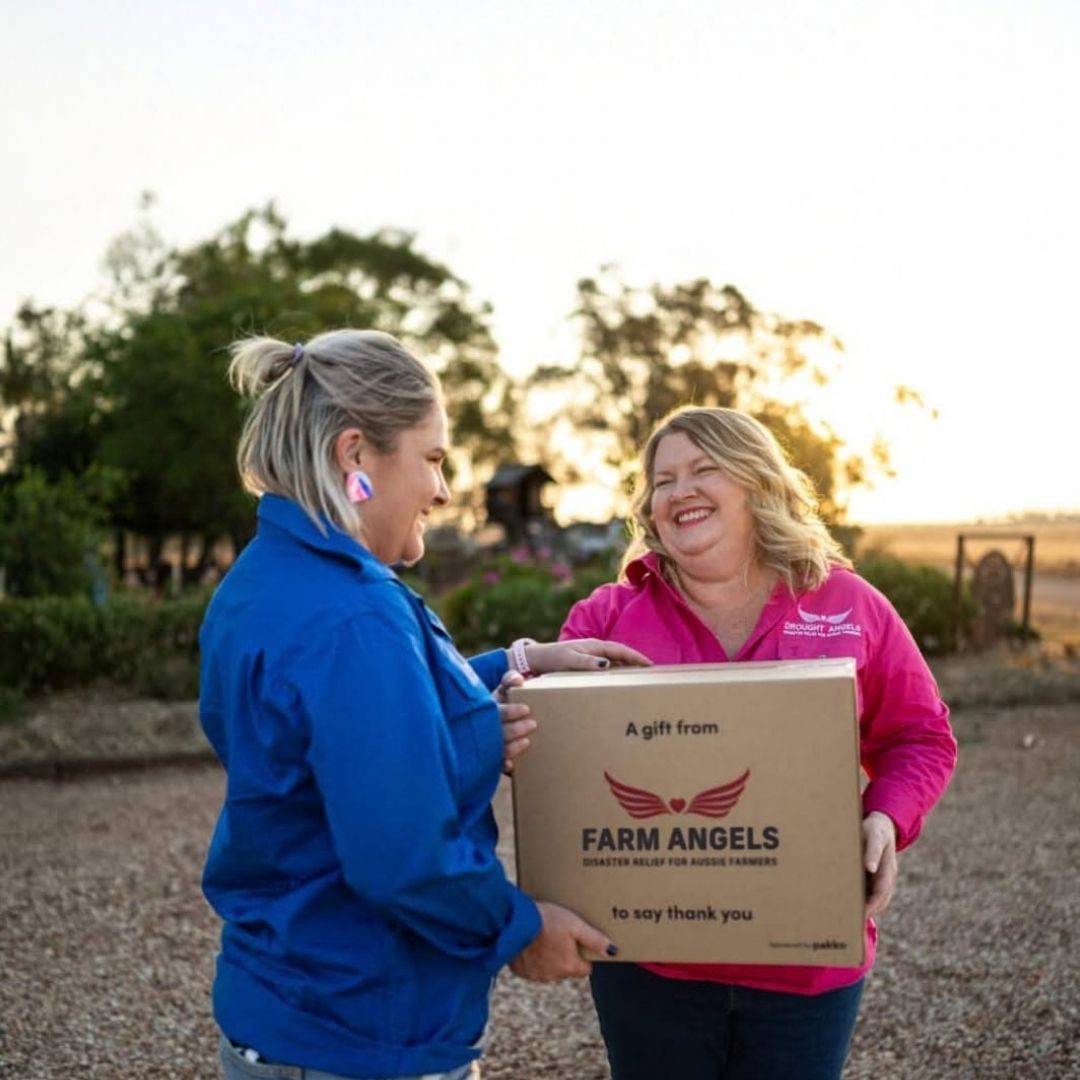
Women from across the Burdekin and surrounding districts are being encouraged to secure their place at Beyond the Gate: Celebrating the Women at the Heart of Rural Communities. Photo supplied
Contributed by Community Bank Home Hill & Ayr
With final tickets now available, women from across the Burdekin and surrounding districts are being encouraged to secure their place at Beyond the Gate: Celebrating the Women at the Heart of Rural Communities.
Hosted by Community Bank Home Hill & Ayr, the luncheon will bring women together to connect, share their experiences and celebrate the resilience, leadership and contribution that help rural communities thrive.
Coinciding with the International Day of Rural Women, celebrated globally on October 15, Beyond the Gate recognises the many roles women play across agriculture, local business, community organisations, volunteering and family life.
Community Bank Home Hill & Ayr Branch Manager Sally Smith said the strong response to the event demonstrated the value of creating opportunities for rural women to come together.
“We are delighted to see so many women embracing this event, and with only the final tickets remaining, we encourage anyone considering attending to book as soon as possible,” Sally said.
“Women make an enormous contribution to rural communities, whether they are working on the land, operating a business, leading a community organisation, supporting their families or quietly helping others behind the scenes.
“Beyond the Gate gives us an opportunity to recognise those contributions, strengthen local connections and enjoy a well-deserved celebration together.”
A highlight of the luncheon will be an inspiring presentation from Farm Angels, a national charity dedicated to supporting primary producers and farming families through some of their most challenging times.
Originally established as Drought Angels in Queensland in 2014, the organisation has expanded its support to farmers affected by drought, floods, fires and plagues throughout Australia.
Farm Angels has now assisted more than 4,700 primary producers across over 1,300 communities by providing tailored financial assistance, food hampers, care packs and mental wellbeing support.
Through personal phone conversations and on-farm visits, the organisation works directly with farmers to understand their individual circumstances and provide practical and compassionate support.
Its work recognises the considerable pressure carried by farming families and the importance of helping primary producers remain on the land. This support contributes not only to individual wellbeing, but also to the strength of regional economies, Australia’s food security and the social fabric of rural communities.
Sally said the work of Farm Angels closely reflected the values behind Beyond the Gate and Community Bank Home Hill & Ayr’s commitment to rural communities.
“Farm Angels understands that behind every farm is a person, a family and a story,” she said.
“Their work is a powerful example of what can be achieved when people genuinely care for one another and provide meaningful support when it is needed most.
“We are proud to welcome a speaker from Farm Angels and give our guests an opportunity to learn more about the important difference the organisation is making throughout rural Australia.”
Guests can also look forward to a special “On the Couch” panel session featuring a range of perspectives and personal experiences, along with valuable networking opportunities, a delicious lunch and drinks.
For Community Bank Home Hill & Ayr, the event represents more than a single day of celebration. It is part of a broader commitment to recognising, supporting and investing in the people who sustain the Burdekin and surrounding rural communities.
“As a Community Bank, our connection to the region extends well beyond providing banking services,” Sally said.
“We want to support initiatives that bring people together, create stronger networks and recognise those whose efforts make our communities better places to live and work.
“Strong rural women help build strong rural communities, and we are committed to continuing to celebrate and support them.”
Beyond the Gate: Celebrating the Women at the Heart of Rural Communities will be held from 11am to 3pm on Friday, October 16, at Populins Hall.
Only the final tickets remain, making this the last opportunity to join an afternoon of connection, inspiration and celebration dedicated to the remarkable women at the heart of rural life.
Bookings through Humanitix - https://events.humanitix.com/beyond-the-gate-celebrating-the-women-at-the-heart-of-rural-communities
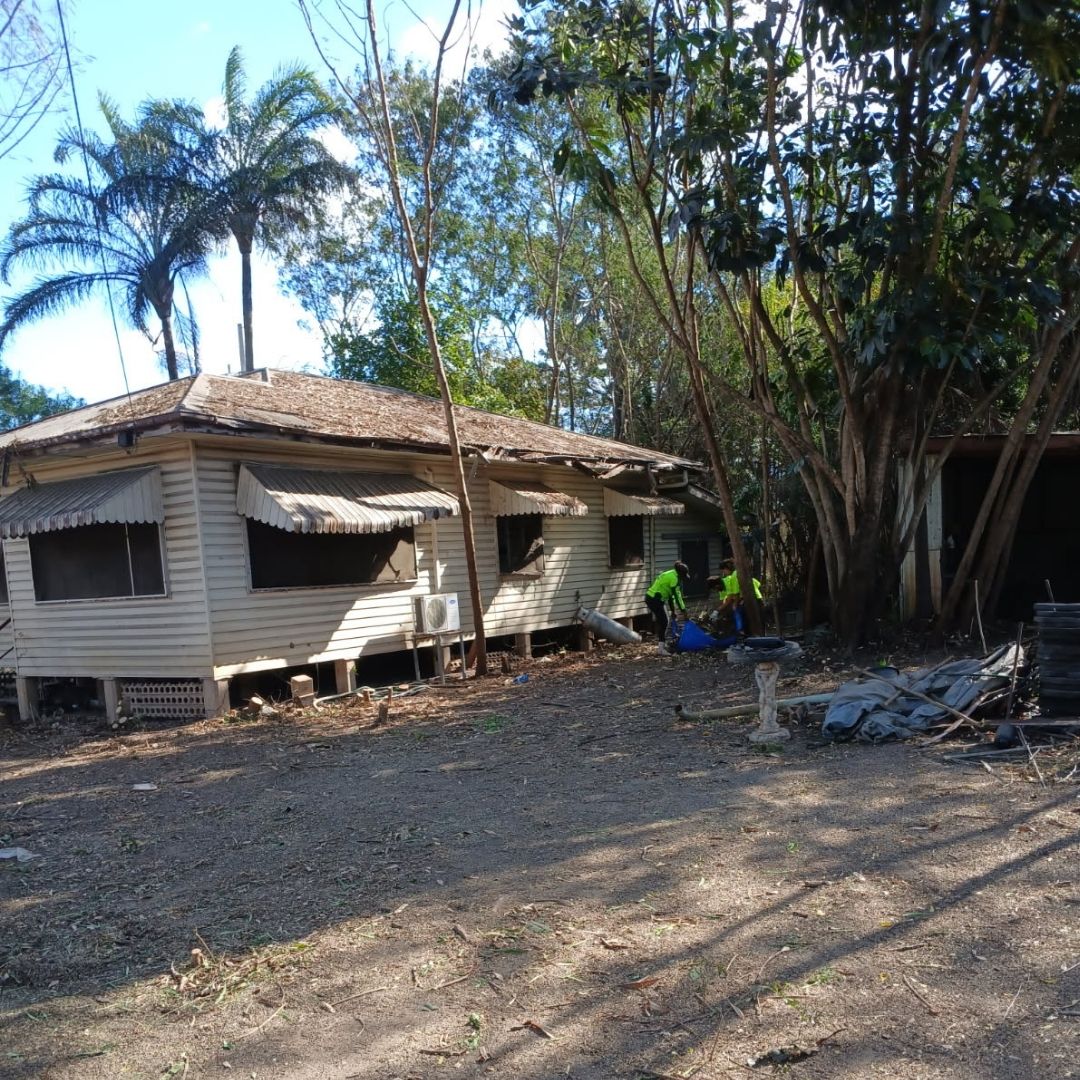
The Jim’s Mowing moniker has long been synonymous with freshly manicured lawns and inch-perfect hedges. In the Burdekin, its operation has evolved well beyond that.
Jim’s Window and Pressure Cleaning, one of the franchise’s latest ventures, has seen homes, offices and public spaces across the region look a little tidier.
Driven by the know-how of Gayl Campbell, a lifelong cleaner, and daughter Kayleen McKenzie, who brings years of pressure cleaning expertise with her from Perth, the service specialises in both interior and exterior property cleaning.
Now offering pressure cleaning for driveways and footpaths, the cleaning arm has grown into a comprehensive property maintenance operation, with free quotes available for regular and once-off work.
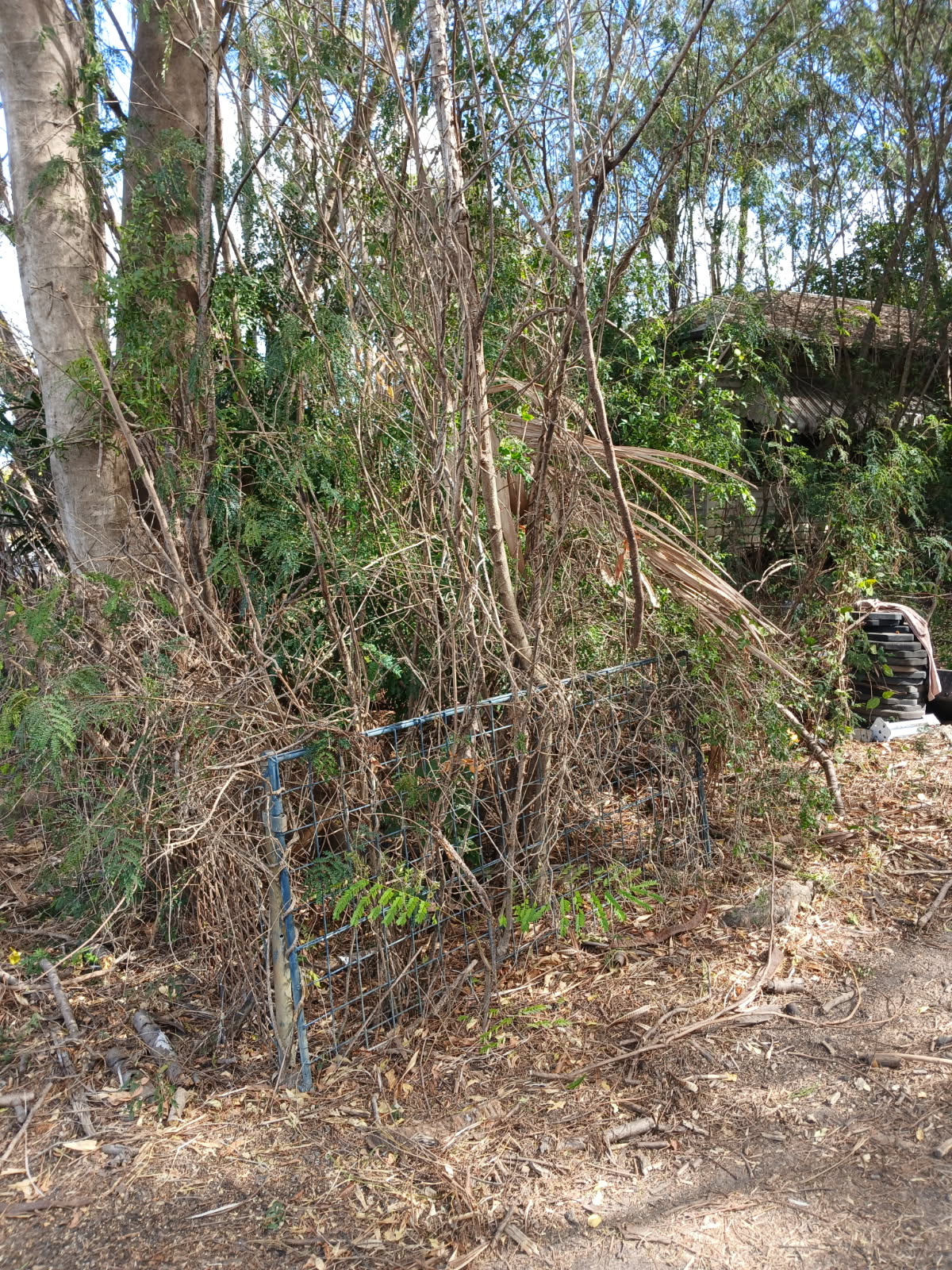
Although only 12 months old, the service has already taken on major projects for Burdekin Shire Council and multinational companies across the region, including Shell.
Franchise owner Geoff Campbell said it all grew out of a client demand and the same principles that had helped its other operations become successful.
“We would go to mow a lawn and people would ask, ‘can you clean our house?” he said.
“The whole success of everything has been down to paying attention to detail and quality of workmanship.”
The cleaning service complements the business’s trademark mowing work, which spans everything from lawn mowing and weed spraying to pruning, hedging, gardening, fertilising and rubbish removal.
Need a clean-up? Contact Jim’s Window and Pressure Cleaning on 131 546 for a free quote.
Contributed by selectability
With Queensland Mental Health Week (3-11 October) fast approaching, it's a good time to recognise the impact locals are making to build community and build wellbeing.
For regional coordinator Melissa, supporting people across the Burdekin is strengthened by her lifelong connection to the community she loves.
Born and raised in the region, Melissa joined selectability, bringing almost a decade of experience in the disability sector and a passion for ensuring regional communities have access to the support they need.
“I am passionate about helping people in regional and remote areas as it is often overlooked and assistance is needed,” said Melissa.
In her role, Melissa oversees the day-to-day operations of services across the Burdekin, supporting local employees and ensuring recipients receive high-quality, person-centred support.
While Melissa has only been with selectability for a short time, she has spent almost 10 years working in the disability sector and brings previous experience in childcare.
Taking on the regional coordinator position offered an opportunity to use her experience in a new way while continuing to make a difference close to home.
“I am excited to be challenged in a new role and helping people that need our support in a regional community.”
Having lived in the Burdekin her entire life, Melissa knows firsthand the value of the connections within a close-knit regional community.
“Everything is close and easily accessible, and everyone knows you and is willing to help.”
Since stepping into the role, Melissa says one of the biggest surprises has been discovering the breadth of support already available through selectability locally.
“I didn’t realise how much selectability had to offer in the Burdekin. “There is something for everyone that needs support.”
From NDIS supports to mental wellbeing programs and community connection, Melissa is looking forward to building her knowledge of selectability’s services and strengthening their impact across the region.
For those considering a career supporting others, Melissa says the opportunity to make a difference can be equally meaningful for the person providing the support.
“It is a life changing experience helping others.”
Meet Melissa and the team on Thursday 8 October at the Mental Health Hub, 182 Edwards Street, Ayr for their free community wellbeing event to celebrate Queensland Mental Health Week, learn more about local support and services and connect with the community.
There have been several important community events and opportunities across the Burdekin recently, and I’d like to take a moment to share some highlights with you.
On Tuesday, communities across Australia observed Police Remembrance Day, a significant occasion to honour the men and women of the police service who have lost their lives in the line of duty. It is a day to remember their courage, dedication and sacrifice, and to acknowledge the families, friends and colleagues who continue to carry their legacy. We thank all current and former police officers for their service and commitment to keeping our communities safe.
On Friday evening, I hosted a Catch Up with the Mayor at the Clare Club. It was a wonderful opportunity to meet with locals, listen to their concerns and discuss the issues that matter most to their community. I would like to thank everyone who came along and shared their thoughts and feedback. If you have never visited the Clare Club, I encourage you to stop by on a Friday night. The atmosphere, company and food were all excellent.
Finally, I’m excited to share news of a fun new initiative as part of the lead-up to the 2027 Sweet Days Hot Nights Festival. We have launched the search for the first-ever Sweet Days, Hot Farmers Calendar - think firefighters’ calendar, but Burdekin style. We’re looking for local farmers, contractors and agricultural workers who help make our region the productive and vibrant community it is today. Men and women of all ages are encouraged to nominate themselves, or even nominate a mate, for the chance to become one of the twelve faces of the 2027 calendar. Entries are open until 18 October, and I encourage everyone to get involved and have some fun with this uniquely Burdekin project.
As always, if you have any questions or would like to discuss any Council matters, please contact me directly by phone on 0447 150 582 or by email at mayor@burdekin.qld.gov.au.

It was an honour to attend the ‘National Police Remembrance Day’ at the Burdekin Community Church last Tuesday morning. The Remembrance Day is held to honour fallen officers who have served community since 1864. The solemn occasion drew local community members, public representatives and serving officers in the Burdekin. Local police work hard to keep the peace and maintain law and order, thank you for your service.
A reminder tickets are on sale for the ‘Seniors Expo and Luncheon’ on Friday 30th October at the Burdekin Memorial Hall. Join us and enjoy a roast lunch and desert whilst entertainment is provided. Tickets are only $20 and can be booked at the Burdekin Theatre Box office on 4783 9880.
Burdekin Plantation Park Markets take place this Sunday 4th of October, 8am – 12pm.
Some of our major sporting codes are coming to an end whilst others are starting up. The AFL was exciting to watch and I’m afraid Freo didn’t have a fairytale ending. It was shown that you need to play the game right to the end as the Lions came home with a strong burst to win the title. Newcastle Knights had a hard fought win over Penrith in the preliminary NRL final. It was unfortunate one of the game’s elite players, Nathan Cleary, sustained a compound fracture of his ankle.
Sport is a popular pastime in the Burdekin from the younger years to older. Sport espouses qualities of teamwork, cooperation, communication, respect and fair play to name just a few.
Play fair. Wishing you health & happiness.

The service on Chippendale Street, Ayr screened more than 1,710 local women during its last visit in 2024. Photo: Jacob Casha
Townsville Hospital and Health Service (THHS) has confirmed there are “no plans to reduce or withdraw” the BreastScreen Queensland mobile screening service in the Burdekin amid rumours it could be axed due to low usage.
A THHS spokesperson said the Ayr service is “secure” and “one of the most active mobile screening locations in the north Queensland region,” with more than 650 Burdekin women attending appointments since August.
The service will remain on Chippendale Street until mid-December.
Burdekin Shire Council Mayor Pierina Dalle Cort welcomed the news, calling the service “valuable for our community.”
“I make it a priority to have a screening every two years when the van visits the Burdekin,” she said.
“The appointment takes only around 15 minutes, it is free, and it could save your life.”
BreastScreen Queensland has screened more than one million Queensland women since 1991, detecting over 34,000 breast cancers.
The spokesperson encouraged eligible women aged between 50 and 74 to book their screening every two years.
Appointments can be made by visiting breastscreen.qld.gov.au or by calling 13 20 50.
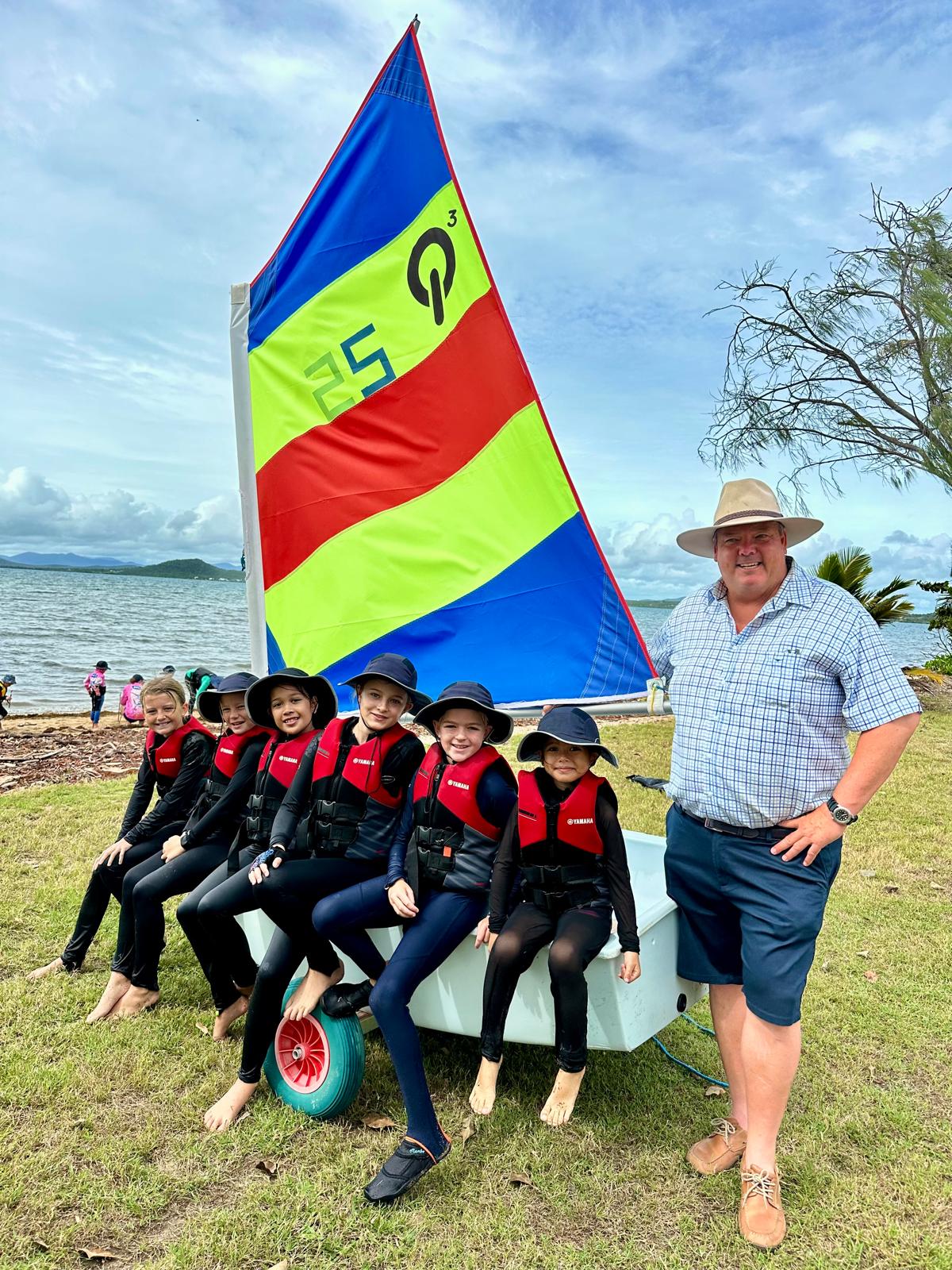
Stronger Communities Programme—Andrew Willcox MP with students and sailing boat. Photo supplied
Community groups across Dawson can apply for a share of $150,000 in Federal Government funding for local projects.
Grants of between $2,500 and $20,000 are available through the Stronger Communities Programme for small capital and infrastructure projects that deliver social benefits to local communities.
Federal Member for Dawson Andrew Willcox said the funding could help groups turn long-held plans into reality.
“Our communities are full of people with great ideas, but sometimes it is the funding that stands between a good idea and getting it off the ground,” Mr Willcox said.
“The Stronger Communities Programme is about backing those local ideas and helping community organisations deliver projects that will benefit the people they serve.
“That could mean new equipment, improvements to a community facility, creating a better shared space or a project that brings people together.”
Projects must cost no more than $50,000 and be completed by 31st March 2028.
Eligible organisations must have an Australian Business Number and meet the programme’s eligibility requirements.
Funding can cover up to 100 per cent of eligible project costs for eligible applicants other than local governing bodies, which can receive up to 50 per cent and must provide matching funding.
Mr Willcox encouraged local groups to put forward projects that would benefit their members and communities.
“Local volunteers do an enormous amount with very little, and I know there are plenty of groups across Dawson with projects sitting on a wish list waiting for the opportunity to make them happen,” he said.
“This is a chance to move some of those projects from the wish list to the work list.”
Expressions of Interest close at 5pm on Sunday 25th October.
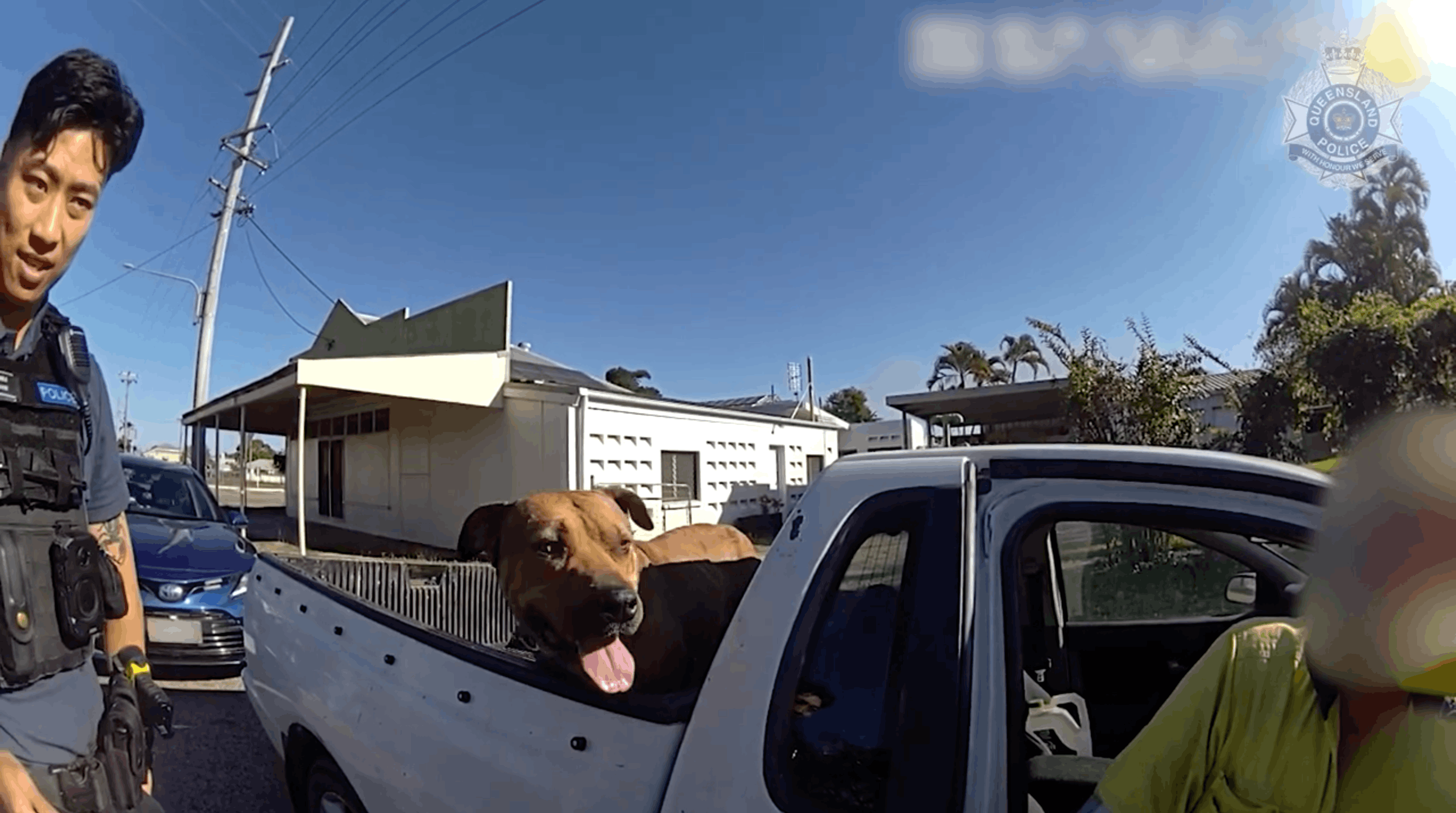
Police were parked on Graham Street at 4pm when a white Ford Falcon utility—carrying a dog in the tray—allegedly performed the burnout. Photo: QPS
A 45-year-old Ayr man is facing multiple traffic and animal cruelty charges after allegedly performing a burnout in front of an unmarked police vehicle on Sunday 20th September.
Police were parked on Graham Street at 4pm when a white Ford Falcon utility—carrying a dog in the tray—allegedly performed the burnout.
Officers intercepted the vehicle on Drysdale Street shortly after. The driver was breath-tested and returned an alleged blood alcohol concentration of 0.198.
He was subsequently charged with one count each of driving under the influence of liquor, wilfully making unnecessary smoke, driving an unregistered vehicle, driving an uninsured vehicle, unlicensed driving, and animal cruelty.
Police confiscated the vehicle's registration plates for 90 days.
Senior Sergeant Lisa Shields condemned the alleged actions.
“This is deliberate driving conduct that can put lives at risk and undermines community safety,” Senior Sergeant Shields said.
“The consequences of this dangerous behaviour can be catastrophic.
“Ayr Police are committed to targeting dangerous driving offences through high-visibility patrols and strong enforcement action.”
The man is scheduled to appear in the Ayr Magistrates Court on 19th October.

“They can see the potential in Australia. They’re keen, they're reliable, and they realise the opportunities they have here.” Photos: Ayr Backpackers
Regional communities across the country could be set to lose “millions” under a Federal Government shake-up of the backpacker visa system.
The proposal would introduce caps on second- and third-year Working Holiday Maker (WHM) visa places, with applicants now needing to win a ballot—on top of fulfilling the existing regional work requirements—to extend their Australian visit.
Home Affairs Minister Tony Burke, who announced the proposal last month, said the changes are part of broader migration reforms that would deliver a “more orderly, fair, and targeted” system.
Ayr Backpackers hostel owner David Esler called them a “betrayal.”
“This is unfair to backpackers. It is damaging to employers. It is deeply harmful to regional communities,” he said.
"The deal was very simple and mutually beneficial. Now we’re telling backpackers, ‘go and do the work anyway, and you might get a spot.’
“We’ve canvassed our [hostel] guests—they’re not going to take that chance … [and] we will lose tens and tens of thousands of workers in regional areas across the country because of this change.”
The changes would cap second-year WHM visas at 45,000, down from about 57,000 last year, with third-year places plummeting from around 31,000 to 5,000.
The mandatory 88 days of work for a second year—and six months for a third—will remain in place, although will no longer guarantee an extension.
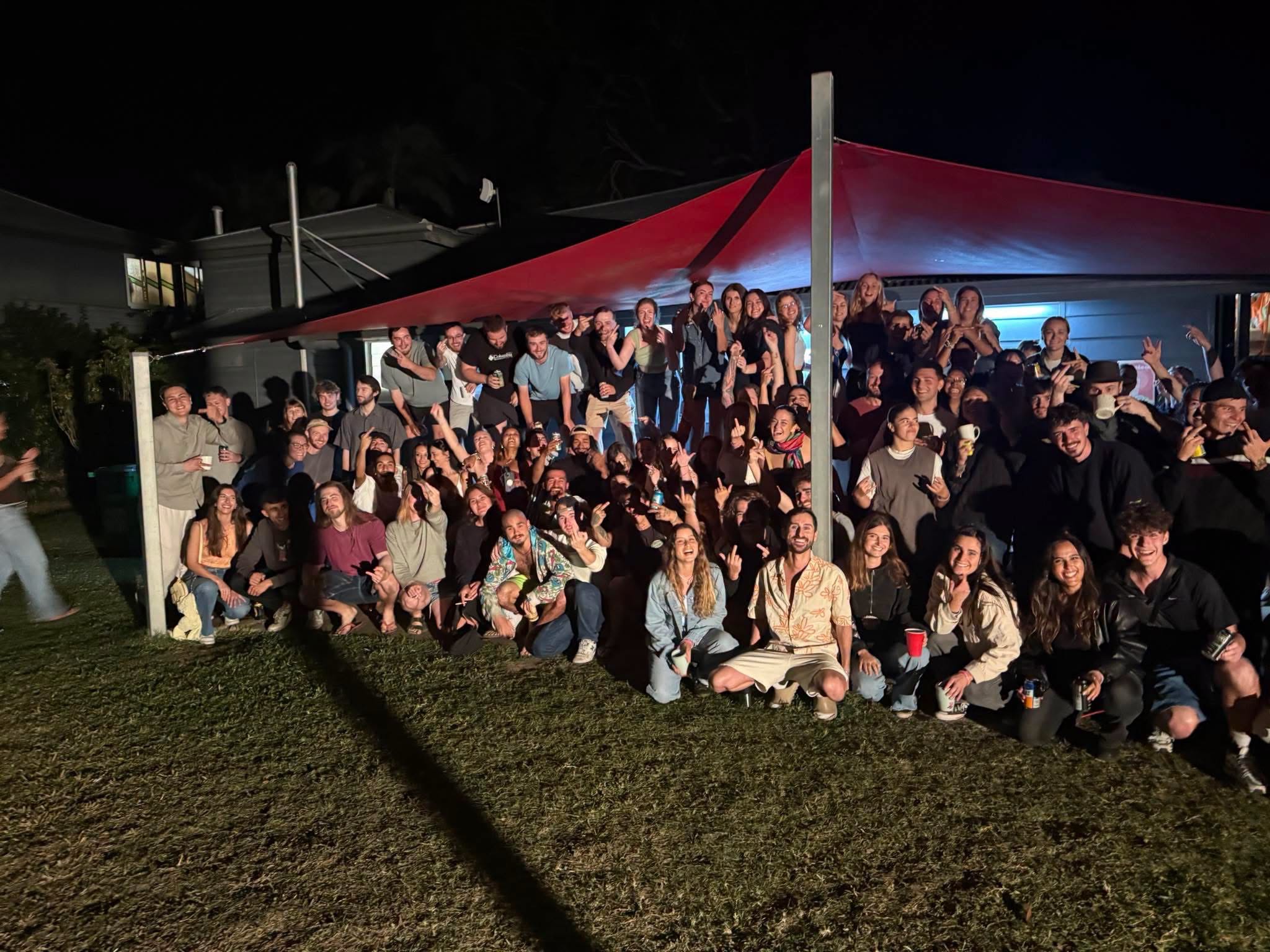
Swedish working holidaymaker Frida Dellhammar, a hospitality employee completing her regional work in the Burdekin, said her plans to extend for a third year were ultimately deterred by those odds.
“I love being in this country and I would do a lot of things to extend my visa,” she said.
“But once they [announced the ballot], I thought, ‘there's no way I would spend six months in a very remote place with only a possibility of getting a third year.’”
Ms Dellhammar is one of around 200 guests currently staying at Ayr Backpackers. According to Mr Esler, the hostel accommodates up to 1,200 travellers across a season, with each guest working in town or on surrounding farms.
Mr Esler said any reduction could leave an economic gap in the order of millions, citing Australian Tourism Export Council research that found WHMs spend “more than $32,000 in Australia” on average, with nearly a quarter of that expenditure occurring in regional towns.
Jim’s Mowing franchisee Geoff Campbell, who will have up to five backpackers on his books later this year, said the Burdekin workforce would also feel the backpackers’ absence.
Mr Campbell said his maintenance business, which was struggling to attract workers, was on the brink of demise before backpackers stepped in.
“I had to go to backpackers—I couldn't find any local staff. I’ve been through 75 people in four years,” he said.
“They can see the potential in Australia. They’re keen, they're reliable, and they realise the opportunities they have here.”
Speaking on the reforms, Home Affairs Minister Tony Burke argued that no visa category could be exempt from efforts to reach the government’s target of reducing net overseas migration to 225,000.
He framed the WHM caps as a necessary step to ease nationwide housing pressures and give local infrastructure and housing supply a chance to catch up.
Burdekin Shire Council Mayor Pierina Dalle Cort said good intentions would not negate the impact of the changes on communities like the Burdekin.
“These people need to get out of their four walls and come out to the real Australia," she said.
“This is not just about people entering our country. These are our workers.”
Ms Dellhammar added: “We’re contributing so much—it’s not like we're just taking and taking.
“We pay taxes. We help out. I don’t know who’s going to fill this void after it gets implemented.”

Ayr and Home Hill police, along with Ayr CIB, has charged six people with a total of 32 drug offences following an operation targeting drug offences across the Burdekin last week.
As part of the operation, police executed a search warrant at a Home Hill address on 20th September.
A 36-year-old man was charged with trafficking in dangerous drugs (methylamphetamine), 23 counts of supplying dangerous drugs and one count of unlawful supply of a firearm.
Police objected to the man's bail and he was remanded in custody.
On 24th September, police executed a search warrant at an Ayr address.
A 62-year-old man was charged with possessing dangerous drugs, supplying dangerous drugs, possessing utensils and possessing proceeds of crime after police located him with $15,000 in cash.
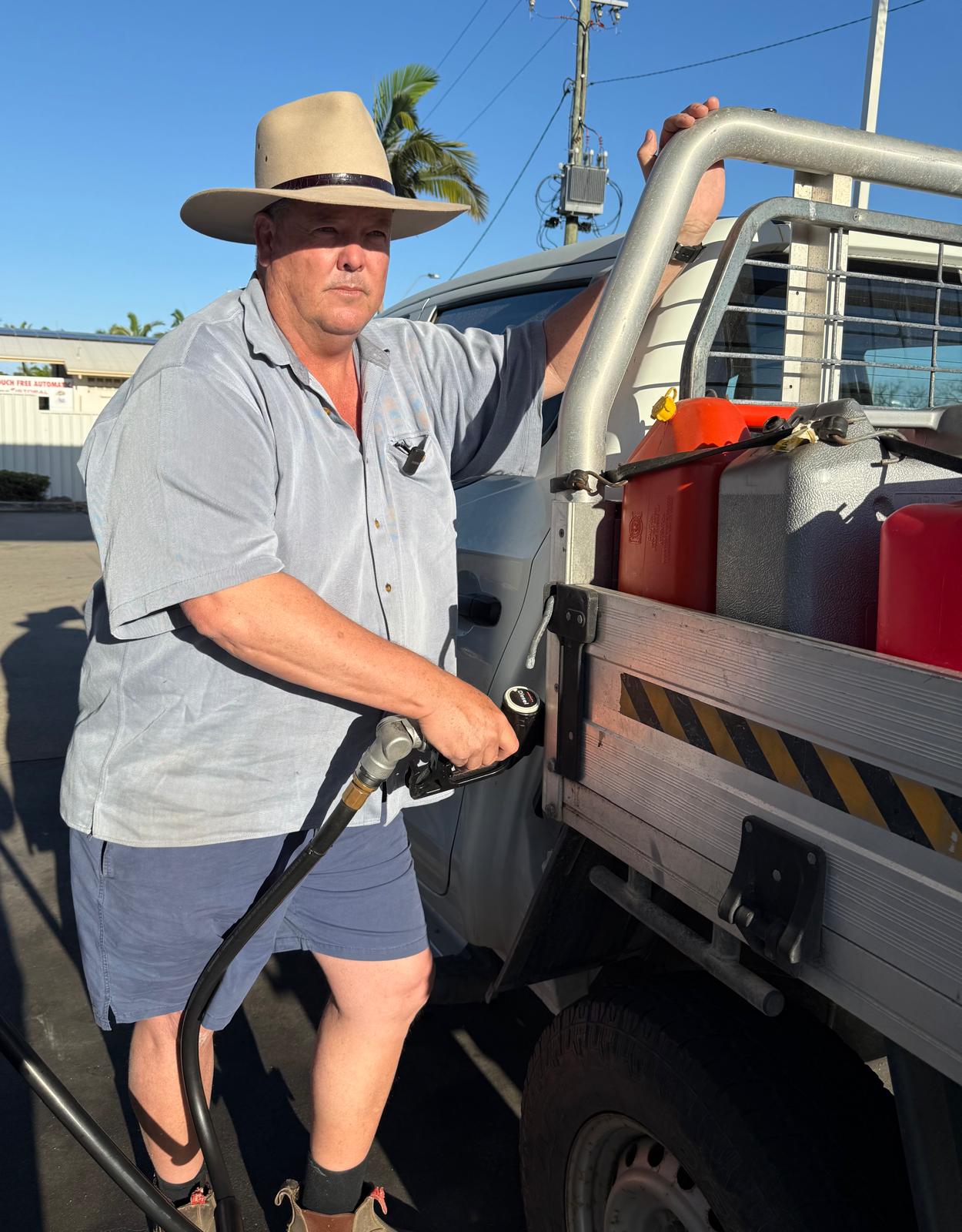
Federal Member for Dawson Andrew Willcox MP says regional Australians feel fuel price spikes hardest, with long distances and limited public transport making affordable fuel essential for families, farmers and local businesses. Photo supplied
A Coalition proposal would halve fuel excise when global oil prices rise above a set threshold, with the party estimating the measure could reduce fuel costs by 27 cents a litre.
Federal Member for Dawson Andrew Willcox MP said the proposed Fuel Price Shield would be triggered when the two-week average closing price of Brent crude rises above US$100 a barrel.
The Coalition estimates the measure would save motorists around $15 on a typical tank of fuel.
Mr Willcox said regional Australians could benefit from the proposal due to the distances often travelled between major centres.
“Fuel is not optional in Dawson. We have hundreds of kilometres between major centres, limited public transport and families who need their cars to get to work, school, medical appointments, the shops and everything in between,” Mr Willcox said.
“When fuel prices spike, regional Australians feel it first and feel it hardest. There is simply no easy alternative to driving when you live hundreds of kilometres from the next major centre.”
He said higher fuel costs also affected agricultural producers and businesses reliant on transport.
“Our farmers feel that pressure right through the supply chain. They need diesel to plant, harvest, irrigate, transport and get Australian produce to market. When the cost of fuel goes up, the cost of getting that food from the paddock to the supermarket goes up with it.”
Coalition Leader of the Opposition Angus Taylor said the proposal was intended to provide temporary relief when international oil prices rose sharply.
“Fuel is not a luxury. Australians need it to get to work, take the kids to school and keep their businesses running,” Mr Taylor said.
“When global events send oil prices through the roof, Australians should know there is a clear automatic safeguard in place to provide temporary and targeted relief.”
“The Fuel Price Shield would provide certainty. When a serious oil shock hits, the tax comes down automatically. When oil prices return to more normal levels, the ordinary rate is restored.”
Leader of the Nationals and Queensland Senator Matt Canavan said higher fuel prices could also affect the wider economy.
“Higher fuel prices also flow through the entire economy. They increase the cost of moving food, freight and supplies around our country.”
“The Fuel Price Shield is designed to provide temporary relief when international oil markets experience an exceptional shock, while ensuring the ordinary arrangements return once that shock has passed.”
Mr Willcox said the proposal would also help address costs associated with transporting goods.
“This is about more than what people pay at the bowser. Fuel is an input into almost everything we buy in Dawson,” he said.
“It moves our food, our freight, our building materials and our tourism products. When fuel spikes, those costs don't disappear. They are passed through the economy.”
The Coalition has included the Fuel Price Shield and stronger fuel security as part of its broader economic policy platform.
Supplied by the office of Federal Member of Dawson Andrew Willcox
The service on Chippendale Street, Ayr screened more than 1,710 local women during its last visit in 2024. Photo: Jacob Casha
Townsville Hospital and Health Service (THHS) has confirmed there are “no plans to reduce or withdraw” the BreastScreen Queensland mobile screening service in the Burdekin amid rumours it could be axed due to low usage.
A THHS spokesperson said the Ayr service is “secure” and “one of the most active mobile screening locations in the north Queensland region,” with more than 650 Burdekin women attending appointments since August.
The service will remain on Chippendale Street until mid-December.
Burdekin Shire Council Mayor Pierina Dalle Cort welcomed the news, calling the service “valuable for our community.”
“I make it a priority to have a screening every two years when the van visits the Burdekin,” she said.
“The appointment takes only around 15 minutes, it is free, and it could save your life.”
BreastScreen Queensland has screened more than one million Queensland women since 1991, detecting over 34,000 breast cancers.
The spokesperson encouraged eligible women aged between 50 and 74 to book their screening every two years.
Appointments can be made by visiting breastscreen.qld.gov.au or by calling 13 20 50.

A field of 69 players took to the course, which greenkeeping staff and volunteers had prepared extensively throughout the week. Photo source: Ayr Golf Club
Ann Phelan and Dennis Mondin delivered outstanding performances to capture victory at the historic Clive & Olive Williams Memorial Day at Ayr Golf Club.
Both golfers carded impressive scores of 41 points to top their respective divisions and claim prestigious Honourboard titles.
A field of 69 players took to the course, which greenkeeping staff and volunteers had prepared extensively throughout the week.
In the Ladies competition, Phelan narrowly edged out runner-up Betty Durrant and third-place finisher Kathy Cortabitarte, who both posted solid rounds of 38 points. Sharon Bozzetto, Rhonda Martin, Pat Lawson, and Shirley Jones filled out the rundown.
In the Men's field, Mondin held off a tight challenge from Doug Gudge, who took second place with 40 points, while David McBride secured third with 39 points. Jackson Plate, David Christensen, Garry Spelta, Adam Eathorne, and John Kapeechkin rounded out the top men’s division leaderboard.
The tournament marked a remarkable milestone for the club, celebrating 58 years of continuous sponsorship from the Williams family. Family members Terry and John Williams attended the presentation, reflecting on the tradition honoring their late parents, Clive and Olive.
Ladies' pin shot prizes went to Janet Trezise, Sandra Wight, and Pat Lawson. The men's pin shots were awarded to Shane Power, Joe Spelta, Gerald Henaway, John Cockfield, John Reid, Garry Spelta, Joe Henaway, and Dennis Mondin.
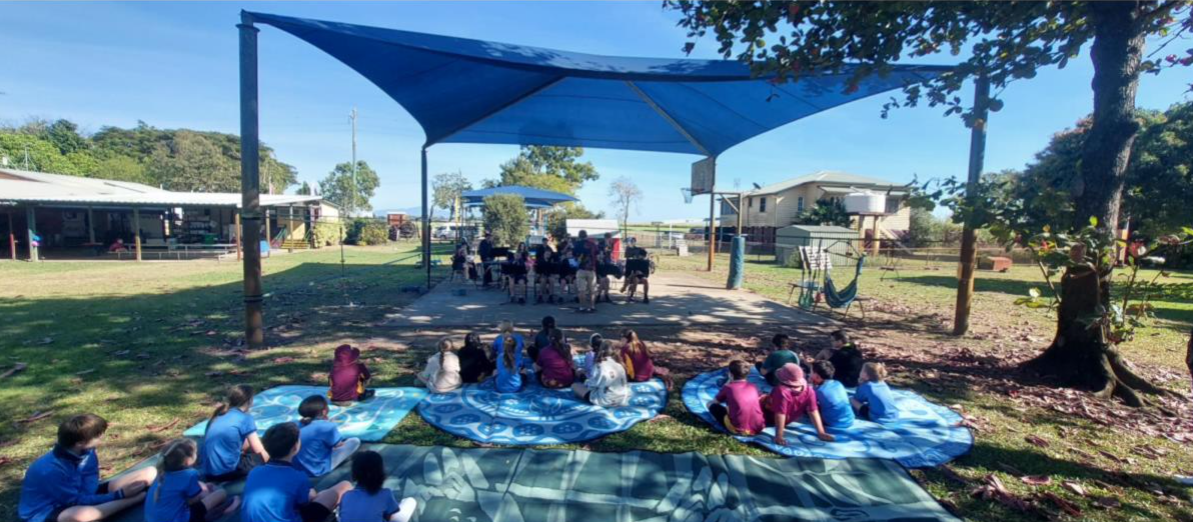
The William Ross State High School Stage Band stopped at Maidavale State Primary School to perform for a combined audience of students from Maidavale State School, Airville State School and Brandon State School. Photo supplied
Contributed by Burdekin Small Schools
On Friday, 31st July, The William Ross State High School Stage Band travelled to Mackay to participate in the annual Central Queensland University Jazz Festival. On the way, the band stopped at Maidavale State Primary School to perform for a combined audience of students from Maidavale State School, Airville State School and Brandon State School, all small rural schools in the Burdekin area.
In a delightful outdoor setting under the huge rain trees in the grounds of Maidavale school, the William Ross Stage Band performed a selection of jazz pieces plus presenting introductions to the various instruments and what they sounded like to a very enthusiastic and attentive audience of students from prep to year six, along with staff from the three schools.
The William Ross students and staff were very positive about the event and thoroughly enjoyed themselves. The concert also gave them the opportunity to experience an outdoor performance- the breezes, the wild birds in the background and the school’s pet chickens wandering over for a look!
The event was organised by passionate and dedicated advocate for The Arts, Ms Rose Rush, HOD of The Arts and Languages and Music Co-ordinator at William Ross High, (and former Maidavale student), to extend opportunities to experience live music for rural students and give band members real-life performance opportunities outside the usual, more formal settings.
Also, it is an opportunity to inspire young students to become involved in music as well as inspiring band members to use their music skills to bring joy to as wide an audience as possible and to continue their music studies as a lifelong skill.
The concert was led by Band Master Mr. Barrie Edwards and also playing with the band was Ms Kelly Clarke-Flesser. Both are Instrumental Teachers for the Townsville Cluster of which William Ross is part. Both are also passionate advocates and tireless workers for Music and The Arts in State Schools.
Many thanks for the keen support of the project by the principals of the small schools involved: Host Principal, Mrs. Erin Alloway, Principal of Airville, Mrs. Marian Bugeja and Principal of Brandon, Ms Annette Wellington. Also, many thanks to Brad Keioskie, Head of Curriculum for Small Schools who keenly supported the initiative and transported the Airville and Brandon students to the venue.
Thanks also to East Ayr State School for the loan of music stands for the event. William Ross is very keen to continue this initiative, and we are looking forward to them performing again for more Burdekin small schools on their 2027 tour.
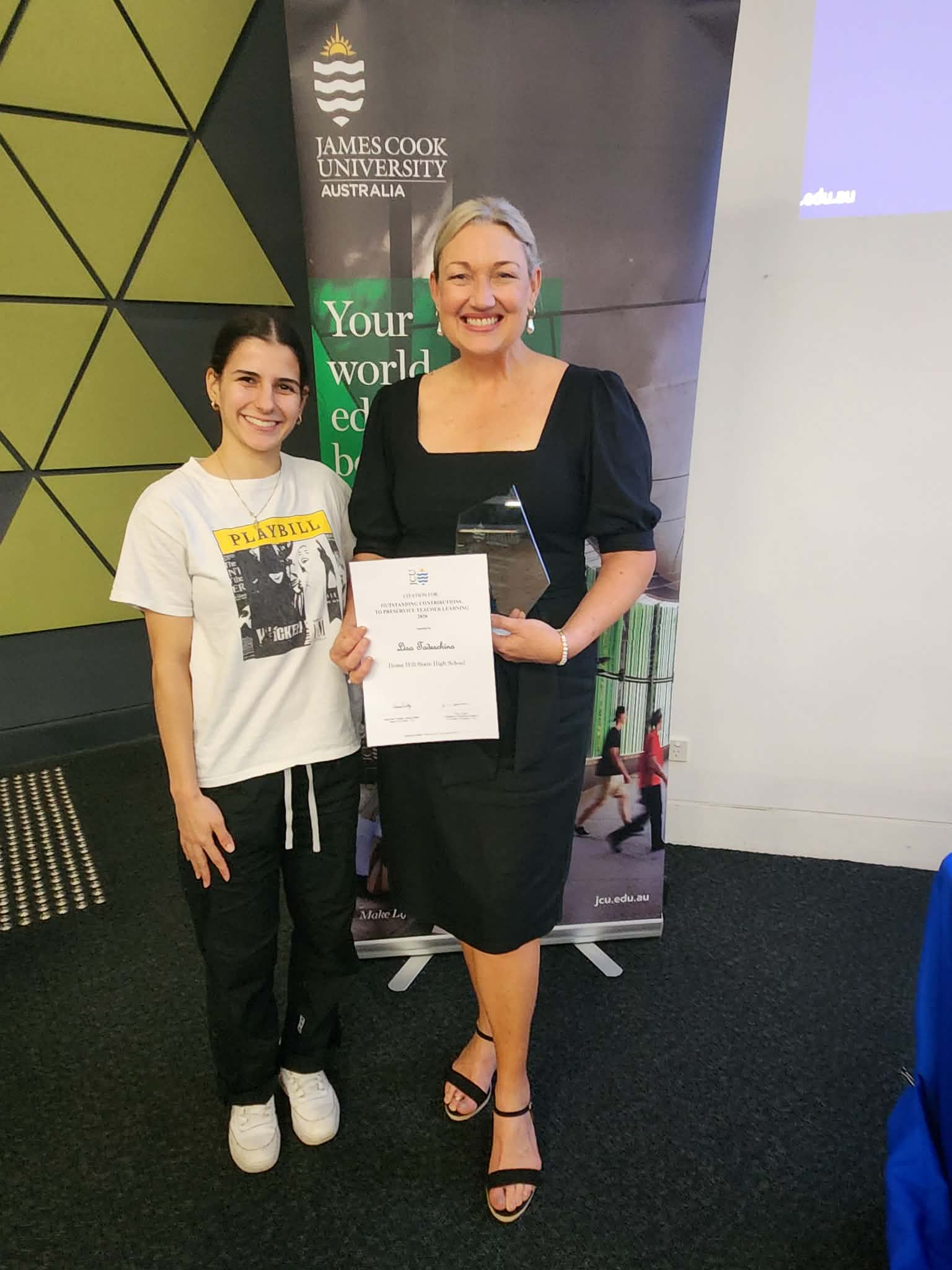
The award recognised Mrs Todeschino's (right) work with Pre-Service Teacher Jennifer Fotinos (left). Photos supplied
Home Hill State High School teacher Lisa Todeschino was rewarded for “exceptional mentorship” at a James Cook University ceremony earlier this month, taking home a Site-Based Teacher Educator Award.
The award, presented at JCU’s Townsville campus on 11th September, recognised Mrs Todeschino's work with Pre-Service Teacher Jennifer Fotinos, who nominated the long-time educator and mentor after undertaking weeks of placement under her tutelage.
Mrs Todeschino said she felt “honoured” by the nomination, crediting her colleagues and close ones for the success.
“In my 32 years as a teacher, I’ve been fortunate to learn from and work alongside so many wonderful students, families, colleagues and mentors,” she said.
“I am also grateful for the support of my family and friends throughout my teaching career.”
She predicted a bright future in the industry for Ms Fotinos, describing her as “a pleasure to mentor.”
“[Jennifer] has the skills, dedication and enthusiasm to be a wonderful educator in what I believe is one of the most important professions on the planet,” Mrs Todeschino said.
“[She] worked hard to create a positive learning environment and build relationships with her students. Her thoughtful use of individual rewards and personalised parting gifts, including positive notes to inspire her students, reflected her genuine care for them and commitment to creating a supportive and encouraging classroom.
“She even baked cupcakes!”
HHSHS took to social media to express their pride and congratulate Mrs Todeschino.
“This special recognition reflects the genuine care, encouragement and professional guidance Mrs Todeschino provided throughout Jennifer’s placement,” a school spokesperson said.
“Mentoring the next generation of teachers is a powerful investment in the future of education, and Mrs Todeschino embraces this responsibility with incredible dedication and professionalism.”
Mrs Todeschino said she was “overwhelmed” by the comments of support beneath the school’s Facebook post.
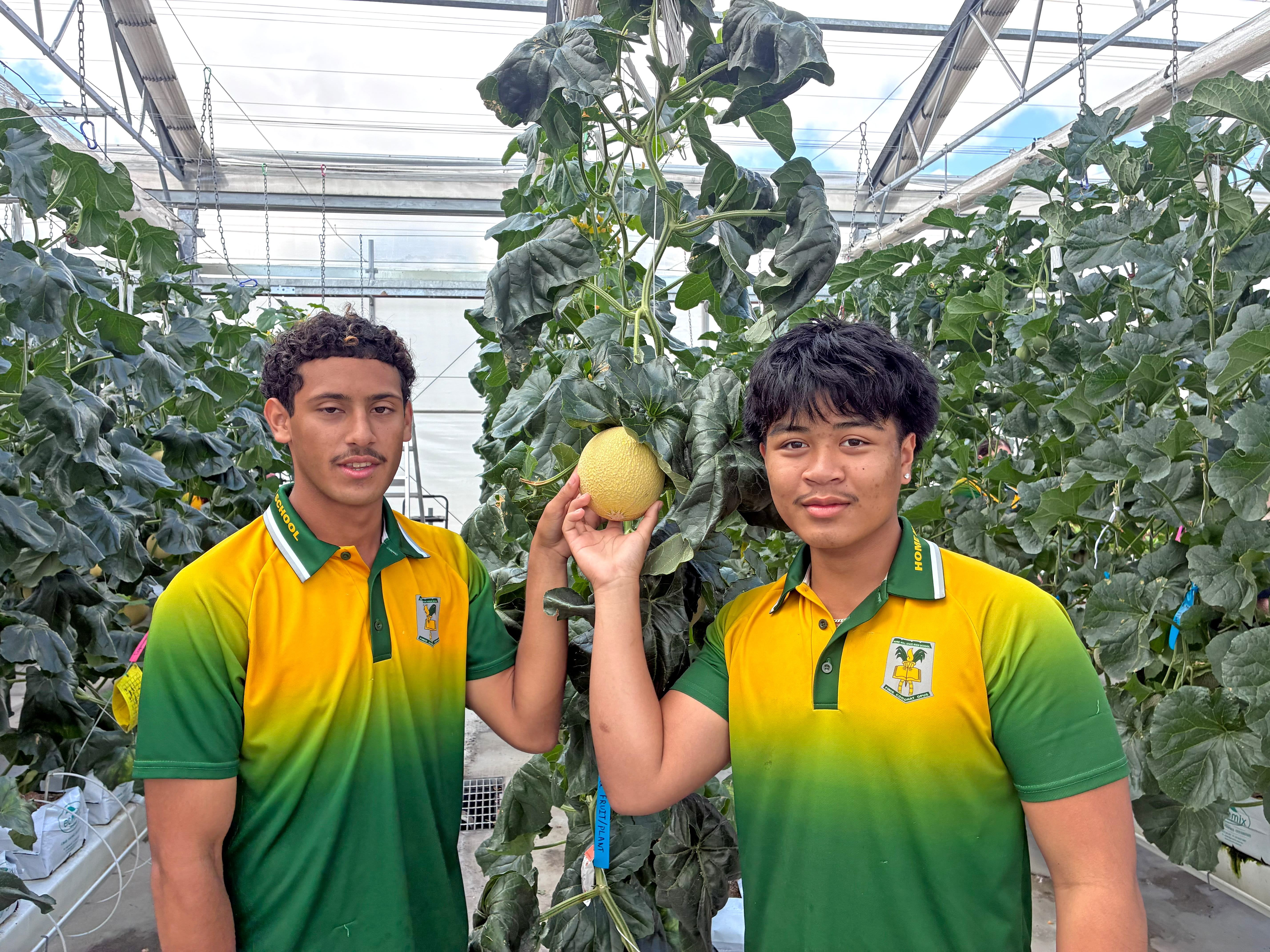
Home Hill State High School students are getting hands-on experience in modern horticulture through a melon-growing project supported by the Department of Primary Industries (DPI).
The school has spent the past two years working with the DPI Protective Cropping Team as students and staff develop their use of the school’s CRAVO protected cropping facility.
The project has given students studying agriculture and Certificate II in Production Horticulture the opportunity to work with crops while learning about environmental conditions, fertigation, plant development and production data.
Home Hill State High School Agriculture Coordinator Louise Nicholas said the partnership had changed how students approached horticulture.
“DPI have helped us look at horticulture in a different way,” she said.
“They have encouraged us to ask questions, collect and interpret information, monitor our crops carefully and understand the relationship between technology, growing conditions and plant performance.”
DPI team members have visited the school, worked with students and teachers, provided technical advice and spoken to students as guest speakers.
The current melon project has also involved support from Melons Australia, with seed companies HM Clause and Rijk Zwaan allowing the school to trial their melon varieties.
Students can monitor the plants as they develop, identify issues and use information collected from the facility to inform decisions about the crop.
The school said the partnership had also provided opportunities for students from other schools, teachers, industry representatives and community members to see the protected cropping facility in operation.
Its community open day has allowed visitors to tour the facility, speak with students and teachers and learn about the technology being used to grow crops in a regional Queensland setting.
Ms Nicholas said the facility was developing into more than a school-based learning space.
“This is no longer simply a school greenhouse,” she said.
“It is becoming a shared regional education space between schools, industry and the community.”
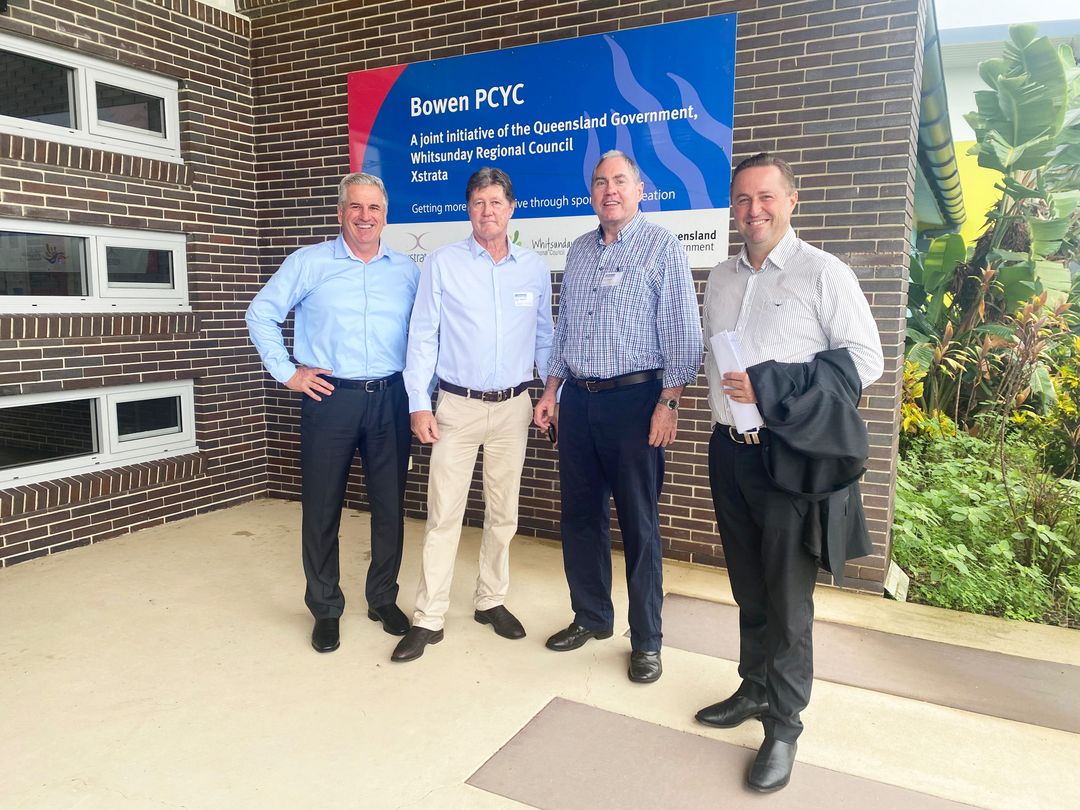
Member for Burdekin, Dale Last MP, President of BGGA, Carl Walker, BPC Director Sean Brown, and Whitsundays Mayor Ry Collins (WRC) earlier this year. Photo supplied
Ministerial Infrastructure Designation approval provides greater planning certainty for proposed 182-kilometer North Queensland water pipeline
Contributed by Bowen Pipeline Company
Bowen Pipeline Company welcomes approval of the Ministerial Infrastructure Designation (MID) for the Bowen Pipeline Project by the Deputy Premier, Minister for State Development,
Infrastructure and Planning and Minister for Industrial Relations, the Honourable Jarrod Bleijie MP.
The Decision Notice marks an important milestone for the project providing formal recognition for the proposed 182-kilometre water pipeline under Queensland’s infrastructure planning framework.
The Bowen Region produces 1/5th of Australia’s vegetables (over 250 million kilograms sold at the farm gate) and is Australia’s largest winter vegetable growing area supplying over 90% of some vegetables supplying Brisbane, Sydney, Melbourne, Canberra, Adelaide and internationally. The region has no reliable, secure water supply relying on summer rains.
The approval provides greater planning certainty following extensive technical assessment,
stakeholder engagement and consultation with government, Traditional Owners, landholders,
growers, councils, industry participants and regional stakeholders.
Bowen Pipeline Company Chairman Carl Walker said the decision represented an important step forward for the project and recognised the considerable work undertaken to reach this point.
“This is an important milestone for the Bowen Pipeline Project and for the many people who
have contributed their time, knowledge and support along the way,” Mr Walker said.
“A significant amount of work sits behind this decision, from technical studies and planning
through to engagement with landholders, growers, Traditional Owners, government, councils,
industry and communities across the region.
“There is still work ahead, but the MID gives us greater planning certainty as we continue
progressing the remaining approvals, funding pathways and development work required to
move the project forward.”
The Bowen Pipeline Project is designed to transfer water from the Burdekin River south towards Bowen providing a reliable long-term water supply to support agriculture, industry, horticulture, aquaculture, citrus, algae, green energy and communities.
Mr Walker said the significance of the project ultimately lies in what greater water security could make possible for the region. The project’s broader economic case centres on using reliable water infrastructure to enable greater agricultural production, investment and industry development across the Bowen-Burdekin corridor.
Preliminary economic analysis cited by Bowen Pipeline Company indicates the project has the potential to support around $300 million in annual economic output and approximately 1,200 full-time equivalent jobs when operational across agriculture, industry and regional services.
“For growers, businesses and communities across the region, reliable access to water is
fundamental to planning for the future. Greater water security has the potential to support
agricultural production, encourage investment and create new opportunities for the region over
the long term,” Mr Walker said.
“That is what we are working towards, and this decision takes us another important step
forward.”
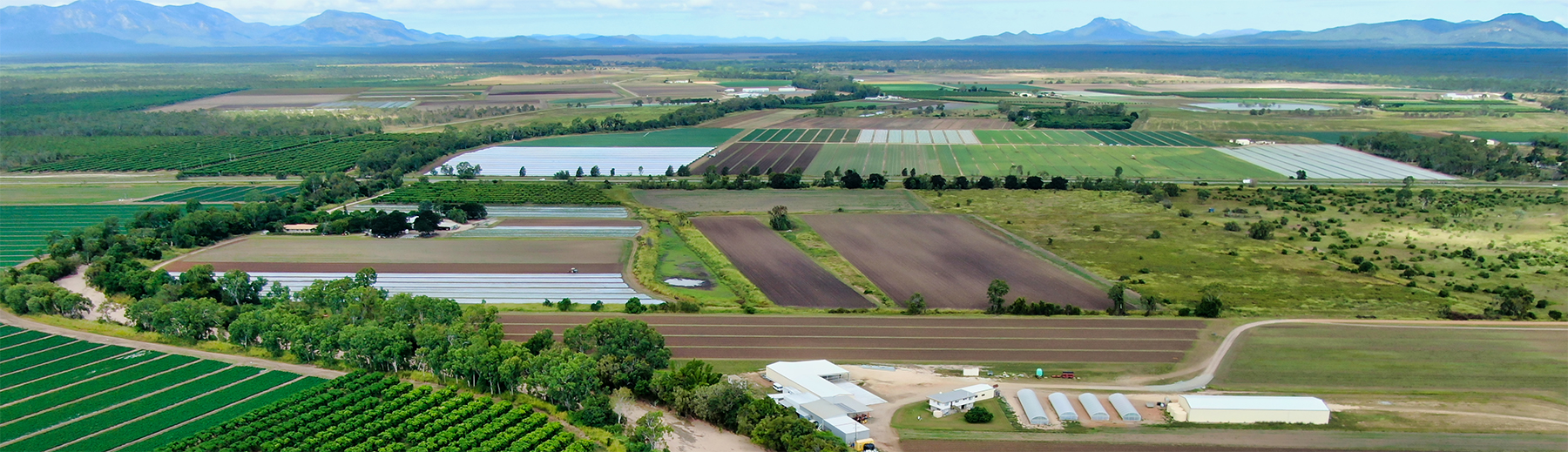
Early engagement with prospective water users has demonstrated strong interest in securing
future water allocations from the Bowen Pipeline Project.
Mr Walker said the response provided further confidence in the need for the project.
“Over recent weeks we have seen strong interest from prospective water users and new market entrants, reinforcing both the demand for greater water security and the confidence people have in investing in the future of this region.
“Their participation is an important part of building the commercial foundation required to
progress the project.”
Minister for Natural Resources and Mines, Minister for Manufacturing and Minister for Regional
and Rural Development and Member for Burdekin Dale Last said reliable water supply could
unlock significant opportunities for the region.
“Where you have water, you have opportunities. It is those opportunities that are the reason I
support ensuring a reliable water supply for an area that offers so much untapped potential,” Minister Last said.
“There is 100,000 hectares of arable land in the Burdekin-Bowen-Collinsville area that could be
used for primary production if there was a reliable source of water. Whether you look at it from
a self-sufficiency or an export perspective, that is a lot of jobs that could be created and huge
financial benefit for the region.”
“The Crisafulli LNP government has set a target to boost Queensland’s primary production
output to $30 Billion by 2030. To take full advantage of Queensland’s potential when it comes
to primary production, we need to back the infrastructure the industry needs to turn potential
into reality.”
“Approving the Ministerial Infrastructure Designation is a clear sign that the project has received a positive result during public consultation. Whilst the approval does not signal the start of construction, it sends a strong message that the Crisafulli government recognises the potential benefits and has played its part in seeing the project move forward.”

As the days warm up and that familiar North Queensland humidity begins to creep into the air, we all know what lies around the corner. Storm season isn’t far off, and the best time to prepare for severe weather is always well before the first warning sounds.
A big part of getting storm-ready isn't just checking emergency kits; it’s clearing the yard. Loose sheet metal, overgrown palm fronds, forgotten tools, and odd bits of outdoor furniture quickly turn into dangerous missiles in a high wind. Taking a weekend now to clean out gutters, trim hanging branches, and tidy around the shed makes a world of difference when the skies turn dark.
If you’re staring down a pile of useful gear during your spring cleanup that’s too good to throw away, you have a timely solution. The Garage Sale Trail is coming up again in November.
Instead of making endless trips to the transfer station or letting good items sit in the weather, it’s a brilliant opportunity to declutter, make some pocket money, and keep usable goods out of landfill. It is a great community initiative that turns spring cleaning into a social event.
While you're cleaning up over the coming weeks, keep an eye out for elderly neighbours who might need a hand moving a heavy trailer load or securing their yard.
A little effort now keeps our properties tidy, our pockets a bit fuller, and our community safe for whatever the weather throws at us this summer.
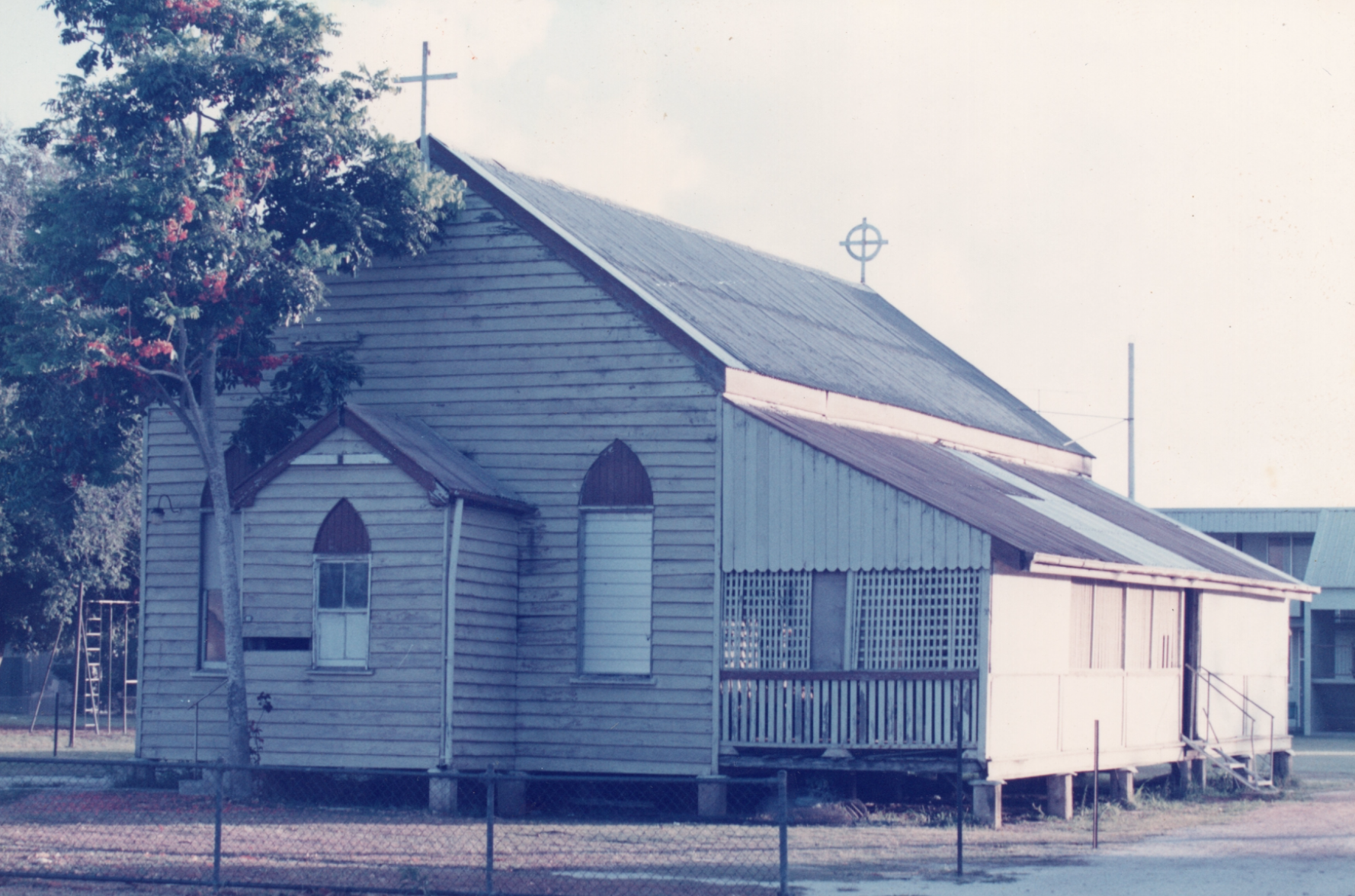
The history of St Colman’s Church itself goes back even further, with the original timber church (pictured) dating to 1918. Photos supplied
The Burdekin Catholic Parish is calling on the community to dig through their family albums and keepsakes as it prepares to celebrate a piece of Home Hill history—the 100th anniversary of St Colman’s Parish.
All are invited to its celebrations on Sunday October 25th, which mark a century since the formal establishment of St Colman’s Parish and subsequent appointment of Father William O’Reagan as its first parish priest in January 1926.
The history of St Colman’s Church itself goes back even further, with the original timber church dating to 1918. The building, which cost £1100 and was relocated from Ravenswood, was eventually replaced by its current church in 1968.
In preparation for the celebrations, a small committee has begun researching the parish’s history and is seeking photographs, memorabilia, recollections and stories to help document its growth over the past 100 years.

The committee is particularly hoping to find photographs of former Parish Administrators Father Abraham Cheripuram, who served from 2016 to 2018, and Father Sibichan Kaippanplackal, who served from 2019 to 2021.
Photographs of baptisms or weddings involving either priest would be especially appreciated, while photographs from the parish’s early years between 1926 and the early 1950s are also being sought.
The committee hopes the material gathered will help tell the story of St Colman’s and the generations of families who have been part of the parish over the past century.
Anyone with photographs, memorabilia or memories to share is encouraged to contact the Burdekin Catholic Parish Office on 4783 2316.
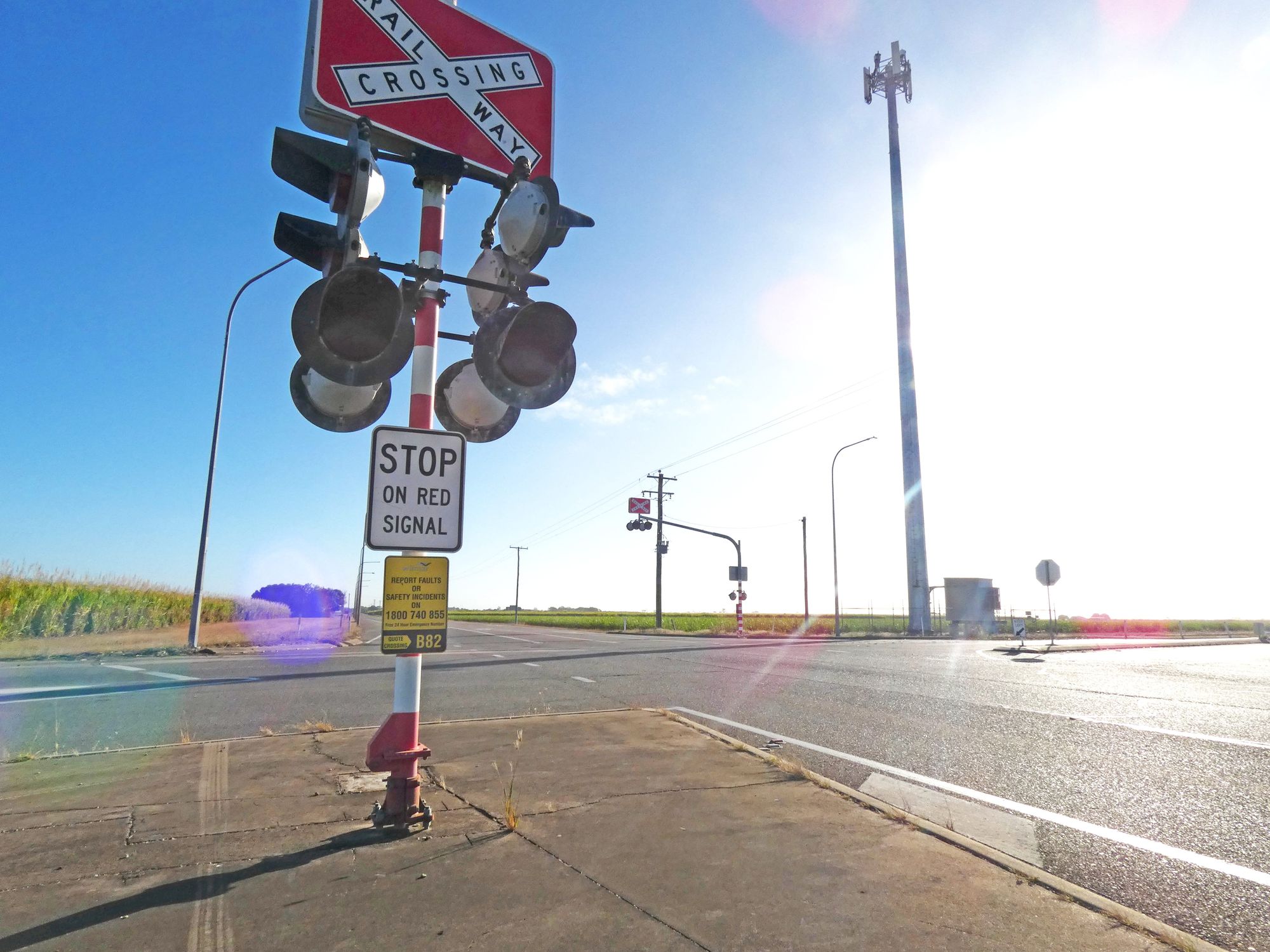
A since-removed mobile CCTV trailer was redeployed to the Bruce Highway and Giddy Road intersection late July as part of an ongoing review of driver behaviour at the site. Photo: Jacob Casha
A Burdekin intersection responsible for regular “near misses" and "multiple casualty crashes” is back under the microscope as state authorities continue monitoring the notorious location.
A mobile CCTV trailer was redeployed to the Bruce Highway and Giddy Road intersection late July as part of an ongoing review of driver behaviour at the site.
It follows earlier video monitoring efforts which led the Department to recommend a 10km/h speed reduction around the intersection based on professional engineering judgement, contrasting with initial technical reviews that supported maintaining the existing 100 km/h limit.
Burdekin Shire Council Deputy Mayor and Road Safety Committee Chair Max Musumeci was quick to reiterate Council’s opposition to the speed reduction. Councillors instead unanimously passed a motion in June requesting that TMR prioritise funding for the detailed design and construction of an intersection upgrade.
A Department of Transport and Main Roads (TMR) spokesperson has since clarified that “no recommendation has been endorsed” at this stage.
"All speed limit changes on the state-controlled road network go through a formal review and endorsement process by the local Speed Management Committee," the spokesperson said.
The regional committee comprises representatives from state transport authorities, Queensland Police, and the Burdekin Shire Council, with Council initiating the current speed review.
Investigations have identified driver behaviour as the primary safety issue—particularly gap acceptance, where a driver misjudges whether a gap in traffic is large enough to safely turn or merge, alongside failure to give way when entering the highway.
The spokesperson said data from the most recent footage will “contribute to the development of a range of treatments to improve safety at this intersection and its approaches.”
“As the review is still underway, TMR is not in a position to comment on potential outcomes,” the spokesperson added.
Queensland has passed new laws increasing penalties for dangerous driving, drink and drug driving, extreme speeding and other high-risk behaviour on the state’s roads. Photo: QPS
Queensland has passed new laws increasing penalties for dangerous driving, drink and drug driving, extreme speeding and other high-risk behaviour on the state’s roads.
The Criminal Code (Dangerous Driving) and Other Legislation Amendment Act 2026 will replace existing dangerous driving offences with a four-category framework covering motor vehicles and alternative modes of transport.
The reforms increase maximum prison terms to up to seven years for some offences where no death or grievous bodily harm occurs, and up to 25 years where death or grievous bodily harm results.
Minimum licence disqualification periods will also increase, with tougher consequences for serious, aggravated and repeat offending.
Mandatory imprisonment will apply in a broader range of circumstances for serious and repeat dangerous driving offences.
Separate changes under the Transport and Other Legislation Amendment Act 2026 will also take effect from 1st December.
Drug-driving penalties will double, while combined drink and drug-driving offences will attract stronger penalties and minimum court-imposed fines.
Drivers caught travelling more than 40km/h over the speed limit will face an immediate six-month licence suspension.
Seatbelt enforcement will also change, allowing drivers to nominate adult passengers so responsibility can be assigned to the appropriate person.
Further changes in 2027 will streamline roadside drug testing and introduce a mandatory drug-driving education program for repeat offenders.
Transport Minister Brent Mickelberg said the reforms targeted behaviours contributing to road deaths.
“Queensland’s road toll has been trending upwards for far too long, and our laws target the behaviours killing people on our roads,” he said.

Two people were taken to Townsville Hospital following a two-vehicle crash in Home Hill on Wednesday, 16th September.
The crash occurred about 2.50pm at the intersection of the Bruce Highway and Kirknie Road, with one vehicle rolling onto its roof.
Police said initial investigations indicated one of the drivers failed to give way, with inquiries into the cause of the crash ongoing.
Queensland Ambulance Service, Queensland Fire and Emergency Services and Queensland Police Service responded to the incident.
As of Monday, 21st September, Ayr Police were unable to provide further information about the injuries sustained by the drivers.
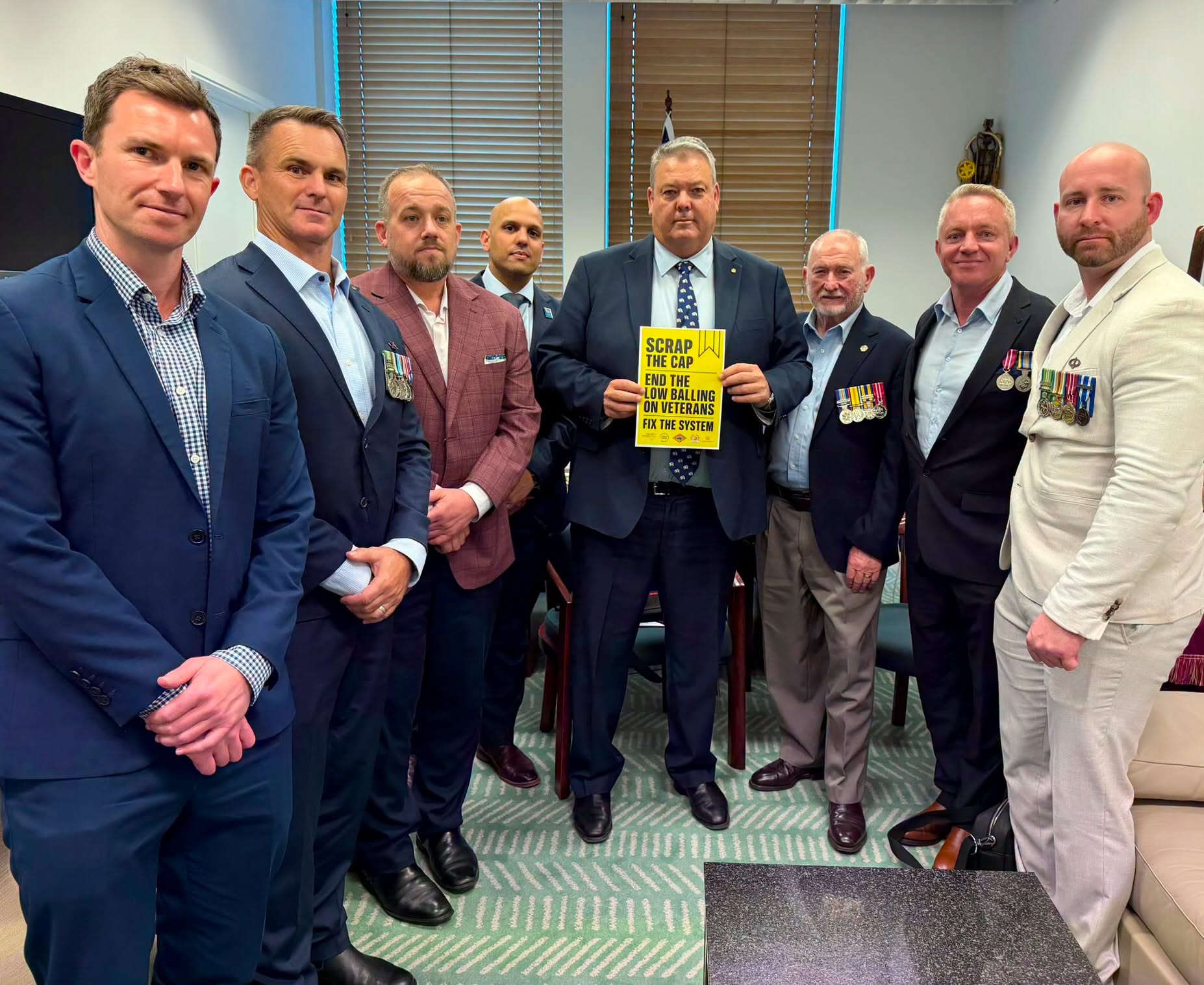
Federal Member for Dawson Andrew Willcox MP met with veterans at Parliament House who travelled to Canberra to call on the Labor Government to scrap its proposed $5,000 cap on DVA allied health care. Photo supplied
The Federal Government has scrapped a proposed $5,000 annual threshold for veterans’ allied health services after consultation with the veteran community.
Veterans Affairs Minister Matt Keogh announced the decision on 17th September, saying the Government had heard concerns about the proposal and would remove the threshold from its planned reforms.
The $5,000 threshold was announced in the 2026 Federal Budget alongside a $169.7 million investment to increase fees paid to allied health providers from July 2027. The original proposal would have replaced the existing requirement for veterans to obtain a new GP referral after every 12 allied health sessions with a review once treatment reached $5,000.
Mr Keogh said the Government would maintain its planned increase to allied health fees while consulting veterans and providers on another way to reduce administrative requirements and maintain oversight of treatment.
“We have been listening carefully and today, the Government is taking the proposed $5,000 threshold off the table,” he said.
“[The Government] has a deep respect for our veterans who have, and who continue to serve our country. Anyone who pulls on our nation's uniform to serve in our name deserves nothing less.”
Federal Member for Dawson Andrew Willcox welcomed the decision, saying he had spoken to veterans across the electorate about their concerns with the proposal.
“This is a win for our veterans,” Mr Willcox said.
“The message from veterans was simple... this cap should never have happened. Today, the Government has finally listened.”
The Coalition MP also criticised the Government for introducing the threshold and said the policy had created “worry and uncertainty” for veterans.
Mr Willcox called for Mr Keogh to stand down over the proposal, with Opposition Leader Angus Taylor and Nationals Leader Matt Canavan also welcoming the Government’s decision.
The Government said it would continue consulting with veterans and allied health providers on the revised arrangements.

The Back to School Boost has already provided more than $36.9 million in funding directly to primary school students so far this year. Photo: Ayr State School
Contributed by the Office of Member for Burdekin Dale Last
As school students continue to soak up holiday fun, Member for Burdekin Dale Last has sounded a reminder for parents that it’s not too late to access school-based cost of living relief.
The Crisafulli Government’s Back to School Boost has already provided more than $36.9 million in funding directly to primary school students so far this year.
Mr Last said the $100 credit for each primary school student was able to be used right throughout the year for school-related expenses including uniforms, stationery and excursions.
“We’re providing real support for families with targeted funding relief while ensuring every child, no matter their circumstances, has the resources they need to succeed at school,” Mr Last said.
“This plan sees $330million in support for families across five years with the Back to School Boost set to increase by 50 per cent in 2027 to $150 per primary student.”
Mr Last said the Crisafulli Government’s efforts to make sure every family had the chance to access the funding when they needed it meant there was not a ‘use it or lose it’ clause.
“While there is still time for families to use their $100 credit in Term 4 we know families face many of those school resourcing costs as we prepare to go back to school for the new year.”
“It’s why the Crisafulli Government has allowed for a students unexpended Back to School Boost to roll over, it means you have the control to use the funding when it benefits your family the most.”
“As we roll in to the final Term of the 2026 school year I want to wish students all the best and offer my thanks to our hardworking principals, teachers, teacher aides, cleaners, administration staff and groundskeepers for their dedication and hard work.”
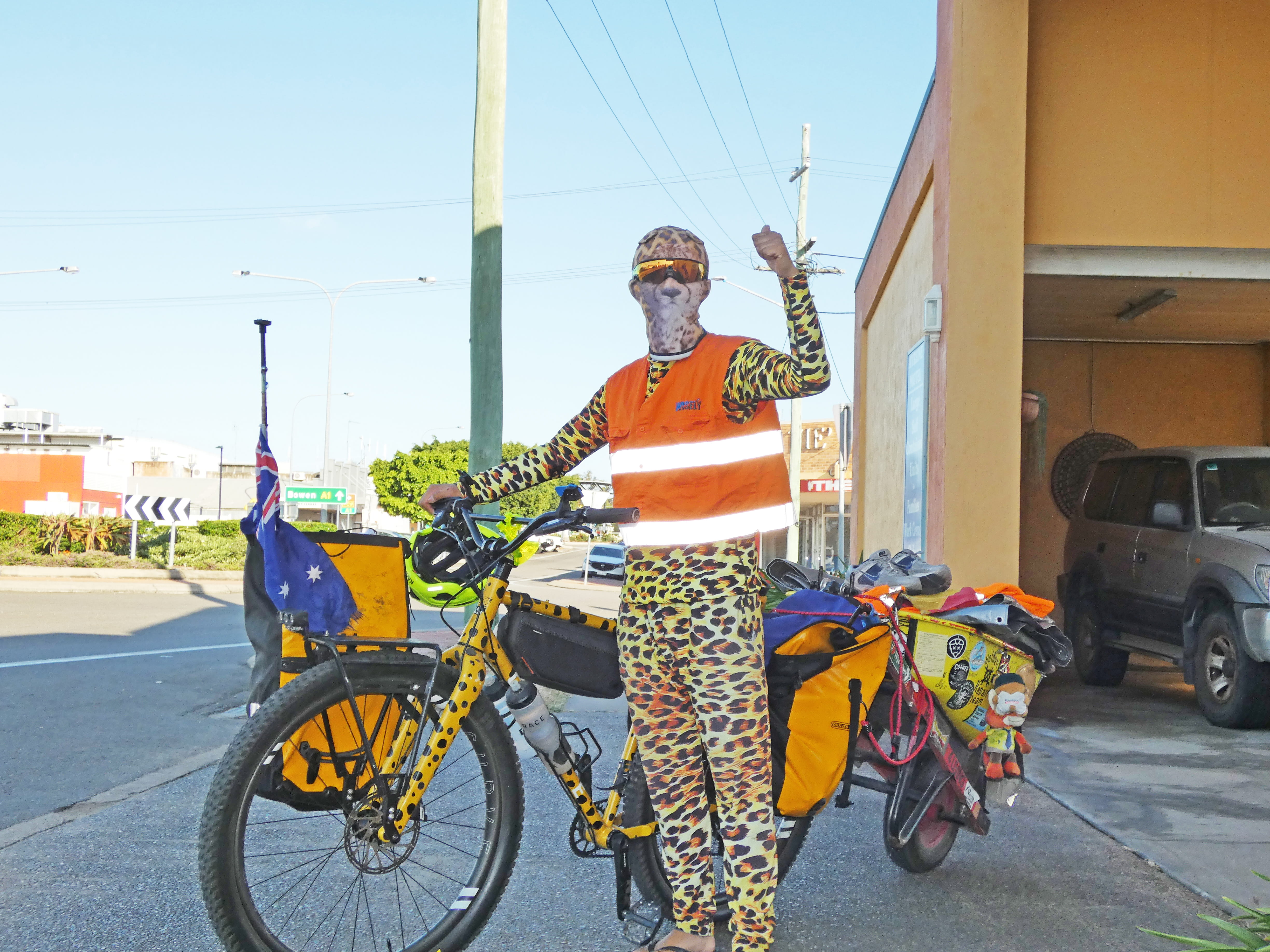
The Burdekin could not get enough of online sensation ‘Catman’ as he pedalled his way into Ayr last week. Photo: Jacob Casha.
The Burdekin could not get enough of online sensation ‘Catman’ as he pedalled his way down Ayr’s Queen Street last week—the latest leg of a 9,000km journey around the country.
The alter-ego of Japanese traveller Kentaro Jin, Catman made headlines in March after pushing a wheelbarrow of his belongings from Carnarvon, Western Australia to Sydney, amassing over one million social media followers along the two-and-a-half-year hike.
After deciding he wasn’t ready for the expedition to end in Sydney, Kentaro set off once again in his trademark leopard-print onesie, this time cycling his way up the east coast before flipping the kickstand down in Ayr at 11am last Friday.
And it wasn’t long before locals noticed. Within hours of his arrival, Kentaro had been offered meals, drinks, and accommodation for the night in a showing of what he called “fantastic” community support.
“[The kindness] has been amazing,” Kentaro said, admitting he had already become a big fan of the town.
“I got to walk around a little bit, talk to children. It's really great.”
Ayrline Hotel Manager Melissa Hitchcock, who provided Kentaro a complimentary room, said locals had flocked to the site all afternoon to catch a glimpse of the social media star—and her “most famous guest.”
“When he arrived here [at around 1.30pm], we had like, a thousand people come in. Within five minutes, someone ran in and gave him some money and a balloon,” she quipped.
“My kids even rang me: ‘Mum, you’ve got Catman staying at the motel!’”
As a result of that demand, Ms Hitchcock announced a designated meet-and-greet opportunity at Queens Hotel that afternoon, which she said was well-attended.
She called Kentaro's willingness to interact with children “inspirational.”
“He’s just full of life,” Ms Hitchcock said.
"He was so happy to greet the kids … who were knocking on his door every 10 to 15 minutes. He's definitely an inspiration with the following he's got.”
Interestingly, it was the children he has encountered on his cross-country voyage that gave it a real purpose.
It’s an adventure Kentaro said began with no particular goal back in 2023. He arrived in Australia eager to satisfy a long-standing itch to travel, after his then-girlfriend broke off the relationship with him in Japan.
The devastation bred determination, and his aimless voyage across Australia became a fundraiser for childhood cancer research, inspired by the kids and families he met along the way. It has since raised more than $70,000.
Still active today, you can donate to Kentaro's cause here: https://www.gofundme.com/f/catman6701
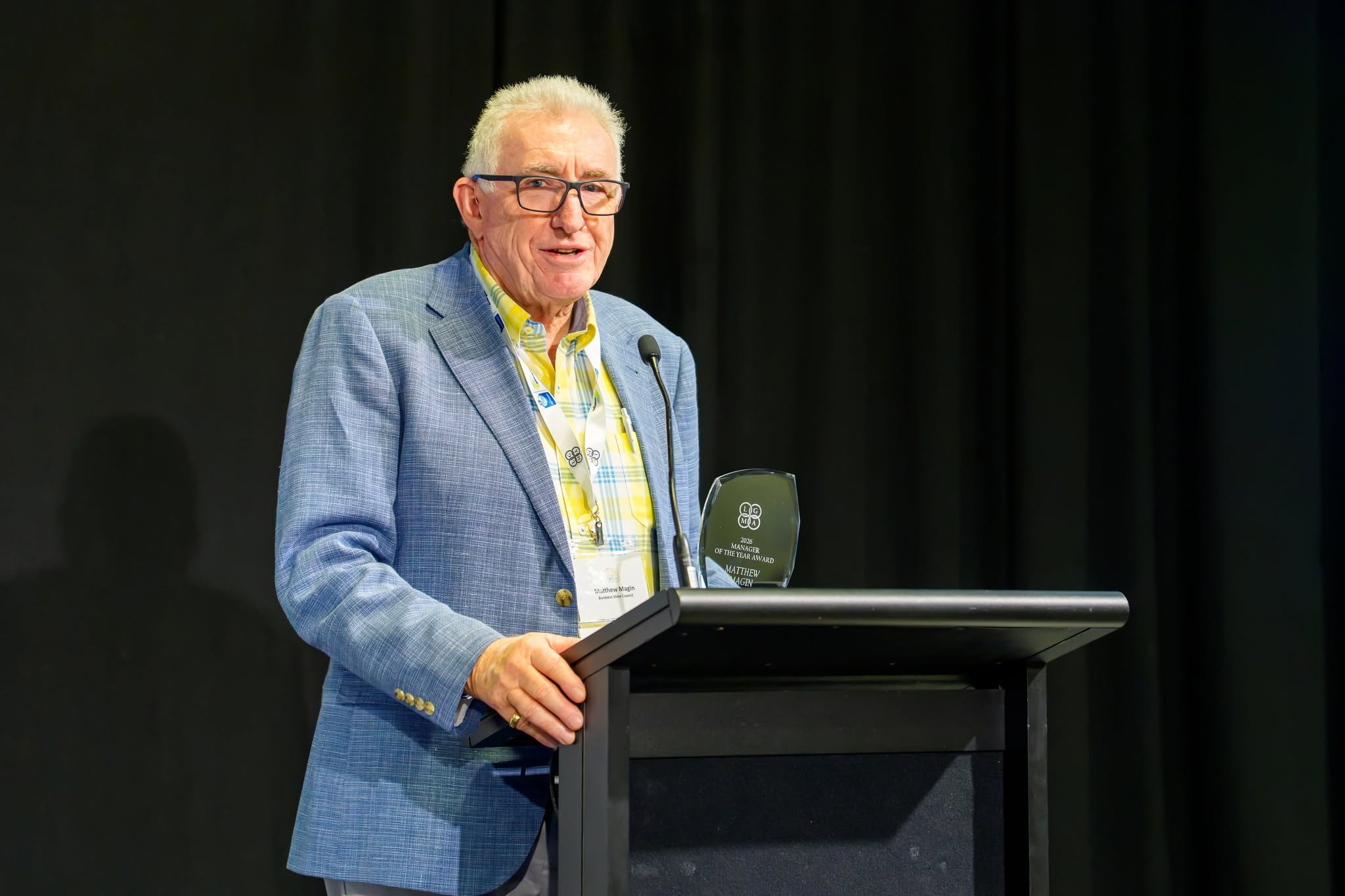
Burdekin Shire Council Chief Executive Officer Matthew Magin pipped a statewide field of local government leaders to ‘Manager of the Year’ honours. Photos supplied: Burdekin Shire Council
Burdekin Shire Council Chief Executive Officer Matthew Magin pipped a statewide field of local government leaders to ‘Manager of the Year’ honours at a ceremony in Brisbane earlier this month.
Presented by Local Government Managers Australia (LGMA) at its Annual Local Government Conference on 10th September, the award recognised Mr Magin’s “outstanding leadership and management excellence” and contributions to the Burdekin community.
“Matthew is a highly deserving LGMA Manager of the Year Award winner… [and his] leadership sets a strong benchmark for Queensland local government,” an LGMA spokesperson said.
“He provides clear direction while remaining connected to the people who must deliver it. That is what makes his leadership credible and enduring.”
Having attended the previous 15 LGMA Annual Local Government Conferences with no silverware to show for it, Mr Magin described this year’s recognition as overwhelming, if not a “complete and utter shock.”
“I wasn’t even aware I was a nominee,” Mr Magin said, adding that a trio of nominators—whose identities were “sworn to secrecy”—revealed themselves after his victory.
“I go to these every year, listening to all the other nominations being read out. This year, it was fortunate that it was mine.
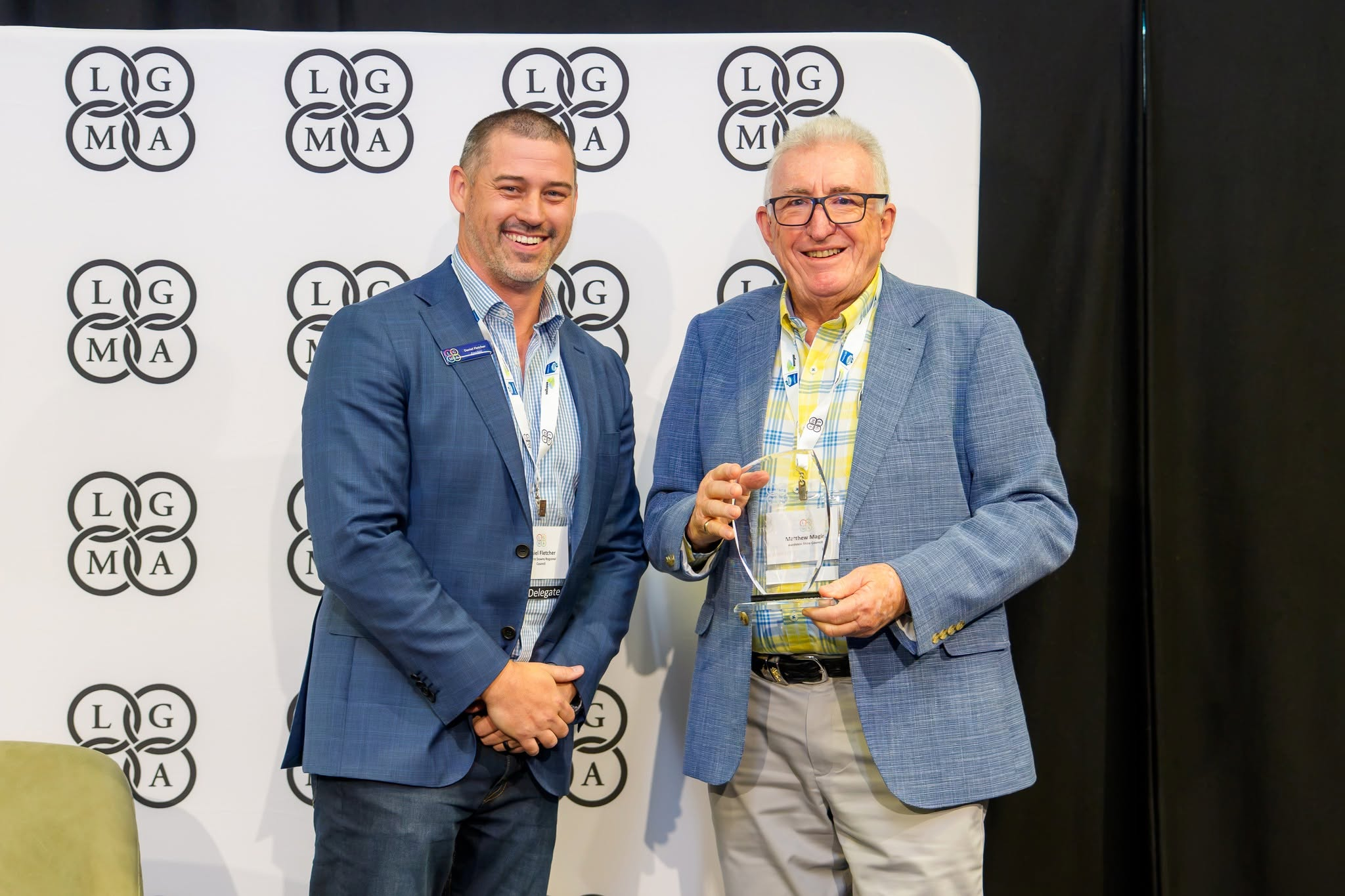
“To be up on the stage, looking out at all of the previous winners in the audience and knowing what good managers they are—to be included in that company was incredibly humbling.”
Mr Magin was appointed Burdekin Shire Council CEO in September 2024 after an earlier stint in the role from 2014-2016, with an eight-year spell as CEO of Balonne Shire Council in between.
The past year has seen him oversee the finalisation of the $55 million South Ayr Filtration Plant and the completion of the Anzac Park Pump Track.
However, Mr Magin said the award recognised the entire Council organisation and its engagement with the community rather than “just projects you can cut a ribbon for.”
Mayor Pierina Dalle Cort said the recognition was “fitting and well-deserved.”
“Matthew leads with professionalism, integrity and a genuine desire to achieve the very best outcomes for our community. His leadership extends well beyond the workplace, and his impact can be seen across the community,” she said.
“Although he may not have grown up here, he has embraced the Burdekin as if he has been part of it his entire life. He treats our community with genuine care and respect, and that connection is reflected in everything he does.”
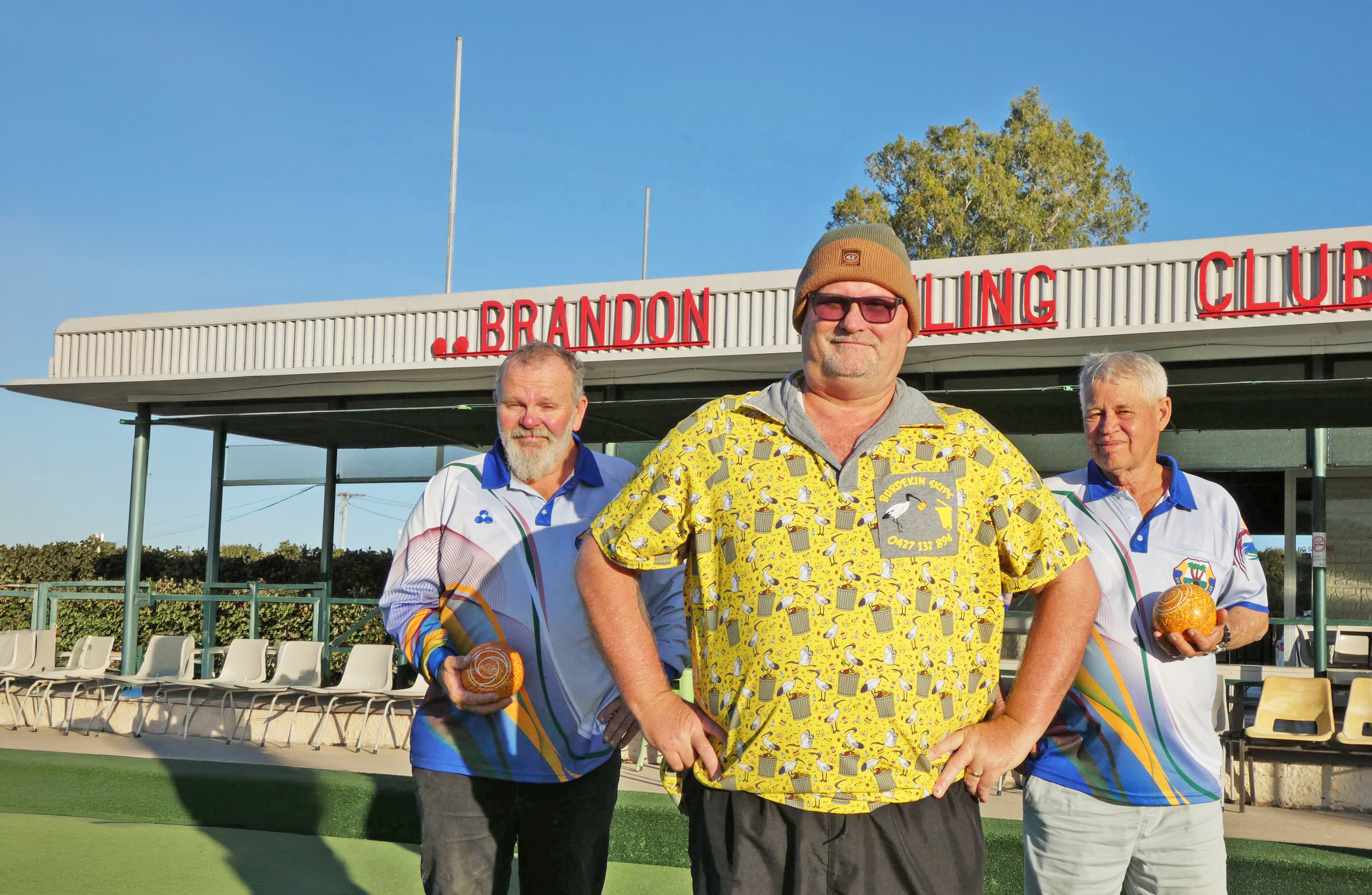
Brandon Bowls Club members Jayson Farry (centre), Jamie Woods (left) and David DeFranciscis (right) on the club greens. Photo credit: Jacob Casha
A whole community stood behind Jayson Farry and the Brandon Bowls Club last weekend as its charity bowls event more than tripled its $10,000 fundraising target. Inspired by Jayson Farry's recent brain cancer diagnosis, the event raised more than $30,000 for two prominent cancer foundations.

(L-R) Brandon Bowls Club members Leo Kenny, Jayson Farry, Jamie Woods, Ben Mills, and David DeFranciscis. Photo: Jacob Casha
A Brandon Bowls Club charity event raised more than $30,000 for cancer care last Saturday, tripling its original $10,000 target as guests enjoyed social bowls under the stars.
Around 300 people packed the club’s Toll Street venue for the event, bowling in support of club member Jayson Farry, who was diagnosed with brain cancer earlier this year.
Raised through gate fees, beanie and hat sales and a “hugely successful” auction, all proceeds will be sent to the Mark Hughes Foundation and Brighter Lives Townsville—the latter dedicating the funds to journals for cancer patients.
Event organiser and emcee David DeFranciscis said the event was one of the “biggest ever hosted by the club.”
“It was just the Burdekin at its best,” he said.
“It was also the atmosphere. Everyone was laughing and joking, everyone got on with everyone—it was just one big, special night.
David estimated 70 non-bowlers stepped up to the mat on the night, while others enjoyed the live music and social atmosphere.
The event also saw Brighter Lives Townsville representative Stephanie Norton deliver a special address; David said her words were instrumental to the success of the fundraiser and raising awareness for the foundation.
“I think a lot of people were surprised by Brighter Lives and what they do. Stephanie spoke very well and inspired everyone,” he said.
Despite smashing fundraising targets, David said night’s greatest success was bringing the community together for Jayson and his family.
“It was a little bit sad that we had to have a brain cancer diagnosis for everyone to get together,” he said.
“Wouldn’t it be nice if we did something like this just to get together as a community without a reason?”
He said the event’s overall success inspired the to make it an annual affair, although admitted Saturday’s edition set a high bar.
“We’re still recovering from the weekend,” David laughed.
"We will probably do something next year, but it probably won't be as big.”
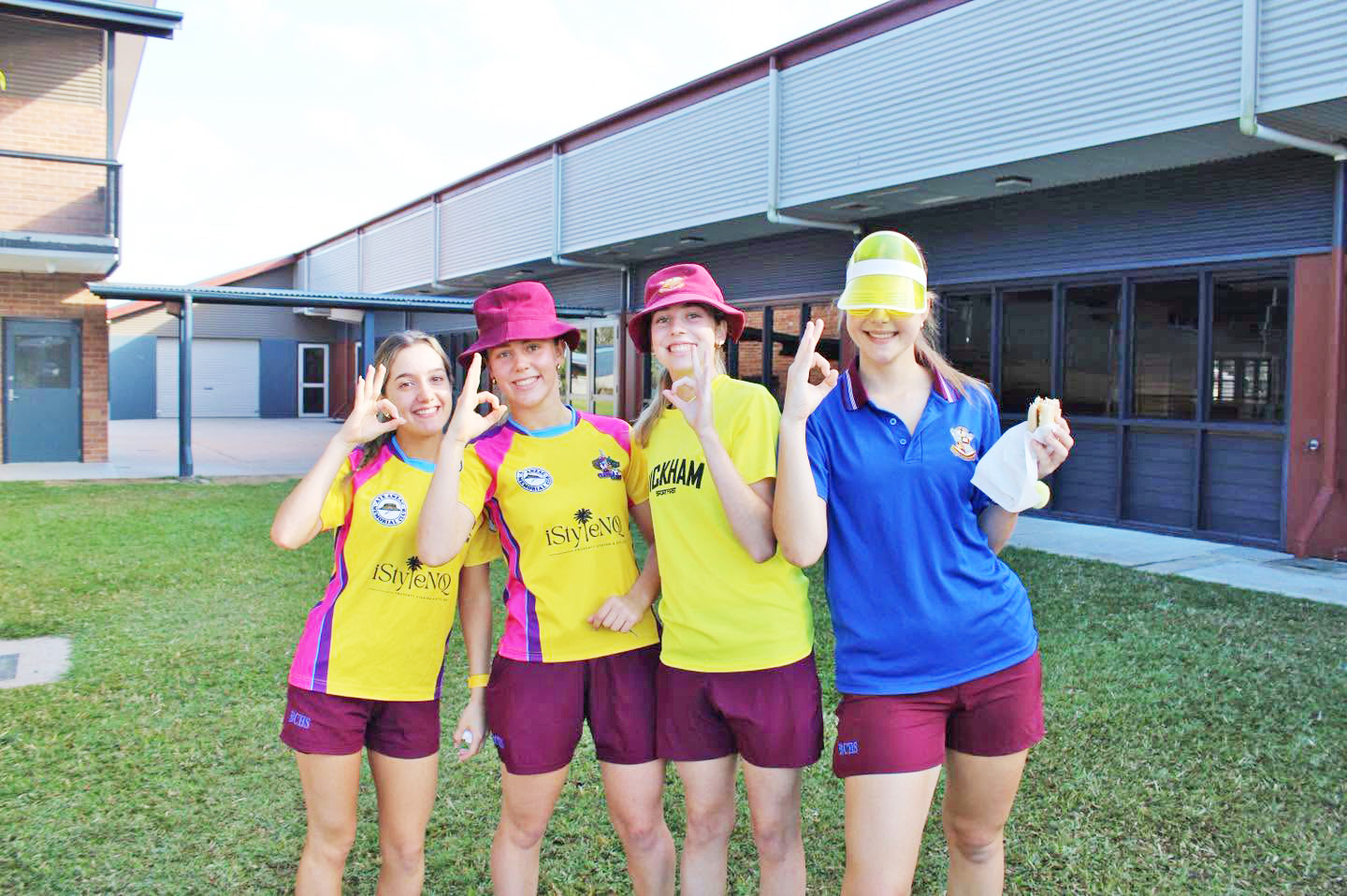
Year 11 students at Burdekin Catholic High School took the lead on R U OK? Day, hosting a school-wide community BBQ breakfast. Photo: BCHS
Year 11 students at Burdekin Catholic High School took the lead on R U OK? Day on 10th September, hosting a school-wide community BBQ breakfast aimed at fostering connection and highlighting the importance of mental health awareness.
Held annually on the second Thursday of September, R U OK? Day is a national day of action encouraging Australians to connect meaningfully with people in their lives and start conversations that could save a life. The initiative highlights how simple, regular check-ins can support anyone navigating life's ups and downs.
The morning event brought BCHS students and staff together over fresh food, creating an open space to start the day with open dialogue.
“It was so much more than a breakfast,” a school spokesperson said.
"Our students took the time to check in with one another, have conversations and make sure people knew they were not alone.”
School leadership praised the senior students for their initiative, kindness, and leadership, noting that their efforts embodied the college's core values.
While R U OK? Day serves as an annual national benchmark, the school community encouraged everyone across the Burdekin region to make checking in on friends, family, and colleagues a regular habit.
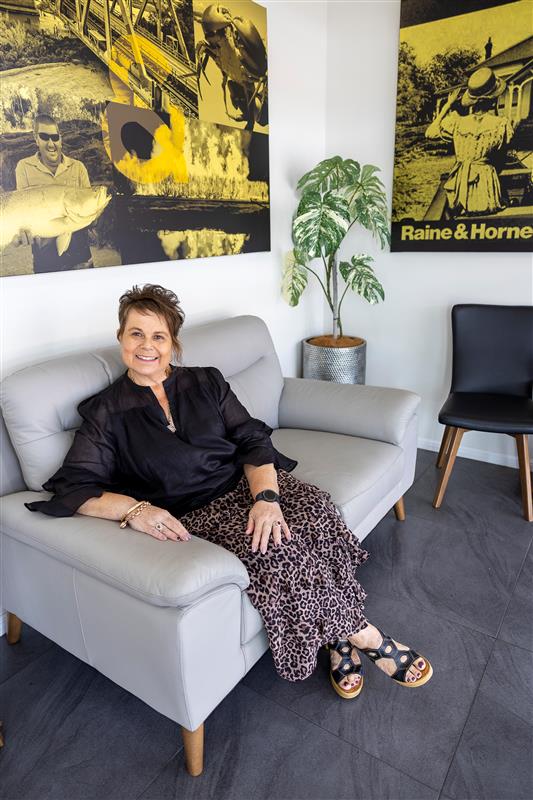
Carla Healy earned her place on the week-long tour after topping Raine & Horne's “The Sky's The Limit” leaderboards, which recognise the network's highest-performing representatives. Photo supplied
Raine & Horne Ayr principal Carla Healy has returned from an exclusive study tour in Singapore after being selected as one of eight top performers from across Australia.
Carla earned her place on the week-long tour after topping Raine & Horne's “The Sky's The Limit” leaderboards, which recognise the network's highest-performing representatives.
The tour gave Carla the chance to explore Singapore's real estate industry, urban planning and property developments while connecting with other Raine & Horne representatives from across the country.
Hosted by Raine & Horne Executive Chairman Angus Raine and CEO Chris Nicholl, the group visited Singapore real estate company Hutton's to learn about local market trends, urban development and business growth.
They also visited the Urban Redevelopment Authority's URA Gallery, as well as developments including Aurea at Golden Mile and W Residences Singapore.
Carla said the experience provided an opportunity to step away from the day-to-day running of her Ayr business and gain a different perspective on the industry.
She described the tour as “an experience like no other”, and said she enjoyed celebrating the achievement alongside the wider Raine & Horne network.
The itinerary also included visits to Sentosa Island and Mandai Wildlife Reserve, along with a guided food and history tour through Geylang and a farewell lunch overlooking the city skyline at Level33.
Carla will now travel to Hamilton Island for Raine & Horne's national conference, joining representatives from across Australia for several days of speakers, events and networking.
“Now off to our Conference which is being held on the glorious Hamilton Island, which will be filled with guest speakers and R&H family Australia-wide,” she said.
“There’s lots to participate in with a celebratory cruise on the MY RASCAL to enjoy. Can't wait!”
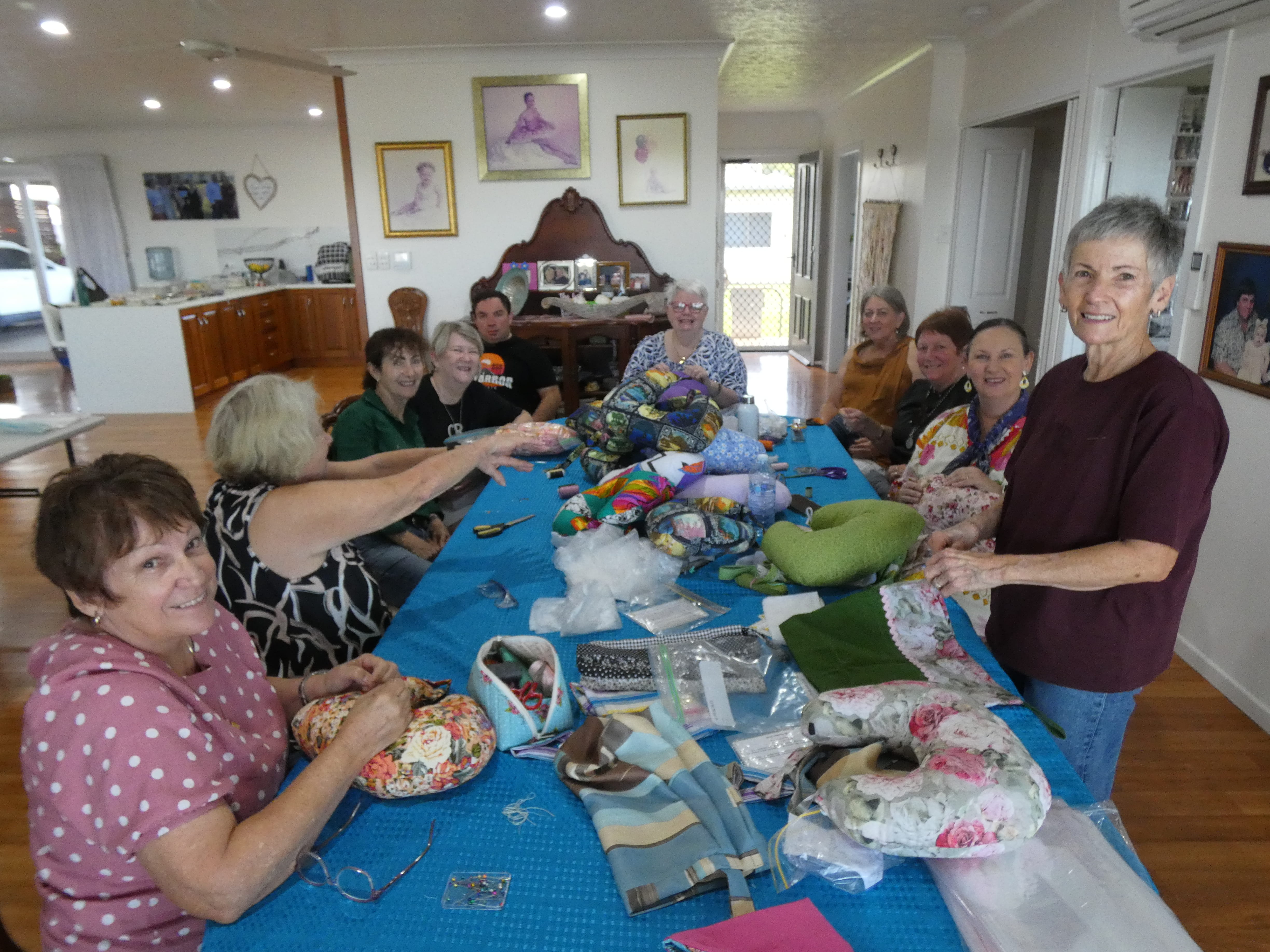
Sixteen volunteers got busy sewing in Ayr last Sunday morning, hand-crafting 42 care packs for cancer patients during Zonta Club Burdekin's annual sewing bee. Photos: Jacob Casha.
Sixteen volunteers got busy stitching in Ayr last Sunday morning, hand-crafting 42 breast care cushion sets for cancer patients during Zonta Club Burdekin's annual sewing bee.
The group of volunteers—made up of Zonta members and Friends of Zonta—worked steadily from 9am to produce the sets, each containing a cushion, a drainage or totem bag, and a shower bag.
The sets will be delivered on demand to the Mater’s North Queensland Minimally Invasive Surgery (NQMIS) Consulting Suites and Townsville University Hospital, where they’ll be given to people with breast cancer or melanoma, or those who have undergone a mastectomy or lymph node removal from the armpit or groin.
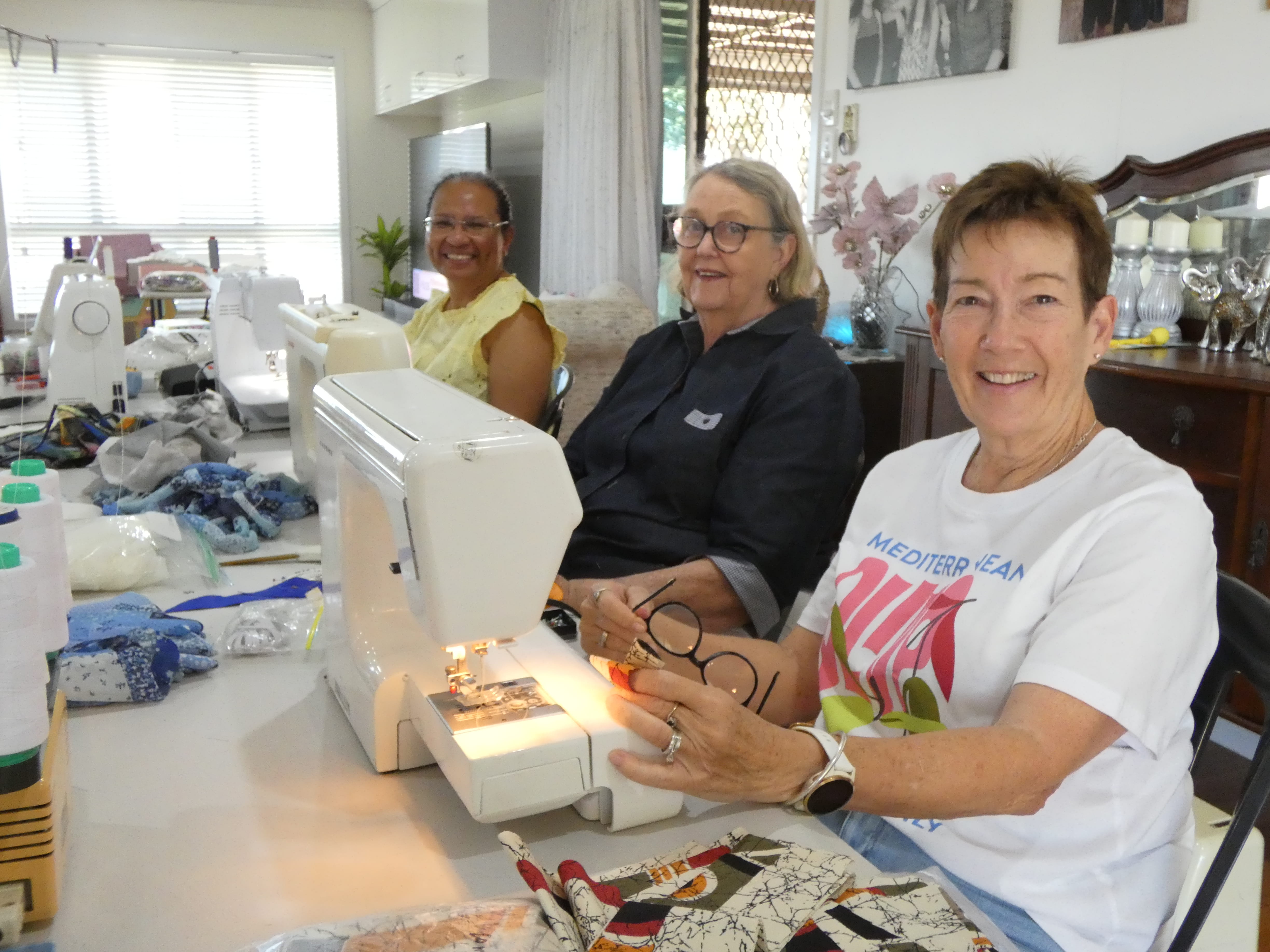
Breast Cushion Coordinator Karen Clarke said the packs were about “spreading joy to those who are going through treatment.”
“Breast cancer affects everybody. This is just to provide that little bit of comfort,” she said.
“A woman leaves the hospital and she’s in pain. She needs a cushion to put under her arm when she’s watching the television or has a seatbelt on. So this is just a great personal aid.
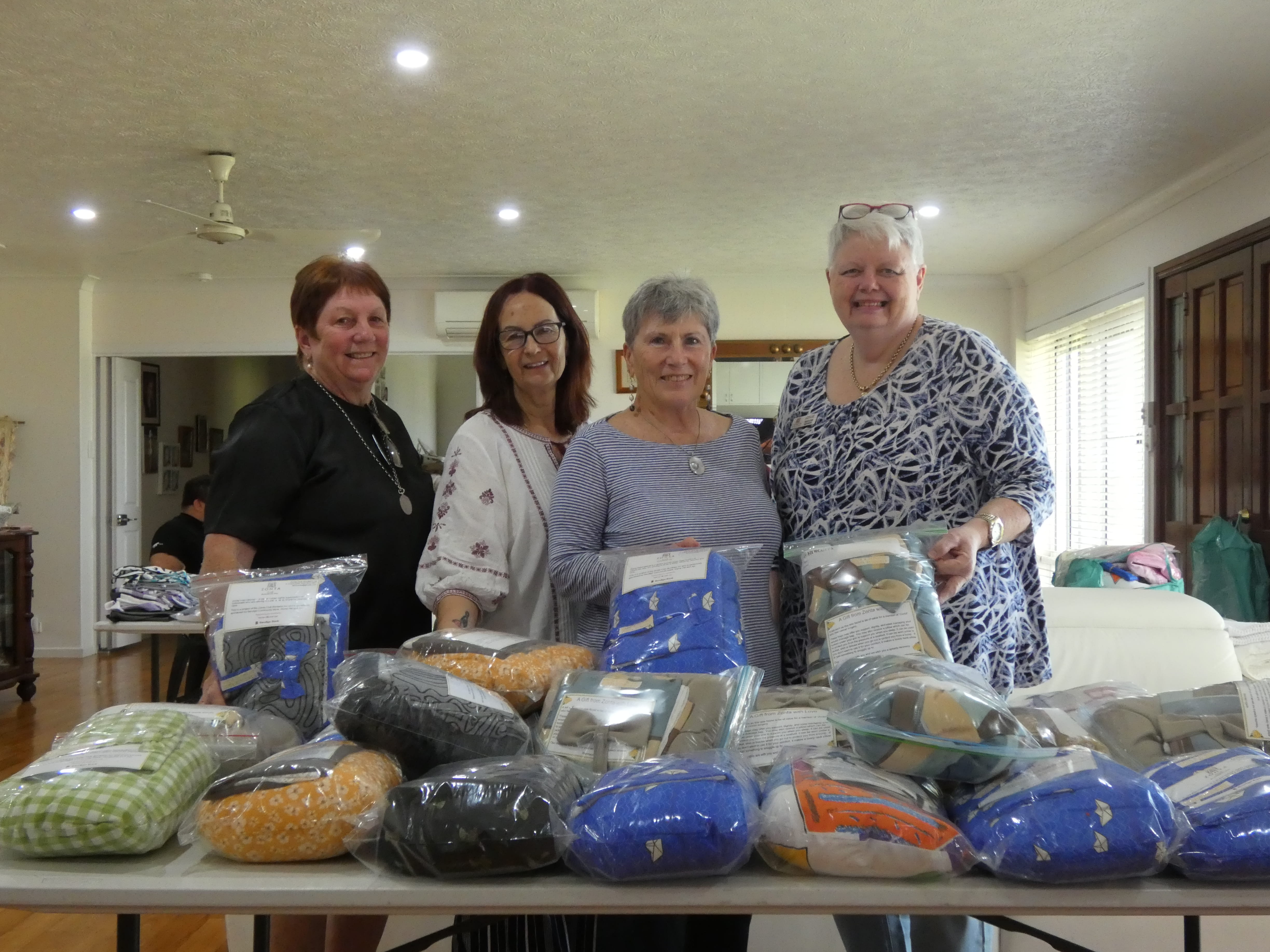
Some packs this year were made with darker colours for men.
Karen said the packs were often felt well beyond Townsville.
“We often get thank you cards from people who have received them—some from as far as Weipa. It just touches everybody.”
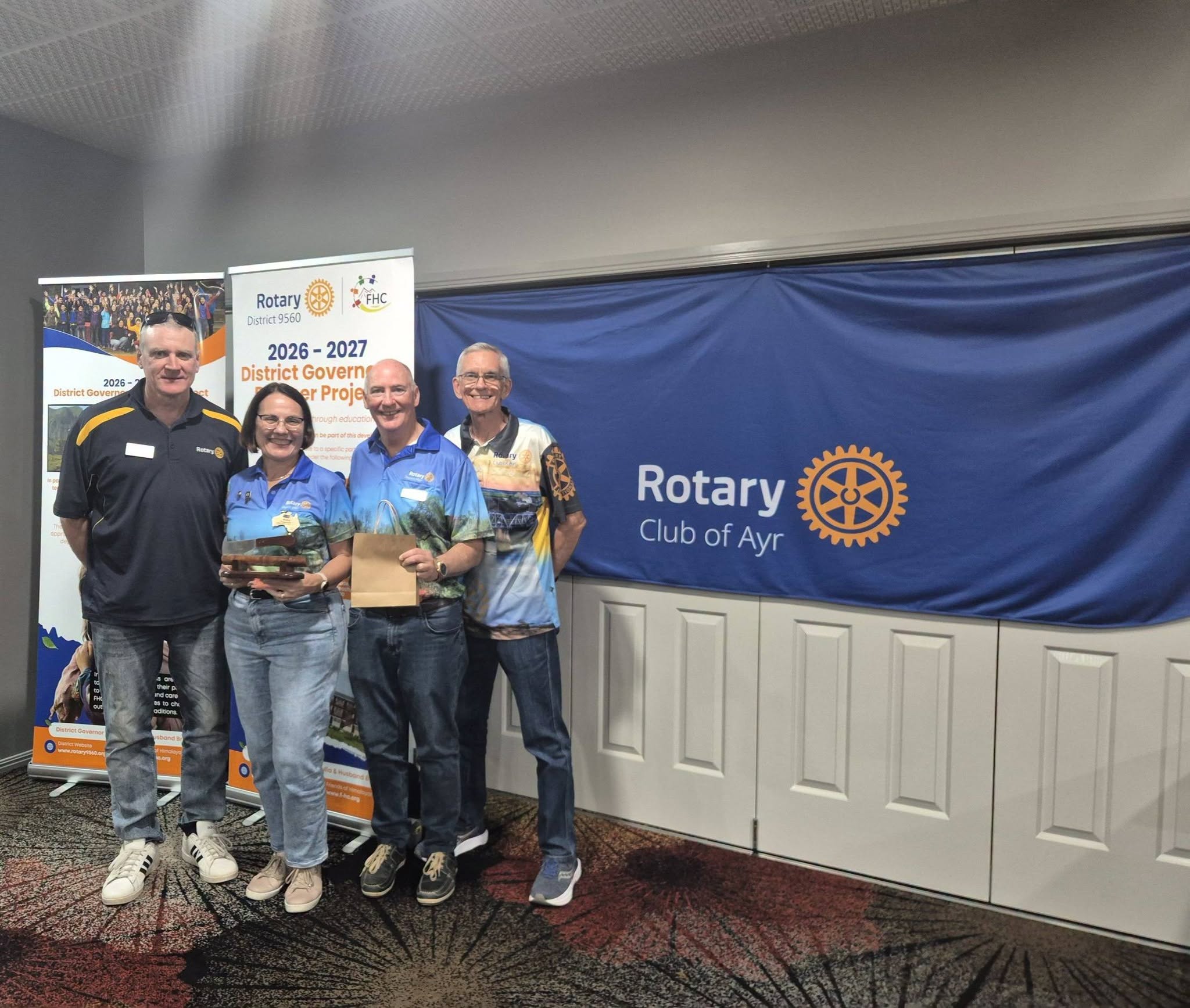
(L-R) Clive Williams, Rita Zappulla, Brien Leibinger, John McVeigh. Photo supplied.
Contributed with thanks by the Rotary Club of Ayr
The Burdekin’s two Rotary clubs proudly welcomed Rotary International District Governor Rita Zappulla last Sunday for a special visit celebrating local service, fellowship and the inspiring contribution Rotarians make to their community.
During her visit, Ms Zappulla met individually with Ayr Rotary President John McVeigh and Home Hill Rotary President Clive Williams before joining a full combined meeting of 23 Rotarians from both clubs at the Ayr Anzac Memorial Club.
As District Governor, Ms Zappulla supports 80 Rotary clubs and more than 1,800 members across Queensland, the Northern Territory and Timor-Leste. Her Burdekin visit allowed both presidents to share their clubs’ major projects, milestones and ideas for strengthening Rotary’s contribution to the Burdekin community.
Ms Zappulla said one of the greatest privileges of her role was representing the district and celebrating the remarkable work Rotarians were doing in their communities. She praised the dedication of Burdekin Rotarians and the strong local support helping both clubs turn their ideas into meaningful action.
“I’ve been so gratified by the generosity of Burdekin businesses and individuals who have contributed so handsomely to supporting their projects,” she said. “This community is the very best.”
Ayr Rotary expects three of its major fundraising initiatives—the Community Raffle, Burdekin Phone Book and Norm Perry Memorial Duck Race—to raise a combined $70,000 for local, national and international causes.
Because the club covers the raffle’s operating costs, local not-for-profit organisations keep every dollar from the tickets they sell. Ayr Rotary President John McVeigh said up to $50,000 would go to local sporting clubs, school P&Cs and churches.
“All 10,000 raffle tickets have been distributed,” he said.
“The raffle will be drawn on 14th November.”
Home Hill Rotary is working towards a $40,000 all-terrain vehicle that would help Home Hill and Ayr police officers reach remote areas across the Burdekin. President Clive Williams said the club was building on the successful 18-month tenure of lifelong Rotarian Alfio Musumeci.
“We’re coming home strong,” Mr Williams said.
“With the success of the Harvest Festival Mega Markets and Harvest Festival Queen Maddy Gallagher’s fundraising, we’ll make it.”
Residents who would like to meet new people, share their skills and make a practical difference in the Burdekin are warmly encouraged to connect with either the Ayr Rotary Club or the Home Hill Rotary Club.
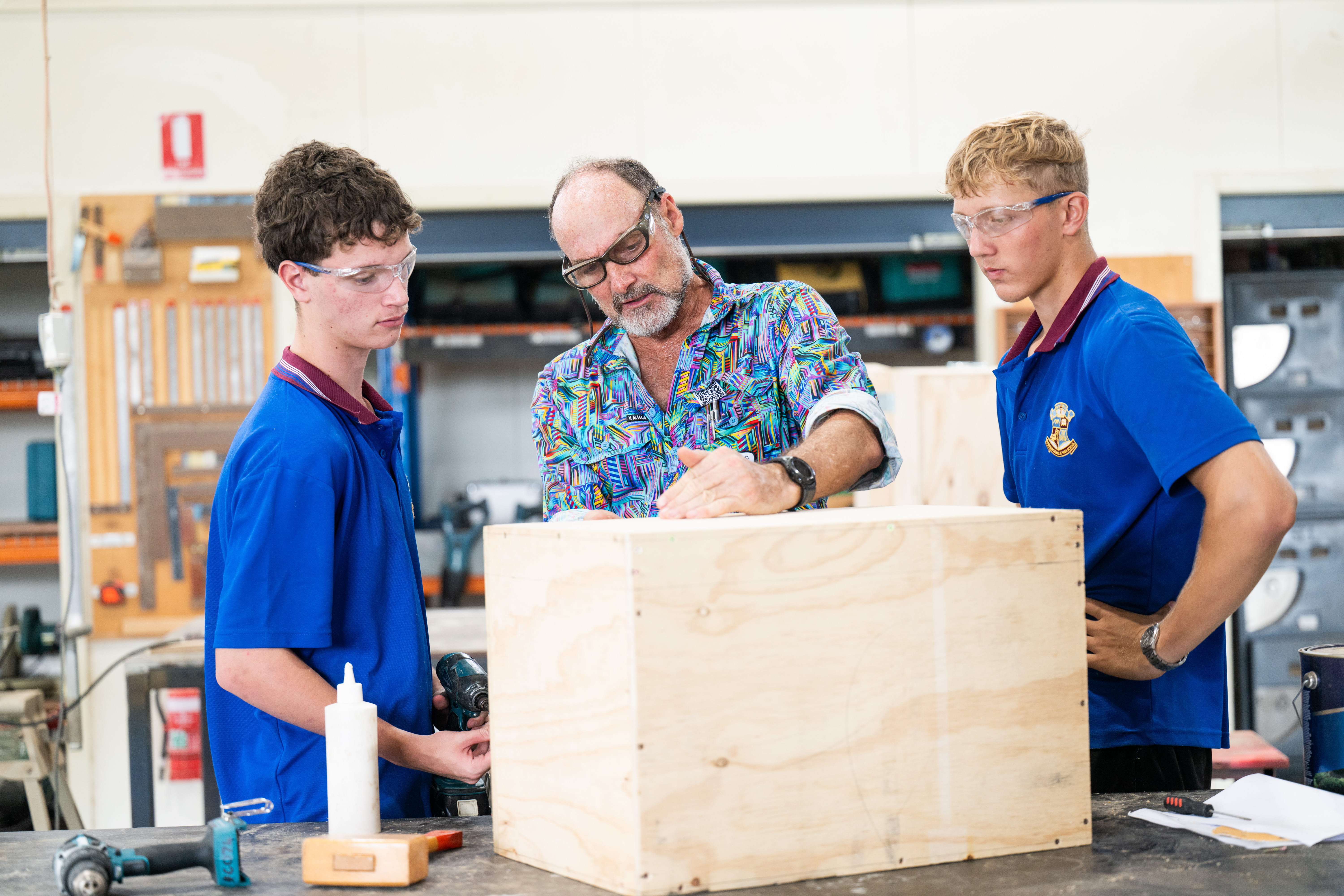
With a strong focus on practical skills, industry experience, and employability, Burdekin Catholic High School’s Vocational Learning Program is helping prepare students for successful careers across a wide range of fields Photos supplied
Contributed with thanks by Burdekin Catholic High School
Burdekin Catholic High School continues to lead the way in providing senior students with diverse opportunities through its Vocational Learning Program for Years 10–12. With a strong focus on practical skills, industry experience, and employability, the program is helping prepare students for successful careers across a wide range of fields.
The school offers a suite of dedicated vocational subjects, including Industrial Graphics, Industrial Technologies, Sport and Recreation, Hospitality and Business, which complement Essential English and Mathematics studies. These subjects provide a robust foundation in both academic and practical learning, ensuring students are equipped with the exact knowledge and capabilities needed beyond the classroom.
A key highlight of the program is the delivery of nationally recognised qualifications directly on campus. Students can undertake a CPC20220 Certificate II in Construction Pathways through the school’s specialised Trade Training Centre, gaining hands-on experience in a purpose-built facility. In addition, the SIT20322 Certificate II in Hospitality is delivered in the school’s industry-standard Hospitality Centre, preparing students for real-world careers in food service and hospitality.
Burdekin Catholic High School also strongly supports students pursuing School-Based Apprenticeships and Traineeships (SBATs). Students are engaged in apprenticeships with local employers, combining their classroom learning with valuable workplace experience.
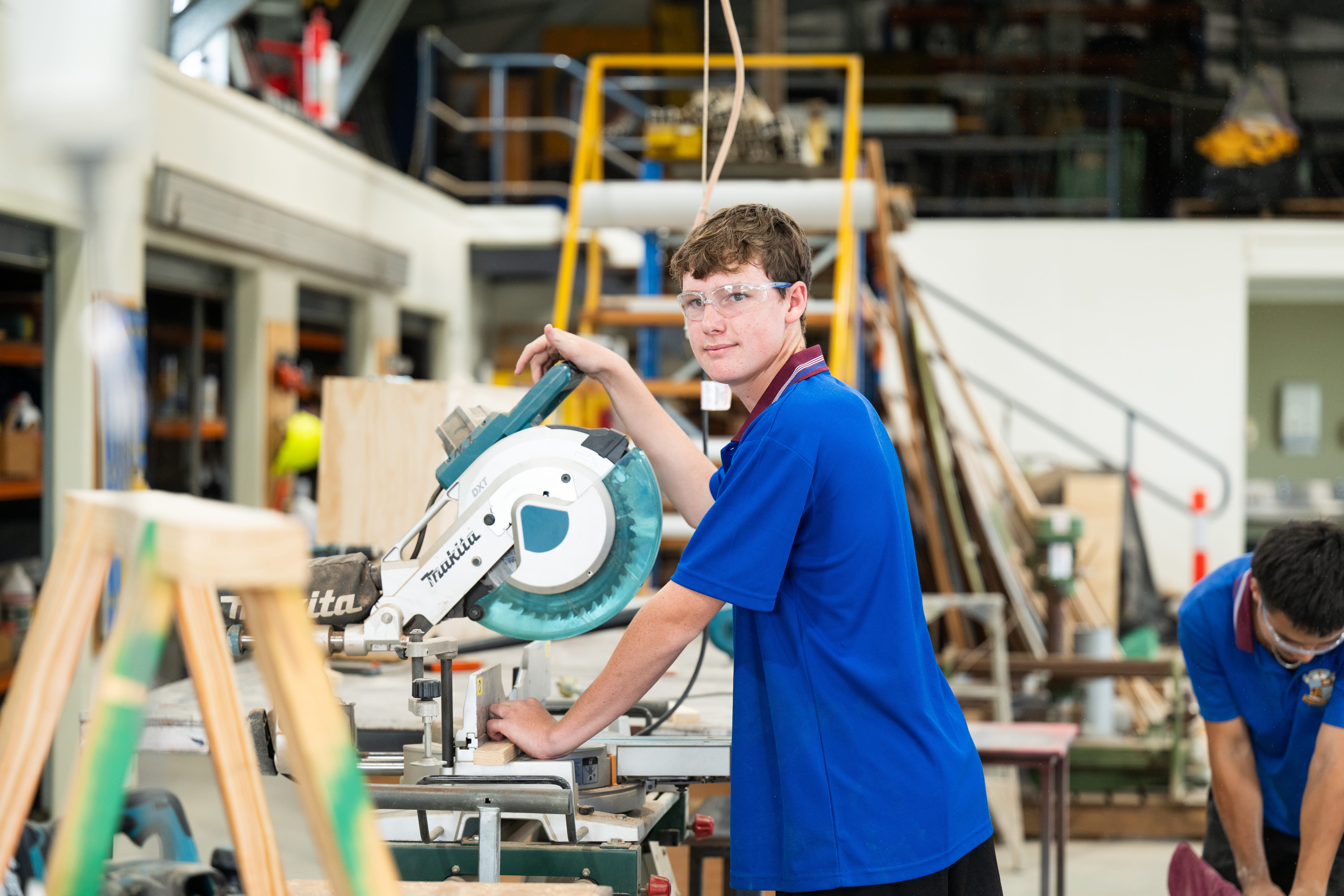
Beyond the school grounds, students benefit from strong regional partnerships. Many attend TAFE Queensland’s Home Hill campus one day per week to study specialised fields such as Automotive and Electrotechnology. These industry partnerships allow students to gain high-demand skills in sectors that are both locally significant and nationally vital.
Principal, Lorraine Wolffe said the Vocational Learning Program reflects the school’s deep commitment to catering to a broad range of post-schooling options.
“Our goal is to ensure every student leaves Burdekin Catholic High School confident in their abilities and equipped with skills that will open doors for their future, whether that be university, further training, or direct employment,” Mrs. Wolffe said.
With a strong blend of classroom learning, industry-standard training, and hands-on workplace experience, Burdekin Catholic High School is proud to provide pathways that prepare students not only for immediate employment, but for long-term, meaningful careers.
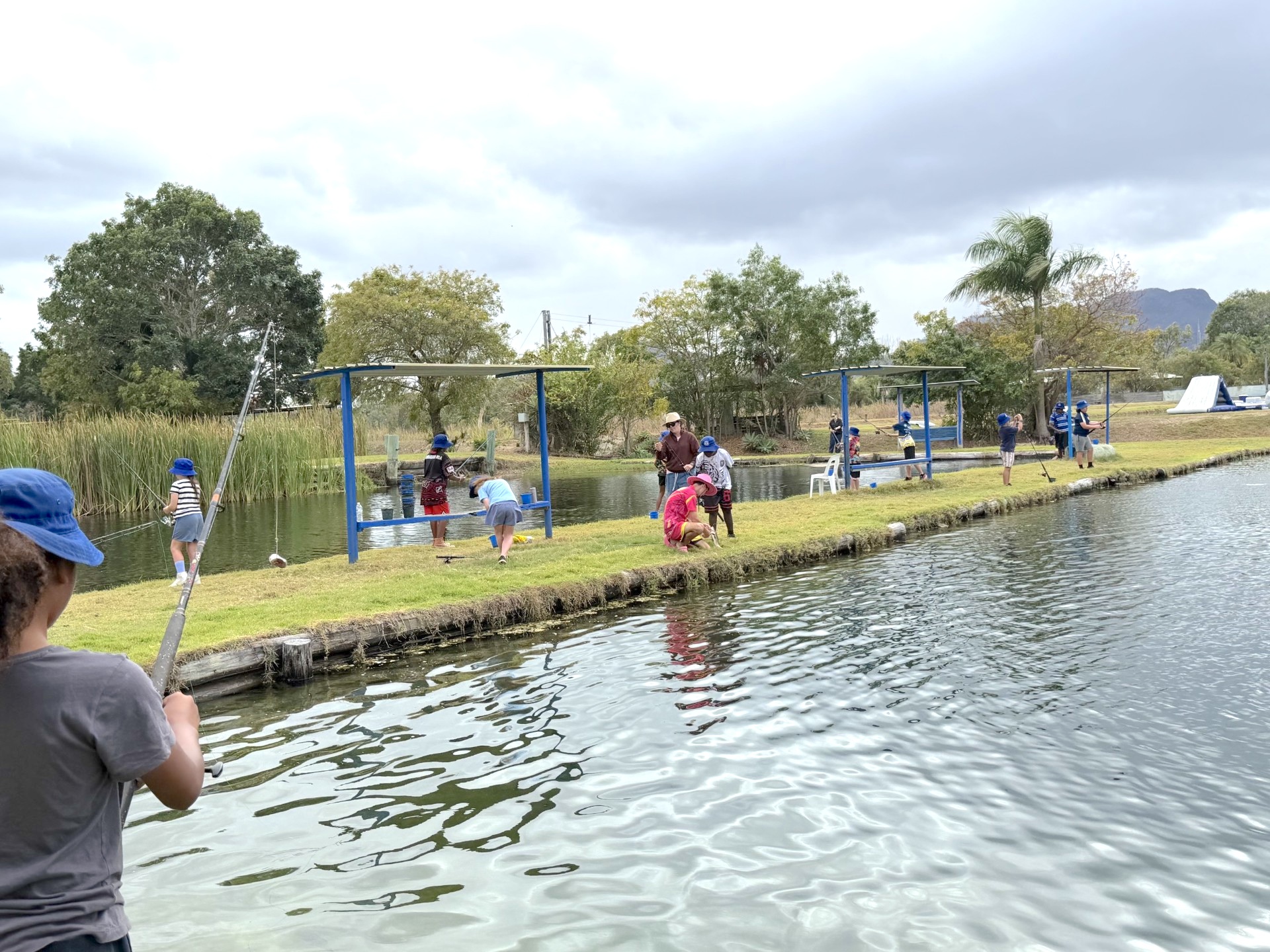
“We want our students to be curious, adventurous and willing to have a go.” Photo supplied.
Contributed with thanks by Ayr State School
At Ayr State School, we do things differently — and we are proud of that.
We are serious about learning. Reading is one of our highest priorities. We are committed to ensuring every child develops the knowledge, skills and confidence they need to become a successful reader. Our teachers continually strengthen their practice, use evidence and student data to guide teaching, and work together to make sure every student is supported to make progress.
But we also believe that a great education is about much more than what happens behind a desk.
It is about giving children experiences they will remember.
Recently, our 5/6 students swapped the classroom for fishing rods, campfires and an inflatable water park during an overnight camp at the Barra Fun Park. Earlier, our 3/4s camped at Billabong Sanctuary, getting up close with Australian wildlife and learning in an environment very different from their everyday classroom.
We want our students to be curious, adventurous and willing to have a go. We want them to experience their local and regional community whilst building memories alongside their friends and teachers.
Because some of the most important learning at school doesn't come from a worksheet.
It happens when a child catches a barramundi for the first time, overcoming their nerves and trying something new. When they help a friend, sit around a campfire together or discover an animal they have only seen in a book. They realise, I can do this.
These experiences build something that matters enormously to us at Ayr State: belonging.
We want every child to feel known, valued and connected. Camps, sporting opportunities, celebrations, excursions, house activities and the many other experiences we create throughout the year give students opportunities to form relationships and discover where they fit within our school community.
And when children feel that they belong, they are more willing to participate, take risks, persevere and learn.
That same philosophy sits behind our approach to reading. We don't want children simply to do reading. We want them to see themselves as readers. We celebrate their growth, explicitly teach the skills they need, provide support when learning becomes difficult and keep expectations high.
Our goal is not to create a school where every child has exactly the same experience.
It is to create a school where every child has the opportunity to succeed, to belong and to experience something extraordinary.
That means carefully planned, evidence-informed reading instruction as well as a fishing rod, barramundi or standing beside a crocodile at Billabong Sanctuary!
That's Ayr State School.
We learn. We belong. We have a go. And sometimes, we do school a little differently.
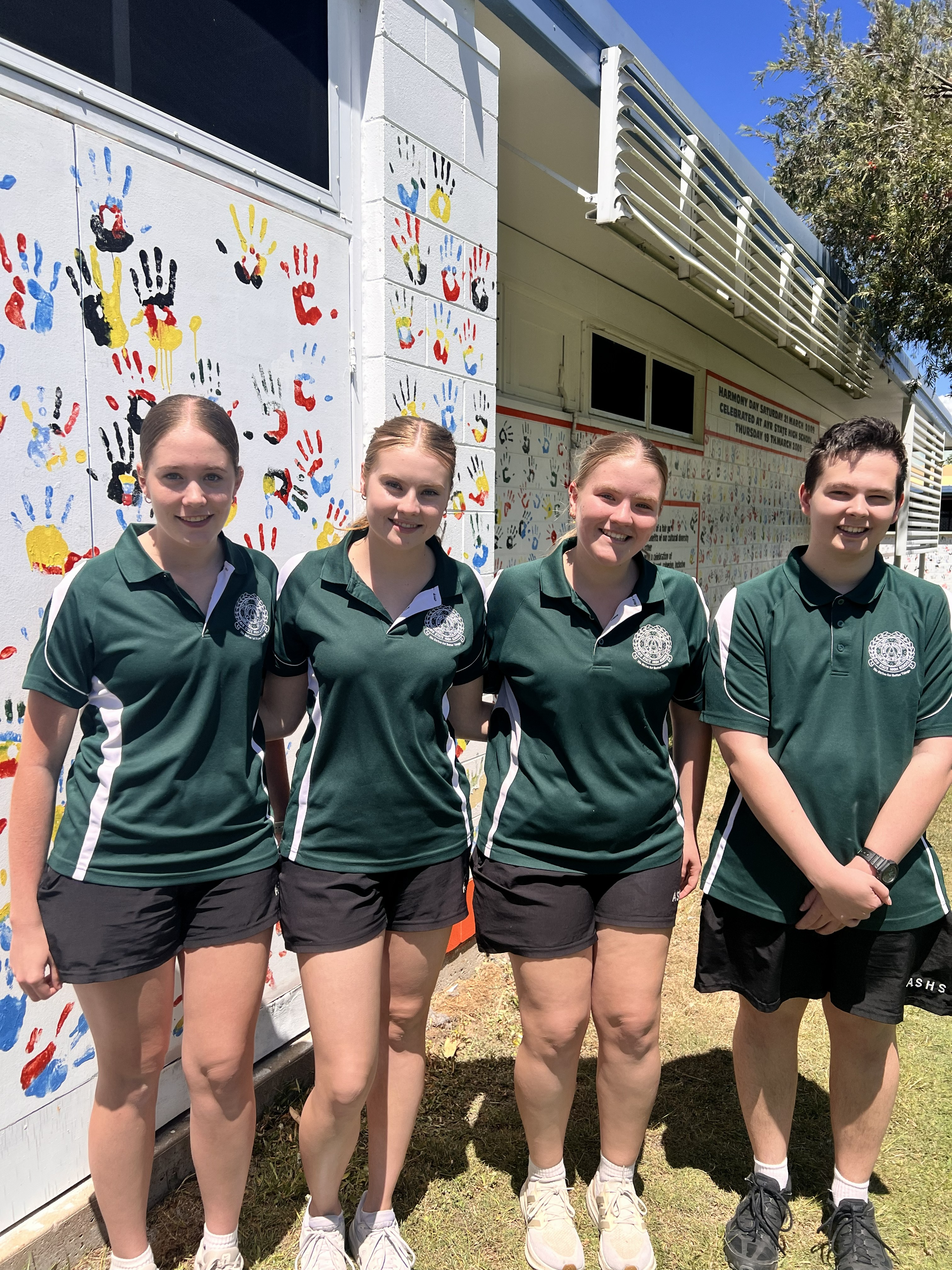
(L - R) – Shae Laidlow, Kirryn Laidlow, Kaydee Miller, Brayden Becke. Photo supplied
Opening doors to university, trades and employment, Ayr State High School is helping Burdekin students build bright futures.
The senior years represent an exciting chapter in a young person's education. Whether a student dreams of attending university, pursuing a trade, entering the workforce, or exploring an entirely different pathway, the right opportunities can make all the difference. At Ayr State High School, students can explore their interests, develop new skills and prepare for life beyond school through a diverse range of academic, vocational and employment pathways.
As a leader in STEM education, Ayr High provides outstanding facilities, specialist subjects and co-curricular opportunities that extend learning beyond the classroom. Ayr High students are regularly selected for prestigious programs including SPARQ-ed’s Senior Research Immersion Program, the National Youth Science Forum, and STEM Girl Power Camp. These opportunities are complemented by Ayr High’s exceptional science facilities.
Ayr High’s modern, state-of-the-art science laboratories transform curiosity into understanding, turning lessons into discoveries. In bridging the gap between theory and practice, these facilities enriching learning and ignite curiosity by providing an inspiring environment for practical investigations, collaboration and hands-on learning,
The diverse range of academic learning opportunities on offer at Ayr High are enriched through partnerships with JCU and the Brisbane School of Distance Education. In addition to their suite of subjects and vocational courses, Ayr High also offers additional subjects through distance education. In 2027, senior students will also be able to get a headstart on their tertiary studies by undertaking first year university subjects via JCU Now.
The academic success of Ayr High’s students is reflected in their ATAR outcomes and first round QTAC offers. Our students’ academic achievements are already opening doors, with four Year 12 students recently receiving early university offers for 2027. Congratulations to these students on their outstanding achievement!
Ayr High is also future focused in its education to employment pathways. As a Gateway to Industry School, we offer a diverse range of learning pathways and experiences for students pursuing careers in the health sector. Ayr High is the only school in the Burdekin to offer a Certificate III in Health Services Assistance as part of its RTO arrangements. This qualification enables guaranteed entry into several JCU undergraduate courses as well as direct employment in the health sector. Currently, Ayr High has several Certificate III students undertaking traineeships with Queensland Health, combining study with valuable workplace experience.
As the Burdekin’s largest secondary school, Ayr High also responds to the needs of our local workforce through school-based apprenticeships, TAFE in Schools and traineeships. In another first for the region, we have created a pathway for students who wish to be teacher aides, with one of our students securing a traineeship whilst still at school.
At Ayr High, we believe every student deserves the opportunity to find their own path to success. By providing a range of senior school learning opportunities and pathways, Ayr High is preparing young people for the future.
A bright future for our students means a stronger future for the Burdekin—and that is something worth celebrating.
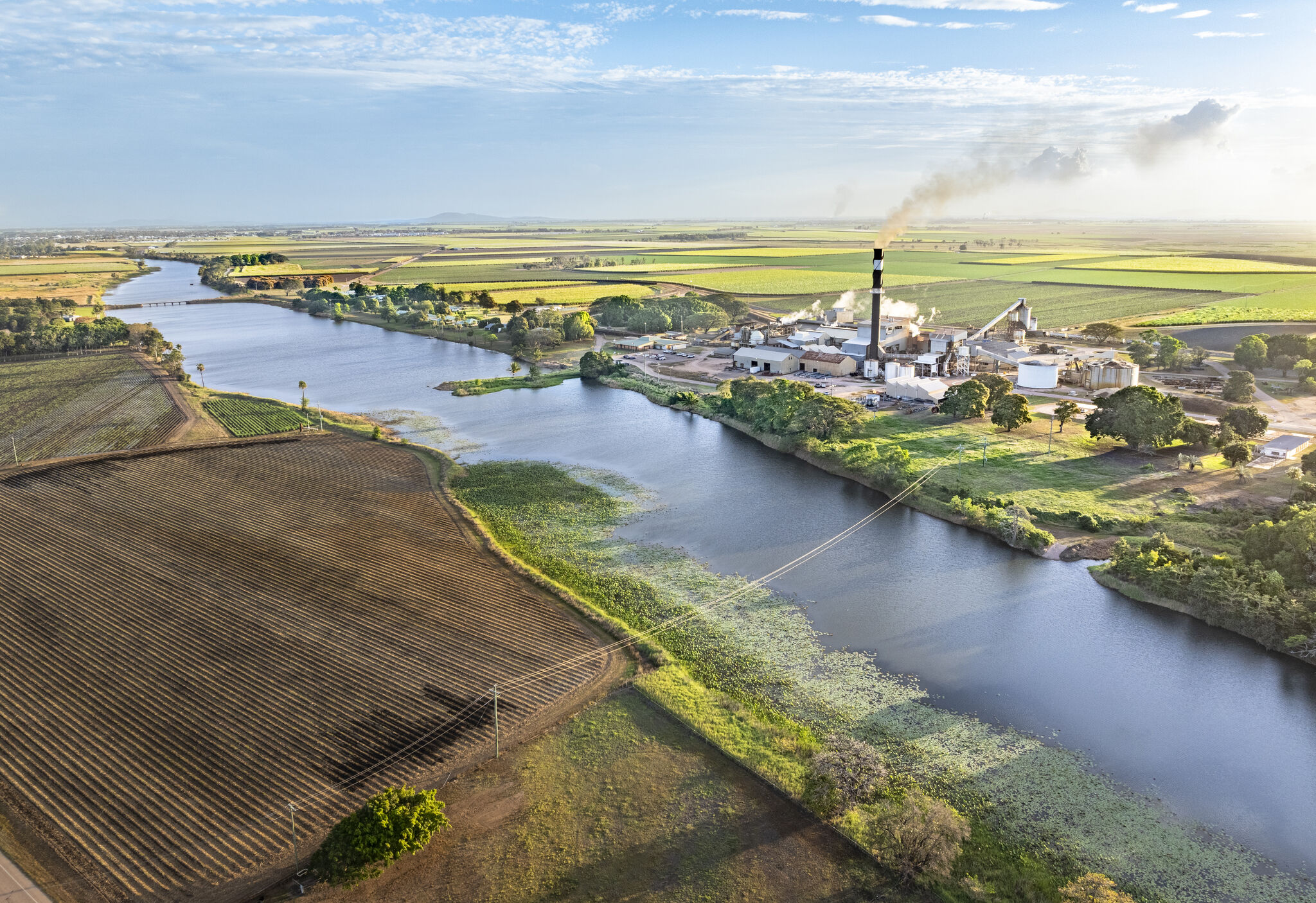
Dry conditions have helped keep the 2026 Burdekin crush moving, with Kalamia Mill expected to be the first Wilmar factory to finish the season. Photo source: Wilmar Sugar Australia
Contributed with thanks by Wilmar Sugar and Renewables
The Burdekin sugar crush is powering towards an October finish, with predominantly dry conditions helping harvesting and transport crews maintain strong progress across the district.
Wilmar Sugar and Renewables reported on September 11th that its eight North Queensland mills had processed 9.24 million tonnes of cane, representing about 66 per cent of its estimated 13.85 million tonne crop.
In the Burdekin, 15 weeks of predominantly dry weather have supported harvesting and cane transport, while sugar content has also been performing better than expected.
Season-to-date Commercial Cane Sugar (CCS), a measure of the recoverable sugar in cane, is tracking 0.51 of a unit above Wilmar's budget.
The stronger CCS result is providing some relief from reduced cane tonnages this season.
With the crush now well advanced, Kalamia Mill is expected to become the first of Wilmar's eight factories to finish for the year, with crush-out currently forecast for mid-October.
The Burdekin's remaining three Wilmar mills are expected to finish by the end of October.
Across Wilmar's other milling regions, conditions have produced mixed results.
In the Herbert, the crop is cutting at 97 per cent of the adjusted estimate, while weekly CCS has climbed to 14.35, more than one unit above budget for this stage of the season.
Further south, Proserpine Mill is approaching one million tonnes crushed, although persistent dry conditions have affected the crop, which is cutting at about 94 per cent of its adjusted estimate.
At Plane Creek, harvesting conditions have remained favourable and CCS is well above budget at a season-to-date average of 14.82. However, Wilmar reported the lack of in-season rainfall was contributing to a significant reduction in yield.
Wilmar expects its first factory to finish crushing in mid-October, with the final mill scheduled to finish by mid-November.
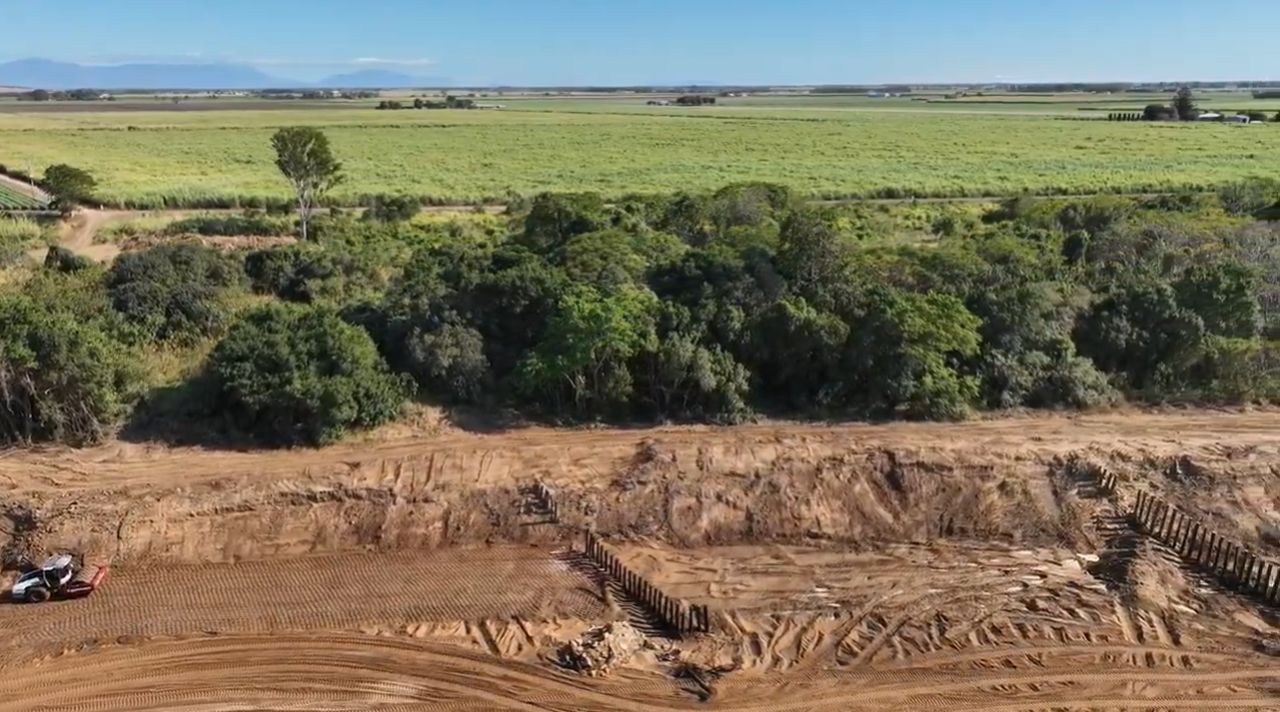
Rehabilitation work is underway along about 1.2 kilometres of eroded Burdekin River bank at Airville following major flooding in 2025. Photo source: NQ Dry Tropics
Work is underway to rehabilitate about 1.2 kilometres of eroded riverbank along the Burdekin River at Airville following major flooding in 2025.
The flooding caused significant erosion at the site and partially damaged an experimental pilefield structure that had been constructed in 2022.
The rehabilitation works are aimed at stabilising the riverbank, reducing further soil loss and helping limit the amount of fine sediment entering the Great Barrier Reef.
The project includes rock protection, reshaping of the damaged bank, revegetation and the installation of timber groynes.
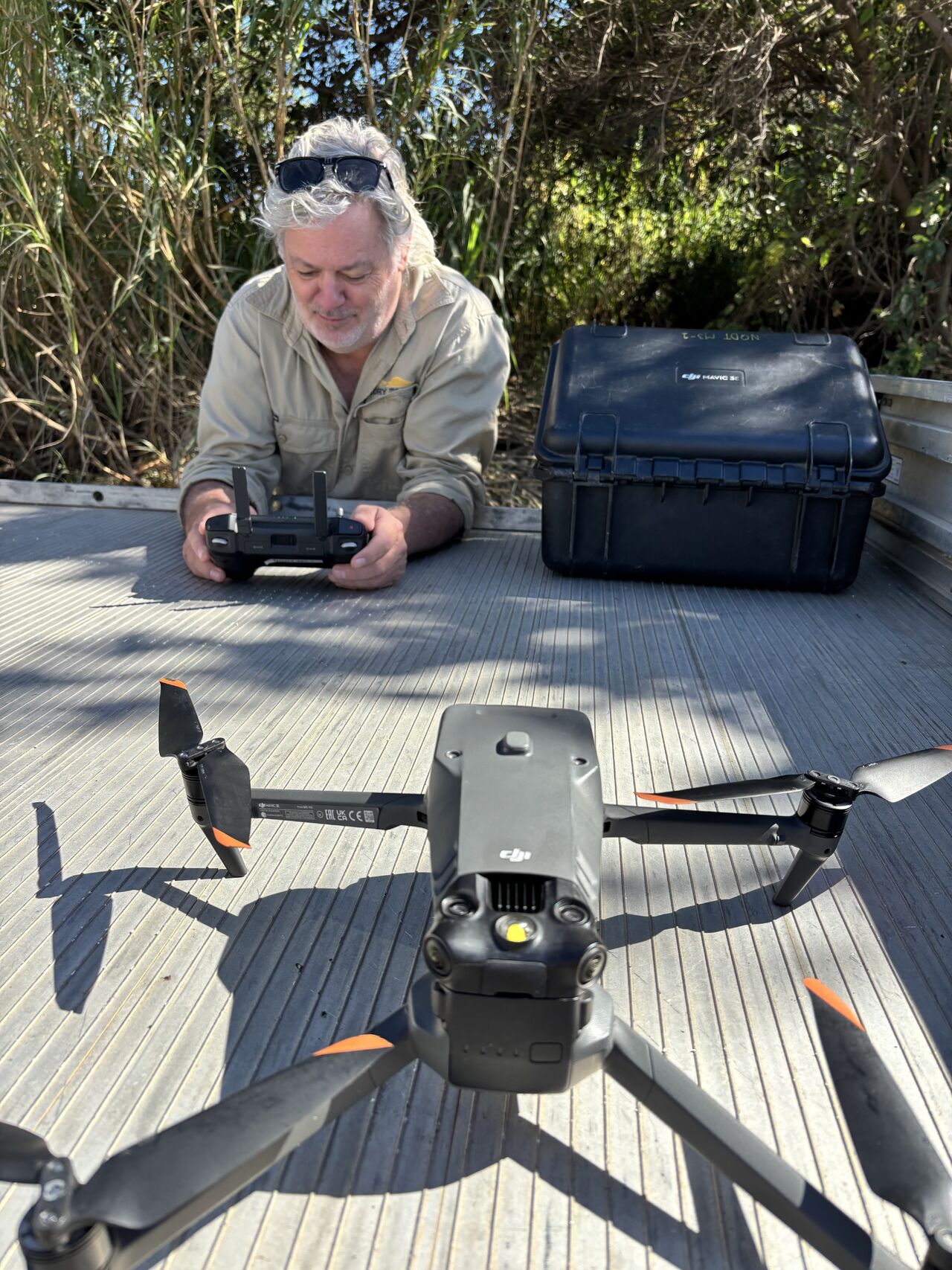
Timber piles recovered from the failed structure are being recycled and used as part of the new works, helping protect the riverbank and surrounding riparian vegetation while making use of materials already on site.
The original pilefield was damaged when floodwaters exceeded its design specifications, highlighting the challenges involved in carrying out rehabilitation work within a dynamic river system such as the Burdekin.
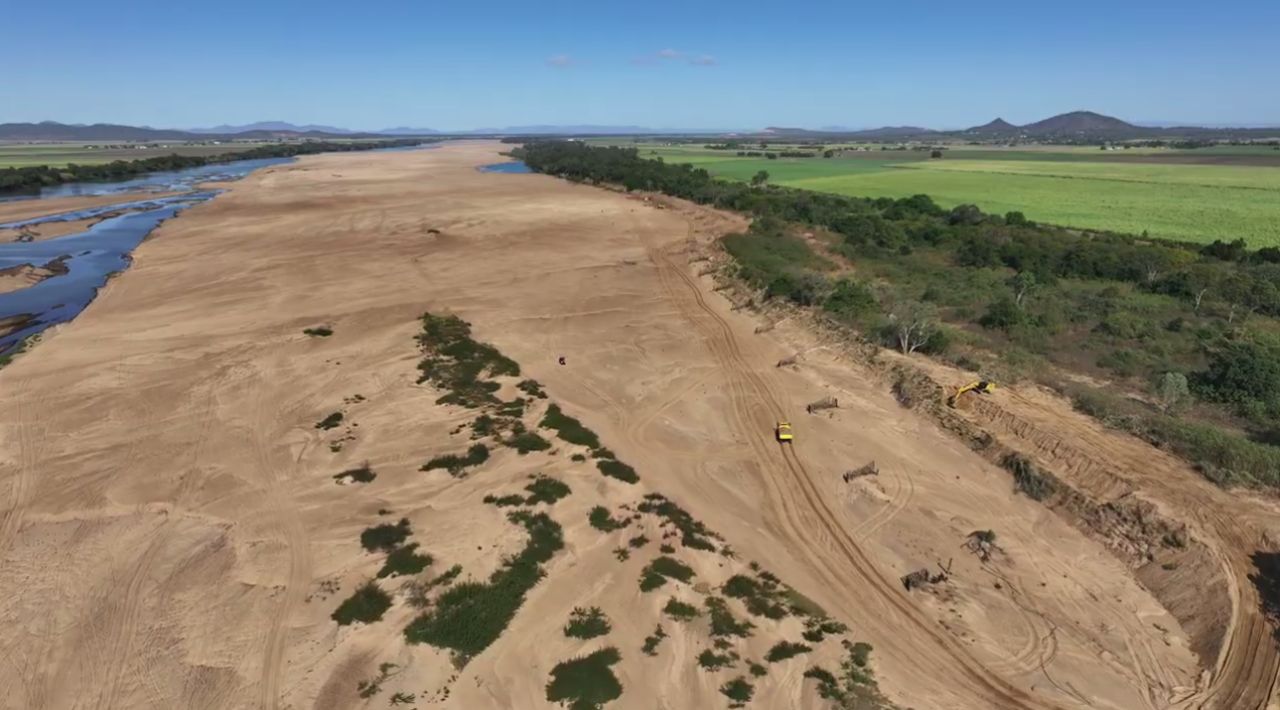
Civil IQ completed the detailed design for the latest rehabilitation work, with input from the Burdekin Shire Rivers Improvement Trust, which is overseeing construction.
The works form part of the six-year Burdekin Landscape Repair project, which focuses on reducing fine sediment from Dry Tropics catchments through targeted gully and streambank repairs, along with improved land management practices.
The project is funded through the Australian Government’s Reef Trust program.
Further updates are expected as the rehabilitation progresses, including before-and-after images showing how the site changes as the works take shape.
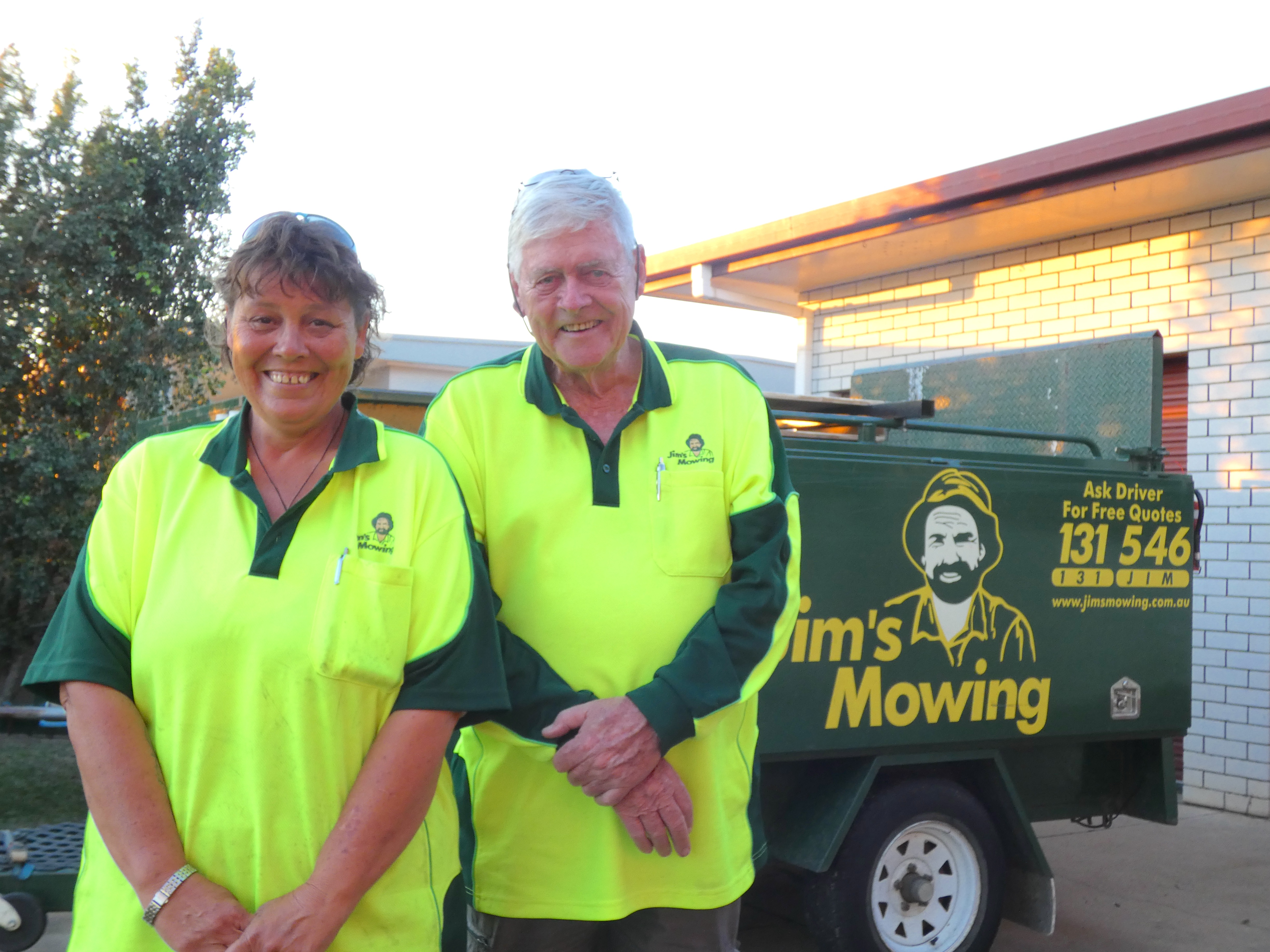
When Geoff Campbell became a Jim’s Mowing franchisee in 2022, he wanted to create something for his daughter Kayleen to sink their teeth into. Photo: Jacob Casha.
When an 80-year-old Geoff Campbell became a Jim’s Mowing franchisee in 2022, his goal was twofold; retire himself and his wife Gayl, and create something for his daughter Kayleen and her husband to sink their teeth into.
He never quite anticipated that four years on, he'd be handing them the keys to a multi-million-dollar operation spanning a large chunk of North Queensland, becoming something of a poster boy for the Jim’s franchise in the meantime.
And after a journey of rapid business growth and national media coverage, Geoff’s finally getting the retirement he originally set out for.
Kayleen and husband Stan joined Geoff in the Burdekin last month, leaving their life in Perth to take the reins of the franchise and finally give her parents a chance to step back.
“We literally packed up our whole life. My husband retired from trucking after 49 years, and now we’re here to try and retire the parents,” Kayleen said.
The couple now have the task of building on everything Geoff has created.
It began as a relatively modest Cannonvale franchise. Within a year, it had clients across Airlie Beach, Townsville and the Burdekin. All the while, Geoff, who had spent most of his life in mining and construction, had become one of Jim’s Mowing’s biggest success stories, appearing on Australian television to tell his story.
And his formula is simpler than you would imagine.
“I’ve never passed an exam in my life,” he quipped.
“Everything I've achieved is through respect, integrity, loyalty, and common sense.”
Kayleen added: “We’ve got big shoes to fill.”
“We’ll just keep it as it’s running and expand as we go. As long as we have [Geoff] still here, we’ll be fine!”
Kayleen steps into Jim’s Mowing with pedigree of her own, having previously run her own Perth cleaning business with 38 private customers before making the move east.
Her experience comes at a time when the business has expanded well beyond its mowing roots, now operating across the region under three Jim’s banners—Mowing, Handyman and, most recently, Window & Pressure Cleaning.
The team handles everything from regular lawn mowing, gardening, pruning and hedging to rubbish removal, weed spraying and gutter cleaning, as well as home and office cleaning and pressure cleaning.
But Kayleen said the business and its services are only as good as the people behind them.
“Our staff are our extended family,” she said.
“If we didn’t have the team we have now, we wouldn’t have the business.”
And with family now steering the ship, Geoff says the business is preparing for “quite a few developments” involving multinational companies.
But for now, he's just “really proud” to have his daughter onboard.
“What parent wouldn’t be?”
For more information on the business and its services, contact Kayleen on 0437 368 060 or Geoff on 0439 799 544
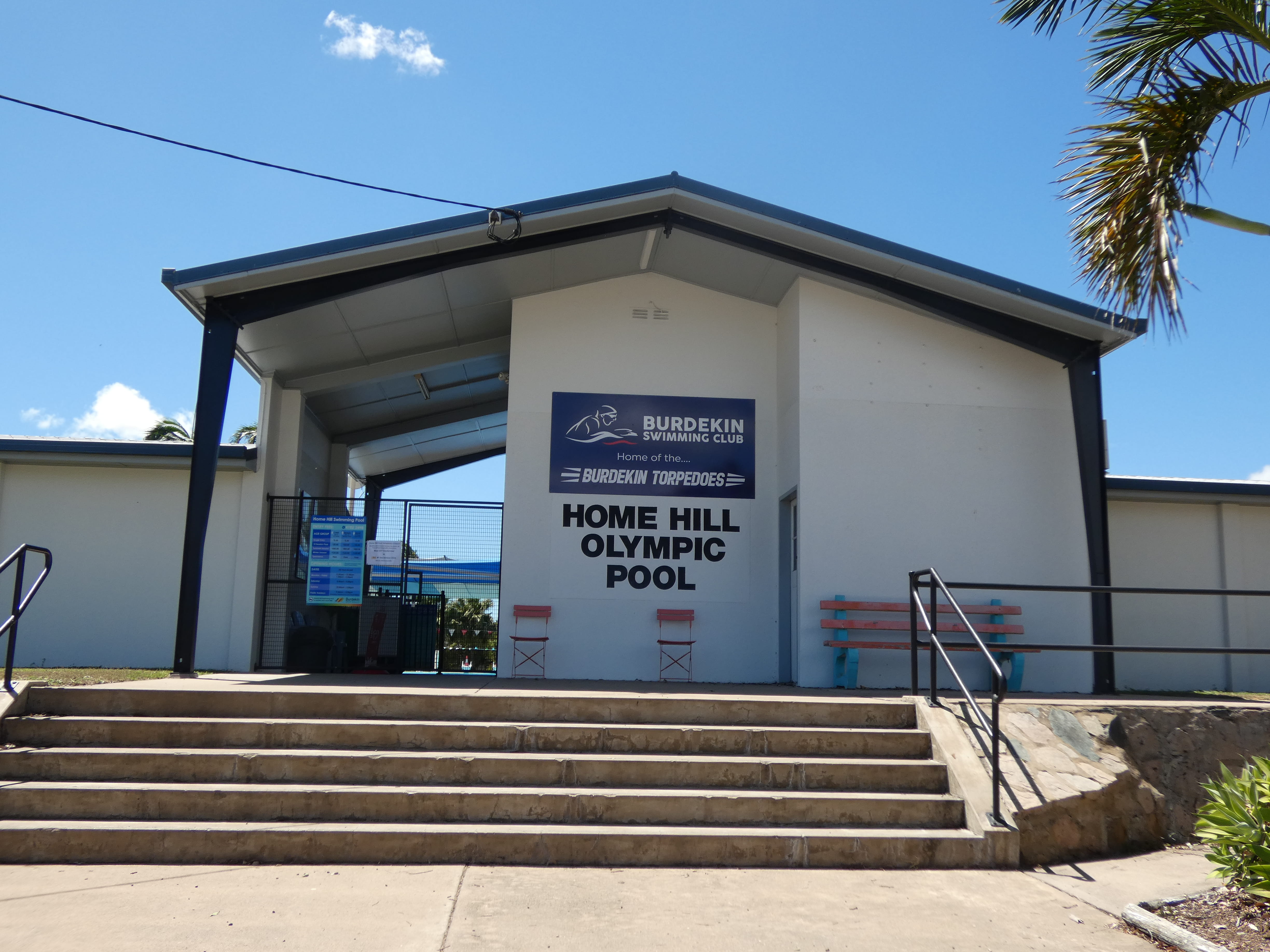
The Burdekin Aquatic Centre has reopened its doors to the public after major upgrades. Photo: Jacob Casha
The Burdekin Aquatic Centre has reopened its doors to the public after major upgrades, with Home Hill Swimming Pool now set to close for its own “critical refurbishments”.
The Ayr pool reopened on Saturday 12th September after an extended winter closure to accommodate the construction of a new amenities block among other upgrades.
The works—supported through the Queensland Government’s Works for Queensland program—saw the new amenities block relocated closer to the facility’s Macmillan Street entrance to improve accessibility and convenience for users.
The relocation was recommended in the Burdekin Aquatic Centre Masterplan after the new entrance and kiosk left the existing amenities at the opposite end of the site. Community feedback also supported moving the facilities closer to the entrance.
The new block is fitted with modernised male, female and unisex toilets, and leaves the door open for a grassed area along the Queen Street side of the facility.
The upgrade is the latest stage of a decade-long program of improvements at the aquatic centre, which has also included upgrades to its pump and filtration systems, the installation of a multi-million dollar water park and relocation of the primary entrance to Macmillan Street.
Meanwhile, Burdekin Shire Council has announced temporary closures for Home Hill Swimming Pool, which is set for its first major refurbishment since opening in the 1960s.
The pool will close from Wednesday 23rd September to Friday 4th December to allow contractors to “safely undertake a comprehensive program of upgrades to improve the facility's safety, functionality and amenity,” says Council.
The $1.2 million Works for Queensland-funded project will include repairs to the main and toddler pools, new handrails, entry steps and compliant fencing, as well as electrical and safety upgrades.
The works will also deliver a new gazebo and barbecue shelter, additional picnic areas and refurbishment of the pool surrounds and concourse areas.
Council said the project will help ensure the Home Hill pool “remains a safe, welcoming and functional community facility for years to come,” acknowledging the inconvenience caused by the temporary closures.

A major community project aimed at improving emergency response across the Burdekin is a significant step closer to becoming reality, thanks to a $15,000 contribution from Community Bank Home Hill & Ayr. Photo supplied.
Contributed with thanks by Community Bank Home Hill & Ayr
A major community project aimed at improving emergency response across the Burdekin is a significant step closer to becoming reality, thanks to a $15,000 contribution from Community Bank Home Hill & Ayr.
The funding will support the Rotary Club of Home Hill's major 2026 project to purchase an all-terrain vehicle (ATV) for local Queensland Police, helping officers reach rural and difficult to access locations across the district.
Rotary has set a fundraising target of $40,000 for the project, with the Community Bank contribution providing an important boost as the club moves closer to achieving its goal. The club hopes to present the ATV to local police during October.
Rotary Club of Home Hill President Clive Williams said the idea emerged after local police officers attended one of the club's weekly meetings and spoke about the need for an ATV.
Police had previously sought funding through normal government channels but had been unsuccessful due to budget constraints. Recognising the difference such a vehicle could make locally, Rotary decided it was a project worth getting behind.
The ATV would provide police with greater access during floods, disasters and other incidents, particularly in locations such as cane fields, beaches, river areas and other terrain that can be difficult to reach using conventional vehicles.
Mr Williams said having the equipment based locally was particularly important for the Burdekin.
“For me, it’s about having the right equipment here when our police need it, rather than waiting for an ATV to come from Townsville,” he said.
“The Burdekin has plenty of challenging terrain and, particularly during a flood or other emergency, having those wheels on the ground locally can make a real difference to response times and community safety.”
The project has the potential to benefit people right across the district.
For a community service organisation such as Rotary, Mr Williams said a $15,000 contribution represented an enormous step forward.
Not only does it provide considerable momentum towards the $40,000 target, but it also demonstrates the value local organisations and businesses can have.
The club continues to support local charities and organisations, youth initiatives including the RYDA road safety program, and community events such as the Mega Markets and Home Hill Harvest Festival Rotary Ball. Recent financial support has also been provided to CORES, St Vincent de Paul and the Burdekin Chaplaincy.
“There’s a real sense of pride in knowing that the money raised by local people and businesses stays here and is turned into something that makes a tangible difference to our neighbours, families and the wider community,” Mr Williams said.
With only a few thousand dollars now remaining to reach the target, Rotary Club of Home Hill is encouraging local businesses and community members who would like to support the project to contribute to its GoFundMe campaign.
For Community Bank Home Hill & Ayr, supporting the project reflects its commitment to ensuring money generated within the community continues to create benefits for the people who live there.
It was wonderful to attend the Giru Show last Saturday, which this year also celebrated the 100th anniversary of the Giru School of Arts Hall. Standing in a building with such a rich history certainly makes you reflect on the many memories created within its walls over the past century. From weddings and birthday celebrations to community events, the hall has played an important role in the lives of generations of local families.
The anniversary held special meaning for me. My parents were married in Giru, with their wedding reception held in the hall, and I also fondly remember attending the Giru Debutante Ball, which was one of the district's major social events in its day. Congratulations to the Giru Show Committee and all volunteers who continue to keep this wonderful community tradition alive. As I often say, these events simply would not happen without volunteers giving their time and energy for the benefit of the community.
Recently, I joined Regional Development Australia on a two-day road trip to Mount Isa. Along the way, we met with several mayors and discussed the opportunities and challenges facing regional communities. While every region has its own unique circumstances, many of the issues we are tackling are remarkably similar. It was encouraging to see the west looking so vibrant and prosperous, although the state of some roads certainly highlights the ongoing infrastructure challenges facing remote Queensland.
One of the highlights of the trip was visiting the Flinders Discovery Centre in Hughenden. Learning that the centre welcomed more than 19,000 visitors in 2025 was a great reminder of the value tourism brings to regional communities. Compared to my last visit, the west is looking stronger than ever.
Finally, a reminder that our library team offers free one-on-one assistance for residents wanting help with their mobile phones, tablets or digital devices. Whether you're learning the basics or need help troubleshooting an issue, our staff are here to assist and are available by appointment on Mondays in Home Hill and Tuesdays to Thursdays in Ayr. Contact your local branch to book an appointment.
Should you wish to reach out, don’t hesitate to contact me directly by phone at 0447 150 582, or feel free to send an email to mayor@burdekin.qld.gov.au.

The new Ayr industrial estate is officially open and I can’t be more thrilled. This is a great example of strategic planning for our Burdekin’s future. This was a very difficult project that was not without its engineering challenges that put some of our young engineers through their paces. What a great experience for them and a great outcome for the town. With some blocks under offer and plenty of interest in the remaining blocks, I’m certain that this new land will play host to some great new business and aid some existing businesses to grow and prosper. The Burdekin’s future is bright indeed.
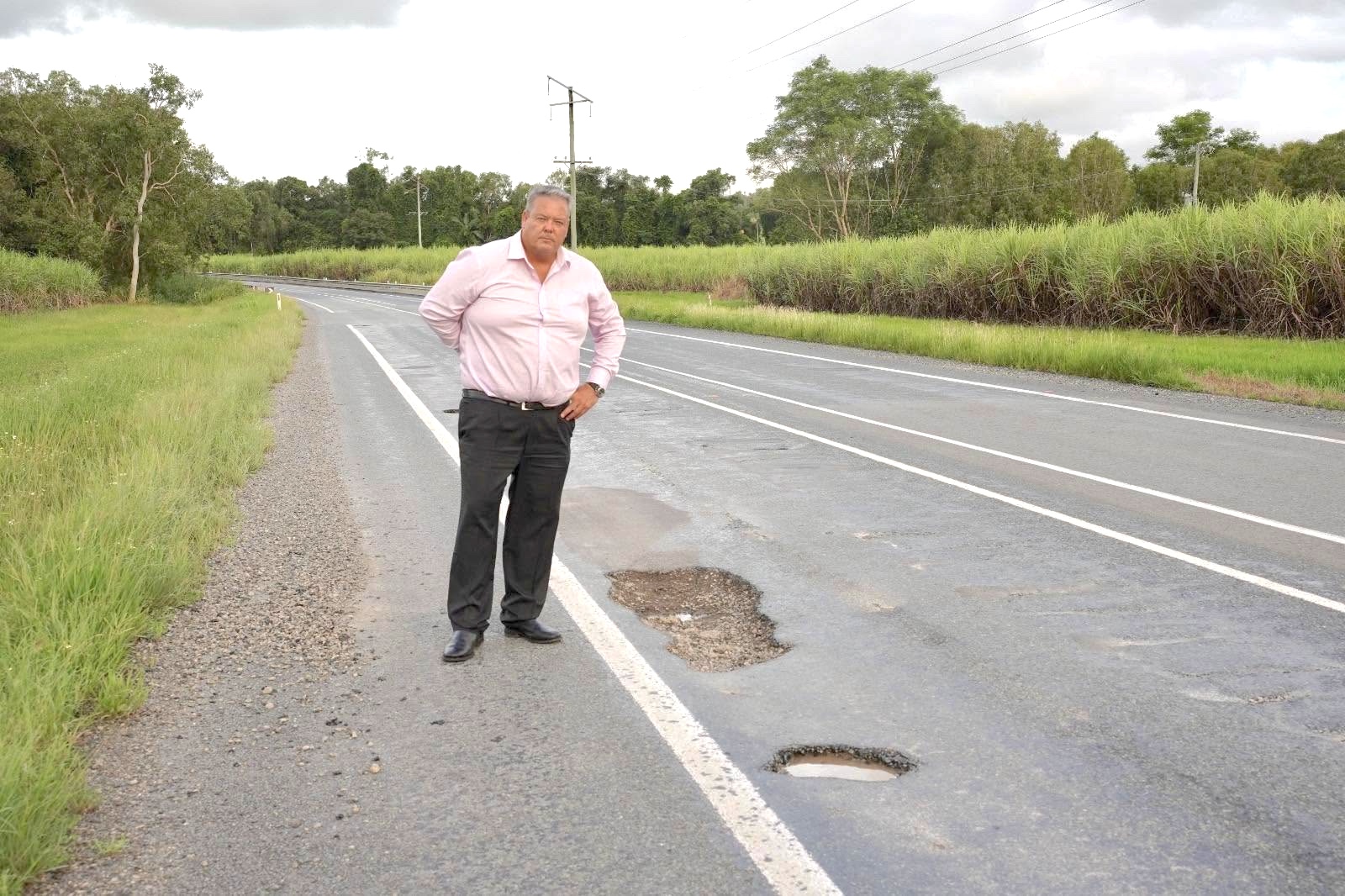
“We cannot lose sight of the bigger issue facing this stretch of highway—flooding.” Photo supplied.
Opinion of Federal Member for Dawson, Andrew Willcox
I welcome the commencement of new overtaking lanes at Goorganga Plains, which will deliver
an important safety improvement for motorists travelling between Proserpine and Mackay.
I have been advocating for safety upgrades along this section of the Bruce Highway since my
time as Mayor of the Whitsunday Regional Council, and I have continued that advocacy since
being elected as the Federal Member for Dawson.
There simply aren't enough safe opportunities to overtake between Proserpine and Mackay, so
these new lanes are a welcome step forward.
But we cannot lose sight of the bigger issue facing this stretch of highway, flooding.
The latest announcement confirms that while construction is underway on the overtaking lanes,
the major flood resilience works are still only at the design stage.
That is disappointing.
The proposed project would raise around 10.6 kilometres of the Bruce Highway, improve
drainage and deliver new bridges and intersection upgrades to keep this critical connection
open for longer during major weather events.
After years of flooding, closures and repeated repairs, we should be moving towards
construction by now, not still designing the solution.
Every wet season that passes means more disruption for local communities, more uncertainty
for freight operators and tourism, and potentially more taxpayer dollars spent repairing
infrastructure that we already know needs to be made more resilient.
We have known about the vulnerability of this section of the Bruce Highway for years.
How many more wet seasons do we have to go through before we get on with the job of
fixing it properly?
I welcome the investment in passing lanes, and I will continue to support practical safety
improvements along the Bruce.
But the Government needs to provide some clarity on the flood resilience project.
Why is it taking so long to get this critical upgrade from design to construction?
Dawson needs a Bruce Highway that is not only safer to drive on when the sun is shining, but
one that can keep communities connected when the rain comes.
We don't need another wet season of temporary fixes. We need the long-term
infrastructure investment this region deserves.

Ayr Police and Ayr CIB, with assistance from Home Hill, Giru and Clare police, have recently been targeting drug offences, with a number of people charged or diverted over the past fortnight.
11th September — Ayr[Text Wrapping Break]Police executed a search warrant at a residence in Conlan Street, Ayr, where methylamphetamine, cannabis and drug utensils were located.
The 35-year-old male resident was charged with possession of dangerous drugs exceeding schedule, possessing utensils and possessing a weapon.
He was released on bail to appear in Ayr Magistrates Court on 19th October.
7th September — Wunjunga[Text Wrapping Break]A 38-year-old Townsville man was charged with drug driving after being intercepted by police at Wunjunga. The man tested positive to methamphetamine.
6th September — Ayr[Text Wrapping Break]Police intercepted a vehicle on Queen Street, Ayr, and located drugs during a search.
A 50-year-old Home Hill man was drug diverted in relation to the matter.
5th-7th September — Ayr/Townsville[Text Wrapping Break]A house on Edwards Street, Ayr, was broken into on 5th September and a vehicle was stolen.
On 7th September, two youths were located in possession of the stolen vehicle in Townsville.
A 14-year-old girl was charged with burglary, unlawful use of a motor vehicle, fraud, unlicensed driving and three counts of breach of bail.
A 15-year-old boy was charged with burglary, unlawful use of a motor vehicle, fraud and one count of breach of bail.
Police opposed the youths' bail and both have been remanded in custody.
5th-6th September — Home Hill[Text Wrapping Break]A Home Hill business was broken into late on 5th September and items were stolen.
Police identified the suspects and, on 6th September, charged a 14-year-old Home Hill girl and a 12-year-old Ayr girl with entering premises and committing an indictable offence.
Both youths are now on strict bail conditions pending their upcoming court appearance.
3rd September — Ayr[Text Wrapping Break]Police observed a 26-year-old man doing a burnout on Queen Street, Ayr. He was subsequently intercepted and charged with drink driving and wilfully making unnecessary noise.
3rd September — Home Hill[Text Wrapping Break]Police intercepted a vehicle on Fourteenth Street, Home Hill. The 42-year-old male driver was charged with drink driving.
2nd September — Ayr[Text Wrapping Break]A 32-year-old Ayr woman was charged with 13 counts of supplying a dangerous drug, methylamphetamine. The alleged offending occurred between 19th July and 23rd August.
The woman is due to appear in Ayr Magistrates Court on 19th October.
2nd September — Brandon[Text Wrapping Break]Police intercepted a vehicle at Brandon and subsequently located drug paraphernalia during a search.
A 36-year-old woman was issued with a Notice to Appear in Court for possessing drug utensils and unlicensed driving.
1st September — Ayr[Text Wrapping Break]A couple reported the stealing of a bag containing personal property and $9000 in cash.
Police inquiries immediately identified possible suspects, resulting in an emergent search of a residence in Brisbane Street, Ayr, where the stolen property was located.
Two 45-year-old Ayr women were issued with Notices to Appear in Court for possessing stolen property and possessing a drug utensil.
A 31-year-old Townsville man and a 15-year-old Ayr youth were also located in possession of drug paraphernalia and accepted a drug diversion for possessing a utensil.
1st September — Alva Beach
Police executed a search warrant at an address in Alva Beach and located drugs and utensils.
A 32-year-old man was charged with five drug offences.
1st September — Ayr[Text Wrapping Break]A 57-year-old Sunshine Coast man was charged with drink driving after being intercepted for an RBT on Edwards Street, Ayr.
Publishers Indemnity. Any individual or entity that places advertising, supplies copy material, or submits editorial content to Core Life Publishing agrees and undertakes to ensure that all such material:- Does not infringe upon any copyright, trademark, or other intellectual property rights;- Is free from any content that could be considered defamatory, libelous, or slanderous;- Does not infringe upon any rights related to privacy or breach of confidence;- Contains no obscene, indecent, or otherwise unlawful material;- Complies fully with the Trade Practices Act and all other applicable laws, regulations, or statutes.Furthermore, by submitting or placing such material, these individuals or entities agree to indemnify and hold harmless the publisher, Core Publishing and Events Pty Ltd, and/or its agents from and against any and all investigations, claims, demands, liabilities, damages, costs, or judgments arising out of or in connection with the material provided. All material is believed to be accurate at the time of printing and remains the copyright of Core Publishing and Events Pty Ltd.
© 2026 Life Publishing Group Pty Ltd.
