
Independently Owned, Locally Grown, Community Loved
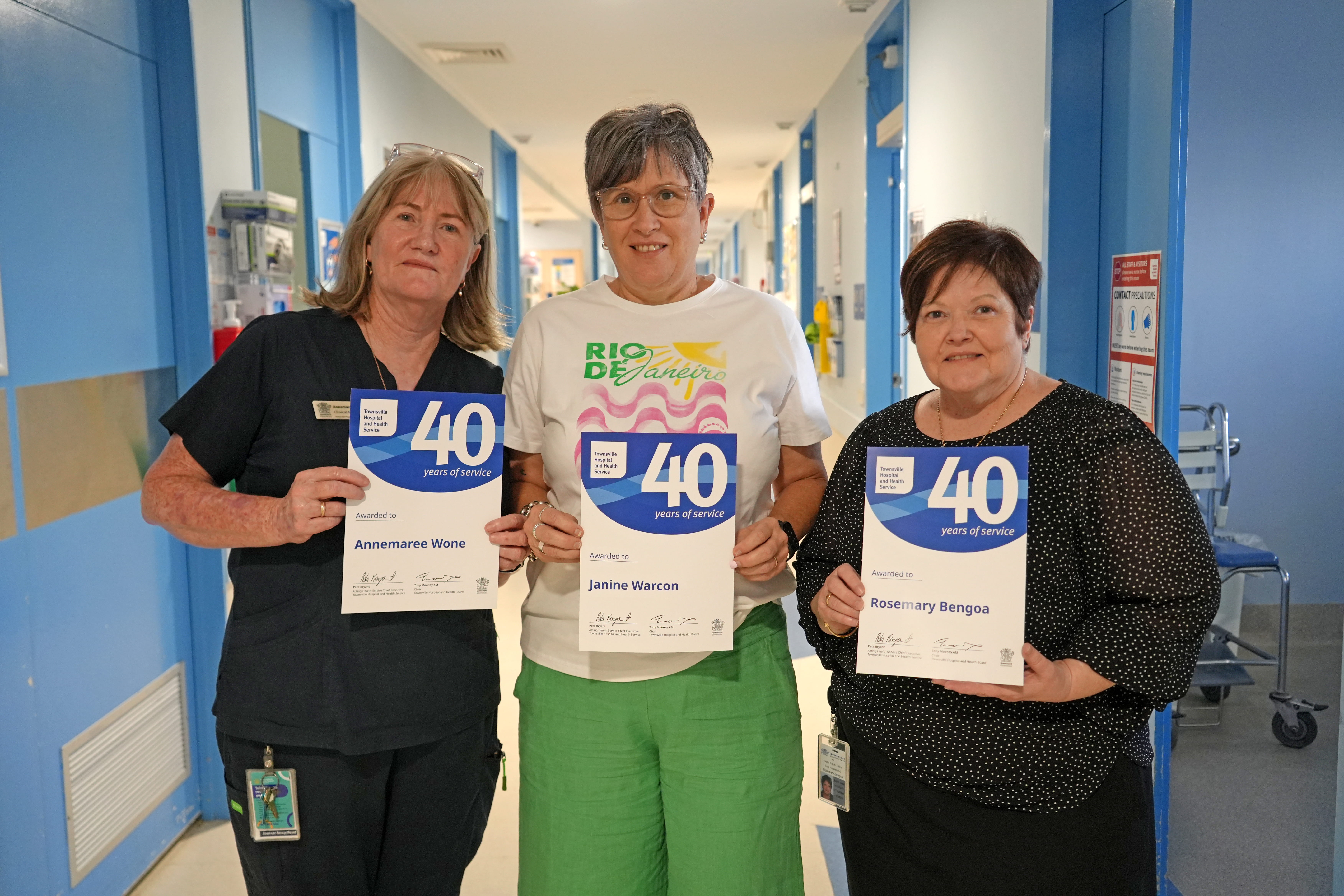
Three Burdekin hospital workers have clocked up 120 years of combined service to the Ayr and Home Hill communities. Rosemary Bengoa, Janine Warcon and Annemaree Wone have each reached 40 years of service, with the milestone recognised at local staff thank-you events. Rosemary began at Ayr Hospital in 1985 in the front office before moving into medical records, accounts payable, assets and finance. Janine started in the Home Hill Hospital kitchen and has since worked across kitchen, cleaning and laundry roles at both Ayr and Home Hill. She later became an orderly before moving into her current role as an assistant in nursing at Home Hill. Annemaree began her career at The Prince Charles Hospital in Brisbane, working as an enrolled nurse for four years before completing her registered nurse training in Townsville. She returned to the Burdekin after the birth of her first child and now works across the dialysis unit and emergency department at Ayr. The three staff members said their connection to the community, colleagues and variety of work had kept them in the health system for four decades. “Your work colleagues and the friendships you make along the way keep you in the role,” Rosemary said. For Janine, working in her own community and caring for patients has been a key part of her career. “We’ve had some funny moments; just the other night one patient was disco dancing in the hallway with me,” she said. Annemaree said working across different areas had kept her career varied. “I work in dialysis, sometimes in the emergency department, and sometimes on the ward, and because I have always worked across multiple areas, I’ve never felt stuck in one place,” she said. The breadth of responsibilities is a common feature of working in rural hospitals, Ms Wone said. “You need to know lots of different things when you work in a rural or remote hospital setting, so we are very busy,” she said. “But even with how much we have all achieved, I can’t believe it’s been 40 years; it feels like it happened overnight.” CAPTION: Rosemary Bengoa, Janine Warcon and Annemaree Wone have each reached 40 years of service, with the milestone recognised at local staff thank-you events. Photo supplied
Read the full story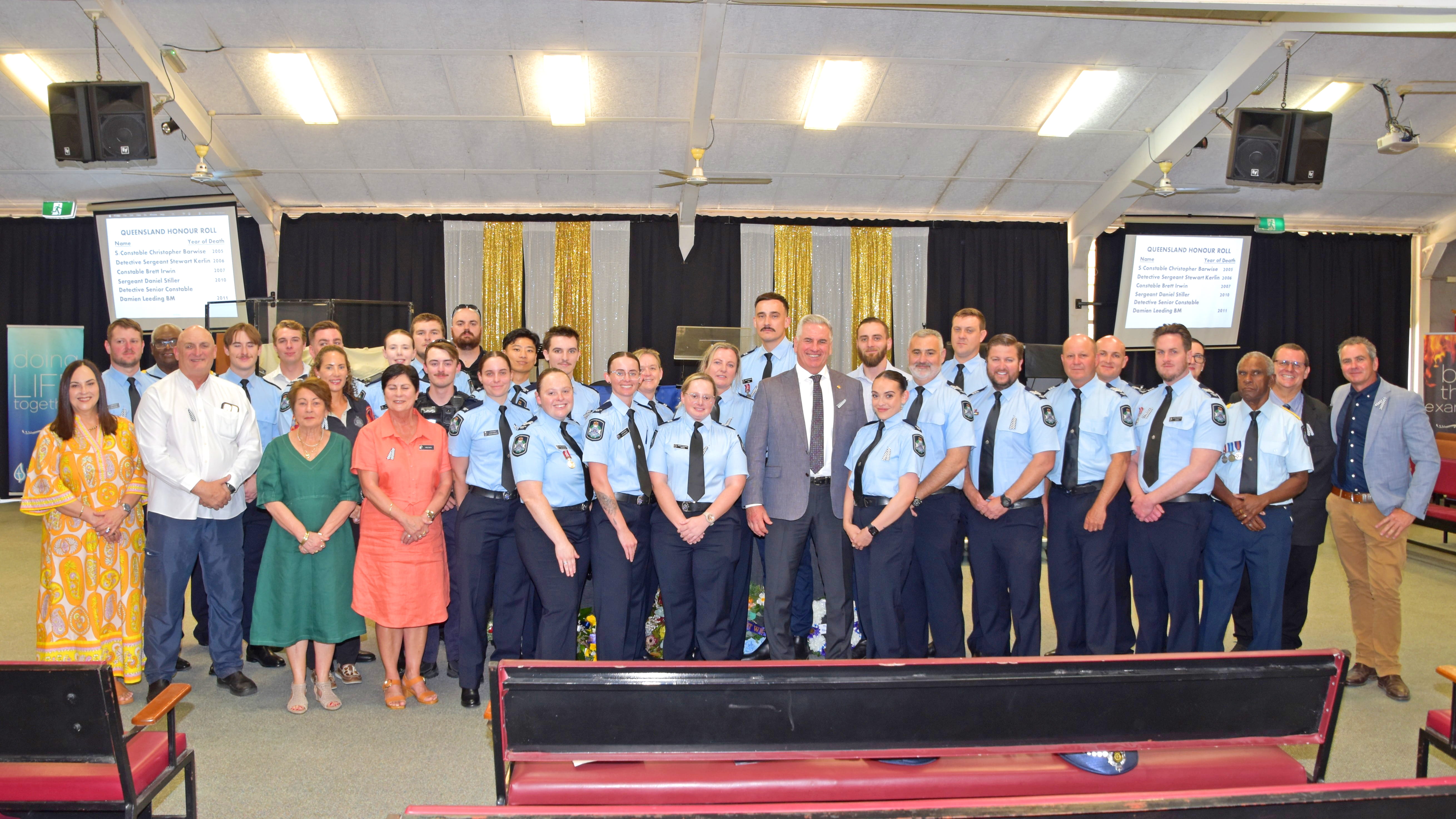
Burdekin police, dignitaries and community groups gathered Tuesday morning to honour officers killed in the line of duty. Photo: David CooperBurdekin community members, local dignitaries, and police gathered at Ayr's Burdekin Community Church on 29th September to commemorate National Police Remembrance Day. The solemn service honoured officers who made the ultimate sacrifice in the line of duty, featuring a wreath-laying ceremony and a reading of the Roll of Honour.Read more here: www.burdekinlife.com/article/burdekin-honours-fallen-officers-on-remembrance-day
Read the full story
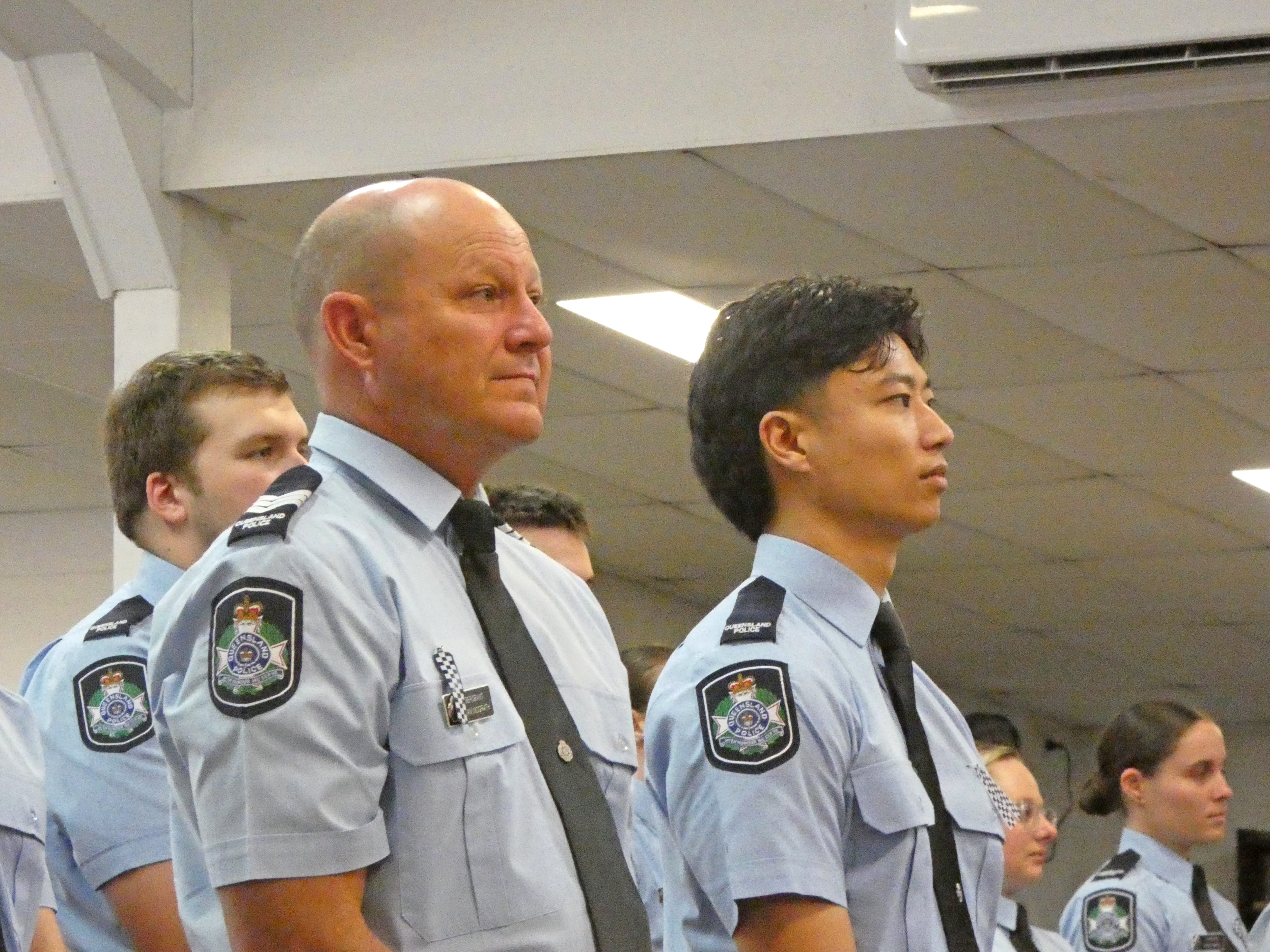
Burdekin police, dignitaries and community groups gathered on Tuesday morning to honour officers killed in the line of duty. Held at the Burdekin Community Church in Ayr, the service formed part of National Police Remembrance Day, observed each year on 29th September. Pastor Peter Holmes, who led the service, said it was a chance to pay tribute to the bravery and service of the fallen. “Someone has to protect those who cannot protect themselves. Someone has to step into the disorder and work to restore order—and that is one of the responsibilities entrusted to our police,” he said. “Today, we honour those who stood. Some stood in circumstances that ultimately cost them their lives, and this day each year ensures that their courage will never be forgotten.” A Police Commissioner’s Address was delivered by Acting Inspector Megan Benson before local officers read the Roll of Honour, commemorating police officers killed in the line of duty. Officers then lit memorial candles, before community groups joined police and dignitaries in laying wreaths. Among dignitaries were Burdekin Shire Council Mayor Pierina Dalle Cort and Member for Burdekin Dale Last, who called it a “privilege” to join local police in their commemorations. “As a former police officer, National Police Remembrance Day is an incredibly important opportunity to remember those officers who lost their lives while serving their community and to show our support to those who continue to keep our communities safe today,” Mr Last said. “Small regional towns like the Burdekin mean our police officers become involved in a variety of facets in our community and it is part of what makes these roles in our small communities so unique.” “It also means that chances to stand with our men and women in blue should not be overlooked.” A morning tea was held in the church hall following the service. CAPTIONS: 1—Burdekin police, dignitaries and community groups gathered Tuesday morning to honour officers killed in the line of duty. 2—Pastor Peter Holmes, who led the service, said it was a chance to pay tribute to the bravery and service of the fallen. 3—Held at the Burdekin Community Church in Ayr, the service formed part of National Police Remembrance Day, observed each year on 29th September. 4—Mayor Pierina Dalle Cort and Deputy Mayor Max Musumeci laid a wreath on behalf of Burdekin Shire Council 5—Among dignitaries was Member for Burdekin Dale Last 6—Local officers read the Roll of Honour, commemorating police officers killed in the line of duty 7—Liaison Officers light memorial candles 8—Senior Sergeant Lisa Shields addresses the audience 9—Community groups joined police and dignitaries in laying wreaths Photos: Jacob Casha
Read the full story

Stepping into the role of Acting Branch Manager at Community Bank Home Hill & Ayr is a proud moment for local Burdekin woman Sally Smith, whose journey with the community bank has been built on passion, dedication and a genuine love for helping people. Photo supplied
The Community Bank Home Hill & Ayr pride’s itself on local connections and a recent appointment has reinforced this philosophy.
Stepping into the role of Acting Branch Manager at Community Bank Home Hill & Ayr is a proud moment for local Burdekin woman Sally Smith, whose journey with the community bank has been built on passion, dedication and a genuine love for helping people.
Having grown up in the Burdekin and now raising her own family in the region, Sally says the opportunity to lead the branch for the next six months is both exciting and deeply meaningful.
“My journey with Community Bank Home Hill & Ayr began nearly seven years ago,” Sally explained.
“I started as a Customer Service Officer with no prior banking experience, but I had a strong desire to learn and a real passion for giving back to the local community.”
Since then, Sally has progressed through several roles including Senior Customer Service Officer and Personal Banker, with each position strengthening her connection to local customers and community organisations.
Now, as Acting Branch Manager, she is focused on continuing the branch’s strong community-first approach while supporting staff and customers alike.
“Community is the heartbeat of this branch,” Sally said.
“I’m looking forward to building new connections, supporting our team and ensuring we continue to provide exceptional service to the people and businesses that make our region thrive.”
Sally says one of the most rewarding parts of working with the community bank is seeing firsthand the impact local banking can have across the Burdekin.
“Over the years, I’ve seen the difference the community bank makes through sponsorships, donations and support for local clubs, events and organisations,”she said.
“Whether it’s supporting local sporting groups, community events or charities, knowing we’re helping strengthen our region is incredibly rewarding.”
She also acknowledged the leadership and support of outgoing Branch Manager Chantel Michielin, saying she feels privileged to continue the work that has been built over recent years.
“I’m incredibly grateful for Chantel’s guidance and support throughout my journey with the bank,” Sally said.
“I look forward to continuing the amazing work she has done while also developing my own leadership skills under the example she has set.”
Outside of work, Sally remains actively involved in local clubs and volunteer activities, something she says keeps her grounded and connected to the community she proudly calls home.
“What makes the Burdekin so special is its people,” she said.
“We have such a strong and generous community spirit here, and I’m proud to be part of an organisation that gives back to the place we all love.”
Supplied by Community Bank Home Hill & Ayr
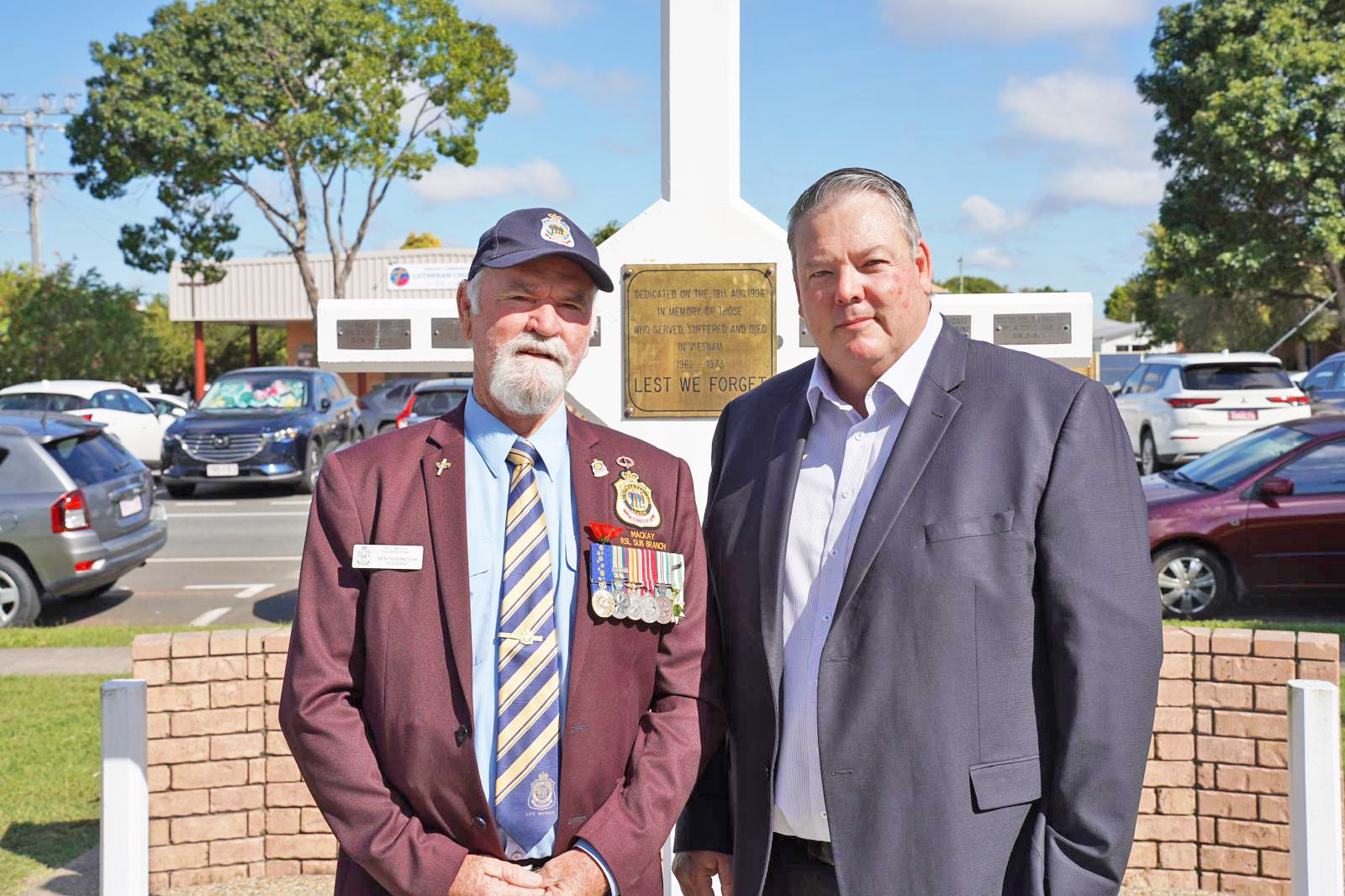
Federal Member for Dawson Andrew Willcox with Mackay RSL Sub-Branch President Ken Higgins OAM. Supplied
Federal Member for Dawson Andrew Willcox has labelled the Australian Government’s budgetary decision to cap the Department of Veterans’ Affairs (DVA) allied health services to an annual limit of $5000 “a profound betrayal of the men and women who have sacrificed so much for our nation.”
The Australian Government stated that the cap was instated to support a larger investment in Veteran health, pledging $169.7 million over five years from 2025–26 (and $58.8 million per year ongoing), to increase allied health provider fees for Veteran Card holders from 1st July 2027.
They call it “the largest investment in veteran allied health provider fees in more than 20 years,” which “will improve choice and availability of services for veterans and families of veterans.”
According to the DVA, the cap will redistribute funds, whilst aiming to target overservicing from providers.
“Under this arrangement, Veteran Card holders will continue to access the treatment they need, while ensuring they are not taken advantage of by providers looking to increase profits through overservicing,” the DVA published.
“DVA is committed to supporting the health and wellbeing of veterans and recognises that health care needs are individual and can change over time. That is why this measure includes flexibility for DVA to fund allied health services above $5,000 amount where there is a valid clinical need, ensuring veterans receive the care they require.”
Mr Willcox has spoken out about the change, calling the cap a “cruel cost-shifting measure.”
“Getting regular help from an exercise physiologist or a psychologist is a massive part of preventing veteran suicide,” he said.
“It gets men and women sorted before they hit rock bottom. Keeping veterans well on the frontline saves lives, and it stops them needing much more expensive medical treatment down the track."
“To see this critical funding degraded is deeply disappointing.”

The vital role small businesses play in the Burdekin’s economy has been celebrated during Small Business Month with businesses able to seize opportunities amidst global uncertainty.
Member for Burdekin Dale Last said Small Business Month had been a chance for residents to show support for the best florists, cafes and pubs as well as industries at the backbone of our region.
“Small business month in Queensland has been a chance to offer a pat on the back to those people willing to take the risk and offer a service benefitting their local community,” Mr Last said.
“While we know our district is largely built on our sugar industry, our small businesses in trades such as manufacturing, retail, mechanical and construction provide the support our major sector needs to keep machinery operational and foster innovation.”
“No matter what corner of the state our small businesses operate in, accessing the tools, knowledge and support they need to grow and adapt means they have the confidence to invest in our communities.”
As a former small business owner, Mr Last said he recognised the unique challenges faced by business owners in the current climate of rising costs and shortage of skilled workers.
“Small Business Month may be over for 2026 however there is always opportunities to support our small businesses in town by shopping local where you can. After all it is many of these small businesses who we look to when our local sporting teams or community groups need sponsorship.”
“At a time when fuel security and the costs of doing business are increasing, supporting our small businesses through grants targeted at industries, business security and innovation demonstrates our support as a state government,”
“There are still plenty of grant opportunities available including the Secure Communities Partnership Grant which offers small businesses grants to improve surveillance and security infrastructure at their premises.”
Fore more information on what support is available visit https://www.business.qld.gov.au/running-business/support-services/financial/grants/secure-communities
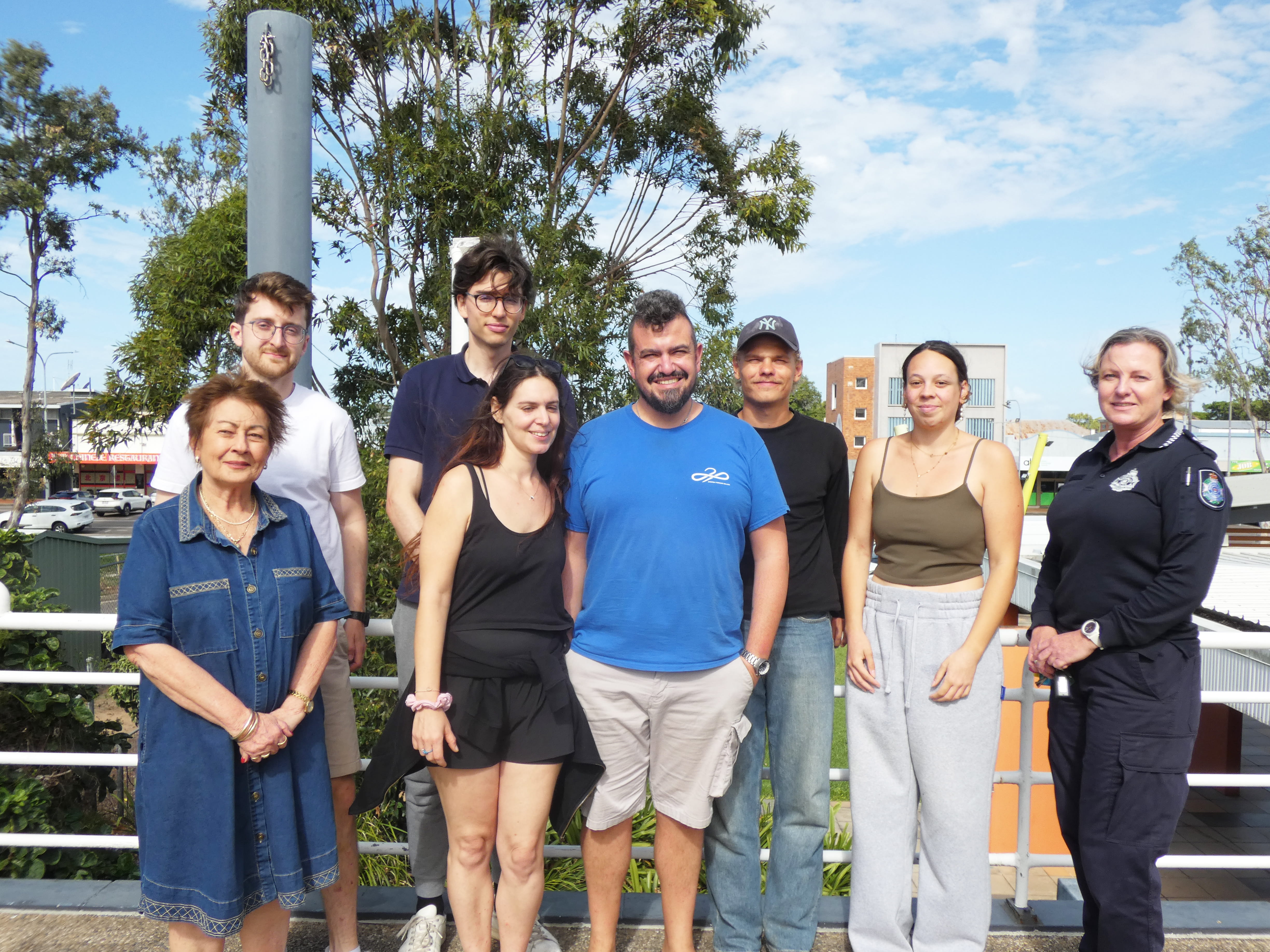
Burdekin Shire Council Mayor Pierina Dalle Cort (left) and Officer in Charge of Ayr Police Station Senior Sergeant Lisa Shields (right) with survivors following the tragic bus rollover near Gumlu. Photo: Jacob Casha
The Burdekin community has rallied to support survivors following last Thursday’s tragic bus rollover near Gumlu. While emergency services managed the confronting crash site, local residents, council staff, and Mayor Pierina Dalle Cort coordinated immediate relief, providing accommodation, meals, and medical aid to the shaken passengers.
A young overseas tourist has died and dozens of passengers were left shaken after a bus crash near Gumlu last Thursday afternoon.
Emergency services were called to the Bruce Highway north of Bowen just before 4pm on 14 May, after a southbound FlixBus travelling from Cairns to Airlie Beach left the roadway and rolled onto its side.
The bus was carrying 29 people at the time of the crash. The driver, a 70-year-old Mackay man, was taken to Bowen Hospital with minor injuries.
Police confirmed 26-year-old Serena Andreatta, a dual Argentina and Italy national, died at the scene.
Several other passengers sustained injuries and were transported to hospitals in Townsville, Ayr and Bowen for treatment.
One passenger who survived the crash told Burdekin Life they became concerned about the bus’s movements in the hours before the rollover.
“I did not feel so safe,” the passenger said, claiming the bus appeared to be “swerving” at times.

The passenger said the concern prompted them to fasten their seatbelt.
They then recalled the bus striking a barrier before rolling, describing chaotic scenes inside the vehicle as passengers and belongings were thrown around the cabin.
Following the crash, passengers were accommodated in Ayr overnight before being cared for at the Burdekin Theatre loft the following day, where they were provided meals prior to continuing their journey south on another bus.
Burdekin Shire Mayor Pierina Dalle Cort attended to check on passengers and assisted in sourcing medication for those affected. Passengers lauded the response efforts of Burdekin Shire Council, Ayr Police, and the wider community.
The Queensland Police Forensic Crash Unit is continuing to investigate the incident.
The incident occurred on the same stretch of highway where a fatal Greyhound bus crash in 2024 claimed three lives.
Superintendent Dean Cavanagh described the crash scene as “very confronting” and praised emergency crews for their rapid response.
“This was a very complex incident, it was a very serious incident, and it was in an isolated area,” he said.
“Although we tragically lost a life, I believe that effort that we saw absolutely went into saving many [more].”
Premier David Crisafulli described the incident as a tragedy, expressing condolences for the woman who died and noting multiple patients were still fighting for life in hospital.
He declined to speculate the cause of the crash, but reiterated his commitment to improving safety on the Bruce Highway.
“It’s a road that means everything to the state, and it’s a road that’s a long way short of where it should be.”
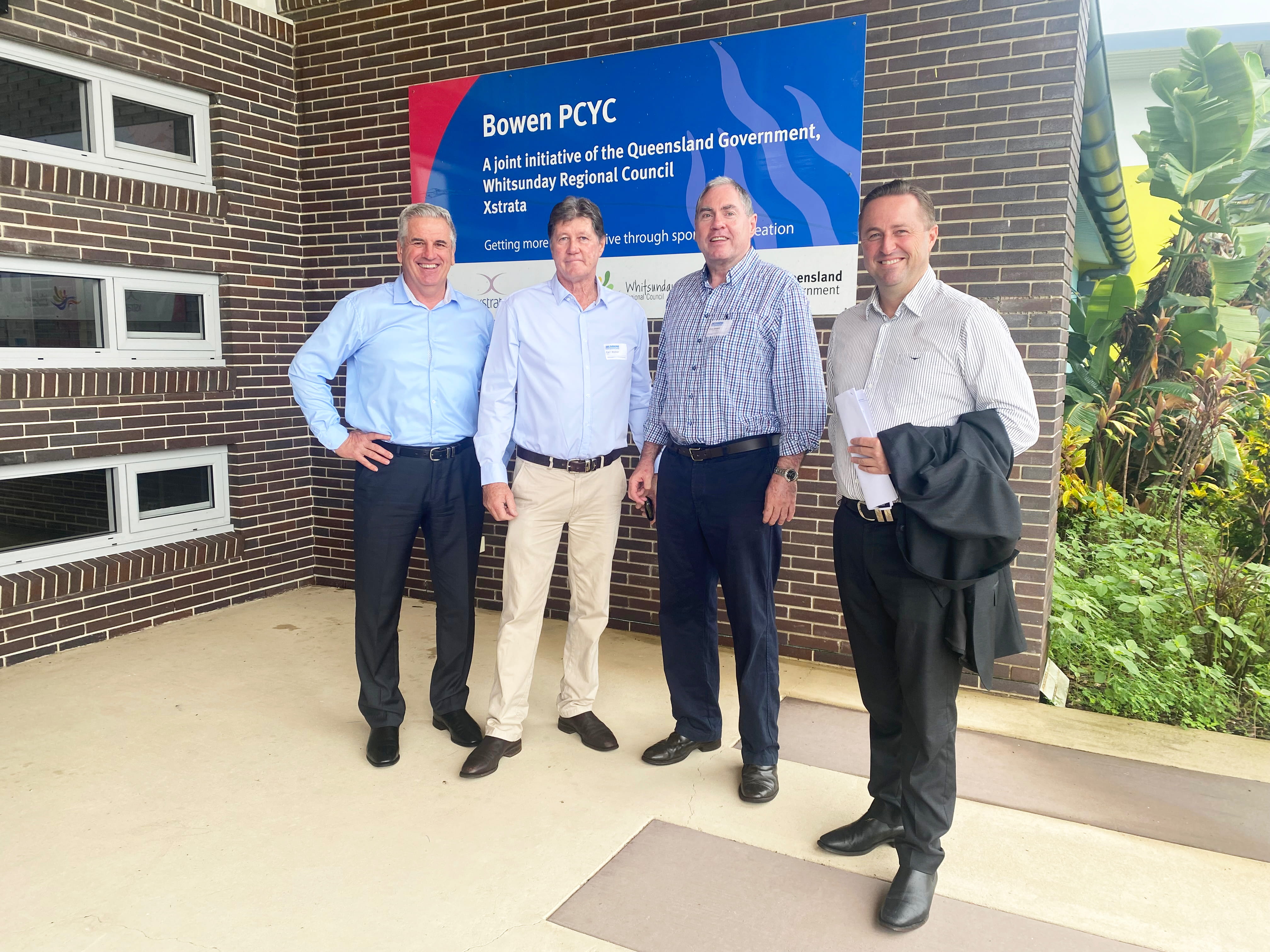
Member for Burdekin, Dale Last MP, President of BGGA, Carl Walker, BPC Director Sean Brown, and Whitsundays Mayor Ry Collins (WRC). Photo supplied
The Bowen Pipeline Company will launch its critical water sales program this week, marking the final major milestone before seeking federal funding for a $750 million generational water infrastructure project.
Opening on 20 May and running until 24 June, the program will serve as the commercial validation required to secure a 50 per cent federal government construction grant.
The privately funded project would involve the construction of a 182-kilometre underground pipeline from the Burdekin River to Bowen, running primarily along the Bruce Highway corridor.
Once operational, the pipeline is anticipated to deliver 100,000 megalitres of water annually, securing a reliable supply for Australia’s largest winter vegetable-growing region.
Bowen Pipeline Company director Sean Brown said the water sales program was the culmination of nearly a decade of local advocacy.
"This is essentially the final hurdle to be jumped prior to the lodging of our Federal Government construction grant application,” Mr Brown said.
"For the Project to be considered by the Federals as a worthy recipient of funding, the region needs to demonstrate both large water demand volumes and significant numbers of water users."
The company has set a minimum water volume of 20 megalitres, which can be shared between adjoining properties.
"In effect, water users will be paying 2025 prices for water that will be delivered in 2030," Mr Brown said.
The project is tracking towards ‘shovel-ready’ status by September 2026, ahead of a federal funding application. The company aims to secure a funding commitment in the May 2027 Federal Budget, with construction slated to begin in September 2027.
Boasting a benefit-cost ratio of 1.27, the pipeline is projected to create 200 jobs during construction and 1,200 permanent roles upon completion. It is expected to drive a $300 million annual economic gain for agriculture and unlock up to $1 billion in additional investment throughlocal green energy initiatives, such as sustainable aviation fuel and green ammonia.
The infrastructure features several industry firsts, including Indigenous project equity and ownership, and a net-zero footprint supported by 30-megawatt solar farms utilising Australian-made Tindo Solar panels.
Mr Brown credited local communities and political leaders, including Premier David Crisafulli, Deputy Premier Jarrod Bleijie, and local MPs and mayors, for progressing the project.
"After 9 years of community effort to get this far, we seek your support for this final push," Mr Brown said.
"This project is being built on the shoulders of the people who not only live in the region but all those who came before us."
Public information and water sales presentations will commence at 4:30 pm at the DPI in Bowen on 20 and 28 May, and at the Ayr ANZAC Memorial Club on 21 and 27 May.

Able Seaman Maritime Logistics Chef Thomas Wiseman stands in the galley of HMAS Toowoomba as the ship sails through the Sulu Sea. Photo supplied
Growing up in Ayr, Queensland, Able Seaman Thomas Wiseman was torn between two paths: following in his father’s footsteps or pursuing a passion inspired by his mother.
“I was going to join the Army because my dad was Army and my grandfather was Army. But my mum is a pastry chef by trade, and my real love of cooking I got from her,” Able Seaman Wiseman said.
Luckily, he not only went to his parents for advice, but actually listened to them.
“Dad suggested I join the Navy. He said in the Navy, chefs cook every day at sea and travel the world,” Able Seaman Wiseman said.
As chef on board HMAS Toowoomba, over the past five months, he’s visited six of Australia’s regional partners and engaged in multiple exercises, activities and operations with allied nations, all while being trained to become a fully qualified chef.
“I went straight from school to enlisting and it was the best decision I have ever made by far. In just two years in the Navy, I’ve visited six countries and done several deployments. I love it,” Able Seaman Wiseman said.
While learning his trade through Navy, he doesn’t have to worry about the competitive, seasonal nature of the hospitality industry and the lack of job security that can sometimes go with it.
“The pay is so much better. In the civilian world, I would be on an apprentice wage. In the Navy, you get paid more and you learn more skills,” Able Seaman Wiseman said.
There’s also the additional duties that allow him to develop the skills and knowledge required to live a well-rounded, adult life.
“On top of being a chef, we have all of our external roles as well. I am a member of the ship’s emergency medical team, so if there’s a medical incident, I could be one of the members to go and respond. It is a great responsibility,” Able Seaman Wiseman said.
Every day, Toowoomba’s chefs produce four meals for the about 200-strong crew, ensuring all watches on board are fuelled to carry out their duties protecting Australia and its interests.
“Without the stokers, the ship doesn’t go anywhere, without the watchkeepers keeping us safe, we can’t do much, so while us chefs are also important in keeping the ship going, the entire crew is one big team,” Able Seaman Wiseman said.
His biggest thanks remain for his parents, whose wise words set him up for life.
“I reckon if my mum saw this in the paper, she’d absolutely love it, frame it and hang it up on the wall,” Able Seaman Wiseman said.
“They’re still up there in Ayr, so Dad, if you’re reading this, I took all the advice you’d given me, I am so glad you convinced me to go Navy, it was the best advice I ever had.”

International leadership consultant and wellness advocate Robyn Taylor joined Burdekin Shire Council staff for March’s Women’s Health Day, sharing insights on resilience, wellbeing and values-based leadership. Photo source: Burdekin Shire Council
Internationally recognised leadership consultant and wellness advocate, Robyn Taylor has worked across Australia, Africa, Europe and the United States, combining modern leadership practices with mindfulness and wellbeing strategies developed through her own personal health journey.
In March, Burdekin Shire Council Chief Executive Officer Matthew Magin invited Ms Taylor to speak at Council’s Women’s Health Day, reflecting the pair’s longstanding commitment to collaborating on projects across regional Queensland spanning a diverse range of industries and specialisations.
“Workplace wellbeing carries more importance in our current times of uncertainty, everyday life seems to present more challenges,” said Ms Taylor.
“A supportive workplace culture, recognising the current challenges, is demonstrated by employers who arrange programs such as the Women’s Health Day.”
Mr Magin echoed Ms Taylor’s sentiments, highlighting the importance of prioritising staff wellbeing and fostering a positive workplace culture across regional organisations.
“I agree that wellness programmes are hugely important for any and all employers to be organising for their staff,” he said.
Ms Taylor said she was delighted to return to the region, fondly recalling previous visits to Ayr, including delivering an International Women’s Day presentation initiated by Lyndy McCathie and the Burdekin Zonta Club.
Drawing on her own experience overcoming a diagnosis of advanced multiple sclerosis decades ago, Ms Taylor’s presentation at Burdekin Shire Council’s Women’s Health Day focused on resilience, mindset and personal wellbeing.
She encouraged participants to take control of unhealthy stress patterns, embrace balance in both work and life, and recognise the value of community connection and regional living, resounding the quote, “it’s not what happens to you, it’s what you do about it” to reframe unbeneficial habits.
“We can reprogram our perspective once we change the way we think about life and how we are managing our own situation,” she said.
“Today are seeking relief from their daily pressures that can manifest in many ways, like feeling overwhelmed by current events, sometimes resulting in insomnia or deteriorating health. In this big picture, it is important that we find balance in the various aspects of our lives, including our jobs.”
Ms Taylor also praised the “Can Do” attitude often found across regional Queensland and encouraged more women to become involved in community organisations such as Burdekin Zonta Club, saying purpose and connection play a vital role in long-term wellbeing.
“I believe appreciating the value of regional life can be a major factor in finding the balance,” she added.
“Ayr is such an attractive country town where living is without the pressures of sitting for hours in traffic, where one can consciously develop and incorporate an exercise program into the daily routine and where one can seek out like-minded people with whom to spend our very precious time.
“Never underestimate the value of the business experience you are gaining in the Burdekin. With today’s expanding and ever- changing technology, regional business and regional careers are just as sophisticated as any to be gained in the crowded, frantic pace of a major city.
“Appreciation and gratitude of our situation are major factors in finding balance. We can train our intellect to work with our perceived challenges and train our bodies with our exercise or gym program, but quite often we don’t realise how important it is to train the mind.”
Ms Taylor said many of the leadership principles being discussed internationally were just as relevant in regional communities like the Burdekin Shire, particularly when it came to creating workplaces where people feel valued, fulfilled and supported. She also spoke about the importance of values-based leadership, mindfulness and wellbeing practices in helping people manage stress and maintain balance in both their professional and personal lives.
Drawing on decades of experience in leadership coaching and wellness, including her internationally recognised Meditating Manager program, Ms Taylor encouraged people to prioritise reflection, self-awareness and personal growth alongside career ambitions.
She said regional communities like the Burdekin offer unique opportunities to build meaningful careers while enjoying a healthier and more balanced lifestyle.
“Be brave, be fearless, don’t allow anyone or anything to deter you in your pursuit of your career goals and ensure those goals are firm,” Ms Taylor advised.
“I am absolutely ga ga about the power of goal setting. Goals will propel you forward to do things you never dreamt you would be able to achieve. Be prepared that the goals may change along the way.”

The St Francis Prep A class took out two first places. Photos supplied.
St Francis Catholic School walked away aggregate winners of the Primary Choral Speaking section at the Burdekin Junior Eisteddfod (BJE), pipping schools from around the region to the prestigious honour.
St Francis students competed across a range of genres, with every class performing both a choir piece and a poem, and students from Years 1–6 also taking part in the Novelty performance.
Students claimed gold in Year 1&2 Choral Novelty/2-Part Primary Schools; Year 3&4 Choral Novelty/2-Part Primary Schools; Prep Choral Novelty/2-Part Primary Schools; Primary Rock Band Group; Prep Choir Novelty; Years 1&2 Choir (Unison); Years 3&4 Choir (Unison); and Primary Vocal Ensemble.
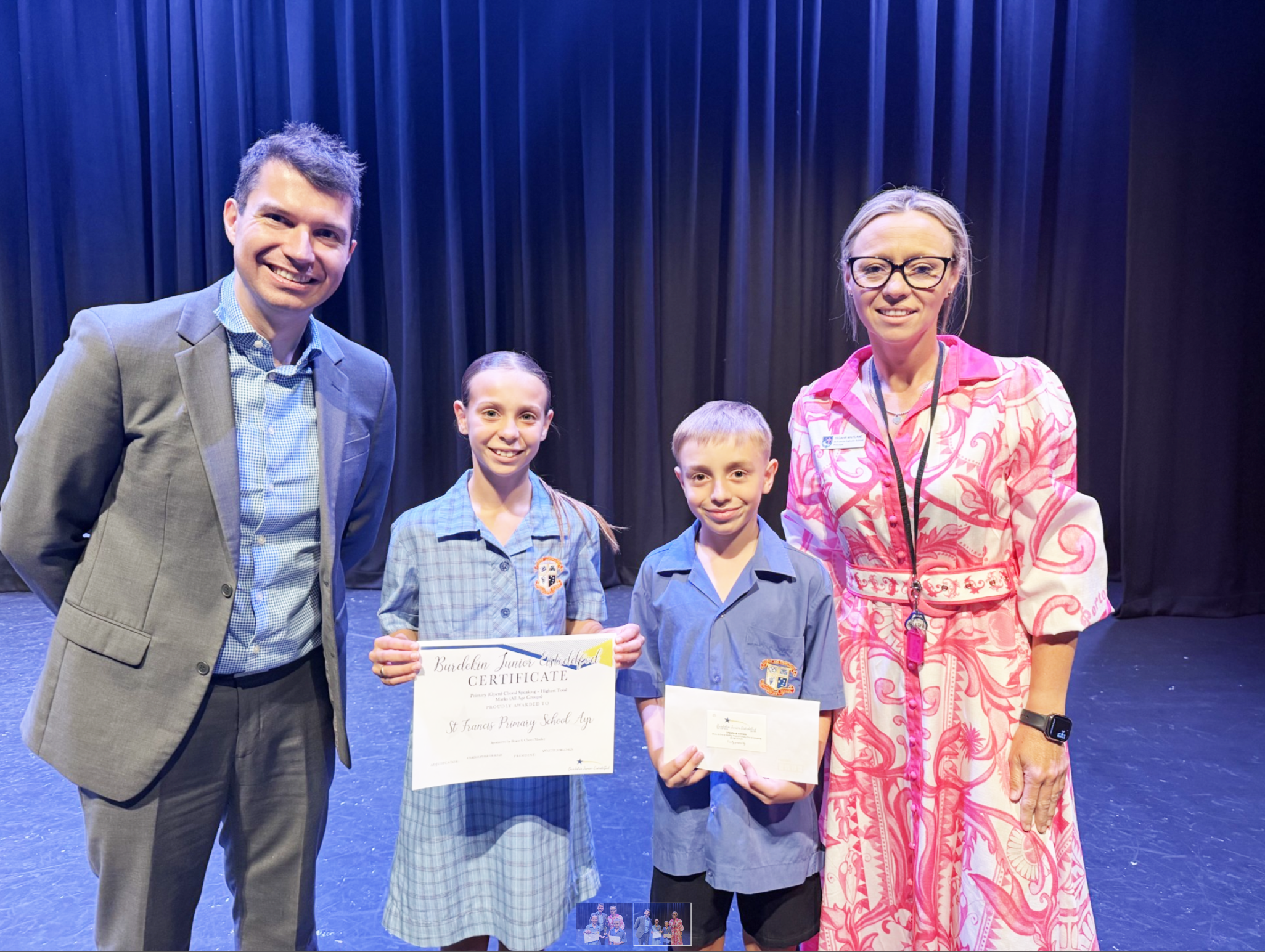
School officials said the BJE success was a testament to the students’ dedication.
“We are extremely proud to have won the Aggregate—an outstanding achievement that reflects the collective effort, talent, and dedication of our whole school community,” said the spokesperson.
“This was a huge undertaking for staff and students alike, and the level of preparation was evident in every performance.”
The result caps off a standout showing for the school, which continues to be a strong presence across Burdekin performing arts competitions.
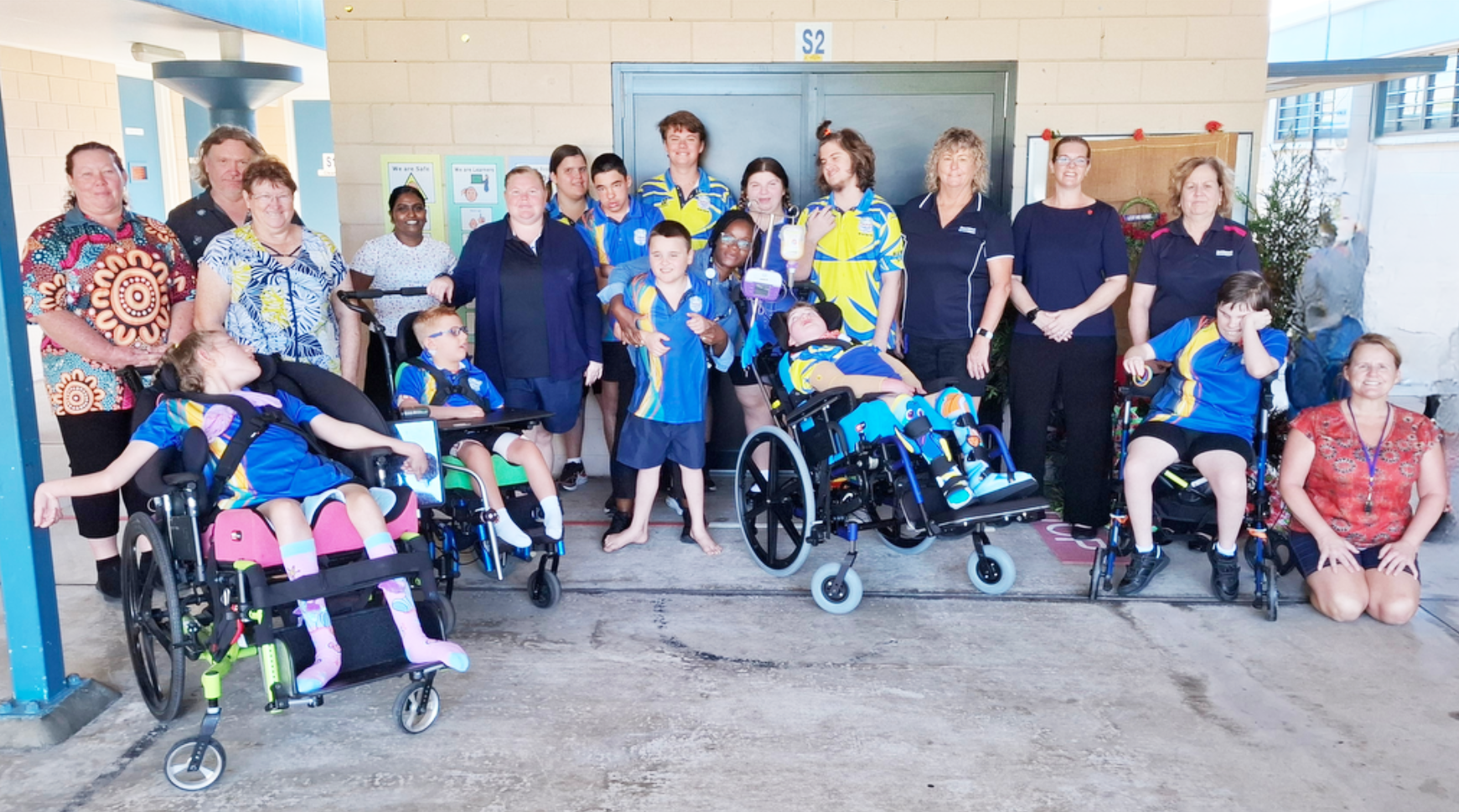
The Burdekin School is a local state school that supports children from the Burdekin district who have intellectual and multiple disabilities. These children have numerous difficulties in accessing learning and education outcomes and often require specialised assistance and/or equipment to aid them in their education journey.
In support of these extra needs, the Burdekin School P & C Association are running a fundraising event that is aimed at raising much needed funds while providing the Burdekin District with a showcase of music over the decades donated by local Ricki Romeo and his talented Attori Entertainers.
The doors will be open at 6:00pm with the show starting at 7.30pm at the Burdekin FC Junior Soccer Hall on Beach Rd. There will be live music, dancing, table seating, disabled access, bar service and nibbles.
The Burdekin School Principal, Claire Cheyne appreciates the support that the Burdekin School P & C Association offers the school and its students, and she welcomes the generous donations by Attori for their Rock the Decades performance and the Burdekin JC for the use their hall facilities.
“Rock the Decades is such a wonderful opportunity for our community to come together, celebrate great music and support the incredible students of Burdekin School,” she said.
“Every day our students show resilience, courage and determination, and events like this help us continue creating opportunities for them to thrive."
There are still plenty of tickets available online at www.trybooking.com/DLN, at the Burdekin School office, 159 Young St, Ayr, or on the night via cash or card. Please support this worthwhile event.
Contributed with thanks to Burdekin School P & C

2026 ASHS School Captain Caitlyn Cheyne is inspiring other young people through her passion for STEM, leadership and community involvement. Photo supplied
Driven by a passion for helping others and creating positive change, Caitlyn Cheyne has dedicated herself to giving back to her community while inspiring other young people to do the same.
Caitlyn has worn many hats over the years and currently serves as a 2026 Ayr State High School (ASHS) School Captain, STEM Ambassador and active member of the Burdekin Shire Youth Council (BSYC); a group she was inspired to join after hearing about the opportunities and community impact from her peers.
“Since being in the BSYC I have volunteered a few times and have had so much fun with it,” said Caitlyn.
“It’s [BSYC] such a kind and welcoming community of young people all interested in a root cause – to give back to our community and show our community that young people and their opinions shouldn't be ignored. Youth Council has allowed me to have a voice in our world and give back in ways I didn't know I was able to.”
Alongside her community involvement, Caitlyn has also immersed herself in a range of Science, Technology, Engineering and Mathematics (STEM) opportunities and leadership programs offered internally through ASHS. Caitlyn’s passion for volunteering and leadership began long before joining BSYC, first flourishing when she became involved in ASHS’ Interact Club in Year 7.
“This was honestly a space where I learned how to handle money, work in teams, and saw how fulfilled I could be when working with my community. I continued in both Interact and the Student Council through my entire schooling and I don't regret any of it, it has been amazing!”
A self-described “STEM lover through and through”, Caitlyn first stepped into the space as a Year 10 student after being selected for the Department of Education’s STEM Girl Power Camp, earning the role of her school’s STEM Ambassador.
“It was the place where I learned there was a community of supportive people all interested in everything I love,” she said.
Since then, she has participated in the SPARQ-ed biomedical science program at the Translational Research Institute in Brisbane and attended the prestigious National Youth Science Forum earlier this year.
Outside of academics, Caitlyn has remained heavily involved in the community through the Lower Burdekin Scout Group and of course, BSYC, with some of her favourite volunteer work involving local children’s programs and hands-on STEM activities.
“I am very passionate about community involvement, inclusion, and providing support for people,” Caitlyn said.
“As a neurodivergent young person, I know that sometimes getting the help you actually need isn't as easy as some might think and its very important to me that young people with disabilities, mental health concerns, or anyone struggling is given the tools to succeed.”
After years of balancing leadership, volunteering and STEM opportunities, Caitlun hopes to inspire other young people to back themselves, and give new experiences a go, no matter what.
“Apply for everything! You will never know unless you try! It’s better to try and fail, then to have never tried at all,” she said.
“The only reason I have been able to do all the things I have done is because I threw my name into the hat. I am so happy I have given everything I have wanted a go!”
However, Caitlyn said it’s equally important for young people to recognise their limits and avoid overcommitting themselves.
“Don’t overload yourself,” she said.
“It’s something I have always struggled with – trying to juggle 100 different things when I reached capacity at 70. If you overwork yourself, you can’t do all the amazing things you’re capable of.”
With a strong passion for environmental conservation, community advocacy and lifelong learning, Caitlyn hopes to study ecology and teaching at university in the future, while continuing to pursue opportunities such as the National Youth Parliament to further expand her knowledge and create positive change.

Families considering their child’s secondary education are invited to experience all that Burdekin Catholic High School has to offer at the upcoming BCHS Twilight Open Evening on Monday 25 May from 4.00pm to 6.30pm.
Choosing the right high school is one of the most important decisions a family can make, and Principal and staff at BCHS encourage parents and students to take the opportunity to visit schools in person before making that decision.
“A website or brochure can only tell part of the story,” Lorraine Wolffe, Principal said.
“Walking through the school, meeting our staff and students, and experiencing the atmosphere firsthand helps families understand what makes a school the right fit for their child.”
The Twilight Open Evening will provide families with the opportunity to tour the school, explore specialist learning areas and facilities, and speak directly with teachers about academic programs, student wellbeing and co-curricular opportunities.
Current BCHS students will also lead guided tours throughout the evening, giving prospective families an authentic insight into daily life at the school. Families will be able to hear directly from students about their experiences, friendships, learning opportunities and school spirit.
Principal presentations during the evening will outline the vision and values of BCHS, as well as the school’s commitment to supporting every student to grow academically, spiritually and personally.
The event is open not only to families with students entering Year 7 next year, but to anyone considering a high school pathway at any stage of their child’s education.
“We warmly welcome all families who may be exploring schooling options now or into the future,” the Principal said.
“Our doors are always open to those wanting to learn more about our community.”
BCHS prides itself on providing a supportive and inclusive environment where students are known, valued and encouraged to achieve their personal best.
The Twilight Open Evening will be held on Monday 25 May from 4.00pm to 6.30pm at Burdekin Catholic High School. Families are encouraged to attend and discover firsthand what makes BCHS a thriving learning community.
Contributed with thanks to BCHS

Tec-NQ delivers specialised training across a range of trade and vocational areas, like carpentry and construction. Photo credit: Tec-NQ
Tec-NQ is a leading provider of senior education, vocational training, and boarding opportunities in North Queensland, creating pathways for students to succeed both in the classroom and in industry. With a strong focus on hands-on learning, Tec-NQ offers students the opportunity to gain practical skills while completing their education in a supportive and industry-focused environment.
Located in Townsville, Tec-NQ delivers specialised training across a range of trade and vocational areas including engineering, automotive, plumbing, construction and electrical. The organisation prides itself on preparing students for real-world careers by working closely with local industries and employers to create work experience, apprenticeship, and employment opportunities.
It’s home to a growing boarding community, welcoming students from regional and remote areas across Queensland. The purpose-built boarding facilities provide students with a safe, supportive, and inclusive environment while they pursue their education and training goals.
Beyond the classroom and workshops, Tec-NQ places a strong emphasis on community involvement, student wellbeing, and personal growth. From sporting teams and leadership opportunities to community events and industry partnerships, students are encouraged to build confidence, resilience, and lifelong skills.
With a commitment to innovation, opportunity, and student success, Tec-NQ continues to empower young people to achieve their goals and build successful futures.

For nearly two decades, Direct Wholesale Tyres has built a solid reputation as one of North Queensland’s leading suppliers for the transport and construction industries. Photo supplied
For nearly two decades, Direct Wholesale Tyres has built a solid reputation as one of North Queensland’s leading suppliers for the transport and construction industries.
Established in 2007, the business supplies and fits tyres for trucks, trailers, earthmovers, agricultural machinery, 4x4s, passenger vehicles and mowers etc.As well as the supply of tracks. It operates on a straightforward model focused on quality products, quality service and realistic prices.
Operating from three key locations—Roseneath, 29–33 Curley Circuit in the Townsville Distribution Precinct; Charters Towers, 4 Moores Street Mosman Park; and Cloncurry, Lot 3 Hensley Drive. Its distribution network of bulk delivery includes west to Mt Isa, north to Mareebaand south to Emerald and surrounding areas. Supporting fleets where downtime is not an option.
The Roseneath facility features triple road train access, fitting of all tyres and wheel alignments for cars, 4WDs and light trucks up to 8 tonnes. Charters Towers also provides wheel alignment services for cars and 4WDs.
Fleet support and service fitting remain central to the operation, with the capacity to manage large orders efficiently while keeping vehicles on the road and downtime to a minimum.
Carrying trusted brands including Jinyu, Hankook, Toyo, Michelin, Longmarch, Aplus, Triangle etc. Direct Wholesale Tyres continues to position itself as a dependable regional supplier supporting industry across northern Australia.

Northern Heavy Machinery can help you find the right machine for your job. Photo supplied
Northern Heavy Machinery is a Townsville-based heavy equipment supplier and service provider working across North and Central Queensland. The team supports industries such as construction, mining, agriculture and earthmoving by providing machinery, parts and servicing that help keep operations running smoothly in tough regional conditions. At its core, the business is focused on practical support, reliability and building long-term relationships with customers who rely on their equipment every day.
Rather than simply selling machinery, the team takes a hands-on approach, helping customers find the right equipment for the job and backing it up with servicing, repairs and parts support. This includes everything from heavy earthmoving machines through to smaller utility equipment, with a focus on keeping downtime to a minimum and productivity high.
Northern Heavy Machinery is also looking forward to connecting with the community at the Rotary NQ Field Day 2026, where the team will be on site to meet attendees, answer questions and showcase a range of their machinery. It is a chance for local operators, contractors and farmers to see the equipment up close, talk directly with the people who service and supply it, and get practical advice tailored to their needs. Having machines on display also gives visitors a clearer understanding of what is available and how it performs in real working conditions.
With a strong regional presence and a commitment to supporting North Queensland industries, Northern Heavy Machinery continues to focus on being a trusted partner both on the job site and within the wider community.

Wilmar Sugar and Renewables has confirmed start dates for the 2026 sugar production season, with mills across the Burdekin, Proserpine and Plane Creek regions preparing to begin crushing in early June.
The company’s four Burdekin mills; Invicta, Pioneer, Kalamia and Inkerman, along with Plane Creek Mill at Sarina, are scheduled to begin operations on 2 June. Proserpine Mill and the Herbert region’s Victoria and Macknade mills will follow on 9 June.
General Manager Operations James Wallace said the start dates were determined by crop forecasts, factory readiness and expected paddock conditions.
“We've got a bigger crop than last year, and we're keen to get the season under way to minimise the risk of a late finish and the associated challenges of pushing into the wet season,” Mr Wallace said.
“Our goal is to have all of our factories crushed out by mid-to-late November.”
Wilmar is forecasting a statewide crop of 15.19 million tonnes for the 2026 season, almost one million tonnes higher than last year’s total throughput of 14.23 million tonnes.
Regional estimates include 7.97 million tonnes in the Burdekin, 1.67 million tonnes in Proserpine and 1.45 million tonnes at Plane Creek.
General Manager Engineering Istvan Torok said maintenance and upgrade works across factories, rail networks and rolling stock were nearing completion ahead of the season start.
General Manager Cane Supply and Grower Relations Dave Zeller said loco driver training was already under way and reminded motorists to remain vigilant around cane rail crossings.
“We’re reminding residents and visitors to take extra care on the roads and look out for cane trains,” Mr Zeller said.
Publishers Indemnity. Any individual or entity that places advertising, supplies copy material, or submits editorial content to Core Life Publishing agrees and undertakes to ensure that all such material:- Does not infringe upon any copyright, trademark, or other intellectual property rights;- Is free from any content that could be considered defamatory, libelous, or slanderous;- Does not infringe upon any rights related to privacy or breach of confidence;- Contains no obscene, indecent, or otherwise unlawful material;- Complies fully with the Trade Practices Act and all other applicable laws, regulations, or statutes.Furthermore, by submitting or placing such material, these individuals or entities agree to indemnify and hold harmless the publisher, Core Publishing and Events Pty Ltd, and/or its agents from and against any and all investigations, claims, demands, liabilities, damages, costs, or judgments arising out of or in connection with the material provided. All material is believed to be accurate at the time of printing and remains the copyright of Core Publishing and Events Pty Ltd.
© 2026 Life Publishing Group Pty Ltd.
