
Independently Owned, Locally Grown, Community Loved
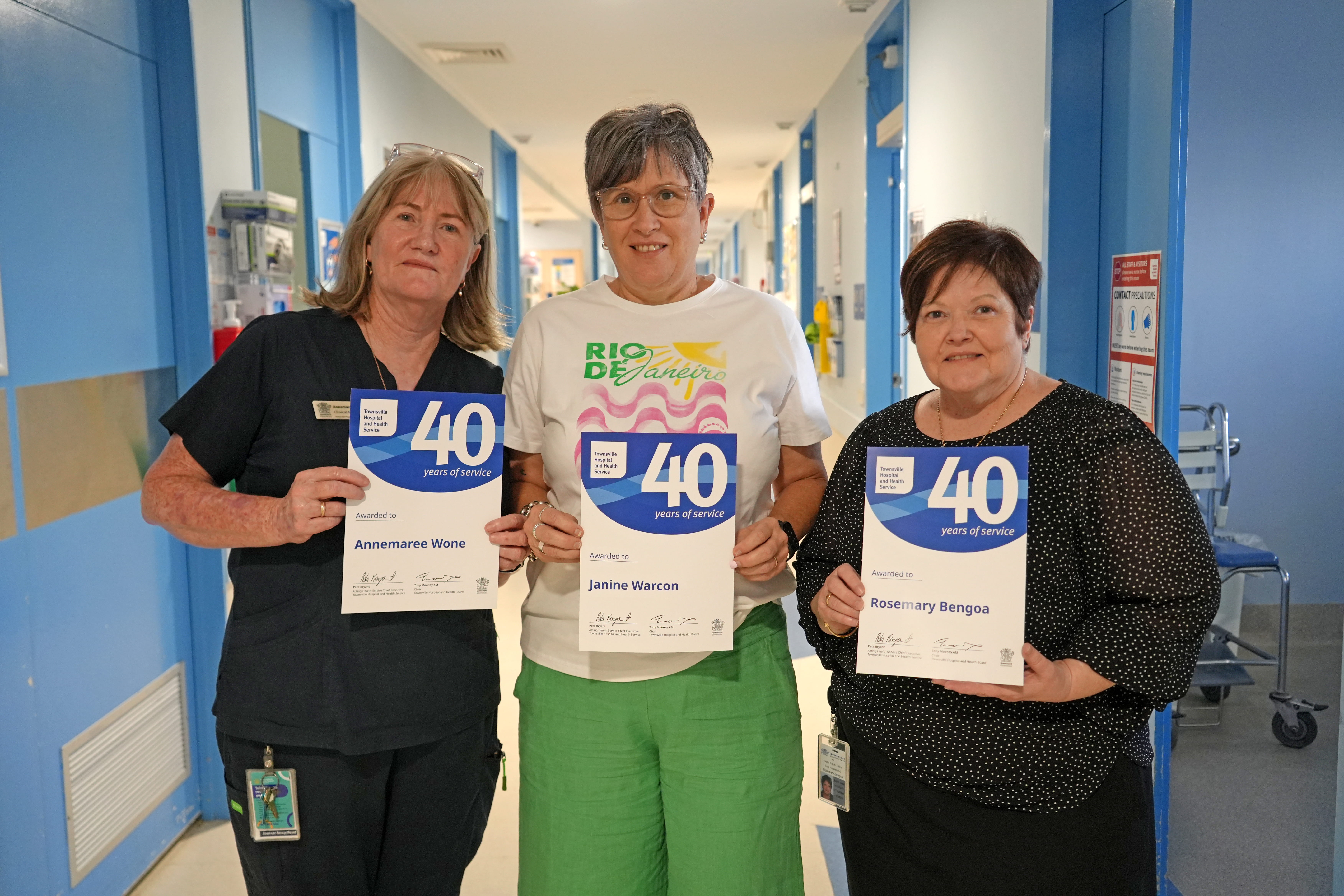
Three Burdekin hospital workers have clocked up 120 years of combined service to the Ayr and Home Hill communities. Rosemary Bengoa, Janine Warcon and Annemaree Wone have each reached 40 years of service, with the milestone recognised at local staff thank-you events. Rosemary began at Ayr Hospital in 1985 in the front office before moving into medical records, accounts payable, assets and finance. Janine started in the Home Hill Hospital kitchen and has since worked across kitchen, cleaning and laundry roles at both Ayr and Home Hill. She later became an orderly before moving into her current role as an assistant in nursing at Home Hill. Annemaree began her career at The Prince Charles Hospital in Brisbane, working as an enrolled nurse for four years before completing her registered nurse training in Townsville. She returned to the Burdekin after the birth of her first child and now works across the dialysis unit and emergency department at Ayr. The three staff members said their connection to the community, colleagues and variety of work had kept them in the health system for four decades. “Your work colleagues and the friendships you make along the way keep you in the role,” Rosemary said. For Janine, working in her own community and caring for patients has been a key part of her career. “We’ve had some funny moments; just the other night one patient was disco dancing in the hallway with me,” she said. Annemaree said working across different areas had kept her career varied. “I work in dialysis, sometimes in the emergency department, and sometimes on the ward, and because I have always worked across multiple areas, I’ve never felt stuck in one place,” she said. The breadth of responsibilities is a common feature of working in rural hospitals, Ms Wone said. “You need to know lots of different things when you work in a rural or remote hospital setting, so we are very busy,” she said. “But even with how much we have all achieved, I can’t believe it’s been 40 years; it feels like it happened overnight.” CAPTION: Rosemary Bengoa, Janine Warcon and Annemaree Wone have each reached 40 years of service, with the milestone recognised at local staff thank-you events. Photo supplied
Read the full story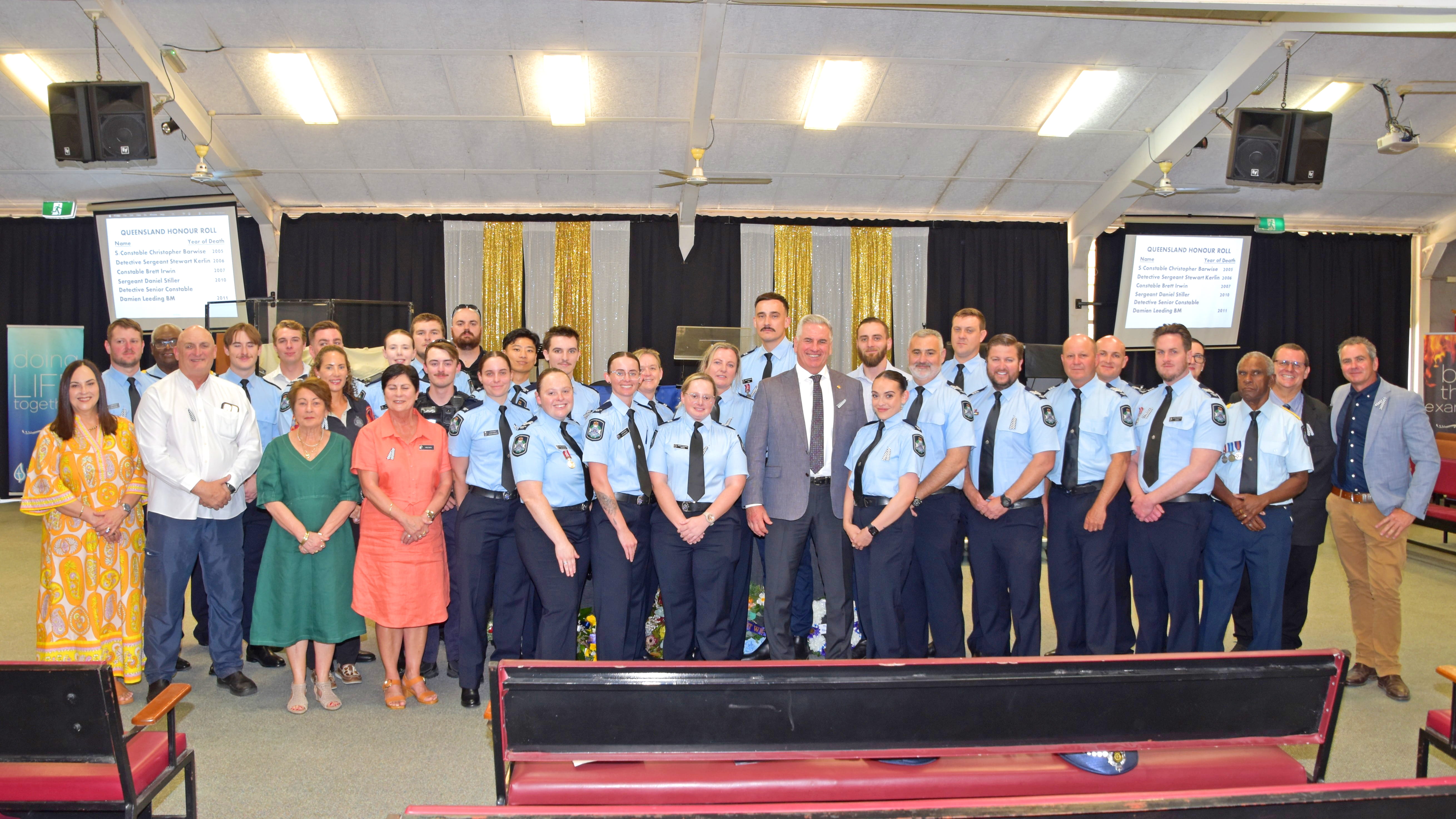
Burdekin police, dignitaries and community groups gathered Tuesday morning to honour officers killed in the line of duty. Photo: David CooperBurdekin community members, local dignitaries, and police gathered at Ayr's Burdekin Community Church on 29th September to commemorate National Police Remembrance Day. The solemn service honoured officers who made the ultimate sacrifice in the line of duty, featuring a wreath-laying ceremony and a reading of the Roll of Honour.Read more here: www.burdekinlife.com/article/burdekin-honours-fallen-officers-on-remembrance-day
Read the full story
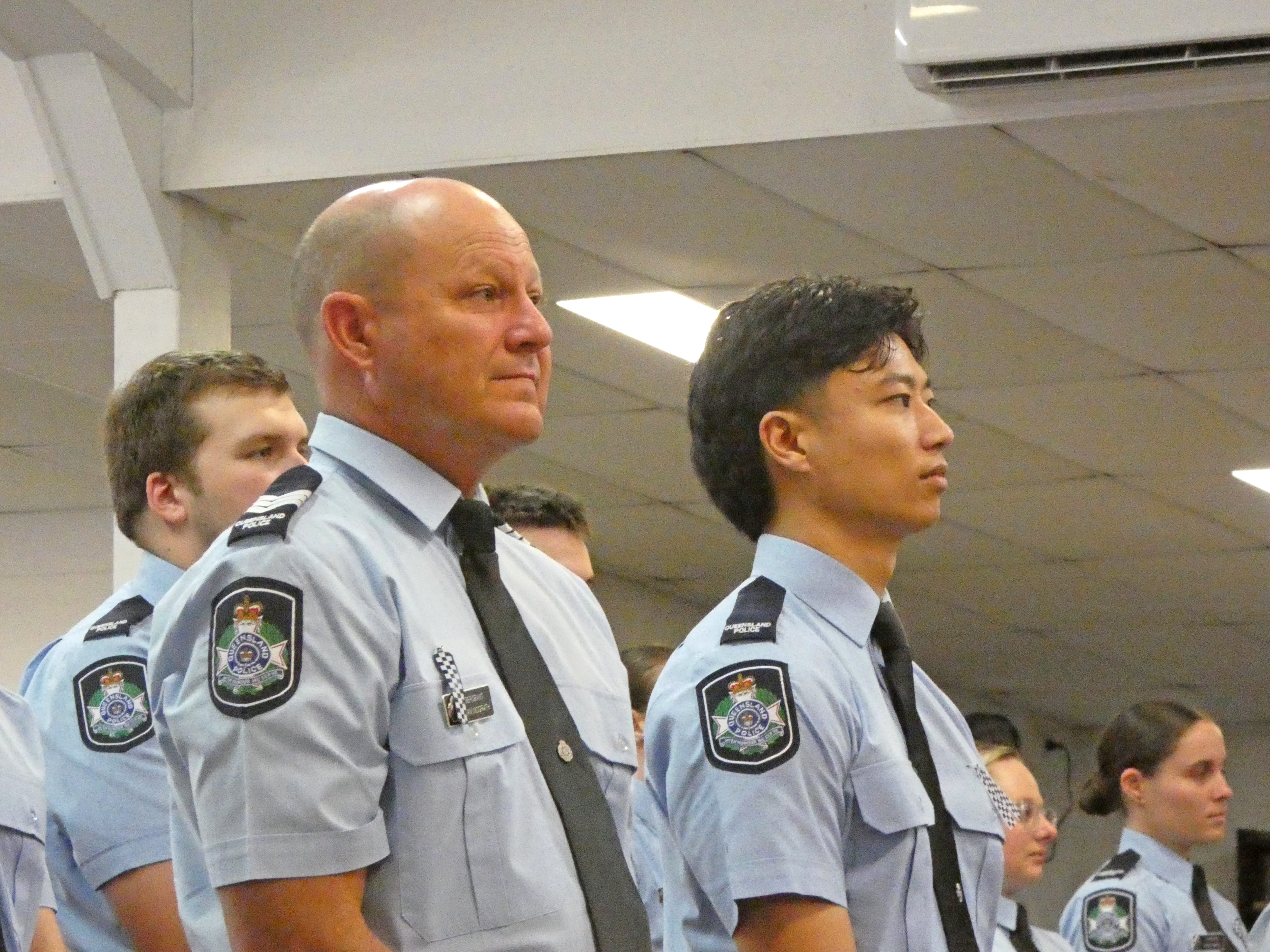
Burdekin police, dignitaries and community groups gathered on Tuesday morning to honour officers killed in the line of duty. Held at the Burdekin Community Church in Ayr, the service formed part of National Police Remembrance Day, observed each year on 29th September. Pastor Peter Holmes, who led the service, said it was a chance to pay tribute to the bravery and service of the fallen. “Someone has to protect those who cannot protect themselves. Someone has to step into the disorder and work to restore order—and that is one of the responsibilities entrusted to our police,” he said. “Today, we honour those who stood. Some stood in circumstances that ultimately cost them their lives, and this day each year ensures that their courage will never be forgotten.” A Police Commissioner’s Address was delivered by Acting Inspector Megan Benson before local officers read the Roll of Honour, commemorating police officers killed in the line of duty. Officers then lit memorial candles, before community groups joined police and dignitaries in laying wreaths. Among dignitaries were Burdekin Shire Council Mayor Pierina Dalle Cort and Member for Burdekin Dale Last, who called it a “privilege” to join local police in their commemorations. “As a former police officer, National Police Remembrance Day is an incredibly important opportunity to remember those officers who lost their lives while serving their community and to show our support to those who continue to keep our communities safe today,” Mr Last said. “Small regional towns like the Burdekin mean our police officers become involved in a variety of facets in our community and it is part of what makes these roles in our small communities so unique.” “It also means that chances to stand with our men and women in blue should not be overlooked.” A morning tea was held in the church hall following the service. CAPTIONS: 1—Burdekin police, dignitaries and community groups gathered Tuesday morning to honour officers killed in the line of duty. 2—Pastor Peter Holmes, who led the service, said it was a chance to pay tribute to the bravery and service of the fallen. 3—Held at the Burdekin Community Church in Ayr, the service formed part of National Police Remembrance Day, observed each year on 29th September. 4—Mayor Pierina Dalle Cort and Deputy Mayor Max Musumeci laid a wreath on behalf of Burdekin Shire Council 5—Among dignitaries was Member for Burdekin Dale Last 6—Local officers read the Roll of Honour, commemorating police officers killed in the line of duty 7—Liaison Officers light memorial candles 8—Senior Sergeant Lisa Shields addresses the audience 9—Community groups joined police and dignitaries in laying wreaths Photos: Jacob Casha
Read the full story
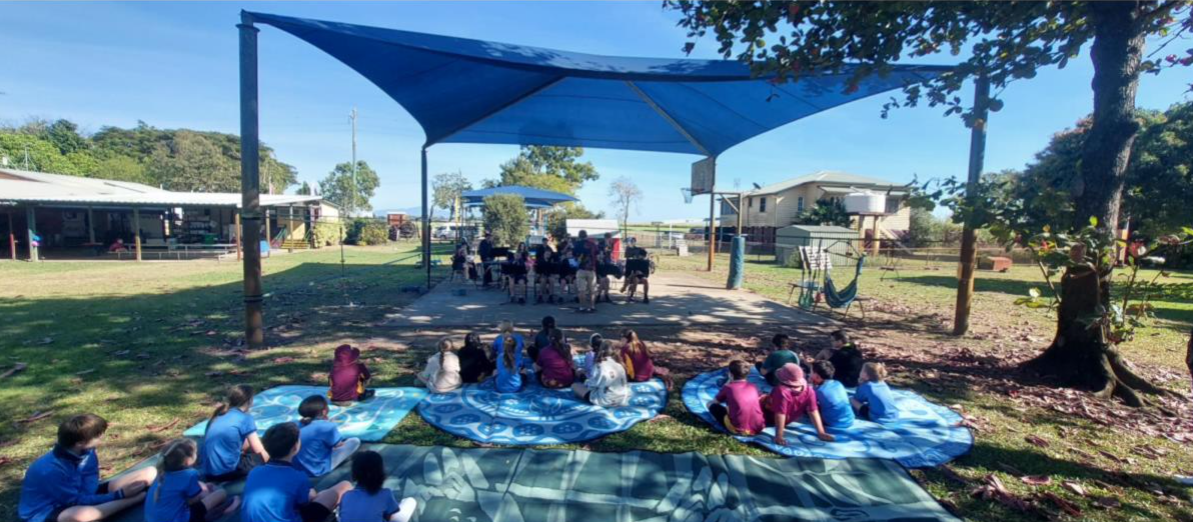
The William Ross State High School Stage Band stopped at Maidavale State Primary School to perform for a combined audience of students from Maidavale State School, Airville State School and Brandon State School. Photo supplied
Contributed by Burdekin Small Schools
On Friday, 31st July, The William Ross State High School Stage Band travelled to Mackay to participate in the annual Central Queensland University Jazz Festival. On the way, the band stopped at Maidavale State Primary School to perform for a combined audience of students from Maidavale State School, Airville State School and Brandon State School, all small rural schools in the Burdekin area.
In a delightful outdoor setting under the huge rain trees in the grounds of Maidavale school, the William Ross Stage Band performed a selection of jazz pieces plus presenting introductions to the various instruments and what they sounded like to a very enthusiastic and attentive audience of students from prep to year six, along with staff from the three schools.
The William Ross students and staff were very positive about the event and thoroughly enjoyed themselves. The concert also gave them the opportunity to experience an outdoor performance- the breezes, the wild birds in the background and the school’s pet chickens wandering over for a look!
The event was organised by passionate and dedicated advocate for The Arts, Ms Rose Rush, HOD of The Arts and Languages and Music Co-ordinator at William Ross High, (and former Maidavale student), to extend opportunities to experience live music for rural students and give band members real-life performance opportunities outside the usual, more formal settings.
Also, it is an opportunity to inspire young students to become involved in music as well as inspiring band members to use their music skills to bring joy to as wide an audience as possible and to continue their music studies as a lifelong skill.
The concert was led by Band Master Mr. Barrie Edwards and also playing with the band was Ms Kelly Clarke-Flesser. Both are Instrumental Teachers for the Townsville Cluster of which William Ross is part. Both are also passionate advocates and tireless workers for Music and The Arts in State Schools.
Many thanks for the keen support of the project by the principals of the small schools involved: Host Principal, Mrs. Erin Alloway, Principal of Airville, Mrs. Marian Bugeja and Principal of Brandon, Ms Annette Wellington. Also, many thanks to Brad Keioskie, Head of Curriculum for Small Schools who keenly supported the initiative and transported the Airville and Brandon students to the venue.
Thanks also to East Ayr State School for the loan of music stands for the event. William Ross is very keen to continue this initiative, and we are looking forward to them performing again for more Burdekin small schools on their 2027 tour.
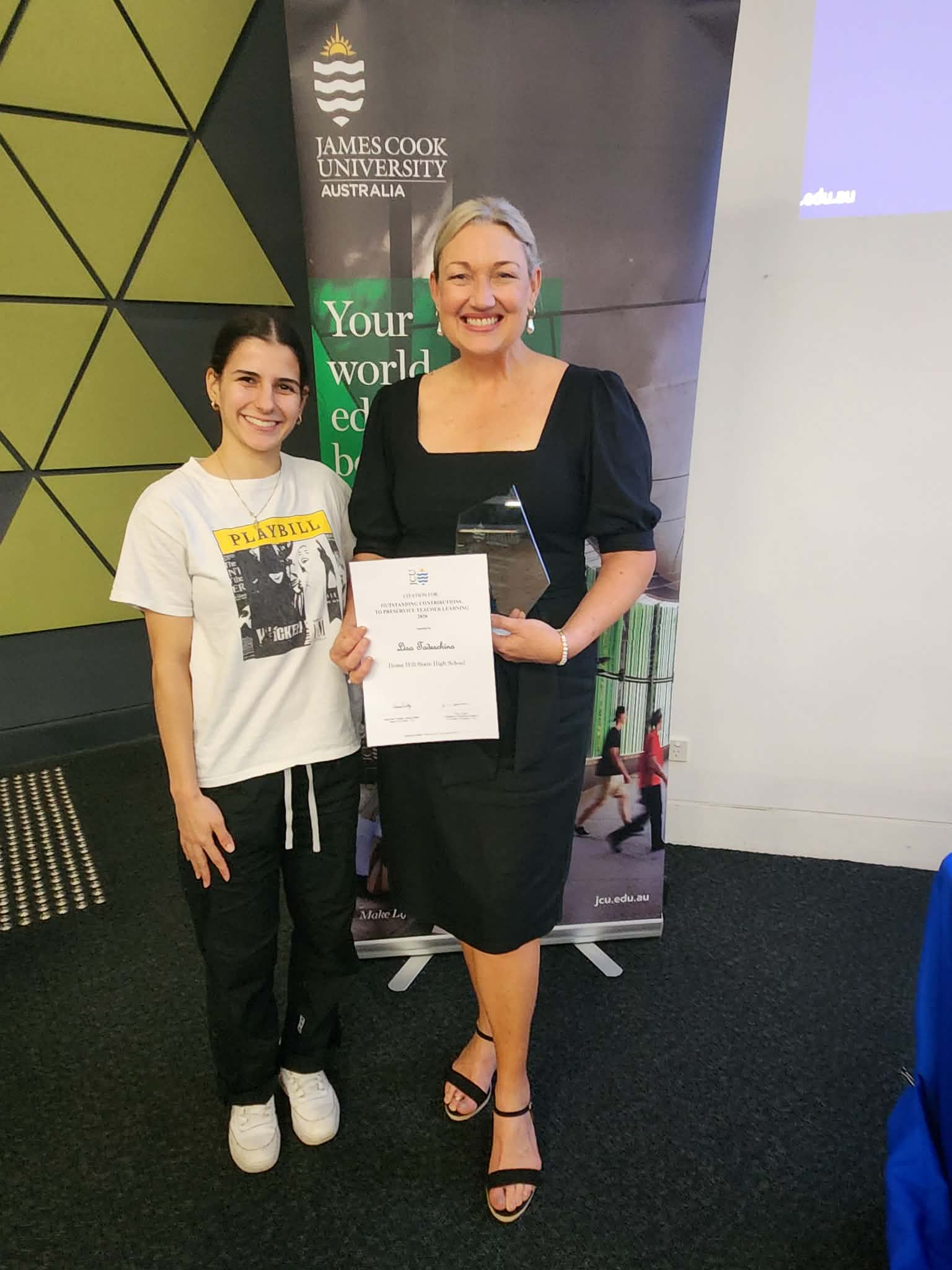
The award recognised Mrs Todeschino's (right) work with Pre-Service Teacher Jennifer Fotinos (left). Photos supplied
Home Hill State High School teacher Lisa Todeschino was rewarded for “exceptional mentorship” at a James Cook University ceremony earlier this month, taking home a Site-Based Teacher Educator Award.
The award, presented at JCU’s Townsville campus on 11th September, recognised Mrs Todeschino's work with Pre-Service Teacher Jennifer Fotinos, who nominated the long-time educator and mentor after undertaking weeks of placement under her tutelage.
Mrs Todeschino said she felt “honoured” by the nomination, crediting her colleagues and close ones for the success.
“In my 32 years as a teacher, I’ve been fortunate to learn from and work alongside so many wonderful students, families, colleagues and mentors,” she said.
“I am also grateful for the support of my family and friends throughout my teaching career.”
She predicted a bright future in the industry for Ms Fotinos, describing her as “a pleasure to mentor.”
“[Jennifer] has the skills, dedication and enthusiasm to be a wonderful educator in what I believe is one of the most important professions on the planet,” Mrs Todeschino said.
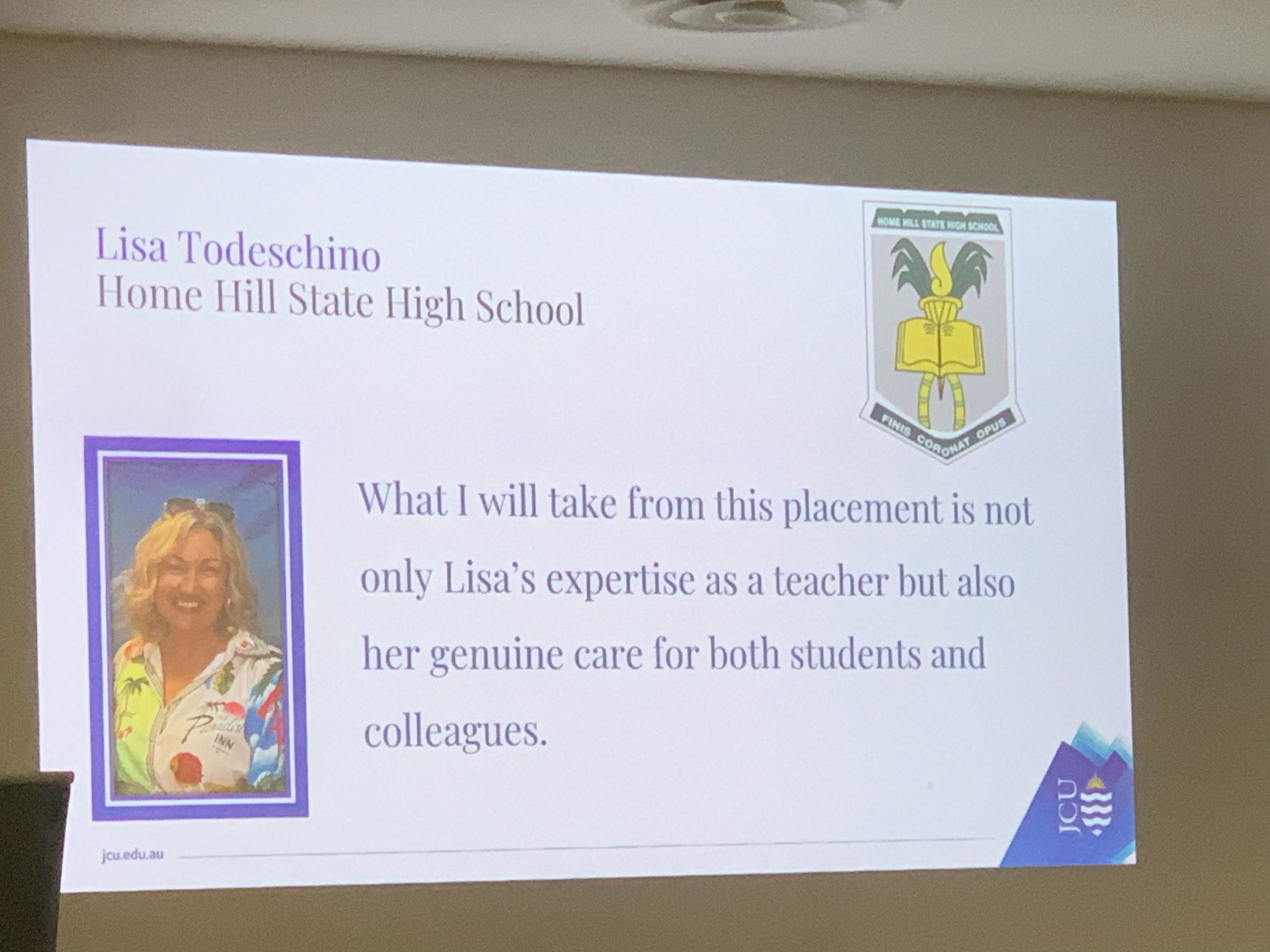
“[She] worked hard to create a positive learning environment and build relationships with her students. Her thoughtful use of individual rewards and personalised parting gifts, including positive notes to inspire her students, reflected her genuine care for them and commitment to creating a supportive and encouraging classroom.
“She even baked cupcakes!”
HHSHS took to social media to express their pride and congratulate Mrs Todeschino.
“This special recognition reflects the genuine care, encouragement and professional guidance Mrs Todeschino provided throughout Jennifer’s placement,” a school spokesperson said.
“Mentoring the next generation of teachers is a powerful investment in the future of education, and Mrs Todeschino embraces this responsibility with incredible dedication and professionalism.”
Mrs Todeschino said she was “overwhelmed” by the comments of support beneath the school’s Facebook post.
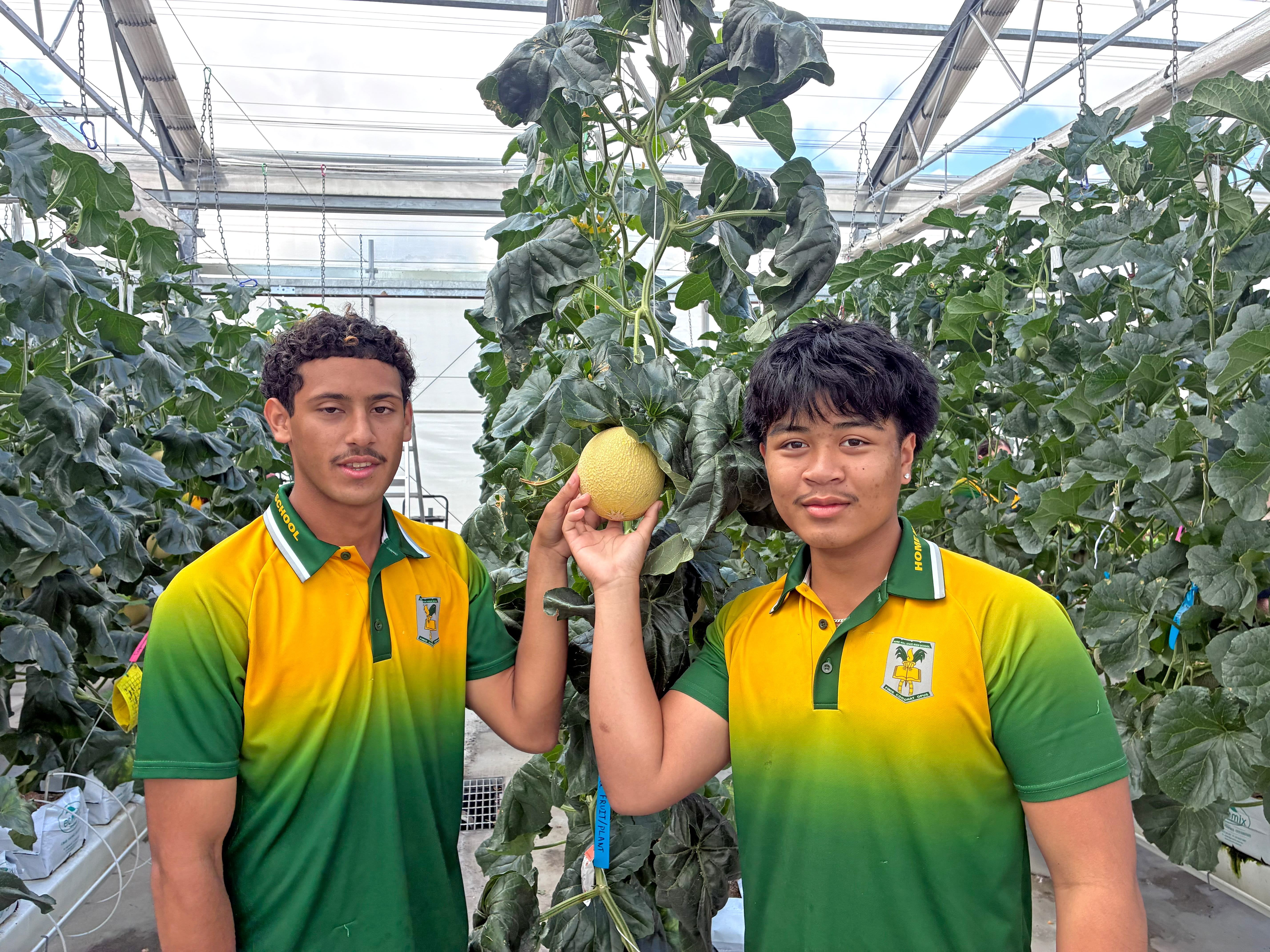
Home Hill State High School students are getting hands-on experience in modern horticulture through a melon-growing project supported by the Department of Primary Industries (DPI).
The school has spent the past two years working with the DPI Protective Cropping Team as students and staff develop their use of the school’s CRAVO protected cropping facility.
The project has given students studying agriculture and Certificate II in Production Horticulture the opportunity to work with crops while learning about environmental conditions, fertigation, plant development and production data.
Home Hill State High School Agriculture Coordinator Louise Nicholas said the partnership had changed how students approached horticulture.
“DPI have helped us look at horticulture in a different way,” she said.
“They have encouraged us to ask questions, collect and interpret information, monitor our crops carefully and understand the relationship between technology, growing conditions and plant performance.”
DPI team members have visited the school, worked with students and teachers, provided technical advice and spoken to students as guest speakers.
The current melon project has also involved support from Melons Australia, with seed companies HM Clause and Rijk Zwaan allowing the school to trial their melon varieties.
Students can monitor the plants as they develop, identify issues and use information collected from the facility to inform decisions about the crop.
The school said the partnership had also provided opportunities for students from other schools, teachers, industry representatives and community members to see the protected cropping facility in operation.
Its community open day has allowed visitors to tour the facility, speak with students and teachers and learn about the technology being used to grow crops in a regional Queensland setting.
Ms Nicholas said the facility was developing into more than a school-based learning space.
“This is no longer simply a school greenhouse,” she said.
“It is becoming a shared regional education space between schools, industry and the community.”
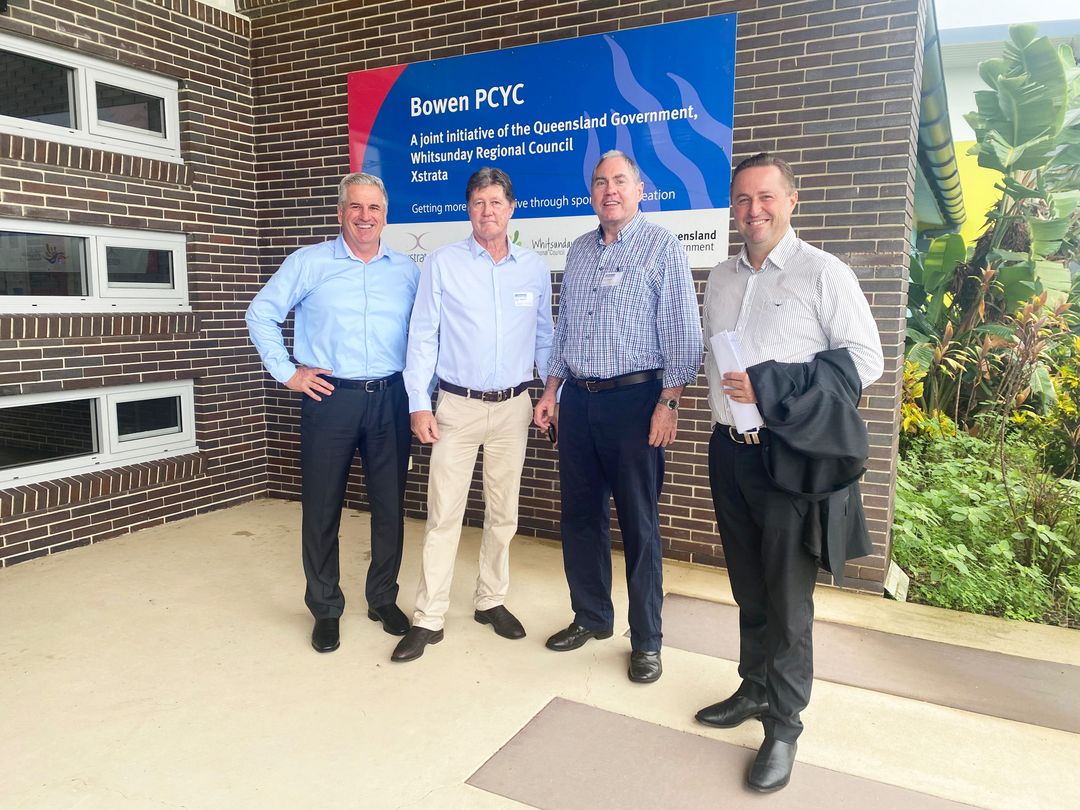
Member for Burdekin, Dale Last MP, President of BGGA, Carl Walker, BPC Director Sean Brown, and Whitsundays Mayor Ry Collins (WRC) earlier this year. Photo supplied
Ministerial Infrastructure Designation approval provides greater planning certainty for proposed 182-kilometer North Queensland water pipeline
Contributed by Bowen Pipeline Company
Bowen Pipeline Company welcomes approval of the Ministerial Infrastructure Designation (MID) for the Bowen Pipeline Project by the Deputy Premier, Minister for State Development,
Infrastructure and Planning and Minister for Industrial Relations, the Honourable Jarrod Bleijie MP.
The Decision Notice marks an important milestone for the project providing formal recognition for the proposed 182-kilometre water pipeline under Queensland’s infrastructure planning framework.
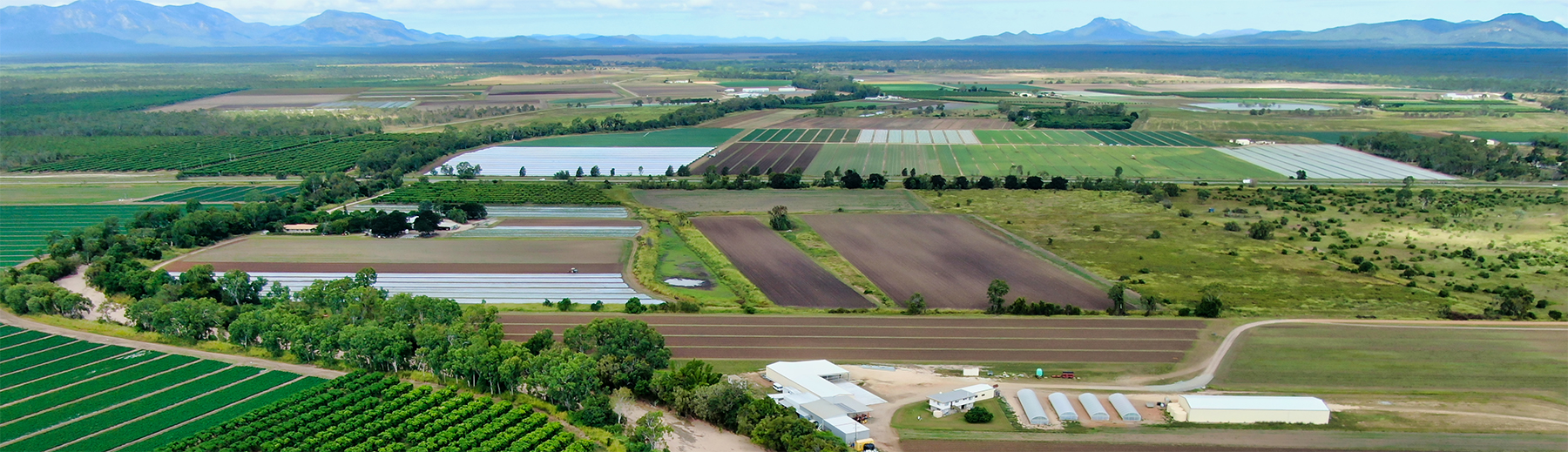
The Bowen Region produces 1/5th of Australia’s vegetables (over 250 million kilograms sold at the farm gate) and is Australia’s largest winter vegetable growing area supplying over 90% of some vegetables supplying Brisbane, Sydney, Melbourne, Canberra, Adelaide and internationally. The region has no reliable, secure water supply relying on summer rains.
The approval provides greater planning certainty following extensive technical assessment,
stakeholder engagement and consultation with government, Traditional Owners, landholders,
growers, councils, industry participants and regional stakeholders.
Bowen Pipeline Company Chairman Carl Walker said the decision represented an important step forward for the project and recognised the considerable work undertaken to reach this point.
“This is an important milestone for the Bowen Pipeline Project and for the many people who
have contributed their time, knowledge and support along the way,” Mr Walker said.
“A significant amount of work sits behind this decision, from technical studies and planning
through to engagement with landholders, growers, Traditional Owners, government, councils,
industry and communities across the region.
“There is still work ahead, but the MID gives us greater planning certainty as we continue
progressing the remaining approvals, funding pathways and development work required to
move the project forward.”
The Bowen Pipeline Project is designed to transfer water from the Burdekin River south towards Bowen providing a reliable long-term water supply to support agriculture, industry, horticulture, aquaculture, citrus, algae, green energy and communities.
Mr Walker said the significance of the project ultimately lies in what greater water security could make possible for the region. The project’s broader economic case centres on using reliable water infrastructure to enable greater agricultural production, investment and industry development across the Bowen-Burdekin corridor.
Preliminary economic analysis cited by Bowen Pipeline Company indicates the project has the potential to support around $300 million in annual economic output and approximately 1,200 full-time equivalent jobs when operational across agriculture, industry and regional services.
“For growers, businesses and communities across the region, reliable access to water is
fundamental to planning for the future. Greater water security has the potential to support
agricultural production, encourage investment and create new opportunities for the region over
the long term,” Mr Walker said.
“That is what we are working towards, and this decision takes us another important step
forward.”
Early engagement with prospective water users has demonstrated strong interest in securing
future water allocations from the Bowen Pipeline Project.
Mr Walker said the response provided further confidence in the need for the project.
“Over recent weeks we have seen strong interest from prospective water users and new market entrants, reinforcing both the demand for greater water security and the confidence people have in investing in the future of this region.
“Their participation is an important part of building the commercial foundation required to
progress the project.”
Minister for Natural Resources and Mines, Minister for Manufacturing and Minister for Regional
and Rural Development and Member for Burdekin Dale Last said reliable water supply could
unlock significant opportunities for the region.
“Where you have water, you have opportunities. It is those opportunities that are the reason I
support ensuring a reliable water supply for an area that offers so much untapped potential,” Minister Last said.
“There is 100,000 hectares of arable land in the Burdekin-Bowen-Collinsville area that could be
used for primary production if there was a reliable source of water. Whether you look at it from
a self-sufficiency or an export perspective, that is a lot of jobs that could be created and huge
financial benefit for the region.”
“The Crisafulli LNP government has set a target to boost Queensland’s primary production
output to $30 Billion by 2030. To take full advantage of Queensland’s potential when it comes
to primary production, we need to back the infrastructure the industry needs to turn potential
into reality.”
“Approving the Ministerial Infrastructure Designation is a clear sign that the project has received a positive result during public consultation. Whilst the approval does not signal the start of construction, it sends a strong message that the Crisafulli government recognises the potential benefits and has played its part in seeing the project move forward.”

As the days warm up and that familiar North Queensland humidity begins to creep into the air, we all know what lies around the corner. Storm season isn’t far off, and the best time to prepare for severe weather is always well before the first warning sounds.
A big part of getting storm-ready isn't just checking emergency kits; it’s clearing the yard. Loose sheet metal, overgrown palm fronds, forgotten tools, and odd bits of outdoor furniture quickly turn into dangerous missiles in a high wind. Taking a weekend now to clean out gutters, trim hanging branches, and tidy around the shed makes a world of difference when the skies turn dark.
If you’re staring down a pile of useful gear during your spring cleanup that’s too good to throw away, you have a timely solution. The Garage Sale Trail is coming up again in November.
Instead of making endless trips to the transfer station or letting good items sit in the weather, it’s a brilliant opportunity to declutter, make some pocket money, and keep usable goods out of landfill. It is a great community initiative that turns spring cleaning into a social event.
While you're cleaning up over the coming weeks, keep an eye out for elderly neighbours who might need a hand moving a heavy trailer load or securing their yard.
A little effort now keeps our properties tidy, our pockets a bit fuller, and our community safe for whatever the weather throws at us this summer.
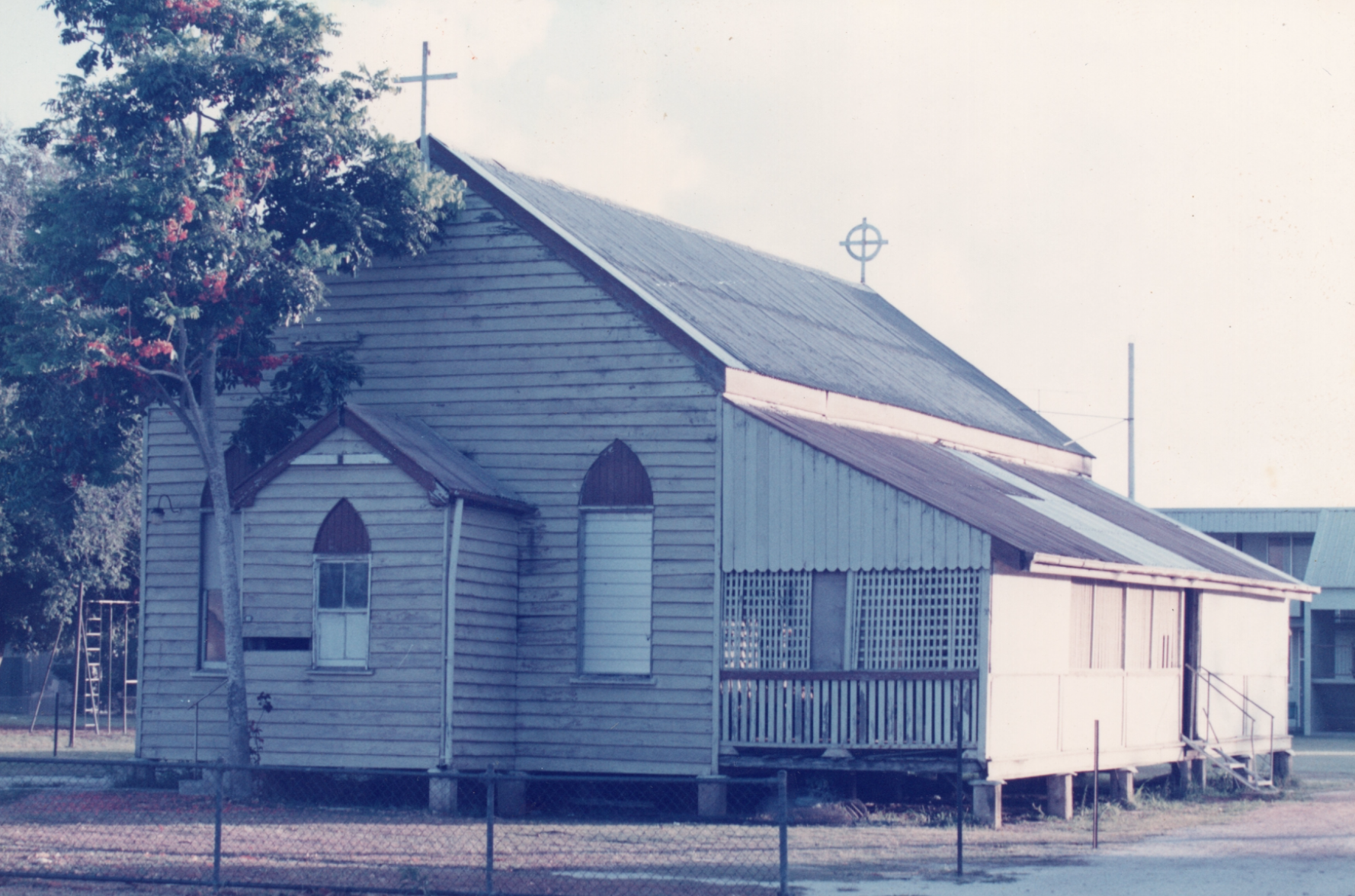
The history of St Colman’s Church itself goes back even further, with the original timber church (pictured) dating to 1918. Photos supplied
The Burdekin Catholic Parish is calling on the community to dig through their family albums and keepsakes as it prepares to celebrate a piece of Home Hill history—the 100th anniversary of St Colman’s Parish.
All are invited to its celebrations on Sunday October 25th, which mark a century since the formal establishment of St Colman’s Parish and subsequent appointment of Father William O’Reagan as its first parish priest in January 1926.
The history of St Colman’s Church itself goes back even further, with the original timber church dating to 1918. The building, which cost £1100 and was relocated from Ravenswood, was eventually replaced by its current church in 1968.
In preparation for the celebrations, a small committee has begun researching the parish’s history and is seeking photographs, memorabilia, recollections and stories to help document its growth over the past 100 years.

The committee is particularly hoping to find photographs of former Parish Administrators Father Abraham Cheripuram, who served from 2016 to 2018, and Father Sibichan Kaippanplackal, who served from 2019 to 2021.
Photographs of baptisms or weddings involving either priest would be especially appreciated, while photographs from the parish’s early years between 1926 and the early 1950s are also being sought.
The committee hopes the material gathered will help tell the story of St Colman’s and the generations of families who have been part of the parish over the past century.
Anyone with photographs, memorabilia or memories to share is encouraged to contact the Burdekin Catholic Parish Office on 4783 2316.
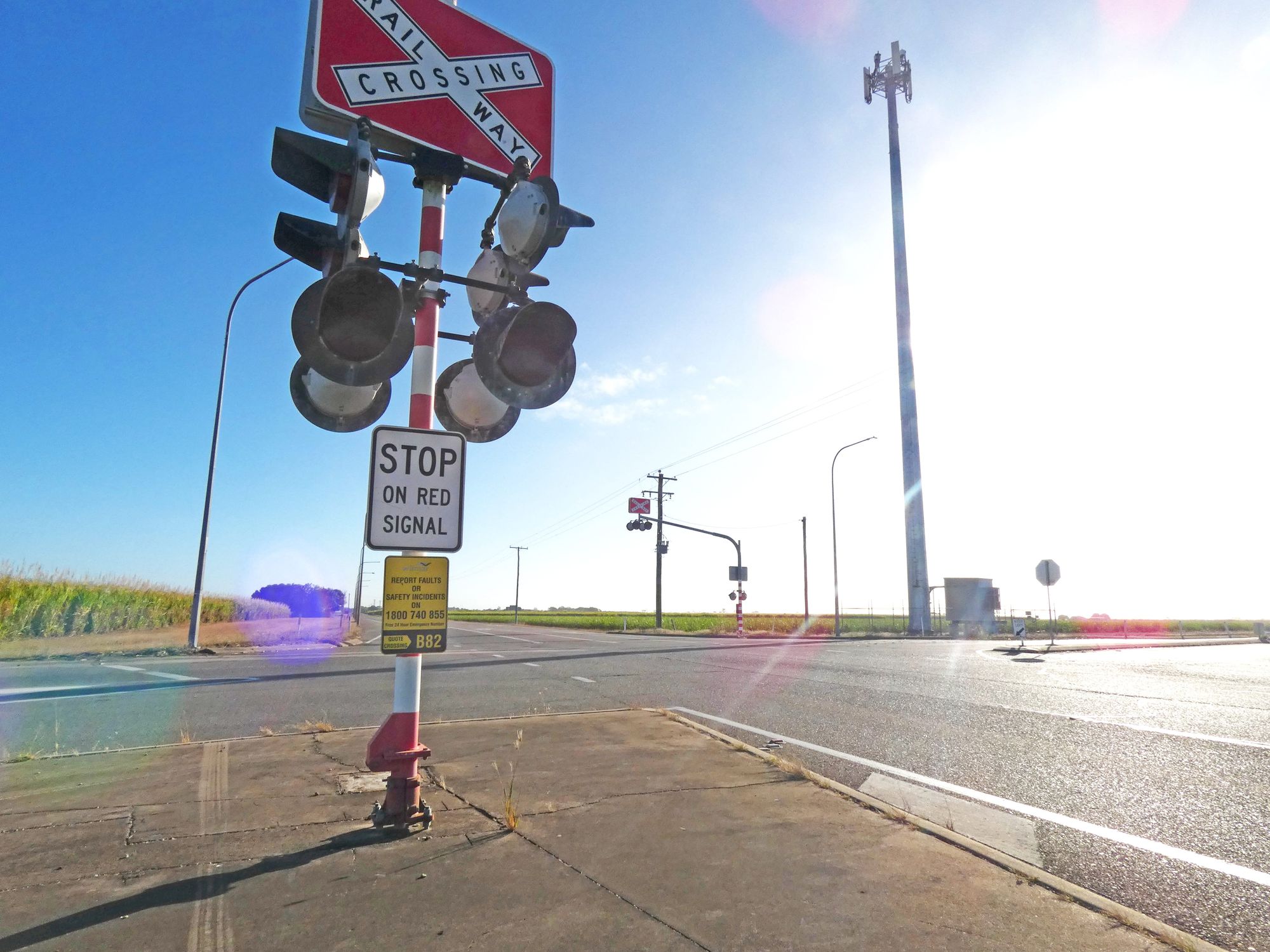
A since-removed mobile CCTV trailer was redeployed to the Bruce Highway and Giddy Road intersection late July as part of an ongoing review of driver behaviour at the site. Photo: Jacob Casha
A Burdekin intersection responsible for regular “near misses" and "multiple casualty crashes” is back under the microscope as state authorities continue monitoring the notorious location.
A mobile CCTV trailer was redeployed to the Bruce Highway and Giddy Road intersection late July as part of an ongoing review of driver behaviour at the site.
It follows earlier video monitoring efforts which led the Department to recommend a 10km/h speed reduction around the intersection based on professional engineering judgement, contrasting with initial technical reviews that supported maintaining the existing 100 km/h limit.
Burdekin Shire Council Deputy Mayor and Road Safety Committee Chair Max Musumeci was quick to reiterate Council’s opposition to the speed reduction. Councillors instead unanimously passed a motion in June requesting that TMR prioritise funding for the detailed design and construction of an intersection upgrade.
A Department of Transport and Main Roads (TMR) spokesperson has since clarified that “no recommendation has been endorsed” at this stage.
"All speed limit changes on the state-controlled road network go through a formal review and endorsement process by the local Speed Management Committee," the spokesperson said.
The regional committee comprises representatives from state transport authorities, Queensland Police, and the Burdekin Shire Council, with Council initiating the current speed review.
Investigations have identified driver behaviour as the primary safety issue—particularly gap acceptance, where a driver misjudges whether a gap in traffic is large enough to safely turn or merge, alongside failure to give way when entering the highway.
The spokesperson said data from the most recent footage will “contribute to the development of a range of treatments to improve safety at this intersection and its approaches.”
“As the review is still underway, TMR is not in a position to comment on potential outcomes,” the spokesperson added.

Queensland has passed new laws increasing penalties for dangerous driving, drink and drug driving, extreme speeding and other high-risk behaviour on the state’s roads. Photo: QPS
Queensland has passed new laws increasing penalties for dangerous driving, drink and drug driving, extreme speeding and other high-risk behaviour on the state’s roads.
The Criminal Code (Dangerous Driving) and Other Legislation Amendment Act 2026 will replace existing dangerous driving offences with a four-category framework covering motor vehicles and alternative modes of transport.
The reforms increase maximum prison terms to up to seven years for some offences where no death or grievous bodily harm occurs, and up to 25 years where death or grievous bodily harm results.
Minimum licence disqualification periods will also increase, with tougher consequences for serious, aggravated and repeat offending.
Mandatory imprisonment will apply in a broader range of circumstances for serious and repeat dangerous driving offences.
Separate changes under the Transport and Other Legislation Amendment Act 2026 will also take effect from 1st December.
Drug-driving penalties will double, while combined drink and drug-driving offences will attract stronger penalties and minimum court-imposed fines.
Drivers caught travelling more than 40km/h over the speed limit will face an immediate six-month licence suspension.
Seatbelt enforcement will also change, allowing drivers to nominate adult passengers so responsibility can be assigned to the appropriate person.
Further changes in 2027 will streamline roadside drug testing and introduce a mandatory drug-driving education program for repeat offenders.
Transport Minister Brent Mickelberg said the reforms targeted behaviours contributing to road deaths.
“Queensland’s road toll has been trending upwards for far too long, and our laws target the behaviours killing people on our roads,” he said.

Two people were taken to Townsville Hospital following a two-vehicle crash in Home Hill on Wednesday, 16th September.
The crash occurred about 2.50pm at the intersection of the Bruce Highway and Kirknie Road, with one vehicle rolling onto its roof.
Police said initial investigations indicated one of the drivers failed to give way, with inquiries into the cause of the crash ongoing.
Queensland Ambulance Service, Queensland Fire and Emergency Services and Queensland Police Service responded to the incident.
As of Monday, 21st September, Ayr Police were unable to provide further information about the injuries sustained by the drivers.
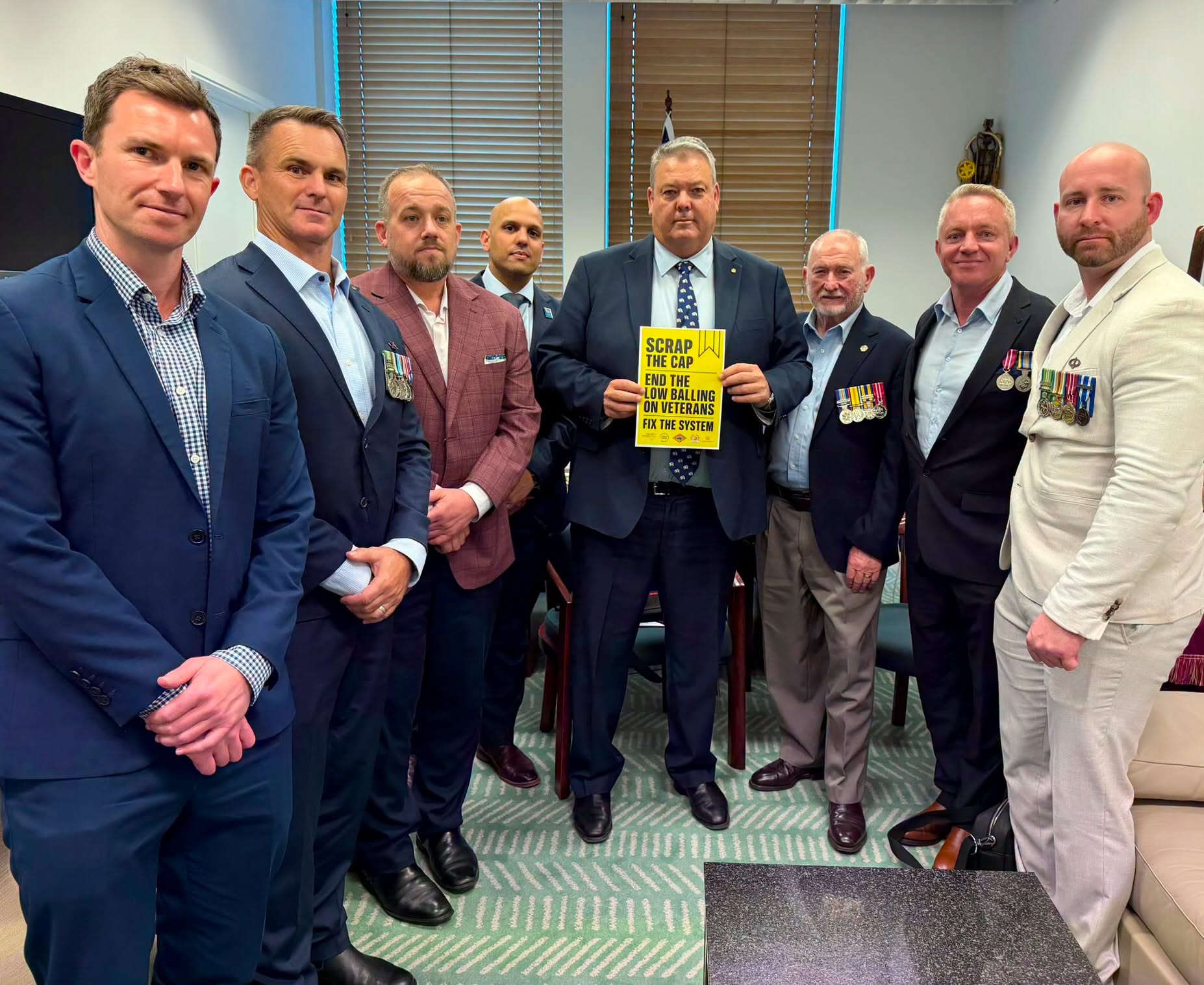
Federal Member for Dawson Andrew Willcox MP met with veterans at Parliament House who travelled to Canberra to call on the Labor Government to scrap its proposed $5,000 cap on DVA allied health care. Photo supplied
The Federal Government has scrapped a proposed $5,000 annual threshold for veterans’ allied health services after consultation with the veteran community.
Veterans Affairs Minister Matt Keogh announced the decision on 17th September, saying the Government had heard concerns about the proposal and would remove the threshold from its planned reforms.
The $5,000 threshold was announced in the 2026 Federal Budget alongside a $169.7 million investment to increase fees paid to allied health providers from July 2027. The original proposal would have replaced the existing requirement for veterans to obtain a new GP referral after every 12 allied health sessions with a review once treatment reached $5,000.
Mr Keogh said the Government would maintain its planned increase to allied health fees while consulting veterans and providers on another way to reduce administrative requirements and maintain oversight of treatment.
“We have been listening carefully and today, the Government is taking the proposed $5,000 threshold off the table,” he said.
“[The Government] has a deep respect for our veterans who have, and who continue to serve our country. Anyone who pulls on our nation's uniform to serve in our name deserves nothing less.”
Federal Member for Dawson Andrew Willcox welcomed the decision, saying he had spoken to veterans across the electorate about their concerns with the proposal.
“This is a win for our veterans,” Mr Willcox said.
“The message from veterans was simple... this cap should never have happened. Today, the Government has finally listened.”
The Coalition MP also criticised the Government for introducing the threshold and said the policy had created “worry and uncertainty” for veterans.
Mr Willcox called for Mr Keogh to stand down over the proposal, with Opposition Leader Angus Taylor and Nationals Leader Matt Canavan also welcoming the Government’s decision.
The Government said it would continue consulting with veterans and allied health providers on the revised arrangements.

The Back to School Boost has already provided more than $36.9 million in funding directly to primary school students so far this year. Photo: Ayr State School
Contributed by the Office of Member for Burdekin Dale Last
As school students continue to soak up holiday fun, Member for Burdekin Dale Last has sounded a reminder for parents that it’s not too late to access school-based cost of living relief.
The Crisafulli Government’s Back to School Boost has already provided more than $36.9 million in funding directly to primary school students so far this year.
Mr Last said the $100 credit for each primary school student was able to be used right throughout the year for school-related expenses including uniforms, stationery and excursions.
“We’re providing real support for families with targeted funding relief while ensuring every child, no matter their circumstances, has the resources they need to succeed at school,” Mr Last said.
“This plan sees $330million in support for families across five years with the Back to School Boost set to increase by 50 per cent in 2027 to $150 per primary student.”
Mr Last said the Crisafulli Government’s efforts to make sure every family had the chance to access the funding when they needed it meant there was not a ‘use it or lose it’ clause.
“While there is still time for families to use their $100 credit in Term 4 we know families face many of those school resourcing costs as we prepare to go back to school for the new year.”
“It’s why the Crisafulli Government has allowed for a students unexpended Back to School Boost to roll over, it means you have the control to use the funding when it benefits your family the most.”
“As we roll in to the final Term of the 2026 school year I want to wish students all the best and offer my thanks to our hardworking principals, teachers, teacher aides, cleaners, administration staff and groundskeepers for their dedication and hard work.”
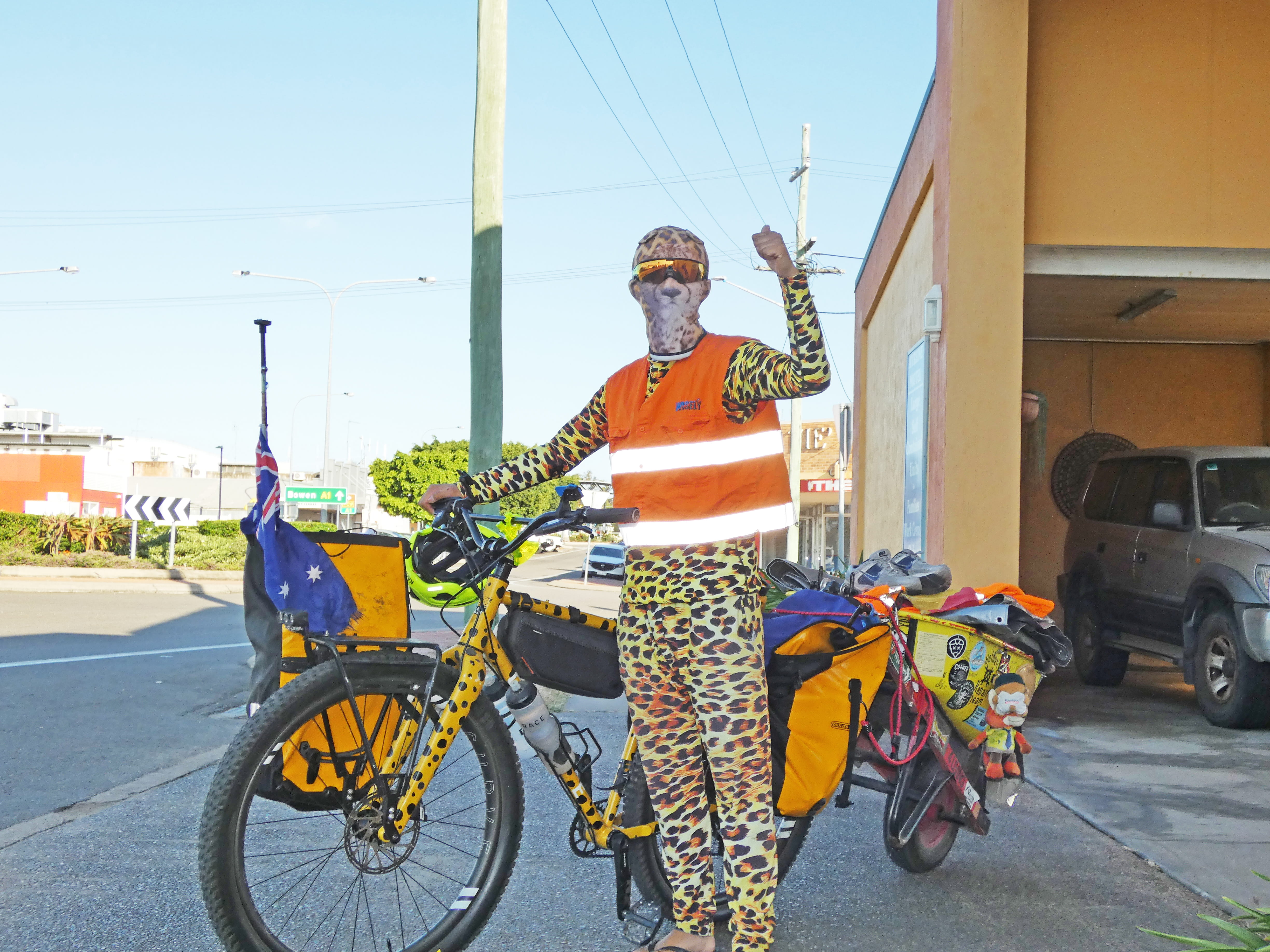
The Burdekin could not get enough of online sensation ‘Catman’ as he pedalled his way into Ayr last week. Photo: Jacob Casha.
The Burdekin could not get enough of online sensation ‘Catman’ as he pedalled his way down Ayr’s Queen Street last week—the latest leg of a 9,000km journey around the country.
The alter-ego of Japanese traveller Kentaro Jin, Catman made headlines in March after pushing a wheelbarrow of his belongings from Carnarvon, Western Australia to Sydney, amassing over one million social media followers along the two-and-a-half-year hike.
After deciding he wasn’t ready for the expedition to end in Sydney, Kentaro set off once again in his trademark leopard-print onesie, this time cycling his way up the east coast before flipping the kickstand down in Ayr at 11am last Friday.
And it wasn’t long before locals noticed. Within hours of his arrival, Kentaro had been offered meals, drinks, and accommodation for the night in a showing of what he called “fantastic” community support.
“[The kindness] has been amazing,” Kentaro said, admitting he had already become a big fan of the town.
“I got to walk around a little bit, talk to children. It's really great.”
Ayrline Hotel Manager Melissa Hitchcock, who provided Kentaro a complimentary room, said locals had flocked to the site all afternoon to catch a glimpse of the social media star—and her “most famous guest.”
“When he arrived here [at around 1.30pm], we had like, a thousand people come in. Within five minutes, someone ran in and gave him some money and a balloon,” she quipped.
“My kids even rang me: ‘Mum, you’ve got Catman staying at the motel!’”
As a result of that demand, Ms Hitchcock announced a designated meet-and-greet opportunity at Queens Hotel that afternoon, which she said was well-attended.
She called Kentaro's willingness to interact with children “inspirational.”
“He’s just full of life,” Ms Hitchcock said.
"He was so happy to greet the kids … who were knocking on his door every 10 to 15 minutes. He's definitely an inspiration with the following he's got.”
Interestingly, it was the children he has encountered on his cross-country voyage that gave it a real purpose.
It’s an adventure Kentaro said began with no particular goal back in 2023. He arrived in Australia eager to satisfy a long-standing itch to travel, after his then-girlfriend broke off the relationship with him in Japan.
The devastation bred determination, and his aimless voyage across Australia became a fundraiser for childhood cancer research, inspired by the kids and families he met along the way. It has since raised more than $70,000.
Still active today, you can donate to Kentaro's cause here: https://www.gofundme.com/f/catman6701
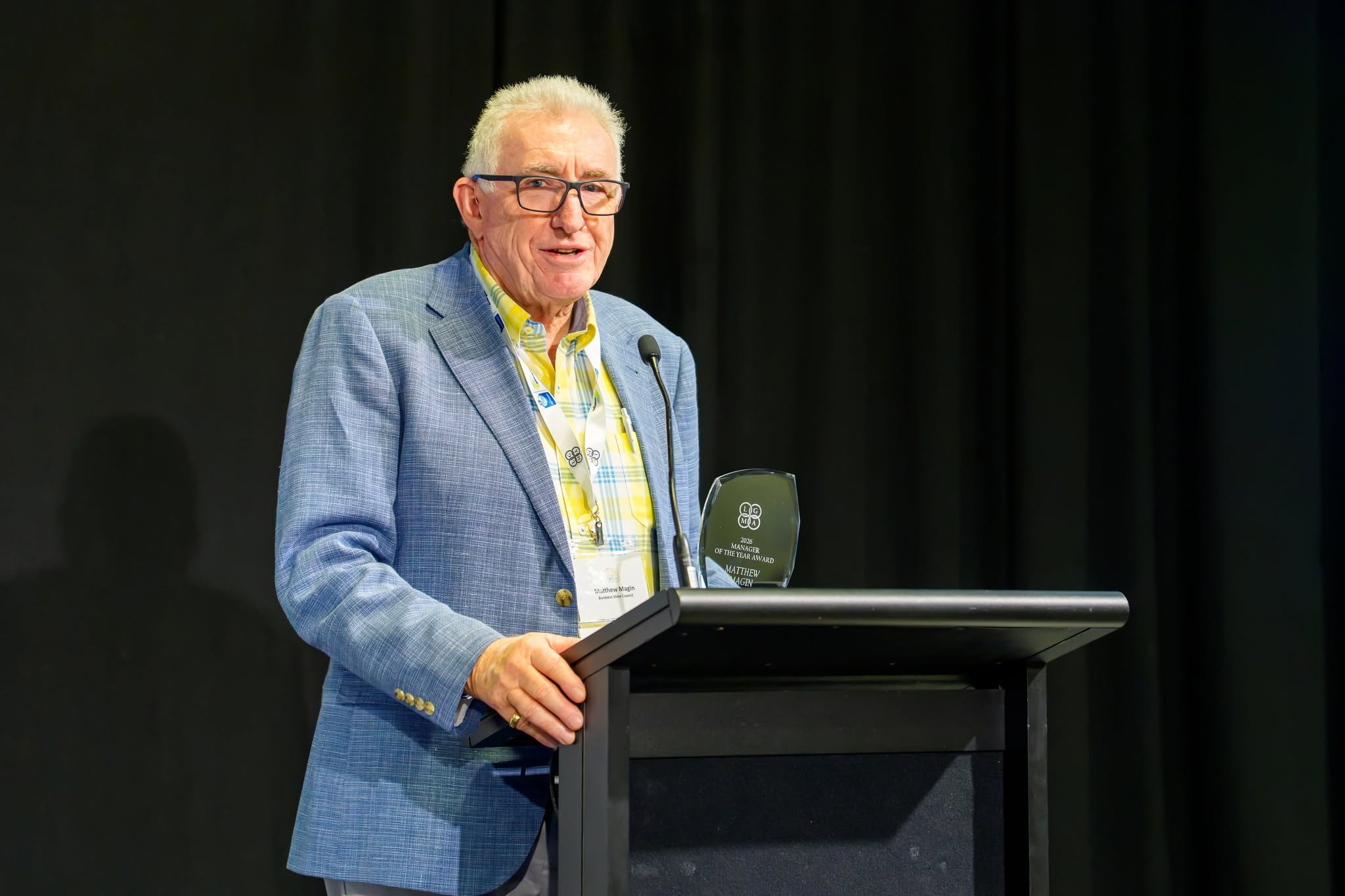
Burdekin Shire Council Chief Executive Officer Matthew Magin pipped a statewide field of local government leaders to ‘Manager of the Year’ honours. Photos supplied: Burdekin Shire Council
Burdekin Shire Council Chief Executive Officer Matthew Magin pipped a statewide field of local government leaders to ‘Manager of the Year’ honours at a ceremony in Brisbane earlier this month.
Presented by Local Government Managers Australia (LGMA) at its Annual Local Government Conference on 10th September, the award recognised Mr Magin’s “outstanding leadership and management excellence” and contributions to the Burdekin community.
“Matthew is a highly deserving LGMA Manager of the Year Award winner… [and his] leadership sets a strong benchmark for Queensland local government,” an LGMA spokesperson said.
“He provides clear direction while remaining connected to the people who must deliver it. That is what makes his leadership credible and enduring.”
Having attended the previous 15 LGMA Annual Local Government Conferences with no silverware to show for it, Mr Magin described this year’s recognition as overwhelming, if not a “complete and utter shock.”
“I wasn’t even aware I was a nominee,” Mr Magin said, adding that a trio of nominators—whose identities were “sworn to secrecy”—revealed themselves after his victory.
“I go to these every year, listening to all the other nominations being read out. This year, it was fortunate that it was mine.
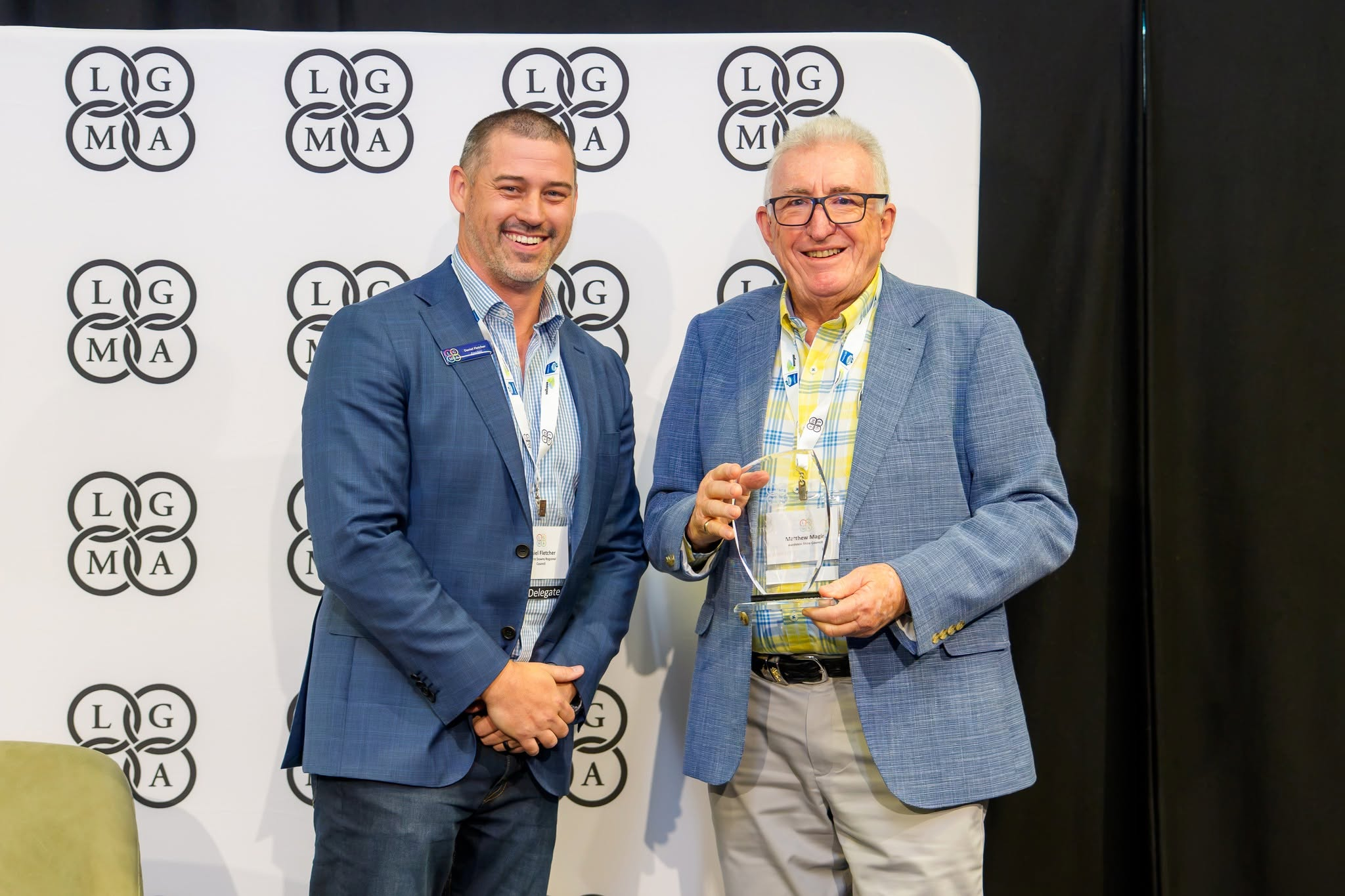
“To be up on the stage, looking out at all of the previous winners in the audience and knowing what good managers they are—to be included in that company was incredibly humbling.”
Mr Magin was appointed Burdekin Shire Council CEO in September 2024 after an earlier stint in the role from 2014-2016, with an eight-year spell as CEO of Balonne Shire Council in between.
The past year has seen him oversee the finalisation of the $55 million South Ayr Filtration Plant and the completion of the Anzac Park Pump Track.
However, Mr Magin said the award recognised the entire Council organisation and its engagement with the community rather than “just projects you can cut a ribbon for.”
Mayor Pierina Dalle Cort said the recognition was “fitting and well-deserved.”
“Matthew leads with professionalism, integrity and a genuine desire to achieve the very best outcomes for our community. His leadership extends well beyond the workplace, and his impact can be seen across the community,” she said.
“Although he may not have grown up here, he has embraced the Burdekin as if he has been part of it his entire life. He treats our community with genuine care and respect, and that connection is reflected in everything he does.”
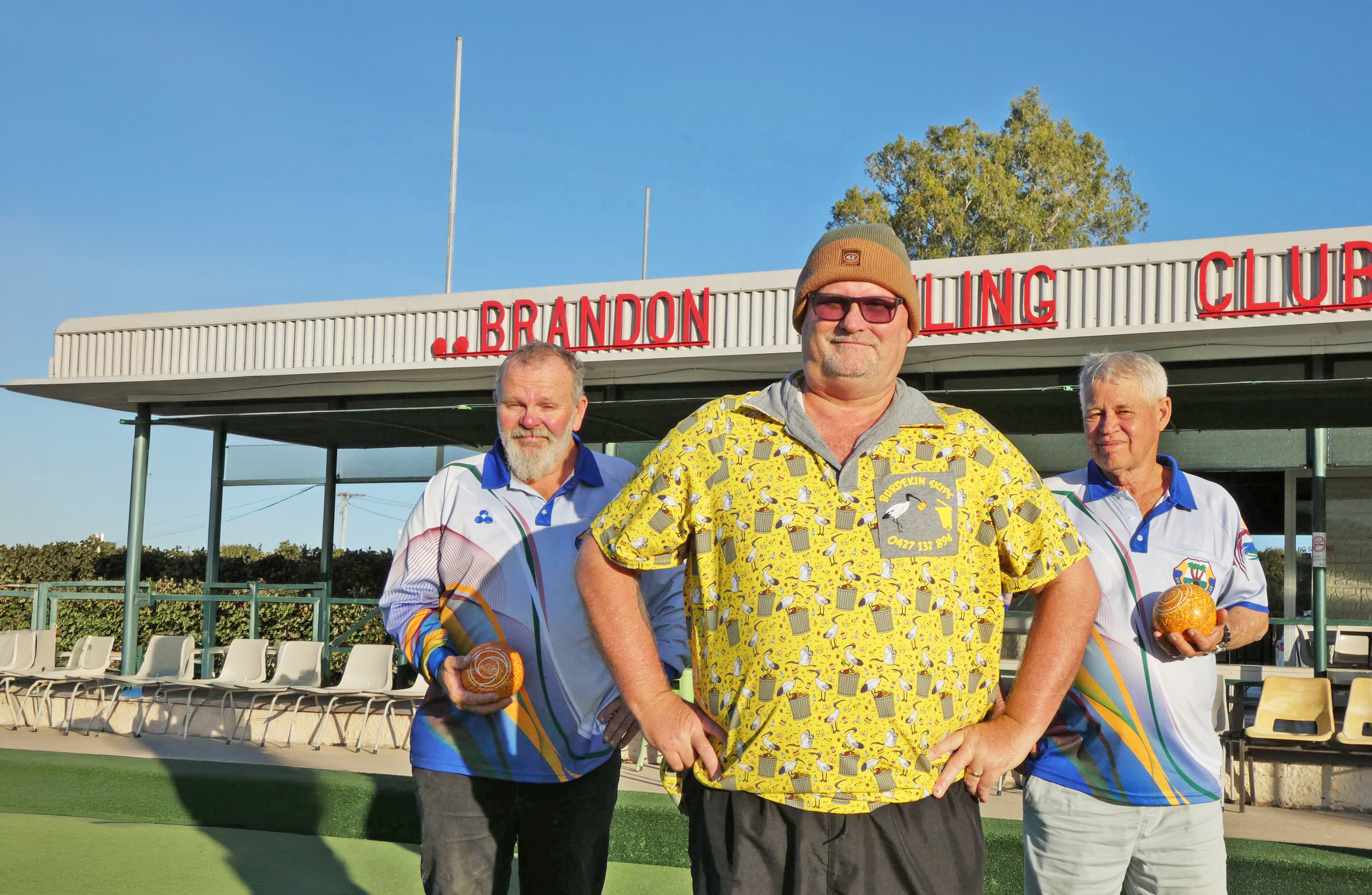
Brandon Bowls Club members Jayson Farry (centre), Jamie Woods (left) and David DeFranciscis (right) on the club greens. Photo credit: Jacob Casha
A whole community stood behind Jayson Farry and the Brandon Bowls Club last weekend as its charity bowls event more than tripled its $10,000 fundraising target. Inspired by Jayson Farry's recent brain cancer diagnosis, the event raised more than $30,000 for two prominent cancer foundations.

(L-R) Brandon Bowls Club members Leo Kenny, Jayson Farry, Jamie Woods, Ben Mills, and David DeFranciscis. Photo: Jacob Casha
A Brandon Bowls Club charity event raised more than $30,000 for cancer care last Saturday, tripling its original $10,000 target as guests enjoyed social bowls under the stars.
Around 300 people packed the club’s Toll Street venue for the event, bowling in support of club member Jayson Farry, who was diagnosed with brain cancer earlier this year.
Raised through gate fees, beanie and hat sales and a “hugely successful” auction, all proceeds will be sent to the Mark Hughes Foundation and Brighter Lives Townsville—the latter dedicating the funds to journals for cancer patients.
Event organiser and emcee David DeFranciscis said the event was one of the “biggest ever hosted by the club.”
“It was just the Burdekin at its best,” he said.
“It was also the atmosphere. Everyone was laughing and joking, everyone got on with everyone—it was just one big, special night.
David estimated 70 non-bowlers stepped up to the mat on the night, while others enjoyed the live music and social atmosphere.
The event also saw Brighter Lives Townsville representative Stephanie Norton deliver a special address; David said her words were instrumental to the success of the fundraiser and raising awareness for the foundation.
“I think a lot of people were surprised by Brighter Lives and what they do. Stephanie spoke very well and inspired everyone,” he said.
Despite smashing fundraising targets, David said night’s greatest success was bringing the community together for Jayson and his family.
“It was a little bit sad that we had to have a brain cancer diagnosis for everyone to get together,” he said.
“Wouldn’t it be nice if we did something like this just to get together as a community without a reason?”
He said the event’s overall success inspired the to make it an annual affair, although admitted Saturday’s edition set a high bar.
“We’re still recovering from the weekend,” David laughed.
"We will probably do something next year, but it probably won't be as big.”
Publishers Indemnity. Any individual or entity that places advertising, supplies copy material, or submits editorial content to Core Life Publishing agrees and undertakes to ensure that all such material:- Does not infringe upon any copyright, trademark, or other intellectual property rights;- Is free from any content that could be considered defamatory, libelous, or slanderous;- Does not infringe upon any rights related to privacy or breach of confidence;- Contains no obscene, indecent, or otherwise unlawful material;- Complies fully with the Trade Practices Act and all other applicable laws, regulations, or statutes.Furthermore, by submitting or placing such material, these individuals or entities agree to indemnify and hold harmless the publisher, Core Publishing and Events Pty Ltd, and/or its agents from and against any and all investigations, claims, demands, liabilities, damages, costs, or judgments arising out of or in connection with the material provided. All material is believed to be accurate at the time of printing and remains the copyright of Core Publishing and Events Pty Ltd.
© 2026 Life Publishing Group Pty Ltd.
