Independently Owned, Locally Grown, Community Loved


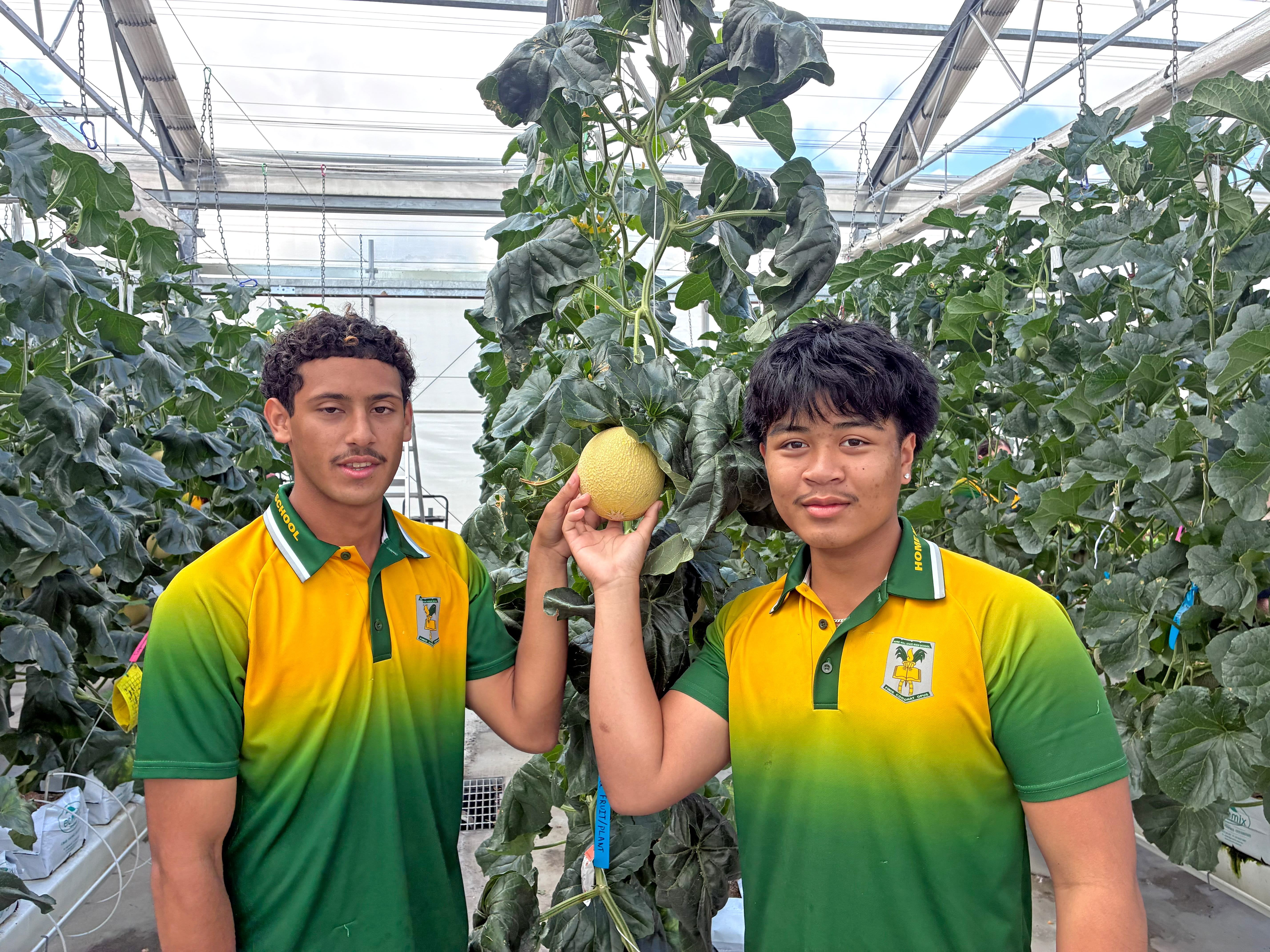
Home Hill State High School students are getting hands-on experience in modern horticulture through a melon-growing project supported by the Department of Primary Industries (DPI).
The school has spent the past two years working with the DPI Protective Cropping Team as students and staff develop their use of the school’s CRAVO protected cropping facility.
The project has given students studying agriculture and Certificate II in Production Horticulture the opportunity to work with crops while learning about environmental conditions, fertigation, plant development and production data.
Home Hill State High School Agriculture Coordinator Louise Nicholas said the partnership had changed how students approached horticulture.
“DPI have helped us look at horticulture in a different way,” she said.
“They have encouraged us to ask questions, collect and interpret information, monitor our crops carefully and understand the relationship between technology, growing conditions and plant performance.”
DPI team members have visited the school, worked with students and teachers, provided technical advice and spoken to students as guest speakers.
The current melon project has also involved support from Melons Australia, with seed companies HM Clause and Rijk Zwaan allowing the school to trial their melon varieties.
Students can monitor the plants as they develop, identify issues and use information collected from the facility to inform decisions about the crop.
The school said the partnership had also provided opportunities for students from other schools, teachers, industry representatives and community members to see the protected cropping facility in operation.
Its community open day has allowed visitors to tour the facility, speak with students and teachers and learn about the technology being used to grow crops in a regional Queensland setting.
Ms Nicholas said the facility was developing into more than a school-based learning space.
“This is no longer simply a school greenhouse,” she said.
“It is becoming a shared regional education space between schools, industry and the community.”
Publishers Indemnity. Any individual or entity that places advertising, supplies copy material, or submits editorial content to Core Life Publishing agrees and undertakes to ensure that all such material:- Does not infringe upon any copyright, trademark, or other intellectual property rights;- Is free from any content that could be considered defamatory, libelous, or slanderous;- Does not infringe upon any rights related to privacy or breach of confidence;- Contains no obscene, indecent, or otherwise unlawful material;- Complies fully with the Trade Practices Act and all other applicable laws, regulations, or statutes.Furthermore, by submitting or placing such material, these individuals or entities agree to indemnify and hold harmless the publisher, Core Publishing and Events Pty Ltd, and/or its agents from and against any and all investigations, claims, demands, liabilities, damages, costs, or judgments arising out of or in connection with the material provided. All material is believed to be accurate at the time of printing and remains the copyright of Core Publishing and Events Pty Ltd.
© 2026 Life Publishing Group Pty Ltd.