
Independently Owned, Locally Grown, Community Loved


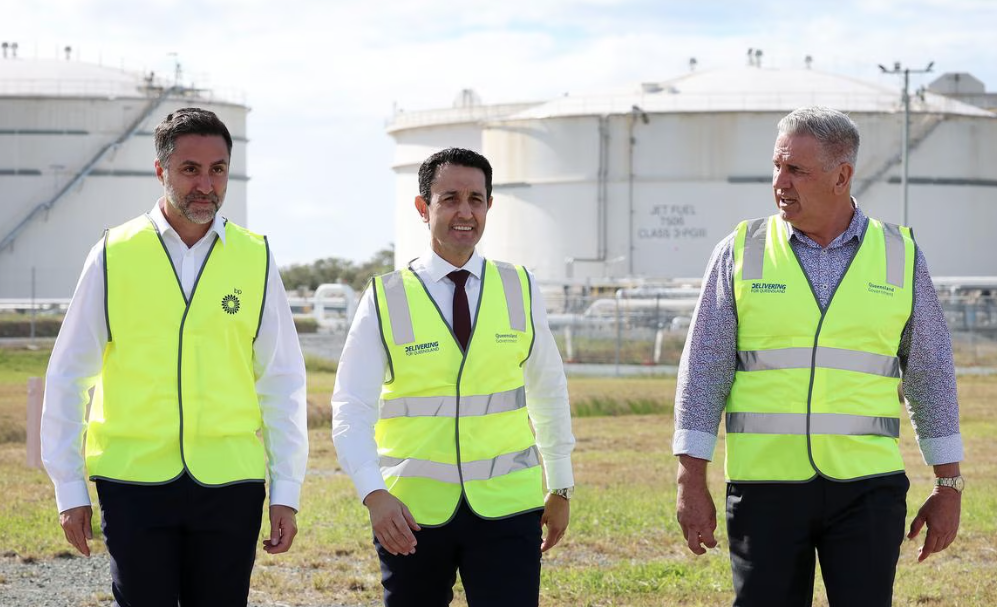
Recent Queensland Government fuel security initiatives are being welcomed as Burdekin businesses face rising fuel costs and ongoing energy uncertainty. Photo supplied
Amid growing concerns over rising fuel costs and ongoing energy uncertainty impacting regional businesses across the Burdekin Shire, the Queensland Government has continued rolling out a series of fuel security initiatives aimed at strengthening the State’s long-term fuel supply and storage capacity.
Building on recent announcements including the Accelerating Fuel Infrastructure Program, the Queensland Fuel Security Plan and a $25 million investment into renewable diesel production at Ampol’s Lytton refinery, on Saturday 9th May the State Government announced plans to fast-track BP’s lease extension at its Bulwer Island facility in Brisbane.
The move is expected to unlock up to $100 million in additional fuel storage investment, forming part of broader efforts to improve fuel security, stabilise supply chains and reduce pressure on transport and freight-reliant industries across regional Queensland.
Burdekin Chamber of Commerce Secretary Kari Ravizza said rising fuel prices were placing significant strain on businesses throughout the region, particularly within retail, agriculture and freight-dependent industries.
She explained that regional communities often faced fewer transport alternatives and less pricing competition than metropolitan areas, while many suppliers had introduced fuel surcharges and more frequent price adjustments, making already tight business margins increasingly unpredictable.
“Across regional areas, rising fuel costs aren’t just an inconvenience—they’re compounding pressure across every part of operations,” explained Mrs Ravizza.
“Businesses are facing a tough choice: absorb the cost or pass it on, both of which have consequences in smaller communities where customers are already cost-conscious.”
Member for Burdekin and Minister for Natural Resources and Mines Dale Last said BP’s latest announcement demonstrated what could be achieved when governments were genuinely committed to strengthening Australia’s fuel sovereignty and long-term energy resilience.
“We’re the only state taking fuel security seriously and making the decisions that will return energy sovereignty to our state,” said Mr Last.
“Never again do we want to be at the end of a supply chain that sees Queenslanders suffer because they can’t get the fuel they need to do their job.”
Mrs Ravizza said rising fuel prices were also beginning to impact tourism and consumer confidence across the wider North Queensland region.
“Our members [Burdekin Chamber of Commerce] have observed reduced visitor numbers during periods of high fuel costs, softer retail trade, lower hospitality turnover, and increased uncertainty when planning events or seasonal campaigns,” she said.
“Operationally, businesses are adapting where they can—consolidating deliveries, limiting travel, and tightening budgets—but there are limits to how much efficiency can offset rising costs.”
As conversations continue around renewable fuels and regional energy resilience, attention has also turned towards the potential role of locally produced ethanol through Queensland’s sugar industry.
Mrs Ravizza said the Chamber believed ethanol production could form part of a longer-term solution for regions like the Burdekin Shire, particularly if locally produced fuel solutions are linked to the sugar industry.
“In a region like the Burdekin, where sugar production is a key economic driver, ethanol presents an opportunity to add value to an existing industry, support regional jobs and investment, and potentially provide more stable and locally influenced fuel pricing over time,” she said.
“While there are challenges—including infrastructure, investment, and policy considerations—this is the type of forward-thinking solution that aligns with regional strengths.”
As regional businesses continue navigating rising operating costs and ongoing fuel uncertainty, many across the Burdekin Shire are hopeful that greater investment in fuel security, local infrastructure and renewable fuel opportunities could help strengthen long-term economic resilience for both industry and the wider community.
Publishers Indemnity. Any individual or entity that places advertising, supplies copy material, or submits editorial content to Core Life Publishing agrees and undertakes to ensure that all such material:- Does not infringe upon any copyright, trademark, or other intellectual property rights;- Is free from any content that could be considered defamatory, libelous, or slanderous;- Does not infringe upon any rights related to privacy or breach of confidence;- Contains no obscene, indecent, or otherwise unlawful material;- Complies fully with the Trade Practices Act and all other applicable laws, regulations, or statutes.Furthermore, by submitting or placing such material, these individuals or entities agree to indemnify and hold harmless the publisher, Core Publishing and Events Pty Ltd, and/or its agents from and against any and all investigations, claims, demands, liabilities, damages, costs, or judgments arising out of or in connection with the material provided. All material is believed to be accurate at the time of printing and remains the copyright of Core Publishing and Events Pty Ltd.
© 2026 Life Publishing Group Pty Ltd.







.jpg)