
Independently Owned, Locally Grown, Community Loved
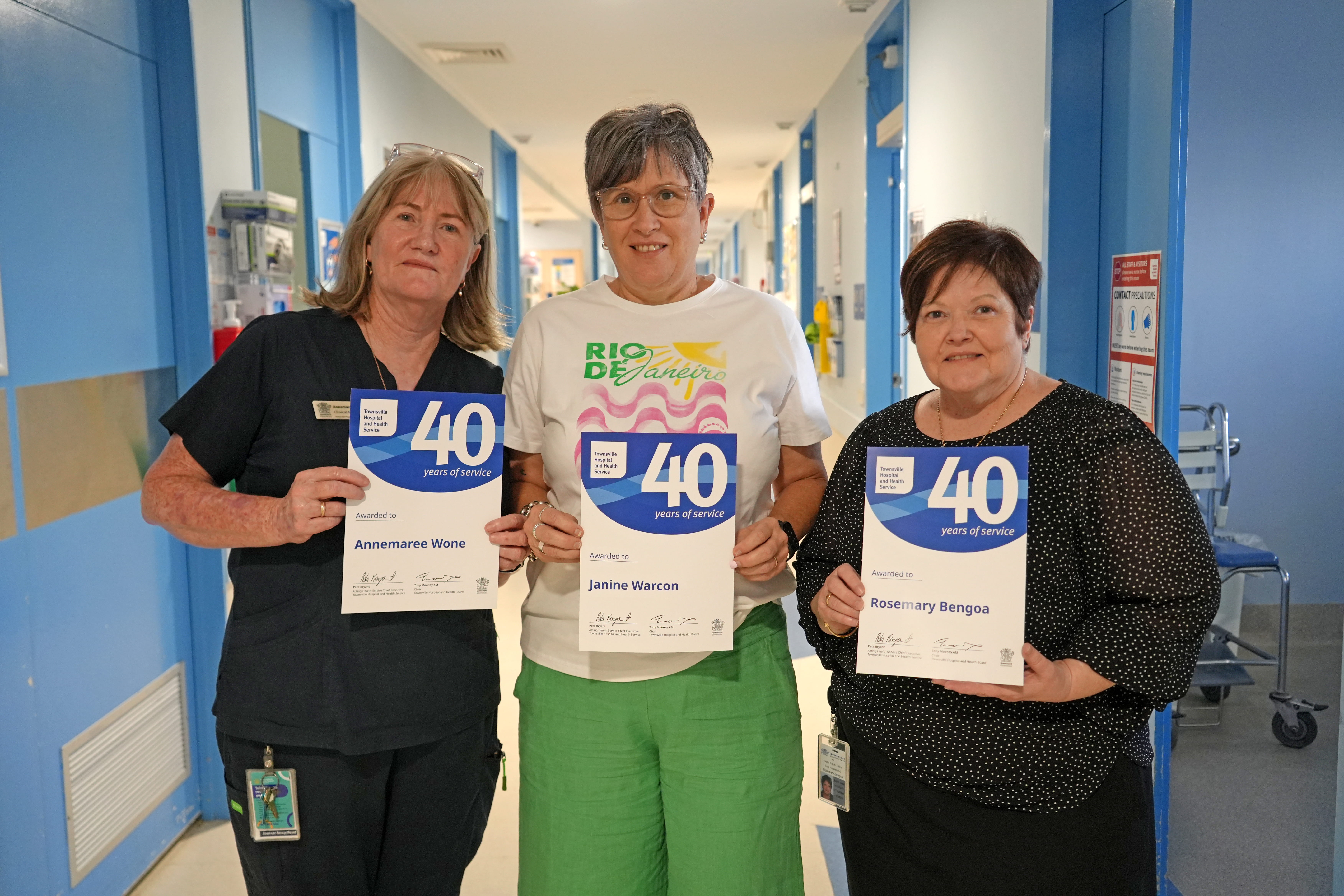
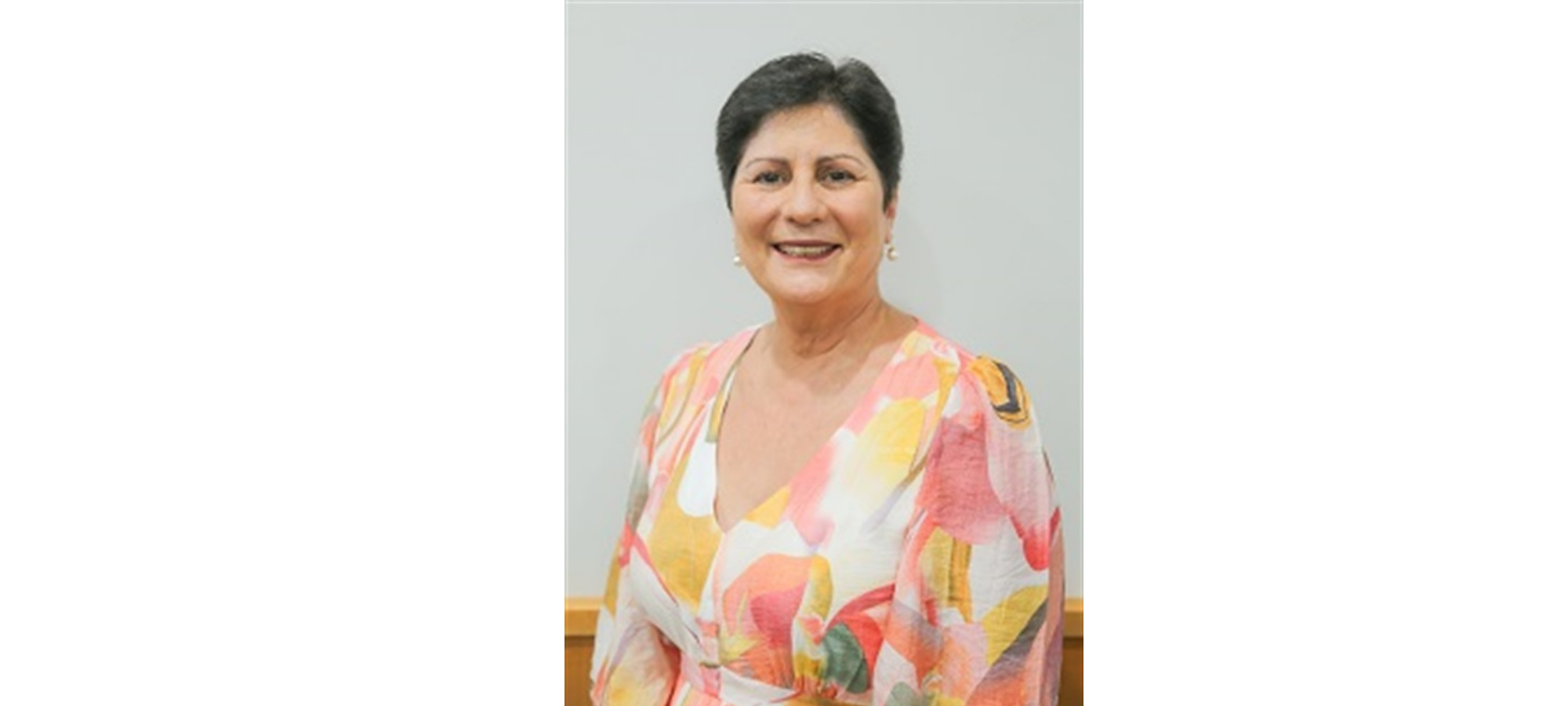
Three Burdekin hospital workers have clocked up 120 years of combined service to the Ayr and Home Hill communities. Rosemary Bengoa, Janine Warcon and Annemaree Wone have each reached 40 years of service, with the milestone recognised at local staff thank-you events. Rosemary began at Ayr Hospital in 1985 in the front office before moving into medical records, accounts payable, assets and finance. Janine started in the Home Hill Hospital kitchen and has since worked across kitchen, cleaning and laundry roles at both Ayr and Home Hill. She later became an orderly before moving into her current role as an assistant in nursing at Home Hill. Annemaree began her career at The Prince Charles Hospital in Brisbane, working as an enrolled nurse for four years before completing her registered nurse training in Townsville. She returned to the Burdekin after the birth of her first child and now works across the dialysis unit and emergency department at Ayr. The three staff members said their connection to the community, colleagues and variety of work had kept them in the health system for four decades. “Your work colleagues and the friendships you make along the way keep you in the role,” Rosemary said. For Janine, working in her own community and caring for patients has been a key part of her career. “We’ve had some funny moments; just the other night one patient was disco dancing in the hallway with me,” she said. Annemaree said working across different areas had kept her career varied. “I work in dialysis, sometimes in the emergency department, and sometimes on the ward, and because I have always worked across multiple areas, I’ve never felt stuck in one place,” she said. The breadth of responsibilities is a common feature of working in rural hospitals, Ms Wone said. “You need to know lots of different things when you work in a rural or remote hospital setting, so we are very busy,” she said. “But even with how much we have all achieved, I can’t believe it’s been 40 years; it feels like it happened overnight.” CAPTION: Rosemary Bengoa, Janine Warcon and Annemaree Wone have each reached 40 years of service, with the milestone recognised at local staff thank-you events. Photo supplied
Read the full story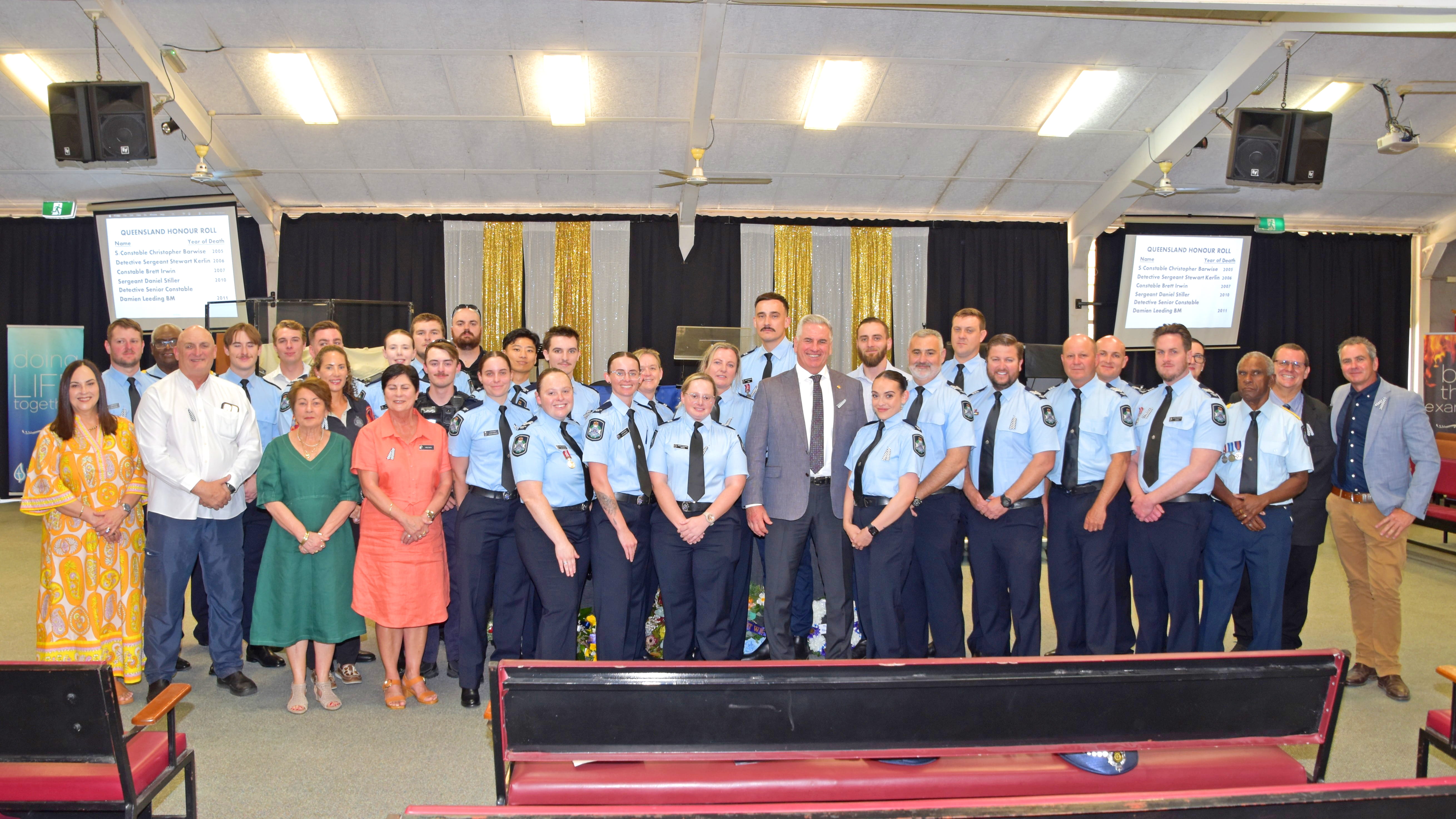
Burdekin police, dignitaries and community groups gathered Tuesday morning to honour officers killed in the line of duty. Photo: David CooperBurdekin community members, local dignitaries, and police gathered at Ayr's Burdekin Community Church on 29th September to commemorate National Police Remembrance Day. The solemn service honoured officers who made the ultimate sacrifice in the line of duty, featuring a wreath-laying ceremony and a reading of the Roll of Honour.Read more here: www.burdekinlife.com/article/burdekin-honours-fallen-officers-on-remembrance-day
Read the full story
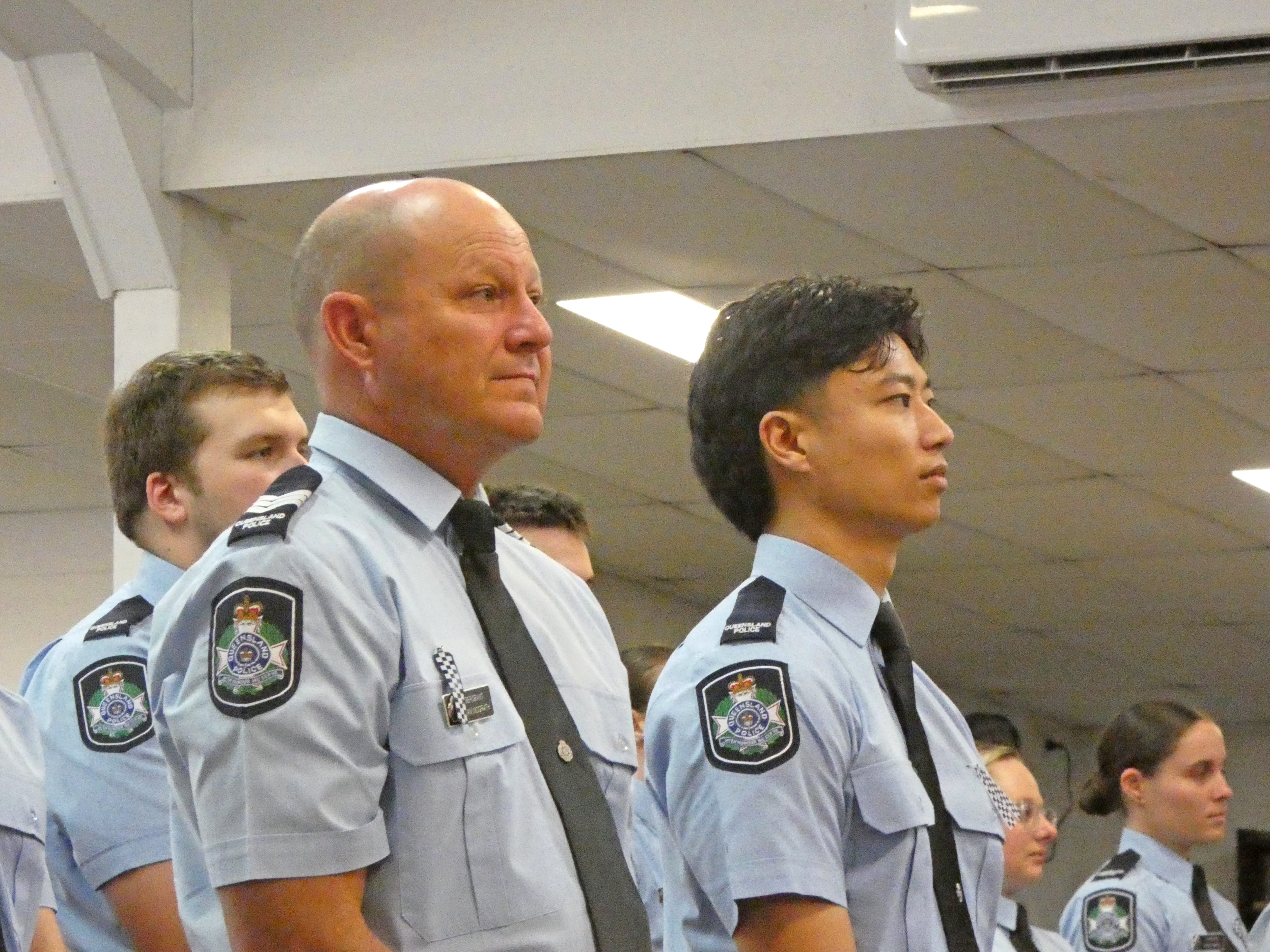
Burdekin police, dignitaries and community groups gathered on Tuesday morning to honour officers killed in the line of duty. Held at the Burdekin Community Church in Ayr, the service formed part of National Police Remembrance Day, observed each year on 29th September. Pastor Peter Holmes, who led the service, said it was a chance to pay tribute to the bravery and service of the fallen. “Someone has to protect those who cannot protect themselves. Someone has to step into the disorder and work to restore order—and that is one of the responsibilities entrusted to our police,” he said. “Today, we honour those who stood. Some stood in circumstances that ultimately cost them their lives, and this day each year ensures that their courage will never be forgotten.” A Police Commissioner’s Address was delivered by Acting Inspector Megan Benson before local officers read the Roll of Honour, commemorating police officers killed in the line of duty. Officers then lit memorial candles, before community groups joined police and dignitaries in laying wreaths. Among dignitaries were Burdekin Shire Council Mayor Pierina Dalle Cort and Member for Burdekin Dale Last, who called it a “privilege” to join local police in their commemorations. “As a former police officer, National Police Remembrance Day is an incredibly important opportunity to remember those officers who lost their lives while serving their community and to show our support to those who continue to keep our communities safe today,” Mr Last said. “Small regional towns like the Burdekin mean our police officers become involved in a variety of facets in our community and it is part of what makes these roles in our small communities so unique.” “It also means that chances to stand with our men and women in blue should not be overlooked.” A morning tea was held in the church hall following the service. CAPTIONS: 1—Burdekin police, dignitaries and community groups gathered Tuesday morning to honour officers killed in the line of duty. 2—Pastor Peter Holmes, who led the service, said it was a chance to pay tribute to the bravery and service of the fallen. 3—Held at the Burdekin Community Church in Ayr, the service formed part of National Police Remembrance Day, observed each year on 29th September. 4—Mayor Pierina Dalle Cort and Deputy Mayor Max Musumeci laid a wreath on behalf of Burdekin Shire Council 5—Among dignitaries was Member for Burdekin Dale Last 6—Local officers read the Roll of Honour, commemorating police officers killed in the line of duty 7—Liaison Officers light memorial candles 8—Senior Sergeant Lisa Shields addresses the audience 9—Community groups joined police and dignitaries in laying wreaths Photos: Jacob Casha
Read the full story
.jpg)
Opinion of Federal Member for Dawson, Andrew Willcox MP
There is a moment in life when private health insurance ceases to be an optional expense and becomes an absolute lifeline. For over three million older Australians, that moment is now. Yet, in a cynical act of budget manoeuvring, the Albanese Labor government has chosen this exact point of vulnerability to launch a targeted raid on the health security of our seniors.
Buried within the federal budget is a directive that strips away the long-standing, age-based Private Health Insurance rebate safeguards for citizens aged 65 and over. From 1 April 2027, the vital support seniors rely on to maintain their health cover will be dismantled.
If you are aged 65 to 69, your rebate is being cut from 28.1% to 24.1%. If you are 70 or older, the hit is even heavier, with your rebate slashed from 32.2% all the way down to that same 24.1% baseline.
This is a trap, plain and simple. The government waited until our seniors left the workforce and locked themselves into fixed retirement incomes, before pulling the rug out from under their health security.
Our seniors spent decades working hard, paying their taxes, and making immense personal sacrifices to secure their retirement. They did everything right. To change the rules of the game on them now is a complete insult: it forces older Australians to play a game of economic Monopoly where the rules are rewritten at halftime simply because the banker ran out of money.
Labor is treating the hard-earned health security of older generations like they just stumbled across a giant sack of cash by the river, trying to spend it as fast as they can to plug their own budget deficit before the public finds out.
This betrayal delivers a massive blow to household budgets. Maintaining private health cover is already an expensive struggle, with premiums climbing sharply year after year. Forcing older Australians to bear this extra burden ensures that health security will be priced too far out of reach for many who need it most.
This means ordinary, fixed-income couples holding comprehensive Gold-tier cover will see their out-of-pocket bills surge by more than $1,600 a year. For thousands of seniors in our community who view health insurance as a necessity, this is a financial eviction notice from their own health funds.
This budget raid sends a dangerous message to everyday Australians. If you work hard, save your money, and try to be self-reliant, this government will just punish your success.
To defend this as a sensible budget reform is a total delusion. The government claims they are redirecting these "savings" to fund aged care, but it is a classic false economy.
Independent actuarial modelling shows these changes may reduce rebate expenditure by around $482 million, but they will dump approximately $547 million in additional costs onto our public hospitals.
When escalating costs force older Australians to drop or downgrade their private coverage, their complex health needs do not vanish into thin air. Instead, those chronic conditions and surgical requirements are dumped straight into our public emergency wards, exploding wait times and fracturing a system that is already on its knees.
We all know the empty promise that a Medicare card is all you need, but out here in regional communities like Dawson, finding a bulk-billed doctor or securing a local specialist appointment is already rarer than hen’s teeth.
Pushing thousands of elderly patients onto public waiting lists will choke regional healthcare access and threaten the viability of the local private hospitals our communities rely upon to survive.
Our seniors have paid their dues. They have earned their peace of mind, and they deserve certainty, dignity, and respect; not an overnight raid on their health security.
It is time to say enough is enough and tell the federal government to keep their hands off our health cover.
If you are ready to stand up against this betrayal and protect the health cover our seniors have earned, join me in sending a clear message to Canberra by emailing me at andrew.willcox.mp@aph.gov.au
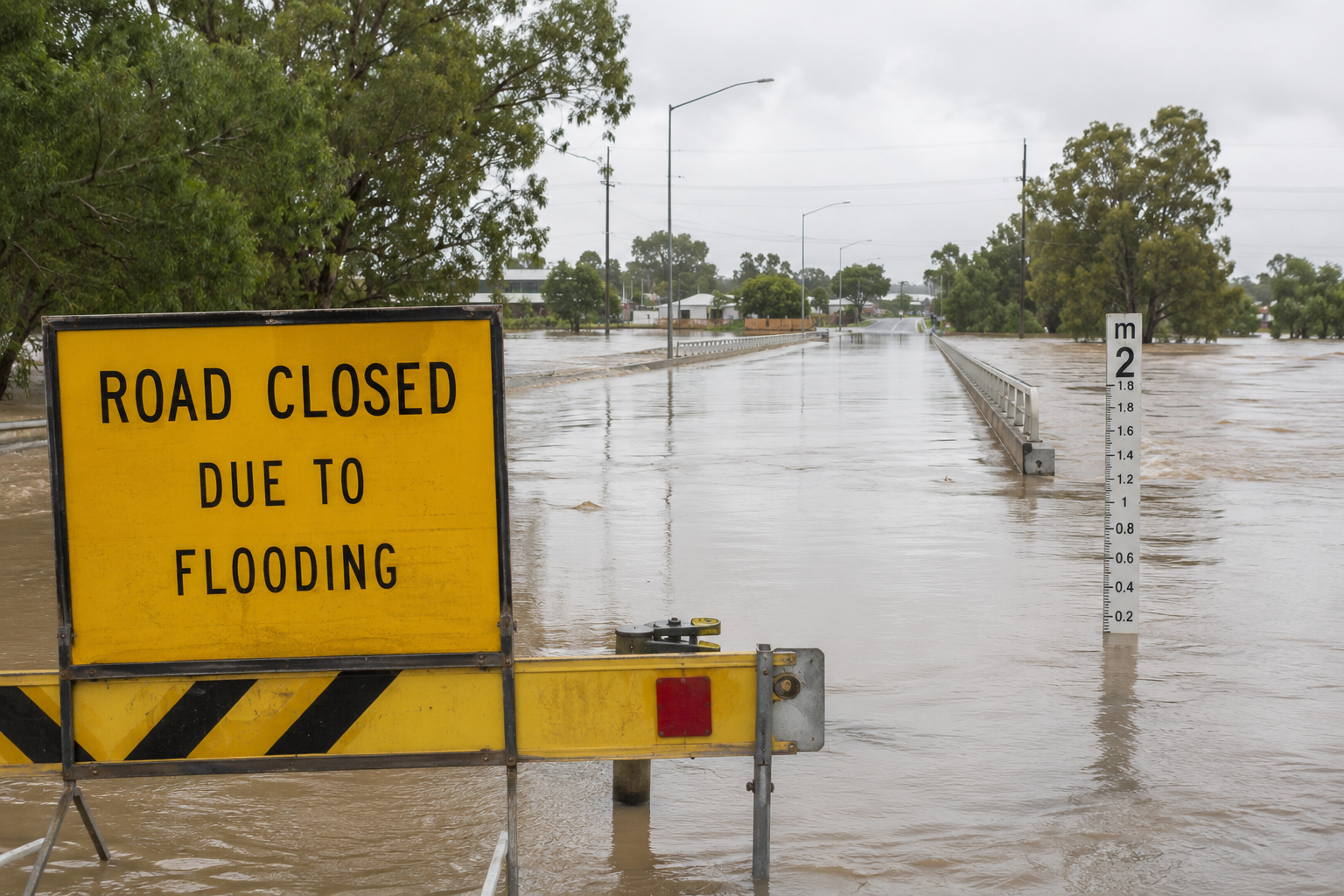
Burdekin Shire Council CEO Matthew Magin has warned a proposed overhaul of federal disaster funding arrangements could come at an "enormous cost to ratepayers" if passed in its current form.
The new Disaster Recovery Funding Arrangements (DRFA), announced by the Albanese Government last week, would split disaster recovery costs 50/50 between the Australian Government and state and territory governments.
Under previous arrangements, Commonwealth funding typically covered about 64 per cent of disaster recovery funding.
Burdekin Shire Council Mayor Pierina Dalle Cort said the change could increase pressure on already stretched council budgets, with concerns some costs may ultimately flow through to ratepayers.
“While we acknowledge the intent to streamline funding and improve response times, there is a real concern that local governments will be left to carry more of the financial burden, which could impact how quickly and effectively we can rebuild after future events,” she said.
“It’s essential that funding arrangements recognise the scale and frequency of events we face, so we can continue to rebuild stronger and support our communities when they need it most.”
North Queensland leaders have slammed the proposal, with Federal Member for Dawson Andrew Willcox calling it a “direct hit to the heart of North Queensland.”
"Canberra is treating natural disasters like a corporate budgeting exercise; however, out here, it is a matter of community survival,” Mr Willcox said.
He said the new arrangement could leave communities “dangerously exposed.”
“Small regional councils do not possess the independent asset base to fund multi-million-dollar rebuilds alone,” Mr Willcox said.
"To penalise the very regions that drive the nation’s agricultural wealth and mining export revenues is a profound betrayal.”
Minister for Emergency Management, Kristy McBain said the proposed arrangements will streamline funding channels to communities in recovery.
"Our reforms will create certainty about the support available to communities and ensure it flows as quickly as possible,” she said.
“I look forward to working constructively with jurisdictions to deliver a system that is simpler and fairer for all Australians.”
The Burdekin has experienced several major floods dating back to 1911, and as recently as 2025, with floodwaters periodically cutting major roads, isolating communities and disrupting key transport infrastructure across the region.
Mayor Dalle Cort said past funding arrangements had been critical in restoring key Burdekin infrastructure like roads, bridges, and other transport links after major weather events.
She confirmed a letter had been sent on Thursday to Prime Minister Anthony Albanese and Minister McBain, urging the Government not to proceed with its proposal.

Ayr State High School student Jorja Jerkic has returned from a week-long STEM Girl Power Camp in Brisbane, where she was one of just 60 Year 10 girls selected from across Queensland to take part in the hands-on program. Photo supplied
Ayr State High School student Jorja Jerkic has returned from a week-long STEM Girl Power Camp in Brisbane, where she was one of just 60 Year 10 girls selected from across Queensland to take part in the hands-on program.
The camp immersed students in a range of science, technology, engineering and mathematics experiences, including university visits, laboratory work, and interactive exhibitions designed to showcase future study and career pathways.
Jorja said she was “incredibly grateful” for the experience and eager to apply her newfound knowledge.
“The camp was a wonderful opportunity to explore a range of STEM fields as well as meeting like-minded students, build new friendships and creating unforgettable memories," she said in the Ayr State High School newsletter.
"I am incredibly thankful for the chance to be part of such an inspiring and empowering experience, and look forward to applying what I have learnt for National Science week and future STEM activities.”
Ayr High teachers commended the way Jorja represented the school and “embraced the incredible opportunity."
Across the week, Jorja took part in activities ranging from designing a model water dam and visiting a pathology lab where students observed real-life organs, through to exploring QUT and UQ campuses.
The program also included excursions to the planetarium, the Museum of Brisbane and SparkLab, where students engaged with interactive science displays, including Tesla coils.
The program is designed to encourage young women into science, technology, engineering and mathematics pathways.
Jorja was officially selected for the camp last December, continuing the trend of Ayr High student representation after Bella Lawry took part in 2025.
The experience is expected to further support her involvement in school STEM initiatives and future study pathways in science and technology.

Mayor Pierina Dalle Cort with participants and mentors from the Young Digital Mentors Program. Photo supplied
Young Burdekinites are helping senior residents build confidence with technology through the Young Digital Mentors Program, an initiative aimed at improving digital literacy while strengthening community connections across the Burdekin.
Facilitated by Burdekin Library, the program pairs young mentors with senior participants to provide one-on-one support with everyday technology, including smartphones and tablets.
Burdekin Mayor Pierina Dalle Cort said the program demonstrated the value of intergenerational learning and community engagement.
“Programs like Young Digital Mentors not only build valuable digital skills, they also bring generations together in a meaningful way,” Cr Dalle Cort said.
“It’s fantastic to see our young people stepping up to support others, while also developing confidence, leadership and communication skills of their own.”
The Young Digital Mentors Program was originally developed by the State Library of Queensland in 2025 and was first piloted in the Burdekin, making the region the first location in Queensland to deliver the initiative.
This year's program continues to be delivered by Burdekin Library with support from the State Library of Queensland and the eSafety Commissioner. Training for the young mentors was provided in partnership with Creative Bytes.
Senior participant Inez Larsen said the experience had improved her confidence in using technology.
“Participating in the Young Digital Mentors Program has been a rewarding experience,” Ms Larsen said.
“I really appreciated the way Andria shared her knowledge in such a supportive, respectful and approachable way.
“As a result of the program, I have come away feeling more confident and using more fully the capabilities of my iPhone. Thank you Burdekin Library staff and young digital mentor, Andria.”
The program aims to improve digital inclusion by helping older residents develop practical technology skills while giving young people the opportunity to build leadership, communication and mentoring experience.
This year's young digital mentors were Thomas Lindley, Alexis Lindley, Andria Reinke, William Wiseman, Addison Bonato and Fletcher Sgroi.
Senior participants included Liz Schmidt, Robert Ritchie, Alvin Thomas, Inez Larsen, Margaret McLucas, Michael Irving, Sheron Gaston and Beverley Matthews.
Burdekin Shire Council has encouraged residents to stay connected with Burdekin Library for information on future programs designed to strengthen digital skills and community connections.

The Burdekin’s 2026 sugarcane crush season has opened with more than 183,000 tonnes processed in the first week, as all four local mills move through commissioning and settle into full production. Photo supplied
The Burdekin’s 2026 sugarcane crush season has opened with more than 183,000 tonnes processed in the first week, as all four local mills move through commissioning and settle into full production.
The week ending 6 June saw Invicta, Pioneer, Inkerman and Kalamia mills collectively crush 183,526 tonnes of cane, marking a solid start to the season after operations began on 2 June, with Kalamia following shortly after.
Invicta led weekly throughput with 72,574 tonnes, followed by Inkerman on 40,989 tonnes, Pioneer on 38,498 tonnes, and Kalamia on 31,465 tonnes.
Sugar content across the region also tracked strongly in the opening week, with the Burdekin average Commercial Cane Sugar (CCS) recorded at 13.59. Individual mill results ranged from 13.24 at Kalamia to a high of 13.92 at Invicta.
Wilmar Cane Supply Manager Chris Scovazzi noted the opening week is typically focused on commissioning plant and equipment, with factories now beginning to stabilise after the seasonal ramp-up.
Dry and cool conditions leading into the crush were also credited for supporting the strong early CCS results, which have come in above budget expectations.
The highest CCS recorded for the week was 16.4, from a rake of KQ228 cane supplied from the Haughton productivity district.
Variety performance data showed Q240 dominating supply at 50 per cent of cane crushed, delivering an average CCS of 13.34. KQ228 accounted for 31 per cent of supply and returned a stronger CCS of 13.90, while Q183 made up 11 per cent at 13.54. Smaller contributing varieties included SRA23 at 4 per cent (13.07), WSRA17 at 1 per cent (12.98), and Q208 at 1 per cent (13.01).
With the crush now underway across the region, mills are expected to move further into steady-state production in the coming weeks.
Motorists are also being reminded that cane trains are operating around the clock, seven days a week, as the harvest intensifies.
Mr Scovazzi urged road users to remain alert around rail crossings and “use your train brain” by always giving way to cane trains.

The Ayr Industrial Precinct is nearing completion, with new development incentives now in place to encourage investment across the region. Photo supplied
Burdekin Shire Council is continuing to support local economic growth, with the Ayr Industrial Precinct nearing completion and new development incentives now in place to encourage investment across the region.
The Ayr Industrial Precinct represents a major milestone in the region’s economic development, offering fully serviced, competitively priced industrial land in a strategic location ideal for manufacturing, logistics, trade services and emerging industries.
Burdekin Shire Council Mayor Pierina Dalle Cort said the time has never been better for businesses to consider establishing or expanding their operations in the Burdekin.
“The Ayr Industrial Precinct provides the kind of well-connected, serviced industrial land that businesses are actively looking for,” Mayor Dalle Cort said.
Stage 1 lots are now available from $50 per square metre plus GST, with a range of lot sizes to suit different business needs.
Council has also introduced a new Economic Stimulus Policy for Development Incentives to help reduce barriers to development and support business growth.
“Council understands that development costs can be a challenge, particularly for businesses looking to grow or relocate,” Mayor Dalle Cort said.
“This policy provides a clear and streamlined pathway for developers and business owners to seek reductions in fees and infrastructure charges.
“We want businesses to know we’re here to work with them.”
The Economic Stimulus Policy reinforces Council’s strategy to foster innovation, attract investment, and support long-term economic sustainability in line with the Burdekin Shire Council Corporate Plan 2025–2030.
Businesses interested in securing land or learning more about the development incentives available are encouraged to download the Land Sales Prospectus at www.burdekin.qld.gov.au.
Supplied by Burdekin Shire Council

As I speak with many in our community approaching retirement, I often hear plans of more time on the water - more fishing, more time enjoying life. But all too often, the years pass and that boat never leaves the shed. Retirement is a wonderful opportunity, but staying active and connected is just as important for your health and wellbeing.
One of the best ways to do that is through volunteering. Across the Burdekin, there are so many opportunities to get involved and give back. Whether it’s helping deliver Meals on Wheels, lending a hand at the Men’s Shed, supporting the SES, joining the Fire Brigadeor contributing to the Burdekin Community Association - there truly is something to suit everyone.
The Burdekin Water Festival Launch is coming up this Friday night, and I encourage everyone to get along and support our entrants. These events are a wonderful way to showcase our young people and celebrate what makes our region so special.
We’ve also been fortunate with the weather in recent weeks, providing perfect conditions to get outdoors - whether that’s heading to the beach or enjoying a spot of fishing. At the same time, the sugar cane season is well underway. While not everyone enjoys the “black snow,” I see it as a reflection of the wealth and history that underpin our community.
I’m also pleased to share that the Main Hall at the Ayr Showgrounds has received a much-needed refurbishment with stage 1 of the renovations now complete. This is a well-used and valued community asset, hosting everything from weddings and birthday celebrations to expos and major events. The improvements will ensure it continues to serve our community for many years to come.
As always, I encourage you to stay connected, get involved, and take the time to enjoy all that the Burdekin has to offer.
Should you wish to reach out, don’t hesitate to contact me directly by phone at 0447 150 582, or feel free to send an email to mayor@burdekin.qld.gov.au.
On Wednesday 3rd June, I attended the Pathways and Possibilities night at the Burdekin Theatre. What a fantastic event. The information and displays on offer were outstanding, and it was clear a great deal of effort had gone into providing meaningful opportunities for our young people.
I saw many parents and children having genuine conversations about future pathways, asking questions and exploring the wide range of options available. It was valuable for parents to have so many opportunities presented in one place, helping them support their children in making informed decisions about their future.
Events like this play a critical role in connecting education, training and career pathways, and in encouraging our young people to think confidently about their future. Congratulations to all the organisers, schools and industry representatives involved—well done on delivering such a successful and impactful evening.
It was also great to see such a strong turnout at the Chaplains Breakfast at Ayr State High School on Thursday. The atmosphere reflected the strong connections within the school community and the important role chaplains play in supporting our young people.
It was clear the work of the chaplains has a meaningful impact on the wellbeing and resilience of students. Many young people have benefited from their guidance, support and encouragement, both within the school and across the broader community.
I would like to acknowledge and thank the chaplains, school staff and volunteers for the incredible work they do. Their ongoing commitment makes a real difference in the lives of children and families in our community.
Come along to the Burdekin Theatre on Thursday 25th June from 4pm to 6pm, where you can have a chat with the Mayor and Councillors. This will be relaxed and informal opportunity for residents to connect directly with their Councillorsfocusing on building relationships, also hearing what the community priorities are. Please feel free to come along

Zonta Club Burdekin has assembled more than 1,000 birthing kits in a single morning, with 53 volunteers taking part in a community effort aimed at improving maternal health in underserved regions.
The assembly day, held at the Samaritan Centre at St Francis Catholic School last week, brought together local community groups, schools and service clubs to prepare the kits, which will be distributed to women in remote, displaced or post-conflict settings where access to trained medical care is limited.
“These have the potential to save two lives—mother and baby—so it’s really gratifying,” Zonta Burdekin Correspondence Secretary Inez Larsen said.
Each kit includes plastic sheeting, gauze, string, gloves, soap and a razor, providing basic sterile equipment to support safer childbirth in low-resource environments.
Community groups involved included the Ayr–Home Hill Lions, Rotary, Burdekin Shire Council, as well as students and staff from Ayr State High School, Home Hill State High School and Burdekin Christian College.

Ms Larsen said Zonta members were “proud” of the strong community support for the project.
“We were over the moon. The atmosphere was just so nice,” she said.
“People stayed on for morning tea, there were a lot of laughs—it was a lovely morning.”
Burdekin Shire Councillor John Furnell described it as an “honour” to take part, praising Zonta members for the organisation behind the event.
The Zonta Birthing Kit Project began in 1999 and has since distributed more than three million kits across 30 countries. Australian Zonta clubs account for approximately 65 per cent of global kit production.
Burdekin Zonta contributed about $5 per kit, covering materials and distribution costs. The kits are set to be transported to Birthing Kits Australia in Adelaide before being dispersed overseas.
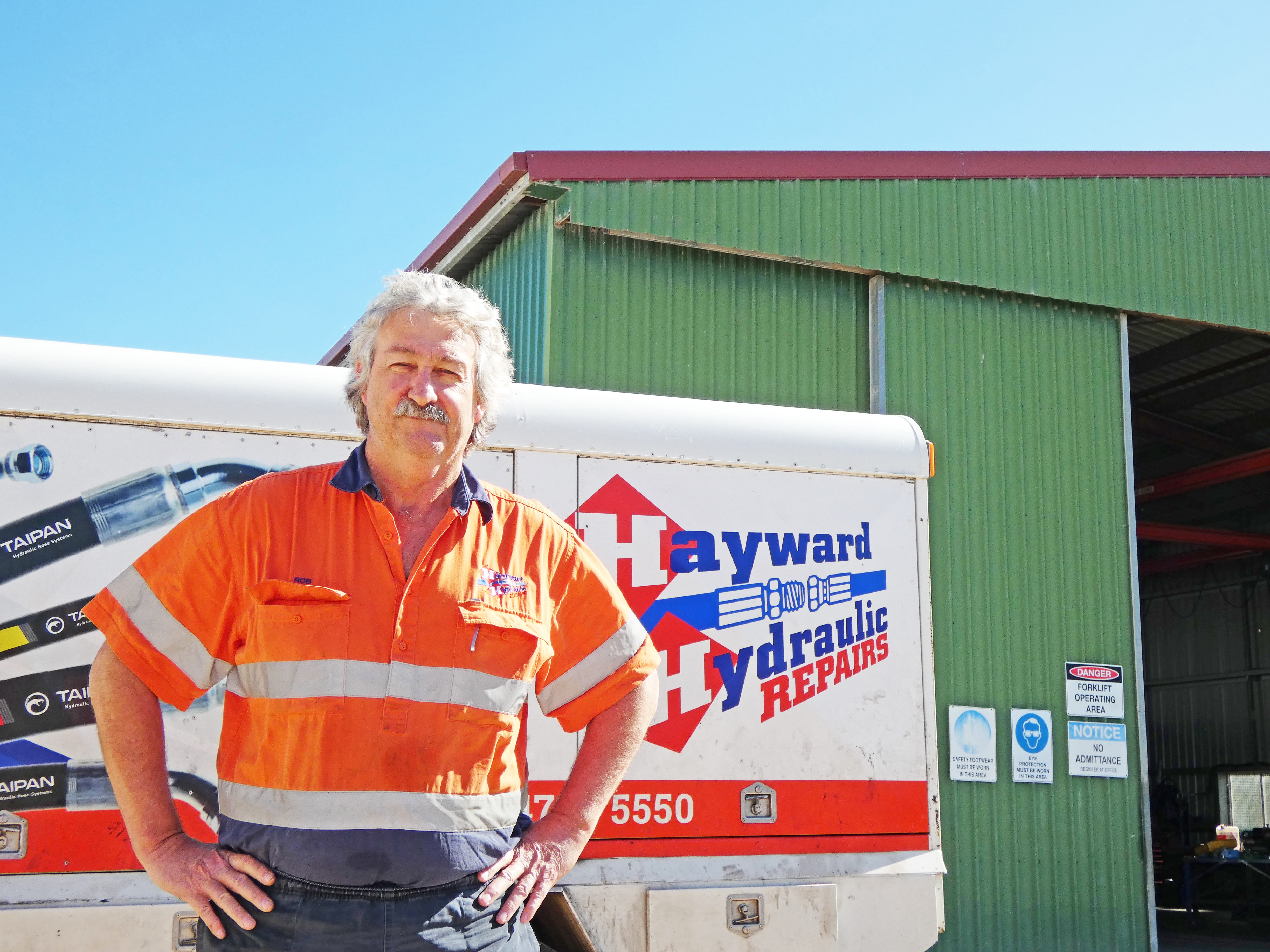
From a $2,000 ute and a toolbox to a Burdekin industry mainstay, Hayward Hydraulics marks 30 years built on reputation, innovation and community.
Not every business starts with a blueprint.
For some, it begins as a calling… in more ways than one.
Burdekin local Robert Hayward had been in the hydraulics industry since he was 18. A diligent worker who loved his job, he quickly built a reputation locally as one of the best in the business.
But despite a mutual affinity with the industry that had formed over years, he stepped away in the early 1990s to help his father-in-law maintain a cane property in Clare.
Until he received a call.
Then another… and another.
Rob quickly realised that, despite his brief hiatus, his reputation in hydraulics had not faded.
With that, he was pulled back into the game, this time with nothing but a $2,000 ute, a toolbox, and work up to his neck.

And the only way to keep himself from drowning in it was, ironically, to go in deeper.
“As the Burdekin is, if you do a very good job, word travels quickly between the community. One farmer talked to another, he talked to another, he talked to another…
“Until I sat down with my wife one day and said, ‘I think we can make a business out of this.’”
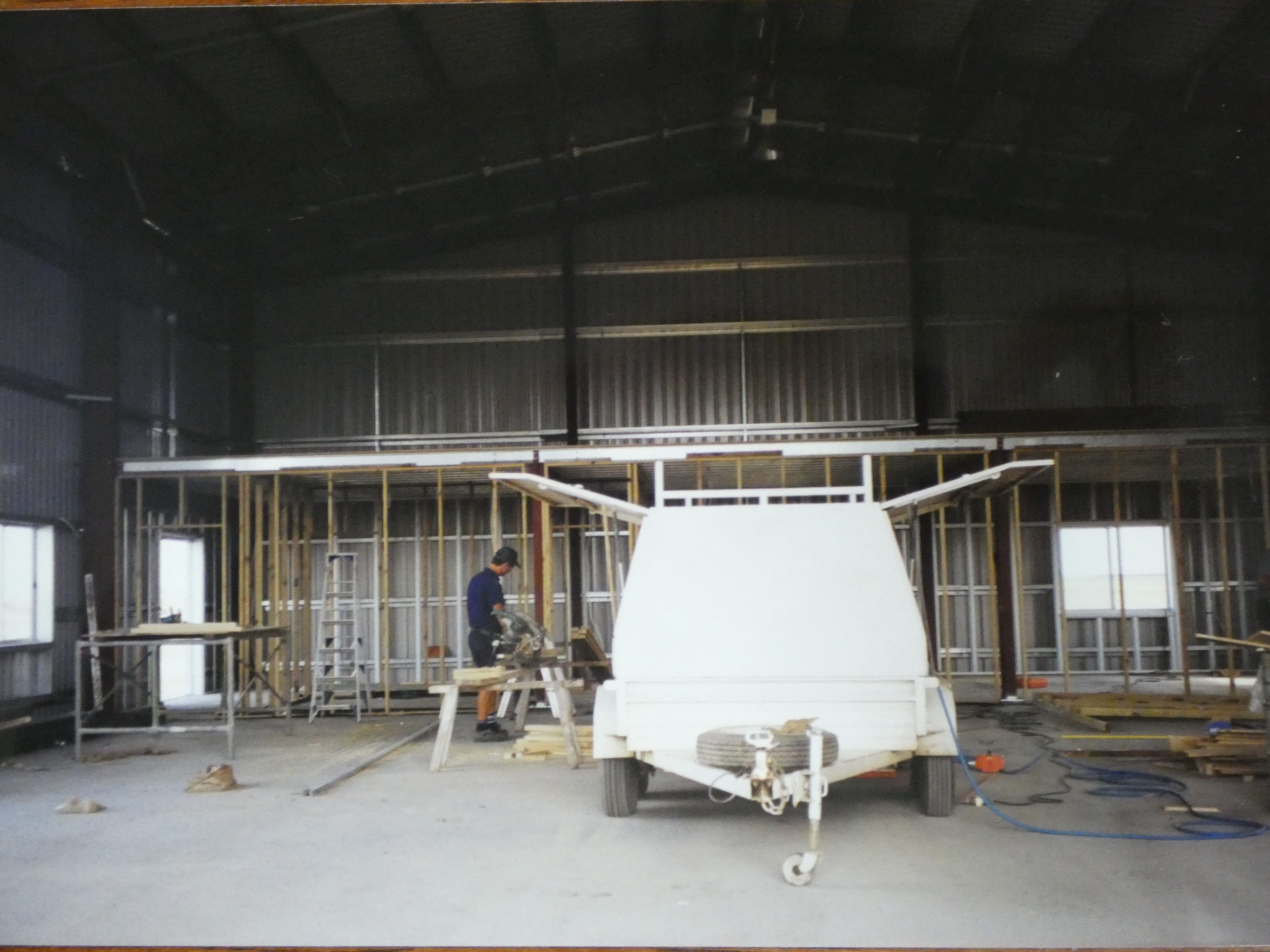
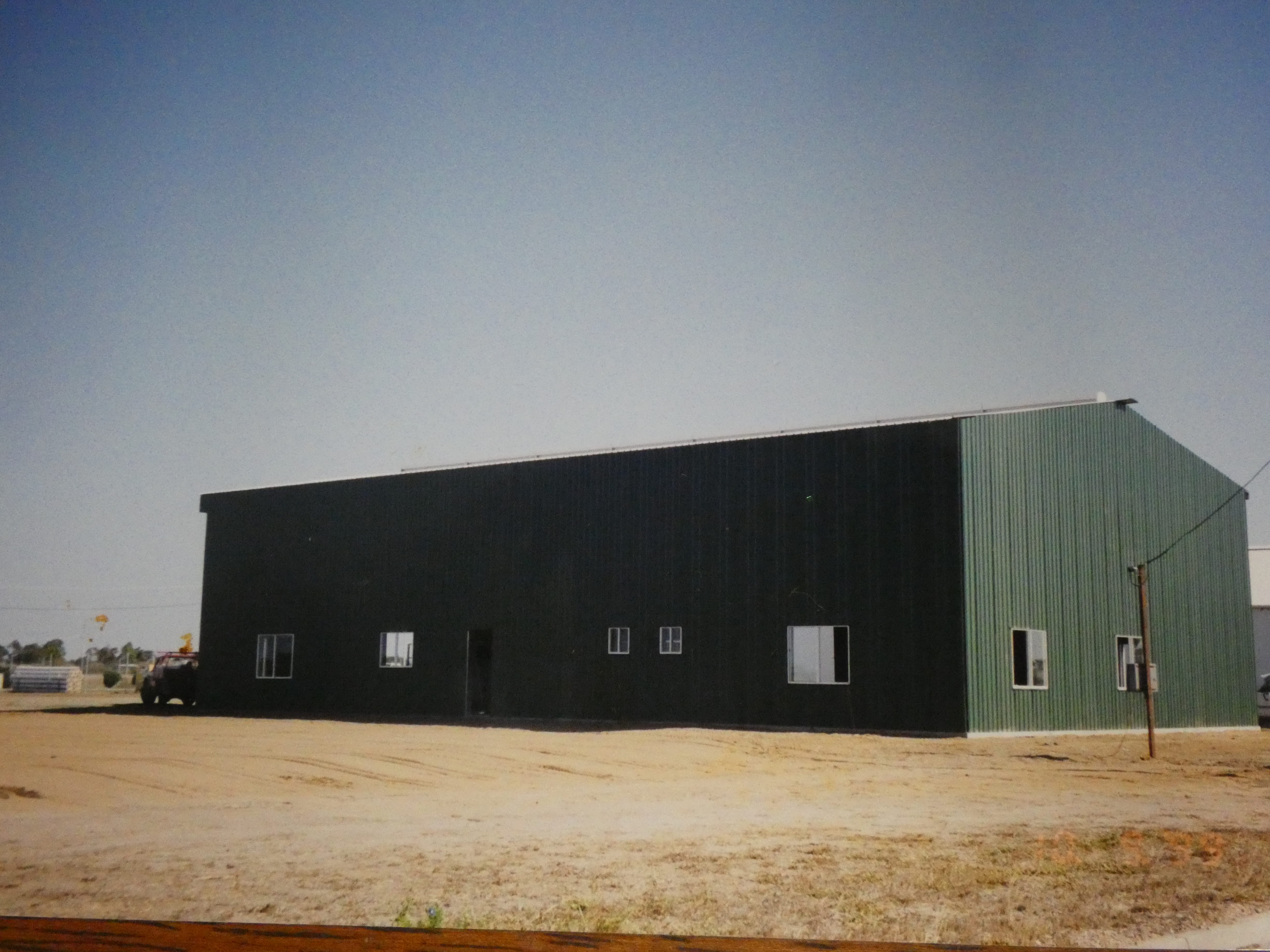
His ute would eventually make way for a permanent space—a small sub-shed at Larry Hudson Engineering in the Ayr Industrial Estate that would serve as his headquarters for the following four years.
He tackled the first year solo, before demand forced him to put an apprentice on in the second year, and a qualified tradesman in the third.
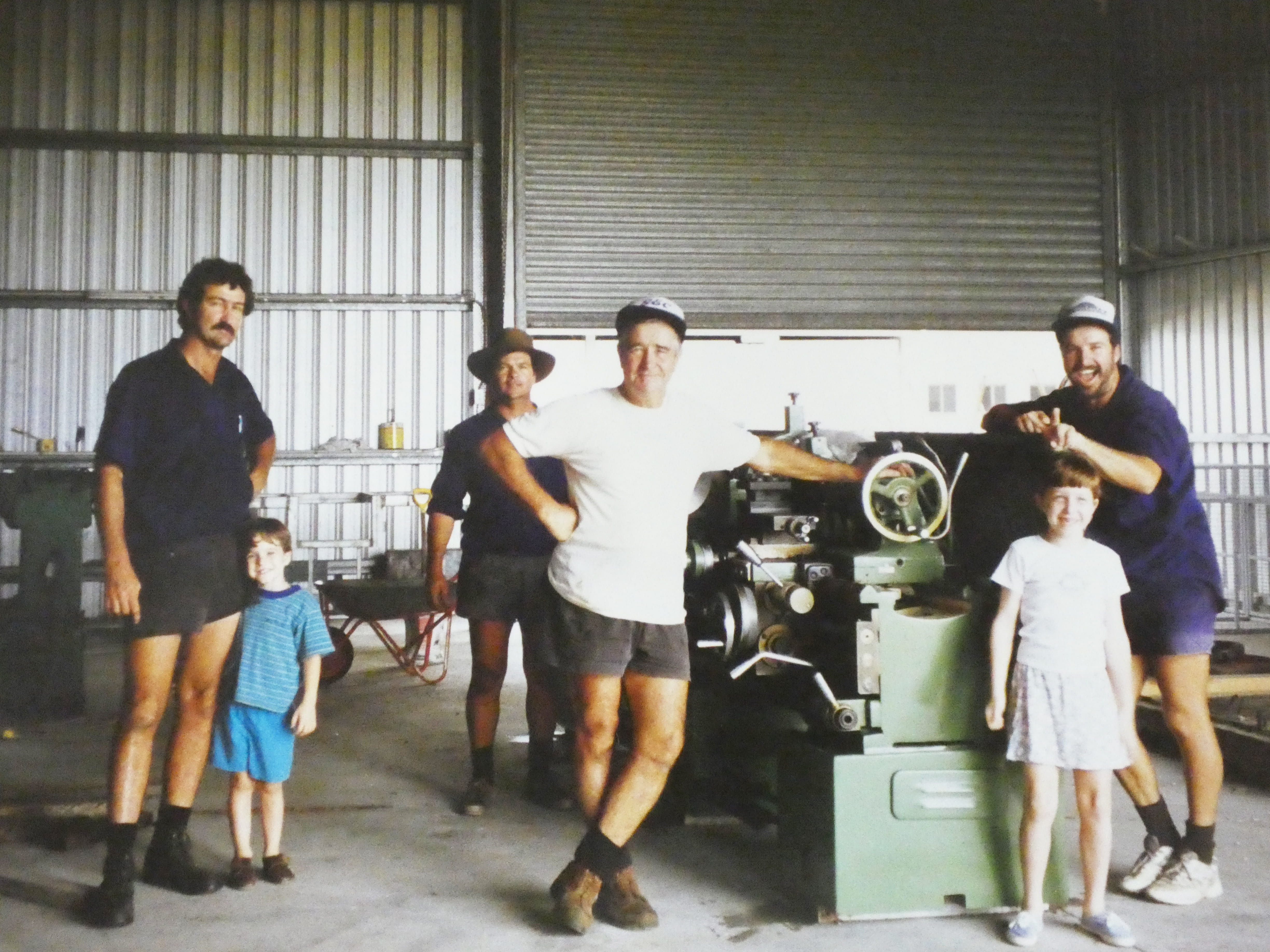
By the end of the fourth, Rob’s work had outgrown its humble base, moving down the road into a new purpose-built shed that would become the home of Hayward Hydraulics.
That shed would officially open in 1996, spurring a 30-year legacy sustained by three defining pillars.
“I had no idea how to use computers,” Rob said with a smirk.
Admittedly, he hadn’t realised he signed himself up for a three-decade, three-fold evolution between an entire industry, his own business, and himself. What he did know was that he was ready to learn, and eager to grow.
It started with the basics. For Rob, that meant wrapping his head around modern computers, attending TAFE courses on emerging welding techniques, and becoming a leader.
“I went from being a very good tradesman to having to be an employer,” he said.
“You have to be a people's person, you have to treat people the right way, treat your workers the right way. That part I never even thought of until we started getting into it.”
Rob treated this evolution as a marathon rather than a sprint, dedicating the business's first decade cementing its reputation as a local leader. After striking up deals with major companies, including Queensland Rail and Wilmar Sugar in the mid-2000s, he decided to take the leap into the mining industry in the early 2010s as a safety net for the unpredictable sugar industry.
With that growth, Hayward Hydraulics’ shed would undergo its third structural expansion to accommodate its continuously increasing popularity and modernised technology.
He built a habit of gleaning ideas from various online hydraulic magazines, and then building on them to not only keep up with the industry, but to will it into the future himself.
“I eventually built a reputation for thinking outside of the square. If somebody's been doing something for 20 years, I'll look at a better way of doing it,” he said.
Albeit, he admits he and the business are still evolving today.
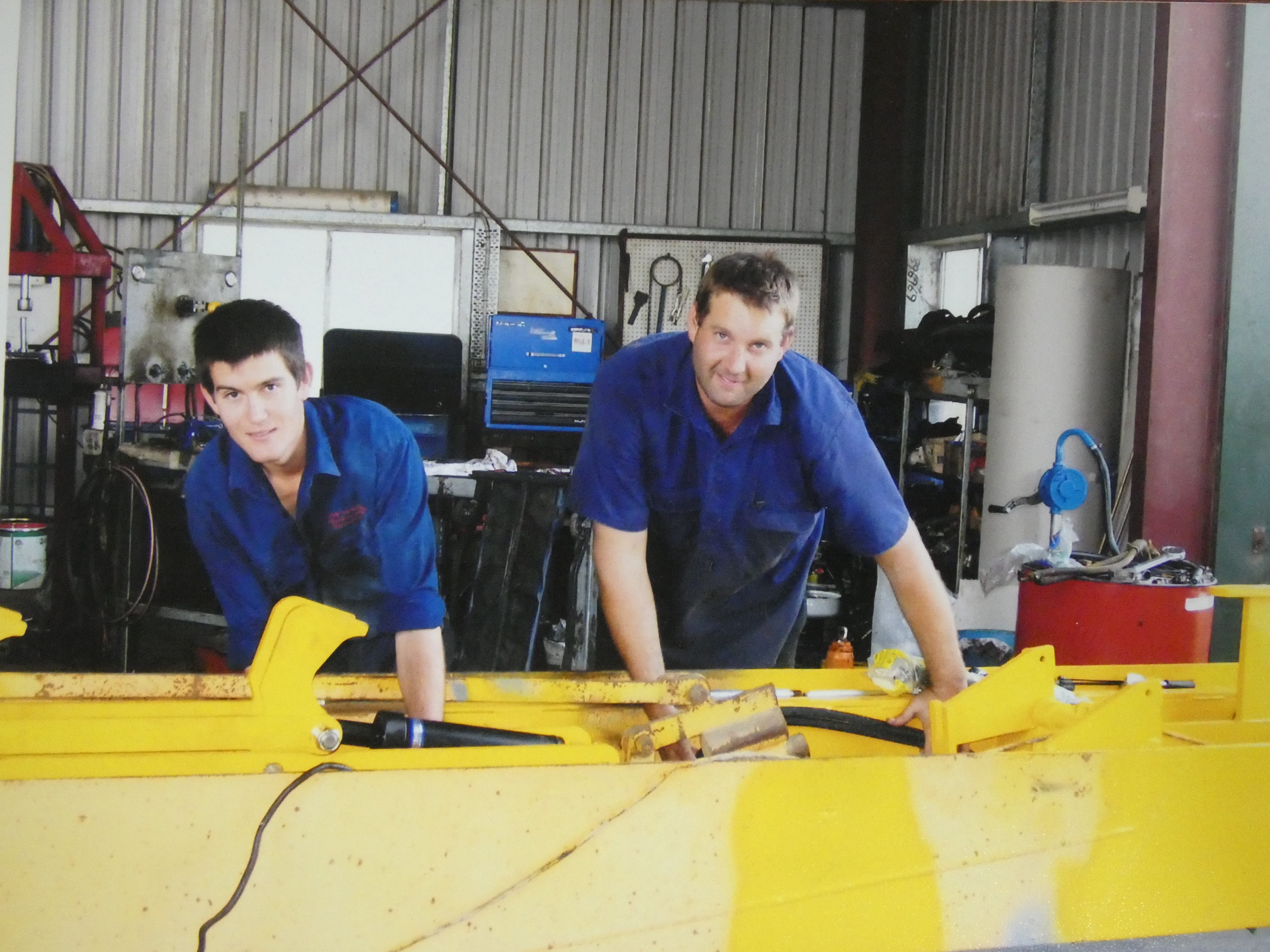
“I've seen harvesters and planters go from chain and sprocket to hydraulic motors, to hydraulic motors being linked to satellite GPS,” he said.
“The industry has changed in leaps and bounds, and you have to keep finding ways to move with it.”
Hayward Hydraulics’ evolution was founded on something Rob didn’t need to be taught.
Care.
And he makes sure his staff do, too.
“I didn't come from a real wealthy family, so we were brought up to work; you work, you do the job right, you get paid,” he said.
“So if I'm not happy with something, I'll ask my workers: ‘would you pay for that?’”
When the mining industry began to boom in Queensland, Rob admits he had a difficult time retaining workers. To compete, he was forced into paying top-dollar for what he called “good quality workers,” causing financial tension.
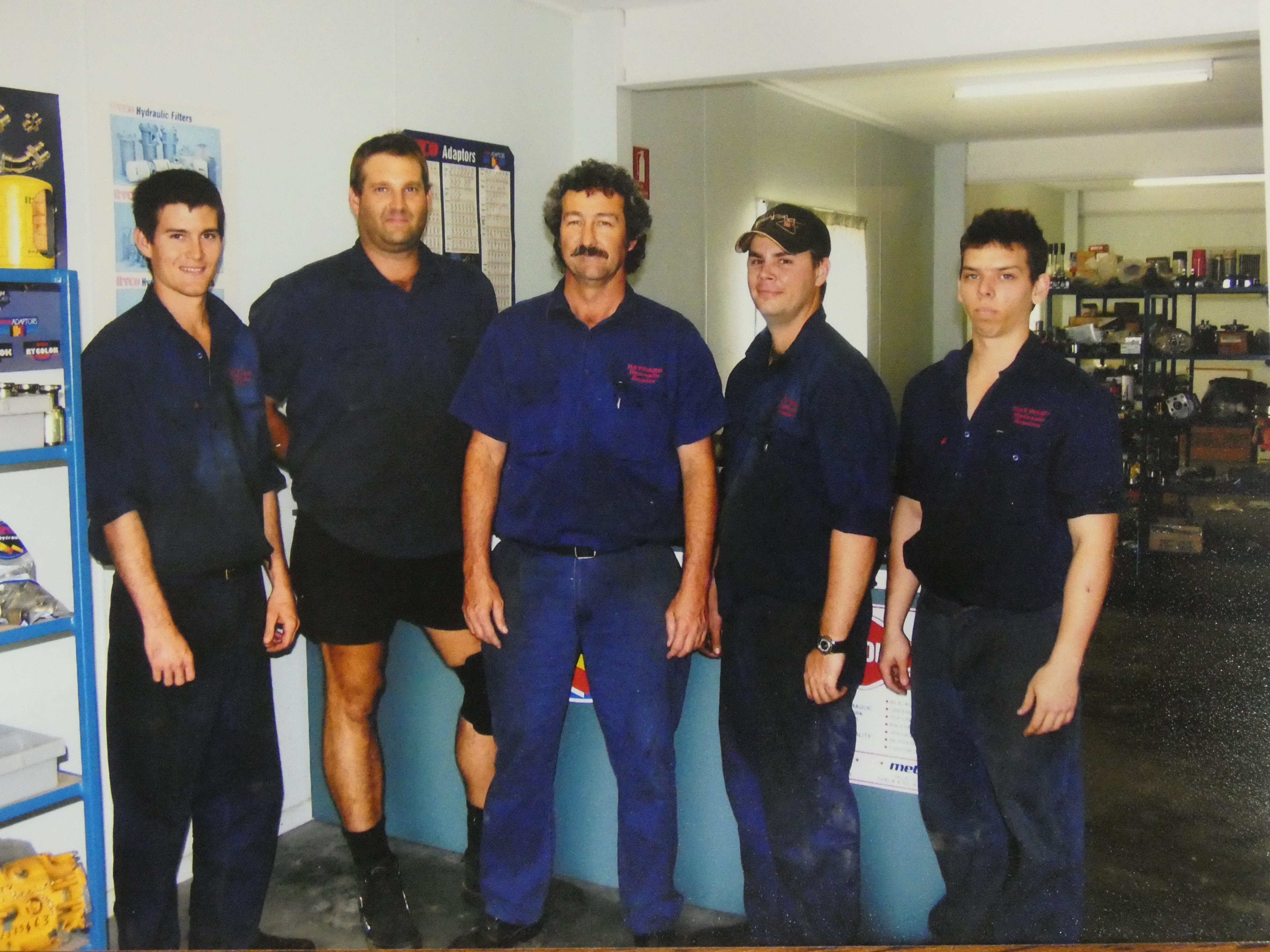
When asked if compromising staff quality for cost was ever an option, with the conviction of a true-blue purist, he said:
“No.”
“I've always maintained that a business is only as good as your employees. You can be the best boss in the world, but if you've got workers that people don't like, they don't come through the door,” he said.
“My current staff are up there with the best that I've had. I just try to make sure they’re happy to come to work every day.”
With quality and care as its engine, Hayward Hydraulics became known not just for technical know-how, but for doing things the right way.
As its stature in the industry continued to grow, so did the scope of its customer base. Calls started coming in from as far north as Tully, all the way to Mackay and Western Queensland, all saying the same thing:
“We heard you were the guy to talk to about this problem.”
For the last 10 years especially, the business has made a point of supporting local organisations and sports clubs, most notably the Burdekin Roosters Rugby League Club.
Rob described it as a duty to a community that has given so much to him and the company.
“The community has been so important to it all. I’ve got some customers that have been with me from day one, and with some, I’m onto the third generation of the same family,” he said.
“The’ve given a lot to me. They've helped me grow and supported me, so it's about time I supported them back.”
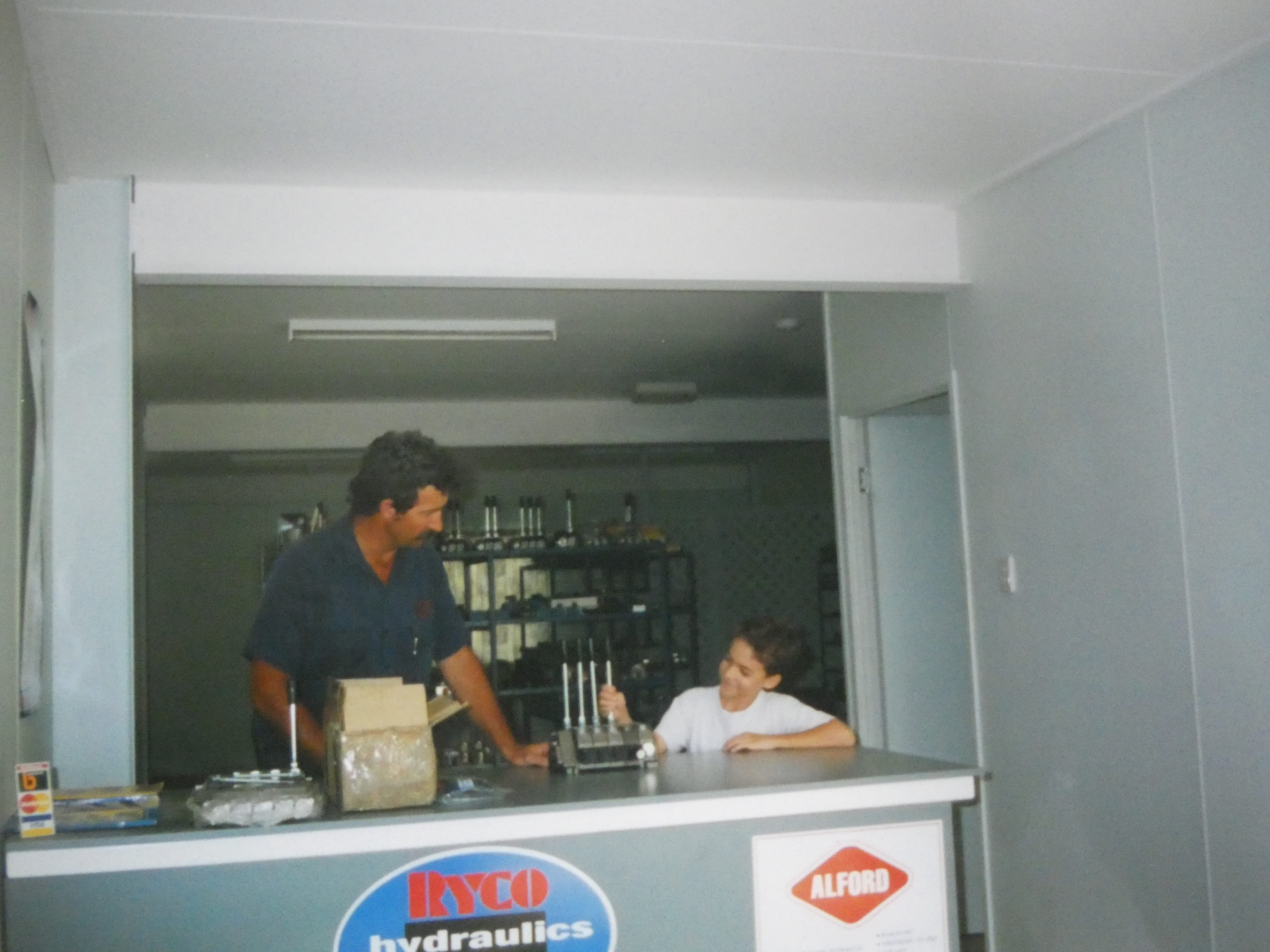
Beneath it all, though, he points to his family as the driving force.
“I remember those early days when we were setting up the new workshop, building benches and all that, my two brothers-in-law and my father came out and gave me a hand,” he said.
“But my biggest support is my wife. Especially in the early days when I wasn't home, and she solely looked after the kids and everything.
“It got to the stage where I was working seven days a week, 12 hour days, and my wife would bring the kids on a Saturday and Sunday, and we'd sit on the shop floor and have lunch.
“She's been with me through the lows and the highs, and that I thank her for.”
Now, thirty years later, it’s his family pulling him out of the industry. Driven by the desire to make up for lost time with his wife and kids, Rob has loosened his grip on business operations, working four days a week with plans to eventually let his brainchild find its own footing.
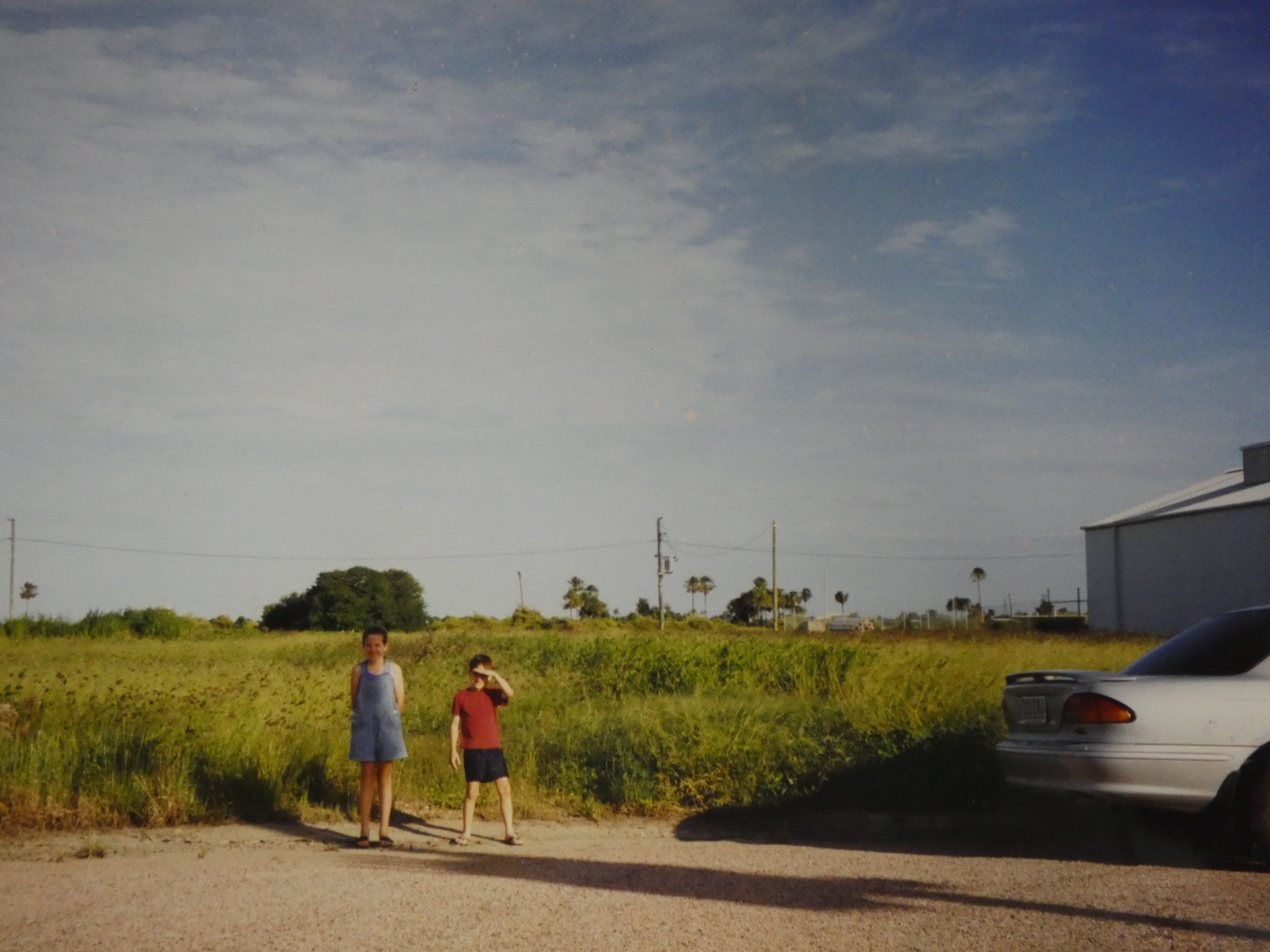
As for right now, he’s not yet ready to call time on a chapter that was, perhaps, never meant to last this many pages.
“I still love what I do,” he said.
“The early days come with sacrifices, but when I look back now, it was all worth it.
“I remember when it all first started, looking on the ATO website and coming across that statistic that most businesses fail within five years.
“When I read it, I said to myself, 'well, I'm gonna make sure I’m not that statistic.’”
And that, he did.

Funding will allow the family to fly their daughters down and spend more time together during Rowen’s treatment. Photo supplied
The Burdekin has rallied behind a local family after a sudden medical diagnosis turned their life upside-down.
Ryan and Holly Davenport dropped everything when their two-year-old son, Rowen, was diagnosed with a brain tumour last month, temporarily relocating to Brisbane for his ongoing treatment.
In response, a GoFundMe fundraiser has since raised over $55,000 in support of the family.
Created in late May by Shannon Malone, a close friend of the Davenports, the fundraiser has been shared all over Facebook and Instagram by local organisations, garnering comments of support on top of 271 individual donations.
“Words can’t describe how much it means to us to have everyone’s support behind Rowen as he begins his journey,” Ryan said.
“They have given us precious time to spend with Rowen without the everyday worries.”
The money will help fund hospital stays, travel, time away from work, and ongoing treatment expenses as the Home Hill family navigates a medical journey that began in April.
Already on edge after daughter, Ally, underwent brain surgery to have a cavernoma removed just before Easter, Ryan and Holly acted promptly when they noticed a twitch in Rowen’s eye.
Following weeks of consultations with Townsville doctors and specialists—which included MRI scans and a Royal Flying Doctors flight—Rowen was eventually diagnosed with pilocytic astrocytoma, a slow-growing brain tumour.
He has since been transferred to Queensland Children’s Hospital in Brisbane for chemotherapy, with the couple leaving their two young daughters with their grandparents in the Burdekin to be by his side.
In their absence, locals have offered meals, helped on the family’s sugar cane farm, assisted around their home and helped look after their daughters, along with the generous donations.
Ryan said the funds raised would not just help relieve the financial burden of Rowen’s treatment, but allow the flexibility to fly their daughters down and spend some time as a family.
“(The toughest part has been) the unknown, not having our family together … and watching Rowen go through these traumatic times and … not being able to do anything,” Ryan said.
“It has been a very emotional journey so far, and it is hard to believe we are only at the start.”
Anyone wanting to support the Davenports is urged to donate using the following link, or scan the QR Code:

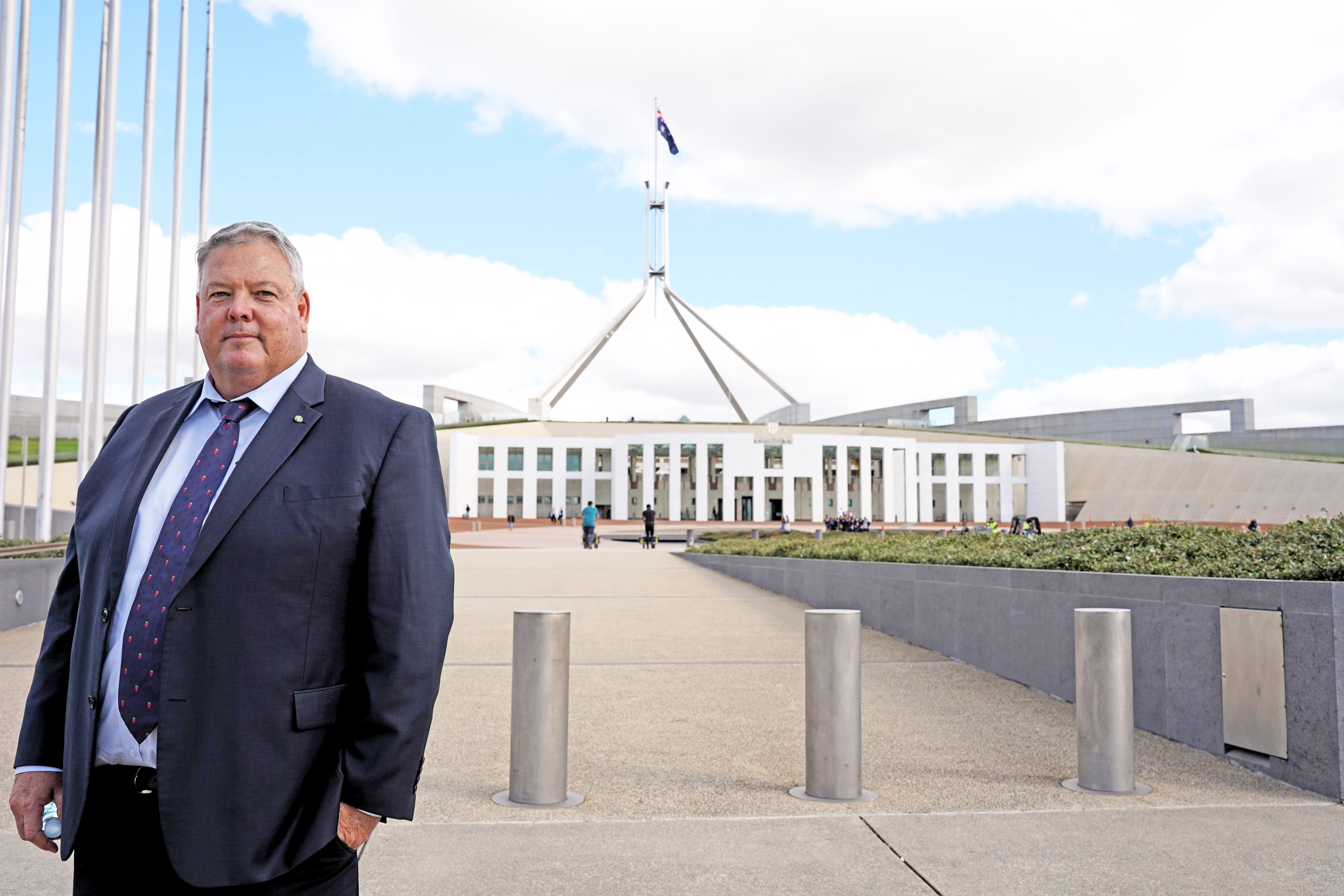
FIGHTING FOR THE NORTH: Federal Member for Dawson Andrew Willcox MP outside Parliament House in Canberra, condemning the Albanese Federal Government's plan to slash scalable disaster recovery funding for regional councils. Photo supplied
The Federal Member for Dawson, Andrew Willcox, has slammed the Albanese Government for an unacceptable ambush on regional communities, accusing the Commonwealth of abandoning disaster-prone areas to balance its own budget.
The Federal Minister for Emergency Management, Kristy McBain, used a late Friday afternoon media release to quietly flag sweeping alterations to the Disaster Recovery Funding Arrangements (DRFA).
The proposed changes dismantle the long-standing, scalable framework, which historically provided an average of 64 per cent federal coverage and capped support at 75 per cent for catastrophic events. In its place, Canberra intends to implement a rigid 50-50 funding model.
This policy shift arrives at the worst possible time for the state; it follows a volatile severe weather season that caused widespread damage across 71 of Queensland’s 77 local government areas.
Federal Member for Dawson, Andrew Willcox, is warning that the sudden funding shortfall threatens the future viability of essential infrastructure, local water treatment facilities, and emergency evacuation operations.
Mr Willcox, drawing on his extensive experience as the former Mayor of the Whitsunday Regional Council, stated that the Federal Government is completely detached from the realities of regional recovery.
"This decision is a direct hit to the heart of North Queensland," Mr Willcox said.
"Canberra is treating natural disasters like a corporate budgeting exercise; however, out here, it is a matter of community survival. To penalise the very regions that drive the nation’s agricultural wealth and mining export revenues is a profound betrayal.
"During my time steering the Whitsunday community through the wreckage of Severe Tropical Cyclone Debbie in 2017, I learned exactly what it takes to rebuild. We relied heavily on scalable federal assistance to restore our shattered rural road networks.
Under a flat 50-50 split, local councils across Dawson would be forced to find millions of dollars in matching revenue; that is a financial burden our regional ratepayer base simply cannot sustain."
Mr Willcox emphasised that major historical recovery operations would have been completely unviable under the newly proposed guidelines.
"The total reconstruction of the Shute Harbour marine terminal and the $5 million federal package required to replace the decimated Proserpine Entertainment Centre occurred because the previous framework allowed for exceptional circumstances," Mr Willcox said.
"Small regional councils do not possess the independent asset base to fund multi-million-dollar rebuilds alone. Furthermore, the historical system guaranteed that funding flowed directly into local economies, ensuring that regional earthmoving businesses and contractors were awarded the repair work.
By lowering the funding floor, the Commonwealth is forcing cash-strapped councils to delay vital resilience works; this leaves our communities dangerously exposed before successive wet seasons.
"It is a coward’s tactic for the Minister to leave this announcement until the day after the parliamentary sitting concluded, ensuring they avoided any real scrutiny or accountability in Question Time.
“This is yet another calculated deception from a government that knows exactly how damaging these cuts are; this is absolutely not what the Australian people voted for, and I truly hope this betrayal is remembered at the next election.
"This is yet another chapter in the ongoing federal neglect of regional Australia. The government is hiding behind the cover of an independent review to justify cutting essential frontline services. I call on the Emergency Management Minister to reverse this decision immediately; regional Queenslanders refuse to be treated as second-class citizens.”
Supplied by the office of Federal Member for Dawson, Andrew Willcox

As the final week approaches for public submissions into the Sugar Code of Conduct, Member for Burdekin Dale Last has renewed his calls for growers to unite and make their voices heard.
Mr Last said the public submissions for the sunsetting review of the Sugar Code of Conduct should be an opportunity for sugarcane growers from across the Burdekin to outline the benefits of the code for both farmers and the wider community.
“Over recent weeks I have taken the liberty of providing a submission on behalf of the community, because ultimately the flow-on impact from changes in our sugar industry stretch beyond the paddock and the mills,” Mr Last said.
“I recently met with several grower representatives which provided the opportunity to bring key stakeholders together, reaffirm my support as the Member for Burdekin and emphasise the need to work collaboratively as the review period unfolds.”
Mr Last said while it was important stakeholders took the time to make their voices heard during the public submissions there was no better way to understand the impact of the Sugar Code of Conduct than to visit the area and speak directly to representatives.
“A decade ago this district played a central role in bringing this code of conduct to fruition so I would expect our stakeholders receive a seat at the table they deserve,” Mr Last said.
“If the Federal Labor Government was serious about consulting with the industry, the responsible
Assistant Minister would be looking for every opportunity to listen to those who are most impacted by the Sugar Code.”
Anyone wishing to have their say in the review can visit https://haveyoursay.agriculture.gov.au/sugar-code-review
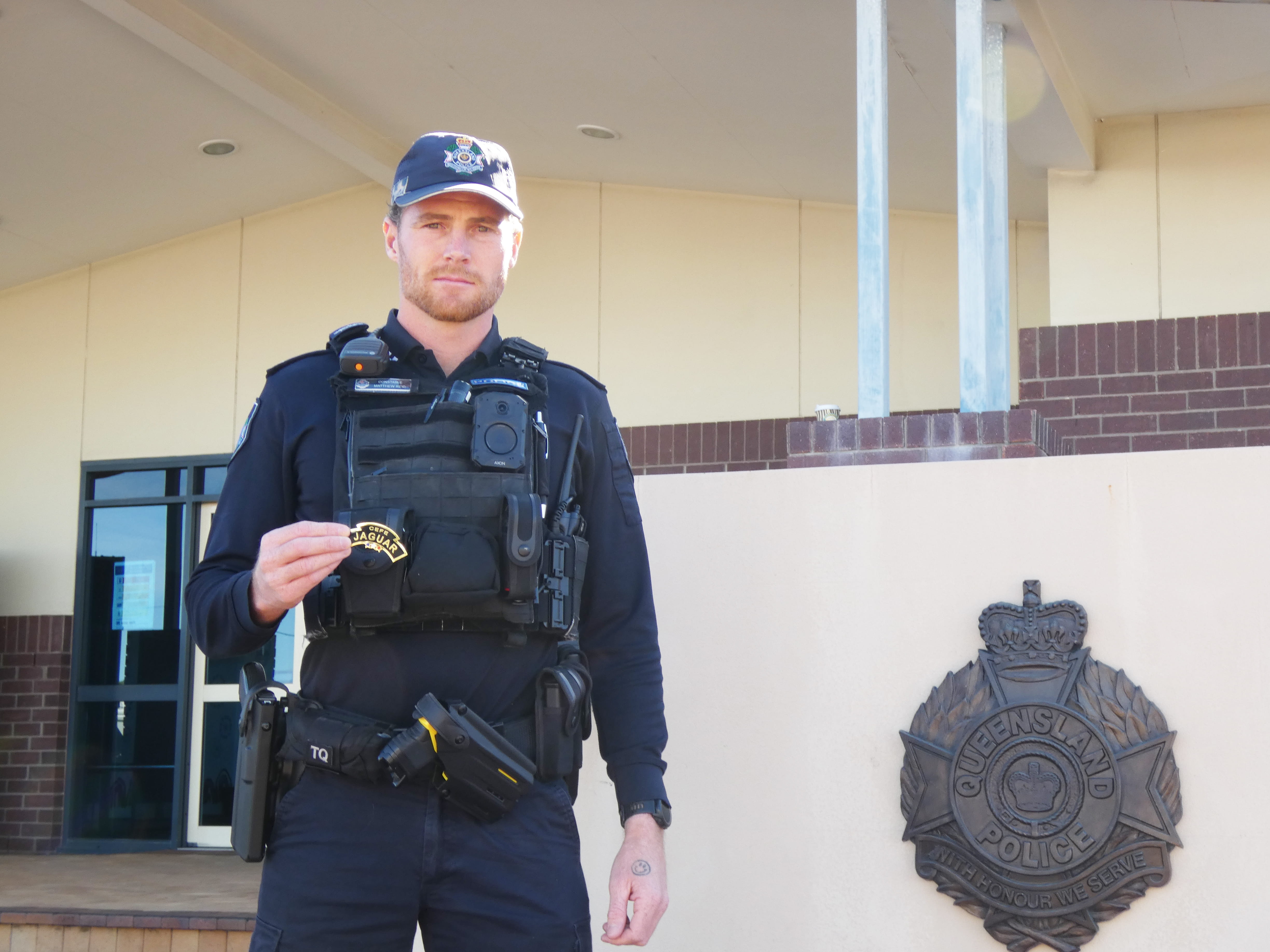
Former Army Sergeant Matthew Reid was formally awarded the prestigious jaguar brevet at a ceremony held at Jezzine House, Jezzine Barracks in Townsville last week. Photo credit: Jacob Casha
A local Ayr police officer has received formal military recognition for becoming the first Australian soldier to pass one of the toughest jungle warfare courses in the world.
Former Army Sergeant Matthew Reid was formally awarded the prestigious jaguar brevet at a ceremony held at Jezzine House, Jezzine Barracks in Townsville last week.
The event marked the official endorsement for recipients to wear the brevet on their formal Army ceremonial dress.
The recognition comes after Mr Reid made history in 2024, becoming the first Australian to successfully complete the gruelling eight-week Jaguar Course in French Guiana, run by the French Foreign Legion.
The elite course, notorious for its extreme physical rigours, put participants through endurance, combat, and survival tests in a dense jungle environment.
The experience proved a true test of resilience for NSW-born Reid, compounded by a severe foot infection that caused swelling and intense pain throughout the training.
"It was probably one of the hardest things I've done throughout my military career. But I enjoyed it a lot," Mr Reid said.
After two months of intense field training, which saw him struggle through a casualty transport emulation in armpit-deep mud, Mr Reid would pass the course ranking 18th out of 35 students.
He recalled feeling a mix of nervousness, relief and pride as he awaited his results at the ceremony.
“The staff and instructors over there don't really give you too much feedback, so you don’t really know where you sit. But it was definitely a massive weight off the shoulders (when I passed),” he said.
“It felt good to represent Australia, the Army, and the unit that I came from.”
Following a ten-year military career, which included eight years in Townsville and two years in Tully, Mr Reid would eventually transition into civilian law enforcement.
He graduated from the police academy and was stationed at the Ayr Police Station last November, where he’s been learning the ropes ever since.
Mr Reid said that, despite few similarities between the Jaguar jungle course and the Ayr climate, his military background has facilitated a smooth transition into policing.
“Not so much from (the Jaguar Course) applies, but from the army in general, there’s definitely a lot of discipline and resilience that carries over to this job,” he said.
Now six months into his policing career, he says he has embraced the slower pace of the Burdekin, drawing parallels with his coastal hometown of Jervis Bay.
"It's a nice place to start policing. It's a bit slower in pace compared to the bigger cities … so you get to understand the processes and policies (a bit easier). The community has also been quite friendly,” he said.
Looking ahead, Mr Reid is eager to focus on mastering his new role in Ayr.

For many of us, the start of the crushing season is one of the clearest signs that another year is moving forward in the Burdekin. The locos are running again, harvesters are in the paddocks, and the familiar "black snow" has started to drift across the district.
While growers continue to face challenges from low sugar prices and rising input costs, the start of the season always seems to bring a sense of optimism. The sugar industry remains the backbone of our local economy and supports countless businesses, jobs and families throughout the region.
It has also been pleasing to see local success recognised recently, with Burdekin Shire Council receiving recognition at the 2026 LGMA Awards for Excellence for the Burdekin Macroalgal Facility. Congratulations to the staff involved in delivering a project that has attracted attention across local government.
Community creativity is also being encouraged through the Regional Recycled Art Competition, which is open to schools, community groups, and individual artists. Entries close on 6 July, with details available on Council's website. As one of the judges, I look forward to seeing the innovative ways local residents transform recycled materials into artwork.
As harvest ramps up across the district, I wish everyone a safe and productive season.
Publishers Indemnity. Any individual or entity that places advertising, supplies copy material, or submits editorial content to Core Life Publishing agrees and undertakes to ensure that all such material:- Does not infringe upon any copyright, trademark, or other intellectual property rights;- Is free from any content that could be considered defamatory, libelous, or slanderous;- Does not infringe upon any rights related to privacy or breach of confidence;- Contains no obscene, indecent, or otherwise unlawful material;- Complies fully with the Trade Practices Act and all other applicable laws, regulations, or statutes.Furthermore, by submitting or placing such material, these individuals or entities agree to indemnify and hold harmless the publisher, Core Publishing and Events Pty Ltd, and/or its agents from and against any and all investigations, claims, demands, liabilities, damages, costs, or judgments arising out of or in connection with the material provided. All material is believed to be accurate at the time of printing and remains the copyright of Core Publishing and Events Pty Ltd.
© 2026 Life Publishing Group Pty Ltd.
