
Independently Owned, Locally Grown, Community Loved
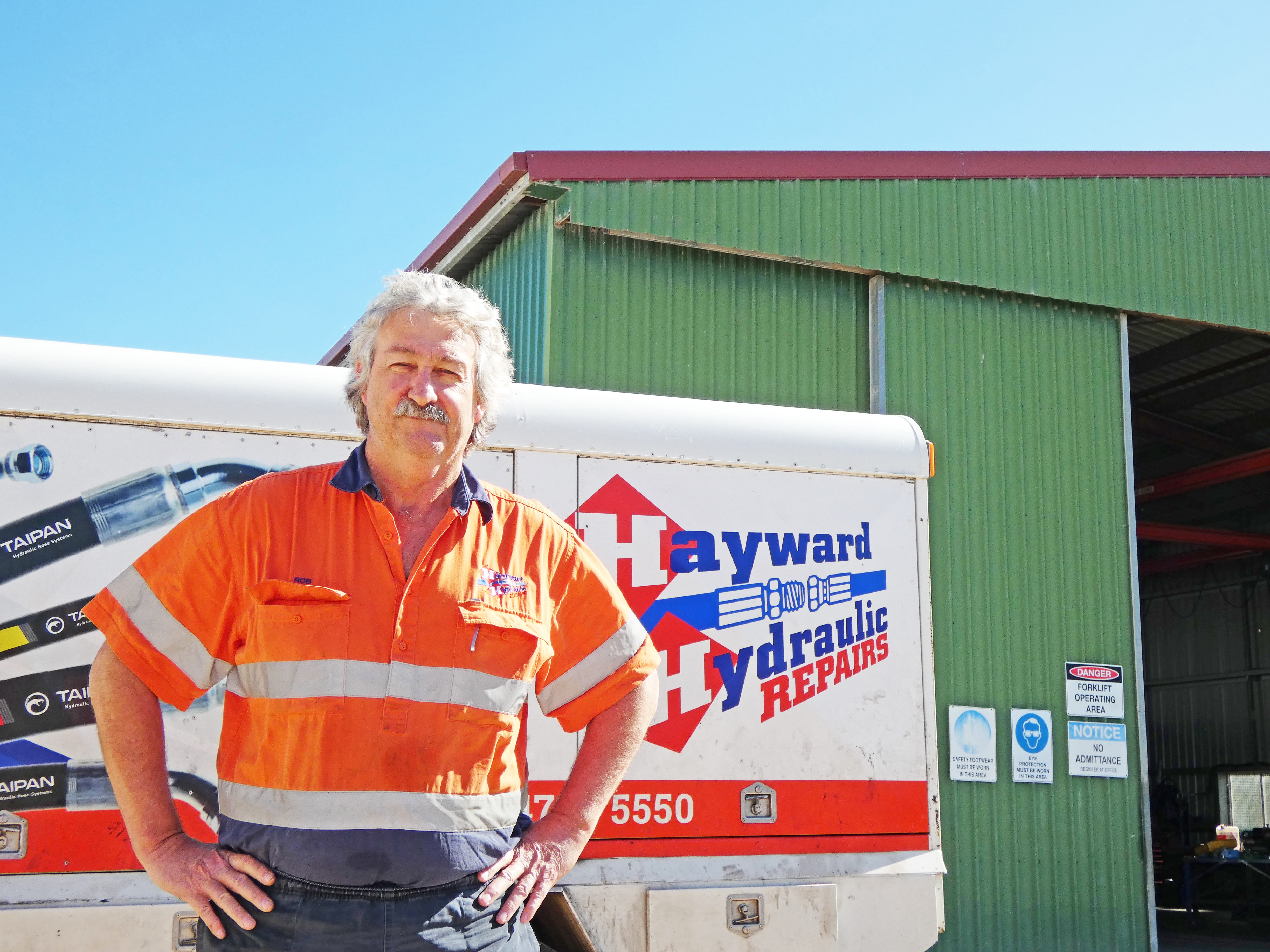
Not every business starts with a blueprint. For some, it begins as a calling… in more ways than one. Burdekin local Robert Hayward had been in the hydraulics industry since he was 18. A diligent worker who loved his job, he quickly built a reputation locally as one of the best in the business. But despite a mutual affinity with the industry that had formed over years, he stepped away in the early 1990s to help his father-in-law maintain a cane property in Clare. Until he received a call. Then another… and another. Rob quickly realised that, despite his brief hiatus, his reputation in hydraulics had not faded. With that, he was pulled back into the game, this time with nothing but a $2,000 ute, a toolbox, and work up to his neck. And the only way to keep himself from drowning in it was, ironically, to go in deeper. “As the Burdekin is, if you do a very good job, word travels quickly between the community. One farmer talked to another, he talked to another, he talked to another… “Until I sat down with my wife one day and said, ‘I think we can make a business out of this.’” His ute would eventually make way for a permanent space—a small sub-shed at Larry Hudson Engineering in the Ayr Industrial Estate that would serve as his headquarters for the following four years. He tackled the first year solo, before demand forced him to put an apprentice on in the second year, and a qualified tradesman in the third. By the end of the fourth, Rob’s work had outgrown its humble base, moving down the road into a new purpose-built shed that would become the home of Hayward Hydraulics. That shed would officially open in 1996, spurring a 30-year legacy sustained by three defining pillars. Growing with the industry “I had no idea how to use computers,” Rob said with a smirk. Admittedly, he hadn’t realised he signed himself up for a three-decade, three-fold evolution between an entire industry, his own business, and himself. What he did know was that he was ready to learn, and eager to grow. It started with the basics. For Rob, that meant wrapping his head around modern computers, attending TAFE courses on emerging welding techniques, and becoming a leader. “I went from being a very good tradesman to having to be an employer,” he said. “You have to be a people's person, you have to treat people the right way, treat your workers the right way. That part I never even thought of until we started getting into it.” Rob treated this evolution as a marathon rather than a sprint, dedicating the business's first decade cementing its reputation as a local leader. After striking up deals with major companies, including Queensland Rail and Wilmar Sugar in the mid-2000s, he decided to take the leap into the mining industry in the early 2010s as a safety net for the unpredictable sugar industry. With that growth, Hayward Hydraulics’ shed would undergo its third structural expansion to accommodate its continuously increasing popularity and modernised technology. He built a habit of gleaning ideas from various online hydraulic magazines, and then building on them to not only keep up with the industry, but to will it into the future himself. “I eventually built a reputation for thinking outside of the square. If somebody's been doing something for 20 years, I'll look at a better way of doing it,” he said. Albeit, he admits he and the business are still evolving today. “I've seen harvesters and planters go from chain and sprocket to hydraulic motors, to hydraulic motors being linked to satellite GPS,” he said. “The industry has changed in leaps and bounds, and you have to keep finding ways to move with it.” Doing it the right way Hayward Hydraulics’ evolution was founded on something Rob didn’t need to be taught. Care. And he makes sure his staff do, too. “I didn't come from a real wealthy family, so we were brought up to work; you work, you do the job right, you get paid,” he said. “So if I'm not happy with something, I'll ask my workers: ‘would you pay for that?’” When the mining industry began to boom in Queensland, Rob admits he had a difficult time retaining workers. To compete, he was forced into paying top-dollar for what he called “good quality workers,” causing financial tension. When asked if compromising staff quality for cost was ever an option, with the conviction of a true-blue purist, he said: “No.” “I've always maintained that a business is only as good as your employees. You can be the best boss in the world, but if you've got workers that people don't like, they don't come through the door,” he said. “My current staff are up there with the best that I've had. I just try to make sure they’re happy to come to work every day.” With quality and care as its engine, Hayward Hydraulics became known not just for technical know-how, but for doing things the right way. As its stature in the industry continued to grow, so did the scope of its customer base. Calls started coming in from as far north as Tully, all the way to Mackay and Western Queensland, all saying the same thing: “We heard you were the guy to talk to about this problem.” Family and community at its heart For the last 10 years especially, the business has made a point of supporting local organisations and sports clubs, most notably the Burdekin Roosters Rugby League Club. Rob described it as a duty to a community that has given so much to him and the company. “The community has been so important to it all. I’ve got some customers that have been with me from day one, and with some, I’m onto the third generation of the same family,” he said. “The’ve given a lot to me. They've helped me grow and supported me, so it's about time I supported them back.” Beneath it all, though, he points to his family as the driving force. “I remember those early days when we were setting up the new workshop, building benches and all that, my two brothers-in-law and my father came out and gave me a hand,” he said. “But my biggest support is my wife. Especially in the early days when I wasn't home, and she solely looked after the kids and everything. “It got to the stage where I was working seven days a week, 12 hour days, and my wife would bring the kids on a Saturday and Sunday, and we'd sit on the shop floor and have lunch. “She's been with me through the lows and the highs, and that I thank her for.” Now, thirty years later, it’s his family pulling him out of the industry. Driven by the desire to make up for lost time with his wife and kids, Rob has loosened his grip on business operations, working four days a week with plans to eventually let his brainchild find its own footing. As for right now, he’s not yet ready to call time on a chapter that was, perhaps, never meant to last this many pages. “I still love what I do,” he said. “The early days come with sacrifices, but when I look back now, it was all worth it. “I remember when it all first started, looking on the ATO website and coming across that statistic that most businesses fail within five years. “When I read it, I said to myself, 'well, I'm gonna make sure I’m not that statistic.’” And that, he did. CAPTION: Rob and his current team. Back L-R: Chase Pearce, Stephan Du Plessis Front L-R: Kade Pearce, Renee Viero, Robert Hayward, Tina Dennis, Bryan Parison Absent: Sam Tomasetig Photo credit: Jacob Casha
Read the full story
The Burdekin has rallied behind a local family after a sudden medical diagnosis turned their life upside-down. Ryan and Holly Davenport dropped everything when their two-year-old son, Rowen, was diagnosed with a brain tumour last month, temporarily relocating to Brisbane for his ongoing treatment. In response, a GoFundMe fundraiser has since raised over $55,000 in support of the family. Created in late May by Shannon Malone, a close friend of the Davenports, the fundraiser has been shared all over Facebook and Instagram by local organisations, garnering comments of support on top of 271 individual donations. “Words can’t describe how much it means to us to have everyone’s support behind Rowen as he begins his journey,” Ryan said. “They have given us precious time to spend with Rowen without the everyday worries.” The money will help fund hospital stays, travel, time away from work, and ongoing treatment expenses as the Home Hill family navigates a medical journey that began in April. Already on edge after daughter, Ally, underwent brain surgery to have a cavernoma removed just before Easter, Ryan and Holly acted promptly when they noticed a twitch in Rowen’s eye. Following weeks of consultations with Townsville doctors and specialists—which included MRI scans and a Royal Flying Doctors flight—Rowen was eventually diagnosed with pilocytic astrocytoma, a slow-growing brain tumour. He has since been transferred to Queensland Children’s Hospital in Brisbane for chemotherapy, with the couple leaving their two young daughters with their grandparents in the Burdekin to be by his side. In their absence, locals have offered meals, helped on the family’s sugar cane farm, assisted around their home and helped look after their daughters, along with the generous donations. Ryan said the funds raised would not just help relieve the financial burden of Rowen’s treatment, but allow the flexibility to fly their daughters down and spend some time as a family. “(The toughest part has been) the unknown, not having our family together … and watching Rowen go through these traumatic times and … not being able to do anything,” Ryan said. “It has been a very emotional journey so far, and it is hard to believe we are only at the start.” Anyone wanting to support the Davenports is urged to donate using the following link: https://www.gofundme.com/f/supporting-the-davos-and-little-rowen?attribution_id=sl:75c20475-06e5-4752-8e11-d1b7a07c7728&lang=en_AU&ts=1779705595&utm_campaign=fp_sharesheet&utm_content=amp20_t1&utm_medium=customer&utm_source=copy_link CAPTION: Funding will allow the family to fly their daughters down and spend more time together during Rowen’s treatment. Photo supplied
Read the full story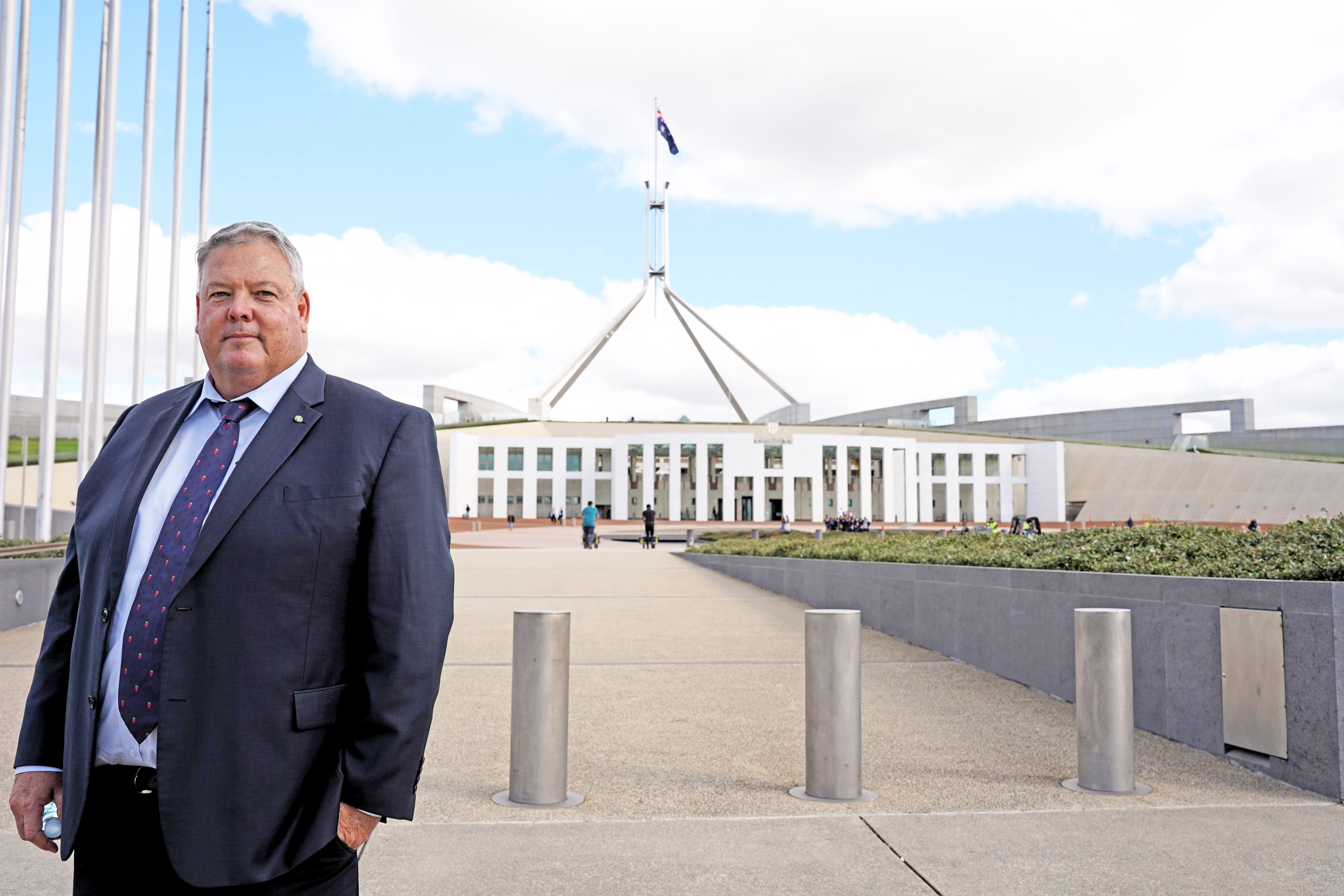
The Federal Member for Dawson, Andrew Willcox, has slammed the Albanese Government for an unacceptable ambush on regional communities, accusing the Commonwealth of abandoning disaster-prone areas to balance its own budget. The Federal Minister for Emergency Management, Kristy McBain, used a late Friday afternoon media release to quietly flag sweeping alterations to the Disaster Recovery Funding Arrangements (DRFA). The proposed changes dismantle the long-standing, scalable framework, which historically provided an average of 64 per cent federal coverage and capped support at 75 per cent for catastrophic events. In its place, Canberra intends to implement a rigid 50-50 funding model. This policy shift arrives at the worst possible time for the state; it follows a volatile severe weather season that caused widespread damage across 71 of Queensland’s 77 local government areas. Federal Member for Dawson, Andrew Willcox, is warning that the sudden funding shortfall threatens the future viability of essential infrastructure, local water treatment facilities, and emergency evacuation operations. Mr Willcox, drawing on his extensive experience as the former Mayor of the Whitsunday Regional Council, stated that the Federal Government is completely detached from the realities of regional recovery. "This decision is a direct hit to the heart of North Queensland," Mr Willcox said. "Canberra is treating natural disasters like a corporate budgeting exercise; however, out here, it is a matter of community survival. To penalise the very regions that drive the nation’s agricultural wealth and mining export revenues is a profound betrayal. "During my time steering the Whitsunday community through the wreckage of Severe Tropical Cyclone Debbie in 2017, I learned exactly what it takes to rebuild. We relied heavily on scalable federal assistance to restore our shattered rural road networks. Under a flat 50-50 split, local councils across Dawson would be forced to find millions of dollars in matching revenue; that is a financial burden our regional ratepayer base simply cannot sustain." Mr Willcox emphasised that major historical recovery operations would have been completely unviable under the newly proposed guidelines. "The total reconstruction of the Shute Harbour marine terminal and the $5 million federal package required to replace the decimated Proserpine Entertainment Centre occurred because the previous framework allowed for exceptional circumstances," Mr Willcox said. "Small regional councils do not possess the independent asset base to fund multi-million-dollar rebuilds alone. Furthermore, the historical system guaranteed that funding flowed directly into local economies, ensuring that regional earthmoving businesses and contractors were awarded the repair work. By lowering the funding floor, the Commonwealth is forcing cash-strapped councils to delay vital resilience works; this leaves our communities dangerously exposed before successive wet seasons. "It is a coward’s tactic for the Minister to leave this announcement until the day after the parliamentary sitting concluded, ensuring they avoided any real scrutiny or accountability in Question Time. “This is yet another calculated deception from a government that knows exactly how damaging these cuts are; this is absolutely not what the Australian people voted for, and I truly hope this betrayal is remembered at the next election. "This is yet another chapter in the ongoing federal neglect of regional Australia. The government is hiding behind the cover of an independent review to justify cutting essential frontline services. I call on the Emergency Management Minister to reverse this decision immediately; regional Queenslanders refuse to be treated as second-class citizens.” Supplied by the office of Federal Member for Dawson, Andrew Willcox CAPTION: FIGHTING FOR THE NORTH: Federal Member for Dawson Andrew Willcox MP outside Parliament House in Canberra, condemning the Albanese Federal Government's plan to slash scalable disaster recovery funding for regional councils. Photo supplied
Read the full story
"As the final week approaches for public submissions into the Sugar Code of Conduct, Member for Burdekin Dale Last has renewed his calls for growers to unite and make their voices heard. Mr Last said the public submissions for the sunsetting review of the Sugar Code of Conduct should be an opportunity for sugarcane growers from across the Burdekin to outline the benefits of the code for both farmers and the wider community. “Over recent weeks I have taken the liberty of providing a submission on behalf of the community, because ultimately the flow-on impact from changes in our sugar industry stretch beyond the paddock and the mills,” Mr Last said. “I recently met with several grower representatives which provided the opportunity to bring key stakeholders together, reaffirm my support as the Member for Burdekin and emphasise the need to work collaboratively as the review period unfolds.” Mr Last said while it was important stakeholders took the time to make their voices heard during the public submissions there was no better way to understand the impact of the Sugar Code of Conduct than to visit the area and speak directly to representatives. “A decade ago this district played a central role in bringing this code of conduct to fruition so I would expect our stakeholders receive a seat at the table they deserve,” Mr Last said. “If the Federal Labor Government was serious about consulting with the industry, the responsible Assistant Minister would be looking for every opportunity to listen to those who are most impacted by the Sugar Code.” Anyone wishing to have their say in the review can visit https://haveyoursay.agriculture.gov.au/sugar-code-review"
Read the full story

FEDERAL Member for Dawson, Andrew Willcox MP, has welcomed the election of Senator the Hon Matt Canavan as Leader of The Nationals; asserting that the new leadership team will deliver the straight talk and fiscal discipline Australians are crying out for.
Mr Willcox said he is pleased to see a fellow Queenslander at the helm who shares his passion for regional Australia.
"Matt Canavan is a man of conviction and a proud Queenslander who understands that our country is at a crossroads. We have a fantastic working relationship; I know he will fight to ensure that regional industries, from our miners to our farmers, are never again treated as an afterthought by the city-centric Labor Government."
The change in leadership signals a shift toward a 'More Australia' policy: an unapologetic focus on Australian jobs, Australian resources, and Australian families. Mr Willcox noted that this is not new thinking for The Nationals, but rather a return to the conservative roots that the party has always championed.
"For too long, the 'all or nothing' approach to renewables has been bankrupting this nation and driving up the cost of living. We want practical environmental protection: an energy grid that uses the best models in the world by blending a solid base load of power with renewables. To drive down inflation, we must have real fiscal responsibility and reliable, affordable energy; not a reckless rush that leaves our manufacturers and families in the dark."
Mr Willcox, who remains the Shadow Assistant Minister for Manufacturing and Sovereign Capability, said the 'More Australia' approach is vital for the survival of local industry.
"If we want a future made in Australia, we have to reduce the crippling energy costs that are killing our factories. We also need to get serious about sovereign capability by stopping the dumping of cheap, finished steel products from overseas. Our manufacturing sector needs to be restored and revived; as Matt Canavan says, it is time to go 'hyper Australia' and bring back Aussie-made goods."
Beyond the halls of Parliament, Mr Willcox emphasised that the role of a Federal Member is about looking after the vulnerable on the ground.
"National policy is only one part of the job. My priority remains helping the people of Dawson navigate the complex systems of the NDIS, the ATO, Aged Care, Centrelink, and more. When people vote, they are looking for a representative who has their back when they are struggling with the bureaucracy.
“Only a Coalition government has the structure and the heart to hold Labor to account while providing that high level of direct assistance to the shopkeepers, the salary earners, and the families who are the bedrock of our nation."
Mr Willcox also paid tribute to the outgoing leader, David Littleproud MP, describing him as a mentor and a mate.
"David is proud by name and by nature. He has been a strong force in steering the Nationals and was a fierce voice within the Coalition; particularly in his campaign to abandon net zero and put the interests of the bush first. He has earned the right to return his focus to his family and his electorate of Maranoa, and I thank him for his years of dedicated service."
Mr Willcox congratulated the broader leadership team, including Deputy Leader the Hon Darren Chester MP and Senator the Hon Bridget McKenzie, who continues her vital role as Leader of The Nationals in the Senate.
"This is a team of patriots who will listen to the people we represent, whether it is fashionable in the city or not. We are here to defend what we believe in and to put Australians first.”
Contributed with thanks to the Office of Federal Member for Dawson, Andrew Willcox MP
Caption: L-R: Member for Dawson Andrew Willcox MP, Nationals Leader Senator the Hon Matt Canavan, and Deputy Leader the Hon Darren Chester MP; the team focused on delivering a hyper Australia that prioritises regional families, restores sovereign manufacturing, and brings back reliable, affordable energy.

Copper thieves who risk lives by cutting telecommunications and plunging deadly intersections into
darkness could now face life in jail under proposed new legislation welcomed by Member for
Burdekin Dale Last.
Public consultation has now opened as the Crisafulli Government works to tackle rising metal thefts,
including copper wire, which have seen criminals not only endanger their lives, but the lives of others
in the community.
Mr Last said the proposed legislation demonstrated how seriously the Crisafulli Government was
taking the theft of copper wire.
“We’ve seen drivers forced to navigate pitch black intersections on some of the deadliest
intersections of our highway while copper cabling has also been cut from emergency generators and
telecommunications infrastructure in these despicable acts,” Mr Last said.
“Under the proposed legislation criminals who target essential key infrastructure where the life or
health of a person is endangered or the conduct occurs during or in the lead-up to a natural disaster
will face up to 25 years imprisonment.”
“As the Premier said earlier this year these are the lowest of acts and our government is taking action
with penalties to reflect the seriousness of these crimes and the cost they impose to taxpayers to
undertake repairs.”
“Make no mistake if you commit these low acts that have the potential to endanger other community
members, particularly in their hour of need or when they are driving home after dark on a national
highway, you should face the full weight of the law.”
Mr Last said following the introduction into parliament the proposed legislation was now up for
consultation and encouraged anyone affected by these crimes to make their voices heard.
“As with any new legislation it’s important the mechanisms and outcomes achieve what our
communities expect which is why we encourage anyone affected by these sorts of crimes to make
their voices heard during the public consultation process.”
ENDS – Media Contact: Mikayla Colquhoun (07) 4767 0500

The Rotary Club of Home Hill has officially launched one of its biggest fundraisers to date, aiming to raise approximately $40,000 for a new all-terrain vehicle (ATV) that will help local police patrol every corner of the community.
Unveiled at last Tuesday’s club meeting, the fundraiser will be the Rotary Club of Home Hill’s flagship community project for 2026, aimed at providing local police with a locally-based ATV they had sought funding for on multiple occasions.
“This is a practical and high-impact project that will immediately benefit the community,” said Alf Musumeci, President of the Rotary Club of Home Hill.
“Our police do an outstanding job, and this is our chance to thank them for the great work that they do, and increase their ability to respond quickly across challenging terrain.”
The ATV—a Yamaha ‘Wolverine RMAX4’—will be stationed in Home Hill and serve both Home Hill and Ayr Police stations. The modern four-seater, equipped with police technology, has received strong support from local officers.
Home Hill Police Senior Constable Will Stewart said the ATV will serve a critical function for the Burdekin, giving officers immediate access to remote areas such as Wunjunga Beach, Alva Beach, and river beds.
“It can take up to two days for ATVs to get here from Townsville… so having these wheels on the ground straight away will make a big difference.”
Given the need for the vehicle, the Rotary Club of Home Hill is urging the region to help make the project a reality.
“We’re calling on the community, local businesses, and grant partners to get behind this important initiative,” said Musumeci.
The project will amalgamate community events, raffles, and corporate partnerships to raise the funds needed to purchase the ATV.
Fundraising efforts kick off with a $5 raffle for a Bushranger Battery Powered Multi-Tool and Lawn Mower pack from Burdekin Motorcycles, with the winner to be drawn on 30 June.
Community members and local businesses can support the Rotary Club of Home Hill by donating online at facebook.com/rotaryclubofhomehill or contacting the Club via email at home.hill@rotary9560.org. Stay updated on upcoming events and raffles through the Club’s Facebook page.
1—Clive Williams and Club President Alf Musumeci of the Home Hill Rotary Club, Home Hill Police Senior Constable Will Stewart, and Alyssa and Dave Muir of Burdekin Motorcycles. Photo credit: Jacob Casha
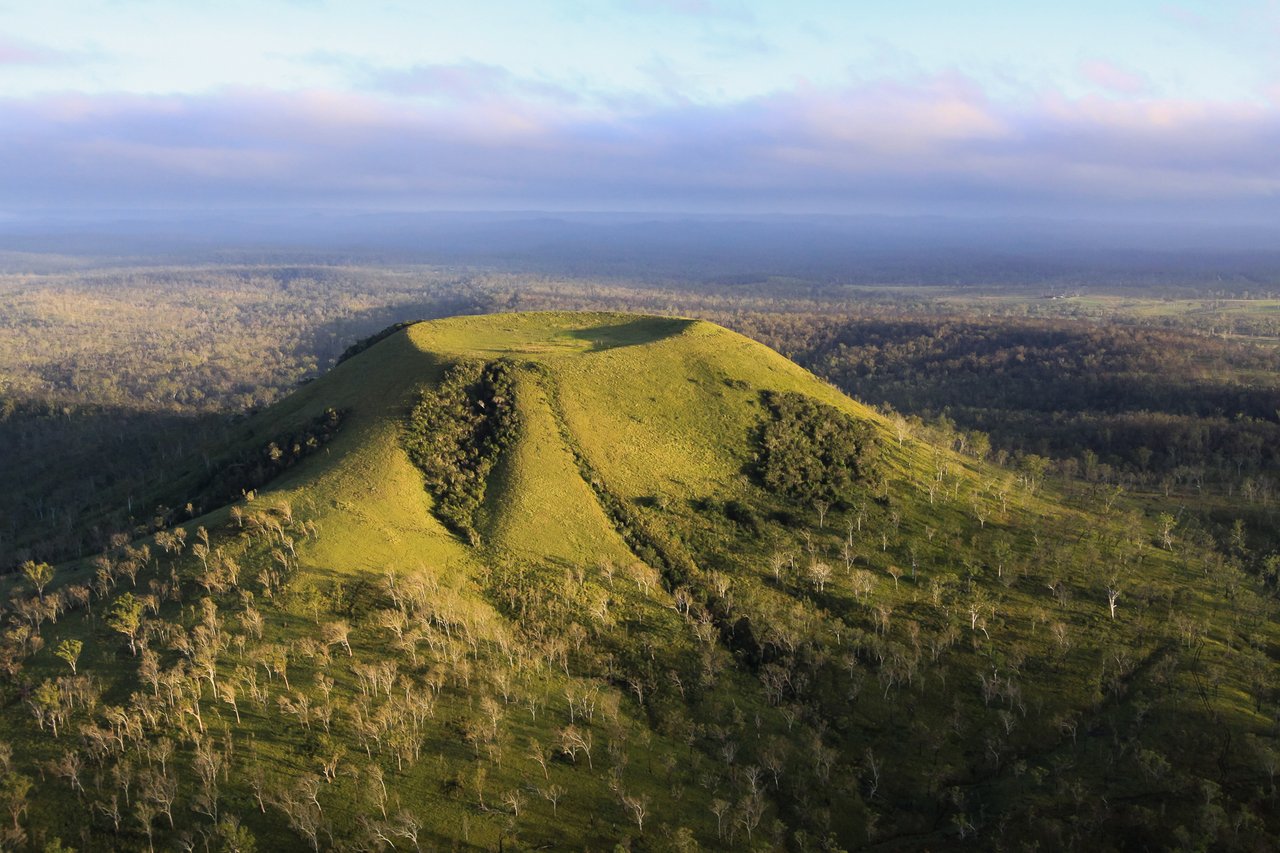
As as Queensland accelerates toward its renewable energy targets, residents in one small North Queensland community are asking a simple question: why here?
The quiet rural locality of Mount Fox, inland from the Hinchinbrook Shire and within the broader landscape bordering the Burdekin, has unexpectedly become the centre of a broader debate unfolding across the state; how to rapidly expand renewable energy while protecting some of Australia’s most ecologically valuable landscapes.
While the proposed development sits outside the Burdekin Shire, the ecological systems of North Queensland do not stop at council boundaries with scientists claiming the forests, ranges and waterways surrounding Mount Fox form part of a wider environmental network that supports biodiversity across both the Hinchinbrook and Burdekin Shires.
What’s Actually Proposed
The discussion centralises around the proposed Mount Fox Energy Park (MFEP), a project currently progressing through the proposal and assessment stage.
MFEP plans to construct a two-stage initiative set to yield around 290 megawatts of wind energy, reinforced by a 300- or 600-megawatt Battery Energy Storage System designed to help stabilise the North Queensland electricity grid.
With final approvals yet to come, the project currently proposes an estimated 47 turbines across a temporary disturbance footprint of up to 242 hectares.
Although large in scale, MFEP says the development will prioritise environmental management and implement ecological benefit programs aimed at reducing potential impacts on birds, bats and other wildlife.
“Our commitment extends beyond energy generation,” the company states.
“We're dedicated to safeguarding and rejuvenating over 800 hectares of land, battling invasive weeds and pests, with a particular focus on lantana. Simultaneously, we're replanting native species to provide increased habitat for local wildlife.”
At present, environmental assessments and planning processes are still underway. The project has not yet been approved, and no construction has begun.
Why the Site is Controversial
Mount Fox sits within a landscape known for its ecological richness, with the broader region neighbouring habitat corridors connected to the Wet Tropics, supporting a wide variety of wildlife including species sensitive to habitat disturbance.
Environmental researchers often stress the importance of these corridors, which allow animals to move between forests, uplands and lowland habitats in search of food, breeding areas and cooler climates.
As ecosystems stretch across regional boundaries, changes to landscapes in areas such as Mount Fox can potentially affect wildlife movement and habitat connectivity across neighbouring areas, including parts of the Burdekin.
Conservation groups say developments in intact ecosystems can sometimes have impacts beyond the immediate project footprint, highlighting fragmentation of habitat, disruption of wildlife corridors and the cumulative effect of multiple developments across a region are issues commonly raised in environmental planning discussions.
Groups such as Rainforest Reserves Australia say developments in ecologically complex areas require careful scrutiny, arguing the concern is not ideological but ecological.
The Community Voice
Keep Mount Fox Beautiful, a local community group made up of residents and conservation-minded supporters, has become a focal point for those seeking more information about the project.
Members say they are not opposed to renewable energy itself, but want greater transparency around site selection and potential environmental impacts.
“This isn’t about stopping renewables,” one campaign message states.
“It’s about putting them in the right places.”
What Happens Next
Whilst the Mount Fox proposal remains under consideration, all eyes will be on MFEP to deliver updates on the initiative as the project progresses through the planning process.
Whatever the outcome, the discussion unfolding in the Hinchinbrook Shire may prove influential beyond its borders and could signal how North Queensland navigates the balance between climate ambition and conservation.
Additional information can be found online at www.mtfoxenergypark.com.au, as well as a contact form to speak directly with an MFEP representative.
CAPTIONS:

Starlight Children’s Foundation (Starlight) is calling on Australians to share their favourite kids’ jokes to help bring joy and laughter to seriously ill children in hospital.
Ahead of Starlight Day on 19 May, Starlight is inviting the community to share a joke that could help brighten the day of a child facing the challenges of serious illness.
“At Starlight, we know laughter really is the best medicine. A simple joke can turn a scary or stressful hospital moment into one filled with joy, which is why we’re asking everyone to get involved,” said Kathryn Tohill, program manager, digital entertainment and creative collaborations, Starlight Children’s Foundation.
As Australia’s broadestreaching children’s charity, Starlight delivers positive distraction and fun through Starlight Express Rooms - medicalfree spaces in every major children’s hospital nationwide, and through inhospital play and entertainment provided by Captain Starlight.
For mum Sophia Kersten, those moments of joy made an enormous difference to her daughter Ella, now six. Ella was born with laryngomalacia and tracheomalacia — a floppy windpipe and vocal cord paralysis — and has undergone multiple surgeries since birth.
“There were times Ella wouldn’t laugh for weeks,” Sophia said.
“But the moment we walked into the Starlight Express Room, Captain Starlight’s silly jokes and games brought her giggles back. The joy they bring melts away the anxiety and stress of hospital so kids like Ella can just be themselves again.”
Participants can submit their favourite kids jokes to help put a smile on the face of a seriously ill child at www.starlight.org.au.

Last year, in the span of just a month, Ayr resident Norman Bethell lost two of his close friends to suicide. Shaken, he made it his mission to ensure no one else would have to suffer in silence.
Building Bonds On The Greens
Norman Bethell was hit hard in the middle of last year. After losing two friends to suicide within the span of a month, the 78-year-old saw firsthand the toll loneliness and mental health struggles can take, and felt compelled to act. That action became ‘Funday Tuesdays’.
Coined and hosted by Bethell at the Home Hill Community Sports Club, Funday Tuesdays are a weekly community gathering aimed at tackling loneliness and supporting mental wellbeing.
"It's so that someone doesn't do what happened to my friends," Bethell said.
“I thought, ‘No one else normally is going to [start a group], so just get up and stand up on your own—do something about it.’”
The first Funday Tuesday meeting, held earlier this year, saw just one person attend. While many called it a failure, Bethell saw a silver lining.
“One was better than none!” he said.
Now, each event sees up to 20 people connect over lawn bowls and other activities, devoid of stipulations.
“There's no, ‘You got to do this’ or ‘You got to do that’—there're no rules. It's a fun day, and when you have a fun day, you do whatever you want to do,” Bethell said.
“It’s all about community. It’s for people who would usually rather walk past each other than say hello, and breaking down that barrier down—meeting somebody new so they don't feel go back home and feel so lonely.”
That impact has been felt by regular attendees, who say Funday Tuesdays offer a haven of connection rather than merely a meeting point.
“I enjoy the people, and it’s good to get to know something that is different,” she said.
“I’m mostly with my group, but the more that we're together, the more like family we become."
Bethell encourages anyone to drop by and see what Funday Tuesdays are all about.
"Don't be shy. If you feel like you're a bit on your own, walk in the gate and visit. Be brave and make the first step, because only you can do it. I can’t do it for you,” Bethell said.
The group meets every Tuesday morning at 10am at the Home Hill Community Sports Club. For more information, contact Norm on 0455 994 775.
CAPTIONS:
1—Each event sees up to 20 people connect over lawn bowls and other activities. Photo credit: Jacob Casha
2— The group meets every Tuesday morning at 10am at the Home Hill Community Sports Club. Photo supplied
Women are worth celebrating every day, although over the weekend, the Burdekin had the chance to celebrate the women that help the region tick in a special way.
I had the privilege of attending Zonta’s International Women’s Day celebrations on Sunday and, boy, what a turnout.
As the afternoon rolled on and I sat there, camera in hand, I began to feel a sense of gratitude for the women that have played pivotal roles in my life.
First that sprung to mind was my mum. Honestly? I’m not sure where I’d be without my mum’s care, love, and genuine desire to see me succeed. She has been a role model in so many ways, even if not always obvious.
Love ya, mum.
Then I thought of my high school teachers, who never let me settle for ‘good enough’. The colleagues who make my job as seamless as possible. The friends who have been my anchors.
Their fingerprints are everywhere.
I think we should make a habit of appreciating the work women do every day, not just once a year… But for now, here’s to women.
Because without the women in my life, I definitely wouldn’t be anywhere close the person I am today.
My cortisol levels would probably be much lower, though.

The Burdekin community “cruised” into celebrations for International Women’s Day on Sunday, 8 March, with a whopping 175 people packed into the Memorial Hall to celebrate the region’s women, making it the best-attended iteration of the event in recent history.
Hosted by Zonta, the afternoon featured a “Cruise with Zonta” theme, which saw guests and hosts alike donning cruise-themed outfits and accessories.
Long-time Zonta member Inez Larsen said the organisation was pleased by the amount of support on the afternoon.
“This year’s turnout was fantastic; we were a bit overwhelmed, honestly,” said Larsen.
“The community support and interaction, especially dressing for the theme, really made the afternoon fun.”
The afternoon saw presentations from guest speakers Kathleen Noonan, journalist and Second Chance Programme volunteer, and Louise Nicholas, Senior Secondary Agricultural Science teacher and Agricultural Coordinator at Home Hill State High School, both sharing messages on community support, education, and addressing issues such as family violence and homelessness.
Larsen said she hopes guests were able to gain something from the afternoon.
“The UN theme was “give to gain,” and our speakers really encompassed that within their in their presentations,” she said.
“I think the key message was the importance of support, community support, family support, and the importance of respect within our community and within ourselves.”
Larsen thanked the event’s sponsors, particularly Burdekin Readers & Writers, and the local community for their support and enthusiasm in making International Women’s Day a spirited celebration.

Lower Burdekin cane growers have the opportunity to boost irrigation efficiency and reduce farm costs through a new project aimed at modernising irrigation systems.
The Burdekin Tailored Automation project, delivered by NQ Dry Tropics, is encouraging growers to register their interest in upgrading to automated irrigation systems, with incentive grants of up to $30,000 available to help fund the transition.
The three-year project aims to improve irrigation practices across the region by ensuring crops receive the right amount of water at the right time. By automating irrigation infrastructure, growers may be able to reduce input costs, labour and water usage while maintaining crop yields.
Project Officer Michael Hobbs said inefficient irrigation systems were one of the main drivers of nutrient and pesticide runoff from farms.
Excess irrigation water can carry dissolved inorganic nitrogen (DIN), pesticides and other nutrients into nearby waterways, where they may eventually reach the Great Barrier Reef.
“That excess water provides no production benefit to the farmer and can wash valuable nutrients and pesticides away from where they’re needed in the paddock,” Mr Hobbs said.
“By applying the correct amount of water needed by the crop, it’s possible to reduce that runoff pathway while also improving the farm’s bottom line.”
Improved irrigation efficiency can also help address rising groundwater levels in some parts of the Lower Burdekin and may reduce issues such as waterlogging that can impact crop growth.
The project forms part of the Australian Government’s Reef Trust Reefwise Farming Program, which aims to improve water quality flowing to the reef while supporting farm productivity.
Places are limited and growers are encouraged to submit an expression of interest as soon as possible.
CAPTION: NQ Dry Tropics are giving local canegrowers with the opportunity to take their irrigation regimes to the next level, reducing input costs, and labour while maintaining yields. Photo source: NQ Dry Tropics

After a century of ardent advocacy, CANEGROWERS remains one of the strongest voices for growers in the Burdekin and beyond. Yet despite the many hard-fought victories of its illustrious past, the organisation now finds itself confronting a new era of challenges, making its current work more critical than ever.
The headwinds are already gathering. With global sugar prices softening and input costs rising, growers in the region are entering an increasingly uncertain market. In some cases, the squeeze is already being felt on the ground.
But despite the seemingly gloomy picture of the current sugar market, CBL Director Owen Menkens says there are answers for growers, and that they may be closer than we think.
“The big buzzword at the moment, obviously, is ethanol,” Menkens says.
"Along with ethanol, there’s sustainable aviation fuels, both of which are very exciting… But if the biofuels industry is going to happen in Australia, it has to happen now.”
Menkens has led a years-long push for biofuel mandates across the country in hopes of opening a reliable revenue stream for Australian growers beyond traditional sugar crystal.
Up to now, those calls have fallen on deaf ears. However, CBL Manager Greg Watson anticipates real steps forward over the next decade, if not sooner.
“There have been many false dawns with different uses for our sugar cane, and a lot of people have come into the district promising all of these wonderful products which just haven't gotten anywhere,” said Watson.
“But from what we've seen the last couple of years, the momentum is building, and the pace of that momentum is just increasing considerably. We can see the bio economy providing a tremendous growth transition path to take industry to the next level within the next five to 10 years.”
“All it will take to turn the light from red to green… is a stroke of the pen from government to implement and enforce biofuels mandates to provide investors with certainty to then allocate capital to kickstart this opportunity for the future.”
Menkens stressed that, in the meantime and beyond, farmers would need to embrace the rapid technological advances reshaping the industry in order to help navigate current and future markets.
“We have to stay ahead of technology," said Menkens.
"The margins are getting smaller, so you just have to be able to do it cheaper and better.”
He says that while innovation can help growers survive today’s pressures, the bigger picture is about preparing the industry for those who will inherit it, with initiatives like ‘Burdekin’s Sweetest School’ competition typifying that stance.
“I only do this job for the next generation,” said Menkens.
“It's a difficult time at the moment for growers, but hopefully we can band together and come up with solutions.
"The industry needs to survive; it needs to be profitable; it needs to be viable for farmers. That's what we've got to try and do, however which way we can.”
CBL Chair Glenn Betteridge said now is the time for growers to unite as Canegrowers charts the path forward.
“Our doors are always open to anyone who's interested in coming in, whether it be as a member or a Director,” he said.
“We're a broad church. We’ll work with anybody who shares our vision and values for the benefit of the industry.”
Populin Enterprises – Automatic Billet Planter
In the early 1970s, Home Hill cane farmers and brothers Lui and Peter Populin (deceased) reshaped the global cane planting industry with a world-first innovation: the single-row automatic billet planter.
Before their breakthrough, cane planting was a labour-intensive process requiring large crews to manually place cane billets into the ground. The Populin brothers’ invention mechanised the process, dramatically reducing labour requirements and increasing efficiency.
The prototype was first used on the Populin family farm on Groper Creek Road, where it quickly proved its value in real farming conditions. Demand from growers soon followed. In 1973, the brothers introduced an improved two-row semi-mounted model capable of carrying two tonnes of chopper-harvested plant cane and planting at a rate exceeding two acres per hour.
Their design was officially patented on March 16, 1976. Manufactured locally through Populin Enterprises in Home Hill, the planters were sold across Australia and exported to major sugar-producing regions including Brazil, the United States and Hawaii. Modern billet planters still trace their design back to the Populin brothers’ original concept.
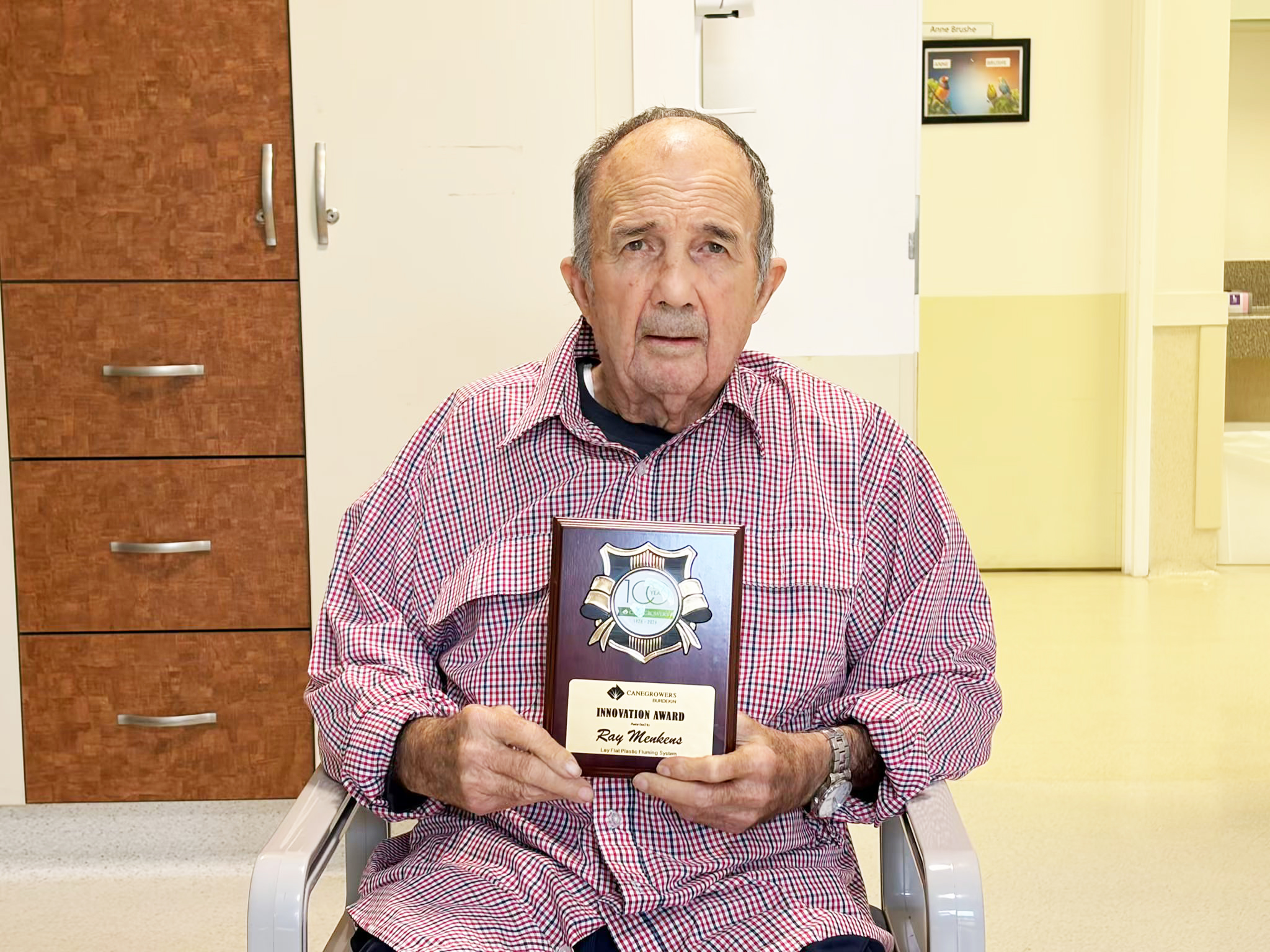
Ray Menkens – Lay-Flat Plastic Fluming System
In the mid-1960s, Burdekin cane grower Ray Menkens began experimenting with new irrigation methods that would ultimately transform water management across the sugar industry.
Seeking an alternative to traditional open earth drains and pipe systems, Menkens trialled yellow lay-flat plastic for irrigation fluming. The early material proved unsuitable for North Queensland conditions, melting in the sun and lacking durability.
Determined to improve the concept, Menkens travelled to Sydney to work directly with a plastics manufacturer’s engineer. Together they developed a far more robust black lay-flat fluming capable of withstanding the region’s harsh climate. To encourage adoption, the product was released with a 25-year guarantee.
Early versions included screw-in cups moulded into the plastic, but practical field experience led to further refinement. With input from the Rubiola family, the system evolved to the cup-insertion method widely used today. Graeme Haller later designed a specialised fluming roller, improving efficiency again. By the mid-1970s, lay-flat plastic fluming had become widely adopted, delivering major labour savings for irrigation across the sugar industry.
A Cannavan & Sons – Self-Propelled Over-the-Row Cane Harvester
In the late 1950s, Burdekin innovator Arthur Cannavan (deceased) set out to mechanise one of the most physically demanding tasks in the sugar industry: harvesting cane.
With a clear vision and the support of his family, Cannavan approached a local blacksmith’s workshop in 1959 to help bring his ideas to life.
The result was a pioneering self-propelled over-the-row cane harvester that introduced a completely new approach to harvesting. Cannavan developed a system using augers and rollers to feed cane into a cutting mechanism, combined with his distinctive “chop and throw” method that cut the cane into billets and delivered them directly for transport.
The machine proved its worth quickly. In 1961, Cannavan’s harvester delivered the first chopped cane to Inkerman Mill, marking a significant milestone in the mechanisation of the industry.
Many of the fundamental concepts he developed, including the use of augers, rollers and billet chopping, remain core features of modern cane harvesters, cementing Cannavan’s place as a pioneer of mechanised harvesting.
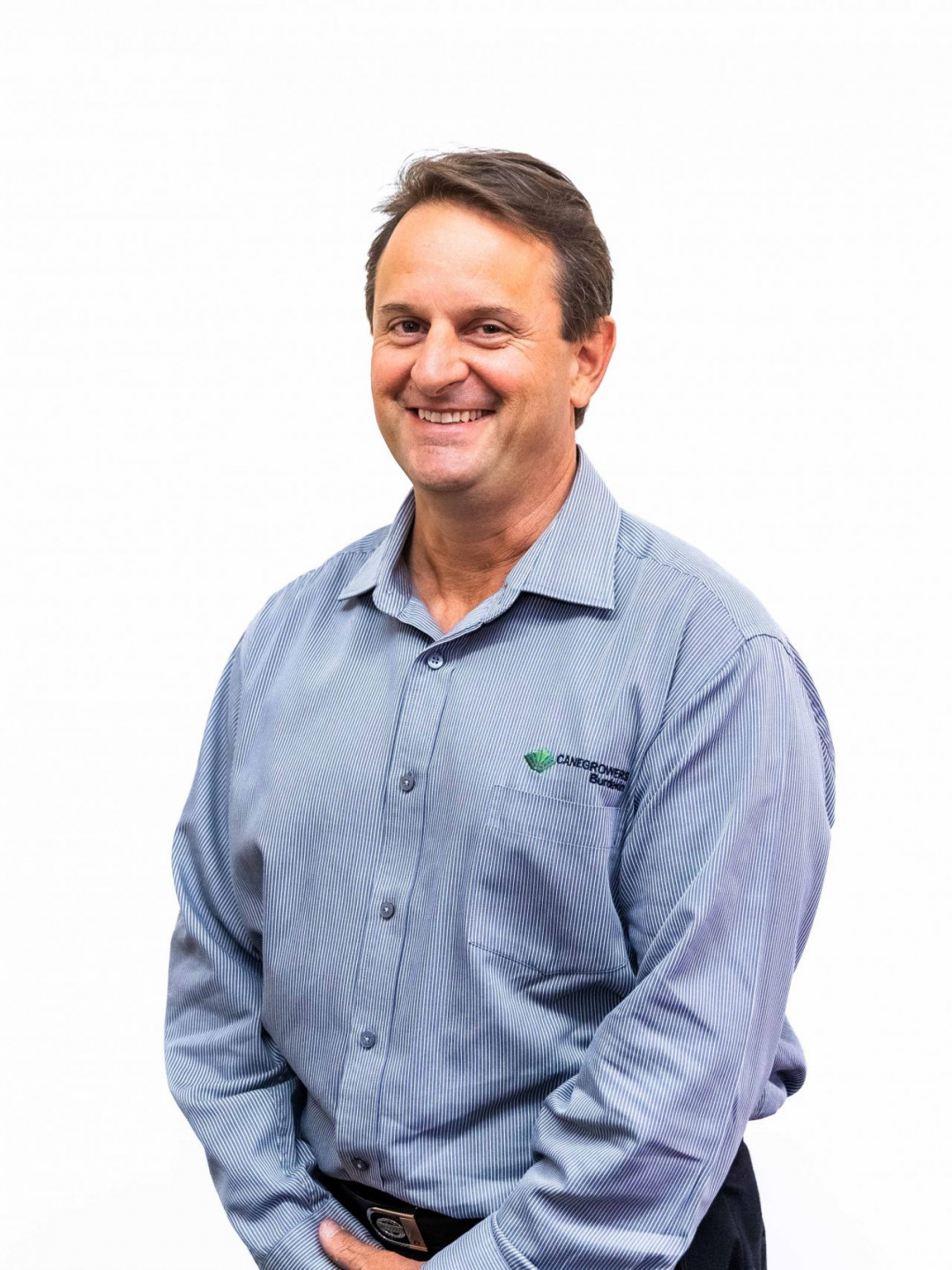
In another universe, Steve Pilla is roaming hospital halls. In this one, fate led the Giru native back to cane farming after a brief stint in nursing, and he hasn’t looked back since.
After dipping his toe in the world of healthcare in the late 1980’s early 1990s, Pilla returned to the family farm in Giru, continuing a story that began when his grandfather arrived in Australia in 1939 and bought the property a decade later. It was a path that felt inevitable in hindsight.
“I grew up always wanting to be on the farm,” Steve says.
A third generation cane farmer, Steve went into business with his father in 1998. When his father passed away in 2015, it was left to Steve to guide the farm forward.
And he did just that.
In the meantime, he would join the CANEGROWERS Burdekin Limited Board as a Director in 2013, eager for answers in what was a rocky period for the local industry. Seeing the organisation’s extensive work for farmers first-hand kept him on the board for another 13 years and counting.
Despite the work of CANEGROWERS, Steve says the industry’s real strength lies in the steadfastness of farmers themselves.
"It isn’t looking good as far as low prices and sugar at the moment, and looks like our inputs are going to climb this year… But growers always seem to show resilience, and the industry seems to pull through challenging times,” he said.
“I'm looking forward to us getting through this low spot again and getting on the other side and being both environmentally sustainable and financially viable moving forward.”

Owen Menkens grew up surrounded by farming, even if he briefly looked beyond it.
A fourth-generation cane farmer from Home Hill, Owen spent his holidays working on the farm his great-grandfather first purchased decades ago. Despite that early exposure to the industry, he initially opted for a cooler, more predictable career, heading to university to study accounting.
Though eventually, the pull of the land proved stronger.
“It’s in your blood,” says Menkens.
“I went through periods where I didn't want to [farm]… but it was always there.”
With that epiphany, by the late 1990s, he was back in the paddock. Nearly 30 years later, he’s still there, now growing around 36,000 tonnes of cane each year while representing growers from the Burdekin to the global stage.
Menkens joined the CANEGROWERS Burdekin Limited board as a director in 2010. From that platform, he promptly climbed the ranks, now holding the chairmanship of both CANEGROWERS Queensland and CANEGROWERS Australia.
Reaching the top was never the endgame for Owen, but rather an added bonus.
“At the end of the day, whether you're a director of [one of the branches], or where I am, it’s all about just trying to get good results, and trying to make the industry better,” Menkens says.
That drive has kept him at the forefront of the industry, involving legal disputes, landmark sugar marketing legislation, and the introduction of the code of conduct that have given growers more control and better tools to manage risk.
Those experiences have given Menkens a reason to believe in the future of the industry.
“As long as we stay at the cutting edge of technology and keep ourselves open to new ideas, we'll always keep going.”
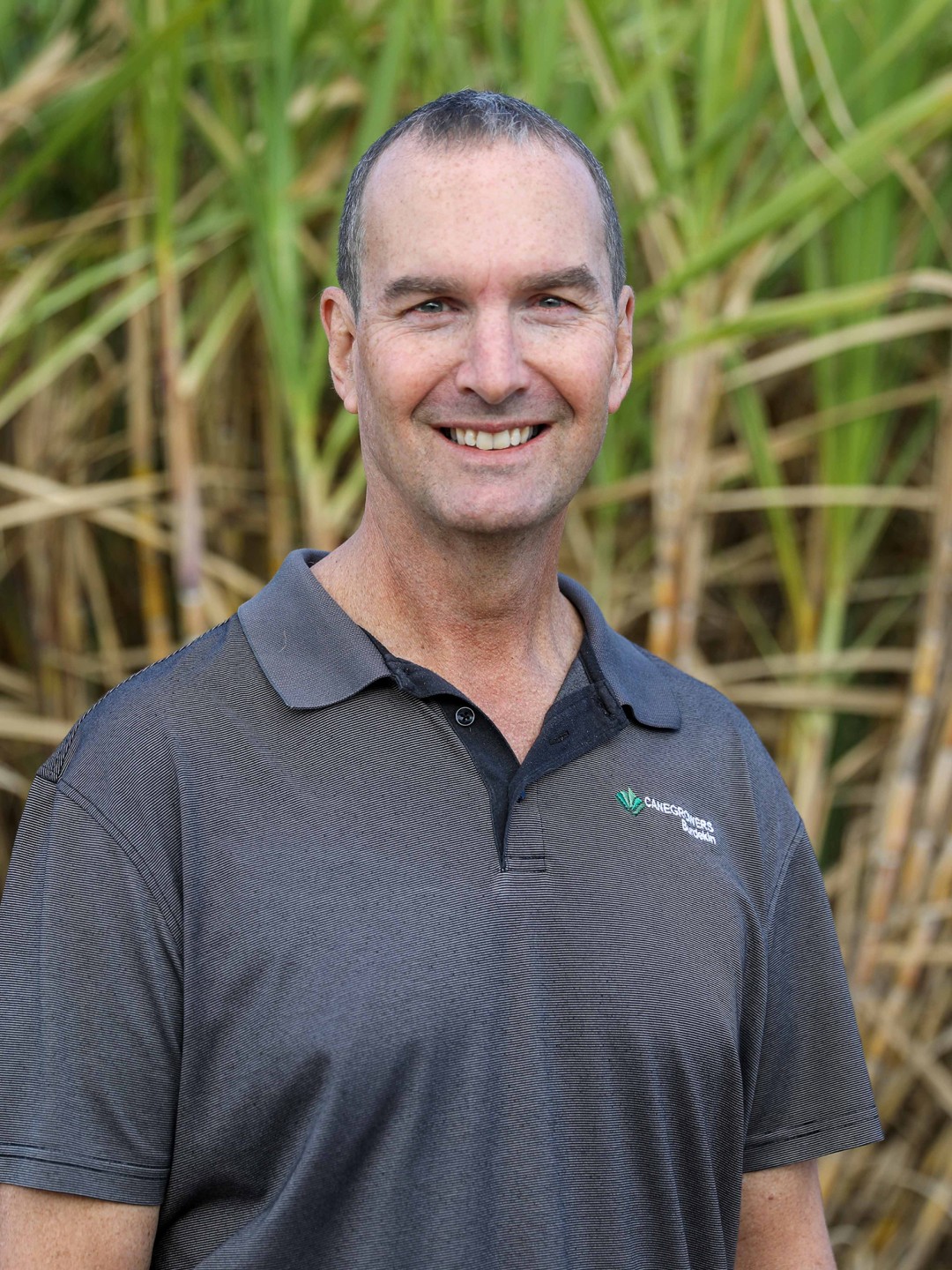
Although not a farmer in the conventional sense, Greg Watson has a passion for the sugar industry.
Born and raised in Home Hill, Greg grew up surrounded by cane fields. His grandparents used to own a farm, his parents worked as cane harvesting contractors, and Greg spent much of his childhood helping with the family’s harvesting contract.
But his early career took him down a different path.
After finishing high school, he studied commerce at James Cook University before embarking on a career in banking, first in business, then agribusiness. A decade later, he switched to financial planning, eventually becoming self-employed in a practice for 13 years.
Eventually, though, his roots in the sugarcane industry drew him back to the heart of it.
He would go on to serve as Executive Officer for the CRC for Sustainable Sugar Production, followed by a role as Grower Relationship Manager for QSL in the Burdekin and Herbert River regions, before returning to the Burdekin as Manager of CANEGROWERS Burdekin Limited in 2020.
This time, however, he returned to the Burdekin with decades of experience in financial services, along with his home-grown passion for the region and the personal approach that defines his work today.
“I'm just always somebody who really enjoys helping people where I can,” says Greg.
“I try not to say no, which is probably a downfall in some respects, but I just try my best to deliver services to growers and assist them when in need.”
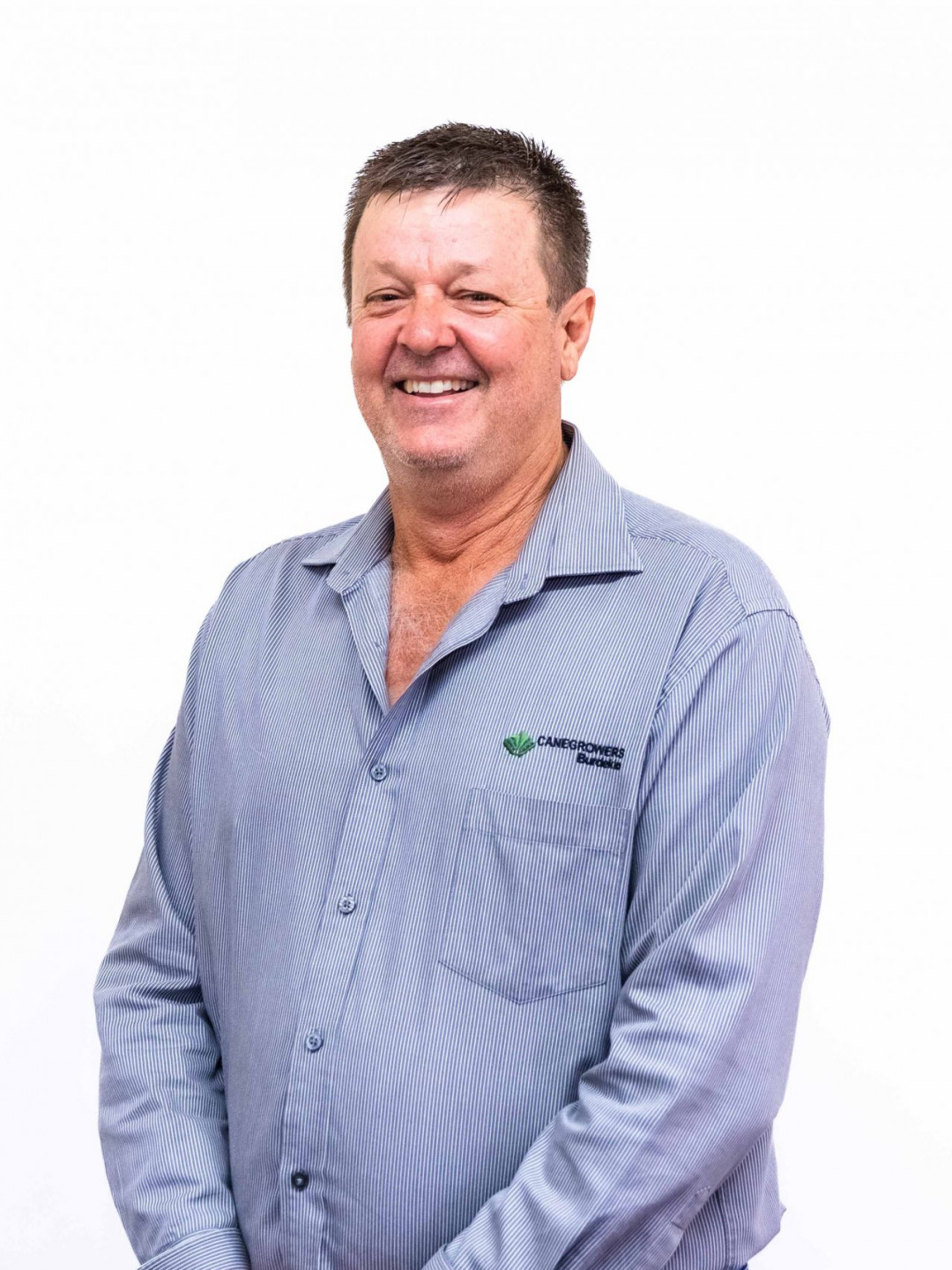
Farming has always been in Glenn Betteridge’s blood.
A third-generation cane farmer from Home Hill, Glenn has spent his whole life in the region surrounded by the cane crop he goes to battle for today.
“I was born in Home Hill Hospital, and will probably be planted in the Home Hill cemetery!” Glenn quipped.
His connection to cane farming began with his grandparents, who owned a small farm on Home Hill’s southern side. His father and uncles cut cane by hand, eventually upgrading to full stick loaders and harvesters, marking the family’s shift into mechanised harvesting.
After leaving school, Glenn completed an apprenticeship as an electrician at Inkerman Mill in 1991, a role he credits with giving him an understanding of the processes behind milling.
But once he finished his apprenticeship, he was drawn straight to the paddock.
He and his brothers would purchase a small parcel of land in 1994, and over the next three decades, he not only operated the machinery but managed the harvest, gradually taking ownership of his own operations.
Today, his son oversees the harvesting group, while Glenn’s five-year-old grandson has already started accompanying his father, hinting at a fourth generation ready to carry the family’s tradition forward.
The step back allowed Glenn to focus on his role as Chair of CANEGROWERS Burdekin Limited (CBL). Serving on the CBL board since 2019, he says his priority lies in securing the future for the next generation of farmers.
“I’d like to try and secure the future of our industry,” he said.
“I believe in our industry. With sustainable fuel sources, we can be the leaders in that area if we can get the right support from government.”
Publishers Indemnity. Any individual or entity that places advertising, supplies copy material, or submits editorial content to Core Life Publishing agrees and undertakes to ensure that all such material:- Does not infringe upon any copyright, trademark, or other intellectual property rights;- Is free from any content that could be considered defamatory, libelous, or slanderous;- Does not infringe upon any rights related to privacy or breach of confidence;- Contains no obscene, indecent, or otherwise unlawful material;- Complies fully with the Trade Practices Act and all other applicable laws, regulations, or statutes.Furthermore, by submitting or placing such material, these individuals or entities agree to indemnify and hold harmless the publisher, Core Publishing and Events Pty Ltd, and/or its agents from and against any and all investigations, claims, demands, liabilities, damages, costs, or judgments arising out of or in connection with the material provided. All material is believed to be accurate at the time of printing and remains the copyright of Core Publishing and Events Pty Ltd.
© 2026 Life Publishing Group Pty Ltd.
