
Independently Owned, Locally Grown, Community Loved
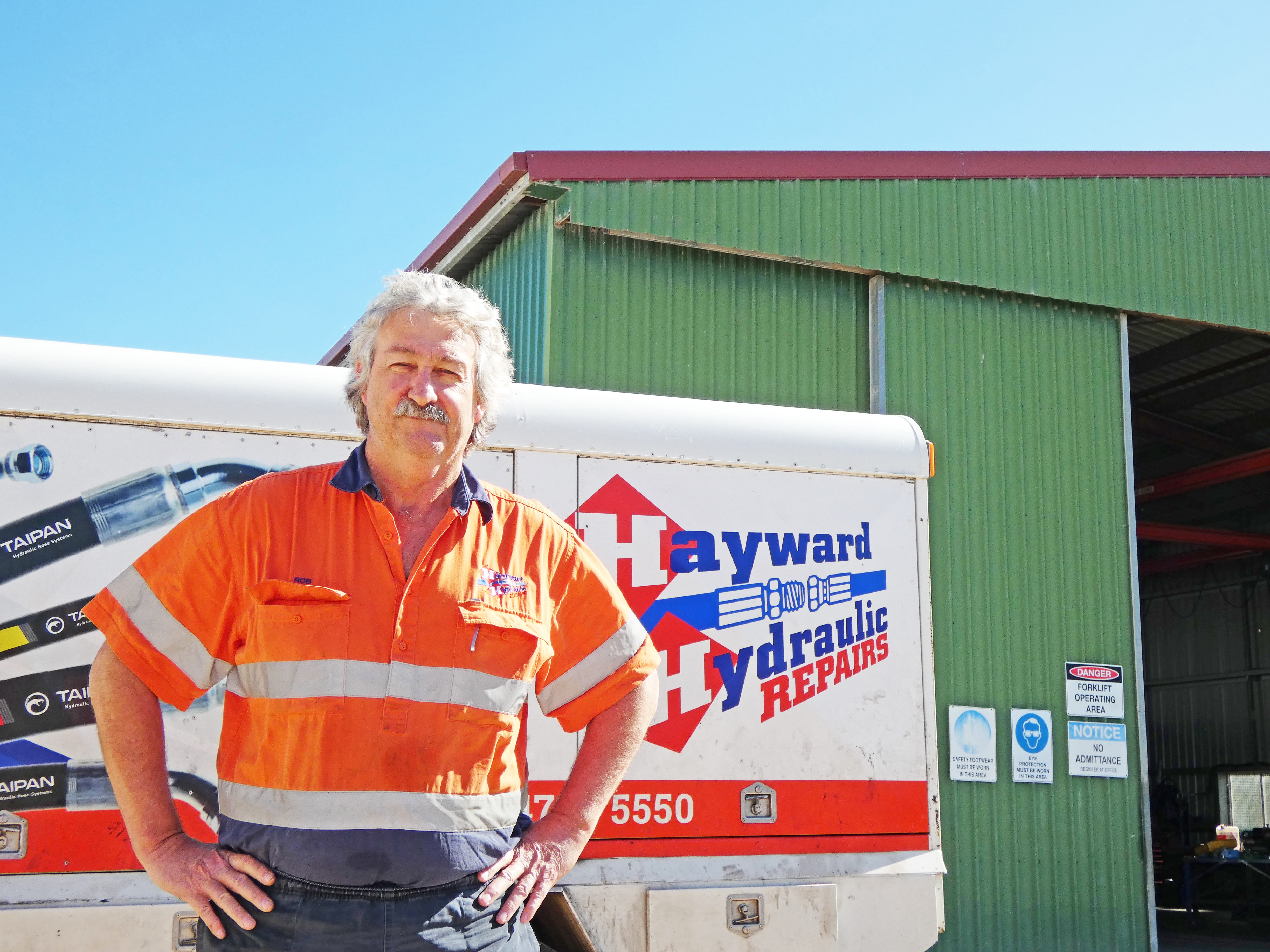
Not every business starts with a blueprint. For some, it begins as a calling… in more ways than one. Burdekin local Robert Hayward had been in the hydraulics industry since he was 18. A diligent worker who loved his job, he quickly built a reputation locally as one of the best in the business. But despite a mutual affinity with the industry that had formed over years, he stepped away in the early 1990s to help his father-in-law maintain a cane property in Clare. Until he received a call. Then another… and another. Rob quickly realised that, despite his brief hiatus, his reputation in hydraulics had not faded. With that, he was pulled back into the game, this time with nothing but a $2,000 ute, a toolbox, and work up to his neck. And the only way to keep himself from drowning in it was, ironically, to go in deeper. “As the Burdekin is, if you do a very good job, word travels quickly between the community. One farmer talked to another, he talked to another, he talked to another… “Until I sat down with my wife one day and said, ‘I think we can make a business out of this.’” His ute would eventually make way for a permanent space—a small sub-shed at Larry Hudson Engineering in the Ayr Industrial Estate that would serve as his headquarters for the following four years. He tackled the first year solo, before demand forced him to put an apprentice on in the second year, and a qualified tradesman in the third. By the end of the fourth, Rob’s work had outgrown its humble base, moving down the road into a new purpose-built shed that would become the home of Hayward Hydraulics. That shed would officially open in 1996, spurring a 30-year legacy sustained by three defining pillars. Growing with the industry “I had no idea how to use computers,” Rob said with a smirk. Admittedly, he hadn’t realised he signed himself up for a three-decade, three-fold evolution between an entire industry, his own business, and himself. What he did know was that he was ready to learn, and eager to grow. It started with the basics. For Rob, that meant wrapping his head around modern computers, attending TAFE courses on emerging welding techniques, and becoming a leader. “I went from being a very good tradesman to having to be an employer,” he said. “You have to be a people's person, you have to treat people the right way, treat your workers the right way. That part I never even thought of until we started getting into it.” Rob treated this evolution as a marathon rather than a sprint, dedicating the business's first decade cementing its reputation as a local leader. After striking up deals with major companies, including Queensland Rail and Wilmar Sugar in the mid-2000s, he decided to take the leap into the mining industry in the early 2010s as a safety net for the unpredictable sugar industry. With that growth, Hayward Hydraulics’ shed would undergo its third structural expansion to accommodate its continuously increasing popularity and modernised technology. He built a habit of gleaning ideas from various online hydraulic magazines, and then building on them to not only keep up with the industry, but to will it into the future himself. “I eventually built a reputation for thinking outside of the square. If somebody's been doing something for 20 years, I'll look at a better way of doing it,” he said. Albeit, he admits he and the business are still evolving today. “I've seen harvesters and planters go from chain and sprocket to hydraulic motors, to hydraulic motors being linked to satellite GPS,” he said. “The industry has changed in leaps and bounds, and you have to keep finding ways to move with it.” Doing it the right way Hayward Hydraulics’ evolution was founded on something Rob didn’t need to be taught. Care. And he makes sure his staff do, too. “I didn't come from a real wealthy family, so we were brought up to work; you work, you do the job right, you get paid,” he said. “So if I'm not happy with something, I'll ask my workers: ‘would you pay for that?’” When the mining industry began to boom in Queensland, Rob admits he had a difficult time retaining workers. To compete, he was forced into paying top-dollar for what he called “good quality workers,” causing financial tension. When asked if compromising staff quality for cost was ever an option, with the conviction of a true-blue purist, he said: “No.” “I've always maintained that a business is only as good as your employees. You can be the best boss in the world, but if you've got workers that people don't like, they don't come through the door,” he said. “My current staff are up there with the best that I've had. I just try to make sure they’re happy to come to work every day.” With quality and care as its engine, Hayward Hydraulics became known not just for technical know-how, but for doing things the right way. As its stature in the industry continued to grow, so did the scope of its customer base. Calls started coming in from as far north as Tully, all the way to Mackay and Western Queensland, all saying the same thing: “We heard you were the guy to talk to about this problem.” Family and community at its heart For the last 10 years especially, the business has made a point of supporting local organisations and sports clubs, most notably the Burdekin Roosters Rugby League Club. Rob described it as a duty to a community that has given so much to him and the company. “The community has been so important to it all. I’ve got some customers that have been with me from day one, and with some, I’m onto the third generation of the same family,” he said. “The’ve given a lot to me. They've helped me grow and supported me, so it's about time I supported them back.” Beneath it all, though, he points to his family as the driving force. “I remember those early days when we were setting up the new workshop, building benches and all that, my two brothers-in-law and my father came out and gave me a hand,” he said. “But my biggest support is my wife. Especially in the early days when I wasn't home, and she solely looked after the kids and everything. “It got to the stage where I was working seven days a week, 12 hour days, and my wife would bring the kids on a Saturday and Sunday, and we'd sit on the shop floor and have lunch. “She's been with me through the lows and the highs, and that I thank her for.” Now, thirty years later, it’s his family pulling him out of the industry. Driven by the desire to make up for lost time with his wife and kids, Rob has loosened his grip on business operations, working four days a week with plans to eventually let his brainchild find its own footing. As for right now, he’s not yet ready to call time on a chapter that was, perhaps, never meant to last this many pages. “I still love what I do,” he said. “The early days come with sacrifices, but when I look back now, it was all worth it. “I remember when it all first started, looking on the ATO website and coming across that statistic that most businesses fail within five years. “When I read it, I said to myself, 'well, I'm gonna make sure I’m not that statistic.’” And that, he did. CAPTION: Rob and his current team. Back L-R: Chase Pearce, Stephan Du Plessis Front L-R: Kade Pearce, Renee Viero, Robert Hayward, Tina Dennis, Bryan Parison Absent: Sam Tomasetig Photo credit: Jacob Casha
Read the full story
The Burdekin has rallied behind a local family after a sudden medical diagnosis turned their life upside-down. Ryan and Holly Davenport dropped everything when their two-year-old son, Rowen, was diagnosed with a brain tumour last month, temporarily relocating to Brisbane for his ongoing treatment. In response, a GoFundMe fundraiser has since raised over $55,000 in support of the family. Created in late May by Shannon Malone, a close friend of the Davenports, the fundraiser has been shared all over Facebook and Instagram by local organisations, garnering comments of support on top of 271 individual donations. “Words can’t describe how much it means to us to have everyone’s support behind Rowen as he begins his journey,” Ryan said. “They have given us precious time to spend with Rowen without the everyday worries.” The money will help fund hospital stays, travel, time away from work, and ongoing treatment expenses as the Home Hill family navigates a medical journey that began in April. Already on edge after daughter, Ally, underwent brain surgery to have a cavernoma removed just before Easter, Ryan and Holly acted promptly when they noticed a twitch in Rowen’s eye. Following weeks of consultations with Townsville doctors and specialists—which included MRI scans and a Royal Flying Doctors flight—Rowen was eventually diagnosed with pilocytic astrocytoma, a slow-growing brain tumour. He has since been transferred to Queensland Children’s Hospital in Brisbane for chemotherapy, with the couple leaving their two young daughters with their grandparents in the Burdekin to be by his side. In their absence, locals have offered meals, helped on the family’s sugar cane farm, assisted around their home and helped look after their daughters, along with the generous donations. Ryan said the funds raised would not just help relieve the financial burden of Rowen’s treatment, but allow the flexibility to fly their daughters down and spend some time as a family. “(The toughest part has been) the unknown, not having our family together … and watching Rowen go through these traumatic times and … not being able to do anything,” Ryan said. “It has been a very emotional journey so far, and it is hard to believe we are only at the start.” Anyone wanting to support the Davenports is urged to donate using the following link: https://www.gofundme.com/f/supporting-the-davos-and-little-rowen?attribution_id=sl:75c20475-06e5-4752-8e11-d1b7a07c7728&lang=en_AU&ts=1779705595&utm_campaign=fp_sharesheet&utm_content=amp20_t1&utm_medium=customer&utm_source=copy_link CAPTION: Funding will allow the family to fly their daughters down and spend more time together during Rowen’s treatment. Photo supplied
Read the full story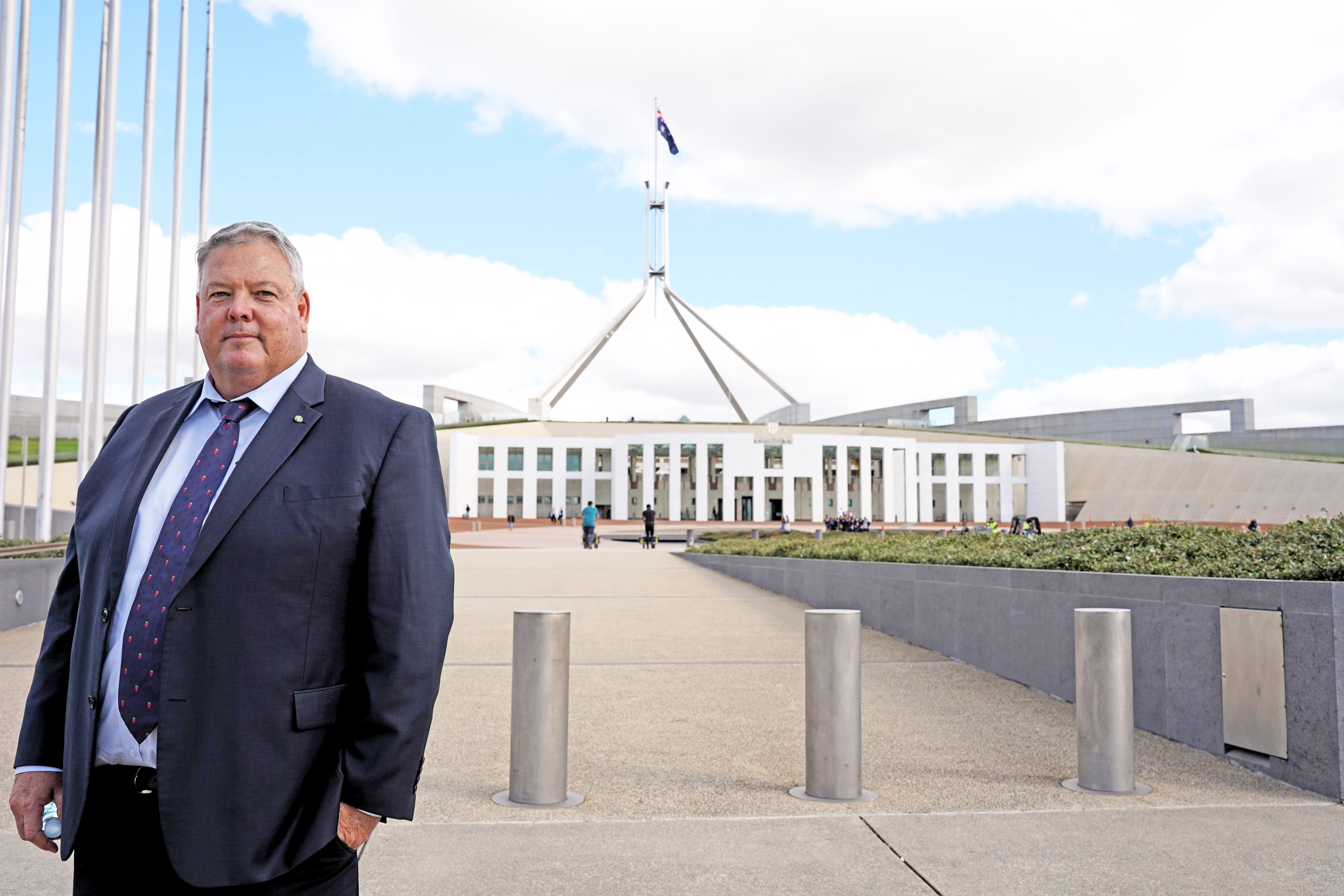
The Federal Member for Dawson, Andrew Willcox, has slammed the Albanese Government for an unacceptable ambush on regional communities, accusing the Commonwealth of abandoning disaster-prone areas to balance its own budget. The Federal Minister for Emergency Management, Kristy McBain, used a late Friday afternoon media release to quietly flag sweeping alterations to the Disaster Recovery Funding Arrangements (DRFA). The proposed changes dismantle the long-standing, scalable framework, which historically provided an average of 64 per cent federal coverage and capped support at 75 per cent for catastrophic events. In its place, Canberra intends to implement a rigid 50-50 funding model. This policy shift arrives at the worst possible time for the state; it follows a volatile severe weather season that caused widespread damage across 71 of Queensland’s 77 local government areas. Federal Member for Dawson, Andrew Willcox, is warning that the sudden funding shortfall threatens the future viability of essential infrastructure, local water treatment facilities, and emergency evacuation operations. Mr Willcox, drawing on his extensive experience as the former Mayor of the Whitsunday Regional Council, stated that the Federal Government is completely detached from the realities of regional recovery. "This decision is a direct hit to the heart of North Queensland," Mr Willcox said. "Canberra is treating natural disasters like a corporate budgeting exercise; however, out here, it is a matter of community survival. To penalise the very regions that drive the nation’s agricultural wealth and mining export revenues is a profound betrayal. "During my time steering the Whitsunday community through the wreckage of Severe Tropical Cyclone Debbie in 2017, I learned exactly what it takes to rebuild. We relied heavily on scalable federal assistance to restore our shattered rural road networks. Under a flat 50-50 split, local councils across Dawson would be forced to find millions of dollars in matching revenue; that is a financial burden our regional ratepayer base simply cannot sustain." Mr Willcox emphasised that major historical recovery operations would have been completely unviable under the newly proposed guidelines. "The total reconstruction of the Shute Harbour marine terminal and the $5 million federal package required to replace the decimated Proserpine Entertainment Centre occurred because the previous framework allowed for exceptional circumstances," Mr Willcox said. "Small regional councils do not possess the independent asset base to fund multi-million-dollar rebuilds alone. Furthermore, the historical system guaranteed that funding flowed directly into local economies, ensuring that regional earthmoving businesses and contractors were awarded the repair work. By lowering the funding floor, the Commonwealth is forcing cash-strapped councils to delay vital resilience works; this leaves our communities dangerously exposed before successive wet seasons. "It is a coward’s tactic for the Minister to leave this announcement until the day after the parliamentary sitting concluded, ensuring they avoided any real scrutiny or accountability in Question Time. “This is yet another calculated deception from a government that knows exactly how damaging these cuts are; this is absolutely not what the Australian people voted for, and I truly hope this betrayal is remembered at the next election. "This is yet another chapter in the ongoing federal neglect of regional Australia. The government is hiding behind the cover of an independent review to justify cutting essential frontline services. I call on the Emergency Management Minister to reverse this decision immediately; regional Queenslanders refuse to be treated as second-class citizens.” Supplied by the office of Federal Member for Dawson, Andrew Willcox CAPTION: FIGHTING FOR THE NORTH: Federal Member for Dawson Andrew Willcox MP outside Parliament House in Canberra, condemning the Albanese Federal Government's plan to slash scalable disaster recovery funding for regional councils. Photo supplied
Read the full story
"As the final week approaches for public submissions into the Sugar Code of Conduct, Member for Burdekin Dale Last has renewed his calls for growers to unite and make their voices heard. Mr Last said the public submissions for the sunsetting review of the Sugar Code of Conduct should be an opportunity for sugarcane growers from across the Burdekin to outline the benefits of the code for both farmers and the wider community. “Over recent weeks I have taken the liberty of providing a submission on behalf of the community, because ultimately the flow-on impact from changes in our sugar industry stretch beyond the paddock and the mills,” Mr Last said. “I recently met with several grower representatives which provided the opportunity to bring key stakeholders together, reaffirm my support as the Member for Burdekin and emphasise the need to work collaboratively as the review period unfolds.” Mr Last said while it was important stakeholders took the time to make their voices heard during the public submissions there was no better way to understand the impact of the Sugar Code of Conduct than to visit the area and speak directly to representatives. “A decade ago this district played a central role in bringing this code of conduct to fruition so I would expect our stakeholders receive a seat at the table they deserve,” Mr Last said. “If the Federal Labor Government was serious about consulting with the industry, the responsible Assistant Minister would be looking for every opportunity to listen to those who are most impacted by the Sugar Code.” Anyone wishing to have their say in the review can visit https://haveyoursay.agriculture.gov.au/sugar-code-review"
Read the full story

CANEGROWERS has welcomed the end of industrial action at Tully Sugar Mill, saying it’s an example of what can be achieved when employers and unions negotiate in good faith and are prepared to compromise.
Over the weekend, Tully Sugar Limited announced that mill workers had voted in favour of a pay deal tabled by the mill following recent conciliation talks with unions in Townsville.
“This is a good outcome for the local industry,” CANEGROWERS Chairman Owen Menkens said. “It shows that a system exists where workers can be fairly represented, and which enables employers and their employees to negotiate an acceptable pay deal.
“Tully CANEGROWERS representatives have been working diligently behind the scenes with both sides to encourage a resolution, so it’s pleasing to see an agreement that is acceptable to workers at Tully Sugar.”
Tully Sugar Limited is a wholly owned subsidiary of Chinese agribusiness company COFCO.
It operates one of the largest sugar mills in Australia based in the regional township of Tully, located on the Bruce Highway in Far North Queensland.
Its principal activity is the milling of sugar cane to produce raw sugar and all of its sugar is exported. The molasses it produces is sold into both the domestic cattle feed and the international markets.
Mr Menkens said the Tully deal should serve as an example to Wilmar Sugar and unions who have been locked in an increasingly bitter pay dispute since last year.
“Wilmar and unions also went through a similar non-binding conciliation process but, unlike Tully, no solution has been found. As a result, half of the industry continues to be impacted by threatened strike action.
“We now have widespread rainfall across North Queensland, and it looks like wet weather will delay crushing for the next week or two.
“I’d encourage both sides in the Wilmar-union dispute to use that time wisely, restart negotiations, and find a compromise that can let us get on with the crush when the weather clears up.”
In response, a Wilmar Sugar and Renewables spokesman, “We have been consistent from the outset that we seek a commercially sustainable outcome from enterprise bargaining. That remains our objective and our focus.”
The spokesperson confirmed that Wilmar was meeting with union representatives earlier this week on Tuesday.
Tully Sugar Mill

Burdekin region mills
Week 9, ending 10 August 2024
Cane crushed
This week
Season to date
Invicta
145,089
947,701
Pioneer
70,238
426,444
Kalamia
76,043
540,157
Inkerman
86,423
625,836
Burdekin
377,792
2,540,138
CCS
Invicta
14.55
14.06
Pioneer
14.69
14.14
Kalamia
14.24
13.80
Inkerman
14.78
13.83
Burdekin
14.57
13.96
Weekly variety performance for region
Variety
%
CCS
Variety
%
CCS
Q240
54%
14.54
SRA23
7%
14.46
KQ228
20%
14.58
WSRA17
5%
13.86
Q183
8%
15.05
Q208
4%
15.06
Comments:
The Burdekin mills processed just under 380,000 tonnes of cane for the week, which was above budget and the highest weekly throughput for the season to date.
The four mills have now processed more than 2.5M tonnes of cane, which represents 30% of the forecast 8.47M tonne Burdekin crop.
Production was impacted this week by a number of planned and unplanned stops as well as industrial action. The opportunity was taken during the stoppages to carry out necessary maintenance work.
The average weekly CCS was 14.57, which was above budget.
The highest CCS sample of 18.4 was from a rake of Q240-PL in the Mulgrave (Invicta) productivity district.
As always, please remember to take care as you approach cane rail crossings. Our cane trains operate 24 hours a day, seven days a week during the season.
John Tait
Cane Supply Manager
Burdekin Region

Troubling figures released earlier this week show many illnesses among rural, regional and remote Australians could have been prevented or treated better with accessible primary care, thus avoiding the need for hospitalisation.
According to the Australian Institute of Health and Welfare (AIHW), many parts of rural Australia have higher rates of potentially preventable hospitalisations, highlighting the need for early interventions and ongoing care, particularly for non-communicable diseases. Unfortunately, Australia’s rural populations, which make up over 7 million people, often lack access to such preventive measures.
“We often see rural communities neglecting or putting off their health issues due to limited access to primary care, exacerbated by the tyranny of distance and cost of services. This leads to a cascade of problems, including overwhelming an already strained hospital and emergency system,” said the National Rural Health Alliance Chief Executive Susi Tegen.
“This brings us to consider the need to increase strategic and fit-for-purpose investment in rural health care.
“Given Australia’s annual health spending deficit of $6.55 billion in rural Australia, as discovered through independent research last year, we strongly advocate for greater investment in rural health care for communities, which enable multidisciplinary and place-based solutions according to needs.
“The Alliance proposes the Primary care Rural Integrated Multidisciplinary Health Services (PRIM-HS) model, which is community-led and co-designed to meet the specific health needs of communities to promote the preventative aspect of health.”
Ms Tegen added that the model aims to improve primary healthcare experiences, provide culturally safe, high-quality care which would become a major contributor to reduce the rates of potentially preventable hospitalisations in rural, regional and remote Australia, with federal and state /territory government partnership.
“Government funding to support this model would mean more rural primary care practices could continue to exist or be established in rural areas to provide essential care that many metropolitan communities take for granted,” Ms Tegen said.
National Rural Health Alliance Chief Executive Susi Tegen

As the first quarter of the 2024 crush season unfolds, Wilmar Sugar and Renewables is reporting a substantial 4.14 million tonnes of cane processed across its eight mills. Despite widespread rainfall halting harvesting and crushing across all regions, the Burdekin stands out with notable progress and performance.
In the Burdekin, the season has been marked by a CCS (Commercial Cane Sugar) of 14.57 this week, with a total of 2.55 million tonnes processed, representing 30 per cent of the total Burdekin crop. The region’s mill performance is showing positive trends, improving across all Burdekin factories. However, the Burdekin crop is currently trending slightly below the initial estimate. The recent heavy rain has impeded harvesting efforts, with field reports suggesting that harvesters may not return to the paddocks for another 10 to 14 days.
Ian Davies, General Manager of Cane Supply and Grower Relations at Wilmar Sugar and Renewables, provided insight into the impact of recent weather conditions. “The recent rain has put a temporary halt to our harvesting operations, but our teams are working diligently to assess and manage the situation. We remain optimistic as we work through these challenges,” Davies said.
In the Herbert region, the CCS this week stands at 12.65, with 885,000 tonnes processed, accounting for 22 per cent of the total Herbert crop. The Herbert crop is cutting slightly below estimate, but the CCS is tracking above budget. The wet weather has allowed crews to complete necessary maintenance work. Feedback suggests that harvesting may resume later this week.
Proserpine’s crop is currently cutting about 3 per cent above estimate, with a CCS of 13.78 and 414,000 tonnes processed, representing 24 per cent of the total Proserpine crop. The factory’s overall performance has been strong. Current indications are that harvesting may restart towards the weekend.
In Plane Creek, the CCS is reported at 12.72, with 291,000 tonnes processed, or 22 per cent of the total Plane Creek crop. The crop is cutting above estimate, with an average yield of 85 tonnes per hectare. During the wet weather stop, crews are working to reinstate the master shredder turbine to return to budgeted crush rates. With improved drying conditions, the factory was expected to resume crushing by August 14.
As the season progresses, Wilmar’s focus remains on overcoming weather-related challenges and optimising operations to ensure a successful crush season.
Invicta Mill in the Burdekin region - Australia's largest sugar-producing mill. Boiler Assistant Rory Ironside took the snap on his phone at dusk

This Friday, August 16th, Ayr State High School will host a remarkable student-led fundraising event, spearheaded by school captains Layla Kelly and Noah Arboit. The initiative, organised by the Student Executive, will see teams of students and staff walking non-stop for five hours, from 4pm to 9pm, in a spirited effort to raise money for their chosen charities.
Each team has actively sought sponsorship to support a range of worthy causes, including Autism Awareness Australia, the Laurie’s Love Foundation, RSPCA, Lymphoma Australia, CORES, Ayden Wall’s GoFundMe page, Cerebral Palsy Australia, Ronald McDonald House, and the Cancer Council. These charities reflect the diverse interests and passions of the participants, demonstrating their commitment to making a positive impact both locally and nationally.
With over 100 registered participants, the event has garnered strong support from the Ayr High Parents and Citizens Association (P&C), which will be providing catering for the evening. The Burdekin State Emergency Service (SES) will also be on hand, assisting with lighting to ensure the safety and success of the event.
The organisers hope to raise between $2,000 and $3,000, a testament to the community spirit and dedication of Ayr State High School's students and staff. This event not only highlights the leadership of the school’s captains but also showcases the collective effort of the school community in supporting important charitable causes.
a group of Ayr State High School students preparing for the charity relay Photo supplied

Burdekin Christian College has embraced innovation and sustainability by participating in the Big Ideas Youth Challenge, a competition aimed at encouraging young minds to become entrepreneurs with a focus on the circular economy. The challenge is not just about business; it's about inspiring students to think about the future and how they can be the change-makers in their communities.
The competition is structured to help students develop their ideas from scratch, with a strong emphasis on sustainability. Students are encouraged to identify issues within their communities and create innovative solutions. This year, participants tackled various topics, including youth crime and sustainability, with one group proposing the development of a community centre focused on these themes. Felipe Lima-Teixeira, one of the standout participants, delivered a compelling pitch that earned him and his group a spot in the finals. Another student, Heidi, combined her passion for horses with recycling, showcasing the diversity of ideas generated by the students.
The competition is supported by Future Anything, an organization dedicated to helping young people turn their ideas into reality. Participants receive extensive support, including structured guidance, materials, and mentorship from community leaders. The event took place in JCU's new eco-friendly building, which added to the focus on sustainability.
Teacher Lorna Brooks, who accompanied the 16 students from Burdekin Christian College, praised the challenge for its alignment with the curriculum and its ability to get students thinking about their future, not just in terms of careers but in making a real impact in their communities.
Looking ahead, the school hopes to continue participating in the Big Ideas Youth Challenge, with aspirations to see even more students engaged in innovative thinking and entrepreneurship.
TheBig Ideas Youth Challenge (photo supplied)

Burdekin Christian College continues its tradition of hosting an annual careers expo, an event that has seen significant growth and success over the years. Designed to connect students with various industries and professions, the expo provides invaluable insights into the steps needed to pursue their dream careers.
This year, the expo has expanded to include a wider range of organizations, reflecting the growing interest in apprenticeships, IT, and health among students. The expo's evolution has seen participation from younger students, with Grade 8’s now attending to explore future career opportunities.
Local industries are prominently featured, including Wilmar, JCU, Ozmac, and Burdekin Shire Council, emphasizing the college's commitment to fostering employment within the community. By keeping the event locally focused, the college aims to support students in thriving within the Burdekin area.
The expo's timing is strategic, as students in Years 11 and 12 are preparing to select their subjects, with many already applying for apprenticeships. The event offers practical guidance, supplemented by previous experiences like the Townsville Careers Expo and the JCU Open Day.
Feedback from exhibitors and students alike has been overwhelmingly positive, with businesses eager to return each year. The students, while excited about freebies, also value the opportunity to engage with organizations they see in their community.
Looking to the future, the college hopes to continue growing the expo, providing students with more options in both academic and vocational pathways. The event remains a cornerstone in helping students make informed decisions about their career paths.
The careers evening (photo supplied)

For Macy Grabs, being an ambassador is much more than a title—it’s an opportunity to learn, grow, and connect with her community. “It’s mainly about getting out of my comfort zone and into the community,” she says. Through this role, she’s gained insight into how the water festival is organised and how the Burdekin Shire Council operates, particularly its longstanding connection to the festival. This deeper understanding has enriched her appreciation for the region’s traditions and the importance of community involvement.
Macy’s responsibilities as an ambassador are varied, each task presenting new challenges and opportunities. She first stepped into the spotlight at the festival launch, where she was tasked with writing and delivering a speech on behalf of the council, alongside the other ambassadors. “Now, my responsibility is piecing together a float,” she explains. This creative endeavour allows her to contribute to the festival tangibly, blending traditional elements with her unique vision.
One of the most heartfelt aspects of Macy’s ambassadorship is her commitment to charity work. Ahead of the festival, she has organised a sausage sizzle fundraiser on August 24th, with all proceeds going to the Cancer Council, held in the alleyway next to St. Vincent’s and K-Hub in Ayr. This cause is particularly close to Macy’s heart, as her grandfather is currently battling cancer. “A lot of people in my family have experienced cancer; it touches my heart,” she shares, highlighting the personal significance of her charitable efforts. Through this fundraiser, Macy hopes to make a meaningful contribution to cancer research and support, while also raising awareness in her community.
However, Macy’s journey as an ambassador hasn’t been without its challenges. Public speaking, for instance, is something she’s had to overcome. “Getting out of my comfort zone and public speaking—it’s not my favourite thing to do,” she admits. Balancing her full-time traineeship, TAFE studies, and the demands of the ambassadorship has also required a great deal of organisation and time management. Yet, despite these challenges, Macy remains committed to her role and is determined to fulfil her responsibilities with dedication and enthusiasm.
Engaging with the community has been a key part of Macy’s mission. Working in the public library gives her a unique platform to promote the festival and its associated charitable causes. “I try to advertise as much as I can there, and if people don’t understand what the Water Festival is about, I try to teach them,” she says. Her efforts help ensure that the festival’s message reaches a broader audience, encouraging greater community participation and support.
Looking forward, Macy hopes her work as an ambassador leaves a lasting impact. “I just hope that everyone in the community understands that as hard as it is, it is a fun thing to do, and being able to raise money shows an array of charities and opens up opportunities for others to get involved,” she says. Her message is one of encouragement, urging others to see the value in community involvement and charity work.
In Macy Grabs, the Burdekin Water Festival has found not just an ambassador but a true advocate for the community—a young woman determined to step out of her comfort zone and into a role that allows her to give back in meaningful ways.
Macy Grabs, Water Festival Ambassador. Photo credit: Miah Lampard

Renovating your home can be an exciting but daunting task, especially when you're trying to stick to a budget. However, with some smart planning and creative ideas, you can refresh your space without overspending. Here are some expert tips to help you achieve an amazing transformation on a budget.
Start by focusing on the areas that will have the most impact. Kitchens and bathrooms are often the best places to invest your money, as they can significantly increase the value of your home. You don’t have to do a complete overhaul; simple updates like replacing old fixtures, repainting cabinets, or adding a stylish backsplash can make a big difference.
Labour costs can quickly add up, so consider tackling some of the work yourself. Painting walls, assembling furniture, or even laying tiles are tasks that many homeowners can do with a little practice. There are countless tutorials online that can guide you through these projects. Just be sure to know your limits—leave the more complex tasks, like electrical work or plumbing, to the professionals.
Before buying new materials, consider what you can repurpose from your existing space. For example, instead of replacing kitchen cabinets, you could reface them or give them a fresh coat of paint. Old furniture can be upcycled with new upholstery or a coat of paint, giving it a new lease on life. Thrift stores and garage sales can also be treasure troves for finding unique, affordable pieces.
Look for sales, discounts, and clearance items when purchasing materials. Home improvement stores often have deals on paint, flooring, and fixtures. Additionally, consider using less expensive materials that mimic the look of high-end options. For example, laminate countertops can offer the appearance of stone at a fraction of the cost.
Lastly, create a detailed plan and budget before starting your renovation. Knowing exactly what you want to achieve and how much you can spend will help you avoid costly changes along the way. By sticking to your plan, you can ensure that your renovation stays within budget while still delivering the results you desire.
With these strategies, you can achieve a beautiful home renovation without breaking the bank. Happy renovating!
.JPG)
A Warm Welcome to Home Hill
As I settle into the charming community of Home Hill and the greater Burdekin region, I am struck by the warmth and hospitality that define this beautiful area. From my very first day, the friendly faces and kind-hearted people have made me feel at home.
One of the highlights of my time here has been meeting Mayor Pierina Dalle Cort. Her genuine warmth and enthusiasm for the community are truly inspiring. Mayor Dalle Cort's dedication to the well-being and prosperity of Home Hill and the entire Burdekin region is evident in every conversation. Her welcoming nature and commitment to fostering a strong, vibrant community has been a beacon of positivity for newcomers like myself.
Beyond the formalities, I've had the pleasure of meeting many residents of the Burdekin, each with their own unique stories and experiences. From local shopkeepers to community leaders, everyone has been eager to share their love for this region. It's heartwarming to see the pride people take in their community and the support they offer one another.
The Burdekin's rich history, combined with its forward-looking spirit, creates a perfect blend of tradition and innovation. Whether it's the picturesque landscapes, or the thriving arts and cultural scene, there is so much to explore and celebrate here.
As I continue to immerse myself in this wonderful community, I am excited about the opportunities ahead. Thank you, Home Hill and the Burdekin, for your warm welcome. I look forward to sharing more of our stories and successes in the pages of Burdekin Life.

On Sunday, 28 July, members of the Lower Burdekin Scouts participated in National Tree Planting Day alongside the Burdekin Landcare and other local community members. The event was a great opportunity for the Scouts to engage in environmental stewardship and community service.
The day began with a focus on sun safety, ensuring all participants were well-prepared for the outdoor activity. The Scouts and other attendees were then given a tour of the Landcare facility, including an introduction to their plant nursery and worm farm.
With great enthusiasm, the Scouts joined in the tree planting efforts. They dug out the soil, carefully planted the new trees, mulched around them, and provided a thorough watering. The group worked diligently for approximately two hours, contributing to the local environment.
After the hard work, everyone enjoyed a BBQ sausage and a drink, generously provided by Landcare, before heading home. The event not only allowed the Scouts to contribute to the community and environment but also gave them the chance to earn a badge. To qualify, they will write a report detailing their experiences and what they learned during the Landcare project.
Contributed with thanks to Chris Berkery.
The Scouts were gloved up and ready to start planting last Sunday.
.JPG)
Tony Mooney, Health Board Chair, recently visited the Burdekin region to discuss ongoing efforts and plans for healthcare enhancements and community engagement. The visit included a board meeting with Mayor Dalle Cort at the council chambers, focusing on Burdekin-specific issues and the redevelopment of the Home Hill facility.
Reflecting on the meeting, Mooney stated, “It was a very good meeting. We’ve been focusing on the issues specific to the Burdekin and the future of the Home Hill facility slated for redevelopment.”
A key discussion point was the business case development by the Department of Health for a CT scanner in the Burdekin. “We talked about issues on the mayor's wish list, including an update on the business case development by the Department of Health for a CT scanner here in the Burdekin,” Mooney elaborated.
The visit also included rounds in Ayr and Home Hill, where Mooney engaged with staff, patients, and families. “We made a round visit to Ayr and then to Home Hill to see firsthand issues from staff, patients, and families. It’s an important part of the community, and I’m thrilled to be here,” he said.
Mooney emphasised the importance of stakeholder engagement. “We’re actively engaged in our local community, and the Burdekin is an important part of that. This is more of an opportunity to talk one-on-one and with a group – QAS, QPS, schools, primary care and secondary care, and our own staff. Stakeholder engagement is critically important to everything we do.”
He expressed satisfaction with the progress made in the Burdekin, particularly regarding the redevelopment of the Home Hill facility. “We’re really happy about the fact that we’ve been given money to rebuild the Home Hill facility. The message that I can deliver is that money has been allocated for a revision here in the Burdekin.”
Mooney underscored the significance of feedback from various stakeholders. “All of our decision-making must be based on feedback from our patients, the local community, the council, and from the people who work for us most importantly. It gives us the opportunity to gauge the culture of the place, the behaviours, and what we’re doing that’s having a positive impact.”
Mooney reiterated the board’s dedication to listening and working closely with the local community to improve healthcare services. “The key message is we’re here to listen and observe and work closely with locals in the community. Our hopes for the future are to continue providing good healthcare.”
The Burdekin community can anticipate significant improvements in their healthcare facilities, thanks to the proactive engagement and strategic planning highlighted during Tony Mooney's visit.
Mayor Pierina Dalle Cort formally presents Tony Mooney a proposal
.jpg)
Opinion Piece
A lack of funding to address crucial safety upgrades on the Bruce Highway highlighted in the state’s own 15-year action plan, has left Member for Burdekin Dale Last shaking his head.
As community frustration continued over the loss of lives on some of the state’s deadliest sections of the Bruce Highway, Mr Last said any hopes of having serious concerns with sections of the major highway addressed in his electorate were all but dashed by the latest Queensland Transport and Roads Investment Plan (QTRIP).
“Once again we’ve seen the state government release an action plan clearly outlining what needs to be fixed and how soon, yet when it comes to implementing those actions, this Minister seems all too happy to turn a blind eye to the recommendations,” Mr Last said.
“A total of 18 actions were outlined in the Bruce Highway’s 15 year action plan for the Burdekin Electorate alone in the next four years, yet 15 remain unfunded in QTRIP, including multiple sections this community has long called for safety upgrades to be conducted.”
“Every time a community and first responders are left to pick up the pieces from another fatal accident on the Bruce Highway they are left to question just how much more blood needs to be shed before the road they rely on gets serious funding and it’s clearly a question this Minister needs to start answering.”
The 15 sections mentioned to be funded within the next four years, according to the action plan, included a replacement bridge at Alligator Creek, multiple safety upgrades on the highway from Cape Cleveland Road to Zinc Road as well as others south of Home Hill to Bowen.
“All of those areas have been raised as serious safety concerns that I have advocated for on several occasions, yet despite this, a mere three - including rehabilitation works -on the Burdekin Bridge were listed for funding in the current QTRIP report,” Mr Last reported.
“Time and time again we see glossy documents released which reiterate the serious concerns that communities have raised previously, so to have another glossy document released but not to see the actions funded is a kick in the guts to every family, truck driver and commuter left to run the gauntlet on the Bruce Highway.”
“The Minister wants to talk about travelling the Bruce Highway to make announcements but is not willing to drive to communities in my patch to hear from those left to pick up the pieces from a deadly crash so they can explain why those 15 actions need to be funded.”
Contributed by Dale Last.

National Aboriginal and Torres Strait Islander Children's Day is a significant occasion dedicated to celebrating the lives and cultures of Aboriginal and Torres Strait Islander children.
Established by the SNAICC organisation and taking place this year on August 4th, the day honours the birthdays of the Stolen Generations' children—those taken from their families and placed into the system. It aims to provide support and appreciation, fostering a community where these children feel valued.
Rebecca Aldridge, an event organiser, has a deep love for the Burdekin community. "It's about making these children feel that they are not alone, that their community stands with them," Rebecca explains. The event in Burdekin brings children together to share in the joy of their birthdays, promoting unity and resilience.
This celebration also aims to promote Aboriginal and Torres Strait Islander cultures. "People can come down and talk about their family traditions. We've had traditional dances, and elders from Bamaga teaching coconut shaving," Rebecca shares. The event provides a free, inclusive space where everyone can celebrate like a big birthday party.
The days activities include cupcakes, a free sausage sizzle, and affirmation cards with positive messages. "These cards are something people can take away, a lovely saying that makes you feel special," Rebecca says. Additionally, there are ball games and craft activities, such as decorating turtle shells and scratch animals, creating a joyful, childhood atmosphere.
Over the years, this event has significantly impacted the local community and its children. "It's one of those things that people come down to and feel a part of," Rebecca notes.
Rebecca also encourages non-Indigenous Australians to support and participate by coming down, listening, and engaging with the community. "Engagement and listening are so important," she emphasises.
Reflecting on the event's importance, Rebecca shares that it helps preserve and pass on cultural heritage to younger generations. "Having adults share their experiences with children helps preserve our culture," she explains.
Looking to the future, Rebecca hopes for continued participation, especially from Aboriginal and Torres Strait Islander people. She also acknowledges Eddie Smallwood, the Gudjuda Events Group, 54reasons, Play2Learn, Megan Quilin, BAYWatch, Uncle Gerald Henaway and Aunty Ollie Henaway for their support.
Rebecca Aldridge and Pastor Les Henaway cooking up a lovely spread
Eddie Smallwood and the rangers boat. Photo credit: Miah Lampard
.jpg)
Dr. Priyanka Rapelli, a general practitioner, has recently joined the medical community of Home Hill, bringing with her a wealth of experience and a deep passion for patient care. Moving from Blacktown NSW, Dr. Rapelli started her new role just a week ago and has already begun to settle in well.
"I love serving patients, practising medicine and learning new things," she shared, expressing her fondness for science and continuous learning. Being the first doctor in her family is a dream fulfilled for her father.
Dr. Rapelli's journey to becoming a GP is as remarkable as her dedication. Born in India, she graduated in Ukraine before returning to India to obtain her medical licence. She then moved to Australia in 2022, where she worked tirelessly towards her exams in Sydney. Her hard work and determination paid off, leading her to Home Hill, where she now works alongside Dr. Tata, whom she credits as a significant influence and support.
Her personal life is equally fulfilling, with a supportive husband who has stood by her through the challenges of her career. They share a love for animals and hope to welcome a pet into their home someday. Music, singing, reading, and gardening are among her hobbies, offering a balance to her professional life.
Dr. Rapelli is particularly keen on specialising in skin cancer and getting to know the Burdekin community better. "Sydney treated me well, but I appreciate the calmness and peace of Home Hill," she said. Grateful for the warm welcome from the community and the support of Dr. Tata and the clinic team, Dr. Rapelli is committed to providing the best care for the people of Burdekin.
For the past 10 years Dr Sarat Tata has operated Home Hill Surgery and during that time it has become a hub for all things health in the Burdekin.
His inspiring attitude and connections within the medical industry has attracted a range of medical practitioners who add to the diversity of services offered and provide the local community with the dedicated health care they deserve.
The Home Hill Surgery has 5,600 active patients and Dr Tata’s dedicated work has been recognised several times, namely in 2020 when Dr Tata was named Queensland GP of the year.
Home Hill Surgery offers GP healthcare seven days a week, on-site pathology and ultrasound services, Burdekin Hearing, a dentist who visits monthly, a physio coming soon, skin cancer medicine centre and surgery, Allied Health, North and West Remote Health, chronic pain management and nutritional medicine services.
Dr. Priyanka Rapelli, ready to serve the patients of Home Hill. Photo credit: Miah Lampard
Publishers Indemnity. Any individual or entity that places advertising, supplies copy material, or submits editorial content to Core Life Publishing agrees and undertakes to ensure that all such material:- Does not infringe upon any copyright, trademark, or other intellectual property rights;- Is free from any content that could be considered defamatory, libelous, or slanderous;- Does not infringe upon any rights related to privacy or breach of confidence;- Contains no obscene, indecent, or otherwise unlawful material;- Complies fully with the Trade Practices Act and all other applicable laws, regulations, or statutes.Furthermore, by submitting or placing such material, these individuals or entities agree to indemnify and hold harmless the publisher, Core Publishing and Events Pty Ltd, and/or its agents from and against any and all investigations, claims, demands, liabilities, damages, costs, or judgments arising out of or in connection with the material provided. All material is believed to be accurate at the time of printing and remains the copyright of Core Publishing and Events Pty Ltd.
© 2026 Life Publishing Group Pty Ltd.
