
Independently Owned, Locally Grown, Community Loved
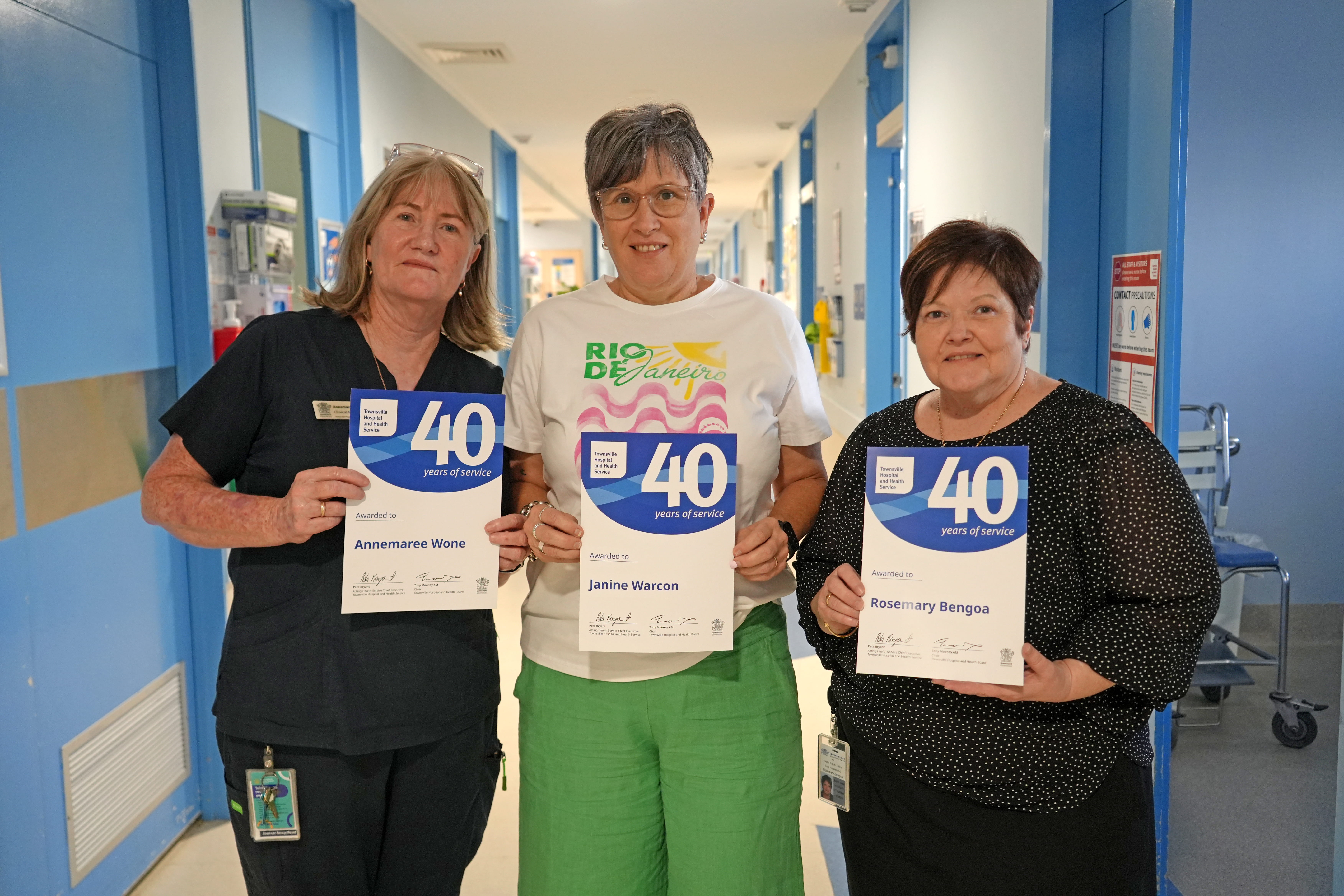
Three Burdekin hospital workers have clocked up 120 years of combined service to the Ayr and Home Hill communities. Rosemary Bengoa, Janine Warcon and Annemaree Wone have each reached 40 years of service, with the milestone recognised at local staff thank-you events. Rosemary began at Ayr Hospital in 1985 in the front office before moving into medical records, accounts payable, assets and finance. Janine started in the Home Hill Hospital kitchen and has since worked across kitchen, cleaning and laundry roles at both Ayr and Home Hill. She later became an orderly before moving into her current role as an assistant in nursing at Home Hill. Annemaree began her career at The Prince Charles Hospital in Brisbane, working as an enrolled nurse for four years before completing her registered nurse training in Townsville. She returned to the Burdekin after the birth of her first child and now works across the dialysis unit and emergency department at Ayr. The three staff members said their connection to the community, colleagues and variety of work had kept them in the health system for four decades. “Your work colleagues and the friendships you make along the way keep you in the role,” Rosemary said. For Janine, working in her own community and caring for patients has been a key part of her career. “We’ve had some funny moments; just the other night one patient was disco dancing in the hallway with me,” she said. Annemaree said working across different areas had kept her career varied. “I work in dialysis, sometimes in the emergency department, and sometimes on the ward, and because I have always worked across multiple areas, I’ve never felt stuck in one place,” she said. The breadth of responsibilities is a common feature of working in rural hospitals, Ms Wone said. “You need to know lots of different things when you work in a rural or remote hospital setting, so we are very busy,” she said. “But even with how much we have all achieved, I can’t believe it’s been 40 years; it feels like it happened overnight.” CAPTION: Rosemary Bengoa, Janine Warcon and Annemaree Wone have each reached 40 years of service, with the milestone recognised at local staff thank-you events. Photo supplied
Read the full story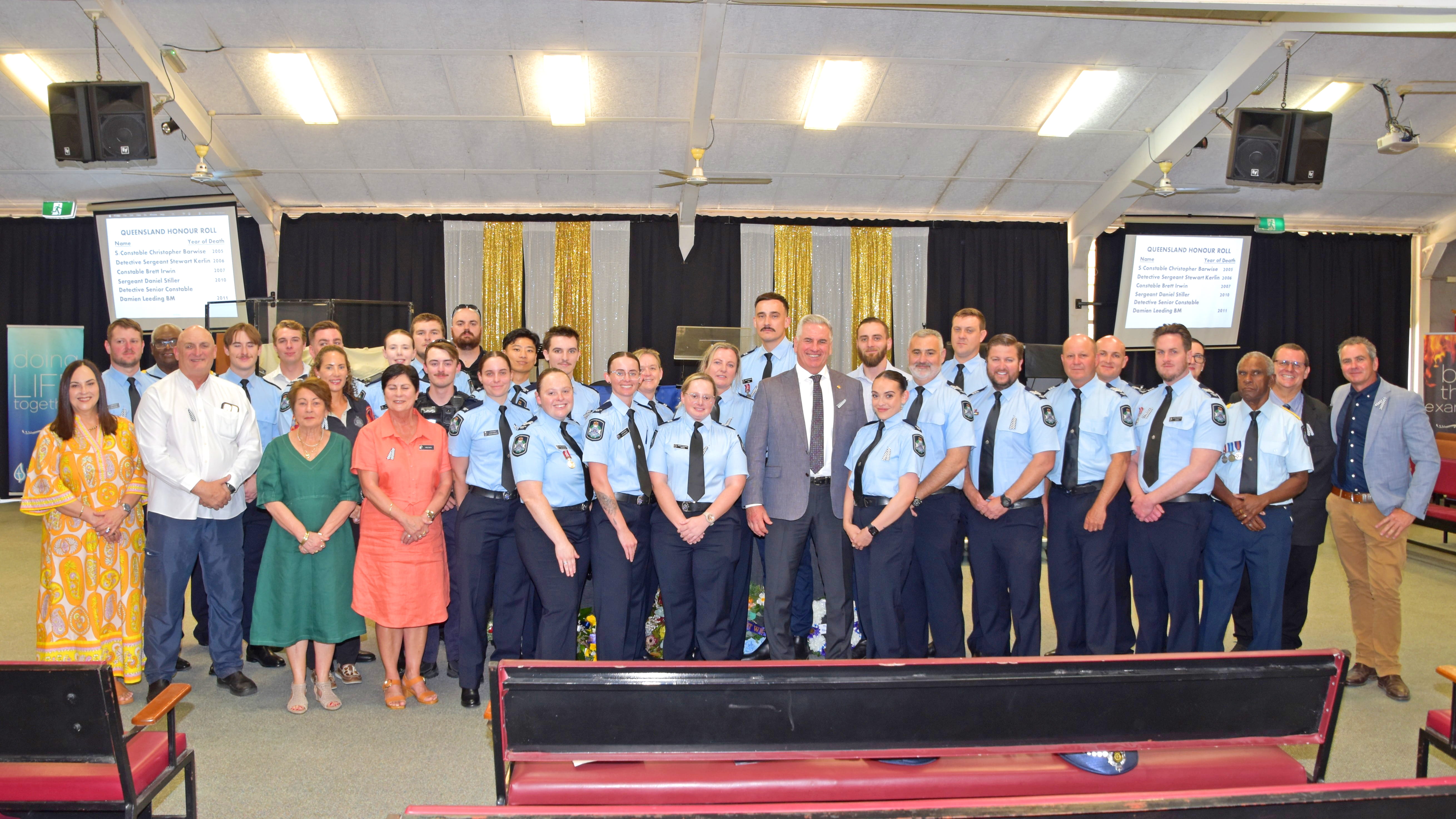
Burdekin police, dignitaries and community groups gathered Tuesday morning to honour officers killed in the line of duty. Photo: David CooperBurdekin community members, local dignitaries, and police gathered at Ayr's Burdekin Community Church on 29th September to commemorate National Police Remembrance Day. The solemn service honoured officers who made the ultimate sacrifice in the line of duty, featuring a wreath-laying ceremony and a reading of the Roll of Honour.Read more here: www.burdekinlife.com/article/burdekin-honours-fallen-officers-on-remembrance-day
Read the full story
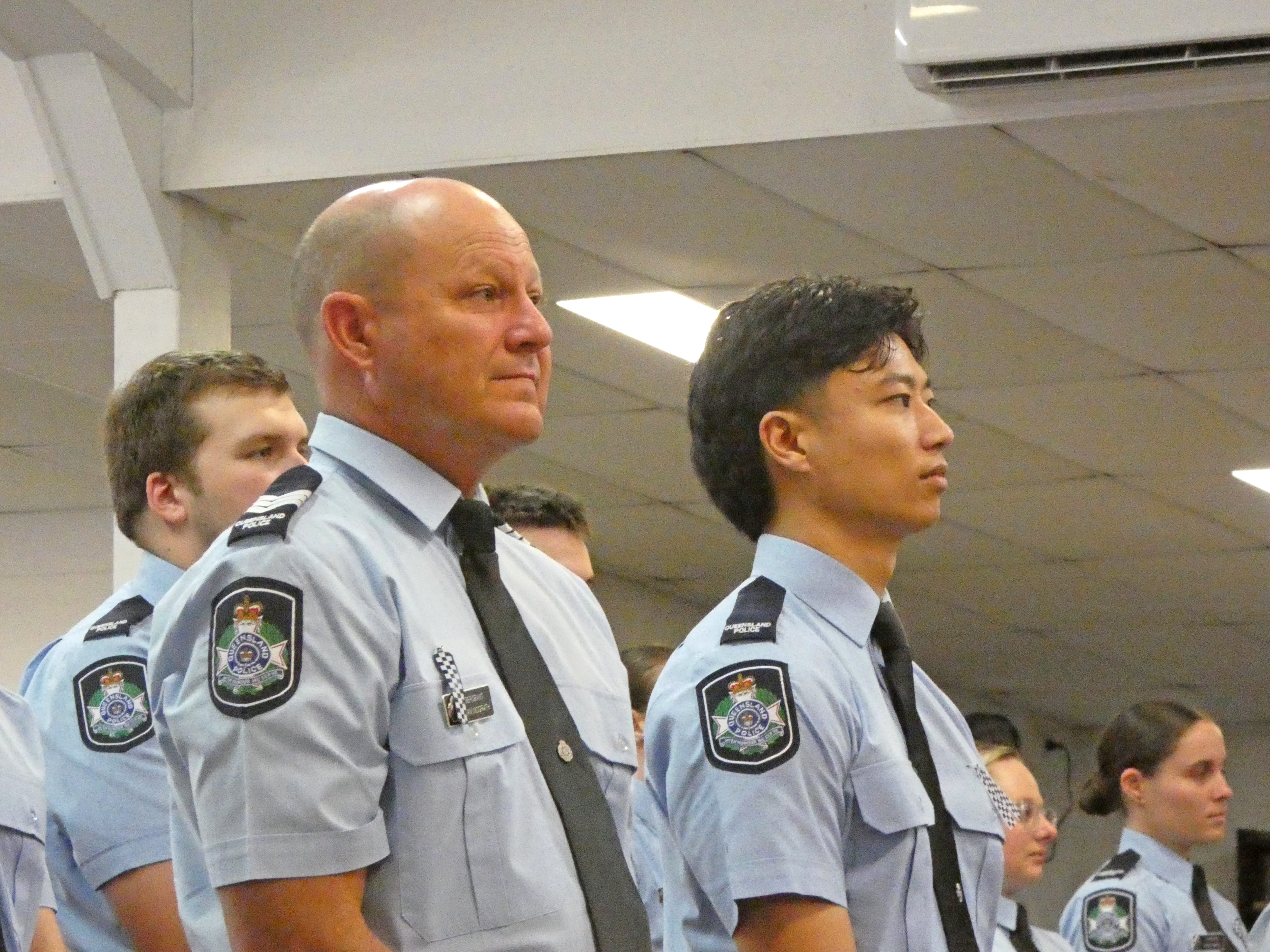
Burdekin police, dignitaries and community groups gathered on Tuesday morning to honour officers killed in the line of duty. Held at the Burdekin Community Church in Ayr, the service formed part of National Police Remembrance Day, observed each year on 29th September. Pastor Peter Holmes, who led the service, said it was a chance to pay tribute to the bravery and service of the fallen. “Someone has to protect those who cannot protect themselves. Someone has to step into the disorder and work to restore order—and that is one of the responsibilities entrusted to our police,” he said. “Today, we honour those who stood. Some stood in circumstances that ultimately cost them their lives, and this day each year ensures that their courage will never be forgotten.” A Police Commissioner’s Address was delivered by Acting Inspector Megan Benson before local officers read the Roll of Honour, commemorating police officers killed in the line of duty. Officers then lit memorial candles, before community groups joined police and dignitaries in laying wreaths. Among dignitaries were Burdekin Shire Council Mayor Pierina Dalle Cort and Member for Burdekin Dale Last, who called it a “privilege” to join local police in their commemorations. “As a former police officer, National Police Remembrance Day is an incredibly important opportunity to remember those officers who lost their lives while serving their community and to show our support to those who continue to keep our communities safe today,” Mr Last said. “Small regional towns like the Burdekin mean our police officers become involved in a variety of facets in our community and it is part of what makes these roles in our small communities so unique.” “It also means that chances to stand with our men and women in blue should not be overlooked.” A morning tea was held in the church hall following the service. CAPTIONS: 1—Burdekin police, dignitaries and community groups gathered Tuesday morning to honour officers killed in the line of duty. 2—Pastor Peter Holmes, who led the service, said it was a chance to pay tribute to the bravery and service of the fallen. 3—Held at the Burdekin Community Church in Ayr, the service formed part of National Police Remembrance Day, observed each year on 29th September. 4—Mayor Pierina Dalle Cort and Deputy Mayor Max Musumeci laid a wreath on behalf of Burdekin Shire Council 5—Among dignitaries was Member for Burdekin Dale Last 6—Local officers read the Roll of Honour, commemorating police officers killed in the line of duty 7—Liaison Officers light memorial candles 8—Senior Sergeant Lisa Shields addresses the audience 9—Community groups joined police and dignitaries in laying wreaths Photos: Jacob Casha
Read the full story
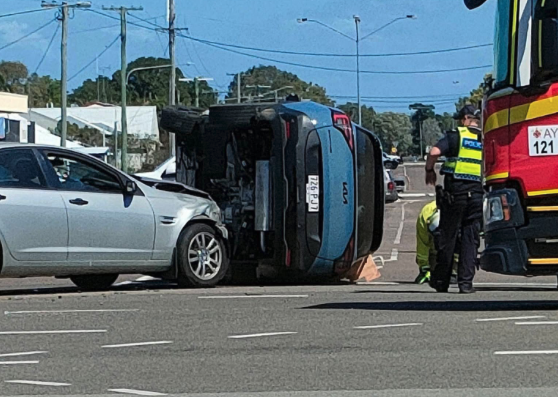
Police responded to a two-vehicle collision at the intersection of Edwards and Munro streets in Ayr last week. Photo: Facebook/Vicki De Non.
Police responded to a two-vehicle collision at the intersection of Edwards and Munro streets in Ayr last week.
The crash occurred at around 12.10pm on Thursday, July 23, leaving a 28-year-old female driver with a broken arm.
Nearby CCTV footage is assisting police with their ongoing investigation into the incident.
Ayr Fire and Rescue crews also attended the scene.
The crash follows a series of other incidents in the Burdekin region this month, including a truck rollover and fire near Clare that left the driver seriously injured before he was airlifted to Townsville Hospital.

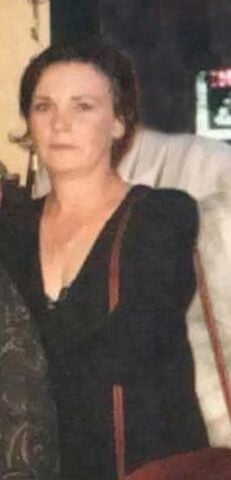
Dianna with her daughter. Photos supplied: Queensland Police.
Nearly three decades after Bowen woman Dianne Angwin was murdered in her home, detectives have renewed their search for information, doubling the reward to $500,000 as a cold case review and new forensic testing breathe new life into the investigation.
Dianne Angwin moved to Bowen from Victoria in 1995. Following the breakdown of her marriage, she moved in with her friend Edith “Edie” Lay.
Just over 2 years later, around 12.30am on December 2nd, Edie reported being woken by an unknown man standing over her bed with one hand covering her mouth and a knife in the other.
Dianne appeared at the bedroom doorway before running from the intruder, who chased after her. Moments later, she was fatally stabbed in the neck. A neighbour rushed Dianne to Bowen Base Hospital, where she was pronounced dead on arrival.
What followed was an investigation that saw police obtaining over 100 witness statements. A closer look at the home left police with no signs of forced entry or disturbance, with no property reported stolen.
The reward for information leading evidence for who might be responsible has increased from $250,000 to $500,000. Detectives from the Homicide Cold Case Investigation Team have begun new forensic testing on evidence collected from the scene and will re-interview witnesses and persons of interest in Bowen, Cairns and Victoria.
“Dianne’s housemate, Edie, died in 2022. As part of our review, police have identified witnesses who Edie confided in, confirming she knew the identity of the man and had not told police at the time of the offence as she was scared for her own safety,” Detective Senior Sergeant Kentwell said.
“We would also like to speak to anyone who has information regarding a relationship Dianne was involved in with a local married man, who had been seen at her unit.
“Information suggests that around the time of Dianne’s murder, she was actively encouraging him to leave his wife so that they could overtly continue the relationship.

“There are people out there with information. Relationships and loyalties change, and I would encourage anyone with information, big or small, to contact police.
Bowen residents with information relevant to Dianne’s Murder are encouraged to attend mobile police facilities and talk with investigators. Anyone with information should contact Crime Stoppers on 1800 333 000 or report online at www.crimestoppersqld.com.au.

Under the new boundaries, Burdekin will gain the Charters Towers area from the former Traeger (now Flinders) electorate, including the Charters Towers township (pictured). Photo: Shutterstock.
The Burdekin electorate will expand west and north to absorb the Charters Towers local government area and southern parts of the Townsville local government area ahead of the 2028 Queensland state election.
The Queensland Redistribution Commission finalised its electorate redistribution last month, stating the changes would “unite areas which share a community of interest and improve enrolment in the district”.
Under the new boundaries, Burdekin will gain the Charters Towers area from the former Traeger (now Flinders) electorate, including the Charters Towers township, while also gaining Wulguru, Roseneath and parts of Stuart from Mundingburra.
In exchange, the electorate will lose parts of the Isaac local government area, including Nebo, Coppabella, Moranbah and Clermont, to the Mirani and Gregory electorates.
The redistribution follows a submission from Charters Towers Regional Council which pushed for its inclusion in the Burdekin electorate.
Charters Towers Regional Council Mayor Liz Schmidt welcomed the result, saying the decision would allow Charters Towers to “further strengthen regional partnerships with the Burdekin”.
“One of the key opportunities is the potential to further strengthen regional partnerships with the Burdekin on issues that affect both communities, including water security, transport infrastructure, agriculture, economic development, workforce attraction and emergency management,” Mayor Schmidt said.
“There is already a strong relationship between our regions and this change has the potential to build on that foundation.”
Mayor Schmidt acknowledged the differing views on the redistribution, citing concerns amongst residents who identify with inland communities about how their interests will be represented.
However, she said the finalised boundaries ultimately “reflected existing regional connections.”
Member for Burdekin Dale Last also supported the change, calling it an opportunity to “rekindle” his relationships with communities set to join the electorate.
“My working life has revolved around supporting people throughout regional Queensland as both a Police Officer, a Councillor on Townsville City Council and then as the Member for Burdekin,” Mr Last said.
"I’m fortunate to have worked previously in the areas that have been added to the electorate, and I look forward to rekindling positive working relationships with those communities and building new ones.”
Mr Last also noted the redistribution was required to address projected population changes, with the Commission finding Burdekin would fall outside the required enrolment range under its existing boundaries by 2032.
“The calculations undertaken by the Redistribution Commission showed that change was needed,” he said.
“Whilst the new areas are not added to the electorate of Burdekin until the next election, I will be taking a keen interest in the issues that affect those areas and offering them my assistance, where needed, to ensure they receive the representation they deserve in the Queensland Parliament.”

Several of the 14 survivors accommodated in Ayr, with Mayor Pierina Dalle Cort (left) and Ayr Police Officer in Charge, Senior Sergeant Lisa Shields (right). Photo credit: Jacob Casha.
Survivors of the Gumlu bus rollover, which gained national attention earlier this year, have sent a ‘touching’ letter of gratitude to the Burdekin community for its compassion in the aftermath of the fatal crash.
Tragedy struck in May when a FlixBus heading from Cairns to the Whitsundays rolled off the Bruce Highway, claiming one life and leaving dozens injured and stranded.
The incident prompted an immediate, triple-pronged response from the Burdekin community, with emergency services, Burdekin Shire Council officials and the local community rallying to coordinate emergency relief and accommodation to the shaken passengers.
14 survivors stayed in Ayr overnight and were then cared for at the Burdekin Theatre loft the following day, provided with meals and medication before continuing their travels south.
Survivors lauded the Burdekin community's response at the time, particularly thanking Mayor Pierina Dalle Cort for her assistance.
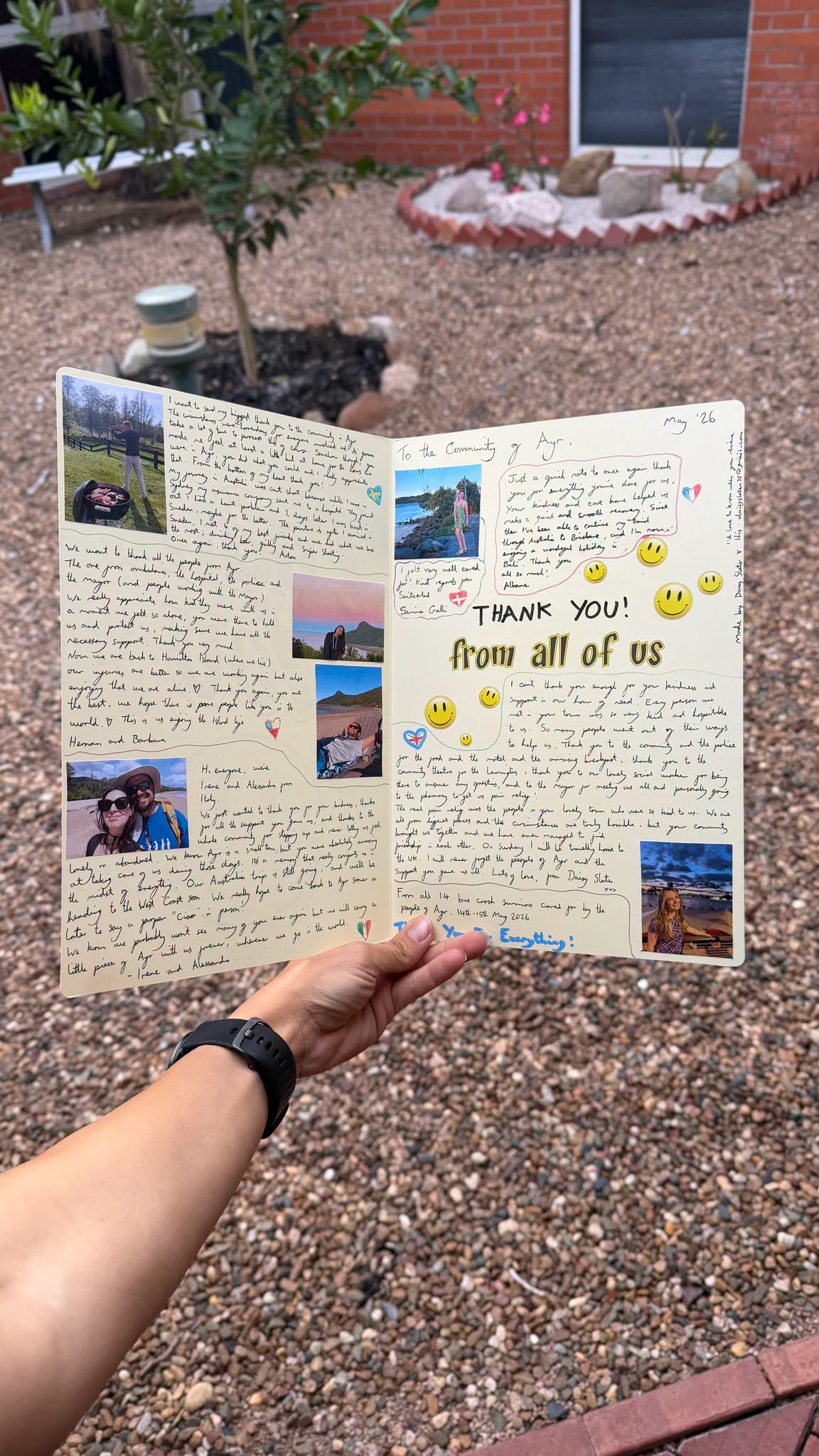
Months later, several of them have joined forces to reaffirm their gratitude, sending a card to Council Chambers containing heartfelt messages of thanks to the community.
Among messages was one from Swedish traveller Anton, which read: “The circumstances were horrendous and it’s going to take a lot of time to process it, of course. Somehow, though, you made me feel at least a little bit at home in Ayr … [and] did what you could. From the bottom of my heart, thank you!”
Another message from Chilean natives Hernan and Barbara said: “We want to thank all the people from Ayr … In a moment we felt so alone, you were the one to hold us and protect us, making sure we had all the necessary support. We hope there are more people like you in the world.”
Mayor Dalle Cort said the card was a “thoughtful gesture that meant a lot to everyone involved.”
“Receiving the card from the Gumlu bus crash survivors was incredibly touching and greatly appreciated,” she said.
“We are proud of the way our community came together to support those affected, and it's heartening to know that support made a difference during such a difficult time.
“This message of gratitude really belongs to the entire Burdekin community.”
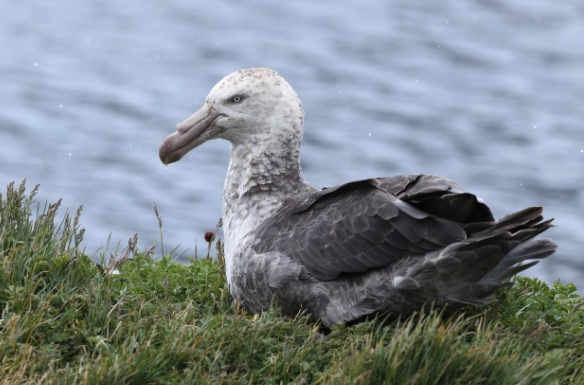
Queensland has recorded its first suspected positive case of H5 high pathogenicity avian influenza after a deceased petrel washed ashore on Moreton Island. Photo: iStock.
Queensland has recorded its first suspected positive case of H5 high pathogenicity avian influenza last Friday, after a deceased petrel washed ashore on Moreton Island.
The Department of Primary Industries confirmed initial testing at the state’s Biosecurity Sciences Laboratory returned a positive result for the H5 strain. Samples have since been dispatched to the CSIRO’s Australian Centre for Disease Preparedness in Geelong for final confirmation, with official results to be released by the Federal Government.
Authorities have stressed that the detection presents no immediate threat to commercial poultry or native wild animal populations. No further cases have been identified across the state, and there is no evidence of mass animal mortality.
Department of Primary Industries Chief Veterinary Officer Dr Allison Crook said biosecurity teams were primed for the detection following previous cases in Western Australia, South Australia, and New South Wales.
“We have known that a H5 bird flu detection in Queensland was a matter of when, not if,” Dr Crook said.
“The Queensland Government is well prepared to respond. This suspect positive result has not impacted our poultry sector or domestic wildlife. We are continuing our enhanced passive surveillance program throughout the state and would encourage the community and industry to continue to be vigilant.”
The Minister for Primary Industries reaffirmed that human health risks remain exceptionally low, noting that local food supplies are entirely unaffected.
“The risk to human health remains unchanged,” the Minister said.
“It is safe to continue to eat chicken meat or eggs, and I would encourage Queenslanders to purchase these products as they normally would. The Crisafulli Government remains focused on supporting the poultry industry during this time.”
Australia recorded its first detection of this H5 strain on 20 June in Western Australia, with subsequent cases confirmed among wild marine birds in southern and eastern states.
While commercial poultry operations remain clear, poultry keepers and landholders across regional Queensland are being asked to maintain strict biosecurity measures. Domestic flocks and their feeding areas should be kept strictly segregated from wild birds to prevent potential exposure.
Members of the public who spot sick or dead wild birds or other wildlife are advised not to handle them.

Millions of Australians received a loud emergency warning on their mobile devices this week as the nation's new AusAlert system passed its first nationwide test ahead of its official rollout in October. Photo: Adobe Stock.
Millions of Australians received a loud emergency warning on their mobile devices this week as the nation's new AusAlert system passed its first nationwide test ahead of its official rollout in October.
The 2pm test on Monday, 27th July, broadcast a “Critical Alert” across about 94 per cent of Australia's mobile towers, marking a major milestone in replacing the country's ageing SMS-based emergency warning system.
Developed in response to the 2020 Royal Commission into National Natural Disaster Arrangements following the Black Summer bushfires, AusAlert uses cell-broadcast technology to deliver warnings instantly to compatible devices connected to mobile towers in an affected area.
Unlike SMS alerts, which can be delayed during network congestion, the new system broadcasts simultaneously, overrides silent mode with a siren-like alarm and full-screen message, and can continue alerting people who enter a danger zone after an emergency has begun.
Townsville Mayor and Local Disaster Management Group chairperson Nick Dametto welcomed the successful trial.
"Living in Northern Australia means we're no strangers to natural disasters, so having a unified national warning system that works effectively across our region will be invaluable for our residents and visitors during extreme weather events," Cr Dametto said.
While the national trial was considered a technical success, some older devices failed to receive the alert or displayed overseas warning labels such as "Presidential Alert”.
Queensland emergency authorities will continue using the existing SMS warning system alongside AusAlert while refining operational arrangements before the new platform is introduced nationally in October.

Inkerman Mill (pictured) recorded its strongest week of the season so far, processing 91,105 tonnes of cane. Photo: Wilmar Sugar and Renewables.
Burdekin sugar mills have crushed more than 2.4 million tonnes of cane for the 2026 season, with the region recording another strong week of production despite several maintenance interruptions.
The district’s four mills processed 356,626 tonnes of cane during week seven, ending Saturday, 18th July, taking the season total to 2,402,537 tonnes.
While weekly throughput was down on the previous week, Burdekin district cane supply remained above budget expectations, with average commercial cane sugar (CCS) reaching 14.95—almost one unit higher than budget.
Inkerman Mill recorded its strongest week of the season so far, processing 91,105 tonnes of cane.
The mill’s performance was the standout among the district’s four facilities, with Invicta crushing 127,850 tonnes, Kalamia processing 74,107 tonnes and Pioneer handling 63,564 tonnes for the week.
Invicta continues to lead the district in total cane crushed, reaching 922,154 tonnes for the season, followed by Inkerman on 520,296 tonnes, Kalamia on 491,916 tonnes and Pioneer on 468,170 tonnes.
Season-to-date CCS across the Burdekin region sits at 14.34, with Invicta recording the highest average at 14.49.
The strongest individual CCS result for the week came from a rake of Q240 plant cane supplied from the Barratta productivity district, which recorded a CCS of 17.30.
Q240 was also the leading variety across the region during week seven, accounting for 50 per cent of cane variety performance and averaging 15.02 CCS.
SRA23 recorded the highest CCS among reported varieties at 15.21, although it represented six per cent of the region’s variety mix.
The week’s production was affected by several mill maintenance issues, with both Invicta and Pioneer undergoing scheduled cleaning intermissions.
Invicta Mill also experienced a bagasse conveyor choke, resulting in 28 hours of downtime, while Kalamia had an unplanned stop to allow repairs to its No. 1 mill.
Despite the interruptions, Burdekin mills maintained a strong pace heading further into the season, with weekly production remaining ahead of expectations.

This week I attended the Local Government Association of Queensland Coastal Leaders Forum, where mayors and local government leaders from across the state came together to discuss the challenges and opportunities facing our coastal communities.
I had the opportunity to participate in a panel discussion focused on the Bruce Highway and the ongoing need for strategic investment in North Queensland transport infrastructure. It was an important conversation, and one I am passionate about as we continue to advocate for projects that will improve safety, connectivity and economic development throughout the Burdekin.
One point that struck me during the discussions was the fact that many of the issues we are debating today were also being discussed more than two decades ago. Having been involved in the Ayr, Home Hill and Brandon Bypass Study in 2000, it is remarkable to see some of the same conversations continuing, particularly regarding the need for a second river crossing.
While progress can sometimes feel slow, there are important improvements taking place. The raising of Plantation Creek Road is one example of infrastructure investment that will improve resilience and connectivity for our community. As your Mayor, I will continue working with all levels of government to ensure the Burdekin's priorities remain firmly on the agenda and that our region receives the investment it deserves for future growth and prosperity.
Should you wish to reach out, don’t hesitate to contact me directly by phone at 0447 150 582, or feel free to send an email to mayor@burdekin.qld.gov.au.
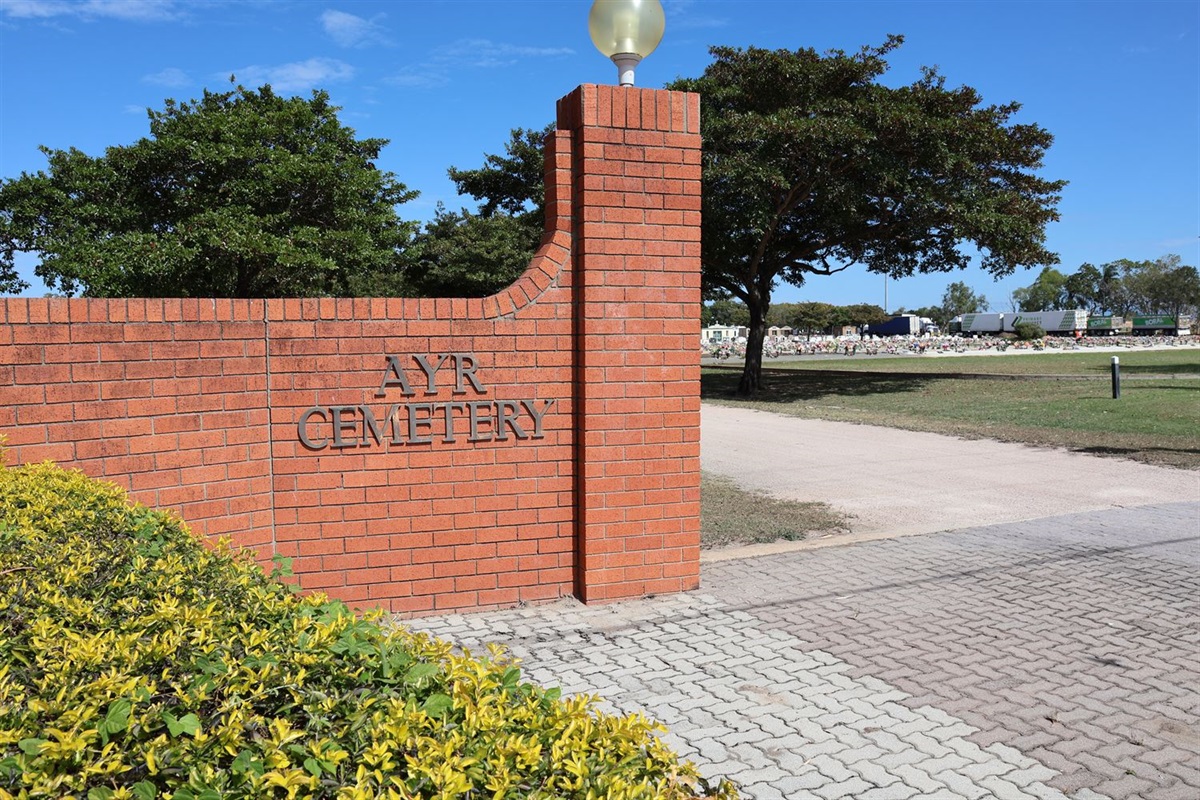
Decades of future burial space have been secured across the Burdekin Shire following the unanimous adoption of a comprehensive Cemetery Masterplan by Council last month. Photo: Visit Burdekin.
Decades of future burial space have been secured across the Burdekin Shire following the unanimous adoption of a comprehensive Cemetery Masterplan by Council last month.
In effect since late May, the strategy addresses critical land shortages and historical record errors, extending the operational lifespan of both Ayr and Home Hill cemeteries to roughly 25 years without requiring immediate land acquisitions.
Council documents highlight that the framework gives local government a flexible roadmap to manage future interments while ensuring decisions are made “progressively in response to community needs.”
Prior to the policy, Ayr Cemetery faced an operational life of just 7.3 years with 1,332 available plots, while Home Hill had roughly five years remaining with 289 plots. By rationalising internal roads and expanding into unused land pockets, Council will unlock 4,227 new plots, increasing total capacity to 11,972 plots at Ayr and 4,242 at Home Hill. Columbarium walls across both sites will also double.
The plan builds on the June 2024 rollout of the OpusXenta digital platform, which ground-truthed grave locations to fix legacy mapping gaps and non-sequential numbering. The digital system allows interstate families to search records and view headstone photos remotely, providing “meaningful benefits to the community” on the go.
Rolled out in three stages through to 2036 and beyond, initial works will focus on opening immediate plot space and improving physical signage before expanding footprints into Mackenzie Street. All new sections will remain non-denominational.
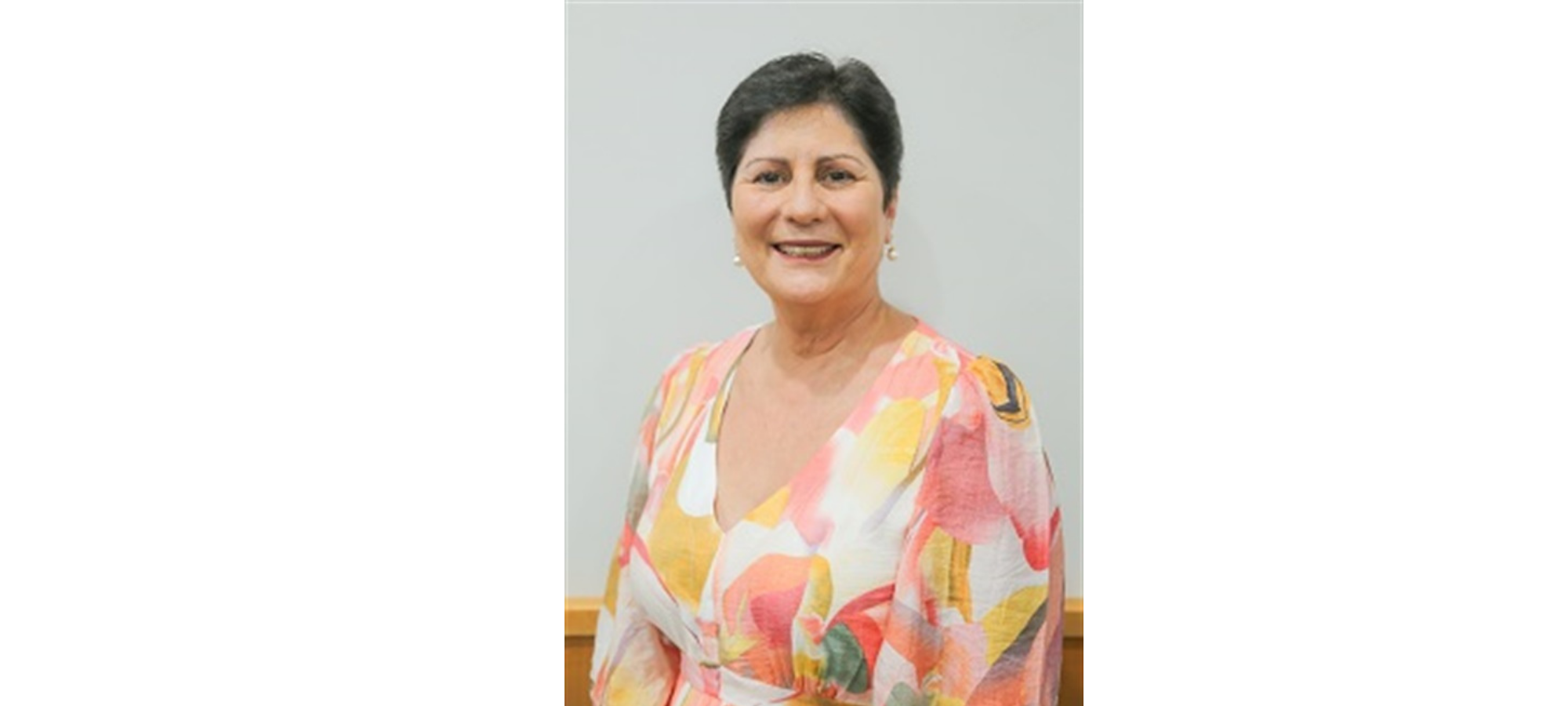
I would like to highlight the valuable work of Burdekin Area Youth Watch (Baywatch), a non-for-profit community organisation dedicated to supporting local youth through sport, recreation and positive community engagement. By providing diversionary programs, Baywatch helps reduce youth involvement in the juvenile justice system while promoting confidence, healthy lifestyles, school attendance and personal development.
Baywatch offers a range of activities including Touch Football, Basketball, Boxing, Fishing, Rugby League, Soccer, Tennis and fitness programs. As a not-for-profit organisation, it relies on donations and limited funding to operate three buses and deliver mentoring and support services to local youth.
A small committee is also working to establish a drop-in centre for at-risk youth at the former racecourse building and is seeking donations of quality furniture and equipment, including lounges, bean bags, gym equipment, televisions, gaming equipment, bicycles, scooters and children's clothing.
If you would like to donate items or make a financial contribution, please contact me at the Ayr Police Station. Thank you for supporting this important initiative and helping create positive opportunities for young people in our community.
Another great organisation is the The Burdekin Neighbourhood Centre it was founded by a group of community-minded women. The Centre has grown into a vital community hub, supporting around 10,000 people each year. The Centre is committed to fostering inclusion, community participation, and wellbeing by providing a welcoming space where people can connect, learn, and access support.
Funded through the Queensland Government’s Community Support and Sector Development Program and Neighbourhood Centre Initiative, the Centre offers a range of services, including information and referral support, meeting spaces, social and support groups, lifestyle programs, free community legal advice, emergency relief assistance, and support for local initiatives.
The Centre also hosts a variety of community programs, including Be Connected, My Aged Navigator, MyTime Burdekin, the Dementia Support Group, Seniors’ Computer Club, Parkinson’s Queensland Support Group, and a community crochet group. Through these services, the Centre continues to strengthen community connections and improve the wellbeing of people across the Burdekin region.

“Superannuation is meant to be a private fortress for your retirement; it is not a quarry for a government to dig into and mine whenever they face a budget shortfall.” Photo supplied.
If you put your hard-earned cash into a locked safe every single week for decades, you expect the lock to hold. You certainly do not expect the federal government to turn up years later with a crowbar, trying to force it open. Yet, this is exactly the kind of financial trespass that people across our electorate are concerned about right now.
Superannuation is meant to be a private fortress for your retirement; it is not a quarry for a government to dig into and mine whenever they face a budget shortfall.
To understand why so many locals are worried, we need to look closely at the legislation that came into effect on 1 July: the Treasury Laws Amendment (Building a Stronger and Fairer Super System) Act 2026. This new law doubles the concessional tax rate from 15 per cent to 30 per cent for individuals with superannuation balances exceeding $3 million.
The government is playing standard class-warfare politics here, targeting a small percentage of wealthy people. Why this is concerning for everyday Australians, is that by breaking the promise that superannuation is sacrosanct, the government has set a precedent: if they can come after these high-balance accounts today, middle-class savings will be next on the chopping block when the deficit deepens. That is why the Coalition opposed this legislation.
Even more concerning is the Prime Minister's recent language, where he explicitly branded our $4.5 trillion national retirement pool as a "national asset".
This is outrageous, your superannuation does not belong to the federal government, it belongs to you. The government wanting to treat your private savings like a state-run bank account to fund their political pet projects is an abhorrent overreach.
Look at the mess this Labor government has made of the economy; it is blindingly obvious they cannot manage money. Now, they are bringing that exact same financial incompetence to your private retirement savings. They have zero right to dictate where your money goes, but they are altering the official performance benchmarks anyway: they want to force big super funds to bankroll their ideological green energy projects.
In other words, this Labor government wants to push your retirement money into an ideological net zero fantasy that is already costing an estimated trillion dollars.
This experimental agenda cannot survive on its own merits; it has to be propped up with massive, ongoing subsidies just to stay afloat. Blind Freddy can see this is a terrible investment strategy that would likely destroy the compound returns of everyday workers.
Hard working Australians should not be subjected to this government’s woke ideology, and they certainly should not be gambling your retirement security on their unproven climate experiments.
Then there is the backdoor plan to tangle your private superannuation up with Centrelink. This is a massive shift being pushed by the original architect of the system, Paul Keating, after he sat down for talks with the Prime Minister.
They are trying to sell this to you as a simple tweak, claiming it makes sense to turn your super fund into the main shopfront for the Age Pension. This is a dangerous move to set up a massive data-sharing pipeline between the government and your private accounts. It forces corporate super funds to act as gatekeepers for public welfare, completely blurring the line between your own hard-earned savings and taxpayer-funded entitlements.
Independent economist Dr Cameron Murray hit the nail on the head when he warned about the massive bureaucratic mess this will create.
He said, "The superannuation network is already a highly complex, expensive apparatus that costs billions of dollars a year just to run. Attempting to integrate this private infrastructure with the public Age Pension system risks creating a massive bureaucratic web that compromises the economic efficiency of public welfare."
Superannuation relies entirely on a promise of long-term stability. If you sacrifice your current lifestyle to build an independent future, you deserve to know your money is safe from political interference.
The Albanese Labor government must not rewrite the rules of superannuation to cover their economic failures. They want the power to pick winners and losers with your life savings, ensuring the government gets the good headlines while your retirement balance carries all the danger.
When Labor runs out of money, they come after yours.

Burdekin rookie firefighter Parker Arboit has become Ayr Fire Station’s latest local recruit. Photo: Jacob Casha.
Burdekin rookie firefighter Parker Arboit has become Ayr Fire Station’s latest local recruit, returning home to nurture a seed planted years ago by his father.
“My old boy was an auxiliary [firefighter] back in the day, and he only had good things to say about the people he worked with … and the lifestyle,” Mr Arboit said.
“I decided I'd give it a crack, got through the whole process … now I’ve just got to keep my head down and keep learning.”
Mr Arboit’s return to the region follows a years-long stint in Townsville with the family business, during which he simultaneously completed his firefighter recruitment phase despite initially being knocked back.
His persistence eventually prevailed, overcoming a series of physical and cognitive testing sessions—including a claustrophobia test and “nerve-racking” panel interview in Brisbane—before landing back in the Burdekin as an entry-level firefighter in May.
After signalling Ayr as his preferred station on his application form, Mr Arboit said he was eager to return to the town and leverage his local knowledge in the new role.
“I wanted to get back to the hometown … it feels comfortable back here,” he said.
“Knowing the rural areas around here and how to reach them, and all the back streets, helps us get around a lot quicker.”
Second Class firefighter at Ayr Station Lindsay Wilson said Mr Arboit’s integration with the crew had been seamless.
“Local knowledge always goes a long way,” Mr Wilson said.
“He’s become part of the furniture … and has fit in with the crew straight away.”
Mr Arboit joins a team of 13 at Ayr Station, one of nine members with roots in the region.
He now commences a four-year ranked progression period on his way to becoming a senior firefighter, which he called his ultimate goal.
“I think it’s everyone’s goal to get to that senior firefighter rank,” Mr Arboit said.
“There’s a lot of work that goes into it; every time you progress, you’ve got to work for it. But that makes you prouder in what you’re doing and what you’re achieving.”
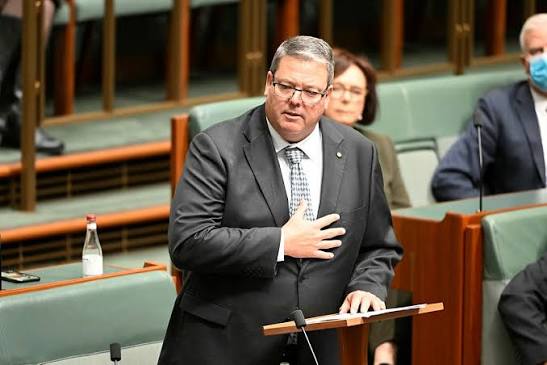
Mr Willcox has signed up for the 2026 Raise Our Voice in Parliament campaign, which gives young Australians aged 25 and under the opportunity to have their ideas delivered directly to Federal Parliament. Photo supplied.
Young people across the Dawson electorate are being urged to have their say on the issues shaping their future, with Federal Member Andrew Willcox calling on the next generation to submit speeches for a national youth advocacy campaign.
Mr Willcox has signed up for the 2026 Raise Our Voice in Parliament campaign, which gives young Australians aged 25 and under the opportunity to have their ideas delivered directly to Federal Parliament.
Participants are invited to submit a 90-second speech answering the question: "What is one big issue shaping your future, and what is one meaningful action you want Parliament to take?"
The winning speech from Dawson will be read aloud by Mr Willcox in Canberra during Youth Voice in Parliament Week, held from 12 to 15 October 2026.
Mr Willcox said the campaign was an important opportunity for regional young people to influence the national conversation.
"Last year, I had the immense privilege of standing up in the chamber to deliver an incredibly powerful speech by Wiremu Tairaki, a student from Proserpine State High School," Mr Willcox said.
"Wiremu spoke passionately about the distinct challenges facing country students … [noting] that while regional kids have the determination to defy limitations, gratitude for where we live shouldn't equate to limitation.
"That is the raw, unfiltered truth of what it is like to grow up in regional Australia, and it is exactly why we need our next generation of Dawson leaders driving the conversation in Canberra."
The campaign has previously reported strong engagement outcomes, with 92 per cent of participants saying taking part made them more likely to engage with politics in the future.
Mr Willcox said young people could use the opportunity to raise issues ranging from local employment and apprenticeships to mental health support and regional housing.
"Whether you are passionate about boosting local trade apprenticeships, improving youth mental health support, tackling regional housing costs, or creating more local job opportunities so you don't have to move away to the city, this is your golden opportunity to help shape Australia’s path forward," Mr Willcox said.
"I am honoured to amplify the voices of Dawson's future leaders, and I cannot wait to read what this year's cohort brings to the table."
Submissions for the 2026 campaign close on 7 August 2026. For more information, entry guidelines, and to submit a speech, visit https://raiseourvoiceaustralia.com.
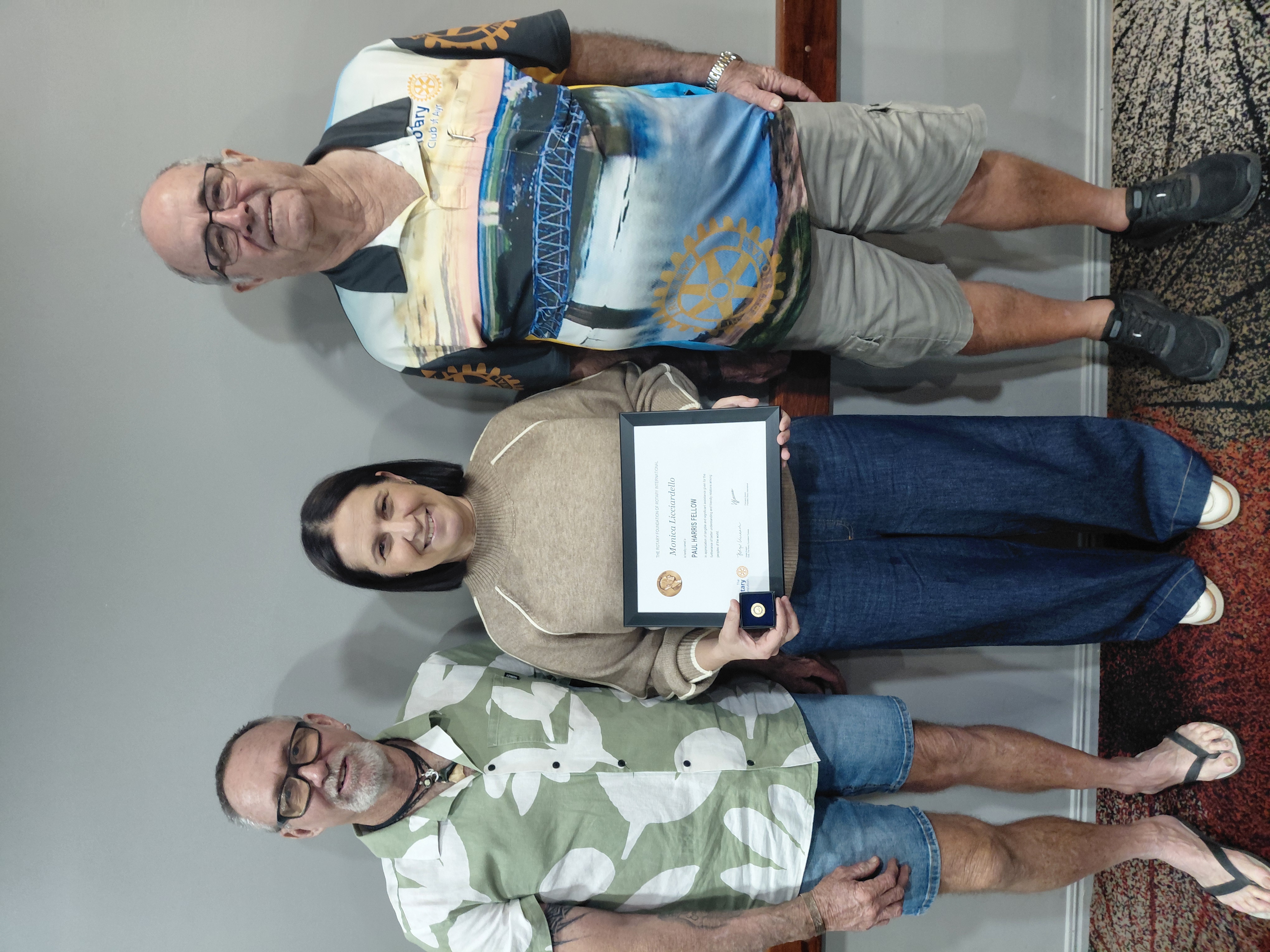
(L-R) Former Ayr Rotary president Carl List, Monica Licciardello, John Oar. Photo supplied.
A Burdekin local has become the first non-Rotarian in several years to receive one of Rotary’s most distinguished awards.
Monica Licciardello was awarded a Paul Harris Fellow at an Ayr Rotary meeting earlier this month, an honour described as a “meaningful tribute to generosity, fellowship, and humanitarian service”.
The award recognised Ms Licciardello’s decades-long contribution to the region as a musician, teacher and prominent community figure, most notably through her long-standing involvement with the Burdekin Singers and Theatre Company.
Ms Licciardello was invited to the 9th July meeting under the false pretence of being a guest speaker, with family and friends in attendance fully aware of the ceremony that was about to transpire.
“It really took me by surprise,” said Ms Licciardello.
She thanked the community for its ongoing support, which has pushed her to continue to “challenge herself” and give back through music.
“I remember when I was in grade 12, one of my teachers said, ‘your talent is your gift from God, and what you do with it is your gift back,’” she said.
“It costs me nothing. You can do so much without getting anything in return. It's really rewarding in that respect.”
Ms Licciardello has dedicated more than 30 years to the Burdekin Singers & Theatre Company, where she was awarded Life Membership in recognition of her service.
Beginning as a young performer, she has since contributed as a teacher, producer and leader, helping the organisation grow into a major creative outlet for the region.
“These kids learn discipline, they learn commitment, loyalty. It teaches them life skills that they need and prepares them for the future," she said.
“We're creating confident people who also give back to the community.”
Ms Licciardello has also contributed to the Burdekin Catholic Parish for many years, providing music at Masses and school liturgies, as well as performing at weddings and funerals across the community.
Alongside her work as a teacher and Pastoral Leader at Burdekin Catholic High School, she continues to teach private music lessons and contribute to productions with the Burdekin Singers & Theatre Company.
Rotary Club of Ayr President John McVeigh said Ms Licciardello was chosen for the award by a small internal committee of members.
He said her work had been integral in providing opportunities for the next wave of young local performers.
“Usually in small communities, a lot of people say you don’t have the opportunities. [Burdekin Singers] gives an opportunity for teenagers and primary school kids to get up on the stage and perform in public,” Mr McVeigh said.
“When you’ve got someone like Monica who’s willing to be involved in the teaching and production processes, it gives a wonderful opportunity for younger people. She came through that system and is now paying it back.”
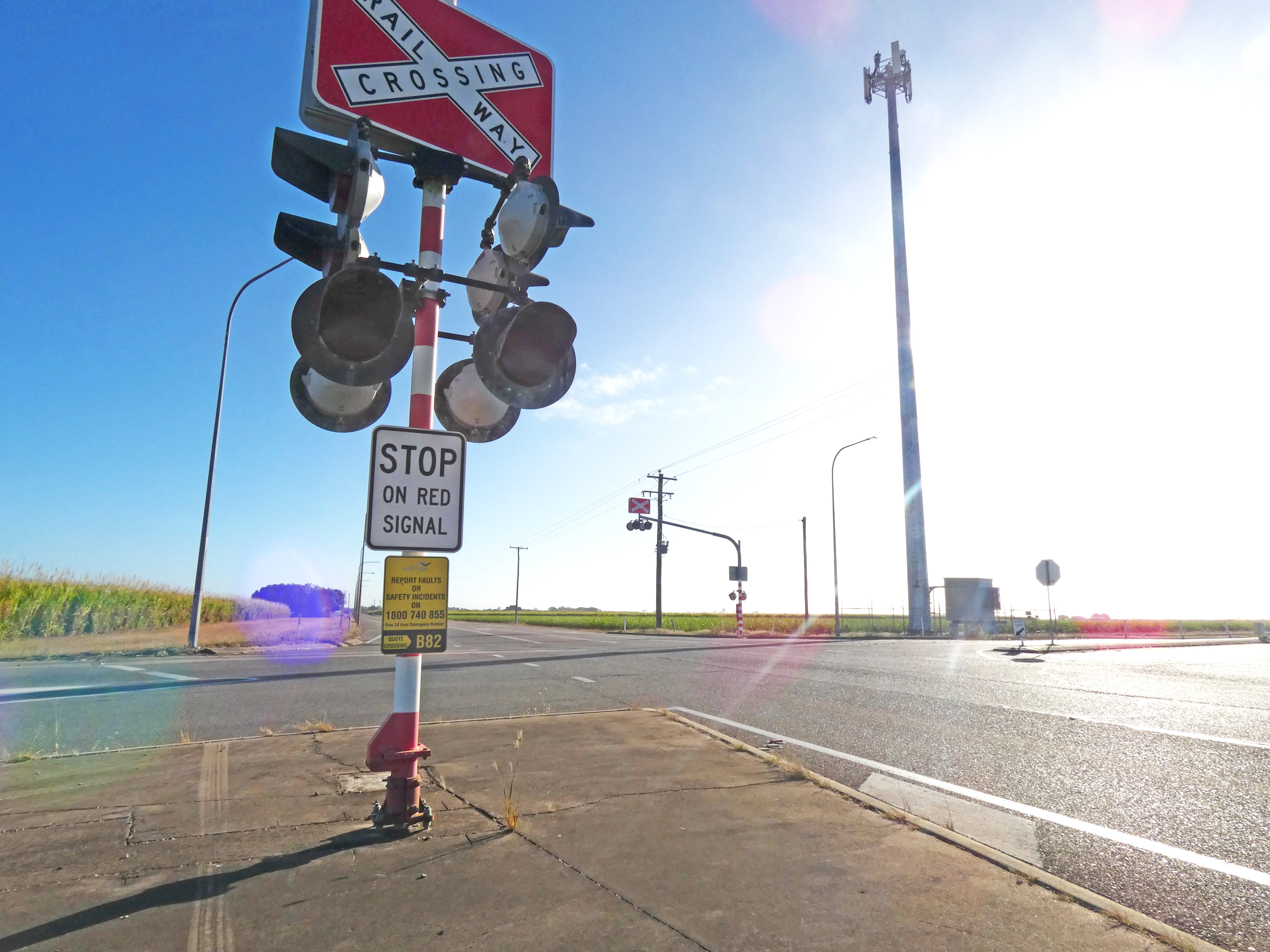
TMR data identified multiple casualty crashes at the Bruce Highway/Giddy Road intersection, with Council arguing permanent infrastructure upgrades are needed instead of a speed reduction alone. Photo: Jacob Casha.
A proposal to reduce the speed limit near the Bruce Highway/Giddy Road intersection has triggered a row between Burdekin Shire Council and the Department of Transport and Main Roads, with a council report calling the measure “the cheapest option available”and an inadequate solution to one of the region’s most persistent road safety concerns.
Burdekin Shire Council has pushed back against the Department of Transport and Main Roads (TMR) recommendation to decrease the speed limit along a stretch of the Bruce Highway.
The recommendation, a response to mounting safety concerns surrounding the Bruce Highway/Giddy Road intersection, proposed a speed limit reduction from 100km/h to 90km/h along a 3km stretch spanning north of the Ayr Dalbeg Road intersection to south of Conlan Street, Ayr.
It follows a TMR speed limit review prompted by a serious injury crash and subsequent road safety audit. The review examined crash data and driver behaviour at the location between February 2021 and February 2026, finding multiple casualty crashes and severe intersection collisions involving vehicles entering from adjacent approaches.
Video monitoring and a crash that occurred while the audit team was on-site led TMR to recommend the 10km/h speed reduction, ultimately reversing its own desktop review conducted last year that found the existing 100km/h speed limit was appropriate.
A report authorised by Council Director of Infrastructure, Planning and Environmental Services, James Stewart, has slammed TMR’s proposal, arguing it “serves as a legal liability defence” and “fails to address the underlying deficiencies causing conflict at the intersection.”
Council’s report argued the review’s own assessments supported keeping the existing 100km/h limit, with the lower speed recommendation instead relying on an engineering variation aimed at addressing driver behaviour concerns.
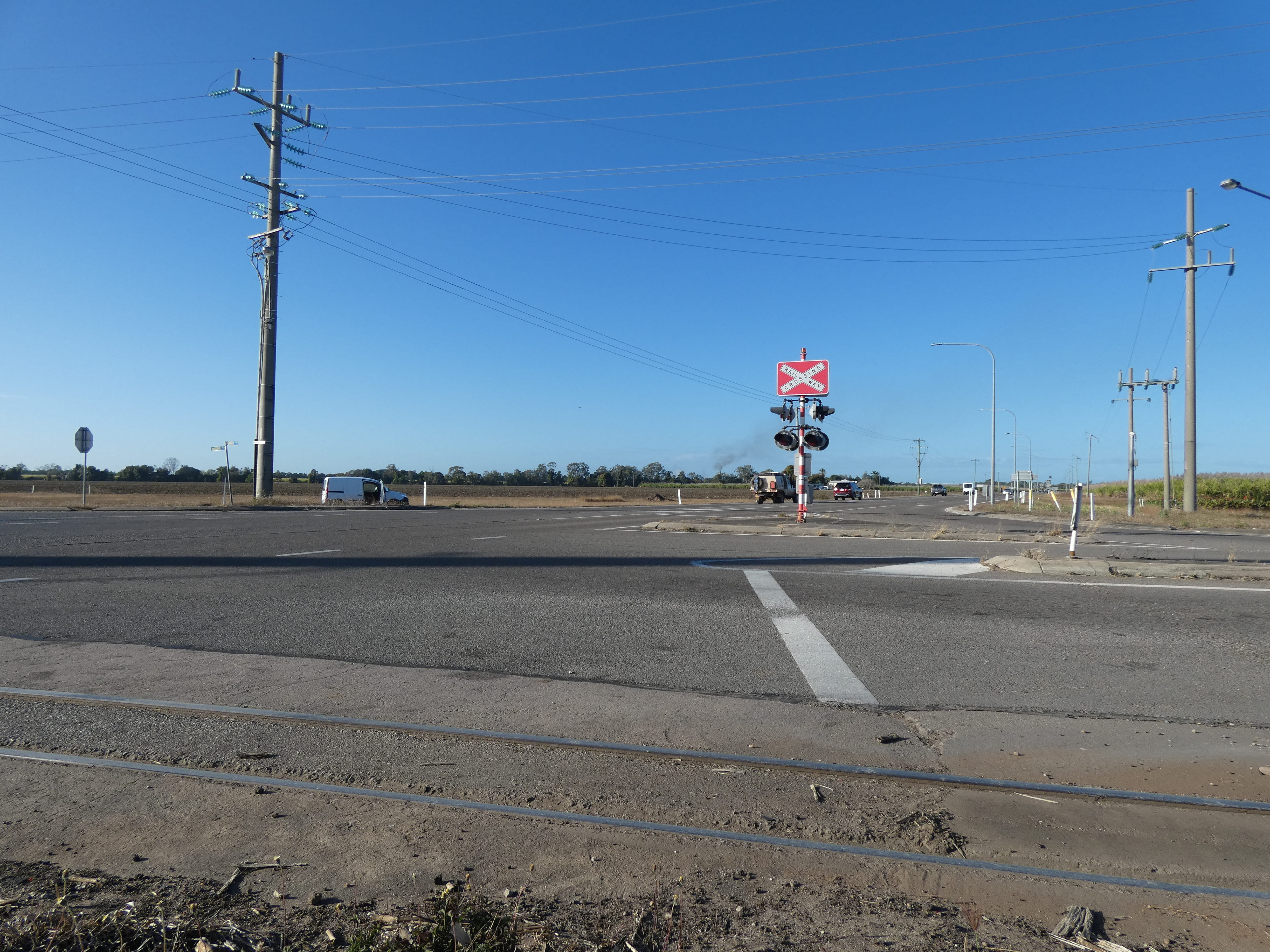
It identified the intersection’s design as a catalyst for safety concerns, citing nearby overtaking lanes that cause differing entry speeds, visibility issues caused by cane rail flashing signage, and the lack of dedicated acceleration lanes for traffic entering the highway.
The report concluded that a permanent infrastructure upgrade, such as the construction of dedicated acceleration and merge lanes at the intersection, would better serve as a long-term solution to underlying safety concerns.
Its recommendation to request that TMR prioritise funding for detailed design and construction of the Giddy Road intersection upgrade was unanimously carried by councillors during an ordinary meeting last month.
Burdekin Shire Council Deputy Mayor and Chair of the Road Safety Committee, Max Musumeci, said Council had long made its objection clear to TMR.
“Council has communicated its concerns … to TMR on multiple occasions and in strong terms,” said Mr Musumeci.
“Council's position has consistently been that long-term safety improvements are more likely to be achieved through infrastructure investment rather than relying solely on reduced speed limits.”
Despite consistently raising concerns with TMR at both officer and elected representative levels, Mr Musumeci said that, to date, the State Government “has not indicated that any significant upgrade works are planned for the intersection.”
“Council's concern is if the underlying issues remain unchanged, the location may continue to result in near misses and collisions,” he said.
“For this reason, Council continues to advocate for further investigation of infrastructure-based improvements that address the intersection's long-term safety performance … [and] remains hopeful that its ongoing advocacy … will ultimately be recognised and acted upon.”
Mr Musumeci said any major upgrade would generally be funded through an 80/20 arrangement between the Queensland and Commonwealth governments.
The Department of Transport and Main Roads was contacted for comment, but was unable to provide a response before deadline.
Publishers Indemnity. Any individual or entity that places advertising, supplies copy material, or submits editorial content to Core Life Publishing agrees and undertakes to ensure that all such material:- Does not infringe upon any copyright, trademark, or other intellectual property rights;- Is free from any content that could be considered defamatory, libelous, or slanderous;- Does not infringe upon any rights related to privacy or breach of confidence;- Contains no obscene, indecent, or otherwise unlawful material;- Complies fully with the Trade Practices Act and all other applicable laws, regulations, or statutes.Furthermore, by submitting or placing such material, these individuals or entities agree to indemnify and hold harmless the publisher, Core Publishing and Events Pty Ltd, and/or its agents from and against any and all investigations, claims, demands, liabilities, damages, costs, or judgments arising out of or in connection with the material provided. All material is believed to be accurate at the time of printing and remains the copyright of Core Publishing and Events Pty Ltd.
© 2026 Life Publishing Group Pty Ltd.
