Independently Owned, Locally Grown, Community Loved

By Jacob Casha
Alberta, Canada, 1999. Five strokes off the lead at the du Maurier Classic, a 24-year-old Karrie Webb looked every bit the underdog—but she was used to that.
Hole by hole, she clawed her way back, sinking four birdies in her last five holes, each one a rebellion against the script.
A declaration that a country girl could not only stand among the world’s best, but best them.
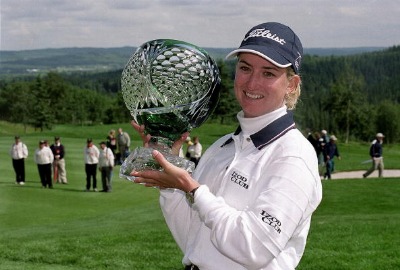
And by the end of the 18th, after a deft chip and a clinical putt, Karrie had rewritten the whole story—standing there, clutching her first career LPGA major as the Webb surname, long synonymous with a modest North Queensland community, was now on lips around the globe.
Though beneath the cheek-to-cheek grin, beer-soaked jubilation, and the six other majors she would tack onto her illustrious resume beyond that point, she remained exactly what she’d always been—a country girl, who forged a way to the top by doing different, being different, and being...
Burdekin.
Born in Australia’s Sugarcane Capital to locals Robert and Evelyn Webb in 1974, Karrie experienced the Burdekin like many of us.
Her upbringing was a rich mixture of family barbecues, the occasional Tavern dinner, fishing trips, and sport—typical for the region, most would say. Yet, this young local was anything but typical, and the signs of an anomaly began to reveal themselves quite early.
“Around grade one, one of my teachers was worried about me because I was always playing with the boys,” said Karrie. “The boys played sport, while all the girls were playing with their dolls and stuff. That didn't interest me.”
Karrie dabbled in most sports on the Ayr State School grounds, most notably cricket. But it was back in 1979, at just four years old, that she first stepped onto the golf course alongside her grandfather, clattering balls down the Ayr Golf Club fairways with her flimsy little plastic clubs.
The family, including young Karrie, were club regulars. “My parents were really active members when I was little. My parents would be up [in the clubhouse] after they played and all the kids would be downstairs, running around, playing in the bunkers and all sorts of things. It was just a great, great time,” she said.
By eight, she had received her first real set of clubs for Saturday morning junior competitions, and over the years that followed, golf would battle it out with cricket for Karrie's full attention. Come age 11, it delivered the knock-out blow.
It was 1986. Queensland Open. A then-dominant Greg Norman was looking to secure his second home-state open victory in just three years—and that, he did. But watching on as Norman strutted to a six-shot victory was an inspired Karrie, who was left mesmerised… hooked.
“I just couldn't believe how many people were there to watch people play golf. I was like, ‘you can do this for a job? How amazing!’ And when I returned home, I told my parents: ’I want to be a professional golfer.’”
That’s where, in a town more known for its cane farms than its courses, her unlikely rise to the top would begin.
A rise that would give way to nothing, and no one, despite prevailing doubts among the community.
"My parents had so many adults that were saying, 'you need to tamper her dream... A little girl from Ayr is never going to be a professional golfer,’” she said.
“In my Deb Ball video, I came down the aisle and they introduced me: ‘Karrie is the daughter of so and so… she goes to Ayr State High School, and in the future, she’d like a career in the golf industry... working at a golf resort or something.’"
"I was watching it thinking, 'when did I ever think I wanted to do that?' But back when I was in school, I always felt like I had to come up with something to avoid saying I wanted to be a professional golfer, because that’s not what people wanted to hear.”
After all, global success didn’t often come out of Ayr, and it wasn’t just the distance that made it difficult. Karrie remembers the hurdles she faced at every Queensland junior golf camp, and the unspoken assumptions, made quite unequivocally apparent, that country golfers didn’t belong on the state team.
“There was a real country stigma back then,” she said. “I wasn’t considered as polished as kids that go to private schools down South. I was just this country kid… that didn't fit the mould.”
Golf Queensland state team selectors kept her at arm’s length, refusing to pay for her flights down to Brisbane camps in what Karrie saw as attempts eliminate her from the state team equation. They soon learned it would take much more than that.
From the age of 14, she would embark on nearly two days of Greyhound bus travel for each camp. No mobile phones. No TikTok. Just the drone of an endless highway, cheek pressed to fist and eyes fixed on each passing sign. Thursday night to Brisbane, collected by her great-aunt for weekend training, Sunday night the long ride back, and reaching Townsville only on Monday evening, missing school along the way.
“I did that for three, four years, and I can still smell the inside of buses,” she laughed.
“I think it was [Golf Queensland’s] way of breaking me. But I never really questioned it. It was like, I just have to do it. If I want to make the state team, I have to do that.”
With the courage to turn a blind eye to the obstacles and a deaf ear to the doubters, she revealed a degree of maturity well beyond her years. Yet, she says the real secret behind her dogged perseverance was quite the opposite.
“I was just naive," she said.
"I thought, 'if I just practice harder, I’ll be better.' Putting in the work made my mind believe that the reward would come, no matter what."
It was off the back of this mindset that, every day after school, while most kids waited for their parents in kiss-and-drop, Karrie would trudge down Edwards Street to the golf club, where she spent hours perfecting her craft.
That close proximity was a dream for her; she didn't need a bigger city, nor did she want one. In fact, to her, living in Ayr was her superpower.
“I had way more access to a golf course than my friends in the cities, and I always took that as my advantage," she said. "I was able to improve my game way easier than they were, because they had restricted access to their golf courses [due to membership popularity]."
“I kept improving to the point where I became the best amateur in the country. So I thought, ‘why do I need to go to Brisbane?’"
"I probably would’ve had to change coach as well, which I didn't want to do.”
Enter, Kelvin Haller—Burdekin local, and an accomplished, self-taught regional golfer in his own right. A friend of Karrie’s mother, he became her coach when she was just 12, and from the very first day, everything clicked. From refining her swing to regularly caddying for her, Karrie very much credits Haller for shaping the foundations that facilitated her greatness.
“Everything I knew about golf was from him. He was my first hero in golf,” she said.
When Haller suffered a life-altering accident in 1990 that left him a quadriplegic, he didn’t step back. He remained Karrie’s guiding force despite his physical limitations, and it was under his tutelage that she embarked on one of the swiftest, most remarkable ascents the sport had ever witnessed.
In 1995, she became the youngest ever Women’s British Open champion at just 20. Within a year she had secured her LPGA Tour card and in 1996, in only her second start on America’s top women’s tour, she won the HealthSouth Inaugural in a sudden‑death playoff. She captured four titles that rookie season, becoming the first woman ever to earn over US $1 million in a single LPGA season, walking away with Rookie of the Year honours.
Despite this rapid global success far, far from home, the Burdekin parts of her still shone through. The same girl who was pipping some of the world's best golfers to trophies was walking barefoot into Subway’s in Orlando, copping stares as she pointed her ingredients out through the display glass. She had also retained her sharp country wit—wit that she admitted didn’t always translate across the Pacific.
“I played most of my golf with boys here in Ayr, and they loved banter and sarcasm… Here, proper sarcasm’s delivered with a straight face. They didn't get that [in the US]. They didn’t get sarcasm unless you said it smiling or with a smirk of some sort on your face, so I think they took that as me being bratty.”
Karrie was used to being misunderstood. Except, this time, all the quirks of this quiet little Burdekin girl were now on show for the world—which, she recalls, didn’t always serve her well.
“At that stage I had no media training,” she said with a smirk. “People were like, ‘you need to have media training,’ but I wasn’t gonna go and be fake just because they didn’t like who I was.”
“The LPGA actually didn't really help me very much there either. They were looking for someone different to lead the next generation… someone outgoing and boisterous, and that wasn't me.”
This media-shy notoriety stuck with Karrie all the way through her career—which was fine by her. She preferred to let her golf do the talking, a notion to which her eventual 41 LPGA Tour trophies and World Golf Hall of Fame induction would attest.
After decades of conquering the world, she has dialled back her tour commitments to reconnect with her roots back in North Queensland.
"It's always been the place where I could just take a deep breath and be the Karrie Webb that grew up here."
Her namesake tournament, the Karrie Webb Junior Masters, happens every October in Ayr, with participation increasing each year. This year saw its largest field yet: 105 participants, and some of whom, ironically, made the trip up from Brisbane.
Karrie admits she can’t help but see herself in some of the kids. For her, the tournament is a chance to pass her experience on to the next generation of ambitious young golfers who stand where she once stood.
“I never had anyone that had that level of experience when I was a kid. So, to be able to give that experience and advice to them… is fun to do," she said.
“There are a couple of kids up here that I know want to make it, and they talk about how it's hard from up here. And I say, ‘well, I did it. Don’t make that your excuse.'”
“If you dream big enough and work hard enough, you can achieve whatever you want.”
Publishers Indemnity. Any individual or entity that places advertising, supplies copy material, or submits editorial content to Core Life Publishing agrees and undertakes to ensure that all such material:- Does not infringe upon any copyright, trademark, or other intellectual property rights;- Is free from any content that could be considered defamatory, libelous, or slanderous;- Does not infringe upon any rights related to privacy or breach of confidence;- Contains no obscene, indecent, or otherwise unlawful material;- Complies fully with the Trade Practices Act and all other applicable laws, regulations, or statutes.Furthermore, by submitting or placing such material, these individuals or entities agree to indemnify and hold harmless the publisher, Core Publishing and Events Pty Ltd, and/or its agents from and against any and all investigations, claims, demands, liabilities, damages, costs, or judgments arising out of or in connection with the material provided. All material is believed to be accurate at the time of printing and remains the copyright of Core Publishing and Events Pty Ltd.
© 2026 Life Publishing Group Pty Ltd.


.jpg)
.jpg)