Independently Owned, Locally Grown, Community Loved
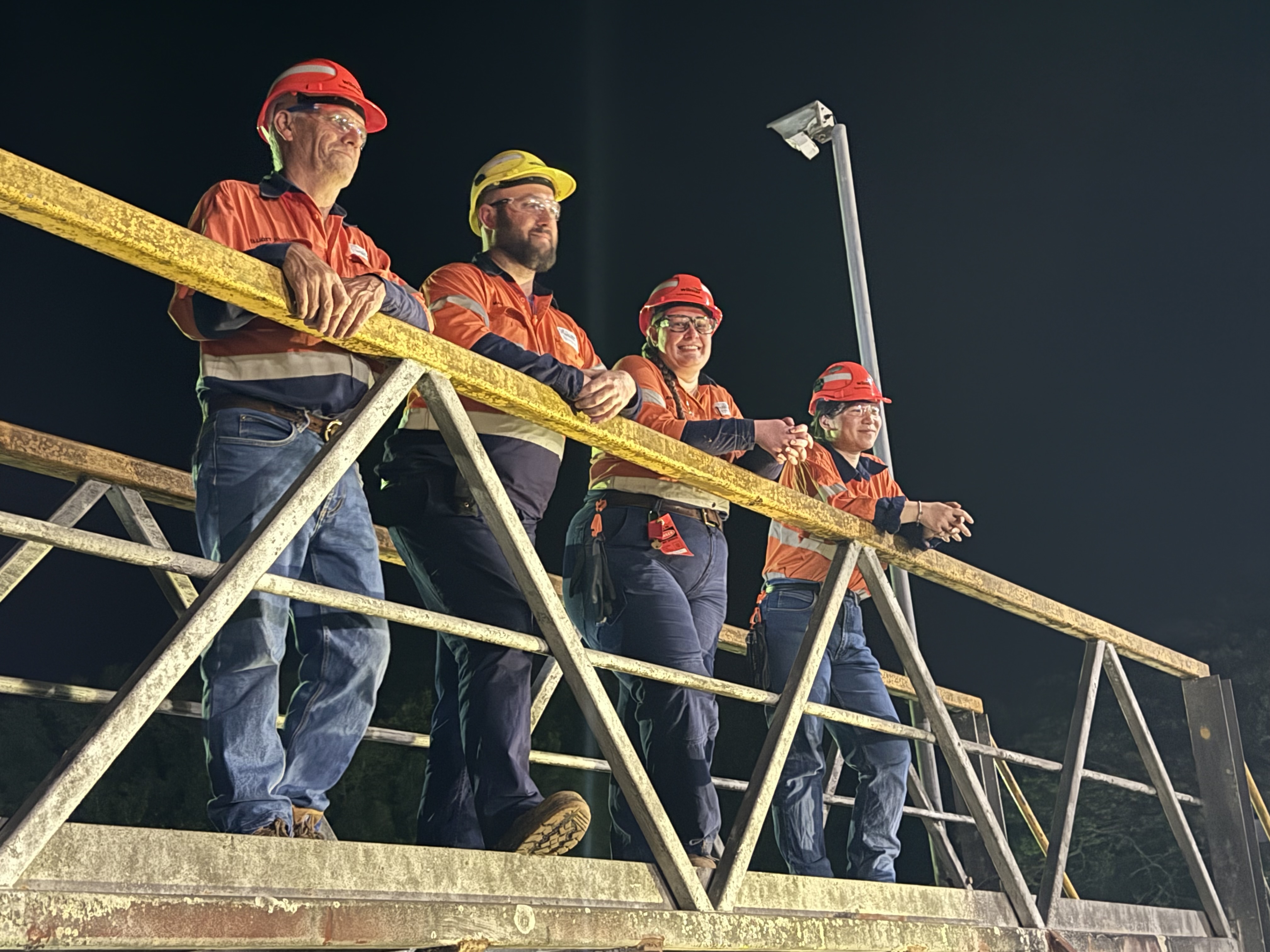


16V71 in place at Burdekin Machinery Preservationists. Photo supplied
Burdekin Machinery Preservationists has added a new exhibit to its collection: a 16V71 Detroit Diesel. So why is this engine special?
BMP proudly showcases a range of engines representing the evolution of power generation over the centuries—live steam plant, hot-air engines, hot-bulb internal combustion engines, semi-diesels, and finally, modern diesel engines.
Among the diesel exhibits is the historic Walkers No.1 air-fuel-injected diesel engine, built around 1930 by Walkers Ltd. Maryborough under licence to Mirrlees Watson and based on Rudolf Diesel’s original design. At 25 tonnes, this rare engine powered a 150 kW standby alternator at Kalamia Mill. Only two air-injected diesels are known to still operate in Australia.
From Inkerman Mill, we also display a Ruston 7VEB, a four-stroke diesel weighing about 18 tonnes and manufactured around 1950 to the highest British engineering standards. It powered a 350 kW standby alternator set.
Now, thanks to 4QN, BMP is proud to present a 16V71 Detroit Diesel. This 3-tonne unit powered a 184 kW standby alternator at the local 4QN transmitter. An iconic two-stroke diesel, the 71-series was manufactured from 1938 to 1995. Developed just before WWII, these engines powered landing craft and many other military applications. Their robust design made them popular across transport industries worldwide.
Locally, many sugar mill locomotives ran 6-71 Detroit Diesels, often clocking up around 2,000 hours per season. Our newly acquired 16V71 has only 1,800 hours on the meter—barely run in. Fuel consumption is notable at around 70 litres per hour under load, though our diesel mechanics, President Bruce and Secretary Al, are confident they can “turn the wick down a bit.”
Retrieving the engine proved straightforward. The contractor upgrading the transmitter power supply needed the unit removed and kindly provided cranage and assistance. Transport was arranged by our club’s go-to man, Graham Seib.
At the Brandon site, the only available space was across one end of the powerhouse—an arrangement originally proposed by our late treasurer Alf Shand for an earlier project that never eventuated. It turned out to be the perfect solution.
Contributed with thanks to Burdekin Machinery Preservationists
Publishers Indemnity. Any individual or entity that places advertising, supplies copy material, or submits editorial content to Core Life Publishing agrees and undertakes to ensure that all such material:- Does not infringe upon any copyright, trademark, or other intellectual property rights;- Is free from any content that could be considered defamatory, libelous, or slanderous;- Does not infringe upon any rights related to privacy or breach of confidence;- Contains no obscene, indecent, or otherwise unlawful material;- Complies fully with the Trade Practices Act and all other applicable laws, regulations, or statutes.Furthermore, by submitting or placing such material, these individuals or entities agree to indemnify and hold harmless the publisher, Core Publishing and Events Pty Ltd, and/or its agents from and against any and all investigations, claims, demands, liabilities, damages, costs, or judgments arising out of or in connection with the material provided. All material is believed to be accurate at the time of printing and remains the copyright of Core Publishing and Events Pty Ltd.
© 2026 Life Publishing Group Pty Ltd.


.jpg)