
Independently Owned, Locally Grown, Community Loved
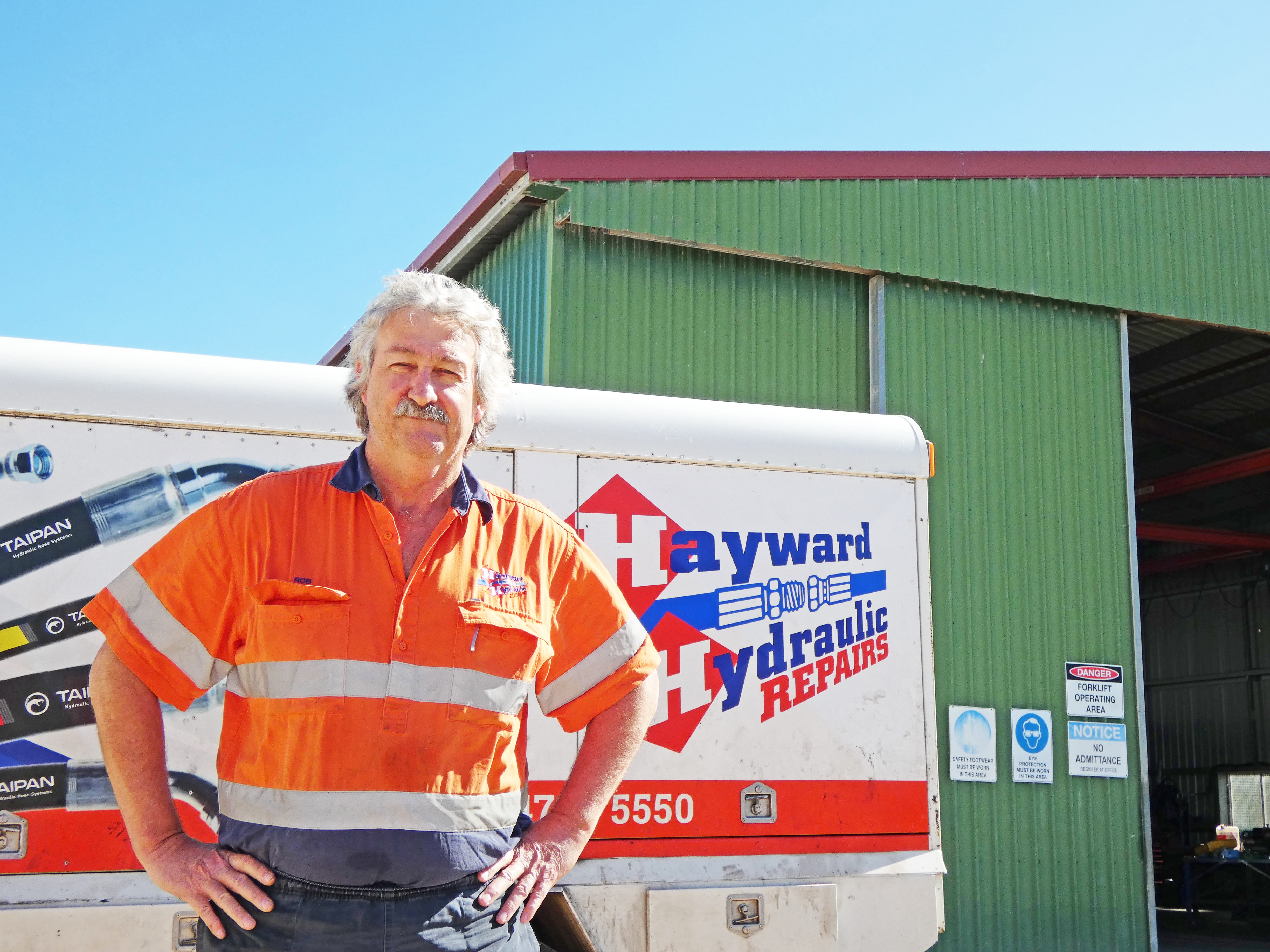
Not every business starts with a blueprint. For some, it begins as a calling… in more ways than one. Burdekin local Robert Hayward had been in the hydraulics industry since he was 18. A diligent worker who loved his job, he quickly built a reputation locally as one of the best in the business. But despite a mutual affinity with the industry that had formed over years, he stepped away in the early 1990s to help his father-in-law maintain a cane property in Clare. Until he received a call. Then another… and another. Rob quickly realised that, despite his brief hiatus, his reputation in hydraulics had not faded. With that, he was pulled back into the game, this time with nothing but a $2,000 ute, a toolbox, and work up to his neck. And the only way to keep himself from drowning in it was, ironically, to go in deeper. “As the Burdekin is, if you do a very good job, word travels quickly between the community. One farmer talked to another, he talked to another, he talked to another… “Until I sat down with my wife one day and said, ‘I think we can make a business out of this.’” His ute would eventually make way for a permanent space—a small sub-shed at Larry Hudson Engineering in the Ayr Industrial Estate that would serve as his headquarters for the following four years. He tackled the first year solo, before demand forced him to put an apprentice on in the second year, and a qualified tradesman in the third. By the end of the fourth, Rob’s work had outgrown its humble base, moving down the road into a new purpose-built shed that would become the home of Hayward Hydraulics. That shed would officially open in 1996, spurring a 30-year legacy sustained by three defining pillars. Growing with the industry “I had no idea how to use computers,” Rob said with a smirk. Admittedly, he hadn’t realised he signed himself up for a three-decade, three-fold evolution between an entire industry, his own business, and himself. What he did know was that he was ready to learn, and eager to grow. It started with the basics. For Rob, that meant wrapping his head around modern computers, attending TAFE courses on emerging welding techniques, and becoming a leader. “I went from being a very good tradesman to having to be an employer,” he said. “You have to be a people's person, you have to treat people the right way, treat your workers the right way. That part I never even thought of until we started getting into it.” Rob treated this evolution as a marathon rather than a sprint, dedicating the business's first decade cementing its reputation as a local leader. After striking up deals with major companies, including Queensland Rail and Wilmar Sugar in the mid-2000s, he decided to take the leap into the mining industry in the early 2010s as a safety net for the unpredictable sugar industry. With that growth, Hayward Hydraulics’ shed would undergo its third structural expansion to accommodate its continuously increasing popularity and modernised technology. He built a habit of gleaning ideas from various online hydraulic magazines, and then building on them to not only keep up with the industry, but to will it into the future himself. “I eventually built a reputation for thinking outside of the square. If somebody's been doing something for 20 years, I'll look at a better way of doing it,” he said. Albeit, he admits he and the business are still evolving today. “I've seen harvesters and planters go from chain and sprocket to hydraulic motors, to hydraulic motors being linked to satellite GPS,” he said. “The industry has changed in leaps and bounds, and you have to keep finding ways to move with it.” Doing it the right way Hayward Hydraulics’ evolution was founded on something Rob didn’t need to be taught. Care. And he makes sure his staff do, too. “I didn't come from a real wealthy family, so we were brought up to work; you work, you do the job right, you get paid,” he said. “So if I'm not happy with something, I'll ask my workers: ‘would you pay for that?’” When the mining industry began to boom in Queensland, Rob admits he had a difficult time retaining workers. To compete, he was forced into paying top-dollar for what he called “good quality workers,” causing financial tension. When asked if compromising staff quality for cost was ever an option, with the conviction of a true-blue purist, he said: “No.” “I've always maintained that a business is only as good as your employees. You can be the best boss in the world, but if you've got workers that people don't like, they don't come through the door,” he said. “My current staff are up there with the best that I've had. I just try to make sure they’re happy to come to work every day.” With quality and care as its engine, Hayward Hydraulics became known not just for technical know-how, but for doing things the right way. As its stature in the industry continued to grow, so did the scope of its customer base. Calls started coming in from as far north as Tully, all the way to Mackay and Western Queensland, all saying the same thing: “We heard you were the guy to talk to about this problem.” Family and community at its heart For the last 10 years especially, the business has made a point of supporting local organisations and sports clubs, most notably the Burdekin Roosters Rugby League Club. Rob described it as a duty to a community that has given so much to him and the company. “The community has been so important to it all. I’ve got some customers that have been with me from day one, and with some, I’m onto the third generation of the same family,” he said. “The’ve given a lot to me. They've helped me grow and supported me, so it's about time I supported them back.” Beneath it all, though, he points to his family as the driving force. “I remember those early days when we were setting up the new workshop, building benches and all that, my two brothers-in-law and my father came out and gave me a hand,” he said. “But my biggest support is my wife. Especially in the early days when I wasn't home, and she solely looked after the kids and everything. “It got to the stage where I was working seven days a week, 12 hour days, and my wife would bring the kids on a Saturday and Sunday, and we'd sit on the shop floor and have lunch. “She's been with me through the lows and the highs, and that I thank her for.” Now, thirty years later, it’s his family pulling him out of the industry. Driven by the desire to make up for lost time with his wife and kids, Rob has loosened his grip on business operations, working four days a week with plans to eventually let his brainchild find its own footing. As for right now, he’s not yet ready to call time on a chapter that was, perhaps, never meant to last this many pages. “I still love what I do,” he said. “The early days come with sacrifices, but when I look back now, it was all worth it. “I remember when it all first started, looking on the ATO website and coming across that statistic that most businesses fail within five years. “When I read it, I said to myself, 'well, I'm gonna make sure I’m not that statistic.’” And that, he did. CAPTION: Rob and his current team. Back L-R: Chase Pearce, Stephan Du Plessis Front L-R: Kade Pearce, Renee Viero, Robert Hayward, Tina Dennis, Bryan Parison Absent: Sam Tomasetig Photo credit: Jacob Casha
Read the full story
The Burdekin has rallied behind a local family after a sudden medical diagnosis turned their life upside-down. Ryan and Holly Davenport dropped everything when their two-year-old son, Rowen, was diagnosed with a brain tumour last month, temporarily relocating to Brisbane for his ongoing treatment. In response, a GoFundMe fundraiser has since raised over $55,000 in support of the family. Created in late May by Shannon Malone, a close friend of the Davenports, the fundraiser has been shared all over Facebook and Instagram by local organisations, garnering comments of support on top of 271 individual donations. “Words can’t describe how much it means to us to have everyone’s support behind Rowen as he begins his journey,” Ryan said. “They have given us precious time to spend with Rowen without the everyday worries.” The money will help fund hospital stays, travel, time away from work, and ongoing treatment expenses as the Home Hill family navigates a medical journey that began in April. Already on edge after daughter, Ally, underwent brain surgery to have a cavernoma removed just before Easter, Ryan and Holly acted promptly when they noticed a twitch in Rowen’s eye. Following weeks of consultations with Townsville doctors and specialists—which included MRI scans and a Royal Flying Doctors flight—Rowen was eventually diagnosed with pilocytic astrocytoma, a slow-growing brain tumour. He has since been transferred to Queensland Children’s Hospital in Brisbane for chemotherapy, with the couple leaving their two young daughters with their grandparents in the Burdekin to be by his side. In their absence, locals have offered meals, helped on the family’s sugar cane farm, assisted around their home and helped look after their daughters, along with the generous donations. Ryan said the funds raised would not just help relieve the financial burden of Rowen’s treatment, but allow the flexibility to fly their daughters down and spend some time as a family. “(The toughest part has been) the unknown, not having our family together … and watching Rowen go through these traumatic times and … not being able to do anything,” Ryan said. “It has been a very emotional journey so far, and it is hard to believe we are only at the start.” Anyone wanting to support the Davenports is urged to donate using the following link: https://www.gofundme.com/f/supporting-the-davos-and-little-rowen?attribution_id=sl:75c20475-06e5-4752-8e11-d1b7a07c7728&lang=en_AU&ts=1779705595&utm_campaign=fp_sharesheet&utm_content=amp20_t1&utm_medium=customer&utm_source=copy_link CAPTION: Funding will allow the family to fly their daughters down and spend more time together during Rowen’s treatment. Photo supplied
Read the full story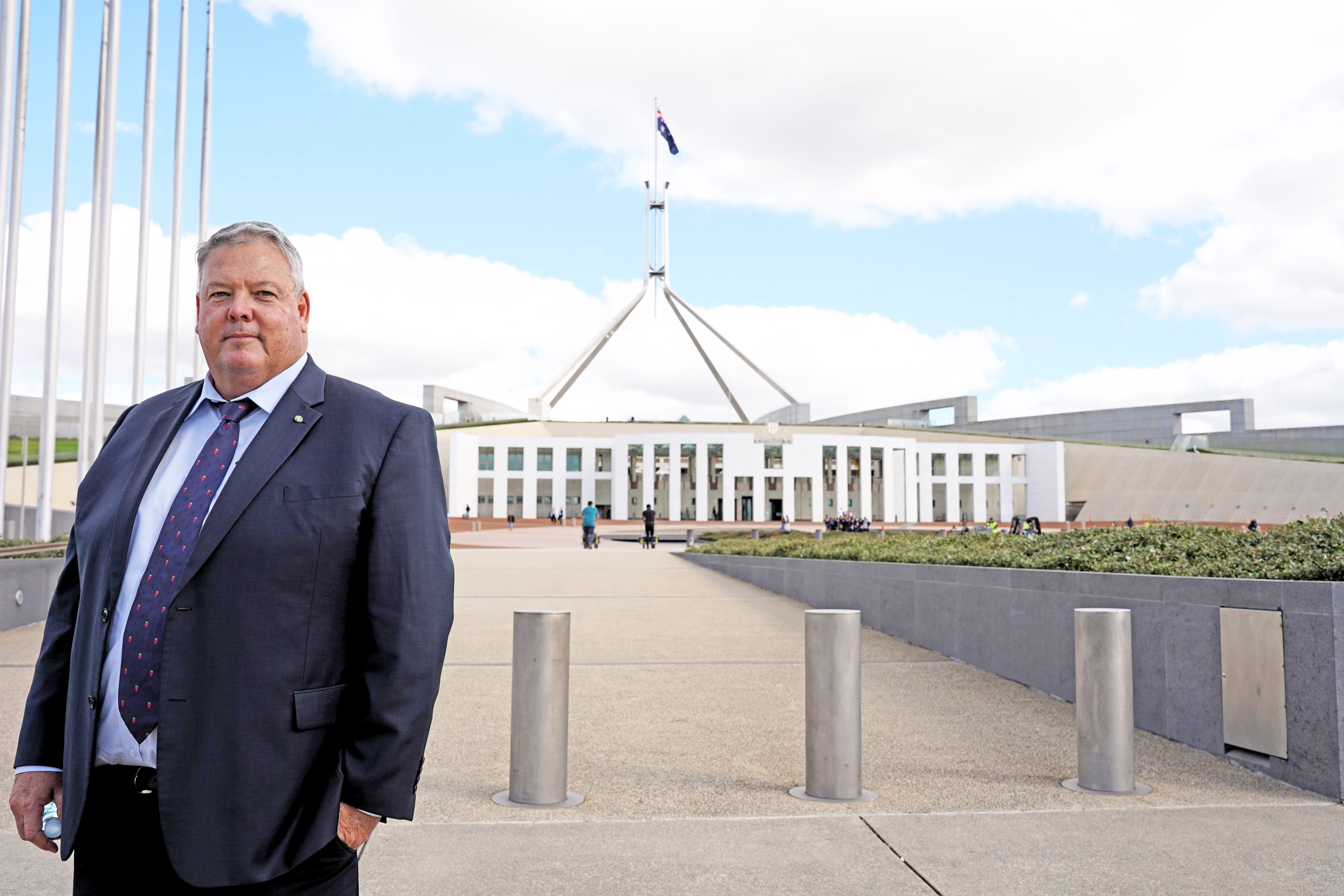
The Federal Member for Dawson, Andrew Willcox, has slammed the Albanese Government for an unacceptable ambush on regional communities, accusing the Commonwealth of abandoning disaster-prone areas to balance its own budget. The Federal Minister for Emergency Management, Kristy McBain, used a late Friday afternoon media release to quietly flag sweeping alterations to the Disaster Recovery Funding Arrangements (DRFA). The proposed changes dismantle the long-standing, scalable framework, which historically provided an average of 64 per cent federal coverage and capped support at 75 per cent for catastrophic events. In its place, Canberra intends to implement a rigid 50-50 funding model. This policy shift arrives at the worst possible time for the state; it follows a volatile severe weather season that caused widespread damage across 71 of Queensland’s 77 local government areas. Federal Member for Dawson, Andrew Willcox, is warning that the sudden funding shortfall threatens the future viability of essential infrastructure, local water treatment facilities, and emergency evacuation operations. Mr Willcox, drawing on his extensive experience as the former Mayor of the Whitsunday Regional Council, stated that the Federal Government is completely detached from the realities of regional recovery. "This decision is a direct hit to the heart of North Queensland," Mr Willcox said. "Canberra is treating natural disasters like a corporate budgeting exercise; however, out here, it is a matter of community survival. To penalise the very regions that drive the nation’s agricultural wealth and mining export revenues is a profound betrayal. "During my time steering the Whitsunday community through the wreckage of Severe Tropical Cyclone Debbie in 2017, I learned exactly what it takes to rebuild. We relied heavily on scalable federal assistance to restore our shattered rural road networks. Under a flat 50-50 split, local councils across Dawson would be forced to find millions of dollars in matching revenue; that is a financial burden our regional ratepayer base simply cannot sustain." Mr Willcox emphasised that major historical recovery operations would have been completely unviable under the newly proposed guidelines. "The total reconstruction of the Shute Harbour marine terminal and the $5 million federal package required to replace the decimated Proserpine Entertainment Centre occurred because the previous framework allowed for exceptional circumstances," Mr Willcox said. "Small regional councils do not possess the independent asset base to fund multi-million-dollar rebuilds alone. Furthermore, the historical system guaranteed that funding flowed directly into local economies, ensuring that regional earthmoving businesses and contractors were awarded the repair work. By lowering the funding floor, the Commonwealth is forcing cash-strapped councils to delay vital resilience works; this leaves our communities dangerously exposed before successive wet seasons. "It is a coward’s tactic for the Minister to leave this announcement until the day after the parliamentary sitting concluded, ensuring they avoided any real scrutiny or accountability in Question Time. “This is yet another calculated deception from a government that knows exactly how damaging these cuts are; this is absolutely not what the Australian people voted for, and I truly hope this betrayal is remembered at the next election. "This is yet another chapter in the ongoing federal neglect of regional Australia. The government is hiding behind the cover of an independent review to justify cutting essential frontline services. I call on the Emergency Management Minister to reverse this decision immediately; regional Queenslanders refuse to be treated as second-class citizens.” Supplied by the office of Federal Member for Dawson, Andrew Willcox CAPTION: FIGHTING FOR THE NORTH: Federal Member for Dawson Andrew Willcox MP outside Parliament House in Canberra, condemning the Albanese Federal Government's plan to slash scalable disaster recovery funding for regional councils. Photo supplied
Read the full story
"As the final week approaches for public submissions into the Sugar Code of Conduct, Member for Burdekin Dale Last has renewed his calls for growers to unite and make their voices heard. Mr Last said the public submissions for the sunsetting review of the Sugar Code of Conduct should be an opportunity for sugarcane growers from across the Burdekin to outline the benefits of the code for both farmers and the wider community. “Over recent weeks I have taken the liberty of providing a submission on behalf of the community, because ultimately the flow-on impact from changes in our sugar industry stretch beyond the paddock and the mills,” Mr Last said. “I recently met with several grower representatives which provided the opportunity to bring key stakeholders together, reaffirm my support as the Member for Burdekin and emphasise the need to work collaboratively as the review period unfolds.” Mr Last said while it was important stakeholders took the time to make their voices heard during the public submissions there was no better way to understand the impact of the Sugar Code of Conduct than to visit the area and speak directly to representatives. “A decade ago this district played a central role in bringing this code of conduct to fruition so I would expect our stakeholders receive a seat at the table they deserve,” Mr Last said. “If the Federal Labor Government was serious about consulting with the industry, the responsible Assistant Minister would be looking for every opportunity to listen to those who are most impacted by the Sugar Code.” Anyone wishing to have their say in the review can visit https://haveyoursay.agriculture.gov.au/sugar-code-review"
Read the full story
-2.jpg)
“I chose Tec-NQ for the opportunities after school,” said Donzel. Photo supplied
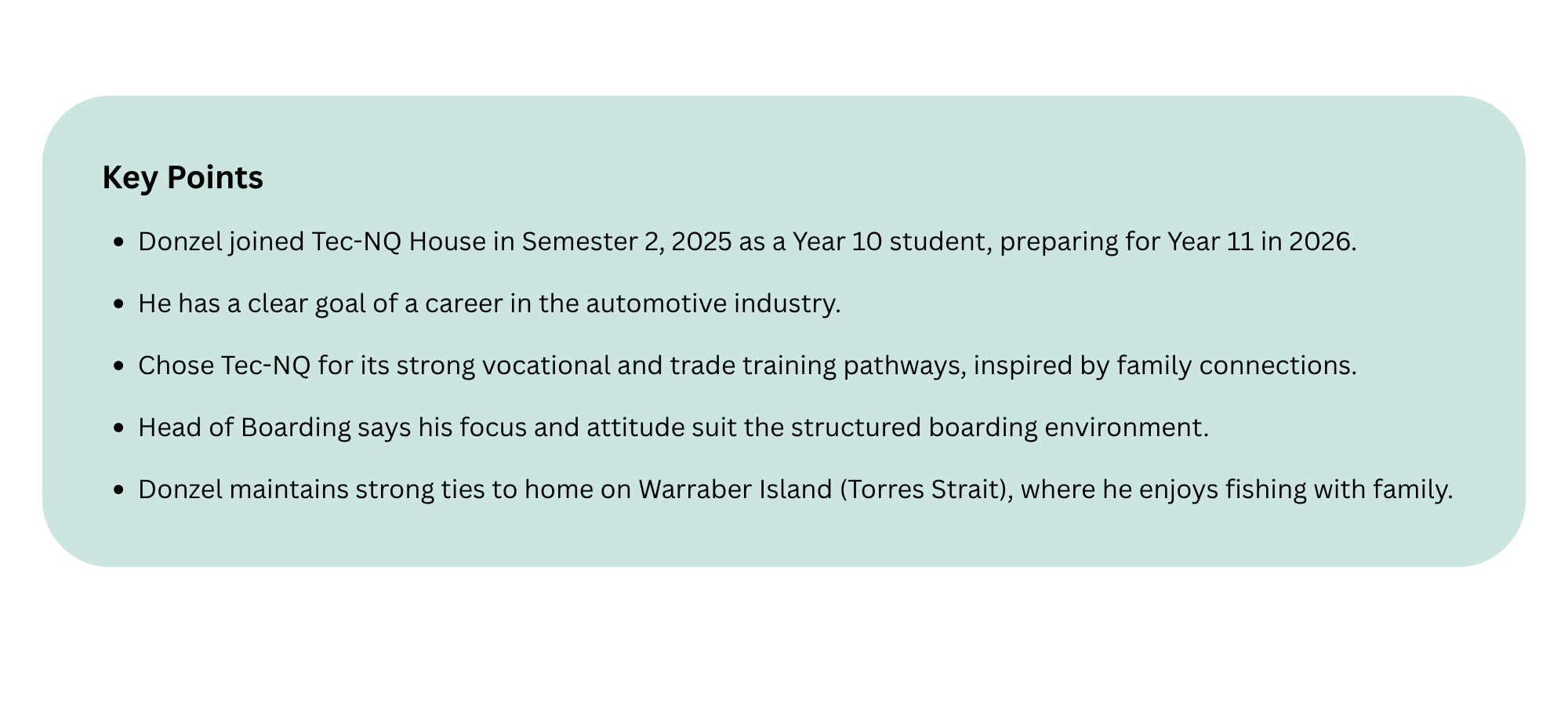
Donzel began his Tec-NQ House journey in Semester 2, 2025, bringing fresh energy to the boarding community. As a year 10 student, preparing for year 11 in 2026, he already has his future mapped out: a career in the automotive industry.
“I chose Tec-NQ for the opportunities after school,” said Donzel.
“I heard about this school from family members.”
It’s the strength of Tec-NQ’s vocational pathway options that attracted him, and he is keen to take every chance to learn.
“So far, it’s been good,” he added with a smile.
Head of Boarding, Dominic Stower, says Donzel’s attitude is a great fit for Tec-NQ House.
“When new students arrive with a clear goal, it sets them up to make the most of the opportunities here,” Dominic said.
“Donzel has come in focused on automotive, and we’re already seeing his commitment.”
Life outside of the classroom keeps Donzel busy. At home on Warraber Island in the Torres Strait, he spends spare time fishing with family and friends. In Townsville, he’s quick to make use of the boarding house facilities, enjoying games of pool and keeping up with basketball. A loyal Chicago Bulls supporter, his favourite number is 23, a tribute to Michael Jordan. On the rugby league field, he follows the Roosters.
For Dominic, this balance of vocational focus, sport and recreation is exactly what Tec-NQ House was designed to provide.
“Boarding gives young people independence with a safety net,” he explained.
“We set expectations around learning, wellbeing and behaviour, and then we support them with structure and routine. That’s where they thrive.”
Tec-NQ House itself is a purpose-built boys-only residence located in Rosslea. Opened in 2022, it provides accommodation for up to forty senior school students from regional and remote Queensland, giving them access to Tec-NQ’s trade-focused senior school program.
The facility blends structure with comfort. Students have air-conditioned double-occupancy rooms, communal lounges with streaming services and computer access, and a secure outdoor recreation area with BBQ facilities and a basketball court. An on-site professional chef prepares nutritious meals every day, fuelling the boys for school, sport and work placements.
Transport is provided to the Tec-NQ Douglas co-educational campus, and staff also drive students to and from workplaces when required. This removes barriers and lets students focus on their learning, hobbies and friendships. After-hours, the boys enjoy organised sport, social activities and excursions, all designed to build a sense of community.
Dominic says that for students like Donzel, these routines help them settle quickly.
“First-year boarders do well when there is a clear rhythm to the week,” he said.
“They learn to manage their time, connect with mates and build confidence. Those skills will serve them in school, in apprenticeships and in life.”
With his career pathway in mind, his hobbies from home, and a willingness to get involved in boarding life, Donzel is making a strong start. We look forward to seeing his journey continue into year 11 and 12.
Contributed with thanks to Tec-NQ

$215 for a tank of diesel …… how life can change quickly.
We are all feeling the pinch as a result of the current world circumstances.
In Council we are undergoing budget deliberations and rising prices are impacting many of Council’s areas, as it is in the family and business budgets. We all need to think of ways to make that dollar stretch, whether that’s not being so heavy on the pedal or looking at upcoming priorities.
It’s to be hoped the world leaders can find a lasting peace that will see prices fall back to some normalcy. Perhaps each can look inside themselves and find the essence of each religion they espouse. I’m sure they would find more in common with their fellow man than the differences which has inflamed parts the world.
We can’t control the bigger picture, but we can act locally to help the Burdekin community and its citizens. We as a Council have a responsibility to you, the community, to be respectful of your trust in us to make the best decisions based on facts and expert advice. As we know decisions today can have a ripple effect on the Burdekin community. Personally, if you can look to help a fellow person in these challenging times please do it.
Bookings are open for ‘Breaking Barriers: Real Conversations’ Sunday 26th April 2pm to 4pm. Jessica Rowe, Dave Kramer and Sam Thaiday will be at the Burdekin Memorial Hall. From masculinity to grief, menopause, identity and resilience, this event reminds us that breaking barriers starts with conversation.
The Cowboys have been giving us some joy lately, so we’ll see how we go tonight against the area I was born and bred in, Manly.
Health, happiness & may peace prevail
Cr John

Recent vandalism at Charlie’s Hill has understandably caused concern in our community, particularly given the site’s cultural and historical significance and its proximity to Anzac Day. Charlie’s Hill holds meaning for many residents, and any damage to public spaces that honour our history and shared identity is disappointing.
What makes this especially frustrating is that the new signage at Charlie’s Hill was only installed recently, following community advocacy and Council efforts to ensure the site is properly recognised and interpreted. Acts of vandalism undermine that work and diminish spaces intended for reflection, respect and learning.
While it is not possible to install security cameras at every public location across the Burdekin, Council relies on the community to help protect shared assets. Vandalism should always be reported so it can be formally recorded and addressed. Just as importantly, we all have a role to play in educating our children and young people about why these places matter and the responsibility we share in caring for them.
On a brighter note, if you haven’t visited the Ayr or Home Hill Visitor Information Centres recently, I encourage you to drop in and experience the S.S. Yongala Dive Virtual Reality experience. This exciting attraction allows visitors of all ages to explore one of the world’s most famous shipwrecks without getting wet — a fantastic experience right here in our own backyard.
And finally, a quick update on Coutts Park, Ayr. Construction of the new vehicular entrance from Lando Street to the BBQ shelter and public amenities is nearing completion. Asphalt surfacing was completed last week, with the concrete driveway crossover scheduled to be poured shortly. Once line marking is finalised, the project will be complete. This new entrance will significantly improve access to park facilities, particularly for older residents and community members living with disability.
Should you wish to reach out, don’t hesitate to contact me directly by phone at 0447 150 582, or feel free to send an email to mayor@burdekin.qld.gov.au.

Burdekin residents will soon have the opportunity to receive hands-on support accessing Queensland Government services online. Photo source: iStock
Burdekin residents will soon have the opportunity to receive hands-on support accessing Queensland Government services online, with a series of community sessions scheduled across the region in April.
The Department of Customer Services, Open Data and Small and Family Business (CDSB) will visit Giru, Ayr and Home Hill as part of its ongoing commitment to improving access to government services both online and in person within local communities.
The sessions aim to help residents navigate key digital services, including grant applications, online payments, and the Queensland Digital Licence.
A CDSB customer service team will be available to provide practical guidance and demonstrations on how to access and use a range of government platforms, including the Queensland Government Grant Finder, disaster preparedness information, and the central www.qld.gov.au portal.
Sessions will be held on Monday, 20 April at the Giru CWA Hall from 3:00pm to 5:00pm; Tuesday, 21 April at the Burdekin Library in Ayr from 9:00am to 4:00pm; and Wednesday, 22 April at the Burdekin Memorial Hall (Tom Jackson Meeting Room) in Home Hill from 9:00am to 1:00pm.
Services available at each session include support with setting up a Queensland Digital Licence, accessing government information online, making payments, and finding available grants and assistance programs. Information on disaster preparedness will also be provided.
No bookings are required, with all sessions operating on a walk-in basis during advertised times.

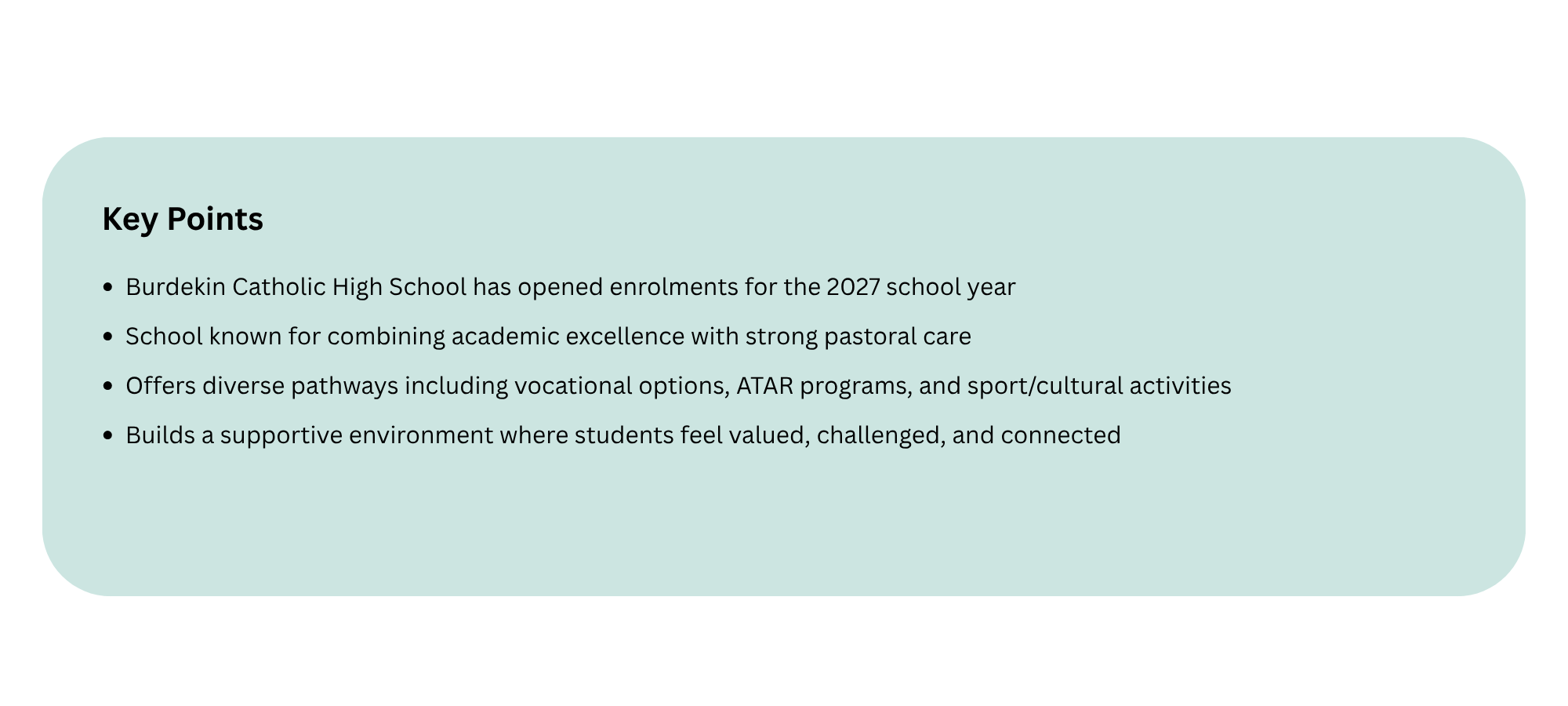
Choosing the right high school is one of the most significant decisions a family can make. It is about more than just a classroom; it is about finding a community where a young person feels known, valued, and challenged to reach their full potential. At Burdekin Catholic High School (BCHS), we take this responsibility to heart, and we are excited to officially announce that enrolments for the 2027 school year are now open.
As a pillar of the Burdekin community, BCHS is proud of our reputation for combining academic excellence with a deep sense of pastoral care. Whether through our diverse vocational pathways, our rigorous ATAR-focused curriculum, or our vibrant sporting and cultural programs, we ensure every student has the opportunity to shine. Following our strong senior results and regional sporting successes last year, we are eager to showcase what makes our school the "warm heart" of regional education.
To help families experience our unique culture firsthand, we invite you to join us for our upcoming discovery events:
Our community is growing, and interest in 2027 placements is already high. To ensure your child has the best start to their secondary journey, please note that enrolment applications are due by June 22.
We look forward to meeting the next generation of BCHS students and working in partnership with Burdekin families to shape a bright, successful future. For more information or to download an enrolment pack, please visit our website or contact the school office on (07) 4783 2366.
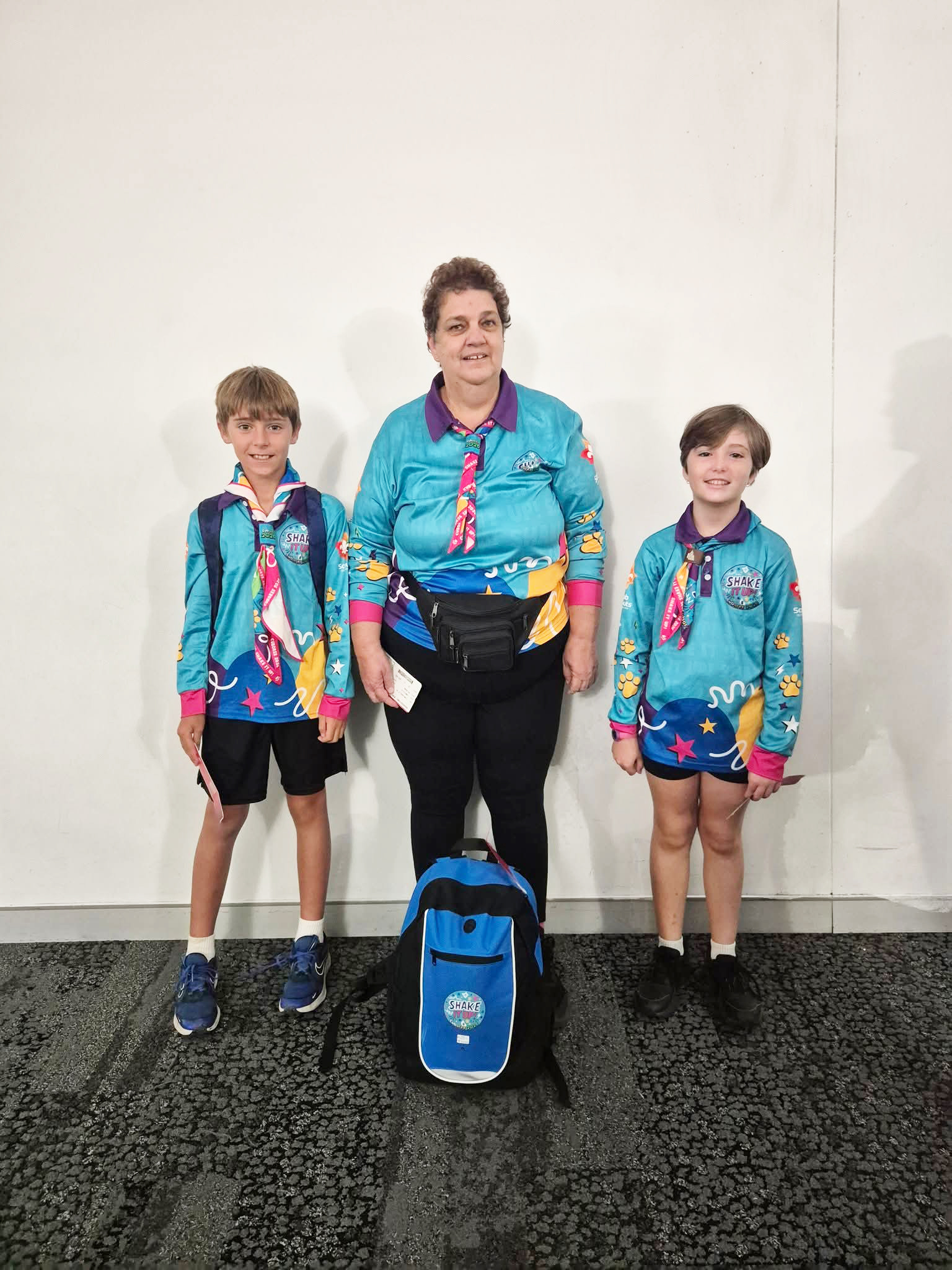
The group departed via Townsville Airport ahead of the event, which will be held at Baden-Powell Park and is set to feature a packed program of activities designed to be adventurous, fun, challenging and inclusive. Photo supplied
Three members of the Lower Burdekin Scout Group are on their way to Samford Village to take part in a major four-day Cuboree camp, joining around 1,200 Cub Scouts from across Queensland.
The group departed via Townsville Airport ahead of the event, which will be held at Baden-Powell Park and is set to feature a packed program of activities designed to be adventurous, fun, challenging and inclusive.
Today marks the start of on-site preparations, with subcamps taking shape as participants arrive. Tents are being set up and bags unpacked, ahead of tonight’s opening ceremony, which will officially launch the four-day program.
Organisers say the Cuboree is an important highlight on the Scouting calendar and a strong way to kick off Queensland Youth Week, which formally begins on April 11. A total of 804 Cub Scouts are expected to take part in the event, which will showcase a range of outdoor and team-based activities.
For the Lower Burdekin participants, the camp represents an opportunity to connect with Scouts from across the state while taking part in large-scale, structured activities not available at regular weekly meetings.
The Lower Burdekin Scout Group meets each Thursday from 5.30pm to 7.30pm at 12th Avenue, Home Hill, and continues to welcome new members interested in joining the program.
The Cuboree will run over four days, with organisers promising a busy and memorable experience for all involved as thousands of young Scouts come together at one of Queensland’s premier Scouting events.
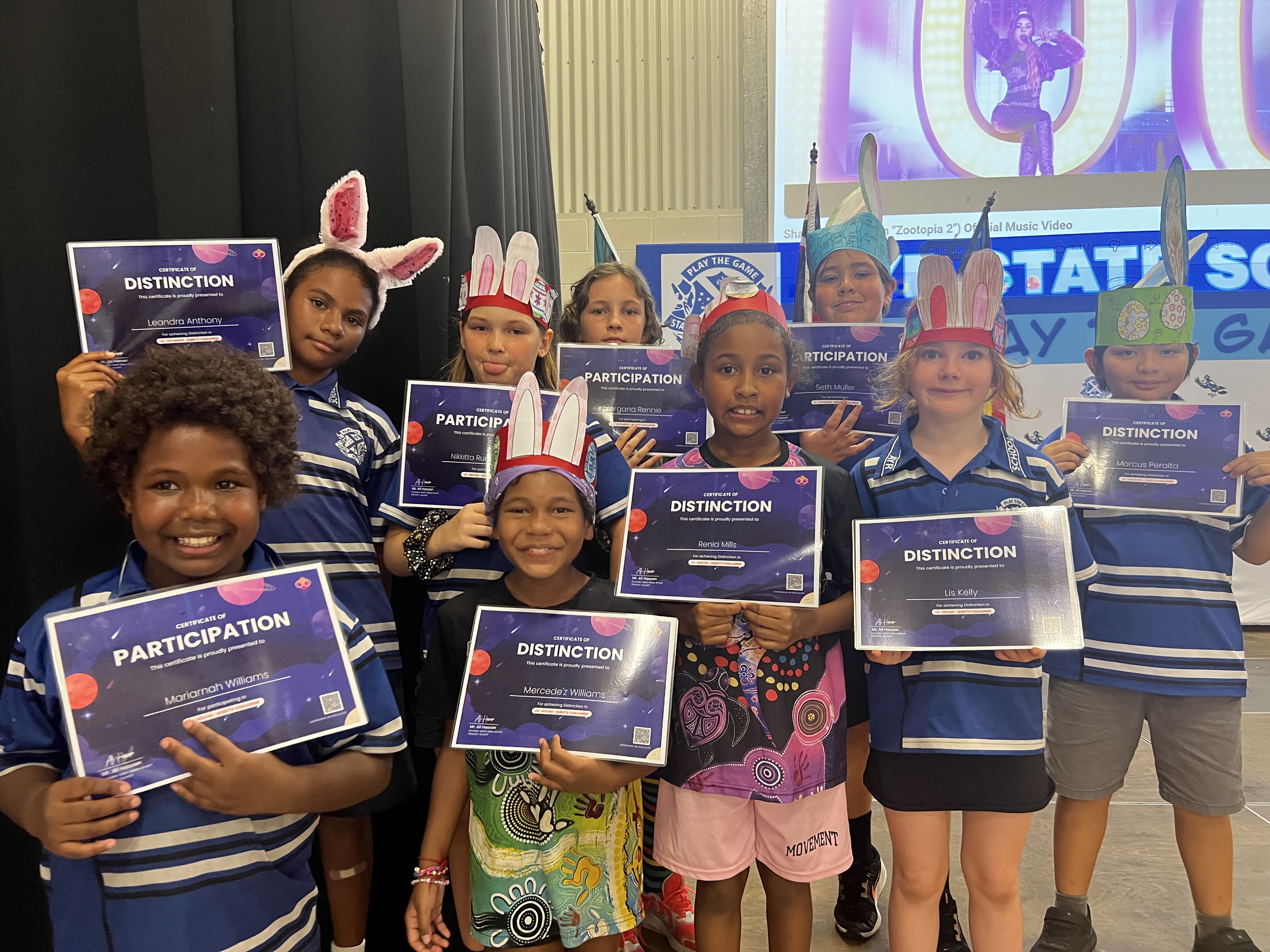
A selection of proud Grade 5 and 6 students displaying their competition certificates, with achievements ranging from Participation through to Distinction.
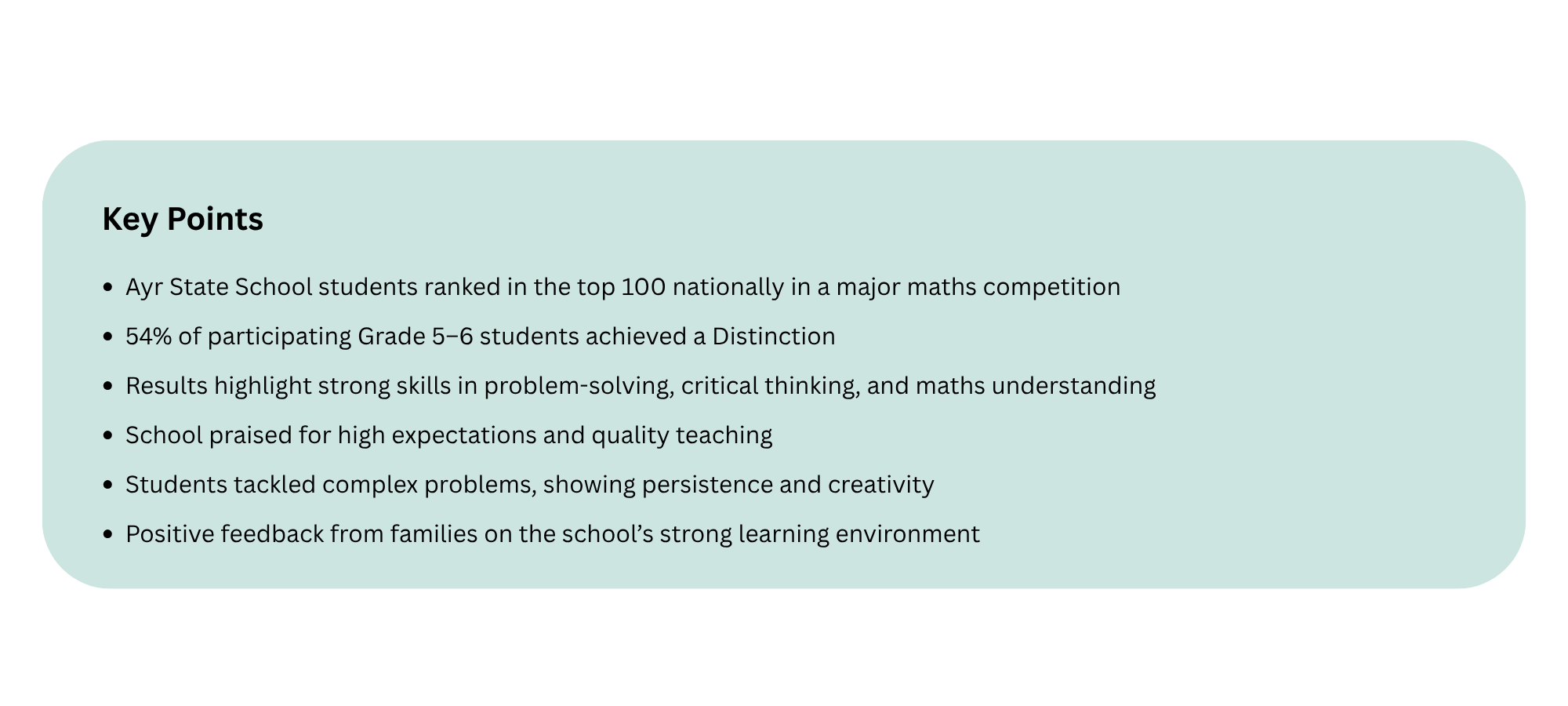
Ayr State School is celebrating a standout academic achievement, with its Grade 5 and 6 students placing in the top 100 nationally in a prestigious mathematics competition—an exceptional result that highlights the school’s strong focus on excellence.
In an impressive showing, 54% of participating students achieved a Distinction, demonstrating advanced problem-solving skills, critical thinking, and a deep understanding of mathematics.
Principal Nikki Schell said the results reflect the high expectations and quality teaching embedded across the school.
“Our students continue to rise to every challenge. Achieving at this level on a national stage is something they should be incredibly proud of,” she said.
Students tackled complex, multi-step problems as part of the competition, applying persistence and creativity to reach solutions.
“It was challenging, but really exciting. It made us realise how much we’re capable of,” said one Year 6 student.
Families have also praised the strong academic culture.
“The learning environment is so positive and focused. These results show just how much students are achieving,” a parent shared.
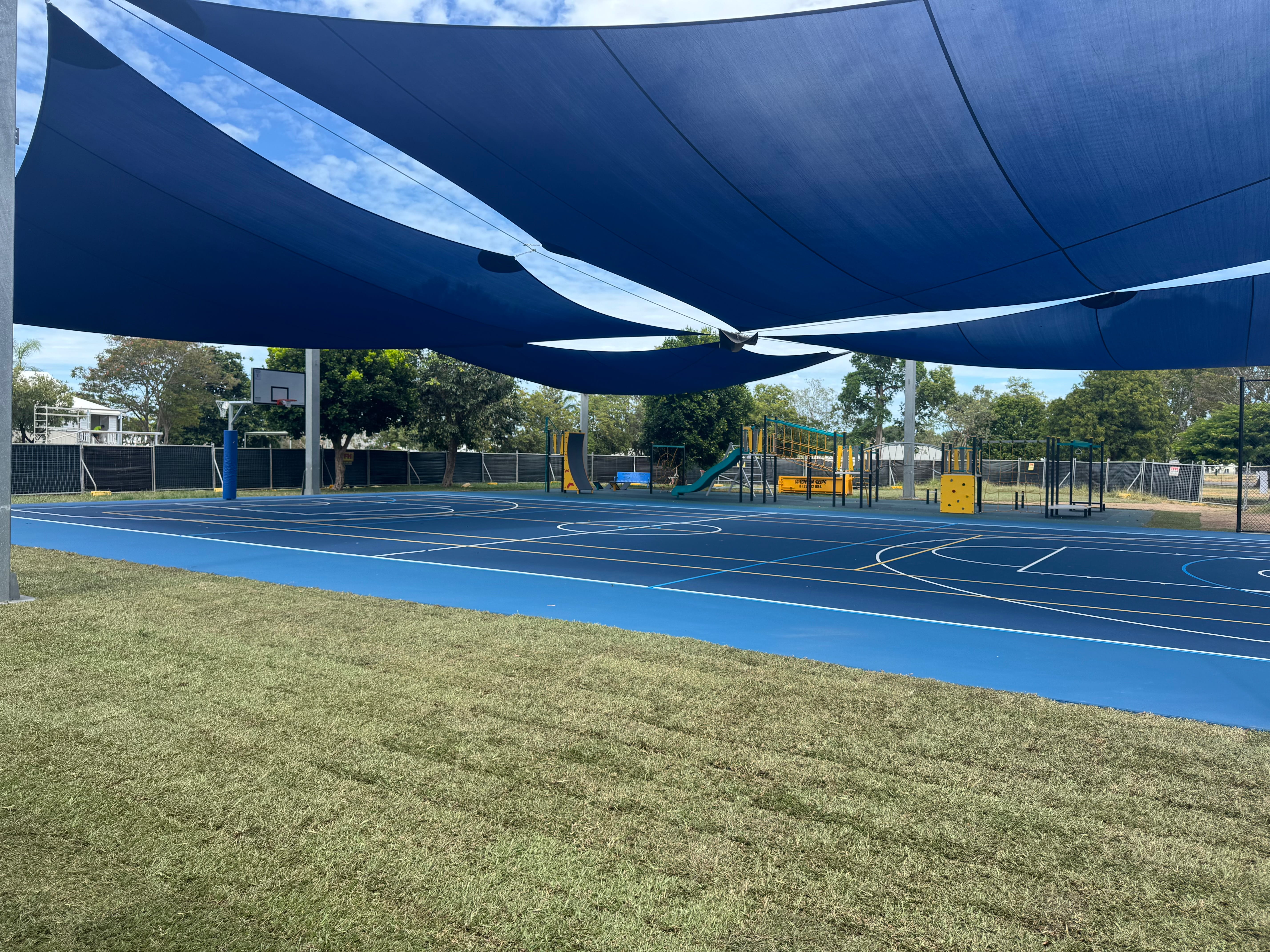
Alongside academic success, students are also benefiting from high-quality learning and play environments. Newly upgraded facilities, including a modern basketball court, are supporting both wellbeing and engagement across the school.
At Ayr State School, the focus is clear—empowering every student to achieve their personal best while providing opportunities to excel at the highest level.
With enrolments now open, families are invited to experience a school where achievement, opportunity, and student success go hand in hand.
Contributed with thanks to Ayr State School
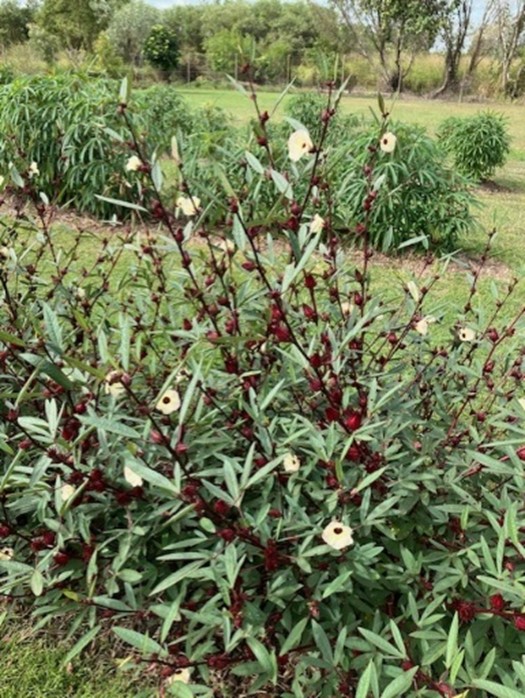
Rosella bushes (foreground) and cassava (background) are featured in the garden. Photo supplied
The Burdekin Community Garden is set to become more accessible in 2026, thanks to a grant from Burdekin Shire Council.
The funding has enabled the construction of seven new raised garden beds, making it easier for volunteers to tend to crops without needing to bend down to ground level. Council also provided garden loam to fill the beds, along with funding to hire a bobcat to assist with moving the soil into place. Additional funding will go towards upgrading the garden’s sprinkler system.
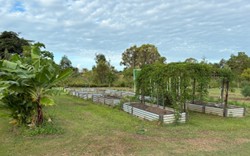
The Burdekin Community Garden will officially open for the 2026 season on Monday, 20 April, from 9am to 11am. This year marks its fifth year of operation, after being established in 2022 through generous donations from the congregation of the Burdekin Community Church.
The garden continues to grow fresh produce that is shared free of charge with the local community. Over the past four years, it has produced a wide range of crops including corn, carrots, snow peas, tomatoes, lettuce, zucchinis, silverbeet, potatoes, pumpkins, cucumbers, passionfruit, bananas and pawpaw. It also grows cassava and aibika (commonly known as slippery or island cabbage), which are particularly popular among Pacific Island workers in the region.
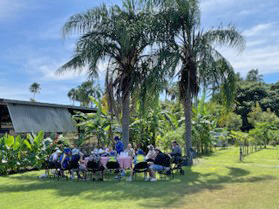
Beyond food production, the garden provides an important social space where people can meet, enjoy a cuppa and connect with others in a relaxed outdoor setting. It has also welcomed student groups from Burdekin School, offering hands-on opportunities to learn about gardening while building communication skills through interaction with coordinators and visitors.
Located at the rear of the Burdekin Community Church on International Drive, the garden is open to everyone, with Monday mornings (excluding public holidays) the best time to visit. Garden coordinators Karina Lima, Rhonda and Rodney Williams are on hand each week to welcome visitors, offer a tour and share a free cuppa.
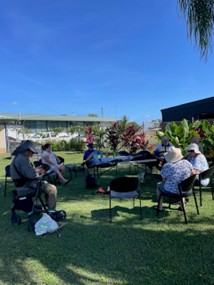
Community members are invited to come along and enjoy the welcoming atmosphere, with gardening activities always optional.
For more information, visit the Burdekin Community Garden on Facebook or email burdekincommunitygarden@gmail.com.

Regional Queensland communities, including those in the Burdekin, are set to benefit from a stronger voice in government decision-making following the appointment of the State’s first Special Commissioner for Regional and Rural Queensland.
Townsville-based Andrew Cripps has been appointed to the newly created role, which aims to improve the delivery of government services, better reflect regional priorities, and help unlock economic opportunities across the state.
A North Queensland local, Mr Cripps was born and raised in Tully and brings extensive experience in both state and local government. He previously served as Queensland’s Minister for Natural Resources and Mines and as a Deputy Mayor, and more recently worked as Recovery Coordinator in North Queensland following the 2025 floods.
In his new position, Mr Cripps will work directly with communities across regional and rural Queensland, acting as a link between local areas and government. The role is designed to ensure local concerns and ideas help shape policies, programs and investment decisions.
For regions like the Burdekin, the appointment is expected to provide greater access to decision-makers and a clearer pathway for raising issues around infrastructure, services and economic development.
Member for Burdekin and Minister for Regional and Rural Development Dale Last said the role would help ensure regional communities are better heard.
“Queensland doesn’t start and end in Brisbane,” Mr Last said.
“This Special Commissioner will be on the ground across the state, listening and helping deliver what’s needed for Queenslanders.
“As the most decentralised State in mainland Australia with more than half of the population living outside Brisbane, we understand the importance of a direct link between people in regional Queensland and decision-makers in government.”
Mr Last said the position would focus on improving access to essential services and supporting growth in regional areas, including backing local industries, attracting investment and ensuring infrastructure keeps pace with demand.
He said having a senior government representative based in the regions would help address long-standing concerns around issues such as health services, housing, cost of living and community safety.
Mr Cripps’ appointment comes as part of the State Government’s broader plan to strengthen regional Queensland and ensure communities outside South East Queensland are supported to grow and thrive.
“Regional Queensland is full of opportunity, and this role is about making sure communities are supported to grow, attract investment and create jobs,” Mr Last said.
“Whether it’s supporting growers, backing local industry or making sure services like hospitals, roads and schools keep pace with growing communities, this role is about turning local voices and knowledge into real results.”
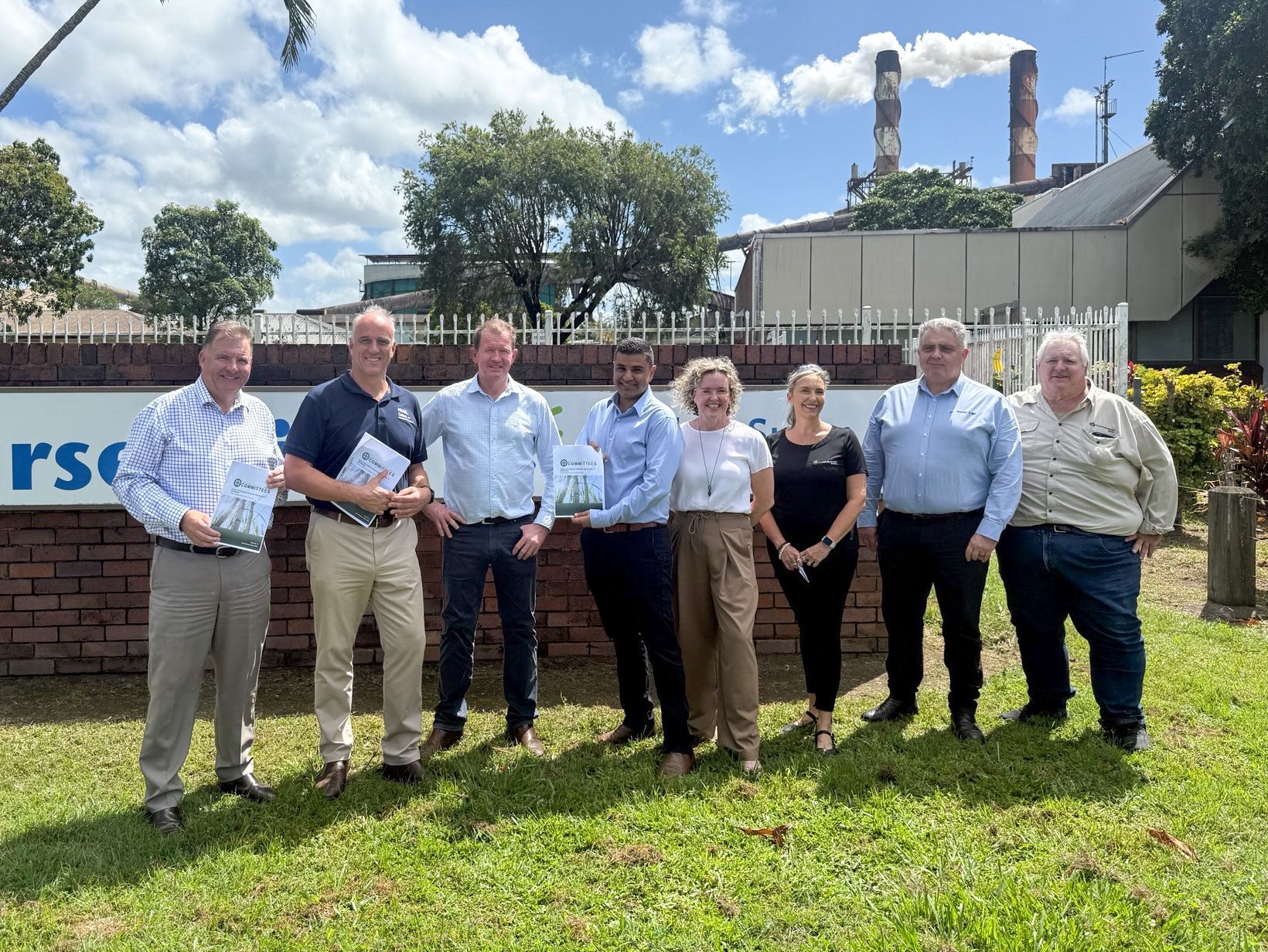
Sugarcane could power more than just mills, with a new report highlighting bioenergy opportunities set to benefit growers and regional communities like the Burdekin. Photo source: Wilmar Sugar Australia
Wilmar Sugar Australia has welcomed the release of a new parliamentary report outlining opportunities to expand bioenergy production within Queensland’s sugar industry.
The findings come from the Queensland Parliament’s Primary Industries and Resources Committee Inquiry into Sugarcane Bioenergy Opportunities, which was released in Mackay earlier this week. The report provides a roadmap for developing bioenergy and biofuels projects, with potential flow-on benefits for regional communities, including those in major cane-growing areas like the Burdekin.
Wilmar said the committee’s recommendations align with several of its key proposals and could help unlock the industry’s bioenergy potential if supported by appropriate government policy.
Among the recommendations backed in the report are co-funding feasibility and final investment decision studies to help build a pipeline of projects, along with strategic investment to support shovel-ready developments capable of attracting private and federal funding.
The committee also highlighted the importance of supporting bagasse-based cogeneration — using sugarcane by-products to generate electricity — through offtake agreements with sugar manufacturers, including fixed or floor pricing arrangements.
In addition, the report calls for advocacy toward a national biofuels mandate, including an ethanol mandate with local content provisions, as well as funding for a pre-feasibility study into a sugar-based biofuel supply chain with the Australian Defence Force to strengthen fuel security.
Wilmar said the next step is for governments to implement the policy settings needed to turn these recommendations into reality, allowing the sugar industry to diversify and play a larger role in Australia’s renewable energy future.
The company also acknowledged industry representatives who contributed to the inquiry, including participants from across Queensland’s sugar manufacturing sector

The Queensland Government has appointed the State’s first Special Commissioner for Regional and Rural Queensland, a move expected to strengthen the voice of communities like the Burdekin in government decision-making.
Townsville-based Andrew Cripps will take on the role, focusing on improving service delivery and ensuring policies better reflect the needs of regional Queenslanders. A North Queensland local from Tully, Mr Cripps brings experience as a former Minister for Natural Resources and Mines and most recently served as Recovery Coordinator following the 2024 floods.
The position is designed to act as a direct link between regional communities and government, helping to identify barriers, unlock opportunities and support economic growth across areas like the Burdekin.
Minister for Regional and Rural Development Dale Last said the appointment would ensure regional voices are heard.
“The Government understands that Queensland doesn’t start and end in Brisbane,” Minister Last said.
“This Special Commissioner for Regional and Rural Queensland will be on-the-ground across this state, listening and helping deliver what’s needed for Queenslanders.
“Queenslanders deserve timely, effective and accessible government services no matter where they live and Andrew Cripps brings the right mix of experience and community connection to help deliver that.
“As a former Government Minister for Natural Resources and Mines and having worked in local government, Mr Cripps understands how to navigate the challenges facing our regional and rural communities.
“As the most decentralised State in mainland Australia with more than half of the population living outside Brisbane, we understand the importance of a direct link between people in regional Queensland and decision-makers in government.
“Regional Queensland is full of opportunity, and this role is about making sure communities are supported to grow, attract investment and create jobs.
“Whether it’s supporting growers, backing local industry or making sure services like hospitals, roads and schools keep pace with growing communities, this role is about turning local voices and knowledge into real results.”

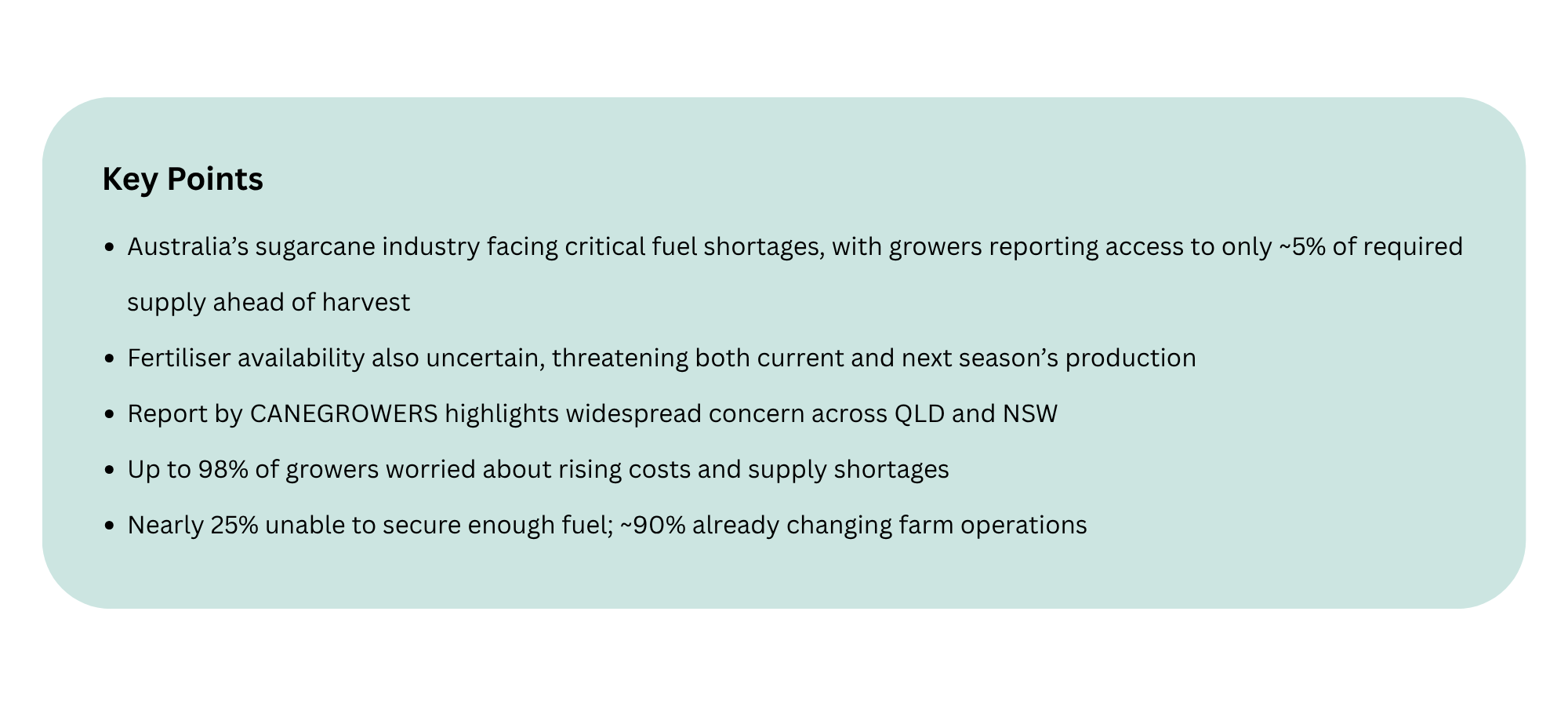
Australia’s sugarcane industry is facing mounting pressure just weeks out from harvest, with growers reporting they have access to only around five per cent of the fuel required to complete the crush.
At the same time, fertiliser supply is becoming increasingly uncertain, raising concerns not only about this year’s harvest, but the viability of next season’s crop.
A new supply chain impact report compiled by CANEGROWERS, with input from industry organisations and farmers across Queensland and New South Wales, paints a stark picture of the challenges facing the sector. The report reveals that uncertainty around fuel and fertiliser is already influencing on-farm decision-making, with growers reassessing plans in response to rising costs and limited availability.
CANEGROWERS surveyed growers across Queensland and worked alongside NSW Cane Growers and sugar manufacturers to develop a national overview. The findings show up to 98 per cent of growers are concerned about shortages and escalating prices, with the cost of key inputs now exceeding the global sugar price many producers are exposed to.
Fuel has emerged as the most immediate concern, with almost a quarter of growers unable to secure the volumes they require. Meanwhile, nearly 90 per cent say they are already altering or reconsidering farm operations due to ongoing uncertainty.
CANEGROWERS CEO Dan Galligan said the findings confirmed that global supply pressures are now being felt directly on Australian farms.
“This is not a theoretical risk – it is already changing how growers make decisions on farm,” Mr Galligan said.
"And that shows how astute their risk management practices are, and how fair ahead farmers need to plan. This is about income at risk this season and production at risk next season."
He warned the consequences would extend well beyond the farm gate.
“When production drops, the impact doesn’t stop at the farm gate – it flows through to harvesting contractors, transport operators, sugar manufacturers and local businesses right across regional Queensland and Northern NSW.
“At a broader level, reduced production means less export income and more pressure flowing through the economy at a time when Australia can least afford it.”
Mr Galligan said CANEGROWERS was working closely with government and industry to minimise disruption and ensure agriculture is prioritised in fuel supply decisions.
“Our job is to make sure growers are not left at the back of the queue when supply tightens,” he said.
“We’re working directly with State and Federal governments to ensure agriculture is prioritised in fuel supply decisions, provide real-time data on shortages, and coordinate an industry-wide response so there are no gaps in how the sector responds.”
Efforts are underway across multiple levels, including engagement with the Queensland Government’s Emergency Management Response Group, collaboration with the National Farmers’ Federation, and coordination with manufacturers, marketers and terminal operators across the sugar supply chain.
However, Mr Galligan said the situation had exposed deeper structural issues, prompting frustration among growers.
“Australia is not short of fuel options, but we are not using them effectively,” he said.
“We have domestic capacity – particularly in ethanol – sitting underutilised, and without clear policy settings that will not change.
“A properly enforced national E10 mandate would help drive investment, increase domestic production and reduce our reliance on imported fuel and a strategy driver for diversification into biodiesel and rebuilding domestic fertiliser production is clearly needed.”
He said without decisive action, similar challenges would continue to threaten the industry.
“If we want to avoid being in this position again, fuel and fertiliser security need to be treated as a national priority, not an afterthought, issues we have known but seen ignored for decades, now we are paying the price.”

While Lynda Potter’s career in banking is important to her, it’s the impact beyond the branch that resonates most. Photo supplied
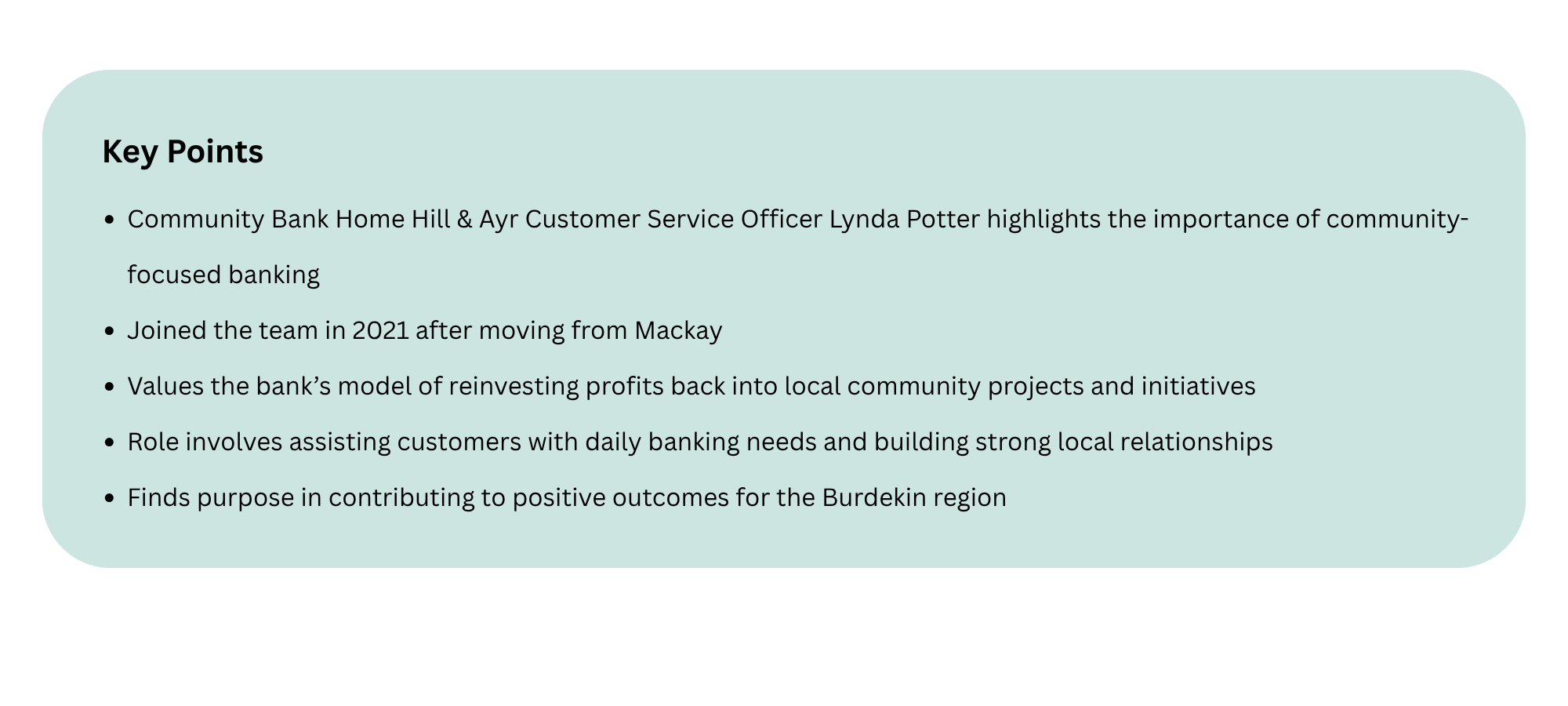
At Community Bank Home Hill & Ayr, it’s the people behind the counter who truly bring banking to life — and for Customer Service Officer Lynda Potter, it’s the connection to community that makes her role so meaningful.
Originally from Mackay, Lynda made the move north and has been part of the Community Bank team since 2021. While her career in banking is important to her, it’s the impact beyond the branch that resonates most.
“I’m proud to know that through my work, I’ve helped give back to the community,” Lynda shares.
That sense of purpose is at the heart of the Community Bank model — where profits are reinvested locally, supporting initiatives, groups and projects that strengthen the Burdekin region. For Lynda, knowing she plays even a small part in that bigger picture is what makes each day worthwhile.
In her role as a Customer Service Officer, Lynda is often the first point of contact for customers, helping with everyday banking needs while building genuine relationships along the way. It’s a role that requires both care and attention — qualities that come naturally to her.
Outside of work, Lynda enjoys a wide range of hobbies from clay target shooting and golf to fishing and reading, she values time spent doing the things she loves — especially when it involves family. With a husband, two sons, a daughter in law and a granddaughter, family time remains a central part of her life.
Living in the Burdekin has also brought its own rewards. For Lynda, it’s the simplicity and accessibility of small-town living that stands out.
“I enjoy the convenience of living in a small town,” she says — a sentiment shared by many locals who appreciate the close-knit nature of the community.
It’s this blend of professional purpose and personal connection that defines Lynda’s journey at Community Bank Home Hill & Ayr. Whether she’s assisting a customer at the counter or contributing to the broader community impact, she embodies what local banking is all about — people supporting people.
Contributed with thanks to Community Bank Home Hill & Ayr
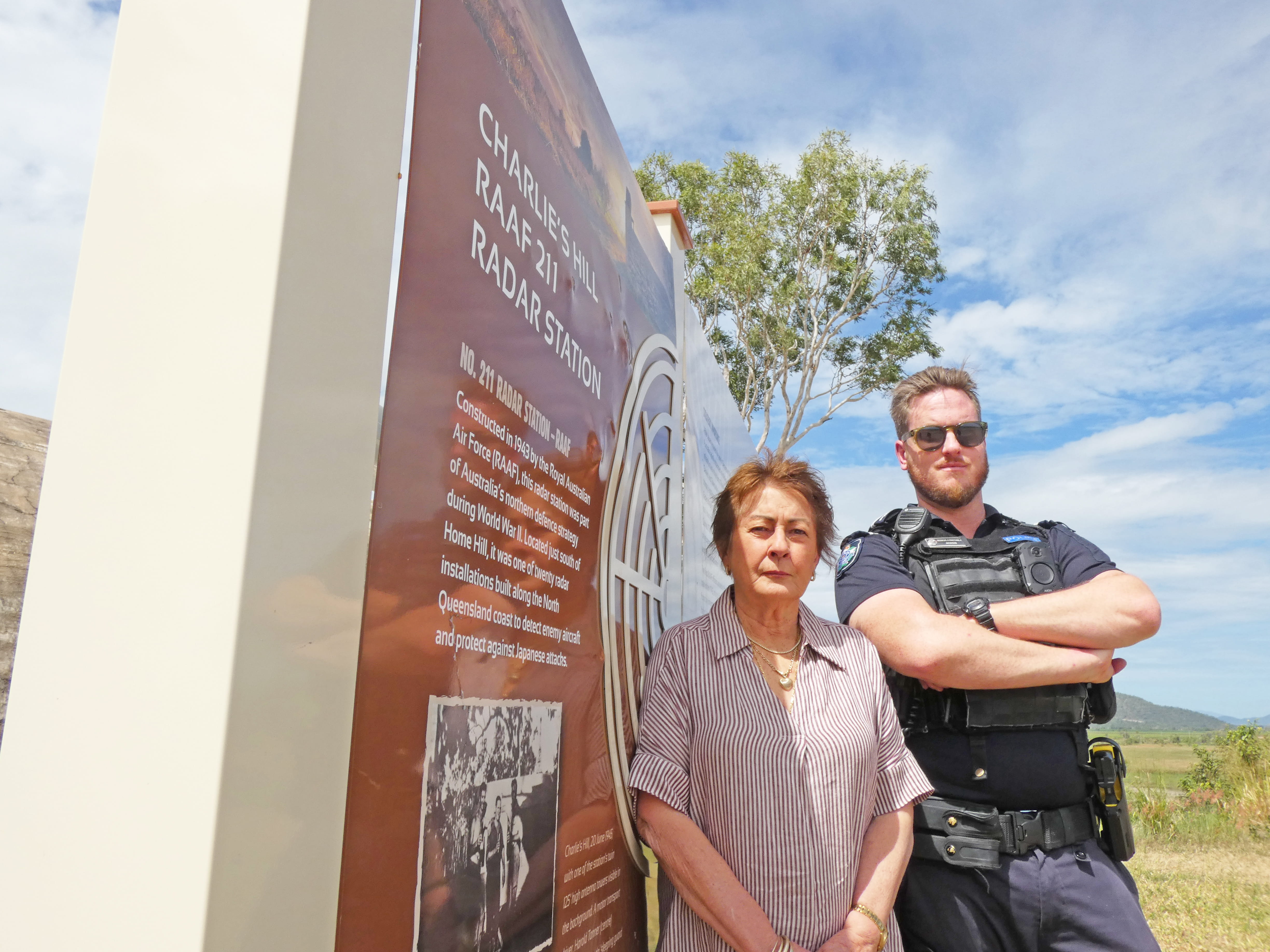
Burdekin Shire Council Mayor Pierina Dalle Cort and Home Hill Police Senior Constable Will Stewart beside one of the damaged interpretive signs at Charlie’s Hill World War II Memorial. Photo credit: Jacob Casha
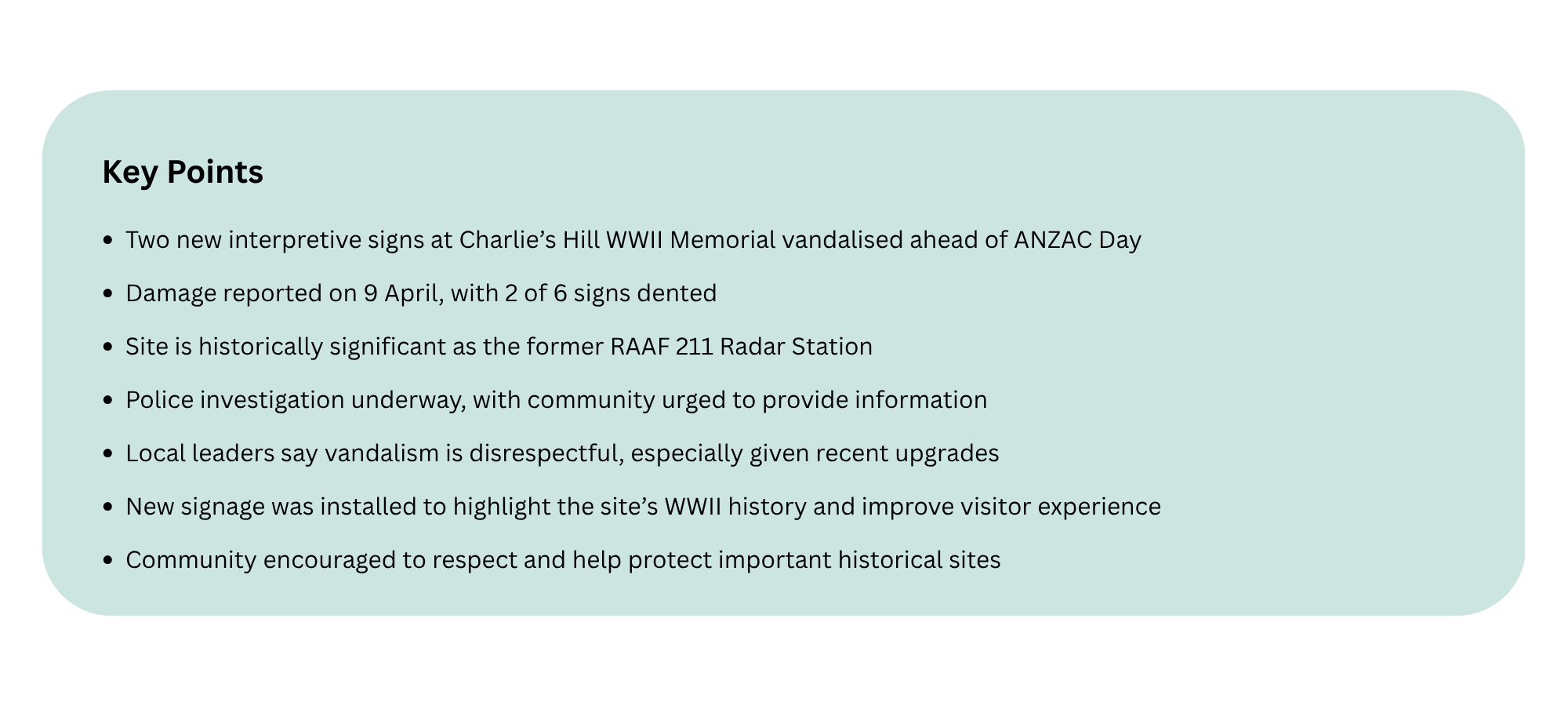
Two new signs at Charlie’s Hill World War II Memorial have been vandalised just weeks out from ANZAC Day.
The damage was reported on 9 April, with two of six newly erected interpretive signs—installed late last month to recognise the site’s wartime significance—left dented.
Senior Constable Will Stewart said Home Hill Police are “thoroughly investigating” the matter, and described the timing of the damage as unfortunate given the proximity to ANZAC Day.
“It’s disappointing to see the damage to the signage placed at Charlie's Hill, especially so close to ANZAC Day. The site is an important part of WWII history in North Queensland and as such, deserves to be treated with respect and care,” Mr Stewart said.
Police are investigating damage to two interpretive signs at Charlie’s Hill World War II Memorial, reported earlier this month. The incident comes just weeks before ANZAC Day.
The site, officially ‘Charlie’s Hill RAAF 211 Radar Station,’ played a vital role in Australia’s northern defence strategy during World War II. Constructed in 1943 by the Royal Australian Air Force (RAAF), it was one of twenty radar installations along the North Queensland Coast detecting enemy aircraft and protecting against Japanese attacks.
Defunct since October 1945, the site has since served as a memorial. The new signage, installed by the Burdekin Shire Council with assistance from the Queensland Remembers Grants Program, aimed to solidify its rich history, making the vandalism “especially frustrating,” Mayor Pierina Dalle Cort said.
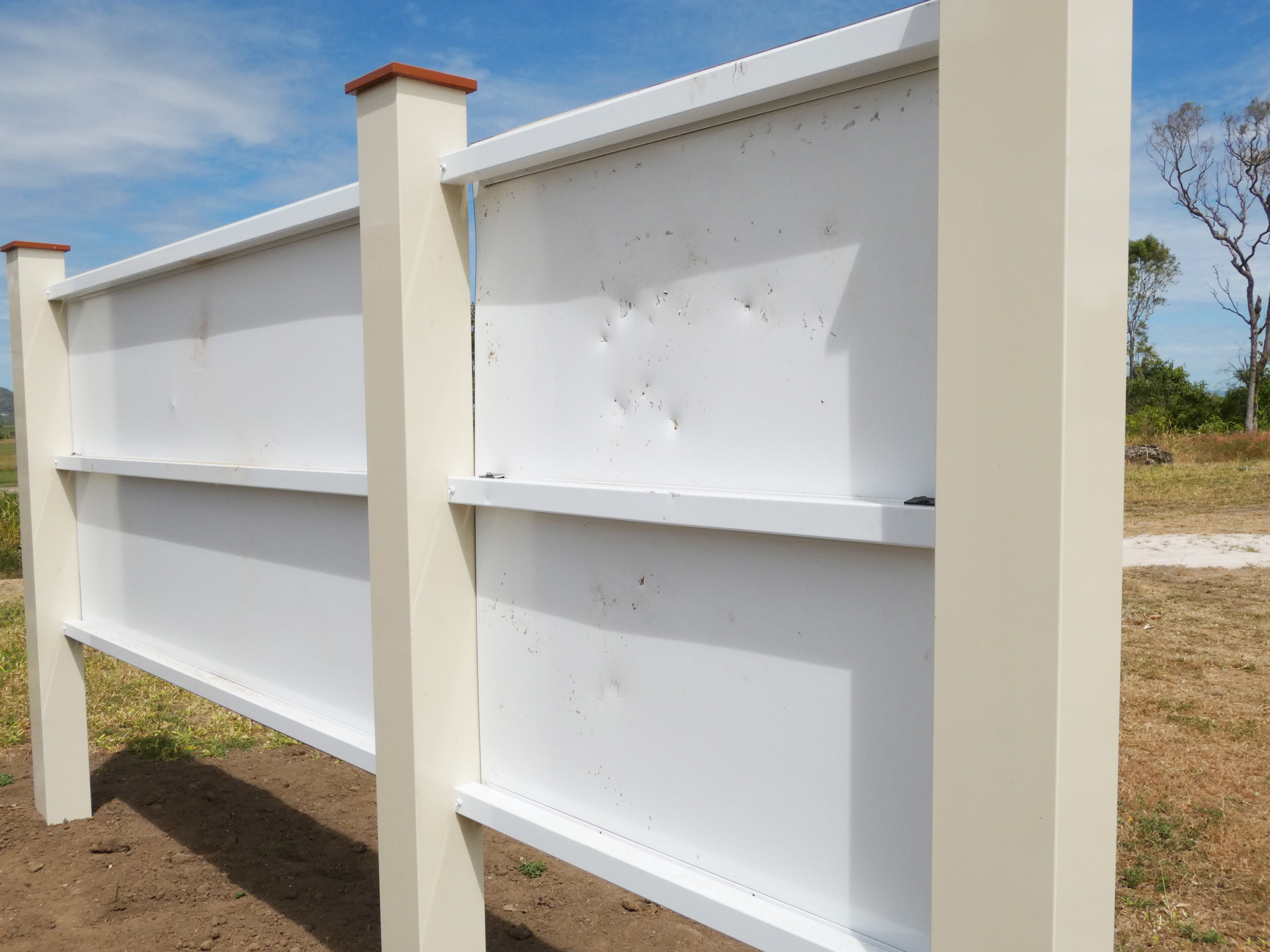
“The vandalism at Charlie’s Hill is deeply disappointing, particularly given the site’s importance to our local history and the fact that it has recently undergone improvements to better recognise its significance. These places deserve respect—not just from Council, but from the entire community.”
Senior Constable Stewart lauded council efforts to breathe new life into the site, and urged residents with relevant information on the vandalism to come forward.
“The Burdekin Shire Council has done a fantastic job in erecting the signage at the site, providing important historical information to locals and tourists alike about the key role the site played in Australia’s defence,” he said.
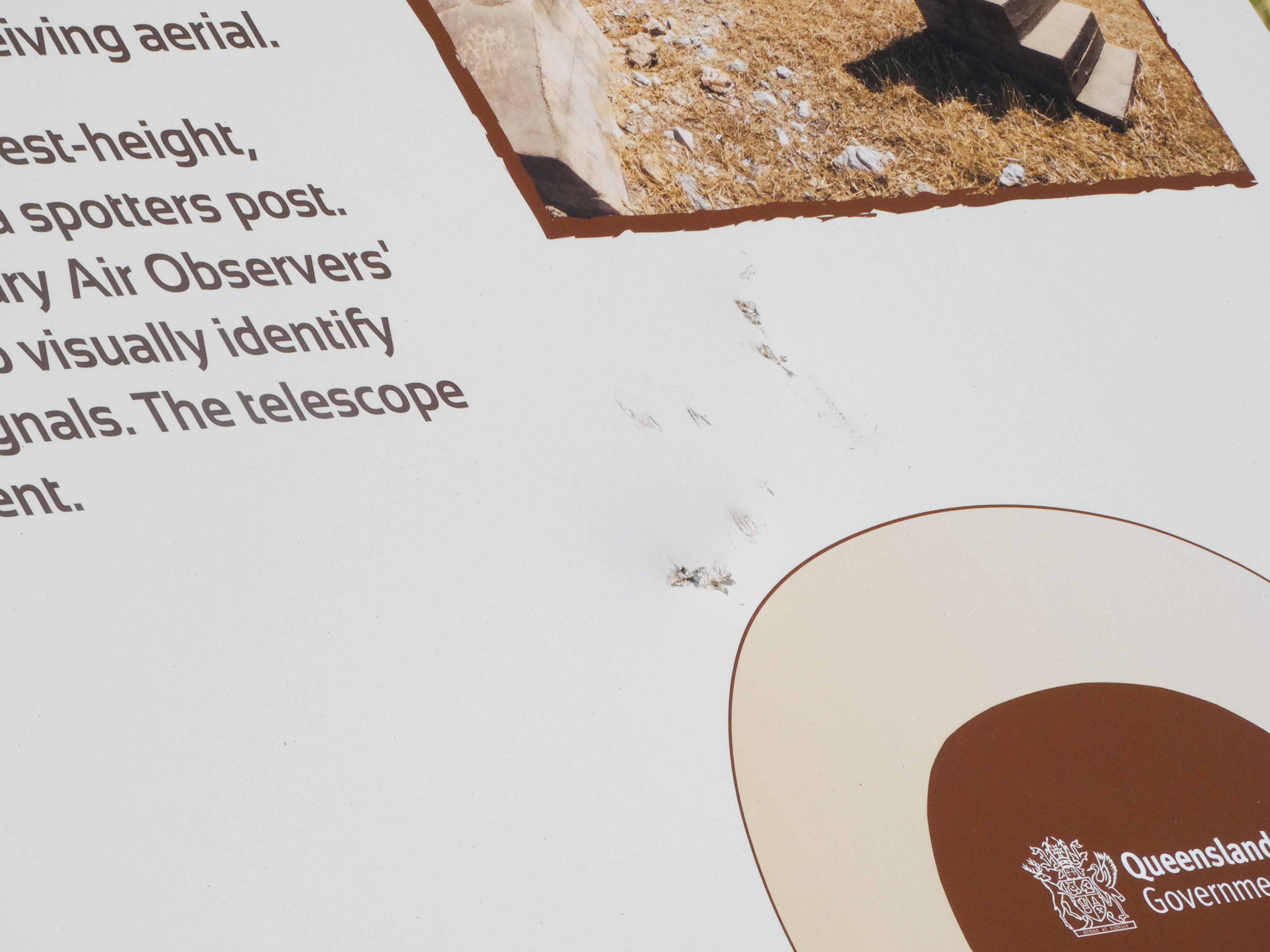
“The community can be assured that Home Hill Police will be thoroughly investigating the matter, and if any person has any information regarding the damage they are encouraged to contact Policelink.”
Information can be reported to Policelink on 131 444, Crime Stoppers on 1800 333 000 or Home Hill Police on 4782 1300, with emergencies to 000.
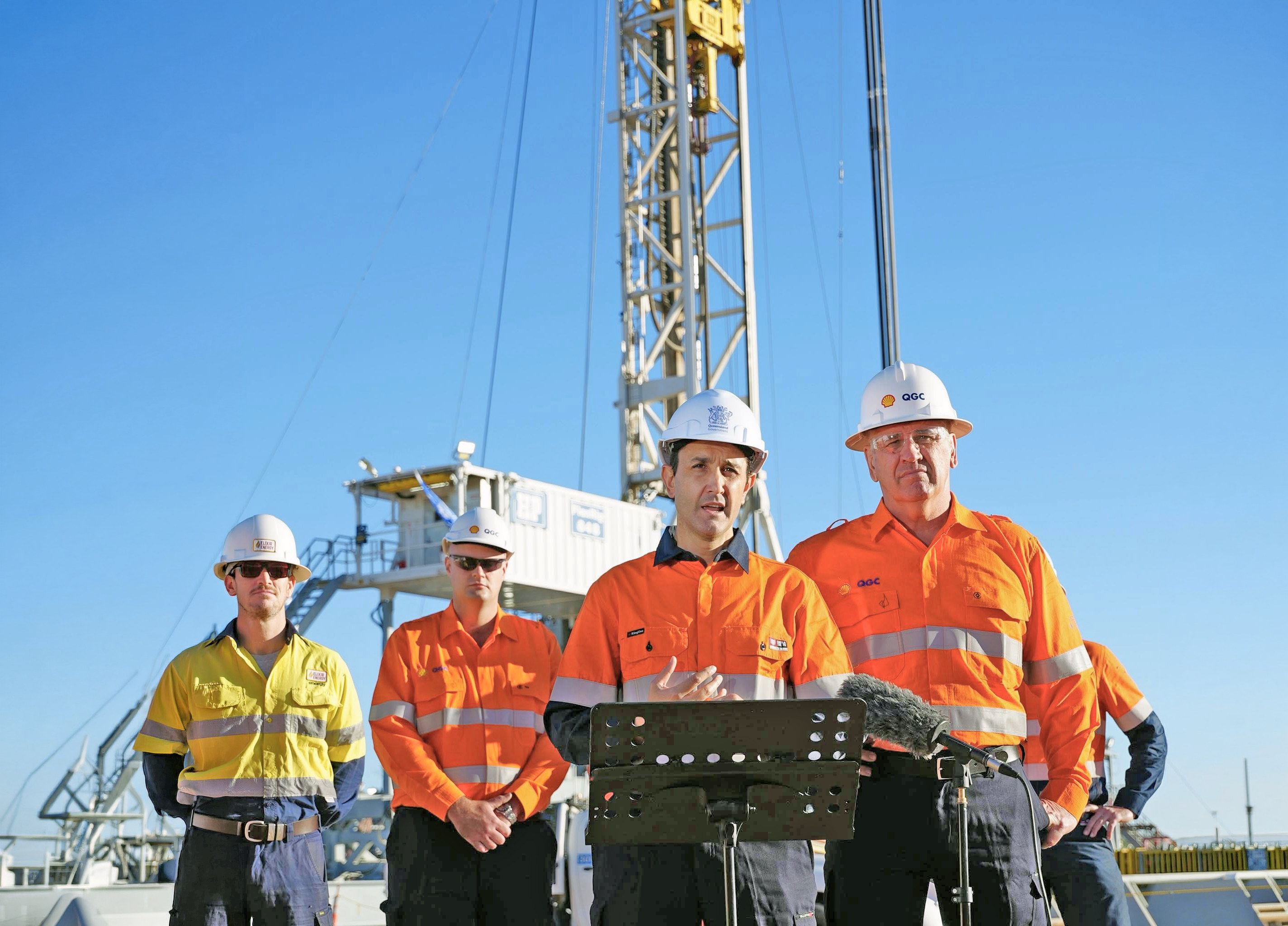
The Queensland Government has announced the Taroom Trough Development Plan, a strategic initiative designed to fast-track oil and gas production to bolster the nation’s long-term fuel reserves. Photo credit: David Crisafulli's Office
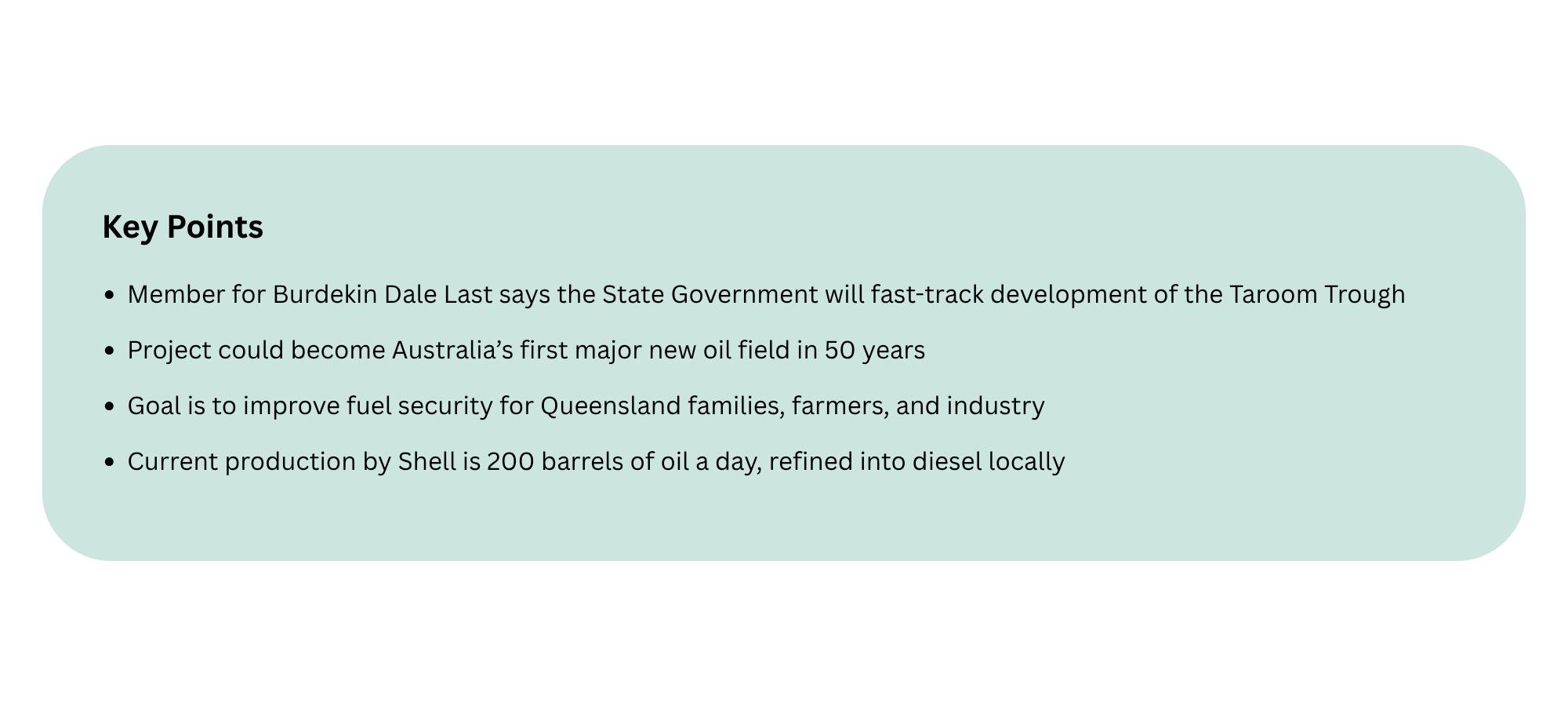
Member for Burdekin and Minister for Natural Resources and Mines, Dale Last, says "I’ll sign, you drill" as State moves to unlock first domestic oil field in 50 years.
Fuel security for Burdekin farmers and families has taken a significant step forward with the State Government moving to unlock Australia’s first major oil field in half a century.
The Queensland Government has announced the Taroom Trough Development Plan, a strategic initiative designed to fast-track oil and gas production to bolster the nation’s long-term fuel reserves.
Member for Burdekin and Minister for Natural Resources and Mines, Dale Last, said the project sends a clear message that Queensland is ready to capitalise on the resources "under our feet.”
“My message to the explorers is simple—I’ll sign, you drill,” Minister Last said.
“This could open up Australia’s first major oil province since the 1970s—we back the potential of the Taroom Trough and we’ll continue supporting it with approvals and certainty.”
The development is already yielding results, with Shell currently producing 200 barrels of high-quality crude oil a day. The supply is being refined into diesel at iOR’s Eromanga refinery—a critical resource for regional industries.
Premier David Crisafulli said domestic production is vital to ensuring Queenslanders are not left at the mercy of international markets.
“National fuel security is about drilling, refining and storing fuel locally for refuelling family cars, transporting food, and harvesting crops,” the Premier said.
“Never again should we be left without the ability to generate domestic fuel supply, this is a generational opportunity to ensure we’re not left at the end of a global supply chain.”
To accelerate the project, the State Government has called on the Federal Government to assess the Taroom Trough under the National Interest Fast-Track Assessment Pathway. This move aims to remove duplicated approvals and bring mass production to market sooner.
Deputy Premier Jarrod Bleijie confirmed he has directed the Queensland Coordinator-General to immediately prepare a Works Regulation to streamline infrastructure delivery, including roads and trunk services.
Deputy Premier Bleijie said that they’re, “Pulling all levers to unlock more domestic energy production.”
“Coordinated development in the Taroom Trough will increase domestic energy security, regional investment and job creation while providing certainty for approvals.”
Minister Last emphasized that while the State is moving quickly, federal cooperation is now the missing piece of the puzzle.
“We’ll play our part, but we’re asking the Federal Government to play their part under the National Interest Fast-Track Assessment Pathway,” he said.
Publishers Indemnity. Any individual or entity that places advertising, supplies copy material, or submits editorial content to Core Life Publishing agrees and undertakes to ensure that all such material:- Does not infringe upon any copyright, trademark, or other intellectual property rights;- Is free from any content that could be considered defamatory, libelous, or slanderous;- Does not infringe upon any rights related to privacy or breach of confidence;- Contains no obscene, indecent, or otherwise unlawful material;- Complies fully with the Trade Practices Act and all other applicable laws, regulations, or statutes.Furthermore, by submitting or placing such material, these individuals or entities agree to indemnify and hold harmless the publisher, Core Publishing and Events Pty Ltd, and/or its agents from and against any and all investigations, claims, demands, liabilities, damages, costs, or judgments arising out of or in connection with the material provided. All material is believed to be accurate at the time of printing and remains the copyright of Core Publishing and Events Pty Ltd.
© 2026 Life Publishing Group Pty Ltd.
