
Independently Owned, Locally Grown, Community Loved
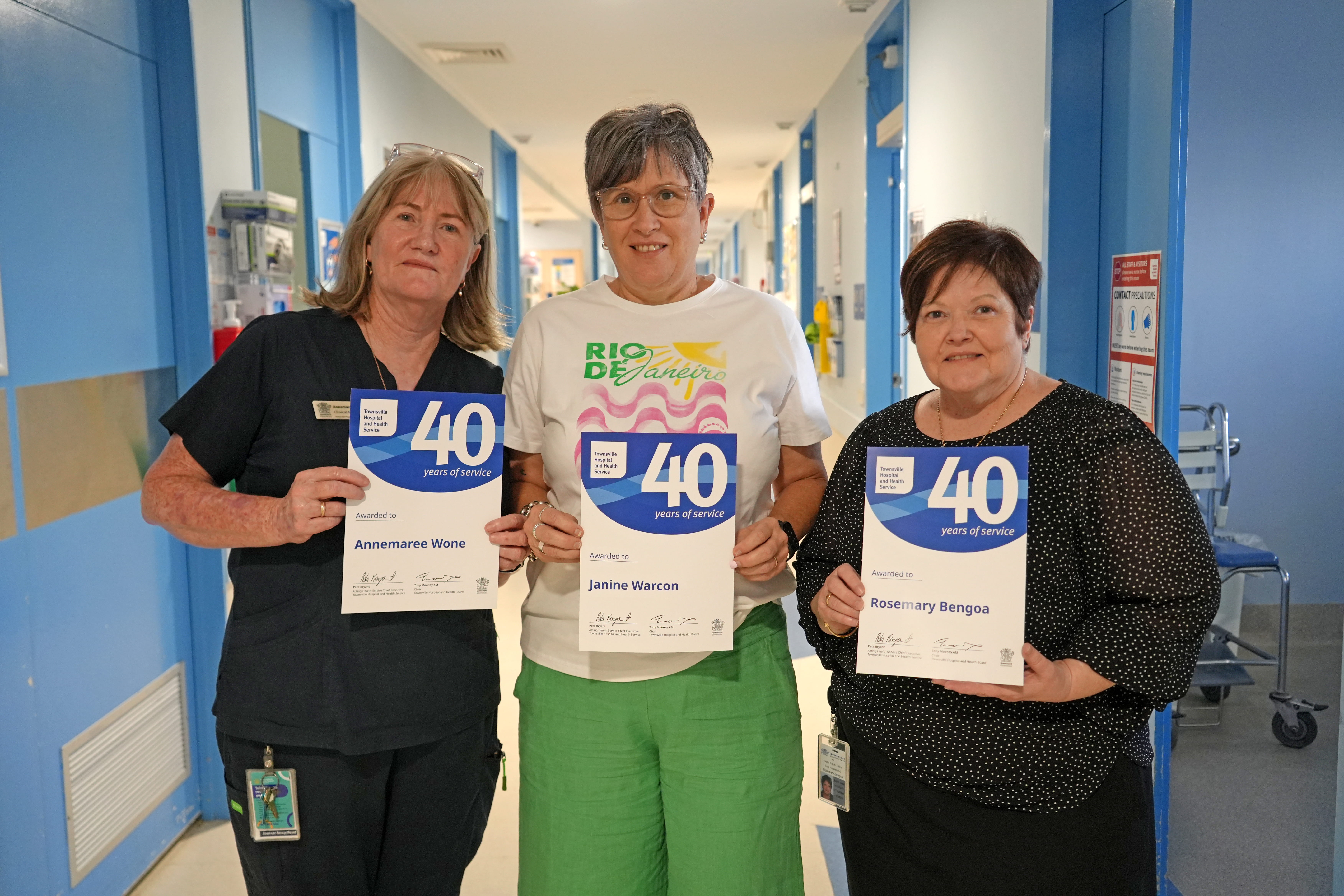
Three Burdekin hospital workers have clocked up 120 years of combined service to the Ayr and Home Hill communities. Rosemary Bengoa, Janine Warcon and Annemaree Wone have each reached 40 years of service, with the milestone recognised at local staff thank-you events. Rosemary began at Ayr Hospital in 1985 in the front office before moving into medical records, accounts payable, assets and finance. Janine started in the Home Hill Hospital kitchen and has since worked across kitchen, cleaning and laundry roles at both Ayr and Home Hill. She later became an orderly before moving into her current role as an assistant in nursing at Home Hill. Annemaree began her career at The Prince Charles Hospital in Brisbane, working as an enrolled nurse for four years before completing her registered nurse training in Townsville. She returned to the Burdekin after the birth of her first child and now works across the dialysis unit and emergency department at Ayr. The three staff members said their connection to the community, colleagues and variety of work had kept them in the health system for four decades. “Your work colleagues and the friendships you make along the way keep you in the role,” Rosemary said. For Janine, working in her own community and caring for patients has been a key part of her career. “We’ve had some funny moments; just the other night one patient was disco dancing in the hallway with me,” she said. Annemaree said working across different areas had kept her career varied. “I work in dialysis, sometimes in the emergency department, and sometimes on the ward, and because I have always worked across multiple areas, I’ve never felt stuck in one place,” she said. The breadth of responsibilities is a common feature of working in rural hospitals, Ms Wone said. “You need to know lots of different things when you work in a rural or remote hospital setting, so we are very busy,” she said. “But even with how much we have all achieved, I can’t believe it’s been 40 years; it feels like it happened overnight.” CAPTION: Rosemary Bengoa, Janine Warcon and Annemaree Wone have each reached 40 years of service, with the milestone recognised at local staff thank-you events. Photo supplied
Read the full story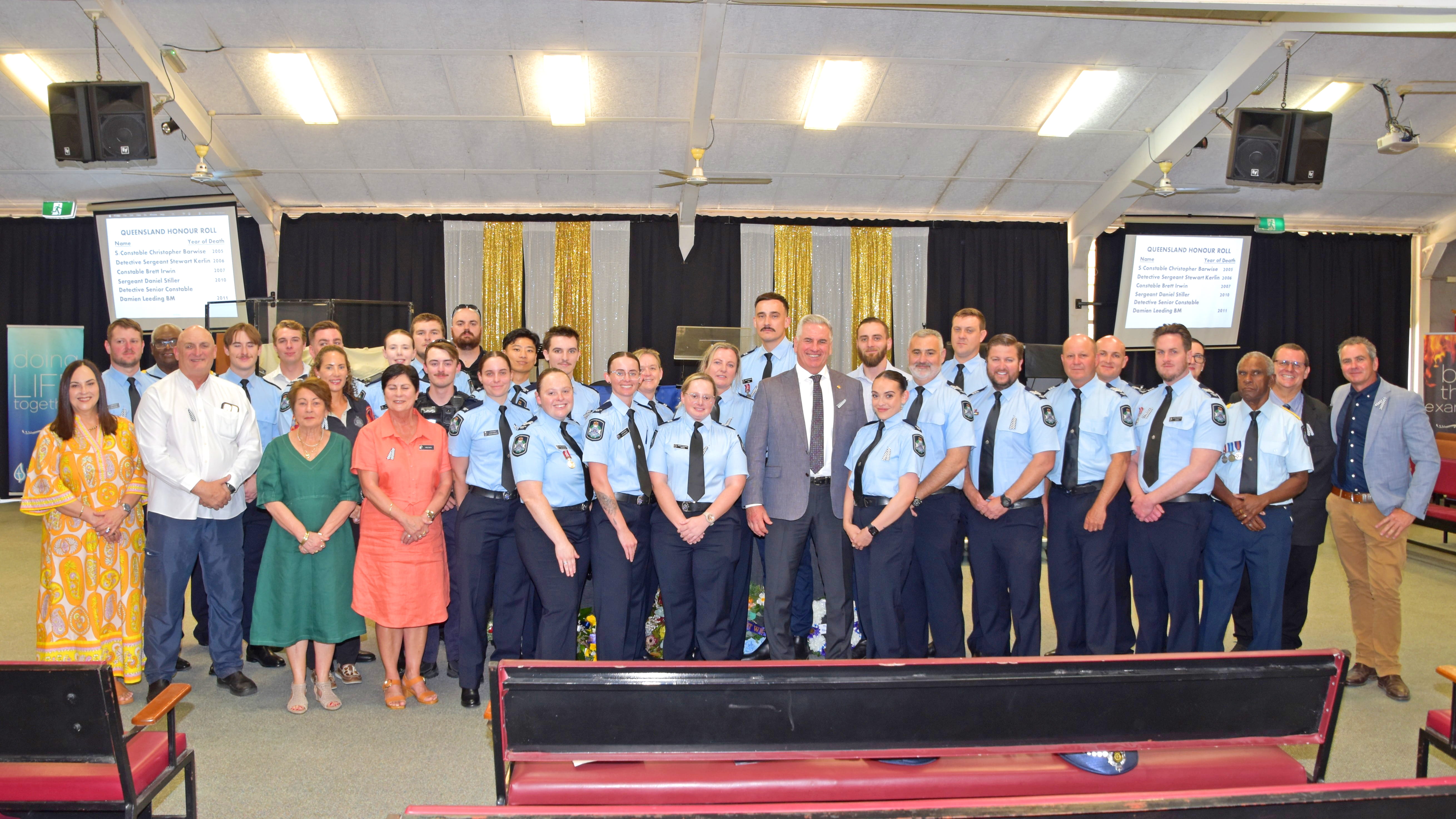
Burdekin police, dignitaries and community groups gathered Tuesday morning to honour officers killed in the line of duty. Photo: David CooperBurdekin community members, local dignitaries, and police gathered at Ayr's Burdekin Community Church on 29th September to commemorate National Police Remembrance Day. The solemn service honoured officers who made the ultimate sacrifice in the line of duty, featuring a wreath-laying ceremony and a reading of the Roll of Honour.Read more here: www.burdekinlife.com/article/burdekin-honours-fallen-officers-on-remembrance-day
Read the full story
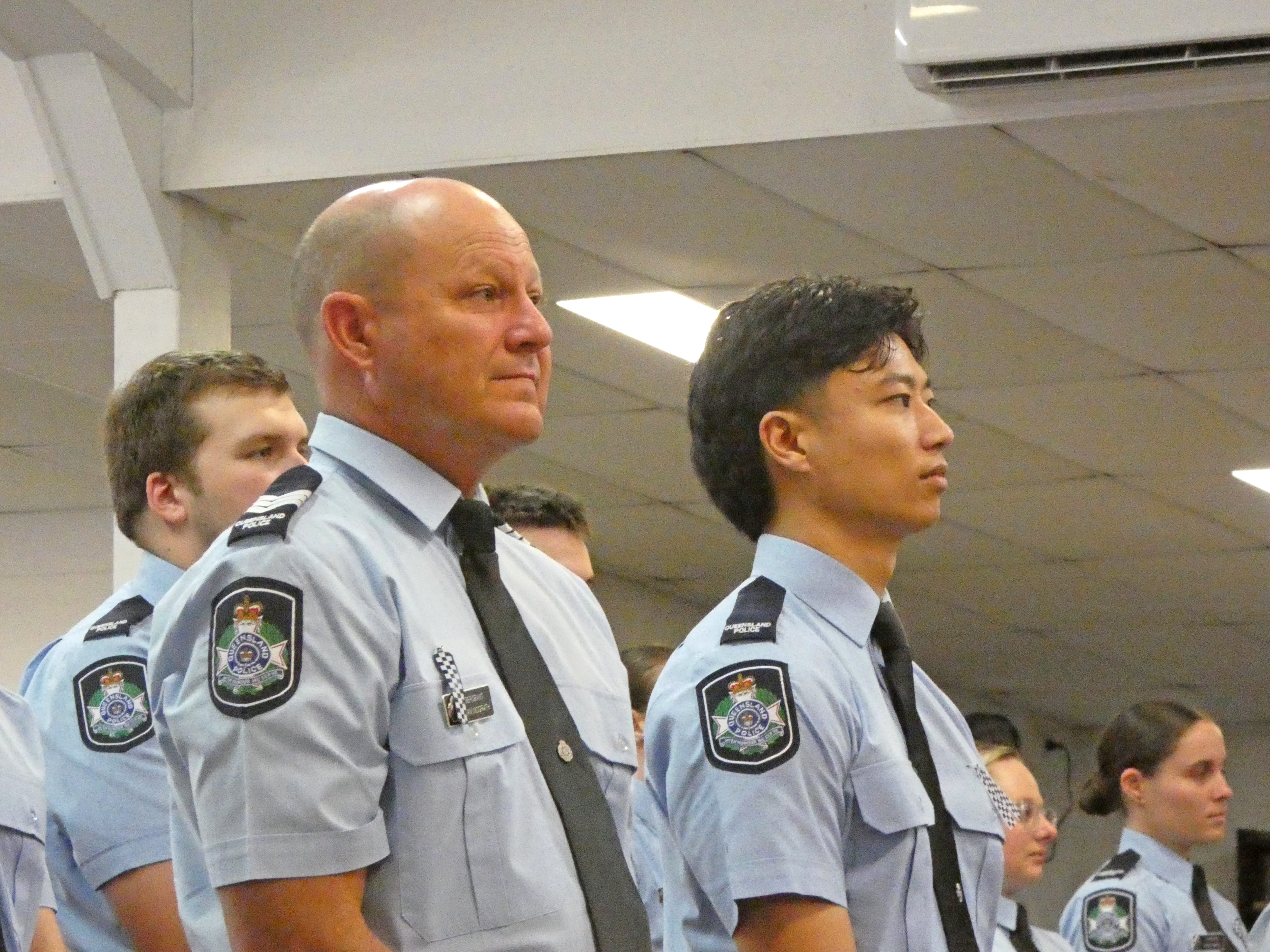
Burdekin police, dignitaries and community groups gathered on Tuesday morning to honour officers killed in the line of duty. Held at the Burdekin Community Church in Ayr, the service formed part of National Police Remembrance Day, observed each year on 29th September. Pastor Peter Holmes, who led the service, said it was a chance to pay tribute to the bravery and service of the fallen. “Someone has to protect those who cannot protect themselves. Someone has to step into the disorder and work to restore order—and that is one of the responsibilities entrusted to our police,” he said. “Today, we honour those who stood. Some stood in circumstances that ultimately cost them their lives, and this day each year ensures that their courage will never be forgotten.” A Police Commissioner’s Address was delivered by Acting Inspector Megan Benson before local officers read the Roll of Honour, commemorating police officers killed in the line of duty. Officers then lit memorial candles, before community groups joined police and dignitaries in laying wreaths. Among dignitaries were Burdekin Shire Council Mayor Pierina Dalle Cort and Member for Burdekin Dale Last, who called it a “privilege” to join local police in their commemorations. “As a former police officer, National Police Remembrance Day is an incredibly important opportunity to remember those officers who lost their lives while serving their community and to show our support to those who continue to keep our communities safe today,” Mr Last said. “Small regional towns like the Burdekin mean our police officers become involved in a variety of facets in our community and it is part of what makes these roles in our small communities so unique.” “It also means that chances to stand with our men and women in blue should not be overlooked.” A morning tea was held in the church hall following the service. CAPTIONS: 1—Burdekin police, dignitaries and community groups gathered Tuesday morning to honour officers killed in the line of duty. 2—Pastor Peter Holmes, who led the service, said it was a chance to pay tribute to the bravery and service of the fallen. 3—Held at the Burdekin Community Church in Ayr, the service formed part of National Police Remembrance Day, observed each year on 29th September. 4—Mayor Pierina Dalle Cort and Deputy Mayor Max Musumeci laid a wreath on behalf of Burdekin Shire Council 5—Among dignitaries was Member for Burdekin Dale Last 6—Local officers read the Roll of Honour, commemorating police officers killed in the line of duty 7—Liaison Officers light memorial candles 8—Senior Sergeant Lisa Shields addresses the audience 9—Community groups joined police and dignitaries in laying wreaths Photos: Jacob Casha
Read the full story
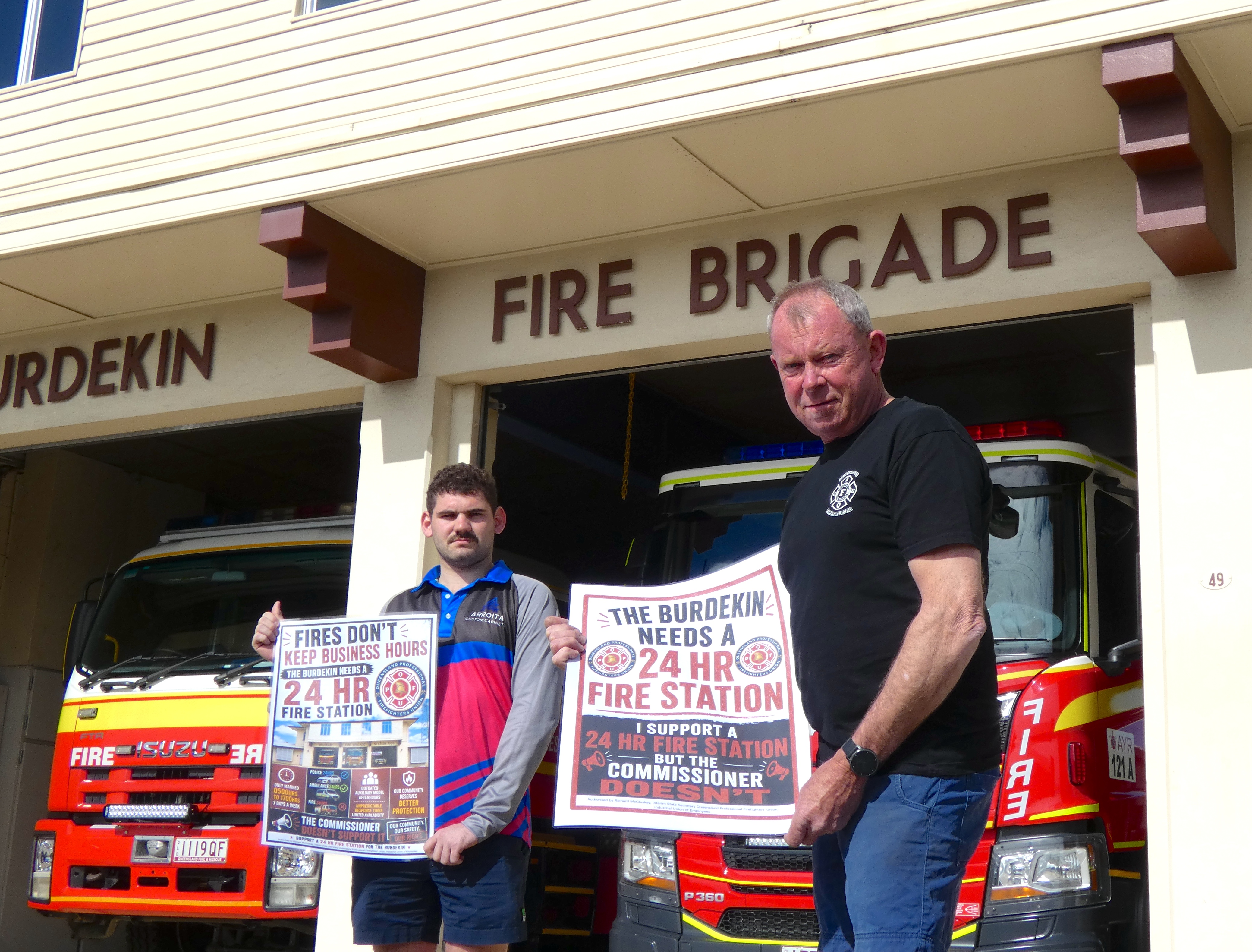
Two local auxiliary firefighters make their stance clear outside Ayr Fire and Rescue’s soon to be replaced Soper Street station. Photo credit: Jacob Casha.
By Jacob Casha
When Queensland Fire Department (QFD) officials signed off on 24-hour station designs for Ayr in January, local firefighters thought their years of advocacy and sacrifice had finally paid dividends.
Those plans went up in smoke when the Department instead decided to retain current staffing models in the district, leaving after-hours response on the shoulders of burnt-out permanent officers and an auxiliary workforce that is evaporating by the year.
“It's sickening,” Queensland Professional Fire Fighters Union Townsville Country Branch Secretary Peter Marten said.
“The community is not aware that if a fire happened tonight, or someone was trapped in a car tonight, they might have to wait 40 minutes for the first fire truck to turn up.
“I just don't understand how [the Department] could be willing to take that risk.”
Queensland Professional Firefighters Union (QPFU) officials have slammed the Queensland Fire Department’s decision to abandon plans for a long-awaited 24-hour fire station in Ayr.
The decision goes against years of advocacy from the Union, which raised concerns that all-time lows in auxiliary numbers have made the current mixed staffing model in Ayr unsustainable and dangerous.
Ayr Fire and Rescue (AFR) representatives were informed of the Department's decision just months after then QFD Assistant Commissioner for the Northern Region, Michael O’Neil, signed off on designs for an FS6 station—a 24/7 permanently staffed facility—to replace its current Soper Street facility.
Union representatives said Mr O’Neil’s signature followed 10 months of consultation between the Department and AFR, during which QFD Deputy Commissioner at the time, Kevin Walsh, also reportedly pledged to submit FS6 station plans with increased staff to upcoming estimates.
At the estimates last month, Mr Walsh and QFR Commissioner Steve Smith instead revealed that while the new station will still be built, it will operate under an FS4 daytime-only staffing model, deeming current arrangements sufficient for service delivery in the region.
“We look at a whole range of factors such as … demographics, urban sprawl, frequency of responses, types of responses and response times,” said Mr Walsh.
“Through that process, it was determined that an FS4 station matches the current service delivery … [with the] capacity for future expansion should the operational service change over time.”
Union officials argued the department’s assessment ignored severe operational realities on the ground, pointing to a collapsing auxiliary workforce and dangerous after-hours response delays.
The station currently pairs rostered daytime permanent staff with on-call auxiliaries for overnight coverage, making it the only emergency service in the Burdekin without a 24/7 operation.
QPFU Townsville Country Branch Secretary Peter Marten said permanent firefighters had been hiding the system’s blemishes for years, with permanent AFR firefighters forced to go on-call after hours to make up for a depleted auxiliary workforce.
“For years, a broken system has been propped up by a permanent workforce who have very clearly told [the Department] that it cannot continue,” he said.
“They're not only covering Ayr now; they cover Giru, and they also had to start covering Home Hill … and a large group of them have become burnt out.”
Mr Marten said the new station in Ayr, funded through the 2025/26 State Budget, was an opportunity for a clean slate.
“There is an opportunity with the new station to fix the problem going forward, but they’ve turned a blind eye to it,” he said.
“If it's not going to happen now, it's probably not going to happen for quite a few years—and and the auxiliary models are going to be broken for all those years. Sooner or later, someone's going to get seriously hurt because of that.”
Mr Marten said the permanent staff are now off-call following the Department’s decision, leaving after-hours response solely down to eight active auxiliary firefighters across the entire Burdekin shire.
Auxiliary Captain Noel Mulcahy said Ayr’s roster alone had plummeted from 14 active members to four over roughly 20 years, three of whom are not qualified to operate pump equipment due to ‘Grade 1’ status.
As a result, Mr Mulcahy said after-hours calls without permanent assistance can face over 30-minute delays waiting for backup from Home Hill, or up to an hour when appliances must be dispatched from Townsville. He called the delay a matter of “life or death.”
He also said low numbers have halted interior search-and-rescue operations altogether.
“If we attended a structure fire and there were people reported inside, I wouldn't commit a crew to go in for search-and-rescue—I haven't got the numbers to go in and save them if something happens,” he said.
“I don't want to stand in front of a coroner and try to explain why I sent them in with no back-up.”
A QFD spokesperson acknowledged the drop in auxiliary numbers, but defended the FS4 decision in a statement, arguing that infrastructure planning is informed by current and future demand.
The Department did not directly respond to questions about what documents Mr O’Neil signed in January, what authority that sign-off carried, or what occurred between the approval of the FS6 designs and the subsequent decision to proceed with an FS4 station.
The spokesperson did reveal that Queensland Fire and Rescue had “undertaken targeted local auxiliary recruitment activities over the past 18 months to support continued service delivery in the area.”
However, AFR statistics show a local 18-month drive launched in 2023 yielded nine applicants, one of whom remains in the role today. Union members cited the ultimately unsuccessful drive as proof that a 24/7 station was the last remaining option.
Burdekin Shire Council Mayor Pierina Dalle Cort said the region deserves “nothing less.”
“My issue is the fact that it’s been promised, and that 90 per cent of our community would not even realise that, at the present time, we don’t even have a 24/7 manned fire station in the district,” she said.
“Considering the size of our district and our population, having [a new station] built that is lesser than what we have is unacceptable.”
.jpg)
OP-ED by Federal Member For Dawson Andrew Willcox
Every Australian family sitting around the kitchen table knows the reality, our standard of living is under severe pressure. Since the Albanese Labor government took office, Australians have experienced some of the steepest declines in living standards in the developed world. With national debt fast approaching $1 trillion and structural budget deficits locked in for a decade, Labor is spending more and taxing more, while households are forced to get by with less.
The challenge facing our nation is not just identifying these economic headwinds; it is putting forward a clear, constructive alternative. That’s why I’m often asked, what a Coalition government would do differently to steer the country back on track. The answer lies in structural economic reform that rewards hard work, protects aspiration, and respects the money you earn.
At the heart of our plan is a landmark policy designed to end secret tax hikes, the Tax Back Guarantee.
Under the current system, when your wages rise to keep pace with inflation, you can easily be pushed into a higher tax bracket. This process, known as "bracket creep," allows the government to collect higher tax revenues every year without ever having to pass a law. It penalises workers for simply trying to keep up with the rising cost of groceries, rent, and power bills.
It equally penalises businesses, too. Employers feel a genuine responsibility to increase wages so their workers can afford to live, yet these rising expenses drive up business overheads at a time when everyone is struggling to swim against a tide of high inflation fuelled by the Albanese Labor Government.
The Coalition will fix this by permanently indexing income tax thresholds to inflation. Starting in the 2028-29 financial year, we will index the bottom two income tax thresholds, a measure that will protect approximately 85 per cent of Australian income earners.
By year three, that relief would climb to $1,200 a year: providing a substantial, ongoing boost to household budgets when families need it most. From the 2031-32 financial year, we will extend this indexation to the top two thresholds, ensuring that no Australian is penalised with higher taxes simply because of inflation.
This is a fair, simple, and honest reform. It forces the government to live within its means rather than relying on inflation to balance the budget.
True economic recovery also requires us to scrap this new suite of toxic taxes that punish success and stifle investment. The Albanese Labor Government's approach is a direct assault on aspiration. It imposes higher taxes on housing, savings, investments, and small businesses.
This includes a 30 per cent tax rate on discretionary trusts, which acts as an inheritance tax by stealth on the family structures everyday Australians use to pass assets to their children.
This is why a Coalition government will repeal this entire suite of toxic taxes. We will reverse changes to negative gearing that restrict housing supply, undo capital gains tax hikes that discourage investment, and protect small businesses from punitive tax structures.
Furthermore, we will abolish the Safeguard Mechanism, removing a regulatory burden that inflates building material costs and drives local manufacturing offshore.
It is a basic economic reality that when you tax something, you get less of it.
If you tax savings, housing, investment, and small business, you get less of all of them. The Coalition wants more aspiration, not less, which is why we will back the hard-working Australians who want to get ahead.
By cutting these penalties on success, we are offering a positive, practical plan to restore home ownership, lower national debt, and secure Australia's economic future.
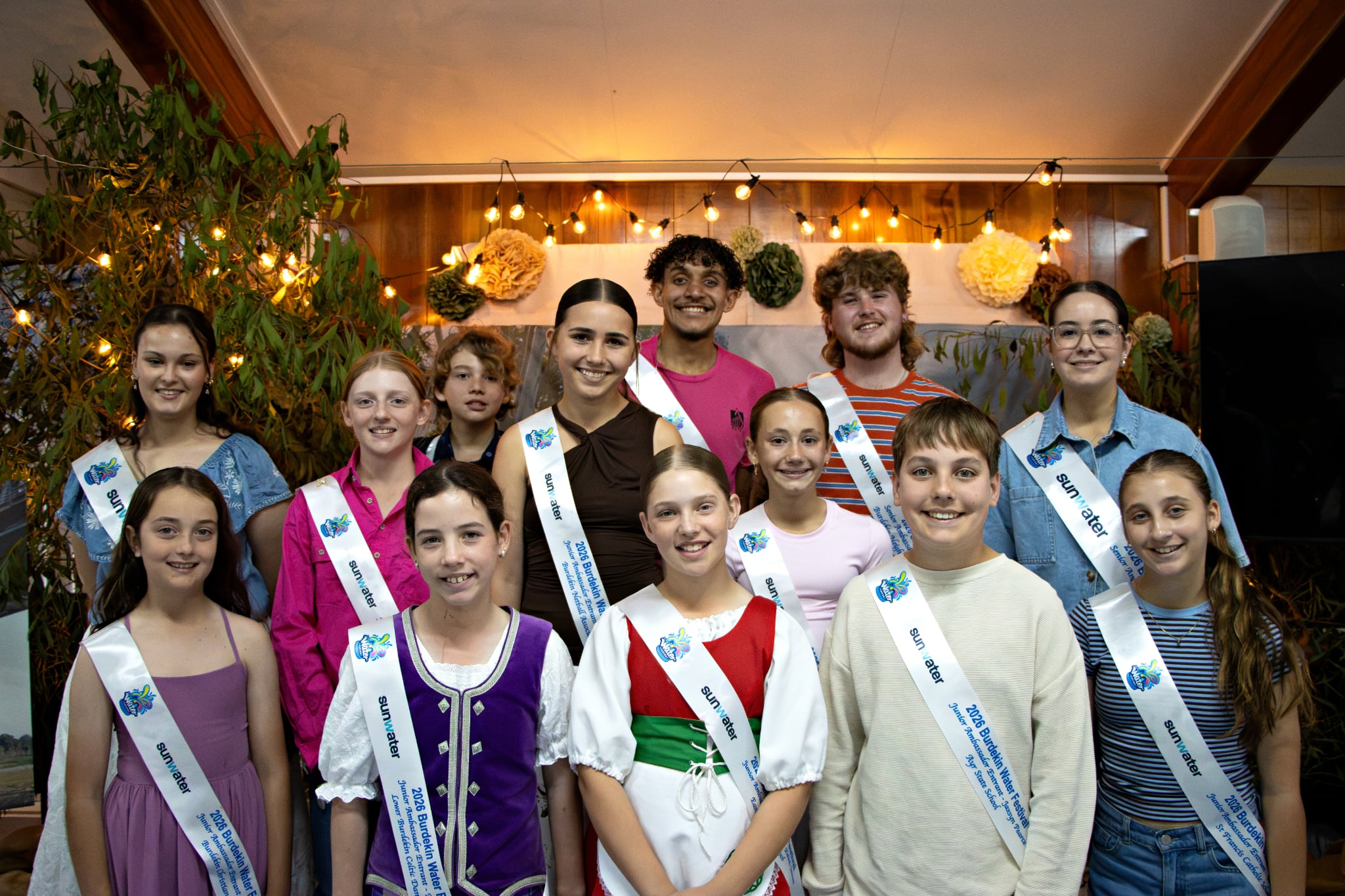
All photos courtesy of Shay Kratzmann Photography.
Burdekin Water Festival Junior and Senior Ambassadors (back) Olivia Pabone (Feed Me Food), Judah Donald (Burdekin Christian College), Blaize Palmer (Burdekin Motors), Zylon Dallecort (Burdekin Neighbourhood Centre & CORES QLD), (middle) Amara Boccalatte (BT Farms), Lillea Levitt (Burdekin Netball Association), Evie Totorica (Ayr Motorcycle Club), Ella Pirrone (Rotary Club of Ayr), (front) Mia Bojack (Burdekin Christian College), Ashlyn Pearce (Lower Burdekin Celtic Dance Association), Edith Innes (East Ayr State School) Jaxsyn Pearce (Ayr State School) and Aria Fiamingo (St Francis Catholic School)
The 2026 Burdekin Water Festival Junior and Senior Ambassadors traded their usual festival duties for an afternoon of tea, treats and treasured conversations when they visited Ozcare Ayr for a special high tea.
The Ambassadors played an active role throughout the morning, helping prepare and plate food, greeting residents, serving refreshments and, most importantly, sharing their individual talents and passions with the Ozcare community.
While the visit is a much-anticipated highlight on the Ambassador calendar, it also forms an important part of the judging process, providing an opportunity for the Ambassadors to demonstrate how they work together, interact with residents and staff, and share their interests with others.
The group brought an impressive variety of talents to the afternoon, with Amara demonstrating how to toss a cast net, Aria and Evie sharing their singing talents, and Ashlyn and Edith showcasing their Highland dancing skills.
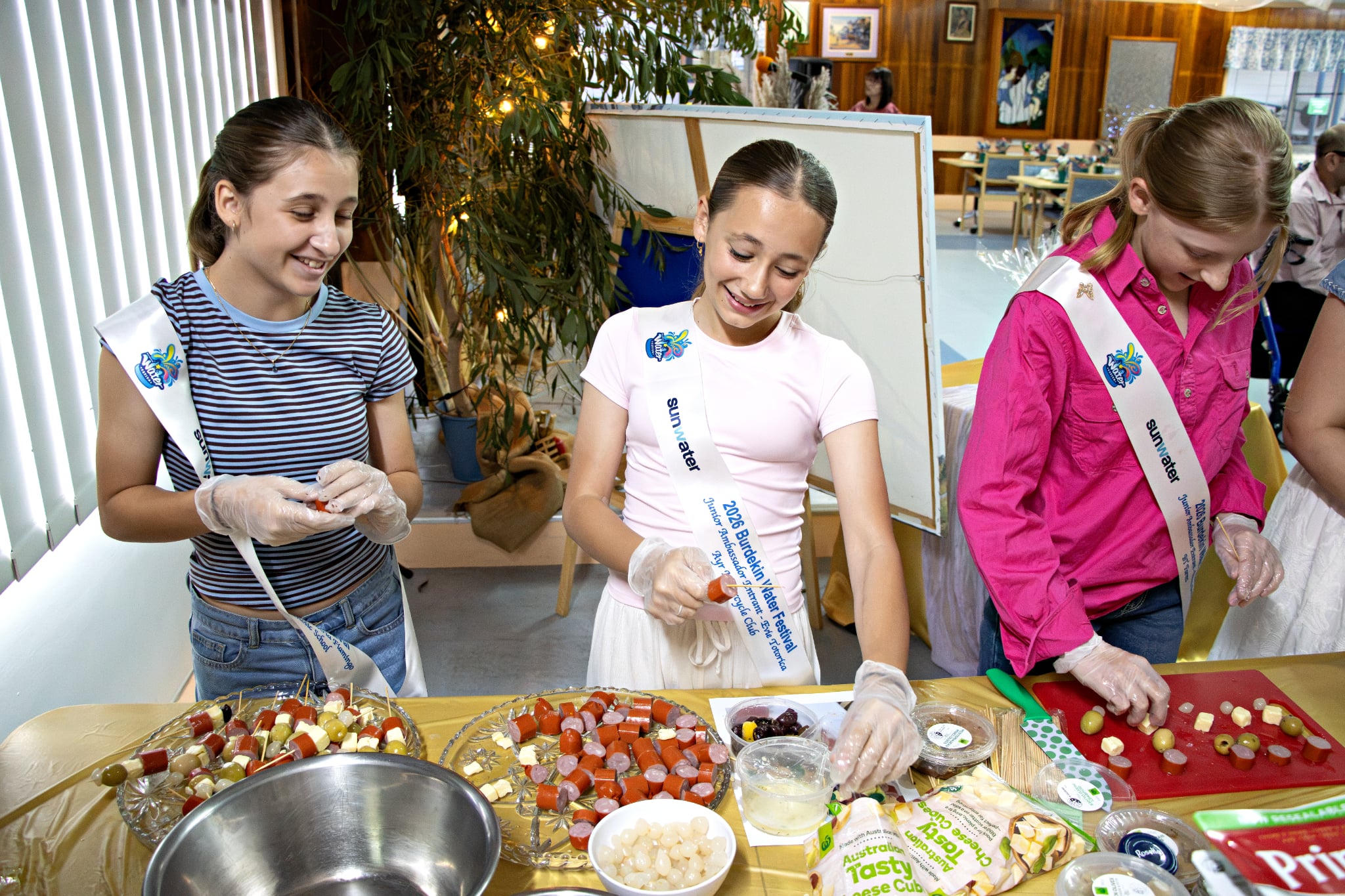
Jaxsyn gave residents a glimpse into his passion for motorbike riding through a video, while Judah shared a video tour of the Burdekin. Lillea got creative by teaching residents how to draw flowers, while Mia shared her love of horses through footage of her riding and jumping.
Blaize even set himself the ambitious challenge of completing 50 push-ups, with residents eagerly counting along and encouraging him every step of the way. Although he fell just short at 44 push-ups, the enthusiastic support from the room was enough to make the challenge a success.
Ella spoke about her love of baking and prepared brownies for residents to enjoy, while Olivia brought some extra energy to the morning by teaching the other Ambassadors the ‘Hoedown Showdown’ from Hannah Montana, eventually getting the group up and dancing.
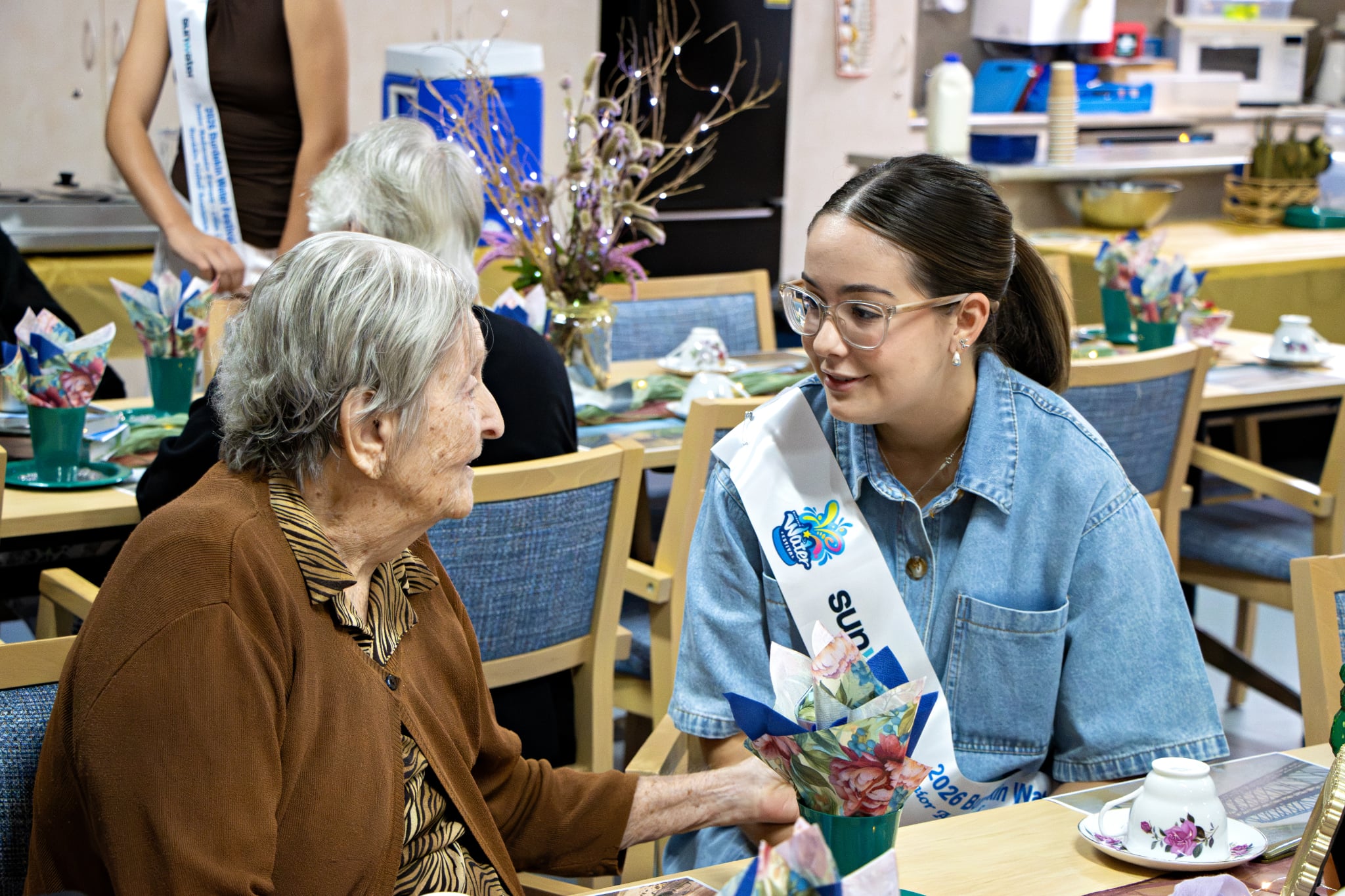
Zylon rounded out the entertainment by playing guitar and singing for the residents.
The wonderful atmosphere was made even more special thanks to Ozcare’s Kristy, Amanda and Mel, who once again went above and beyond to transform the hall for the occasion.
This year’s decorations celebrated the Burdekin’s iconic landscape and lifestyle, with photographs of local landmarks including the Burdekin Bridge, sugar cane flowers, blooms collected by Mel from along the Burdekin River and handmade cupcakes crafted by Amanda and decorated with prickly pear, cowboy hats, gum leaves and cowboy boots.
Kristy welcomed residents, Ambassadors and their invited guests to the morning, highlighting the unique Burdekin lifestyle shaped by the Burdekin River and tying the celebration into this year’s festival theme, ‘River Country’.
The beautifully decorated hall was soon filled with conversation as residents and Ambassadors enjoyed a feast of freshly made sandwiches, sweets, cakes, quiche, sausage rolls, spring rolls and more.
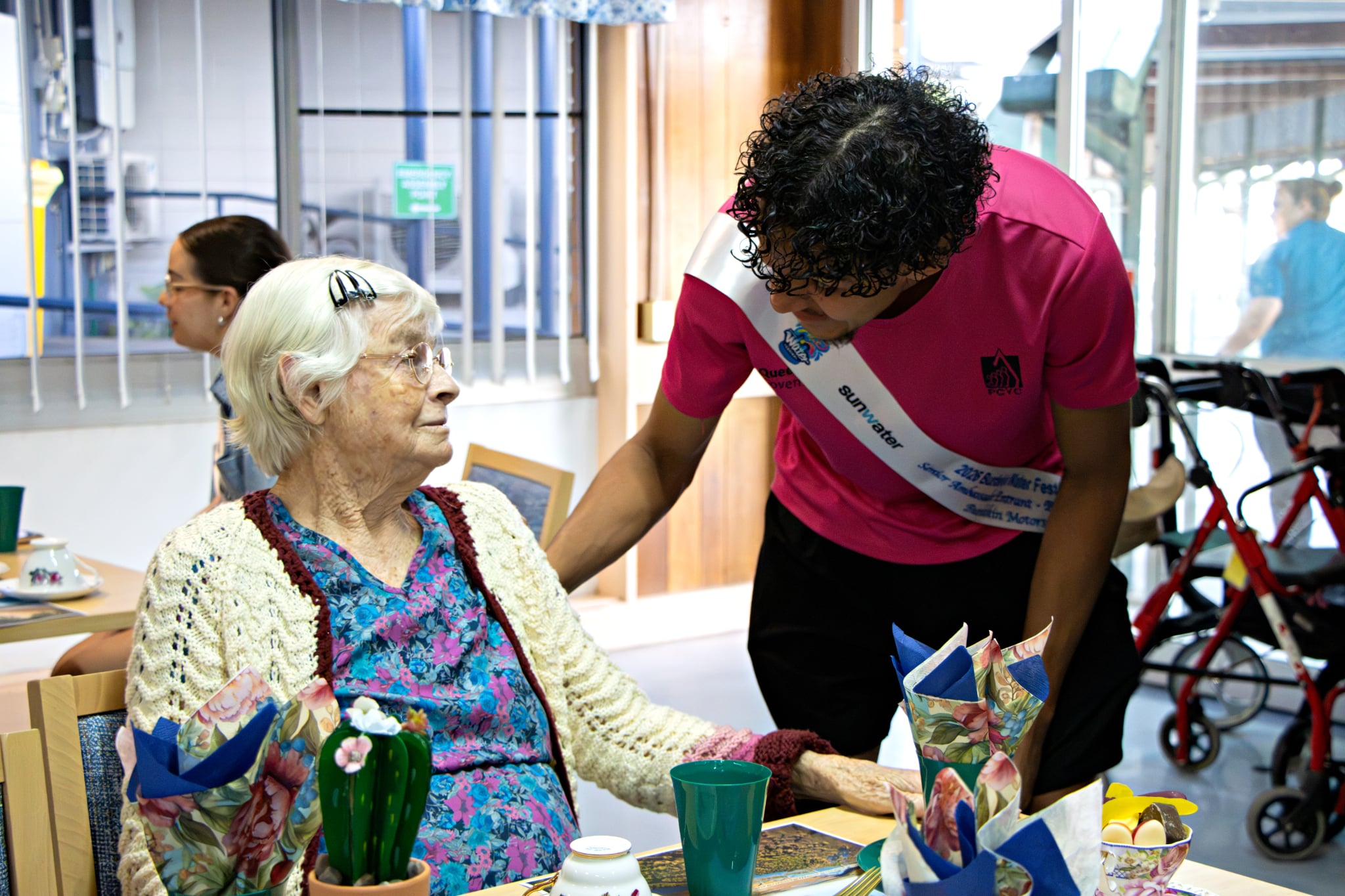
With the room buzzing with chatter and laughter, the morning once again highlighted the special connection the Water Festival Ambassadors have built with the region’s aged care community.
The Burdekin Water Festival Committee extended its thanks to Kristy and the Ozcare Ayr team for their ongoing efforts in hosting the Ambassadors, as well as Sunwater for its continued sponsorship of the Ambassador Program.
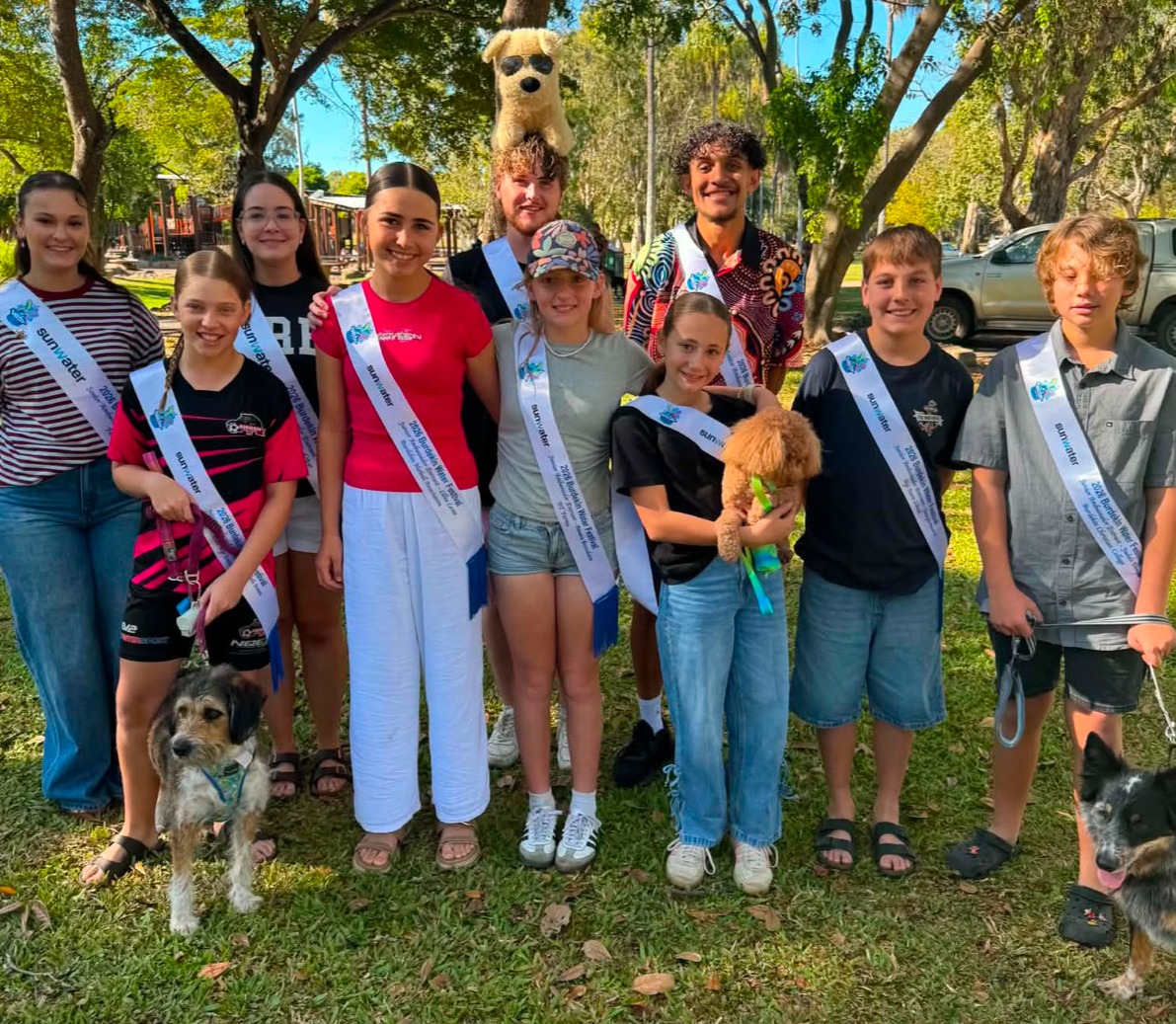
BWF Ambassadors (back) Olivia Pavone (Feed Me Food), Ella Pirrone (Rotary Club of Ayr), Zylon Dallecort (Burdekin Neighbourhood Centre & CORES QLD), Blaize Palmer (Burdekin Motors), (front) Edith Innes (East Ayr State School), Lillea Levitt (Burdekin Netball Association), Amara Boccalatte (BT Farms), Evie Totorica (Ayr Motorcycle Club), Jaxsyn Pearce (Ayr State School), and Judah Donald (Burdekin Christian College). Photo credit: Kari Ravizza
Over the weekend, Plantation Park became a hub of happiness as the community came together, four-legged members and all, in support of Feed Me Food Burdekin Water Festival (BWF) Senior Ambassador, Olivia Pavone’s Dog Walk Fundraising Event!
On the morning of Saturday 8th August, approximately 30 to 40 people, and over 20 pups filled the popular park as Olivia’s fundraiser kicked off, all in support of Bowen Collinsville Pet Rescue; a cause close to her heart.
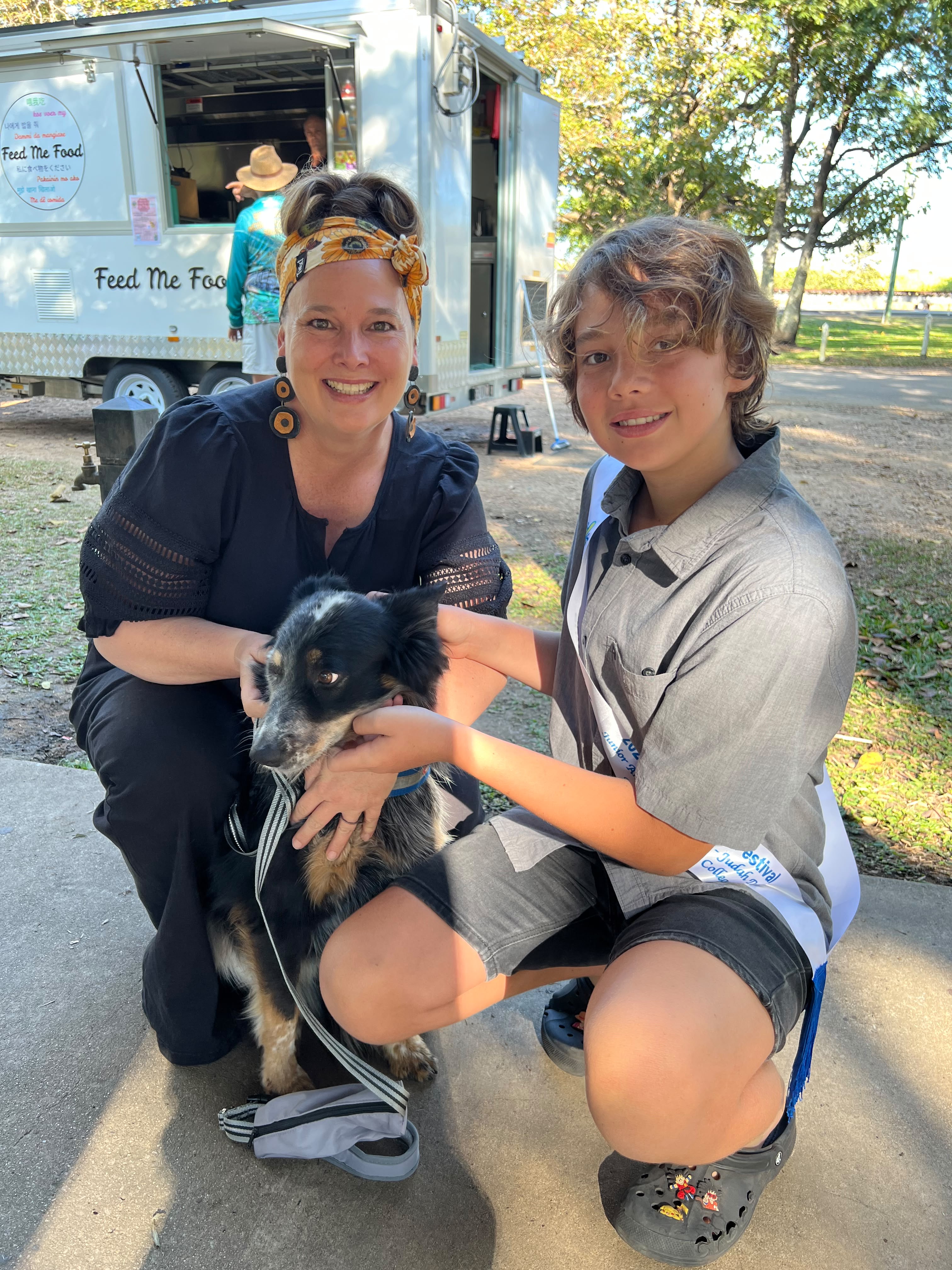
“I have always loved animals and the positive impact they can have on people of all ages,” said Olivia.
“Supporting BCPR with this event meant a lot to me because I was able to combine my love for animals with helping an organisation that does so much to support and care for them. BCPR were such an open, welcoming and loving organisation – it was really special to see everyone come together for the morning.”
Mel and Mario Pavone, Owners and Managers of Feed Me Food, could not have been happier with how the day ran, confirming the event raised over $560 to support the valuable work of Bowen Collinsville Pet Rescue.
“We fully supported Olivia’s choice to select Bowen Collinsville Pet Rescue, having experienced firsthand the incredible benefits a rescue dog can bring and recognising the importance of the work the organisation does,” Mel said.
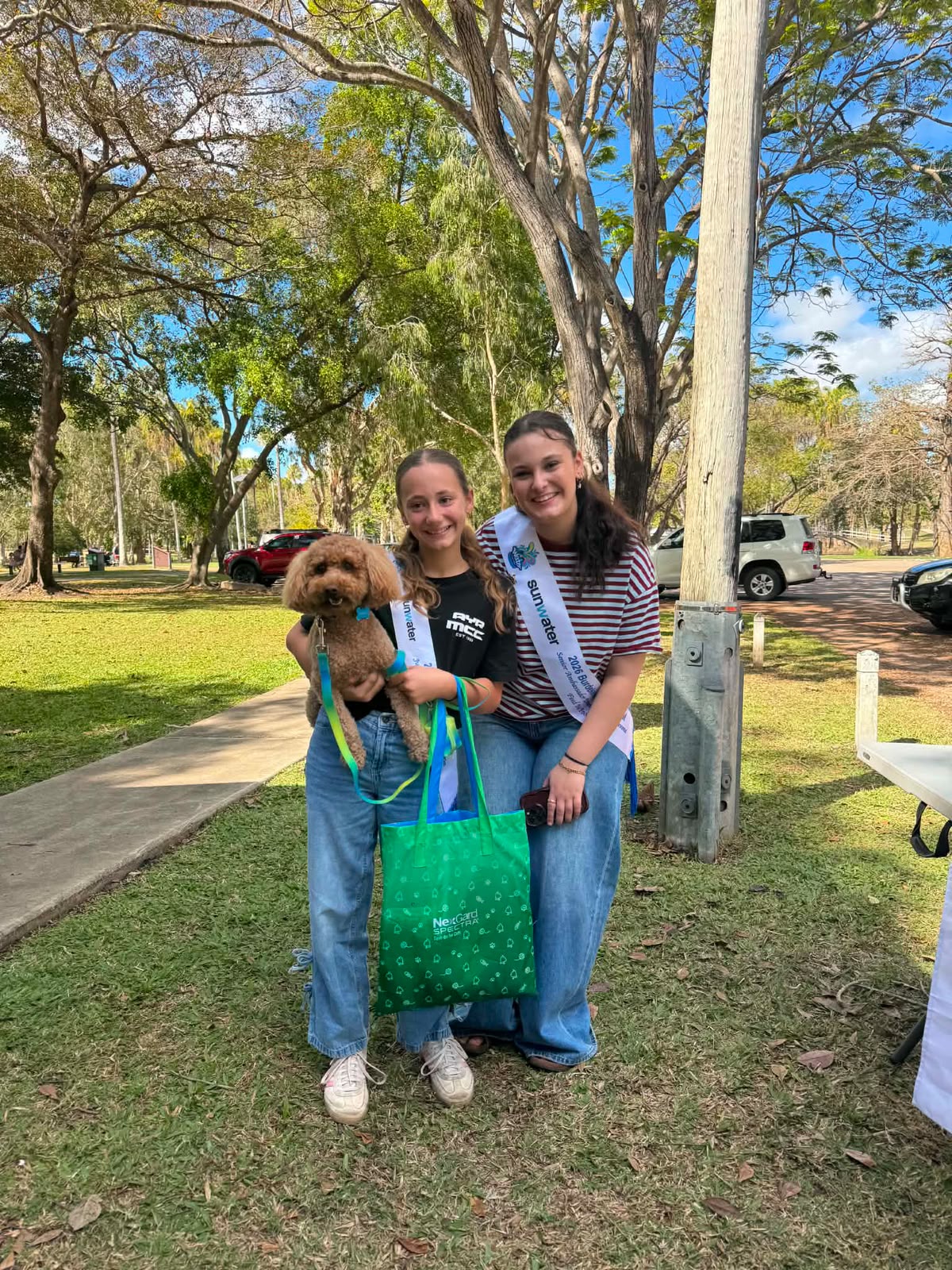
Burdekin Water Festival Ambassador Coordinator Kari Ravizza was in awe of the morning, noting that all the pups were well behaved and made for a lovely morning stroll through Plantation Park’s Juru Walk, followed by a delicious brunch catered by Feed Me Food.
“It was such a beautiful morning in the park and so lovely to see many of the community come out to support Olivia, Feed Me Food and the Bowen Collinsville Pet Rescue,” Kari enthused.
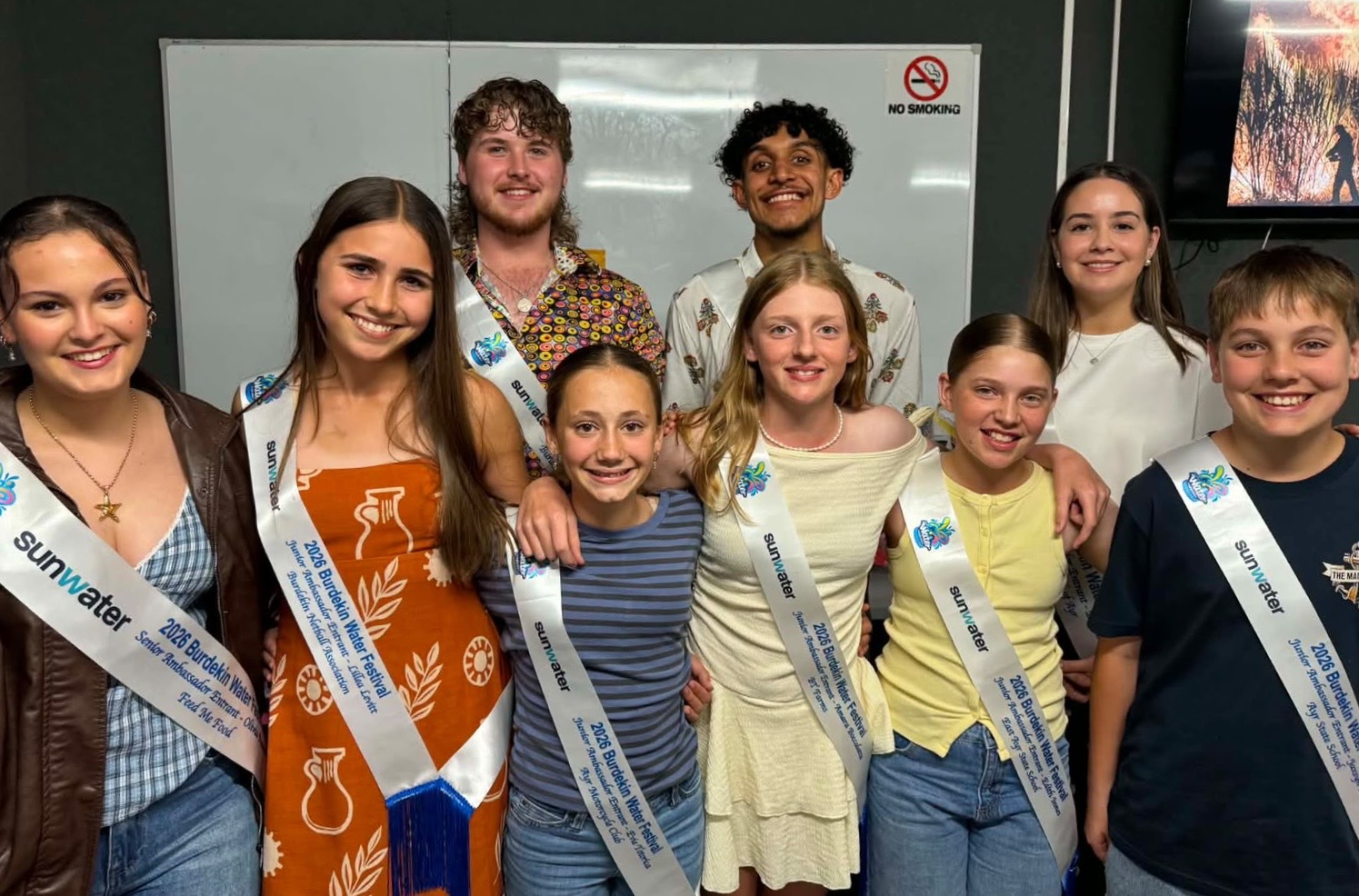
Burdekin Water Festival Junior and Senior Ambassadors (back) Zylon Dallecort (Burdekin Neighbourhood Centre and CORES QLD), Blaize Palmer (Burdekin Motors), Ella Pirrone (Rotary Club of Ayr), (front) Olivia Pavone (Feed Me Food), Lillea Levitt (Burdekin Netball Association), Evie Totorica (Ayr Motorcycle Club), Amara Boccalatte (BT Farms), Edith Innes (East Ayr State School) and Jaxsyn Pearce (Ayr State School). Photo credit: Kari Ravizza
Ayr’s community spirit was on full display on the evening of Friday 7th August as the Burdekin Junior Soccer Fields Hall came alive with laughter, friendly competition and a few celebratory bubbles in support of Rotary Club of Ayr’s Burdekin Water Festival Senior Ambassador Ella Pirrone.
Burdekin Water Festival Ambassador Coordinator Kari Ravizza said the sold-out event was a wonderful reflection of the community support behind Ella, with local businesses also getting behind the fundraiser by donating prizes for the evening.
“It was such a fun night, and Ella was overwhelmed with the support she received both from the community for attending and from local businesses supplying prizes for the lucky bingo winners!”
Over 120 family, friends and community members gathered to attend the Bingo & Bubbles fundraiser, with a packed evening of bingo, raffles, food and drinks to celebrate Ella’s journey to date as a Senior Ambassador and raise over $3,000 to support the fantastic work of the Rotary Club of Ayr.
“I was so overwhelmed and grateful with how many people turned up on the night – it was so nice to see the community come together – and the thought that they were all there to support me felt really special,” said Ella.
“Throughout my ambassador journey, Rotary Club of Ayr have always been there to help and support me. They are a very supportive community where nothing is ever too big or too small!”
Rotary Club of Ayr President John McVeigh said the club could not be prouder of its 2026 Senior Ambassador entrant, with Ella making a real effort to remain connected with the club throughout her Ambassador journey.
“The Rotary Club of Ayr has been incredibly proud to stand behind Ella as our Burdekin Water Festival Ambassador. She has represented our club with enthusiasm, maturity and genuine commitment, all while balancing her Ambassador duties with full-time study in primary education at JCU in Townsville,” John said.
“Her hard work in organising the Bingo & Bubbles fundraiser was evident on the night, and to see the hall filled with family, friends, bingo players and community supporters was wonderful. It was a real credit to Ella, her extended family and everyone who helped bring the evening together.
“As President, I felt very proud — not only of Ella, but of the way our club and the wider community came together to support her. For Ayr Rotary, it was deeply rewarding to see the community rally behind her, and we were delighted to be part of such a positive and successful event.”
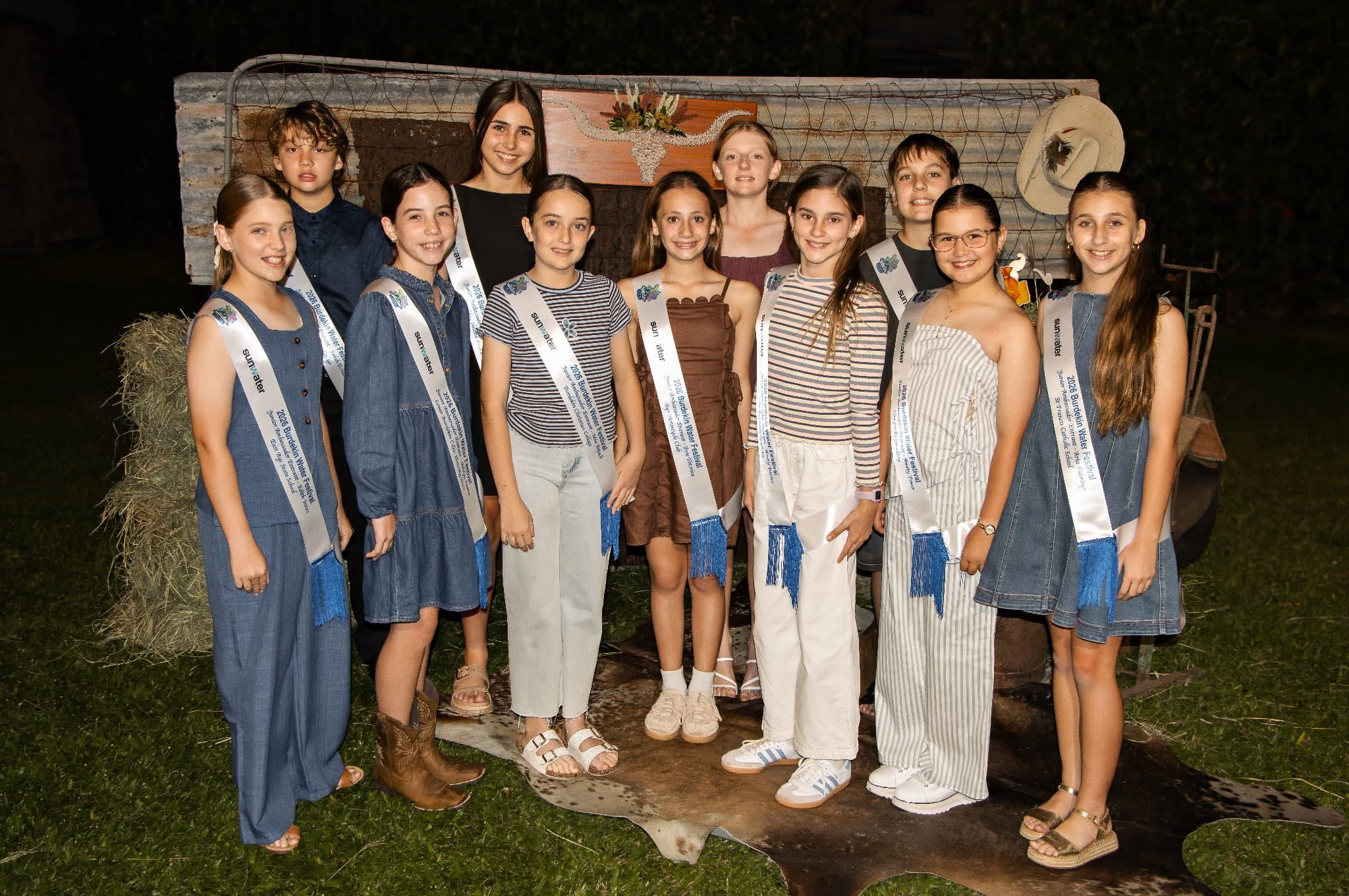
2026 Burdekin Water Festival Junior Ambassadors (back) Judah Donald (Burdekin Christian College), Lillea Levitt (Burdekin Netball Association), Amara Boccalatte (BT Farms), Jaxsyn Pearce (Ayr State School), (front), Edith Innes (East Ayr State School), Ashlyn Pearce (Lower Burdekin Celtic Dancing Association), Mia Bojack (Burdekin Christian College), Evie Totorica (Ayr Motorcycle Club), Amity Baxter (The Burdekin Academy), Amity Power (Campbell’s Jewellery), and Aria Fiamingo (St Francis Catholic School). Photo credit: Shay Kratzmann Photography
By Chelsea Ravizza
In another exciting instalment in the 2026 Burdekin Water Festival (BWF), this month will see the Junior Ambassadors join forces for the first time in BWF history to create one colourful afternoon of community fun, fundraising and friendly competition!
The inaugural Junior Ambassador Fun Fair will be held on Saturday 15th August, from 3pm at Silver Screens and Coffee Beans, bringing together all 11 Junior Ambassadors to host a collaborative fundraising event in support of their chosen schools, community organisations and charities.
Unlike previous years, where each Junior Ambassador organised an individual fundraising event, this year's ambassadors have combined their efforts to create one family-friendly celebration packed with games, treats, crafts and entertainment.
Burdekin Water Festival Ambassador Coordinator, Kari says every Junior Ambassador has designed a unique stall, ensuring there’s something to entertain children and adults alike.
“It's [Junior Ambassador Fun Fair] a great excuse to get the family together, have some fun and support some amazing young people,” Kari said.
“Every activity has been planned and run by one of our Junior Ambassadors. They've put so much work into it, and it's exciting to finally see all of their ideas come to life.”
Entry to the cash only Fun Fair is free, with individual activities individually priced to help each ambassador raise funds for their nominated organisation or charity. Visitors can also enjoy mini golf for $5 before settling in for a classic drive-in movie for $12.
Families can test their skills with magnetic fishing, Highland Games challenges, paper plane competitions and a gymnastics tumble track, get creative decorating dot cakes, flower pots and hair clips, browse 3D-printed toys and sensory fidgets, enjoy a slime station, photo booth, lucky dips and chocolate toss, or cool off with raspberry slushies, snow cones, fairy floss, popcorn and other sweet treats.
“Preparations are still well underway. It takes a lot of organising to bring a community event like this together, but it's all coming together really well and the ambassadors, their supporting organisations and our committee have all been working hard behind the scenes to make it a great afternoon for everyone," Kari said.
"We'd love to see people make an afternoon and evening of it while supporting our Junior Ambassadors and the Burdekin Water Festival."
The Fun Fair also provides the community with an opportunity to meet this year's Junior Ambassadors while supporting the schools, sporting clubs and community organisations they proudly represent, including The Burdekin Academy, Campbell's Jewellery, St Francis Catholic School, Lower Burdekin Celtic Dancing Association, East Ayr State School, Ayr Motorcycle Club, Ayr State School, Burdekin Christian College, Burdekin Netball Association and BT Farms.
Kari said bringing the ambassadors together for one collaborative event has created an exciting new fundraising opportunity while encouraging teamwork, friendship and community spirit among this year's cohort.
"With such a large number of Junior Ambassadors this year, it made sense to bring everyone together for one exciting community event," Kari said.
"Bringing everyone together has also created a wonderful sense of teamwork. Instead of competing for crowds, the ambassadors are supporting and encouraging one another while representing their schools, organisations and charities. It's a great example of what the Ambassador Program is all about – building confidence, leadership and community spirit."
Kari hopes the afternoon will celebrate not only the creativity and enthusiasm of the ambassadors but also the generosity of the local community, with every activity helping support worthy local causes.
"I'm really looking forward to seeing the ambassadors cheering each other on. They've built some great friendships throughout the program, and it's been wonderful to watch their confidence and skills grow," Kari said.
"I'd love to see a big crowd come along because they've all worked so hard to make their activities a success, and they deserve to see the community get behind them. If people come along, have a laugh, enjoy the activities, stay for the movie and head home with a smile, we'll know we've achieved exactly what we set out to do."
With affordable activities, delicious treats, community spirit and a nostalgic drive-in movie rounding out the afternoon, the inaugural Junior Ambassador Fun Fair is shaping up to be one of the highlights of this year's Burdekin Water Festival.Additional details are available via the Burdekin Water Festival’s social media pages and website, burdekinwaterfestival.com.au.

This week I want to talk about two issues that are important to the future of our community.
Firstly, Burdekin Shire Council joins councils across Queensland in strongly opposing proposed changes to Federal disaster funding arrangements. Disaster recovery is not simply another political debate. These changes could have significant consequences for regional communities like ours.
Every extra dollar Council is forced to spend on disaster recovery is a dollar that cannot be invested in roads, parks, community facilities and other essential services. In some cases, damaged infrastructure may not be rebuilt at all. Quite simply, it's a no dealfor the Burdekin.
I am also concerned about the future of the Ayr Fire and Rescue Station. Our community has been promised a new 24/7 staffed station alongside the Ambulance Service on Chippendale Street. Recent discussions suggest we may receive a lesser standard of service than what is currently available.
For a growing community that covers such a large geographic area, that is simply not good enough. Emergency services save lives, protect property and provide peace of mind to residents. The Burdekin deserves better. This is another no deal for the Burdekin.
On a community note, don't forget to complete your Census. The information collected helps governments make informed decisions about future services and infrastructure.
By now, rate notices should have been received by all property owners. If you have not received yours, please contact Council's friendly Customer Service Centre on 4783 9800.
Finally, a little piece of trivia. This year marks 60 years since Australia changed from pounds, shillings and pence to dollars and cents on 14 February 1966. I can still remember the catchy tune that helped Australians learn about the new currency!
As always, thank you for your continued support of our community. You can also follow me on Facebook to keep up to date with what's happening across the Burdekin.
Should you wish to reach out, don’t hesitate to contact me directly by phone at 0447 150 582, or feel free to send an email to mayor@burdekin.qld.gov.au.
If there is one sound that defines winter in the Burdekin, it’s the whistle of a cane train echoing across the district.
With the crushing season now in full swing, our region is operating at full steam. Our local growers, harvesting crews, mill workers, and transport teams are putting in massive hours to drive the economy that keeps our towns thriving. It’s a huge effort, and it’s something our entire community takes great pride in.
But with millions of tonnes of cane moving across our district, it also means our local roads and rail networks are busier than ever.
As locals, we drive past these tracks every single day. It’s easy to get comfortable or impatient when we're running late for school drop off or headed home after a long day at work. But a locomotive pulling loaded bin sets can weigh hundreds of tonnes and it can’t stop on a dime.
Whether you're driving, riding a bike, or walking the dog, take that extra second to look, listen, and wait. Talk to your kids about staying away from parked cane bins and tracks, and remember to give our heavy haulage and farm machinery plenty of room on the roads.
Let's look out for one another so everyone makes it home safe at the end of the day.
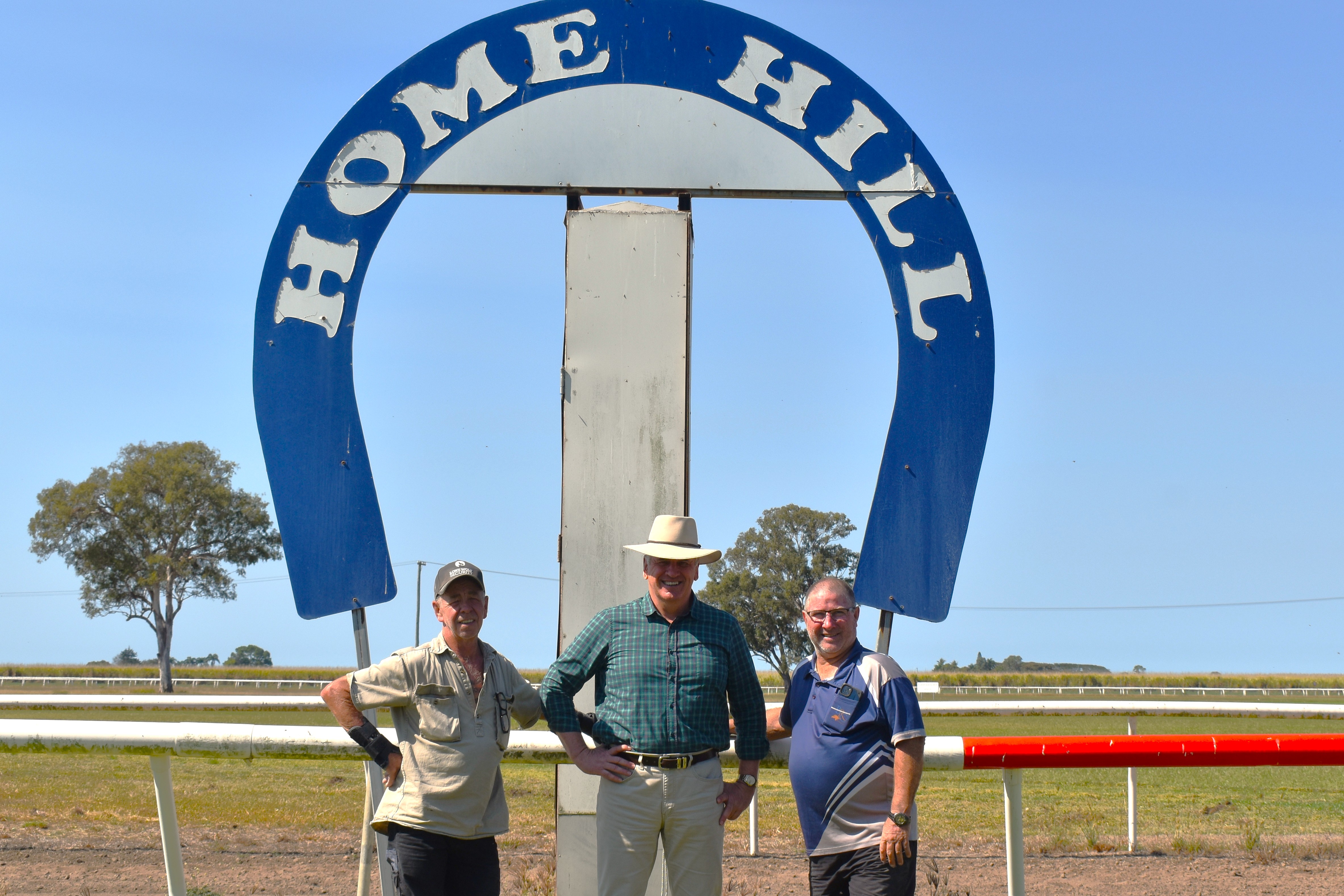
"By supporting the investment into new jockey and stewards rooms at the Burdekin Race Club we provide opportunities to host more of our favourite race days right here at Home Hill,” Member for Burdekin Dale Last MP said. Photo supplied.
Works to bolster two race clubs in the electorate have been given the green light with the Crisafulli Government awarding more than $450,000 in funding for vital infrastructure upgrades under the Racing Queensland’s Country Club Asset Funding program.
During the funding announcement this week Member for Burdekin Dale Last MP said Burdekin Race Club and Bowen Turf Club’s success had ensured country racing remained at the heart of the Home Hill and Bowen communities.
“Both the Burdekin Growers Race Day and the Bowen Cup have cemented themselves into the North’s social calendar drawing thousands of visitors to our regions and boosting local economies,” Mr Last said.
“Racing Queensland’s Country Club Asset Funding program provides support towards infrastructure repairs, maintenance and asset replacement to ensure our country race clubs can continue to host the race days that become calendar highlights each year.”
"By supporting the investment into new jockey and stewards rooms at the Burdekin Race Club we provide opportunities to host more of our favourite race days right here at Home Hill."
The Burdekin Race Club will receive $365,000 while the Bowen Turf Club will receive $88,000 with clubs also investing co-contributions to bring the projects to fruition. The commitment forms part of the Government's broader commitment to the industry through The Next Lap: A plan for the future of Queensland racing.
“The Bowen and Burdekin race clubs are among 33 country race clubs in regional Queensland to receive funding, delivering jobs, infrastructure improvements and community benefits in regional areas," Mr Last said.
“Recent reports show the racing industry in Queensland has generated more than $2.5billion in value added contribution with more than 50 per cent directly benefitting regional economies. It is why I'm proud to back our local race clubs' initiatives to invest in the infrastructure and maintenance needed to continue to host our favourite local race days well into the future.”
Supplied by the Office of Member for Burdekin Dale Last MP

WOMAN CHARGED OVER 2023 AYR DEATH
A 70-year-old woman has been charged with murder following a complex investigation into the death of a 56-year-old man in Ayr almost three years ago.
The Forest Lake woman was arrested by detectives on August 4 and charged with one count of murder (domestic violence).
She appeared in Townsville Magistrates Court on 5th August following her arrest, where the court heard she would not enter a plea until her defence receives the full brief of evidence, expected to be provided in about a month.
Emergency services were called to an Alice Street residence at about 9.18pm on August 10, 2023, after the man was found unresponsive.
He was pronounced deceased at the scene, prompting police to establish a crime scene and launch an investigation into the circumstances surrounding his death.
The man was non-verbal and had Down syndrome.
Detectives from the Crime Command Homicide Investigation Unit and Ayr Criminal Investigation Branch have since conducted extensive inquiries into the man's health, care and treatment throughout his life.
Police said the investigation had been complex and involved extensive and thorough inquiries.
A thorough post-mortem examination previously found the man was experiencing serious malnourishment and weighed 29kg at the time of his death.
The investigation has spanned almost three years.
_____________________________________________________________________________________________________________________________
APPEAL AFTER ALLEGED INDECENT EXPOSURE AT ALVA BEACH
Police are appealing for information after a man allegedly exposed himself to a woman at Alva Beach last week.
The incident occurred about 9.15am on 23rd July, when a 25-year-old woman entered the beach via the walking track directly in front of Alva Beach Park and sat on the beach.
A short time later, an unknown man allegedly entered the beach via a separate walking track to the south.
Police allege the man stood by a tree about 10 metres from the woman before exposing himself.
He then allegedly began approaching the woman, who ran away via the southern walking track.
The man has been described as Caucasian, aged in his 50s and about 175cm tall, with grey hair.
He was wearing an old grey hoodie and cargo pants.
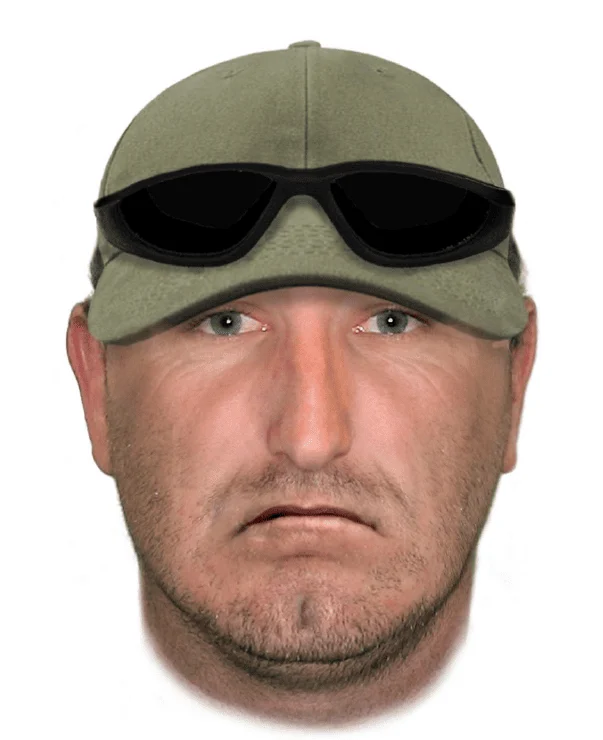
Police said no further complaints had been received at this stage and the matter appeared to be an isolated incident.
Anyone who may have seen anything suspicious, recognises the man depicted in the image, or has relevant video footage is urged to contact police.

With hundreds of Australians already preparing to host Pink Ribbon Breakfasts this October, local residents are encouraged to help make a difference. Photo supplied
Residents are being encouraged to gather around the breakfast table with friends and family and transform a simple morning tea into a meaningful charitable contribution as National Breast Cancer Foundation (NBCF) rolls out its Pink Ribbon Breakfast initiative during October’s Breast Cancer Awareness Month.
While the official Pink Ribbon Breakfast will be held on Thursday, 22nd October, hosts across the country can choose a date that suits them and organise a breakfast, brunch, morning or afternoon tea, or lunch from the comfort of their own home, workplace, community centre or local hospitality venue all to raise raising funds to support vital research aimed at helping save lives from breast cancer.
With 56 Australians diagnosed with breast cancer every day, organisers are encouraging communities to come together to spark conversations, and help fund research into prevention, detection and treatment.
Getting involved is simple, with prospective hosts able to register for free via fundraise.nbcf.org.au/event/pink-ribbon-breakfast and receive a complimentary host kit containing resources to help get their event underway!

A seven-year wait for a near million-dollar pump track officially ended last Friday as Burdekin Shire Council Mayor Pierina Dalle Cort and Member for Burdekin Dale Last cut the ribbon on the region's own “city-grade” recreational facility.
ANZAC PARK PUMP TRACK OFF AND ROLLING
Scores of Burdekin locals wasted no time in christening their new $770,000-plus pump track, marking both the asphalt and its official opening at Anzac Park last Friday.
Announced as part of the Anzac Park Precinct Master Plan in 2019, its opening ends a seven-year wait for a recreational facility Member for Burdekin Dale Last said rivals those of its city counterparts.
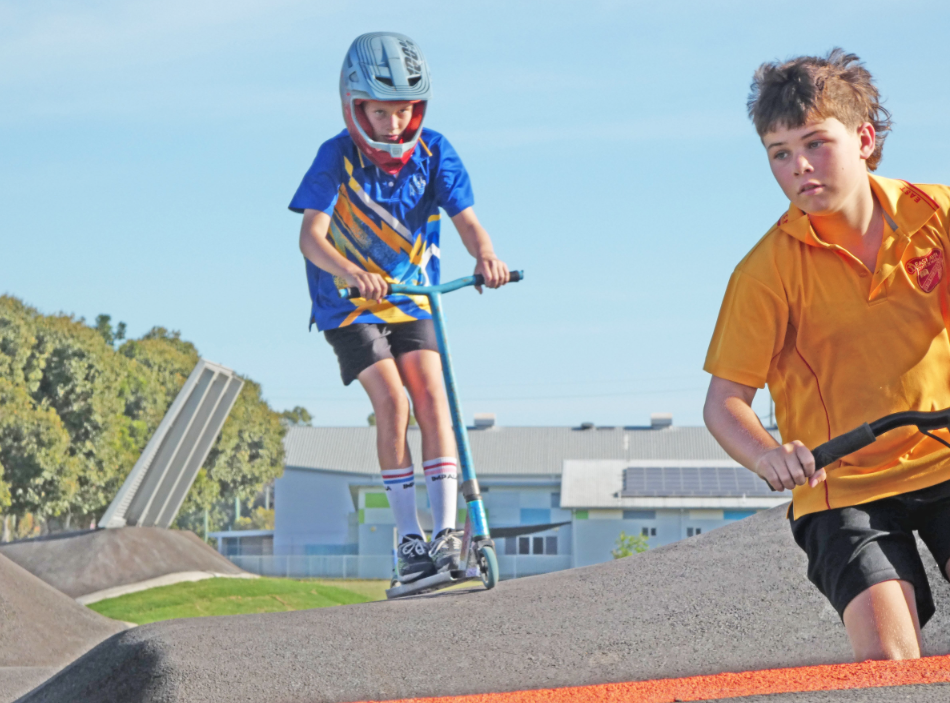
“This facility is the equivalent of anything in Brisbane, I can assure you,” Mr Last said at the opening ceremony.
“I have absolutely no doubt that it will be a hive of activity over the coming weeks.”
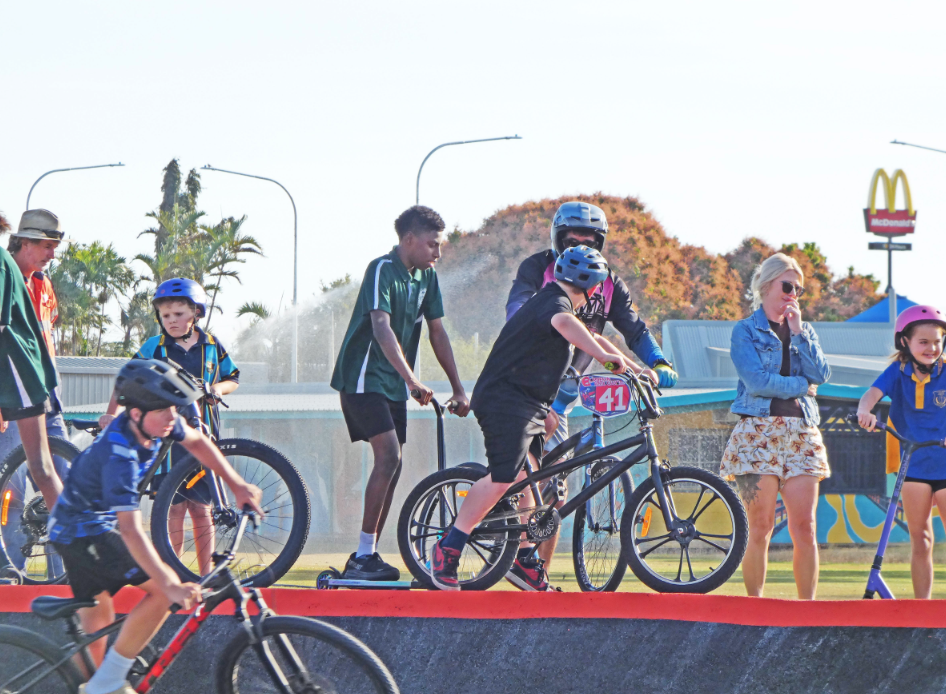
The facility features a seven-turn looped design with jumps, berms, rollers and platforms, catering for BMX bikes, scooters, skateboards and mountain bikes.
The project's eventual fruition follows years of advocacy from the community, most notably the Burdekin BMX Club. It was subsequently included in last year’s Council Budget as the centrepiece of a broader $2.8 million investment in parks and recreational facilities across the region.
The design process was heavily influenced by local input; construction works began in April this year after two community consultations.
Mayor Pierina Dalle Cort said the final product was an inclusive community facility built for everyone.

“This facility is a reflection of what happens when community voices guide council planning,” Mayor Dalle Cort said.
“Consultation and the help of residents shaped a design that is inclusive, acceptable, and built for all skill levels. Whether you ride a bike, scooter or skateboard, this track offers a safe, purpose-built space to be active, have fun, and enjoy the outdoors.”
The facility was funded primarily by a State Government contribution of $760,000 as part of its Works for Queensland 2024–27 program.
The pump track is the first stage of broader Anzac Park upgrades outlined in the precinct master plan, including an outdoor stage, basketball court and youth hangout zones.

August has arrived and the mornings feel a little cooler. I had the opportunity to attend the Future Leaders evening with Councillor Furnell at Ayr High recently and listen to the students speak.
The topics covered taking a digital detox and from small things big things grow. They spoke of how important volunteers are in the community and how taking a break from social media and the perils of what it can do to a person’s mental health.
One speaker told how simply saying yes to playing a sport she had never played, opened up her world to friends and travel. As a parent, it was hearting to hear that these young future leaders are thinking about these things so deeply. Well done and thanks for the evening.

NQ’S FIGHT AGAINST PROPOSED DISASTER FUNDING CUTS CONTINUES
A Federal Government proposal to slash its share of disaster funding has provoked fierce pushback in North Queensland, where Burdekin Shire Council officials fear the move could spell an “enormous” rate increase and leave disaster-affected communities by the wayside.
“The Federal Government has just come up with a way to balance their budget, rather than looking at the impacts of their decision. They’re not understanding the human cost in all of this,” said Council CEO Matthew Magin.
“For a government that prides itself on being fair, this is grossly unfair.”
The Albanese Government announced its intention to split disaster funding costs 50-50 with state and territory governments in June, replacing previous Disaster Recovery Funding Arrangements (DRFA) where the Commonwealth covered up to 75 per cent of those costs.
The Government argued the proposed reforms were designed to shift disaster management towards risk reduction and faster response, with Minister for Emergency Management Kristy McBain describing the new model as “simpler and fairer for all Australians.”
Burdekin Shire Council officials called claims of faster disaster funding delivery a “misinformation campaign”, arguing existing arrangements already provide councils with upfront funding support during disaster recovery.
They also argued the proposed cost sharing reforms would only muddy responsibility and increase the financial burden on regional councils in disaster-prone regions.
“No one really knows who's going to pick up the bill,” said Director of Infrastructure, Planning and Environmental Services James Stewart.
“It's just the Federal Government is saying, ‘well, we're not picking it up’, leaving it down to state or local government to make up the remainder.”
Based on previous disaster seasons, Mr Magin estimated that funding shortfall to be in the order of hundreds of millions of dollars in Queensland alone.
“Can the state afford to double their contribution? Probably not—so they're going to come knocking on the door of the 77 councils in Queensland, and that could have a massive impact on our ratepayers,” he said.
Mr Magin said the current arrangements had been instrumental in the Burdekin’s recovery from the 2025 tropical low that shook the region.
He speculated that, had the proposed reforms been in place at the time, a rate hike of up to 10 per cent was entirely plausible.
“In the last disaster season, [the proposed arrangements] would have cost [Burdekin Shire Council] an extra $3 million,” Mr Magin said.
“A 1 per cent rate increase for us is around $300,000. So if we had to pay $3 million, that's a 10 per cent rate increase—and that's without anything else we have to put rates up for.
“It's really quite scary.”
Council also raised concerns over changes to disaster funding qualification thresholds.
The current arrangements allow individual councils to access federal assistance once eligible disaster costs exceed around $230,000. Under the proposed reforms, costs from all councils affected by a disaster event would instead need to accumulate to $2.7 million before the Commonwealth stepped in.
Betterment funding would also be capped at 15 per cent per damaged asset, where the current systems allow access to a broader funding pool determined by the scale of each event.
Mr Magin and Mr Stewart warned the combination of changes could have serious consequences for local infrastructure.
“There will be some councils that simply won't be able to repair the roads. They’ll be sitting there in disrepair, and the public will have to drive over them,” Mr Magin said.
“If a particular road keeps getting washed out, people will ask: ‘why don't you repair it properly? Why don't you bitumen it? Why don't you put concrete in?’ That’s where councils used to have the ability to apply for that funding, but no longer can,” Mr Stewart added.
Council Mayor Pierina Dalle Cort said towns would also be left looking “shanty.”
She argued the reforms would leave North Queensland communities behind, stressing the implications extended beyond councils.
“We're not feeling the love,” she said.
“They're not just hurting us at council—they’re hurting the whole community, and putting more people in harm’s way.
“There are many pots of money out there that they should be drawing back on instead of disaster management.”
Mayor Dalle Cort said her letters to the Prime Minister, federal ministers, and senators rebuking the proposals had garnered no response.
She appeared on the panel at July’s Local Government Association of Queensland (LGAQ) Coastal Leaders Forum in the Whitsundays as councils congregated to discuss regional issues, including the DRFA.
The forum follows months of LGAQ-led pushback, including advocacy efforts at the Australian Local Government Association’s National General Assembly in Canberra, where councils called on the Commonwealth to reconsider the proposed changes.
The matter remains ongoing, with the LGAQ preparing a statewide sector submission opposing the proposed changes. Feedback from Queensland councils will inform the submission, due to be lodged with the National Emergency Management Authority on the 19th August.
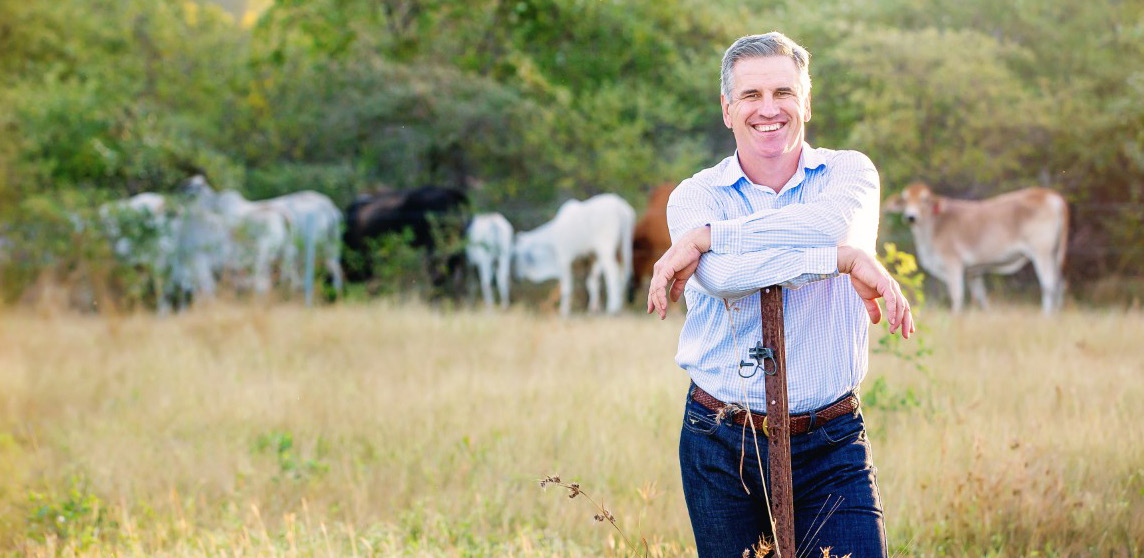
Critical crime prevention measures have been bolstered as Member for Burdekin Dale Last MP welcomed the proactive support for local small businesses under the second round of the Secure Communities Partnership Program.
Four small businesses across the Burdekin Electorate were among 170 in the state to receive co-funding for vital safety and security infrastructure as part of the $2million state government investment.
“Small business owners targeted by crime, are often left at a significant financial loss whether it is repairing physical damage or replacing stolen assets, to the flow on effect of potential job losses,” Mr Last said.
“We have seen the Burdekin Shire Council receive co-funding towards CCTV infrastructure in critical areas of the Ayr CBD in previous rounds so it’s fantastic to now see small businesses in our industrial estate reap the benefits of this program.
“To have a small business succeed in their application because they were looking to take proactive steps to secure their site to mitigate the risk of becoming a target for criminal activity is exactly what the Secure Communities Partnership Program is all about.”
“This is a clear example of how the Crisafulli Government is able to support small businesses to take those steps and deter crime and provide a resource to support incident response.”
Mr Last said with the third round of the Secure Communities Partnership Program opening soon, this announcement highlighted the variety of Burdekin small businesses eligible for the support.
“We’ve seen local governments as well as tourism, manufacturing and grazing businesses from across the Burdekin electorate benefit from past rounds of this program which is a fantastic demonstration of its success.”
The Crisafulli Government’s $40 million Secure Communities Partnership Program co-funds critical crime prevention measures such as CCTV, alarm and security systems, lighting and fencing to make small businesses safer.
Round 3 of the Secure Communities Partnership Program will be released later in 2026-27. For more information please visit https://www.business.qld.gov.au/running-business/supportservices/financial/grants/secure-communities.
Supplied by the Office of Member for Burdekin, Dale Last MP
Publishers Indemnity. Any individual or entity that places advertising, supplies copy material, or submits editorial content to Core Life Publishing agrees and undertakes to ensure that all such material:- Does not infringe upon any copyright, trademark, or other intellectual property rights;- Is free from any content that could be considered defamatory, libelous, or slanderous;- Does not infringe upon any rights related to privacy or breach of confidence;- Contains no obscene, indecent, or otherwise unlawful material;- Complies fully with the Trade Practices Act and all other applicable laws, regulations, or statutes.Furthermore, by submitting or placing such material, these individuals or entities agree to indemnify and hold harmless the publisher, Core Publishing and Events Pty Ltd, and/or its agents from and against any and all investigations, claims, demands, liabilities, damages, costs, or judgments arising out of or in connection with the material provided. All material is believed to be accurate at the time of printing and remains the copyright of Core Publishing and Events Pty Ltd.
© 2026 Life Publishing Group Pty Ltd.
