
Independently Owned, Locally Grown, Community Loved
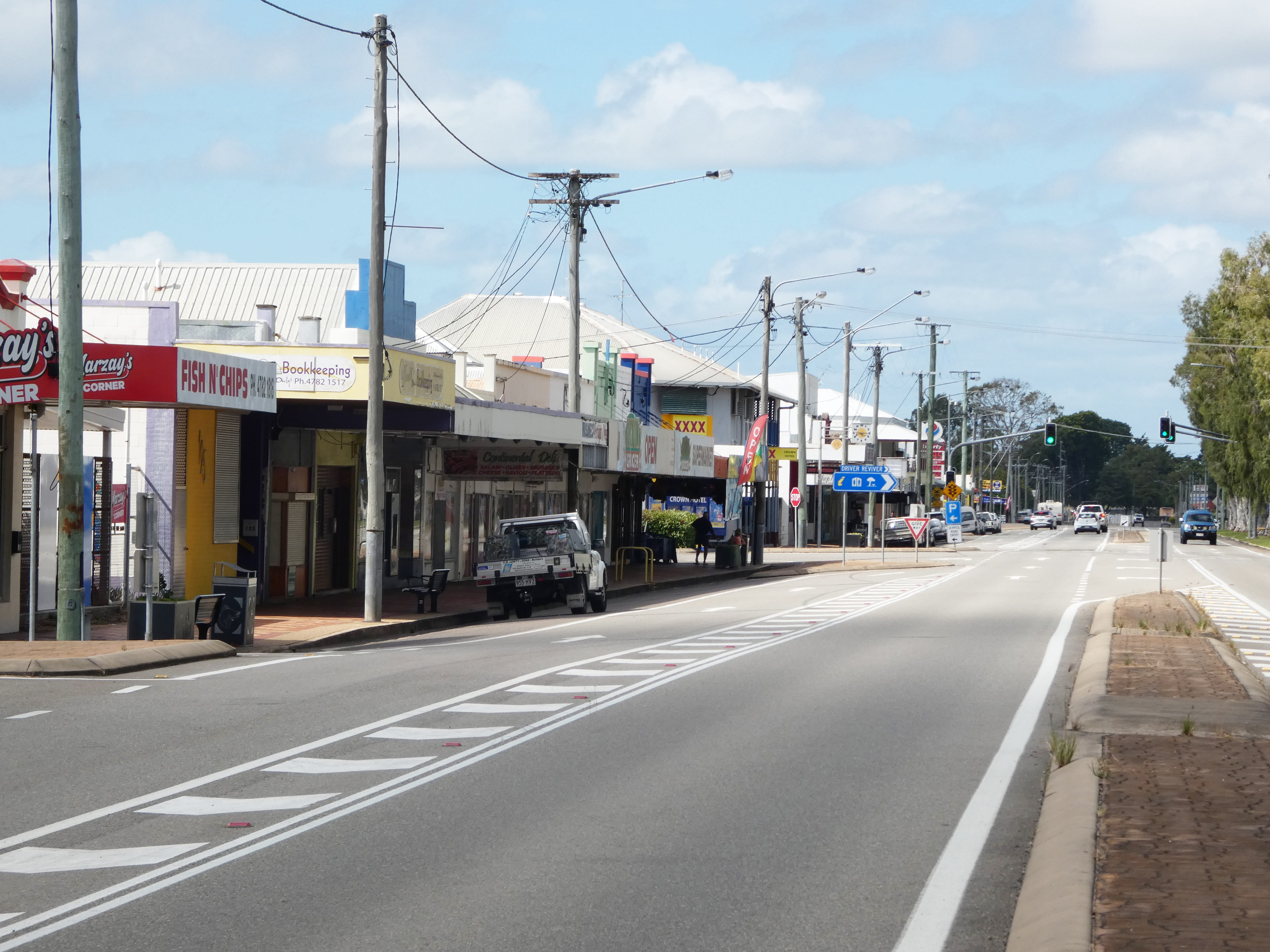
Just months after its launch, the Government’s Tourism Support Hub has surpassed 100 enquiries, marking an early milestone in its broader plan to reshape the state’s tourism future. Developed under Queensland’s Destination 2045 initiative, the Tourism Support Hub has already drawn strong interest from Regional Tourism Organisations across the state, fielding enquiries spanning business development, agritourism, cultural tourism, national park permits and disaster recovery. Burdekin Chamber of Commerce Secretary, Kari Ravizza, and Home Hill Chamber of Commerce Secretary Rob Antoniazzi have both welcomed the initiative, saying the Tourism Support Hub will make a meaningful difference to how small and regional businesses operate. “To have a dedicated support officer offering step-by-step guidance sounds fantastic and would be welcome in all small business industries,” she said. Mrs Ravizza said she hopes businesses take full advantage of the Tourism Support Hub, noting that any government support specifically targeting regional areas is a positive step forward. “Regional businesses often operate with limited resources and wear multiple hats. Support navigating government processes would be beneficial,” she said. It is no secret the business community is struggling through a period of ongoing uncertainty, with both Mrs Ravizza and Mr Antoniazzi pointing to mounting economic pressures. Cost-of-living impacts are reducing discretionary spending and affecting visitor numbers, while rising fuel and transport costs are making travel less affordable for tourists and increasing operating expenses for businesses. At the same time, operators are working to rebuild resilience after recent weather events, all against a backdrop of continued economic uncertainty and a noticeable decline in travellers stopping in the region. “Smaller and family-run operators can easily be overlooked or may not have the capacity to actively seek out support. There can also be barriers around awareness, time, and confidence in engaging with government programs,” said Mrs Ravizza. “The Tourism Support Hub is a step in the right direction, particularly with its personalised approach, but continued promotion and outreach are essential to ensure these businesses know the support exists and feel encouraged to use it.” In 2025, a record 2.4 million international visitors injected $7.5 billion into Queensland’s economy, with total visitor expenditure soaring to $44.3 billion, equivalent to $121.5 million every day. Chief Executive Officer of Queensland Tourism Industry Council, Natassia Wheeler, said the Tourism Support Hub was helping to build a stronger, more resilient tourism industry. “Access to clear, practical support is critical for tourism operators, particularly in the current operating environment,” Ms Wheeler said. “The Tourism Support Hub is playing an important role in helping businesses navigate processes and connect with the right information when they need it.” Tourism operators can find more information on the Tourism Support Hub at www.qld.gov.au/tourismsupporthub, or contact the team directly on 07 3101 2002 or via email at tourismsupporthub@detsi.qld.gov.au. CAPTION: Regional tourism operators have welcomed the Tourism Support Hub, describing it as a positive step toward easing pressure on small businesses navigating rising costs and complex government processes. Photo credit: Jacob Casha
Read the full story
Burdekin Machinery Preservationists has added a new exhibit to its collection: a 16V71 Detroit Diesel. So why is this engine special? A Growing Display of Powerplant History BMP proudly showcases a range of engines representing the evolution of power generation over the centuries—live steam plant, hot-air engines, hot-bulb internal combustion engines, semi-diesels, and finally, modern diesel engines. Among the diesel exhibits is the historic Walkers No.1 air-fuel-injected diesel engine, built around 1930 by Walkers Ltd. Maryborough under licence to Mirrlees Watson and based on Rudolf Diesel’s original design. At 25 tonnes, this rare engine powered a 150 kW standby alternator at Kalamia Mill. Only two air-injected diesels are known to still operate in Australia. From Inkerman Mill, we also display a Ruston 7VEB, a four-stroke diesel weighing about 18 tonnes and manufactured around 1950 to the highest British engineering standards. It powered a 350 kW standby alternator set. Introducing the 16V71 Detroit Diesel Now, thanks to 4QN, BMP is proud to present a 16V71 Detroit Diesel. This 3-tonne unit powered a 184 kW standby alternator at the local 4QN transmitter. An iconic two-stroke diesel, the 71-series was manufactured from 1938 to 1995. Developed just before WWII, these engines powered landing craft and many other military applications. Their robust design made them popular across transport industries worldwide. Locally, many sugar mill locomotives ran 6-71 Detroit Diesels, often clocking up around 2,000 hours per season. Our newly acquired 16V71 has only 1,800 hours on the meter—barely run in. Fuel consumption is notable at around 70 litres per hour under load, though our diesel mechanics, President Bruce and Secretary Al, are confident they can “turn the wick down a bit.” Retrieval and Installation Retrieving the engine proved straightforward. The contractor upgrading the transmitter power supply needed the unit removed and kindly provided cranage and assistance. Transport was arranged by our club’s go-to man, Graham Seib. At the Brandon site, the only available space was across one end of the powerhouse—an arrangement originally proposed by our late treasurer Alf Shand for an earlier project that never eventuated. It turned out to be the perfect solution. Contributed with thanks to Burdekin Machinery Preservationists CAPTION: 16V71 in place at Burdekin Machinery Preservationists. Photo supplied
Read the full story
Rural communities across the state are facing mounting pressure as intensifying drought conditions compound the challenges of ongoing flood recovery and test local resilience. With El Niño bringing hotter, drier weather, farmers are grappling with worsening soil moisture deficits and water scarcity, placing livelihoods at risk and raising concerns about long-term sustainability. With conditions expected to deteriorate in the coming weeks, the 2026 El Niño is forecast to be one of the strongest on record, bringing an increased risk of drought, extreme heat and bushfires. Rural Fire Service Queensland Deputy Chief Officer Clint Tunnie said residents could expect fire conditions to return to more typical levels through autumn as the state heads into winter, with growing fuel loads emerging as a key concern. “Northern parts of the state have experienced significant rainfall and severe weather events throughout summer, leading to increased fuel loads in some areas,” Mr Tunnie said. “Now is the time for landholders to start preparing for the heightened bushfire period later this year. It is important to remember that managing Queensland’s bushfire risk is a shared responsibility and landowners are legally responsible for managing bushfire hazards on their properties.” Dale Last MP, Member for Burdekin, said the primary concern for the region lies in the uncertainty surrounding growers’ access to fuel, fertiliser and the rising costs of freight. “The Burdekin district’s reputation as an agricultural powerhouse is built on our access to water so we are rarely impacted by the droughts that El Nino can bring,” he said. “The main threat to our local producers lays in the increase in costs for supplies like fuel and fertiliser that can be caused by El Nino.” Mr Last said farmers value rainfall during the growing season, but in the lead-up to and throughout the cane harvest, dry conditions are generally preferred. He noted that while drought remains a risk in the Burdekin, growers in the Isaac Regional Council area are particularly vulnerable, with many crops relying solely on rainfall. “Drought conditions are a definite risk in the western areas of the Burdekin electorate,” he said. “When you look at cattle grazing for example, the effect of drought means a dramatic increase in workload at best and, at worst, an absolute disaster for livestock, primary producers and the communities that rely on them.” Mr Last said that despite the challenges, he remains confident the Burdekin Shire is well placed to respond, pointing to the strength of its close-knit community and its willingness to support one another. “Challenges are nothing new to the people of the Burdekin. We are fortunate, in the agricultural sector, to have the resources like water and the knowledge that has been built up over several generations, including during challenging times,” said Mr Last. “We keep an eye out for each other and pitch in to help when times get tough. That can honestly be the difference between making it through and the worst possible outcome.”
Read the full story
The Federal Government has moved to safeguard Australia’s agricultural and transport sectors against global supply chain volatility, securing an additional 300 million litres of diesel and launching a new initiative to shore up domestic fertiliser supplies. The intervention, enacted through the government’s new Strategic Reserve powers, comes as the Middle East conflict continues to disrupt international markets. The package aims to insulate regional producers—including those in the Burdekin—from extreme price volatility and potential supply shortages during the critical growing season. The government successfully partnered with BP Australia and expanded its existing agreement with Viva Energy to secure the diesel boost, equivalent to over 1.8 million barrels. Further negotiations are currently underway with suppliers including Ampol, Park Fuels, and IOR to procure additional shipments in the coming weeks. Simultaneously, federal authorities have commenced work with major industry players Incitec Pivot and CSBP to accelerate the delivery of essential fertiliser. The government is providing price risk support to importers to ensure that supply remains stable and affordable for local growers. Prime Minister Anthony Albanese emphasised the necessity of the measures amid ongoing global instability. “As conflict in the Middle East and global volatility continues, we are working to shield Australians from the worst of the impacts,” the Prime Minister said. “We want to keep our people, our economy and our nation moving, which is why we’re working with industry to quickly secure additional shipments of fuel and fertiliser.” For the agricultural sector, the security of fertiliser supply is paramount for continued food production. Minister for Agriculture, Fisheries and Forestry, Julie Collins, highlighted the importance of the partnership with industry. “We understand how critical fertiliser is for Australian farmers, for our food production system and the food security of our region—that’s why I have been working with industry to support getting fertiliser to Australian farmers,” Minister Collins stated. “This is a significant outcome for our farmers and will support industry to secure and deliver the fertiliser we need sooner.” Federal authorities have pledged to continue working with industry partners to ensure these critical resources are directed to the regions and industries that require them most.
Read the full story

It’s been all hands-on deck this week at the Burdekin Christian College ahead of the school’s Open Day extravaganza on Sunday the 8th of June!
Right down to the school’s convenient door-to-door bus route to ensure children from Ayr, Home Hill, Brandon and Giru travel safely to the classroom, Burdekin Christian College will spotlight everything the fantastic school has to offer families this Sunday from 1pm to 3pm.
The afternoon will also offer attendees the opportunity to meet the school’s dedicated teaching team where families will have the chance to explore programs and ask questions to both junior and senior educators as well as teachers specialising in music, art, physical education and dance.
“Come and meet the incredible team behind our school success,” invited the school.
“From passionate educators to dedicated mentors, these are the faces guiding our students toward a brighter tomorrow.”
With campus tours, a free sausage sizzle, exciting rides, and a cream tea and coffee van also on the menu, this Sunday’s Open Day will be the perfect opportunity to see everything Burdekin Christian College has to offer.
“Whether you’re a future student, parent, or just curious about what makes our school special – come say hello and discover the heart of our learning community.”
The day will be held on school grounds at 2 – 12 Melbourne Street, Ayr and for all inquiries, phone the office on 07 4783 5552.
“Come see why so many families choose Burdekin Christian College – bring your questions, your curiosity, and your kids – and leave inspired!”
.jpg)
By Amanda Wright
Andrew Willcox, the Federal Member for Dawson, has been appointed Shadow Assistant Minister for Manufacturing and Sovereign Capabilities—an elevation that brings national attention to the critical role of regional Australia in shaping the nation’s future.
The announcement from Nationals leader David Littleproud has been met with widespread congratulations, but Mr Willcox is keeping his focus close to home as he steps into the role.
“I’m truly honoured to take on this role and welcome the faith placed in me,” Mr Willcox said.
“Manufacturing is a large contributing factor in our Australian economy, starting right here in Dawson, from Paget in Mackay through to Wulguru in the north.”
The portfolio is a weighty one, touching on national security, economic resilience, employment, and industrial policy. Mr Willcox sees sovereign capability as essential for safeguarding Australia’s future.
“There’s never been a more critical time to focus on our sovereign capabilities,” he said.
“From defence to food production, advanced manufacturing to aerospace—we must prioritise Australian-made at every level.”
The timing is apt. Dawson will soon host the launch of Australia’s first fully homegrown rocket, produced by Gilmore Space Technologies in Bowen. For Willcox, it’s a proud moment and a national signal.
“This rocket launch is a powerful symbol of what we can achieve when we invest in sovereign capabilities,” he said.
“We already build satellites in Australia. If we can launch them here too, we control the whole process—from the ground to low Earth orbit.”
Willcox argues the need for self-reliance is growing more urgent amid global uncertainty.
“If we’re relying on overseas rockets to launch our satellites, we’re exposing ourselves to risks—economic and strategic. We need to be able to stand on our own two feet.”
Rather than rushing into national consultations, Mr Willcox plans to start where he knows best.
“My first priority is to spend time in my own electorate,” he said.
“I want to talk directly to the manufacturers across Dawson, understand what’s holding them back and what policy levers we can pull to help their businesses thrive.”
Mr Willcox says Dawson’s diversity reflects the national landscape. Bowen is balancing horticulture with aerospace, the Burdekin is expanding industrial estates, and Townsville is exploring rail carriage and aviation fuel manufacturing.
“I didn’t want to be pigeonholed as the ag guy,” Mr Willcox said.
“I’m proud of my background in farming, and I’ll always advocate for rural Australia, but this role allows me to contribute to something broader. It’s a stepping stone into deeper national service.”
“A nation that can make things for itself is a nation that can grow and shape its own future,” he said.
“And that future starts here.”
Also this week, the Australian Electoral Commission made it official — Andrew Willcox was formally declared re-elected as the Federal Member for Dawson. The result was announced on Tuesday, 3 June in Mackay.
Federal Member for Dawson Andrew Willcox and AEC Divisional Returning Officer Sandra Sparti join AEC staff and volunteers to celebrate the official declaration of the Dawson result — with two volunteers proudly holding an "Awesome Dawson" sign crafted from the thimbles used to count ballots on election day. Photo credit: Amanda Wright
Federal Member for Dawson Andrew Willcox speaks at the official declaration of the Dawson result, reflecting on the campaign and his recent appointment as Shadow Assistant Minister for Manufacturing and Sovereign Capability. Photo credit: Amanda Wright

There’s a new landmark on the Burdekin horizon in the form of a 72-metre boiler stack at Wilmar Sugar and Renewables’ Kalamia Mill.
The new steel structure has replaced two concrete stacks that towered over the factory and dominated the local skyline for more than 50 years.
With the 2025 crushing season starting this week, it means local residents will now see steam rising from a single stack at Kalamia Mill instead of the familiar two.
Senior Project Engineer Fabian Sataro said the $12 million stack replacement project was the biggest capital job for Wilmar’s four Burdekin mills this year.
He said the need to complete the project within a 20-week window also saw some innovative solutions come into play, such as using a demolition robot to remove the old stacks.
“We knew it was a big undertaking to demolish two end-of-life stacks and erect a new one in a single maintenance season,” Mr Sataro said.
“Our Engineering Design team and the principal contractor, EDMS Australia, came up with the idea of using a Brokk demolition robot, as well as some solutions to optimise the new stack design.
“The robot removed the need for personnel to be working at heights, which aligned with our safety requirements. It could also work around the clock, even in wet weather and high winds, so it could get the job done faster and safer than people working from a suspended work platform.”
The new steel stack was fabricated at EDMS’s Townsville workshop and erected in five sections at the Kalamia Mill site. Local subcontractors GPB Construction and Lancini Consulting Engineers completed the civil work for the new stack.
Wilmar’s General Manager Engineering, Istvan Torok, said the project reflected the company’s commitment to safety, innovation and regional investment.
“This is a great example of what can be achieved through smart planning, strong partnerships, and a focus on safety and performance,” he said.
“Fabian has been working on this project for six years, supported by a large number of people from the Engineering team and other parts of the Sugar and Renewables business.
“We had initially planned to execute this project over two maintenance seasons, but we challenged that and came up with a much tighter execution plan which delivered significant cost savings, greater efficiencies and key safety benefits.”
Mr Torok said he was extremely proud of what his team had achieved in partnership with EDMS Australia.
“This sort of innovative thinking and engineering excellence is critical to our ongoing success as a leading Australian producer of sugar and renewables,” he said.
Key players on the Kalamia Mill stack replacement witness the final section being lifted into place. Pictured, from left, are Kalamia Mill Work Coordinator Michael Gianni, Kalamia Mill Operations Coordinator Raymond Goggi, EDMS Site Coordinator Jeff Drayton, Kalamia Mill Engineering Superintendent Vito Giarrusso, EDMS Construction Project Manager Jamie Hervey and Wilmar Sugar and Renewables Senior Project Engineer Fabian Sataro. Photos supplied
Wilmar Sugar and Renewables Senior Project Engineer Fabian Sataro
Demolition of the first concrete stack began in late December 2024
The last of five sections was lifted into place on the new steel stack last month (May 2025)

Twelve-year-old Kip Nicholas isn’t just cycling for fun—he’s riding for a cause that affects millions of Australians. This May, the young Burdekin local signed up for the May50K challenge, an annual fundraising initiative supporting research into multiple sclerosis (MS), a disease with no known cure that affects three out of four women diagnosed and strikes the average patient at just 30 years of age.
Initially setting himself a target of 50 kilometres and $300, Kip had already surpassed both halfway through the month. Not one to coast, he upped the challenge to 80 kilometres and a new fundraising goal of $800.
“I really enjoy riding and I enjoy the fact that I am helping find a way to know more about MS,” Kip said. “It’s also a great way to stretch my muscles from sport and spend time with my family in the afternoon.”
Kip formed a riding team with his mum Louise, calling themselves the Barra Bike Duo—a nod to both their shared love of cycling and local pride.
“We started riding together before May50K kicked off,” Louise said. “Him deciding that he wanted to cycle made me really proud.”
When Louise isn’t available, Kip rides with his dad, and sometimes the whole family joins in. One of his longer rides took him 17km through Burdekin backroads and into town.
“He’s checking regularly—‘what are we up to, Mum?’—so he’s really gotten into it,” Louise said. “It’s heartwarming to know he’s contributing to something bigger, and the support from friends and family has been great.”
With just a few days left in May, Kip continues to tick off kilometres and donations. And while his sights are set on the finish line, he’s also looking further ahead—with purpose.
“Together, we can leave MS where it belongs—behind us,” he says.
You can support Kip’s 80km challenge by scanning the QR code.
"I really enjoy riding and I enjoy the fact that I am helping find a way to know more about MS."
.jpg)
Growers across the Burdekin are being urged to sign on with SKY Renewables before the end of May, as interest grows in the company’s plan to convert sugarcane tops and trash into renewable energy for export.
The immediate appeal lies in the opportunity to earn additional income from a by-product that is currently burned in the paddock. SKY Renewables is offering around $15 per green tonne of tops and trash, with all harvesting and transport costs covered by the company—not the grower.
For many in the region, the project represents more than just extra revenue. By tapping into a new market for cane waste, local businesses can diversify income streams and reduce reliance on global sugar prices, which remain volatile. Supporters say it’s a step toward future-proofing an industry that continues to underpin the Burdekin economy.
There is no shortage of demand. Singapore, where 95 per cent of electricity is powered by imported natural gas, is actively seeking cleaner alternatives. SKY Renewables has held talks with Singapore’s Energy Market Authority and is now negotiating long-term offtake deals with power companies owned by the Singaporean government.
While debate continues elsewhere about the motivations for renewable energy, the commercial argument is straightforward: a wealthy, stable export partner is prepared to pay for a product that would otherwise go to waste. That kind of opportunity is becoming increasingly rare in a global trade environment that is growing more protectionist.
SKY Renewables says more than 60 per cent of growers who attended its May 7 town hall have already signed on. A series of shed meetings and mini town halls are now underway across the district, ahead of the May 31 sign-up deadline.
For growers looking to strengthen their business and help secure the future of the region’s flagship industry, the offer is being seen as one worth serious consideration.
Glenn Betteridge, Incoming CBL Chair & Simon Yim, CEO of Sky Renewables

#NVW2025
Burdekin Community Association (BCA) enjoyed their 21st National Volunteer Week celebration on the 21st of May. The event recognised the vital work of our Volunteers and said thank you with a morning tea at the BCA Support Centre. A Luncheon was also held on Friday at the Ayr Anzac Memorial Club.
National Volunteer Week (NVW) is Australia's largest annual celebration of volunteering, held from the 19th to 25th of May 2025. The event provides an opportunity to highlight the important role of volunteers in our community and invites former volunteers and those currently volunteering to come together.
The BCA’s Volunteer morning tea and luncheon are centred on the 2025 NVW theme, “Connecting Communities” and recognised the vast spectrum of possibilities and the impact that emerges when everyone finds their meaningful role in making a difference.
BCA CEO, Debra Cochran and Volunteer Service Manager, Rita Quagliata express their heartfelt thanks to all of the Volunteers for their time, dedication, and commitment to BCA and the community.
Volunteering can help change everyone’s life. It improves health and well-being, including increased longevity, adoption of healthy lifestyles and reduction in depression and stress. It allows you to develop and use different skills that lead to establishing a real sense of achievement, develops confidence, builds self-esteem and establishes new friendships.
BCA Volunteers help in the Community Information Centre in Queen Street Ayr, in other BCA offices, provide tutoring on the use of devices such as a mobile phone or tablet, visit elderly people at Regis Ayr and Home Hill and in their homes under the Aged Care Volunteer Visitors Scheme (ACVVS).
BCA’s always in need of more Volunteers, so please don’t hesitate to visit the Support Centre, 130 Queen St, Ayr and have a chat with Rita Quagliata about volunteering or give her a call on 4783 3744.
Contributed with thanks to BCA CEO, Debra Cochrane
Jo Rogers, Rita Quagliate, Nola Nendick, Joanna Penny
2: Mary Arrate, Dianne Noack
3: Karen Gage, Geraldine Chandler
4: Debra Cochrane, John Furnell
55: Fiona Smith, Brendan Matthews
6: Judith Rich, Sonya Tweedie
7: Beverley Edwards, Carmel Farmer, Joan Andersen
8: Stephen Tunbridge, Gladys Sgarbossa
9: John Bonassi

n a world full of sickness, disease, and fresh pandemics, breast cancer still remains the most prevalent form of cancer in women in Australia—and the Burdekin Breast Cancer Awareness Group is doing its best to ensure that fact doesn’t get lost in the noise.
At 10am on July 5th, the group will host its first Biggest Morning Tea since before COVID at Dal Santo’s Deli, aiming to raise both funds and awareness for breast cancer research, as well as foster support for local women who struggle or have struggled with the disease.
The event, which was used to seeing packed houses and raising thousands of dollars pre-COVID, will this time feature two guest speakers from the Cancer Council in Townsville, who will provide further information on the Cancer Council’s services and how to access them.
A breast cancer survivor herself, Support Person and Founder of the Burdekin Breast Cancer Awareness Group, Shirley Gilmore, has spearheaded efforts to support the breast cancer community in the Burdekin.
“I started this group 28 years ago. I wanted to raise an awareness of cancer and breast cancer, and just to have answers there for people should they need them,” she says.
Shirley wants everyone to know that each donation helps in our quest for a cure.
“The more money we can raise, the more likely we will be to find a cure one day, I’m sure.”
Tickets for the event are available only at Selections (next-door to Amcal Chemist), and are out now!
What: Breast Cancer Biggest Morning Tea
When: July 5th, 10am
Where: Dal Santo’s Deli

Each May, Queensland marks Domestic and Family Violence (DFV) Prevention Month. This annual initiative aims to raise awareness of DFV and Coercive control, highlight the support services available and send a clear message that violence in our communities will not be tolerated. The theme for 2025 is: Take positive action today to build a safer Queensland.
On Saturday the 24th of May, the Burdekin Domestic and Family Abuse Network hosted the 2025 Burdekin Domestic and Family Violence Awareness Walk.
Members of the community, Police, State and local government, Burdekin Area Youth Watch, Zonta club and local and regional service providers gathered at the Anzac Park in Ayr and participated in a Walk to Stand up and say NO to domestic and family violence and raise community awareness about this issue that is affecting so many in our community.
Councillor Fina Vasta officially opened the event and started the Walk, Aicey Zaro did a blessing, Sergeant Dan Dew gave a talk about DFV and I was the emcee on behalf of the Network.
We wish to thank everyone for taking action and raising awareness.
Contributed with thanks to Debra Cochrane

(Incorrect dates in print, please see updated dates in bold.)
It’s all happening this weekend at the Home Hill Showgrounds, as one of the Burdekin’s biggest events returns for two massive days of culture, competition, food and fire.
The Sweet Days Hot Nights Festival is back and packed with action, starting Thursday 30 May with the Burdekin Cultural Fair and First Fire, followed by the Australian Hand Cane Cutting Championships on Friday 31 May.
Friday 30 May: Burdekin Cultural Fair & First Fire
Gates open at 5pm, with live entertainment running from 6pm to 11pm.
This vibrant evening brings over eight cultural performances to the Sweet Stage, alongside 20 food, drink and dessert stalls, kids’ activities like arts and crafts, face painting, and a jumping castle, plus live music until late.
At the heart of it all is the lighting of the first cane fire of the 2025 crushing season—a powerful tradition and one of the most iconic sights of the festival.
Saturday 31 May: Australian Hand Cane Cutting Championships
Gates open at 10:30am, with competitions running from 11am to 5pm.
The paddock will heat up with eight hand cane cutting events, where top cutters from across the country compete for bragging rights and big prize money. There’s also a live sugar crushing demo by Burdekin Rum, a vintage machinery display by the Burdekin Machinery Preservationists, and the ever-popular Canefield Cook Off—a smoky showdown of the region’s best meat smokers.
Kids are sorted too, with free attractions including a petting zoo, Timmy the Train rides, mini ATVs, and repeat favourites like the jumping castle, face painting, and arts and crafts. Add in another round of live music and stage entertainment, and it’s a full day for the whole family.
Tickets
$10 per adult per event
$15 weekend pass
Kids under 18 are free all weekend
Book online now at www.trybooking.com/CXYWC to save time at the gate.
Note: The event is cashless for entry, bar and merchandise. Some food vendors may accept cash.
Don’t miss your chance to experience the best of the Burdekin—Sweet Days Hot Nights is on this weekend, and it’s set to sizzle.
WHAT: Sweet Days Hot Nights
WHERE: Home Hill Showgrounds
WHEN: 30-31 May
The Sweet Days Hot Nights Festival is back and packed with action, starting Thursday 30 May with the Burdekin Cultural Fair and First Fire, followed by the Australian Hand Cane Cutting Championships on Friday 31 May. Photo supplied

Burdekin Christian College hosted a lively crowd on Friday 23 May for its annual Under 8’s Day Science Fair, bringing science to life for early learners in creative, hands-on ways.
Held from 9:00am to 10:30am, the event featured a variety of themed stations where children explored everything from outer space and forensic science to medical experiments and bug hunting. Activities included fossil digs, stethoscope building, anatomy displays and more—all designed to make science fun and accessible for young minds.
The campus was alive with activity as local emergency services joined in and a Honeycombs tractor display rolled in for a closer look. The Atomic Café was also in full swing, offering snacks and drinks for students, families and visitors.
In a message posted after the event, the school wrote:
“Thank you to the several hundred children and parents who made the day such a special one.”
Next on the calendar is the Burdekin Christian College Open Day, taking place Sunday 8 June from 1pm to 3pm.
Families are invited to explore the Prep–Year 12 campus, meet staff, tour classrooms and check out programs in science, robotics, the arts and more. The afternoon also includes student performances, face painting, cooking demos, and a free sausage sizzle—plus coffee and cream tea for the grown-ups.
Open to the public and free to attend, it’s an ideal opportunity to see what BCC has to offer.

Burdekin Men’s Shed Hosts Inter-Shed Visits
Burdekin Men’s Shed hosted their first inter-shed visit since COVID on Wednesday, 21 May 2025, with 14 members from Townsville Men’s Shed, 4 members from Vincent Men’s Shed, and 3 members from Rollingstone Men’s Shed visiting our local shed.
On arrival, the guests were treated to morning tea and mingled with members from the other sheds. This was followed by a guided tour of the Burdekin sheds, then a general discussion and Q&A session with all shed members participating—mainly outlining the red tape new sheds have to overcome in obtaining land and securing finances to establish a Men’s Shed.
The Burdekin Shed is fortunate, attributing its success to its office bearers, committee, and the commitment of its members. The extremely strong support from Burdekin Shire Council, local State and Federal Members of Parliament, and the community makes our shed the success it is today.
May General Meeting Focuses on Men’s Health
There is a monthly general meeting on the third Saturday of each month, with a guest speaker on men’s health at the start of the meeting, followed by a sausage sizzle.
At the May general meeting, we had two guest speakers—Physiotherapist Isabelle Ryan and Occupational Therapist Lucy Penny from NQRH (North Queensland Regional Health). Isabelle spoke on men’s pelvic floor muscles and the exercises men can do to strengthen these muscles as they age, along with the associated problems that may arise. She also outlined the effects the prostate can have on men throughout their lives, using anatomical models and a PowerPoint presentation, followed by a Q&A session.
Lucy spoke on the NQRH vision, the areas and towns they cover, the services they can assist with, how to contact them, using existing care plans or creating a new one, how often practitioners can provide home or regional visits, and handed out information booklets. She also fielded questions from the members.
Contributed with thanks to Rob Ritchie, President of BMSA
Lucy Penny, Isabelle Page from NWRH & Rob Ritchie, President of BMSA
Question & Answer session involving Townsville Men's Shed, Vincent Shed, Rollingston Shed and Burdekin Shed

The 24th annual Burdekin Enduro tore through the Ayr Rifle Range over the weekend, with more than 50 off-road vehicles battling it out across a challenging course that’s become one of Queensland’s most distinctive racing experiences.
Hosted by the Burdekin Off-Roaders, the two-day event delivered everything fans have come to expect—speed, skill, and clouds of red dust rising off the unique six-terrain track. With hundreds of spectators drifting in and out across Saturday and Sunday, the atmosphere was electric, the air thick with adrenaline and engine noise.
What started in 2001 with just eight cars has evolved into a mainstay of the Queensland Championship calendar, attracting competitors from across the state and beyond.
The Enduro’s course remains a standout, offering a mix of surfaces and technical sections that push both car and driver to the limit. It's this diversity—and the inclusive class system—that keeps bringing people back, whether they're seasoned racers or newcomers to the sport.
Speaking of newcomers—I soon found myself strapped into one of these bad boys—as a passenger, of course. “Let’s just ease into it,” I told Darren, the experienced driver kind enough to take me for a spin. He either misheard me, ignored me, or simply didn’t know what it meant, because a few seconds later, we were airborne, travelling at breakneck speeds through the twists and turns of the sprint circuit.
From the vicious roar and bone-rattling vibration of the engine to the feeling of my internal organs reorganising themselves with every bump, jump and turn, this was definitely an experience I won’t be forgetting any time soon.
Thanks again to the team over at Burdekin Off-roaders Inc., not only for strapping me in and letting me experience the ride firsthand, but for putting on an outstanding event for all drivers, passengers and spectators involved.
Results
First—James and Lizzy Sant
Second—Matthew Lawless
Third—Dan Dunn
Second place, Matthew Lawless, first place winners, James and Lizzy Sant, and third place, Dan Dunn.
Photo source: Show n Go Photography

This week was one of intense reflection—albeit somewhat involuntarily.
Battling sickness through Wednesday, I was reduced to the confines of my apartment walls—so as not to infect the whole neighbourhood. And it was while stuck with nothing but myself and my thoughts that my mind began to run wild:
Should I learn the saxophone? Open a food truck? Have I been living in a simulation this whole time? Should I finally start composting? I wonder what became of my Year 4 science teacher. Wait—did I ever reply to that email from two weeks ago…?
Among this series of diverse quandaries was a sharp realisation—a stutter in the chaotic stream of tangents: Have I really just moved across the country by myself?
I mean, I’m no stranger at all to foreign environments—to turning my life upside-down. After all, I have travelled all over the world for football, and did live in Pittsburgh for almost three years.
But this is no Pittsburgh. And it’s no Sydney.
But with that thought came a kinda quiet clarity—a sense of grounded-ness. A genuine gratitude for the opportunity I’ve stumbled into here in the Burdekin.
Because although it’s vastly different to anything I’ve experienced in my life so far, it represents positivity: a positive career step, a positive new beginning, and heaps of positive relationships so far.

Concerns have been raised about ongoing erosion on the south bank of the Burdekin River, particularly near Home Hill, where experts believe the risk of a channel avulsion—a sudden shift in the river’s course—is at its highest. The erosion has reportedly damaged protective vegetation and riverbank stability, raising questions about the current approach to managing flood and flow-related risks in the Burdekin Delta.
A recent statement by Professor Eric Wolanski (Townsville), Chris Hopper (Townsville), and Chris Canavan (Home Hill) calls for more comprehensive and future-focused planning. The group argues that while the Burdekin River Trust’s $5 million commitment toward bank restoration is a step in the right direction, a more detailed understanding of the river’s physical dynamics is essential.
They suggest that a portion of the funding be used for a full topographic survey of the riverbed and banks, including the underwater terrain. This, they say, would allow for more accurate hydrodynamic modelling and ultimately lead to more reliable long-term solutions. “Waiting for a major flood to trigger significant damage isn’t a viable strategy,” the group noted in their joint statement.
One potential long-term measure put forward is dredging sand from the riverbed to redirect flow and relieve pressure from vulnerable sections of the bank. The group argues that this could be economically viable, as sand is a globally valuable commodity that could be sold to offset operational costs.
The concerns tie into wider research conducted by Wolanski and Hopper on how dams and climate change can accelerate channel avulsion and coastal erosion in river systems such as the Burdekin. Their 2022 paper, published in Ecohydrology & Hydrobiology, highlights the risks posed to Ramsar-listed wetlands in the Great Barrier Reef catchment.
With the region’s economy and community closely tied to the river, discussions about erosion management and flood mitigation are expected to continue among residents, scientists, and government agencies alike.
Concerns have been raised surrounding ongoing erosion on Burdekin River

Queensland’s sugarcane growers have backed Owen Menkens to lead the industry through a pivotal period, re-electing the Burdekin grower for another three-year term as Chairman of CANEGROWERS Queensland.
Mr Menkens was returned to the role by the grower-only Policy Council, which also elected Innisfail grower Joe Marano as Senior Vice Chair and Burdekin’s Steven Marbelli – a newcomer to the state board - as Vice Chair.
“This is a grassroots organisation, run by growers for growers,” Mr Menkens said.
“To be re-elected by my peers is an incredible honour. It shows the trust we’ve built and reflects the important work we still have to do.”
The appointments cap off CANEGROWERS’ triennial election process, which began in February when growers nominated for their local district boards. Those local elections concluded in April, with new district boards officially starting their terms on 1 May.
Each district board then nominated a representative to the Policy Council – one from each mill area. The newly formed Council met in Brisbane today for its first meeting, where it elected the state board, including the Chairman, Senior Vice Chair, Vice Chair, and board members.
This bottom-up structure ensures the organisation remains fully accountable and representative – from paddock to policy – with every leadership role held by a grower elected by fellow growers.
Also elected to the state board were returning members Joseph Borg and Kevin Borg (Mackay), and Michelle Fischer (Rocky Point), alongside three new faces – Glenn Betteridge (Burdekin), Claude Santucci (Tablelands), and Steven Marbelli (Herbert River).
While new to the state board, all three bring deep experience as district directors and Policy Council members, ensuring that this injection of new blood also comes with a solid understanding of the organisation and the issues it faces.
“The strength of this board lies in its mix of continuity and renewal,” Mr Menkens said.
“With experienced leaders like Joe Marano and Kevin Borg alongside committed new board members like Glenn, Claude and Steven, we’ve got the right team to move the industry forward.”
The Policy Council will now establish a series of industry committees to lead focused work on key priorities including mill performance, supply chain efficiency, sustainability, diversification, and grower profitability.
These committees will be made up of grower representatives who bring firsthand experience and deep regional knowledge to the table.
The board also welcomes new Policy Council members Leah Russo (Herbert River), Charles Papale (Burdekin), Brett Leach (Mackay), and Peter McLennan (Isis) joining a number of returning councillors.
“We’ve significant challenges ahead, but just as many real opportunities. This grower-elected leadership team is well positioned to shape a strong, sustainable future for Queensland’s cane industry,” Mr Menkens said.
Owen Menkens. Photo supplied
Publishers Indemnity. Any individual or entity that places advertising, supplies copy material, or submits editorial content to Core Life Publishing agrees and undertakes to ensure that all such material:- Does not infringe upon any copyright, trademark, or other intellectual property rights;- Is free from any content that could be considered defamatory, libelous, or slanderous;- Does not infringe upon any rights related to privacy or breach of confidence;- Contains no obscene, indecent, or otherwise unlawful material;- Complies fully with the Trade Practices Act and all other applicable laws, regulations, or statutes.Furthermore, by submitting or placing such material, these individuals or entities agree to indemnify and hold harmless the publisher, Core Publishing and Events Pty Ltd, and/or its agents from and against any and all investigations, claims, demands, liabilities, damages, costs, or judgments arising out of or in connection with the material provided. All material is believed to be accurate at the time of printing and remains the copyright of Core Publishing and Events Pty Ltd.
© 2026 Life Publishing Group Pty Ltd.
