
Independently Owned, Locally Grown, Community Loved
.jpg)
Close to 40 disadvantaged young people and job seekers will be given a head start in gaining the skills, confidence and support needed to secure sustainable employment in the Burdekin Electorate. Member for Burdekin Dale Last welcomed the Crisafulli Government’s $215,500 investment in the Burdekin PCYC’s successful Get Set for Work program and the $146,800 investment into WhitsundaySuccess Pathways’ Work Skills Traineeships program to be delivered in Bowen. Included in the $46.2 million round of Skilling Queenslanders for Work Program, the two projects are among 166 across Queensland targeted towards skills shortages in priority industries in our community and region. “The Burdekin PCYC’s Get Set for Work program has already proven a success in our community and this round will see a further 36 disadvantaged young adults receive skills industry-recognised training including First Aid, White Card, RSA, RSG and driver licensing support,” Mr Last said. “By providing the additional wrap around support as part of both the Get Set For Work and the Whitsunday Success Pathways programs, disadvantaged young adults will receive a holistic experience tailored to each of their needs.” “We have already seen the successful results in our community with past participants becoming the skilled workers we need in priority industries like construction, health, community services and hospitality.” Mr Last said the state government funded program had the ability to provide real impacts on communities in regional Queensland that often faced significant skills shortages. “In order to grow our local workforce and bolster our region’s economy, we need to be able to retain young adults in our community and that means ensuring there are positive career pathways available and the ability to obtain the skills needed in our towns,” Mr Last said. “Programs like Skilling Queenslanders for Work demonstrates the Crisafulli Government’s focus of providing better outcomes for workers, employers and local communities.” “This is a great outcome for Burdekin and Bowen communities whose economies ultimately benefit from the addition of skilled, local young workers.” Supplied by the Office of Member for Burdekin Dale Last MP.
Read the full storyA draft 20-year plan released for North Queensland has pledged to protect the Burdekin's productive agricultural land while planning for new housing, infrastructure and economic growth. Burdekin Shire is one of just five council areas directly covered by the North Queensland Regional Plan, meaning decisions made through the planning process will help shape the district's future development. The draft plan is accompanied by a North Queensland Infrastructure Plan, bringing future land use together with planning for transport, water, energy, digital connectivity and social and community infrastructure. For the Burdekin, where agriculture remains a cornerstone of the local economy, Member for Burdekin Dale Last said protecting productive land must remain central to decisions about future growth. “The Burdekin is an agricultural powerhouse and an important contributor to Queensland’s economy and protecting our productive land must remain a priority as the region grows,” Mr Last said. “This draft plan provides an opportunity for local communities, farmers, businesses and industry to have their say on how North Queensland grows over the next two decades.” The regional planning framework is particularly significant for agricultural communities because Queensland's planning system recognises priority agricultural and strategic cropping areas when managing competing land uses. Alongside protecting established industries, the North Queensland planning process is focused on housing supply and economic development and will provide direction for future local planning and development assessment. That gives Burdekin residents and industry an opportunity to weigh in on how growth should be accommodated while retaining the productive land and economic strengths already supporting the district. Farmers, businesses, industry groups and residents can make submissions on the draft plan during the public consultation period. Feedback closes on Tuesday 29th September.
Read the full story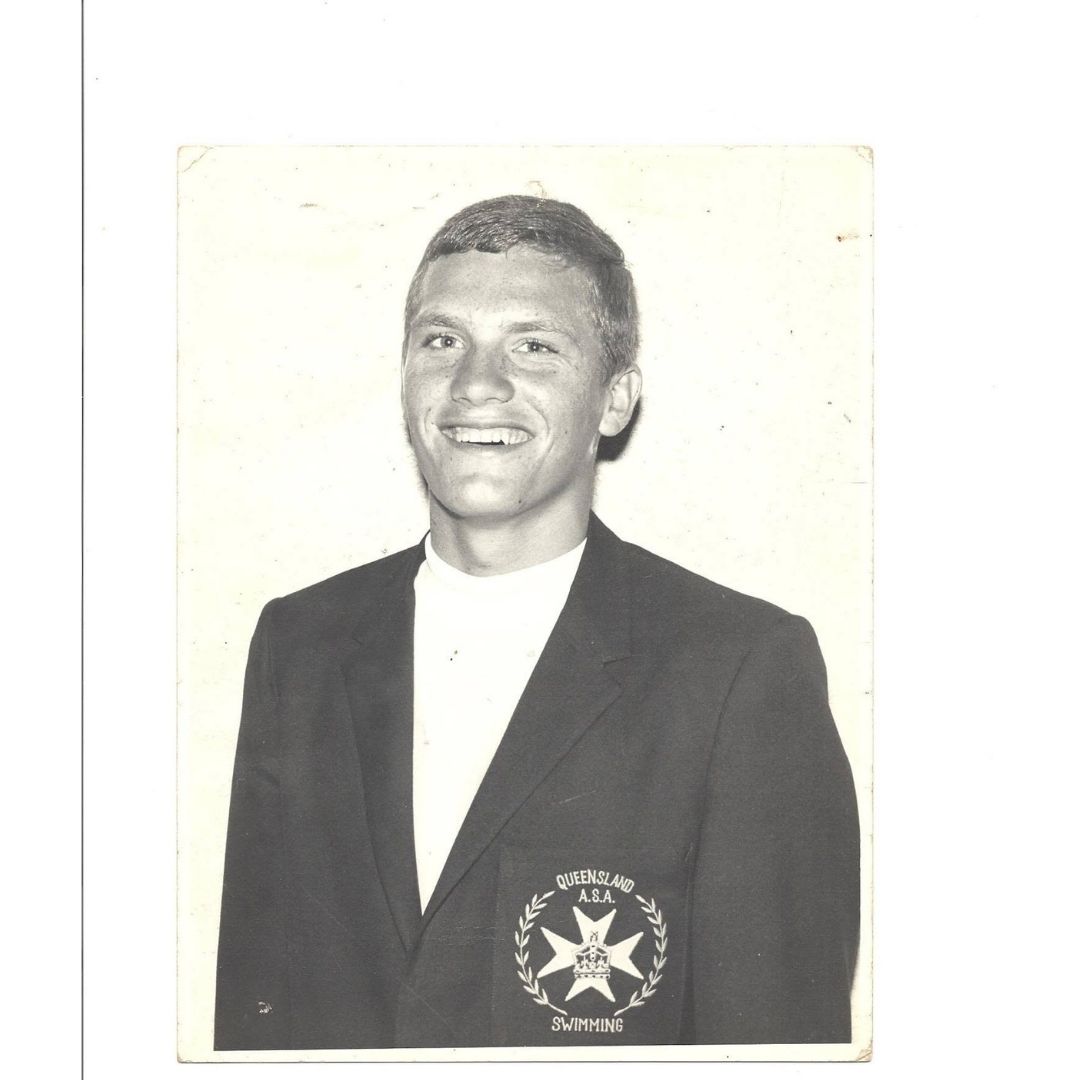
Long before Max Tavasci became a fixture at Lions Club fundraisers and children’s eye screenings across Outback Queensland, he was a young North Queensland swimming star making Australian sporting history. A 1970 Commonwealth Games silver medalist, former sugar cane farmer, and dedicated volunteer, Max passed away suddenly on the 29th of July while traveling out west with his caravan to bring vision screening to school children in Mount Isa and the Gulf country. He was 72. Born and raised in Ayr to Italian farming parents, Battista and Margaret Tavasci, Max grew up on the family property. Encouraged by his mother to stay active, he developed into an elite swimmer alongside his siblings, training in local waters and rubbing shoulders with visiting athletes. His hard work culminated in 1970 when he represented Australia at the Edinburgh Commonwealth Games, claiming a silver medal in the 1500m freestyle while his father served as a race timekeeper. His legacy endures in his hometown, where the 'Max Tavasci Trophy' is still presented annually at the Ayr School Swimming Carnival. Following his athletic success, Max worked on the family farm, laboured in Tasmania and Maryborough, and drove trucks before returning to North Queensland. Known for his love of colourful shirts, fast cars—which his son fondly noted he rarely drove fast—and Meat Loaf records, Max lived a full and colourful life. "He had the heart of a champion, handed down from my dad," said his sister, Paula Dowson. "He died doing what he loved to do." In the second half of his life, Max found a renewed sense of purpose through Lions Australia. Over 18 years of service with the Burnie City, Cleveland Bay, and Townsville Castle Hill Lions Clubs, he became a tireless community worker. Alongside his partner of more than 20 years, former District Governor Michael MacLaren, Max traveled across Queensland conducting paediatric vision checks, running raffles for Lions Assistance Dogs, delivering meals for Eat Up Australia, and assembling disaster relief hampers for flood-affected regions. Remembered by peers as a "true gentleman" and a stable, calm presence on the regional Lions cabinet, Max devoted his final years entirely to service. "I feel Dad found himself and his place with Michael, Lions Australia and the church, evidenced by the lasting happiness he displayed over the last two decades,” said his son, Scott Tavasci. Max is survived by his partner, Michael MacLaren; his son, Scott; his granddaughters, Scarlett and Eloise; his sister, Paula; and his extended family. His funeral was held at Kirwan Uniting Church on the 20th of August. CAPTION: Remembered by peers as a "true gentleman" and a stable, calm presence on the regional Lions cabinet, Max Tavasci devoted his final years entirely to service. Photo:
Read the full story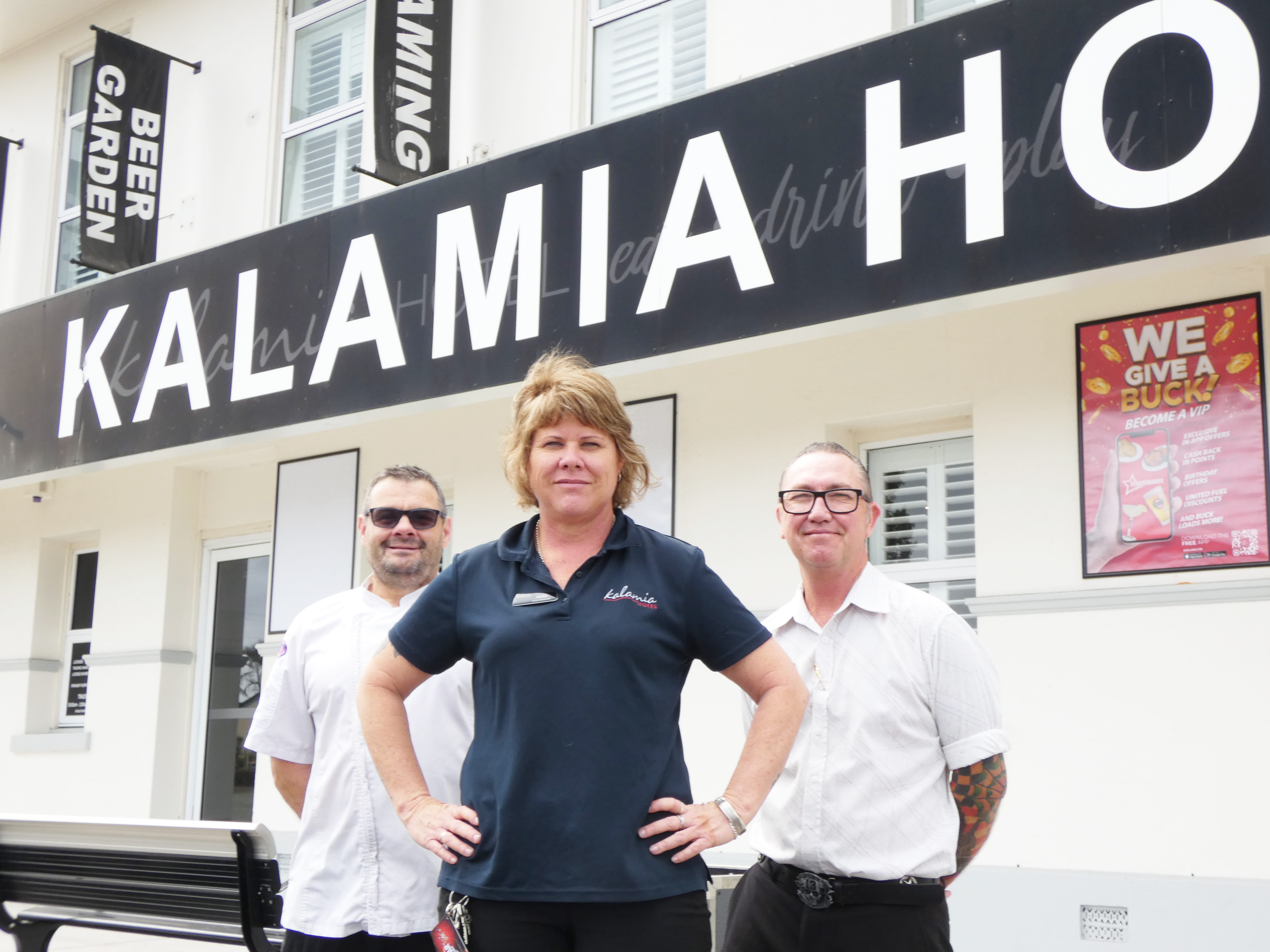
The Kalamia Hotel is turning 100, and it wants the Burdekin there to celebrate. After a century of beers, meals, friendships and memories, ‘The Locals’ Local’ is marking the milestone with a massive day of entertainment, music, prizes and family fun. CAPTION: A century, extensive renovations and multiple ownership changes later, the Kalamia still stands at its original location on Queen Street. Photo: Jacob Casha.
Read the full story

Not even having a dialysis treatment, stopped this Santa from ensuring he was still able to deliver all those gifts over his busiest period ever, Christmas.
Even having dialysis during the hectic gift-giving season, didn’t deter Santa (Ross Whiley), who needed to have it leading into the holiday season last December. If anything, it revitalised him, giving this Santa an extra spring in his step so he could guarantee the children got their presents on time, much to the relief of parents the Burdekin over.
Dialysis is a type of treatment that helps your body remove extra fluid and waste products from your blood when your own kidneys are not able to do so normally, and which keeps safe levels of minerals in your blood, such as potassium, sodium, calcium, and bicarbonate, and also helps to regulate your blood pressure.
Dialysis was first used successfully back in the 1940's and became a standard treatment for kidney failure, starting in the 1970s. Since then, millions of patients have been helped by these treatments, even Santa.
Dialysis can be done in a hospital, a dialysis centre, or at home. In this Santa’s case, he chose the Home Hill Dialysis Unit, so he could continue his work locally within the Burdekin region.
Come Christmas morning, the results were there to be seen on the many faces of so smiling kids. Once back in the North Pole, this Santa recuperated, earning a much-needed break over New Years, before he does it all again next Christmas!
Santa (aka Ross Whiley) receiving dialysis ahead of his busy gift giving Christmas schedule. Photo: ‘Supplied'

Plenty of rainfall was experienced across the Burdekin to ring in the new year, and many locals noticed a sad looking Christmas Tree struggling to cope in the Burdekin Theatre Forecourt.
Almost poetic, the photo captured and shared on Wednesday the 1st of January 2025, attracted waves of attention with many members of the community noting it’s a sign to box up the festive season, and welcome in the new year.
Although a sore spot for some, other locals were able to make light of the situation, finding humour and understanding in the fact that storms and heavy rainfall can be expected at this time of year, and nature was simply helping with the “pack up process”.
As the sun shone on Thursday the 2nd of January, the Burdekin Shire Council promptly returned the beautiful new tree to its former glory.
The Christmas Tree in the Burdekin Theatre Forecourt during recent rainfall. Photo credit : Jacinta Watson
.jpg)
The Federal Government has announced an additional $7.2 billion investment into the Bruce Highway, marking the single largest funding commitment in the highway’s history. This pledge aims to upgrade Queensland’s critical 1,673 km transport artery to a minimum three-star safety rating, with the Burdekin region poised to benefit from significant improvements.
Prime Minister Anthony Albanese highlighted the importance of the highway for connecting Queenslanders, tourists, and freight, stating, “Queensland deserves a long-term plan, and that is what my Government is delivering.”
The total investment now exceeds $17 billion, with the Bowen to Townsville section, identified as a priority for immediate upgrades.
Proposed projects include installing safety barriers, wider centre lines, and rumble strips to reduce accidents. Additional upgrades may feature wider shoulders, improved intersections, better signage, and enhanced sight lines. The plan also includes increasing rest areas and overtaking lanes to improve traffic flow and driver safety.
To address Queensland’s unpredictable weather, a “Build Back Better” strategy will focus on road resilience through resealing and rehabilitating surfaces, helping mitigate flood damage and ensuring accessibility during extreme weather events.
Federal Member for Dawson, Andrew Willcox, who spearheaded the "Back Our Bruce" campaign, welcomed the funding but urged clarity on project details and funding distribution.
“This commitment is a step forward, but we need to ensure our region receives its fair share of the upgrades,” he said.
Mr Willcox also emphasised the community’s role in driving the issue to Canberra’s attention.
“The people of Dawson deserve credit for standing up and demanding change through the ‘Back Our Bruce’ campaign. Without their voices, we wouldn’t have seen this result.
“Let’s be clear, this 80:20 is only for this $7bn commitment. A coalition government will fully reinstate the historical 80:20 funding for all highway funding.”
He further highlighted the urgency of action, saying, “It’s about safety and saving lives.”
Shadow Minister for Northern Australia Susan McDonald expressed cautious optimism, stressing the need for transparency and immediate action. “Queenslanders deserve better than short-term vote-buying announcements,” she said, calling for detailed costings and timelines for the upgrades.
“Labor at all levels has shown scant regard for Queensland’s regional roads, and it’s sad that the only time Anthony Albanese cares about it is when there’s an election looming. I don’t blame people for treating this announcement with some scepticism.”
Federal Member for Dawson, Andrew Willcox, stands beside a worn section of the Bruce Highway, highlighting the urgent need for safety upgrades in the Burdekin region. Photo supplied

Schools, businesses, organisations and community groups across the Burdekin region will soon begin gearing up for Clean Up Australia Day, with many calling for locals to get involved in the fantastic initiative. Scheduled for Sunday the 2nd of March, 2025 will mark the 35th anniversary of the vital environmental event, which has been making a positive impact on Australia’s environment, one piece of litter at a time.
What began 35 years ago as a simple idea from Ian Kiernan who wanted to clean up his own backyard – has since grown into the country’s largest community-based environmental event. Held annually on the first Sunday in March, Clean Up Australia Day has seen over 22 million Australians volunteer their time to help reduce waste and conserve natural spaces across the nation.
In the Burdekin, Clean Up Australia Day provides a unique opportunity for the community to come together and make a real difference. Whether you’re a local school, business, or community group, your participation is vital to ensuring the region remains clean and beautiful for future generations with registration forms available online at www.cleanup.org.au!
What: Clean Up Australia Day 2025
When: Sunday 2 March
Where: Australia Wide
More Information: visit www.cleanup.org.au
Clean Up Australia Days in the past have seen more than 190kg of rubbish collected from Alva Beach.
.jpg)
And so the new year begins. As this is my first Councillor column for 2025, I would like to reflect on the past year – and what a year it has been.
Having been overwhelmingly elected by people to represent them in Council, I have tried my best to do so, sometimes garnishing the ire of fellow Councillors and directors. So be it, I fight for what I believe in. It has been a steep learning curve, understanding correct protocol, local laws and Government legislation. It’s not as cut and dried as people may think, and you must work within the scope of it all.
Decisions have to be made. Sometimes coming to terms with those decisions and the backlash that ensues is cause for a headache. If people disagree with those decisions, I would encourage them to inform themselves as to why they have been made. Pick up the phone and ring a Councillor, our phone numbers are on the Council website. Attend a Council meeting. Become an involved community member.
Hopefully the district can dust itself off and recover from the debacle that was sugar cane harvesting season. Mill disruptions have had a devastating effect on those in the industry. Mill workers, contractors, and farmers, have all been impacted by the lengthy season through no fault of their own and this flows onto the economy of the Burdekin Shire. Government needs to recognise and understand this and act accordingly.
With that being said, I hope each and every one of us has had a happy Christmas with their family and friends. A new year brings new hope. A hope for positivity and kindness to our fellow man. A hope for change. God Bless.
%20(1).jpg)
I hope everyone had a wonderful Christmas and New Year, filled with relaxation, joy and time spent with loved ones. It’s great to see our businesses reopening after a well-deserved break and getting back into action.
As most of us return to work, it’s a good time to reflect on the year ahead. No doubt many of you set New Year’s resolutions, and perhaps a few have already been broken – we’ve all been there!
We are truly blessed that the holiday period was disaster-free, allowing us to enjoy the season in peace. Now, as we step into 2025, I’m excited and optimistic about what lies ahead. There’s much to look forward to, and I’m confident it’s going to be another fantastic year for the Burdekin.
Here’s to making 2025 a year of growth, success and community spirit. Let’s embrace the opportunities ahead and continue working together to make our region the best it can be.
Stay safe, stay positive, and let’s make this year a memorable one!
Should you wish to reach out, don’t hesitate to contact me directly by phone on 0447 150 582, or feel free to send an email to mayor@burdekin.qld.gov.au.

Introducing the one and only Tones and I – or as her friends call her, Toni! This beautiful tabby with striking markings and captivating green eyes is ready to find her forever home. Despite facing challenges in her young life, including being a young mum, Toni is a resilient little fighter who’s determined to find the love and security she deserves.
Toni is a social and affectionate cat who loves food, attention, and playtime. She’s especially fond of feather wands and will happily engage in a playful chase. Whether it’s getting scratches at the base of her tail, full-body pats, leg rubs, or being picked up and coddled, Toni is always up for some love. Plus, she’s quite the chatterbox and enjoys carrying on a conversation with her humans!
Currently living in a foster home with other cats, Toni has a bit of “sassy little sister” energy and may prefer to be the solo queen of her domain. However, with a slow introduction, she might be open to sharing her space with a confident, friendly feline companion.
If you’re looking for a loving, chatty companion who’s ready to bring joy and affection into your home, Toni could be the perfect fit. Could you offer this determined little lady the forever home she craves?
Adoption Details:
• Adoption Fee: $195
• Included in the Fee: Desexed, Microchipped, Up-to-date Vaccinations, Flea/Tick/Intestinal Worm Treatment
• DOB: 01/04/2023
• Breed: Domestic Shorthair (DSH)
• Sex: Female
• Kid-Friendly: Yes
• Cat-Friendly: Yes (with slow introduction)
• Dog-Friendly: Untested
• BIN: BIN0000268254643
If you’re interested in meeting Toni and offering her the loving forever home she deserves, please submit an adoption enquiry form at: https://www.angelpawsinc.com.au/forms.html.

Established in 2011, the Burdekin Men’s Shed Association (BMSA), is a not-for-profit organisation that has been a haven for men to keep up their skills in retirement, engage with others and learn about men’s health issues, while giving back to the community.
The BMSA meets every Monday, Wednesday, Friday, and Saturday from 8am-11.30, where they promote various activities that focus on recreation, skill building, and community projects such as making their popular kid’s toy boxes, and tables and chairs.
“We have five buildings and three workshops – one for woodworking, one for small items of craft, another for welding, metal fabrication and mechanics – and we have another front building where we run garage sales. We have a big stock of furniture and items up there. We also have our own chooks, so we can provide eggs for our members,” Charles Ford, Secretary of the BMSA says.
With monthly general meetings and committee meetings three times a year, the ‘Shed’ has felt like a home away from home for many men, making them feel part of something while offering a place to address health issues in a safe, supportive environment with other blokes.
“We get a guest speaker to come along who speaks about some form of men's health issue, which the guys find informative. After the meeting, we then have a sausage sizzle and drinks and a laugh. We also have monthly luncheons at six different venues within the Burdekin, which is for our members and friends to participate in, along with trips to other Men's Sheds in Far North Queensland,” Charles adds.
The BMSA is responsible for all their expenses, from council rates to site building maintenance and equipment repairs, insurance, electricity, printing and postage etc. However, that gets more difficult with the decline in membership numbers due to members passing on or moving. The BMSA once had 80+ members, today it’s dwindled to half that number.
“For the sustainability of the Men's Shed, we've got to look at trying to recruit younger members of the community, and members who will basically take a position on our management committee.
“It's a good place to be and we want them to come enjoy themselves, as so many do,” Charles adds.
A big selling point about the Men's Shed is that it offers a reprieve for men’s partners and family, instead of them being stuck at home looking up at the ceiling. Once families bring a man down to the Men's Shed, they can then do whatever they want for that short term the men are there.
“When a man comes, participates, and has enjoyed himself, he goes come home and talks about something new and exciting. We’ve seen a lot of benefits for men and their families,” Charles smiles.
Annual membership fees are only $50, but with all the incredible benefits for men’s overall health, well-being and their families, it’s hoped more men will join and contribute.
The Burdekin Men’s Shed Association, which relies on fundraising and grants to keep the lights on, welcome donations or sponsorships from businesses and companies, families, and individuals, who wish to support them in addressing men’s health (physical, mental, emotional, social well-being), within the greater Burdekin region.
For donations, sponsorship, or information, call: 0467 083 502, email: burdekinmensshed@outlook.com or better yet, go visit them at 155-157 Young St, Ayr.
Burdekin Men’s Shed Secretary, Charles Ford, and members, Antony, and carpenter, Steve Bridges. Photo: Mark T. Rasmussen
Burdekin Men’s Shed’s only carpenter (at present), Steve Bridges, and BMSA Secretary, Charles Ford, outside one of their sheds.

New and improved agricultural levies legislation will replace the existing framework next year, making the levy system more user friendly for participants and making it easier for them to understand their obligations.
More than 50 pieces of legislation governing over 110 levies and charges – across 75 commodities and 18 bodies that receive levies – are being streamlined into five Acts and subordinate legislation.
Deputy Secretary for Agriculture, Fisheries and Forestry Policy, Matt Lowe, said the new legislation would make life simpler for those interacting with it from 1 January.
“From the start of 2025, the new legislation will make obligations clearer for levy payers, collection agents and bodies that receive levies, and better support industries seeking to pursue new or change existing levies," Mr Lowe said.
“More flexible and consistent, it will benefit current and future levy system participants and help industry to get the most out of the levy system.”
“The streamlined legislation will allow primary industries to continue to invest collectively in research and development, marketing, biosecurity activities and responses, and residue testing.”
“Our agricultural levy system is a long-standing, successful partnership between industry and government to facilitate industry investment in strategic activities, and the new framework will make it stronger and more effective,” he said.
Levies are collected from farmers, producers, processors and exporters, with any proposal for new, or changes to existing, levies requiring majority agreement among levy payers.
In 2023-24, the Research and Development Corporations, Animal Health Australia, Plant Health Australia, and the National Residue Survey, received just over $600 million in levy payments.
The Australian Government contributed an additional $470 million in matching funding for research and development activities.

Sugar cane growers in North Queensland are grappling with the dual challenges of rising electricity costs and restricted access to peak-time energy. According to irrigation specialist, Chris Doblo, of Farmacist Pty Ltd, the solution lies in smarter, more efficient practices. Drawing on his extensive experience, Mr Doblo shares practical strategies for growers to future-proof their operations and adapt to these mounting pressures.
One of the most critical steps for growers, Mr Doblo advises, is to evaluate their current irrigation systems. With potential restrictions cutting irrigation time by 20 per cent, it is essential to optimise systems to deliver more water in less time.
Automating For Success
Automation offers significant opportunities for growers to optimise their irrigation processes. With limited irrigation hours and ongoing labour shortages, automated systems can provide precise control over water application, ensuring efficiency and consistency.
“Automation has become more accessible and affordable,” Mr Doblo explains. “It’s an effective option for growers to overcome resource and time constraints.”
Features like automated scheduling and real-time monitoring allow water to be applied during off-peak energy periods, maximising cost savings.
Harnessing Solar Power
Solar energy continues to be one of the most practical investments for sugar cane growers. For pumps of 18.5 kW or larger, installing a solar array can significantly reduce reliance on grid electricity, particularly during daylight hours when energy demand is highest.
Planning For Off-Peak Energy
Aligning irrigation schedules with off-peak energy tariffs, such as Tariff 34, offers growers immediate savings of up to 30 per cent. While these tariffs may face additional restrictions in the future, Mr Doblo emphasises their current value in reducing operational costs.
However, he warns growers to prepare for potential interruptions, as off-peak energy may eventually become a “switchable load” during peak demand periods. Diversifying energy sources and improving irrigation efficiency are essential to navigating these changes.
Adapting to rising electricity prices and shifting energy regulations is no easy task, but the solutions are within reach for North Queensland’s sugar cane growers. As Mr Doblo explains, “Investments in infrastructure, automation, and solar energy are not just beneficial—they are essential for the future of our industry.”
By adopting these strategies and embracing innovation, growers can overcome energy constraints and maintain sustainability.

Burdekin firefighters spent some time at Wilmar Sugar’s Pioneer Mill last month, to do a site familiarisation tour and begin planning a joint emergency exercise drill.
The site familiarisation was led by Operations Superintendent, Dean McNamara, and Safety Advisor, Ashley Corradi.
During the visit, new members of the Queensland Fire and Emergency Services (QFES) team were informed about site-specific risks and where fire safety equipment is located on-site.
They also met Manager Operations, Matt Norton, Emergency Response Team (ERT) Captain, Patrick Patterson, and ERT member, Ryan Taylor.
Ashley said the site famil was beneficial to both QFES and Wilmar Sugar and Renewables employees.
"It is important that new members of the QFES do these visits as it makes the site familiar to them, ensuring a quick response in the case of an incident,” she said.
QFES officers make site visits to our other factories on a regular basis. They also participate in mock emergencies with Wilmar's emergency response teams, Queensland Ambulance Service and Queensland Police Service.
Pictured during the familiarisation tour are, from left, Emergency Response Team Captain Patrick Patterson, Senior Firefighter Peter Felesina, Firefighter Lindsay Wilson, Firefighter Carter Dal Ponte, Station Officer Ash Ryder and Operations Superintendent Dean McNamara. Photo source: Wilmar Sugar and Renewables

Social media has transformed the way we explore and share the natural world, but it has also had unintended consequences. Studies show that the rise of social media has contributed to habitat disturbances, impacting native species. Popular wildlife spots often experience increased visitor numbers, which can lead to habitat abandonment, changes in usage patterns, reduced breeding success, and altered feeding behaviours.
If you’re planning to photograph wildlife and share it online, here are some tips to ensure your actions contribute positively to conservation efforts:
Respect Your Surroundings
Be mindful of your environment. Avoid trampling sensitive vegetation or disrupting animals in their natural habitats. Every small action matters when it comes to preserving delicate ecosystems.
Say No to Flash Photography
When photographing nocturnal animals, avoid using flash. The sudden burst of light can startle them, disrupt their behaviours, or even lead to stress, which can have long-term impacts.
Maintain a Safe Distance
Keeping an appropriate distance from wildlife is essential to prevent causing stress or prompting animals to abandon their habitat. Use zoom lenses or binoculars to observe and capture them without interference.
Avoid Playback of Animal Calls
While it might seem like a harmless way to attract wildlife for the perfect shot, playing recorded animal calls can confuse or distress creatures. This can cause them to leave their nests or aggressively defend territory, putting them at risk.
Follow Local Regulations
Abide by local rules, including restricted access areas and opening hours. These guidelines are in place to protect both visitors and wildlife, ensuring a safe coexistence.
Don’t Mark or Promote Hidden Gems
Sharing the location of a special wildlife spot might seem harmless, but it can lead to over-visitation and increased disturbances. Enjoy these places quietly and leave no trace.
Queensland’s unique flora and fauna are worth celebrating, but it’s crucial to do so responsibly.
By being mindful of our actions, we can help ensure these precious environments thrive for future generations to admire.
Queensland Department of Environment, Science and Innovation

Shay Linton, owner of Home Hill News & Coffee, is set for the back-to-school rush that invariably comes this time of year. With preparations in place, they cater for all the local Burdekin schools by providing book lists and stocking necessary school uniforms and supplies.
They anticipate serving many families in the coming weeks, all who are looking for school uniforms and other supplies. Additionally, they offer non-school related book items also.
“We've had Christmas, and now we're gearing up for the kids to go back to school. It will be a hectic couple of weeks for us, and for parents. We’ll easily have a couple of hundred parents and kids come into the shop for their return to school purchases but we’ve got them all covered.”
“We can do book lists for the schools, where all you need to do is to drop your book lists in and we'll prepare them for you. We also have school uniforms for Home Hill State High and Home Hill Primary, which they can try on or order here. We're also going to have striking new backpacks and lunch boxes coming and cool new book covers for them to cover their books with.”
“And for parents waiting for their kids to choose, with a coffee shop here means they can have a relaxing coffee or tea,” she smiles.
If that wasn’t enough, there’s also the extra incentive to pop in and visit Home Hills News & Coffee, because they’ll be holding a prize draw as Shay explains.
“Home Hill News & Coffee will be offering a ‘Shop local’ incentive, which includes a prize draw for everyone who purchases school supplies from us. We have a $200 gift voucher for 1st prize, $100 for second, and $50 for third. The draw will take place on the morning of the 28th of January, right in time for the first day of school.”
“We'd like everyone to think local, shop local, and support local,” Shay expresses.
With that in mind, visit Home Hill News & Coffee for all your back-to-school needs, enter their draw, and be sure to grab yourself a coffee.
Home Hill News & Coffee owners, Ken & Shay Linton and their daughter, Mackenzie, showcasing several of their back to school supplies. Photo: Mark T. Rasmussen

Sid Ruskin, an 83-years young scallywag, has been part of the Burdekin ever since he first moved here 22 years ago. Born in Paddington, Sydney, his family moved from Captain's Flat to Cobar, a copper mining town in western New South Wales. They then moved to Mount Morgan near Rockhampton, before later going to Collinsville.
Sid attended school in Collinsville, before receiving a teacher scholarship to Kelvin Grove in Brisbane, becoming a primary school teacher. From there he moved to Townsville and joined the Air Force.
“My next door neighbour was in the Air Force at the time. Now that to me, sounded pretty good, so I joined the Air Force, which was in 1964. Being in the Air Force, you got around all over Australia. After 22 years, I went to RMIT (Royal Melbourne Institute of Technology) and became a communications engineer, then became a radio officer in the Air Force. Eventually, after being a ‘baggy bum’, I worked my way up, before eventually retiring as a Squadron Leader in Darwin,” Sid states.
Retiring from the Air Force, Sid then worked at a TAFE College in Townsville, teaching electronics and management before moving to Home Hill to care for his in-laws.
“After leaving Darwin, I got out of the Air Force right around the time these airplanes flew into those big buildings in America, which was my 60th birthday. So, I said to the missus, ‘pack up we’re leaving’. We bought a caravan to go tour Australia, before my wife's mum and dad got sick. We came back to this region and bought a house in Home Hill to look after them. And would you believe it, they both turned their toes up,” Sid jokes.
In his time here, Sid’s been involved in the Burdekin Race Club as Secretary for 10 years, while also being radio announcer on Sweet FM.
“I was Secretary of the Race Club because they couldn't find anyone, so they said, ‘Look, can you look after it for 12 months?’ 10 years later, I was still there. But that's how things happen in the Burdekin. Then for 10 years I was a radio announcer on sweet FM. I still listen to it, he says.
In his time, Sid's known five Australian Prime Ministers including Arthur Calwell.
“Arthur Calwell is the only politician in Australia to have had an assassination attempt. He lived up the road from me in North Melbourne. We were trying to get a new school, because we're right next to a tannery. Anyway, old Arthur came over and he put his support behind us and helped get a new school. I've known five prime ministers,” Sid declares.
Sid has two sons, one who lives in Home Hill, the other in Sydney, who recently visited for a fishing trip.
“He came to visit the other day, and the first thing I got him to do was cut my toenails because I can't reach them,” Sid laughs. “Anyway, he came up and wanted to go fishing. We caught a couple of brim. It's the first time he's been here for 10 years.”
Sid’s content with his current lifestyle volunteering at the Home Hill Visitor Centre, while his wife still keeps him active around the kitchen.
“She still chases me around the kitchen but it doesn't do her any good,” he smiles.
Sid Ruskin (83), good for a yarn and a joke. Photo: Mark T. Rasmussen

Sophie Robertson has achieved another commendable milestone in her STEM journey, following her outstanding selection to attend the prestigious National Youth Science Forum this January.
The celebrated National Youth Science Forum provides students with a broader understanding of study and career options available in science, technology, engineering and mathematics (STEM), across a nine-day session. Sophie will travel to Canberra from the 6th to the 14th of January to live and study on the Australian National University campus to be fully immersed in a world of all things STEM. Along with fellow students from across the nation, Sophie will participate in tours of science and technology facilities, learn about cutting edge research, engage with industry partners, learn about university, training and STEM career pathways, and network with former NYSF participants.
“I am excited to connect with like-minded peers at the NYSF as I’ve made wonderful friends through STEM and have learnt so much from them,” shared Sophie.
“I absolutely love STEM – it encourages me to view our world through a different lens, and always ask why?”
“I became fascinated in STEM as a young girl, when my mother shared her passion for astronomy with me, therefore, my favourite branch of STEM is astrophysics!”
Sophie has participated in many STEM related programs throughout her schooling, including attending the SPARQ-ed Junior Research Immersion Program, the CyberTaipan Young Women’s Career Tour, and the six month long Curious Minds Program.
As the school year commences later this month, Sophie will begin her role as School Captain of Ayr State High School, and with her secondary education coming to a close this November, she plans to continue pursuing her passion for STEM.
“I definitely plan on pursuing a career in STEM,” Sophie says with excitement.
“I intend on studying a Bachelor of Aeronautical Engineering at the Australian Defence Force Academy in Canberra, where my dream is to work on rocket propulsion systems in the Defence Space Command.”
Sophie Robertson at work and play, applying her knowledge and skills. Photo supplied.
Publishers Indemnity. Any individual or entity that places advertising, supplies copy material, or submits editorial content to Core Life Publishing agrees and undertakes to ensure that all such material:- Does not infringe upon any copyright, trademark, or other intellectual property rights;- Is free from any content that could be considered defamatory, libelous, or slanderous;- Does not infringe upon any rights related to privacy or breach of confidence;- Contains no obscene, indecent, or otherwise unlawful material;- Complies fully with the Trade Practices Act and all other applicable laws, regulations, or statutes.Furthermore, by submitting or placing such material, these individuals or entities agree to indemnify and hold harmless the publisher, Core Publishing and Events Pty Ltd, and/or its agents from and against any and all investigations, claims, demands, liabilities, damages, costs, or judgments arising out of or in connection with the material provided. All material is believed to be accurate at the time of printing and remains the copyright of Core Publishing and Events Pty Ltd.
© 2026 Life Publishing Group Pty Ltd.
