
Independently Owned, Locally Grown, Community Loved
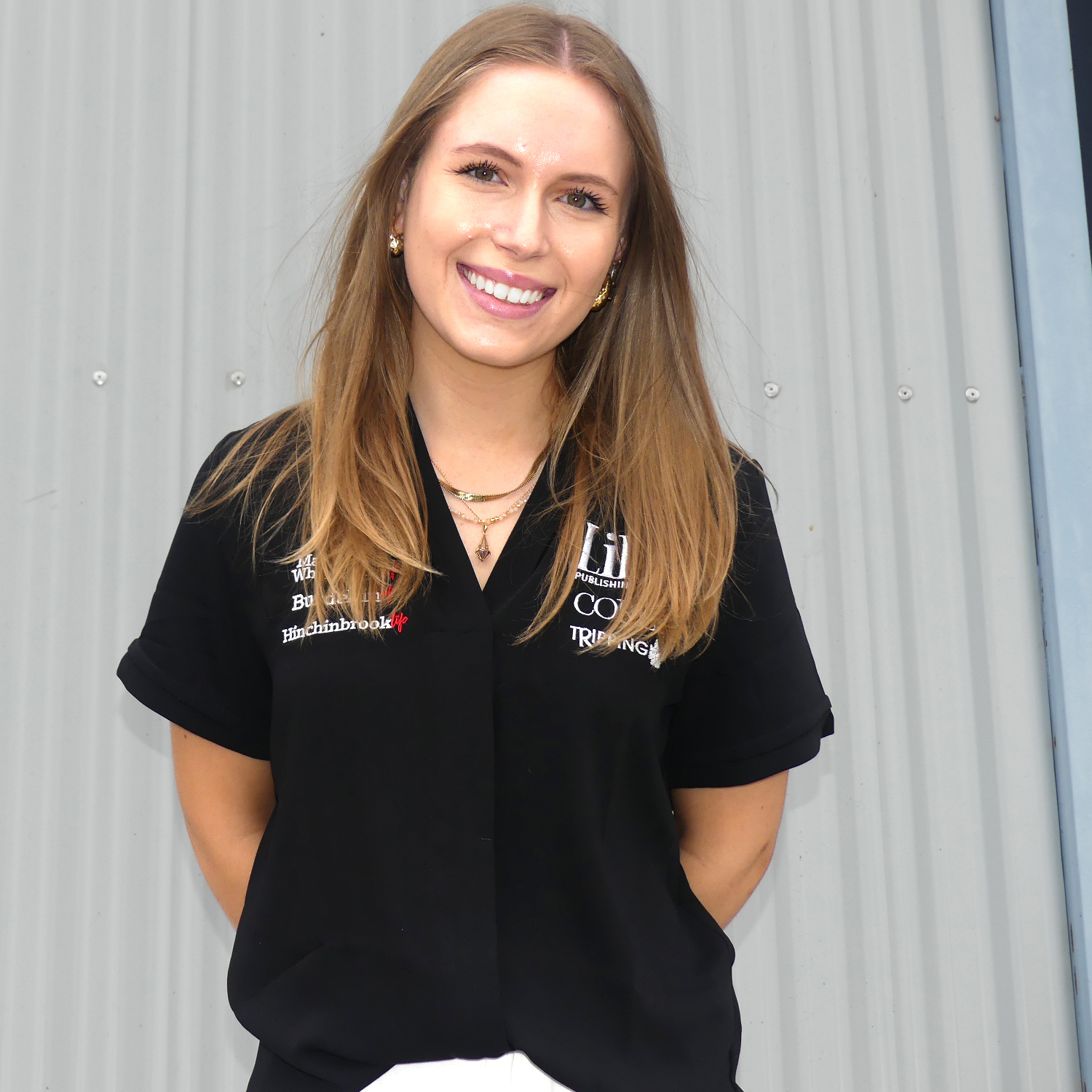
Gracie Hosie hopes to spark meaningful conversations that lead to lasting improvements in healthcare access for regional and remote Australians. Photo source: LinkedIn
When Gracie Hosie stood before government leaders and decision-makers at this year's Queensland Family and Child Commission (QFCC) Youth Summit, she wasn't simply delivering a speech. She was sharing the reality of growing up in regional Queensland, where accessing healthcare often means travelling hundreds of kilometres, taking time away from work and school, and carrying financial and emotional burdens that many city families never have to consider.
Her speech, Regional Families, Invisible Costs, drew on her family's own experience supporting her younger sister Amelia, who was born prematurely after being diagnosed with human parvovirus at just 25 weeks in the womb.
"Hospitals were part of her [Amelia] everyday story, but because we grew up in regional Queensland, hospitals were never just down the road," Ms Hosie told the summit.
Ms Hosie recalled how for her family, specialist care often meant travelling from Ayr to Townsville or Brisbane, with appointments becoming part of everyday life, and when Amelia underwent major back reconstruction surgery for severe scoliosis, herfamily's life revolved around hospital stays, flights, long drives and difficult decisions about who would stay by her side.
"Airports became normal, and goodbyes became routine. Recovery did not just happen in the children's hospital down the road; it happened in fragments across distance, across phone calls, across exhaustion,” said Ms Hosie.
"It’s the emotional cost of watching your sister in pain and knowing that help is far away. It’s the physical cost of fatigue of parents running on empty of children doing homework in hospital rooms, of bodies sitting in cars for hours because there is no alternative."
While Ms Hosie's family carried the weight of these challenges, they knew countless other regional families were navigating the same reality.
“My family’s story isn’t unique, and I think that’s exactly why it needed to be told.”

According to the Australian Institute of Health and Welfare, people living in rural and remote communities experience higher rates of disease, injury and potentially avoidable deaths than those in major cities, while access to specialist healthcare declines significantly with remoteness. The National Rural Health Alliance has also consistently reported rural Australians face higher out-of-pocket healthcare costs while receiving less health funding per capita than metropolitan residents.
"We talk about universal healthcare in Australia, but universality should not dissolve at the city limits," Ms Hosie said.
"This is not about blaming individual doctors or nurses or healthcare workers, as many are doing extraordinary work in under-resourced settings. This is about structural distribution, funding models and political priority."
Since moving from the Burdekin to Brisbane, Ms Hosie has embraced opportunities to amplify her voice, sharing her family's story while advocating for the countless regional families facing similar challenges every day.
“If telling our story helps even one decision-maker better understand what regional families go through, then it’s a story worth telling,” she said.
Set to begin a Master of International Relations, Ms Hosie has long been passionate about politics and public policy, and she saw the QFCC Youth Summit as an opportunity to introduce herself, share the values that drive her, and begin building connections within the sector she hopes to one day work in.
“Being able to speak in that room felt like the beginning of the kind of advocacy I hope to continue throughout my career, [and] most importantly, it was an honour to make sure the Burdekin, and regional Queensland had a voice.”
As regional populations continue to grow, Ms Hosie hopes her speech will encourage decision-makers to recognise that healthcare inequality extends far beyond the walls of hospitals, encompassing the everyday barriers regional families face in accessing essential care and support.

"Rural families should not have to choose between being together and being able to afford care. They should not have to measure recovery in kilometres travelled, in shifts missed or the quiet toll it takes on everyone in the car,” she said.
“I hope we can start looking beyond short-term assistance and towards long-term solutions that improve access to specialist healthcare closer to home, while ensuring support schemes evolve to reflect the true cost of seeking care today. Everyone deserves timely, affordable healthcare, regardless of their postcode.”
Since performing her speech, Ms Hosie has been met with a number of other young advocates from across the state who are also passionate about improving healthcare access in regional and remote communities.
“We’re all seeing many of the same challenges [and] there’s real strength in knowing this isn’t one person’s story, it’s a statewide issue.”
Driven by a passion for creating meaningful change, Ms Hosie has taken the initiative to create further opportunities to advocate for regional healthcare. She has been in contact with Member for Burdekin Dale Last and Queensland Health Minister Tim Nicholls, and is preparing to launch a dedicated website and public petition calling for improved healthcare access for regional and remote communities across Australia.
“It’s important that this conversation isn’t simply “had” it’s prioritised,” said Ms Hosie.
“I don’t want my speech to be the end of the discussion. I want it to be the beginning of sustained advocacy that keeps regional healthcare on the agenda until meaningful change happens.”
Publishers Indemnity. Any individual or entity that places advertising, supplies copy material, or submits editorial content to Core Life Publishing agrees and undertakes to ensure that all such material:- Does not infringe upon any copyright, trademark, or other intellectual property rights;- Is free from any content that could be considered defamatory, libelous, or slanderous;- Does not infringe upon any rights related to privacy or breach of confidence;- Contains no obscene, indecent, or otherwise unlawful material;- Complies fully with the Trade Practices Act and all other applicable laws, regulations, or statutes.Furthermore, by submitting or placing such material, these individuals or entities agree to indemnify and hold harmless the publisher, Core Publishing and Events Pty Ltd, and/or its agents from and against any and all investigations, claims, demands, liabilities, damages, costs, or judgments arising out of or in connection with the material provided. All material is believed to be accurate at the time of printing and remains the copyright of Core Publishing and Events Pty Ltd.
© 2026 Life Publishing Group Pty Ltd.




.jpg)
.jpg)