
Independently Owned, Locally Grown, Community Loved

Burdekin residents are being encouraged to lace up their walking shoes or ditch a daily vice next month to support those affected by pancreatic cancer. Pankind’s Remember September 2026 campaign is calling on the community to take action against Australia’s third biggest cancer killer, with two challenges available. Participants can Move It by walking or running 78km throughout September, representing the 78 Australians who die from pancreatic cancer every week, or Give It Up by going without a vice such as coffee, sugar or alcohol for the month. More than 4,500 Australians are expected to be diagnosed with pancreatic cancer this year, with 80 per cent dying within 12 months. The five-year survival rate is just 13 per cent, dropping to around six per cent in rural and regional areas. Pankind CEO Michelle Stewart said research was key to changing those outcomes. “Remember September is about solidarity, action, and progress. Every step taken and every dollar raised fuels research that could help Australians live longer and live better after diagnosis.” Since its inception, Pankind has invested more than $20 million in research grants across 76 projects at leading Australian institutions, and those wishing to become involved in this year’s fundraiser are encouraged to register online via www.rememberseptember.org.au. CAPTION: Remember September, Pankind’s flagship fundraising campaign, brings communities together each year to remember those affected by pancreatic cancer while raising vital funds for research and support. Photo supplied
Read the full story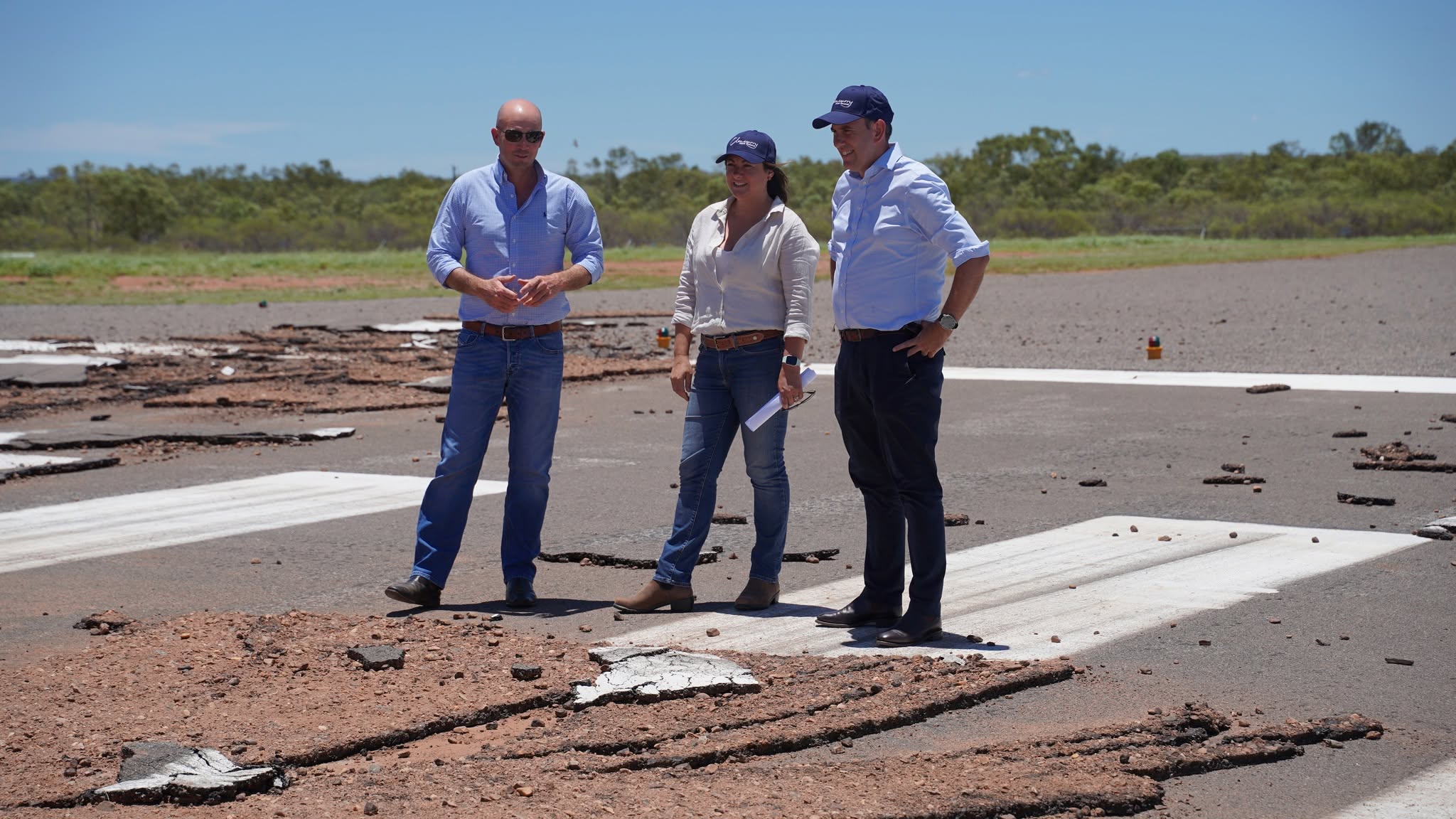
Cloncurry Airport could face an operational downgrade this wet season, potentially restricting FIFO aircraft and affecting mining operations across North West Queensland unless a further $10 million is secured for a permanent runway upgrade. Cloncurry Shire Council has warned heavier jet aircraft could be prevented from using the runway if conditions create the potential for a repeat of the major failure experienced earlier this year. The airport sustained significant damage in January when heavy rainfall associated with a monsoon trough and ex-Tropical Cyclone Koji damaged sections of the runway. Cloncurry Mayor Greg Campbell said safety would remain the priority. “It's not a decision we want to make, but we need to ensure our facility is safe,” Cr Campbell said. “The technical advice we are getting is that if we have a severe weather event like we had during this year's wet season, we will need to downgrade the airport to ensure we do not have another catastrophic failure of our key asset. “It’s critical that we protect our airstrip to prevent failure. The best solution would be to secure the required $10 million and have the upgrades completed prior to the wet season.” The Commonwealth and Queensland governments have committed $11.5 million through Disaster Recovery Funding Arrangements, with approximately $2 million used for emergency repairs that restored the runway to near-normal operations. However, Council says another $10 million is required to complete its broader $26 million rehabilitation program. Planning for the major upgrade began about four years ago after inspections identified the airport was approaching the end of its useful life. The project would not only rehabilitate the runway but support Council’s plans to develop the site into a broader aviation precinct capable of accommodating larger aircraft. Cloncurry Airport serves as a major gateway for the North West’s resources sector, supporting mining operations including Ernest Henry, Dugald River, Eloise, Austral Resources, Eva Copper, True North Copper and Rocklands, alongside future projects such as CopperString. “We've been working towards doing a major upgrade to the airport for probably four years now, where it was getting to the end of its life,” Cr Campbell said. “We were looking at growing our airport to be an aviation precinct.” Council had sought $14.5 million through the Federal Government’s Regional Precincts and Partnerships Program, however its application was unsuccessful. Cr Campbell said updating the application with market-tested tender prices was treated as a resubmission, moving the project from round two to round six of assessments and causing further delays. “The final advice that the CEO got gave us some confidence that we would be better off updating with the tendered prices,” he said. “But that was considered a resubmission and pushed us back. Instead of us being in round two, we ended up being assessed in round six.” Council is now calling on either the Queensland or Federal Government to provide the remaining funding before another major weather event places the runway at risk. “We don't care if the funding comes from Canberra or Brisbane, but we need that extra $10 million to get the work done so we can continue to be a major contributor to the economy,” Cr Campbell said. CAPTION: Cloncurry Mayor Greg Campbell with Federal Minister Kristy McBain and Treasurer Jim Chalmers at Cloncurry Airport. Photo supplied
Read the full story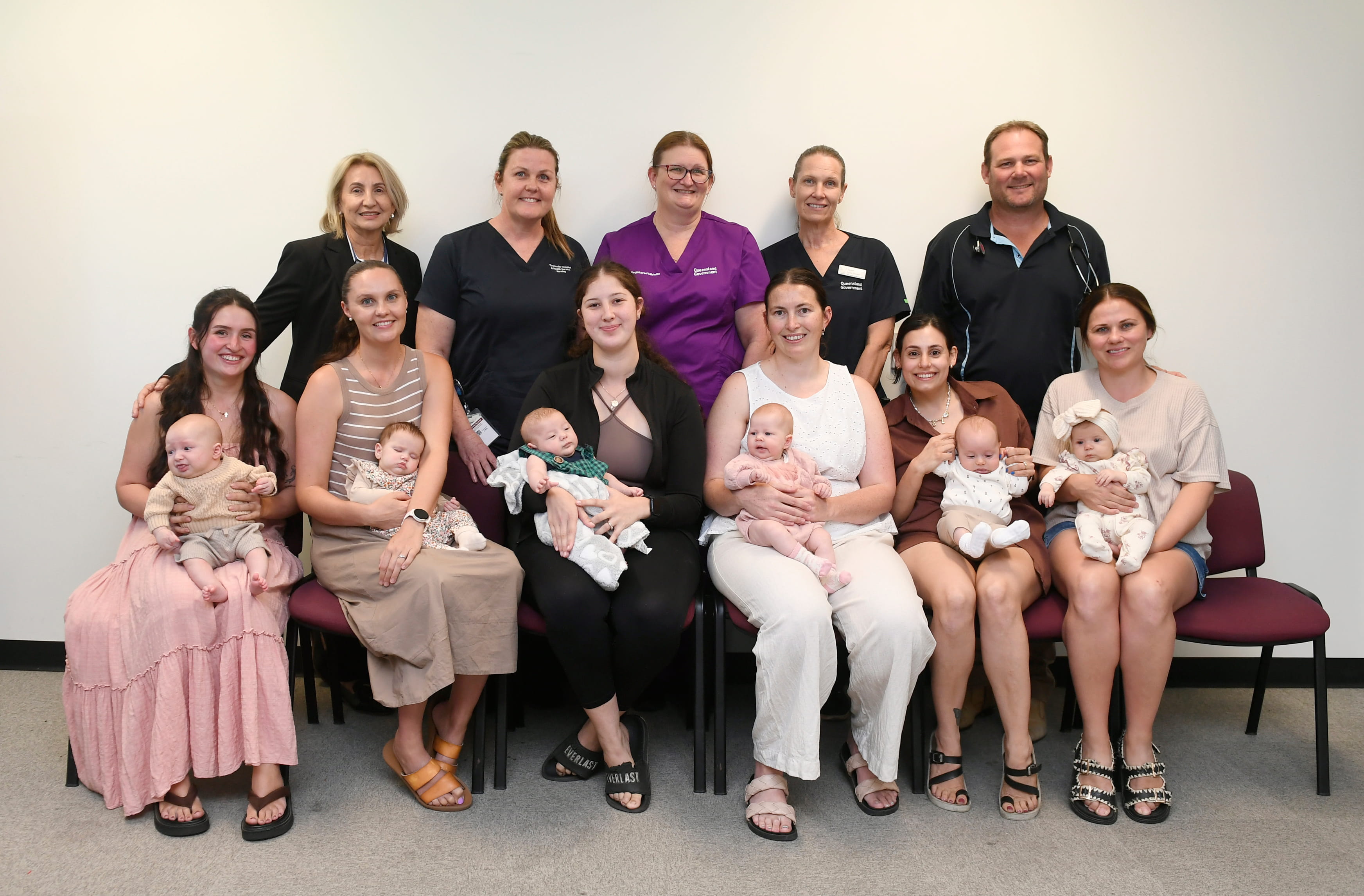
Back (from left): Tracey Gabiola, Ainsley Ferrando, Helen Kross, Carolyn Bell, Dr Ben Lawry. Front (from left): Tamika Crank & Rayf Pugh, Ayla Armstrong & Callie Armstrong, Chantel Ferrando & Maverick Rush, Stacey Butler & Remi Malaponte, Laura Cowan & Freya Cowan, Jessamy Nicolaides & Ava Nicolaides. Photo supplied. The Burdekin is booming with babies after six newborns arrived in less than four days at Ayr Hospital. The new Burdekinites are among 30 babies born at the hospital between May and July, making it the region’s busiest baby boom in more than half a decade.Baby Boom Sets Six-Year Record At Ayr HospitalA four-day birthing spree at Ayr Health Service has capped off the facility’s busiest maternity period in over five years, with six infants arriving in under 96 hours. The maternity unit welcomed a total of 30 newborns between May and July, marking the highest three-month tally at the facility since 2020. The total represents eight more births than the local average for the same period over the past six years. Director of nursing Tracey Gabiola said she could not remember a time when the local maternity service had been as busy. “While it has been an extremely busy time for our staff, particularly during a hectic few days at the end of May where six newborns arrived in less than 96 hours, staff enjoy working in a service where they can share in the joy of welcoming babies and supporting parents,” she said. “These are incredibly special moments, and we feel very privileged to be involved.” Ms Gabiola commended the adaptability of the health service workforce. “Whether responding to an emergency or assisting with the delivery of a baby, the team always steps up and I am incredibly grateful to them for always rising to the challenge.” Local mother Stacey Butler, who gave birth to daughter Remi Malaponte during the May delivery cluster, said it was important to be able to give birth in her hometown. “We are very fortunate to have the facility and the staff here so we can have our babies in our community,” Ms Butler said. “I really didn’t want to have to leave home and be away from my family and friends to give birth to my little girl. “She is perfect, and it means the world to me that she was able to be born in her hometown and surrounded by her loved ones.” CAPTION: 1—A four-day birthing spree at Ayr Health Service has capped off the facility’s busiest maternity period in over five years, with six infants arriving in under 96 hours. 2— The maternity unit welcomed a total of 30 newborns between May and July, marking the highest three-month tally at the facility since 2020. Photos supplied.
Read the full story
Cancer Council Australia’s Daffodil Day is returning this month for the 40th time, and among those embracing the occasion in bright yellow is Raelene Grantz and her Burdekin Delta Diner team. Daffodil Day is held each August to raise money for cancer research, prevention and support services, with the daffodil symbolising hope in the ongoing fight against cancer. That fight is personal for Raelene. After being diagnosed with breast cancer two years ago—and watching her twin sister battle it around 12 years prior—Raelene has made a point of doing her bit to support the cause. Her latest effort has seen the Delta Diner decorated in yellow over the last month as Daffodil Day approaches on the 20th. As well as posters and daffodils, Raelene has also put out a donation collection box with QR codes linking to a donation page. She said the endeavour was her “little way of helping.” “Cancer has touched my husband, my family, myself and some of our staff members over the years,” she said. “It’s an ongoing [battle], and it’s not letting up. We just have to keep doing our little bit with fundraising and supporting people through their journeys, and this is our way of doing it.” Raelene said the support so far had been overwhelmingly positive and encouraged others to get behind the cause by making a donation at the store. CAPTION: Cancer Council Australia’s Daffodil Day is returning this year for the 40th time, and no one in the Burdekin is embracing the occasion quite like Raelene Grantz and her Delta Diner team. Photo credit: Jacob Casha.
Read the full story

The Queensland Police Service (QPS) have made more than 4,200 youth arrests and laid over 18,000 charges in the first quarter of 2025 as part of an intensified crackdown on youth crime.
While no individual breakdown was provided for the Burdekin district, nearby areas including Townsville and the Mackay - Whitsunday region reported 464 and 59 youth arrests respectively, further suggesting youth crime remains a pressing concern for North Queensland communities.
The State Flying Squad, backed by $32.4 million in government funding, was deployed 22 times into crime hotspots between January and March, focusing on repeat youth offenders in both regional and metropolitan areas.
Premier David Crisafulli said the results mark the beginning of a new chapter in restoring community safety.
“Stronger laws, more police, early intervention and rehabilitation are all part of the fresh start for a safer Queensland,” Premier Crisafulli said.
Police also conducted over 12,000 wandings under Jack’s Law, seizing 112 deadly weapons in the process. Amendments have been introduced to make Jack’s Law permanent and expand police search powers further.
Locally, Burdekin residents are being urged to continue reporting suspicious activity and to stay engaged with community crime prevention initiatives.
“Queenslanders deserve safety and police deserve support, and we are delivering on both to turn the tide on Labor’s Youth Crime Crisis,” Minister Purdie said.
Members of the community are able to report crime information anonymously via Crime Stoppers by calling 1800 333 000 or reporting offences online at www.crimestoppersqld.com.au.

The Ayr Railway Station once stood as a bustling hub of life and transport in the Burdekin. Trains rolled in and out, carrying passengers, goods, and countless stories, many of which remain close to the hearts of local families today.
Though quieter now, the station still holds a special place in our town’s history. It was more than just a stop along the tracks it was where soldiers said goodbye, families reunited, and cane was carted to market.
What are your memories of the Ayr Railway Station? We’d love to hear your stories, whether it was catching your first train, farewelling a loved one, or simply watching the locomotives roll through town.
Send your reflections and photos to editorial@burdekinlife.com to be featured in an upcoming piece celebrating this treasured landmark.
The Ayr Railway Station as it stood in 1923 (Photo Source: Jennifer Thomas)

In the midst of another busy day at North Queensland Green Solutions Ayr, Rach and her dedicated team counted their 50 millionth container at the Ayr Depot, marking a mammoth milestone.
Celebrating with a deliciously extra special cake, the team took a moment to reflect on the amazing work they have all achieved for the Burdekin community in the way of supporting local sustainability and statewide recycling initiatives.
“To my recycling superstars, I’m so incredibly proud of you all – it takes a very special team to be able to achieve numbers like you do day in, and day out - you are all such amazing humans, and I’m so blessed to be on this journey with you,” shared Rach.
“To all our customers in the Burdekin, thank you so much for your support – without it we couldn’t reach 50 million!”
Since the Containers for Change initiative launched in November of 2018, over 10 billion containers have been returned for recycling across the state, returning more than $1 billion to Queenslanders pockets.
As part of the scheme, most aluminium, glass, plastic, steel and liquid paperboard beverage containers between 150ml and 3L are eligible for a 10-cent refund at local container refund points statewide.
Once the containers are collected, refund point operators sort them into material types before they’re transported for processing and recycling by accredited recyclers to be transformed into something new again.
More information on the Queensland Government initiative is available online at www.containersforchange.com.au.
“Cheers to 50 million, and 50 million more!”
In between a lineup of cars, the team were able to celebrate the huge recycling milestone (Photo Credit: NQ Green Solutions)
Recycling superstars! NQ Green Solutions' team were congratulated for their hard work (Photo Credit: NQ Green Solutions)

Burdekin Bowl is turning up the lights and the fun with a Glow in the Dark Theme Night on Saturday, the 31st of May, and the whole community is invited to join in!
Families, friends, school groups, work socials, mum squads or cousin crews, everyone is welcome to get a lane together for a night of laughter, strikes, and glowing good times.
The fun kicks off at 6pm, with entry just $12 for adults and $10 for children, including shoe hire.
Get your glow sticks ready and dress in your best glow-in-the-dark attire as there are prizes to be won and a licensed café and bar on-site to keep you fuelled throughout the night.
Each lane can host up to six people, and bumpers are available for those who need them!
Bookings are essential, so crack your glow sticks and secure your spot by calling 4783 3332 or messaging the Burdekin Bowl Facebook page.
Let the good times roll!
What: Glow & Roll at Burdekin Bowl
When: Saturday 31st May, 6pm
Where: Burdekin Bowl

In a thoughtful act of community kindness, Woolworths Ayr lent a helping hand to SES Burdekin during the recent flooding event by supplying snacks to keep volunteers going during their long and challenging shifts.
The simple but generous gesture provided a much-needed morale boost for the SES crew, who worked tirelessly to assist the community throughout the emergency.
“Thank you, Woolworths, for your care of the volunteers when times got tough,” SES Burdekin shared.
Across Queensland, State Emergency Service volunteers have had a demanding start to 2025, stepping up time and time again in the face of severe weather and community need. From devastating floods in the state’s north to the widespread impacts of Tropical Cyclone Alfred and record-breaking inundation across Central and South Western Queensland, these dedicated individuals have been on the ground helping wherever they are needed most.
Now, as the weather begins to ease, there’s a moment to pause and recognise the extraordinary work these volunteers continue to do. Wear Orange Wednesday (WOW Day), set for the 21st of May, will offer Queenslanders the chance to say thank you.
Falling during National Volunteer Week, which runs from the 19th to the 25th of May, WOW Day is a national initiative that celebrates SES volunteers and the crucial role they play in times of crisis.
Getting involved is simple. You can add a splash of orange to your outfit, attend a local event or celebration, or post a photo of yourself in orange to social media using the hashtags #thankyouSES and #WOWDAY. It’s a small but powerful way to show appreciation.
For more information and ideas on how to get involved in WOW Day, visit www.ses.qld.gov.au/wow.
SES Burdekin volunteers thanked Woolworths Ayr for their generosity over the festive season (Photo Source: SES Burdekin)

Earlier this May, curiosity and creativity were in full bloom as students, teachers, and parents from Home Hill Primary School crossed the river for a special excursion to the Lower Burdekin Landcare Association Inc.
The visit was part of the school’s exciting new sensory garden project - an initiative designed to engage students’ senses through nature. To help bring their garden to life, the students were invited to explore and handpick plants they’d love to see grow, and Lower Burdekin Landcare members were beyond delighted with the student’s choices.
“What a selection they made!” shared proud members of the Lower Burdekin Landcare team.
“They chose plants that they could see, taste, smell and hear – well done kids!”
With the warm guidance of Landcare’s wonderful volunteers, the children also got their hands dirty planting a variety of flower and veggie seeds to take back to school, ready to nurture, water, and watch grow.
“Thank you so much for visiting Landcare today, we loved having you here!”
Home Hill Primary School students engaged in a variety of educational activities led by Lower Burdekin Landcare Association volunteers (Photo Credit: Mrs Loring)

While many were busy egg-hunting over the Easter Weekend, the Home Hill Choral Society were singing their hearts out at this years North Queensland Eisteddfod in Townsville—and earning silverware in the process.
The Eisteddfod, which runs from Good Friday to Easter Sunday each year, invites both small and big choirs from Mackay all the way through to Cairns to compete across a wide range of vocal categories.
The Home Hill Choral Society—a team of 14 this year—competed in the Small Choir category, performing A Celtic Song of Thanks and An Irish Blessing in the Sacred Works section on Friday—performances which saw them bring home the winners trophy.
“We are very proud to have attended the Eisteddfod and represent our district,” says Music Director of the group, Cheryl Platt.
As well as competing at events like the NQ Eisteddfod, the Home Hill Choral Society rehearse twice a week, and often perform at various local events over the calendar year.
“We do shows around the year, and they’re usually theatre-restaurant shows. We do a variety of choral pieces as well as unison pieces and some fun pieces, and then we do some little skits,” says Platt.
“We also do a lot of community work—we sung at Anzac Day at the cemetery this year, and sometimes we do the Dawn Service.”
The group has also performed at many premier venues across Australia throughout its rich history, including the world-famous Sydney Opera House.
Now in its 94th year, the Home Hill Choral Society continues to proudly represent the Burdekin, serving as a true cornerstone of the local arts scene.
While many were busy egg-hunting over the Easter Weekend, the Home Hill Choral Society were singing their hearts out at this years North Queensland Eisteddfod. Photo supplied

If you’re on the hunt for bargains, looking to lighten your load at home, or simply keen to enjoy a relaxed morning out, mark your calendar for Saturday, the 14th of June for the beloved Arts on the Avenue Car Boot Sale!
Held on the second Saturday of each month, weather permitting, the event will once again transform the Ashworths Rock Shop Carpark into a lively community marketplace from 8am to 12pm. Shoppers can expect a mix of pre-loved clothing, second-hand treasures, handmade crafts, plants, and more.
More than just a place to shop, the Car Boot Sale champions sustainable living as by buying second-hand and giving unwanted items a new life, locals are helping to reduce landfill, lower consumption, and minimise waste, one purchase at a time.
Hosted by the Burdekin Artisan Community Association, the sale not only supports the environment but also contributes to the local arts community. With sites priced at just $10, it’s a low-cost way for stallholders to participate, whether you’re a creative looking to share your wares, or just decluttering your garage.
To book a site or find out more, call 0497 356 355.
Bring your reusable bags, sip on a coffee, and join in the friendly atmosphere this June!
What: Car Boot Sale
When: Saturday the 14th of June
Where: Ashworths Rock Shop Carpark, Home Hill
.jpg)
Burdekin Catholic High School warmly invites prospective students and their families to our Open Twilight Evening on Monday, May 26, from 4:30pm to 6:30pm. This special event offers a valuable opportunity to explore the heart of our vibrant school community, meet our passionate staff, and experience first-hand what sets BCHS apart.
The Open Twilight Evening is more than just a tour — it's a window into your child’s future. Families will have the chance to see our modern learning environments, explore subject displays, and talk to current students about their experiences. Staff will be available to answer questions about curriculum, student wellbeing, extracurricular opportunities, and the school’s strong Catholic values that guide everyday life at BCHS.
Choosing the right secondary school is a significant decision. Attending this evening gives families the information and confidence needed to make that choice with clarity. BCHS prides itself on nurturing students academically, spiritually, and socially, preparing them to thrive in an ever-changing world.
We encourage all prospective families to come along and discover the welcoming atmosphere and quality education that Burdekin Catholic High School has to offer.
All are welcome — please register at https://www.bchs.catholic.edu.au/quicklinks/twilight-open-evening/

Ayr State High School’s Sophie Robertson has been selected to attend the esteemed 44th Professor Harry Messel International Science School, to be held at the University of Sydney from the 7th to the 18th of July later this year.
Chosen from a highly competitive pool of over 450 applicants nationwide, Sophie is one of just 44 students across Australia to receive a coveted scholarship to the program. Sophie was also only one of five Year 11-12 students selected across Queensland and her place is fully funded by the University of Sydney’s Physics Foundation.
The International Science School offers high-achieving science students the chance to immerse themselves in two weeks of cutting-edge learning, collaboration, and cultural exchange. Sophie will join like-minded peers from around the globe, including China, India, Japan, the United States, the United Kingdom and New Zealand.
Throughout the program, students will tour state-of-the-art laboratories, take part in hands-on experiments, and have the rare opportunity to meet Nobel Prize laureates. Beyond the science, participants will enjoy a dynamic social calendar including a dinner cruise on Sydney Harbour, designed to build friendships and networks across continents.
Ayr State High School could not be prouder of Sophie’s remarkable achievement and wishes her all the best as she embarks on what is sure to be an unforgettable and inspiring scientific journey.
Ayr State High School student, Sophie Robertson will soon travel to attend the 44th Professor Harry Messel International Science School (Photo Supplied)

Nationally recognised award-winning cattle dog handler, Steven Elliott, will return to the region once again to host a comprehensive Working Dog School at the Ayr Showgrounds next month.
Hailing from Winton, 177 kilometers northwest of Longreach, Steven was left paralysed from the chest down after falling from a saddle bronc on New Year's Eve in 2003. However, despite a dislocated C6 and C7 vertebrae, Steven transformed his love for training and riding horses into an accomplished career training working cattle dogs. Steven’s work has been celebrated at multiple competitions over the years, and his talents have been broadcast across the country in 2024’s season of Muster Dogs Australia.
Steven now regularly travels the nation, running educational schools to share his wealth of dog training knowledge and methods with others, a passion he has been honing over the past 13 years. His love for the industry continues to grow, and Steven finds great fulfillment in seeing young dogs reach their full potential through each of his workshops.
“When you get a little pup who has so much desire for the herding instinct, watching them learn the skills is the most rewarding part of the trade,” shared Steven.
Having revisited the region after five years to make his Burdekin Show debut in June of 2024, Steven will journey back to Ayr once again to run lessons suitable for those of both beginner and experienced ability levels on the 21st and the 22nd of June.
Enrollment fees to the class are $550 each which includes lunches, smoko and an invitation to a wonderful BBQ on Saturday evening and all reservations can be made by phoning Richard on 0439 826 886.
What: Steven Elliot Working Dog School
When: 21st & 22nd of June
Where: Ayr Showgrounds
Steven Elliot's Working Dog School will be coming to the Burdekin this June (Photo Supplied)

Simon Hood, Wilmar Manager Grower Marketing
As the pricing nomination date for the 2025 season passes there are a couple of notable trends emerging
in the ways growers are approaching their GEI sugar price management.
Firstly, we are seeing a drift away from growers managing the price risk themselves and going back to
the pools.
Interestingly we have seen our first drop-off in growers choosing to manage their GEI pricing exposure
with the popular GMPRS product. In the same vein, we have a significant increase in the tonnage
committed to our Production Risk Pool.
A contributing factor to this trend is the continuing volatility in prices. This is creating pricing fatigue
amongst growers whereby the challenge of setting price levels creates doubt in their minds. No doubt the
consistent outperformance of our Production Risk Pool would also be influencing growers, but this may
not always be the case.
The other notable and linked observation is the level of forward coverage growers have for this season
and beyond. Broadly speaking, for growers who chose to use the Target pricing mechanism, around 30
per cent is locked in for the 2025 season. This is well down on previous seasons.
One factor influencing this outcome would be the late finish to the 2024 crush and extreme wet season,
leading growers to be cautious about expected production this year. Our recently released crop estimate
validates grower caution on production expectations.
The other factor is the absolute price level which has been under pressure most of the year. Coming out
of a period of relatively high sugar prices, growers may have to adjust down their expectations for the
balance of their price exposure.
Given this drift away from independently managing price risk, we have opened our Managed Pool Plus
early for 2026 season nominations. We will be accepting commitments from now through to 30 June
2025. This allows us to manage the price exposure over a longer time frame to take advantage of price
opportunities.
We recently completed a detailed review of the 2025 Season Managed Pool Plus and so far, the pool is
performing well above benchmark pricing, which is a good outcome for our growers.
The performance of the Production Risk Pool over the past three years is a significant factor when
growers choose how to price their GEI Sugar exposure

Ayr Bowling Club has been a hive of activity this week, with members turning out in strong numbers for a packed schedule of social games and championship matches. The lively atmosphere on the greens reflected both the camaraderie of the club and the competitive spirit of the championship season, now in full swing. Spectators and players alike were treated to an impressive display of talent, skill, and sportsmanship throughout the week.
Tuesday – Ladies’ Social Bowls
An enjoyable afternoon of friendly competition saw the team of Karen Shepherd, Ron Soper, and Mary Poli claim victory over Katharina Stuckler, Beryl Cornford, and Dot Cutting. Runners-up were Meryl Smith, Donna Soper, Sandra Stidston, and Irene Wilson, who edged out Isabel Cislowski, Linda Giumelli, Merle Nixon, and Heather Jorgensen in a well-fought match.
Wednesday – Men’s Social Bowls
Three games of triples were played, with the winning team consisting of Barry Hewson, John Pironne, and Ron Soper.
Wednesday Night – Social Bowls
Two games of triples were played under lights. Winners were Lyn Cecil, Rob Jorgensen, and Sam Caltabiano in one game, while the other match was won by Bertilla Piazetta, Margaret McLaughlin, and Ross McLaughlin.
Friday – Fun Night
Friday Fun Night was a fantastic success, with a great turnout for an evening of sausage sizzles and social bowls. The relaxed, welcoming atmosphere saw many newcomers trying their hand at bowls for the first time. Generously sponsored by Harvey Norman, Ayr, the night was filled with laughter and friendly competition. The winning team was Johnny Grabbi, Arthur Gauvin, and Joe Grabbi. In second place were Colin, Helen, and Nathan. The Sportsman’s Prize went to Mason, Elissa, and Laura for their spirited play and positive attitude.
Saturday – George Nixon’s 90th Birthday Celebration
Saturday was a special day as members gathered to celebrate the 90th birthday of life member George Nixon. In true generous spirit, George sponsored the day’s event, which was filled with good cheer, competitive bowls, and a strong sense of community.
Taking top honours were Angela Williams, Dino Poli, and Hugh Montgomery. Second place went to Shane, Lorraine, and Ron, with Barry, John, and Anthony finishing in third. It was a joy to welcome new members and visitors for such a memorable occasion.
Championship Results
In the Men’s A Singles, Ron Soper defeated Barry Shepherd 27–15.
In the A Grade Pairs, Joe Grabbi and Lew Stidston beat Anthony Bull and Maurie Power.
The Mixed Pairs also commenced this week, with Lorraine Wolffe and Anthony Bull recording a strong 34–9 win over Karen Shepherd and Barry Shepherd. All winning teams progress to the next round.
Upcoming Competitions
The draw for the Ladies’ Pairs has been completed and matches will be played as players become available. For the Triples, three teams will play a round robin format — the draw is now up on the board. Good luck to all competitors.
Get Involved – Friday Roll Ups
If you’re interested in giving bowls a try, Friday Roll Ups are a great way to start. Held every Friday from 3:00–5:30pm, these casual sessions offer a chance to sharpen your skills, enjoy a few drinks, and have a laugh with fellow members. Whether you're learning the ropes or just looking to relax, come down and join the fun.
A farmer dies by suicide in Australia every 10 days—a heartbreaking statistic that highlights the urgent need for targeted support in rural and agricultural communities.
Queensland Cane Agriculture & Renewables (QCAR) stands in solidarity with the many organisations working to change this reality, including Cores Queensland, a grassroots initiative making a powerful difference across the state.
Cores Queensland offers suicide prevention training and mental health support in regional centres such as the Burdekin, Hinchinbrook, Innisfail, Palm Island, Mackay, the Whitsundays, Wide Bay and the Sunshine Coast. These programs are designed to equip community members with the tools to recognise warning signs, offer support, and foster stronger local networks.
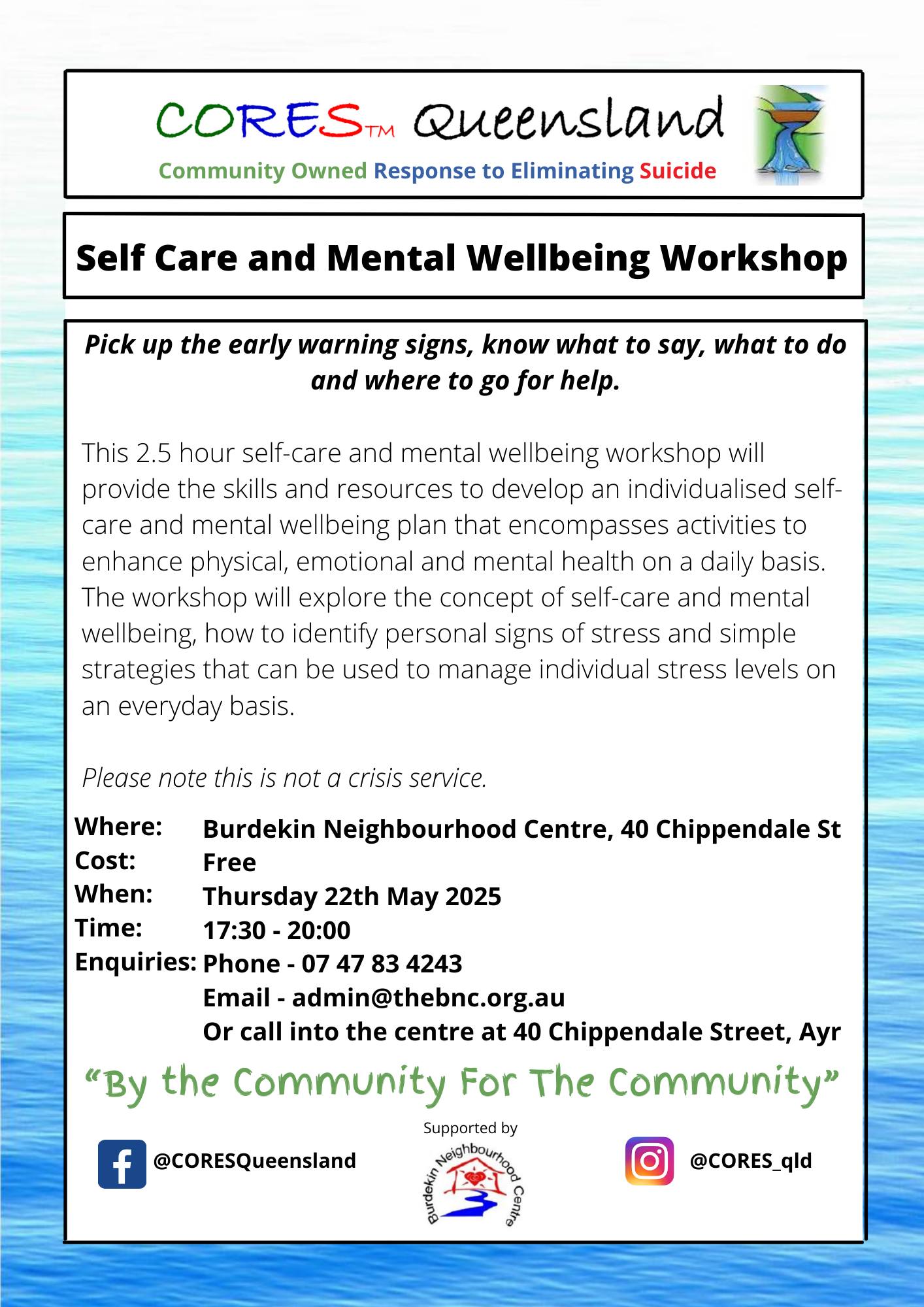
As part of this vital work, the Burdekin Cores Team is inviting locals to a free Self Care and Mental Wellbeing Workshop on Thursday 22nd May 2025 from 5:30pm to 8:00pm. This evening session offers practical strategies for managing mental health and creating safer, more supportive rural communities.
QCAR encourages growers, families and rural workers to prioritise their wellbeing and take part. Interested participants can book via the Cores Queensland Facebook page, email admin@thebnc.org.au, or call (07) 4783 4243.
Together, through open conversations and community-led action, we can ensure no one in the bush feels alone.

James Cook University scientists have found stonefish toxins could be used to fight parasitic worm infections suffered by nearly a quarter of the world’s population.
JCU PhD candidate Danica Lennox-Bulow led the study. She said parasitic gastrointestinal worms (helminths) are a massive problem around the globe - and it looks to be getting worse.
“It’s estimated that over two billion people, or a little over 24% of the global population, are currently infected with helminths. They can cause intestinal issues, organ damage, skin conditions, malnutrition and impaired growth and physical development,” said Ms Lennox-Bulow.
To make matters worse, existing drugs are becoming increasingly ineffective against the worms.
“It’s well-established that resistance has developed against all major classes of drugs used against helminth species that infect livestock.
“Within the last decade, cases of drug resistance have also emerged for helminth species that infect pets and humans. As such, new drugs with novel mechanisms of action are urgently needed,” said Ms Lennox-Bulow.
The scientists tested skin toxins from Queensland’s Estuarine Stonefish and Reef Stonefish against the infective (skin burrowing) larval stage of the Rodent Hookworm.
“While skin toxins from both stonefish species were found to be toxic to rodent hookworm larvae, those from the Estuarine Stonefish displayed the most favourable characteristics for therapeutic application.
“Specifically, the small size of the active components and their limited toxicity to mammalian cells in vitro are highly encouraging,” said Ms Lennox-Bulow.
She said components within the skin toxins from the Estuarine Stonefish show promise for therapeutic development.
“There’s still a lot of work to do before stonefish skin toxins are as effective against parasites as established drugs are. We need to drill down to find exactly what the active components are and we need to test these against a wider range of parasite species and taxa. But we’ve definitely found something here worth a closer look.”
Publishers Indemnity. Any individual or entity that places advertising, supplies copy material, or submits editorial content to Core Life Publishing agrees and undertakes to ensure that all such material:- Does not infringe upon any copyright, trademark, or other intellectual property rights;- Is free from any content that could be considered defamatory, libelous, or slanderous;- Does not infringe upon any rights related to privacy or breach of confidence;- Contains no obscene, indecent, or otherwise unlawful material;- Complies fully with the Trade Practices Act and all other applicable laws, regulations, or statutes.Furthermore, by submitting or placing such material, these individuals or entities agree to indemnify and hold harmless the publisher, Core Publishing and Events Pty Ltd, and/or its agents from and against any and all investigations, claims, demands, liabilities, damages, costs, or judgments arising out of or in connection with the material provided. All material is believed to be accurate at the time of printing and remains the copyright of Core Publishing and Events Pty Ltd.
© 2026 Life Publishing Group Pty Ltd.
