
Independently Owned, Locally Grown, Community Loved
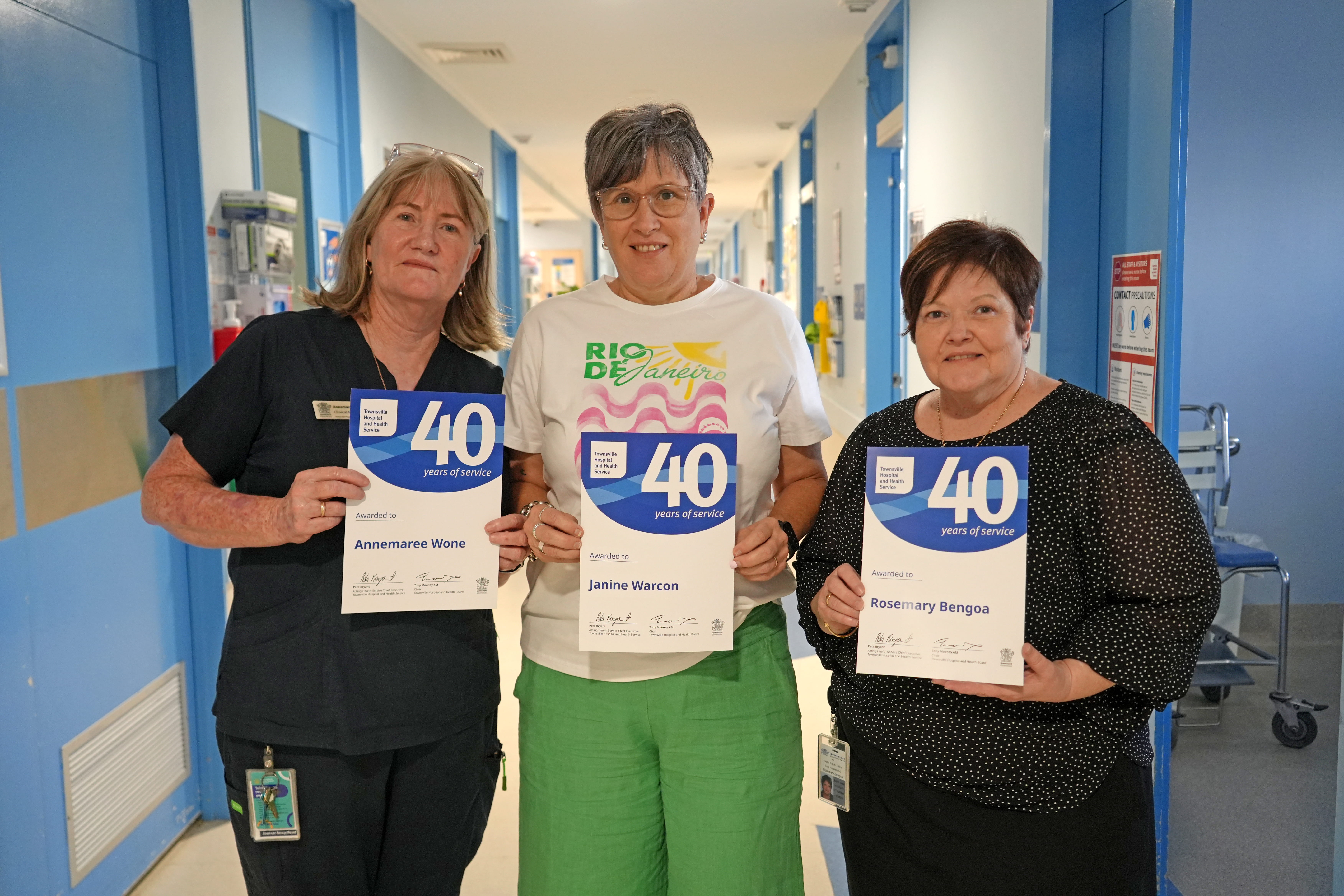
Three Burdekin hospital workers have clocked up 120 years of combined service to the Ayr and Home Hill communities. Rosemary Bengoa, Janine Warcon and Annemaree Wone have each reached 40 years of service, with the milestone recognised at local staff thank-you events. Rosemary began at Ayr Hospital in 1985 in the front office before moving into medical records, accounts payable, assets and finance. Janine started in the Home Hill Hospital kitchen and has since worked across kitchen, cleaning and laundry roles at both Ayr and Home Hill. She later became an orderly before moving into her current role as an assistant in nursing at Home Hill. Annemaree began her career at The Prince Charles Hospital in Brisbane, working as an enrolled nurse for four years before completing her registered nurse training in Townsville. She returned to the Burdekin after the birth of her first child and now works across the dialysis unit and emergency department at Ayr. The three staff members said their connection to the community, colleagues and variety of work had kept them in the health system for four decades. “Your work colleagues and the friendships you make along the way keep you in the role,” Rosemary said. For Janine, working in her own community and caring for patients has been a key part of her career. “We’ve had some funny moments; just the other night one patient was disco dancing in the hallway with me,” she said. Annemaree said working across different areas had kept her career varied. “I work in dialysis, sometimes in the emergency department, and sometimes on the ward, and because I have always worked across multiple areas, I’ve never felt stuck in one place,” she said. The breadth of responsibilities is a common feature of working in rural hospitals, Ms Wone said. “You need to know lots of different things when you work in a rural or remote hospital setting, so we are very busy,” she said. “But even with how much we have all achieved, I can’t believe it’s been 40 years; it feels like it happened overnight.” CAPTION: Rosemary Bengoa, Janine Warcon and Annemaree Wone have each reached 40 years of service, with the milestone recognised at local staff thank-you events. Photo supplied
Read the full story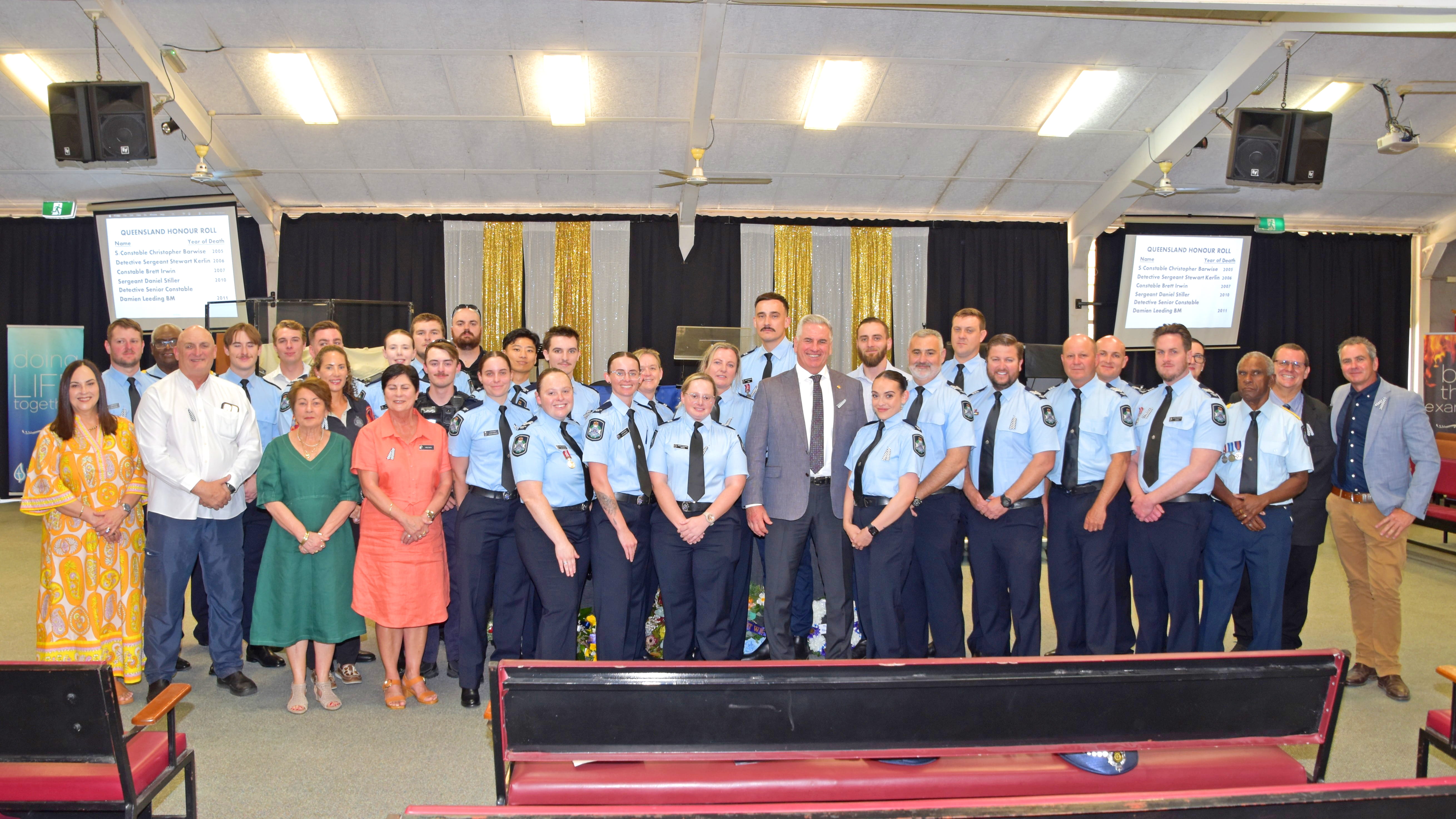
Burdekin police, dignitaries and community groups gathered Tuesday morning to honour officers killed in the line of duty. Photo: David CooperBurdekin community members, local dignitaries, and police gathered at Ayr's Burdekin Community Church on 29th September to commemorate National Police Remembrance Day. The solemn service honoured officers who made the ultimate sacrifice in the line of duty, featuring a wreath-laying ceremony and a reading of the Roll of Honour.Read more here: www.burdekinlife.com/article/burdekin-honours-fallen-officers-on-remembrance-day
Read the full story
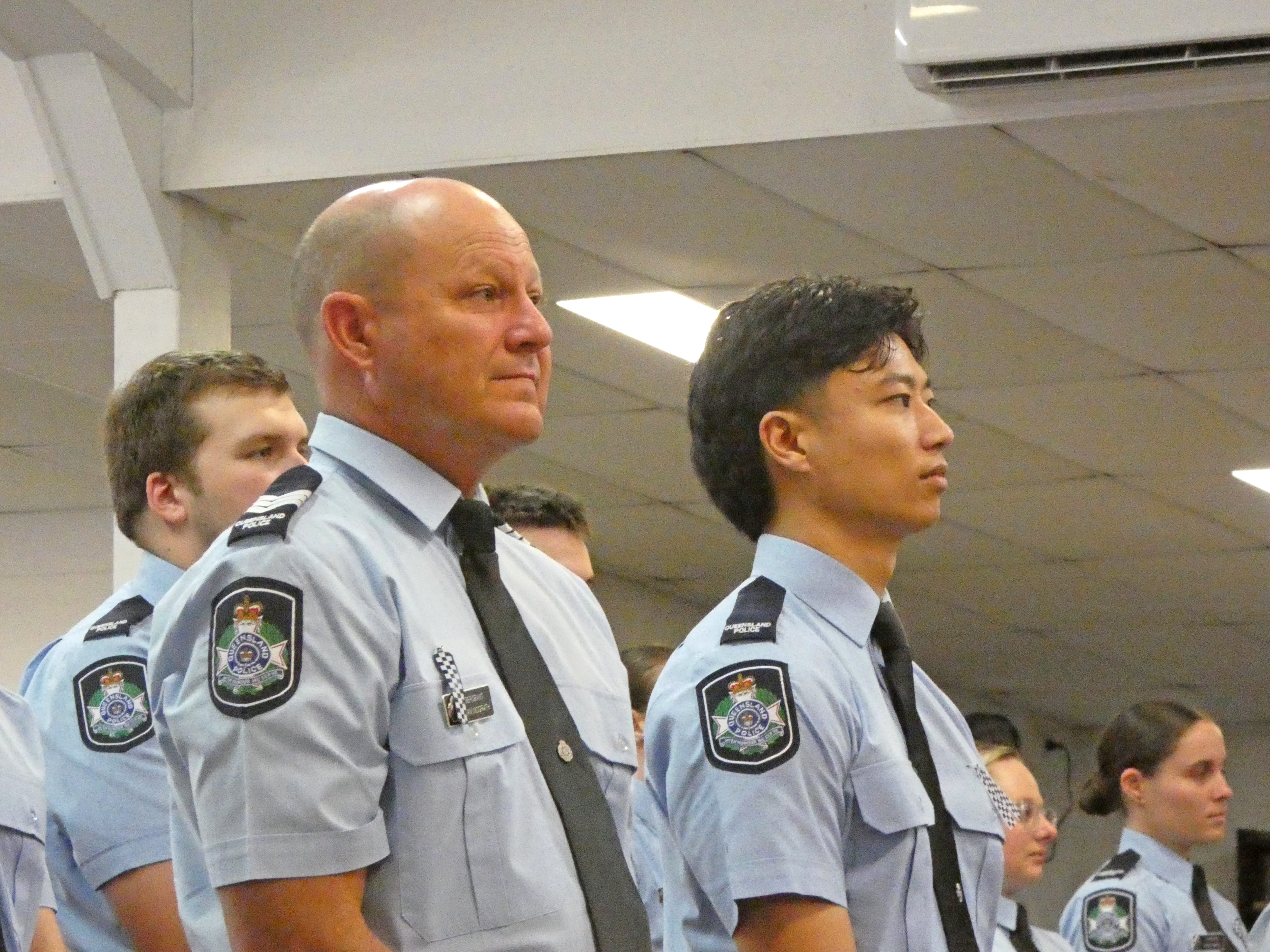
Burdekin police, dignitaries and community groups gathered on Tuesday morning to honour officers killed in the line of duty. Held at the Burdekin Community Church in Ayr, the service formed part of National Police Remembrance Day, observed each year on 29th September. Pastor Peter Holmes, who led the service, said it was a chance to pay tribute to the bravery and service of the fallen. “Someone has to protect those who cannot protect themselves. Someone has to step into the disorder and work to restore order—and that is one of the responsibilities entrusted to our police,” he said. “Today, we honour those who stood. Some stood in circumstances that ultimately cost them their lives, and this day each year ensures that their courage will never be forgotten.” A Police Commissioner’s Address was delivered by Acting Inspector Megan Benson before local officers read the Roll of Honour, commemorating police officers killed in the line of duty. Officers then lit memorial candles, before community groups joined police and dignitaries in laying wreaths. Among dignitaries were Burdekin Shire Council Mayor Pierina Dalle Cort and Member for Burdekin Dale Last, who called it a “privilege” to join local police in their commemorations. “As a former police officer, National Police Remembrance Day is an incredibly important opportunity to remember those officers who lost their lives while serving their community and to show our support to those who continue to keep our communities safe today,” Mr Last said. “Small regional towns like the Burdekin mean our police officers become involved in a variety of facets in our community and it is part of what makes these roles in our small communities so unique.” “It also means that chances to stand with our men and women in blue should not be overlooked.” A morning tea was held in the church hall following the service. CAPTIONS: 1—Burdekin police, dignitaries and community groups gathered Tuesday morning to honour officers killed in the line of duty. 2—Pastor Peter Holmes, who led the service, said it was a chance to pay tribute to the bravery and service of the fallen. 3—Held at the Burdekin Community Church in Ayr, the service formed part of National Police Remembrance Day, observed each year on 29th September. 4—Mayor Pierina Dalle Cort and Deputy Mayor Max Musumeci laid a wreath on behalf of Burdekin Shire Council 5—Among dignitaries was Member for Burdekin Dale Last 6—Local officers read the Roll of Honour, commemorating police officers killed in the line of duty 7—Liaison Officers light memorial candles 8—Senior Sergeant Lisa Shields addresses the audience 9—Community groups joined police and dignitaries in laying wreaths Photos: Jacob Casha
Read the full story
.jpg)
Opinion Piece by Member for Dawson, Andrew Willcox
Most Australians do not spend their days reading tax legislation. They are busy working, raising families, running businesses and trying to put something aside for retirement. That is precisely what the Federal Labor government is counting on, sneaking even more tax changes through in their 2026 Budget.
The Government promised its new capital gains tax changes would leave superannuation alone. Now the Financial Services Council is warning the fine print could expose $372 billion of Australians’ retirement savings to higher tax, potentially raising more than $55 million a year.
A hidden super tax.
There may be no bill in the letterbox, but Australians will still pay. And we all know under this Labor government there’s very little left in the household budget after paying the many taxes they enforce, and now they are coming after your hard-earned superannuation as well.
The impact could work its way through the investment structures used by super funds. Changes to the way capital losses are applied can mean some investments generate a higher tax bill than they would have, under the existing rules. The industry is warning that, ultimately, those costs can flow through to lower returns for Australians’ super.
That might sound like a technical argument.
It isn’t.
If your super earns less because more tax is being taken from its investments, you have less money for retirement.
You might be 35 and watching your super balance grow. You might be 55 and counting down the years until retirement. You might already be retired, relying on your savings to help pay the bills.
Every dollar that disappears from your retirement savings is a dollar that will not go towards paying for groceries, electricity or healthcare later in life.
This Labor Government is very good drumming up stories about what it hands out, and very quiet with what it takes. They love announcements and headlines of what Australians are getting, but behind the scenes, the taxes keep growing, giving with one hand, and taking more with the other.
The extraordinary part is that the Government has already told Australians that super would be carved out of these changes. If that is what they intended, then why hasn’t the legislation been fixed?
Do not force Australians to spend precious time reading the fine print to realise another promise made by the Prime Minister and Treasurer has been broken.
People deserve honest taxes made clear at election time with no surprises down the track.
Superannuation is not the Government’s money. It belongs to Australians who worked for it, saved it, and were told it would be there when they retire.
The Liberals and Nationals will keep fighting against these toxic taxes and hold this deceitful government to account.
Australians deserve to be able to keep more of what they earn and have confidence that the money they have saved for retirement will remain theirs.
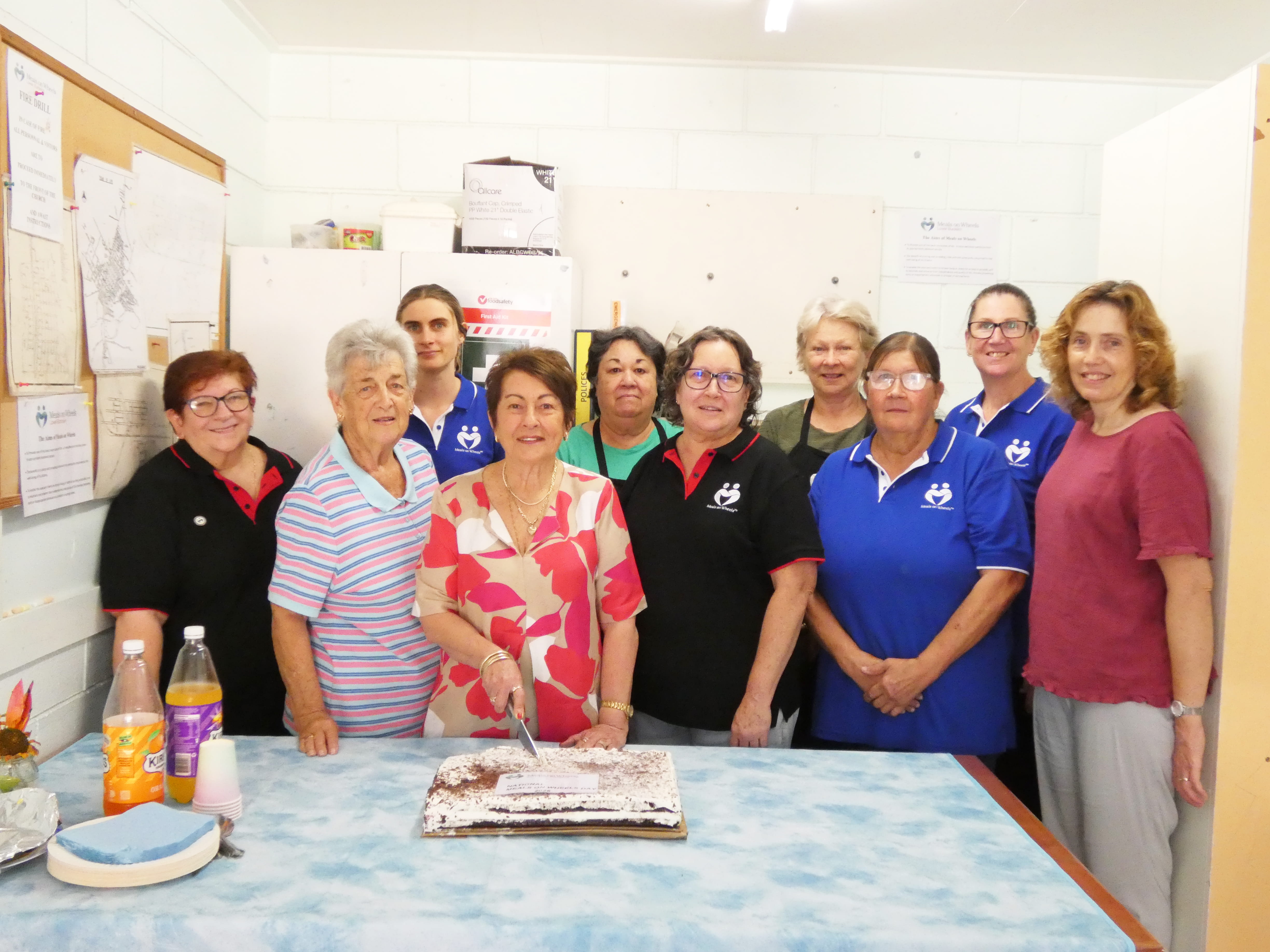
Meals on Wheels Lower Burdekin marked National Meals on Wheels Day with a celebration at its kitchen on MacMillan Street, Ayr. Photo: Jacob Casha.
Meals on Wheels volunteers across the country were recognised last Wednesday for the resilience they showed during the COVID-19 pandemic and the challenges that followed.
For the Lower Burdekin Committee, that meant a small gathering at its MacMillan Street kitchen in Ayr, where volunteers were joined by Burdekin Shire Council Mayor Pierina Dalle Cort in marking the occasion with a cake-cutting ceremony.
Saint Andrews Meals on Wheels Lower Burdekin has serviced the Burdekin region for more than 50 years, preparing and delivering nutritious meals to people requiring assistance at home.
As well as the Burdekin, Meals on Wheels operations across the country took a hit when COVID diagnoses came to light five years ago, with many volunteers aged 70 and over recommended to self-isolate, while younger volunteers stood up.
Now, Meals on Wheels Australia President, Sharyn Broer has thanked the 76,000 people who continue to volunteer for the organisation, ensuring older Australians remain nourished and safe at home, not only during a pandemic, but every day.
“We are so thankful for our volunteers,” Mrs Broer said.
“Regardless of the emergency—devastating bushfires, or in a pandemic, our volunteers continue to roll up their sleeves and deliver life-changing support.”
While Mrs Broer particularly commended the MOW Lower Burdekin Committee for their “immense resilience through the pandemic,” she said the ongoing sustainability of the service remains its biggest battle.
Minister for Aged Care and Senior Australians Senator Richard Colbeck acknowledged the inequitable distribution of funding and advised Meals on Wheels Australia of an upcoming funding review for meal service providers within the next 12 months.
“We are pleased the Government has recognised the problem,” Mrs Broer said.
“However, our concerns remain about the timing of the review and the impact this will have on services that are already struggling to remain financially viable.”
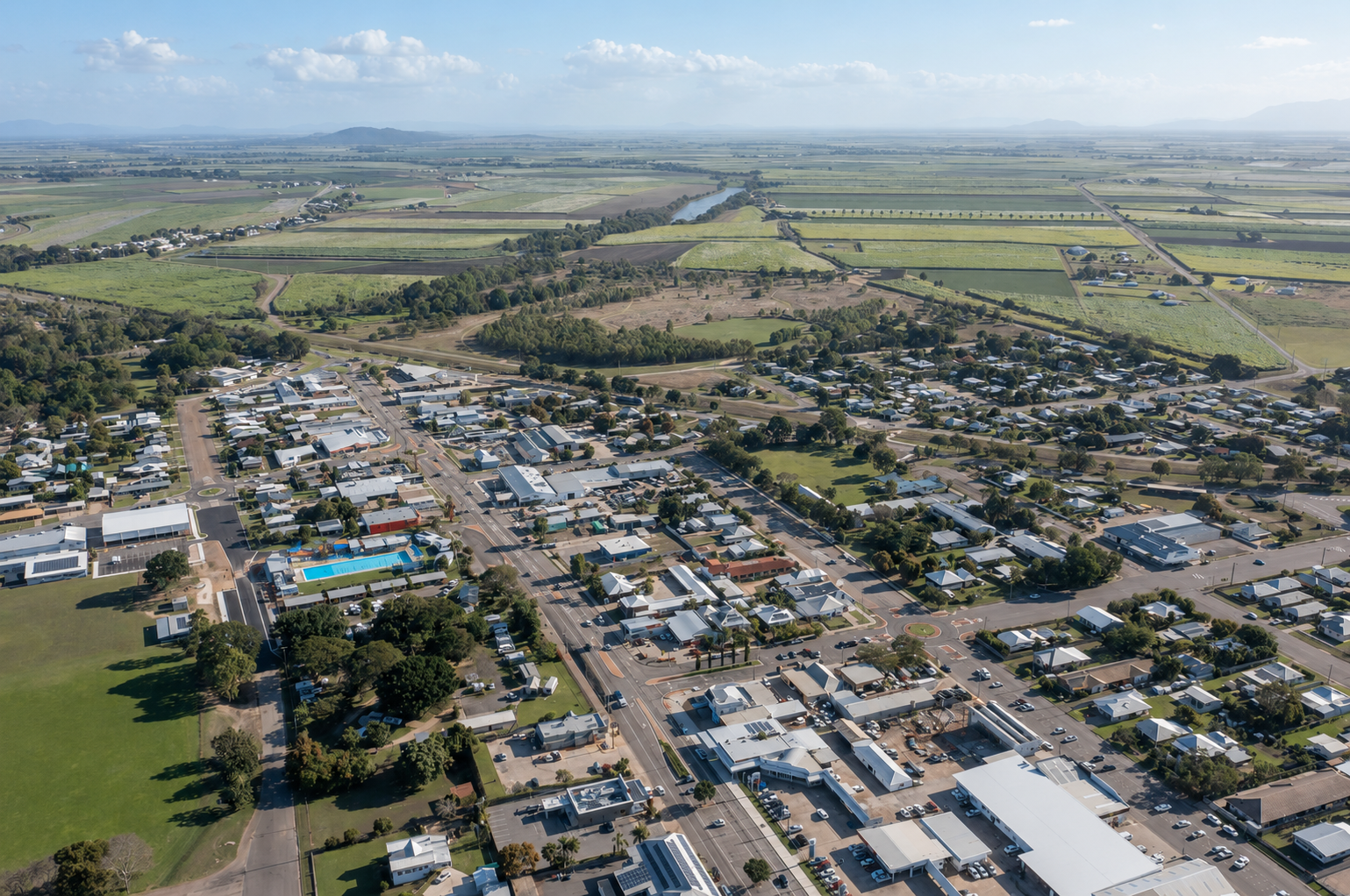
The Burdekin could be among the regional communities to benefit from a Coalition pledge aimed at unlocking thousands of new homes across rural Australia. Photo: alamy.
The Burdekin could be among the regional communities to benefit from a Coalition pledge aimed at unlocking thousands of new homes across rural Australia.
The Coalition has committed $1.5 billion of its proposed $5 billion Housing Infrastructure Fund specifically to regional, rural and remote Australia.
The fund would pay for foundational infrastructure like roads, water and sewerage needed to support development, with the Coalition saying its broader $5 billion commitment could unlock up to 400,000 homes nationally.
Federal Member for Dawson Andrew Willcox said regional communities needed greater support to accommodate growth.
“The regions are doing the heavy lifting for the Australian economy. We should not be told to grow, and then left to work out how to pay for that growth ourselves,” Mr Willcox said.
“We need houses, but we also need the roads, water, sewerage and other infrastructure that makes those houses possible.”
The pledge comes as the Burdekin continues to grapple with a shortage of housing and development-ready land.
Burdekin Shire Council has already identified infrastructure as a major barrier to housing growth, lodging a $53 million application through the Queensland Government's Residential Activation Fund to unlock about 1,000 residential lots in Ayr.
The proposed project would deliver trunk infrastructure to growth areas around Craig Street, Chippendale Street and Beach Road, including roads, water and sewerage.
Council is currently awaiting the outcome of its Round 2 RAF application, having previously secured more than $500,000 through the fund's first round for planning, hydraulic modelling and detailed infrastructure design.
While the Coalition has not yet outlined how its regional allocation would be distributed, Mr Willcox said investment in housing infrastructure would ultimately determine whether regional communities could continue to grow.
“If a nurse, teacher, tradesperson or young family cannot find an affordable place to live in Dawson, eventually they will look somewhere else,” he said.
“Businesses cannot expand if they cannot attract workers. Industries cannot grow if workers have nowhere to live.”
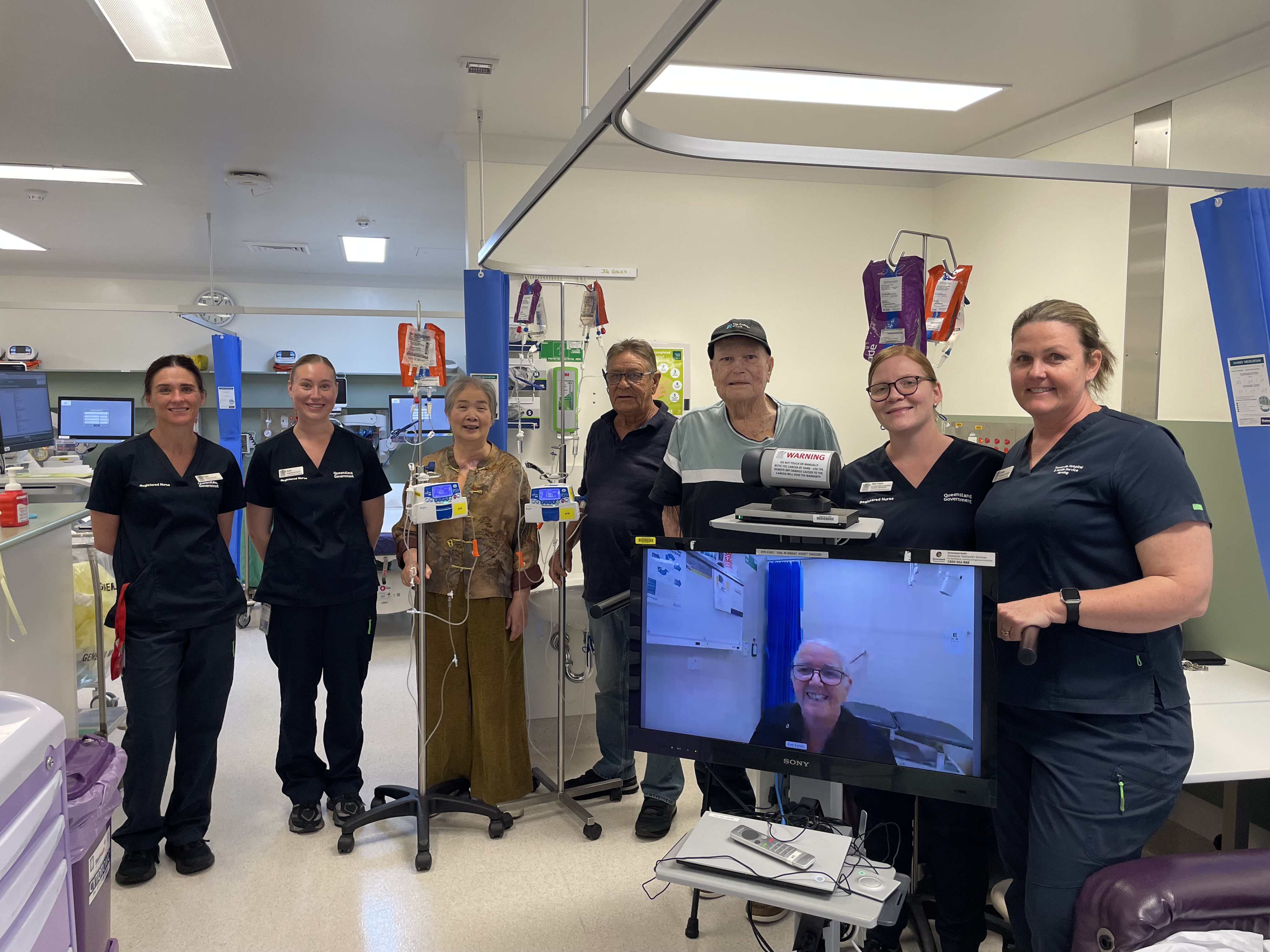
Registered nurse Katie Federici, registered nurse Sarah Morris, Jun Liu (patient), Donald McRae (patient), Wayne Ace (patient), Ambulatory oncology and medical infusion services acting clinical nurse Taija Kennedy, clinical nurse consultant Ainsley Ferrando, and clinical nurse consultant Eve Eynon (on screen). Photo supplied.
A new telehealth service means Burdekin cancer patients can now receive chemotherapy in Ayr, cutting hours of travel and easing the burden on patients and their families.
The service will see patients consult remotely with a doctor from the Townsville Cancer Centre and receive treatment under supervision from a trained nurse at the Ayr Health Service.
Burdekin local Wayne Ace, who was receiving treatment after having a cancer removed, called the service a godsend for him and his family.
Mr Ace previously had to travel to Townsville for treatment, meaning he could be out of bed by 5am and not home until after 6pm.
The trip involved blood tests, a doctor consultation and chemotherapy, while finding someone to accompany him could turn treatment into an exhausting full-day commitment for both.
Now, Mr Ace can receive his treatment in Ayr in just a couple of hours every fortnight.
“It’s relieved a lot of the stress and anxiety of needing to get the treatment which has been huge for my family and me,” he said.
Ambulatory oncology and medical infusion services acting clinical nurse consultant Taija Kennedy said the service was already proving successful despite being in its early stages.
“This is quality of life improvement for our Burdekin oncology patients and their friends and family,” Ms Kennedy said.
The service is currently limited in the number of patients it can treat each week, but Ms Kennedy said there was capacity for it to grow.
“A lot of work has gone on in the background to make this possible and it’s exciting to see this important service available for our patients in their hometown.”
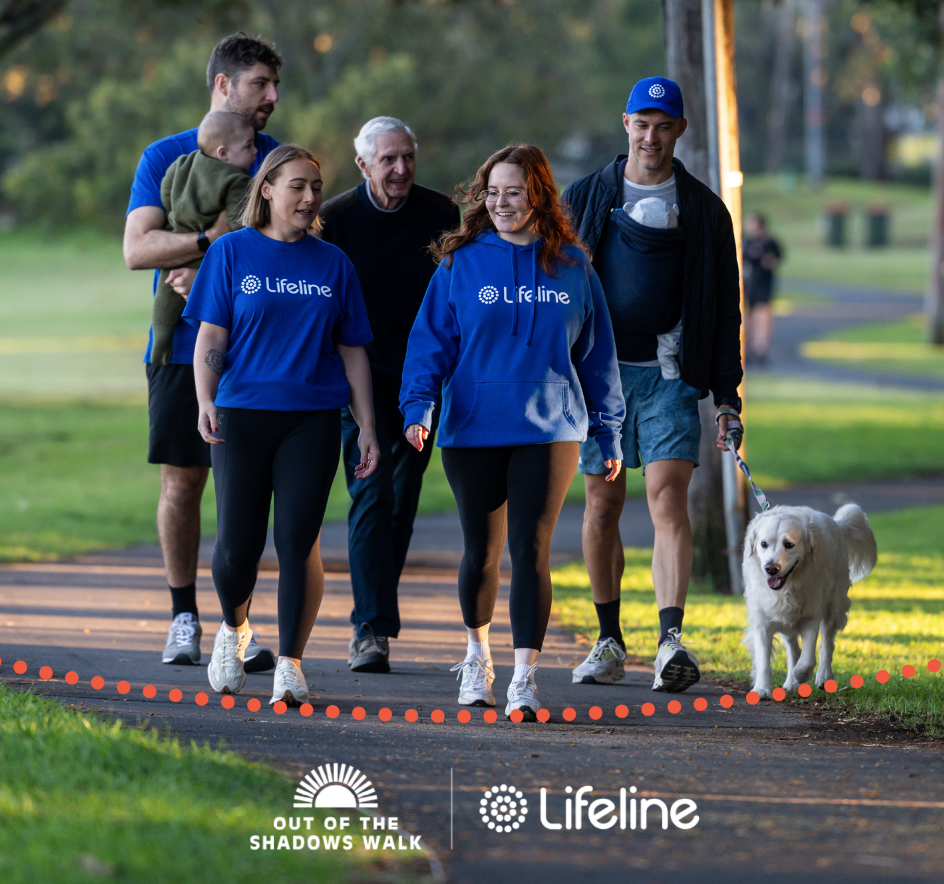
Burdekin residents are being encouraged to lace up and take part in Lifeline’s Out of the Shadows Walk this September, helping remember Australians lost to suicide while raising funds for vital crisis support.
Held in recognition of World Suicide Prevention Day on Thursday 10th September, participants are challenged to walk nine kilometres; representing the nine Australians who die by suicide each day.
Participating in the challenge could not be easier, and the walk can be completed anywhere, anytime, either on 10th September or on a date that suits participants, making it an accessible way for individuals, families, workplaces and community groups to get involved.
All funds raised through the challenge will help Lifeline continue providing 24/7 crisis support and suicide prevention services across the country, supporting the 3,600 people who contact Lifeline’s crisis support line each day.
Participants can walk in memory of a loved one, as a personal tribute, or simply to show support for anyone experiencing emotional distress. Community members can register online via www.outoftheshadowswalk.org.au and are able to fundraise individually or form a team and walk together.
Close to 40 disadvantaged young people and job seekers will be given a head start in gaining the skills, confidence and support needed to secure sustainable employment in the Burdekin Electorate.
Member for Burdekin Dale Last welcomed the Crisafulli Government’s $215,500 investment in the Burdekin PCYC’s successful Get Set for Work program and the $146,800 investment into WhitsundaySuccess Pathways’ Work Skills Traineeships program to be delivered in Bowen.
Included in the $46.2 million round of Skilling Queenslanders for Work Program, the two projects are among 166 across Queensland targeted towards skills shortages in priority industries in our community and region.
“The Burdekin PCYC’s Get Set for Work program has already proven a success in our community and this round will see a further 36 disadvantaged young adults receive skills industry-recognised training including First Aid, White Card, RSA, RSG and driver licensing support,” Mr Last said.
“By providing the additional wrap around support as part of both the Get Set For Work and the Whitsunday Success Pathways programs, disadvantaged young adults will receive a holistic experience tailored to each of their needs.”
“We have already seen the successful results in our community with past participants becoming the skilled workers we need in priority industries like construction, health, community services and hospitality.”
Mr Last said the state government funded program had the ability to provide real impacts on communities in regional Queensland that often faced significant skills shortages.
“In order to grow our local workforce and bolster our region’s economy, we need to be able to retain young adults in our community and that means ensuring there are positive career pathways available and the ability to obtain the skills needed in our towns,” MrLast said.
“Programs like Skilling Queenslanders for Work demonstrates the Crisafulli Government’s focus of providing better outcomes for workers, employers and local communities.”
“This is a great outcome for Burdekin and Bowen communities whose economies ultimately benefit from the addition of skilled, local young workers.”
Supplied by the Office of Member for Burdekin Dale Last MP.
A draft 20-year plan released for North Queensland has pledged to protect the Burdekin's productive agricultural land while planning for new housing, infrastructure and economic growth.
Burdekin Shire is one of just five council areas directly covered by the North Queensland Regional Plan, meaning decisions made through the planning process will help shape the district's future development.
The draft plan is accompanied by a North Queensland Infrastructure Plan, bringing future land use together with planning for transport, water, energy, digital connectivity and social and community infrastructure.
For the Burdekin, where agriculture remains a cornerstone of the local economy, Member for Burdekin Dale Last said protecting productive land must remain central to decisions about future growth.
“The Burdekin is an agricultural powerhouse and an important contributor to Queensland’s economy and protecting our productive land must remain a priority as the region grows,” Mr Last said.
“This draft plan provides an opportunity for local communities, farmers, businesses and industry to have their say on how North Queensland grows over the next two decades.”
The regional planning framework is particularly significant for agricultural communities because Queensland's planning system recognises priority agricultural and strategic cropping areas when managing competing land uses.
Alongside protecting established industries, the North Queensland planning process is focused on housing supply and economic development and will provide direction for future local planning and development assessment.
That gives Burdekin residents and industry an opportunity to weigh in on how growth should be accommodated while retaining the productive land and economic strengths already supporting the district.
Farmers, businesses, industry groups and residents can make submissions on the draft plan during the public consultation period.
Feedback closes on Tuesday 29th September.
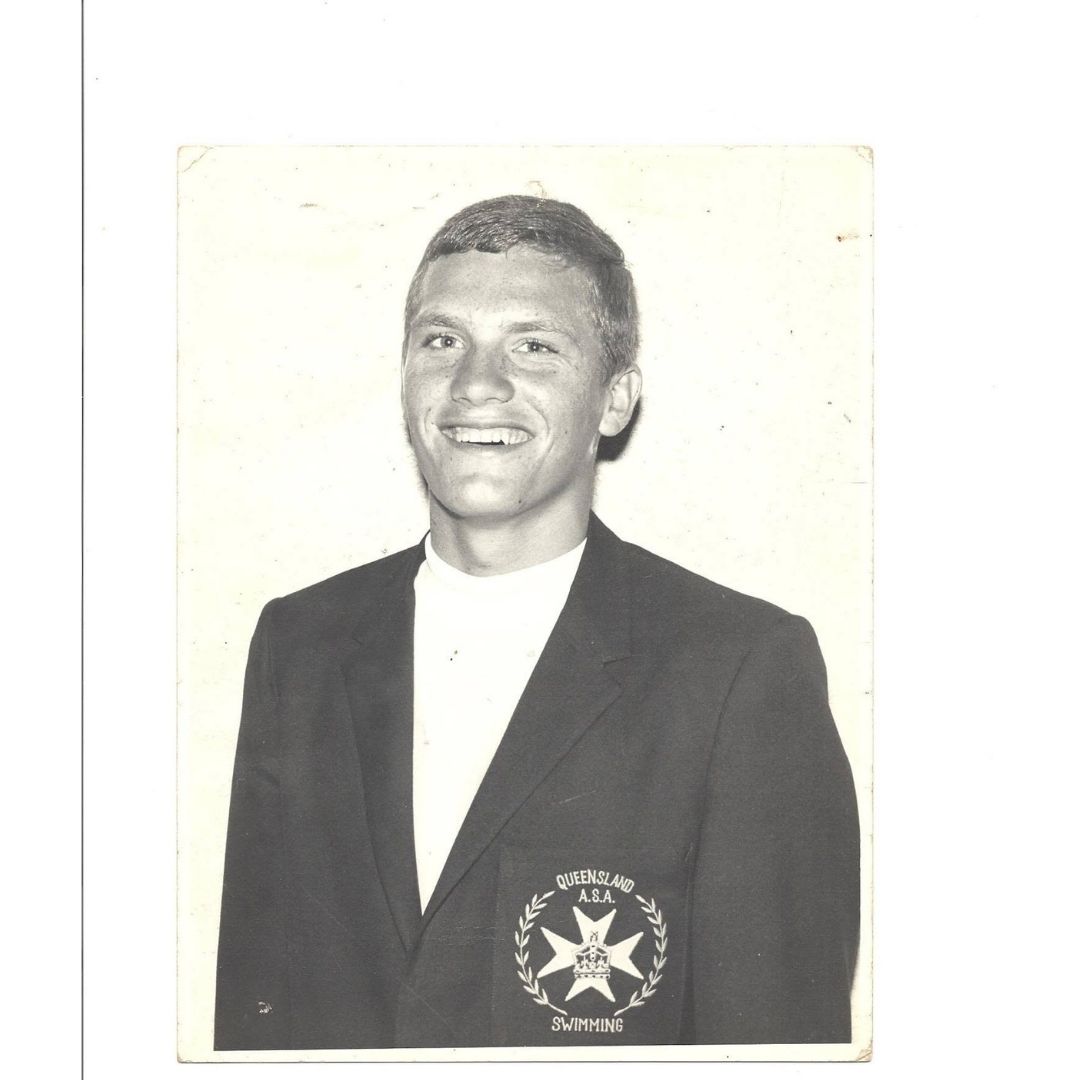
Remembered by peers as a "true gentleman" and a stable, calm presence on the regional Lions cabinet, Max Tavasci devoted his final years entirely to service. Photo: supplied
Long before Max Tavasci became a fixture at Lions Club fundraisers and children’s eye screenings across Outback Queensland, he was a young North Queensland swimming star making Australian sporting history.
A 1970 Commonwealth Games silver medalist, former sugar cane farmer, and dedicated volunteer, Max passed away suddenly on the 29th of July while traveling out west with his caravan to bring vision screening to school children in Mount Isa and the Gulf country. He was 72.
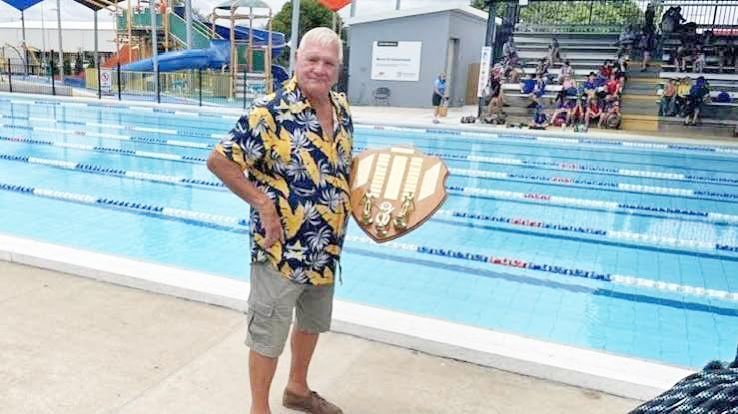
Born and raised in Ayr to Italian farming parents, Battista and Margaret Tavasci, Max grew up on the family property. Encouraged by his mother to stay active, he developed into an elite swimmer alongside his siblings, training in local waters and rubbing shoulders with visiting athletes.
His hard work culminated in 1970 when he represented Australia at the Edinburgh Commonwealth Games, claiming a silver medal in the 1500m freestyle while his father served as a race timekeeper. His legacy endures in his hometown, where the 'Max TavasciTrophy' is still presented annually at the Ayr School Swimming Carnival.
Following his athletic success, Max worked on the family farm, laboured in Tasmania and Maryborough, and drove trucks before returning to North Queensland. Known for his love of colourful shirts, fast cars—which his son fondly noted he rarely drove fast—and Meat Loaf records, Max lived a full and colourful life.
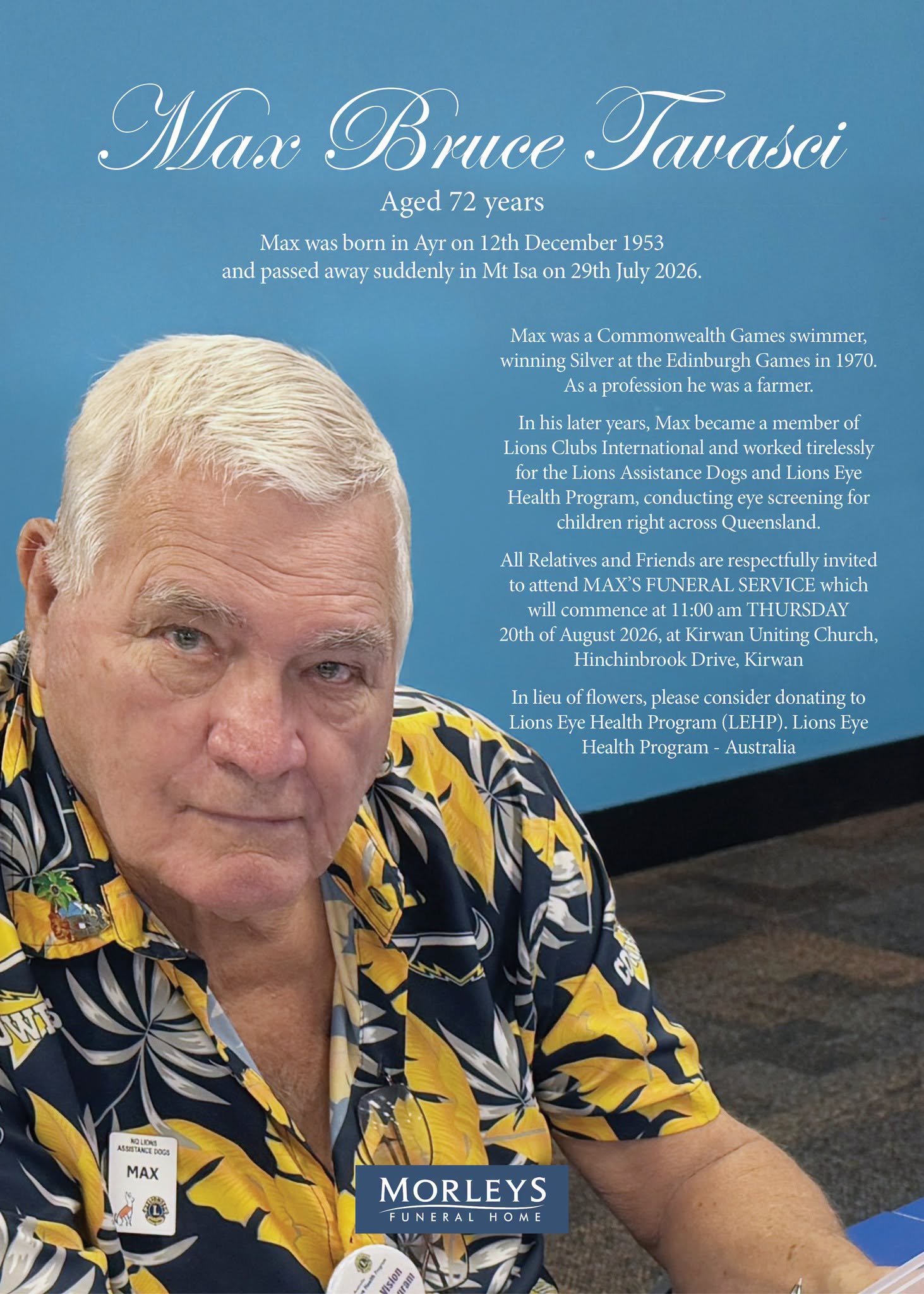
"He had the heart of a champion, handed down from my dad," said his sister, Paula Dowson. "He died doing what he loved to do."
In the second half of his life, Max found a renewed sense of purpose through Lions Australia. Over 18 years of service with the Burnie City, Cleveland Bay, and Townsville Castle Hill Lions Clubs, he became a tireless community worker.
Alongside his partner of more than 20 years, former District Governor Michael MacLaren, Max traveled across Queensland conducting paediatric vision checks, running raffles for Lions Assistance Dogs, delivering meals for Eat Up Australia, and assembling disaster relief hampers for flood-affected regions.
Remembered by peers as a "true gentleman" and a stable, calm presence on the regional Lions cabinet, Max devoted his final years entirely to service.
"I feel Dad found himself and his place with Michael, Lions Australia and the church, evidenced by the lasting happiness he displayed over the last two decades,” said his son, Scott Tavasci.
Max is survived by his partner, Michael MacLaren; his son, Scott; his granddaughters, Scarlett and Eloise; his sister, Paula; and his extended family. His funeral was held at Kirwan Uniting Church on the 20th of August.
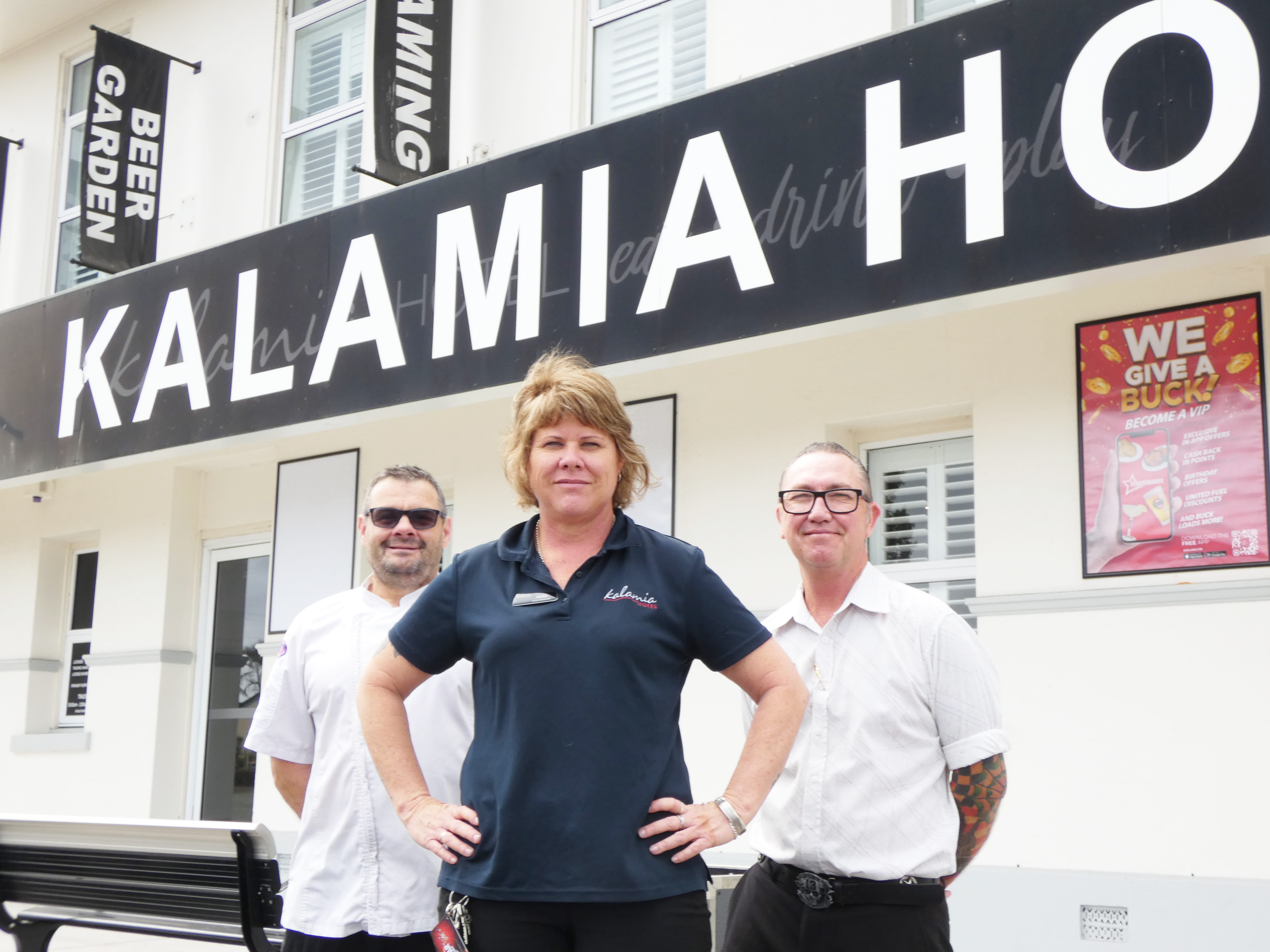
A century, extensive renovations and multiple ownership changes later, the Kalamia still stands at its original location on Queen Street. Photo: Jacob Casha.
The Kalamia Hotel is turning 100, and it wants the Burdekin there to celebrate. After a century of beers, meals, friendships and memories, ‘The Locals’ Local’ is marking the milestone with a massive day of entertainment, music, prizes and family fun.
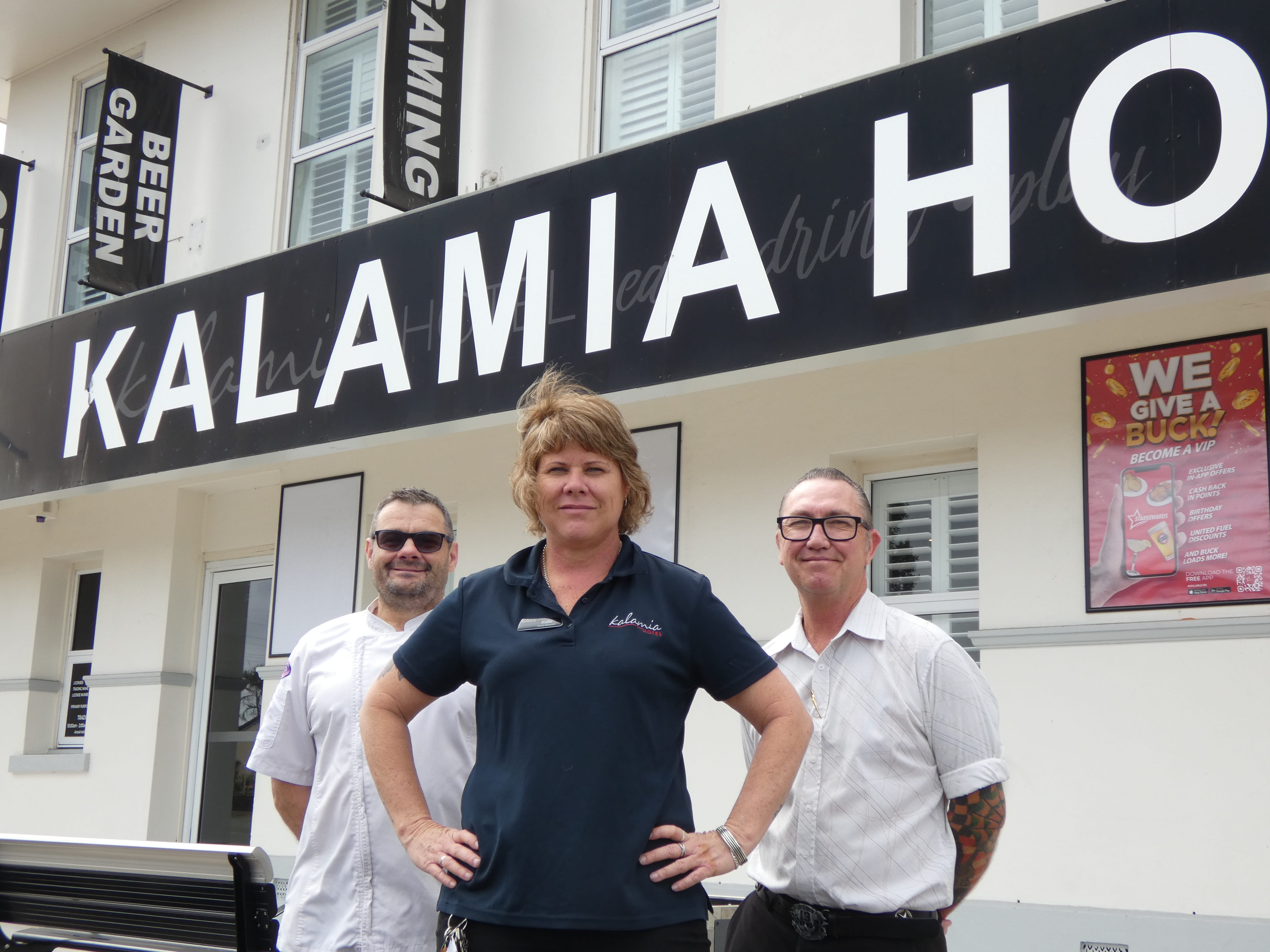
A century, extensive renovations and multiple ownership changes later, the Kalamia still stands at its original location on Queen Street. Photo: Jacob Casha.
It was 1926 when the Kalamia Hotel served its first beer.
The Burdekin looked a little different then. Queen Street was still dirt. The Silver Link was still about 27 years off.
Yet, the region had its very own new pub at the end of Ayr’s main street.
A century, extensive renovations and multiple ownership changes later, it’s still perched there—a fixture of the region’s history, a monument of its evolution, and a modern-day favourite in its own right.
Through all the changes, one thing has stuck.
“People come in here and they feel at home,” said Manager Kellie Elton.
She knows that feeling better than most.
Kellie first came to the Kalamia as a customer before joining its staff, and has now spent a decade behind the scenes of one of Ayr's most recognisable pubs.
She has watched it change, too.
Once known for its late-night party atmosphere and popularity with backpackers, the Kalamia has gradually become a more family-oriented venue, with its beer garden and function spaces now playing a much bigger role.
But Kellie doesn't think becoming more modern means losing what made the pub special.
“The traditional front bar is the heart and soul of the pub—without that, it’s not really a pub in my eyes,” she said.
“We also have staff that are down to earth, can take a joke, and dish a bit of banter. It’s just giving it that small-town country vibe, and not trying to make it something that it’s not.”
The pub’s role in the community extends beyond its own walls.
Every Saturday, meat-tray raffles raise money that goes straight back into the Burdekin, helping support schools, sporting clubs and community groups.
Returning the favour.
“We’re in a position to give back to the community that has supported us for generations—so we do,” Kellie said.
“We couldn’t do what we do without the support of the community, so we’re just so very thankful for their support.”
The pub is now preparing to celebrate its centenary with those very locals.
And while the milestone offers a chance to look back at a century of history, the Kalamia is already looking ahead, with major renovations set to begin next year.
But while the pub may continue to evolve, it will never stray too far from what it was when that very first beer was poured 100 years ago.
A place where locals can pull up a stool at the front bar and feel at home.
The Locals’ Local.
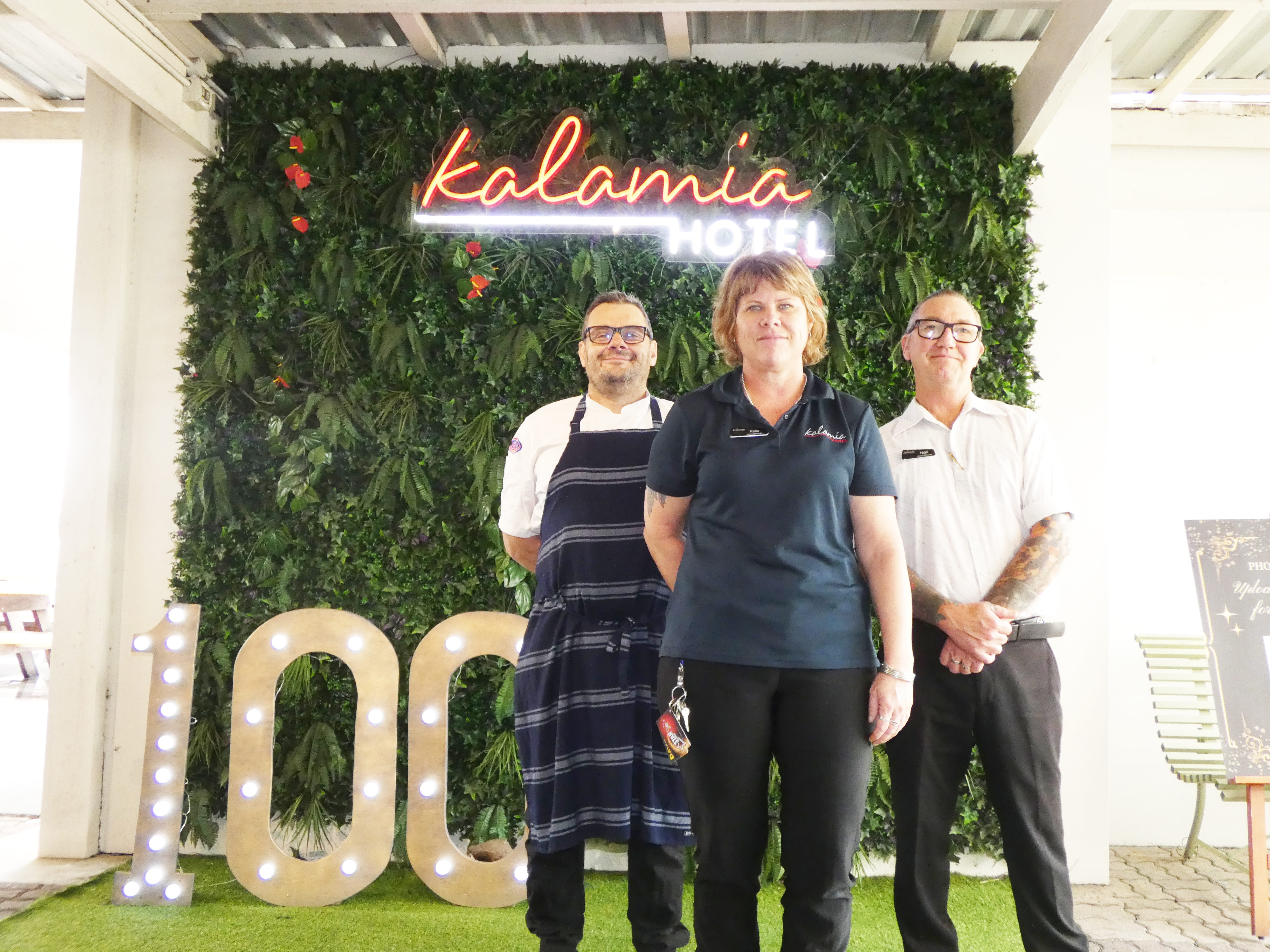
Kalamia Hotel is inviting the community to become part of its history this weekend as ‘The Locals’ Local’ celebrates a century in style.
The pub will welcome families, regulars, and everyone in between to its historic Queen Street venue on Saturday 29th August for a full day of free entertainment on the house.
Kickstarting at 10am, the festivities open with a mega raffle giveaway that would make even Santa jealous. A massive lineup of 21 meat trays, six seafood trays, four $100 Kalamia vouchers, and exclusive merchandise will all be up for grabs.
The action will move to the beer garden at 2pm for live music, kids' activities, and complimentary tastings.
Representatives from Diageo, De Bortoli Wines, and Burdekin Rum will be pouring a selection of vodkas, rums, wines, and signature cocktail concoctions, while youngsters are kept busy by face painting, crafts, and colouring stations.
Local up-and-coming bands Makeshift and Tribute will supply the tunes until 6pm, when Joel Blacklock takes the stage for the headline set.
Nearly a year in the making, Kalamia Hotel Manager Kellie Elton said the event would be a “relaxed family event” with something for everyone.
She said celebrating the historic milestone with locals would make it all the more sweet.
“100 years for a pub to always be open and running is a major achievement—and it’s still going strong today,” she said.
“It would mean so much to see the community there—to see that they care about the place as much as we do.
“Come down, have a few drinks, listen to some live music, and have some prizes on us.”
Commemorative stubby coolers will be available for $10 on the day, with limited-edition 100-Year shirts available to order.
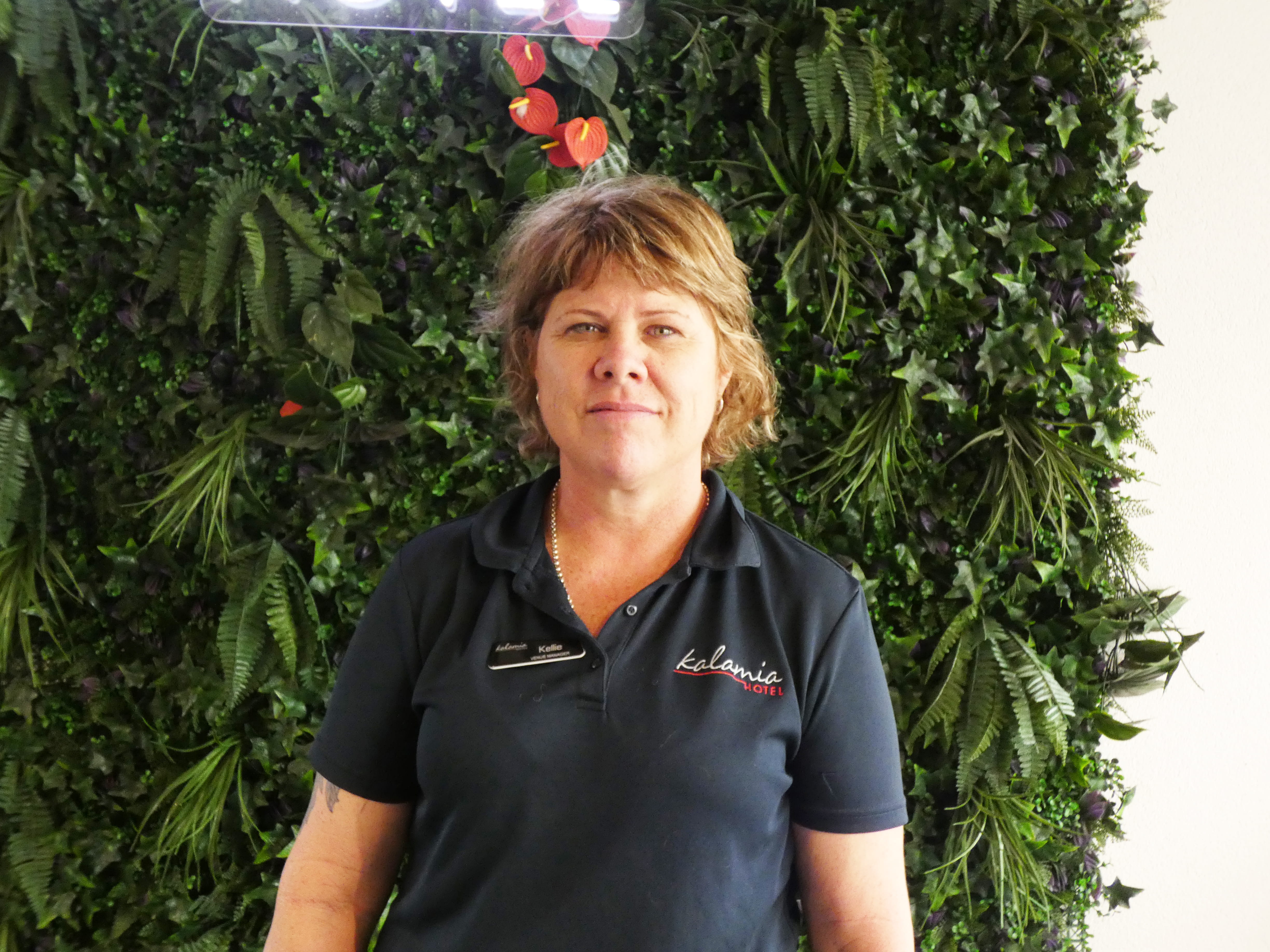
KELLIE ELTON
Venue Manager | 10 years at the Kalamia Hotel
What other positions have you held at the Kalamia?
I’ve worked as a casual front bar attendant, duty manager and assistant manager.
What work did you do before the Kalamia?
I worked in retail, banking and community services.
How long have you lived in the Burdekin, and did you know the Kalamia before joining?
I’ve lived in the Burdekin my whole life and had visited the Kalamia from time to time.
How did you join the Kalamia team?
I wanted a second job and was offered a position.
What do you love most about working at the Kalamia?
The team spirit, fun environment and seeing people enjoying themselves because of us.
What are you looking forward to most about the centenary?
Seeing the young local talent showcase their skills and seeing people come together.
What do you enjoy outside of work?
I actually enjoy my alone time on my days off.
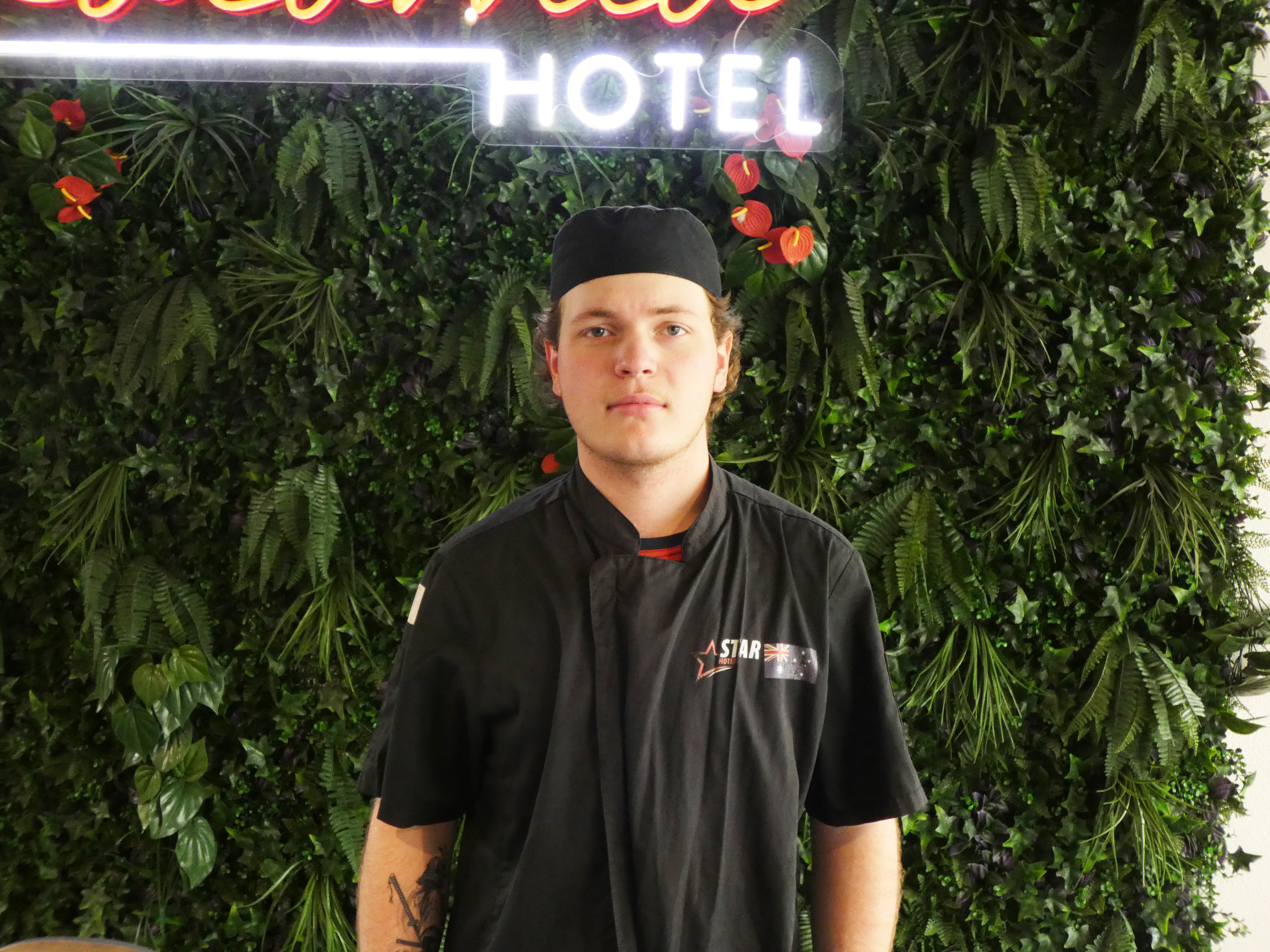
LUCAS HUTLEY
Apprentice Chef
What does your role involve?
Prep work and coming up with special ideas.
What work did you do before the Kalamia?
I worked at a Chinese restaurant, The Reject Shop and McDonald’s while I was at school.
How long have you lived in the Burdekin, and what did you know about the Kalamia before joining?
I’ve lived in the Burdekin for 12 years. I’d heard the Kalamia was a good place to work.
How did you join the Kalamia team?
I knew people who worked here.
What do you love most about working at the Kalamia?
Serving good-quality food and learning skills to progress into fine dining.
What are you looking forward to most about the centenary?
I’ll just be doing my thing in the kitchen.
What do you enjoy outside of work?
Catching up with mates.
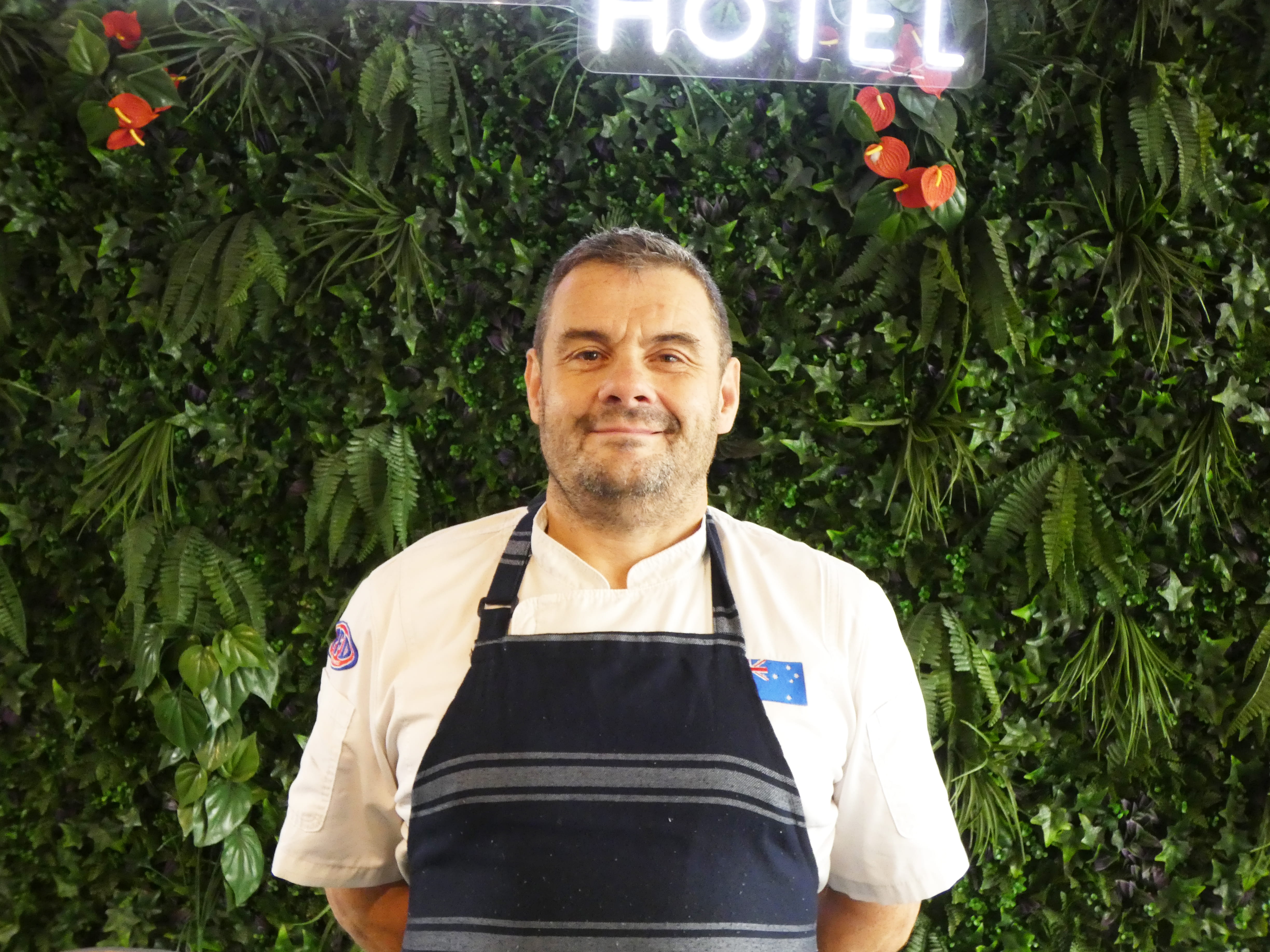
KEIRAN NOLAN
Head Chef | 15 years at the Kalamia Hotel
What does your role involve, and what other positions have you held at the Kalamia?
Stock ordering, quality control and rostering. I started as a cleaner, then worked as a kitchen hand and apprentice chef before becoming Head Chef.
What work did you do before the Kalamia?
I worked in a butcher shop in Ireland and in my family’s tree-logging business in Ireland.
How long have you lived in the Burdekin, and what did you think of the Kalamia before joining?
I’ve lived here for 15 years. I knew it would be a good place to work.
How did you join the Kalamia team?
I needed a job when I relocated from Ireland.
What do you love most about working at the Kalamia?
The staff morale.
What are you looking forward to most about the centenary?
Hopefully catching up with past and present staff.
What do you enjoy outside of work?
I was a Muay Thai fighter in Ireland.
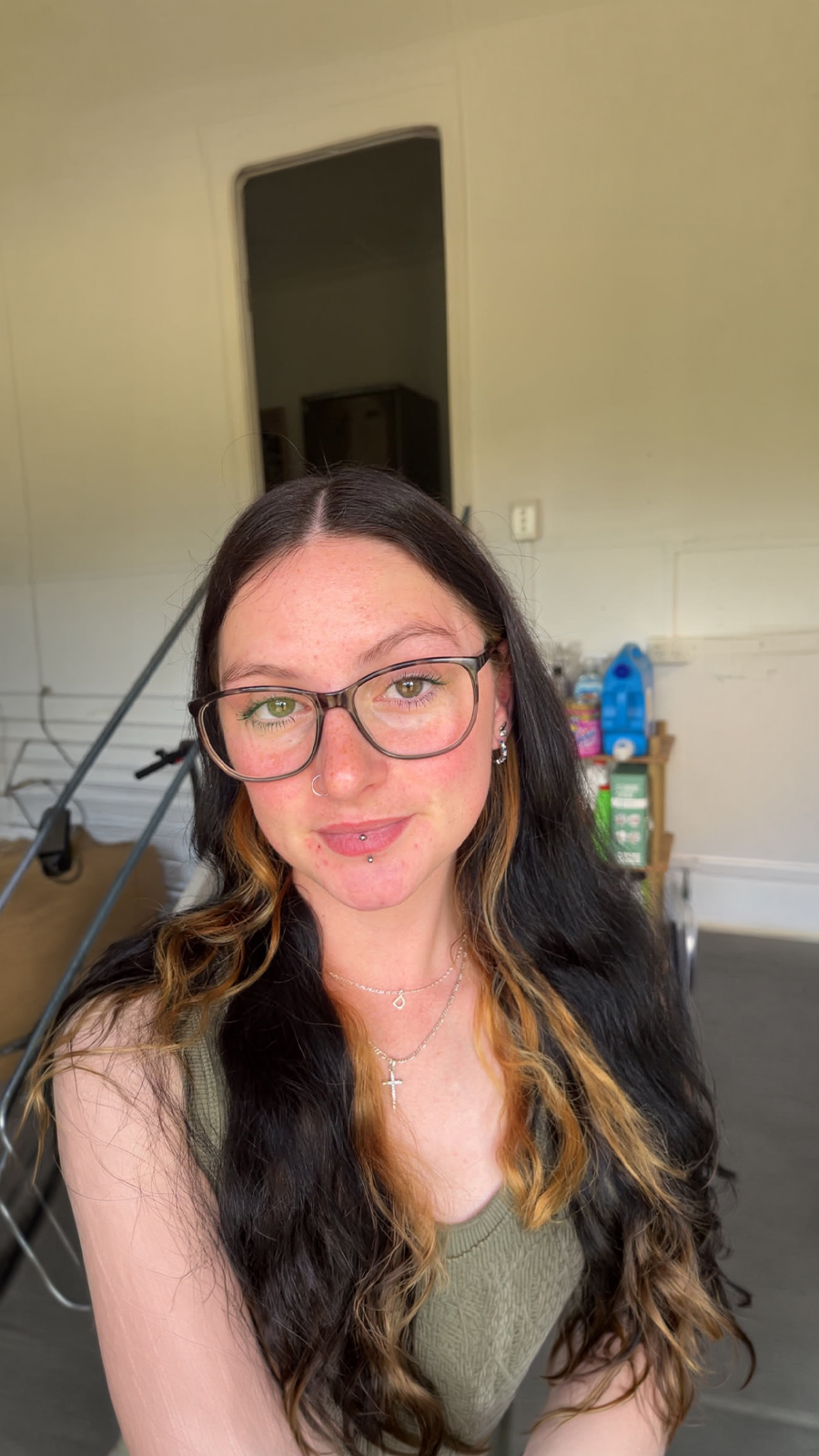
MEGHAN-ROSE BEST
Duty Manager | 10 months at the Kalamia Hotel
What does your role involve, and what other positions have you held at the Kalamia?
Before becoming a Duty Manager, I was a Food and Beverage Attendant. My current role involves customer service, floor management, compliance and safety, administration and stock, shift supervision and team leadership. I’m also responsible for closing the venue at night and managing money.
What work did you do before the Kalamia?
I’ve worked in childcare and hospitality. Both have taught me responsibility, communication, teamwork and customer service.
How long have you lived in the Burdekin, and what did you think of the Kalamia before joining?
I’ve lived in the Burdekin for almost three years. My first impression of the Kalamia was that it had a great atmosphere when I came in for dinner.
How did you join the Kalamia team?
I handed in my resume, had a chat with the Venue Manager and started my training shifts that weekend. The Kalamia has lovely staff and great service, so I wanted to become part of the team.
What do you love most about working at the Kalamia?
I love the atmosphere, the team and, most importantly, the patrons.
What are you looking forward to most about the centenary?
I’m looking forward to being part of something so amazing. I’m so grateful and proud to be part of the Kalamia.
What do you enjoy outside of work?
I love relaxing with a book, doing something crafty or simply watching movies.
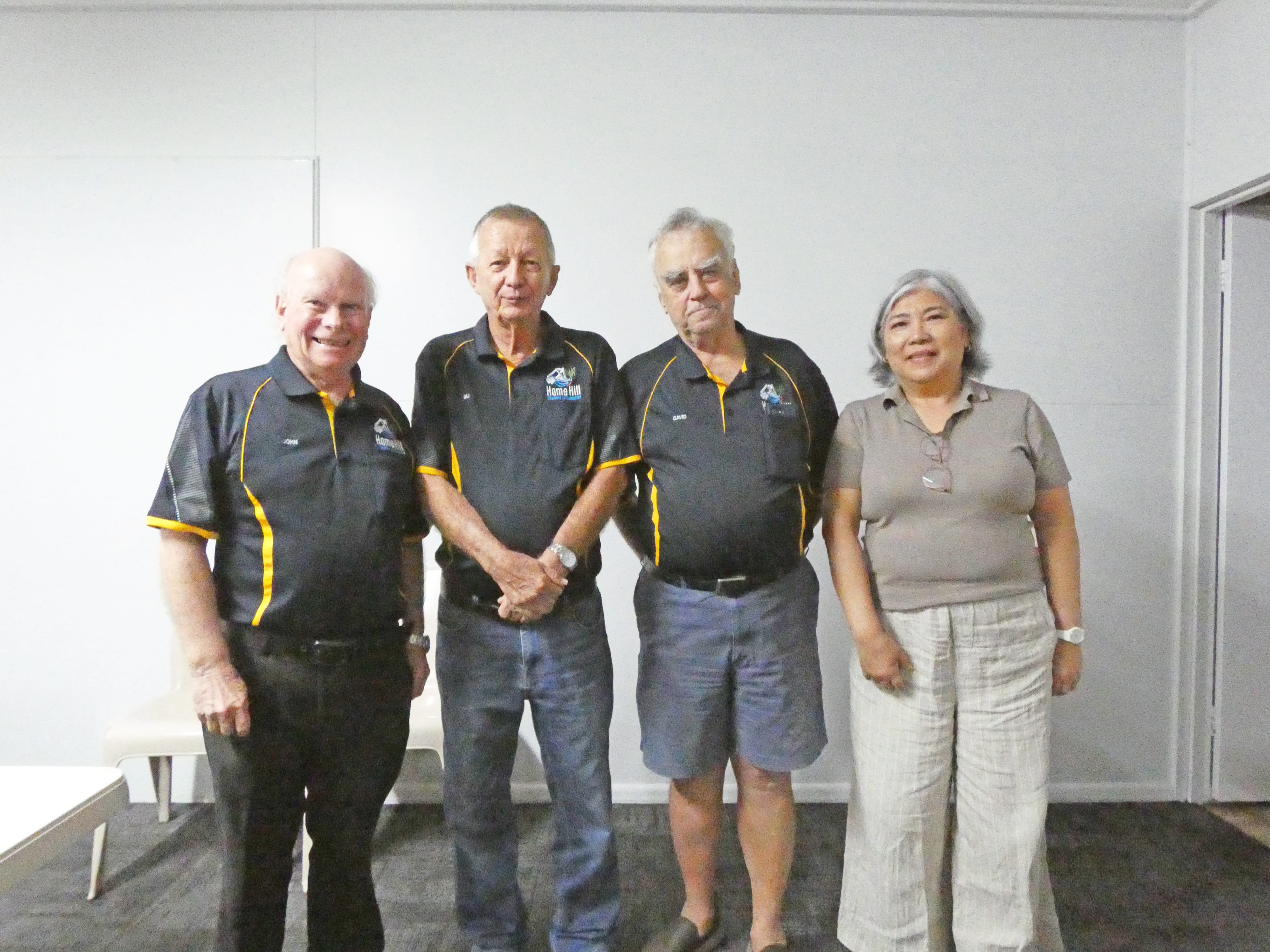
While President Uli Liessmann, Vice President David Jackson, and Treasurer John Woods retained their roles, local Lydia Flores stepped in as secretary following the departure of long-serving Robert Antoniazzi. Photos: Jacob Casha.
The Home Hill Chamber of Commerce announced it will move forward with a refreshed executive committee following its Annual General Meeting last week.
The Wednesday meeting welcomed members to the Home Hill Community Sports Club as officials presented financial reports, recognised member achievements, and confirmed the incoming leadership.
While President Uli Liessmann, Vice President David Jackson, and Treasurer John Woods retained their roles, local Lydia Flores stepped in as secretary following the departure of long-serving Robert Antoniazzi.
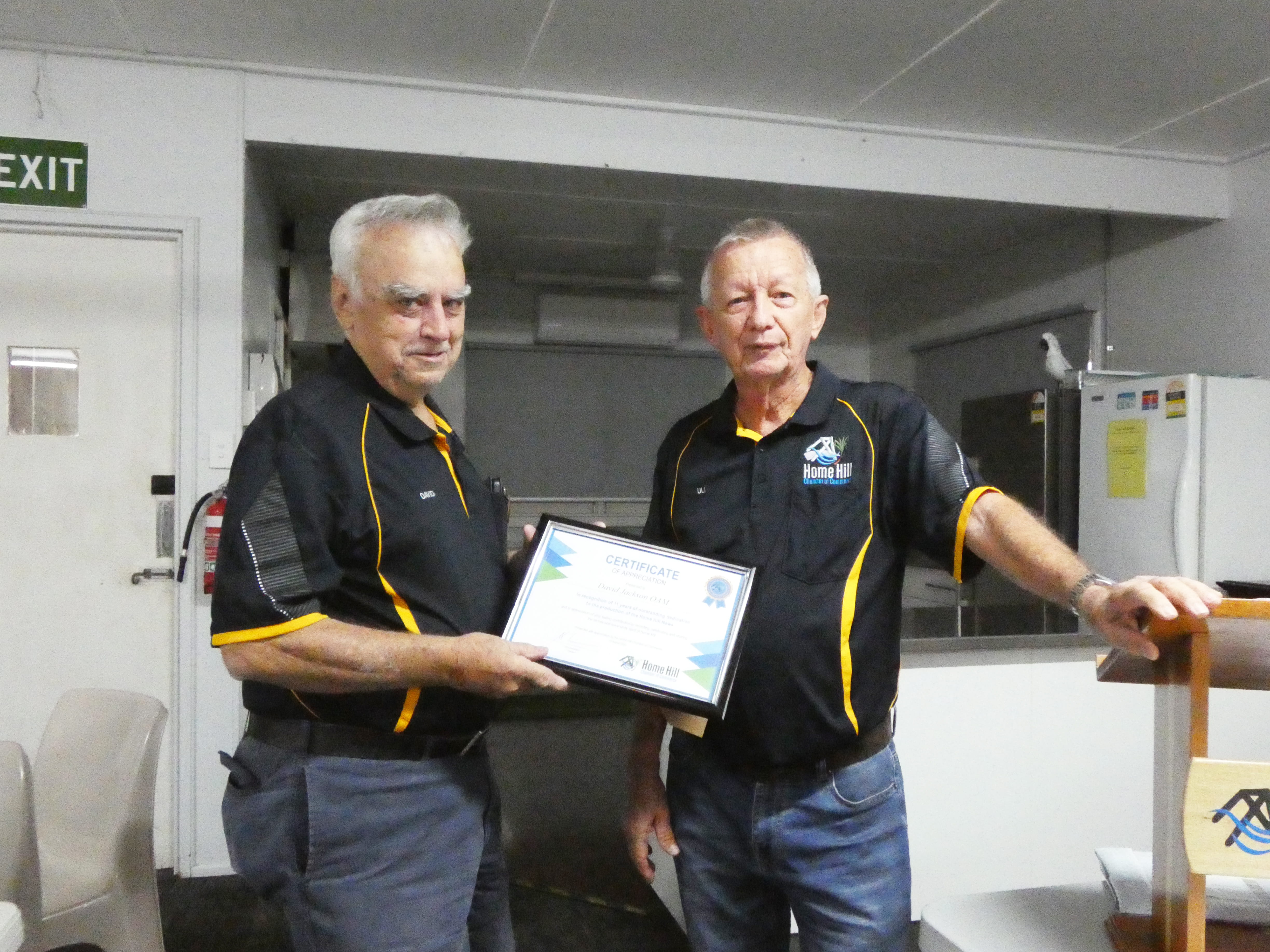
Mr Liessmann said Mr Antoniazzi’s contribution would be missed, but expressed confidence in incoming Ms Flores.
Local business owners Scott and Candace Young of Salted Roots, along with Neil Machin and Patricia Thomas of Scrubby’s, filled the remaining executive roles for the year ahead.
Despite reporting a marginal financial loss, Mr Woods said the Chamber had performed better than in the previous year. He also announced the organisation’s new website was live.
Mr Liessmann presented veteran journalist David Jackson OAM with a Certificate of Appreciation on behalf of the Chamber for his 11 years of commitment to Home Hill News.
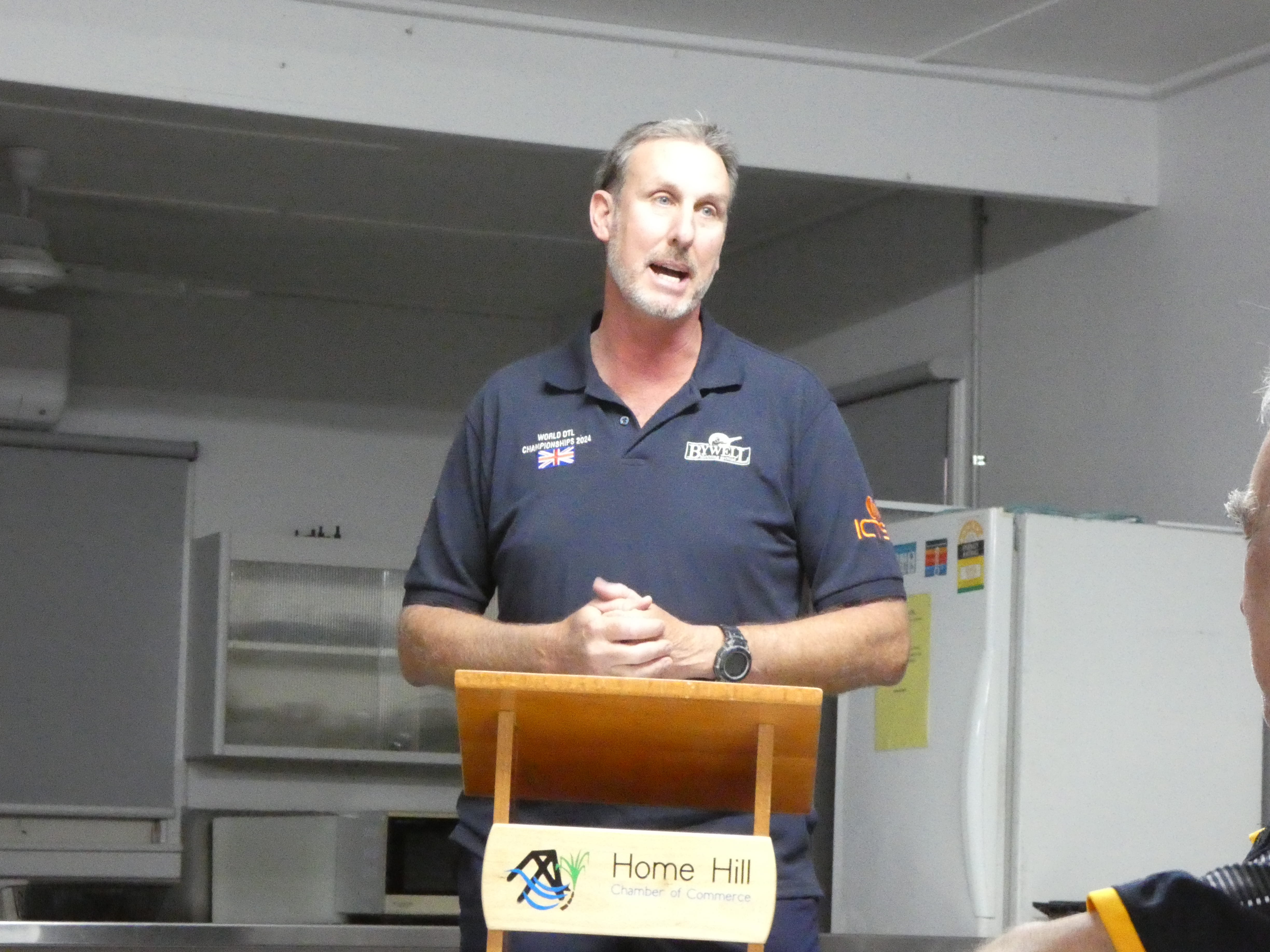
The meeting also heard from three guest speakers, beginning with local clay target shooter Joseph Rossato, who shared his experience representing Australia overseas and captaining the Queensland shooting team.
Eddie Smallwood of the Gudjuda Rangers detailed his group’s work and future plans, before Ms Young outlined ambitious plans to rejuvenate the streets of Home Hill (find out more on page 7).
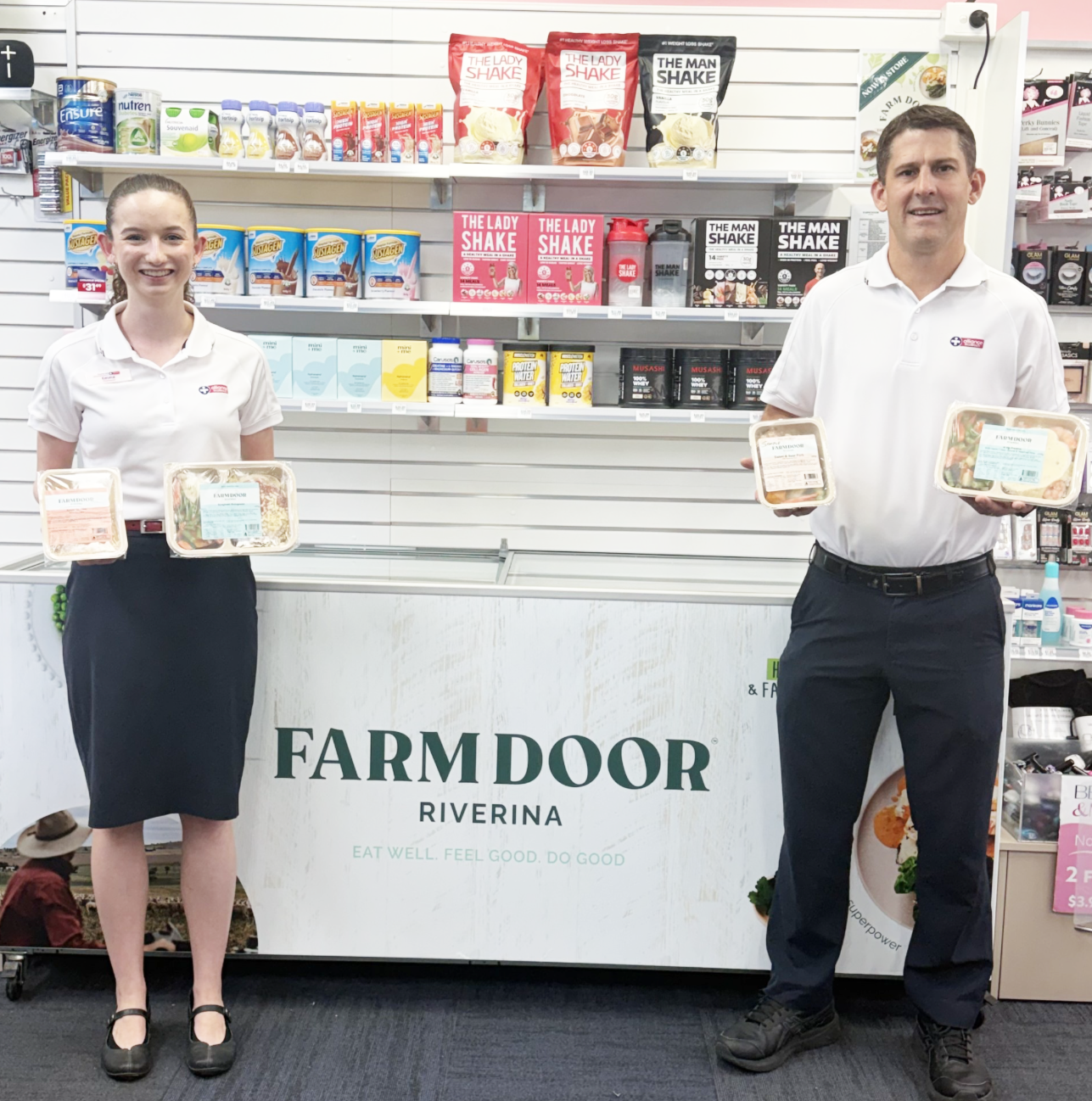
Visit the pharmacy at 101 Eighth Avenue, Home Hill, to browse the meals on offer in-store. Photo supplied.
The team at Alliance Pharmacy Home Hill knows how busy life in the Burdekin can be, but believes a full-on schedule shouldn't stand in the way of a nutritious meal.
That’s why the pharmacy has joined forces with Farm Door, a family-run NSW kitchen, to bring delicious, affordable, ready-made meals straight to you.
With free delivery across the shire, Burdekin locals no longer have to make do with forgotten leftovers at the back of the fridge. Instead, they can explore a menu spanning everything from traditional comfort foods to flavours inspired by Asian, Middle Eastern, African and European cuisines.
The range covers pork, chicken, beef, lamb, and seafood favourites, as well as a selection of desserts to satisfy your sweet tooth. Meals come in 400g ‘main’ and 280g ‘petite’ portions, alongside soups and snacks, with many suitable for vegetarian, gluten-free, dairy-free, high-protein and high-energy diets.
Each dish is prepared using fresh, nutrient-dense produce in Farm Door’s Wagga Wagga kitchen, designed to save you time without compromising on quality or flavour. Now available at Alliance Pharmacy Home Hill, Burdekin locals can experience thatconvenience themselves.
Visit the pharmacy at 101 Eighth Avenue, Home Hill, to browse the meals on offer in-store, or head to the Farm Door website to explore the full menu and delivery options.
Residents on a Support at Home (SaH) or NDIS package may also be eligible for subsidised meals, paying as little as 30 per cent of the cost. If you think you might qualify, contact your SaH or NDIS provider to confirm.
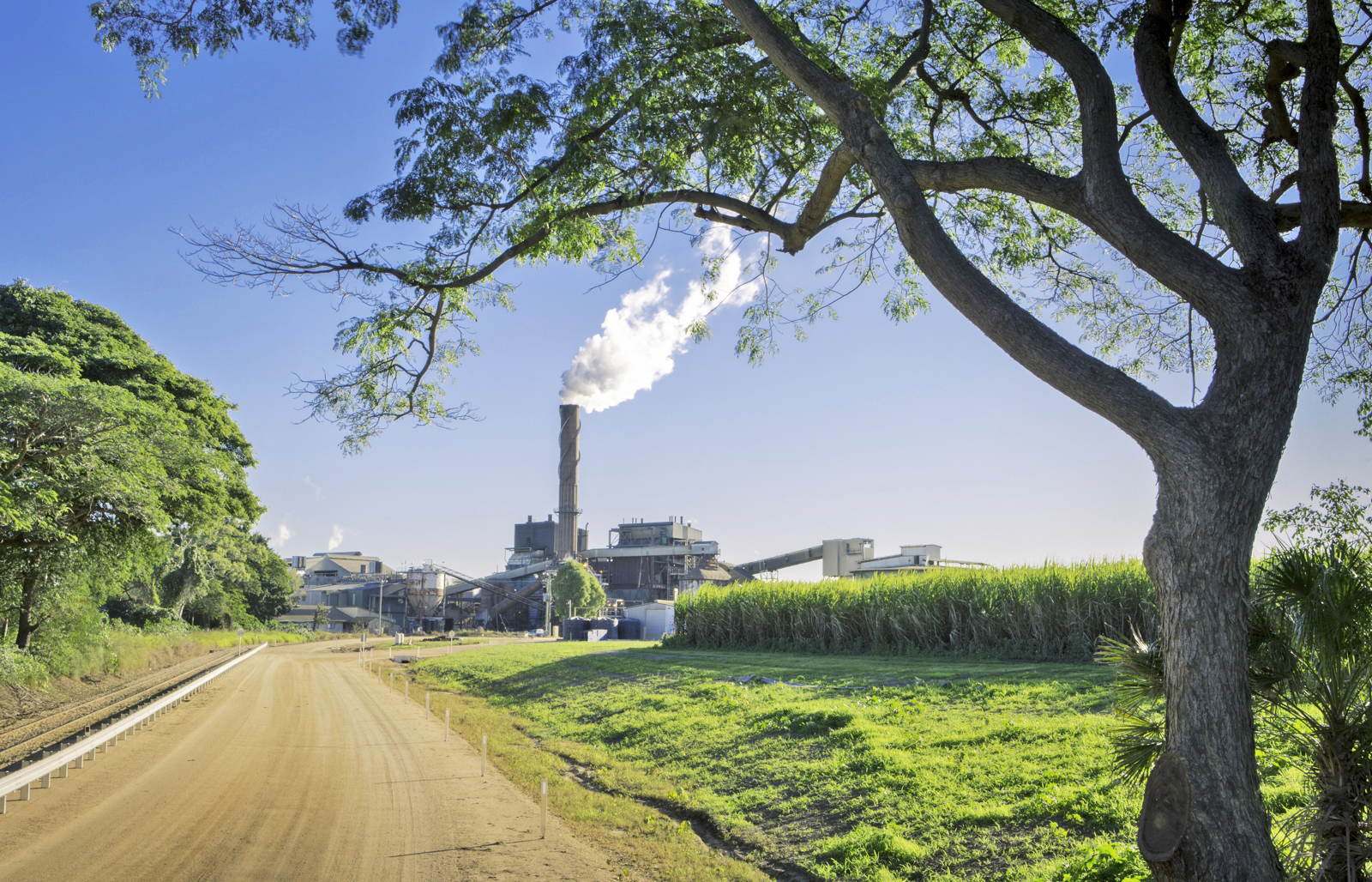
Earlier this week, the government launched consultation on a national demand mechanism for low-carbon liquid fuels, including ethanol and biodiesel.
Australia has reached a turning point in the push for a national biofuels industry, with CANEGROWERS joining industry leaders at Federation Mall today to build on the Federal Government’s cleaner fuels announcement and help ensure the opportunity delivers for growers.
Earlier this week, the government launched consultation on a national demand mechanism for low-carbon liquid fuels, including ethanol and biodiesel.
“This is a big deal for growers, and CANEGROWERS is right at the heart of it,” CANEGROWERS CEO Dan Galligan said.
“We’re helping lead the conversation and working alongside the milling sector and government to make sure improving grower profitability is central to what comes next.”
“The Federal Government deserves credit for the consultation. It is the most significant development in national biofuels policy in decades.
“Having grower representatives and millers here alongside biofuel producers, researchers, regional leaders and national security experts shows how seriously this opportunity is being taken.”
CANEGROWERS is backing calls for a nationally consistent, enforceable and progressively increasing blending requirement on fuel wholesalers for Australian-made ethanol and biodiesel.
It is also supporting calls to develop sovereign capability in sustainable aviation fuel, renewable diesel and the manufacture of critical chemicals and materials from sugarcane.
“We already have feedstocks, production capacity and expertise we can use today,” Mr Galligan said.
“We should build on that now while developing the next generation of fuels and bioproducts.
“For growers, the measure of success is straightforward – new markets for cane, more value from every tonne and more profitable farming businesses.
“Biofuels policy cannot stop at the factory gate. The benefits must reach farming families and communities.”
Mr Galligan said the consultation had created real momentum.
“The industry is ready to work with government. Now we need to get on with it.”
The Federation Mall gathering follows a week of meetings in Canberra, where Mr Galligan and CANEGROWERS Chairman Owen Menkens have put the grower case directly to federal ministers and senior officials.
Burdekin residents experiencing domestic and family violence will now have access to around-the-clock crisis support following the launch of a new dedicated North Queensland service.
The 1800NQSAFE phoneline will operate 24 hours a day, seven days a week, providing immediate assistance and connecting victim-survivors with local services across the Burdekin, Townsville, Hinchinbrook and Palm Island local government areas.
The service forms part of the new North Queensland Domestic and Family Violence Networked Hub, backed by a $21 million Queensland Government commitment over two years.
The hub will work across key pathways including police, hospitals, housing services and specialised domestic and family violence providers, with the aim of making it easier for people to access appropriate support when they need it.
Minister for the Prevention of Domestic and Family Violence Amanda Camm said the service would provide greater access to local assistance across the region.
“We said we’d deliver this service in North Queensland and from today victims from Ingham to Ayr will be able to pick up the phone and receive the local help they deserve,” Minister Camm said.
“Staff at UnitingCare, which is operating the 24/7 phoneline, know firsthand the complexity of domestic and family violence and understand that everyone who has the courage to make a phone call to seek help deserves to have that call answered.”
UnitingCare is operating the new phoneline, with staff able to listen to callers, discuss their options, assist with safety planning and connect them with further services.
UnitingCare General Manager, Targeted Support, Family and Disability Services, Joanne Trentin said having assistance available outside traditional business hours was particularly important for people experiencing domestic and family violence.
“Domestic and family violence can escalate at any hour, and when someone is ready to reach out for help, it's critical that support is there,” Ms Trentin said.
“Having support available 24 hours a day, seven days a week means people can reach someone when they need to; someone who can listen, help them understand their options, support safety planning and connect them with the services they need.
“1800NQSAFE is about making that pathway to support simpler and more immediate, so people experiencing domestic and family violence don't have to navigate those moments alone.”
The new service sits alongside other Queensland Government domestic and family violence measures, including Police Protection Directions and the rollout of GPS monitoring that courts can impose on high-risk perpetrators.
Burdekin residents needing support can contact 1800NQSAFE at any time, day or night.
Burdekin tourism operators looking to develop new attractions and experiences could receive up to $300,000 through the latest round of the Queensland Government’s Regional Tourism Infrastructure Fund.
Applications have opened for round two of the $20 million program, designed to support new tourism products and infrastructure across regional Queensland.
For the Burdekin, the funding presents an opportunity for operators to develop experiences that encourage travellers to venture beyond the Bruce Highway and spend more time exploring the district.
Eligible projects range from new attractions and upgrades to existing visitor facilities to glamping, alternative accommodation, eco-tourism, farm-gate experiences and other infrastructure that increases capacity or improves visitor access.
With the district’s agricultural identity, coastal communities and natural attractions, the fund could provide opportunities to further develop the Burdekin’s agritourism and nature-based visitor offerings.
Minister for Environment and Tourism Andrew Powell said the government wanted to support regional operators to bring new ideas to life.
“Queensland is the best place in the world to live, work and visit, and our regions are home to some of the most incredible tourism experiences anywhere in the country,” Mr Powell said.
“The Regional Tourism Infrastructure Fund is about backing Queenslanders with the support they need to turn great ideas into new attractions, better experiences and more opportunities for local communities.”
Mr Powell said strengthening tourism infrastructure could encourage visitors to stay longer and explore more regional communities while generating economic benefits.
“By investing in tourism infrastructure and experiences, we are backing local businesses, creating jobs and strengthening the regional economies that are the backbone of Queensland,” he said.
Applications close on 9th September.
Publishers Indemnity. Any individual or entity that places advertising, supplies copy material, or submits editorial content to Core Life Publishing agrees and undertakes to ensure that all such material:- Does not infringe upon any copyright, trademark, or other intellectual property rights;- Is free from any content that could be considered defamatory, libelous, or slanderous;- Does not infringe upon any rights related to privacy or breach of confidence;- Contains no obscene, indecent, or otherwise unlawful material;- Complies fully with the Trade Practices Act and all other applicable laws, regulations, or statutes.Furthermore, by submitting or placing such material, these individuals or entities agree to indemnify and hold harmless the publisher, Core Publishing and Events Pty Ltd, and/or its agents from and against any and all investigations, claims, demands, liabilities, damages, costs, or judgments arising out of or in connection with the material provided. All material is believed to be accurate at the time of printing and remains the copyright of Core Publishing and Events Pty Ltd.
© 2026 Life Publishing Group Pty Ltd.
