
Independently Owned, Locally Grown, Community Loved
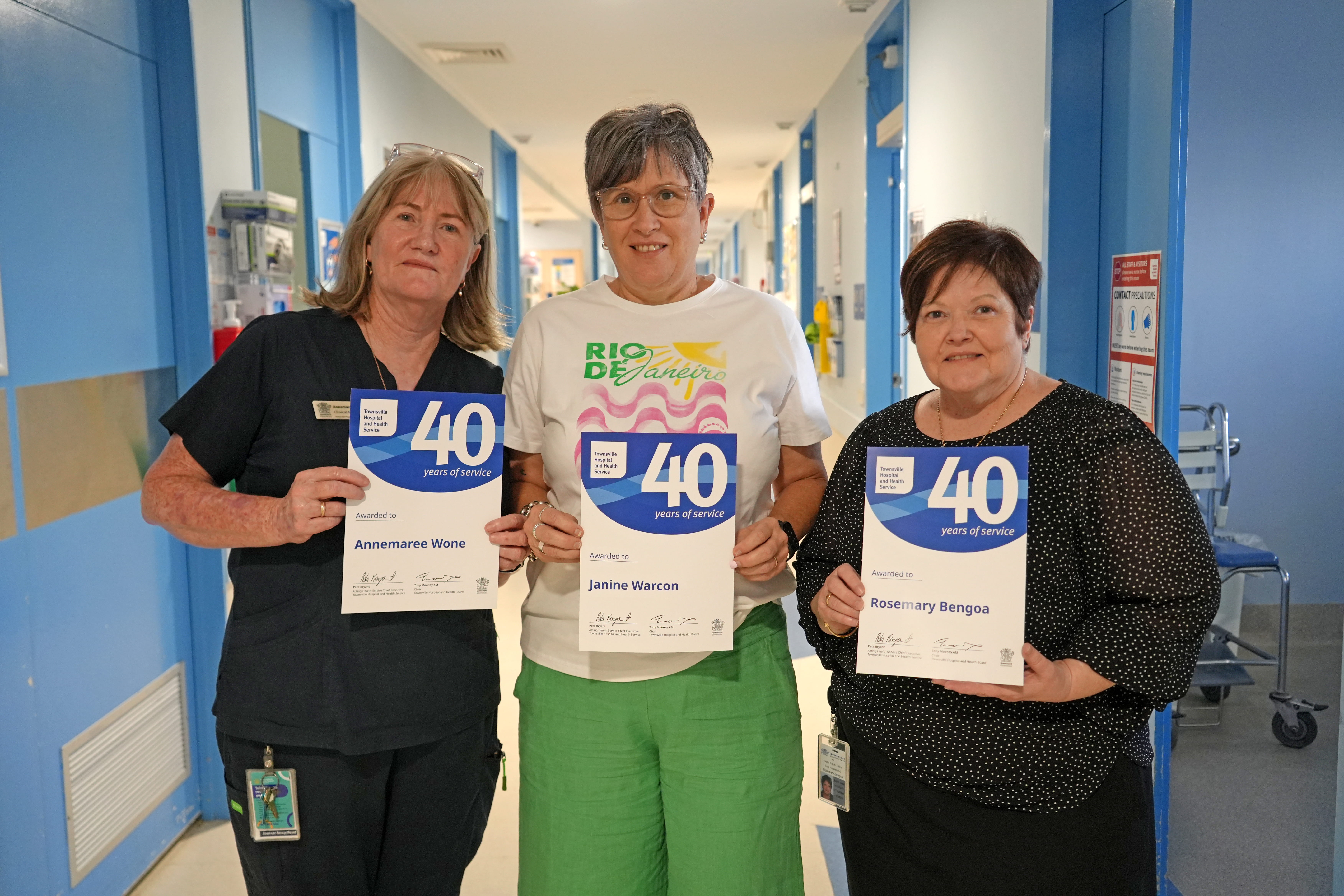
Three Burdekin hospital workers have clocked up 120 years of combined service to the Ayr and Home Hill communities. Rosemary Bengoa, Janine Warcon and Annemaree Wone have each reached 40 years of service, with the milestone recognised at local staff thank-you events. Rosemary began at Ayr Hospital in 1985 in the front office before moving into medical records, accounts payable, assets and finance. Janine started in the Home Hill Hospital kitchen and has since worked across kitchen, cleaning and laundry roles at both Ayr and Home Hill. She later became an orderly before moving into her current role as an assistant in nursing at Home Hill. Annemaree began her career at The Prince Charles Hospital in Brisbane, working as an enrolled nurse for four years before completing her registered nurse training in Townsville. She returned to the Burdekin after the birth of her first child and now works across the dialysis unit and emergency department at Ayr. The three staff members said their connection to the community, colleagues and variety of work had kept them in the health system for four decades. “Your work colleagues and the friendships you make along the way keep you in the role,” Rosemary said. For Janine, working in her own community and caring for patients has been a key part of her career. “We’ve had some funny moments; just the other night one patient was disco dancing in the hallway with me,” she said. Annemaree said working across different areas had kept her career varied. “I work in dialysis, sometimes in the emergency department, and sometimes on the ward, and because I have always worked across multiple areas, I’ve never felt stuck in one place,” she said. The breadth of responsibilities is a common feature of working in rural hospitals, Ms Wone said. “You need to know lots of different things when you work in a rural or remote hospital setting, so we are very busy,” she said. “But even with how much we have all achieved, I can’t believe it’s been 40 years; it feels like it happened overnight.” CAPTION: Rosemary Bengoa, Janine Warcon and Annemaree Wone have each reached 40 years of service, with the milestone recognised at local staff thank-you events. Photo supplied
Read the full story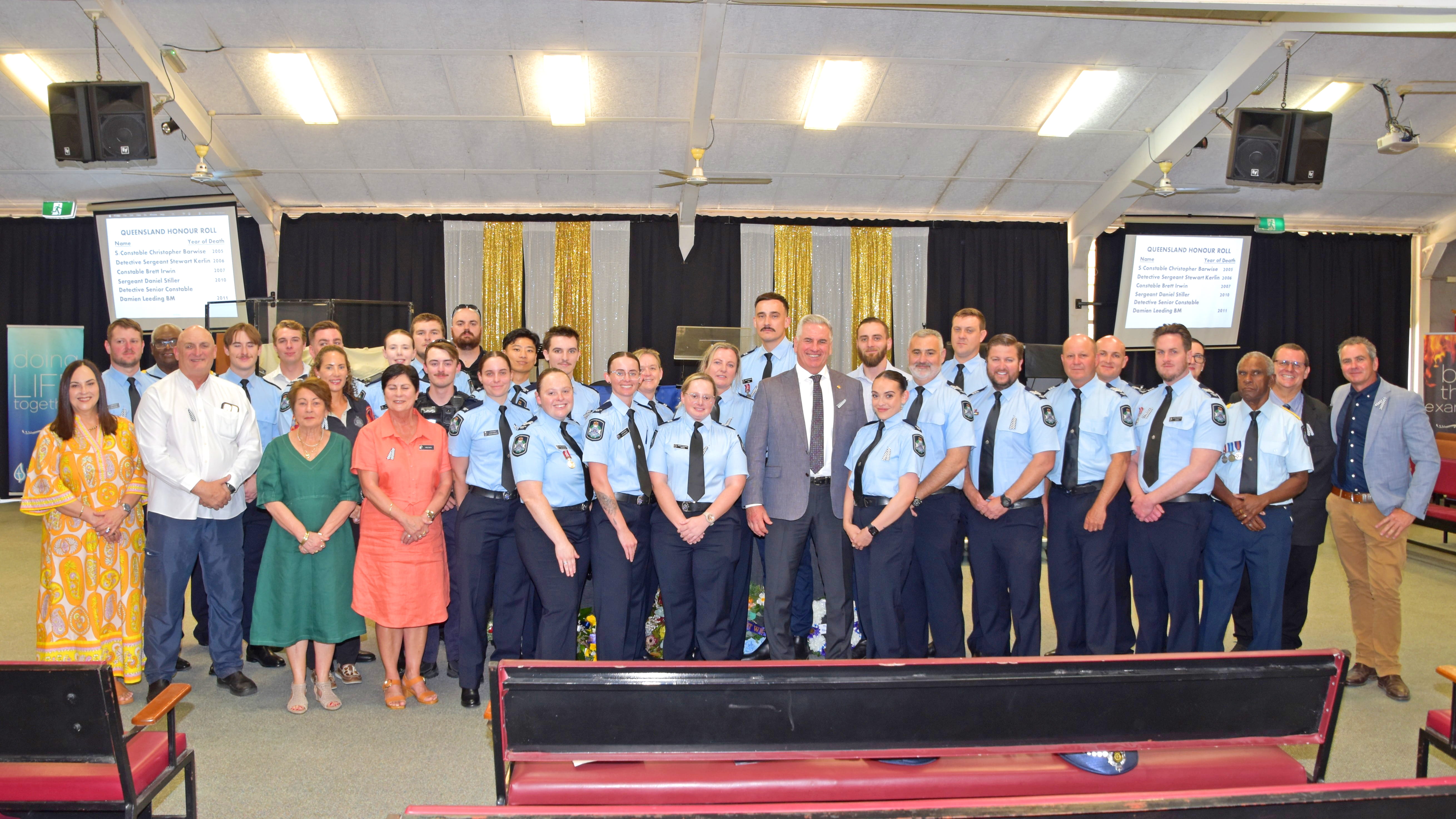
Burdekin police, dignitaries and community groups gathered Tuesday morning to honour officers killed in the line of duty. Photo: David CooperBurdekin community members, local dignitaries, and police gathered at Ayr's Burdekin Community Church on 29th September to commemorate National Police Remembrance Day. The solemn service honoured officers who made the ultimate sacrifice in the line of duty, featuring a wreath-laying ceremony and a reading of the Roll of Honour.Read more here: www.burdekinlife.com/article/burdekin-honours-fallen-officers-on-remembrance-day
Read the full story

Burdekin police, dignitaries and community groups gathered on Tuesday morning to honour officers killed in the line of duty. Held at the Burdekin Community Church in Ayr, the service formed part of National Police Remembrance Day, observed each year on 29th September. Pastor Peter Holmes, who led the service, said it was a chance to pay tribute to the bravery and service of the fallen. “Someone has to protect those who cannot protect themselves. Someone has to step into the disorder and work to restore order—and that is one of the responsibilities entrusted to our police,” he said. “Today, we honour those who stood. Some stood in circumstances that ultimately cost them their lives, and this day each year ensures that their courage will never be forgotten.” A Police Commissioner’s Address was delivered by Acting Inspector Megan Benson before local officers read the Roll of Honour, commemorating police officers killed in the line of duty. Officers then lit memorial candles, before community groups joined police and dignitaries in laying wreaths. Among dignitaries were Burdekin Shire Council Mayor Pierina Dalle Cort and Member for Burdekin Dale Last, who called it a “privilege” to join local police in their commemorations. “As a former police officer, National Police Remembrance Day is an incredibly important opportunity to remember those officers who lost their lives while serving their community and to show our support to those who continue to keep our communities safe today,” Mr Last said. “Small regional towns like the Burdekin mean our police officers become involved in a variety of facets in our community and it is part of what makes these roles in our small communities so unique.” “It also means that chances to stand with our men and women in blue should not be overlooked.” A morning tea was held in the church hall following the service. CAPTIONS: 1—Burdekin police, dignitaries and community groups gathered Tuesday morning to honour officers killed in the line of duty. 2—Pastor Peter Holmes, who led the service, said it was a chance to pay tribute to the bravery and service of the fallen. 3—Held at the Burdekin Community Church in Ayr, the service formed part of National Police Remembrance Day, observed each year on 29th September. 4—Mayor Pierina Dalle Cort and Deputy Mayor Max Musumeci laid a wreath on behalf of Burdekin Shire Council 5—Among dignitaries was Member for Burdekin Dale Last 6—Local officers read the Roll of Honour, commemorating police officers killed in the line of duty 7—Liaison Officers light memorial candles 8—Senior Sergeant Lisa Shields addresses the audience 9—Community groups joined police and dignitaries in laying wreaths Photos: Jacob Casha
Read the full story
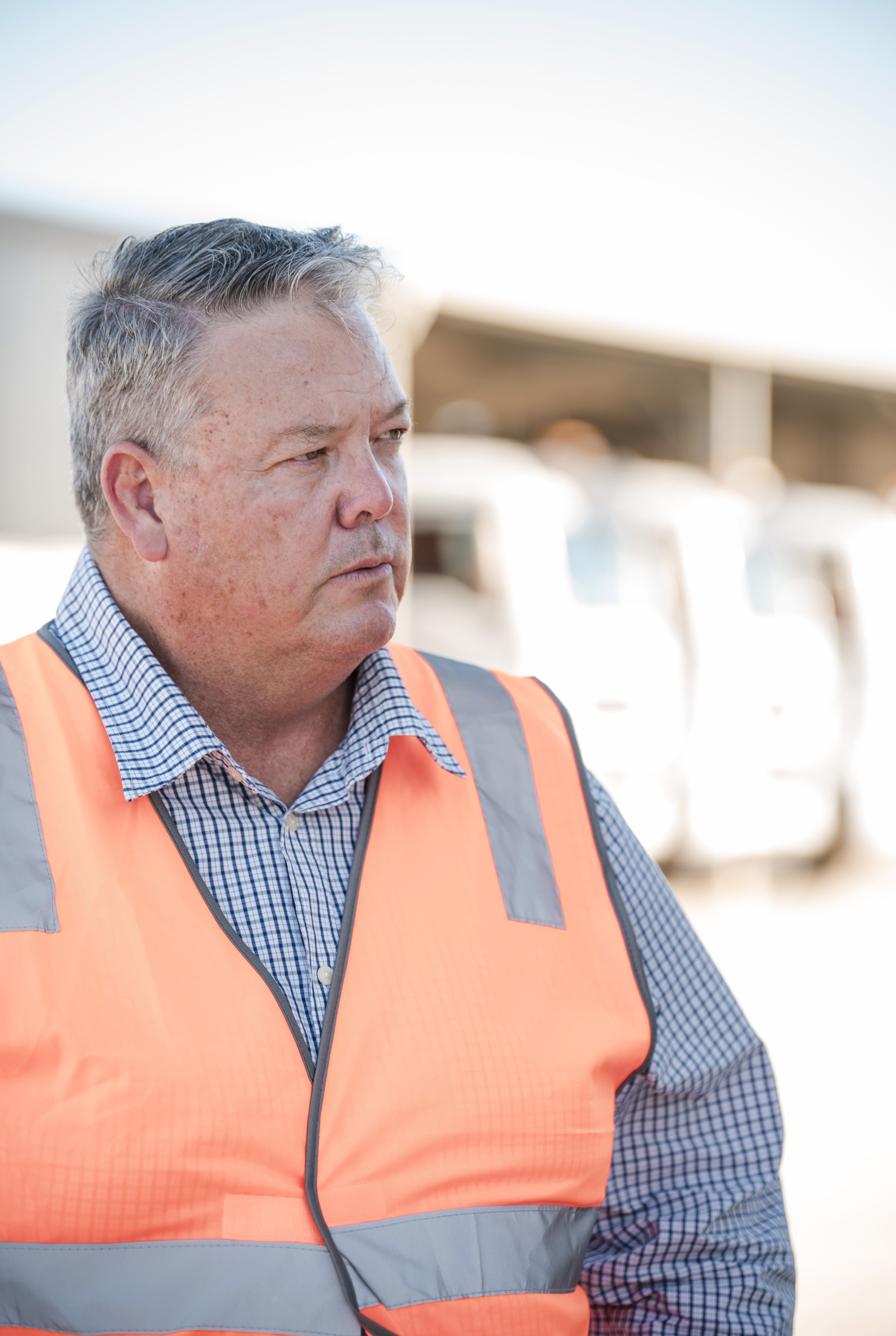
Federal Member for Dawson, Andrew Willcox, says that record energy hardship is impacting thousands of Queensland households and businesses. Photo supplied
Shocking new data has revealed the impact the Albanese Labor Government’s disastrous energy policies are having on local families.
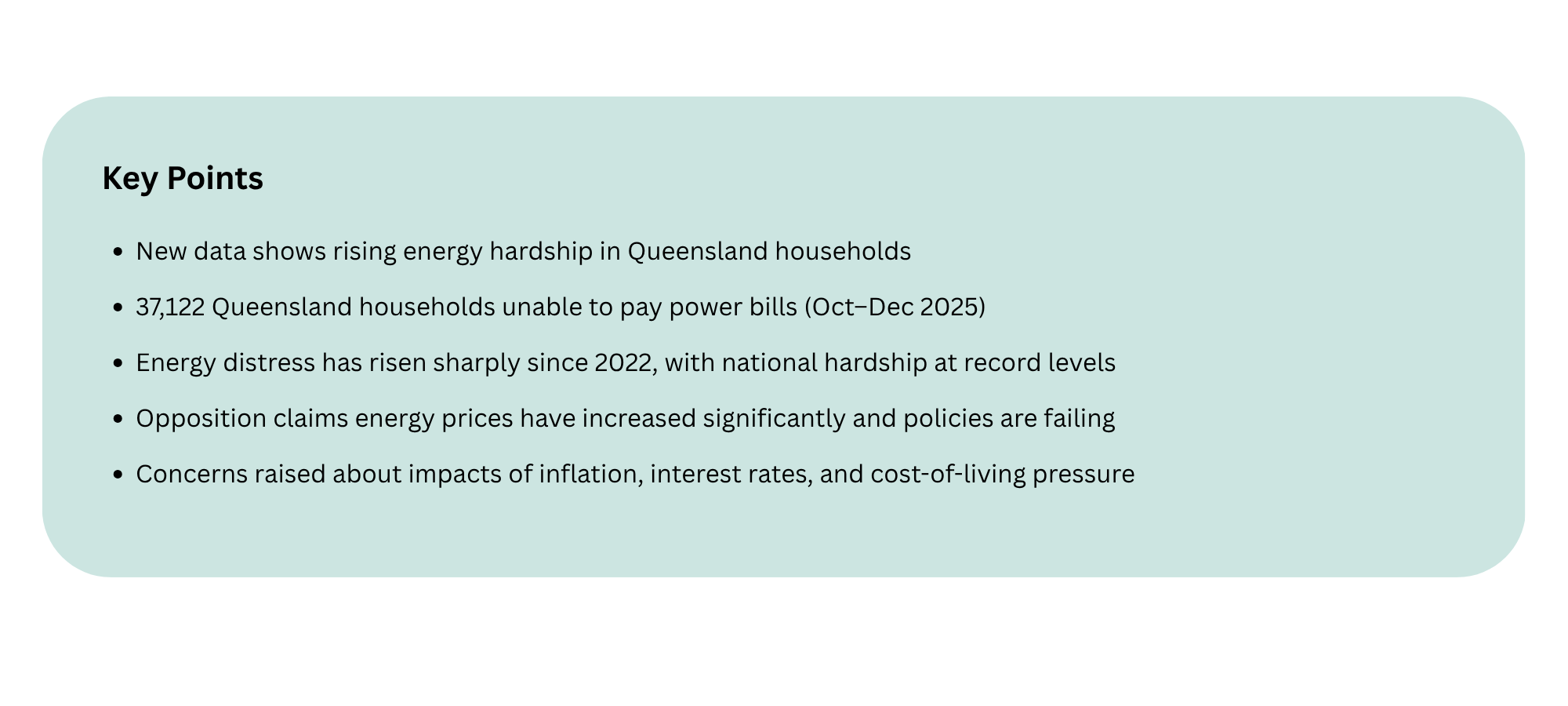
According to the Australian Energy Regulator, 37,122 households in Queensland were unable to pay their power bills over the period of October to December 2025.
Since Labor was elected in 2022, an additional 18,732 households have recorded hardship: this represents a staggering 102 per cent increase from when the Coalition was in office. Nationally, 230,000 households are in energy distress, which is an increase of nearly 70per cent in just 3.5 years and the highest level of hardship on record.
Shadow Minister for Energy and Emissions Reduction, Dan Tehan, said the federal government’s energy policies had failed to deliver affordable energy.
“Under Labor, power bills are up nearly 40 per cent because the government has chosen to rip the guts out of our energy system,” Mr Tehan said.
“A lack of baseload power and sufficient supply is pushing up prices; that is showing up as higher prices every time Australians open their power bill. Prime Minister Anthony Albanese promised to cut power bills by $275, but Australian households have not seen that promised reduction.”
Federal Member for Dawson, Andrew Willcox, said the energy crisis was heaping pressure on local households.
“With inflation and interest rates rising as well as power bills, my office has been inundated with locals telling me they’re at breaking point. It’s heartbreaking,” Mr Willcox said.
“Behind this new data are people in our community who are really struggling to make ends meet, yet all they get from the federal government are broken promises.”
As the Shadow Assistant Minister for Manufacturing and Sovereign Capability, Mr Willcox said the current energy crisis is creating a multiplied effect for major industrial users who are already struggling to keep their factories operational.
"The current fuel crisis is a stark reminder of why national sovereignty is vital: yet this Labor government fails to recognise the danger or take the necessary action to protect our independence.
“We have already seen the car industry disintegrate and now manufacturing across many other sectors is at risk; we must prioritise being a self-sufficient nation that makes our own products here in Australia.
“I’ll keep fighting for a more stable, reliable energy grid that puts the needs of Australians first, not one-size-fits-all mandates and targets that we can’t practically achieve.”
Joint media release from the Shadow Minister for Energy and Emissions Reduction, Dan Tehan, and the Federal Member for Dawson, Andrew Willcox.
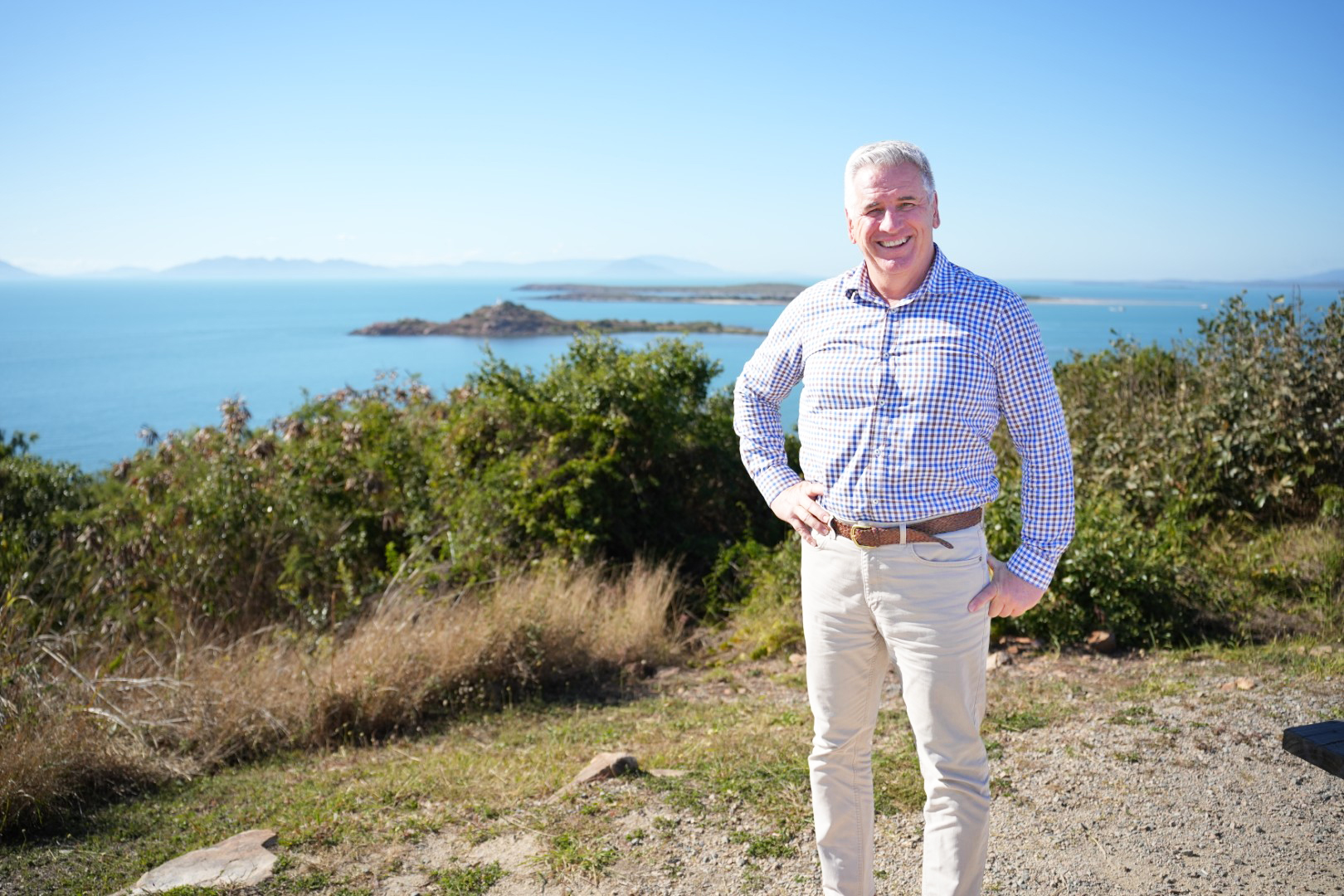
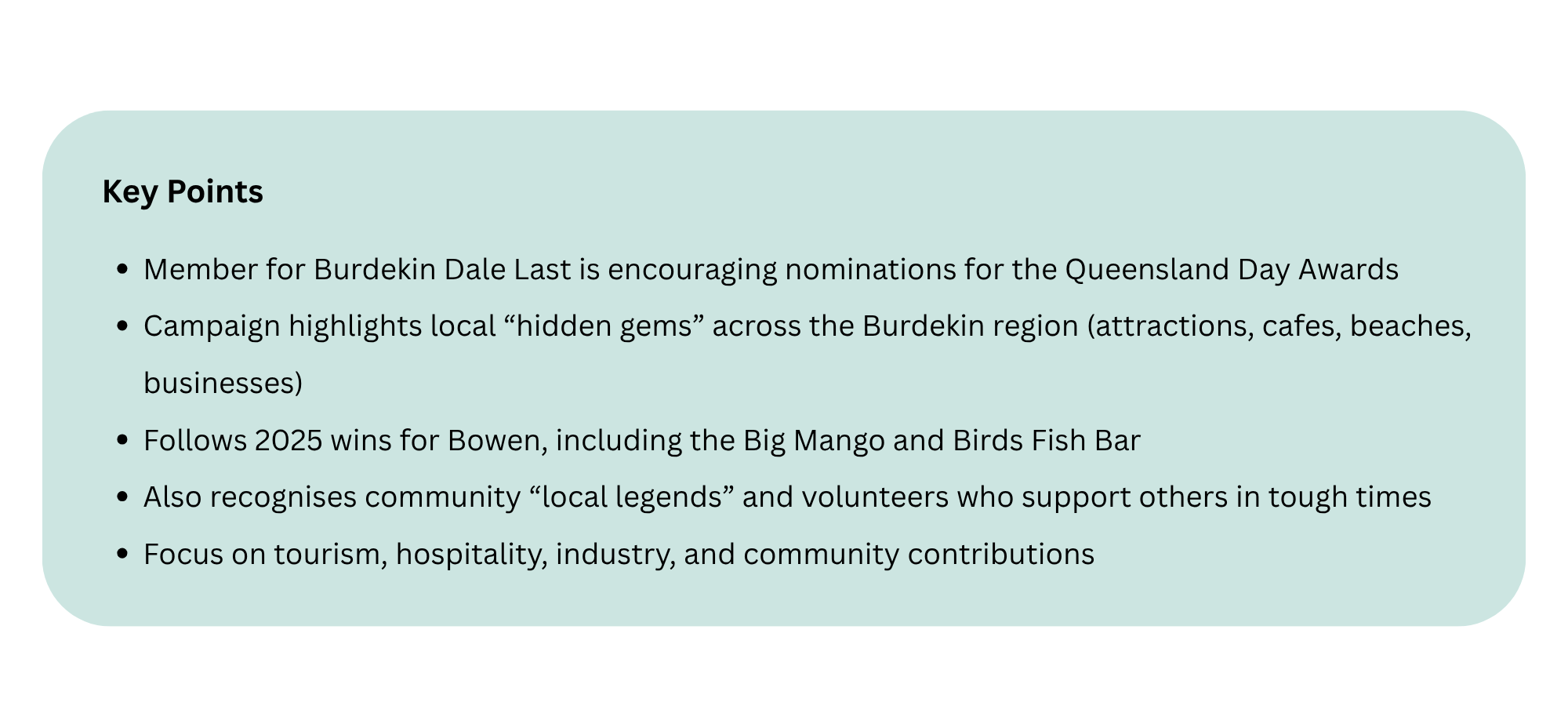
Having taken home top honours in last year’s Queensland Day Awards, Member for Burdekin Dale Last MP is encouraging residents to nominate local treasures once again.
Last year’s Queensland Day campaign saw Bowen recognised for its most recognised icon and crucial industry in a show of strength for the regional community and with the return of the campaign once again, Mr Last said it was another opportunity to showcase the Burdekin Electorate’s best tourism attraction, cafe, bakery and beach.
“Bowen has pinned itself on the map as the home for some of our favourite Christmas table staples in our mangoes and our seafood industry so it was only fitting Birds Fish Bar and Bowen’s iconic Big Mango laid claim to two awards in the 2025 campaign,” Mr Last said.
“We know there are even more positive contributions our electorate brings to Queensland from its camping and beaches to its tourism attractions and pubs. This is your chance to not only show your pride in our state but recognise the hidden gems in our region that would otherwise go unnoticed.”
Mr Last said the Queensland Day Campaign would go beyond recognising a favourite local coffee stop with the chance to shine a light on the people in our community who roll up their sleeves and show up for others.
“Every time our community is faced with hardship or challenges we see local legends emerge, whether it is ensuring people can still easily access healthcare or providing a hot meal following a natural disaster,” Mr Last said.
“There are also people who go above and beyond each and every day for members of their community, volunteers who give their time freely or young achievers determined to make our part of the state a better place to live, work and play.”
“We want to see those deserving local legends receive the recognition and gratitude on behalf of the entire state.
Nominations for Qld Day Awards close 18 May for more information visit https://qldday.initiatives.qld.gov.au/awards/

A simple act of kindness at a local business has captured the hearts of the Burdekin community, with a heartfelt social media post continuing to gain attention online.
In true Burdekin spirit, where locals proudly support locals, resident Renee Louise shared her gratitude after receiving exceptional service during a visit to Mitre 10 earlier this week.
Renee said she was impressed by a young staff member who went above and beyond to help her find what she needed, turning a routine shop into a memorable experience.
“Thank you so much for your customer service, such a fantastic experience, its workers like you that keep us buying local,” she wrote.
The post quickly resonated with the community, prompting a response from the employee’s proud mother, Esther Rush.
“Thank you for the lovely words to my daughter. Precious is her name and she was the only girl that was rostered on today. I will pass on the nice words to her as she doesn’t have Facebook yet.”
Since then, other locals have chimed in, sharing similar experiences and praising the friendly, helpful nature of staff across the region.
“I have had the same experience on many occasions. I'm a bit limited in movement and they are more than happy to help and carry heavier things to my car.
It's a pleasure as where I came from to move here that kind of service was rare. Well done,” wrote one resident.
“Yes, the young lady that served me was lovely, I would be proud to have her working for me,” said another.
The story serves as a reminder of the power of small gestures and the strong sense of community that defines the Burdekin, where kindness, connection and supporting local truly go hand in hand.

Ayr Golf Club has marked another successful Mona Coburn & Di Oats Day, with 23 players taking to the course for the much-loved annual event.
Held on Wednesday, the day was a celebration of both competition and community, honouring the lasting contributions of two important figures in the club’s history. The event was made even more special thanks to the continued sponsorship and support from the families of Mona Coburn and Di Oats.
Club members were pleased to once again welcome Bruce Coburn and Sandy Oats, who attended the day and presented prizes to the winners on behalf of their families.
Ayr Golf Club said it was an honour to have them present, acknowledging the ongoing role both families play in supporting the event and preserving its significance within the club.
The annual day serves as a reminder of the strong sense of tradition within the club, with many family members continuing to stay involved and contribute to its success.
Club representatives said they were grateful to have such dedicated support, noting that events like these highlight the important legacy left by past members and the community spirit that continues to thrive today.
Congratulations were extended to all prize winners, with the club also offering a heartfelt thank you to Bruce Coburn, Sandy Oats and their families for their ongoing and generous support.
CAPTION: The annual event continued to honour club legends while bringing members together on the course. Photo source: Ayr Golf Club

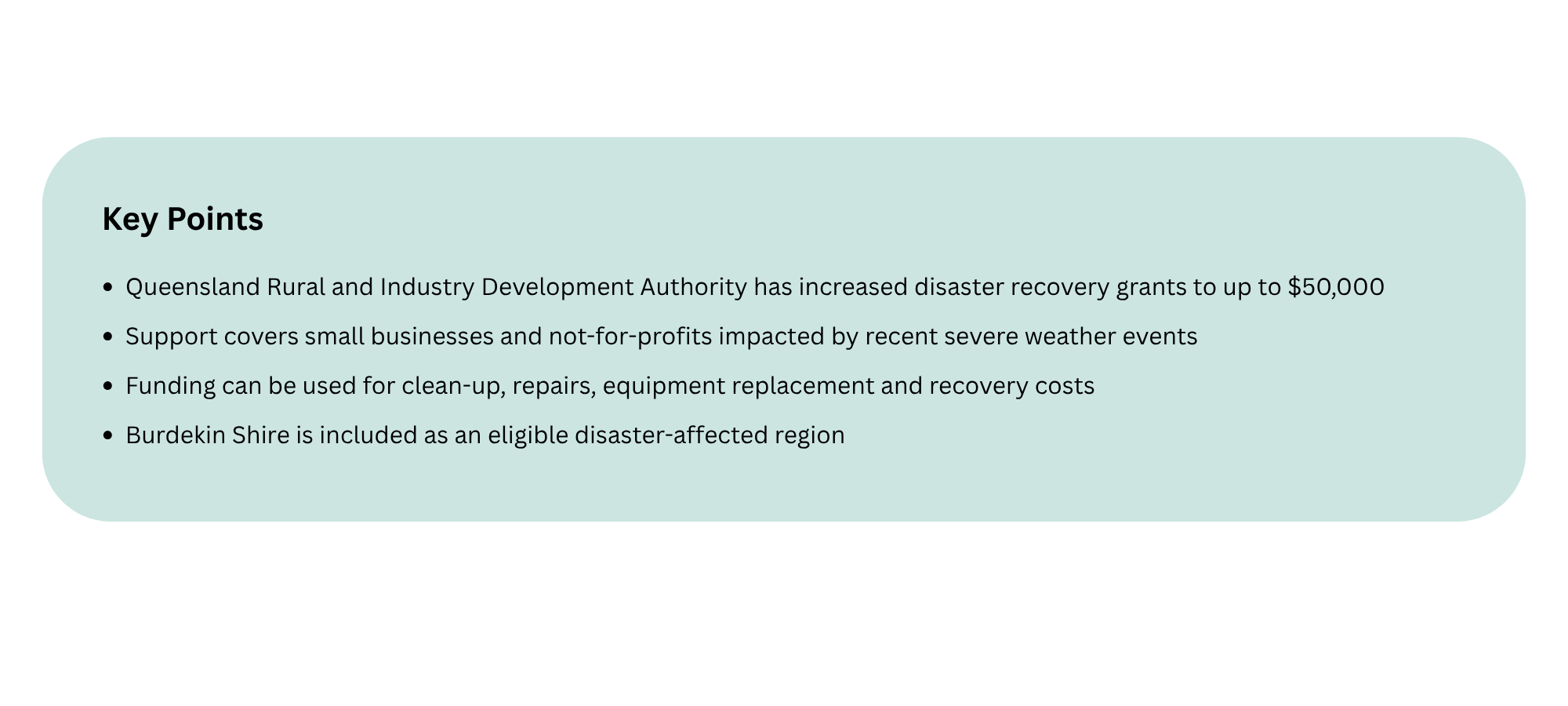
Small businesses and community organisations across the Burdekin Shire are being urged to take advantage of increased disaster recovery support, with grants of up to $50,000 now available.
The Queensland Rural and Industry Development Authority (QRIDA) has doubled the maximum funding available under its Exceptional Disaster Assistance Recovery Grants, reflecting the severity of recent weather events, including the Queensland Monsoon Trough and Cyclones Koji and Narelle.
Eligible small businesses can access the grants to assist with clean-up and recovery costs, including repairing damaged infrastructure, replacing equipment, disposing of stock, and covering additional labour expenses. Not-for-profit organisations are also now able to apply for the same level of support.
Businesses within the Burdekin Shire among the activated local government areas, meaning local operators impacted by recent disasters are eligible to apply, with Burdekin Chamber Secretary Kari Ravizza urging business owners to take full advantage of the support available.
“Our small businesses play such an important role in our community, and it’s vital they have the support to get back on their feet quickly,” said Mrs Ravizza.
“This funding is there to help, and I encourage all eligible operators to apply and make the most of it.”
QRIDA are offering personalised support through its “QRIDA Connect” sessions, allowing applicants to receive one-on-one assistance online or over the phone.
Authorities are encouraging those affected to document damage when safe, complete the Disaster Impact Survey, and prepare key documents such as photos, financial records and insurance details.
QRIDA has also reminded applicants that mental health support services are available.
Local businesses and organisations are encouraged to act quickly, with the increased funding providing a timely boost to support recovery.
CAPTION: Burdekin businesses and community groups can now access up to $50,000 in disaster recovery funding to support clean-up and rebuilding efforts. Photo credit: Burdekin Drones

On Thursday, 2 April, concerned local resident Matthew Russell came across an unexpected visitor paddling through Nelsons Lagoon on Adelaide Street, Ayr.
In a post shared online, Mr Russell alerted locals to the presence of a small freshwater crocodile, with many community members remarking on how unusual it was to spot a crocodile in the park, particularly so far from larger waterways.
Unlike saltwater crocodiles, freshwater crocodiles are smaller, shy and slender-snouted, typically feeding on fish, frogs and insects. They are not considered a significant threat to humans. Nonetheless, Mr Russell followed Queensland Government regulations, taking the initiative to report the sighting to the Department of Environment, Tourism, Science and Innovation (DETSI) via the QWildlife app. Sightings can also be reported through DETSI’s online portal or by calling 1300 130 372.
“We encourage you to report any crocodile you have concerns about – even if it’s deceased,” a DETSI spokesperson said.
“If you are not concerned about a crocodile you have seen, you can still report it. This information can help us keep track of the movements and behaviour of crocodiles in the area.”
No waterway in Northern Queensland can ever be considered crocodile free. DETSI reminds residents who come across crocs in the wild to keep a safe distance, stay away from the water’s edge, report the sighting immediatelyand remain croc-wise at all times.
CAPTION: Mr Russell spotted the croc last week and immediately took action. Photo credit: Matthew Russell

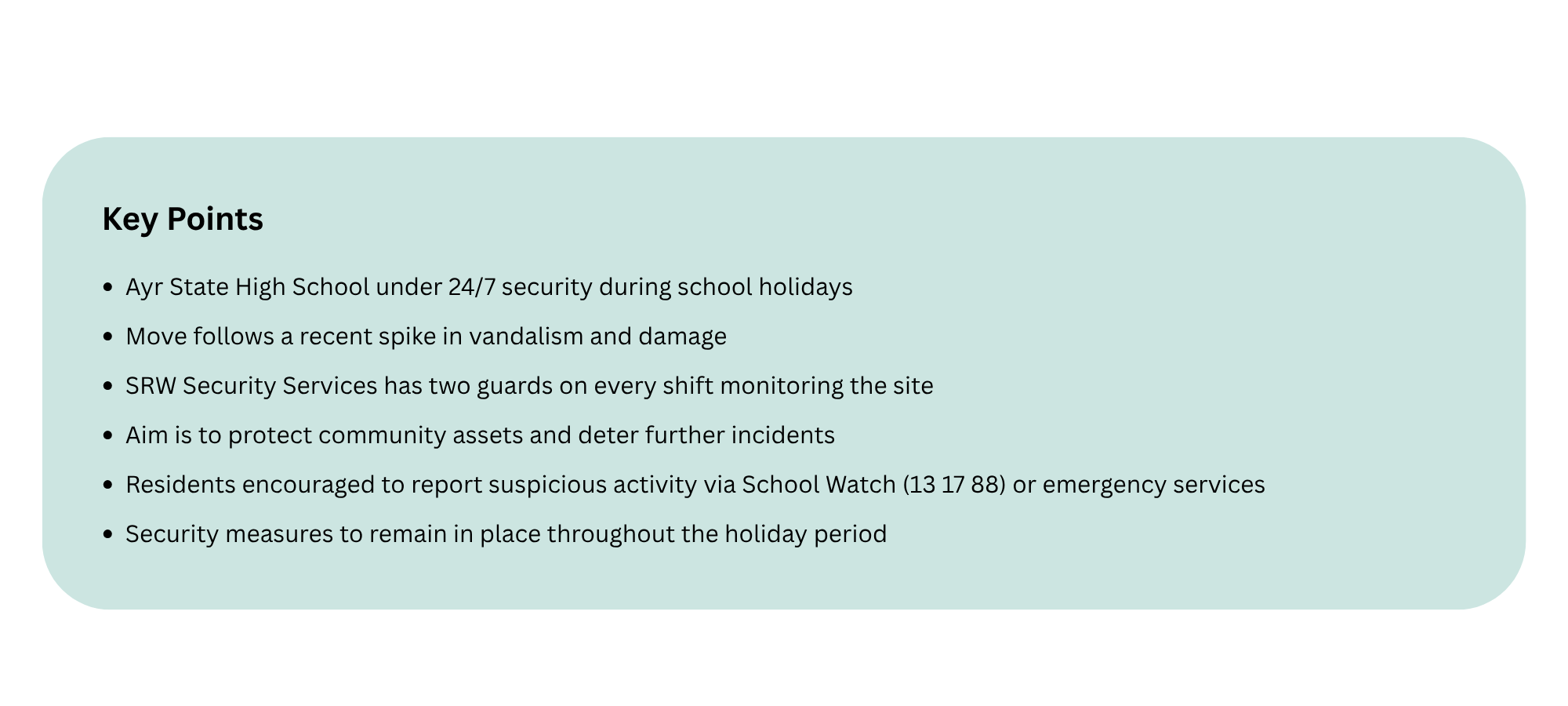
Ayr State High School will be under round-the-clock security surveillance these school holidays following a recent spike in vandalism.
In a public notice shared with the community, SRW Security Services confirmed a 24/7 presence at the school, with two security officers rostered on every shift to monitor the site.
“Due to a significant amount of damage caused in recent weeks, SRW Security Services will now have a 24/7 security presence at Ayr State High School for the duration of the school holidays,” the post read.
The increased security aims to protect public assets and deter further incidents, with a clear message directed at potential offenders.
“This is about protecting community assets and putting a stop to ongoing vandalism. If anyone is considering trespassing or causing further damage — don’t. You will be dealt with accordingly by QPS.”
The move comes amid growing concern from locals about damage to public facilities, particularly during school holiday periods when sites are more vulnerable.
Authorities are also reminding residents of the importance of community vigilance through the School Watch program, which encourages locals to report suspicious after-hours activity at schools.
Empty schools can become targets for unlawful entry, arson, theft, graffiti and property damage, particularly during holidays, impacting not just repair costs, but the wider community.
The program, a partnership between the Department of Education and the Queensland Police Service, provides a direct way for the public to report concerns, even if they seem minor. On average, more than 700 calls are made to School Watch each year.
Residents are urged to “Look, Listen, Report” by calling School Watch on 13 17 88, or Triple Zero (000) in an emergency.
SRW Security Services said the update was also shared in response to community questions about the visible security presence at the school.
“We appreciate the community’s support,” the post continued, encouraging residents to share the message and help protect local infrastructure.
The added security is expected to remain in place throughout the holiday period as efforts continue to prevent further damage and maintain safety at the site.
CAPTION: Additional 24/7 security has been put in place at Ayr State High School. Photo source: SRW Security Services

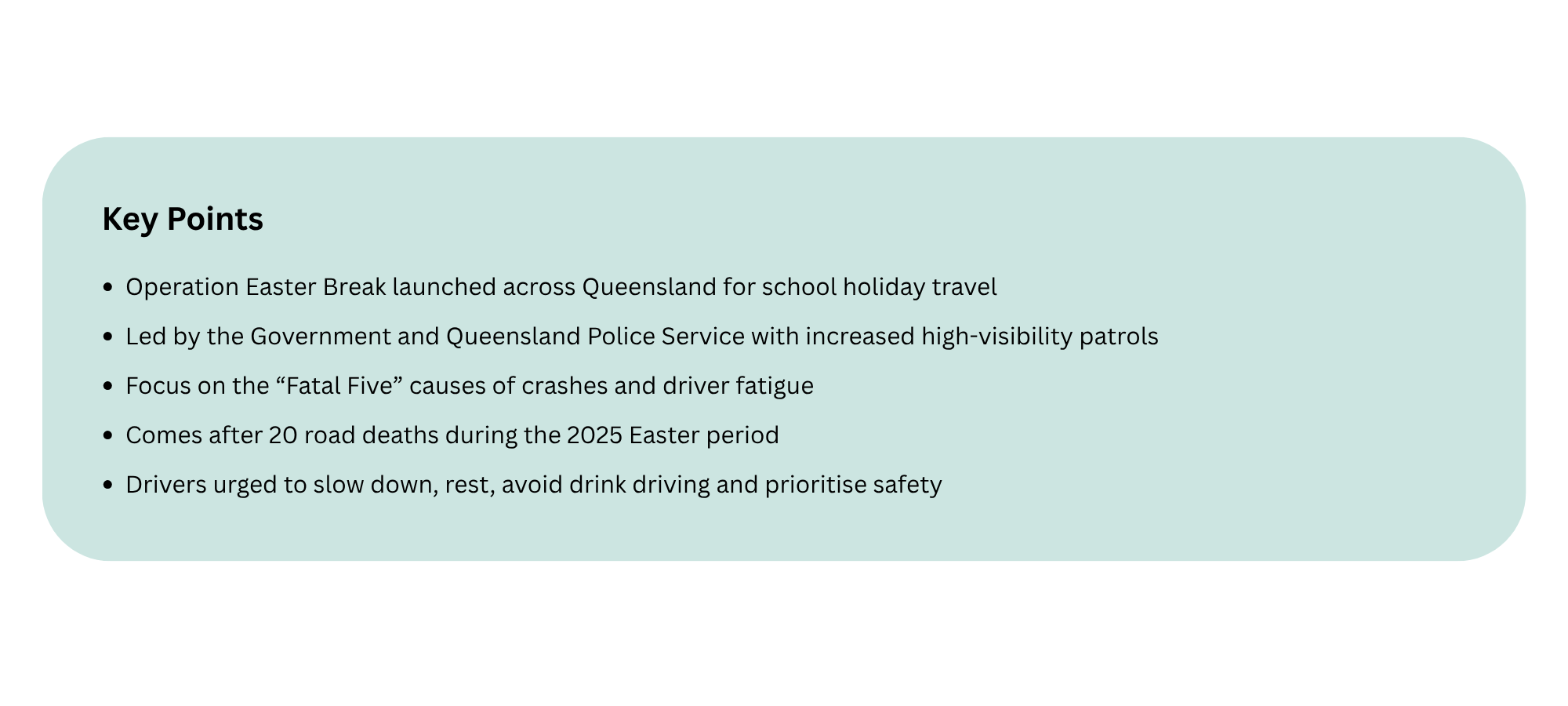
A major road safety operation is underway across Queensland, with authorities ramping up enforcement as school holiday travel begins.
Operation Easter Break has been launched by the Government and the Queensland Police Service (QPS), targeting unsafe and fatigued drivers during one of the busiest periods on the state’s roads. The initiative will see a high-visibility police presence statewide, with a particular focus on the “Fatal Five” risk factors known to contribute to serious crashes.
The campaign comes amid ongoing concerns about road trauma, with 20 lives lost on Queensland roads during the 2025 Easter period alone.
Minister for Transport and Main Roads Brent Mickelberg said the operation aimed to address dangerous driving behaviours and improve safety outcomes.
“Too many Queenslanders are being impacted by trauma on our roads and waterways, and the trend has been going in the wrong direction for a long time - that’s why we’re focused on stronger enforcement and safer behaviour this Easter,” Minister Mickelberg said.
“These campaigns send a strong message that dangerous behaviour, whether on the road or on the water, will not be tolerated - I urge everyone travelling this Easter to drive to the conditions, never speed or drink and drive, and if you’re heading out on the water, slow down and wear a lifejacket.”
QPS Chief Superintendent Mark Wheeler said officers would be out in force, particularly targeting fatigued drivers.
“We’re doing our part to make Queensland safer, but we all must also take responsibility - slow down, rest when tired, and make safe choices to protect themselves and others this Easter.”
Authorities are urging all Queenslanders to plan ahead, take regular breaks, and prioritise safety both on the road and on the water this holiday season.
CAPTION: High-visibility patrols will be conducted on highways, regional roads, and major travel routes over the coming weeks. Photo source: QPS
Small businesses across the Burdekin Shire are set to benefit from a statewide push to strengthen regional economies with the return of Queensland Small Business Month this May.
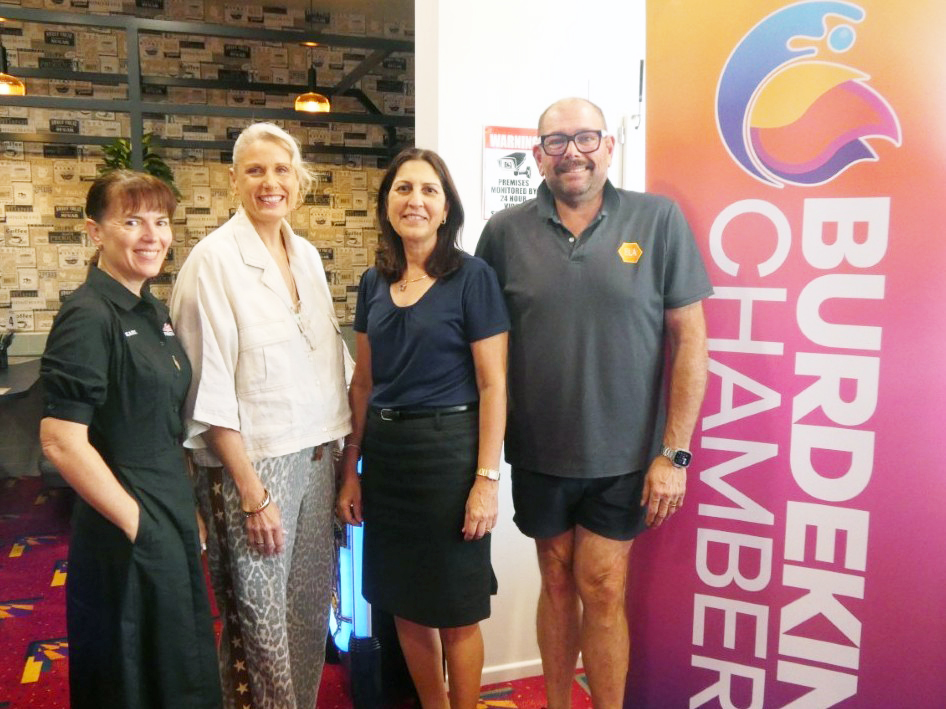
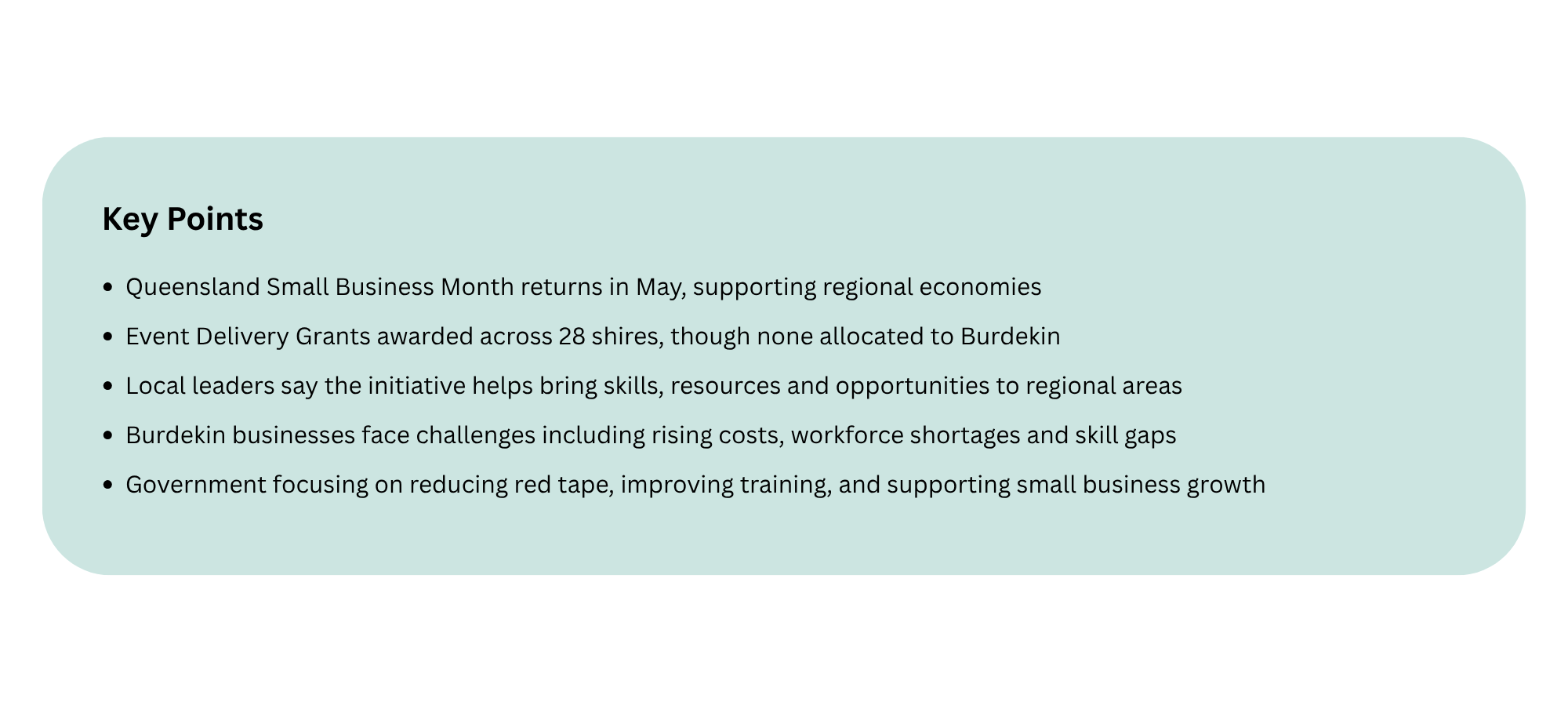
Just last week, several Event Delivery Grants were awarded to Chambers of Commerce, industry groups and councils across 28 shires, aimed at helping small and family businesses build resilience and embrace new opportunities. While no funding was allocated locally, Burdekin Chamber Secretary Kari Ravizza said it was encouraging to see the government prioritising small businesses in regional and remote communities.
“Initiatives like Queensland Small Business Month are extremely important in regional areas like ours, especially as they help to bridge the gap between regions and cities, and bring skills, resources and expertise into regions that don’t normally have easy access,” she said.
Dale Last MP, Member for Burdekin, said the initiative plays a vital role across the state, particularly in regional communities.
“Queensland Small Business Month is an opportunity to remind Queenslanders of the importance of small business and to thank the people who, quite often, put everything on the line to provide services and employ locals,” he said.
Mrs Ravizza said local businesses continue to face a unique set of challenges, including rising freight and logistics costs, increasing insurance premiums, workforce shortages and ongoing skills gaps in areas like digital marketing.
“In regions like the Burdekin, there’s also a heavy reliance on agricultural cycles — when farmers are doing it tough, flow-on effects are felt right across the local business community,” she said.
Mr Last said reducing barriers for small business remained a key focus for the government, highlighting the establishment of the Small and Family Business Ministerial Reference Group, which brings together representatives from a range of industries and regions across Queensland to directly inform policy and provide advice to the Minister.
“Having run a small business myself, I know that one of the biggest obstacles is red tape, and that’s why I am proud to be part of a government that is actively reducing unnecessary barriers for small businesses.”
He said the government was also supporting small businesses through initiatives targeting cybercrime, grants to improve safety, and measures to make it easier to employ apprentices, alongside tailored training and increased opportunities to secure government work throughout the year.
Mrs Ravizza added that while initiatives like Queensland Small Business Month are valuable, there is a need for more targeted, practical support.
“More funding for local workshops, digital tools, staff training, as well as support around freight and insurance, would make a real difference for small businesses in our region,” she said.
Queensland Small Business Month is a dedicated, state-wide initiative held annually to celebrate, support and connect more than 508,000 small and family-owned businesses across the state.
CAPTION: Burdekin businesses are calling for greater support, highlighting rising costs and skill gaps as major challenges amid statewide push. Photo credit: Jacob Casha

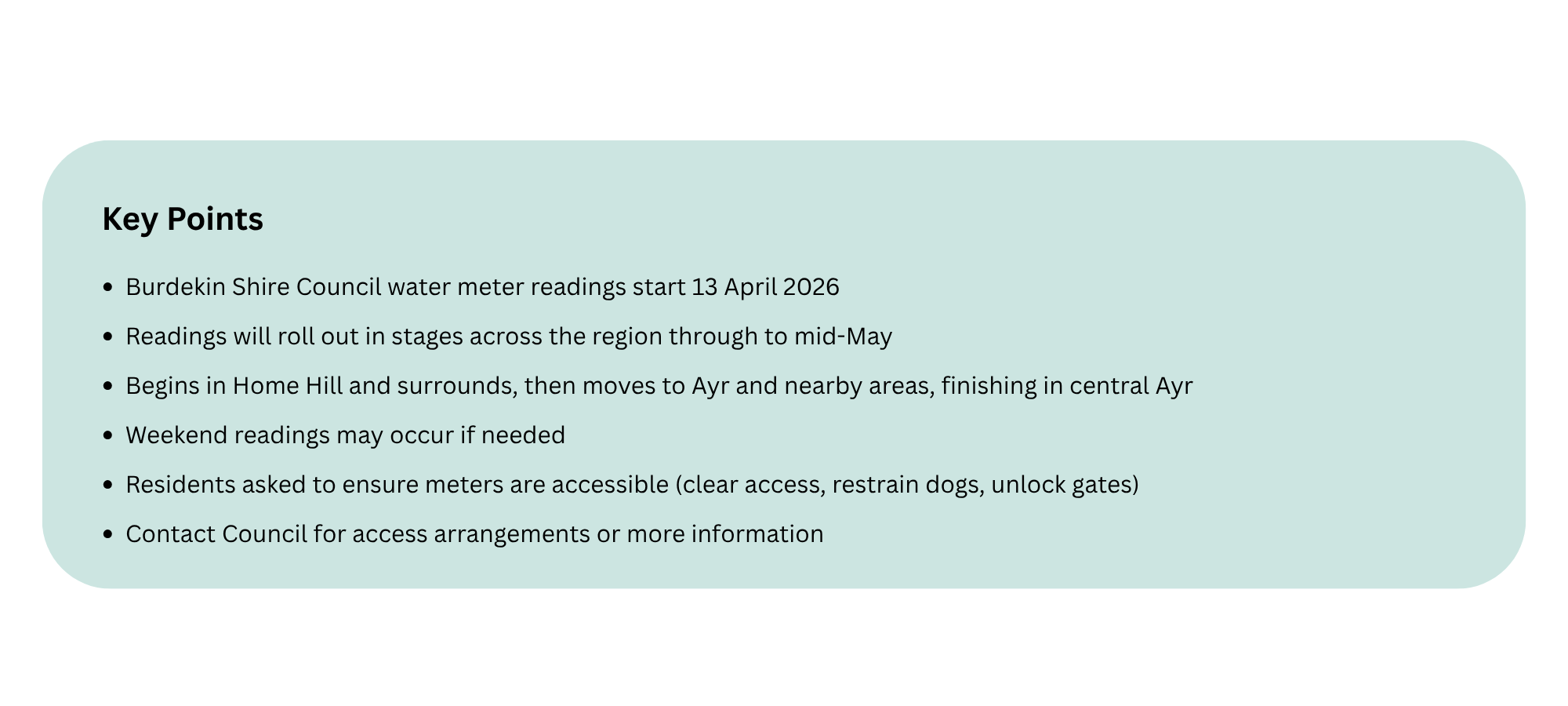
Burdekin Shire residents are being advised that bi-annual water supply meter readings will commence from Monday, 13 April 2026.
The readings will be carried out in stages across the region over several weeks, with timelines dependent on weather conditions.
Meter reading is expected to begin in Home Hill and surrounding areas, including Rossiters Hill, Mt Kelly and Alva Beach, from 13 April through to late April. Crews will then move to the outskirts of Ayr, Sutcliffe Estate, Brandon, Giruand nearby areas from late April to early May.
The final stage, scheduled from early to mid-May, will cover Parkside, East Ayr, Ayr CBD and South Ayr.
Council has advised that meter readings may also take place on weekends where required.
To assist meter readers, residents are asked to ensure water meters are easily accessible by clearing away any obstructions, restraining or isolating dogs, and unlocking gates where necessary.
Residents requiring specific access arrangements or further information are encouraged to contact Council’s Customer Service Centre on (07) 4783 9800 between 8am and 5pm, Monday to Friday, or visit the Council website.
Council has thanked residents in advance for their cooperation during the meter reading period.
CAPTION: Burdekin residents are urged to ensure water meters are accessible as bi-annual readings begin across the region from 13 April. Photo source: Burdekin Shire Council

Burdekin Shire Council will undertake flying-fox dispersal activities at Arch Dunn Memorial Park in Home Hill later this month, as part of preparations for Anzac Day and to minimise impacts on park facilities.
The works are scheduled to take place from Wednesday, 22 April to Friday, 24 April 2026, with operations occurring between 4am and 7am each day, as required.
Residents in the area are advised they may notice increased activity during these times, including loud noise and bright lights. Dispersal methods will involve the use of pyrotechnics, shotgun simulators, pool noodles, LED torchesand flashing lights to encourage flying-foxes to move on from the site.
Council has urged residents to take precautions during the operational period, including securing pets to ensure their safety.
Private landowners are also reminded they can discourage flying-foxes from roosting on their properties using low-impact, non-destructive methods such as smoke, water sprinklers, visual deterrents and noise devices. Information regarding appropriate methods and any permit requirements is available through the Department of Environment, Tourism, Science and Innovation.
Residents are strongly advised not to touch flying-foxes under any circumstances. Anyone who is scratched or bitten should seek medical attention immediately.
For further information about the dispersal activities, or to report daytime roosting of more than 100 flying-foxes, residents can contact Council’s Customer Service Centre on 4783 9800.
CAPTION: Flying-fox dispersal activities will take place at Arch Dunn Memorial Park in Home Hill from 22–24 April, with residents advised to expect early morning noise and activity. Photo source: Shutterstock

Registrations are now open for the Home Hill State High School P&C’s annual Fishing Competition, a much-loved community event that continues to grow into a valued local tradition.
Running from 6pm Friday 22 May through to Sunday morning, the competition brings together students, families, local anglers and supporters for a weekend celebrating everything the Burdekin is known for; the outdoors, community connection and a shared love of fishing. In recent years, the event has even attracted participants from as far as Brisbane.
More than just a competition, the weekend plays an important role in supporting students. Funds raised go directly towards reducing the cost of school camps, excursions and extracurricular activities, helping ensure all students can take part regardless of financial circumstances. Previous events have supported opportunities including camps, Optiminds, and student representation at sporting, cultural and leadership events.

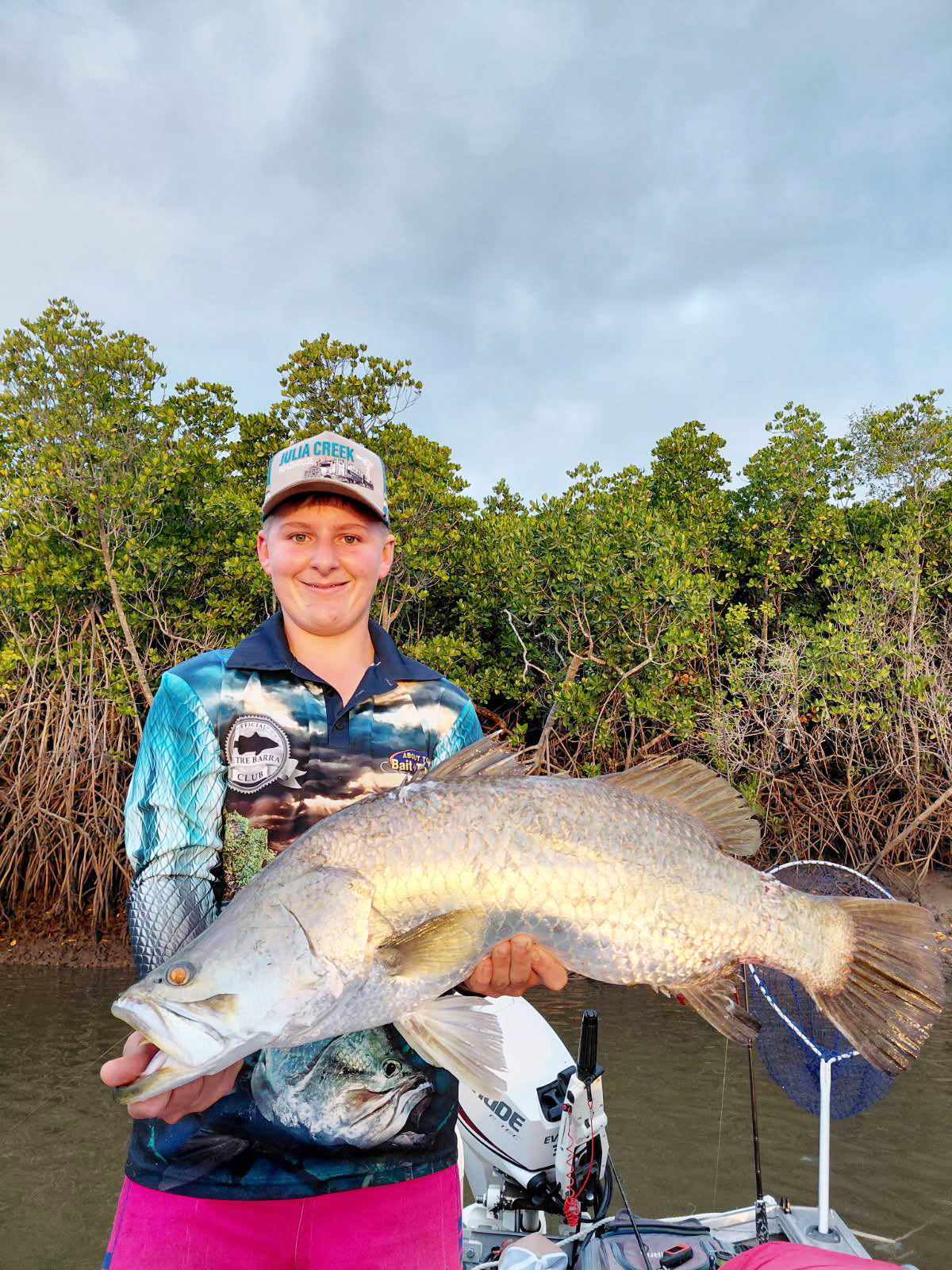
The competition caters to all ages and skill levels, with categories including Lucky Angler draws for juniors and seniors, longest and mystery length barramundi, and a range of heaviest species prizes such as grunter, whiting, mud crab, mangrove jack and flathead. A colour-in competition gives younger participants a chance to get involved, while the interschool competition will again see local schools vying for bragging rights.
Fishing will take place across the Burdekin district, with a strong focus on responsible and sustainable practices. Barramundi entries will follow a catch, photograph and release format using official brag mats to help protect breeding fish.
The weekend will wrap up with a relaxed, family-friendly event at the Home Hill State High School multi-purpose shelter. From 10am Sunday, the community is invited to attend the weigh-in, enjoy live music, a casting competition, food and refreshments, and a raffle, with presentations expected around 1pm.

The event’s success is driven by strong community support. About Town Bait & Tackle returns as major sponsor, providing the majority of prizes and assisting with registrations, alongside other local businesses contributing additional support. The Burdekin District Sportfishing Club will again oversee the official weigh-in.
Students remain at the heart of the event. Originally established in 2023 by a Year 12 cohort and staff, the competition is now coordinated by the school’s P&C, with students continuing to play an active role. Year 11 Sport and Recreation students assist through their Aquatic Recreation unit, while others contribute to event setup, registrations, weigh-ins and supporting participants throughout the weekend—gaining valuable experience in teamwork, leadership and event management.
With great prizes, a welcoming atmosphere and a strong sense of purpose, the Home Hill State High School P&C Fishing Competition continues to bring the community together while creating meaningful opportunities for students.
For more information, contact PandC@homehillshs.eq.edu.au.
What: Home Hill State High School P&C’s Annual Fishing Competition
When: Friday 22 May to Sunday 24 May
Where: Burdekin Shire
What: Home Hill State High School Family Friendly Event
When: 10am Sunday 24 May
Where: Home Hill State High School

If your walls could talk, what would they say? Emily O’Brien recently took to social media asking residents to answer that very question, inviting locals to share their memories, photographs and personal histories tied to an iconic Queenslander home. Emily hopes to document the lived experiences inside these homes through a self-published book, focusing on the everyday moments that often go unrecorded.
Emily’s passion for preserving Queenslander stories was sparked when she discovered a house for removal in the small locality of Massie in the Southern Downs. After meeting the descendants of the man who built it and hearing how he constructed the home by dismantling two others and transporting them by bullock dray, she realised just how easily these histories could be lost, and how important it is to capture them before they disappear.
At its heart, her project will work to preserve voices that might otherwise be lost to time.
“It feels like it has become a duty to safeguard the stories, so they aren’t lost to the passage of time and to give the houses and families a legacy,” said Emily.
“There would be so many houses and families out there whose stories have already been lost, and I’d love to make a difference.”
Rather than focusing on architectural perfection, Emily’s interested in the emotional connection people have with their homes, whether they’re “a weathered diamond-in-the-rough, or a polished gem”, she wants to hear every story.
“I haven’t had any two stories that are the same, and while there’s no type of story I’m after, it’s definitely the more intimate memories I’m trying to capture, rather than another history textbook,” she added.
“Perhaps what people remember growing up in the house, or their relative may have built the home back in the day by milling the timber themselves. Many people have even bought one of these old homes and have restored it and are therefore carrying on that legacy for years to come. It could be stories of what life looked like inside the home and how it changes throughout the generations.”
Emily’s project will largely focus on regional and remote communities where Queenslander homes have long been part of the cultural and social fabric.
“I’m focusing on the regional and remote areas in particular, because these houses are generally situated so far away that people may not know they exist to begin with,” Emily explained.
“The challenge with these homes isn’t just preserving their stories but finding them in the first place.”
With an intentionally inclusive approach, Emily warmly encourages anyone with a story to tell, or even those who know someone else whose story deserves to be shared, to reach out to her via emailing trumby03@gmail.com.
“I'm hoping to find stories of the everyday Australians who are our unsung heroes. They're the stories that matter most. They're the ones we need to know about.”
CAPTION: Emily has already received waves of positive support regarding her project, hearing stories from inside the four walls of a Queenslander home from across the state. Photo credit: Emily O’Brien
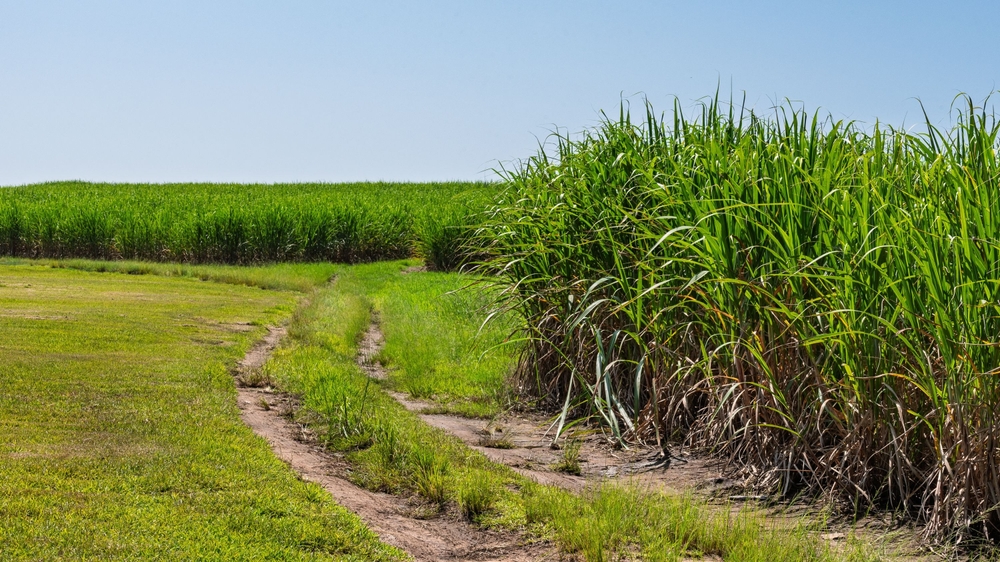
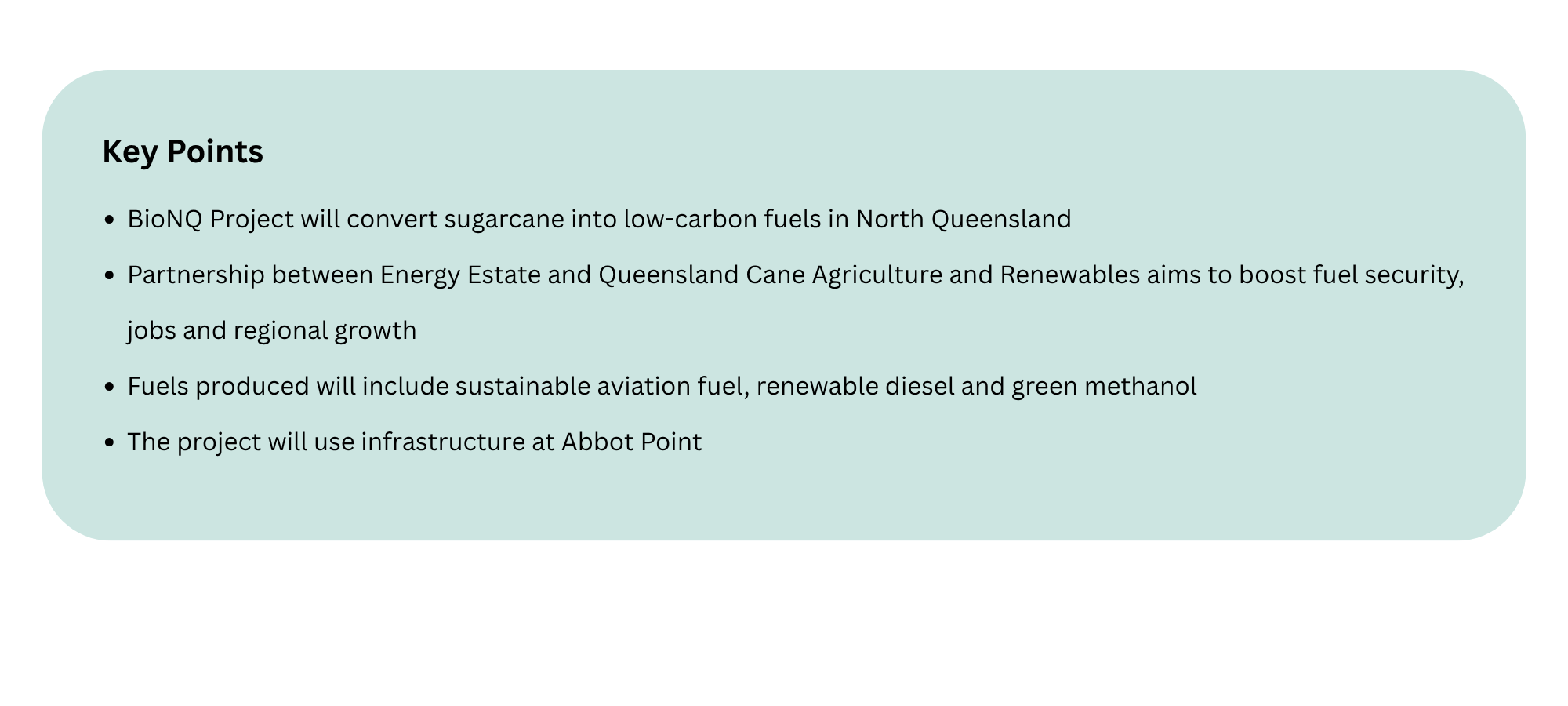
A major new partnership is set to position North Queensland’s sugar industry at the forefront of Australia’s energy future, with plans to convert sugarcane into low-carbon fuels through the BioNQ Project.
Energy Estate and Queensland Cane Agriculture and Renewables (QCAR) have formalised a strategic collaboration to fast-track the project, aimed at boosting fuel security while delivering jobs and economic growth across the region.
The initiative comes amid growing global uncertainty, with recent conflict in the Middle East highlighting vulnerabilities in Australia’s fuel supply chains. The BioNQ Project aims to reduce reliance on imported fuels by producing sustainable alternatives locally.
Leveraging existing infrastructure at Abbot Point, the project will convert sugarcane and other agricultural feedstocks into sustainable aviation fuel, renewable diesel and green methanol. These fuels are expected to support key industries including aviation, agriculture and shipping.
Energy Estate Chief Projects Officer Simon Currie said the partnership reflected a shared vision for regional development and national energy resilience.
“By working together, we can unlock additional feedstocks, invest in enabling infrastructure, and ensure Queensland’s agricultural industries play a leading role in Australia’s energy future – in real terms enhancing energy security for Australia and helping drive regional economic development.”
QCAR Chairman Russell Hall said the project would create new opportunities for cane growers.
“This gives North Queensland sugarcane farmers the chance to be active participants in Australia’s energy security… In a volatile world, domestic production isn’t just an option – it’s how countries survive and thrive,” he said.
The BioNQ Project aligns with state and federal strategies to strengthen energy independence while supporting regional communities.
CAPTION: New BioNQ partnership aims to cut fuel reliance, create regional jobs and unlock new value for sugarcane growers. Photo source: Shutterstock

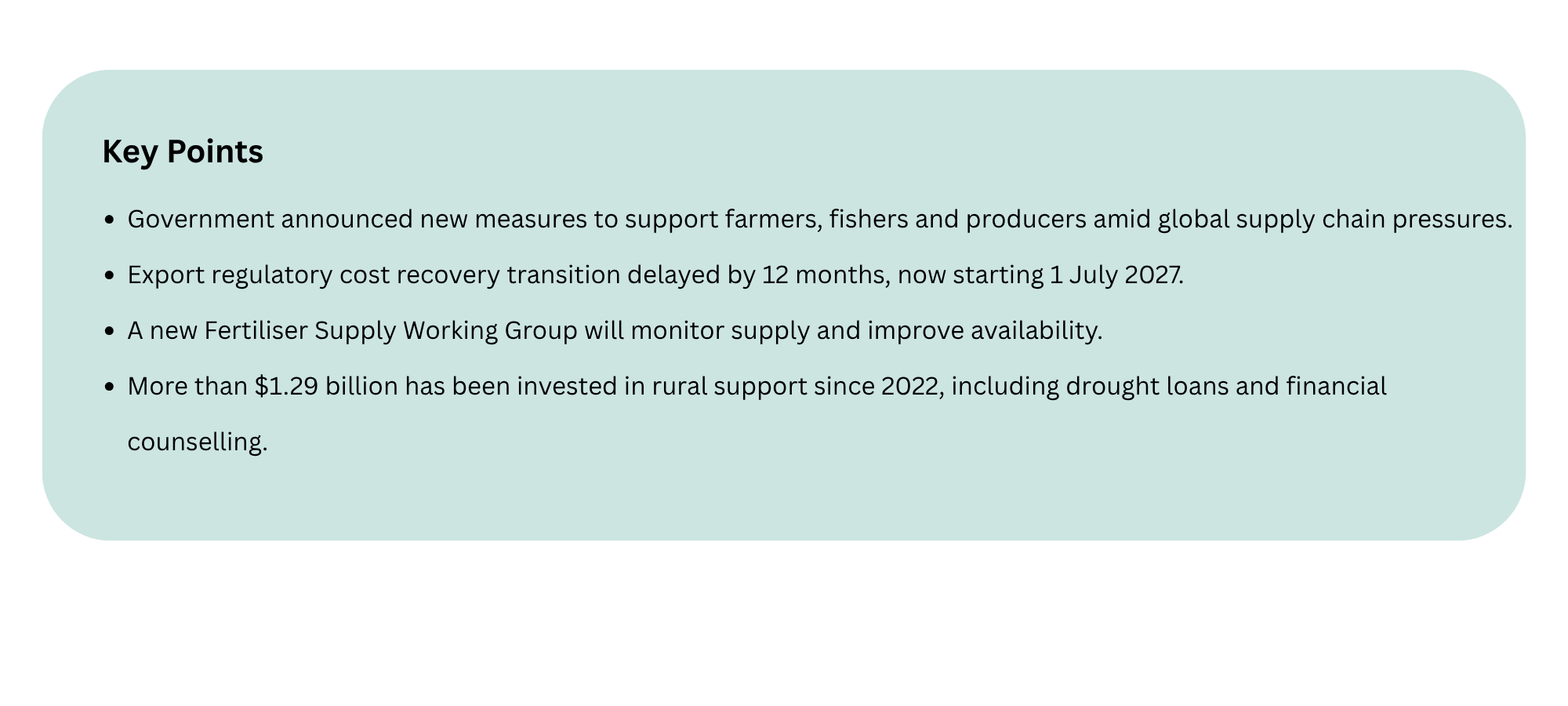
The Government has announced a suite of measures aimed at supporting Australia’s farmers, fishers and producers as global conflict continues to place pressure on supply chains and costs.
In response to disruptions linked to the conflict in the Middle East, the Government is working to maintain export flows, stabilise input costs and strengthen the nation’s food production system.
A key measure includes deferring the phased transition to full cost recovery for export regulatory services by 12 months, now set to commence on 1 July 2027. The move is designed to provide greater certainty for farmers and producers already facing rising input costs.
The Government is also establishing a new Fertiliser Supply Working Group, bringing together key agencies and industry representatives including Fertilizer Australia and the National Farmers Federation. The group will build on existing efforts to improve fertiliser availability, including monitoring supply chains and engaging alternative suppliers.
Additional support is being delivered through financial assistance programs, with more than $1.29 billion invested in rural support and resilience funding since July 2022. This includes the rollout of a new Drought Hardship Loan and expanded access to the Rural Financial Counselling Service.
Minister for Agriculture, Fisheries and Forestry Julie Collins said the Government remained focused on supporting the sector through ongoing challenges.
“We are working day and night with our farmers, fishers and producers to help manage this impact of the conflict in the Middle East,” Ms Collins said.
“Our farmers and producers feed millions of people both here and abroad, but events like the conflict in the Middle East reaffirm why we cannot be complacent.
“That’s why we’ve taken immediate action to help safeguard Australia’s food production system, and to support our farmers and producers – including to help get fuel and fertiliser into our regions.
“We recognise the disruption the conflict in the Middle East has had on our farmers and producers, which is why we are deferring the commencement of the phased transition to full cost recovery for export regulatory services for one year.
“Our Government will never leave farmers behind who are facing hardship.”
CAPTION: New support measures aim to provide certainty for farmers and producers, helping safeguard Australia’s food supply and export strength during ongoing global disruptions. Photo source: Shutterstock
Publishers Indemnity. Any individual or entity that places advertising, supplies copy material, or submits editorial content to Core Life Publishing agrees and undertakes to ensure that all such material:- Does not infringe upon any copyright, trademark, or other intellectual property rights;- Is free from any content that could be considered defamatory, libelous, or slanderous;- Does not infringe upon any rights related to privacy or breach of confidence;- Contains no obscene, indecent, or otherwise unlawful material;- Complies fully with the Trade Practices Act and all other applicable laws, regulations, or statutes.Furthermore, by submitting or placing such material, these individuals or entities agree to indemnify and hold harmless the publisher, Core Publishing and Events Pty Ltd, and/or its agents from and against any and all investigations, claims, demands, liabilities, damages, costs, or judgments arising out of or in connection with the material provided. All material is believed to be accurate at the time of printing and remains the copyright of Core Publishing and Events Pty Ltd.
© 2026 Life Publishing Group Pty Ltd.
