
Independently Owned, Locally Grown, Community Loved
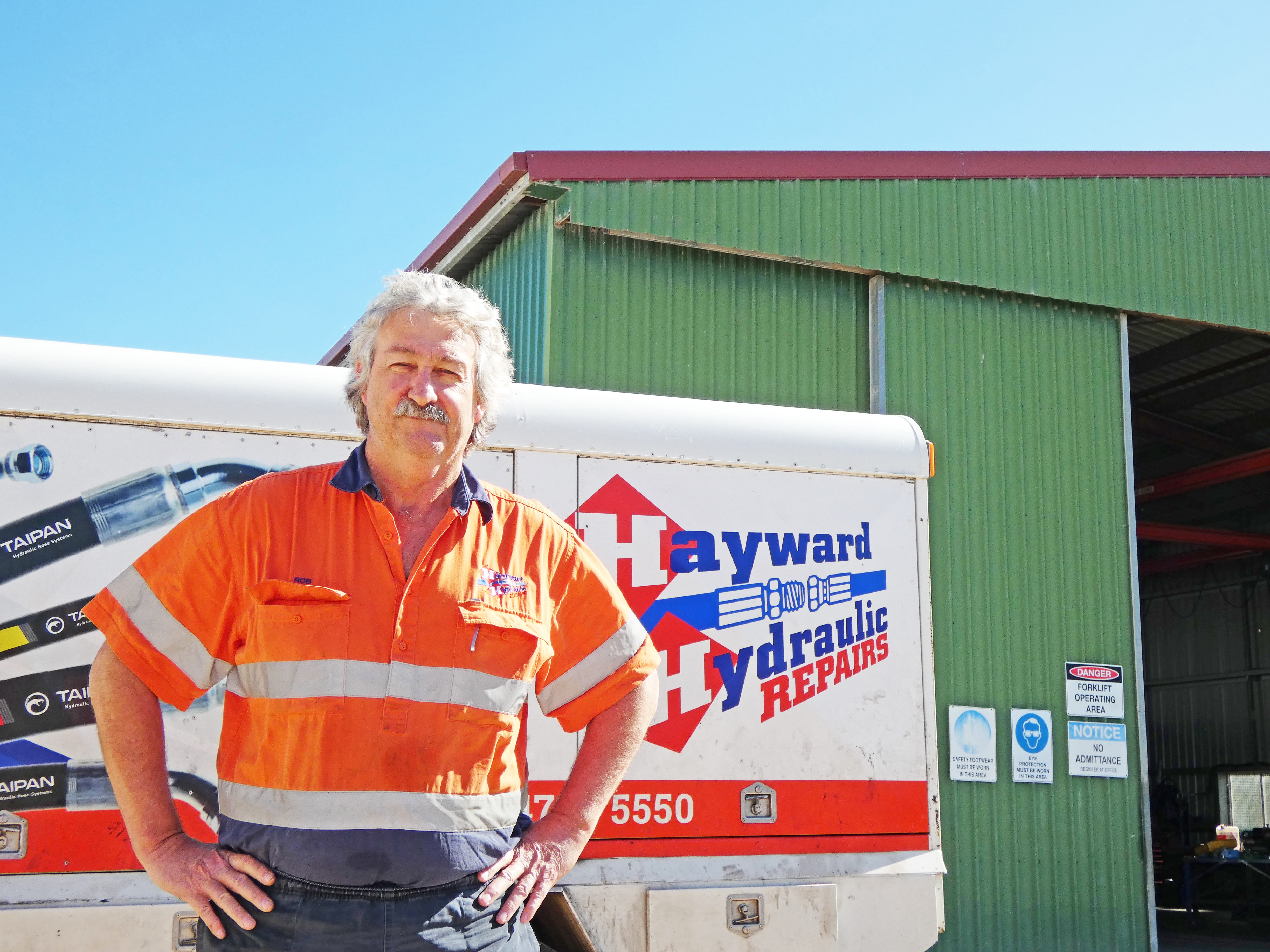
Not every business starts with a blueprint. For some, it begins as a calling… in more ways than one. Burdekin local Robert Hayward had been in the hydraulics industry since he was 18. A diligent worker who loved his job, he quickly built a reputation locally as one of the best in the business. But despite a mutual affinity with the industry that had formed over years, he stepped away in the early 1990s to help his father-in-law maintain a cane property in Clare. Until he received a call. Then another… and another. Rob quickly realised that, despite his brief hiatus, his reputation in hydraulics had not faded. With that, he was pulled back into the game, this time with nothing but a $2,000 ute, a toolbox, and work up to his neck. And the only way to keep himself from drowning in it was, ironically, to go in deeper. “As the Burdekin is, if you do a very good job, word travels quickly between the community. One farmer talked to another, he talked to another, he talked to another… “Until I sat down with my wife one day and said, ‘I think we can make a business out of this.’” His ute would eventually make way for a permanent space—a small sub-shed at Larry Hudson Engineering in the Ayr Industrial Estate that would serve as his headquarters for the following four years. He tackled the first year solo, before demand forced him to put an apprentice on in the second year, and a qualified tradesman in the third. By the end of the fourth, Rob’s work had outgrown its humble base, moving down the road into a new purpose-built shed that would become the home of Hayward Hydraulics. That shed would officially open in 1996, spurring a 30-year legacy sustained by three defining pillars. Growing with the industry “I had no idea how to use computers,” Rob said with a smirk. Admittedly, he hadn’t realised he signed himself up for a three-decade, three-fold evolution between an entire industry, his own business, and himself. What he did know was that he was ready to learn, and eager to grow. It started with the basics. For Rob, that meant wrapping his head around modern computers, attending TAFE courses on emerging welding techniques, and becoming a leader. “I went from being a very good tradesman to having to be an employer,” he said. “You have to be a people's person, you have to treat people the right way, treat your workers the right way. That part I never even thought of until we started getting into it.” Rob treated this evolution as a marathon rather than a sprint, dedicating the business's first decade cementing its reputation as a local leader. After striking up deals with major companies, including Queensland Rail and Wilmar Sugar in the mid-2000s, he decided to take the leap into the mining industry in the early 2010s as a safety net for the unpredictable sugar industry. With that growth, Hayward Hydraulics’ shed would undergo its third structural expansion to accommodate its continuously increasing popularity and modernised technology. He built a habit of gleaning ideas from various online hydraulic magazines, and then building on them to not only keep up with the industry, but to will it into the future himself. “I eventually built a reputation for thinking outside of the square. If somebody's been doing something for 20 years, I'll look at a better way of doing it,” he said. Albeit, he admits he and the business are still evolving today. “I've seen harvesters and planters go from chain and sprocket to hydraulic motors, to hydraulic motors being linked to satellite GPS,” he said. “The industry has changed in leaps and bounds, and you have to keep finding ways to move with it.” Doing it the right way Hayward Hydraulics’ evolution was founded on something Rob didn’t need to be taught. Care. And he makes sure his staff do, too. “I didn't come from a real wealthy family, so we were brought up to work; you work, you do the job right, you get paid,” he said. “So if I'm not happy with something, I'll ask my workers: ‘would you pay for that?’” When the mining industry began to boom in Queensland, Rob admits he had a difficult time retaining workers. To compete, he was forced into paying top-dollar for what he called “good quality workers,” causing financial tension. When asked if compromising staff quality for cost was ever an option, with the conviction of a true-blue purist, he said: “No.” “I've always maintained that a business is only as good as your employees. You can be the best boss in the world, but if you've got workers that people don't like, they don't come through the door,” he said. “My current staff are up there with the best that I've had. I just try to make sure they’re happy to come to work every day.” With quality and care as its engine, Hayward Hydraulics became known not just for technical know-how, but for doing things the right way. As its stature in the industry continued to grow, so did the scope of its customer base. Calls started coming in from as far north as Tully, all the way to Mackay and Western Queensland, all saying the same thing: “We heard you were the guy to talk to about this problem.” Family and community at its heart For the last 10 years especially, the business has made a point of supporting local organisations and sports clubs, most notably the Burdekin Roosters Rugby League Club. Rob described it as a duty to a community that has given so much to him and the company. “The community has been so important to it all. I’ve got some customers that have been with me from day one, and with some, I’m onto the third generation of the same family,” he said. “The’ve given a lot to me. They've helped me grow and supported me, so it's about time I supported them back.” Beneath it all, though, he points to his family as the driving force. “I remember those early days when we were setting up the new workshop, building benches and all that, my two brothers-in-law and my father came out and gave me a hand,” he said. “But my biggest support is my wife. Especially in the early days when I wasn't home, and she solely looked after the kids and everything. “It got to the stage where I was working seven days a week, 12 hour days, and my wife would bring the kids on a Saturday and Sunday, and we'd sit on the shop floor and have lunch. “She's been with me through the lows and the highs, and that I thank her for.” Now, thirty years later, it’s his family pulling him out of the industry. Driven by the desire to make up for lost time with his wife and kids, Rob has loosened his grip on business operations, working four days a week with plans to eventually let his brainchild find its own footing. As for right now, he’s not yet ready to call time on a chapter that was, perhaps, never meant to last this many pages. “I still love what I do,” he said. “The early days come with sacrifices, but when I look back now, it was all worth it. “I remember when it all first started, looking on the ATO website and coming across that statistic that most businesses fail within five years. “When I read it, I said to myself, 'well, I'm gonna make sure I’m not that statistic.’” And that, he did. CAPTION: Rob and his current team. Back L-R: Chase Pearce, Stephan Du Plessis Front L-R: Kade Pearce, Renee Viero, Robert Hayward, Tina Dennis, Bryan Parison Absent: Sam Tomasetig Photo credit: Jacob Casha
Read the full story
The Burdekin has rallied behind a local family after a sudden medical diagnosis turned their life upside-down. Ryan and Holly Davenport dropped everything when their two-year-old son, Rowen, was diagnosed with a brain tumour last month, temporarily relocating to Brisbane for his ongoing treatment. In response, a GoFundMe fundraiser has since raised over $55,000 in support of the family. Created in late May by Shannon Malone, a close friend of the Davenports, the fundraiser has been shared all over Facebook and Instagram by local organisations, garnering comments of support on top of 271 individual donations. “Words can’t describe how much it means to us to have everyone’s support behind Rowen as he begins his journey,” Ryan said. “They have given us precious time to spend with Rowen without the everyday worries.” The money will help fund hospital stays, travel, time away from work, and ongoing treatment expenses as the Home Hill family navigates a medical journey that began in April. Already on edge after daughter, Ally, underwent brain surgery to have a cavernoma removed just before Easter, Ryan and Holly acted promptly when they noticed a twitch in Rowen’s eye. Following weeks of consultations with Townsville doctors and specialists—which included MRI scans and a Royal Flying Doctors flight—Rowen was eventually diagnosed with pilocytic astrocytoma, a slow-growing brain tumour. He has since been transferred to Queensland Children’s Hospital in Brisbane for chemotherapy, with the couple leaving their two young daughters with their grandparents in the Burdekin to be by his side. In their absence, locals have offered meals, helped on the family’s sugar cane farm, assisted around their home and helped look after their daughters, along with the generous donations. Ryan said the funds raised would not just help relieve the financial burden of Rowen’s treatment, but allow the flexibility to fly their daughters down and spend some time as a family. “(The toughest part has been) the unknown, not having our family together … and watching Rowen go through these traumatic times and … not being able to do anything,” Ryan said. “It has been a very emotional journey so far, and it is hard to believe we are only at the start.” Anyone wanting to support the Davenports is urged to donate using the following link: https://www.gofundme.com/f/supporting-the-davos-and-little-rowen?attribution_id=sl:75c20475-06e5-4752-8e11-d1b7a07c7728&lang=en_AU&ts=1779705595&utm_campaign=fp_sharesheet&utm_content=amp20_t1&utm_medium=customer&utm_source=copy_link CAPTION: Funding will allow the family to fly their daughters down and spend more time together during Rowen’s treatment. Photo supplied
Read the full story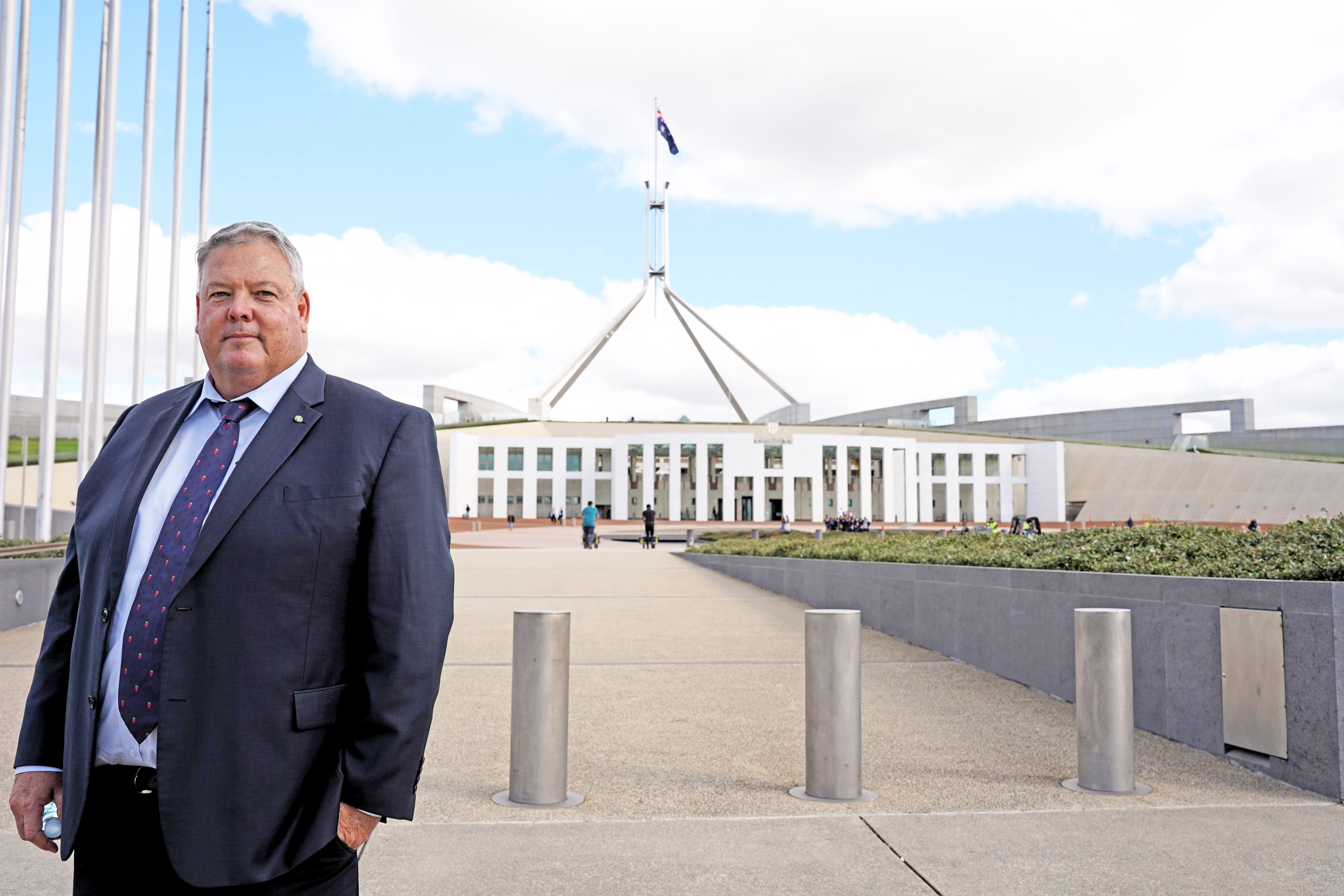
The Federal Member for Dawson, Andrew Willcox, has slammed the Albanese Government for an unacceptable ambush on regional communities, accusing the Commonwealth of abandoning disaster-prone areas to balance its own budget. The Federal Minister for Emergency Management, Kristy McBain, used a late Friday afternoon media release to quietly flag sweeping alterations to the Disaster Recovery Funding Arrangements (DRFA). The proposed changes dismantle the long-standing, scalable framework, which historically provided an average of 64 per cent federal coverage and capped support at 75 per cent for catastrophic events. In its place, Canberra intends to implement a rigid 50-50 funding model. This policy shift arrives at the worst possible time for the state; it follows a volatile severe weather season that caused widespread damage across 71 of Queensland’s 77 local government areas. Federal Member for Dawson, Andrew Willcox, is warning that the sudden funding shortfall threatens the future viability of essential infrastructure, local water treatment facilities, and emergency evacuation operations. Mr Willcox, drawing on his extensive experience as the former Mayor of the Whitsunday Regional Council, stated that the Federal Government is completely detached from the realities of regional recovery. "This decision is a direct hit to the heart of North Queensland," Mr Willcox said. "Canberra is treating natural disasters like a corporate budgeting exercise; however, out here, it is a matter of community survival. To penalise the very regions that drive the nation’s agricultural wealth and mining export revenues is a profound betrayal. "During my time steering the Whitsunday community through the wreckage of Severe Tropical Cyclone Debbie in 2017, I learned exactly what it takes to rebuild. We relied heavily on scalable federal assistance to restore our shattered rural road networks. Under a flat 50-50 split, local councils across Dawson would be forced to find millions of dollars in matching revenue; that is a financial burden our regional ratepayer base simply cannot sustain." Mr Willcox emphasised that major historical recovery operations would have been completely unviable under the newly proposed guidelines. "The total reconstruction of the Shute Harbour marine terminal and the $5 million federal package required to replace the decimated Proserpine Entertainment Centre occurred because the previous framework allowed for exceptional circumstances," Mr Willcox said. "Small regional councils do not possess the independent asset base to fund multi-million-dollar rebuilds alone. Furthermore, the historical system guaranteed that funding flowed directly into local economies, ensuring that regional earthmoving businesses and contractors were awarded the repair work. By lowering the funding floor, the Commonwealth is forcing cash-strapped councils to delay vital resilience works; this leaves our communities dangerously exposed before successive wet seasons. "It is a coward’s tactic for the Minister to leave this announcement until the day after the parliamentary sitting concluded, ensuring they avoided any real scrutiny or accountability in Question Time. “This is yet another calculated deception from a government that knows exactly how damaging these cuts are; this is absolutely not what the Australian people voted for, and I truly hope this betrayal is remembered at the next election. "This is yet another chapter in the ongoing federal neglect of regional Australia. The government is hiding behind the cover of an independent review to justify cutting essential frontline services. I call on the Emergency Management Minister to reverse this decision immediately; regional Queenslanders refuse to be treated as second-class citizens.” Supplied by the office of Federal Member for Dawson, Andrew Willcox CAPTION: FIGHTING FOR THE NORTH: Federal Member for Dawson Andrew Willcox MP outside Parliament House in Canberra, condemning the Albanese Federal Government's plan to slash scalable disaster recovery funding for regional councils. Photo supplied
Read the full story
"As the final week approaches for public submissions into the Sugar Code of Conduct, Member for Burdekin Dale Last has renewed his calls for growers to unite and make their voices heard. Mr Last said the public submissions for the sunsetting review of the Sugar Code of Conduct should be an opportunity for sugarcane growers from across the Burdekin to outline the benefits of the code for both farmers and the wider community. “Over recent weeks I have taken the liberty of providing a submission on behalf of the community, because ultimately the flow-on impact from changes in our sugar industry stretch beyond the paddock and the mills,” Mr Last said. “I recently met with several grower representatives which provided the opportunity to bring key stakeholders together, reaffirm my support as the Member for Burdekin and emphasise the need to work collaboratively as the review period unfolds.” Mr Last said while it was important stakeholders took the time to make their voices heard during the public submissions there was no better way to understand the impact of the Sugar Code of Conduct than to visit the area and speak directly to representatives. “A decade ago this district played a central role in bringing this code of conduct to fruition so I would expect our stakeholders receive a seat at the table they deserve,” Mr Last said. “If the Federal Labor Government was serious about consulting with the industry, the responsible Assistant Minister would be looking for every opportunity to listen to those who are most impacted by the Sugar Code.” Anyone wishing to have their say in the review can visit https://haveyoursay.agriculture.gov.au/sugar-code-review"
Read the full story

Simon Hood
Wilmar Manager Grower Marketing
The sugar market remains in no man’s land as the window between the close of the 2023-24 Brazilian crush and the start of the 2024-25 season seems impossibly short. The final production for this season’s output is yet to be determined, but is heading towards a record harvest.
Projections for the 24-25 season are fluid in the analysts’ spreadsheets. The early number of 640+ million mt of cane is being wound back, due to the dry weather in December and January being factored into the yield. February was forecast to be a wetter month, but has not delivered as much moisture as desired. Ranges now in the market cover 600-635 million mt, with Wilmar at the upper end of that scale.
Another important variable is the production mix between ethanol and sugar. This ratio pushed the market to the upside last year with the final coming close to 50:50. There is an obvious incentive to increase this percentage with ethanol parity trading closer to US14c/lb versus the US22c/lb for #11. Reports suggest that mills are rushing to increase crystallisation capacity. However, as we are acutely aware, it takes some planning to design, build, and install mill components so a step change in capacity may be constrained.
There is talk of further investment at the Brazilian docks to ease loading bottlenecks, which global logistics managers will support.
If the dry weather persists, the new season crush might start earlier. This will be bearish in the short-term, as more sugar becomes readily available, but will potentially bode well for constructive pricing later as yield prospects will be cut. Watch this space.
Following a poor and patchy monsoon, the Indian crop has performed better than expected. Nevertheless, India is not expected to be a significant player in global trade for the foreseeable future, with any increase in production siphoned to the ethanol production.
Doubt remains about how quickly the Thai crop will be cut out. The outlook for next year is not for a massive recovery of cane hectares, as competing crops maintain a viable alternative in Thailand. This should support the far-east premium as Australian sugar will remain in strong demand.
Finally, the speculative community is keeping its powder dry. After liquidating a significant net bought position for much of the 2023 season, they are yet to move far away from a small net long balance in the 2024 calendar year. At the end 2023, we witnessed the impact of the head exiting in unison, so it is important to keep a bead on the signals that were used to drive their investment flows.
For more information, contact your local Wilmar Grower Marketing consultant.
This graph charts the Brazilian crop size and the sugar-ethanol mix since 2017-18.

The rural event of the year is fast approaching with Burdekin Boars and Barras taking over Clare this weekend.
Celebrating its 10th anniversary, and with something for everyone, the Burdekin is invited to get behind the rod or the rifle to help fundraising efforts for the Clare State School P&C Committee.
Involving fun for the whole family, the event schedule includes the coveted weigh-in presentations for all pigs, fish and crabs, a well-stocked licensed bar, Rotary food tent, Lillie’s Cubby House, live music by none other than Tammy Moxon, plus face painting and merch stall selling the very best branded clothing and accessories.
With over $7,000 worth of prize money on offer in junior, senior and open categories across all classes, this is set to be a weekend of fun and excitement.
Find out more and get your tickets at burdekin-boars-barras.spiffystores.com.
WHAT: Burdekin Boars and Barras Competition 2024
WHERE: Clare Sports and Recreation Club
WHEN: Saturday March 2 and Sunday March 3
TICKETS: $10 Junior and $20 Senior

In an announcement that further boosts Queensland’s credentials as Australia’s emerging AgTech innovation capital, Brisbane has been named as the home of the AgriFutures evokeAG. global innovation event in 2025.
Connecting the global agrifood innovation community of investors, entrepreneurs, AgTech service providers and agribusiness professionals, evokeAG. provides a digital platform and premier agrifood tech event where farmers share their experiences, startups pitch their potential, scientists showcase their discoveries, global business leaders share their insights and industry experts debate their opinions.
The announcement came after a group of Queensland innovators and industry leaders joined more than 1,800 delegates from across the Asia Pacific attending this year’s event in Perth.
Minister for Agricultural Industry Development and Fisheries and Minister for Rural Communities Mark Furner said the Queensland Government has helped the state’s agricultural industry grow from $17.2 billion to an estimated $24 billion in value, supporting hundreds of thousands of good jobs for Queenslanders since 2015.
“AgTech is a strong part of the sustainable future of agriculture, solving problems and growing businesses,” Mr Furner said.
“Bringing this event to Queensland reinforces the Queensland Government’s commitment to AgTech and adoption.
“I have no doubt Queensland’s agriculture sector will make the most of this event and ensure next year’s evokeAG. held in Brisbane will be the best yet.”
AgriFutures Managing Director John Harvey said he looks forward to hosting the event in Brisbane.
“evokeAG. began as an opportunity to showcase the incredible agrifood tech innovation happening here in Australia, to hear from the rest of the world and to drive innovation in the Asia-Pacific region,” Mr Harvey said.
Queensland Chief Entrepreneur Julia Spicer added that the state’s agriculture has an innovative culture.
“Our farmers have instinctively turned to innovation to solve some of the big farming challenges in Australia, including dealing with drought, floods, pests, soil quality, remote locations, livestock monitoring, and transport and logistics,” Ms Spicer said.
“This in turn is driving a strong homegrown AgTech sector – technologies and innovations developed for farming in some of the toughest conditions in the world.
“As someone who works closely with many regional communities to drive change and enhance economic opportunities in agriculture, I know that hosting evokeAG. in Brisbane next year is an opportunity to showcase the world-class AgTech that we create and harness across Queensland.”
The event will be held in Brisbane from February 18-19, 2025.

Growers participating in the Burdekin Irrigation project, the Lower Burdekin Smart Irrigation Project and the Major Grants project hosted sugarcane growers from the Mackay-Whitsunday region the Far North and local growers to demonstrate on-farm smart irrigation strategies, tools, technologies, and practices throughout the Burdekin.
The bus tour aimed to increase cross regional relationships and provided an opportunity for growers interested in new advancements in irrigation practices and technology from outside the region to explore on-farm smart irrigation demonstrations.
The three demonstration sites contained a variety of smart irrigation technologies including gravity fed surface drip, high press subsurface drip, automated overhead sprinkles, automated furrow irrigation systems and a myriad of sensing equipment to collect data from each trial site.
Improved irrigation practices supported by the Burdekin Irrigation Project have resulted in an increase in productivity, providing a path to a more sustainable farming enterprise.
Three Burdekin growers who hosted the demonstration sites highlighted the challenges associated with farming in their specific locations and shared the robust process they undertook to address crop demands.
They noted that automation has been the enabler for improved efficiency, but without the practice change there would have been little benefit.
“The bus tour provided an excellent opportunity for growers across districts to see first-hand demonstrations of different irrigation practices side by side with replicated treatments,” explained Terry Granshaw, SRA.
“Whether its sugarcane or any of our legumes that are grown across the district, we want to be making sure we apply the right amount of water to the crop at the right time.
“The demonstration sites compare grower current practices with a changed practice, based off data collected from sensors and current weather conditions.
This information is collected via automation and used in conjunction with IrrigWeb (a crop model used for scheduling and record keeping) Feedback from the growers who attended on the day were very positive and I hope that future cross region interaction becomes the normal within our industry,” he said.
With support from Reef Catchments and Sugar Research Australia, growers from the Mackay-Whitsunday region will join their peers to workshop how learnings from the Burdekin tour can best be integrated with local grounded experience in the region.
To learn more about Water Quality management in the Burdekin region, visit NQ Dry Tropics’ website at www.nqdrytropics.com.au.
The integrated Engagement and Capacity Building project is funded through the Queensland Governments Reef Water Quality Program and delivered by the Department of Agriculture and Fishers (DAF).
The Burdekin Irrigation Project is funded by the partnership between the Australian Government’s Reef Trust and the Great Barrier Reef Foundation with collaboration between Sugar Research Australia, Farmacist, AgriTech Solutions, Burdekin Productivity Services, Burdekin Bowen Integrated Floodplain Management Advisory Committee, James Cook University, the Queensland Department of Agriculture and Fisheries and NQ Dry Tropics.
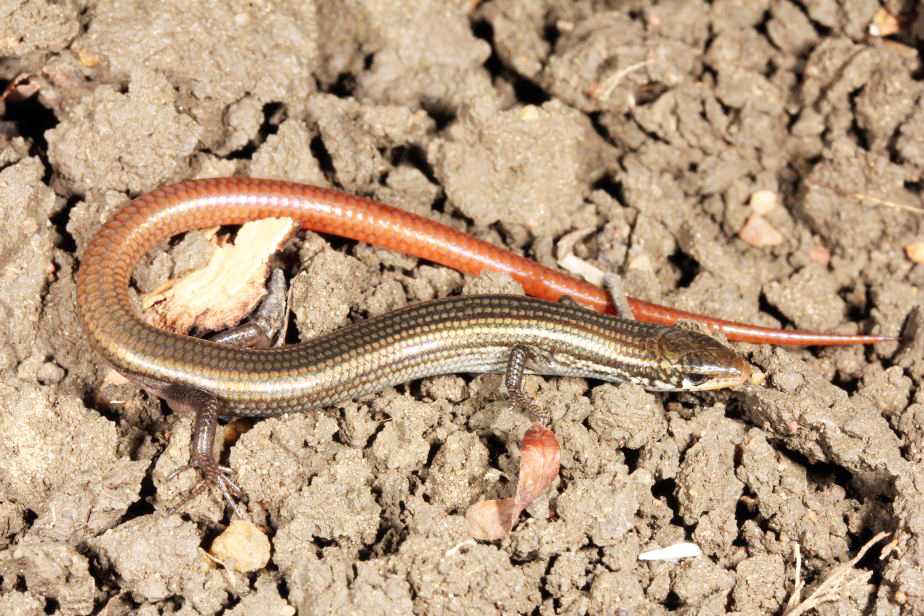
The Lyon’s Grassland Striped Skink had not been observed since 1981 and is known only from a single locality that is heavily grazed by cattle.
That is until the rare lizard was found last year for the first time in over 40 years living in north-east Queensland.
In early 2023, scientists from Queensland Museum and James Cook University were tasked with the challenge of finding the elusive Lyon’s Grassland Striped Skink.
The surveys were part of research by the Resilient Landscapes Hub of the Australian Government’s National Environmental Science Program that is looking for highly threatened reptiles across Queensland.
Dr Andrew Amey from Queensland Museum Network, who led the expedition, said the goal was to find three species of skink which have very small distributions confined to the Mount Surprise area, around 500 kilometres northeast of Ayr.
“These lizards are all hard to find and seldom seen,” Dr Amey said.
“Two are part of a large group of skinks in the genus Lerista, which are only found in Australia and have adapted to sandy soils by reducing their limbs to essentially swim through the soil.
“It shows that parts of Australia such as grasslands and open woodland that are grazed by cattle can still host important biodiversity.
“It was an exciting moment to find all three skinks, but to find the Lyon’s Grassland Striped Skink was an amazing discovery.”
The other two skinks were the Limbless Fine-lined Slider, which is found in the Undara Volcanic National Park, and the Mount Surprise Slider, which was only known from one paddock.
The purpose of the survey was to find if the species still existed and if scientists could find new populations elsewhere.
The small distribution of the skinks makes them vulnerable to damaging events such as bushfires, drought, invasive weeds, and disease.
The Lyon’s Grassland Striped Skink was recently listed as Critically Endangered by the Queensland and Australian Governments in recognition of this.
Dr Amey said animals like these skinks have an important role to play in our ecosystems.
“We need to know if these skinks have healthy populations or if they are declining,” he said.
“We can’t take effective action to protect them if we don’t know where they occur and what threats are impacting them.
“The only way to get this information is go and look for them.”
Caption: Lyon's grassland skink. Photo credit: Conrad Hoskin

By Chelsea Ravizza
January 2024 saw a new mammoth monthly record set for the Containers for Change Scheme across Queensland, with 175,805,461 containers returned for a refund and recycling. This outstanding total surpasses the previous record set in January of 2023 of 157,525,681, and Rachael Coleman of NQ Green Solutions continues to be blown away by the Burdekin’s recycling efforts.
NQ Green Solutions recycled 1,133,972 containers in January, and the depot shows no sign of slowing. Recycling almost 350,000 more containers in January of 2024 than January of 2023, Rachael believes this increase can be owed to various factors.
“A number of factors have contributed to our surge in number for January in the Burdekin like the expansion of our Container Collect Service to include areas such as Giru and Ravenswood, our online booking app, sponsorship, large community involvement, and awareness about the scheme and what if offers,” explained Rachael.
The Queensland Government’s Containers for Change Scheme was introduced in November of 2018, and has since received more than 7.75 billion containers, and refunded more than $775 million to Queenslanders.
Rachael and her team have seen many new customers come through their deport in response to the cost-of-living crisis, and Container Exchange CEO, Natalie Roach, believes the Containers for Change Scheme exists as a widely beneficial tool to combat this struggle.
“At a time when many are facing cost of living pressures, Containers for Change has returned more than $780 million to Queenslander’s’ back pockets,” explained Ms Roach.
“Containers for Change has also supported more than 935 jobs across Queensland, with many of these in regional areas, benefitting the local economy.”
The scheme’s expansion to include glass wine and spirit bottles from the beginning of November in 2023 is believed to be one of the main contributing factors to the record-breaking figures.
“We have had an overwhelming response to the addition of glass wine, and spirit bottles to the Container refund Scheme since its introduction, but January saw massive growth across all container variants,” expressed Rachael.
“Since we opened our doors, we have recycled and saved over 37 million containers from landfill, and I couldn’t be prouder of the Burdekin and their participation in the entire scheme, as every week the numbers just blow me away.”
Caption: Charley Ruskin and Caitlin McDonnell of NQ Green Solutions. Photo supplied

Next month, high school students from four Burdekin schools will attend a potentially lifesaving education program professionally developed and delivered by trained local mentors.
Road Safety Education Limited’s (RSE) RYDA workshop is a whole of school program which includes a full day workshop of practical, interactive and powerful sessions about road safety for students at Burdekin Catholic High School, Home Hill State High School, Burdekin Christian College and Burdekin Educational Engagement Program.
The program lays the foundation for safe road use throughout their lives and challenges students to think about the role they play road safety.
RSE CEO & Managing Director Terry Birss said the organisation applauds schools for committing to the educational experience for their students.
“Educating young people and equipping them with the tools they need to make good choices on the road is essential to saving lives,” he said.
“It is not enough to teach a young person the skill of controlling and manoeuvring a vehicle.
“We must balance this with the skill of critical thinking and an appreciation for safety on the road.”
The workshop is supported by a range of resources for students and teachers to use including an online digital revision course, pre-workshop classwork and follow-up modules on a range of road safety topics which schools can build into their curriculum.
To date, over 775,000 students have completed the RYDA program throughout Australia and New Zealand.
The program focuses on teaching young drivers the cognitive skills required to manage distractions, an understanding and acceptance of the rules of the road and the laws of physics.
It helps students to plan their journey and gives them strategies to avoid risk and the resilience and motivation to implement those strategies.
RYDA also teaches passengers how to contribute positively to the car’s environment and speak up if they’re uncomfortable and to use the road with social responsibility.
RYDA QLD Senior Program Coordinator Hannah Olsen said the support of local Rotary Clubs means the program can be run in all communities by local road safety and education professionals, including police.
“Youth Road Trauma is a community problem that needs a whole of community response,” she said.
“Our local rotary club and RSE are in a unique position to bring together all the essential elements to provide an effective and highly successful road safety education program for young people.”
Drivers are at their highest risk of being involved in a crash during their first year of driving unsupervised.
Young Australians continue to be over-represented in road trauma statistics with 17-25-year-olds making up 10% of the population but representing 22% of all driver and passenger fatalities.
A range of factors have been linked to the higher rate of injuries and deaths caused by young drivers including driver inexperience, risky driving behaviours such as speeding, driving while fatigued, driving without a seatbelt and driving smaller and/or older vehicles with fewer safety features.
The risk of crashing diminishes with experience plus the development of decision-making skills so they can recognise risky situations and make safer choices.
The RYDA workshops teach all of these skills and are aimed specifically at people of senior high school age.
The program will run on Friday March 15 at the TAFE Queensland Burdekin Campus.
.jpg)
Scouting has been part of the Home Hill community since 1928. On Monday 12 February 12, as part of our community involvement, members of the Lower Burdekin Scout Group attended the Burdekin Council Australia Day event at the Home Hill Memorial Hall. This was a great night seeing and hearing about so many inspirational people in our community.
We also took the opportunity to share the opportunity for youth 5 to 15 years of age (adults too) to come along for four weeks for free to Try Scouting on a Thursday night at our Hall in Twelfth Ave, Home Hill.
This term along with our Thursday night programs our members will attend:
• 3 Community events
• 2 Camps/Sleepover
• 5 Adventurous Activity days
Contributed by Chris Berkery
Caption: Home Hill Scouts attended the recent Australia Day Awards Ceremony in Home Hill. Photo supplied

Ayr Surf Lifesaving Club is inviting the community to the beach for a Family Fun Day happening Saturday, March 2 from 3:00pm to 6:00pm.
The day will offer fun for the whole family, including a dunk tank, face painting and slip and slide.
Snacks will be available including popcorn, slushies and fairy floss as well as other food and drinks – BYO is not permitted.
The 2024 Family Fun Day is free to enter and will take place at the Ayr Surf Club, Sandown Street, Alva.
Following the Family Fun Day will be a Sock Disco from 6:00pm to 9:00pm.
The cost of the Sock Disco is $10 to enter and includes a sausage sizzle and drink.
WHAT: Ayr Surf Lifesaving Club’s Family Fun Day
WHEN: Saturday, March 2 from 3:00pm to 6:00pm
WHERE: Ayr Surf Club, Sandown Street, Alva
COST: Free entry (Sock Disco $10 entry)

Rehoming Fee: $195
DOB: 1/1/2023
Sex: Male
Breed: Domestic Short Hair
Kid Friendly: Yes
Dog Friendly: Untested
Other Cats: Yes
Indoors/Outdoors: Indoors
This playful little tabby is on a quest to find his furever home! Dubbed Harry Potter, he is affectionate and loving, sure to keep his humans spellbound with his stellar personality.
He can magically make your worries (and a whole bowl of food) disappear!
Harry isn’t a fan of Quidditch, but he flies around at top speed chasing his toys.
The Sorting Hat has decided that Harry is definitely a lap cat, who adores being with his human friends.
Harry is available for adoption, is desexed and microchipped, and up to date on his vaccinations. Harry has also been flea, tick and worm treated.
To schedule a meet and greet, complete and submit an animal enquiry form: https://www.angelpawsinc.com.au/forms.html

Caption: Talika Pegoraro

Friday, February 23 saw Burdekin Catholic Shire Council (BCHS) lift in rivalry with the Interhouse Swimming Carnival. After a fantastic Spirit Week, the three houses were set to bring their best to the pool. The day was filled with highly competitive races, with BCHS showcasing many great swimmers. Importantly, there was also high participation from our non-competitive races to ensure maximum points were gained towards acquiring the House Trophy.
It was great to see the fantastic spirit of each of the houses led by their incredible House Leaders. The house chants were most likely heard all around Ayr. The staff at BCHS were well supported by officials from the Burdekin Torpedos. Announcements of the winners and age champions will be at the end of the Commissioning Liturgy on Wednesday morning.
Contributed by Burdekin Catholic High School
Caption: BCHS’s interhouse rivalry returned at the school’s swimming carnival last week. Photos supplied

The first of Burdekin Christian College’s pre-carnival spirit activities was dodgeball, a very popular activity with many students participating.
Mighty Mathew took out the first event of spirit week.

Caption: Photos supplied: Jarvisfield State School

The start of the 2024 local football season was delayed again due to the very wet weather. All matches in the area were called off and the Kappa Cup 3rd Round game between Burdekin Panthers and JCU Riverway has yet to be rescheduled.
The actual season is due to start this weekend with all five teams playing MA Olympic. The games were due to be played in Townsville, but the Olympic grounds were unplayable and Olympic wanted to play the games in the Burdekin, but after Monday night’s rain, International Park is also unplayable at the time of writing.
Senior registrations are now open and players must be registered by this Friday to be eligible to play weekend fixtures. Training Shirts are now available to collect at Senior trainings.
Jumper preorders are now open. Form is available on Facebook to order. Cut off is March 8th.
Training at International Park will be happening on Tuesdays and Thursdays at 6:30pm for men and Wednesdays at 6:00pm for women, should it ever stop raining.
The Juniors are, unfortunately, in the same position. Pre-season Week 1 was postponed. Again, as well. Let’s hope we can get some drying conditions for next week and get the season underway soon.
Keep an eye out for details regarding the Working Bee and coaches clinic which were also cancelled on the weekend.
Monday Night Masters was cancelled again, so we will have another go at it next Monday assuming there is not too much more rain. So, it’s usual time, usual place, 6:30pm at International Park. New and old players are all welcome. In fact, it doesn’t really matter if you can’t play. Treat it as an escape.
The Matildas played the first leg of their Olympic Qualifier against Uzbekistan last Saturday and won 3-0 in a rather lacklustre performance. The second leg was played in Melbourne on Wednesday and, barring a catastrophe, the Matildas should qualify for the real thing in Paris.
Publishers Indemnity. Any individual or entity that places advertising, supplies copy material, or submits editorial content to Core Life Publishing agrees and undertakes to ensure that all such material:- Does not infringe upon any copyright, trademark, or other intellectual property rights;- Is free from any content that could be considered defamatory, libelous, or slanderous;- Does not infringe upon any rights related to privacy or breach of confidence;- Contains no obscene, indecent, or otherwise unlawful material;- Complies fully with the Trade Practices Act and all other applicable laws, regulations, or statutes.Furthermore, by submitting or placing such material, these individuals or entities agree to indemnify and hold harmless the publisher, Core Publishing and Events Pty Ltd, and/or its agents from and against any and all investigations, claims, demands, liabilities, damages, costs, or judgments arising out of or in connection with the material provided. All material is believed to be accurate at the time of printing and remains the copyright of Core Publishing and Events Pty Ltd.
© 2026 Life Publishing Group Pty Ltd.
