Independently Owned, Locally Grown, Community Loved
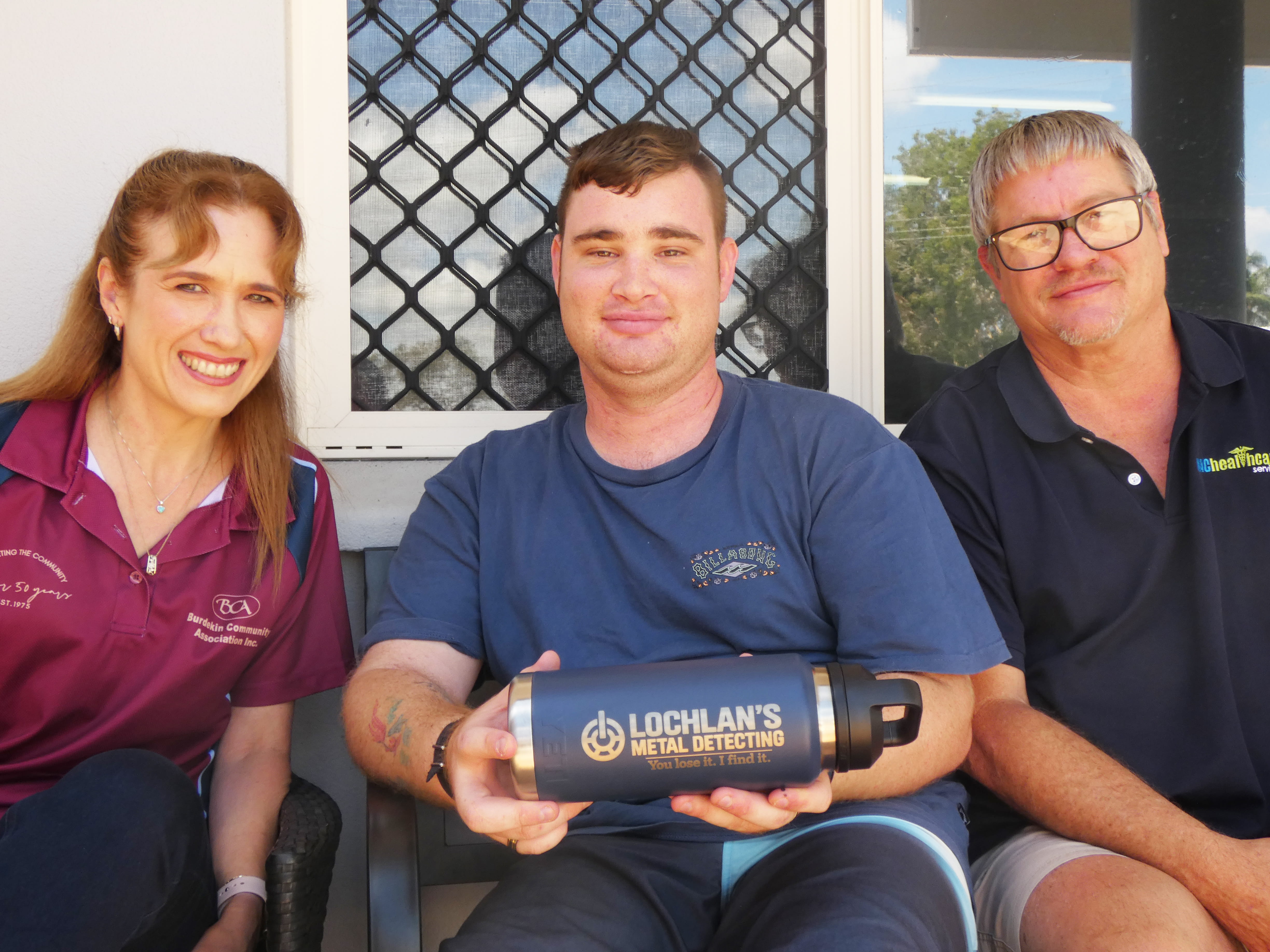


Canegrowers Burdekin Limited (CBL), QCAR, and Kalagro among North Queensland organisations are set to meet with Assistant Minister for Agriculture, Fisheries and Forestry, Senator Anthony Chisholm when he arrives in North Queensland. Photo supplied.
Burdekin grower organisations will have a seat at the table as the Federal Government reviews the future of the Sugar Code of Conduct.
The review has now entered its consultation phase, with Federal Government officials visiting North Queensland this month to hear directly from growers and industry representatives about their priorities for the Code.
Introduced in 2017, the Code was established to promote fair and transparent trading between growers and millers. It is now undergoing a mandatory review ahead of its scheduled expiry in October 2027, with the process to determine whether it will be extended, amended or replaced.
Public consultation attracted 283 submissions from across industry, demonstrating strong engagement with the review.
The Federal Government is now consulting directly with grower collectives, with Canegrowers Burdekin Limited (CBL), QCAR, and Kalagro among North Queensland organisations set to meet with Assistant Minister for Agriculture, Fisheries and Forestry, Senator Anthony Chisholm when he arrives in North Queensland this month.
Senator Chisholm said the discussions were part of the government’s commitment to ensuring the industry had the right regulatory settings to remain competitive.
“The sugar industry has played a huge part in our state’s history, and it will continue to play that role into the future,” Senator Chisholm said.
“Sugar already supports thousands of regional jobs and contributes billions to our economy—we know with the right settings it can grow even further.
“Sugar is vitally important to rural and regional Queensland, and the Federal Government wants to ensure that the industry has the right settings to thrive.”
QCAR General Manager Tara Neill said any changes to the Code must recognise the industry’s transition into new opportunities, including renewable energy.
“We're moving more and more into the renewable space and looking at other ways to add revenue, and that's what we would like to see included in the Code to ensure that growers are party to that discussion in the future," she said.
“We need to make sure that the Code will be effective not only now, but in another 10 years' time.”
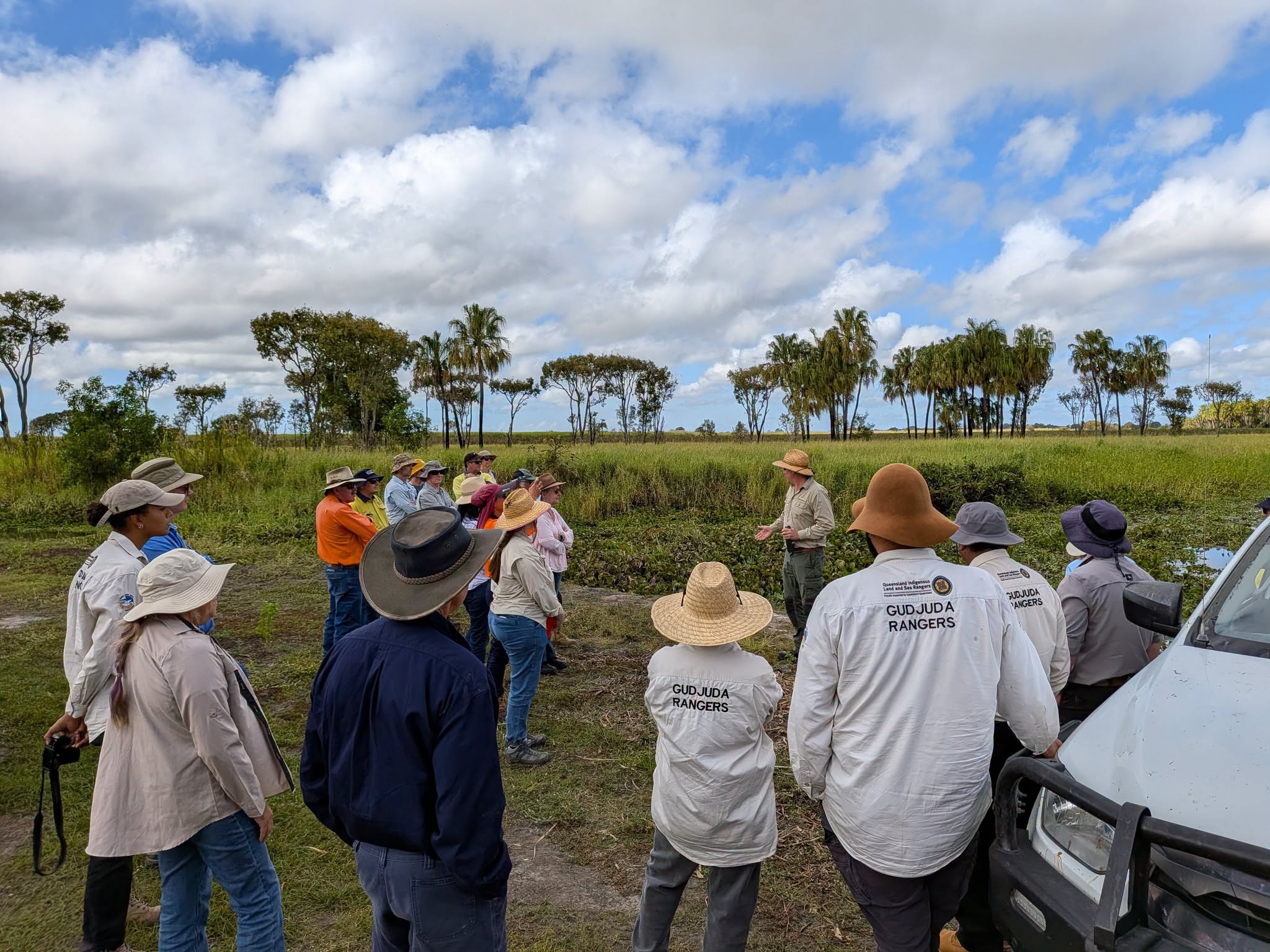
A major Burdekin Delta wetlands restoration project has entered its next phase, with scientists, land managers and Traditional Owners coming together to establish how improvements to local waterways will be measured over coming years. Photo: NQ Dry Tropics.
A major Burdekin Delta wetlands restoration project has entered its next phase, with scientists, land managers and Traditional Owners coming together to establish how improvements to local waterways will be measured over coming years.
The Working Wetlands in the Burdekin Delta (WWBD) project recently held its first Steering Committee and Monitoring Advisory Group (MAG) meetings, bringing together project partners to guide the development of a long-term monitoring program.
Led by NQ Dry Tropics, the project is targeting wetlands across Sheep Station Creek, Kalamia Creek and Plantation Creek, with restoration works already underway to improve wetland health and reduce pollutants entering the Great Barrier Reef lagoon.
The newly formed groups will help oversee the project’s direction, with the Steering Committee providing strategic guidance and the Monitoring Advisory Group providing independent scientific and technical advice.
NQ Dry Tropics said the meetings marked an important step in establishing a monitoring framework that will allow the environmental benefits of wetland restoration to be measured and modelled.
The project’s monitoring program will track changes across the restoration sites, helping determine how effectively wetlands can capture and process pollutants such as sediment, nutrients and pesticides before they reach the Reef.
The meetings also included a field visit to project sites across the Burdekin Delta, allowing participants to view restoration areas and discuss future activities.
The WWBD project is being delivered by NQ Dry Tropics in partnership with local stakeholders, including land managers and Traditional Owners, with funding through the Australian Government’s Reefwise Wetlands Program.

You may have noticed changes to the rules surrounding e-bikes and e-scooters across Queensland. New e-mobility laws came into effect on 1 July 2026, introducing a range of measures designed to improve safety for riders, pedestrians and other road users.
One of the key changes is a reduced speed limit of 12 kilometres per hour on footpaths, with riders also required to slow to 12 kilometres per hour when passing pedestrians on shared paths. Riders must continue to obey all signed speed limits and are reminded that personal mobility devices cannot exceed 25 kilometres per hour.
The new laws also introduce stronger penalties for unsafe behaviour, including increased fines for speeding, riding without a helmet and other dangerous practices. Police now have additional enforcement powers, including random breath testing of riders in public places.
Importantly, new parking rules mean e-bikes and e-scooters must not be left in a way that obstructs pathways or creates hazards for pedestrians. Local government officers now have the authority to issue fines where devices are parked irresponsibly.
These changes are aimed at ensuring everyone can safely enjoy our shared public spaces. I encourage all riders and families to familiarise themselves with the new requirements and help make our footpaths, parks and shared pathways safer for all members of the community.
Should you wish to reach out, don’t hesitate to contact me directly by phone at 0447 150 582, or feel free to send an email to mayor@burdekin.qld.gov.au.

I quite often (unfortunately) read comments or hear talk of “what do we get for our rates?” or “our rates are higher than (insert much larger towns or cities)”. Something to bear in mind is that all the hidden infrastructure; sewerage, water, waste, is something we all take for granted but come at a great cost.
You turn on your tap, you expect water; you flush your toilet, the waste just disappears; you utilize the dump for green waste or other and think nothing of it. The processes behind these services are complex and costly and the solutions will not suit everyone.
That being said, I am very disappointed with the removal of the dump facilities in Dalbeg. In my opinion, people should not be penalized simply because of where they live.
These people will now have at 45km drive to the Clare dump or over an hour drive to the Ayr dump. I can only hope they do the right thing and there will be no increase in illegal dumping.
If you’re travelling to Townsville or Giru along the Upper Haughton River Road, you will notice some extensive works being carried out between Malone Road and Norris Road. The works will include lime stabilisation of the subgrade and a three-layer 450mm gravel pavement installation.
This is certainly a huge job and well overdue. Council and contractors are also progressing through unsealed road grading programs approved under the Disaster Relief Funding Arrangements which are subsidised by both the Federal and State Governments.
Council workers, in general are a proud lot who do an exemplary job, often copping criticism and ridicule in the process. I would like to say thank you to each and every one of them for their continued contribution to our Shire.
I’d like to acknowledge the recent passing of Charlie Nucifora, an immigrant who along with his brothers Sam and Frank have contributed so very much to the Burdekin. He, like so many others, had a story and it was beautifully told at his service by his daughter, Janine. May he, and the other members of our community who have passed rest easy in the arms of God.
God Bless.
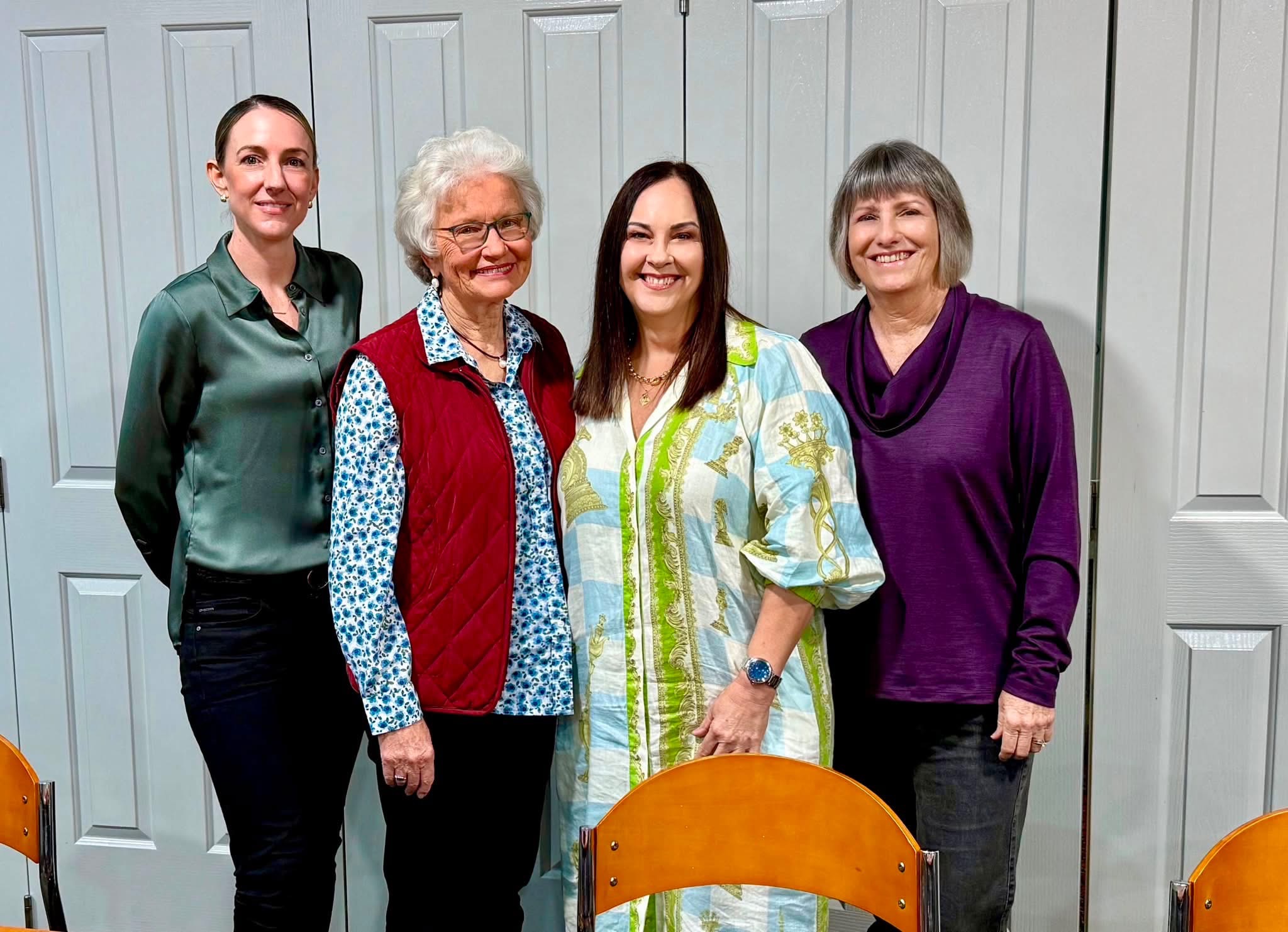
Vice chair Kaylee Boccalatte (left), former Member for Burdekin Rosemary Menkens (left-centre), chair Amanda Hall (right-centre), and treasurer/secretary Cathy McDonnell (right). Photo supplied.
The Burdekin’s inaugural Liberal National Party (LNP) Women executive committee has been officially announced, with local councillor Amanda Hall elected as the branch’s first chair.
The new branch, which was formally approved by the LNP State Executive in May, held its first annual general meeting last Saturday, appointing Ms Hall to lead the group alongside former Burdekin Shire councillor Dr Kaylee Boccalatte as vice chair.
Cathy McDonnell was appointed treasurer and will also serve as acting secretary until the secretary position is filled.
The formation of the branch followed strong local interest at an information meeting held in May, where women from across the Burdekin discussed the opportunity to establish a local arm of the LNP Women network.
With the branch now formally established, Ms Hall said it would provide a platform for women across the region to raise issues and have their voices heard.
“If women want to have their say, if they want to have a voice, this is the place to do it in the Burdekin,” she said.
The inaugural AGM was conducted by Northern Regional Chair of LNP Women Jean McCubben, with guest speakers including State Member for Mundingburra Janelle Poole and former Member for Burdekin Rosemary Menkens.
Member for Burdekin Dale Last also addressed attendees, providing an update on current issues affecting the region.
Moving forward, Ms Hall said the branch would give local women a direct pathway to contribute to broader party discussions, particularly ahead of future state conventions.
“If there are any particular issues that are concerning women, or just in general, we want to start having some meetings early so that we can prepare for the state convention, go down there with a strong contingent of women and make our presence felt,” she said.
Ms Hall said the branch would not necessarily meet on a fixed monthly schedule, instead aiming to hold discussions when there were meaningful issues or opportunities for members to engage.
She said the group hoped to encourage involvement from younger women in the community to ensure a broad range of perspectives were represented.
“I'd really love to get some younger women involved … because I know there's a lot of issues that face young people at the moment,” Ms Hall said.
“We want to hear the younger women's point of view because their opinions can differ quite substantially, and it's important to hear from everybody.”
Women interested in joining the branch is encouraged to reach out directly to Ms Hall on +61 427 827 386.

A fire inside Invicta Mill’s compressor room (pictured) was contained by emergency crews on Tuesday afternoon, with no injuries reported and production temporarily halted. Photo: Wilmar Sugar and Renewables.
Wilmar Sugar and Renewables’ Invicta Mill was forced to shut down on Tuesday afternoon after a fire broke out in its compressor room, with emergency crews responding swiftly and bringing the blaze under control within about an hour.
The incident was reported at the Giru site at about 2.20pm on Tuesday 21st July, prompting a response from Ayr, South Townsville and Home Hill fire crews.
Ayr Fire Station Acting Station Officer Luke Mulcahy said firefighters arrived to find smoke and fire coming from the ground-level compressor room, where the mill’s Emergency Response Team (ERT) had already deployed multiple hose lines in an effort to contain the blaze.
Fire crews entered the area wearing breathing apparatus and used hose lines to suppress the fire and prevent it from spreading further.
Mr Mulcahy said the evacuation was successfully completed with no injuries to mill staff or emergency responders.
He said the cause and origin of the fire remained unknown, but confirmed the blaze was contained to the area where it started.
Queensland Ambulance Service and Queensland Police Service also attended the incident.
A Wilmar Sugar and Renewables spokesperson acknowledged the efforts of its ERT and confirmed the factory had been safely shut down, with production halted following the incident.
The spokesperson said the company would provide further information when more details became available.

Club members donate countless hours cutting fabric, sewing, stuffing and packaging each set, while annual "Stitch and Stuff" working bees bring together volunteers who share a common goal of supporting women through one of life's most challenging journeys. Photo supplied.
When someone is facing breast cancer surgery, even the smallest act of kindness can make a world of difference.
For many women across the Burdekin and North Queensland, that comfort comes in the form of a handmade breast care cushion set, lovingly created by the dedicated volunteers of the Zonta Club Burdekin.
Each year, the club produces around 150 breast care cushion sets, which are provided free of charge to patients through the Breast Care Nurses at North Queensland Minimally Invasive Surgery and Townsville University Hospital. The sets support people recovering from mastectomies, lumpectomies, breast reduction surgery and melanoma procedures involving lymph node removal.
Each carefully prepared set includes a specially designed crescent-shaped cushion that provides support and padding around the surgical area, helping to reduce discomfort while resting, travelling in the car or simply going about everyday activities. The sets also include practical tote and shower bags to discreetly carry wound drainage pouches, helping patients maintain both comfort and dignity during recovery.
Behind every cushion is an extraordinary community effort. Club members donate countless hours cutting fabric, sewing, stuffing and packaging each set, while annual "Stitch and Stuff" working bees bring together volunteers who share a common goal of supporting women through one of life's most challenging journeys.
This important community project is made possible with the ongoing support of Community Bank Home Hill & Ayr. Sponsorship from the community bank helps fund essential materials including wadding, fabrics, cottons and other supplies, ensuring the cushions continue to reach local families at no cost.
Community Bank Home Hill & Ayr Branch Manager Sally Smith said supporting projects like this reflects the bank's commitment to investing back into initiatives that make a genuine difference.
"One of the things that makes community banking unique is that our success is returned to the communities we serve," Sally said.
"The Zonta Club Burdekin's Breast Care Cushion project is a wonderful example of local people caring for local people. Knowing our support helps provide comfort, dignity and practical assistance to women during their recovery is something we're incredibly proud to be part of."
For Zonta Club Burdekin, the partnership allows volunteers to focus on what they do best—creating something with care that offers both physical comfort and emotional reassurance.
It's another example of how community organisations, volunteers and Community Bank Home Hill & Ayr continue to work together, creating positive outcomes that extend far beyond banking and into the lives of local people when they need it most.
Supplied by Community Bank Home Hill & Ayr

“Superannuation is meant to be a private fortress for your retirement; it is not a quarry for a government to dig into and mine whenever they face a budget shortfall.” Photo supplied.
Opinion by Federal Member for Dawson, Andrew Willcox
If you put your hard-earned cash into a locked safe every single week for decades, you expect the lock to hold. You certainly do not expect the federal government to turn up years later with a crowbar, trying to force it open. Yet, this is exactly the kind of financial trespass that people across our electorate are concerned about right now.
Superannuation is meant to be a private fortress for your retirement; it is not a quarry for a government to dig into and mine whenever they face a budget shortfall.
To understand why so many locals are worried, we need to look closely at the legislation that came into effect on 1 July: the Treasury Laws Amendment (Building a Stronger and Fairer Super System) Act 2026. This new law doubles the concessional tax rate from 15 per cent to 30 per cent for individuals with superannuation balances exceeding $3 million.
The government is playing standard class-warfare politics here, targeting a small percentage of wealthy people. Why this is concerning for everyday Australians, is that by breaking the promise that superannuation is sacrosanct, the government has set a precedent: if they can come after these high-balance accounts today, middle-class savings will be next on the chopping block when the deficit deepens. That is why the Coalition opposed this legislation.
Even more concerning is the Prime Minister's recent language, where he explicitly branded our $4.5 trillion national retirement pool as a "national asset".
This is outrageous, your superannuation does not belong to the federal government, it belongs to you. The government wanting to treat your private savings like a state-run bank account to fund their political pet projects is an abhorrent overreach.
Look at the mess this Labor government has made of the economy; it is blindingly obvious they cannot manage money. Now, they are bringing that exact same financial incompetence to your private retirement savings. They have zero right to dictate where your money goes, but they are altering the official performance benchmarks anyway: they want to force big super funds to bankroll their ideological green energy projects.
In other words, this Labor government wants to push your retirement money into an ideological net zero fantasy that is already costing an estimated trillion dollars.
This experimental agenda cannot survive on its own merits; it has to be propped up with massive, ongoing subsidies just to stay afloat. Blind Freddy can see this is a terrible investment strategy that would likely destroy the compound returns of everyday workers.
Hard working Australians should not be subjected to this government’s woke ideology, and they certainly should not be gambling your retirement security on their unproven climate experiments.
Then there is the backdoor plan to tangle your private superannuation up with Centrelink. This is a massive shift being pushed by the original architect of the system, Paul Keating, after he sat down for talks with the Prime Minister.
They are trying to sell this to you as a simple tweak, claiming it makes sense to turn your super fund into the main shopfront for the Age Pension. This is a dangerous move to set up a massive data-sharing pipeline between the government and your private accounts. It forces corporate super funds to act as gatekeepers for public welfare, completely blurring the line between your own hard-earned savings and taxpayer-funded entitlements.
Independent economist Dr Cameron Murray hit the nail on the head when he warned about the massive bureaucratic mess this will create.
He said, "The superannuation network is already a highly complex, expensive apparatus that costs billions of dollars a year just to run. Attempting to integrate this private infrastructure with the public Age Pension system risks creating a massive bureaucratic web that compromises the economic efficiency of public welfare."
Superannuation relies entirely on a promise of long-term stability. If you sacrifice your current lifestyle to build an independent future, you deserve to know your money is safe from political interference.
The Albanese Labor government must not rewrite the rules of superannuation to cover their economic failures. They want the power to pick winners and losers with your life savings, ensuring the government gets the good headlines while your retirement balance carries all the danger.
When Labor runs out of money, they come after yours.

Students and community members will come together later this month to help restore local habitats and plant 1,000 native trees as part of Planet Ark's National Tree Day. Photo source: Shutterstock
Planet Ark’s National Tree Day will soon offer opportunity for the community to come together, plant for the future and help protect the thriving, diverse ecosystem that makes the Burdekin Shire such a special place to live and visit.
On Friday 24th July, students from across the region will roll up their sleeves for the event, helping kick-start a community effort to plant 1,000 native trees over two days. Later, on Sunday 26th July, as Burdekin Shire Council and the Lower Burdekin Landcare Association host the region's annual National Tree Day planting at 57 International Drive, Ayr.
Since its inception in 1996, Planet Ark’s National Tree Day has flourished into the country’s largest community tree planting and nature care event. In the Burdekin Shire, the movement will focus primarily on the protection of rivers, wetlands and waterways, as well as the conservation of habitats for native animals.
Over the past 30 years, volunteers have dedicated more than 10 billion hours to planting trees, restoring ecosystems and helping communities reconnect with nature. Although National Tree Day officially falls on the last Sunday of July, events are often tailored to local conditions, and, as Planet Ark reminds us, there's never a bad day to plant a tree.
Residents are encouraged to RSVP via contacting Chris Gallyer on (07) 4783 9867 or visit nationaltreeday.org.au for more information.

The life of well-known North Queensland business and golfing identity Wayne Haller was celebrated at an open-air funeral at his beloved Ayr Golf Club recently.
Over 200 friends, business associates and fellow golfers joined Wayne’s wife Lyn and their three sons – Kurt, Todd and Ryan – attended the gathering.
Lyn Haller, her sons and grandson delivered moving tributes. Family friends Peter Andersen, Ross Lewis and Alan Nelson also shared memories of their late mate.
Wayne, 81, was born in Home Hill, the eldest child of Harold and Nancy Haller.
He grew up on the family cane farm at Osborne with his sister Carol and late brother Kelvin where he learned values that stayed with him throughout his life – hard work, humility, honesty and respect for others.
After finishing school, Wayne studied teaching at Kelvin Grove Teachers College before returning to North Queensland to teach at Home Hill.
It was there that he met the love of his life, local girl Lynette Melvin. They married on December 10, 1966, beginning a partnership that would last almost 60 years.
Wayne was often heard to say in later life that he had come to love Lyn more and in a different way as they got older than when they were first married.
The young married couple were transferred to Julia Creek where their first son, Kurt, was born followed by Todd and Ryan.
Wayne made many friends in Julia Creek, including Ken Cooney, the local butcher at the time, who encouraged Wayne to leave teaching and begin a new career with the insurance and financial services company, AMP.
Wayne took his friend’s advice, returned to Ayr and through hard work, genuine care and an ability to earn people’s trust, built one of North Queensland’s most respected financial services businesses that became known as Haller Wealth.
Wayne’s brother-in-law, Jim Melvin, who delivered the eulogy, said Wayne believed that success in life was measured by the difference you made in the lives of others.
“His clients knew they could rely on him, not just because he understood financial advice but because he understood people,” he said.
“He celebrated their successes, stood beside them during difficult times and treated every client with honesty, compassion and respect.”
Wayne’s success as a businessman and as a gifted public speaker led to many professional honours, including invitations to speak at conferences throughout Australia and overseas.
Success in business was only part of his busy life. His greatest fulfilment came through family, friendships, golf and serving his community.
Golf, in particular, became a lifelong passion. He won countless local and regional events, both as an individual and in partnership with his late brother Kelvin.
He devoted countless hours to the Ayr Golf Club and in 1978 was instrumental in transforming the nine-hole layout into an 18-hole course.
His contribution to the game extended well beyond Ayr. Through many years of service to the North Queensland Golf Association, he helped strengthen and promote golf across the region, earning Life Membership of both organisations.
One of the proudest moments of his life came in 2000 when he was selected as an Olympic Torch Bearer, an honour he shared with brother Kelvin.
Retirement was simply an opportunity to devote more time to the things he loved most – family, friendships, serving his community and discovering new passions such as Rotary, travel, keeping fit and photography.
Family was everything to Wayne. He loved watching his children and grandchildren building successful and fulfilling lives.
The successful husband, father, grandfather, businessman and golfer, made lifelong friends wherever he went and quietly left every community, every organisation and every person a little better for having known him.
“Wayne Haller lived a remarkable life, a life that mattered,” said brother-in-law Jim Melvin.
“That is the measure of a life well lived.
“May he rest in peace.”
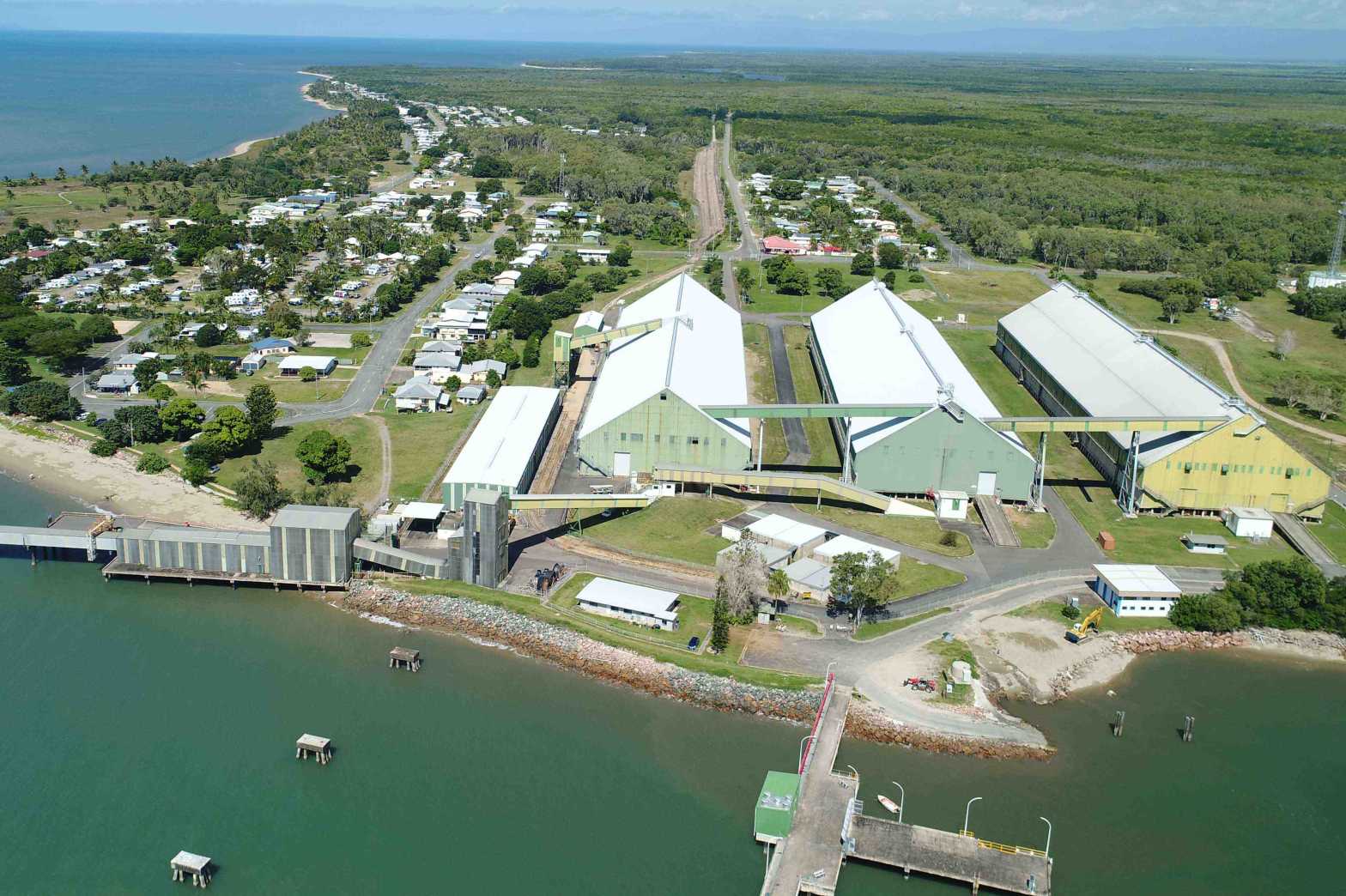
CANEGROWERS CEO Dan Gilligan says the organisation will be “paying close attention” as Sugar Terminals Limited (STL) takes over operation of the state’s bulk sugar terminals. Photo supplied.
Queensland cane growers will be watching closely as Sugar Terminals Limited (STL) takes over operation of the state’s bulk sugar terminals, with industry leaders calling for transparency, fair access and reliable performance under the new model.
The move, which took effect on July 1, ends a decades-long operating arrangement with Queensland Sugar Limited (QSL), which previously managed the terminals on behalf of STL, the infrastructure’s owner.
While the change will be felt across Queensland’s sugar industry, Burdekin growers will be among those watching closely as the terminals remain a vital link between local cane production and international export markets.
While the change will be felt across Queensland’s sugar industry, Burdekin growers will be among those watching closely as the terminals remain a vital link between local cane production and international export markets.
CANEGROWERS CEO Dan Galligan said growers had not forgotten concerns raised when STL announced its decision to bring terminal operations in-house, but the focus would now shift to how the new arrangement performed.
“Growers largely funded this infrastructure, so they have every right to expect it will continue to serve the industry it was built for,” Mr Galligan said.
“From 1 July, STL will be responsible for both owning and operating the terminals. That means it will also be responsible for making sure they are run safely, efficiently and fairly.”
Queensland’s six bulk sugar terminals—located at Cairns, Mourilyan, Lucinda, Townsville, Mackay and Bundaberg—are key links in the state’s sugar export supply chain.
Mr Galligan acknowledged QSL’s long record as terminal operator and said growers would expect the same standard of reliability to continue under STL’s management.
“QSL has operated these terminals for decades and played an important role in building the reliability Queensland sugar is known for,” he said.
“Growers will expect that same level of reliability through the transition and into the future.”
Mr Galligan said growers would be closely monitoring the new arrangements, including terminal operations, maintenance, costs and access for all marketers.
“They will expect reliable operations, appropriate maintenance, transparent low cost pricing and fair treatment for every marketer,” he said.
“No marketer should receive preferential treatment when it comes to storage, access, scheduling or pricing.
“These are shared industry assets and they need to keep working for the whole sugar industry, not for the benefit of any one company or commercial interest.”
Mr Galligan said STL would also need to demonstrate that the efficiencies promised through bringing operations in-house were delivered and that benefits flowed back to the wider industry.
“Growers will also expect clear reporting on costs, maintenance and terminal performance so they can see whether the new model is delivering what was promised,” he said.
“We want the new model to work.
“But growers will judge it on the results—reliable terminals, fair access, transparent costs and a clear commitment to keeping sugar first.

Burdekin sugar mills have recorded their strongest week of the 2026 crushing season so far, processing more than 380,000 tonnes of cane in the week ending July 4. Photo: Website/Wilmar Sugar and Renewables
Burdekin sugar mills have recorded their strongest week of the 2026 crushing season so far, processing more than 380,000 tonnes of cane in the week ending July 4.
The region’s four mills crushed a combined 380,733 tonnes during week five, exceeding expectations and bringing the season total to 1.65 million tonnes.
Throughput for the week was above budget and the highest recorded so far this season, while average sugar content also remained strong.
Kalamia Mill led the weekly improvement, processing more than 83,000 tonnes of cane, its highest weekly throughput of the season.
Invicta Mill recorded the highest individual output for the week with 139,707 tonnes crushed, followed by Kalamia (83,196 tonnes), Inkerman (81,790 tonnes) and Pioneer (76,040 tonnes).
Season-to-date, the Burdekin region has now processed 1,654,676 tonnes of cane.
Sugar quality remained above expectations, with the region recording an average commercial cane sugar (CCS) level of 14.40 for the week—nearly one unit above budget.
Invicta recorded the highest weekly CCS among the mills at 14.56, followed by Kalamia (14.39), Pioneer (14.34) and Inkerman (14.18).
The strongest individual CCS result came from a rake of Q183 plant cane supplied from the Jardine productivity district, recording 17.60.
Cane Supply Manager Chris Scovazzi reminded harvesting groups to continue following cane siding procedures to protect workers and maintain efficient operations across the network.
Harvesting operators are encouraged to ensure all workers have completed the mandatory siding induction, with procedures in place to safeguard users of the cane railway network.

Lower Burdekin Meals on Wheels has waved goodbye to one of its longest serving volunteers, Betty Durrant, who leaves her post at the organisation after nearly 40 years of service. Photo supplied.
Lower Burdekin Meals on Wheels has waved goodbye to one of its longest-serving volunteers, Betty Durrant, who steps away from the organisation after nearly 40 years of service.
Ms Durrant’s decades-long service was celebrated last month during a morning tea at Meals on Wheels kitchen on Macmillan Street, Ayr, where she was formally thanked by her peers for her contributions both as a cook and as a delivery driver.
Committee Business Manager Gail Minehan said Ms Durrant's presence in the kitchen would be greatly missed.
“Betty was a very valued volunteer,” she said.
“We’re all going to miss the talks and the camaraderie that she brought to the kitchen. She dedicated her time to us, and we greatly appreciate her—and all our volunteers—for that.
“We wish Betty all the best after her 40 years, a huge milestone.”
Ms Durrant’s passion for volunteering was born from her husband Arthur’s involvement with Rotary, which inspired her to take part in community fundraising efforts before eventually joining Meals on Wheels.
She first joined the organisation as a delivery volunteer before moving into the kitchen, a role she preferred and would ultimately spend most of her four-decade stint doing.
Her dedication to community service was eventually recognised in 2025 with a Lifetime Service Award at the Australia Day Awards for her contributions to Meals on Wheels, Finlay’s and the Ayr Golf Club, of which she is a life member.
She said that throughout her years at the organisation, she had made “wonderful friends” and seen firsthand that the value of its work extended far beyond simply providing meals.
“I’ve seen lots of changes in those years … and I met lots of wonderful people. That's the amazing thing about volunteering—it really is,” Ms Durrant said.
“It’s a great service for the people, and sometimes it’s the only people [customers] see all day—the person that delivers their meal.
“You realise the need for it … and you keep at it because it's a service to the town and to the people. I like helping people, and I always have. To me, it's no effort.”
She admitted it was difficult to leave knowing volunteers were needed, but acknowledged “you’ve got to pull the pin at some point.”
She now encourages community members to step up and help keep Meals on Wheels rolling.
“If you find it’s not your thing, you don’t have to go … but just give it a try,” she said.
Ms Minehan said volunteers of all ages and backgrounds were welcome, particularly following the recent departures of both Ms Durrant and another long-serving volunteer, Vanda, who was also recognised for her service.
“We appreciate all our volunteers, whether they’ve been here five minutes or 40 years,” she said.
“We are grateful for whatever time anyone can spare, whether it’s one hour, two hours a week—it doesn’t matter how small.
“Anyone who's looking to give something back to the community, whether in the kitchen or on delivery, is more than welcome to join our team.”
Anyone seeking further information is encouraged to either email the organisation at mowayr@bigpond.com or drop into the kitchen at 109 Macmillan Street, Ayr.
Council is preparing to commence important road reconstruction works on Upper Haughton Road between Malone Road and Norris Road. The project will involve reconstruction of approximately two kilometres of roadway, including subgrade stabilisation and asphalt replacement where structural improvements are required. Construction is expected to commence in mid-July, with a side track to be provided to ensure traffic can continue to flow safely throughout the works. These upgrades are part of Council’s ongoing commitment to maintaining and improving our road network for residents and industry.
This week, I also wanted to highlight the importance of recycling and responsible waste management. Waste disposal is one of the significant costs faced by local government and ultimately by our community. While many people still believe that all waste ends up in landfill, there are extensive recycling and resource recovery processes in place that help divert valuable materials away from landfill and reduce environmental impacts.
Over the years, waste management practices have changed significantly. Gone are the days when rubbish could simply be burned or buried in a backyard. Today, waste is carefully managed through regulated processes designed to protect public health and the environment. By reducing waste, reusing materials and recycling wherever possible, each of us can play a role in helping to create a more sustainable future for the Burdekin.
Should you wish to reach out, don’t hesitate to contact me directly by phone at 0447 150 582, or feel free to send an email to mayor@burdekin.qld.gov.au.

Now that Council has adopted its 2026/27 budget, I thought I would briefly explain one question that comes up every year – rates.
Like everyone else, Council continues to face increasing costs. Fuel, electricity, materials, insurance and wages all continue to rise. While nobody enjoys paying higher rates, those same costs affect the services Council provides every day.
I often hear people ask why rates increase when Council has cash in the bank. The simple answer is that much of that money cannot be used to fund everyday operations. It is committed to areas such as grant funded projects, water and sewer services, and reserves set aside for the future replacement of Council infrastructure.
General rates help pay for the services we all expect, including maintaining local roads, parks, drainage, waste collection and community facilities. If rates don't keep pace with rising costs over time, councils are generally left with two choices – reduce services or allow infrastructure to deteriorate.
On another positive note, construction of the new pump track is progressing well and, weather permitting, is expected to be completed by the end of the month. I look forward to seeing another community facility come to life for local families to enjoy.
I've noticed the Deputy Mayor has already started polishing up his trusty Mongoose. I can only assume he's quietly preparing to challenge the Mayor to the first (and completely unofficial) pump track race.
Publishers Indemnity. Any individual or entity that places advertising, supplies copy material, or submits editorial content to Core Life Publishing agrees and undertakes to ensure that all such material:- Does not infringe upon any copyright, trademark, or other intellectual property rights;- Is free from any content that could be considered defamatory, libelous, or slanderous;- Does not infringe upon any rights related to privacy or breach of confidence;- Contains no obscene, indecent, or otherwise unlawful material;- Complies fully with the Trade Practices Act and all other applicable laws, regulations, or statutes.Furthermore, by submitting or placing such material, these individuals or entities agree to indemnify and hold harmless the publisher, Core Publishing and Events Pty Ltd, and/or its agents from and against any and all investigations, claims, demands, liabilities, damages, costs, or judgments arising out of or in connection with the material provided. All material is believed to be accurate at the time of printing and remains the copyright of Core Publishing and Events Pty Ltd.
© 2026 Life Publishing Group Pty Ltd.