
Independently Owned, Locally Grown, Community Loved
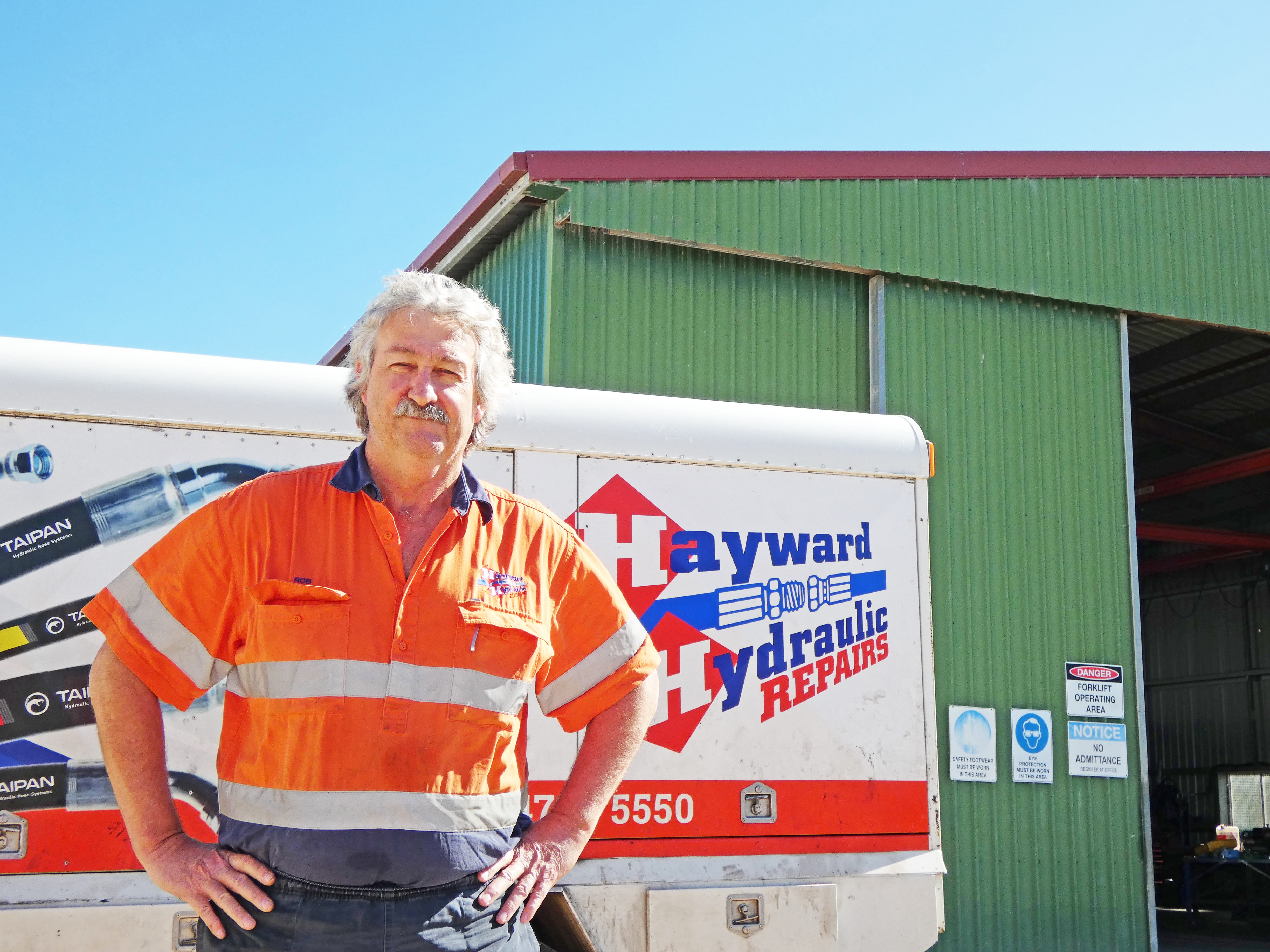
Not every business starts with a blueprint. For some, it begins as a calling… in more ways than one. Burdekin local Robert Hayward had been in the hydraulics industry since he was 18. A diligent worker who loved his job, he quickly built a reputation locally as one of the best in the business. But despite a mutual affinity with the industry that had formed over years, he stepped away in the early 1990s to help his father-in-law maintain a cane property in Clare. Until he received a call. Then another… and another. Rob quickly realised that, despite his brief hiatus, his reputation in hydraulics had not faded. With that, he was pulled back into the game, this time with nothing but a $2,000 ute, a toolbox, and work up to his neck. And the only way to keep himself from drowning in it was, ironically, to go in deeper. “As the Burdekin is, if you do a very good job, word travels quickly between the community. One farmer talked to another, he talked to another, he talked to another… “Until I sat down with my wife one day and said, ‘I think we can make a business out of this.’” His ute would eventually make way for a permanent space—a small sub-shed at Larry Hudson Engineering in the Ayr Industrial Estate that would serve as his headquarters for the following four years. He tackled the first year solo, before demand forced him to put an apprentice on in the second year, and a qualified tradesman in the third. By the end of the fourth, Rob’s work had outgrown its humble base, moving down the road into a new purpose-built shed that would become the home of Hayward Hydraulics. That shed would officially open in 1996, spurring a 30-year legacy sustained by three defining pillars. Growing with the industry “I had no idea how to use computers,” Rob said with a smirk. Admittedly, he hadn’t realised he signed himself up for a three-decade, three-fold evolution between an entire industry, his own business, and himself. What he did know was that he was ready to learn, and eager to grow. It started with the basics. For Rob, that meant wrapping his head around modern computers, attending TAFE courses on emerging welding techniques, and becoming a leader. “I went from being a very good tradesman to having to be an employer,” he said. “You have to be a people's person, you have to treat people the right way, treat your workers the right way. That part I never even thought of until we started getting into it.” Rob treated this evolution as a marathon rather than a sprint, dedicating the business's first decade cementing its reputation as a local leader. After striking up deals with major companies, including Queensland Rail and Wilmar Sugar in the mid-2000s, he decided to take the leap into the mining industry in the early 2010s as a safety net for the unpredictable sugar industry. With that growth, Hayward Hydraulics’ shed would undergo its third structural expansion to accommodate its continuously increasing popularity and modernised technology. He built a habit of gleaning ideas from various online hydraulic magazines, and then building on them to not only keep up with the industry, but to will it into the future himself. “I eventually built a reputation for thinking outside of the square. If somebody's been doing something for 20 years, I'll look at a better way of doing it,” he said. Albeit, he admits he and the business are still evolving today. “I've seen harvesters and planters go from chain and sprocket to hydraulic motors, to hydraulic motors being linked to satellite GPS,” he said. “The industry has changed in leaps and bounds, and you have to keep finding ways to move with it.” Doing it the right way Hayward Hydraulics’ evolution was founded on something Rob didn’t need to be taught. Care. And he makes sure his staff do, too. “I didn't come from a real wealthy family, so we were brought up to work; you work, you do the job right, you get paid,” he said. “So if I'm not happy with something, I'll ask my workers: ‘would you pay for that?’” When the mining industry began to boom in Queensland, Rob admits he had a difficult time retaining workers. To compete, he was forced into paying top-dollar for what he called “good quality workers,” causing financial tension. When asked if compromising staff quality for cost was ever an option, with the conviction of a true-blue purist, he said: “No.” “I've always maintained that a business is only as good as your employees. You can be the best boss in the world, but if you've got workers that people don't like, they don't come through the door,” he said. “My current staff are up there with the best that I've had. I just try to make sure they’re happy to come to work every day.” With quality and care as its engine, Hayward Hydraulics became known not just for technical know-how, but for doing things the right way. As its stature in the industry continued to grow, so did the scope of its customer base. Calls started coming in from as far north as Tully, all the way to Mackay and Western Queensland, all saying the same thing: “We heard you were the guy to talk to about this problem.” Family and community at its heart For the last 10 years especially, the business has made a point of supporting local organisations and sports clubs, most notably the Burdekin Roosters Rugby League Club. Rob described it as a duty to a community that has given so much to him and the company. “The community has been so important to it all. I’ve got some customers that have been with me from day one, and with some, I’m onto the third generation of the same family,” he said. “The’ve given a lot to me. They've helped me grow and supported me, so it's about time I supported them back.” Beneath it all, though, he points to his family as the driving force. “I remember those early days when we were setting up the new workshop, building benches and all that, my two brothers-in-law and my father came out and gave me a hand,” he said. “But my biggest support is my wife. Especially in the early days when I wasn't home, and she solely looked after the kids and everything. “It got to the stage where I was working seven days a week, 12 hour days, and my wife would bring the kids on a Saturday and Sunday, and we'd sit on the shop floor and have lunch. “She's been with me through the lows and the highs, and that I thank her for.” Now, thirty years later, it’s his family pulling him out of the industry. Driven by the desire to make up for lost time with his wife and kids, Rob has loosened his grip on business operations, working four days a week with plans to eventually let his brainchild find its own footing. As for right now, he’s not yet ready to call time on a chapter that was, perhaps, never meant to last this many pages. “I still love what I do,” he said. “The early days come with sacrifices, but when I look back now, it was all worth it. “I remember when it all first started, looking on the ATO website and coming across that statistic that most businesses fail within five years. “When I read it, I said to myself, 'well, I'm gonna make sure I’m not that statistic.’” And that, he did. CAPTION: Rob and his current team. Back L-R: Chase Pearce, Stephan Du Plessis Front L-R: Kade Pearce, Renee Viero, Robert Hayward, Tina Dennis, Bryan Parison Absent: Sam Tomasetig Photo credit: Jacob Casha
Read the full story
The Burdekin has rallied behind a local family after a sudden medical diagnosis turned their life upside-down. Ryan and Holly Davenport dropped everything when their two-year-old son, Rowen, was diagnosed with a brain tumour last month, temporarily relocating to Brisbane for his ongoing treatment. In response, a GoFundMe fundraiser has since raised over $55,000 in support of the family. Created in late May by Shannon Malone, a close friend of the Davenports, the fundraiser has been shared all over Facebook and Instagram by local organisations, garnering comments of support on top of 271 individual donations. “Words can’t describe how much it means to us to have everyone’s support behind Rowen as he begins his journey,” Ryan said. “They have given us precious time to spend with Rowen without the everyday worries.” The money will help fund hospital stays, travel, time away from work, and ongoing treatment expenses as the Home Hill family navigates a medical journey that began in April. Already on edge after daughter, Ally, underwent brain surgery to have a cavernoma removed just before Easter, Ryan and Holly acted promptly when they noticed a twitch in Rowen’s eye. Following weeks of consultations with Townsville doctors and specialists—which included MRI scans and a Royal Flying Doctors flight—Rowen was eventually diagnosed with pilocytic astrocytoma, a slow-growing brain tumour. He has since been transferred to Queensland Children’s Hospital in Brisbane for chemotherapy, with the couple leaving their two young daughters with their grandparents in the Burdekin to be by his side. In their absence, locals have offered meals, helped on the family’s sugar cane farm, assisted around their home and helped look after their daughters, along with the generous donations. Ryan said the funds raised would not just help relieve the financial burden of Rowen’s treatment, but allow the flexibility to fly their daughters down and spend some time as a family. “(The toughest part has been) the unknown, not having our family together … and watching Rowen go through these traumatic times and … not being able to do anything,” Ryan said. “It has been a very emotional journey so far, and it is hard to believe we are only at the start.” Anyone wanting to support the Davenports is urged to donate using the following link: https://www.gofundme.com/f/supporting-the-davos-and-little-rowen?attribution_id=sl:75c20475-06e5-4752-8e11-d1b7a07c7728&lang=en_AU&ts=1779705595&utm_campaign=fp_sharesheet&utm_content=amp20_t1&utm_medium=customer&utm_source=copy_link CAPTION: Funding will allow the family to fly their daughters down and spend more time together during Rowen’s treatment. Photo supplied
Read the full story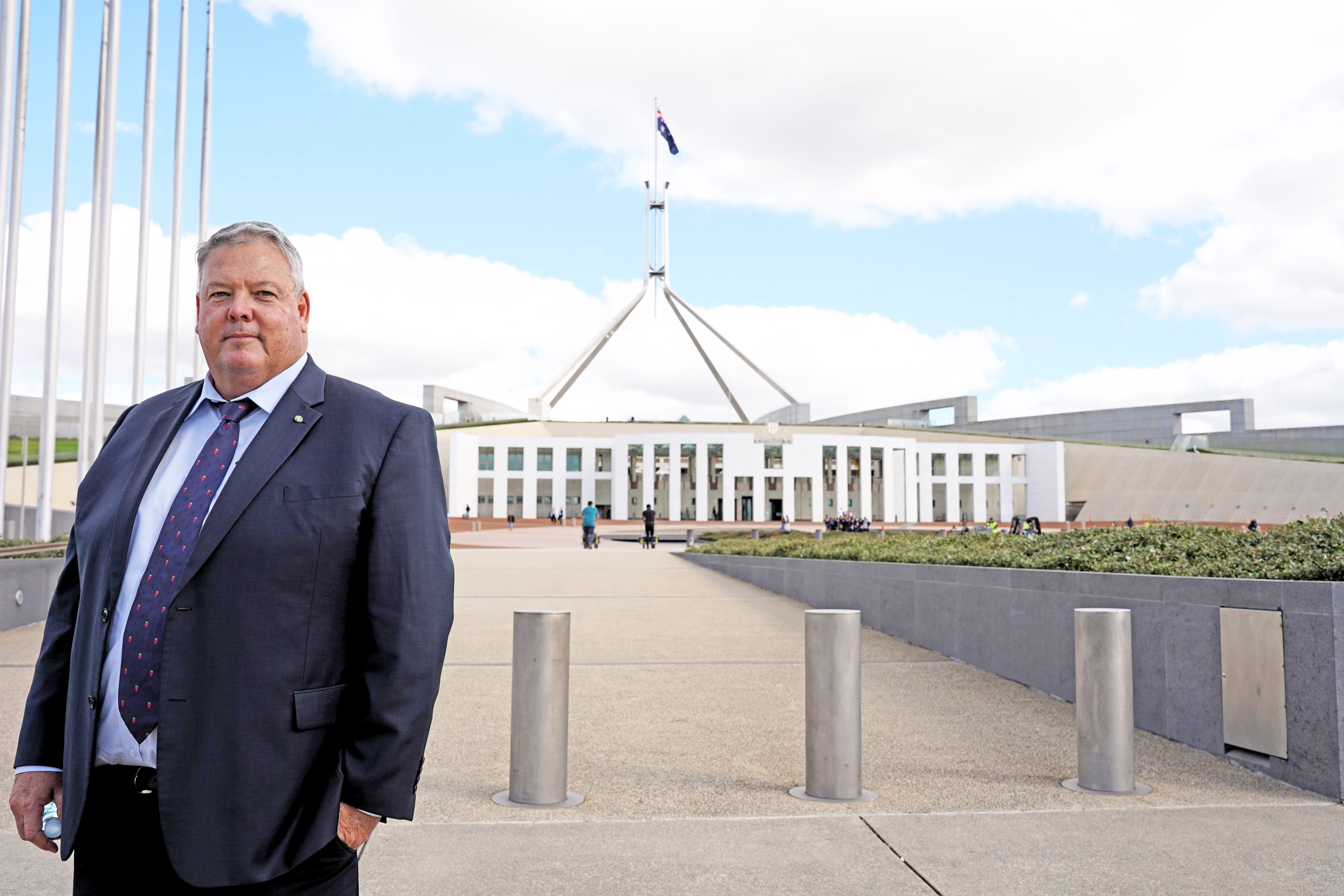
The Federal Member for Dawson, Andrew Willcox, has slammed the Albanese Government for an unacceptable ambush on regional communities, accusing the Commonwealth of abandoning disaster-prone areas to balance its own budget. The Federal Minister for Emergency Management, Kristy McBain, used a late Friday afternoon media release to quietly flag sweeping alterations to the Disaster Recovery Funding Arrangements (DRFA). The proposed changes dismantle the long-standing, scalable framework, which historically provided an average of 64 per cent federal coverage and capped support at 75 per cent for catastrophic events. In its place, Canberra intends to implement a rigid 50-50 funding model. This policy shift arrives at the worst possible time for the state; it follows a volatile severe weather season that caused widespread damage across 71 of Queensland’s 77 local government areas. Federal Member for Dawson, Andrew Willcox, is warning that the sudden funding shortfall threatens the future viability of essential infrastructure, local water treatment facilities, and emergency evacuation operations. Mr Willcox, drawing on his extensive experience as the former Mayor of the Whitsunday Regional Council, stated that the Federal Government is completely detached from the realities of regional recovery. "This decision is a direct hit to the heart of North Queensland," Mr Willcox said. "Canberra is treating natural disasters like a corporate budgeting exercise; however, out here, it is a matter of community survival. To penalise the very regions that drive the nation’s agricultural wealth and mining export revenues is a profound betrayal. "During my time steering the Whitsunday community through the wreckage of Severe Tropical Cyclone Debbie in 2017, I learned exactly what it takes to rebuild. We relied heavily on scalable federal assistance to restore our shattered rural road networks. Under a flat 50-50 split, local councils across Dawson would be forced to find millions of dollars in matching revenue; that is a financial burden our regional ratepayer base simply cannot sustain." Mr Willcox emphasised that major historical recovery operations would have been completely unviable under the newly proposed guidelines. "The total reconstruction of the Shute Harbour marine terminal and the $5 million federal package required to replace the decimated Proserpine Entertainment Centre occurred because the previous framework allowed for exceptional circumstances," Mr Willcox said. "Small regional councils do not possess the independent asset base to fund multi-million-dollar rebuilds alone. Furthermore, the historical system guaranteed that funding flowed directly into local economies, ensuring that regional earthmoving businesses and contractors were awarded the repair work. By lowering the funding floor, the Commonwealth is forcing cash-strapped councils to delay vital resilience works; this leaves our communities dangerously exposed before successive wet seasons. "It is a coward’s tactic for the Minister to leave this announcement until the day after the parliamentary sitting concluded, ensuring they avoided any real scrutiny or accountability in Question Time. “This is yet another calculated deception from a government that knows exactly how damaging these cuts are; this is absolutely not what the Australian people voted for, and I truly hope this betrayal is remembered at the next election. "This is yet another chapter in the ongoing federal neglect of regional Australia. The government is hiding behind the cover of an independent review to justify cutting essential frontline services. I call on the Emergency Management Minister to reverse this decision immediately; regional Queenslanders refuse to be treated as second-class citizens.” Supplied by the office of Federal Member for Dawson, Andrew Willcox CAPTION: FIGHTING FOR THE NORTH: Federal Member for Dawson Andrew Willcox MP outside Parliament House in Canberra, condemning the Albanese Federal Government's plan to slash scalable disaster recovery funding for regional councils. Photo supplied
Read the full story
"As the final week approaches for public submissions into the Sugar Code of Conduct, Member for Burdekin Dale Last has renewed his calls for growers to unite and make their voices heard. Mr Last said the public submissions for the sunsetting review of the Sugar Code of Conduct should be an opportunity for sugarcane growers from across the Burdekin to outline the benefits of the code for both farmers and the wider community. “Over recent weeks I have taken the liberty of providing a submission on behalf of the community, because ultimately the flow-on impact from changes in our sugar industry stretch beyond the paddock and the mills,” Mr Last said. “I recently met with several grower representatives which provided the opportunity to bring key stakeholders together, reaffirm my support as the Member for Burdekin and emphasise the need to work collaboratively as the review period unfolds.” Mr Last said while it was important stakeholders took the time to make their voices heard during the public submissions there was no better way to understand the impact of the Sugar Code of Conduct than to visit the area and speak directly to representatives. “A decade ago this district played a central role in bringing this code of conduct to fruition so I would expect our stakeholders receive a seat at the table they deserve,” Mr Last said. “If the Federal Labor Government was serious about consulting with the industry, the responsible Assistant Minister would be looking for every opportunity to listen to those who are most impacted by the Sugar Code.” Anyone wishing to have their say in the review can visit https://haveyoursay.agriculture.gov.au/sugar-code-review"
Read the full story
.JPG)
As Home Hill prepares to celebrate the 100th anniversary of its Anglican church, it’s a moment to reflect on a century of faith, community, and resilience.
Founded in the early 1910s, Home Hill initially faced water scarcity, unlike its neighbouring Ayr. This challenge led to the formation of an irrigation board and the establishment of a powerhouse near the post office, laying the foundation for irrigation and agricultural prosperity.
Farms were allocated through ballots, and wells were installed, turning the region into a thriving agricultural hub.
By the 1920s, the community’s spiritual needs were met with the construction of its first church, operational by 1924.
Built by Edward Woodward for £1,884, this church became the heart of the community. In 1977, a new church was built and paid off by the year’s end, continuing to serve as a spiritual centre for Home Hill.
In its prime, the church saw vibrant participation. Sunday school attracted around 40 children, and community groups like the Mothers’ Union and a ladies’ school flourished.
Fundraising events, including the sale of up to 800 dozen cupcakes, brought the community together. Volunteers meticulously assembled these cupcakes with frosting and coconut in the church kitchen, reflecting the church’s bustling and dedicated spirit.
Beyond Sunday services, the church offered midweek worship and extensive community support through visitation programs for the sick. The youth group, Comrades of St. George, held weekly meetings and annual gatherings in Townsville, focusing on religion, sports, dancing, and singing, producing several ministers who went on to serve the wider community.
Today, the congregation is smaller, with diminished participation from the younger generation. However, dedicated members like Alf Shand, who has attended the church since 1948, continue to uphold its legacy.
Shand, who served as the church’s secretary and treasurer, remains an active member, as well as continuing to come to service and stays hopeful that the younger generation will carry the torch forward.
On August 18th, Home Hill’s Anglican Church will celebrate its 100th anniversary with a grand event. The celebration will feature a community service at 10am with the bishop and various ministers, followed by a sausage sizzle, performances by the choral society, and Melanesian singing and dancing.
This milestone is a testament to the church's enduring presence and the community's resilience. While no one from the church's inception is around to celebrate, it is up to the current members to honour and uphold this century-old legacy.
WHAT: Home Hill’s Anglican Church 100th anniversary celebrations
WHEN: Sunday 18 August from 10am
Alf Shand has attended the church since 1948. Photo credit: Miah Lampard

Pack your bags, and prepare for take-off because from Sunday 1 September, the Whitsunday Coast Airport will offer a selection of brand-new Jetstar flights directly to Adelaide.
Confirmed earlier this year, the flights will take off on Wednesday, Friday and Sunday each week, with the introduction set to significantly boost local tourism in both the Whitsundays and Adelaide.
In celebration of the February announcement, a one-way sale saw fares available from $99 earlier this year, and Jetstar’s Executive Manager, Jenn Armor explained Jetstar’s excitement in offering the new route to customers.
“For the first time ever from 1 September 2024, flying between these two destinations will take just under three hours, continuing Jetstar’s mission to make travel more accessible with great low fares,” said Jenn.
Craig Turner, Director of Commercial Businesses for Whitsunday regional Council that owns Whitsunday Coast Airport, believes Jetstar’s new flight paths will open the region up to a brand-new market of travellers, and this debut has been a long time coming.
“The importance of developing new destinations is critical to the growth of the Whitsundays,” said Craig.
“We’ve relied on Brisbane, Sydney, Melbourne traditionally for our interstate visitors but to be able to get Adelaide, South Australia with 1.3million people on three flights a week to the Whitsundays, conveniently, cost effectively and direct is significant.
“This will be an enormous boost for the region for tourism, mining and agriculture and it really is a strategically important route that has taken a long time to achieve, and we’re very excited for the first of September start and Jetstar has told us the load factors are very strong.”
Direct flights to Adelaide will be running three times a week from September 1. Photos supplied

BCA provides financial and material assistance for adults experiencing personal, family, relationship and/or financial issues.
The service assists adults and children with basic needs in times of financial hardship, through the provision of:
• Food parcels
• Toiletries
• Vouchers (food, clothes, chemist, transport)
• prepaid cards
• payment of third-party accounts
Please note that a Centrelink Income Statement is required unless you are affected by domestic and family violence and not receiving a Centrelink payment.
We wouldn’t be able to offer this Service without funding from the State Government and generous donations from community groups, businesses and individuals.
On Sunday I had the privilege of attending the Home Hill Burdekin Uniting Church Bluey’s Thrift Shop 50th Birthday celebration.
It was wonderful and humbling to spend time with the warm, caring and hardworking members of the Church Auxiliary and other church members, Thrift Shop volunteers and former Blue Nurses.
The church auxiliary has donated some of the funds raised in the Thrift Shop for our Emergency Relief and Domestic and Family Violence Support services for a number of years and we are super grateful.
Contributed with thanks to Debra Cochran
Chief Executive Officer
Burdekin Community Association Inc (BCA)
.jpg)
I would like to talk about one of the Burdekin’s local not for profit organisations, the Zonta Club Burdekin Inc, that is actively working on a number of local community projects.
In the coming months, Zonta, in partnership with the Red Rose Foundation, Burdekin Shire Council and the Men’s Shed, will place a number of Red Benches in prominent locations in Ayr and Home Hill. Keep an eye out for them - you won’t miss them!!
The presence of a Red Bench in a public location aims to raise awareness of domestic violence and provide an opportunity for this important issue to remain visible.
If you wish to learn more about Zonta and their exciting local community and international work, follow the club activities on Facebook or you can make arrangements to attend a monthly dinner meeting which is held every second Tuesday of the month commencing at 6:00pm at the Ayr Anzac Memorial Club.

Did you know that tenders are now open for an exciting opportunity to secure prime industrial land?
Stage 1 of the Ayr Industrial Estate Expansion features 19 lots available for tender, offering a fantastic chance for businesses and investors to secure valuable industrial land. Most of these lots are generously sized around 2000m², offering plenty of space to build your dream industrial property or expand your business. The flexible configurations mean that buyers have the option to tender for multiple lots, allowing for customised and expansive developments.
For more information and to access the tender package, be sure to visit Council’s website or contact Burdekin Shire Council’s Customer Service Centre on (07) 4783 9800.
This is your chance to explore all the details and find the perfect lot to meet your business needs. Remember, the deadline is approaching fast—tenders close at 5:00pm on Monday 19 August 2024.
If you would like to get in touch with me, please feel free to phone me on 0447 150 582 or email mayor@burdekin.qld.gov.au

This year marks a momentous occasion for Burdekin Catholic High School as it proudly commemorates its 50th anniversary - a testament to half a century of nurturing young minds, fostering community spirit, and upholding a tradition of academic excellence in the Burdekin region.
Built on the shoulders of Edmund Campion College (Marist Brothers) BCHS celebrates the vision that became reality in 1974 when it first opened its doors as a co-educational high school, officially named Burdekin Catholic High School.
From its inception, the school has stood as a beacon of knowledge and values, shaping the lives of countless individuals of the Burdekin region who have passed through its doors.
“As we celebrate this milestone, we honour the dedication and vision of those who founded and shaped our school - reflecting on the transformative impact of Burdekin Catholic High School,” Principal, Mrs Lorraine Wolffe said.
"To our alumni who have carried the values of Burdekin Catholic High School into the world, to our current students who embody the spirit of excellence and community, and to the future generations who will continue this legacy, we extend our heartfelt gratitude."
Such an important time in the life of the school should be celebrated, and an Anniversary Weekend will be held on 16, 17, and 18 August. The anniversary celebrations are not just a reflection on the past but also a testament to the ongoing journey of education and growth.
There is a whole weekend of activities planned and BCHS would love to have their past students and teachers come and celebrate.
The festivities planned for this golden jubilee include a series of events and activities designed to celebrate the school's rich history, honour its achievements, and inspire the community to embrace the opportunities that lie ahead.
Beginning the wonderful weekend, Friday 16 August will see a Twilight Event held at the school. Saturday 17 August will host the Anniversary Gala Dinner set to be held at the Memorial Hall, with tickets available for purchase from the Burdekin Theatre. To conclude the celebrations, an Anniversary Mass will be held on Sunday 18 August at the school at 9am.
WHAT: Burdekin Catholic Highschool 50 Year Celebrations
WHEN: 16, 17, 18 August
School Leaders 2024
The first Burdekin Catholic High School Assembly in 1974

The Burdekin Shire Council is thrilled to announce that tenders are now open for the newly expanded Ayr Industrial Estate. This expansion offers additional industrial land and infrastructure, aimed at boosting the growth and diversification of our local economy.
Mayor Pierina Dalle Cort expressed the Council's enthusiasm about this major development, with Stage 1 offering 19 lots.
"The launch of tenders for the Ayr Industrial Estate expansion is an exciting step forward," Cr Dalle Cort stated.
"This expansion represents prime real estate strategically positioned to foster industrial growth - it aims to attract a diverse range of new industries to the area, enhance economic grown and also encourage innovation and development within the community.
Not only will the new development provide existing businesses with the opportunity to expand, but it will also ensure the availability of future jobs for our young people.
Don’t miss out on this exciting opportunity to secure your businesses future in this wonderful part of North Queensland.”
Tenders are now open for lots in the Industrial Estate expansion. For more information, visit burdekin.qld.gov.au or contact the Council’s Economic Development Team at (07) 4783 9800 or via email at eliza.lovell@burdekin.qld.gov.au.
Burdekin Shire Council Mayor Pierina Dalle Cort on site with the Industrial Estate Expansion Prospectus.

DOB: 01/04/2023
Sex: Male
Breed: Jack Russell Terrier
Kid friendly: Yes
Cat Friendly: Untested
Other dogs: Yes
Fences: 5ft
Spud is a lovable Jack Russell terrier with a heart of gold! He is a bundle of energy and enthusiasm, always ready for a game.
He has adorable ears and wags his tail none stop, he is sure to bring a smile to your face every day.
Despite his small size, Spud has a big personality. He is incredibly loyal and affectionate, always eager to cuddle up on the couch or snuggle in bed.
Spud is also quite smart and he loves to learn new tricks.
If you're looking for a furry companion who will fill your life with joy and laughter, look no further than Spud the lovable Jack Russell terrier!
To meet Spud, fill in an inquiry form at https://www.angelpawsinc.com.au/forms.html.
Included in adoption fee of $1000 Spud will be desexed, micro-chipped, up to date on vaccinations, flea/tick/intestinal worm treated, and he is on heartworm preventative.

CANEGROWERS has welcomed news that Wilmar and unions representing workers at the company's nine Queensland sugar mills have accepted a mediation offer from the Fair Work Commission.
CANEGROWERS Chairman Owen Menkens said he hoped the move signalled the beginning of the end for the long-running pay dispute that is affecting half of the industry and threatens to completely derail the season.
“Sugarcane farming families have been losing $4 million a day due to strike action at Wilmar mills, and we’ve seen the crush fall up to 20% behind schedule in some districts,” Mr Menkens said.
“It's been clear for weeks that the parties had reached a stalemate in negotiations, so it’s well past time that we got this issue resolved.
“To make matters worse, communication between the mills and their grower suppliers has been almost non-existent, with growers left in the dark about what may happen from one day to the next.
“Cane harvesters, contractors, farmers and farm workers have been operating in an atmosphere of complete uncertainty, and they have had enough.
“There are no winners in this situation, but there are very clear losers, that’s the cane growing families whose livelihoods are being devastated.
“I personally know growers who are losing tens of thousands a day during stoppages. These farmers have spent millions of dollars growing this crop and getting it ready to harvest. They face huge bills for fertiliser, chemicals, staffing, machinery, maintenance, and all the other costs associated with farming. So, they are not just losing their income, they are unable to continue servicing those huge debts that farmers must run up just to grow a crop.”
The ongoing industrial action is just the latest problem for a milling sector plagued by performance issues that are rapidly dragging down the productivity and profitability of the entire industry, impacting the financial and mental wellbeing of farming families and communities.
“Certain parts of the milling sector have been under-performing for years, which has flow-on effects on season length, cane quality, harvesting costs. Every year we are seeing cane left unharvested in the paddock. The inability of some mills to crush the crop in that June to November window is hurting growers, the industry, and the communities that rely on sugarcane for survival," Mr Menkens said.
“CANEGROWERS has been working on this problem with many milling companies and other industry organisations. We know how much it is costing the industry. We also know the solution. In fact, it’s pretty simple! Milling companies need to invest for the long term in their factories and infrastructure.
“Simply keeping mills ticking over year after year is not enough, because each year they are getting a little bit worse. They need to make significant investments to upgrade and modernise their assets. They must also train and maintain qualified staff.”
Mr Menkens pointed out that some milling companies have successfully invested and collaborated with the growing sector and are thriving as a result.
“We realise mills, especially older mills, are difficult to run and maintain. And the logistics of moving and crushing 35 million tonnes of cane per year are complex. But it can be done successfully and we need to work together to see this happen.
“MSF’s Tableland mill is currently crushing at around 97% capacity. It should be a shining example to those mills struggling to maintain 70-80% availability.
“MSF’s Mulgrave mill has even joined forces with Mossman cane growers to ensure they get their cane crushed this year following the closure of Mossman Mill in 2023.
“This proves that mills can perform well and work with growers collaboratively if they invest properly in their own business and the industry more widely.”
CANEGROWERS Chairman Owen Menkens and CANEGROWERS Burdekin Director Rian Swindley with Queensland Premier Steven Miles during a Community Cabinet in Townsville last month

Cane crushed
This week
Season to date
Invicta
145,341
656,301
Pioneer
59,009
285,825
Kalamia
74,018
395,124
Inkerman
86,629
469,835
Burdekin
364,997
1,807,084
CCS
Invicta
14.33
13.86
Pioneer
14.35
13.87
Kalamia
14.12
13.64
Inkerman
14.07
13.58
Burdekin
14.23
13.74
Weekly variety performance for region
Variety
%
CCS
Variety
%
CCS
Q240
52%
14.35
Q208
5%
13.44
KQ228
26%
14.37
WSRA17
5%
13.43
Q183
6%
13.74
SRA23
4%
14.70
Comments:
The Burdekin mills processed just under 365,000 tonnes of cane for the week, which was just below budget. It was however the best weekly throughput for the season to date, bringing the total tonnes crushed to more than 1.8M tonnes.
This represents just over 21% of the Burdekin region’s forecast crop.
Production was impacted this week by a number of unplanned stops as well as industrial action. The opportunity was taken during the stoppages to carry out necessary maintenance work.
The average weekly CCS was 14.02, which was above budget.
The highest CCS sample of 17.1 was from a rake of Q240-PL in the Sextons (Pioneer) productivity district.
As always, please remember to take care as you approach cane rail crossings.
Our cane trains operate 24 hours a day, seven days a week during the season.
John Tait
Cane Supply Manager
Burdekin Region

Enterprise bargaining discussions between Wilmar Sugar and Renewables and representatives of three unions in Townsville earlier this week on Tuesday have been described as constructive by a Wilmar company spokesman.
A Fair Work Commissioner assisted in the discussions and the Wilmar spokesman said that in the course of the day the parties had succeeded in narrowing the gap further between unions’ claims and company offers.
The Commissioner, Bernie Riordan, has offered to provide further input and remain available should the parties wish him to contribute further.
“These confidential discussions are ongoing and without prejudice, so we do not intend to discuss details outside the negotiating room,” said the company spokesman.
He added that Wilmar Sugar and Renewables was disappointed to receive notification of further industrial action from all three unions within 15 minutes of Tuesday’s discussions concluding.

Simon Hood
Wilmar Manager Grower Marketing
We recently completed a roadshow through Wilmar’s four milling regions with senior sugar traders, Peter Bingham and Neil Foo.
Peter and Neil work with Wilmar International and travel to Queensland once a year to meet with growers who choose Wilmar to market their GEI sugar. Peter is based in London while Neil is based in Singapore.
Their overarching message was for growers to be conscious that we may not see the elevated prices we witnessed in the last couple of years. The primary cause for caution on the outlook for #11 sugar pricing is based around the rapid ramping up of Brazilian cane production and crystallisation capacity.
Peter delivered a Brazilian masterclass, highlighting how acreage under cane had expanded. A 300,000 increase in 24/25 season hectares has essentially erased the previous eight-year steady decline in area under cane.
Additionally, millers have been aggressively investing in crystallisation capacity by converting ethanol- only factories to dual sugar/ethanol output. The increased acreage and sugar-make capacity has our projection for this year’s Brazilian sugar production to be at 42.2m tonnes – similar to last year’s record production.
The supply response in Europe, China and Thailand is expected to see a trade surplus for this year and beyond. India is expected to have a larger crop as well, but will not be a trade participant as domestic consumption and increased ethanol production will soak up the extra tonnes.
Overall consumption is expected to stay solid but the key importing countries of China and Indonesia are reasonably well covered in the short term and have sufficient stocks for them to sit out of the market for some time.
Peter and Neil were clear in their delivery that this is a forecast, which is based on modelling, which relies on assumptions, which relies on information known at the time. We could be wrong. No one was able to foresee the massive tail end of the Brazilian harvest in November 2023, which caused the spectacular collapse of #11 from US 28c/lb to sub 20c/lb.
The good news is that demand for Australian sugar remains strong into our traditional markets of Japan and Korea. Our 24-season physical sale program is well advanced and the large premiums that flowed into the Allocation Account for 23 Season are likely to be repeated this year – albeit at a slightly lower level.
Peter and Neil enjoyed their annual roadshow and look forward to returning next year.
Senior Sugar Traders Peter Bingham and Neil Foo were impressed by the size of the cane grown in the Burdekin. They visited one of Wilmar’s farms at Mona Park as part of the annual roadshow
Wilmar’s Grower Marketing team spent some time on farm during the roadshow. Pictured from left are, Risk Manager Bevan Patterson, Grower Marketing Consultant Meghan Wilson, Business Development Manager Owen Richards, Senior Sugar Trader Peter Bingham, Manager Grower Marketing Simon Hood and Senior Sugar Trader Neil Foo
Senior Sugar Trader Peter Bingham (left) with Burdekin grower Mario Mio and sons, Sebastian and Oliver
Burdekin growers Ben and Billie Nielson with Burdekin Grower Marketing Consultant Fiona Villis at the recent roadshow event, held at the Burdekin Theatre. Photos supplied

The value of Queensland’s agricultural sector is projected to boom to a second-highest-ever valuation of $23.56 billion in 2024-25.
New AgTrends figures released last month show a promising year ahead, despite challenges such as declining cattle prices, drier conditions and major natural disasters in 2023-24 leading to a valuation of $22.1 billion for the year.
The valuation remains higher than the five-year average and showcases the resilience of Queensland agriculture, with a corresponding supply chain value estimated at $33.88 billion.
Cattle and calves once again took the gold medal as Queensland’s highest-valued commodity in 2023-24, contributing $5.71 billion to the state’s economy.
Meanwhile meat processing ($2.40B) and sugarcane ($2.06B) took the silver and bronze positions respectively.
The Burdekin region continues to play a crucial role in Queensland's thriving agricultural sector, contributing a significant $735 million to the state's Gross Value of Production (GVP) in 2023-24. This notable performance places Burdekin among the top five highest GVP contributors, highlighting the region's importance in the overall agricultural landscape of Queensland. The region's success is further underscored by its impressive GVP growth rate of 19 per cent, making it one of the fastest-growing areas in the state.
Sugarcane remains a vital commodity within Queensland's agricultural sector, securing its position as the third highest-valued commodity with a contribution of $2.06 billion to the state’s economy in 2023-24. This robust performance reflects a significant growth rate of 32.7 per cent, reinforcing sugarcane's essential role in the state's agricultural output. The promising projections for 2024-25, with the sector expected to reach a near-record valuation of $23.56 billion, further indicate the enduring strength and resilience of Queensland's agriculture, driven in part by the steady contributions from regions like the Burdekin.
Macadamias led the top five highest-growing commodities in 2023-24, followed by chickpeas, sugarcane, apples and strawberries.
The macadamia mania was largely led by the Bundaberg region, which dominated the state’s production of the “Queensland nut“.
Toowoomba was the best-performing region in 2023-24 with a Gross Value of Production (GVP) worth $1.27 billion, followed by the Western Downs ($951M) and Bundaberg ($899M).
Hinchinbrook experienced the highest growth in GVP (29%), followed by Douglas (24%), Mackay (23%), Burdekin (19%) and Cairns (12%).
Minister for Agricultural Industry Development and Minister for Rural Communities Mark Furner said that Queensland‘s valuable and vital agriculture sector is “under threat from David Crisafulli and the LNP’s nuclear power plan.”
“If the LNP gets their way, approximately 3,440 farms will be within the fallout zone of the LNP’s handpicked reactor sites in Queensland, putting our state’s first-class food and fibre in danger of contamination.
“Queensland’s food and fibre is the best in the world, and our primary producers have showed remarkable resilience in delivering a bumper 2023-24 despite challenging conditions.
“While Queensland is officially drought-free, conditions were drier overall leading to tougher conditions for growers and graziers.
“In parts of the state, Severe Tropical Cyclones Jasper and Kirrily created further challenges.
“Our traditional titans of beef and sugar remain a cornerstone of the Queensland economy, and it’s great to see strong growth for many growers, particularly for macadamias, sugar, chickpeas, apples and strawberries.”
Minister Furner went on to say that the future is bright with a second-highest value on record projected for the Ag sector in 2024-25.
“Queensland agriculture is under serious risk from the LNP. David Crisafulli is too weak to stand up to Peter Dutton and his own party on nuclear, which would be a disaster for our state.
“The LNP wants to install the thirstiest form of energy on the world’s driest inhabited continent, taking water away from our farmers.
“We should be watering our plants – not Peter Dutton’s nuclear plants that will become a frightening reality under David Crisafulli.
“Meanwhile the Miles Government backs Queensland’s primary producers.
“We say no to nuclear and we’ll continue to support farmers through initiatives such as our Rural Economic Development (RED) Grants, Rural Agricultural Development (RAD) Grants and joint Commonwealth and State Disaster Relief Funding Arrangements.”
Highest GVP in 2023-24 by LGA ($):
Toowoomba $1.27 billion
Western Downs $951 million
Bundaberg $899 million
Burdekin $735 million
Cassowary Coast $727 million
Highest GVP growth in 2023-24 by LGA (%):
Hinchinbrook 29%
Douglas 24%
Mackay 23%
Burdekin 19%
Cairns 12%
Highest commodities growth in 2023-24 (%):
Macadamias 86.3%
Chickpeas 37.1%
Sugarcane 32.7%
Sugar processing 23.9%
Apples 7.4%
For the latest AgTrends statistics visit the Department of Agriculture and Fisheries‘ DataFarm website.
Cattle like these grazing in the Burdekin contributed to beef being the highest-valued commodity in 2023-24, contributing $5.71 billion to the state’s economy
The Burdekin region continues to play a crucial role in Queensland's thriving agricultural sector, contributing a significant $735 million to the state's Gross Value of Production (GVP) in 2023-24
Sugarcane remains a vital commodity within Queensland's agricultural sector, securing its position as the third highest-valued commodity with a contribution of $2.06 billion to the state’s economy in 2023-24

Burdekin Christian College student, Sioli ‘Joe’ Mau, has travelled to Sydney to take part in a song writing workshop following winning the North Queensland Fast Track to Fame Prize in 2023.
Joe was the celebrated winner of the 2023 Fast Track Talent Showcase hosted by the Burdekin Shire Youth Council at the Burdekin Theatre, and as part of his prize, was able to attend a song writing workshop with 2020 Voice winner, Chris Sebastian.
“Working with Chris Sebastian was an extraordinary experience that transcends the usual professional dynamics,” shared Joe.
Throughout the workshop, Chris led Joe through the creation of a song on a professional level, providing Joe with an insight into what a music career entails, further igniting his passion to peruse music professionally.
“Chris is not only a remarkable talent but also an inspiring individual whose presence elevated my courage, and his collaborative spirit makes him a joy to work with,” explained Joe.
“He approached the collaboration with an open mind and a genuine desire to create something meaningful, and the single that is currently in the making explores the idea of not rushing ahead but really sitting back and living in the moment, enjoying the ride instead of rushing ahead to the destination.”
A memorable and significant experience, the Burdekin Shire Youth Council and the Burdekin Shire Council is looking forward to hosting the 2025 Fast Track Showcase to continue providing talented youth like Joe with these once-in-a-lifetime opportunities.
“The fire that was fuelled within me couldn’t be extinguished due to the eagerness of my heart and the passion Chris showed - I would love to thank the Burdekin Shire Council for sponsoring my trip, as well as Fast Track Talent show for the massive opportunity.”
2020 Voice winner, Chris Sebastian, led Joe through a once-in-a-lifetime music workshop as part of his 2023 Fast Track Talent Showcase prize. Photo supplied

Welcome to the Burdekin, a vibrant region where the charm of small-town Australia meets the boundless beauty of nature. Nestled south of Townsville, the Burdekin boasts picturesque landscapes, from the lush green fields of sugar cane to the pristine wetlands teeming with wildlife. This area is renowned for its rich agricultural heritage, dynamic history, and unique natural attractions, offering visitors an array of unforgettable experiences. Whether you’re diving into the depths of the ocean to explore historic shipwrecks, birdwatching in serene lagoons, or marveling at impressive WWII relics, the Burdekin promises adventure and discovery around every corner.
Dive into History
Immerse yourself in the depths of the ocean and explore the legendary shipwreck of the S.S. Yongala, one of the world's top 10 dive experiences. Shrouded in mystery, the Yongala lay lost beneath the waves for nearly half a century, its sinking still an enigma. Today, this sunken treasure, now an underwater ecosystem, attracts divers from around the globe. As a PADI 5 Star Dive Resort located in Alva Beach, Yongala Dive offers the quickest route to this magnificent site. Dive into the Yongala's rich history and vibrant marine life, where hundreds of species of fish, rays, turtles, and corals have made their home. Our small group dives with experienced staff ensure an unforgettable and intimate underwater adventure.
Explore a Unique WWII Bunker
Journey along the Bruce Highway to discover the historic WWII site at Charlie’s Hill, situated roughly 100km south of Townsville. This radar installation, built by the RAAF in 1943, stands as a testament to Australia's wartime efforts. Step inside the reinforced concrete igloos that once housed radar equipment, offering bomb-proof protection during the war. Although the wooden towers have been removed, the concrete structures and foundations remain, providing a glimpse into the past. Listed in the Queensland Heritage Register, Charlie’s Hill offers a poignant look at military history. Just a six-minute drive south of Home Hill, follow the signs on the Bruce Highway, turn onto Charlie’s Hill Road, and travel about 1.5 kilometres to reach this significant site.
Birding in the Burdekin
Lilliesmere Lagoon: A Bird Watcher's Haven
Nestled near the Kalamia Sugar Mill, Lilliesmere Lagoon is a renowned freshwater wetland cherished by the community. This vital water source not only supports irrigation but also serves as a sanctuary for birds and fish. Acting as a natural filter, it absorbs nutrients and sediment, enhancing the water quality flowing out.
Travel from Ayr towards Alva along Beach Road to reach this birding hotspot.
Cromarty Wetlands: A Sanctuary of Biodiversity
The Cromarty Wetlands, a vibrant ecosystem teeming with life, is a primary breeding and feeding ground for Magpie Geese and a seasonal playground for the majestic Brolga. This wetland system hosts an impressive variety of wildlife, including 255 bird species, 51 reptile species, 44 mammal species, and countless invertebrates.
The Aboriginal name for the main wetland, Wongaloo, translates to "quiet waters." Located just over a 30-minute drive from Ayr, this serene and biodiverse haven offers a unique birding experience.
Marvel in Awe at the Ayr Cemetery
Located just off the Bruce Highway north of Ayr, the Ayr Cemetery is a fascinating site, notable for its impressive collection of mausoleums. These architectural marvels, primarily housing families of Italian descent, each boast unique designs and substantial sizes, reflecting the cultural heritage and traditions of the region.
The Fiery Spectacle of Cane Burning
The Burdekin is renowned for its spectacular sugar cane fires, a dramatic and awe-inspiring sight that lights up the night sky from June to December. These controlled burns are not just a visual feast but also an integral part of the local agricultural process, preparing the fields for harvesting. For those eager to witness this fiery phenomenon up close and learn about the fascinating reasons behind cane burning, Burdekin Farm Stay offers an immersive experience.
Publishers Indemnity. Any individual or entity that places advertising, supplies copy material, or submits editorial content to Core Life Publishing agrees and undertakes to ensure that all such material:- Does not infringe upon any copyright, trademark, or other intellectual property rights;- Is free from any content that could be considered defamatory, libelous, or slanderous;- Does not infringe upon any rights related to privacy or breach of confidence;- Contains no obscene, indecent, or otherwise unlawful material;- Complies fully with the Trade Practices Act and all other applicable laws, regulations, or statutes.Furthermore, by submitting or placing such material, these individuals or entities agree to indemnify and hold harmless the publisher, Core Publishing and Events Pty Ltd, and/or its agents from and against any and all investigations, claims, demands, liabilities, damages, costs, or judgments arising out of or in connection with the material provided. All material is believed to be accurate at the time of printing and remains the copyright of Core Publishing and Events Pty Ltd.
© 2026 Life Publishing Group Pty Ltd.
