
Independently Owned, Locally Grown, Community Loved
.jpg)
Close to 40 disadvantaged young people and job seekers will be given a head start in gaining the skills, confidence and support needed to secure sustainable employment in the Burdekin Electorate. Member for Burdekin Dale Last welcomed the Crisafulli Government’s $215,500 investment in the Burdekin PCYC’s successful Get Set for Work program and the $146,800 investment into WhitsundaySuccess Pathways’ Work Skills Traineeships program to be delivered in Bowen. Included in the $46.2 million round of Skilling Queenslanders for Work Program, the two projects are among 166 across Queensland targeted towards skills shortages in priority industries in our community and region. “The Burdekin PCYC’s Get Set for Work program has already proven a success in our community and this round will see a further 36 disadvantaged young adults receive skills industry-recognised training including First Aid, White Card, RSA, RSG and driver licensing support,” Mr Last said. “By providing the additional wrap around support as part of both the Get Set For Work and the Whitsunday Success Pathways programs, disadvantaged young adults will receive a holistic experience tailored to each of their needs.” “We have already seen the successful results in our community with past participants becoming the skilled workers we need in priority industries like construction, health, community services and hospitality.” Mr Last said the state government funded program had the ability to provide real impacts on communities in regional Queensland that often faced significant skills shortages. “In order to grow our local workforce and bolster our region’s economy, we need to be able to retain young adults in our community and that means ensuring there are positive career pathways available and the ability to obtain the skills needed in our towns,” Mr Last said. “Programs like Skilling Queenslanders for Work demonstrates the Crisafulli Government’s focus of providing better outcomes for workers, employers and local communities.” “This is a great outcome for Burdekin and Bowen communities whose economies ultimately benefit from the addition of skilled, local young workers.” Supplied by the Office of Member for Burdekin Dale Last MP.
Read the full storyA draft 20-year plan released for North Queensland has pledged to protect the Burdekin's productive agricultural land while planning for new housing, infrastructure and economic growth. Burdekin Shire is one of just five council areas directly covered by the North Queensland Regional Plan, meaning decisions made through the planning process will help shape the district's future development. The draft plan is accompanied by a North Queensland Infrastructure Plan, bringing future land use together with planning for transport, water, energy, digital connectivity and social and community infrastructure. For the Burdekin, where agriculture remains a cornerstone of the local economy, Member for Burdekin Dale Last said protecting productive land must remain central to decisions about future growth. “The Burdekin is an agricultural powerhouse and an important contributor to Queensland’s economy and protecting our productive land must remain a priority as the region grows,” Mr Last said. “This draft plan provides an opportunity for local communities, farmers, businesses and industry to have their say on how North Queensland grows over the next two decades.” The regional planning framework is particularly significant for agricultural communities because Queensland's planning system recognises priority agricultural and strategic cropping areas when managing competing land uses. Alongside protecting established industries, the North Queensland planning process is focused on housing supply and economic development and will provide direction for future local planning and development assessment. That gives Burdekin residents and industry an opportunity to weigh in on how growth should be accommodated while retaining the productive land and economic strengths already supporting the district. Farmers, businesses, industry groups and residents can make submissions on the draft plan during the public consultation period. Feedback closes on Tuesday 29th September.
Read the full story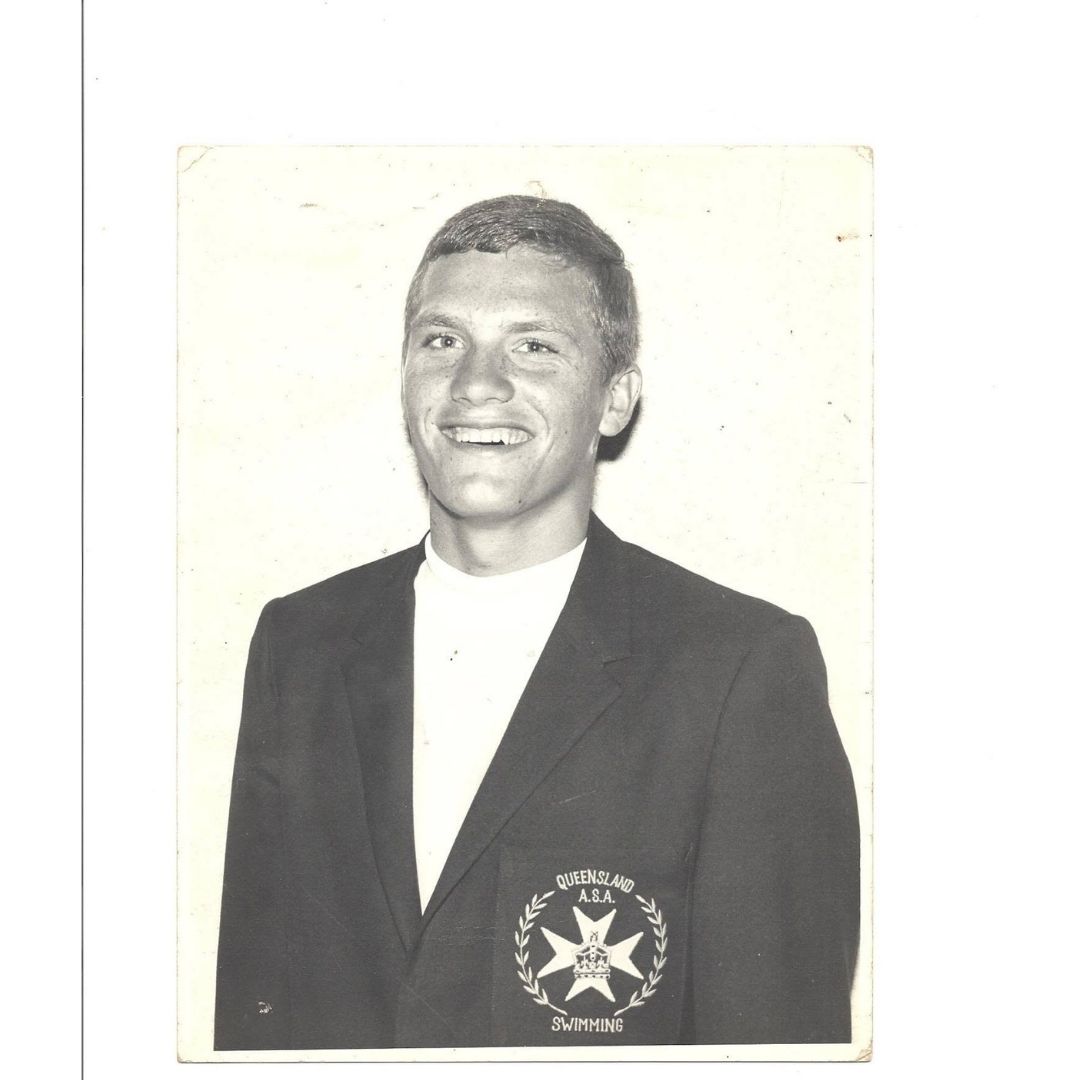
Long before Max Tavasci became a fixture at Lions Club fundraisers and children’s eye screenings across Outback Queensland, he was a young North Queensland swimming star making Australian sporting history. A 1970 Commonwealth Games silver medalist, former sugar cane farmer, and dedicated volunteer, Max passed away suddenly on the 29th of July while traveling out west with his caravan to bring vision screening to school children in Mount Isa and the Gulf country. He was 72. Born and raised in Ayr to Italian farming parents, Battista and Margaret Tavasci, Max grew up on the family property. Encouraged by his mother to stay active, he developed into an elite swimmer alongside his siblings, training in local waters and rubbing shoulders with visiting athletes. His hard work culminated in 1970 when he represented Australia at the Edinburgh Commonwealth Games, claiming a silver medal in the 1500m freestyle while his father served as a race timekeeper. His legacy endures in his hometown, where the 'Max Tavasci Trophy' is still presented annually at the Ayr School Swimming Carnival. Following his athletic success, Max worked on the family farm, laboured in Tasmania and Maryborough, and drove trucks before returning to North Queensland. Known for his love of colourful shirts, fast cars—which his son fondly noted he rarely drove fast—and Meat Loaf records, Max lived a full and colourful life. "He had the heart of a champion, handed down from my dad," said his sister, Paula Dowson. "He died doing what he loved to do." In the second half of his life, Max found a renewed sense of purpose through Lions Australia. Over 18 years of service with the Burnie City, Cleveland Bay, and Townsville Castle Hill Lions Clubs, he became a tireless community worker. Alongside his partner of more than 20 years, former District Governor Michael MacLaren, Max traveled across Queensland conducting paediatric vision checks, running raffles for Lions Assistance Dogs, delivering meals for Eat Up Australia, and assembling disaster relief hampers for flood-affected regions. Remembered by peers as a "true gentleman" and a stable, calm presence on the regional Lions cabinet, Max devoted his final years entirely to service. "I feel Dad found himself and his place with Michael, Lions Australia and the church, evidenced by the lasting happiness he displayed over the last two decades,” said his son, Scott Tavasci. Max is survived by his partner, Michael MacLaren; his son, Scott; his granddaughters, Scarlett and Eloise; his sister, Paula; and his extended family. His funeral was held at Kirwan Uniting Church on the 20th of August. CAPTION: Remembered by peers as a "true gentleman" and a stable, calm presence on the regional Lions cabinet, Max Tavasci devoted his final years entirely to service. Photo:
Read the full story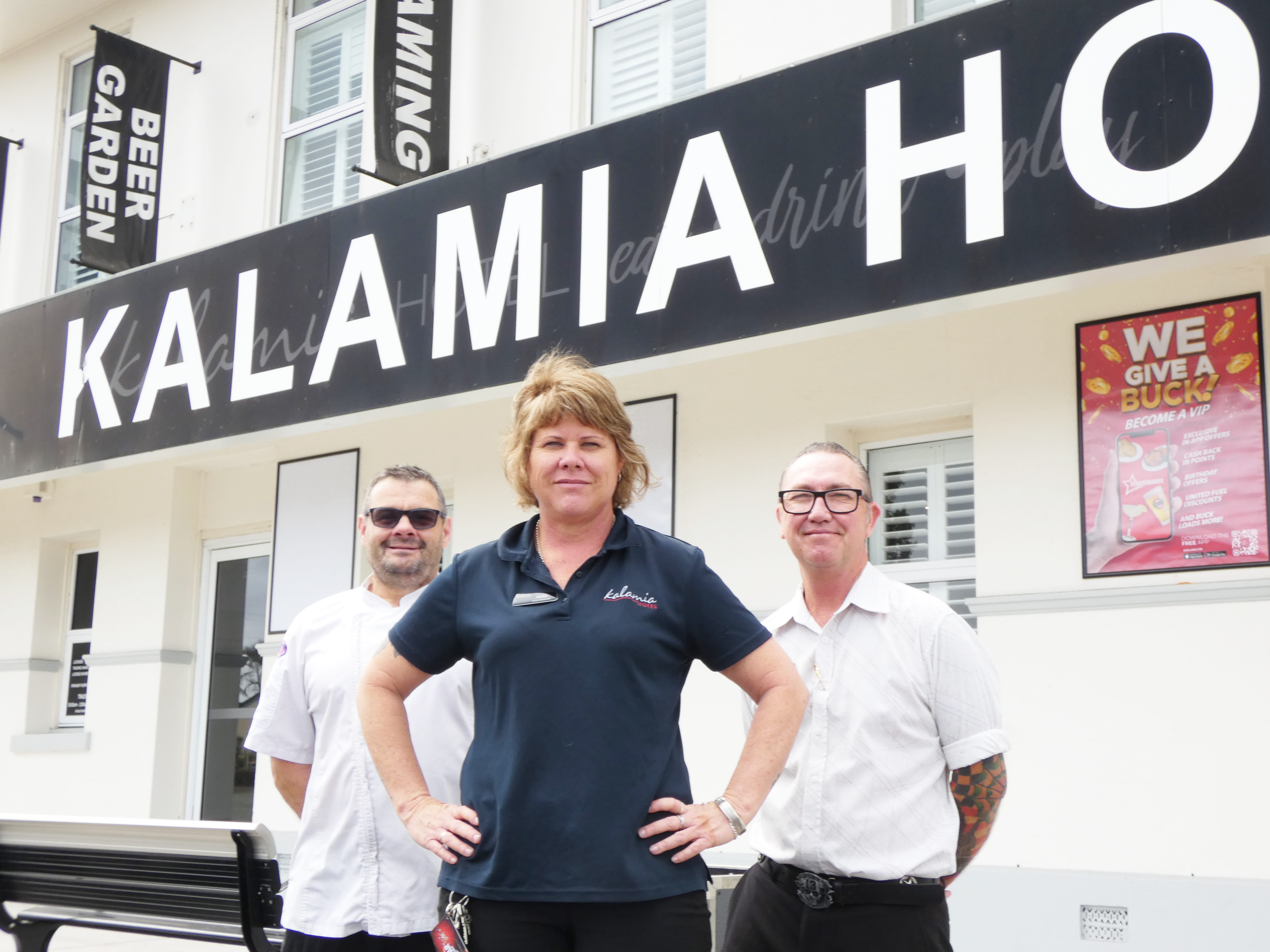
The Kalamia Hotel is turning 100, and it wants the Burdekin there to celebrate. After a century of beers, meals, friendships and memories, ‘The Locals’ Local’ is marking the milestone with a massive day of entertainment, music, prizes and family fun. CAPTION: A century, extensive renovations and multiple ownership changes later, the Kalamia still stands at its original location on Queen Street. Photo: Jacob Casha.
Read the full story

Rehoming fee: $450
DOB: 14/09/2023
Sex: female
Breed: Staffy x
Kid friendly: yes
Cat Friendly: no
Other dogs: Yes
Fences: 5ft
Betty is a gorgeous girl who absolutely loves being near her humans whenever she can.
She’s a typical puppy with lots of energy to burn.
Betty loves playing with other dogs and would love another doggie friend to play with in her forever home.
Betty enjoys going on daily walks and adventures.
She is going good with training but will need continual training to become the perfect pooch.
Betty is available for adoption desexed, micro-chipped and up to date on vaccinations. She is flea/tick/intestinal worm treated and on heartworm preventative.
If you are interested in meeting Betty please fill out an enquiry form at angelpawsinc.com.au
%20(Medium).jpg)
The Bowen Seagulls Rugby League, established in 2004, has long been a pillar of the Bowen community, fostering teamwork, fitness, and a sense of belonging. As the largest sporting club in the region, with over 510 registered players and volunteers, the club plays a vital role in shaping the local sporting landscape.
Shane Douglas, the Seagulls’ Grants Coordinator, was at the forefront of securing much-needed funds to ensure the club's continued growth and development.
Recently, the Seagulls were awarded a Bendigo Bank Community Grant of $15,015, which was used to purchase a replacement digital scoreboard for their main field at Denison Park.
This upgrade came at a crucial time, as the club had been grappling with the cost of improvements and capital works.
Douglas emphasised how significant this funding was for the club.
“We were in urgent need of a replacement scoreboard, but with all the improvements going on at Denison Park, we were struggling to afford it. This grant was a godsend, allowing us to implement the new scoreboard before the season ended,” he shared.
The Bowen Seagulls’ relationship with Bendigo Bank has been long-standing and fruitful. In previous years, the club utilised an earlier grant to erect shade structures for spectators, and Bendigo Bank also stepped up as the major sponsor of the Seagulls' highly anticipated Ladies’ Day.
Douglas reflected on the ease of the grant process and how the funds were helping organisations across the Burdekin and Whitsundays region.
“The Bendigo Bank Community Bank in Home Hill and Ayr is doing amazing work. The grant process was simple, and the funds were distributed fairly to where they were needed most. This initiative truly makes a difference in the community,” Douglas shared.
The new digital scoreboard enhanced the game-day experience for both players and spectators, further solidifying Denison Park as the heart of rugby league in Bowen.
The club was eager to showcase the benefits of the grant at events such as their Ladies Day on 15 June and the Queensland Rugby League (QRL) Country Round game between the Mackay Cutters and Norths Devils on 27 July.
“We were super chuffed about this grant, and we wanted everyone to come down to Denison Park to see the improvements for themselves. Events like Ladies Day and the Cutters v Norths Devils game were a great opportunity for the community to witness how much the Bendigo Bank Community Grant had benefitted us,” said Douglas.
The Bowen Seagulls continued to be a beacon of community spirit, providing opportunities for players of all ages and backgrounds to engage in the sport. Their dedication, coupled with the support of Bendigo Bank and other local sponsors, ensured the club remained a vital part of Bowen's community fabric.
As the Seagulls prepared for their events, it was clear that the grant was more than just a financial boost—it was an affirmation of the club’s hard work and an investment in its future.
Bowen Seagulls receive their award

Burdekin’s own Karl Moschella was named a finalist for the highly regarded 2024 John Deere Agricultural Service Technician of the Year Award. The experienced harvester specialist, who works at Honeycombes Sales and Service in Ayr, was one of only six finalists across Australia to compete for the coveted title, that was announced at the John Deere Gala Awards on September 5th.
Karl’s journey with Honeycombes Sales and Service began in 2002 when he joined the team as an apprentice. Over the years, his dedication to supporting local farmers, combined with his extensive technical expertise, has made him a well-known figure in the Burdekin region. Whether in the field or in the workshop, Karl’s contributions have been integral to keeping John Deere machinery operating smoothly, particularly during the vital sugar cane harvest.
Growing up in the heart of sugar cane country, Karl’s passion for machinery started at an early age. His hands-on experience began in his father’s automotive workshop, where he learned the intricacies of small engine repair. This early exposure, combined with his love of motorbike racing, set the foundation for his future career as a skilled diesel fitter. His ability to diagnose and resolve complex mechanical issues quickly earned him a reputation as a go-to expert for both his colleagues and customers.
Now a harvester specialist, Karl has built strong relationships with local farmers, offering them not only his technical expertise but also a deep understanding of their needs. He is known for going the extra mile to ensure farmers can keep their equipment running efficiently, which is crucial during peak seasons. His commitment and knowledge make him a vital part of the team at Honeycombes, a leading John Deere dealership with seven branches across North Queensland.
This year marks Karl’s third time being shortlisted for the John Deere Agricultural Service Technician of the Year Award, having also been a finalist in 2022 and 2023. His continuous high-level performance has earned him recognition as one of the top technicians in the country, though the title has eluded him so far. In 2023, Karl narrowly missed out, but his drive to improve and provide exceptional service has seen him back in the running for 2024.
The John Deere Technician Awards, established in 2021, celebrate the vital role technicians play in supporting Australia’s agricultural, construction, and forestry industries. Technicians like Karl are essential to ensuring that machinery remains operational, helping to sustain the productivity of Australia’s farms and communities. This year, the awards program received 130 nominations from 69 dealerships across Australia and New Zealand, highlighting the competitive nature of the event.
Burdekin’s own Karl Moschella was named a finalist for the highly regarded 2024 John Deere Agricultural Service Technician of the Year Award. Photo supplied

Applications are now open for 10 more Regional University Study Hubs to be established around Australia, giving more students from rural and regional areas access to tertiary education.
MP Andrew Willcox is throwing his support behind the program which has already supported over 12,000 students in 46 locations across Australia since its establishment.
“Living in rural, regional, and remote areas can create significant barriers of entry for students looking to study at a tertiary level, but this program helps to alleviate these difficulties by bringing the universities closer to where these students live,” Mr Willcox said.
“Where you live shouldn’t dictate whether or not you can access tertiary education, and I strongly encourage eligible organisations in Dawson to apply to establish study hubs to support the students in our electorate.”
For more information on the eligibility criteria and application process, visit: www.education.gov.au/regional-university-study-hubs
Applications close Friday 18 October 2024 at 5:00pm AEDT.

Opinion Piece
Federal Member for Dawson, Andrew Willcox, has said that Prime Minster Anthony Albanese refused to attend the National Farmer Rally outside Parliament House, ignoring farmers who travelled from across Queensland to plead with the Federal Government to stop an “anti-farming agenda”.
Mr Willcox said the Prime Minister has once again demonstrated complete contempt towards farmers and rural, regional and remote Australia.
“For the Prime Minister to ignore our farmers, many who have spent days on end driving to Canberra from across Queensland, shows that Labor doesn’t care about our agriculture industry,” Mr Willcox said.
“Our Prime Minister isn’t interested in helping or even listening to those who produce our nation’s food and fibre.
“Agriculture Minister Julie Collins didn’t attend the rally either, which is incredibly disappointing given she has only just been appointed as Agriculture Minister.
“All our farmers want is a fair go and to continue feeding the country.”
Mr Willcox pointed out the National Farmer Rally organisers were calling for sensible changes including scrapping the truckie tax, scrapping new taxes for biosecurity and superannuation, scrapping water buybacks in the Murray-Darling Basin and protecting the Great Artesian Basin, scrapping unnecessary red tape from emissions reporting, known as Scope 3, and scrapping reckless renewables which will rip up prime agricultural land, protecting the 88-day backpacker visa, as well as overturning the decision to ban live sheep exports by sea.
“These requests are common sense solutions and without changes, Labor will make farming unviable.
“The National Farmer Rally is the biggest in a generation – it has been more than 40 years since Aussie farmers have had to march on Parliament House because a federal government has made them feel so aggrieved.
“The Nationals proudly support those attending the rally. We will always stand shoulder-to-shoulder with our farmers and will continue to fight for farming and the future of regional, rural and remote Australia.”
Federal Member for Dawson, Andrew Willcox (right) joined farmers at the National Farmer Rally in Canberra earlier this month. Photo supplied

Queenslanders could now be hit with a $6,452 fine or $483 on the spot fine for discarding food, including fish frames, scraps and bait, in a way that may unintentionally attract crocodiles to a public place such as a boat ramp, jetty, pontoon or camping area.
Deliberately disturbing or feeding crocodiles could leave you with an increased on the spot fine ranging from $483 to $2580, with the maximum court-imposed fine increasing from $6452 to $26,615.
The Minister for the Environment and the Great Barrier Reef and Minister for Science and Innovation, Leanne Linard stated:
“Feeding crocodiles increases the risk to public safety as the reptiles loiter around public places such as boat ramps, marinas, and tourist locations waiting for a feed.
“Discarded food sources and habituation to humans can lead to changes in animal behaviour and are the main reasons for the removal of problem crocodiles outside active removal zones.
“These new offences and increased fines are designed to reduce the risks associated with deliberately feeding and interacting with estuarine crocodiles.
“People may think feeding crocs or interacting with them is fun or harmless, but experience shows that doing so increases the risk to public safety.”
Remaining within close proximity to a croc can now also land you an on-the-spot fine of $806 or a maximum court-imposed fine of $16,130.
Conservation officers now also have the power to direct people to move away from a crocodile to avoid any potential human-crocodile interactions.
Next time you consider venturing into croc territory, think twice and remember to always stay croc-wise.
Remember to be croc-wise when in croc territory

In a decisive turn of events, the long-standing and contentious pay dispute between Wilmar Sugar and its employees has finally reached a resolution, paving the way for significant wage increases and bonuses. Growers can now breathe a sigh of relief, as the resolution ensures that the threat of disruptive industrial action will no longer jeopardise their crucial crops.
A majority of Wilmar Sugar and Renewables employees has voted in favour of a new enterprise agreement (EA) offering an upfront $2,500 bonus and 16 per cent in wage rises. Fifty-five per cent of eligible employees who participated in the ballot voted in favour of the company’s three-year offer.
The two-day ballot closed at 3pm today. The majority yes vote means more than 1,320 employees will receive the bonus and a 12 per cent increase in pay by Christmas, with a further 4 per cent increase next December.
A company spokesman said the positive ballot result brings to a close a challenging and long-running negotiation and associated disruptive industrial action.
“We thank everybody who participated in the ballot, particularly those who voted to accept the company offer,” he said.
“It draws a line under a period that impacted not only our business and our people, but the growers and harvesting operators who are so critical to the sugar supply chain.
“The focus now is on getting this year’s crop harvested and producing high-quality sugar for customers in domestic and export markets.”
CANEGROWERS Chairman Owen Menkens has urged Queensland’s sugarcane industry to pull together, following the resolution of the long-running pay dispute between Wilmar Sugar and three unions representing mill workers.
Workers at the company’s nine Queensland sugar mills voted over the past 48 hours to accept a new Enterprise Agreement put forward by Wilmar Sugar and Renewables last week.
“It’s great to have this issue finally resolved in a way that is acceptable to both the workers and the mill,” Mr Menkens said.
“It has dragged on for far too long, has delayed cane crushing across half of the industry, and caused great anxiety to growers and harvesting contractors, so to see an agreement finally in place is a tremendous relief.
“Now it’s time to put it behind us, and for the entire industry to come together, support our mill workers and our contractors, and put our shoulders to the wheel so we can make the 2024 season a success.
“Let’s crush it between now and December.”
As of today, Wilmar’s eight factories have processed about 6.3M tonnes of sugarcane, representing about 40 per cent of the estimated crop.

Last week schools across the region marked R U OK Day with various activities taking place to keep all that attended entertained.
From painting rocks to writing notes Ayr State High School and Burdekin Christian College, started conversations that could potentially save lives.
R U OK Day encourages people to have conversations with others, and aims to inspire everyone to connect with people around them, start a conversation and ask “Are you okay?”
It’s important to check in with people you know but equally as important to spark conversation with strangers, you may even save someone’s life.
Ayr State High School setting up donuts in an ‘R U OK’ arrangement
Ayr State High School Students writing notes
Students of Ayr State High School
Burdekin Christian College students decorating rocks as part of R U OK day
Girls from Burdekin Christian College showing off their rocks
Burdekin Christian College boys in yellow to show their support for R U OK day
Photos supplied

The Burdekin Community Association Inc. (BCA) Home Care Service delivers a wide range of services for seniors and their carers.
Home Care Packages Program (HCP)
The HCP Program provides support to older people with complex care needs to live independently in their own home. We can offer services to eligible seniors on a Level 1, 2, 3 or 4 package. Services include in-home support services, transport, home maintenance/repairs/modifications, access to allied health services and other care related services relating to the client’s health, safety and wellbeing.
Commonwealth Home Support Program (CHSP)
The CHSP is an entry level home help program to assist older people who can mostly, but not completely, live and cope on their own and don’t yet need high levels of support at home. Services include domestic assistance, social support (friendly visits/shopping/outings), personal care (showering/bathing/medication monitoring), respite care (support for the carer), transport and home maintenance (lawn mowing/whipper snipping/rubbish removal).
Please contact the Home Care Service Team to discuss services or obtain information on Ph 4783 3744, The Support Centre, 130 Queen St.
bca@bcaburdekin.org.au, www.burdekincommunityassociation.org.au
Contributed with thanks to:
Debra Cochran
Chief Executive Officer
Burdekin Community Association Inc (BCA)

We've reached the middle of September, and before we know it, 2024 will be over. We can dwell on our coulda, shoulda, and wouldas with self-blame and guilt, or we can take a step back, be kind to ourselves, and refocus our efforts.
We're choosing the latter and aiming to get back on track with our hope to help build a compassionate community here in the Burdekin.
The key word here is "community."
While our BNC Team is considered 'workers,' we are also community members in our own right.
Compassionate Communities are not made up of services and their workers - they are made up of community members coming together to support each other and figure out what would benefit everyone when it comes to death, dying, and grief.
We want to hear from people who have ideas, thoughts, energy, and questions about anything related to death, dying, and grief. Your input is invaluable.
We know there are many people in our community who are helping others in this area. What do you see are the gaps? What can we be doing better as a community?
We have all experienced death and grief in our lives – each one of us can contribute to the conversations. Our shared experiences can help us understand and support each other better.
If this is something you have an interest in, please come along to:
WHAT: Compassionate Community Session
WHERE: Burdekin Neighbourhood Centre, 40 Chippendale Street, Ayr
WHEN: Thursday, 26th September, 5.30pm
Until next time,
The Team
Burdekin Neighbourhood Centre

I have always enjoyed reading and last week I came by a book, just released this year “The Little Wartime Library” by Kate Thompson. It tells of the Wartime Library at Bethnal Green in East London during World War 11. The library had been bombed in the London Blitz in 1940 and the librarians moved the library to the underground railway for safety and to be a service to the people (over five thousand them) that bedded down for the night in safety of the underground. The Children’s Library was a great success to the children who lived there for five years of their lives. This bought back many memories for me when the Home Hill School of Arts Library ran a free children’s library from 1950 to the 1960’s. Miss Myrtle Keller (later Mrs Beck) opened the library every Saturday morning from 10.00 am to 11.30 am in the main hall of the Memorial School of Arts.
The Home Hill Library began in Home Hill in 1923 in a building opposite the Police Station. It consisted of a room for books and a reading room. Membership was by subscription only. When the Memorial School of Arts was opened in 1927 the library shifted to the new building. The library rooms were at the front of the Memorial School of Arts with a passage way dividing them and steps led upwards into the function room. The library opened every Wednesday and Saturday night from 7.00pm to 9.00pm from the 1940’s on. I joined the adult library in the 1960’s.
When the children’s library began, the books were kept in two long wall cupboards on each side of the function room up above the seating accommodation and the dance floor. Miss Myrtle Keller, an accountant, was the secretary for the library and she ran the library at night as well the children’s library on the Saturday. She laid the books out on the chairs below the cupboards where we chose our books and had them marked off on our library card file.
In December 1949, Mr Cavanagh, (Head Teacher at Iona), addressed the School of Arts Committee asking the Committee to make arrangements for a Children’s library to be established. Before the meeting closed, £10.5/- had been donated. In April 1950, Local support had raised £70, and together with a Government subsidy, there was sufficient money to purchase books and I suspect that the cupboards could have been built also.
The Grand opening of the Children’s Library took place on Saturday afternoon, 21st July 1950. Mr H G McLeod, Deputy Ayr Shire Council, declared the library open. A children’s committee was established to assist in running the affairs of the children’s library. By August 1950, Mr Cavanagh advised there were 91 children who had books out on loan. Reference books were also available. The very young readers could not take books out but could read books at the tables and chairs provided. Two of the older readers would assist in recording the incoming books and the outgoing books on the Saturday. Another £20 of books were on order. £20 or $40 worth of books does not seem much by today’s prices of books, but in the 1950’s, that would have purchased quite a few books.
In December 1950, the Children’s Library was closed down because of a severe outbreak of poli. The Chairman of the committee, Mr Tom Jackson, Secretary Miss Myrtle Keller, and Mr Cavanagh did not reopen the library till after 15th February 1951. By June 1951 a total of 114 books had been purchased for the adult and children’s libraries. There were 4000 books in the libraries. Mr D Cavanagh was profusely thanked for instigating a free Children’s Library for the district. In 1953 members of the CWA were assisting the children’s library on Saturday morning.
In my time at this library, Miss M Keller was running the library on a Saturday morning. Some of the books that were available for reading were Enid Blyton’s Famous Five and Secret Sevens. I remember a few of us girls formed our own Secret Seven Club. I cannot remember much more of this club to say how long it lasted but it was fun. Reading matter consisted of Black Beauty, The Billabong Books, Seven Little Australians, the Ann of Green Gables series and the Pollyanna books. The Boys would have read Treasure Island, Cowboy and Westerns, and maybe Moby Dick and the Biggle Books which were flying adventure books. Robinson Crusoe, Swiss Family, Robinson, and Norman Lindsay’s “The Magic Pudding” were also among them, as well as the Scarlet Pimpernel rescuing people from the French Revolution.
Today The Home Hill Library works under the banner of the Burdekin Shire and during school holidays there are activities for our young people. If anyone has a story to tell about the Children’s Library in Home Hill or Ayr, we would enjoy hearing from you.
Contributed with thanks to Glenis Cislowski

On Thursday, 12th September, the Lower Burdekin Scout Group hosted its Annual Reporting Night, a highlight of the scouting calendar. The event was a significant occasion, not only for reviewing the past year's achievements but also for planning the future.
A key moment of the evening was the presentation of a generous $2000 donation by Margaret and Greg from Bluey’s Thrift Shop. The donation, warmly received by the Group’s youth members and Chris, the Group Leader, will be instrumental in purchasing new equipment and supporting a range of adventurous activities for the Scouts. This contribution is a testament to the community's support and the positive impact of local partnerships.
The Annual Reporting Night also provided a platform for announcing the new committee to families and friends, offering transparency and fostering community engagement. The evening included a review of the audited accounts and a discussion on fundraising opportunities, ensuring that all attendees were informed and involved in the Group's financial health and future plans.
Once the formalities were completed, attendees enjoyed a relaxed session of tea and conversation, providing a chance to catch up and share stories. The informal setting allowed for a pleasant end to a productive and celebratory evening.
The Lower Burdekin Scout Group extends its heartfelt thanks to everyone who attended and supported the night.
“Your presence and contributions make a significant difference, helping to ensure a vibrant and successful future for our Scouts.”
Margaret Thorne from Bluey’s Thrift Shop presenting the cheque to youth members. Photo supplied

The Educational Trailer at the Burdekin Water Festival was a tremendous success, drawing in over 100 visitors who participated in the interactive displays, games, and the thrilling virtual reef experience. The hands-on activities offered a fun and engaging way for locals to learn about environmental management and pest control, leaving a lasting impression on attendees.
Following the festival, the trailer made another appearance at Plantation Park on Sunday, 15 September 2024, alongside three other council-funded initiatives. The event ran from 8:00am to 12:00pm, with live demonstrations showcasing innovative solutions to environmental challenges. Visitors were treated to an array of interactive displays, highlighting sustainable practices and how the Burdekin community can contribute to better environmental outcomes.
Mayor Pierina Dalle Cort expressed her delight at the strong turnout and public interest.
"It was wonderful to see so many people engaging with these important issues," she said.
“The trailer’s interactive demonstrations really emphasised how critical it is for all of us to take responsibility for managing our environment."
The event proved to be a fantastic educational experience for families and individuals alike.
Many attendees left feeling more informed and inspired to take action in their own lives to promote environmental sustainability. The blend of fun activities with practical knowledge made it a memorable day for everyone involved.
For those who still have questions or would like more information, the Council’s Environmental Department remains available at (07) 4783 9800.
The educational trailer. Photo supplied

With warmer weather on the horizon, the Burdekin Aquatic Centre is excited to announce the return of Aqua Aerobics, starting on Saturday, 28 September. Classes will also be offered at Home Hill at 9:30am on Tuesday mornings, beginning 1 October.
Instructor Vicky will lead the sessions, and the cost is $12, which includes gate entry. All fitness levels are welcome, so come along for a fun and active workout!
“Come on down for some fitness and fun – see you there!” shared the Burdekin Aquatic Centre.
Contributed with thanks to the Burdekin Aquatic Centre.
Locals of all fitness levels are invited to come along to the Burdekin Aquatic Centre’s Aqua Aerobics!
.JPG)
This past week, I was involved in a car crash that could have ended far worse than it did and although it has taken me a full week to fully process what happened, I am so grateful for everyone who has taken the time to check I’m ok.
Thankfully, I’m on the mend, but the road to recovery has been made smoother by the overwhelming support from our incredible community.
I want to extend my heartfelt thanks to Kari Ravizza, whose quick actions and kind words helped more than she can know. Kari was there by my side shortly after the accident and for that I am truly grateful.
Charlie from Sweet FM and John Furnell also deserve a special mention for their support during this time. And a big thank you to Mayor Pierina Dalle Cort for her thoughtful gestures and continued encouragement.
Your kindness has reinforced just how strong and caring our Burdekin community is. It’s moments like these that remind me of the unity and compassion we share.
You’ll be pleased to know that I was able to get back on the road thanks to a hire car, so it is business as usual (although a little more cautious) and I am building my confidence on the roads once again.
In lighter news, I’m excited to highlight the Burdekin Water Festival. This year’s festivities were as vibrant and engaging as ever, celebrating our region’s spirit and heritage.
Be sure to join in the fun and make the most of the festival’s activities!
Once again, thank you all for your support. It’s a privilege to be part of such a wonderful community.
Miah
Publishers Indemnity. Any individual or entity that places advertising, supplies copy material, or submits editorial content to Core Life Publishing agrees and undertakes to ensure that all such material:- Does not infringe upon any copyright, trademark, or other intellectual property rights;- Is free from any content that could be considered defamatory, libelous, or slanderous;- Does not infringe upon any rights related to privacy or breach of confidence;- Contains no obscene, indecent, or otherwise unlawful material;- Complies fully with the Trade Practices Act and all other applicable laws, regulations, or statutes.Furthermore, by submitting or placing such material, these individuals or entities agree to indemnify and hold harmless the publisher, Core Publishing and Events Pty Ltd, and/or its agents from and against any and all investigations, claims, demands, liabilities, damages, costs, or judgments arising out of or in connection with the material provided. All material is believed to be accurate at the time of printing and remains the copyright of Core Publishing and Events Pty Ltd.
© 2026 Life Publishing Group Pty Ltd.
