
Independently Owned, Locally Grown, Community Loved
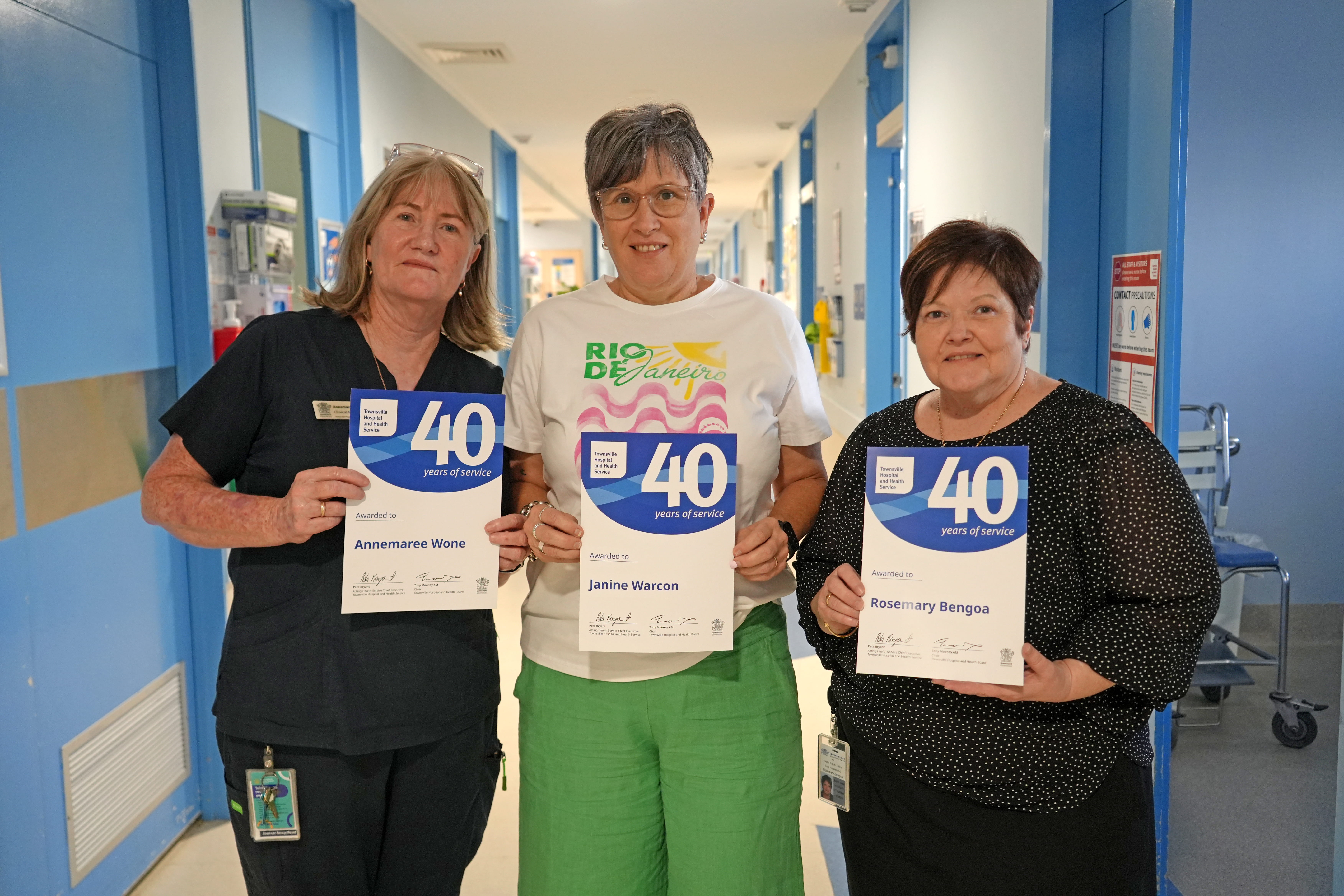
Three Burdekin hospital workers have clocked up 120 years of combined service to the Ayr and Home Hill communities. Rosemary Bengoa, Janine Warcon and Annemaree Wone have each reached 40 years of service, with the milestone recognised at local staff thank-you events. Rosemary began at Ayr Hospital in 1985 in the front office before moving into medical records, accounts payable, assets and finance. Janine started in the Home Hill Hospital kitchen and has since worked across kitchen, cleaning and laundry roles at both Ayr and Home Hill. She later became an orderly before moving into her current role as an assistant in nursing at Home Hill. Annemaree began her career at The Prince Charles Hospital in Brisbane, working as an enrolled nurse for four years before completing her registered nurse training in Townsville. She returned to the Burdekin after the birth of her first child and now works across the dialysis unit and emergency department at Ayr. The three staff members said their connection to the community, colleagues and variety of work had kept them in the health system for four decades. “Your work colleagues and the friendships you make along the way keep you in the role,” Rosemary said. For Janine, working in her own community and caring for patients has been a key part of her career. “We’ve had some funny moments; just the other night one patient was disco dancing in the hallway with me,” she said. Annemaree said working across different areas had kept her career varied. “I work in dialysis, sometimes in the emergency department, and sometimes on the ward, and because I have always worked across multiple areas, I’ve never felt stuck in one place,” she said. The breadth of responsibilities is a common feature of working in rural hospitals, Ms Wone said. “You need to know lots of different things when you work in a rural or remote hospital setting, so we are very busy,” she said. “But even with how much we have all achieved, I can’t believe it’s been 40 years; it feels like it happened overnight.” CAPTION: Rosemary Bengoa, Janine Warcon and Annemaree Wone have each reached 40 years of service, with the milestone recognised at local staff thank-you events. Photo supplied
Read the full story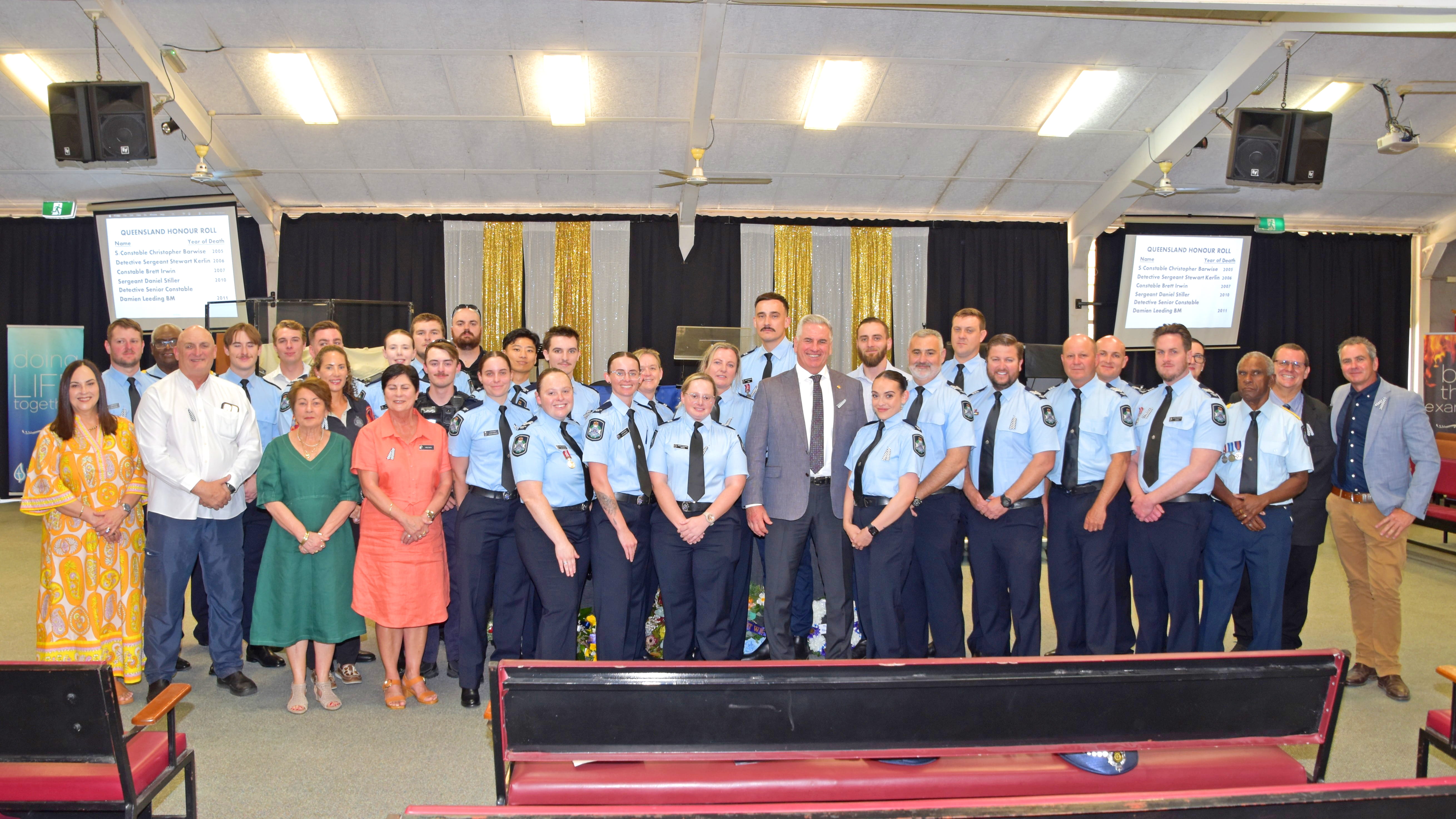
Burdekin police, dignitaries and community groups gathered Tuesday morning to honour officers killed in the line of duty. Photo: David CooperBurdekin community members, local dignitaries, and police gathered at Ayr's Burdekin Community Church on 29th September to commemorate National Police Remembrance Day. The solemn service honoured officers who made the ultimate sacrifice in the line of duty, featuring a wreath-laying ceremony and a reading of the Roll of Honour.Read more here: www.burdekinlife.com/article/burdekin-honours-fallen-officers-on-remembrance-day
Read the full story

Burdekin police, dignitaries and community groups gathered on Tuesday morning to honour officers killed in the line of duty. Held at the Burdekin Community Church in Ayr, the service formed part of National Police Remembrance Day, observed each year on 29th September. Pastor Peter Holmes, who led the service, said it was a chance to pay tribute to the bravery and service of the fallen. “Someone has to protect those who cannot protect themselves. Someone has to step into the disorder and work to restore order—and that is one of the responsibilities entrusted to our police,” he said. “Today, we honour those who stood. Some stood in circumstances that ultimately cost them their lives, and this day each year ensures that their courage will never be forgotten.” A Police Commissioner’s Address was delivered by Acting Inspector Megan Benson before local officers read the Roll of Honour, commemorating police officers killed in the line of duty. Officers then lit memorial candles, before community groups joined police and dignitaries in laying wreaths. Among dignitaries were Burdekin Shire Council Mayor Pierina Dalle Cort and Member for Burdekin Dale Last, who called it a “privilege” to join local police in their commemorations. “As a former police officer, National Police Remembrance Day is an incredibly important opportunity to remember those officers who lost their lives while serving their community and to show our support to those who continue to keep our communities safe today,” Mr Last said. “Small regional towns like the Burdekin mean our police officers become involved in a variety of facets in our community and it is part of what makes these roles in our small communities so unique.” “It also means that chances to stand with our men and women in blue should not be overlooked.” A morning tea was held in the church hall following the service. CAPTIONS: 1—Burdekin police, dignitaries and community groups gathered Tuesday morning to honour officers killed in the line of duty. 2—Pastor Peter Holmes, who led the service, said it was a chance to pay tribute to the bravery and service of the fallen. 3—Held at the Burdekin Community Church in Ayr, the service formed part of National Police Remembrance Day, observed each year on 29th September. 4—Mayor Pierina Dalle Cort and Deputy Mayor Max Musumeci laid a wreath on behalf of Burdekin Shire Council 5—Among dignitaries was Member for Burdekin Dale Last 6—Local officers read the Roll of Honour, commemorating police officers killed in the line of duty 7—Liaison Officers light memorial candles 8—Senior Sergeant Lisa Shields addresses the audience 9—Community groups joined police and dignitaries in laying wreaths Photos: Jacob Casha
Read the full story

A $1.2 million funding package aimed at strengthening Queensland’s volunteer sector could help local organisations address declining participation and volunteer hours, with Burdekin groups among those facing ongoing challenges rebuilding their ranks. Photo source: Burdekin Domestic & Family Abuse Prevention Network
A $1.2 million funding package aimed at strengthening Queensland’s volunteer sector could help local organisations address declining participation and volunteer hours, with Burdekin groups among those facing ongoing challenges rebuilding their ranks.
The State Government announced the funding as part of its 2026-27 State Budget, with the investment to support the development of a 10-year volunteering plan, strengthening partnerships across the sector and identifying ways to reduce administrative barriers for volunteers.
The announcement comes as community groups across the Burdekin continue to recover from significant declines in volunteer participation following the COVID-19 pandemic.
The Lions Club of Ayr, which had served the community for 60 years, closed in 2020 after membership fell to just four remaining members.
The Burdekin Community Association (BCA) has also experienced a drop in volunteer numbers, falling from more than 100 members before the pandemic to 64 today.
While BCA’s volunteer numbers have stabilised at around 60 in recent years, the organisation has recorded a decline in the number of hours contributed by volunteers, with a nine per cent reduction between the 2024-25 financial year and the previous year.
The State Government said the new funding would support 18 initiatives developed in response to recommendations from the Parliamentary Inquiry into Volunteering, with the aim of making it easier for Queenslanders to participate.
Queensland Minister for Volunteers Ann Leahy said the investment would help strengthen the sector and support organisations that rely on community contributions.
“Volunteers are the backbone of Queensland communities and we’re backing them with increased funding to the volunteering sector,” Ms Leahy said.
“This year’s Budget support will enhance the ability of volunteer organisations to build resilient, connected communities and encourage more people to get involved and stay involved.”
The funding will also support the creation of a 10-year volunteering plan intended to provide a long-term framework for the sector.
Volunteering Queensland CEO Jane Hedger welcomed the commitment, saying stronger partnerships and reduced barriers would help create a more accessible volunteering environment.
“The renewed commitment to a 10-year volunteering plan, strong sector partnerships and removing government barriers to participation will contribute to a more sustainable and accessible volunteering landscape,” Ms Hedger said.
The State Government’s announcement follows concerns from community organisations across regional Queensland about the challenges of attracting and retaining volunteers.
The Burdekin’s volunteer sector supports a wide range of community services, sporting clubs and not-for-profit organisations, with many groups relying on a small number of dedicated members to continue operating.
The funding package forms part of the Crisafulli Government’s stated commitment to supporting Queensland’s volunteer workforce, which it describes as critical to the strength of local communities.

One of the highlights of my week was receiving a heartfelt thank you card on behalf of the community from those involved in the recent serious crash. It was a touching gesture that reminds us of the strength and compassion that exists throughout the Burdekin. In times of adversity, our community consistently comes together to support one another, and while no recognition is ever expected, it is always appreciated.
We are incredibly fortunate to live in a region renowned for its fresh produce and agricultural excellence. Whether it's roadside stalls operating on honesty boxes or locally grown fruit and vegetables available throughout the district, the Burdekin continues to showcase the best of country living. Fresh really is best, as my grandparents often reminded me.
I recently visited the outstanding Agricultural Department at Home Hill State High School, where students are gaining valuable hands-on experience in horticulture, aquaculture and sustainable farming practices. Programs like these are helping to develop the next generation of farmers and agricultural leaders. Some of the produce raised by students is available through the popular Prawn Shop in Home Hill, providing a great example of practical learning and community connection.
Last week I attended the 2026 State Budget Address in Townsville with Queensland Treasurer Hon David Janetzki MP. It was encouraging to see mayors from across North and North West Queensland gathered together to discuss the priorities and opportunities ahead for our regions. There is a strong sense of optimism about the future of North Queensland, and I look forward to continuing to advocate for outcomes that benefit the Burdekin and the broader region.
Should you wish to reach out, don’t hesitate to contact me directly by phone at 0447 150 582, or feel free to send an email to mayor@burdekin.qld.gov.au.
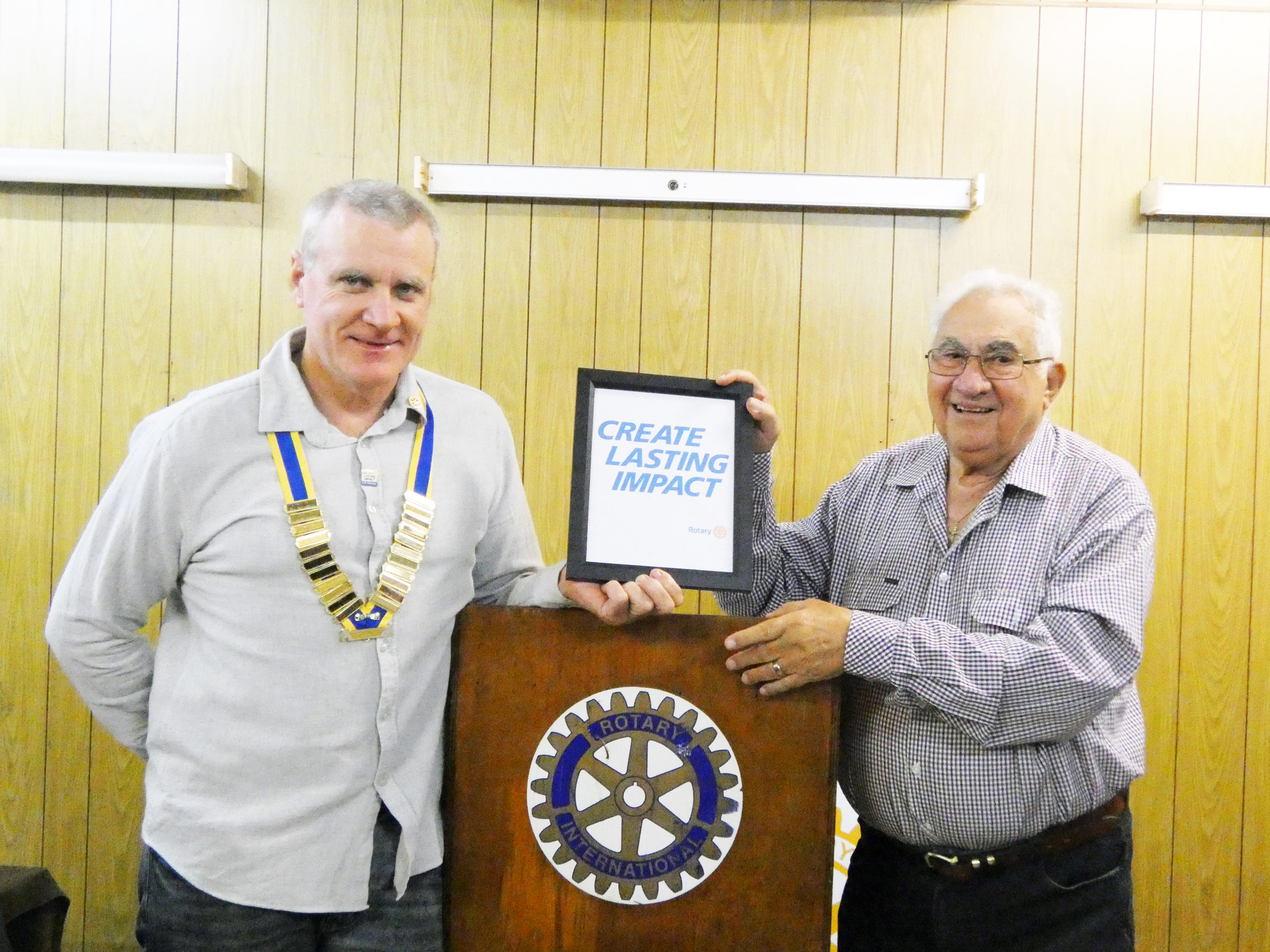
Clive Williams (left) has taken charge of the Rotary Club of Home Hill, hoping to continue recent momentum following the successful 18-month tenure of lifelong Rotarian Alfio Musumeci (right). Photo credit: Jacob Casha
Burdekin cane farmer Clive Williams has stepped into the top job at the Rotary Club of Home Hill, taking over from longtime Rotarian Alfio Musumeci following the latter's successful two years at the helm.
Mr Williams was officially announced as president at Tuesday’s club changeover event at the Crown Hotel, during which outgoing Mr Musumeci presented him with a presidential badge and frame.
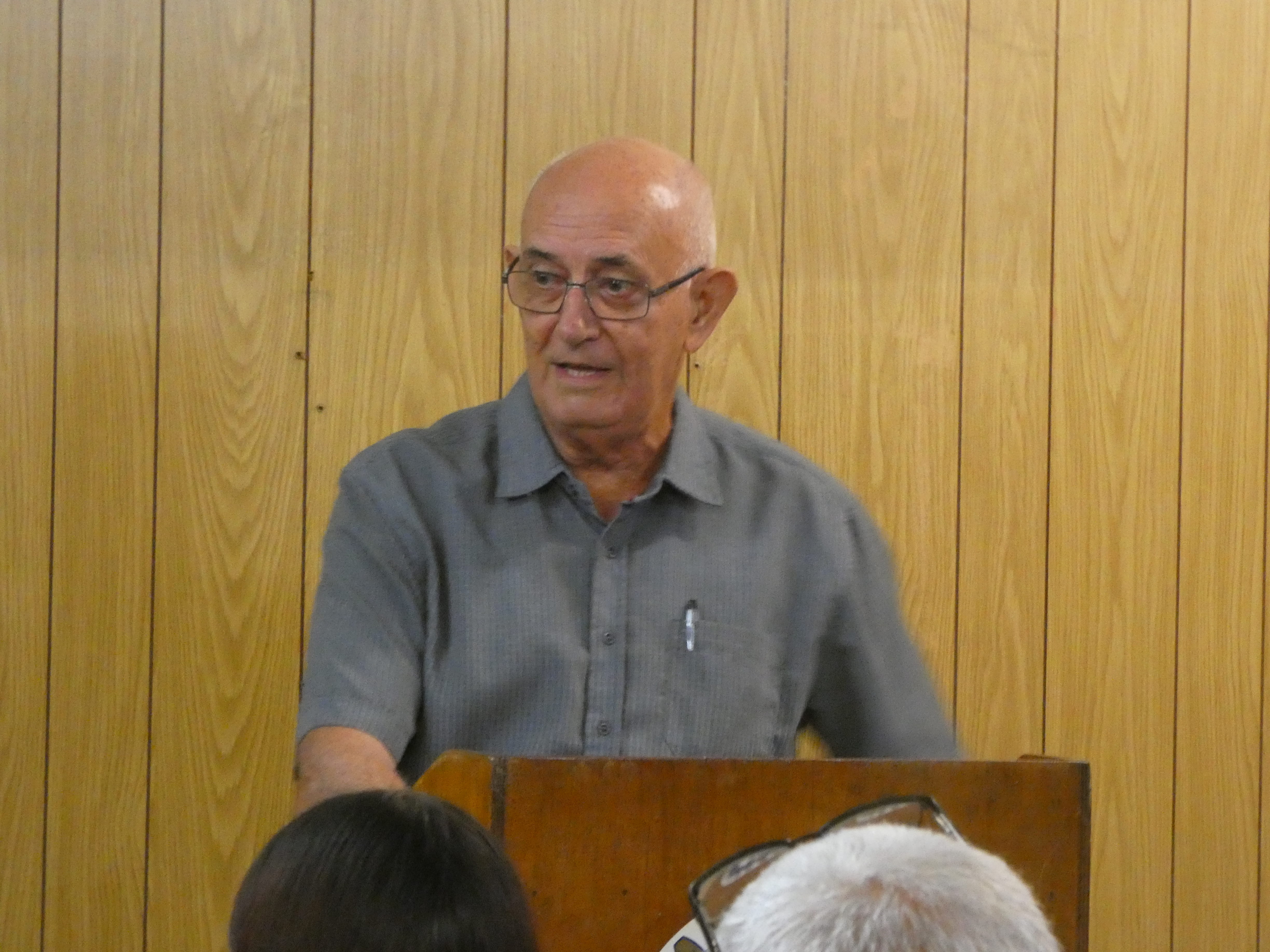
Despite a nationwide decline in volunteering, Mr Musumeci’s term witnessed steady growth for the club, which attracted three new members this year. The Home Hill local also oversaw last October’s Harvest Festival Gala Ball, which raisedroughly $7,000.
Under his leadership, the club distributed significant financial contributions to several community organisations, including CORES, St. Vincent de Paul, Burdekin Chaplains, and the Davenport family.
Addressing the changeover, Mr Musumeci expressed his gratitude toward the executive committee and members alike, before wishing Mr Williams well in his new role.
“Thanks to all of our members who have supported me and the ideals of Rotary, embracing what it means to be a Rotarian. To Clive, congratulations and best wishes to you for a successful year,” he said.
Mr Williams steps into the presidency after roughly a year-and-a-half with the club, carrying on a family tradition of Rotary service that includes his father, a member for 50 years, and his grandfather.
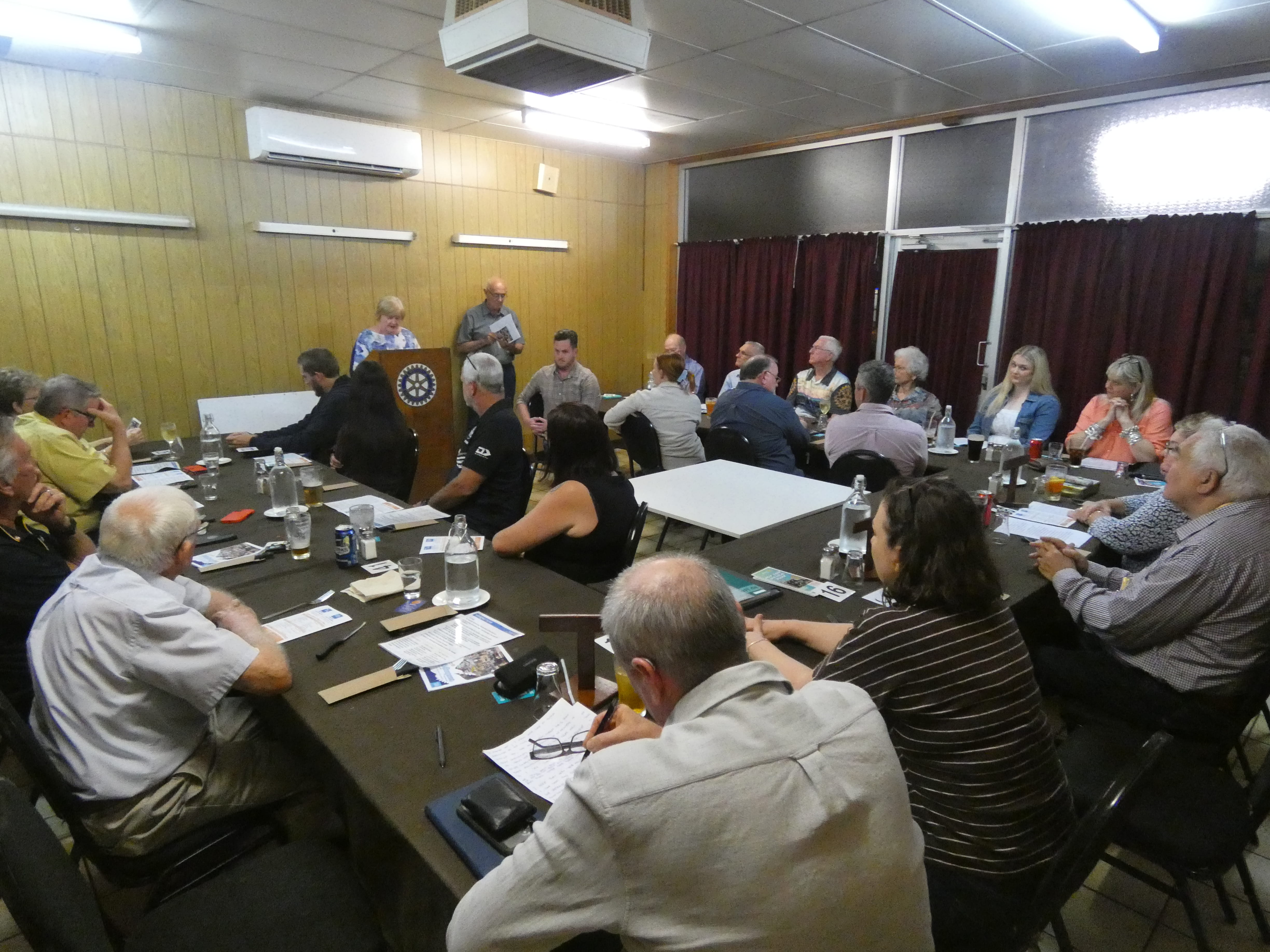
With his presidential role, he assumes the task of helping the club reach its ambitious $40,000 fundraising goal, which was announced earlier this year.
The funds will go towards purchasing an all-terrain vehicle for the Home Hill and Ayr Police stations, giving officers immediate access to remote areas across the region.
Mr Williams said the project, along with the support of the club’s members, would be central to his presidency.
“These past 18 months have seen us go through some up-and-down times, but with our new ATV project onboard, we’re coming home strong,” he said.
“I hope that with [member’s] help and guidance, I can lead this club to maintain its presence in the community and continue to give assistance to the groups and people who need our hope.”
Mr Williams confirmed on the evening that chairman Robert Marshall, secretary Kellie Williams, and treasurer Desley Musumeci would all retain their executive roles.
The new president also formally announced Maddy Gallagher as the club’s new Harvest Festival queen. She follows in the footsteps of last year’s club representative Eden Betteridge, who claimed Personality Queen honours.

The Queensland Government has announced a new phase of its youth crime crackdown, with repeat young offenders who commit serious offences while on bail set to face mandatory sentences under proposed “Breach Bail, Go to Jail” laws. Photo source: Facebook/David Crisafulli MP
The Queensland Government has announced a new phase of its youth crime crackdown, with repeat young offenders who commit serious offences while on bail set to face mandatory sentences under proposed “Breach Bail, Go to Jail” laws.
The reforms will expand the State Government’s Adult Crime, Adult Time legislation, with the new offence applying to young offenders who commit serious crimes while on bail.
The announcement comes amid ongoing community concern about crime across regional Queensland, including in the Burdekin, where a petition calling for additional police resources and funding for private security patrols attracted 3,562 signatures in 2024.
The petition followed a period during which Member for Burdekin Dale Last claimed entry charges in Home Hill had increased twelvefold over a 12-month period, while Ayr recorded a fourfold increase over three months.
Under the proposed “Breach Bail, Go to Jail” reforms, young offenders who commit an Adult Crime, Adult Time offence while on bail would face a new offence carrying a minimum mandatory sentence.
The Queensland Government said the reforms would build on the first three phases of Adult Crime, Adult Time, which cover 45 offences and have contributed to a 7.2 per cent reduction in victim numbers following significant increases in previous years.
Premier David Crisafulli said the next stage of the laws would hold repeat youth offenders accountable.
“Breach Bail, Go to Jail is the next phase of Adult Crime, Adult Time, which is holding youth offenders accountable for the first time in a long time,” Mr Crisafulli said.
“We’ve heard from Queenslanders who are telling us to keep going, and we will with reforms to Labor’s weak bail laws.”
Minister for Youth Justice and Victim Support Laura Gerber said the Government’s focus was on improving community safety through stronger laws, more police, early intervention and rehabilitation.
“Bail is a privilege, not a right and if repeat offenders are breaching it, they should and will go to jail under this next phase of Adult Crime, Adult Time,” Ms Gerber said.
The Government said the legislation would be introduced following further consultation, with the reforms expected to become law by the end of 2026.
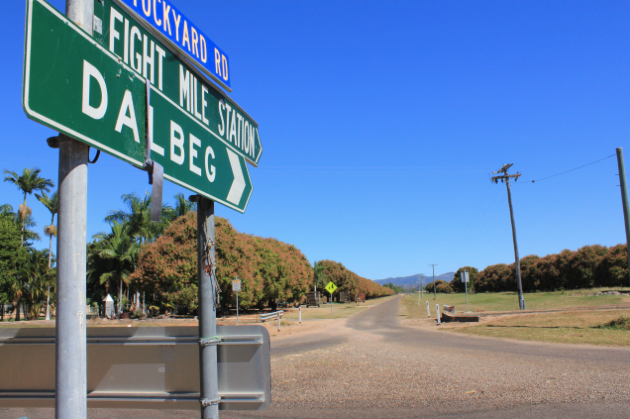
Dalbeg residents may now face more than an hour’s drive to dump their waste after the local skip bin service was shut down.
Burdekin Shire Council’s decision to discontinue the Dalbeg disposal service follows a six-month trial period, during which seven customers used it across two collection events held in March and May this year.
The trial, introduced in late 2025, replaced a permanently available skip bin at Dalbeg Hall, which had been removed due to ongoing misuse.
The revised model provided scheduled, supervised waste collection days on a quarterly basis, with a user-pays component for selected waste items.
Mayor Dalle Cort said it had become an “unjustifiable" use of ratepayer funds, citing both “very low” community utilisation and increased operational costs.
“Council has a responsibility to provide services that are fair, efficient and sustainable for the entire community,” Mayor Dalle Cort said.
“However, the results of the trial clearly show that the service is not being used at a level that justifies the cost to Council.”
Clare-based Councillor Amanda Hall rebuked the decision, fearing it could leave remote residents behind.
“We can’t continue losing services out here. The population isn’t there for the constant usage, but that doesn’t mean that people don’t use it,” she said.
“[Services] do have to be cost-effective … and I can appreciate managers trying to reduce costs, but people still pay rates, and they pay a lot of rates out here.
“It’s very disheartening for the people that live in the further areas.”
Residents of Dalbeg and Millaroo must now make use of waste facilities in Clare, Ayr, Home Hill and Kirknie.
Cr Hall said this could mean drives up to “an hour and a half” long to facilities in town.
“[People] won’t travel that far. [Rubbish] will be dumped illegally on the side of the road, and then how much is that going to cost council?”
Council acknowledged the risk of illegal dumping following the removal of the service.
Mayor Dalle Cort urged residents to continue to dump waste responsibly.
“We understand this change may be disappointing for some residents, and we encourage the community to make use of the available waste facilities to ensure waste is disposed of responsibly,” Mayor Dalle Cort said.

Queensland Cane Agriculture and Renewables (QCAR) has welcomed Burdekin Shire Council's decision to reduce the sugarcane rate in the dollar as part of its 2026/27 budget, describing the move as welcome relief for local growers facing ongoing financial pressures.
Earlier this year, Burdekin QCAR members raised concerns about rising land valuations and the impact higher rates would have on cane farming operations across the district.
In response, QCAR submitted a community impact assessment to Burdekin Shire Council on behalf of its members and the wider community, outlining the financial challenges facing the sugar industry following several difficult seasons.
The organisation said the assessment also highlighted the industry's broader economic contribution, noting that every dollar generated through on-farm activity returns an estimated $6.40 to the local economy, while the sugar industry supports almost one in three jobs across the Burdekin.
Under the 2026/27 budget, Burdekin Shire Council reduced the Category D (Sugar Cane) rate from 3.508 cents in the dollar to 2.866 cents, representing an 18.3 per cent decrease.
QCAR said the reduction demonstrated the council had listened to the concerns raised by local growers and recognised the pressures currently being experienced across the agricultural sector. The organisation said the lower rate would help offset the impact of increasing land valuations across the Burdekin, particularly at a time when some neighbouring local government areas, including Townsville, have announced rate increases.
QCAR thanked Burdekin Shire Council for supporting sugarcane farmers and the wider community as the region continues to navigate a challenging year.
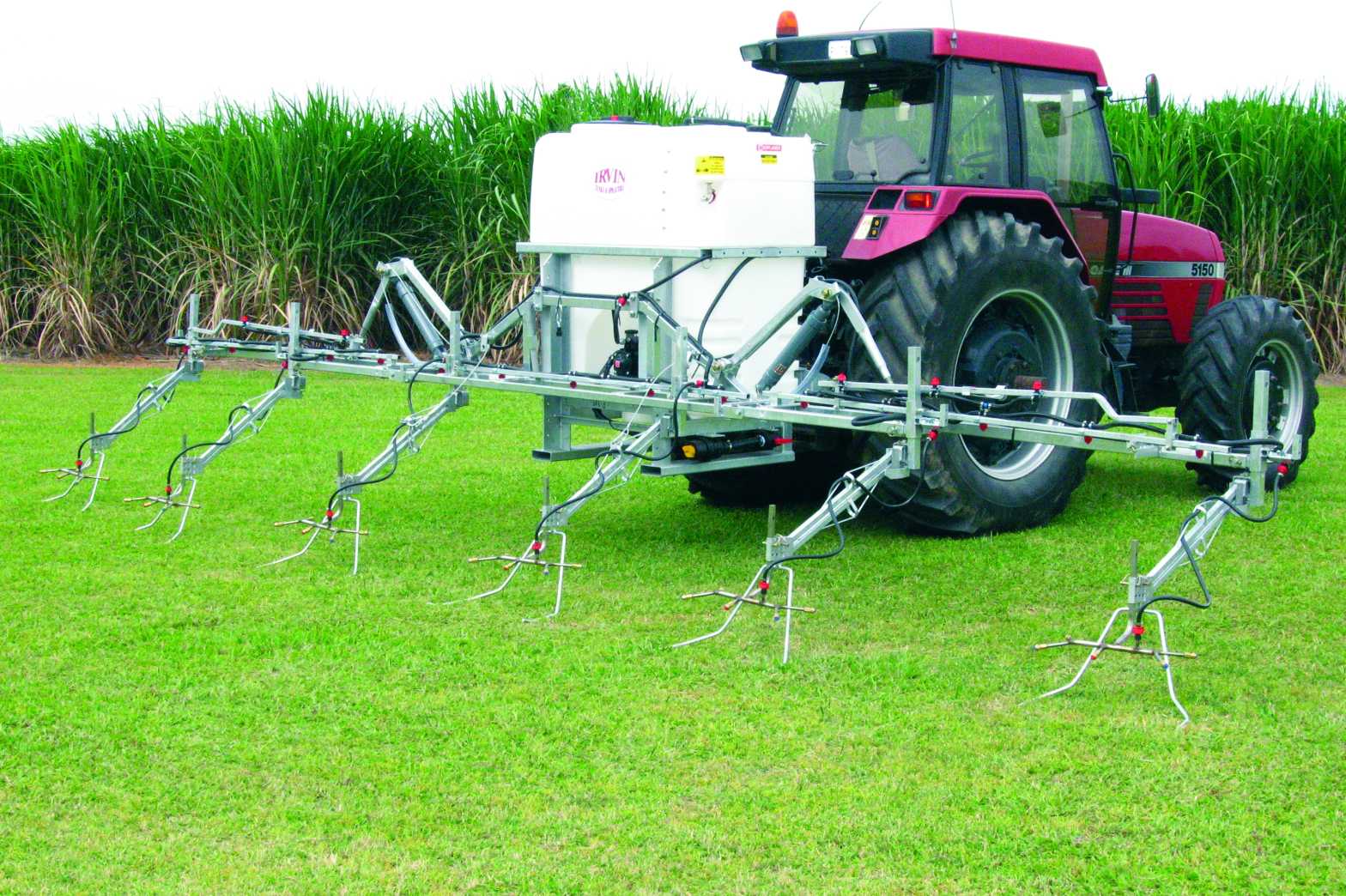
CANEGROWERS and Sugar Research Australia (SRA) will seek a one-year emergency permit from the Australian Pesticides and Veterinary Medicines Authority (APVMA) allowing growers to purchase and use paraquat in sugarcane. Photo source: Website/CANEGROWERS
The Australian sugarcane industry’s peak grower and research bodies have joined forces in a bid to prevent a critical weed-control tool disappearing from cane farms before practical alternatives are ready.
CANEGROWERS and Sugar Research Australia (SRA) will seek a one-year emergency permit from the Australian Pesticides and Veterinary Medicines Authority (APVMA) allowing growers to purchase and use paraquat in sugarcane under the previous label conditions, subject to appropriate restrictions.
The APVMA’s recent decision removes sugarcane from revised paraquat labels because the allowable rates are well below those required for effective use in cane.
Products carrying labels approved before the decision can still be used until 22 June 2028, but growers will be limited to the finite supply of old-label stock already in circulation.
CANEGROWERS CEO Dan Galligan said the permit would provide a practical bridge while alternative weed-control options were developed.
“This is not about using up old drums already sitting in sheds,” Mr Galligan said.
“We are seeking a one-year permit that would allow growers to buy new stock and use it under the previous conditions, with appropriate safeguards in place.
“Paraquat is an important part of minimum-tillage farming because it controls weeds without repeatedly disturbing the soil. Right now, there is no replacement that works across every farming system.
“Growers need more than an assurance that alternatives are coming. They need a workable option for the season ahead, and that is what this application is designed to provide.”
SRA is working with chemical companies to develop alternative knockdown herbicide strategies for consideration to be registered by APVMA.
“We respect the APVMA’s role and understand the application will need to address its concerns,” Mr Galligan said.
“But the practical reality is growers cannot switch overnight to alternatives that are not yet available.
“A short-term permit would give the industry breathing room to make that transition properly.”
Grower leaders will also raise the issue directly with APVMA officials when they address the CANEGROWERS Policy Council later this month.
“That meeting will give APVMA officials the chance to hear directly from growers about how paraquat is used and what losing it would mean on farm,” Mr Galligan said.
“We are looking for a sensible short-term solution that gives growers a workable option while the next generation of weed-control tools is brought forward.”
Supplied by CANEGROWERS

Martha is a gentle young cat looking for a forever home and someone to love.
Born 25 September 2022, Martha is a female cat who has been in foster care since 14 May 2026. She is cat friendly, good with children, and may suit a home with other pets, although her experience with dogs is currently unknown.
Martha is known for her warm personality and strong bond with people once trust is established. She is quite talkative, happily responding when called by name, and is full of purrs, head bumps and affection. At night, she enjoys nothing more than curling up beside her foster carer for comfort and companionship.
She came into care alongside her close companion Milah, and the pair share a strong and comforting bond. A joint adoption would be a special outcome, though Martha would also thrive in a calm, peaceful home where she feels safe and loved.
Martha is a grazer, preferring small meals throughout the day, and settles best in a relaxed environment.
Adoption fee is $210, which includes desexing, microchipping, up-to-date vaccinations, and flea, tick and worm treatment.
For a loving, gentle companion with personality and heart, Martha is ready to meet her match.
Enquire about Martha here:https://angelpawsinc.com.au/forms/
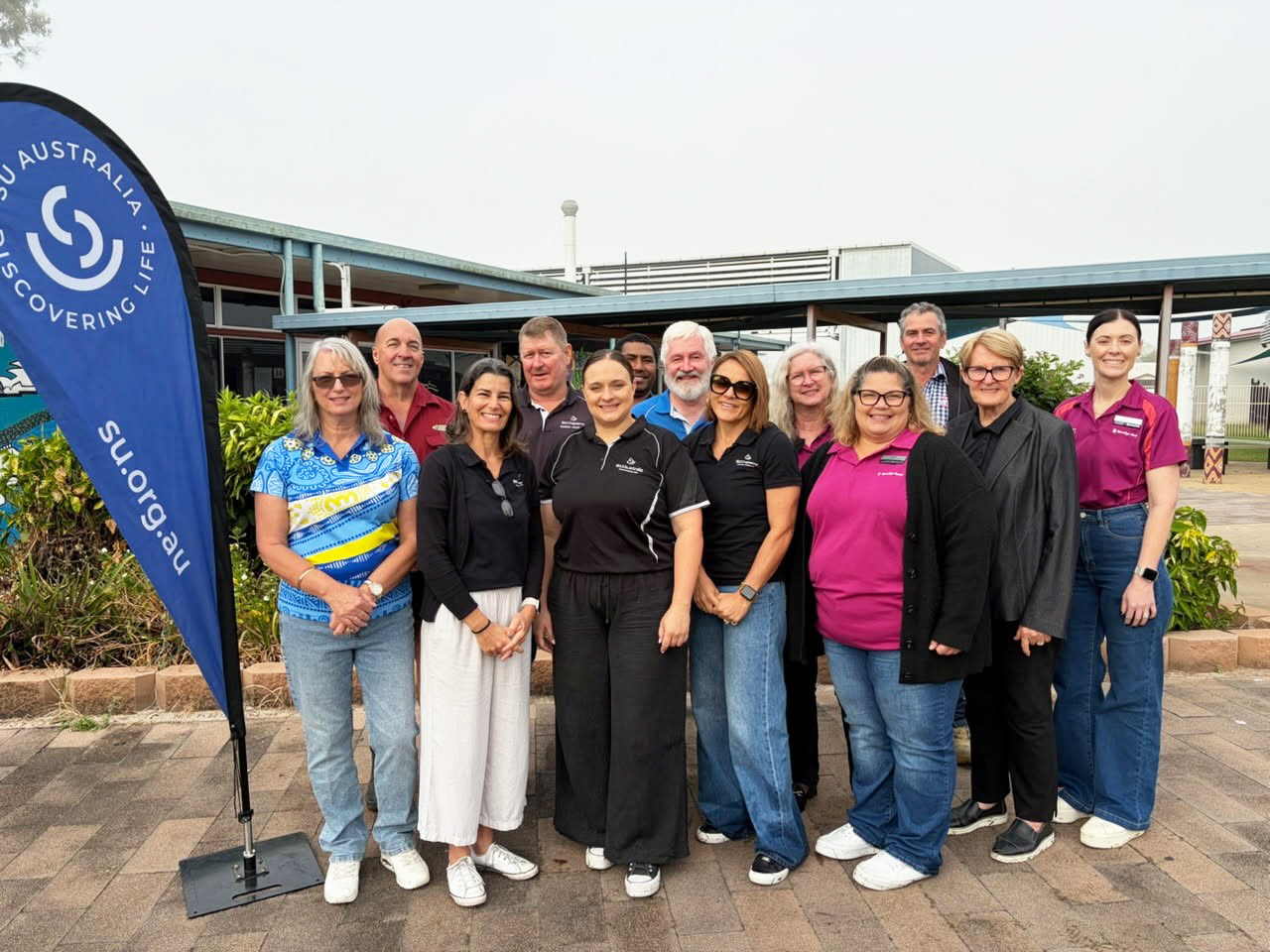
"School chaplains provide a trusted, caring presence for young people, helping them navigate challenges, build resilience and develop confidence.” Photo supplied
Community Bank Home Hill & Ayr has reaffirmed its commitment to supporting the wellbeing of young people across the Burdekin, announcing a $30,000 contribution to the Burdekin School Chaplaincy program.
The announcement was made during the Annual School Chaplaincy Breakfast last month, where Community Bank Home Hill & Ayr board members and staff joined local educators, volunteers and community leaders to celebrate the vital role chaplains play in the lives of local students.
Acting Branch Manager Sally Smith said the breakfast was a powerful reminder of the positive impact chaplains have in schools every day.
"Listening to the stories shared at the breakfast highlighted just how important this service is for our community," Ms Smith said.
"School chaplains provide a trusted, caring presence for young people, helping them navigate challenges, build resilience and develop confidence. Their work often extends beyond the classroom, supporting families and strengthening our entire community."
The $30,000 funding commitment will help ensure chaplaincy services continue to be available across local schools, providing students with someone to turn to during difficult times and creating opportunities for meaningful connections.
As a Community Bank, supporting initiatives that improve the wellbeing of local residents is central to its purpose. Through the Community Bank Home Hill & Ayr, profits generated locally are reinvested into projects, organisations and programs that make a lasting difference throughout the Burdekin.
Ms Smith said investing in young people was one of the most important ways the bank could contribute to the future of the region.
"Our young people are the future of the Burdekin, and it's important they have access to support that helps them thrive both personally and emotionally," she said.
"We're proud to stand alongside the Burdekin Chaplains committee and everyone involved in delivering this valuable program. Their dedication has a positive ripple effect that reaches students, families and the wider community."
Community Bank Home Hill & Ayr also acknowledged the many volunteers, schools, churches and supporters whose ongoing commitment ensures the chaplaincy program continues to make a meaningful difference.
By investing in initiatives that strengthen resilience, connection and community wellbeing, Community Bank Home Hill & Ayr continues to demonstrate its commitment to building a stronger future for the Burdekin—one where local success creates lasting local impact.
Supplied by Community Bank Home Hill & Ayr

How good is the weather at the moment, cool enough to have a break from air-cons, cooler mornings/evenings and beautiful days. The “crush” is underway with increased traffic on the roads, let’s stay safe and be aware of vehicles around us.
The Burdekin continues to shine in volunteerism, from the local footy, service clubs to the SES. A new Local Controller, Cheryl Wade has taken over the reins of the Burdekin SES, congrats and welcome to the wonderful SES volunteers.
Works continue around the Shire, if you see something that needs attention, pot hole/damaged sign etc simply fill out a ‘Snap Send Solve’. If not on your mobile go to your App Store and download. Otherwise send an E mail to enquiries@burdekin.qld.gov.au or call 4783 9800.
‘Cirque Nouvelle’, “a new evolution of circus” is on at the ‘Burdekin Theatre’ tonight 6pm. “After sell out shows across Australia, this internationally acclaimed all-star cast are back and ready to present a truly unique and versatile production”
The ‘Millaroo Catfish Competition’ is on this Saturday 11th July. Any enquiries go to millaroopandc@outlook.com or call 0427 652 387.
The State of Origin has been ‘run and won’ for 2026, congrats to the competitive spirit shown by both teams. The Cowboy v Panthers game was the best game I’ve seen since the 2015 Grand Final, not just for the game but to celebrate JTs 300th. To see the Tongan princess and Prime Minister acknowledge JTs achievement along with the NRL was very special. What I admired most was players of both teams stayed around long after the game to take pictures and sign autographs which endeared them to the many fans, especially the young kids from the Laurie Spina Shield who saw they’re idols.
Wishing you health & happiness
Cr John
.jpg)
Critical infrastructure needed to foster new homes in the Burdekin has been backed by the Crisafulli Government in a boost Member for Burdekin Dale Last has hailed as a win for the region.
Under the 2026/2027 State Budget, the Crisafulli Government will deliver a $720,000 duplicated water main at Home Hill to improve reliability of the town water supply and support sustainable growth.
Mr Last said backing local councils with the funding they need to bolster critical infrastructure demonstrated real steps towards unlocking more land for new homes.
“By investing in Home Hill’s water infrastructure, the Crisafulli Government is delivering for current residents while ensuring our regional towns are able to meet the current demand for housing,” Mr Last said.
“We know attracting the skilled workforce we need for services in our town, starts with ensuring they have a place to live which is why the Crisafulli Government is removing as many barriers as possible for both new and existing homes.”
“We’re delivering on our commitment to work closely with councils including the Burdekin who play a crucial role in unlocking home ownership.”
Mr Last said delivering the duplication of Home Hill’s water main was just one way the Crisafulli Government was delivering a place to call home for more Queenslanders.
“More than 3500 first home buyers have already benefitted from the Crisafulli Government’s abolishment of stamp duty while more than $70 million has been budgeted to assist first home owners with $30,000 First Home Owner Grants,” Mr Last said.
“This Budget backs aspiration and strengthens the foundations for continued growth in our regional communities.”
The Federal Member for Dawson, Andrew Willcox, has warned that the Albanese Labor Government's heavy-handed rollout of new environmental laws on July 1 will paralyse local agricultural production, leaving regional sugar cane farmers trapped in a compliance nightmare and threatening the viability of local mills.
From tomorrow (July 1), the Federal Government’s newly established National Environmental Protection Agency (NEPA) officially begins operations. Armed with expanded auditing powers and the ability to issue immediate 14-day "stop work" orders, this new federal body has the ability to enforce massive new financial penalties under a radically altered Environment Protection and Biodiversity Conservation (EPBC) Act, with corporate fines skyrocketing up to $16.5 million.
The upcoming enforcement push follows intense scrutiny by the Coalition, alongside peak industry groups. Modelling from AgForce highlights the staggering scale of the threat, revealing that the complex federal self-assessment and referral process is expected to drain up to $3.5 billion annually from Queensland agriculture alone, with roughly 30 producers already trapped under aggressive federal compliance investigations.
Mr Willcox said local sugar cane farmers are already experiencing the suffocating effects of a bureaucratic hold by the federal environment department. Landowners trying to clear Category X land, which is freehold land explicitly classified as cleared or exempt under state vegetation laws to allow for routine farming, are being stopped in their tracks by federal authorities.
"Our local cane farmers are being forced into a bureaucratic nightmare by a government completely detached from the realities of food production," Mr Willcox said.
"I have local landowners coming into my office who are trying to manage and expand their crops on Category X land. They have done the right thing, yet they are being bullied by federal department officials who tell them their land is 'under investigation' without providing a single solid reason why. It is an absolute joke.
"Labor has rushed these laws through to secure a political win with the Greens, completely altering the 'continuous use' exemption. Now, if a farmer has regrowth older than 15 years, or if they are within 50 metres of a watercourse in the Great Barrier Reef catchment, routine activities like clearing scrub, putting in fencing, or building firebreaks are suddenly treated like a potential federal offense."
To combat this broader federal assault on regional productivity, the Coalition has announced it will lodge a coordinated Notice of Motion in both the Senate and the House of Representatives to disallow the Carbon Credits Methodology Determination 2026. This urgent legislative push aims to stop Labor from using multi-million dollar corporations and carbon credit schemes to permanently lock up productive land and destroy regional jobs.
Mr Willcox warned that this strategy of locking up agricultural land to appease a box-ticking carbon offset agenda represents a dangerous precedent, running alongside Labor's broader plan to lock up an additional 39 million hectares of land, nearly twice the size of Victoria, to meet its 2030 targets.
"Locking up this land completely destroys its productivity, abandoning active land management and turning prime agricultural acreage into a weed-ridden haven for feral pests, like wild pigs, to breed and spread unchecked onto surrounding properties," Mr Willcox said.
"Blocking farmers from utilising their own land poses a direct, existential threat to the region's sugar milling infrastructure.
"Our local sugar mills are already locked in a severe battle against block encroachment, which is steadily reducing the total hectares of cane being grown in our region.
"A sugar mill requires a strict, massive volume of cane to remain operationally and financially viable. If our farmers are stopped from clearing their Category X land to open up new cane blocks, the total tonnage will drop below that critical threshold, and the mills will simply close.
"The profit margins for our cane farmers are incredibly slim. If a local mill shuts down, it becomes entirely cost-prohibitive to transport harvested cane to a mill further away. The transport costs alone will wipe out any return, meaning all the surrounding sugar cane farms will have to stop farming completely.
"Hundreds of landowners across this country are facing this exact same bureaucratic freeze, and it is stifling production, damaging local economies, and threatening national food security.
“Our farmers need practical support and regulatory certainty, not a centralised, Canberra-based environmental police force strangling their productivity.”
Supplied by the Office of Federal Member for Dawson, Andrew Willcox
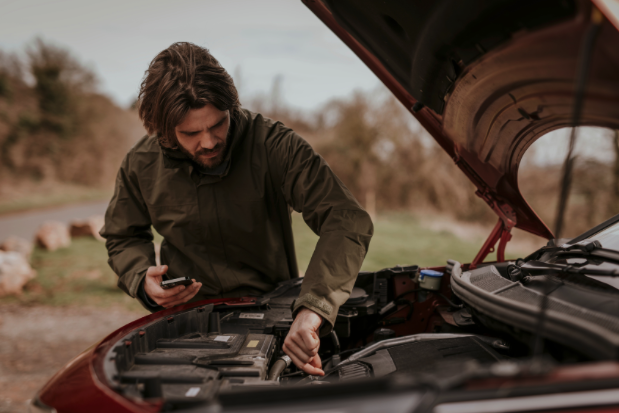
What could have been a stressful roadside ordeal became a heartwarming reminder of the kindness found in the Burdekin community for father Clinton Condren Snr and his son last week.
Travelling south between Ayr and Townsville, the pair experienced car trouble just past Giru before fellow motorist Carol Philo noticed they were stranded and stopped to see if they needed help.
Mr Condren said Ms Philo's kindness made all the difference, with a tow truck arriving soon after to get them back on the road within the hour.
Grateful for the support, Mr Condren wanted to publicly thank Ms Philo for taking the time to stop and lend a hand, saying her simple act of kindness turned a worrying situation into one with a happy ending.
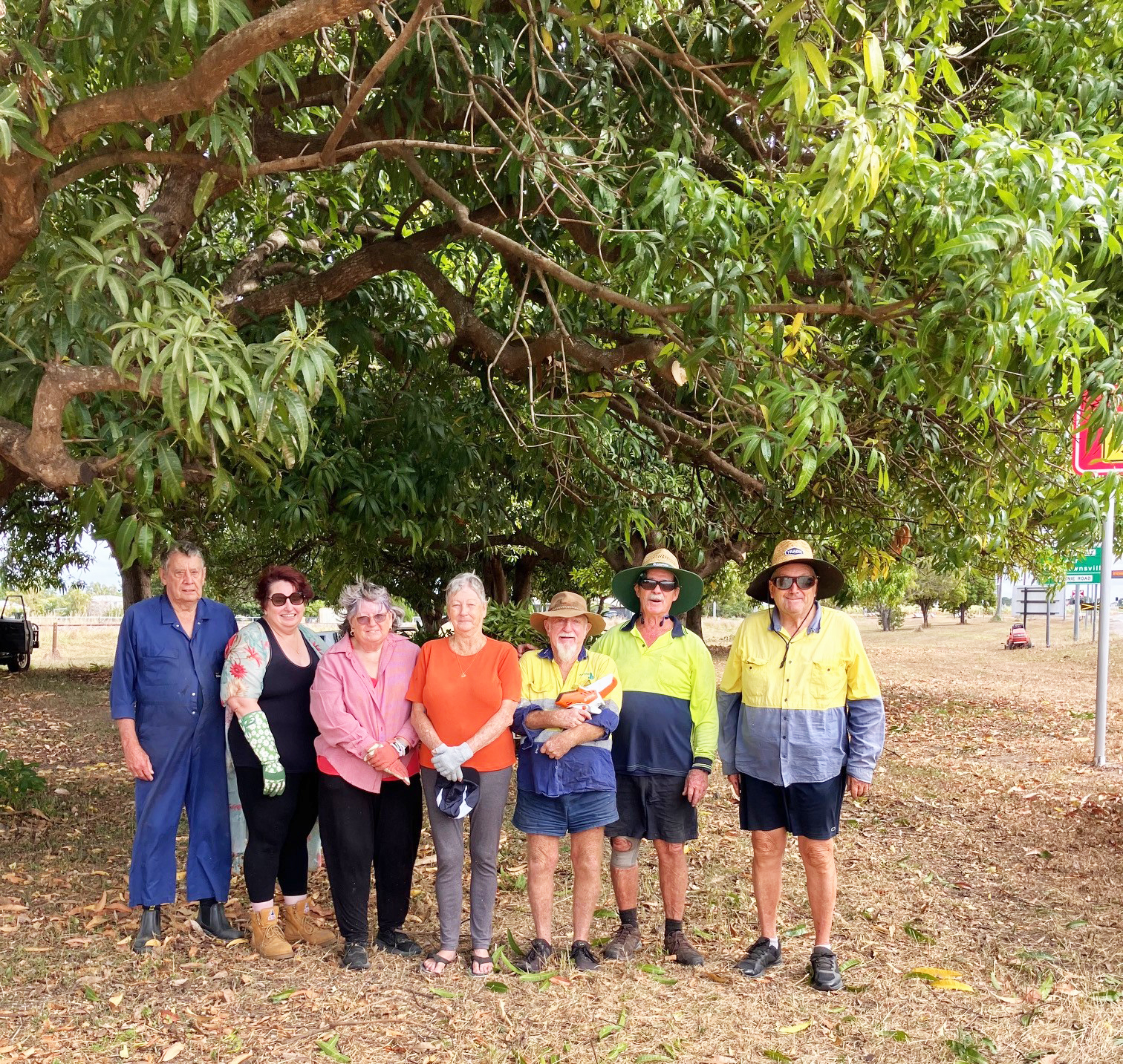
(L-R) Sam Harris, Lisa Corica, Rhondda Ware, Lynn Hutchings, Dan Bawden, Chris Goodwill and John Donald. Photo credit: Jenny Donald
While most Burdekinites were in weekend mode last Sunday, a group of Ayr-Home Hill Lions volunteers spent several hours at the Lions Fruit Park in Home Hill giving the mango trees a much-needed trim.
Volunteers Sam Harris, Lisa Corica, Rhondda Ware, Lynn Hutchings, Dan Bawden, Chris Goodwill and John and Jenny Donald worked steadily throughout the day, carrying out the first major prune the trees have had in years.
By day’s end, seven trailer loads of off-cuts were transported to the local dump for disposal.
The surrounding lawns were also mowed as part of the manicure, leaving the park noticeably refreshed.
“We all agreed that the fruit park looks a lot better after the trim and mow,” a club spokesperson said.
The working bee concluded across the road at the Lions Diorama, where volunteers enjoyed celebratory scones and coffee.
The work represents one of the many voluntary efforts carried out by the longstanding local service club across the region.
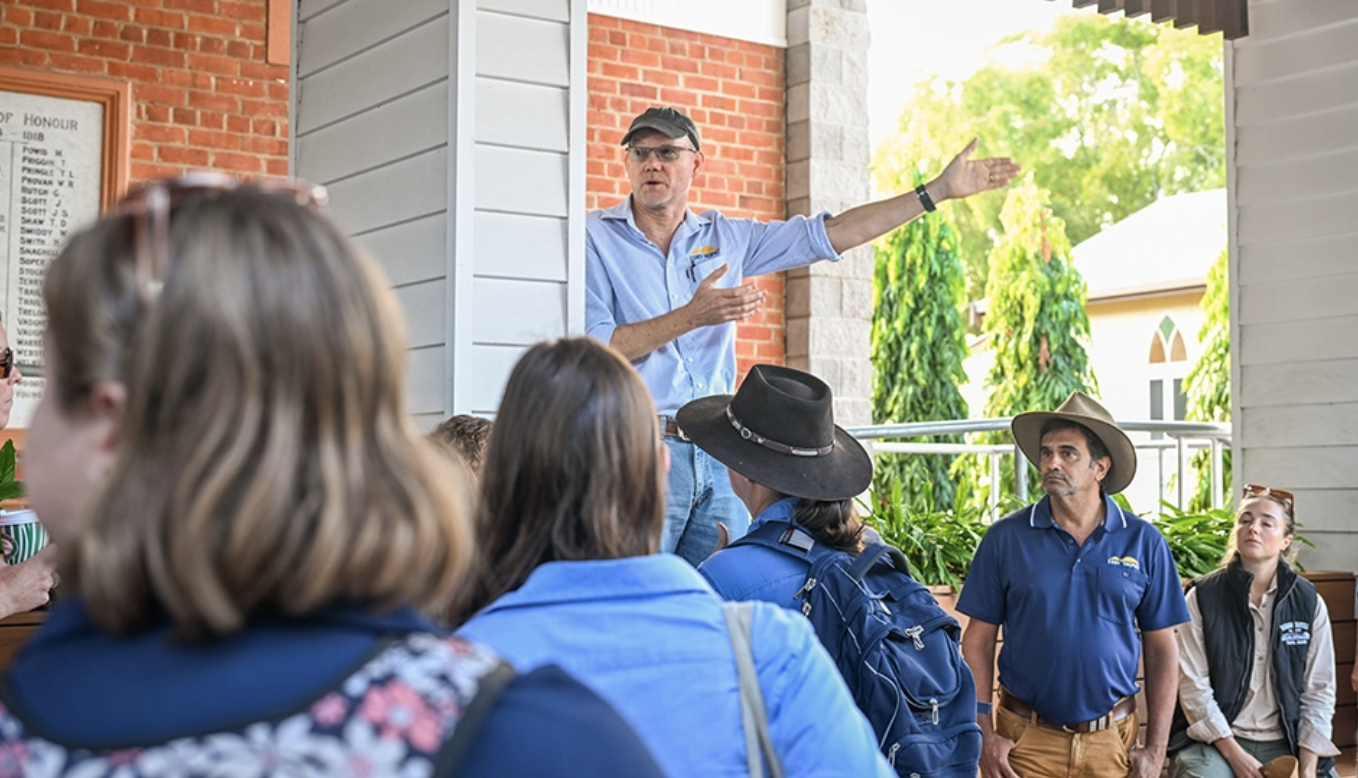
NQ Dry Tropics Sustainable Agriculture Program Manager Rob Hunt directing people onto the bus to begin the forum. Photo source: NQ Dry Tropics
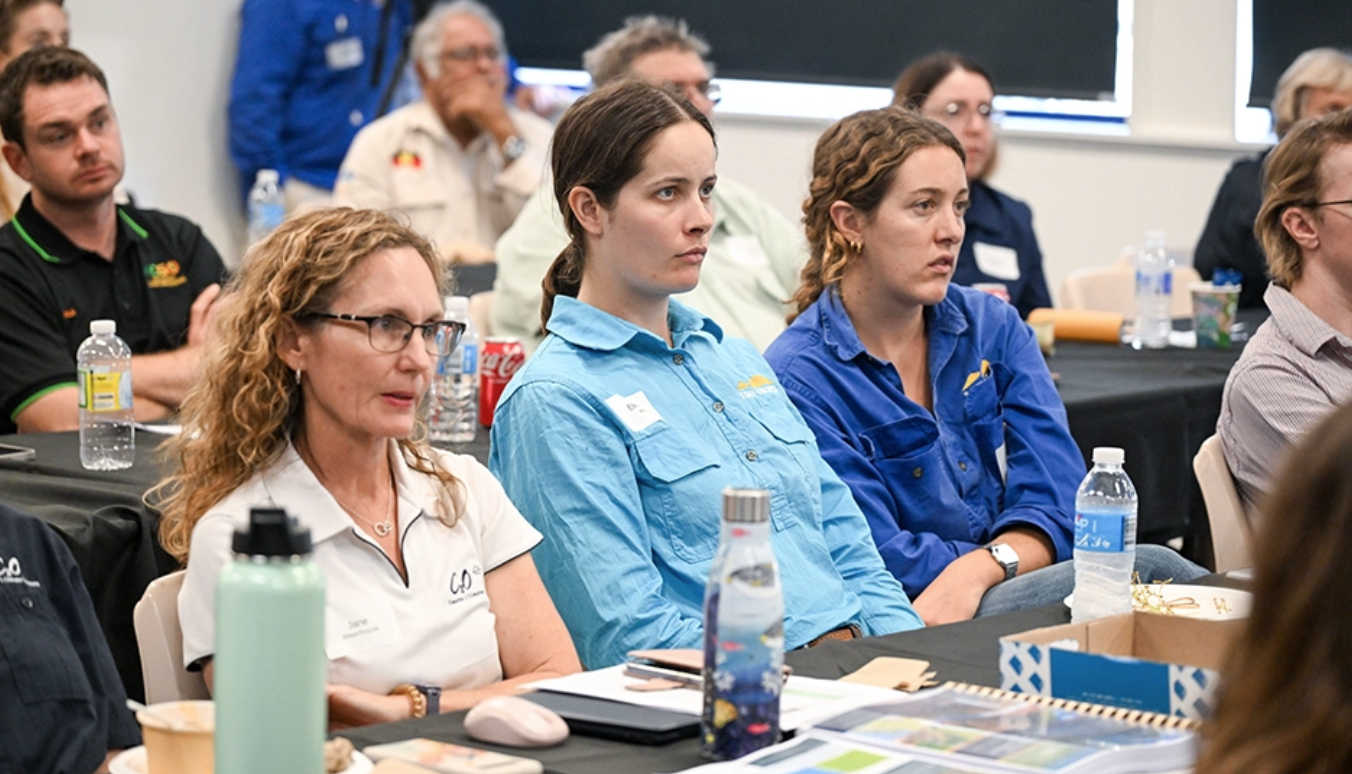
More than 60 scientists, farmers, Traditional Owners, conservationists and industry representatives gathered in Home Hill this month to explore new ways of protecting waterways, strengthening agricultural resilience and improving water quality flowing to the Great Barrier Reef.
The 2026 Burdekin Regional Water Quality Science Forum, hosted by NQ Dry Tropics, highlighted the importance of strategic planning, collaboration and targeted investment to address environmental challenges while supporting productive farming systems.
A field tour showcased practical projects already delivering results, including streambank restoration at Molongle Creek, where almost 4,000 timber piles were installed after severe flooding to stabilise the creek bank and encourage natural regeneration.
Forum delegates also visited Mt Alma Organics near Inkerman, where the Spotswood family is working alongside NQ Dry Tropics to restore more than 60 hectares of wetland through long-term landscape management.
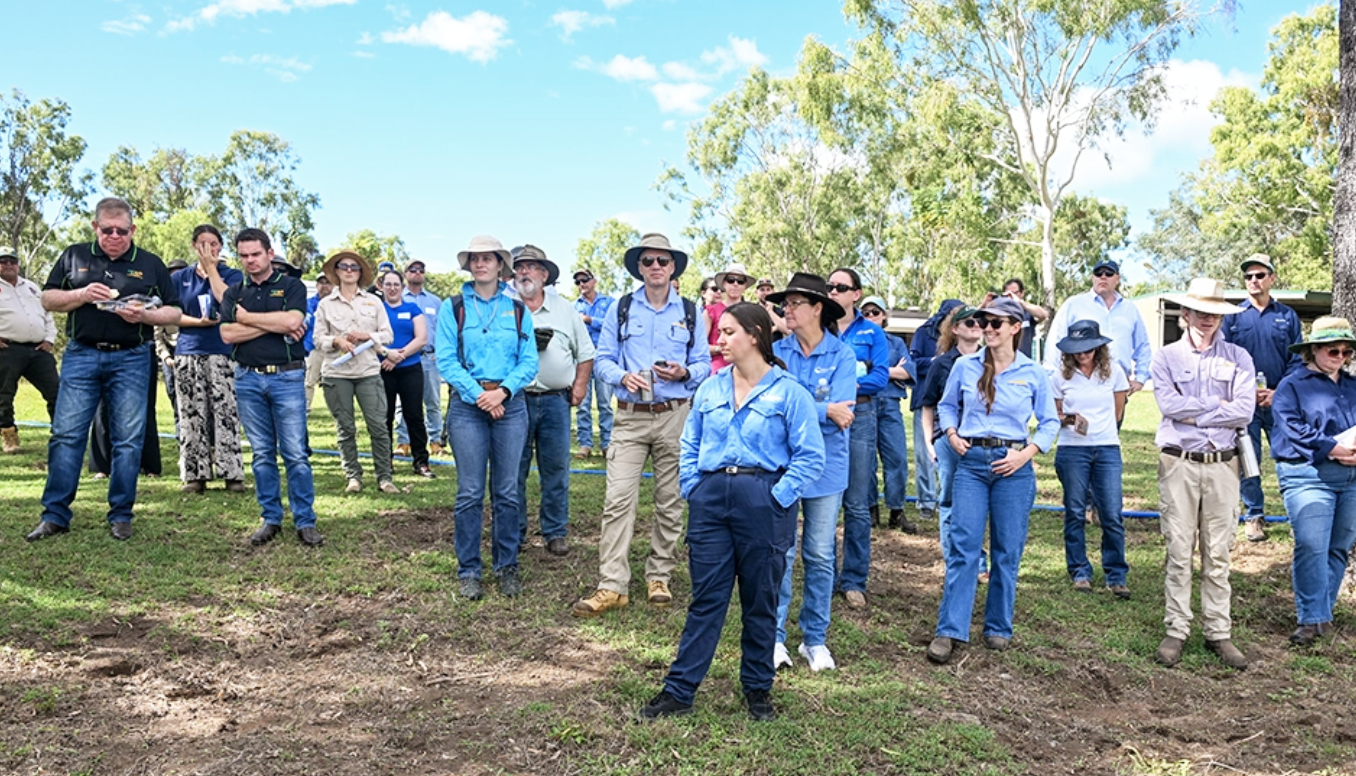
Chief Scientific Officer from the Queensland Department of the Environment, Tourism, Science and Innovation Carl Mitchell said long-term thinking was becoming increasingly important in water quality planning.
"We need to think strategically about how the program would be used in, say, 20 years from now," he said.
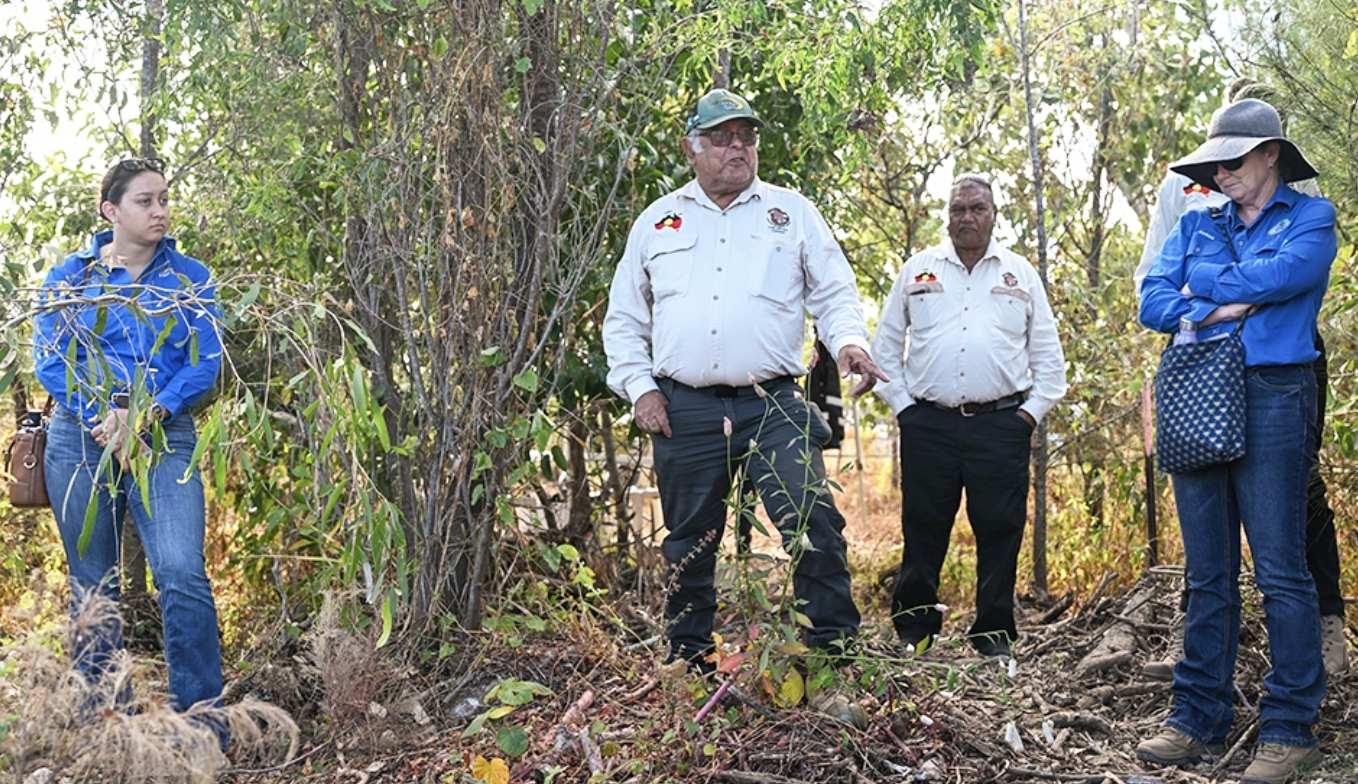
Collaboration between landholders, scientists and Traditional Owners was another key focus, with discussions highlighting the growing use of cultural burning as a land management tool.
NQ Dry Tropics Sustainable Agriculture Program Manager Rob Hunt said collecting the right information was essential to improving environmental outcomes.
"We really need to know what we're measuring," he said.
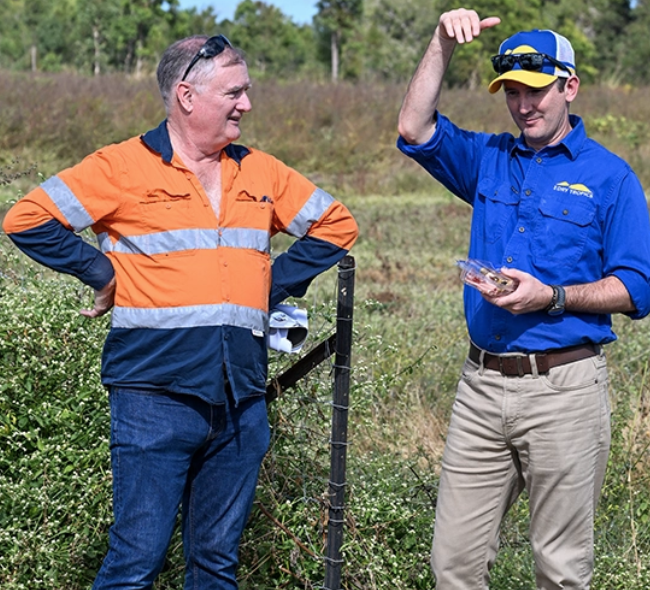
"Whether it's to make sure our models are right, or to ensure a project is delivering what it's meant to deliver, or properly understanding the co-benefits arising from a project, we need to be able to map those out and understand what we're measuring."
Senior Scientist and principal at C2O Consulting Jane Waterhouse said investment also needed to be carefully prioritised.
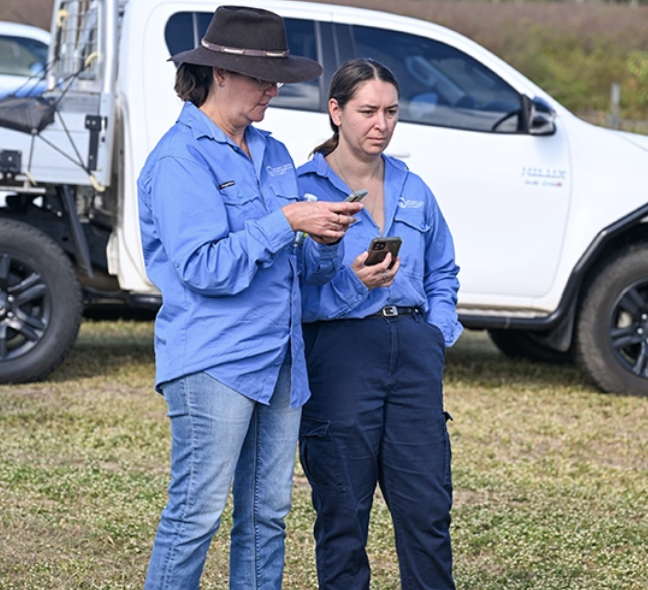
"We also want managers and investors to think about protecting the areas in good condition ensuring we are taking action if necessary to maintain good water quality," she said.
The forum also examined emerging opportunities in carbon emissions reduction, with researchers and industry leaders discussing how changes to fertiliser use and farming practices could improve productivity while creating future carbon market opportunities.
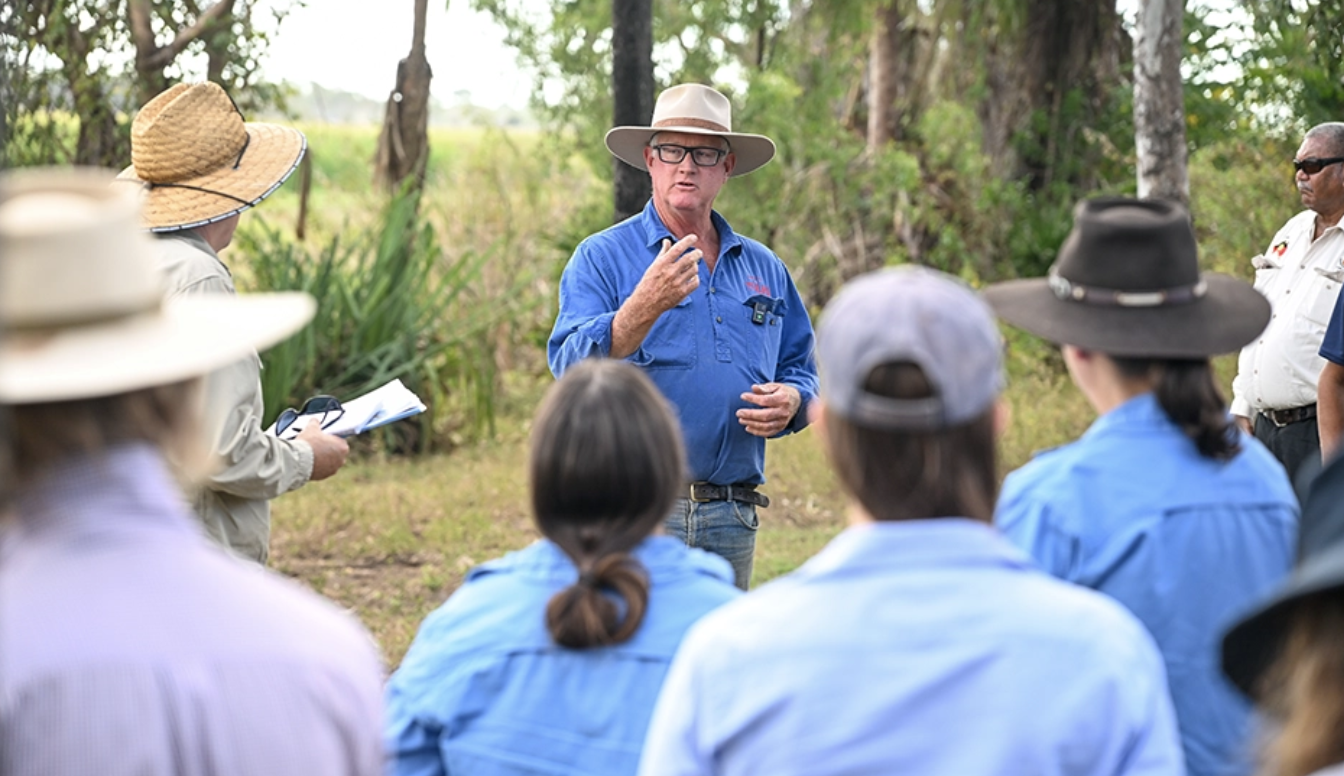
The event was funded through the Australian and Queensland governments' Paddock to Reef Integrated Monitoring, Modelling and Reporting Program.
Publishers Indemnity. Any individual or entity that places advertising, supplies copy material, or submits editorial content to Core Life Publishing agrees and undertakes to ensure that all such material:- Does not infringe upon any copyright, trademark, or other intellectual property rights;- Is free from any content that could be considered defamatory, libelous, or slanderous;- Does not infringe upon any rights related to privacy or breach of confidence;- Contains no obscene, indecent, or otherwise unlawful material;- Complies fully with the Trade Practices Act and all other applicable laws, regulations, or statutes.Furthermore, by submitting or placing such material, these individuals or entities agree to indemnify and hold harmless the publisher, Core Publishing and Events Pty Ltd, and/or its agents from and against any and all investigations, claims, demands, liabilities, damages, costs, or judgments arising out of or in connection with the material provided. All material is believed to be accurate at the time of printing and remains the copyright of Core Publishing and Events Pty Ltd.
© 2026 Life Publishing Group Pty Ltd.
