
Independently Owned, Locally Grown, Community Loved
.jpg)
Close to 40 disadvantaged young people and job seekers will be given a head start in gaining the skills, confidence and support needed to secure sustainable employment in the Burdekin Electorate. Member for Burdekin Dale Last welcomed the Crisafulli Government’s $215,500 investment in the Burdekin PCYC’s successful Get Set for Work program and the $146,800 investment into WhitsundaySuccess Pathways’ Work Skills Traineeships program to be delivered in Bowen. Included in the $46.2 million round of Skilling Queenslanders for Work Program, the two projects are among 166 across Queensland targeted towards skills shortages in priority industries in our community and region. “The Burdekin PCYC’s Get Set for Work program has already proven a success in our community and this round will see a further 36 disadvantaged young adults receive skills industry-recognised training including First Aid, White Card, RSA, RSG and driver licensing support,” Mr Last said. “By providing the additional wrap around support as part of both the Get Set For Work and the Whitsunday Success Pathways programs, disadvantaged young adults will receive a holistic experience tailored to each of their needs.” “We have already seen the successful results in our community with past participants becoming the skilled workers we need in priority industries like construction, health, community services and hospitality.” Mr Last said the state government funded program had the ability to provide real impacts on communities in regional Queensland that often faced significant skills shortages. “In order to grow our local workforce and bolster our region’s economy, we need to be able to retain young adults in our community and that means ensuring there are positive career pathways available and the ability to obtain the skills needed in our towns,” Mr Last said. “Programs like Skilling Queenslanders for Work demonstrates the Crisafulli Government’s focus of providing better outcomes for workers, employers and local communities.” “This is a great outcome for Burdekin and Bowen communities whose economies ultimately benefit from the addition of skilled, local young workers.” Supplied by the Office of Member for Burdekin Dale Last MP.
Read the full storyA draft 20-year plan released for North Queensland has pledged to protect the Burdekin's productive agricultural land while planning for new housing, infrastructure and economic growth. Burdekin Shire is one of just five council areas directly covered by the North Queensland Regional Plan, meaning decisions made through the planning process will help shape the district's future development. The draft plan is accompanied by a North Queensland Infrastructure Plan, bringing future land use together with planning for transport, water, energy, digital connectivity and social and community infrastructure. For the Burdekin, where agriculture remains a cornerstone of the local economy, Member for Burdekin Dale Last said protecting productive land must remain central to decisions about future growth. “The Burdekin is an agricultural powerhouse and an important contributor to Queensland’s economy and protecting our productive land must remain a priority as the region grows,” Mr Last said. “This draft plan provides an opportunity for local communities, farmers, businesses and industry to have their say on how North Queensland grows over the next two decades.” The regional planning framework is particularly significant for agricultural communities because Queensland's planning system recognises priority agricultural and strategic cropping areas when managing competing land uses. Alongside protecting established industries, the North Queensland planning process is focused on housing supply and economic development and will provide direction for future local planning and development assessment. That gives Burdekin residents and industry an opportunity to weigh in on how growth should be accommodated while retaining the productive land and economic strengths already supporting the district. Farmers, businesses, industry groups and residents can make submissions on the draft plan during the public consultation period. Feedback closes on Tuesday 29th September.
Read the full story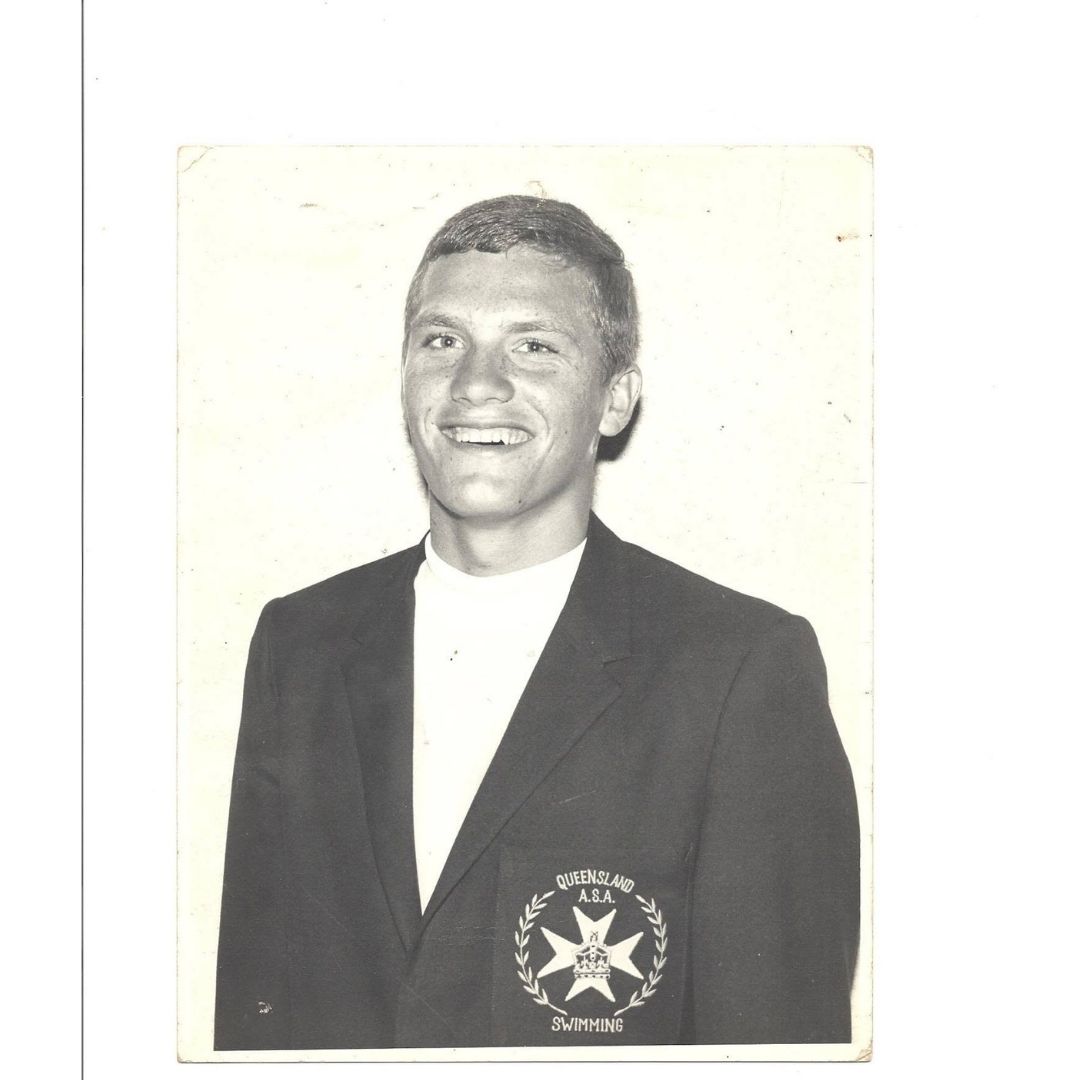
Long before Max Tavasci became a fixture at Lions Club fundraisers and children’s eye screenings across Outback Queensland, he was a young North Queensland swimming star making Australian sporting history. A 1970 Commonwealth Games silver medalist, former sugar cane farmer, and dedicated volunteer, Max passed away suddenly on the 29th of July while traveling out west with his caravan to bring vision screening to school children in Mount Isa and the Gulf country. He was 72. Born and raised in Ayr to Italian farming parents, Battista and Margaret Tavasci, Max grew up on the family property. Encouraged by his mother to stay active, he developed into an elite swimmer alongside his siblings, training in local waters and rubbing shoulders with visiting athletes. His hard work culminated in 1970 when he represented Australia at the Edinburgh Commonwealth Games, claiming a silver medal in the 1500m freestyle while his father served as a race timekeeper. His legacy endures in his hometown, where the 'Max Tavasci Trophy' is still presented annually at the Ayr School Swimming Carnival. Following his athletic success, Max worked on the family farm, laboured in Tasmania and Maryborough, and drove trucks before returning to North Queensland. Known for his love of colourful shirts, fast cars—which his son fondly noted he rarely drove fast—and Meat Loaf records, Max lived a full and colourful life. "He had the heart of a champion, handed down from my dad," said his sister, Paula Dowson. "He died doing what he loved to do." In the second half of his life, Max found a renewed sense of purpose through Lions Australia. Over 18 years of service with the Burnie City, Cleveland Bay, and Townsville Castle Hill Lions Clubs, he became a tireless community worker. Alongside his partner of more than 20 years, former District Governor Michael MacLaren, Max traveled across Queensland conducting paediatric vision checks, running raffles for Lions Assistance Dogs, delivering meals for Eat Up Australia, and assembling disaster relief hampers for flood-affected regions. Remembered by peers as a "true gentleman" and a stable, calm presence on the regional Lions cabinet, Max devoted his final years entirely to service. "I feel Dad found himself and his place with Michael, Lions Australia and the church, evidenced by the lasting happiness he displayed over the last two decades,” said his son, Scott Tavasci. Max is survived by his partner, Michael MacLaren; his son, Scott; his granddaughters, Scarlett and Eloise; his sister, Paula; and his extended family. His funeral was held at Kirwan Uniting Church on the 20th of August. CAPTION: Remembered by peers as a "true gentleman" and a stable, calm presence on the regional Lions cabinet, Max Tavasci devoted his final years entirely to service. Photo:
Read the full story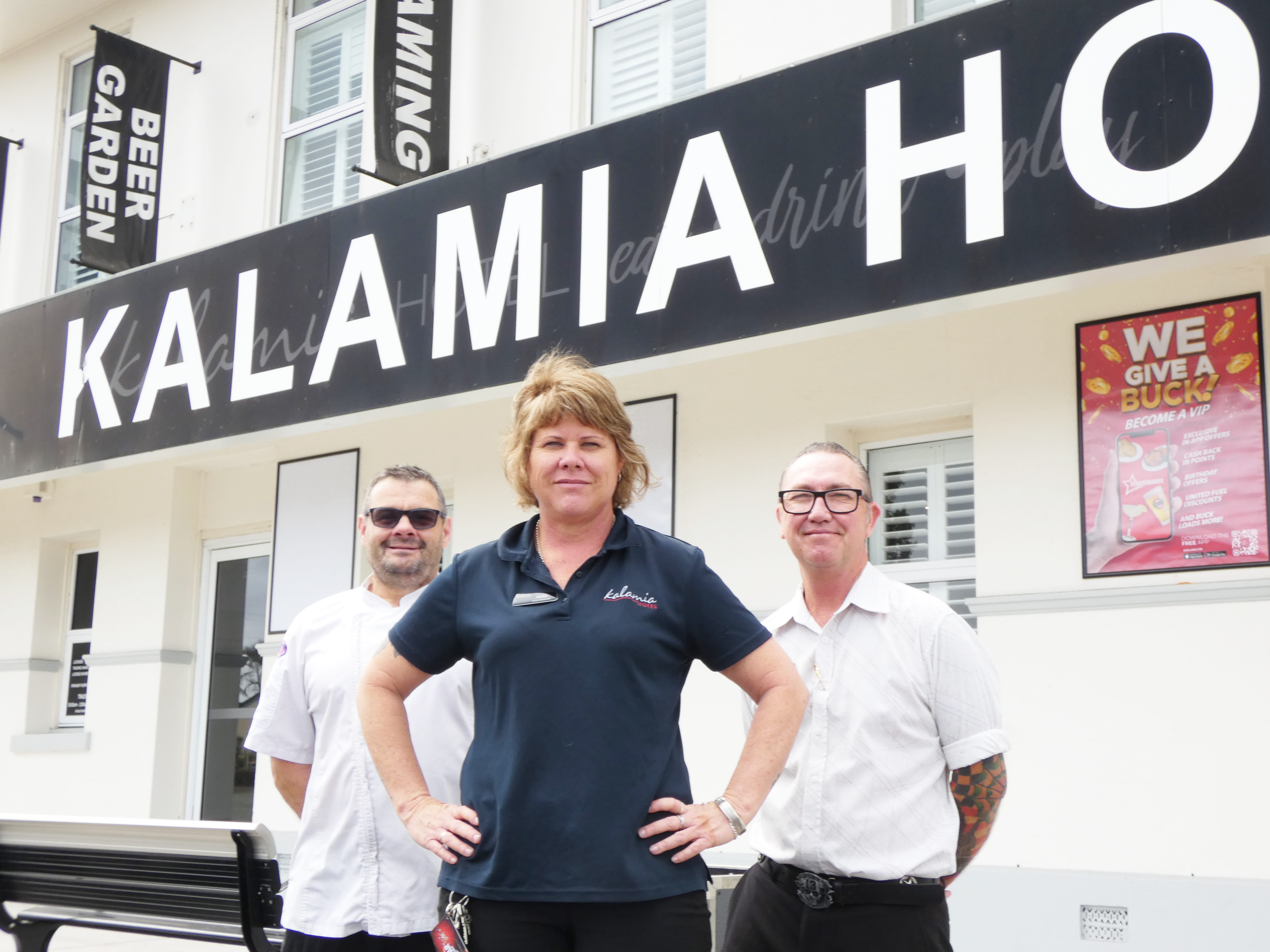
The Kalamia Hotel is turning 100, and it wants the Burdekin there to celebrate. After a century of beers, meals, friendships and memories, ‘The Locals’ Local’ is marking the milestone with a massive day of entertainment, music, prizes and family fun. CAPTION: A century, extensive renovations and multiple ownership changes later, the Kalamia still stands at its original location on Queen Street. Photo: Jacob Casha.
Read the full story

Burdekin Christian College (BCC) took great pride in its core values of inclusivity and celebrating each child’s uniqueness.
A special event was recently held to raise awareness of Turner Syndrome — a condition that affects only females and occurs when one of the X chromosomes is missing or partially missing. The College community was encouraged to turn the campus into a sea of purple, the official colour of Turner Syndrome Awareness Day, in support of this important initiative and one of their own students who is affected by the syndrome.
Students also had the opportunity to create purple butterflies, which were proudly displayed throughout the College as a symbol of support. Those wearing purple were asked to bring a gold coin donation for the Turner Syndrome Foundation.
A special thank you was extended to the dedicated College Captains who organised the event, and to Mrs Smart for preparing a delicious purple cake enjoyed by all. The College looked vibrant and uplifting, decorated with the beautiful purple butterflies crafted by the students.
The fundraising effort was a huge success, raising an impressive $464 in support of the Turner Syndrome Association. The butterfly badges proved especially popular, selling out by morning tea as they quite literally ‘flew’ out the door.
The student in BCC, who suffers from Turners Syndrome, shared how seeing the College transformed into a sea of purple made her feel truly special and supported.

What more could you possibly need than a 5.3kg Nugget!
Nugget is a sweet little companion who is ready to be your new best friend. Having lived a spoiled life alongside his previous owners, Nugget has enjoyed visits to coffee shops, Bunnings, and anywhere his family went — he went too.
Well-behaved both indoors and out, Nugget is a delightful small breed with many years of love still to give. His gentle nature and loyal personality mean he will fit beautifully into almost any home.
Nugget’s adoption fee of $1,000 includes desexing (when of appropriate age), microchipping, up-to-date vaccinations, flea, tick, and intestinal worm treatment, and heartworm prevention or ProHeart protection.
If you’re interested in meeting Nugget and giving him the forever home he deserves, please complete an animal enquiry form at: https://www.angelpawsinc.com.au/forms.html
Don’t miss the chance to welcome this little gem into your life!
DOB: 17/11/2023
Sex: Male
Breed: Toy Poodle
Kid friendly: Yes
Cat Friendly: Untested
Other dogs: Yes
Fences: 4ft

Burdekin Shire Council Plans 'Nudging' Operation for Flying Foxes, Do You Have Experience With The Bats And What Is Your Opinion On The Situation?
Damien:
“I've had experience with bats over the past year, but haven't directly seen them causing issues for residents. Still, I support what the council is doing. If no action is taken, things will only get worse and harder to handle later. Unless they're actively moved, bats will keep returning. Nudging makes sense because there needs to be control. Without it, the flying foxes will keep multiplying, impacting more homes and making it tougher for people in the community to live comfortably.”
Bruce Bailey:
“I haven't had much direct experience with flying foxes, mainly because I've only been living in Burdekin for about a year. But from what I've seen, I don't think trying to remove them will help much, as they'll probably just return. Eradication isn't a realistic or ethical solution, so options are limited. That's why I don't agree with the council's nudging strategy—it seems ineffective and unlikely to provide a lasting solution to the flying fox problem in the area.”
Paula Tsasousis:
“We've seen plenty of flying foxes around our home, mostly just flying overhead, but they've been more of a nuisance in parks. It's definitely a problem that needs addressing because it affects public spaces that everyone uses. The council needs to act decisively. I'm not overly concerned about the specific method they choose, as long as it solves the problem. I fully support the nudging approach because it's essential for the comfort and safety of residents who use local parks regularly.”
Daryl:
“I'm unsure about the council’s strategy for dealing with the flying foxes. I grew up in Cairns, and there were always flying foxes because they were attracted to mango trees. It's pretty much the same situation here. Removing mango trees isn't realistic because practically every home has one. I doubt the nudging will work since flying foxes will just find new places with plenty of fruit. I think the council’s efforts probably won’t succeed because the environment naturally attracts them, and the population will just keep growing.”
Lisa Murray:
“I haven't personally had problems with flying foxes, and being an animal lover, I don't think they're a big issue. I know Charters Towers has struggled with them, but I didn't realize Ayr or Burdekin faced similar troubles. I'm sceptical about the council's nudging strategy because I'm not clear on exactly what they plan to do. My family loves animals, and we'd prefer more information about their methods before supporting any action that might negatively affect the flying foxes or local wildlife in general.”
Dawn:
“Yes, I've definitely experienced flying foxes first-hand. We used to live near a large colony and often made loud noises by banging tins and metal to scare them off, but that's not feasible anymore, especially in towns. So, I support the council's strategy. It's necessary because parks are important for children and families, and with too many flying foxes around, there are real health risks. The council needs to act to keep public areas safe for everyone, particularly kids who play there regularly.”
Suzanne Tallis:
“I'm not sure about this approach. It seems to me the council might be trying to push flying foxes away from their natural habitats more for political reasons than practical ones. My concern is about where these bats will go if they're moved. Without suitable places to relocate, the council's plan could end up creating more problems. Overall, I don't feel the nudging strategy is thoughtful or effective, and the council should consider a better plan that respects both wildlife and community needs.”

Sam Childers, an American preacher and international speaker from Pennsylvania, is coming to Burdekin Community Church to share his extraordinary journey of redemption and hope. His story is one of transformation, showing how God reached an outlaw biker, a drug dealer, and a man who once destroyed lives—and completely turned his life around.
This is more than just a story—it’s a message of inspiration and the power of redemption. Sam’s remarkable transformation from a troubled past to a life of purpose is a powerful reminder that change is possible for anyone.
In 1992, Sam's life was forever changed when, with the help of his first wife, he attended a revival meeting at an Assembly of God Church. That night, he gave his life to Christ, and during the service, his pastor prophesied that Sam would one day go to Africa—a prophecy that would lead to an incredible mission.
Sam’s first trip to Central-Eastern Africa in 1997 marked the beginning of a life spent rescuing thousands of children from unimaginable horrors. These children were torn from their families, forced into slavery, and subjected to unimaginable abuse by warlords like Joseph Kony. Over the course of nearly 30 years, Sam has been on the front lines of saving children in South Sudan and Northern Uganda, giving them a chance at life and freedom.
One moment stands out among many: In 1998, Sam witnessed the body of a child torn apart by a landmine in Sudan. Standing over that child, he made a vow: “God, I’ll do anything within my power to help these people.” That vow set him on a path to rescue thousands of children, creating a lasting impact on the lives of so many.
Sam's dedication and selfless work have earned him global recognition. In 2013, he became the first and only American to receive the prestigious Mother Teresa Memorial International Award for Social Justice in Mumbai, India. This honour recognises his tireless efforts in rescuing children from the Lord’s Resistance Army, placing him alongside humanitarian figures like the Dalai Lama and Malala Yousafzai.
When he’s not in Africa, Sam speaks around the world, inspiring audiences at churches, schools, businesses, and even prisons. He’s shared his story with organisations such as Daimler Benz, Warner Bros, Mitsubishi-Fuso, Harley Davidson, and Village Roadshow. Sam also runs schools, orphanages, trade-training centres, and farms across Africa, all focused on helping the children in need.
His life story was the inspiration behind the 2011 film Machine Gun Preacher, starring Gerard Butler, which portrays his journey from a drug-dealing biker to a man on a mission to rescue children from some of Africa’s most dangerous regions.
Sam believes that his story can inspire hope in anyone’s life: “If they just take a little bit of that story in… Just look deep into my story. If God can change me and use me… imagine what He can do for you.”
To quote the late actor Peter Fonda:
"One man can make a huge difference. Sam Childers certainly does."
Don’t miss this incredible opportunity to hear Sam’s inspiring story firsthand. The evening will start with a meet and greet BBQ at 6pm, followed by Sam’s engaging talk at 7pm where you’ll hear all about his extraordinary life.
What: Sam Childers
Where: Burdekin Community Church
When: Friday 11th April 2025, 6pm start

Burdekin Christian College (BCC) recently hosted a vibrant and engaging Harmony Week event, showcasing the talents and cultural awareness of their students. The celebrations included an impressive series of performances by the college's senior students, who danced in traditional styles from Fiji, Tonga, and Aboriginal and Torres Strait Islander cultures. The performances were a highlight of the day, and the students' passion for sharing their heritage was evident in every step.
As part of their commitment to promoting inclusivity, these senior students also visited the early childhood classes, where they led the young learners in activities focused on respect and diversity. Through song, art, and dance, the students fostered an understanding of cultural appreciation among the younger members of the school community. The college is immensely proud of the leadership and role-modeling displayed by these exceptional students.
The celebrations continued with a creative and hands-on experience for the Junior School students, as the senior students dedicated their lunch hour to face painting. The Junior School children embraced the opportunity with enthusiasm, and the pride they felt in celebrating cultural diversity.
The Year 12 students played a key role in the event, taking charge of organising special cultural stalls designed to highlight various traditions from around the world. The stalls were met with great excitement from the younger students, who were eager to explore the displays and learn about different cultures. Special thanks were given to the parents and staff who contributed to the stall displays, further enhancing the learning experience.
A highlight of the day was the ‘Aussie BBQ’ hosted by the Year 12 students and their helpers. The group worked tirelessly to serve hundreds of sausages to the queue of students, accompanied by delicious lamingtons.The sea of orange across the school served as a powerful visual reminder of the college's core values of respect and courtesy for all cultures.
The celebrations also featured a variety of international dishes, thanks to the incredible efforts of BCC’s staff. With a diverse spread that included foods from India, Italy, Asia, Ireland, England, South Africa, and traditional Australian favourites, the ‘Taste of Harmony’ initiative was a true reflection of the college's commitment to embracing cultural diversity.
In every way, Harmony Day at Burdekin Christian College was a resounding success, thanks to the hard work and dedication of the students, staff, and community members. The college stated how they are incredibly proud of the spirit of inclusivity and respect demonstrated throughout the day, and looks forward to continuing to foster these values in the years to come.

From cats perched on counters to guinea pigs and beyond, My Pets Rural is far more than just a pet and stockfeed supply store. It is a vibrant community hub, proudly dedicated to caring for both its customers and their beloved animals.
A much-loved local business, My Pets Rural has also earned well-deserved recognition beyond the region, recently being named Member of the Year at the Aiir and Tucker National Member Conference 2025.
Owners Ross & Tracy Tapiolas shared the team’s excitement and surprise at receiving such a prestigious award.
"As a small, local store competing against much larger businesses in Brisbane, winning this award is a huge achievement for us."
However, while the win was a proud moment, Ross also spoke of his disappointment at not being able to attend the awards ceremony in person due to the recent floods. Although they could have made the trip to the Gold Coast, Ross made it clear that their priority remained firmly with their customers.
"We had to stay here. We didn’t want to let our customers down, especially after the floods. People would be racing in to get served," he explained.
The community’s response was heartfelt, with staff and customers alike recognising the store’s loyalty and dedication.
"A few staff members and customers even came up to me and said, ‘No wonder you’ve won it, because you could have gone to the awards, but you stayed for your shop,’" Ross added.
This moment perfectly exemplifies My Pets Rural’s unwavering commitment to its community and exceptional customer service. No request is ever too great.
While the store stocks an extensive range of quality products, if you are after something specialised or specific, the team will always go above and beyond to source it for you or help find the next best alternative.
Beyond their strong customer focus, the team at My Pets Rural also brings a wealth of experience and knowledge. With staff who own a wide variety of animals themselves, they are passionate about pets of all shapes and sizes. Whether you have a question about nutrition, care, or products, they are always ready to offer friendly, expert advice to support you and your furry, feathered, or scaly companions.
Although My Pets Rural were unable to attend the awards in person, their impact within the local community and the wider region was undeniable. Their dedication, both in times of celebration and in times of challenge, highlights exactly why they are so cherished by locals and now recognised on a national stage.

Member for Burdekin, Dale Last MP, believes two recent announcements herald a far better future for the Bruce Highway and will provide numerous benefits for the people of the Burdekin.
According to Mr Last the announcements mean projects that have been stagnant can now be kicked into
gear and that planning for upgrades can now begin in earnest due to increased funding.
“The re-introduction of funding for the Bruce Highway will see a return to normal levels, meaning
maintenance projects for example, are no longer hamstrung by funding,” Mr Last said.
“The additional $9Billion is purely about making the Bruce Highway safer, reducing travel time and improving flood resilience.”
“A mountain of work and negotiation was done to secure the additional funding from the federal
government and is proof that Queenslanders deserve better than a second-class highway. The return to
the previous funding model was, I think, more political given there’s a federal election not far away and the federal opposition had already committed to that.”
“While some minor projects have been announced, there is a long list of improvements that are needed as anyone who frequently travels the Bruce Highway knows. The Crisafulli state government’s Bruce
Highway Advisory Council will play a major role in ensuring this funding produces the biggest bang for our buck possible.”
Mr Last said that he expected to see the Bruce Highway in the Burdekin area receive its fair share following his advocacy and support from the community.
“Both the Premier and the Minister for Transport are well aware of the issues we face locally with the Bruce Highway,” he said.
“We have one of the most dangerous sections of the Bruce to the south of Home Hill and we have Plantation Creek that is a closure hot-spot that causes immense problems locally and cuts
the state in two.”
“The Premier was already aware of the issue because it is a problem I have highlighted numerous times
but, during his recent visit, the Premier got to see the problem firsthand and hear directly from affected people. That visit resulted in Premier Crisafulli flagging the need for flood-proofing at Plantation Creek as a priority, directly with the Prime Minister.”
“I would hope to see the new funding address both of those issues and there is a considerable amount of work currently underway to identify the best options that deliver the safety and resilience we need. As a government we have committed to betterment and a big part of that is doing the background work.”
“In both of those areas we need to keep the existing road as functional as possible during works for
transport of goods and freight both north and south. As we have seen recently, you also need to ensure you have adequate drainage.”
“I’m committed to fixing the Bruce throughout the electorate and, now that we have the funding available, we can really get to work to deliver on that commitment.”

More than 180 people attended the most recent performance by the talented Home Hill Choral Society, which took to the stage in a flash of green for their Shamrock Shindig musical.
Themed for St. Patrick's Day, the event took place over the past two weekends, providing a wonderful opportunity for the whole community to come together.
Robert Antoniazzi from the Choral Society expressed his delight in seeing people attend who had never come to an event of this kind before.
"There were 14 to 16 people who had never been before," Robert shared.
"People we saw on the street, old school friends—everyone left saying the same thing: 'I never expected anything like this, please put us on the mailing list!'"
Accompanied by good food and plenty of merriment, the event was another fabulous success.
The Choral Society’s next performance will be at the Eisteddfod in Townsville, where they will showcase their talents once again, delivering two "Sacreds"—Celtic songs of thanks.
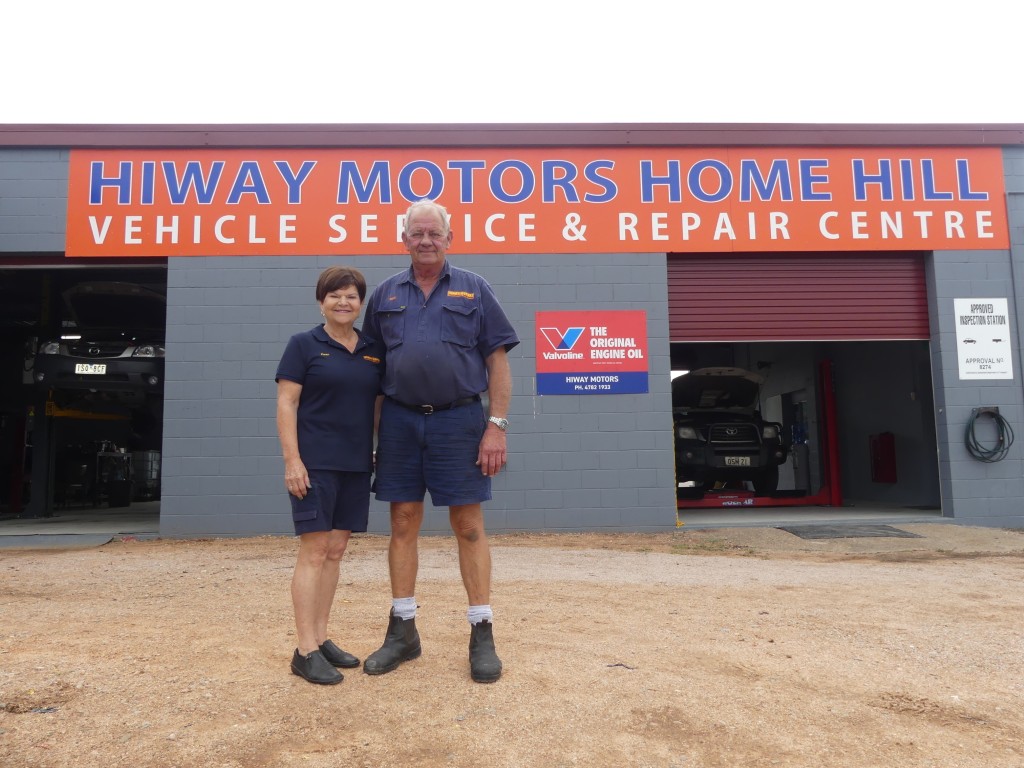
With 65 years of dedicated service to the community, McKaig's Hiway Motors has built an unparalleled reputation, earning not only a wealth of experience but also the deep-rooted trust of locals. This family-owned business, which has been passed down through multiple generations, is now in the capable hands of Ray McKaig, who took over the reins from his father and brother. Ray, together with his wife, Karen McKaig, has worked tirelessly to maintain the business’s strong community presence while staying true to its core values.
McKaig's Hiway Motors is proud to be the only workshop in town authorised to issue roadworthy certificates, offering a unique service that sets them apart from competitors.
“We do all types of mechanical work, from vehicle servicing, air conditioning, repairs, and much more.”
Their commitment to excellence, combined with years of experience, has made them the go-to place for vehicle inspections in the area. Despite being a small team of just three, their impeccable reputation and dedication to providing reliable, personalised service have earned them a loyal and ever-growing customer base. This has been further bolstered by the influx of new residents to Home Hill, who have quickly come to appreciate McKaig's Hiway Motors’ exceptional service.
In a strategic move to better serve the community, McKaig's Hiway Motors recently relocated from 9 Eighth Avenue to a new premises at 90 Eighth Avenue, still within the heart of Home Hill. The decision to sell their old building was made with Ray’s future retirement in mind. By selling the property now, Ray has ensured that he won’t face the burden of managing or selling a large commercial property when the time comes to step back from the business.
The new premises boasts a larger workshop with ample outdoor space, making it the perfect setting for McKaig's Hiway Motors to continue providing high-quality service to both regular and new customers. The larger, more modern facility has already been set up and is ready to serve, ensuring that McKaig's Hiway Motors remains a vital part of the local community for years to come.
Ray and Karen McKaig have moved Hiway Motors from 9 Eighth Avenue to a new premises at 90 Eighth Avenue, still within the heart of Home Hill. Photo credit; Ruth Puddefoot

Home Hills' highly popular Canefields Ephemera Art Competition upped the ante this year, increasing the first place cash prize significantly from $1500 to an impressive $5000.
This sum does not include the People's Choice Award of $500, bestowed on the artist who receives the most votes on social media, bringing the total amount up for grabs to $5500, a grand jackpot sure to stir the competitive spirit of many artists.
This escalation is a reflection of the competition's evolution from a small community event to a major regional art showcase which will likely lead to a sharp increase in the pressure felt by the creative competitors.
Founded in 2017 and held annually as a component of Home Hill Harvest Festival, the Ephemera transforms Lloyd Mann Gardens into an open air art gallery from late September through to early November, providing a stunning spectacle for locals.
Artists display large scale pieces designed specifically to withstand exposure to harsh environmental conditions such as heat, strong winds and rain. The pieces are intended to be ephemeral, temporary dwellers of the garden, however some do end up becoming permanent residents such as the white question mark sculpture, the sardine can and the white arrow.
From 2017 until now local participation has grown significantly attracting artists from all corners of North Queensland.
The festival itself dates back to 1963, originally a celebration of the sugarcane harvest and Burdekin's agricultural heritage.
Community involvement is critical with festival goers encouraged to vote for their favourite artworks through social media, with the winner of the grand prize being determined by an anonymous assortment of judges who assess the entrees on originality, material use, viability, and overall visual impact.
The upping of the stakes is a symbol not only of the magnified prestige of the competition but also of the Burdekin community’s enduring commitment to uplifting local creativity and culture through this unique and ever evolving medium.
What: Home Hill Harvest Festival/ Canefield Ephemera Art Competition
Where: Lloyd Mann Gardens
When: 8th September to 9th of November
Katya Venter, a talented artist and art teacher from Townsville, claimed the top prize in the prestigious local sculpture competition last year. photo supplied

Concerns about the dangers posed by the resident flying fox population in Home Hill were addressed by Council at a lively Home Hill Chamber of Commerce meeting last week.
Many locals attended to voice their frustration about the disruptive species, which not only defecate on children's play equipment but also cause noise and pose a potential risk of disease to nearby residents.
Some locals reported that children are unable to use the nearby playground due to the prevalence of these native pests.
For years, various measures have been implemented to relocate the flying fox roosts to less populated and public areas with some success, but this year, the population seems to be larger than usual.
To tackle the issue head-on, Council has enlisted the help of a flying fox expert who successfully implemented similar initiatives in the Hinchinbrook region. The expert has since moved to the Burdekin to share their knowledge and lead the department.
A representative of this department, Paul Day, Manager for Environment and Health Services at Burdekin Shire Council, addressed the Chamber meeting attendees to provide an overview of the department’s plans.
He assured the crowd that Council is well aware of the problem and has developed a staged plan to address the situation.
The flying fox population has spread to areas such as Kidby’s Gully, Memorial Park, Lloyd Mann Park, and 12th Avenue. Burdekin Shire Council has confirmed that it is actively monitoring these four designated sites in Home Hill.
The first stage involves targeted “nudging” — a method using noise and other techniques to encourage the bats to move on. Around eight to 10 Council staff will carry out this work over several days in the lead-up to Anzac Day. However, no activity will take place on Anzac Day itself, out of respect, as the process involves the use of firearms. The aim is to have the key areas looking presentable and as clear as possible for the day’s commemorations.
The second stage will see a larger, more intensive operation aimed at relocating the Flying Foxes from Home Hill entirely. This effort will require between 20 to 24 trained staff, with activities starting as early as 4 am. Given the nature of the work, staff involved in the initiative must hold gun licences, and Council is required to obtain special permits and additional equipment.
Council representatives stated that meetings are already underway to finalise the necessary paperwork and approvals, with applications expected to be submitted immediately. Once a date is confirmed for the large-scale operation, the community will be informed via local and social media channels.
However, Council has warned that despite careful planning, there is no guarantee the Flying Foxes will move as intended. Some may relocate to private properties, but Council has committed to working with affected residents to manage the situation.
Experts from Biodiversity Australia will also be involved, providing oversight to ensure the operation complies with legislation and animal welfare guidelines. Special consideration will be given to the presence of juvenile bats, making the timing of the operation critical.
Council reaffirmed its commitment to working with the community and experts to resolve the issue as quickly and carefully as possible, with residents growing worried that the Flying Foxes would not be removed before Anzac Day.

Local
All four Burdekin Panthers teams should have been in action last weekend but because of the very wet weather, all NQ Football fixtures were called off. Hopefully, this week’s fixtures will go ahead as planned.
The Premiers and Reserves are at home to Estates on Saturday and the Division One and Ladies are both away on Friday night. The Division One team travel to JCH and the Ladies meet Ingham at Paradise Park in Townsville.
Juniors
No junior fixtures due to the rain and wet fields. Let’s hope the kids can play this weekend.
Masters
Monday Night Masters had to be called off last week as the grounds were too wet. This week’s Master’s has been postponed.
National and International
The Socceroos played Indonesia in Sydney last Thursday in the third round of qualifying games for the 2026 World Cup. They won 5-1 and now play China in Hangzhou on Tuesday night. The Socceroos stay second in the Group one point ahead of Saudi Arabia who beat China 1-0 last week.
The Matildas have two games against South Korea coming up. The first is on 4 April in Sydney and the second game is three days later in Newcastle.
The A League Men had the weekend off as it was another International Week. Normal fixtures should start again this weekend.
In the A League Women, Melbourne City is still top, two points clear of Victory after Victory beat Newcastle 4-3. Adelaide beat Brisbane 3-1 and stay in third place ten points clear of Western Utd and Brisbane drop to sixth spot. Western Sydney Wanderers continue to hold up the table.
The Nations League continues in Europe with some surprising results. Germany beat Italy 5-4 on aggregate and Spain had to. go to penalties to beat Holland. France beat Croatia on penalties. Meanwhile in World Cup Qualifiers England won 2-0 against Albania!
The Quote of the Week is from England Manager Ron Greenwood “Bryan Robson, well, he does what he does and his future is in the future.”

The Home Hill Bowls Club was a hive of activity last Wednesday night, with more than 40 people attending the Home Hill Chamber of Commerce meeting, eager to hear from two engaging speakers.
First up was Paul Day, Environmental and Health Officer for Burdekin Shire Council, who outlined the Council’s plans to "nudge" the flying foxes away from their roosting sites near the park in Home Hill.
Members of the audience were eager to ask questions about this historically important issue, and Mayor Pierina Dalle Cort reminded everyone that while it was a vital initiative, it was also a costly investment for the Council.
Next in the spotlight was Federal Member for Dawson Andrew Willcox, who took the time to offer the audience an insight into his experiences in Canberra, sharing his strong work ethic.
He also mentioned that while attending Parliament to voice the issues of his electorate takes up almost half of his time as a representative, he is equally committed to being on the road, visiting his electorate at every possible moment.
With the Federal election approaching in May, Willcox was a charismatic speaker who instantly connected with the local crowd, ensuring he spent time listening to the people.
Also in attendance that night were Deputy Mayor Max Musumeci, Councillor Amanda Hall, Councillor John Furnell, and Councillor Fina Vasta.
Representatives from the Home Hill Chamber of Commerce included Vice President Uli Liessman, Secretary Robert Antoniazzi, and Treasurer John Clarke.
Federal Member for Dawson Andrew Willcox with his wife Raylene and Burdekin Shire Council Deputy Mayor Max Musumeci
Councillor Amanda Hall, Peter Hall, CEO of Council Matthew Magin, Burdekin Chamber of Commerce Treasurer Kari Ravizza, Mayor Pierina Dalle Cort and Trevor Tune
CEO of Council Matthew Magin with guest speaker Paul Day, Environmental and Health Officer for Burdekin Shire Council
Councillor Amanda Hall and Councillor John Furnell
Ruth Puddefoot, Burdekin Life Newspaper journalist, Mayor Pierina Dalle Court, Home Hill Chamber Vice President Uli Liessman, and Burdekin Life Newspaper Editor in Chief Rachael Smith
Photo credit: Ruth Puddefoot

Tiles have become a preeminent feature of Australian households, and 2025 has seen the emergence of thrilling new tile trends tailored perfectly to the Burdekin lifestyle. Burdekin homeowners have been emphasising designs which harmoniously connect indoor and outdoor areas, creating cohesive living areas well suited to our tropical climate.
The indoor tile scene has witnessed the dominance of large format tiles, which are praised for their minimalist style, simple and easy maintenance, and roomy feel.
Earthy hues such as terracotta, sage, and sandy neutrals reign supreme, reflecting our coastal environment and adding a touch of warmth to homes.
Moroccan-influenced Zellige tiles are also rising stars amongst Australian homeowners, bringing handmade charm and subtle textures into the equation. Porcelain timber look-alike tiles continue to remain a staple, blending the beauty of wood with waterproof durability, a good choice for busy family spaces.
The outdoor tile scene trends towards porcelain pavers which imitate natural stone or timber, delivering beauty and practicality in one package.
They also come with the added benefit of being slip resistant, algae resistant, and easy to maintain—perfect for patios and pool surroundings. Travertine continues to occupy a top spot in Hinchinbrook, keeping cool underfoot even on the most scorching days and bringing a touch of elegance to outdoor entertainment spaces.
In the selection of tiles, functionality and style are essential considerations. Matte or textured finishes offer safety in wet areas, and durable materials like porcelain are desirable for high traffic zones. Natural materials and lighter shades handle the tropical humidity better, remaining cool in the Burdekin heat.

Hi Everyone,
A big thank you to the Home Hill Chamber of Commerce for welcoming our team to the recent Chamber meeting at the Home Hill Bowls Club.
It’s always so energising to be surrounded by such passionate individuals who are unafraid to voice their thoughts on so many important local issues!
During the evening, I had the privilege of chatting with Chamber Secretary Robert Antoniazzi, who shared a truly moving story about the Choral Society’s most recent event.
Though he didn't name names, Robert recounted how, on three separate occasions, individuals mourning the recent loss of a loved one found a brief moment of solace at the Shamrock Shindig.
Each of them described feeling a sense of relief—a breath of fresh air, the comforting embrace of community spirit, and an overwhelming sense of peace. For the first time in a long while, they were able to focus on something other than their grief.
As our community comes together this week to mourn the sudden passing of a man who was widely respected and loved, I hope we can all find strength in each other.
The loss of anyone, especially someone taken too soon, is truly devastating. The team at Burdekin Life Newspaper extends our deepest condolences to all of his family and friends. You are in our thoughts and prayers during this difficult time.
With the family’s permission and guidance, we will be publishing a special tribute to Ramon Oar in next week’s edition.
If you would like to send a message of remembrance or share your thoughts about this great man, please reach out to us.
Rach
Quote of the Week: "Be happy for this moment. This moment is your life" (Unknown)
Publishers Indemnity. Any individual or entity that places advertising, supplies copy material, or submits editorial content to Core Life Publishing agrees and undertakes to ensure that all such material:- Does not infringe upon any copyright, trademark, or other intellectual property rights;- Is free from any content that could be considered defamatory, libelous, or slanderous;- Does not infringe upon any rights related to privacy or breach of confidence;- Contains no obscene, indecent, or otherwise unlawful material;- Complies fully with the Trade Practices Act and all other applicable laws, regulations, or statutes.Furthermore, by submitting or placing such material, these individuals or entities agree to indemnify and hold harmless the publisher, Core Publishing and Events Pty Ltd, and/or its agents from and against any and all investigations, claims, demands, liabilities, damages, costs, or judgments arising out of or in connection with the material provided. All material is believed to be accurate at the time of printing and remains the copyright of Core Publishing and Events Pty Ltd.
© 2026 Life Publishing Group Pty Ltd.
