
Independently Owned, Locally Grown, Community Loved
.jpg)
Close to 40 disadvantaged young people and job seekers will be given a head start in gaining the skills, confidence and support needed to secure sustainable employment in the Burdekin Electorate. Member for Burdekin Dale Last welcomed the Crisafulli Government’s $215,500 investment in the Burdekin PCYC’s successful Get Set for Work program and the $146,800 investment into WhitsundaySuccess Pathways’ Work Skills Traineeships program to be delivered in Bowen. Included in the $46.2 million round of Skilling Queenslanders for Work Program, the two projects are among 166 across Queensland targeted towards skills shortages in priority industries in our community and region. “The Burdekin PCYC’s Get Set for Work program has already proven a success in our community and this round will see a further 36 disadvantaged young adults receive skills industry-recognised training including First Aid, White Card, RSA, RSG and driver licensing support,” Mr Last said. “By providing the additional wrap around support as part of both the Get Set For Work and the Whitsunday Success Pathways programs, disadvantaged young adults will receive a holistic experience tailored to each of their needs.” “We have already seen the successful results in our community with past participants becoming the skilled workers we need in priority industries like construction, health, community services and hospitality.” Mr Last said the state government funded program had the ability to provide real impacts on communities in regional Queensland that often faced significant skills shortages. “In order to grow our local workforce and bolster our region’s economy, we need to be able to retain young adults in our community and that means ensuring there are positive career pathways available and the ability to obtain the skills needed in our towns,” Mr Last said. “Programs like Skilling Queenslanders for Work demonstrates the Crisafulli Government’s focus of providing better outcomes for workers, employers and local communities.” “This is a great outcome for Burdekin and Bowen communities whose economies ultimately benefit from the addition of skilled, local young workers.” Supplied by the Office of Member for Burdekin Dale Last MP.
Read the full storyA draft 20-year plan released for North Queensland has pledged to protect the Burdekin's productive agricultural land while planning for new housing, infrastructure and economic growth. Burdekin Shire is one of just five council areas directly covered by the North Queensland Regional Plan, meaning decisions made through the planning process will help shape the district's future development. The draft plan is accompanied by a North Queensland Infrastructure Plan, bringing future land use together with planning for transport, water, energy, digital connectivity and social and community infrastructure. For the Burdekin, where agriculture remains a cornerstone of the local economy, Member for Burdekin Dale Last said protecting productive land must remain central to decisions about future growth. “The Burdekin is an agricultural powerhouse and an important contributor to Queensland’s economy and protecting our productive land must remain a priority as the region grows,” Mr Last said. “This draft plan provides an opportunity for local communities, farmers, businesses and industry to have their say on how North Queensland grows over the next two decades.” The regional planning framework is particularly significant for agricultural communities because Queensland's planning system recognises priority agricultural and strategic cropping areas when managing competing land uses. Alongside protecting established industries, the North Queensland planning process is focused on housing supply and economic development and will provide direction for future local planning and development assessment. That gives Burdekin residents and industry an opportunity to weigh in on how growth should be accommodated while retaining the productive land and economic strengths already supporting the district. Farmers, businesses, industry groups and residents can make submissions on the draft plan during the public consultation period. Feedback closes on Tuesday 29th September.
Read the full story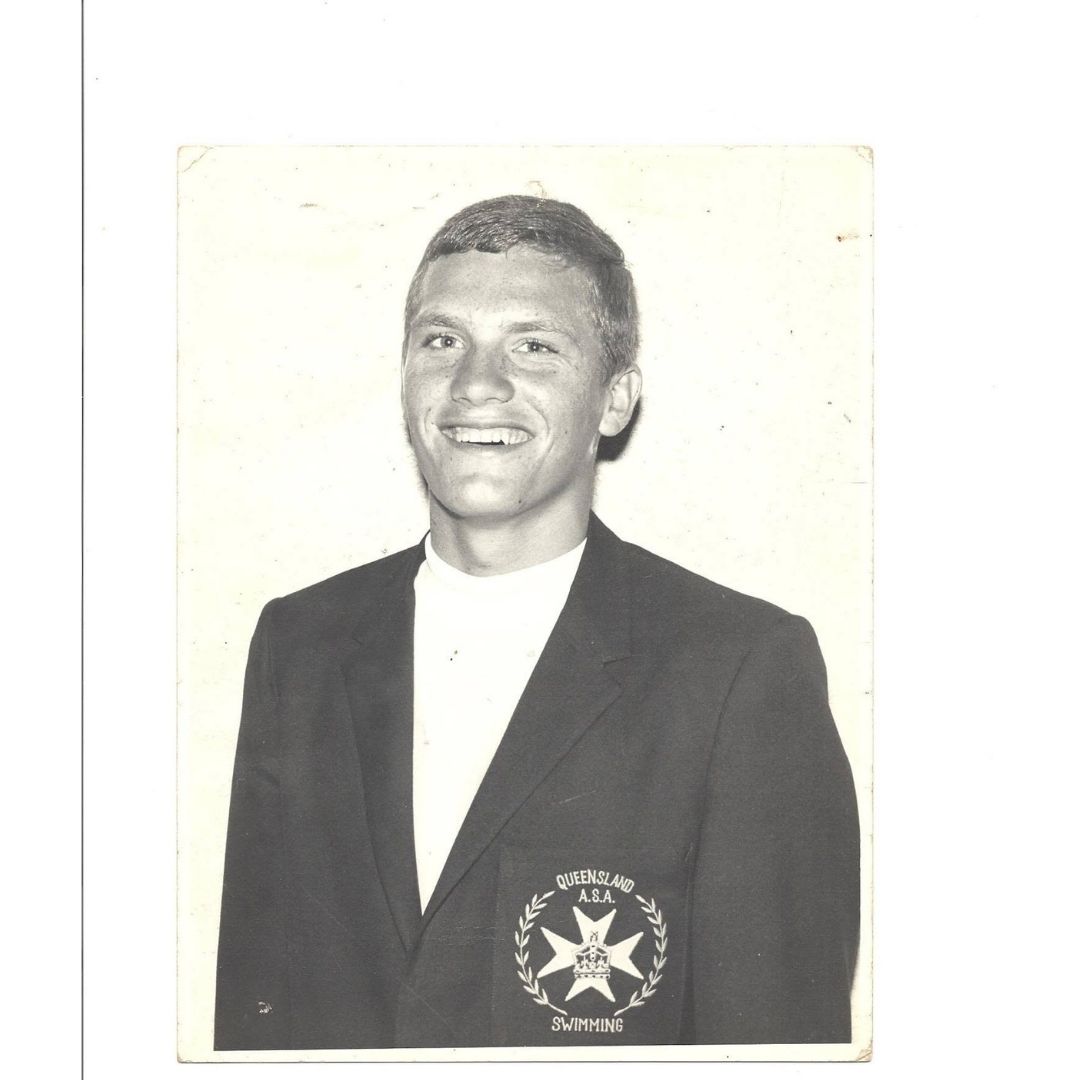
Long before Max Tavasci became a fixture at Lions Club fundraisers and children’s eye screenings across Outback Queensland, he was a young North Queensland swimming star making Australian sporting history. A 1970 Commonwealth Games silver medalist, former sugar cane farmer, and dedicated volunteer, Max passed away suddenly on the 29th of July while traveling out west with his caravan to bring vision screening to school children in Mount Isa and the Gulf country. He was 72. Born and raised in Ayr to Italian farming parents, Battista and Margaret Tavasci, Max grew up on the family property. Encouraged by his mother to stay active, he developed into an elite swimmer alongside his siblings, training in local waters and rubbing shoulders with visiting athletes. His hard work culminated in 1970 when he represented Australia at the Edinburgh Commonwealth Games, claiming a silver medal in the 1500m freestyle while his father served as a race timekeeper. His legacy endures in his hometown, where the 'Max Tavasci Trophy' is still presented annually at the Ayr School Swimming Carnival. Following his athletic success, Max worked on the family farm, laboured in Tasmania and Maryborough, and drove trucks before returning to North Queensland. Known for his love of colourful shirts, fast cars—which his son fondly noted he rarely drove fast—and Meat Loaf records, Max lived a full and colourful life. "He had the heart of a champion, handed down from my dad," said his sister, Paula Dowson. "He died doing what he loved to do." In the second half of his life, Max found a renewed sense of purpose through Lions Australia. Over 18 years of service with the Burnie City, Cleveland Bay, and Townsville Castle Hill Lions Clubs, he became a tireless community worker. Alongside his partner of more than 20 years, former District Governor Michael MacLaren, Max traveled across Queensland conducting paediatric vision checks, running raffles for Lions Assistance Dogs, delivering meals for Eat Up Australia, and assembling disaster relief hampers for flood-affected regions. Remembered by peers as a "true gentleman" and a stable, calm presence on the regional Lions cabinet, Max devoted his final years entirely to service. "I feel Dad found himself and his place with Michael, Lions Australia and the church, evidenced by the lasting happiness he displayed over the last two decades,” said his son, Scott Tavasci. Max is survived by his partner, Michael MacLaren; his son, Scott; his granddaughters, Scarlett and Eloise; his sister, Paula; and his extended family. His funeral was held at Kirwan Uniting Church on the 20th of August. CAPTION: Remembered by peers as a "true gentleman" and a stable, calm presence on the regional Lions cabinet, Max Tavasci devoted his final years entirely to service. Photo:
Read the full story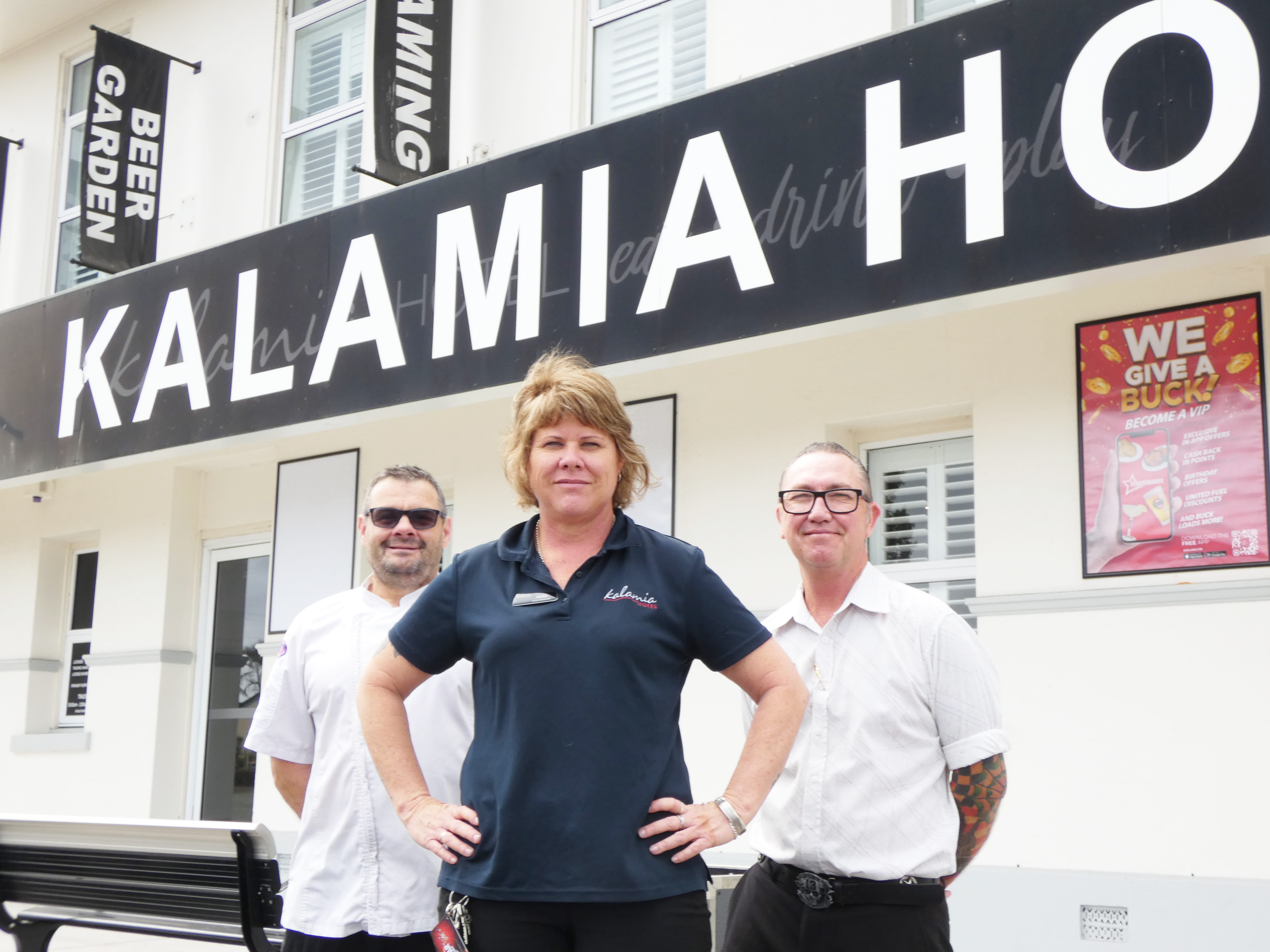
The Kalamia Hotel is turning 100, and it wants the Burdekin there to celebrate. After a century of beers, meals, friendships and memories, ‘The Locals’ Local’ is marking the milestone with a massive day of entertainment, music, prizes and family fun. CAPTION: A century, extensive renovations and multiple ownership changes later, the Kalamia still stands at its original location on Queen Street. Photo: Jacob Casha.
Read the full story

The value of agriculture in 2025-26 is expected to be the third highest on record at $91 billion.
Including fisheries and forestry, The Australian Bureau of Agricultural and Resource Economics and Sciences (ABARES) expects the sector to reach $98 billion, according to Executive Director Dr Jared Greenville.
“While this is slightly down on an exceptional 2024-25, particularly strong results are forecast for livestock and livestock products – expected to reach a new record value of $40 billion,” Dr Greenville said.
“Demand for red meat is reflected in both strong export volumes and rising export prices, which has led to the total value of meat exports expected to hit $22 billion this financial year.
“Agricultural exports are also looking healthy next year, with the value forecast to remain relatively steady at $72 billion – or $77 billion if we include fisheries and forestry.
“On the cropping front this year, national winter crop production is estimated to have increased to 59.8 million tonnes in 2024–25, 27% above the 10-year average and the third largest on record."
Dr Greenville said that summer crop production is predicted to fall slightly in 2024–25 but will remain 28 per cent above the 10-year average at 4.7 million tonnes.
“Conditions for winter crops were favourable across most of New South Wales and Queensland with timely rainfall in Western Australia," he said.
“Based on the back of these cropping trends, average farm financial performance is estimated to increase for broadacre farms.
“On average, national broadacre farm cash income is forecast to rise by $89,000 in 2024–25 from $124,000 to $213,000, mostly driven by higher livestock prices and greater crop production.
“Next financial year average farm incomes are expected to increase further, to $262,000 per farm as input costs ease and higher prices support both crop and livestock receipts."

Sibby Saitta started his clothing business in Queen Street, Ayr 72 years ago in 1952. It commenced trade as a basic tailoring shop of which there were several in town at that time. Sibby tailored made-to-measure men’s suits, trousers and other basic apparel, all made from scratch.
As time passed, ready made clothing and fashions became more readily available, so the shop evolved into a retail outlet selling men’s fashions of the day. Work clothing soon became available from factories in Brisbane and Sydney. Women’s wear was introduced as well and at that point the stock was so vast it had outgrown the Queen Street premises. Put simply, the shop was too small to accommodate all this stock.
Almost 50 years ago, it was decided to purchase a shop in Graham Street to house the growing work clothing business. All the work clothing stock was transferred to this shop and the business was named Sibby’s Savers.
Corporate wear and western wear were added to the stock profile eventually.
The Sibby’s Savers Graham Street building was extended around 1990 to house Sibby’s suit hire business.
Although the suit hire business was closed many years ago, the Sibby’s Savers business continued to operate.
The end of an era has arrived with the sale of the Sibby’s Savers business to Kristy and Callan Oar. Previous owners, Rosemary and Mark Rickards wish them all the best with their new enterprise. The pair state that "Kristy has drive and enthusiasm, and she has a beautiful personality to boot, so the business is definitely in good hands." The store has been renamed to Wild East Western and Workwear.
Rosemary and Mark would like to thank their many valued customers for their patronage over the last 72 years and encourage them to continue supporting the new owners as the business will continue to operate with the same friendly and helpful service.
They would also like to thank their employees for their efforts during 72 years of business. Which they have stated are too many to name, however their efforts are truly appreciated.

Federal Member for Dawson, Andrew Willcox, announced this week that an elected
Dutton Liberal National Government will provide $500,000 to upgrade facilities at the
Home Hill Community Sports Club.
“Home Hill Community Sports Club is a cornerstone of the community, offering
members of all skill levels the chance to enjoy lawn bowls and croquet,” Mr Willcox
said.
“Currently members don’t have much protection from the sun, which is why I am
pleased to commit $500,000 towards new shade to cover the entire playing surface.
“This important upgrade will enhance the facilities, provide a safer and more enjoyable
environment for players, and help the club to continue to grow into the future.
“The LNP is committed to supporting small regional sports clubs, like the Home Hill
Community Sports Club, which play a significant role in keeping our communities
healthy and active.”
Home Hill Community Sports Club President, Trevor Elton, said, “since taking over the
club I have seen the club grow to have around 100 members and this funding will make
a huge difference.
“It’s fantastic news from the Federal Member for Dawson which will make a huge
difference to be able to get new shade covers over the bowling green. Once complete,
this shade upgrade will allow more sporting events and tournaments to be played all
year round.
“The future is looking bright, and we already have a meeting coming up with a local High
School in a bid to attract more junior players.”
“On behalf of all the members I would like to thank Andrew Willcox and the Coalition for
backing small regional sporting clubs like here ours.”

Ingrained in the history of the Burdekin region as one of the largest construction projects to date, the Burdekin Falls Dam holds the prestigious title of existing as the largest dam in Queensland.
Situated approximately 100 kilometres south of Charters Towers, the Burdekin Falls Dam was completed in 1987 at a cost totalling $125 million to adequately contain the Burdekin River, a catchment area covering about 7% of the state.
The structure can hold a capacity of 1,860,000 mega litres, and historically, the dam has reached a mammoth capacity of 221.15% which was recorded on the 20th of February in 1991, with the dam’s lowest point of 29.83% recoded in early November of 1987 after its official completion.
More recently, the dam has been splashed across headlines following the reconfirmation of the Burdekin Falls Dam Raising Project where the dam’s capacity will increase by an additional two meters with works to begin in 2027. As outlined in the 2024-2025 Queensland Budget, $540 million in funding has been allocated for the project and as of the 24th of March, the Environmental Impact Statement (EIS) process marked another milestone whereby the Coordinator-General stated a new project declaration lapse date of the 7th of April, 2027.
The Burdekin Dam Raising Project has been a contentious topic of discussion for quite some time now, and the structure itself continues to stir a world of conversation within the Burdekin community and beyond.
A post published in January of 2021 on a community social media page asked locals to recall the wild conspiracy theories they once believed (or may still believe) to be true about the infamous structure. Stories dating back to the dam’s construction of disappearing workers came to the forefront of many local’s minds as well as the tales of a witch calling the dam home alongside a monstrous crocodile.
With both a rich history and a wave of plans for future development, the Burdekin Falls Dam will undoubtably continue to stand as the most impressive and largest water storage asset in Queensland for years to come.
The Burdekin Falls Dam is the largest water storage facility in Queensland (Photo Source: Sunwater)
$125 million was allocated to the dam's initial 1987 construction (Photo Source: William John Rolls)
The Burdekin Falls Dam near completion in 1987 (Photo Source: Fred Morris)

The Burdekin Shire Council has announced that Stage 1 of the Ayr Industrial Precinct is now selling, offering businesses a prime opportunity to secure fully serviced industrial land in North Queensland.
Strategically located at the Bruce Highway and Craig Street, Ayr, the precinct provides excellent access to major transport links, including the Port of Townsville and Bowen Basin. It features highway frontage, underground power, wide roads, and off-street parking, catering to diverse industries.
Mayor Pierina Dalle Cort highlighted the precinct’s strategic advantages, saying, “This precinct has been carefully planned to meet the needs of modern industry, providing businesses with access to essential infrastructure, a strategic location, and a thriving regional economy,” Mayor Dalle Cort said.
Local real estate agent Nutrien Harcourts McCathies will manage the sale of land in Stage 1.
John Mottin, Principal Managing Director of Nutrien Harcourts McCathies, noted the increasing demand for industrial land in the region.
“The Industrial Precinct provides an opportunity for businesses requiring larger sites to establish themselves here in the Burdekin which will boost our local economy and can help diversify the local economy by supporting growth of different industries."

Acts of kindness often go unnoticed, but one grateful mother took to social media to express her heartfelt appreciation for those who came to her son’s aid when his car broke down in Home Hill.
Shelli Hargrave shared a message of gratitude, thanking the generous individuals who stopped to help her son during his time of need. Their willingness to assist, both in person and later over the phone, made a meaningful difference.
“A shout-out and massive thanks to those who helped my son broken down in Home Hill today and the phone support later tonight. It’s appreciated more than you know. From a grateful Mum,” she wrote.
Her post resonated with many, highlighting the strong community spirit in the Burdekin. Whether offering roadside assistance, lending a phone, or providing reassurance, these small but significant acts of kindness turned a stressful situation into a reminder of the power of compassion.
At a time when people are often caught up in their own lives, this moment of generosity reinforced the importance of looking out for one another. Thanks to the kindness of these individuals, Shelli later shared that her son arrived safely in Cairns.
In a world that can sometimes feel disconnected, gestures like these prove that community spirit is alive and well.

Young people in the Burdekin region are in for a fantastic time as the much-anticipated ‘Sound Waves – Youth Pool Party’ returns. Scheduled for Sunday, 6 April, from 4pm to 8pm at the Burdekin Aquatic Centre in Ayr, this free event welcomes those aged 12-18 for an evening of entertainment and socialising.
Organised by the Burdekin Youth Council as part of Queensland Youth Week, the event will offer an exciting atmosphere with music, activities, and opportunities to connect. Attendees can enjoy a live DJ, thrilling prizes, giveaways, and a complimentary sausage sizzle. The pool and water park will be open, providing a perfect way to cool off, and drinks will be available for purchase.
The Burdekin Shire Council is also pleased to introduce the 2025 Burdekin Youth Council Executive. Leading the team is Youth Mayor Nicole Cervoni (Burdekin Library Trainee and 2025 Young Citizen of the Year), supported by Deputy Youth Mayor William Wiseman (Year 8, Burdekin Christian College) and Secretary Cecelia Cason (Year 12, Burdekin Christian College).
Comprising 20 enthusiastic young members, the Youth Council is dedicated to advocating for local youth and implementing fresh ideas that benefit the community.
Burdekin Shire Council Mayor Pierina Dalle Cort praised the new Youth Council, stating, "It is fantastic to see such a strong and engaged group of young leaders stepping up this year.”
For more details, contact the Council’s Community Development Team at 4783 9800.
What: Sound Waves – Youth Pool Party
Where: Burdekin Aquatic Centre, Ayr
When: Sunday 6th April, 4-8pm

Police are appealing to anyone in the Bowen and Ayr areas who may have information in relation to an ongoing investigation into alleged sexual offences at massage businesses, to come forward.
A 54-year-old man was charged on 23 February 2025, with two counts of sexual assault alleged to have occurred at a massage business in the Burdekin between July 2024 and 17 February 2025.
On March 1, the man was further charged with one count of sexual assault in relation to an alleged incident at a massage business in Ayr on 14 January 2025.
Detective Inspector Emma Novosel said investigators have received further information to indicate persons in the Bowen area may also have information that could assist investigations.
“Detectives urge any community members in the Bowen area between 2009 and 2011, who may have information regarding incidents of this nature to come forward and speak to police,” Detective Inspector Novosel said.
“I want to commend the victim-survivors for their bravery in coming forward, as investigations continue.”

Struggling with high energy bills? You’re not alone. With the cost of living soaring, many households are feeling the strain...but a new initiative could help. The Charge Up! Project, funded by the Department of Energy and Climate through the Enable Grants Program, is making energy management simpler and more accessible. And now, you can take advantage of it right at here your Burdekin Neighbourhood Centre.
Access to energy is a fundamental necessity, yet many families find themselves overwhelmed by rising costs, confusing bills, and a complex energy system. These challenges hit low-income and vulnerable households the hardest, leaving many without the knowledge or resources to reduce their energy expenses.
Community service organisations play a crucial role in supporting struggling households, from helping them access energy concessions to guiding them through hardship programs. However, with the energy market often difficult to navigate, clear and practical information isn’t always easy to find. The Charge Up! Project is changing that, providing households with the tools to understand their energy use, read their electricity meters, improve efficiency, and access vital financial support such as concessions, rebates, and tariffs.
Maddy Darley, an Energy Educator for the program, has seen first-hand the impact of this knowledge. By applying what she learned, she managed to cut her own electricity bill from $900 in January to $700 in February. She emphasised that having the right information is key to making smarter energy choices and saving money.
By empowering people with the knowledge to take control of their energy use, the Charge Up! Project is helping Queenslanders ease the burden of rising costs—one bill at a time.
-2.jpg)
Feral Pigs have become a scourge across Queensland with the region of Burdekin not being spared. Locally, the feral pigs have been the agents of chaos, wreaking havoc by uprooting crops, damaging irrigation systems and polluting water sources.
Their foraging leads to soil erosion and the spread of invasive plants which contributes further to land degradation. Adding to their impressive resume of crop destruction and environmental pollution, they also threaten local wildlife by preying on small animals and competing with native fauna for sources of food. The feral pigs also pose a biosecurity risk as they are the carrier of diseases such as Q fever, leptospirosis, Japanese encephalitis and foot and mouth disease which can harm both human and livestock.
All of these factors combine to create a significant burden on the Burdekin community. The pigs bring with them a hefty economic burden on farmers and the community in general due to agricultural and infrastructure damage and cost of the measures taken to mitigate said damage.
The Burdekin and Queenslanders in general have had enough. Five feral pig coordinators have been chosen across six regions, funded by the Queensland Pest Initiative, who will coordinate with local governments, farmers, rangers and graziers to initiate large scale control of the feral pigs. The strategies employed will include baiting programs, providing landholders with cameras and traps, and coordinated aerial culling operations.
The Burdekin community’s involvement is critical in the management of feral pig populations with landholders and the wider community encouraged to sightings and damages to aid in monitoring and strategising efforts. Local councils also offer support and resources for the implementation of control strategies on private properties.

2025 marks a wonderful milestone in Clare State School’s history, and over the weekend, almost 500 members of the Burdekin community gathered together to celebrate the school’s 75th anniversary.
Despite the unfortunate weather conditions, Clare State School Principal, Troy Patti was beyond pleased with the weekend’s events, noting Saturday evening’s Twilight Feast & Timeless Talks was an occasion to remember.
“The weekend was very successful, especially considering the rainfall that we had experienced in the days prior,” shared Mr Patti.
A plethora of events were scheduled across the weekend including a nostalgic Roll Call led by Mrs McMullen, Meet and Greet, Friday Night Fete, and Time Capsule opening which were enjoyed by both past and present staff, students and members of the wider community.
“It was great to see past students and staff rekindling friendships from many moons ago,” Mr Patti recalled.
“We even had 2 students who enrolled in 1950 (the first year our school opened), John and Peter Shadforth, in attendance as well as our longest serving staff member, Mrs Maureen McMullen who is 95 years old and was a teacher at the school from 1955 – 1987.”
On Saturday evening around 300 guests enjoyed a wonderful dinner at Home Hill’s Burdekin Memorial Hall, where plenty of memories were shared alongside a beautiful anniversary cake which was cut by John and Peter Shadforth along with two current prep students, Coen Booth (a third-generation student) and Chad Brown.
“Hearing the many stories from the past staff and students was a highlight for all as well as everyone at the Memorial Hall being led by the current day students to sing our school song, “Let the Cane Fires Burn”,” Mr Patti added.
“The students stood on the stage and led everyone in singing the song.”
The 75th Anniversary of Clare State School will be remembered for years to come, and the momentous occasion was officially cemented into the school’s history with the unveiling of a magnificent monument listing the names of six families who have enrolled three generations at the school over the years.
“The response from the community has been very positive,” said Mr Patti.
“Huge congratulations are in order for the 75th anniversary committee, Parents and Citizens’ Association, school staff and community members who have all helped to make this a very successful event.”
“This has been a great event which has seen many members of the Clare community come together with each other and past residents.”
The beautiful anniversary cake was cut by John and Peter Shadforth along with two current prep students, Coen Booth (a third-generation student) and Chad Brown. Photo supplied

Simon Hood, Wilmar Manager Grower Marketing
The growing season rolls on, and the weather gods continue to throw curveballs to sugarcane growers.
After a relatively dry period following the February onslaught, the recent rain events may well cause a further downgrade in crop expectations.
The southern Wilmar crushing regions would appear to be a beneficiary of rain, however, the Burdekin and Herbert regions are looking for some sunshine to get the crop growing again.
With crop estimates released in early April, it is important for growers to cross-check that their GEI-nominated cane tonnes are aligned with their mill crush estimate.
The sugar market continues to find export support on price dips and scale-up trade selling on market rallies. This sideways trading pattern may well continue until the harvesters roll into the Brazilian crop in April.
In general, analysts are pulling back their forecast for Brazil as dry weather persists, and a delayed harvest will increase anxiety in the market as export stock levels are always low at this time of the year. The Indian harvest is nearing completion, with Wilmar estimates of 26.3M tonnes of sugar looking to be very close to final production.
The AUD continues to be bounced around by a gyrating USD reacting to the latest policy changes in the US. The risk of an escalated global trade war through reciprocal tariff hikes bodes poorly for the AUD. In addition, the recent Australian employment data suggests that the jobs market may be weakening, which could open the door for further rate cuts from the RBA. This should also keep the AUD under pressure.
In more positive news, we will be hosting information sessions ahead of the start of the 2025 crush to update growers on the sugar market and how marketing with Wilmar can benefit them.
Those attending will also get the opportunity to meet our new consultant, who will be taking over from Angus McKerrow in Plane Creek after his seven years of service to the region.
If you’re interested in attending an information session near you, please complete the registration form or contact your local consultant.
Grower Marketing Consultant Angus McKerrow and Risk Manager Bevan Patterson presenting to growers at an information session in Plane Creek. Photo supplied
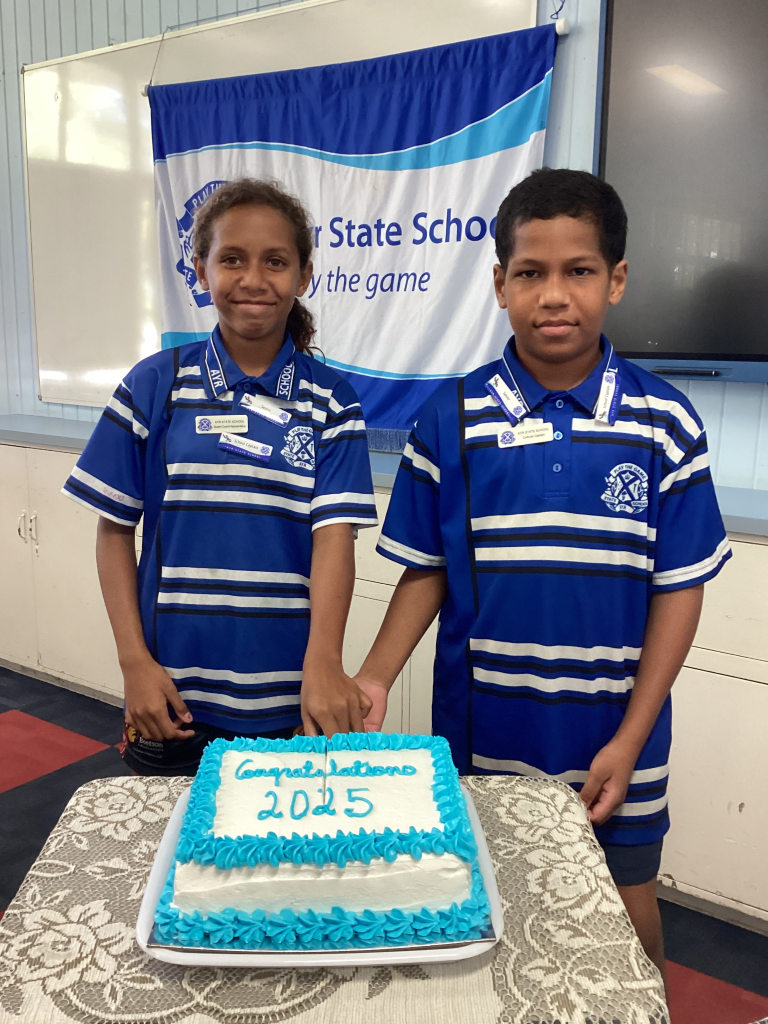
Ayr State School recently held its annual Badge Ceremony, a proud tradition where senior students step into leadership roles and pledge their commitment to guiding their peers and upholding the school’s values.
This year, Sage and Ruby were honoured as School Captains, with Sage also taking on the role of Cultural Captain and Ruby representing her peers as the Student Representative. Their dedication and enthusiasm are sure to inspire students throughout the year.
The House Captain roles were awarded to Xavier representing Kennedy, Emmet representing Oxley, and Jaxsyn representing Mitchell, who will lead their teams with spirit and determination during school events and competitions.
During the ceremony, each leader read and signed a pledge, vowing to serve their school community with integrity and respect. This signed pledge now resides in the main office, serving as a lasting reminder of their promise to lead by example.
A special highlight of the day was the cutting of the celebratory cake by School Captains Sage and Ruby, later joined by the Senior Class of 2025 — a sweet way to mark the beginning of their leadership journey.
The Ayr State School community is incredibly proud of all the students who stepped into leadership roles, and we look forward to seeing them grow and thrive throughout the year.

Transitioning to secondary school is a significant milestone, and at Burdekin Catholic High School (BCHS), they are dedicated to making this journey both exciting and seamless for students and parents alike. With a strong sense of community, outstanding academic programs, and a commitment to student success, BCHS ensures that every child is supported as they take their first steps into high school life.
To help students feel at home, BCHS invites all Year 5 and 6 students from the Burdekin region to take part in our highly anticipated Taster Day—a fun-filled experience designed to introduce students to the high school environment in an engaging and supportive way.
What’s in Store for Your Child?
From the moment they arrive, students will be welcomed by our friendly staff and student ambassadors, ready to answer any questions and guide them through the day’s activities. The event is designed to give students a firsthand experience of high school, helping them feel confident and excited about their future.
Taster Day Highlights:
Welcome & Introduction – Meet our teachers and students in a warm, friendly environment.
‘Getting to Know You’ Games – Break the ice with interactive activities.
Guided School Tour – Explore our facilities and classrooms.
Hands-on Curriculum Activities – Engage in exciting projects across all learning areas.
Q&A Session – A chance for students to ask questions and gain insight from teachers and current students.
Educational Rotations – Experience the variety of subjects and opportunities available at BCHS.
Taster Day Schedule
Drop-off Time: 9:15 AM
Lunch: Pies, sausage rolls, and fruit
Afternoon Tea: Fruit, Zooper Doopers, and a small pack of chips/popcorn
What to Bring: Hat & water bottle
What to Wear: Current school sports uniform
Pick-up Time: 2:30 PM
This immersive experience is a wonderful opportunity for students to build friendships, explore new subjects, and gain confidence in a high school setting. BCHS is more than just a school—it’s a place where every student is encouraged, challenged, and supported to reach their full potential.
For parents seeking a school that fosters faith, learning, and personal growth, Burdekin Catholic High School provides an education that truly believes in every child’s ability to succeed.
Join us for an unforgettable Taster Day and experience the BCHS difference!
For more information or to register your child, contact the school office on 4782366.
-1743469485.jpg)
Hi Everyone,
I’m truly enjoying getting to know the Burdekin community and exploring the region as a whole.
Starting fresh in a new area can be a bit daunting, but I’ve been met with such warmth and kindness from everyone here.
Though change can feel challenging at times, I’ve found that stepping out of your comfort zone often leads to wonderful, unexpected experiences.
So far, I’ve discovered some new favourite lunch and dinner spots, met some incredible people with fascinating stories, and treated myself to a few pieces from the fantastic shops Burdekin has to offer.
Please don’t hesitate to reach out, I’d love to meet as many of you as possible, while I am in Burdekin and share your stories.
Ruth
"If you change the way you look at things, the things you look at change." Wayne Dyer.
Hi Everyone,
I just wanted to take a moment to share a brief additional note this week, as we approach Ramon's funeral this Saturday. Our deepest sympathy goes out to his family during this difficult time.
For those wishing to attend, his funeral notice can be found on page 19.
Last week, I mentioned that we were considering including a memorial piece on Ramon's life in this week's paper. I understand this would have provided an opportunity for many of you to connect and share in the grief.
However, after careful consideration, Ramon's family has expressed a wish for this not to proceed at this time. Out of respect for their wishes, we have decided to honour their request.
Our thoughts are with everyone in the community who knew Ramon and holds special memories of him. I can only imagine how deeply he will be missed.
Rach
Publishers Indemnity. Any individual or entity that places advertising, supplies copy material, or submits editorial content to Core Life Publishing agrees and undertakes to ensure that all such material:- Does not infringe upon any copyright, trademark, or other intellectual property rights;- Is free from any content that could be considered defamatory, libelous, or slanderous;- Does not infringe upon any rights related to privacy or breach of confidence;- Contains no obscene, indecent, or otherwise unlawful material;- Complies fully with the Trade Practices Act and all other applicable laws, regulations, or statutes.Furthermore, by submitting or placing such material, these individuals or entities agree to indemnify and hold harmless the publisher, Core Publishing and Events Pty Ltd, and/or its agents from and against any and all investigations, claims, demands, liabilities, damages, costs, or judgments arising out of or in connection with the material provided. All material is believed to be accurate at the time of printing and remains the copyright of Core Publishing and Events Pty Ltd.
© 2026 Life Publishing Group Pty Ltd.
