Independently Owned, Locally Grown, Community Loved

As the Burdekin Shire begins to gear up for another disaster season, residents may once again face the familiar sight of fallen trees, broken branches, and damaged green spaces. Living on the coast, local residents understand cyclones are an annual challenge, with recent storms such as Jasper, Kirrily, and Tiffany serving as reminders, while major events like Cyclone Yasi have taught important lessons about how our landscapes cope.
One key question emerges: are some trees better equipped to survive cyclones than others?
Lessons from Cyclone Yasi
Following Cyclone Yasi in 2011, Greening Australia and local partners surveyed trees in Townsville to understand which species were most wind-resistant. Several natives stood out:
These species share key traits: deep roots, strong central trunks, flexibility, and adaptation to northern Queensland conditions.
What Makes a Tree Cyclone-Resistant?
Tree survival isn’t just about species. Age, structure, root development, and site exposure all matter. Healthy trees with balanced canopies and deep roots are far more likely to withstand high winds. Traits that increase resilience include:
Species That Struggled
Exotic or ornamental trees often suffered heavy damage:
Maintenance Matters Too
No garden is completely cyclone-proof, but proper care makes a difference. Encouraging deep root growth through deep, infrequent watering and reducing excess foliage through pruning helps trees remain upright during storms.
Planning for the Future
In preparation for disaster seasons to come, planting wind-resilient native species can reduce risk, support biodiversity, and help landscapes recover stronger. Landholders and councils are encouraged to:
Building Resilient Landscapes
By learning from past cyclones and choosing the right species, communities and green spaces can survive and thrive in the face of future storms.
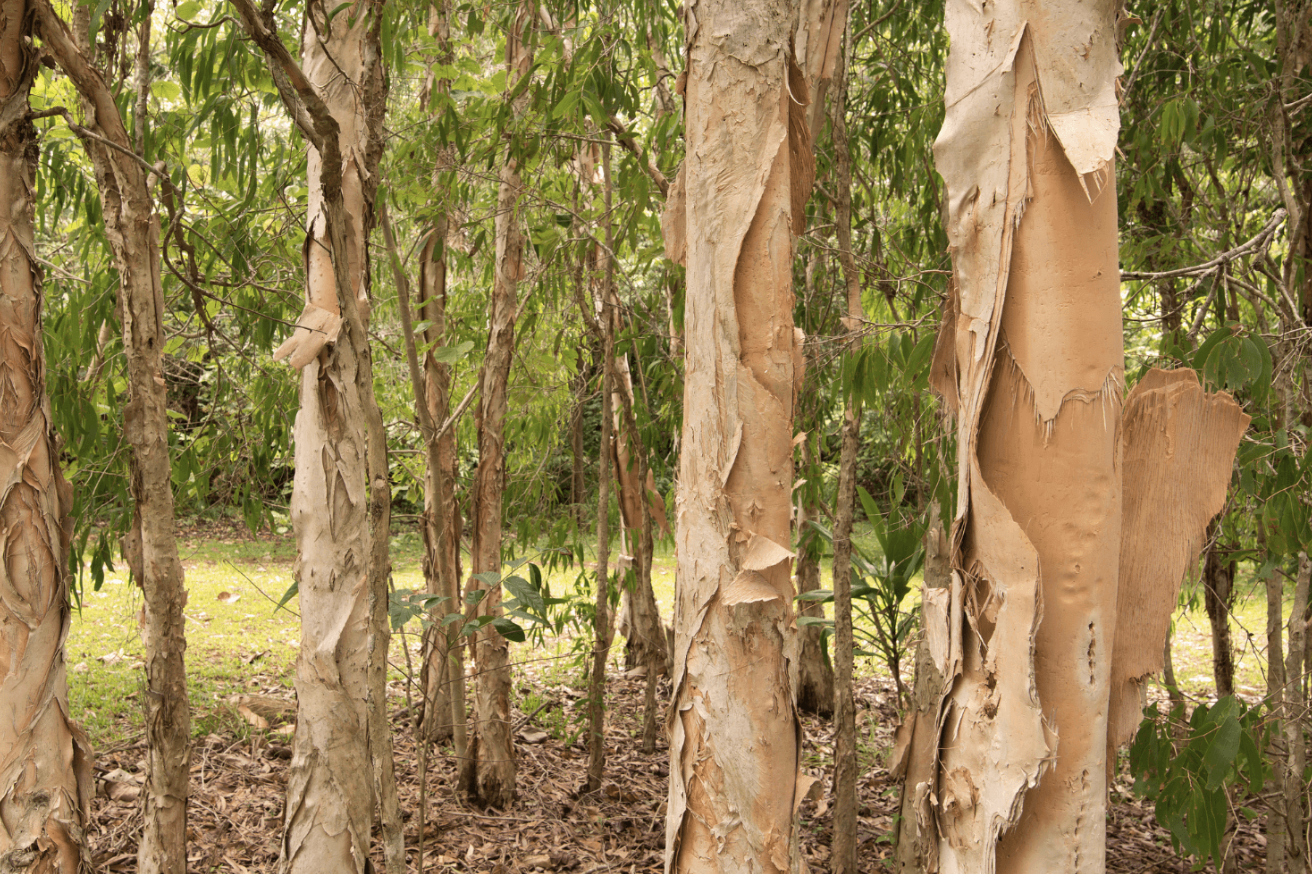
The Melaleuca leucadendra (Weeping Paperbark) is an iconic Australian tree and suited for northern Queensland conditions (Photo Supplied)
Publishers Indemnity. Any individual or entity that places advertising, supplies copy material, or submits editorial content to Core Life Publishing agrees and undertakes to ensure that all such material:- Does not infringe upon any copyright, trademark, or other intellectual property rights;- Is free from any content that could be considered defamatory, libelous, or slanderous;- Does not infringe upon any rights related to privacy or breach of confidence;- Contains no obscene, indecent, or otherwise unlawful material;- Complies fully with the Trade Practices Act and all other applicable laws, regulations, or statutes.Furthermore, by submitting or placing such material, these individuals or entities agree to indemnify and hold harmless the publisher, Core Publishing and Events Pty Ltd, and/or its agents from and against any and all investigations, claims, demands, liabilities, damages, costs, or judgments arising out of or in connection with the material provided. All material is believed to be accurate at the time of printing and remains the copyright of Core Publishing and Events Pty Ltd.
© 2026 Life Publishing Group Pty Ltd.






.jpg)