
Independently Owned, Locally Grown, Community Loved

The Ayr Seventh-day Adventist Church will mark a significant milestone on 16 May 2026, celebrating 100 years since the official opening and dedication of its original church building. While a small congregation of Seventh-day Adventists had been meeting in members’ homes throughout the early 1920s, the anniversary specifically commemorates the opening of the church building dedicated on Saturday, 15 May 1926. The church’s history reflects the determination and faith of the early Burdekin Adventist community. In 1925, land was purchased on the corner of Parker and Wilmington Streets in Ayr, where the church still stands today. Soon after, members located a former blacksmith’s shop in Charters Towers that was suitable for conversion into a church. The building was dismantled, transported to Ayr by rail, and re-erected during March 1926 before its official opening two months later. A weekend of celebrations is planned to honour the centenary. Events begin on Friday evening, 15 May, with a meet-and-greet and soup and buns in the church hall. Sabbath celebrations on Saturday will include a history presentation, worship service, and guest speaker Pastor Simon Gigliotti, President of the Northern Australian Conference. Following lunch, attendees will share memories and witness the unveiling of a commemorative plaque. Celebrations conclude on Sunday morning with a pancake breakfast at Ayr Anzac Park. Church members say the congregation continues to play an important role in the Burdekin through worship services, Bible study groups, health and wellbeing programs, community food assistance, and disaster relief support through ADRA. All are welcome to attend the centenary celebrations.
Read the full story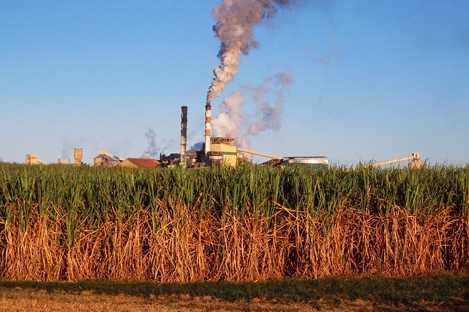
Queensland’s push to kick-start a domestic biofuels industry could unlock significant new opportunities for the Burdekin’s sugarcane sector, according to CANEGROWERS CEO Dan Galligan. Mr Galligan welcomed the Crisafulli Government’s recent $25 million investment into biodiesel production at Ampol’s Lytton Refinery in Brisbane, describing it as an important first step towards building a stronger and more resilient economy while paving the way for future growth across regional industries. “While this project may not directly involve sugarcane, it’s an important step in establishing the kind of industry that, with the right investment and policy settings, can unlock significant opportunities for cane growers,” Mr Galligan said. Queensland’s sugar industry has long advocated for the expansion of a domestic biofuels sector, with the potential to significantly increase ethanol production, generate more green electricity through sugar mills and eventually produce advanced biofuels such as sustainable aviation fuel. With the Burdekin recognised as one of Australia’s largest sugar-producing regions, Mr Galligan said local growers could play a major role in helping power Queensland’s renewable fuel future. “This is about more than cleaner energy – it’s about building a stronger, more resilient economy, creating new markets for growers, adding value to every tonne of cane, and backing regional jobs and investment,” he said. “It’s also about fuel security. Recent global disruptions have shown how exposed Australia is to supply shocks, and building a domestic biofuels industry helps reduce that reliance.” Mr Galligan said ensuring sugarcane remained central to future biofuel production would be critical to delivering the industry at scale and strengthening long-term opportunities for regional Queensland communities. The announcement comes amid growing national discussions around fuel security, regional manufacturing and reducing Australia’s reliance on imported fuel supplies. In recent weeks, the Queensland Government announced plans to strengthen the State’s fuel security through expanded local drilling, refining and storage capacity, including unlocking additional infrastructure opportunities at ports across Queensland. Official expressions of interest have also opened under the new Accelerating Fuel Infrastructure Program, inviting industry proposals for fuel refining and storage projects on government-owned land and ports in Townsville, Mackay, Gladstone, Abbot Point, Bundaberg and Brisbane. Member for Burdekin, Minister for Natural Resources and Mines and Minister for Manufacturing Dale Last said the focus was now on future-proofing the industry and creating long-term opportunities. "We know what the challenges are and I’m looking at the opportunities going forward, because that's where we can make the greatest change and get the most benefit," Mr Last said. Federal Member for Dawson Andrew Willcox said recent fuel shortages had exposed critical gaps in Australia’s fuel storage capacity, particularly for regional and agricultural communities. “This crisis has exposed Australia’s vulnerability to global supply shocks of critical liquid fuels, including in Dawson,” Mr Willcox said. “We must protect our economic foundations by scrapping the Safeguard Mechanism costs on refineries and lifting the minimum stockholding obligation. This is the only way to ensure that during global disruptions, our tractors keep moving and our supermarket shelves stay stocked.” CANEGROWERS said it would continue working with government and industry partners to ensure momentum in the biofuels sector translates into practical outcomes for growers and regional communities across Queensland. CAPTION: CANEGROWERS says Queensland’s growing biofuels industry could create major new opportunities for Burdekin cane growers. Photo source: CANEGROWERS
Read the full story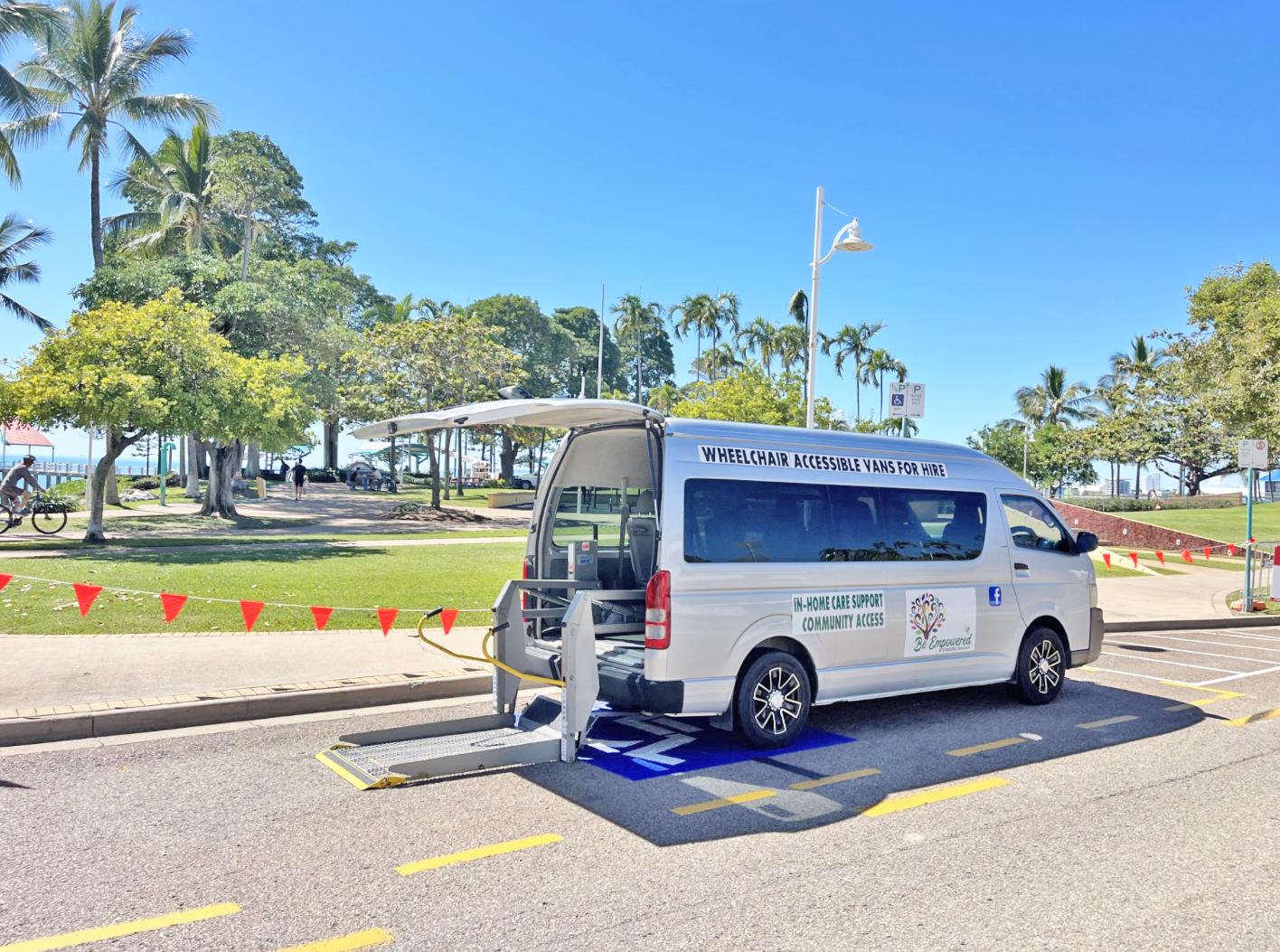
Be Empowered Disability Services believes mobility should never be a barrier to independence. Whether it’s a weekend escape, essential medical appointments, or a long-awaited family road trip, accessible transport can make the difference between staying home and staying connected. BeEmpowered Disability Services provides a wheelchair-accessible van hire service designed to deliver comfort, flexibility, and confidence on the road. Built on the reliable Toyota Hiace Commuter platform, the van is a spacious and versatile solution tailored to your specific needs. It features a flexible seating configuration and is equipped with a heavy-duty hoist, designed to accommodate extra-large width manual or motorised wheelchairs of up to 350 kilograms. Despite its specialist equipment, the vehicle remains simple to operate, featuring automatic transmission and requiring only a standard car licence. The van comes equipped with a disability parking permit, and has no kilometre limits. Rates start at just $150 per day, while those planning a longer trip are offered a “seven-day block” for $900, effectively providing one day free for longer bookings. For extended needs, BeEmpowered is happy to discuss long-term hire rates by negotiation. Experience the comfort and reliability of Be Empowered Disability Services and get where you need to go with less hassle. CAPTION: Built on the reliable Toyota Hiace Commuter platform, the van is a spacious and versatile solution tailored to your specific needs. Photo supplied
Read the full story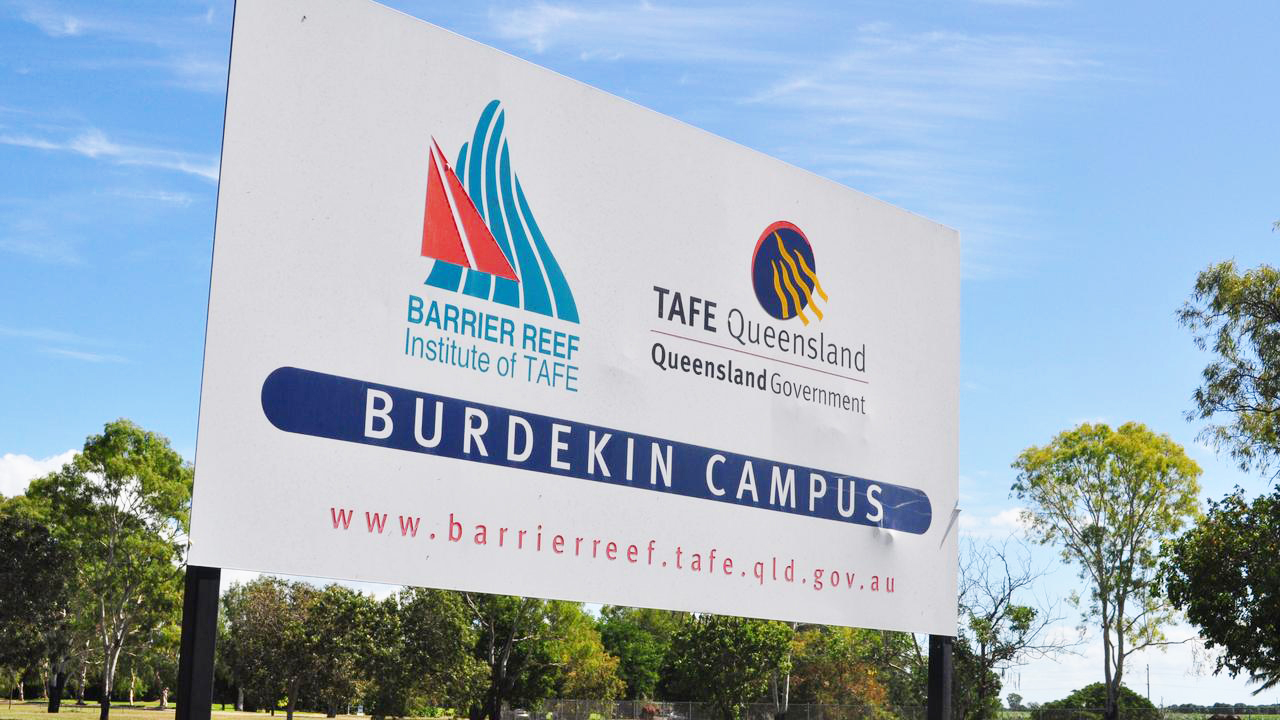
Queensland is seeing a surge in construction apprenticeships, with the State Government claiming new figures show progress in addressing long-standing workforce shortages impacting major infrastructure and housing projects across regions including the Burdekin Shire. According to the Government, more than 10,000 new apprentices have begun training across Queensland so far this financial year, including almost 3,000 in construction trades — representing a 27.4 per cent increase in the sector. The State has also recorded a high number of apprenticeship completions in 2025, with nearly 13,000 Queenslanders now qualified and ready to enter the workforce. The increase comes as Queensland continues to prepare for a major pipeline of infrastructure and construction projects in the lead-up to the 2032 Olympic and Paralympic Games, alongside ongoing demand for housing and regional development. Minister for Finance, Trade, Employment and Training Ros Bates said the figures were encouraging but acknowledged more work was still needed to address workforce shortages. “Labor left us a skills shortage with a predicted peak the size of an empty Suncorp Stadium but there are promising signs we’re getting the workforce back on track and building a pipeline of tradies who’ll help deliver our generational infrastructure program,” Minister Bates said. “We are delivering the initiatives and incentives to draw more young Queenslanders into trades and taking the CFMEU’s boot off the construction industry’s throat so future workers feel safe going to work. “Whether it’s infrastructure for the 2032 Games, health projects or the thousands of homes we’re unlocking for Queenslanders, we are building the Queensland of the future and creating the pathways for anybody who wants to help us do so.” The government said programs like the free Career Taster initiative through TAFE Queensland are also helping introduce Year 10 students to priority industries including construction and healthcare. CAPTION: Queensland’s construction sector is seeing a rise in apprenticeship commencements as the State Government looks to address ongoing skills shortages across regional areas including the Burdekin. Photo source: Burdekin TAFE New apprenticeship figures released by the Queensland Government show growing numbers of young Queenslanders entering construction and trade pathways ahead of major future infrastructure projects. Photo source: Burdekin TAFE
Read the full story

The Federal Government has announced a temporary fuel excise cut set to save motorists up to $20 per tank over the next three months, amid a nationwide surge in fuel prices.
The measure is expected to ease cost-of-living pressures in regional areas, including the Burdekin, with Ayr previously reported as one of the worst-affected towns for fuel prices in the state.
Burdekin locals have been shelling out up to $2.60 per litre for petrol, with diesel prices eclipsing the $3.30 mark.
The excise cut, which takes effect from 1 April, will reduce these prices by about 26c per litre.
“I'm glad that's happened, because there are people who simply can't afford it at the moment, but still need it to go to work. It's as simple as that,” said one Burdekin local.
“If the government or whoever can make it cheaper, that's good!”
Robyn Sherwood of Home Hill said that while the cut is a step in the right direction, more must be done.
"I live out of town, so I've stopped going places that I would normally just jump in the car and go to,” Ms Sherwood said.
“[The cut] will help a little bit, but with the price of everything about to go up, [fuel prices] need to go back to where they were.”
Federal Member for Dawson, Andrew Willcox, welcomed the Government’s decision to halve the fuel excise, describing it as a “hard-won victory” for Australian motorists.
“This is a win for common sense,” Mr Willcox said.
Dale Last MP, Member for Burdekin, said action should have been taken sooner.
“The LNP Queensland government has … been consistent in raising concerns on behalf of Queenslanders and, frankly, this is a step that should have and could have been taken weeks ago,” Mr Last said.
“The federal government needs to ensure that the full price reduction is passed on to consumers, especially in regional areas. If that means the Australian Competition and Consumer Commission (ACCC) needs more resources, then those resources must be in place.”
Fuel costs remain a key concern for the Burdekin’s sugar industry, the region’s leading economic driver, as the harvesting season approaches.
CANEGROWERS Burdekin chair Glenn Betteridge said while any relief at the bowser was welcome, the cut would have limited direct benefit to growers, who already claim back diesel excise on-farm.
He said diesel was already pushing towards $4 a litre in some cases, with fuel availability and security a bigger concern ahead of harvest.
“The industry needs around 90 million litres between now and November and currently has less than a tenth of that in storage, making availability and fuel security the critical issues,” he said.
“That’s why CANEGROWERS is calling for a national biofuels mandate and the expansion of a domestic biofuels industry – ethanol, biodiesel and sustainable aviation fuel – because every litre produced here is one less litre we need to import.”

The Queensland Government has opened the second round of its Residential Activation Fund, making $500 million available to councils and landowners to help deliver infrastructure needed for new housing developments across the state.
The funding forms part of the government’s $2 billion Residential Activation Fund, which aims to support the construction of new homes by ensuring essential infrastructure such as roads, water, sewerage and power are in place to enable residential development.
To date, the program has helped unlock land for approximately 98,000 homes across Queensland through a combination of construction and planning projects.
Deputy Premier and Minister for State Development, Infrastructure and Planning Jarrod Bleijie said the funding would help accelerate housing supply by supporting the infrastructure required for new developments.
“More homes across the State are needed and fast, and a key way we can play our part is to unlock land and break down barriers that have been holding back councils and the industry,” Deputy Premier Bleijie said.
“The Residential Activation Fund is literally making inroads, by providing funding to get the foundations right and generational infrastructure like roads, water, sewerage and power in place, so builders can get building and more Queenslanders have a place to call home.
“Queensland is open for business and we call on councils and landowners to come to us with their projects.”
Local Government Association of Queensland CEO Alison Smith encouraged councils to apply for the funding to help accelerate housing supply in their communities.
"Councils are playing their part to increase housing supply through zonings and approvals, but infrastructure is often the missing ingredient," Ms Smith said.
"Councils had called for enabling infrastructure funding, and the creation of this Residential Activation Fund is helping to meet council needs. Round One has already proven to be a gamechanger that is helping councils to tackle this infrastructure 'gap' and we applaud the State Government for this initiative.”
The second round of funding is open to councils and landowners seeking support for infrastructure that will enable residential developments and support growing communities across Queensland.

Queensland’s warming climate could bring a surge in serious food-borne illness, with new research linking rising temperatures to an increase in dangerous Salmonella infections.
The study, led by James Cook University PhD candidate and infectious diseases physician Dr Naveen Manchal, analysed a decade of health and climate data to better understand how heat impacts disease patterns.
“We investigated the link between rising temperatures and heatwaves across Queensland and cases of Salmonella and Campylobacter that had progressed to the bloodstream, a condition known as bacteraemia,” Dr Manchal said.
While both bacteria commonly cause gastroenteritis, bacteraemia is far more severe and often requires hospitalisation. Researchers examined more than 1,000 Salmonella cases and 234 Campylobacter cases recorded between 2010 and 2019.
The findings revealed no strong link between temperature and Campylobacter. However, Salmonella infections showed a clear and concerning trend.
“In Southeast Queensland, each 1°C rise in mean temperature increased the risk of Salmonella bacteraemia by 8 to 20 per cent. Maximum temperatures showed a similar pattern, with the risk rising up to 16 per cent,” Dr Manchal said.
“The effect was even stronger in the Tropical North, where a 1°C increase in mean temperature was associated with an 18 per cent rise in cases, peaking at 27.2°C. When maximum temperatures climbed above 28°C, the risk jumped sharply, increasing by 11 to 105 per cent for each additional degree.”
Heatwaves further intensified the risk.
“During extreme heat events, Salmonella bacteraemia rose by 31 per cent for every degree increase in maximum temperature,” Dr Manchal said.
Researchers warn that as temperatures continue to rise, Queensland’s health system may face increasing pressure, highlighting the need for stronger food safety and climate adaptation measures.
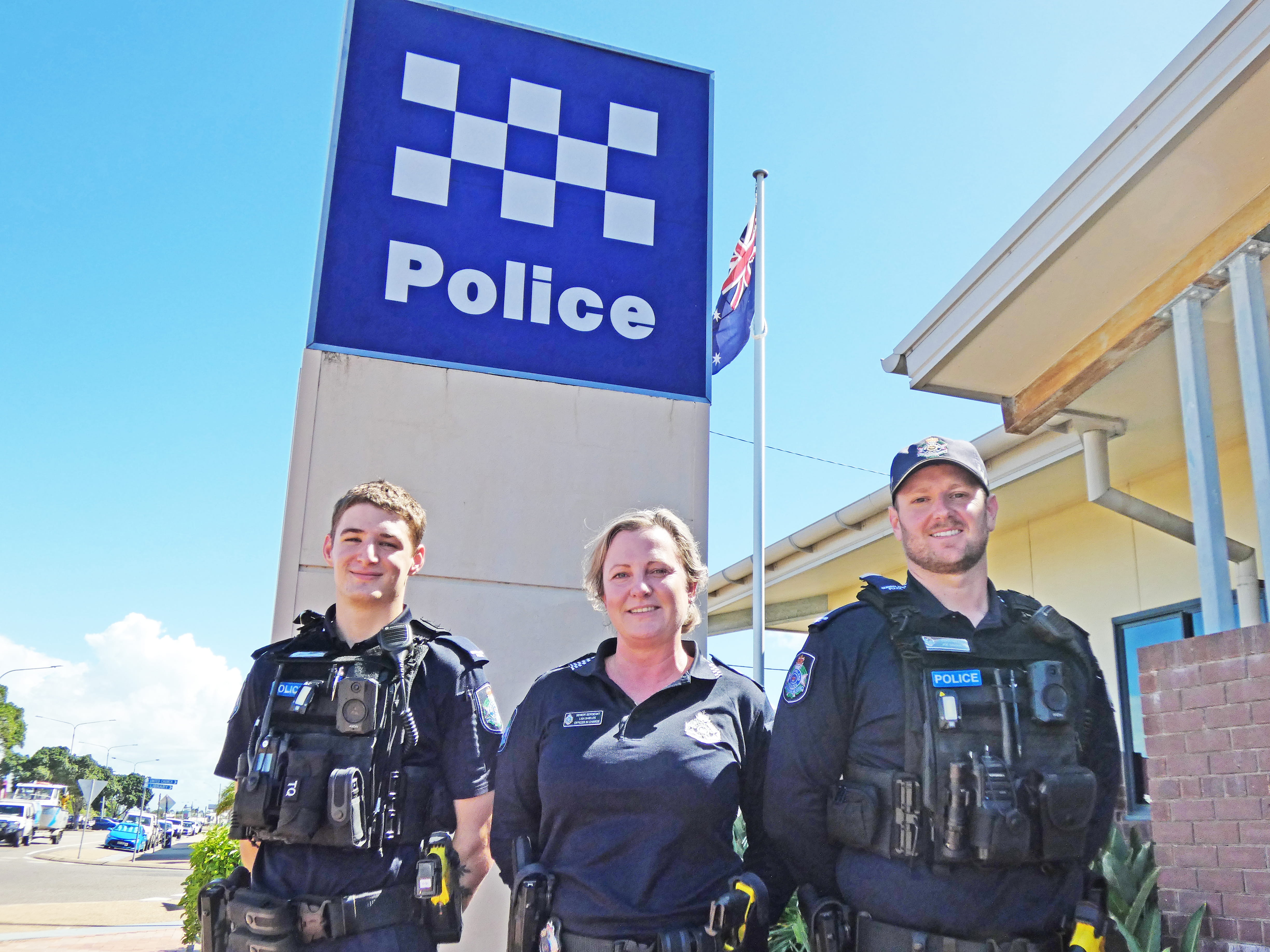

Two new constables have joined the force at Ayr Police Station, officially beginning their policing careers last month.
The pair, 21-year-old Samuel Bostock and 32-year-old Joe Singer, arrive in Ayr as part of a cohort of 19 first-year constables deployed to stations across the Townsville and Mount Isa districts.
Bostock, originally from Beaudesert, joins the station as a General Duties Constable. Inspired by friends in policing, he enters the force eager to “challenge myself and pursue a career where I could make a difference.”
“I’d love to foster as many positive community relationships as I can during my time here,” Bostock said.
“People should feel like police are approachable and ready to assist, so implementing that sense of safety and security is important to me.”
Singer, originally from England and living in Townsville since 2006, will also serve as a General Duties Constable. A dream since he was a child, he hopes to make a difference in his newfound role as a first-year constable.
“I want to build trust with [the community] and be a visible, positive presence in the town. I would like to show that the police make a difference and can be relied on,” he said.
Senior Sergeant Lisa Shields, Officer in Charge of Ayr Police Station, said the Burdekin would offer the pair a unique policing experience.
"The Burdekin is a fantastic place to begin a policing career and the community plays a big part in that experience,” she said.
“Small town policing is unique. It can be challenging but also incredibly rewarding. You get to form close connections with residents and see firsthand the impact of your work.”
Bostock and Singer arrive with extensive academy training, selected from a cohort of 123 recruits who graduated from the Oxley Academy in Brisbane in February.
Chief Superintendent of Queensland Police, Chris Lawson, said the first year constables would transition from academy training into operational policing with the close supervision and support of experienced officers.
“These officers have already demonstrated strong dedication throughout their academy training and now begin the next stage of their policing journey here in the Northern Region,” Chief Superintendent Lawson said.
“They will work alongside experienced frontline teams who will mentor them on shift and guide them through the practical realities of operational policing and the nuanced aspects of the communities they will be based in.
“Through a mix of frontline response, community engagement and proactive operations, they will quickly develop the skills, confidence, and judgement required for a long and successful policing career.”
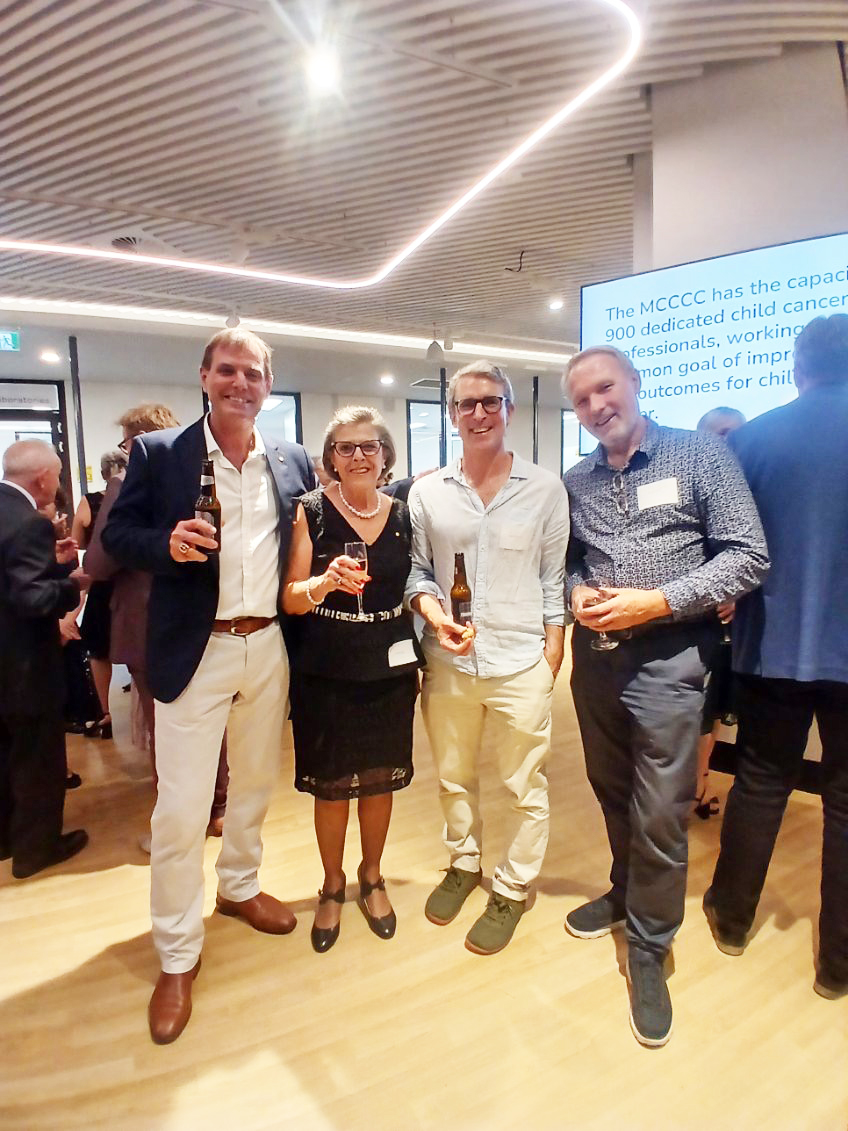

Burdekin-born Ren Pedersen OAM has dedicated his life to finding a cure for diffuse intrinsic pontine glioma (DIPG), one of the deadliest paediatric cancers, after losing his daughter to the disease in 2009.
Last month, he and Home Hill native Megan Law represented the Burdekin at the official opening of the Minderoo Children’s Comprehensive Cancer Centre (MCCCC) in Sydney, a major cancer research centre that marks a significant step in his long-term mission.
Officially opened on 12 March, the government-funded facility brings clinicians, researchers and educators together under one roof in an Australian-first model designed to integrate childhood cancer research with clinical care.
Personally invited to the event by the Children’s Cancer Institute, Pedersen said the facility will be crucial in bringing cures to the bedsides of children across the country more quickly.
“The Children’s Cancer Institute’s stunning new facility unites the world’s best scientists with invested clinicians to expedite new treatments for North Queensland children,” Pedersen said.
“We are witnessing Australia’s entrance into the epicentre of brain cancer.”
Founder of Ren’s Million Dollar Mission, Pedersen has spent the last year travelling across Australia asking 1,000 individuals and businesses to donate $1,000 each in hopes of raising $1,000,000 that will go straight toward brain cancer research.
“We don’t fund bricks and mortar—that’s been done by the government and other entities. Our donation is going to empower our researchers to act in a better, more wholesome environment,” he said.
“People can now know that if they donate to our cause, it will be going to the premium product in cancer research on the planet.”
Pedersen’s efforts have already yielded over $500,000, with the latest $1,000 arriving courtesy of Home Hill Cricket Association, announced at last week’s Canefield Ashes tournament.
Pedersen said the support from the Burdekin region has been inspiring.
“Donations have primarily been from the Herbert-Burdekin region,” he said.
“In just a year, we’ve been able to crack half a million dollars. That’s largely thanks to fantastic community organisations like the Home Hill Cricket Association, the Chamber of Commerce, Mayor Dalle Cort… and the Burdekin locals as well.”
With his sights set on eclipsing the $1 million mark this year, Pedersen is encouraging the Burdekin to maintain its momentum.
“It’s about finding a cure so we can allow future children to sit and have a drink or a hot dog with their families and play cricket. That’s the whole ethos of Ren’s Million Dollar Mission,” he said.
“We’re just calling upon businesses to tap their credit card and give a tax-deductible donation of $1,000 for children who are dying.”
To support the campaign, visit https://www.ccia.org.au/event/rens-million-dollar-mission/home.

Amid a nationwide lull in volunteering, the Rotary Club of Home Hill has welcomed three new members, giving the longstanding community club a timely boost.
Peter Macaway, Meryl Clarke and Don Clark were sworn in during an intimate ceremony at the Crown Hotel in Home Hill, each receiving a certificate and badge to mark their official entry into the club.
Part of Rotary International, Home Hill Rotary supports local projects, charities, and community initiatives. Club president Alf Musumeci said the additions are invaluable in carrying out the club’s duties, bringing much-needed support to the organisation that has served the Burdekin for decades.
“New members bring new ideas and they are essential to our club's work,” Musumeci said.
“Welcoming new members into our club means we can continue the ideals of Rotary and continue our donations to [Burdekin] entities… and charities. It’s all about giving back to the community.”
The new members will help spread the load within the club, helping with raffle ticket sales, running the club's mega markets, and helping out at events like RYDA (Rotary Youth Driver Awareness).
Musumeci hopes the club can continue to build momentum off the back of the new additions.
"We are a club of older members and we need to attract younger members to learn and eventually become knowledgeable and continue our work in the community,” he said.
“We are constantly on the lookout for new projects to help the community where we can. If you have a plan or an idea, put it to us and we can consider it and take it from there.”
The club recently announced its flagship fundraiser of the year, aiming to raise about $40,000 for a new all-terrain vehicle (ATV) for local police. With added hands, the club is hopeful of reaching that target.


1—President Elect Clive Williams, new member Peter Macaway, Club President Alf Musumeci at the swearing-in ceremony.
2—Clive Williams and Alf Musumeci with new member Meryl Clarke.
3—Clive Williams and Alf Musumeci with new member Don Clarke.
Photo credit: Jacob Casha
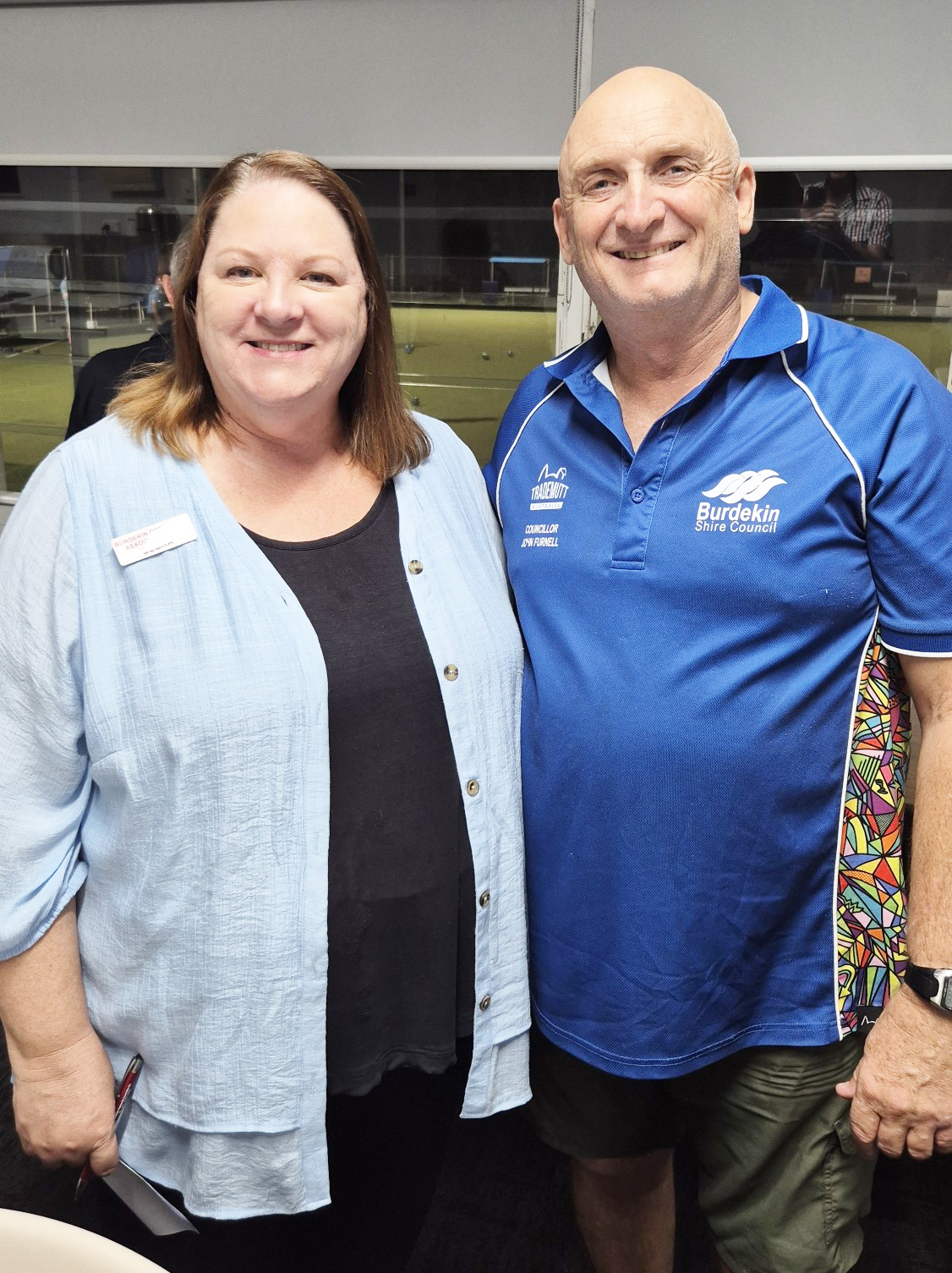
The Home Hill Chamber of Commerce and its members congregated at the Home Hill Community Sports Club in ordinary fashion as the organisation hosted its monthly social networking meeting last Wednesday.
The Chamber’s third meeting of the year saw the evening’s guest speaker, Burdekin Community Association (BCA) CEO Debra Cochran, share insight into the Burdekin’s underlying issues of homelessness, domestic violence, and declining volunteer rates, among others.
Home Hill Chamber Secretary Robert Antoniazzi said the presentation served as a “real eye-opener” for guests.
“Debra gave a great presentation and fielded a lot of questions from the floor," Antoniazzi said.
“When she began presenting all the figures and statistics, people began realising how bad things are and how much the BCA does in our community.
“What they do is great, but it’s unfortunate that there’s still a big need for them in our community.”
The session reinforced the Chamber’s role as a forum for discussion and knowledge sharing, a goal Antoniazzi says has also helped boost attendance.
“My aim in getting speakers is so that we can educate ourselves,” he said.
“Since we started bringing guest speakers in, our meeting attendance has gone from a dozen to 25-30.”
The Home Hill Chamber’s next social networking meeting is set for 15 April, where guest speaker Owen Menkens, President of the World Association of Beet and Cane Growers (WABCG), will present to the gathering.
CAPTION: Guest speaker Debra Cochran with Burdekin Shire Councillor John Furnell. Photo supplied
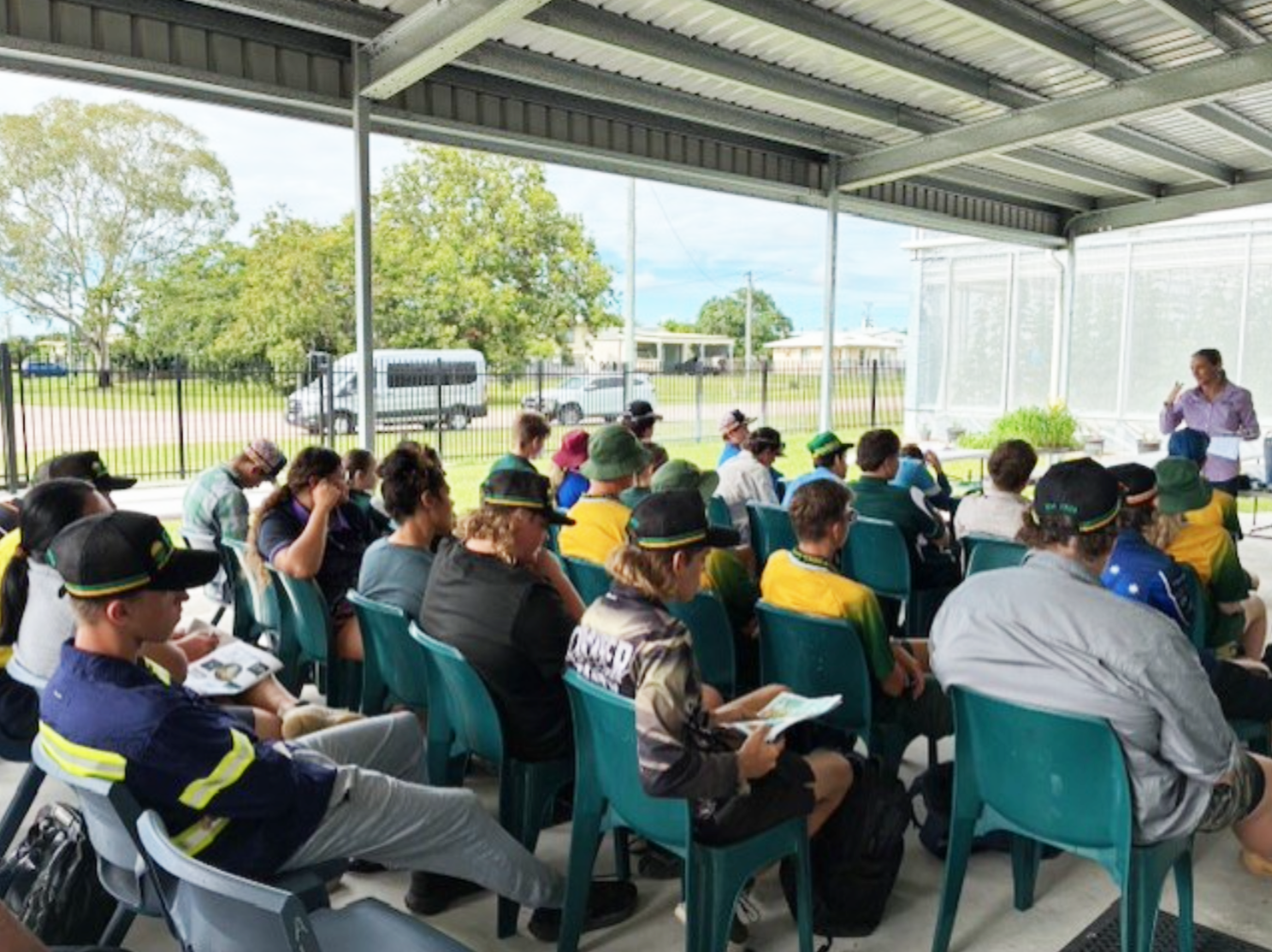
The Burdekin’s next generation of farmers, horticulturists, and agronomists are stepping up to shape the region’s agricultural future, having gained hands-on insight through the recent Future Fields Agriculture Inspirations and Horticulture Immersion Program.
From 9th–13th March, 35 students from Charters Towers State High School, Home Hill State High School, Burdekin Catholic State High School, and Ayr State High School took part in the five-day program, designed to expose them to careers in the region’s food and fibre industries.
Students visited farms and local businesses, engaging in hands-on horticulture activities and garnering industry know-how from career sessions with producers, agronomists, and other agricultural professionals.
Through the program, students developed practical skills such as working safely, following procedures, managing equipment, and understanding production systems, while also building reliability, teamwork, resilience, and a willingness to learn, all qualities valued by industry.
Louise Nicholas, Agricultural Science Teacher at Home Hill State High School, said such practical experience is essential for students.
“First-hand experience allows students to see the reality of agriculture beyond classroom,” she said.
“It helps students connect theory to real-world applications, builds confidence, and allows them to develop skills such as problem solving, responsibility, and communication.”
The program highlighted career opportunities close to home, which Nicholas says are crucial both for young locals and the Burdekin’s agricultural industry.
“These programs help young people see that there are meaningful careers available right here in our region… When students feel connected to their local area and can see real opportunities for their future, they are more likely to stay, train, and work locally,” she said.
“We hope students gained a better understanding of how many different careers contribute to the food and fibre industry and that they now see themselves as part of the future of the Burdekin.”
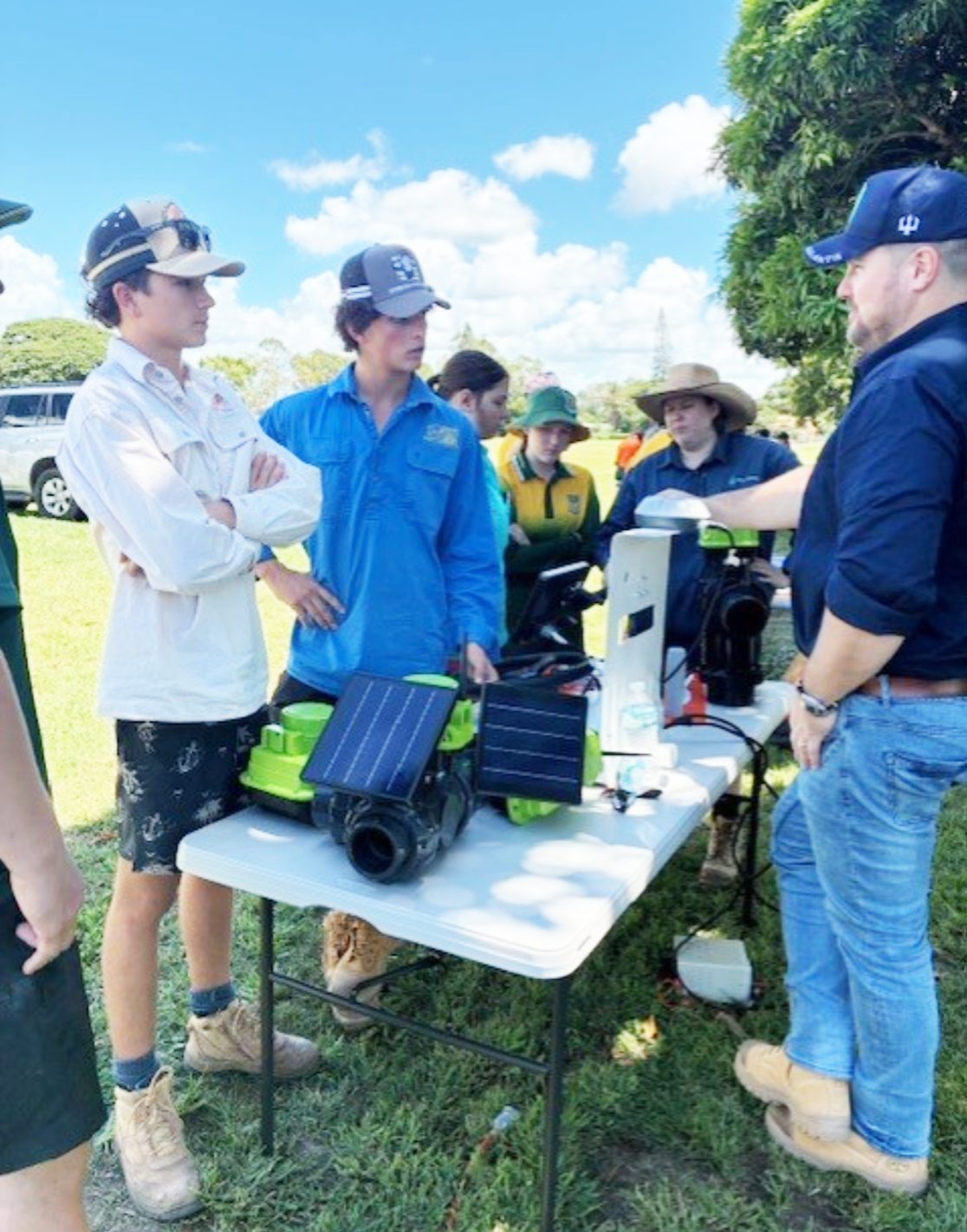
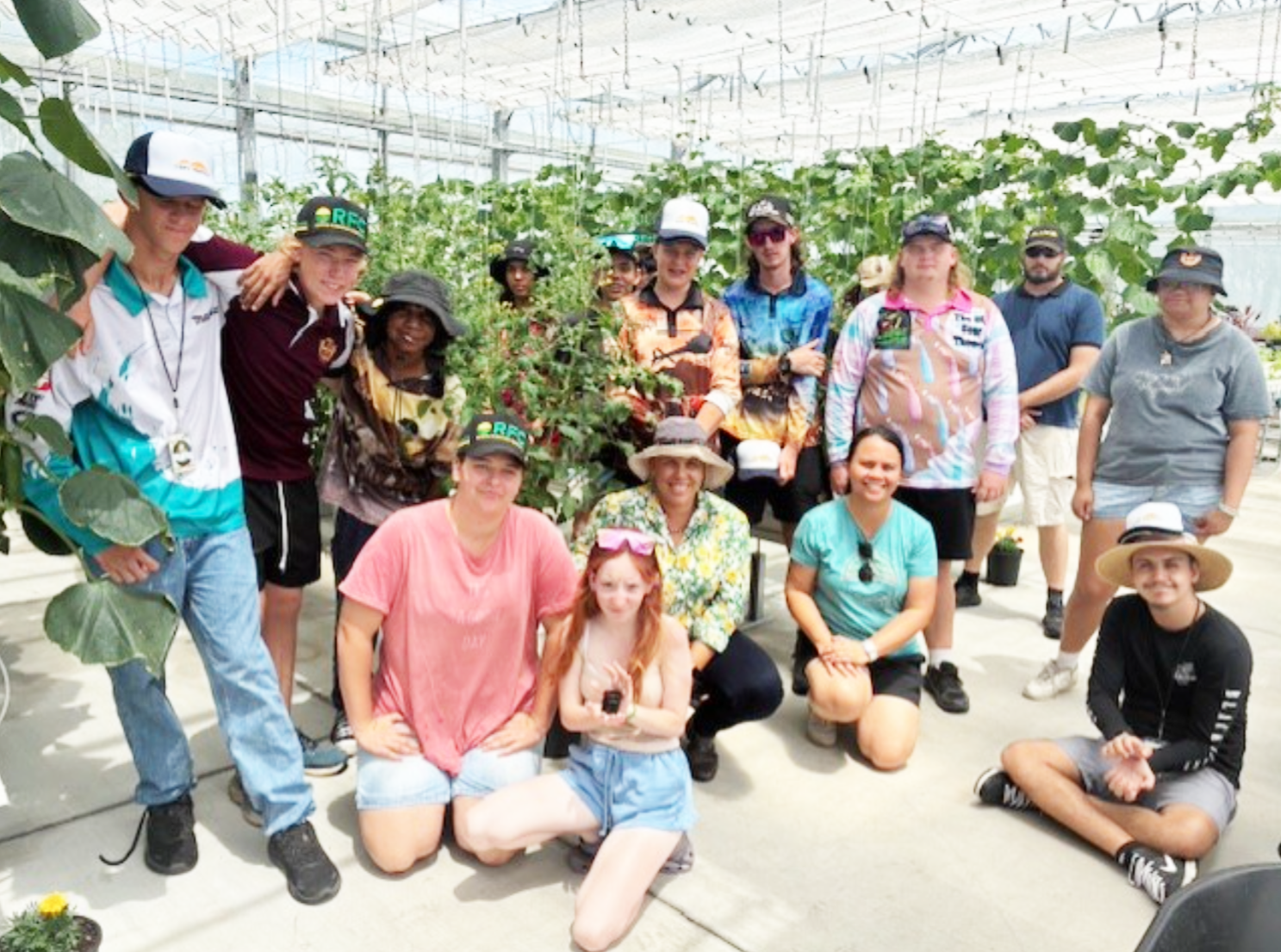
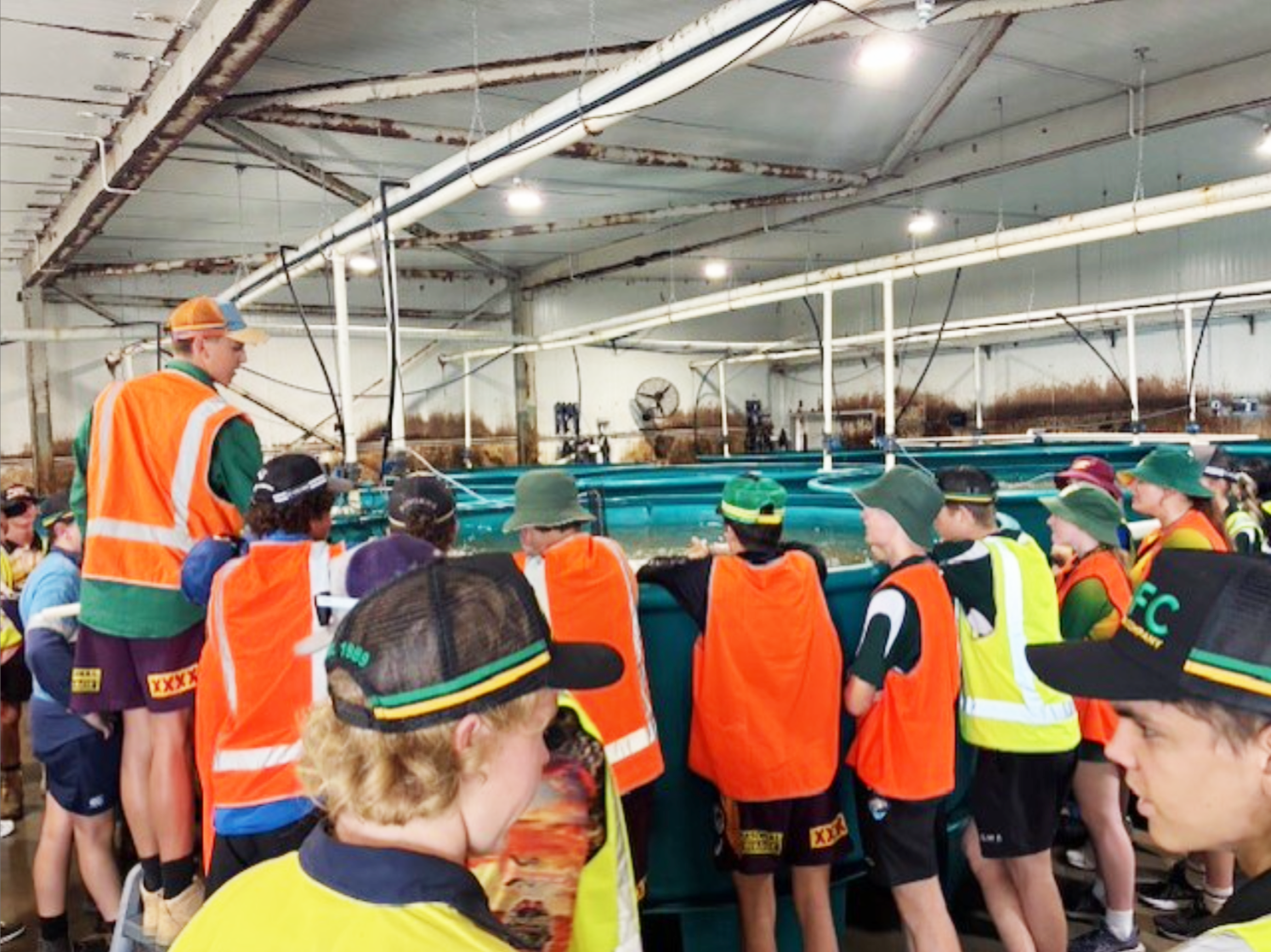
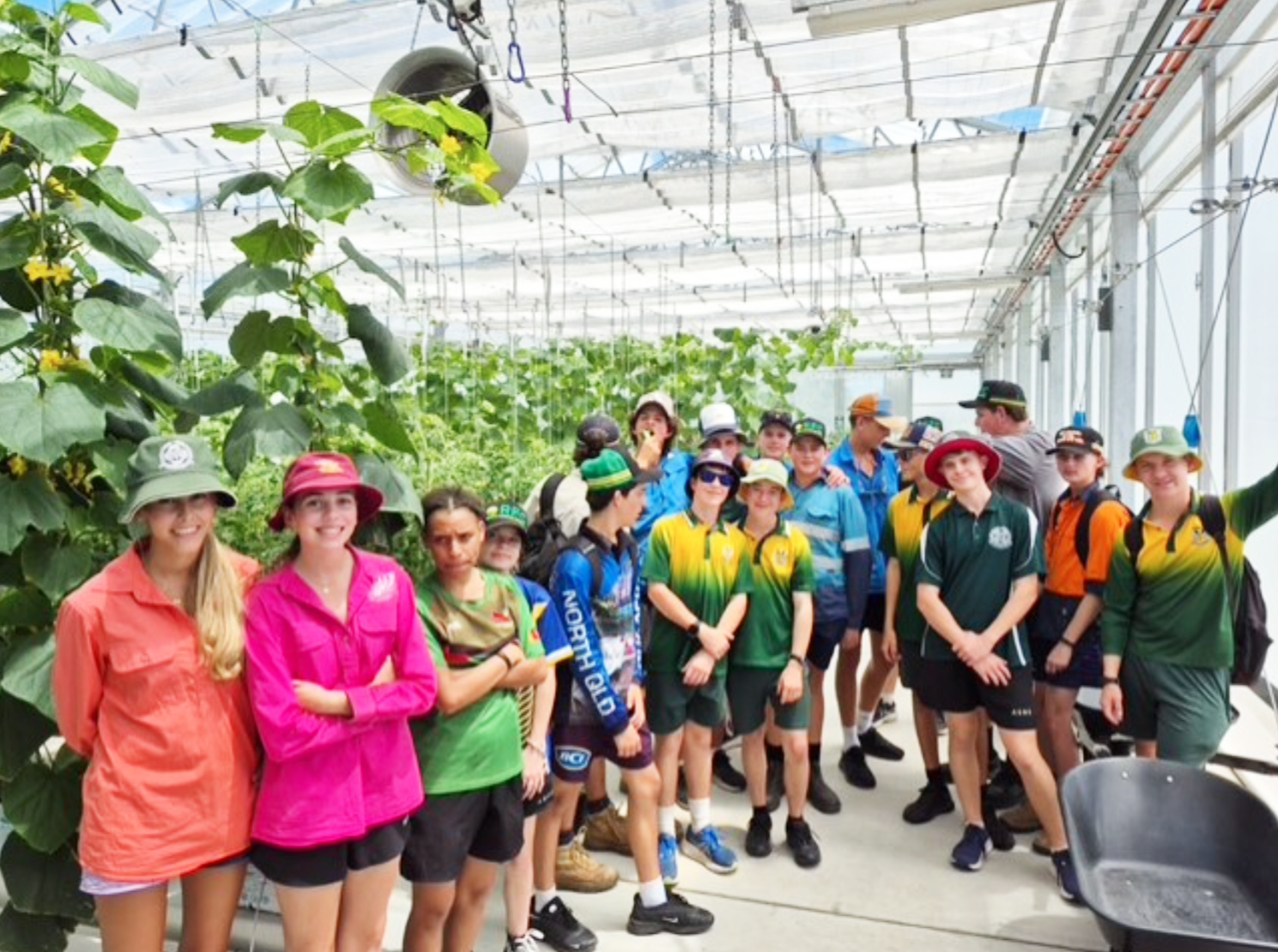
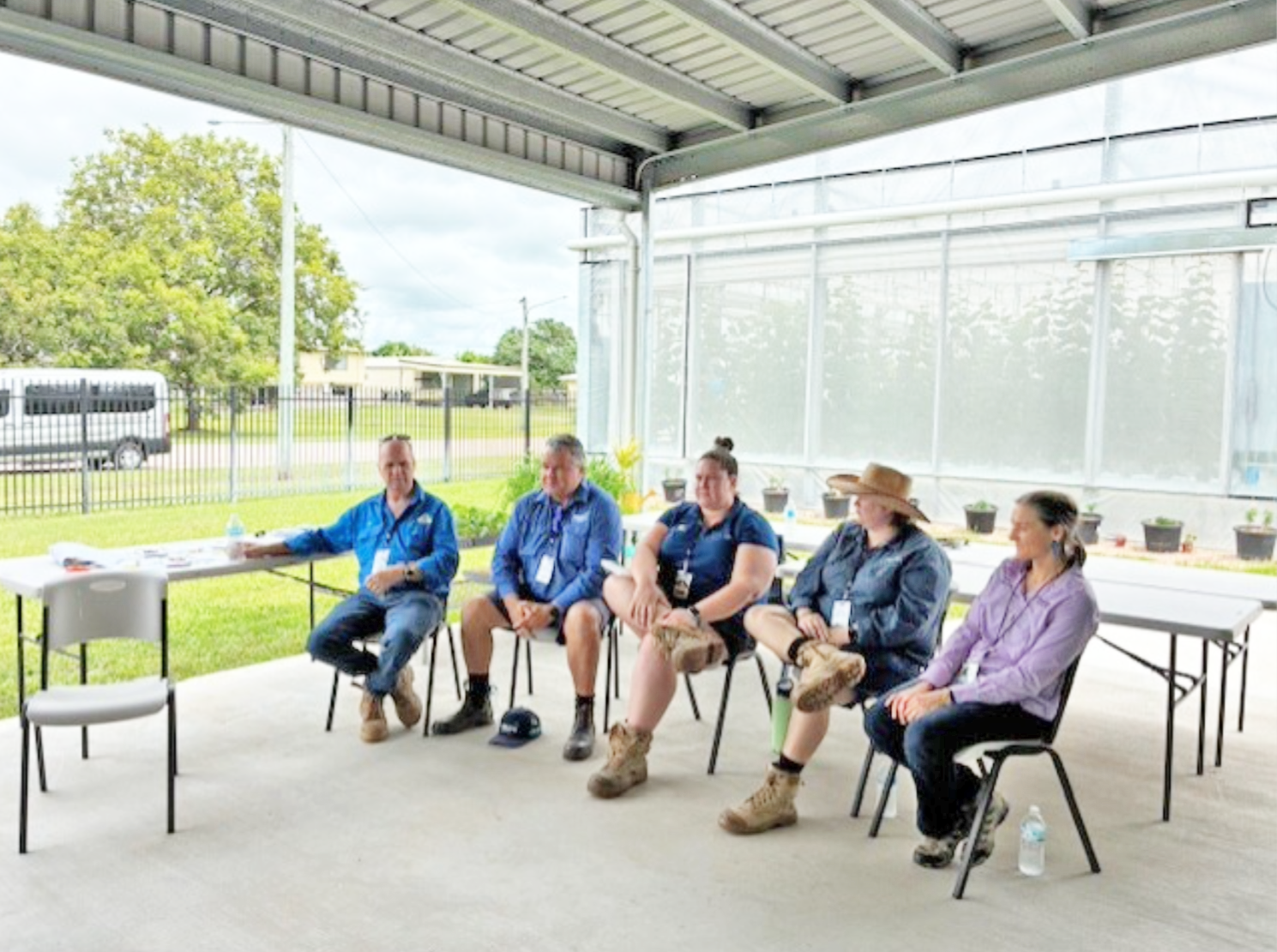
1—Students listening to Heidi Wiggenhauser from the DPI about the protective cropping structure.
2—Students listening intently to Luke from Aglantis take about the future of Ag Tech.
3—Students from Charters Towers State High School in the HHSHS greenhouse after a busy week of career education.
4—Students observe Coral Coast Barramundi Farm
5—Home Hill, BCHS, Ayr SHS students in the Greenhouse after a busy morning session learning about soils from NQ Dry Tropics.
6—Panel members – Rob Milla (BPS), Damien McKenzie (Muirs), Elizabeth Stockton (Lindsay Rural), Kaylaha Malaponte (Aglantis) and Heidi Wiggenhauser (DPI).
Photos supplied.

Queenslanders are being encouraged to play a role in the future of the state’s fisheries, with nominations now open for a series of advisory working groups.
The Queensland Government is calling for expressions of interest from stakeholders to join fishery working groups, which provide operational advice on the management of fisheries across the state.
These groups play an important role in bringing together a wide range of voices and helping guide sustainable practices within the industry.
Pauline Jacob said the department was seeking a diverse mix of representatives.
“This is a real opportunity for Queenslanders to play a vital role in the sustainable management of our fisheries, so they continue to grow and thrive,” Ms Jacob said.
“We are looking for people to join 11 working groups, including commercial and recreational fishers, charter operators, seafood marketers and processors, conservation representatives and First Nations peoples.
“While these working groups are not decision-making bodies, we rely on the advice of these groups to improve community engagement, prioritisation and our own decision-making,” she said.
The working groups aim to ensure Queensland’s fisheries are managed effectively, both now and into the future.
Nominations are open until 5pm, Tuesday 31 March 2026, with application details, guidelines and terms of reference available online via the Department of Primary Industries engagement hub.
Queenslanders with an interest in fisheries, sustainability or the marine environment are encouraged to apply.
CAPTION: The Queensland Government is seeking expressions of interest from stakeholders to join fishery working groups. Photo source: Shutterstock
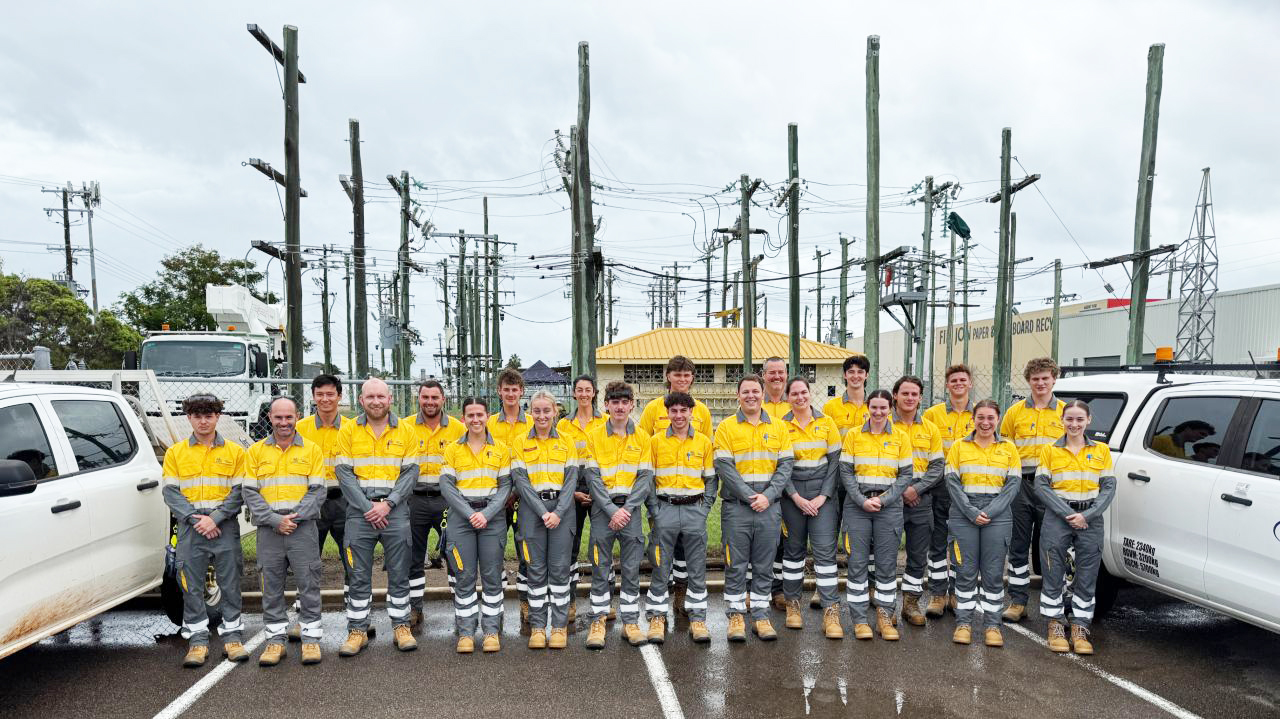
The future of the Burdekin’s energy workforce is looking bright, with local apprentices among those recently inducted into Ergon Energy Network’s Northern Stars Class of 2026.
The new cohort officially began their journey at the Townsville Training Centre, marking the start of their apprenticeships and a hands-on career in the energy sector.
“These faces represent the future of energy across a vast region, including Bowen, the Burdekin, Charters Towers, Cloncurry, Ingham, Innisfail, Mount Isa and Townsville,” Ergon Energy Network said.
The Northern Stars program brings together apprentices from across regional Queensland, equipping them with the technical skills and on-the-job experience needed to support and maintain essential energy infrastructure in their local communities.
For the Burdekin, where reliable power is critical to both agriculture and everyday life, the program represents an important investment in the region’s future workforce.
The apprentices will undergo a combination of classroom-based learning and field training, preparing them for roles that help keep homes, farms and businesses powered.
Ergon Energy Network encouraged the community to get behind the new recruits as they begin their careers, adding: “We wish them all the very best for their apprenticeship and beyond.”
CAPTION: Several Burdekin apprentices were among Ergon Energy’s recently inducted Northern Stars Class of 2026 cohort. Photo source: Ergon Energy Network

Queensland women looking to re-enter the workforce are being encouraged to apply for the second round of the Government’s Women’s Career Grants, with up to $5,000 available per applicant.
The $20 million program is designed to ease the financial burden of returning to work, covering costs such as childcare, training, recertification, workwear, transport, tools, technology and even relocation.
Following strong demand in the first round, which supported more than 1,000 women, applications have now reopened, offering further opportunities for women across the state to rebuild their careers and improve their economic security.
Minister for Women and Women’s Economic Security Fiona Simpson said the grants were helping remove barriers that often prevent women from returning to employment.
“Our Women’s Career Grants are breaking down barriers and providing cost-of-living relief to help women with the essentials to get back into work,” Minister Simpson said.
“Having travelled throughout the State listening to women, we’re investing in those who are seeking to re-enter paid work because we recognise that taking some time out of the workforce for whatever reason can be a real barrier.”
The program, delivered in partnership with Future Women, has already seen strong uptake in areas such as training, technology and recertification.
Future Women founder Helen McCabe said many applicants face similar challenges when returning to work.
“Every story is unique, but there are similarities we see often. Highly capable women who took time out of work to raise a family, or because of caring responsibilities or health issues,” she said.
Applications are now open, with full eligibility details available online via womenscareergrants.com.au.
CAPTION: Round two of applications are now open for Women’s Career Grants. Photo source: Shutterstock

Communities across Queensland are being encouraged to start planning their NAIDOC Week celebrations, with funding now available to mark a major milestone — 50 years of NAIDOC.
The Crisafulli Government has opened applications for its 2026 NAIDOC Grants program, offering eligible organisations up to $2,500 to host events and activities that honour Aboriginal and Torres Strait Islander culture.
This year’s theme, “Fifty Years of Deadly,” celebrates five decades of cultural pride, resilience and achievement, with National NAIDOC Week set to run from 5 to 12 July.
The grants can support a wide range of community events, including cultural performances, workshops, educational programs, sporting activities and yarning circles, helping communities come together to celebrate the world’s oldest continuous living cultures.
Minister for Aboriginal and Torres Strait Islander Partnerships Fiona Simpson said the funding would help make this year’s milestone celebrations especially meaningful.
“NAIDOC Week is a time for all Queenslanders to come together to celebrate the history, culture and achievements of our Aboriginal and Torres Strait Islander peoples,” Minister Simpson said.
“The Crisafulli Government's NAIDOC Grants will empower communities to host meaningful events and activities which showcase the world’s oldest continuous living cultures during a very special 50 anniversary this year.”
A total of $145,000 is available statewide, with additional flexibility for communities impacted by Ex-Tropical Cyclone Narelle to ensure they can still access funding.
Reflecting on the milestone, the Minjerribah Moorgumpin Elders-in-Council Aboriginal Corporation said NAIDOC Week represents a powerful legacy.
“It honours the voices of those who walked before us, the wisdom they carried, and the responsibility we hold to continue caring for country, culture and community,” the Board of Elders said.
Applications close on 10 April 2026. Visit www.qld.gov.au/naidoc for more information.
CAPTION: Ayr State High School hosts a large celebration for NAIDOC Day each year. Photo source: Ayr State High School
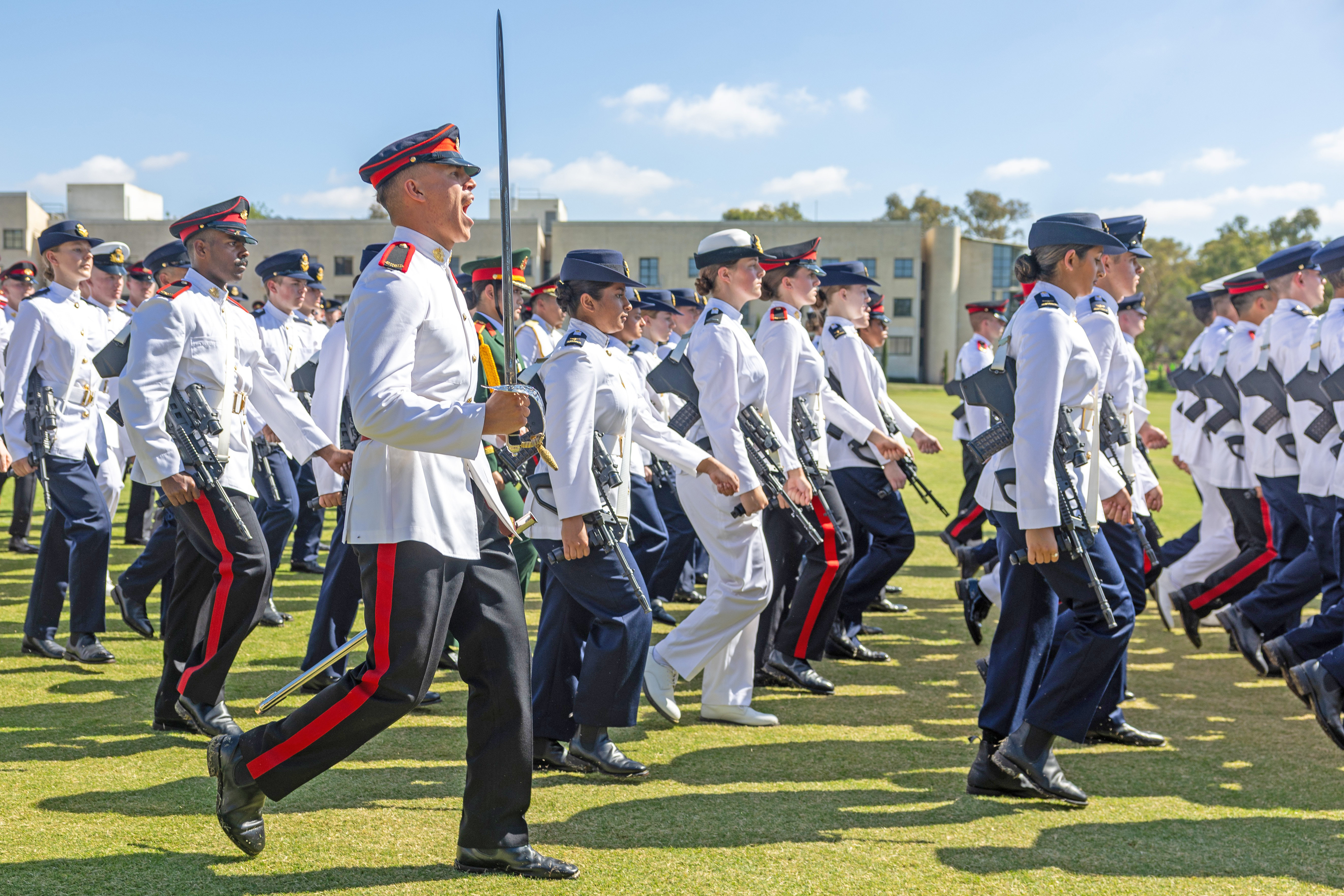
The world of space and aviation has long beckoned Ayr local Sophie Robertson, an obsession born from gazing at the Burdekin night sky with her mother as a child. Last month, she took another significant step toward a career in the field, officially commencing her aeronautical engineering studies at the Australian Defence Force Academy (ADFA) in Canberra.
"I've had my eyes set on this specific program from Year 10 onwards, and it's just so rewarding to now be able to study something that I'm passionate about and have always wanted to learn more about,” Robertson said.
Her official admission into ADFA, a prestigious military academy geared toward training and educating the next generation of military officers, follows the completion of the Academy’s Year One Familiarisation Training.
The demanding five-week induction program introduces new cadets to military life, leadership, and discipline, culminating in the Chief of Defence Force Parade, where the entire intake is formally reviewed by the Chief of Defence Force.
Robertson now begins the full academic and military program at ADFA, which fuses honours aeronautical engineering studies covering the mechanical systems of aircraft and spacecraft with daily intensive physical and military training.
For Sophie, this marks the beginning of a long-held ambition to work in the field of space, specifically with Defence Space Command.
"My mum began introducing me to astronomy when I was probably five years old. She would always buy me these books, and we'd go outside and just watch the night sky together on the farm and… over time, I just became more fascinated,” Robertson said.
“Space is still largely unexplored, so the opportunity for research in this industry is immense. I want to help make the unknown, known in my career… to at least solve one piece of the puzzle that we don't have right now regarding what's out there in space.”
Robertson says her motivation has always been the opportunity to make a meaningful contribution, not only to the field of aviation and space, but to the Burdekin community she credits with nurturing her.
“The Burdekin community is actually the reason why I joined the ADF… the opportunity to give back to my community, whether that's during wartime or through humanitarian assistance,” Robertson said.
“I think there's a unique advantage in the fact that we're able to build a really strong sense of community [in the Burdekin].
“Growing up, they've invested so much time and energy in me, and so I feel like the only way that I can show them my gratitude is through the ADF.”
CAPTION:

1—Robertson now begins the full academic and military program at ADFA, which fuses her honours aeronautical engineering studies with intensive physical and military training.
2—ADFA trainee officers during the Chief of the Defence Force Parade, Canberra, ACT.
Photos supplied
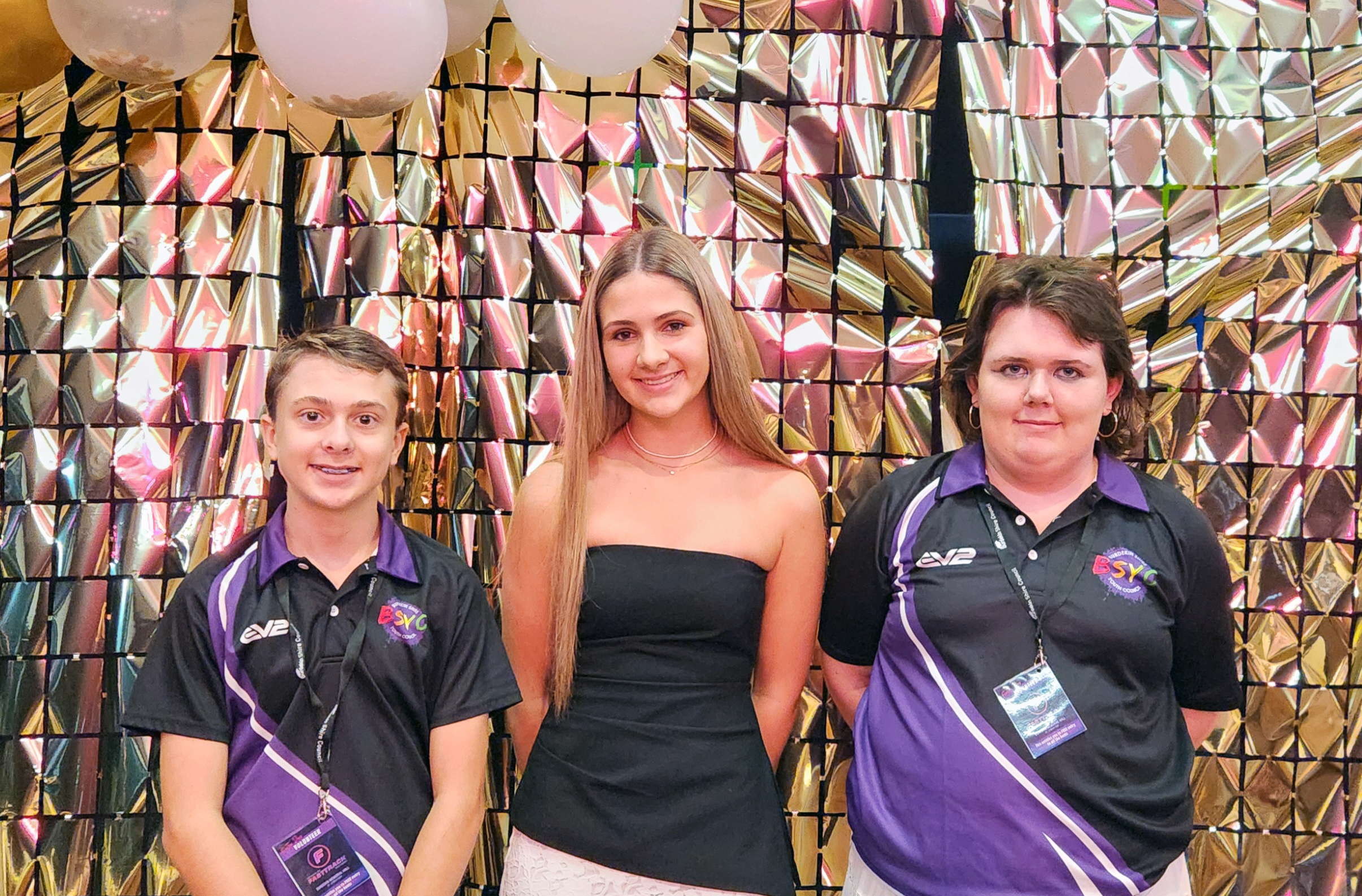
The Burdekin Shire Youth Council has seen a change at the helm, with William Wiseman stepping into the role of Youth Mayor after a successful spell as Deputy Youth Mayor in 2025.
Announced last week, Wiseman will be joined by Alicia Jansen Van Rensburg as Deputy Youth Mayor and Jorda Quagliata as Secretary, forming the council’s executive team for the year ahead.
Wiseman, a student at Burdekin Christian College, has been involved with the Youth Council for four years. Now Youth Mayor for the first time, he hopes to represent the Burdekin youth and encourage more young people to get involved in local initiatives.
“I [put my hand up] to encourage more people join the youth council, and to get more ideas or changes for the youth in our community,” Wiseman said.
“I would like more people help contribute to the next generation.”
Wiseman says he’s hoping to oversee an uptick in community activities aimed at youth.
“We have bowling, but that’s mainly it apart from the sports. I would like to change that by adding more youth-based activities,” he said.
Deputy Youth Mayor Van Rensburg, also a student at Burdekin Christian College, has quickly become an active member of the Youth Council since moving to the Burdekin from New Zealand. She has already made a positive impact on local community projects and initiatives.
Jorda Quagliata, a Year 11 student at Ayr State High School, has been a Youth Council member for five years. Elected Secretary, she brings experience, dedication, and strong organizational skills to support the council’s activities throughout the year.
The newly elected team will lead the Burdekin Shire Youth Council through the year, driving projects and initiatives that give young people a voice in the community.
Burdekin Shire Council Mayor Pierina Dalle Cort congratulated the new Youth Council executive and highlighted the importance of youth leadership in the region.
“Our Youth Council continues to demonstrate the passion, leadership and commitment of young people in the Burdekin,” Mayor Dalle Cort said.
“William, Alicia and Jorda should be very proud of their election, and I look forward to seeing the positive contributions they will make alongside the members of the Burdekin Shire Youth Council.
“The Youth Council plays an important role in ensuring young voices are heard, and Council is proud to support opportunities that help develop future leaders within our community.”
CAPTION: Burdekin Shire Youth Council’s new executive: Youth Mayor William Wiseman, Secretary Jorda Quagliata, and Deputy Youth Mayor Alicia Jansen Van Rensburg. Photo supplied

Volunteers at NQ Wildlife Care are calling on the community to lend a helping hand, one piece of fabric at a time.
Behind the scenes, dedicated volunteers are busy sewing essential items such as bedding, pouches and bat wraps, all designed to keep injured and orphaned wildlife warm, safe and comfortable during their recovery.
To continue this important work, the organisation is seeking donations of suitable fabric. Items must be clean, freshly washed and in good condition, with natural fibres like cotton or linen preferred. Larger pieces, ideally bigger than 30 centimetres by 30 centimetres, are most useful for sewing.
Synthetic materials, heavily worn fabrics, very small scraps or dirty items unfortunately cannot be accepted.
Donations can be dropped off at the group’s shop on Aitken Street in Aitkenvale, which is open on Sundays from 10am to 1pm. Those unsure whether their fabric is suitable are encouraged to get in touch via email for guidance.
Every contribution, no matter how small, helps volunteers continue their hands-on care for North Queensland’s native animals, offering them comfort, protection and a better chance at recovery.
Publishers Indemnity. Any individual or entity that places advertising, supplies copy material, or submits editorial content to Core Life Publishing agrees and undertakes to ensure that all such material:- Does not infringe upon any copyright, trademark, or other intellectual property rights;- Is free from any content that could be considered defamatory, libelous, or slanderous;- Does not infringe upon any rights related to privacy or breach of confidence;- Contains no obscene, indecent, or otherwise unlawful material;- Complies fully with the Trade Practices Act and all other applicable laws, regulations, or statutes.Furthermore, by submitting or placing such material, these individuals or entities agree to indemnify and hold harmless the publisher, Core Publishing and Events Pty Ltd, and/or its agents from and against any and all investigations, claims, demands, liabilities, damages, costs, or judgments arising out of or in connection with the material provided. All material is believed to be accurate at the time of printing and remains the copyright of Core Publishing and Events Pty Ltd.
© 2026 Life Publishing Group Pty Ltd.
