
Independently Owned, Locally Grown, Community Loved

By Chelsea Ravizza What began as a passion project for Home Hill's Jonathan Caspanello has evolved into a successful fashion and lifestyle brand, with the 23-year-old entrepreneur crediting his regional upbringing for helping shape both the business and the person behind it. “It [Home Hill] was the kind of community where everyone got around each other, supported one another and celebrated each other's successes, and those values have stayed with me throughout my life and continue to influence both who I am and the way I approach business today,” he said. Since launching Caspa Collective at just 21-years-old, Jono has grown the label into a recognised brand with a strong social media presence, loyal customer base and a growing community of supporters. After moving to Brisbane to complete a Bachelor of Education (Primary) at Australian Catholic University, following in the footsteps of his mother, Kavette, Jono discovered a passion for fashion, branding and content creation while working as a teacher aide. “I’ve always enjoyed creating things. Whether it was ideas, projects or content, I liked bringing something from imagination into reality,” he said. His entrepreneurial journey began close to home, inspired by watching his father, Warren, build a successful business from the ground up. Combined with a fascination for social media and the ability of brands to connect with people through storytelling, design and culture, it sparked a desire to create something of his own. While Caspa Collective now operates primarily from Brisbane, the Burdekin remains at the heart of the brand's identity. Even its name carries a personal connection, with "Caspa" derived from Caspanello. “I wanted a name that reflected who I am, where I come from and the journey, I'm on. The word ‘Collective’ was equally important because the brand has never been just about me. It's about the people who support it, wear it, model it and help bring ideas to life.” Over the years, Jono has learned that building a successful clothing brand involves far more than designing apparel. Through a largely self-taught journey into entrepreneurship, he has developed skills across content creation, branding, social media, website development, manufacturer liaison and campaign production. “One of the biggest lessons I've learned is that consistency matters more than perfection,” Jono reflected. “When you're starting out, it's easy to think everything needs to be perfect before you launch something. The reality is that you learn by doing. Every collection, photoshoot, campaign and product release teaches you something new.” Another lesson has been the importance of building genuine connections. “People connect with stories, personalities and communities far more than they connect with products alone,” he said. That support network starts close to home, with his sisters Rylee, Elly and Deni, along with his father and extended family, all playing a role in helping the brand grow. “When you're building something from the ground up, it's often the people closest to you who become your biggest supporters. Their encouragement, willingness to help and belief in what I'm building have been invaluable,” he said. “Every person who wears a Caspa Collective piece, shares a post or recommends the brand to someone else contributes to its growth. That's why community remains at the heart of everything we do.” Looking to the future, Jono believes Caspa Collective is only just getting started. More than a clothing brand, it has become a reflection of his journey, his Burdekin upbringing and the community that helped shape him; a reminder that with hard work, persistence and a willingness to take a chance, even the simplest idea can evolve into something far greater. “If I could offer one piece of advice to other young people from regional communities who have an idea they're passionate about, it would be this: don't let where you come from limit what you believe is possible,” he said. “Growing up in a small town can sometimes make opportunities feel further away, but technology has changed that. Today, you can build a business, launch a brand and connect with people all over the world from almost anywhere. You don't need all the answers before you begin, and you certainly don't need everything to be perfect. “The biggest regret is often not trying at all. Start before you're ready, stay patient, keep learning and trust the process. Small steps taken consistently over time can create opportunities you never imagined possible.” CAPTION: Jono Caspanello and his father, Warren Caspanello. Photo supplied
Read the full story
It is show season and we should start seeing it all come together over the next week as the party comes to town. The show society has been doing a great job over the years and each year they seem to find a way to keep it fresh and entertaining. Whilst my boys are all grown up and not making me buy show bags anymore. We do still like to go along and check it out. The water festival had its launch last Friday and I’m told it was a great night. Wonderful to see so many entrants participating and getting involved. I look forward to many months of activities and fun things to do. I got myself down to groper creek briefly last week and it was great to see all the nomads in town and set up to enjoy our beautiful weather. The area looked absolutely spectacular and I can see why so many regulars come back every year. Welcome back and thanks for coming to join us again. The crushing is underway and this a timely reminder to use your train brain. I spoke to one farmer this week who got a bit closer to a cane fire than he liked, so I’ll take this opportunity to remind all of us in the industry to where your PPE and take care. It’s very easy to get complacent, especially when everyone is in a rush. Take care everyone.
Read the full story
Supplied by the Office of Federal Member for Dawson, Andrew Willcox Tax, the three-letter word Labor loves most, goes hand in hand with the other three-letter word Labor does best—lie. It would be mission impossible to count the number of times the Prime Minister, the Treasurer and senior Labor ministers promised there would be “no changes” to Capital Gains Tax or negative gearing. They said ‘no changes’ before the election, after the election and even earlier this year. Literally hundreds of times, they gave Australians the same assurance. Repeatedly challenged by the media, they doubled down every single time. Then, on Budget night, only a few weeks ago, the government announced that the changes would be brought in. These tax changes are not “intergenerational fairness”. They are nothing more than a tax grab designed to fund Labor’s wasteful spending and economic incompetence. And the people who will pay the highest price are young Australians with aspiration. Under Labor’s changes, existing investments will be grandfathered. Those already in the market keep the current rules, while younger Australians looking to build wealth through investment face higher taxes and fewer opportunities. A young couple hoping to invest in a rental property will no longer receive the same negative gearing benefits. A young worker wanting to build a share portfolio, trade crypto, or invest in a small business will face a higher Capital Gains Tax burden than previous generations. Labor claims to stand for fairness, but there is nothing fair about pulling the ladder up behind you. Taxing aspiration is profoundly un-Australian. The economic consequences will also be severe. Labor itself admits these changes will place upward pressure on rents, although it claims the impact will only be around $2 a week. This is the same government that promised households would be $275 better off on their power bills. So, if the government’s own modelling is pointing to increased costs, the reality will be a disaster for renters. With interest rates again marching north and home ownership becoming harder, more Australians, especially younger Australians, are relying on the rental market. Yet Labor is actively discouraging property investment. The economics are simple. Fewer investors mean fewer rental properties, tighter vacancy rates and higher rents. That hurts every Australian renter. These changes will also discourage people from moving investment capital into more productive opportunities. Investors who remain under the existing rules will be reluctant to sell assets because any new investment will fall under Labor’s new tax regime. Flipping houses will become a thing of the past, meaning less stock returning to the market for prospective homeowners. Instead of encouraging economic activity and investment, Labor is creating uncertainty and stagnation. The Coalition opposes these damaging new taxes and will repeal them in government. Australia should be a country that rewards hard work, encourages investment and supports aspiration, not one that punishes people for trying to get ahead and set up their future. Stop the lies – Reverse the Tax. CAPTION: “It would be mission impossible to count the number of times the Prime Minister, the Treasurer and senior Labor ministers promised there would be “no changes” to Capital Gains Tax or negative gearing.” Photo source: Website/Andrew Willcox MP
Read the full story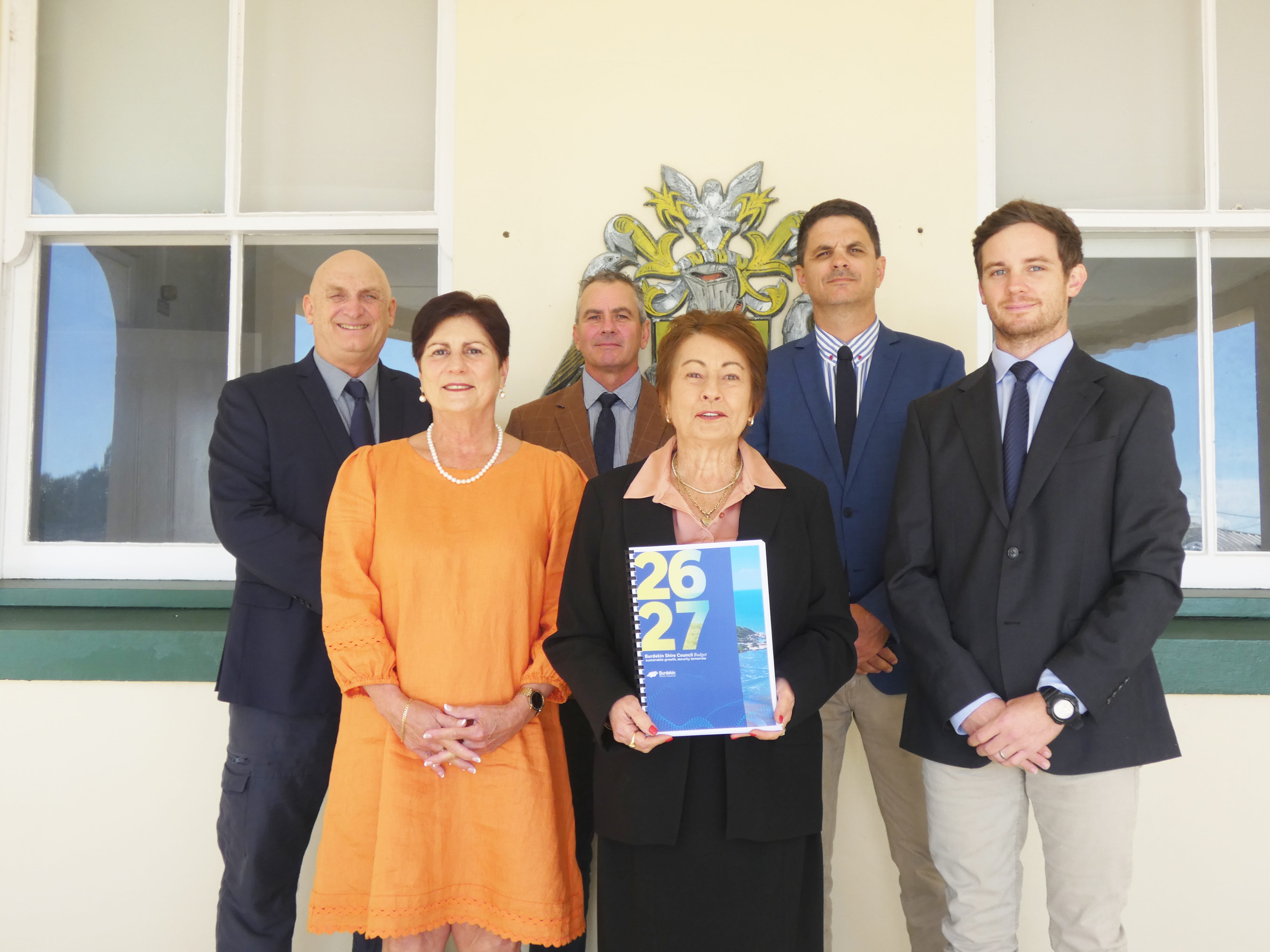
Burdekin Shire Council has handed down a $106.9 million budget for 2026/27, introducing a 1.5 per cent general rate rise to fund major upgrades to roads, drainage, and water infrastructure. The “Sustainable Growth, Security Tomorrow” budget allocates $36.2 million for capital works and $70.7 million for operational activities. While waste services rates will remain steady, residents face a 3 per cent increase in water access charges and a 6 per cent hike in sewerage charges to fund the ongoing delivery of high-quality services. Mayor Pierina Dalle Cort said the budget adopts a practical, forward-looking approach that balances financial pressures on households with the need to maintain essential services. “Sustainable Growth, Security Tomorrow is about investing in the infrastructure our community needs now while preparing for the future,” Mayor Dalle Cort said. “We understand the financial pressures many households are facing, and this Budget has been carefully planned to balance those pressures with the need to continue delivering essential services.” More than $24.6 million will flow directly into the region's transport and flood mitigation networks. Key projects include a $5 million road and kerb reconstruction at the Ayr Industrial Estate, a $2.8 million upgrade to Upper Haughton Road, and a $1.15 million sealing project on Thompson Road. The drainage network will also receive a major boost in the form of $3.6 million Ayr Town Drain improvements and a $1.6 million drainage upgrade at Wickham Street Anzac Park. Mayor Dalle Cort said strengthening these networks is critical to the local economy and agricultural productivity. “Our road and drainage networks are essential to the functioning of our community and economy,” she said. “This year’s program focuses on strengthening infrastructure, improving flood resilience and supporting future growth across the Shire, while also supporting local industry and agricultural productivity through improved access and freight reliability.” Essential water and sewer services comprise another major pillar of the budget. Council has allocated $1.96 million specifically for sewerage infrastructure upgrades alongside significant drinking water investments. Major water utility projects include the $1.5 million South Ayr Water Treatment upgrade, a $1.2 million pipeline augmentation in Home Hill, and a $1 million sewer relining and manhole rehabilitation project. “While often out of sight, these services play a vital role in our community, from supporting public health to protecting the environment and ensuring everything runs safely and reliably,” Mayor Dalle Cort said. Community liveability and lifestyle projects will progress under the budget, backed by state and federal funding programs. Notable allocations include $1.2 million for the Home Hill Swimming Pool upgrades, $500,000 for the Burdekin Be-Active Trail, and $440,000 for the Plantation Park Nature Based Play Area carpark. CAPTION: Burdekin Shire Councillors John Furnell (back-left), Max Musumeci (back-centre), Callan Oar (back-right), Fina Vasta (front-left) and Michael Detenon (front-right) with Mayor Dalle Cort (front-centre) at the conclusion of the 2026/27 budget meeting. Missing: Councillor Amanda Hall. Photo credit: Jacob Casha
Read the full story
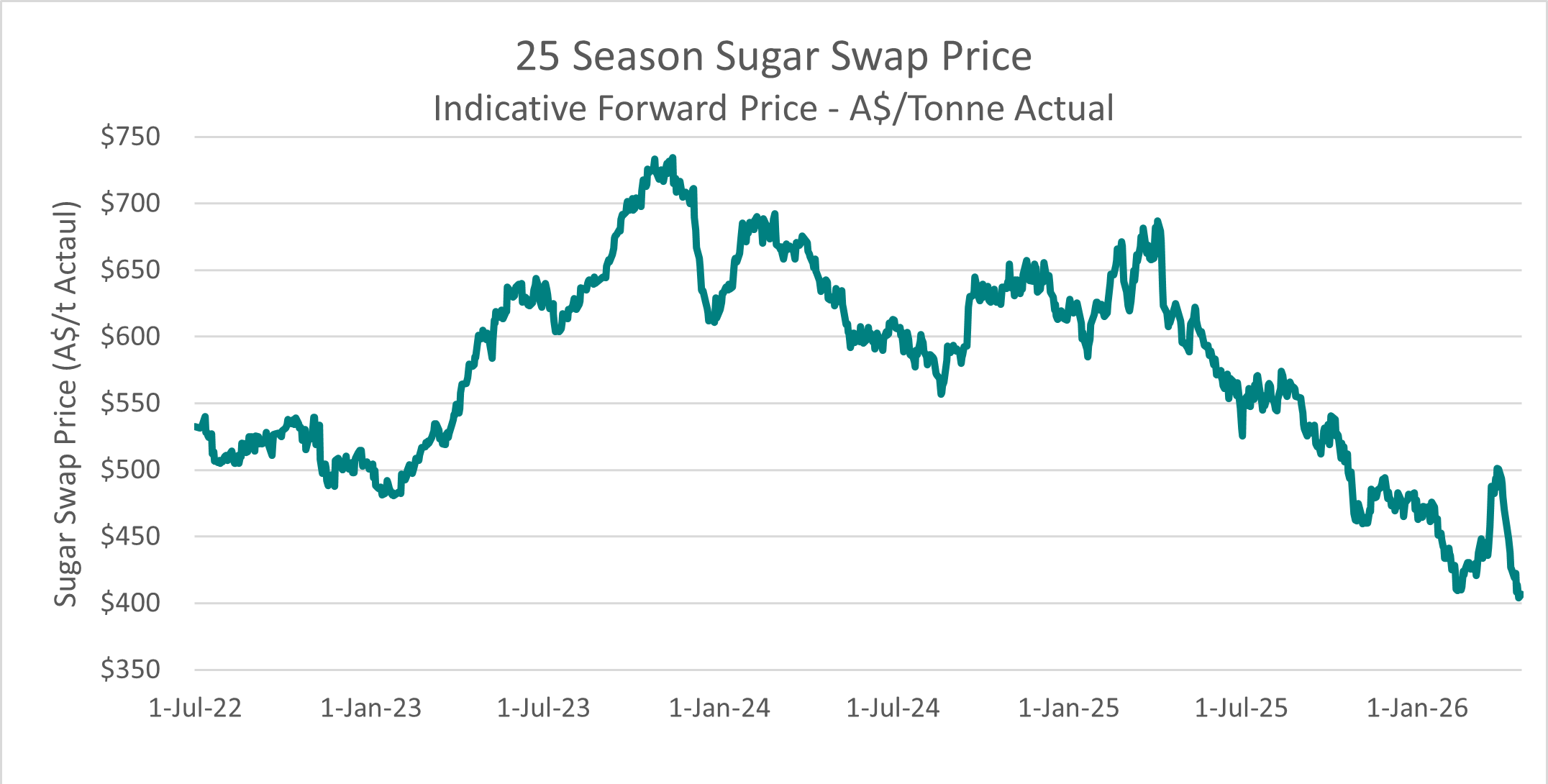
2025 season Sugar Swap prices highlight the volatility experienced by growers over the past three-and-a-half years. Image supplied
The completion of 2025 season pricing has once again shown just how important it is for growers to have a clear pricing strategy in place when markets become volatile.
Over the past few years, growers have experienced some of the biggest price swings seen in recent seasons. Those using long-term pricing strategies had opportunities to lock in prices above $600/t at different points throughout the pricing window, while prices also spent periods trading much lower. It has been a reminder that sugar markets can move quickly and unpredictably, influenced by everything from global supply and demand to oil prices, currencies, and geopolitical events.
Different pricing approaches delivered different outcomes this season. Some growers benefited from taking pricing opportunities over a longer period, while shorter-term pricing options were more exposed to weaker market conditions later in the season. Importantly, it reinforces that no single pricing mechanism will outperform every year.
One of the clearest lessons from the 2025 season is the value of diversification. Spreading pricing decisions across different timeframes and mechanisms can help reduce risk and avoid relying too heavily on trying to pick the “top” of the market. Having a disciplined approach and staying engaged with pricing opportunities over time can make a significant difference to overall returns.
The strong performance of the Managed Pool Plus this season also highlighted the benefits of having a dedicated and actively managed pricing strategy working on behalf of growers through changing market conditions.
With this in mind, nominations are now open for the 2027 Season Managed Pool Plus. The pool was designed to help growers navigate volatile markets by spreading pricing decisions across a longer timeframe and combining disciplined risk management with active market oversight. Following the positive outcomes achieved in the 2025 season, interest in the 2027 pool is expected to be strong.
Growers wanting to better understand their pricing options, risk exposure and payment choices are encouraged to speak with the team about which approach may best suit their business goals and appetite for risk.

Congratulations to the Pirrone Brothers — what an incredible achievement for a local Burdekin family. Their hard work and innovation have paid off, with their zucchini flower vodka taking out Gold at the World Drinks Awards and being named Australia’s Best Botanical Vodka for 2026. It’s fantastic to see a product grown right here in the Burdekin gaining international recognition and putting our region on the map.
Closer to home, it’s great to see the 2026 Road Reseal Program progressing well, with numerous roads currently being resealed across the Burdekin. Letter drops have been delivered to residents who may be affected, and I encourage the community to view the full works schedule on Council’s website.
It’s also been wonderful to see the Arch Dunn Playground upgrade now complete and already being enjoyed by local families. Council is committed to maintaining safe and modern spaces for our community, and this is a great example of that in action. If you haven’t been down yet, I encourage you to take the kids along and have a look.
Looking ahead, I encourage parents and carers to attend the upcoming Pathways & Possibilities information evening. This free event will be held on Wednesday, 3 June from 5:30pm to 6:30pm at the Burdekin Theatre. Delivered in collaboration with Burdekin Shire Council, Jobs Townsville North Queensland, the Department of Education and Regional Development Australia Townsville and North West Queensland, the session is designed to support families in guiding young people through future career and study decisions.
Supporting our young people into training, study and local employment opportunities is something I am very passionate about, and this session will help families better understand the pathways available.
Should you wish to reach out, don’t hesitate to contact me directly by phone at 0447 150 582, or feel free to send an email to mayor@burdekin.qld.gov.au.
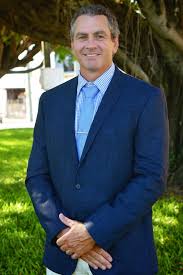
The time certainly does fly and no doubt it’s because there is so much happening each and every week in the Burdekin. The weekend just gone saw the Ayr Surf Lifesaving Club celebrate 100 years. That is a remarkable milestone and congratulations to everyone involved. Thank you for keeping the water safe and thanks to all those who have volunteered their time over the years.
The Home Hill Golf club hosted the women’s and men’s opens. 150 players took part. The ladies played Saturday so they could have Mother’s Day off on Sunday (hopefully there was no crossover for the Dad’s). Chloe Armstrong from Townsville won the ladies and local legend Scott Sibson won the men’s. Thanks to the volunteers who keep this club going. Growers race day this weekend. I’ve been to the Everest and I’ve been to the Melbourne Cup, so I can tell you this Race Day rivals them for its organisation, fashion and pure fun.
Have a great weekend everyone and stay safe.
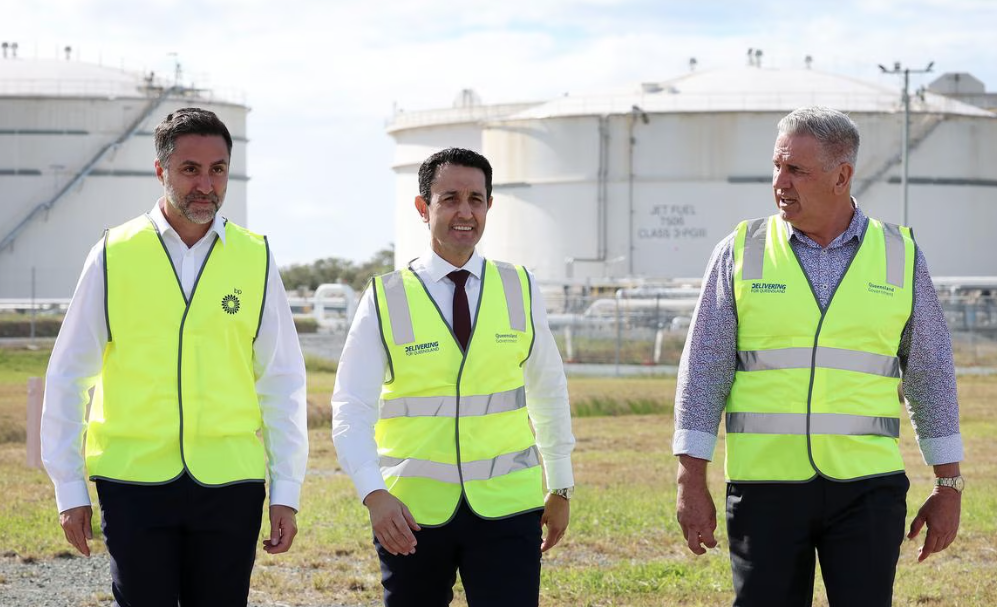
Recent Queensland Government fuel security initiatives are being welcomed as Burdekin businesses face rising fuel costs and ongoing energy uncertainty. Photo supplied
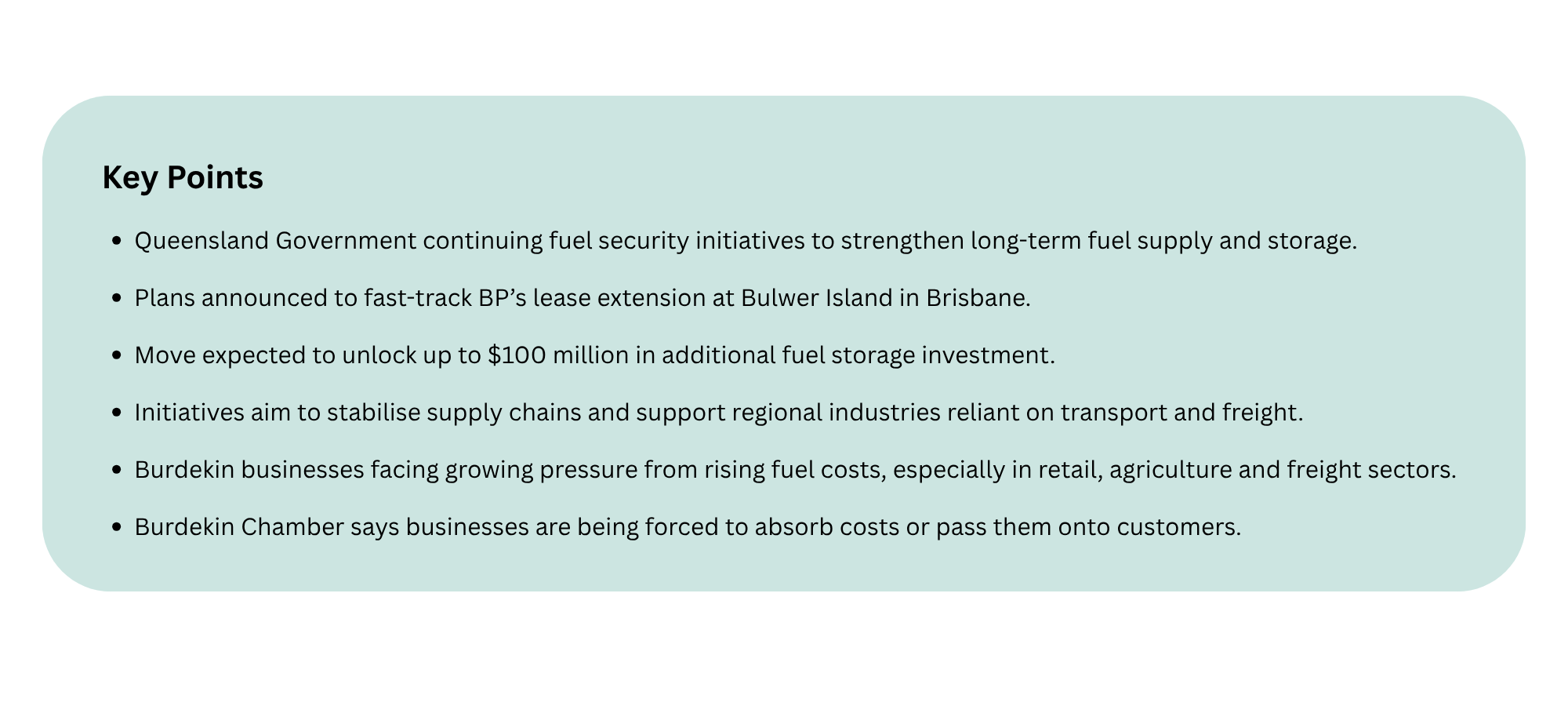
Amid growing concerns over rising fuel costs and ongoing energy uncertainty impacting regional businesses across the Burdekin Shire, the Queensland Government has continued rolling out a series of fuel security initiatives aimed at strengthening the State’s long-term fuel supply and storage capacity.
Building on recent announcements including the Accelerating Fuel Infrastructure Program, the Queensland Fuel Security Plan and a $25 million investment into renewable diesel production at Ampol’s Lytton refinery, on Saturday 9th May the State Government announced plans to fast-track BP’s lease extension at its Bulwer Island facility in Brisbane.
The move is expected to unlock up to $100 million in additional fuel storage investment, forming part of broader efforts to improve fuel security, stabilise supply chains and reduce pressure on transport and freight-reliant industries across regional Queensland.
Burdekin Chamber of Commerce Secretary Kari Ravizza said rising fuel prices were placing significant strain on businesses throughout the region, particularly within retail, agriculture and freight-dependent industries.
She explained that regional communities often faced fewer transport alternatives and less pricing competition than metropolitan areas, while many suppliers had introduced fuel surcharges and more frequent price adjustments, making already tight business margins increasingly unpredictable.
“Across regional areas, rising fuel costs aren’t just an inconvenience—they’re compounding pressure across every part of operations,” explained Mrs Ravizza.
“Businesses are facing a tough choice: absorb the cost or pass it on, both of which have consequences in smaller communities where customers are already cost-conscious.”
Member for Burdekin and Minister for Natural Resources and Mines Dale Last said BP’s latest announcement demonstrated what could be achieved when governments were genuinely committed to strengthening Australia’s fuel sovereignty and long-term energy resilience.
“We’re the only state taking fuel security seriously and making the decisions that will return energy sovereignty to our state,” said Mr Last.
“Never again do we want to be at the end of a supply chain that sees Queenslanders suffer because they can’t get the fuel they need to do their job.”
Mrs Ravizza said rising fuel prices were also beginning to impact tourism and consumer confidence across the wider North Queensland region.
“Our members [Burdekin Chamber of Commerce] have observed reduced visitor numbers during periods of high fuel costs, softer retail trade, lower hospitality turnover, and increased uncertainty when planning events or seasonal campaigns,” she said.
“Operationally, businesses are adapting where they can—consolidating deliveries, limiting travel, and tightening budgets—but there are limits to how much efficiency can offset rising costs.”
As conversations continue around renewable fuels and regional energy resilience, attention has also turned towards the potential role of locally produced ethanol through Queensland’s sugar industry.
Mrs Ravizza said the Chamber believed ethanol production could form part of a longer-term solution for regions like the Burdekin Shire, particularly if locally produced fuel solutions are linked to the sugar industry.
“In a region like the Burdekin, where sugar production is a key economic driver, ethanol presents an opportunity to add value to an existing industry, support regional jobs and investment, and potentially provide more stable and locally influenced fuel pricing over time,” she said.
“While there are challenges—including infrastructure, investment, and policy considerations—this is the type of forward-thinking solution that aligns with regional strengths.”
As regional businesses continue navigating rising operating costs and ongoing fuel uncertainty, many across the Burdekin Shire are hopeful that greater investment in fuel security, local infrastructure and renewable fuel opportunities could help strengthen long-term economic resilience for both industry and the wider community.

Federal Member for Dawson and Shadow Assistant Minister for Manufacturing and Sovereign Capability, Andrew Willcox MP, is encouraging visual artists from across North Queensland to apply for the Australian Parliament House Artist-in-Residence program. Photo supplied
Federal Member for Dawson and Shadow Assistant Minister for Manufacturing and Sovereign Capability, Andrew Willcox MP, is encouraging visual artists from across North Queensland to apply for the Australian Parliament House Artist-in-Residence program.
The initiative, delivered by the Department of Parliamentary Services, offers a unique opportunity for artists at any stage of their career to go behind the scenes at the national heart of democracy.
Mr Willcox said the program provides a rare vantage point where politics, history, architecture, and art meet.
"This is a fantastic initiative to highlight the work of a selected artist and give them the opportunity to see the inner workings of Parliament House," Mr Willcox said.
"It is important that we support the arts. This program provides a rare opportunity for Australian artists to grow their practice and showcase our democracy through their own creative lens.”
The architects of Parliament House, Mitchell/Giurgola & Thorp, intended art to be integral to the architecture and function of the building. The artwork within the building enlivens the working environment and reflects the diversity of Australia’s identity, culture, character, and landscape.
The successful artist will receive an artist fee for the Research Stage of $10,000; an additional Commission Fee for new work of up to $30,000; a travel and accommodation allowance of up to $15,000; and access to a workspace within the Parliamentary Library.
"I would love to see a talented artist from our region take up this residency," Mr Willcox said.
"Dawson has a rich cultural identity; this is the perfect platform to present a fresh, regional perspective on one of our nation's most iconic environments.”
Applications for the program are now open and will close at 11:00 am on 16 June 2026.
For further information and to apply, please visit the official website:
https://www.aph.gov.au/Visit_Parliament/Art/Parliament_House_Artist-in-Residence
Contributed with thanks to Federal Member for Dawson, Andrew Willcox’s office
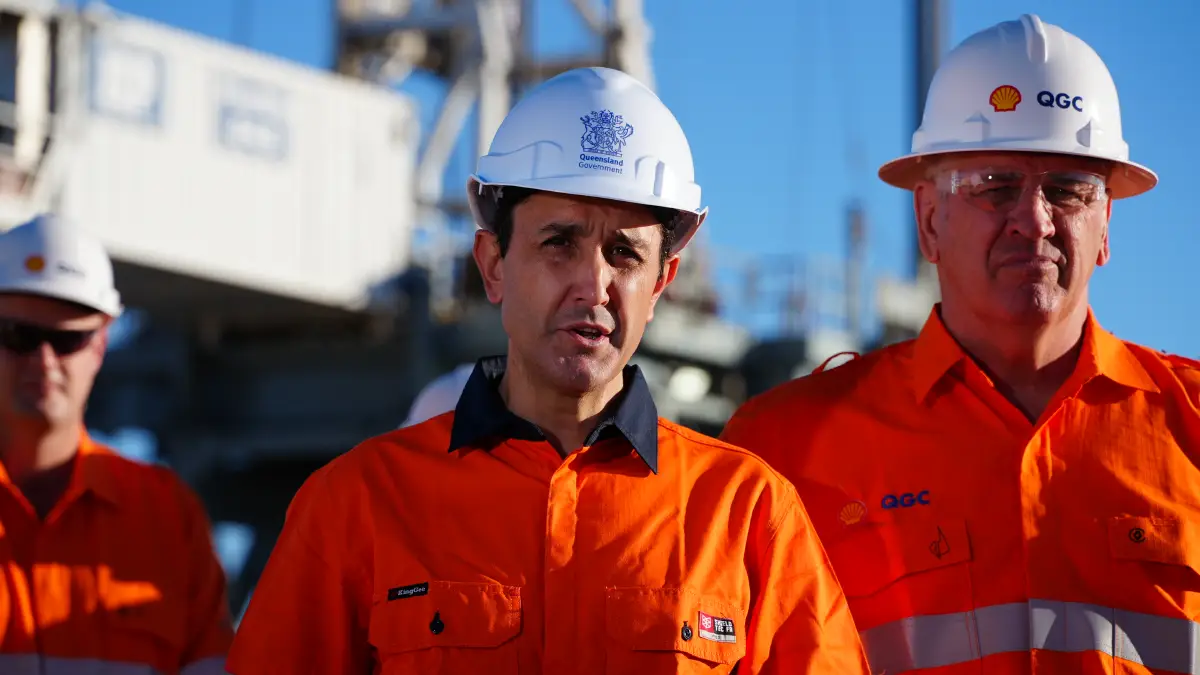

Burdekin’s peak agricultural industry is being assured by Member for Burdekin Dale Last they have not been forgotten by the Crisafulli Government as concerns remain around fuel security during a critical time of the year.
From immediate relief to securing supply and long-term certainty, the Crisafulli Government’s release of its Queensland Fuel Security Plan outlined actions to make a real impact, especially with the approach of sugarcane crushing season.
Mr Last said the Crisafulli Government’s five-point plan was about providing short, medium and long term surety so Queenslanders, its industries and small businesses are never again at the mercy of global supply chains.
“Our sugar industry is the backbone of our economy here in the Burdekin and without the fuel it needs to keep harvesters, haul outs and machinery going, we risk the sector being brought to a grinding halt,” Mr Last said.
“We know when our agriculture sector is able to thrive, the benefits flow right through to the communities that surround them, which is why the Crisafulli Government is taking steps to make sure the fuel our farmers need is affordable and available when it’s time to fuel up.”
“Striking oil at the Taroom Trough is just one piece of the puzzle with expressions of interest now open for the industry to bring forward fuel refining or storage proposals on Government owned sites and ports across Queensland including Abbot Point.”
“We're not stopping there, the Crisafulli Government has also announced we are removing state taxes on fuel price rises, delivering the savings families and our farmers need right now.”
Mr Last said the Crisafulli Government’s active steps to drill, refine and store fuel in Queensland meant our farmers and the industries that support them could have the confidence to prosper for years to come.
“We are living in uncertain times and recent events show just how susceptible we are to impacts of overseas conflicts. It is up to governments of all levels to show leadership and do what is needed to provide the certainty Queenslanders need, no matter whether you are fuelling a tractor or the family car,” Mr Last said.
“We’re playing our part by unlocking the land these facilities will be built on as well as providing the fastest pathway possible to getting them going – now we’re asking the Federal Government to play their part.”

A young Burdekin woman has been praised for doing the right thing after accidently damaging a car in the Woolies’ car park. Photo source: Shutterstock
A simple act of honesty in a Burdekin supermarket car park has sparked an outpouring of praise online, after a young local woman took responsibility for accidentally damaging another person’s car and stayed behind to make things right.
The story was shared to the Burdekin Community Hub Facebook page by local resident Jennie Fabbro on behalf of the car owner, quickly attracting more than 400 reactions and dozens of supportive comments from the community.
According to the post, the young woman accidentally hit a parked car at the Woolworths car park and rather than driving away, immediately reported the incident to the Woolworths service desk.
“The young ones of today are often frowned upon, but I’d like to share a story of a very caring, genuine young lady,” the post read.
After a public announcement failed to locate the car owner, the young woman reportedly waited beside the damaged vehicle until they returned from shopping.
“She didn’t just drive off – she reported it to Woolworths Service Counter,” the post stated.
The writer explained the young woman was visibly shaken and, despite not having insurance, still offered to pay for the repairs.
“I am very happy to say that she arrived at our doorstep, as promised, and presented us with the payment,” the post continued.
“We are so VERY grateful for your honesty and willingness to help make this right. Please stay the lovely, caring person that you are.”
The heartfelt story resonated strongly with locals, many praising the young woman’s integrity and the values she had clearly been taught.
“Lovely to hear a good news story about young people,” one commenter wrote, while another described the act as “refreshing” and “rare and genuine.”
Others commended the young woman for taking responsibility and showing maturity beyond her years, with many saying the story restored their faith in the younger generation.

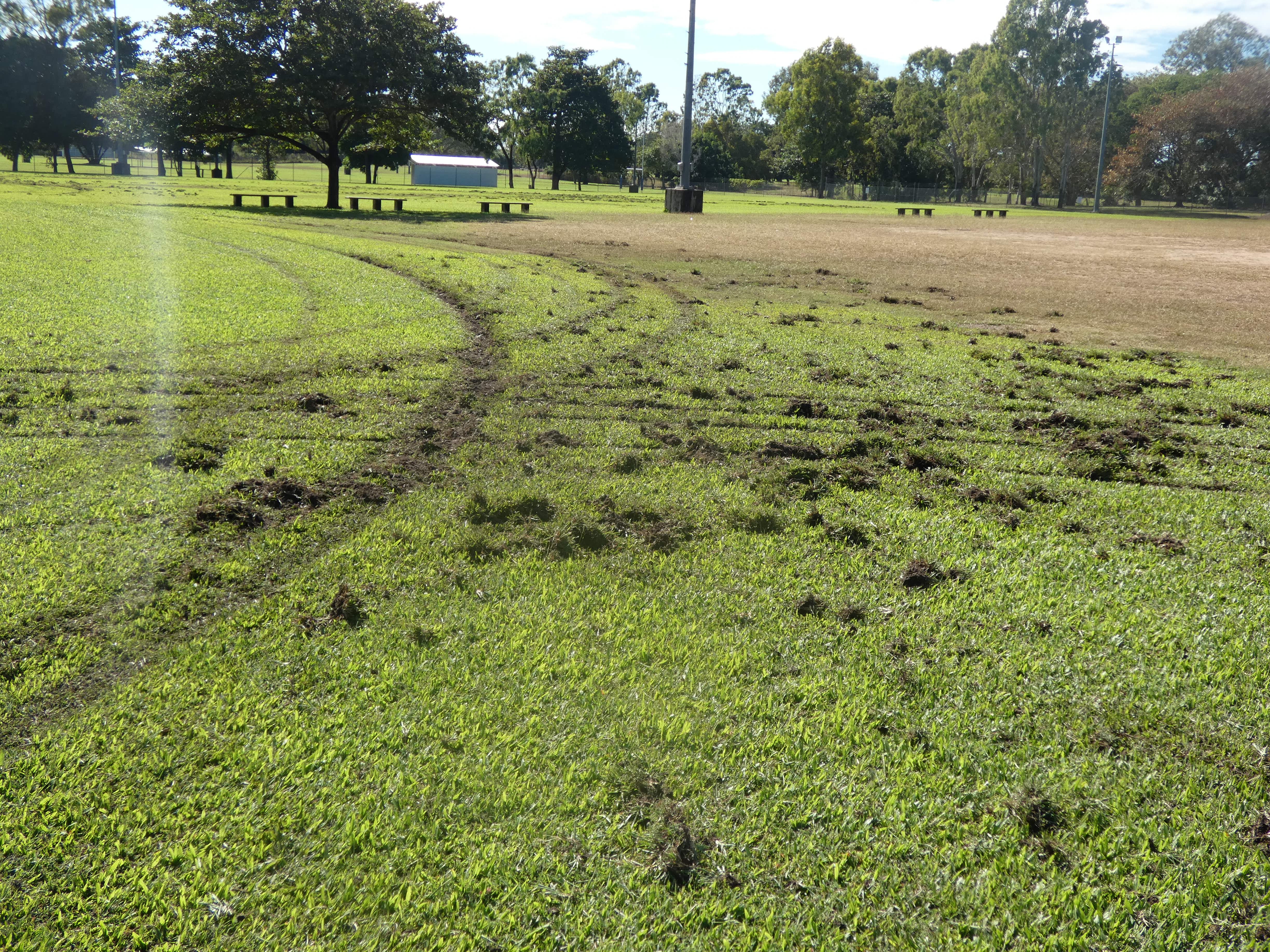
Deep tyre tracks have left three local sports fields unplayable and caused an estimated $5,000 in damage. Photo credit: Luke Bozzetto
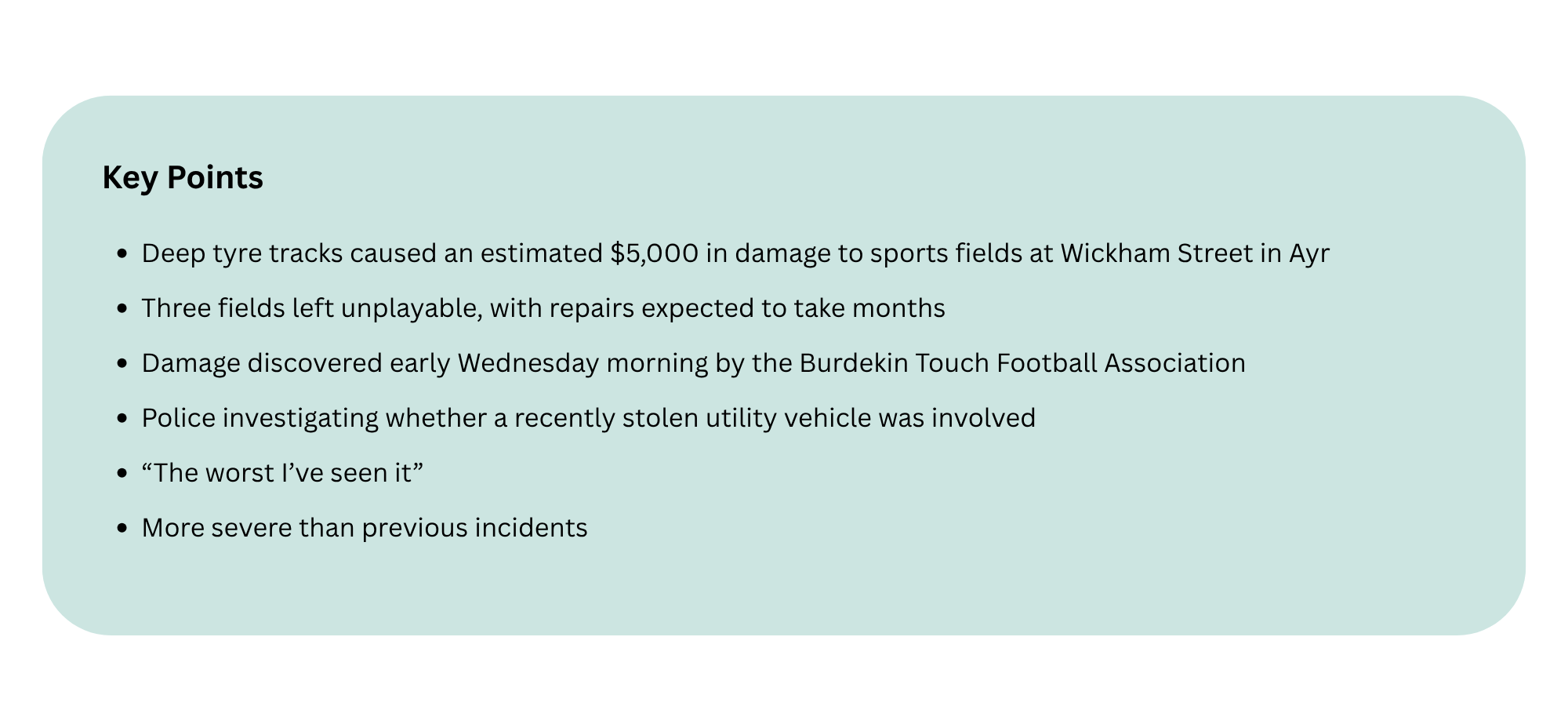
Deep tyre tracks have left three local sports fields unplayable and caused an estimated $5,000 in damage, leaving the Burdekin Touch Football Association to face a months-long recovery effort.
The extensive vandalism to the Wickham Street grounds in Ayr was discovered early Wednesday morning, sparking a police investigation into whether a recently stolen vehicle was involved.
‘The worst I've seen it’
Burdekin Touch Football Association President Peter Knapton was notified of the destruction at 6am on Wednesday.
“I thought, 'not again!’" Mr Knapton said.
“It’s happened before, but this is the worst I’ve seen it.”
Groundskeepers estimate repairs will exceed $5,000, with deep ruts and possible sprinkler damage expected to take months to restore.
Mr Knapton expressed deep frustration over the disrespect shown to the club's volunteers, who spend countless hours maintaining the facility.
“I know the amount of hours that our groundskeepers put into this field,” Mr Knapton said.
“When we developed field five, they spent days and hours pulling out every bullhead, every bindi, every weed… it’s so disappointing, not just for me, but for all of us.
“People don’t have respect for other people’s property anymore. It’s sad that you have to accept that these things are going to happen, and you’ve got to put in such extensive measures to mitigate and repair any damage to your property.”
The Wickham Street complex is a popular community hub, hosting touch football, junior rugby league training, junior touch and organised fitness training each week. Mr Knapton described its fields as “the best in North Queensland.”
He noted that the facility's open accessibility makes it a social pillar for the community, but leaves it susceptible to incidents like Wednesday’s.
He said the club had explored remedies to prevent illegal vehicle access, with most involving costs the club could not afford.
Ayr Police have launched an investigation into the vandalism, with officers looking into whether a utility vehicle, stolen from an Ayr address on the same morning, was involved in the incident.
Sergeant Lisa Shields, Officer in Charge of Ayr Police, condemned the damage, calling the incident "extremely disappointing" given its widespread impact on the local community.
“Police are appealing for public assistance in identifying the persons responsible for this careless act,” Sgt Shields said.
“I urge anyone who may have witnessed suspicious activity or may have relevant CCTV or dashcam footage to come forward.”
Anyone with information is urged to contact the Ayr Police Station, Policelink, or Crime Stoppers.
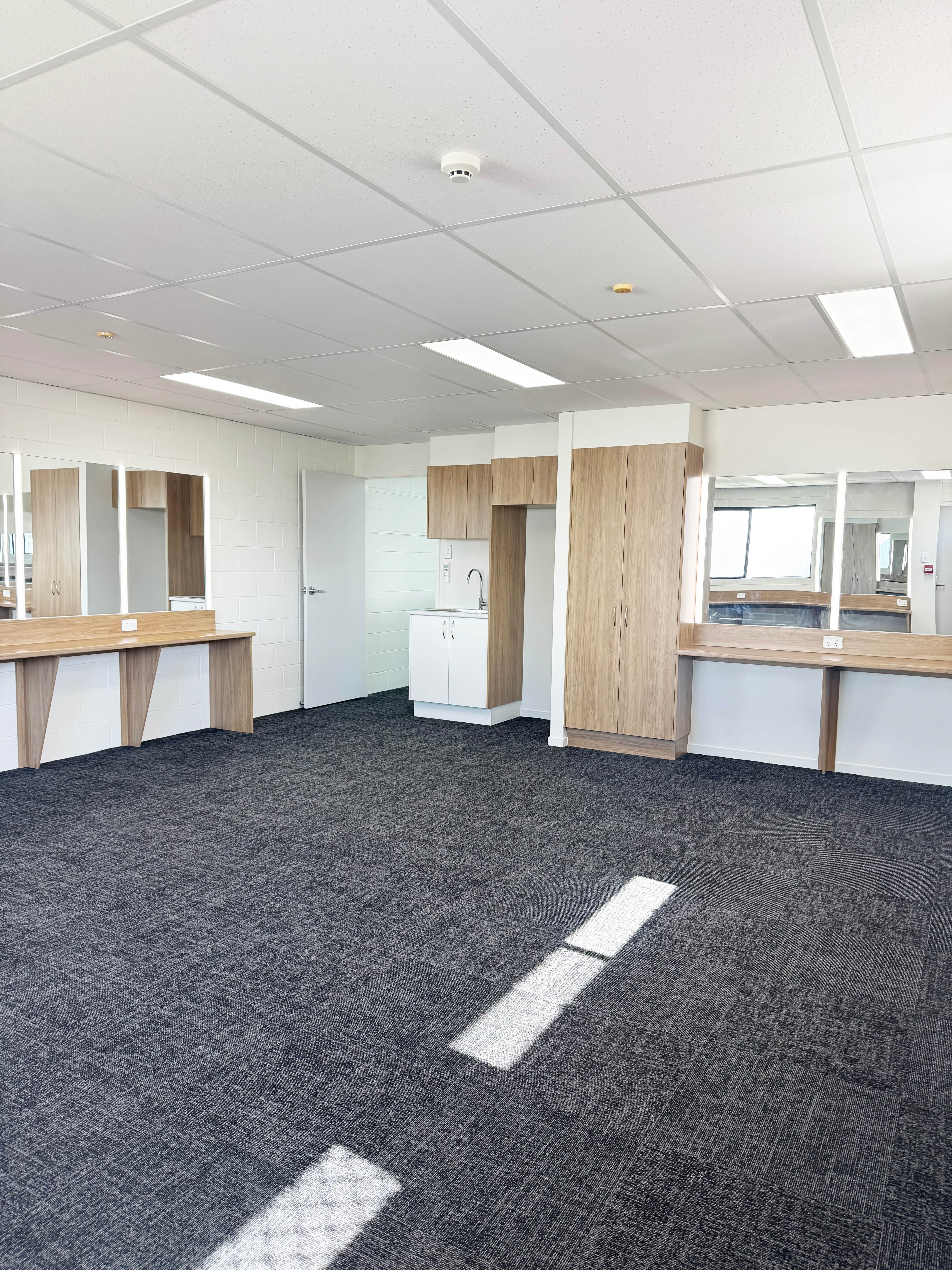
Burdekin Shire Council is pleased to announce that refurbishment works at the Burdekin Theatre have now been completed, with the venue officially back in operation.
Burdekin Shire Council is pleased to announce that refurbishment works at the Burdekin Theatre have now been completed, with the venue officially back in operation.
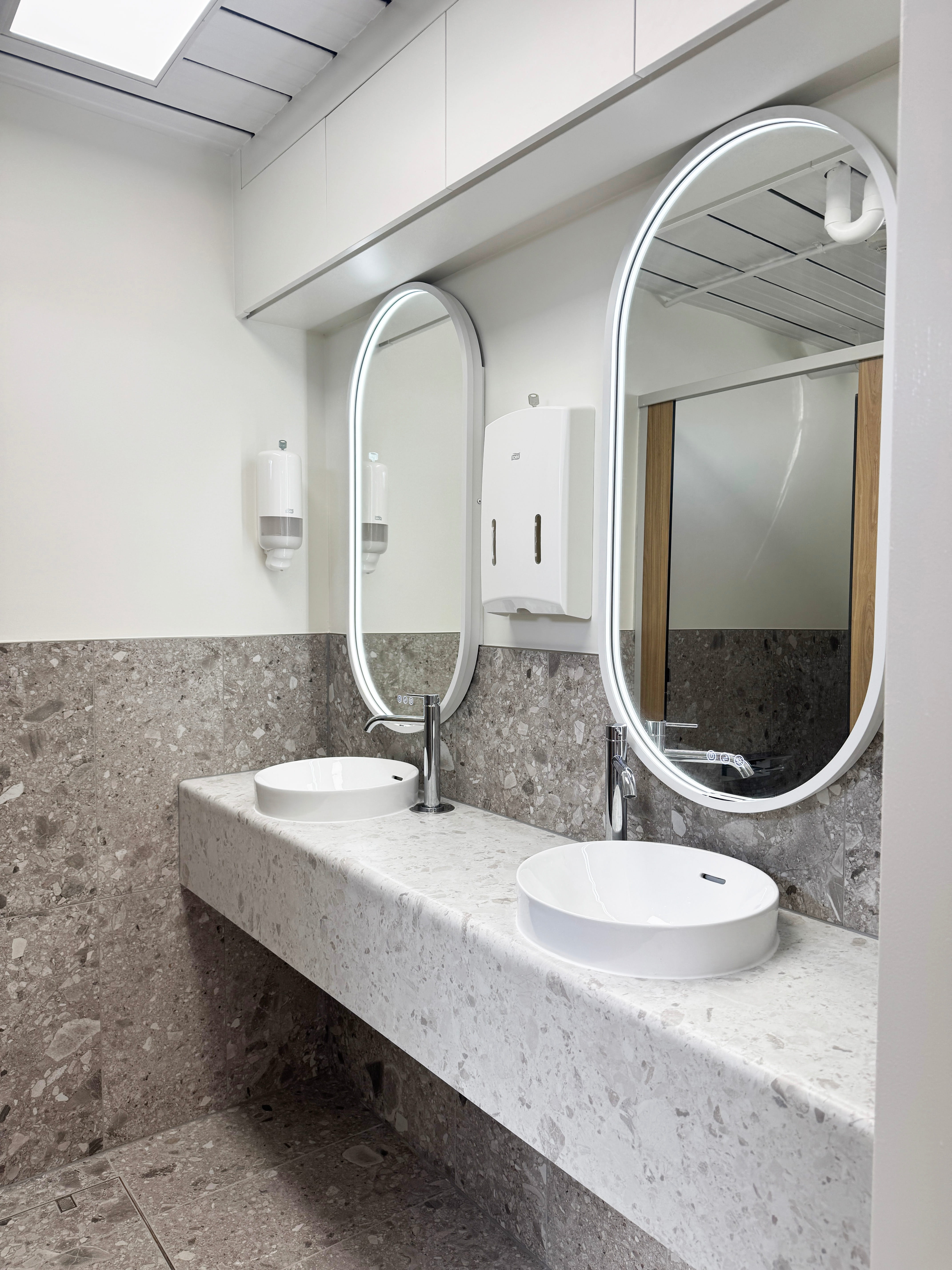
The recently completed upgrades included a full refurbishment of the theatre stage and a complete upgrade of the dressing rooms, delivering modern, functional backstage facilities for performers and production crews.
Both the stage and dressing rooms were original to the theatre and had not been refurbished since the venue was constructed in 1982, making these improvements a significant milestone for the facility.
Mayor Pierina Dalle Cort said the completion of the works marked an exciting new chapter for the Burdekin Theatre.
“These upgrades ensure the Burdekin Theatre can continue to support local performers and visiting productions for many years to come,” Mayor Pierina Dalle Cort said.
“With modernised backstage facilities and a newly refurbished stage, performers will benefit from a safer, more functional environment that reflects the high standard of talent we see in our community.”

The Burdekin Junior Eisteddfod, which commenced on Tuesday 5 May, will be the first major event to utilise the upgraded facilities, with hundreds of local and visiting competitors taking to the stage in the coming weeks.
Council is proud to support the strong performing arts culture in the Burdekin and looks forward to seeing the refreshed theatre continue to host a wide range of performances, events and community activities.
Contributed with thanks to Burdekin Shire Council

Ringo is a young American Bulldog with presence, personality, and just enough cheek to keep life interesting.
At first meeting, he can come on strong with big energy, big enthusiasm, and a clear belief that everyone is already his best friend. Give him a few minutes (and ideally a treat or two) and he quickly softens into a loyal, affectionate companion.
His foster carer lovingly describes him as “a bit of a boof” when excitement kicks in. For this reason, Ringo is not suited to homes with small children, even though his intentions are always gentle.
On the lead, Ringo is generally steady and willing, but he shows his best self in quieter environments where he isn’t overwhelmed by noise and movement. Busy streets and high stimulation can distract him, so continued training and calm exposure will help him build confidence and focus.
He is highly food motivated, which makes him a quick learner during training sessions. However, this also means portion control and supervision around food will be important.
Ringo is currently working on his manners, including waiting patiently for meals and taking treats more gently. With consistency and guidance, he is improving every day.
What Ringo needs now is a patient, kind and committed owner willing to continue his training and help him grow into his best self.
In return, he offers loyalty, charm, and a whole lot of personality packed into one wagging, hopeful package.
Ringo’s adoption fee is $600 and includes desexing, microchipping, vaccinations, flea, tick and worm treatment, and heartworm prevention (or ProHeart).
Contact Angel Paws Inc. on 07 4420 3276 for further information.
.jpg)
FriendlyCare Pharmacy Ayr offers services that can save you time and support your health, often without needing to see a doctor at all. Photo supplied
When most people think of their pharmacy, they think of prescriptions and cold and flu remedies. But your local FriendlyCare Pharmacy Ayr offers much more than that, including services that can save you time and support your health, often without needing to see a doctor at all.
Here are three services you may not know are available right here in Ayr.
FriendlyCare Pharmacy Ayr can now assess and treat eligible patients for uncomplicated UTIs directly, thanks to expanded pharmacy prescribing services in Queensland. Our trained pharmacist will assess whether this service is appropriate for you and, where eligible, can supply the required treatment on the spot. Fast, confidential and convenient.
FriendlyCare Pharmacy Ayr can provide certificates for sick leave and carer's leave for eligible patients, recognised under the Fair Work Act. A practical alternative when a GP appointment is not immediately available. Speak with our pharmacist to find out if a certificate is right for your situation.
FriendlyCare Pharmacy Ayr is a registered NDSS access point, giving you access to subsidised testing strips, lancets, insulin pump consumables and other diabetes management products right here in your community. Our pharmacist can also help you register for the scheme and connect you with further support.
Pop in and see us. No appointment necessary for most services.
Contributed with thanks to FriendlyCare Pharmacy
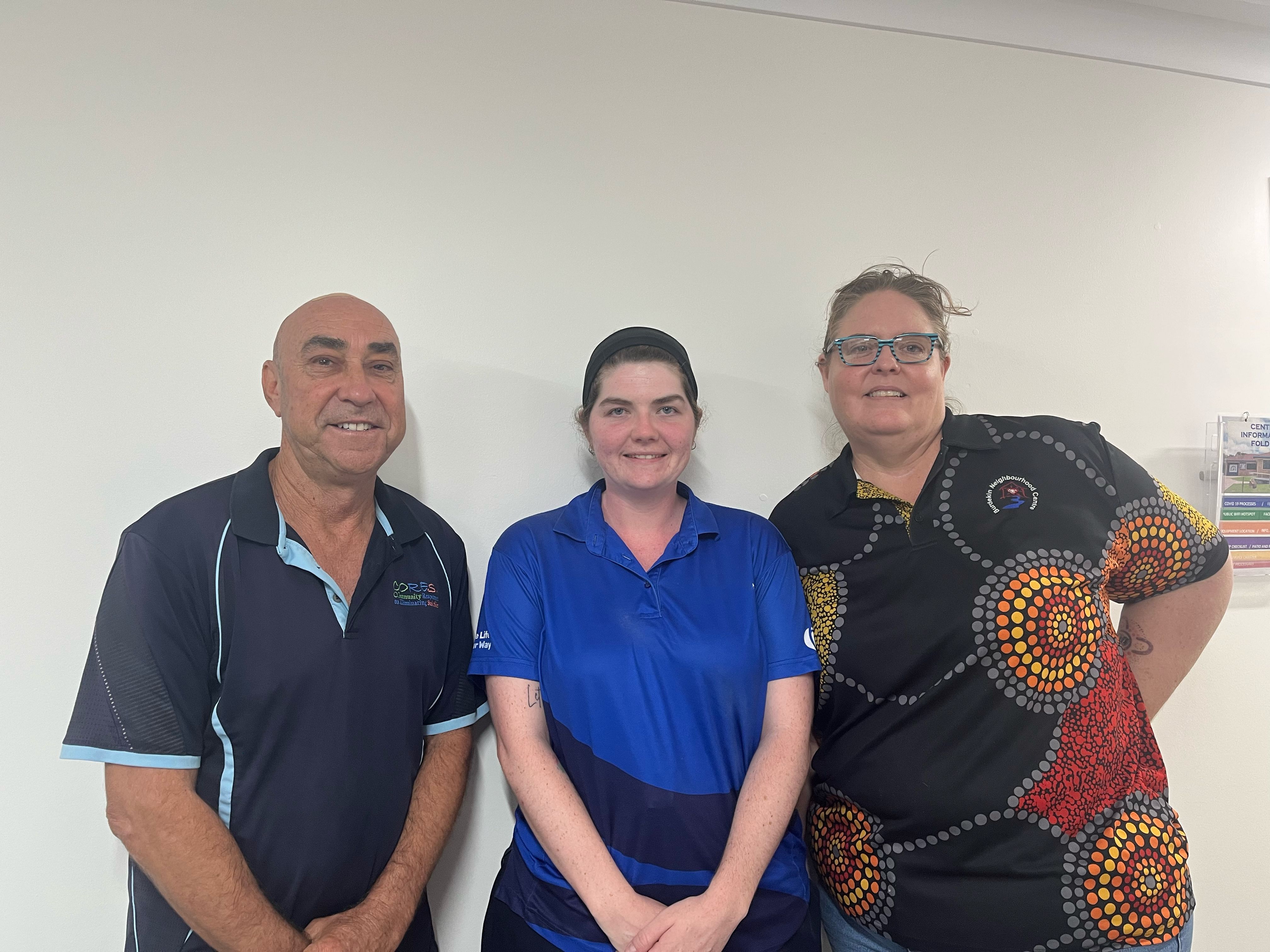
Burdekin local Bree Fagg (centre) spearheaded the push for the group, approaching Ross Romeo of CORES (left) and BNC coordinator Natalie Saroglia (right) to help bring it to fruition. Photo credit: Jacob Casha
Local hands have introduced a new grief support group in the Burdekin, answering the community’s call for a dedicated space to talk about grief and find support close to home.
Hosted by the Burdekin Neighbourhood Centre (BNC), the group will give locals access to coping strategies and “a community of compassion and understanding.”
The initiative was spearheaded by local resident Bree Fagg, who identified a gap in local support services following the loss of two family members.
“I felt like the community needed more support for families—not just for suicide loss, but for general grief, general loss,” Ms Fagg said.
“I felt alone in it. Now, I want to help make sure there’s a place for families to gather and have that support.”
Ross Romeo of CORES Queensland will facilitate the meetings, focusing on maintaining a safe environment that respects individual experiences.
“The idea is to create a safe space where people can come together while acknowledging that they’re all different in what they’re going through,” said Mr Romeo.
“Once you’ve lost somebody, there’s still a connection to that person. It’s just about getting used to that new norm, and being with people who are going through the same sort of issues is helpful.”
BNC coordinator Natalie Saroglia said the group is open to anyone navigating loss.
“We’re never going to get away from experiencing grief; whether it’s the loss of a relationship, loss of a job, loss of a person, grief is in our lives,” Ms Saroglia said.
“People don’t need services, they need people. This group is about people coming together around a common thing.”
The group will meet on the second Tuesday of each month at 5:30pm. For more information, contact BNC on 4783 4243 or at admin@thebnc.org.au.

Residents have shared mixed views on how much control councils should have over private property, sparking widespread discussion in the Burdekin community. Photo credit: Callan Lund
Council have provided their perspective after a question posted to a local online community group sparked lively discussion, with residents divided over how much control councils should have over private property.
The Burdekin Community Hub post asked, “Should councils be allowed to control what you do on your property?” prompting nearly 200 interactions from residents sharing a range of perspectives.
Many noted that there are situations where council oversight may be necessary, particularly in relation to health, safety, and neighbourhood standards.
Others expressed strong support for individual property rights, arguing that councils should have limited authority over private land, and sharing concerns about rates; some suggesting that any oversight should only apply where actions significantly impactneighbours.
Burdekin Shire Council Mayor Pierina Dalle Cort said Council can lawfully regulate how private property is used only where specific legislative powers apply; particularly when activities affect neighbours, community health and safety, environmental standards, or local amenity.
“Council may become involved where there are genuine health, safety or amenity concerns for example, matters that pose a risk to neighbours, the environment, or public safety,” said Mayor Dalle Cort.
“This can include issues like unsafe structures, serious overgrowth attracting pests, unmanaged waste, or activities that could create pollution or fire risk. Even then, Council’s approach is proportionate and guided by legislation.”
She emphasised that Council’s role on private land is limited and clearly defined, with no general authority to intervene simply because an issue occurs on private property. Instead, Council can act only where legislation provides explicit powers, such as under local laws, environmental regulations, or public health and safety frameworks. In most cases, its involvement is focused on ensuring minimum standards are met to protect the broader community, rather than directing how individuals use their land.
“Respecting individual property rights is extremely important, and Council takes that responsibility seriously,” said Mayor Dalle Cort.
“At the same time, Council also has a duty to maintain community standards that protect health, safety and amenity for everyone. Our role is to carefully balance those responsibilities, applying common sense and fairness in each situation.
“Council always aim to work with residents, not against them, and to resolve issues in a way that is reasonable, lawful and proportionate.”
As the discussion continues, the issue highlights a broader question facing many regional communities; where to draw the line between personal freedom and maintaining standards that protect the wider neighbourhood.

Nominations for the 2027 Season Managed Pool Plus are now open, providing growers with an opportunity to take a proactive and structured approach to managing sugar price risk in what remains a volatile and uncertain global market. Photo supplied
Nominations for the 2027 Season Managed Pool Plus are now open, providing growers with an opportunity to take a proactive and structured approach to managing sugar price risk in what remains a volatile and uncertain global market.
With ongoing pressure from large global supply forecasts, shifting macroeconomic conditions and currency volatility, pricing decisions are becoming increasingly complex. The Managed Pool Plus has been designed to help address these challenges by offering a disciplined, longer-term approach to managing GEI exposure, while also incorporating MEI exposure within a single, actively managed pool.
A key strength of the Managed Pool Plus is its two-year pricing window, which allows for a more flexible and considered response to market movements. Rather than relying on short-term timing, the pool is actively traded across both futures and currency markets, with the aim of capturing value as opportunities arise over time. This approach is supported by Wilmar’s sugar trading team, whose experience and market access underpin the pool’s strategy and execution.
Importantly, the pool brings growers and the mill together in navigating market conditions, with both parties exposed to the outcomes of pricing decisions. This alignment supports a consistent and disciplined approach to risk management, focused on delivering improved pricing outcomes over the longer term.
For growers, the Managed Pool Plus can reduce the pressure of trying to pick the market and the time required to actively monitor price movements. It offers a practical option for those looking to complement their existing pricing strategies or take a more hands-off approach, while still maintainingexposure to potential market upside.
Another important consideration for growers is flexibility. The Managed Pool Plus allows you to nominate a portion of your GEI exposure, meaning it can sit alongside other pricing mechanisms as part of a broader, diversified strategy. This gives growers the ability to spread risk across different approaches, rather than relying on a single pricing decision. By combining active pool management with individual pricing choices, growers can build a more resilient pricing strategy.
The Managed Pool Plus is open to anyone marketing with Wilmar for the 2027 Season. Simply nominate a percentage of your exposure before 30 June via the Pricing portal in GrowerWeb.
Growers are encouraged to speak with their local Grower Marketing Relationship Manager to determine how the Managed Pool Plus can fit within their overall pricing strategy.

The Fund aligns with Primary Industries Prosper 2050, Queensland’s 25-year blueprint to build a better future for primary industries, and its goal to boost primary production output to $30 billion by 2030. Photo source: QIC
The Government has unveiled a $30 million fund aimed at accelerating agricultural innovation across Queensland, as part of a broader push to grow the State’s primary industries sector to $30 billion by 2030.
The Sowing the Seeds of Farming Innovation Fund will support agri-innovators developing cutting-edge technology for on-farm use, with a focus on boosting productivity, profitability and sustainability. Delivered in partnership with the Queensland Investment Corporation, the fund is expected to fast-track new technologies from concept to application while attracting private investment.
The initiative forms part of the Government’s broader economic agenda, positioning innovation as a key driver of long-term competitiveness, while also being framed against claims the sector experienced declining support over the past decade.
Minister for Primary Industries Tony Perrett said innovation would be critical to the future of farming.
"Sowing the Seeds of Farming Innovation Fund is a game changer for the future of farming because it will deliver the next generation of AgTech to boost on-farm productivity and profitability,” he said.
“We’ve heard loud and clear from industry there’s no shortage of innovation in Queensland, but what’s needed is stronger commercialisation pathways, and greater investment in practical technologies and this election commitment delivers that."
Treasurer David Janetzki said the fund would strengthen value chains and support long-term growth.
“These targeted investments will not only strengthen Queensland’s primary industry value chains but also position our State's long-term success including global recognition for its practical innovation,” he said.
Industry groups have welcomed the move, with Queensland Farmers’ Federation CEO Jo Sheppard stressing the importance of getting innovation onto farms quickly.
“It’s critical that we move practical innovations out of the lab and into the paddock, where they can deliver real productivity gains for Queensland producers,” Ms Sheppard said.
Businesses can submit expressions of interest through the Queensland Investment Corporation website, https://www.qic.com/Sowing-the-Seeds.
Publishers Indemnity. Any individual or entity that places advertising, supplies copy material, or submits editorial content to Core Life Publishing agrees and undertakes to ensure that all such material:- Does not infringe upon any copyright, trademark, or other intellectual property rights;- Is free from any content that could be considered defamatory, libelous, or slanderous;- Does not infringe upon any rights related to privacy or breach of confidence;- Contains no obscene, indecent, or otherwise unlawful material;- Complies fully with the Trade Practices Act and all other applicable laws, regulations, or statutes.Furthermore, by submitting or placing such material, these individuals or entities agree to indemnify and hold harmless the publisher, Core Publishing and Events Pty Ltd, and/or its agents from and against any and all investigations, claims, demands, liabilities, damages, costs, or judgments arising out of or in connection with the material provided. All material is believed to be accurate at the time of printing and remains the copyright of Core Publishing and Events Pty Ltd.
© 2026 Life Publishing Group Pty Ltd.
