
Independently Owned, Locally Grown, Community Loved
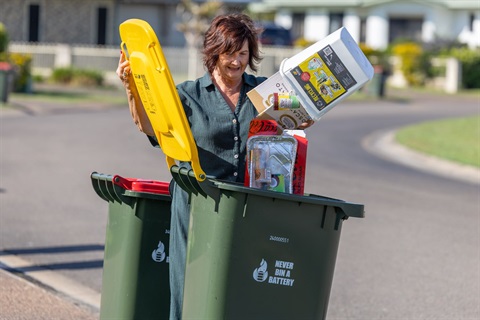
More than a quarter of the material being put into Burdekin recycling bins cannot be recycled through the kerbside service, according to a recent audit. The audit found 28 per cent contamination across the region’s yellow-lid bins, with bagged recyclables, soft plastics and non-recyclable plastic items among the most common contaminants. Mayor Pierina Dalle Cort said the result showed residents needed to take more care when sorting their household waste. “The Burdekin is fortunate to have a three-bin waste collection system, with separate services for general waste, recycling and green waste. This provides households with more opportunities to divert material away from landfill and recover valuable resources,” she said. “By placing recyclable items loose in the yellow-lid bin, keeping plastic bags and soft plastics out of the recycling stream, and taking a moment to check which bin an item belongs in, residents can make a significant difference to the quality of recycling collected across our community.” Council said incorrect items can contaminate recyclable material, increasing processing costs and reducing the amount of material that can be recovered and reused. Residents are reminded to place recyclable household packaging and containers loose in yellow-lid bins, including paper and cardboard, glass bottles and jars, aluminium and steel cans, and plastic bottles and containers. Plastic bags and soft plastics should not be placed in recycling bins. Households that regularly fill their recycling bin can also apply to upgrade to a larger 360-litre recycling bin. Residents unsure where an item belongs can use the Recycle Mate app for recycling advice. CAPTION: More than a quarter of the material being put into Burdekin recycling bins cannot be recycled through the kerbside service, according to a recent audit. Photo: Burdekin Shire Council
Read the full story

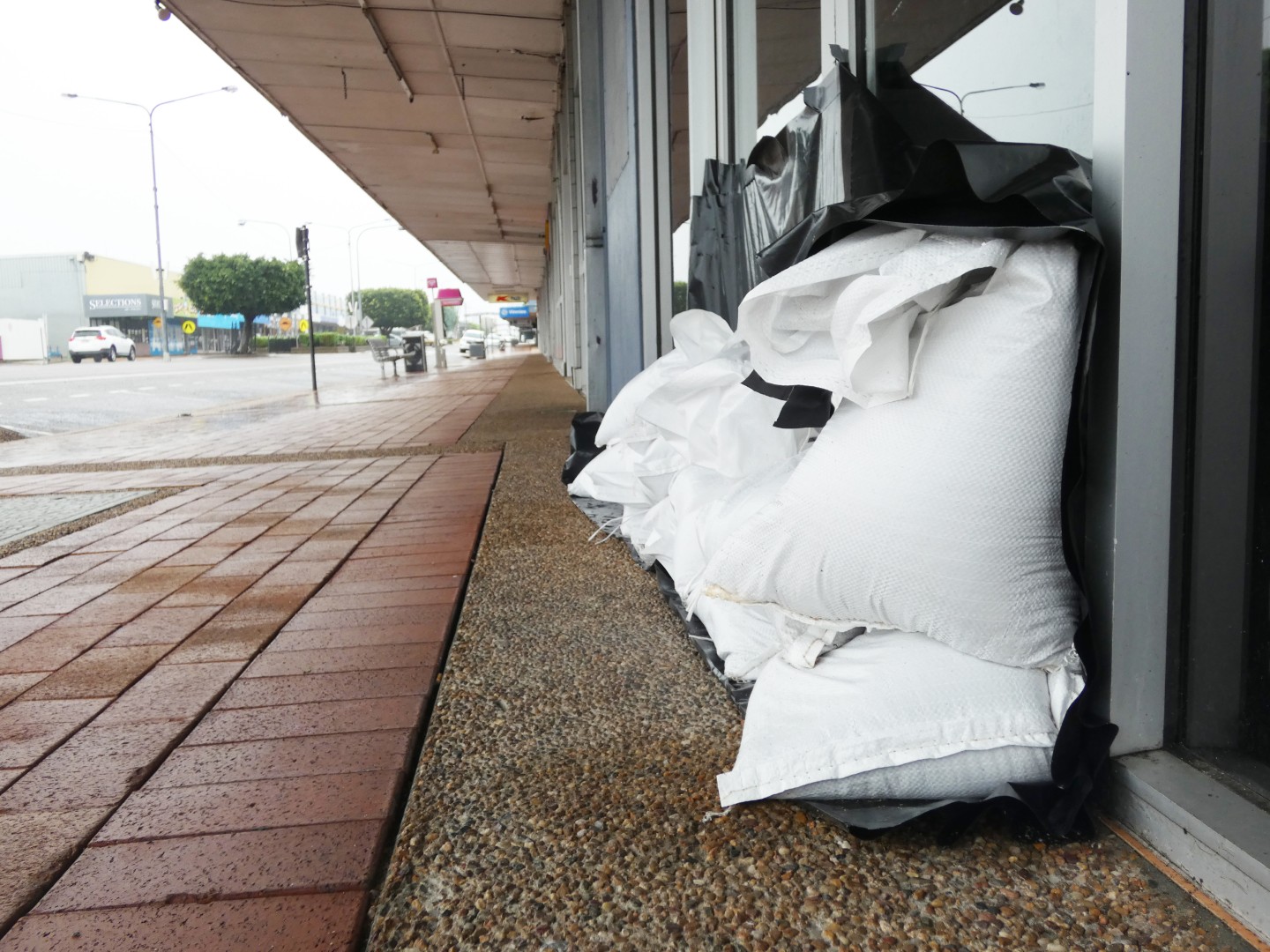
Burdekin Shire Council and local small businesses are now eligible for disaster assistance following widespread flooding across North Queensland, as recovery support is rolled out across the region.
The council can access funding through the Commonwealth-state Disaster Recovery Funding Arrangements (DRFA) to support response and recovery activities, while local small businesses impacted by the floods can apply for disaster loans of up to $250,000. Eligible councils for these loans include Burdekin, Aurukun, Isaac, Mackay, Pormpuraaw and Whitsunday.
Member for Burdekin Dale Last said the support would ease the pressure on families and businesses facing the long recovery ahead.
“Clermont is a resilient community, but it hasn’t seen a weather event like this in over a century. They shouldn’t have to do it alone, and with this support, they won’t have to,” Mr Last said.
“This is about delivering practical help for those doing it tough after seeing their homes and livelihoods damaged by floodwaters.”
While direct Personal Hardship Assistance—emergency payments for food, clothing, medicine, and home repairs — is currently only available to residents in Clermont, McKinlay Shire, and parts of Mackay, Burdekin residents can still benefit from council-led programs and business loans.
Across North Queensland, the assistance includes:
Eligible Mackay localities include Broken River, Crediton, Dalrymple Heights and Eungella. Hardship assistance remains open to residents of Flinders, Richmond and Winton Shires.
Federal Minister for Emergency Management Kristy McBain said support would continue as communities deal with the ongoing impact of ex-Tropical Cyclone Koji and the North Queensland Monsoon Trough.
“During prolonged disaster events like this it’s critical we’re acting swiftly and constantly to get support where it’s required,” Minister McBain said.
Queensland Minister for Disaster Recovery Ann Leahy added that funding assistance would provide vital support in the weeks and months ahead.
“We know how important it is to help Queenslanders get back on their feet following disasters like this,” Minister Leahy said.
Applications for hardship assistance can be made at www.disaster.qld.gov.au or via the Queensland Community Recovery Hotline on 1800 173 349. Small businesses seeking disaster loans can visit www.qrida.qld.gov.au or call 1800 623 946.
Businesses and Council are encouraged to apply for DRFA grants. Photo credit: Jacob Casha

Sugarcane growers in the Central district are being invited to share their insights as part of a new Sugar Research Australia (SRA) demonstration examining root system differences across sugarcane varieties and what they could mean for crop management.
Interest in root systems has been growing among local growers, particularly around how different varieties establish and perform under varying conditions. That interest helped spark a proof-of-concept project by Sugar Research Australia Central, following a presentation attended by Senior Variety Development Manager George Piperidis on assessing sugarcane root systems.
The demonstration forms part of the current District Productivity Plan and aims to capture grower experience with established varieties to help inform the management of newer varieties with similar root characteristics.
The trial began on 27 June 2025, with 15 sugarcane varieties collected from SRA plots across the Central district. These included established varieties, recently released varieties and promising clones. Single-eye setts were prepared, germinated under controlled conditions and then transplanted into mesh cylinders within pots to allow detailed observation of root growth.
Over a 90-day period, the plants were monitored under an overhead irrigation system. Adjustments were made during the trial after variability in water delivery was observed, with future demonstrations set to trial alternative irrigation methods such as individual drippers.
At the conclusion of the trial, roots were assessed using an internationally recognised method to calculate the Root Growth Angle Index (RGAI), which indicates whether roots tend to grow more vertically or spread laterally. While no statistically significant differences were detected between varieties due to irrigation variability, clear trends were observed in total root numbers and distribution across different root angles.
Results from the demonstration were presented to growers and advisors in Proserpine, Te Kowai and Carmila in late 2025. These sessions prompted valuable discussion around how root growth patterns align with on-farm experiences and management practices.
Feedback to date has been supportive, with growers keen to see the work continue and to contribute their own observations. SRA is now encouraging growers to review the findings and provide feedback on variety management based on their experience, helping to shape future research and practical recommendations.
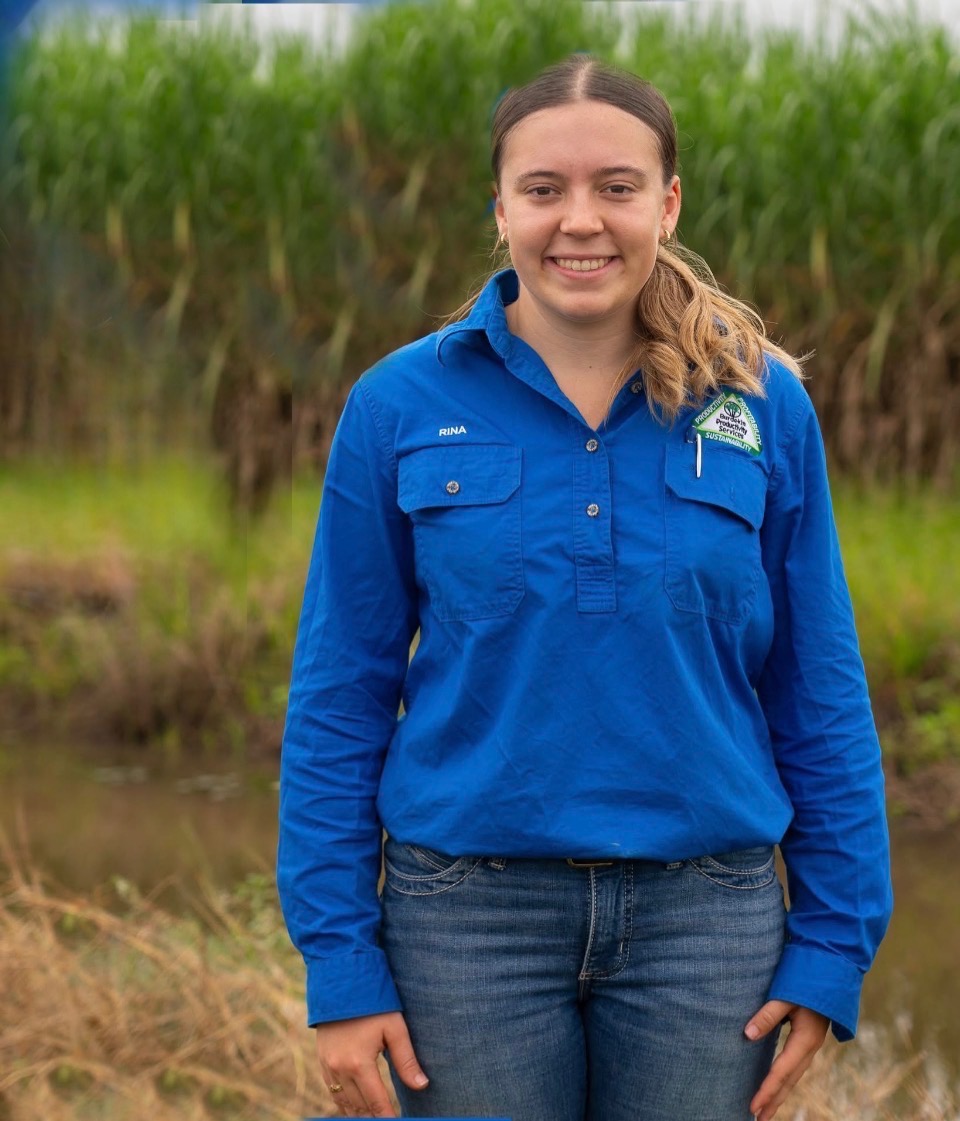
By Chelsea Ravizza
Growing up in a farming family, Rina Patane has been immersed in the agricultural sector for as long as she can remember, noting it was her parent’s influence that inspired her to peruse a tertiary education in the sphere.
“I’ve always really enjoyed and had an interest in agriculture,” said Rina.
Rina spent her childhood working on the farm with her father and brothers, and once she had the opportunity to tailor her education, she chose to peruse agriculture practices in high school and sought out work experience opportunities whenever she could.
Currently employed locally at Burdekin Productivity Services, Rina previously studied and obtained a Certificate II in Horticulture at CQUniversity Australia before graduating from high school and recently concluded her participation in Queensland Farmers Federation’s (QFF) AgTech Officer Program in April of last year.
“My course at CQU was really good,” she recalled.
“It covered a lot of relevant topics, and I could do my practical stuff at home. I’d then just take photos and send it back to my instructors, and dad was allowed to supervise and sign things off for me.”
Over the course of her studies, Rina learnt several skills which boosted her employability and overall knowledge of the agricultural sector, including drone piloting to support growers in identifying pest damage and monitoring crop health.
“I enjoy a mix of everything when it comes to ag,” added Rina.
“I like the tech stuff because that’s sort of the way of the future, but I also like talking to the farmers and interacting with them and doing the hands-on stuff on the farm.”
Rina was able to study and work from home on her family’s farm due to the support of the QFF, while her tertiary education opportunities were supported by the Queensland Government’s Right Skills Strategy — an initiative designed to build a highly skilled workforce by expanding training opportunities across regional areas and delivering support to quality training where and when it is needed. Without the QFF’s support, Rina would have had to relocate to Gatton in Brisbane to pursue her studies.
“It was really important to me to be able to stay locally,” Rina explained.
“I didn’t want to move away from the Burdekin, because I really enjoy living here, and I really wanted to work while doing uni because I thought I might be behind if I didn’t, and I think you learn more on the job sometimes than at university.”
Rina’s academic achievements and passion for agriculture was spotlighted by the Queensland Government, with the QFF program highlighting Rina as a shining example of how learning the right skills in the right place can lead to career building opportunities, no matter where you live.
Currently, Rina’s studying a Bachelor of Horticulture at Charleston University online on a part-time study load alongside her employment, and she looks forward to continuing to follow her passion for the sector for years to come.
19-year-old Burdekin local Rina Patane has planted the seeds to success in the agriculture sector, using technology to address existing sector needs. Photo supplied

One hundred years ago this week, sugarcane growers from across Queensland met in Mackay to take a defining step that would change their industry forever. CANEGROWERS was born.
At the time, sugar was one of Queensland’s most important industries, so central to the state’s economy that it featured on the Queensland coat of arms.
For growers on the ground, however, the outlook was far from secure. Returns were under pressure, and they had little influence over prices or decisions beyond the farm gate.
In some districts, growers were already organised locally, but the Mackay meeting marked a clear shift in thinking.
Media reports from the period show delegates debating familiar issues – fair returns, transparency, transport and the balance of power across the industry – and reaching the view that a stronger, united approach was needed.
The meeting resolved to establish a single statewide organisation to represent growers collectively, appointing Mackay grower George Johnson as CANEGROWERS’ first Chairman.
One hundred years on, current CANEGROWERS Chairman Owen Menkens said the decision made in Mackay in 1926 reshaped how growers engaged with the industry.
“Those growers understood they needed more than individual voices,” Mr Menkens said.
“By coming together, they gave themselves the strength to be heard and the ability to influence their future.”
That principle has guided CANEGROWERS through a century of change, Mr Menkens said.
“A century on, CANEGROWERS still exists to stand up for growers and make sure they are treated fairly,” he said.
“Over that time, we’ve helped guide the industry through world wars, economic upheaval, policy reform, market deregulation, natural disasters and major technological change.”
Looking ahead, Mr Menkens said the industry was entering another period of evolution, with new opportunities emerging alongside familiar challenges.
“The industry has never stood still, and it won’t now,” he said.
“From diversification and new revenue streams to bioenergy and the broader bioeconomy, growers are already adapting, and CANEGROWERS will continue to play a key role in helping guide the industry through what comes next.”
CANEGROWERS’ centenary will be marked throughout 2026 with events in cane-growing districts across Queensland, culminating in a state centenary gala dinner at Brisbane City Hall in October.
100 years ago this week, cane growers from across Queensland came together because going it alone wasn’t working. Photo supplied
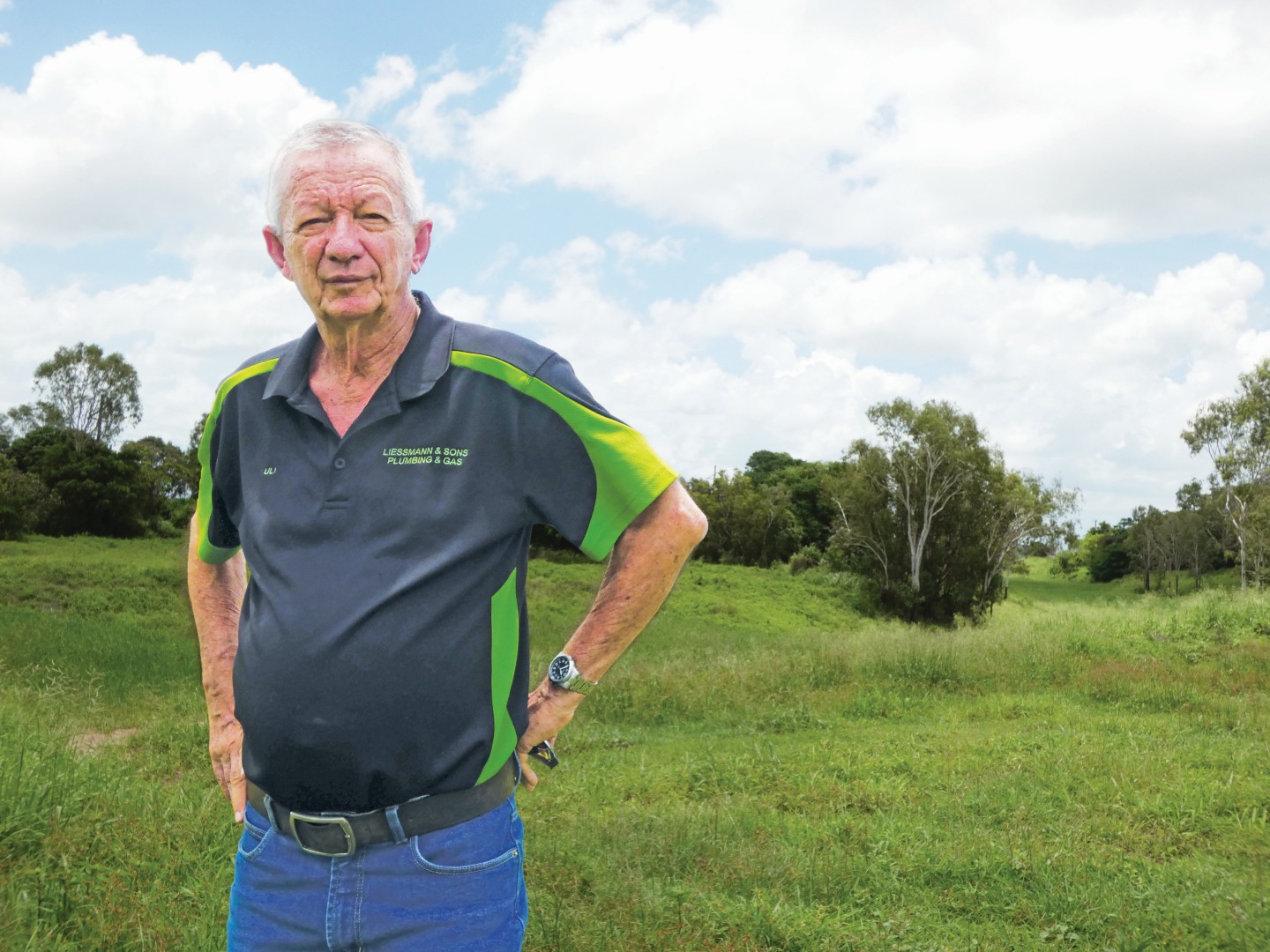
By Jacob Casha
Once a popular haven for kids in Home Hill, Gardners Lagoon could be set for a revival under a new park proposal put forward by Home Hill Chamber of Commerce President Uli Liessmann.
The plans were developed after Council sought the Home Hill Chamber’s input on potential projects for its 2026 budget, with Liessmann citing the park as an opportunity to boost tourism, community wellbeing and flood mitigation on the town’s western side.
“This park is about bringing something to Home Hill that it doesn’t already have—a place that people of all ages can enjoy,” said Liessmann.
“I’m yet to find someone that’s against this idea.”
According to preliminary plans, the proposed park will feature seats, tables, sheltered barbecues, playground equipment, and an amenities block, with purpose-built walkways, biking trails, and a major tree planting scheme to provide shade and enhance the area’s natural character.
The plan also explores options for interactive elements, such as night-time illumination and digital features aimed at making the proposed landmark more engaging and memorable for visitors.
Liessmann said the idea emerged as he weighed up what kind of project would have the broadest appeal across the community.
“I thought, ‘what can I come up with that everybody’s going to like, and that people from five through to 105 can enjoy?’” he said.
“I thought maybe a new footpath, or a new road… then I thought, ‘hang on, we’ve got this lagoon at the back here, where the potential is limitless—you can just do anything with it.”
Liessmann cited a fusion of practicality and nostalgia as the driving forces behind the selection of the long-dormant, once-booming site.
“Gardners Lagoon was the lagoon to go to when you were a kid,” he said.
“Kids used to catch little fish there, everything. If you were a kid from Home Hill and you didn’t go down to Gardners Lagoon, you didn’t really come from Home Hill. I want to bring it back.”
Should the plan come to fruition, the proposed park would join Arch Dunn Memorial Park, Ford Park, Watson’s Green Park, and Lloyd Mann Gardens as one of Home Hill’s public parks.
Liessmann said the new park would offer a different dimension to the existing parks in the area.
“There’s no place big enough [in Home Hill] to entertain all age groups,” he said.
“There's no walking trails, there’s no bikeways. The new park will have all of that.”
He admitted that while the idea has received widespread public backing, it remains at an early stage, with council approval, funding and a master plan all still required before plans can proceed.
Once a popular haven for kids in Home Hill, Gardners Lagoon could be set for a revival under a new park proposal put forward by Home Hill Chamber of Commerce President Uli Liessmann. Photo credit: Jacob Casha
.jpeg)
By Chelsea Ravizza
As the Home Hill–Ayr Lions Club turned the page on 2025, members took the opportunity to reflect on a year defined by service, community connection and meaningful local impact while already setting their sights on a busy and promising 2026.
“The Home Hill–Ayr Lions Club has continued its commitment to supporting the local community and beyond through a wide range of meaningful projects and initiatives,” said club secretary John Donald.
“Our focus has always been on making a tangible difference in the lives of others, and 2025 delivered many moments that truly highlight what Lions is all about.”
Throughout the year, the club remained deeply committed to supporting individuals and families across the Burdekin, extending its reach well beyond the fundraising barbecues many associate with Lions.
“It’s important to highlight that Lions Clubs contribute far more to the community than just cooking sausages at events,” Mr Donald said.
“While a sausage sizzle often marks the beginning of many fundraising efforts, the scope of our involvement extends much further.”
One of the club’s ongoing priorities has been health and wellbeing. Members proudly continued their support of the Lions Australia Hearing Dogs program, helping improve independence and quality of life for people living with hearing difficulties. Early intervention for children was also a strong focus, with the Lions Eye Health Program delivered in local state schools to identify potential vision issues and ensure timely referrals to optometrists.
Supporting local families remained close to the club’s heart, including assisting Tia Wall with the purchase of a reliable vehicle to safely transport her young son, working alongside broader Lions support through the Australian Lions Foundation.
Education and youth wellbeing featured prominently throughout the year, with regular donations made to local school chaplains, as well as support for school awards nights and special events. The club also continued its encouragement of youth participation and creativity through annual contributions to the Burdekin Shire Council FastTrack event and the Burdekin Junior Eisteddfod.
During the Christmas period, the Lions Club donated $1,500 to the Burdekin Community Association, providing 30 families with $50 food vouchers during a time of heightened need. Much of the funding was raised by Burdekin Water Festival Ambassador, Nicole Cervoni, whose efforts were warmly acknowledged by the club.
“These initiatives have not only met immediate community needs, but have also created incredibly rewarding moments for our members,” Mr Donald said.
“Whether it’s improving a child’s health, helping a family gain safe and reliable transport, or spreading a little cheer during the festive season, each project has played a role in making our community a better place.”
Looking ahead, the Home Hill–Ayr Lions Club is keen to welcome new members in 2026, with a particular focus on encouraging younger members of the community to get involved.
“Younger members bring fresh perspectives and new ideas, which can have a really positive impact on the club’s direction and activities,” Mr Donald said.
“We’re eager to hear from community-minded people who may be interested in joining an organisation that connects 1.5 million members worldwide. Their input is invaluable as we continue to shape a club that responds to the needs of both our members and the broader community.”
Those interested in joining the Home Hill–Ayr Lions Club are encouraged to contact John on 0447 561 790, email homehilllions@gmail.com, or attend a meeting held on the second and fourth Monday of each month at the Crown Hotel in Home Hill.
“Through our ongoing commitment,” Mr Donald said, “we strive to make a lasting and positive difference in the lives of those we serve.”
Home Hill-Ayr Lions Club President, Nola Nendick, and Burdekin Water Festival Ambassador, Nicole with BCA representative, Rebecca Grogan delivering vouchers to families in need. Photo supplied
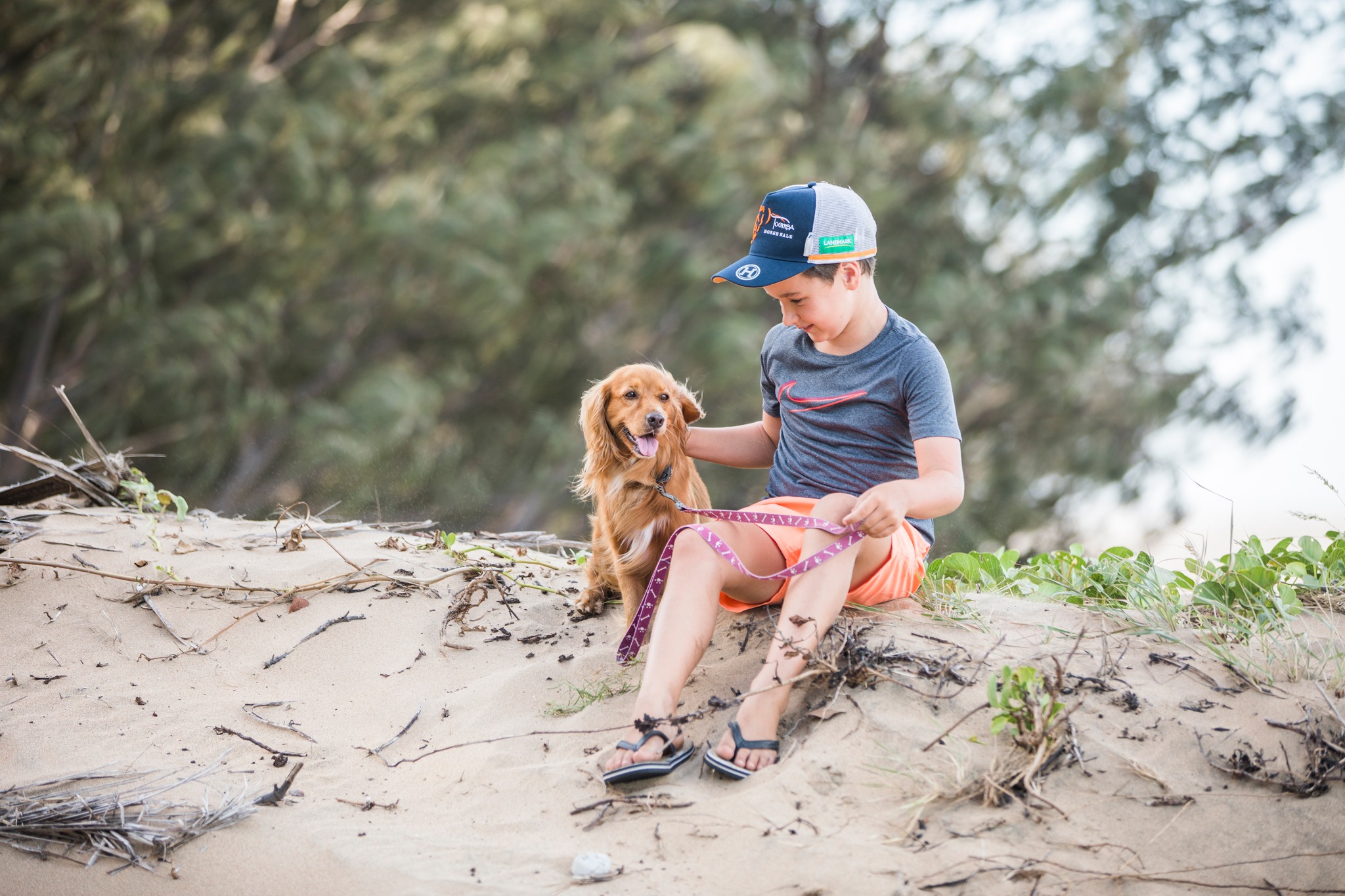
School holidays aren’t just for the kids, your four-legged best mate deserves a little fun too! Whether your pup loves long walks, beach zoomies or sniffing out new trails, the Burdekin Shire is packed with dog-friendly spots that are perfect for burning energy and making memories together.
Beach Walks with a Wagging Tail
Few things make a dog happier than sand between their paws and salty air in their nose. Alva Beach and Wunjunga Beach are ideal for a relaxed beach stroll, especially at low tide when there’s plenty of firm sand for walking and a game of fetch.
Off-Leash Fun at the Dog Park
Not a beach fan? No worries. The Plantation Park Dog Off-Leash Area in Ayr is a must-visit for energetic pups. Recently upgraded, the park features secure fencing, agility obstacles, shaded areas, water facilities and separate zones for small and large dogs, making it a safe and social space for dogs of all sizes.
Walks with a View
For pups who love a good walk, the Burdekin Be Active Trails in Ayr and Home Hill offer mapped routes ranging from one to five kilometres. With rest stations, water points and gentle gradients, they’re perfect for daily exercise at your own pace.
Nature, Culture and Scenic Trails
For something a little more immersive, Juru Walk at the southern end of Plantation Park provides a peaceful bush setting and an important connection to the region’s Aboriginal history. The trail winds through what is believed to be the Burdekin’s last remaining remnant rainforest and features a lagoon, wildlife and striking art sculptures.
If you and your pup are feeling adventurous, head south of Home Hill to Mount Inkerman. Rising dramatically from the surrounding plains, the Mt Inkerman Nature Trail (MINT) offers a steep but rewarding bush walk, with breathtaking views over the Burdekin’s agricultural landscape and river below. There are two access points to the trail, making it easy to tailor the walk to your fitness level.
What are you waiting for? Grab the leash, pack some water and treats, and get ready for a doggy day out that will leave tails wagging long after you get home!
Take your pup to Alva Beach for a doggy day out this weekend! Photo source: Visit Burdekin
Plantation Dog Park is a fantastic destination for dog owners. Photo source: Visit Burdekin
Visit Burdekin's pup Charli loves exploring Plantation Park's Juru Walk. Photo source: Visit Burdekin

A confronting new Netflix drama, Adolescence, has reignited national conversation about how social media is influencing young people—and not always for the better.
The series follows a 13-year-old boy accused of murdering a female classmate, raising unsettling questions about online culture, masculinity, and the quiet power of social media algorithms. While fictional, the themes feel uncomfortably close to home for many parents, carers and educators.
At the centre of the concern is the so-called “algorithm effect”—the invisible systems that decide what content appears on our screens.
Algorithms are sets of instructions used by digital platforms to sort, rank and recommend content. They analyse enormous amounts of data—including what users like, watch, click on, or linger over—to personalise feeds and suggestions. Their primary goal is to keep people engaged and scrolling.
While not inherently harmful, this focus on engagement can come at a cost. Algorithms can amplify sensational, extreme or emotionally charged material, nudging young people towards content that promotes unrealistic beauty standards, violence, misogyny or hate speech.
Recommender systems power most major platforms, including TikTok’s “For You” page, Instagram Reels, YouTube suggestions, Netflix recommendations and Spotify playlists. Once a young person shows interest in a topic—fitness, gaming or self-improvement—the system often pushes more intense or polarising versions of that content.
For boys, this can mean exposure to violent pornography, extreme misogyny or rigid ideals of masculinity such as “looksmaxxing”. For girls, innocent searches about health or fitness can spiral into harmful beauty ideals, disordered eating content or material linked to self-harm.
The impact builds over time. Infinite scrolling and autoplay can encourage dependency, making it harder for adolescents to disconnect. Echo chambers form, reinforcing narrow worldviews and distorting expectations around relationships, success and self-worth.
Understanding how algorithms work is a key step in protecting young people.
Parents, carers and educators are encouraged to talk openly with children about how their feeds are shaped and why certain content appears. Setting boundaries around screen time, encouraging regular breaks, and diversifying online experiences beyond social media can all help.
Practical steps include using platform settings to manage privacy, apply content filters, limit time spent online, and reporting harmful material to platforms or to eSafety.gov.au.
Australia’s eSafety Commissioner has also made it clear that responsibility should not fall solely on families. Online platforms are expected to meet the country’s Basic Online Safety Expectations, taking reasonable steps to ensure recommender systems do not promote illegal or harmful content.
Technology isn’t going away. But with awareness, conversation and shared responsibility, Burdekin families can help young people navigate the digital world with greater confidence—and fewer unseen influences shaping who they become.
Algorithms can amplify sensational, extreme or emotionally charged material, nudging young people towards content that promotes unrealistic beauty standards, violence, misogyny or hate speech. Photo credit: Adobe Stock

Burdekin Christian College student Connor Griggs is gaining rare international experience after being selected to take part in an elite goalkeeping program at one of Spain’s most prestigious football clubs.
Griggs is currently in Valencia, Spain, representing his goalkeeping academy, Professional Goalkeeper Tuition, as part of a group chosen to train with Valencia CF’s renowned La Liga academy. The experience places Connor alongside elite young goalkeepers from around the world, training under UEFA-qualified coaches using the same methodologies employed to develop professional players.
The intensive 12-day program is based at Valencia CF’s ‘Ciudad Deportiva de Paterna’ training complex and includes specialist goalkeeper training sessions, tactical workshops and detailed video analysis. Participants also have the opportunity to watch live La Liga, Premier Women, U23, U19 and academy matches, as well as observe training sessions across Valencia CF’s elite development squads.
The group will also tour Valencia CF’s iconic Mestalla Stadium and, subject to travel schedules, Real Madrid’s Santiago Bernabeu Stadium.
Burdekin Christian College has congratulated Connor on his selection, describing him as a talented and dedicated young athlete whose hard work continues to open doors at the highest levels of the sport.
“What an amazing experience for an amazingly talented young man," a college spokesperson said.
“BCC is so proud, Connor!”
For Griggs, the opportunity marks a major milestone in a football journey that is already tracking well beyond local borders.
Burdekin Christian College student Connor Griggs is gaining rare international experience after being selected to take part in an elite goalkeeping program at one of Spain’s most prestigious football clubs.
The intensive 12-day program is based at Valencia CF’s ‘Ciudad Deportiva de Paterna’ training complex and includes specialist goalkeeper training sessions, tactical workshops and detailed video analysis.
For Griggs, the opportunity marks a major milestone in a football journey that is already tracking well beyond local borders.
Photos supplied

My Pets Rural has teamed up with GAPQLD, the Greyhound Adoption Program Queensland, to host a Greyhound Adoption Day on the 31st of January, in store from 9:30am to 1:30pm.
Five greyhounds will be looking for forever homes, each with their own personality and charm. Here’s a closer look at who’ll be there:
Rocky
Race name: Explosive Balboa | Male | Brindle | Born 05 June 2023
Rocky is a lively young boy full of energy and playfulness. Still learning his manners, he loves initiating games and brings a bright, upbeat vibe wherever he goes. Best in a home without small children, he could happily share with another friendly dog who loves play as much as he does.
Eddie
Race name: Mr Takeover | Male | Fawn | Born 01 July 2021
Eddie is a big, happy boy with striking “eyeliner” and a gentle, playful personality. He enjoys toys and being by your side. Polite but bouncy, he’s best in a home without small children. Eddie can be a one-and-only dog or share with a friendly companion.
Mickey
Race name: Federal Mickey | Male | Black | Born 06 February 2023
Mickey is calm, gentle, and just a touch cheeky. He’s learning his manners, especially around food, and would thrive in a patient home without young children. He enjoys fetch, short walks, and lounging, and would be happy with another dog, a cat, or as the sole pet.
Liv
Race name: Lady Steps | Female | Black | Born 05 December 2020
Liv is sweet, gentle, and overflowing with affection. She loves carrying her stuffed toys and showing them off. She’d suit a calm home, preferably with older children, and can share with another dog or enjoy her own company. Liv has a soft heart and a fondness for women.
Carly
Race name: Canya Ursula | Female | Black | Born 10 October 2022
Carly is graceful, affectionate, and playful, especially with toys. She gets along with other dogs but prefers to be the only dog at mealtime. Best in a calm home without small children or cats, Carly is ready to charm her way into a loving family.
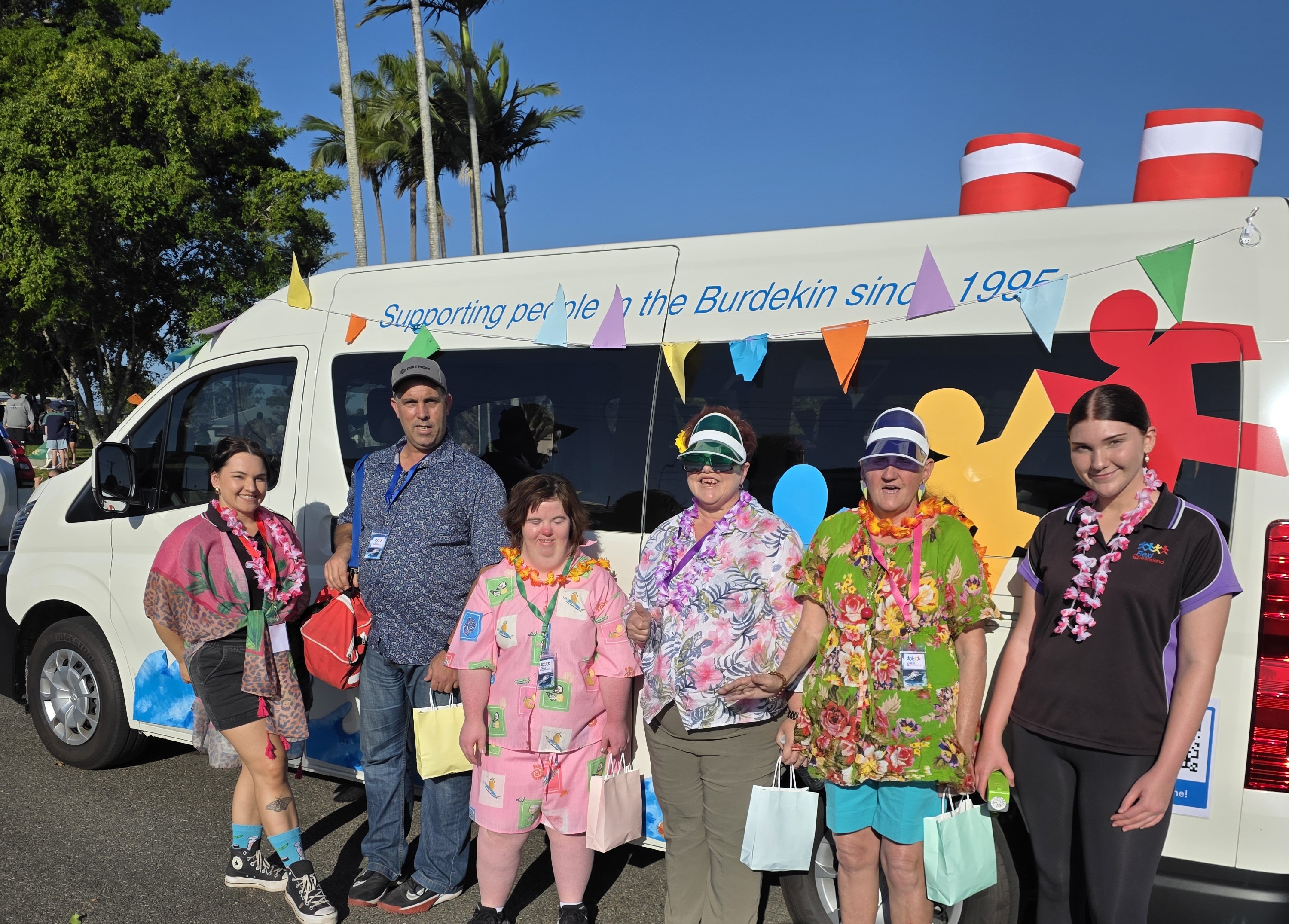
By Chelsea Ravizza
Flexi Queensland has wrapped up a landmark year, marked by milestone celebrations and the honour of receiving its second consecutive Enablement Award for The Most Exceptional Disability Support Service Team in Australia.
“Flexi Queensland has had a massive 2025! We are so thankful for all the opportunities and adventures 2025 has brought us,” said Flexi Queensland Chief Executive Officer, Teneill Ready.
In 2025, the organisation celebrated its 30th anniversary, commemorating three decades of community support with a special gathering and the official renaming of one of its facilities.
“We held a community celebration where we renamed the Petersen Hangout (formerly the Therapy and Activity Centre) after our founding board member, Maryann Peterse, which was also partially funded by Burdekin Shire Council’s Community Grant Program,” Teneill explained.
Throughout the year, Flexi Queensland installed an Automatic External Defibrillator (AED) at Petersen Hangout with funding from the North Queensland Gas Pipeline Grant and completed a range of building improvements thanks to generous support from local businesses and grants, including the Gambling Community Benefit Fund Super Round. The organisation also secured funding through the ANZ Seeds of Renewal Grant, which will be used to install solar power at one of Flexi’s Supported Independent Living houses.
“Flexi Queensland’s always looking to support local businesses, and last year, we connected with so many, and received many donations for fundraising raffles, which we were able to contribute towards new upgrades at Petersen Hangout,” Teneill added.
Keeping clients active and connected remained a strong focus, with Flexi Queensland organising group outings to local events such as Morning Melodies, Canefield ASHES, Sweet Days Hot Nights, the Burdekin Show and the Burdekin Water Festival.
The organisation also celebrated several personal achievements among clients and carers, including sailing experiences with Sailability in Townsville and continued support toward individual goals, both big and small.
Reinstating the Junior Group program was another standout achievement, with the team looking forward to supporting children and teenagers working toward greater independence.
“We are proud to support connections within the disability community, and with our social initiatives, we have been able to keep our community connected to each other and support our clients to maintain their friendships, hobbies, and social interactions amongst themselves, and with the wider community.”
Teneill also encouraged locals to consider getting involved with Flexi Queensland.
“Flexi Queensland is proudly guided by a Board of Directors, which are made up of local community members who generously give their time, skills and lived experiences to support our organisation,” she enthused.
“Becoming a volunteer director is a meaningful way to give back to your community, grow your leadership skills, and help strengthen local supports for those who need them most.”
For more information or to express interest, contact Flexi Queensland at management@flexiqld.com or phone (07) 4783 5866.
Flexi Queensland are looking forward to everything 2026 will bring! Photo supplied

Sunday 25 January
Australia Day Celebration
Sunday 10am
The Sandbar Cafe and Molongle Beach Caravan Park invite the community to join in on a cracker of an Australia Day Celebration complete with live music, crab races and more!
Molongle Beach Caravan Park
Monday 26 January
Australia Day Celebration
Monday 10am
Coutts Commercial Hotel will host a lively Australia Day Celebration featuring Aussie hits, a Lamington Eating Competition, free pool and jukebox, best dressed bogan prizes and a special Australia Day menu.
Coutts Commercial Hotel
Monday 26 January
2026 Australia Day Awards Ceremony
Monday 4pm
Celebrate Australia Day 2026 at the Memorial Hall with a Citizenship Ceremony, Australia Day Awards, and light refreshments including traditional cake, honouring local achievements and welcoming new Australian citizens.
Memorial Hall
Friday 30 January
We Will Rock You Opening Night
Friday 7:30pm
Burdekin Singers & Theatre Company presents the high-energy musical We Will Rock You, featuring over 20 Queen hits in a dystopian rock-revival story. Multiple performance dates follow into early February.
Burdekin Theatre
Friday 6 February
Boars & Barra Fishing & Hunting Competition
Friday 5pm
The Boars and Barra will return to Clare for a high-energy weekend from the 6th to the 8th of February of fishing, hunting and family fun, offering over $7,000 in cash and prizes, live weigh-ins, kids’ activities and a big Sunday presentation at the Clare Sports & Recreation Club.
Clare Sports & Recreation Club
Wednesday 18 February
Morning Melodies Bloom Sings Eva Cassidy
Wednesday 11am
Experience an intimate acoustic tribute as Bloom brings Eva Cassidy’s timeless songs to life at Morning Melodies, with tickets $15 including morning tea.
Burdekin Memorial Hall
Thursday 26 February
Movie Magic Paint, Sip & Sing
Thursday 6pm
Sing, sip and paint your heart out at this epic movie-inspired Paint & Sip in Ayr, where iconic film soundtracks, big laughs and guided creativity collide for a glitter-filled night of nostalgia, fun and feel-good chaos at the Coutts Commercial Hotel.
Coutts Commercial Hotel, Ayr
Friday 27 February
Where is the Green Sheep?
Friday 12pm
Families can enjoy an enchanting visual theatre adventure as puppetry and animation bring Mem Fox’s beloved story to life in the playful search for the elusive Green Sheep.
Burdekin Theatre
Sunday 1 March
Burdekin Plantation Park Markets
Sunday 8am
Sunday, the 1st of March will excitingly mark the first Burdekin Plantation Park Markets for 2026! Market stallholders are encouraged to reach out to Ayr State Primary School on 07 4790 3333 during school hours for all enquiries.
Plantation Park
Sunday 8 March
International Women’s Day Afternoon Tea
Sunday 1:30pm
Zonta Club Burdekin are excited to announce their annual International Women’s Day Afternoon Tea will be held on Sunday, the 8th of March. The theme for this year's celebration is "Cruise with Zonta" and the festivities will include a delightful afternoon tea, guest speaker and some engaging activities.
Masonic Heritage Centre
Sunday 5 April
Burdekin Plantation Park Markets
Sunday 8am
The community are invited to pop down to enjoy Ayr State Primary School's Burdekin Plantation Park Markets on the first Sunday of every month (weather permitting) in support of local creators and entrepreneurs from 8am to midday! Market stallholders are encouraged to reach out to ASPS on 07 4790 3333 during school hours for all enquiries.
Plantation Park
Wednesday 15 April
Morning Melodies A Night in Vegas
Wednesday 11am
Audiences can expect a glitzy, high-energy morning of Vegas-style hits, big band classics, dazzling dance performances, and charismatic vocals that bring the glamour and fun of Sin City to life.
Burdekin Theatre
Friday 24 April
Remember the Days of Cat Stevens
Friday 7:30pm
Audiences can relive the timeless hits of Cat Stevens in a heartfelt tribute by Darren Coggan, celebrating classics like Moonshadow, Wild World, and Father & Son with remarkable authenticity and nostalgic charm.
Burdekin Theatre
Wednesday 29 April
Beatlemania on Tour
Wednesday 7:30pm
The sound of a generation, and the music that has influenced every generation since – that’s The Beatles. And now you can relive the heyday of The Beatles with Beatlemania On Tour!
Burdekin Theatre
Sunday 3 May
Burdekin Plantation Park Markets
Sunday 8am
The community are invited to pop down to enjoy Ayr State Primary School's Burdekin Plantation Park Markets on the first Sunday of every month (weather permitting) in support of local creators and entrepreneurs from 8am to midday! Market stallholders are encouraged to reach out to ASPS on 07 4790 3333 during school hours for all enquiries.
Plantation Park
Sunday 24 May
The Australian Medium Tour
Sunday 2pm
Charmaine Wilson returns to Ayr on this May for a moving afternoon of spirit connection, offering audience members messages of love, validation and healing from the spirit world, followed by a Q&A and reflections on grief and life beyond, from 2pm to 4.15pm (ages 16+).
Burdekin Theatre
Thursday 28 May
Creedence Clearwater Collective
Thursday 7:30pm
Experience a night of classic rock as Creedence Clearwater Collective brings the iconic hits of CCR and John Fogerty to the stage, delivering all the timeless favourites live and full of energy.
Burdekin Theatre
Friday 29 May
Ayr SLSC Meet & Greet
Friday 6pm
The Ayr SLSC's centenary celebrations will begin with a relaxed Friday night Meet and Greet and book launch, bringing together past and present members and the community to celebrate the club’s legacy and commemorate 100 years of surf lifesaving.
Kalamia Hotel
Saturday 30 May
Celebrating 100 Years of Ayr SLSC Gala Dinner
Saturday 6pm
The Ayr Surf Life Saving Club will celebrate its 100th anniversary in 2026! The milestone event will honour a century of service, memories and community spirit, bringing past and present members together for an unforgettable evening.
Burdekin Memorial Hall
Sunday 31 May
Ayr SLSC Community Fun Day
Sunday 10am
The Ayr SLSC's centenary celebrations will conclude with a relaxed, family-friendly gathering at the Ayr Clubhouse, welcoming past and present members, families and the community for a memorable day.
Ayr Surf Life Saving Club, Alva Beach

By Chelsea Ravizza and Jacob Casha
Ex-Tropical Cyclone Koji made landfall across the Burdekin Shire on Sunday, the 11th of January. While heavy rain and strong winds swept through the region, the community breathed a sigh of relief as the feared destruction largely stayed away, showcasing the Burdekin’s resilience in the face of nature’s first test of the year.
Read Burdekin Life's full Cyclone Coverage Feature on pages 20 - 23.
pg.20 heading: BURDEKIN WEATHERS FIRST CYCLONE OF THE SEASON
Ex-Tropical Cyclone Koji was the first tropical cyclone of the 2026 season to impact North Queensland, bringing damaging winds, heavy rainfall and flooding concerns to coastal and inland communities, including the Burdekin Shire.
The system developed in the Coral Sea before intensifying into a tropical cyclone, marking the official start of the 2026 cyclone season. According to the Bureau of Meteorology (BOM), Koji reached category two strength while offshore before weakening as it approached the North Tropical Coast. Despite this downgrade, the system continued to pose a significant threat due to intense rainfall, strong wind gusts and the potential for river rises and flash flooding.
As Koji tracked westward towards the coast, emergency services and local disaster management groups across North Queensland activated preparedness and response measures to ensure communities were informed and supported. Forecasts indicated the system would cross the coast between Townsville and Bowen before continuing south and weakening further, with impacts expected to be felt across multiple local government areas.
Koji crossed the coast at reduced intensity; however, saturated catchments, ongoing rainfall and rising river levels prolonged the impacts well beyond landfall. Localised flooding, road closures and isolation concerns followed, highlighting the challenges often associated with wet season systems, even after they weaken below tropical cyclone strength.
The event served as a timely reminder of the unpredictability of the North Queensland wet season and the importance of preparedness early in the year.
Burdekin Life have prepared a comprehensive timeline and in-depth coverage into the event, outlining how Ex-Tropical Cyclone Koji unfolded across the Burdekin Shire, detailing key warnings, emergency responses and significant developments from Saturday through to Monday.
Burdekin LDMG Chair & Burdekin Shire Council Mayor Pierina Dalle Cort said it was the region's togetherness that got the shire through the weather event with minimal damage. Photo credit Jacob Casha
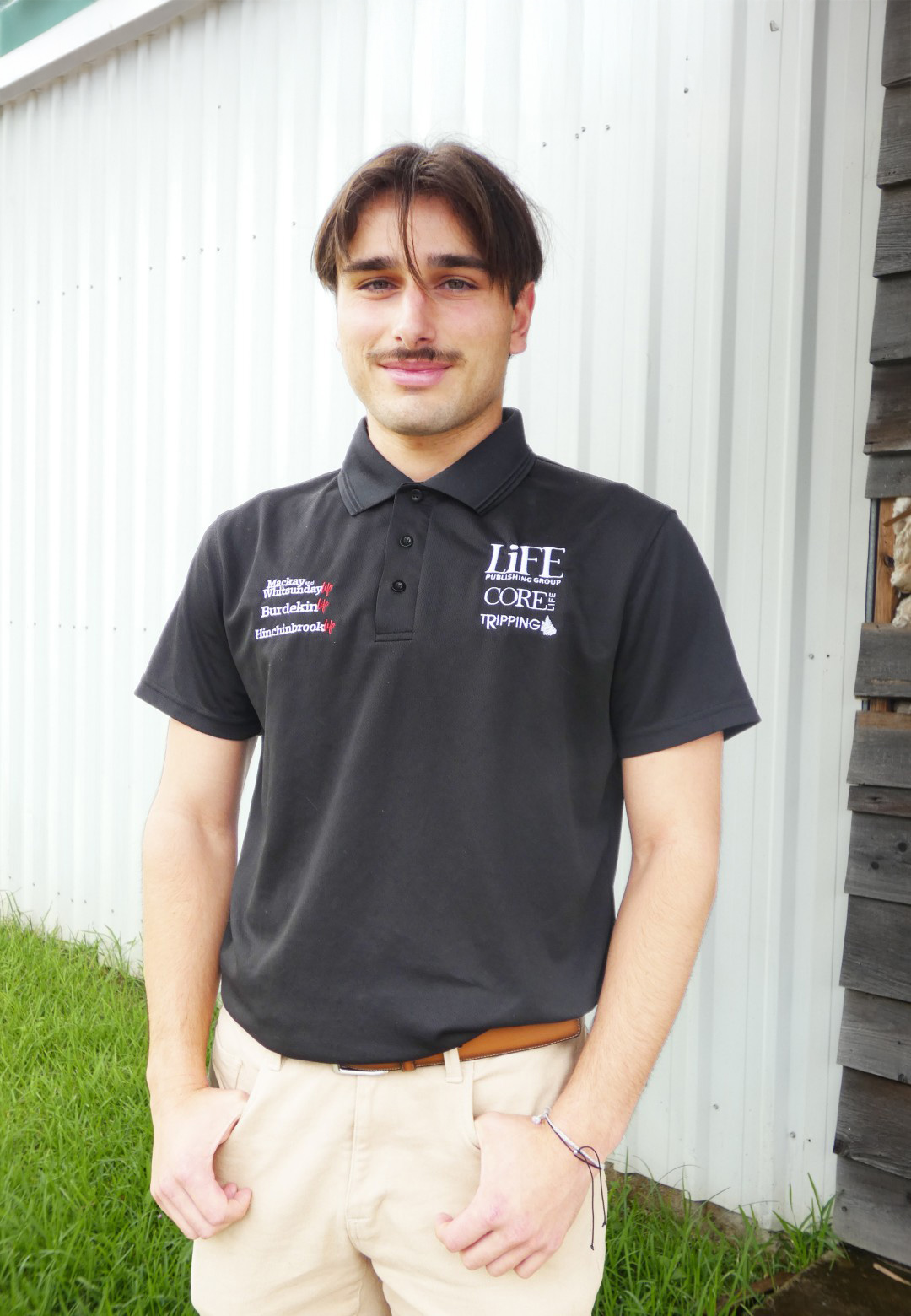
It was my turn to be the birthday boy last Friday as the clock struck 25 for yours truly.
Where on earth did the time go?
I'm at the age where birthdays begin to feel a little more somber than jovial. Instead of a worry-free day of presents and cake, it now marks another year gone by… and one fewer ahead.
Maybe I'm being dramatic.
But it always begs the questions: am I maximising myself—my life? Am I doing enough? Am I enjoying what I'm doing?
And these aren't inherently bad questions. In fact, I think it's imperative we ask ourselves these things. In that way, each birthday serves as an inbuilt reminder to check in with myself, and as I do check in and look back at what I've achieved, what I am achieving, and what's in store, I feel proud, grateful, and gratified. And old.
I'm also at the age where people have begun lumping both my Christmas and birthday presents together.
Get lost.
Whether I’m five or fifty, I’ll always love—and expect—presents. For both events. Write that down for next year, which, at the rate time’s been moving, will be here by the time this thing is even printed.

In the lead up to the weekend’s wild weather events, a pair of young men stepped up to lend a hand and mow lawns across the Burdekin Shire, making the most of the region’s short-lived glimpse of sunlight to help the community prepare for what was to come.
Grateful was an understatement for how local business owner, Craig Lonergan felt after Callen and Harley offered to step out of the North Queensland (NQ) Green Solutions Containers for Change sorting facility in Ayr and into the community.
“I’m not sure how these young men came into our lives but I’m so glad they did,” shared Craig.
“We weren’t sure how we were going to get everything done before the rain, then we received a message about Callen and Harley, and how they were keen to work!”
Callen and Harley worked around the clock all day on Thursday, the 8th of January, which was met with well over 400 positive messages of encouragement from the local community, with residents congratulating the pair on their work ethic.
“Sometimes you’re just in the right place, at the right time. Young men, you should be very proud of yourselves,” said NQ Green Solutions’ Rachael Price.
“What a remarkable effort to get that many lawns done before the rain!”
Callen and Harley were congratulated for their hard work last week. Photo credit: Craig Lonergan
Publishers Indemnity. Any individual or entity that places advertising, supplies copy material, or submits editorial content to Core Life Publishing agrees and undertakes to ensure that all such material:- Does not infringe upon any copyright, trademark, or other intellectual property rights;- Is free from any content that could be considered defamatory, libelous, or slanderous;- Does not infringe upon any rights related to privacy or breach of confidence;- Contains no obscene, indecent, or otherwise unlawful material;- Complies fully with the Trade Practices Act and all other applicable laws, regulations, or statutes.Furthermore, by submitting or placing such material, these individuals or entities agree to indemnify and hold harmless the publisher, Core Publishing and Events Pty Ltd, and/or its agents from and against any and all investigations, claims, demands, liabilities, damages, costs, or judgments arising out of or in connection with the material provided. All material is believed to be accurate at the time of printing and remains the copyright of Core Publishing and Events Pty Ltd.
© 2026 Life Publishing Group Pty Ltd.
.jpeg)
