
Independently Owned, Locally Grown, Community Loved

By Chelsea Ravizza What began as a passion project for Home Hill's Jonathan Caspanello has evolved into a successful fashion and lifestyle brand, with the 23-year-old entrepreneur crediting his regional upbringing for helping shape both the business and the person behind it. “It [Home Hill] was the kind of community where everyone got around each other, supported one another and celebrated each other's successes, and those values have stayed with me throughout my life and continue to influence both who I am and the way I approach business today,” he said. Since launching Caspa Collective at just 21-years-old, Jono has grown the label into a recognised brand with a strong social media presence, loyal customer base and a growing community of supporters. After moving to Brisbane to complete a Bachelor of Education (Primary) at Australian Catholic University, following in the footsteps of his mother, Kavette, Jono discovered a passion for fashion, branding and content creation while working as a teacher aide. “I’ve always enjoyed creating things. Whether it was ideas, projects or content, I liked bringing something from imagination into reality,” he said. His entrepreneurial journey began close to home, inspired by watching his father, Warren, build a successful business from the ground up. Combined with a fascination for social media and the ability of brands to connect with people through storytelling, design and culture, it sparked a desire to create something of his own. While Caspa Collective now operates primarily from Brisbane, the Burdekin remains at the heart of the brand's identity. Even its name carries a personal connection, with "Caspa" derived from Caspanello. “I wanted a name that reflected who I am, where I come from and the journey, I'm on. The word ‘Collective’ was equally important because the brand has never been just about me. It's about the people who support it, wear it, model it and help bring ideas to life.” Over the years, Jono has learned that building a successful clothing brand involves far more than designing apparel. Through a largely self-taught journey into entrepreneurship, he has developed skills across content creation, branding, social media, website development, manufacturer liaison and campaign production. “One of the biggest lessons I've learned is that consistency matters more than perfection,” Jono reflected. “When you're starting out, it's easy to think everything needs to be perfect before you launch something. The reality is that you learn by doing. Every collection, photoshoot, campaign and product release teaches you something new.” Another lesson has been the importance of building genuine connections. “People connect with stories, personalities and communities far more than they connect with products alone,” he said. That support network starts close to home, with his sisters Rylee, Elly and Deni, along with his father and extended family, all playing a role in helping the brand grow. “When you're building something from the ground up, it's often the people closest to you who become your biggest supporters. Their encouragement, willingness to help and belief in what I'm building have been invaluable,” he said. “Every person who wears a Caspa Collective piece, shares a post or recommends the brand to someone else contributes to its growth. That's why community remains at the heart of everything we do.” Looking to the future, Jono believes Caspa Collective is only just getting started. More than a clothing brand, it has become a reflection of his journey, his Burdekin upbringing and the community that helped shape him; a reminder that with hard work, persistence and a willingness to take a chance, even the simplest idea can evolve into something far greater. “If I could offer one piece of advice to other young people from regional communities who have an idea they're passionate about, it would be this: don't let where you come from limit what you believe is possible,” he said. “Growing up in a small town can sometimes make opportunities feel further away, but technology has changed that. Today, you can build a business, launch a brand and connect with people all over the world from almost anywhere. You don't need all the answers before you begin, and you certainly don't need everything to be perfect. “The biggest regret is often not trying at all. Start before you're ready, stay patient, keep learning and trust the process. Small steps taken consistently over time can create opportunities you never imagined possible.” CAPTION: Jono Caspanello and his father, Warren Caspanello. Photo supplied
Read the full story
It is show season and we should start seeing it all come together over the next week as the party comes to town. The show society has been doing a great job over the years and each year they seem to find a way to keep it fresh and entertaining. Whilst my boys are all grown up and not making me buy show bags anymore. We do still like to go along and check it out. The water festival had its launch last Friday and I’m told it was a great night. Wonderful to see so many entrants participating and getting involved. I look forward to many months of activities and fun things to do. I got myself down to groper creek briefly last week and it was great to see all the nomads in town and set up to enjoy our beautiful weather. The area looked absolutely spectacular and I can see why so many regulars come back every year. Welcome back and thanks for coming to join us again. The crushing is underway and this a timely reminder to use your train brain. I spoke to one farmer this week who got a bit closer to a cane fire than he liked, so I’ll take this opportunity to remind all of us in the industry to where your PPE and take care. It’s very easy to get complacent, especially when everyone is in a rush. Take care everyone.
Read the full story
Supplied by the Office of Federal Member for Dawson, Andrew Willcox Tax, the three-letter word Labor loves most, goes hand in hand with the other three-letter word Labor does best—lie. It would be mission impossible to count the number of times the Prime Minister, the Treasurer and senior Labor ministers promised there would be “no changes” to Capital Gains Tax or negative gearing. They said ‘no changes’ before the election, after the election and even earlier this year. Literally hundreds of times, they gave Australians the same assurance. Repeatedly challenged by the media, they doubled down every single time. Then, on Budget night, only a few weeks ago, the government announced that the changes would be brought in. These tax changes are not “intergenerational fairness”. They are nothing more than a tax grab designed to fund Labor’s wasteful spending and economic incompetence. And the people who will pay the highest price are young Australians with aspiration. Under Labor’s changes, existing investments will be grandfathered. Those already in the market keep the current rules, while younger Australians looking to build wealth through investment face higher taxes and fewer opportunities. A young couple hoping to invest in a rental property will no longer receive the same negative gearing benefits. A young worker wanting to build a share portfolio, trade crypto, or invest in a small business will face a higher Capital Gains Tax burden than previous generations. Labor claims to stand for fairness, but there is nothing fair about pulling the ladder up behind you. Taxing aspiration is profoundly un-Australian. The economic consequences will also be severe. Labor itself admits these changes will place upward pressure on rents, although it claims the impact will only be around $2 a week. This is the same government that promised households would be $275 better off on their power bills. So, if the government’s own modelling is pointing to increased costs, the reality will be a disaster for renters. With interest rates again marching north and home ownership becoming harder, more Australians, especially younger Australians, are relying on the rental market. Yet Labor is actively discouraging property investment. The economics are simple. Fewer investors mean fewer rental properties, tighter vacancy rates and higher rents. That hurts every Australian renter. These changes will also discourage people from moving investment capital into more productive opportunities. Investors who remain under the existing rules will be reluctant to sell assets because any new investment will fall under Labor’s new tax regime. Flipping houses will become a thing of the past, meaning less stock returning to the market for prospective homeowners. Instead of encouraging economic activity and investment, Labor is creating uncertainty and stagnation. The Coalition opposes these damaging new taxes and will repeal them in government. Australia should be a country that rewards hard work, encourages investment and supports aspiration, not one that punishes people for trying to get ahead and set up their future. Stop the lies – Reverse the Tax. CAPTION: “It would be mission impossible to count the number of times the Prime Minister, the Treasurer and senior Labor ministers promised there would be “no changes” to Capital Gains Tax or negative gearing.” Photo source: Website/Andrew Willcox MP
Read the full story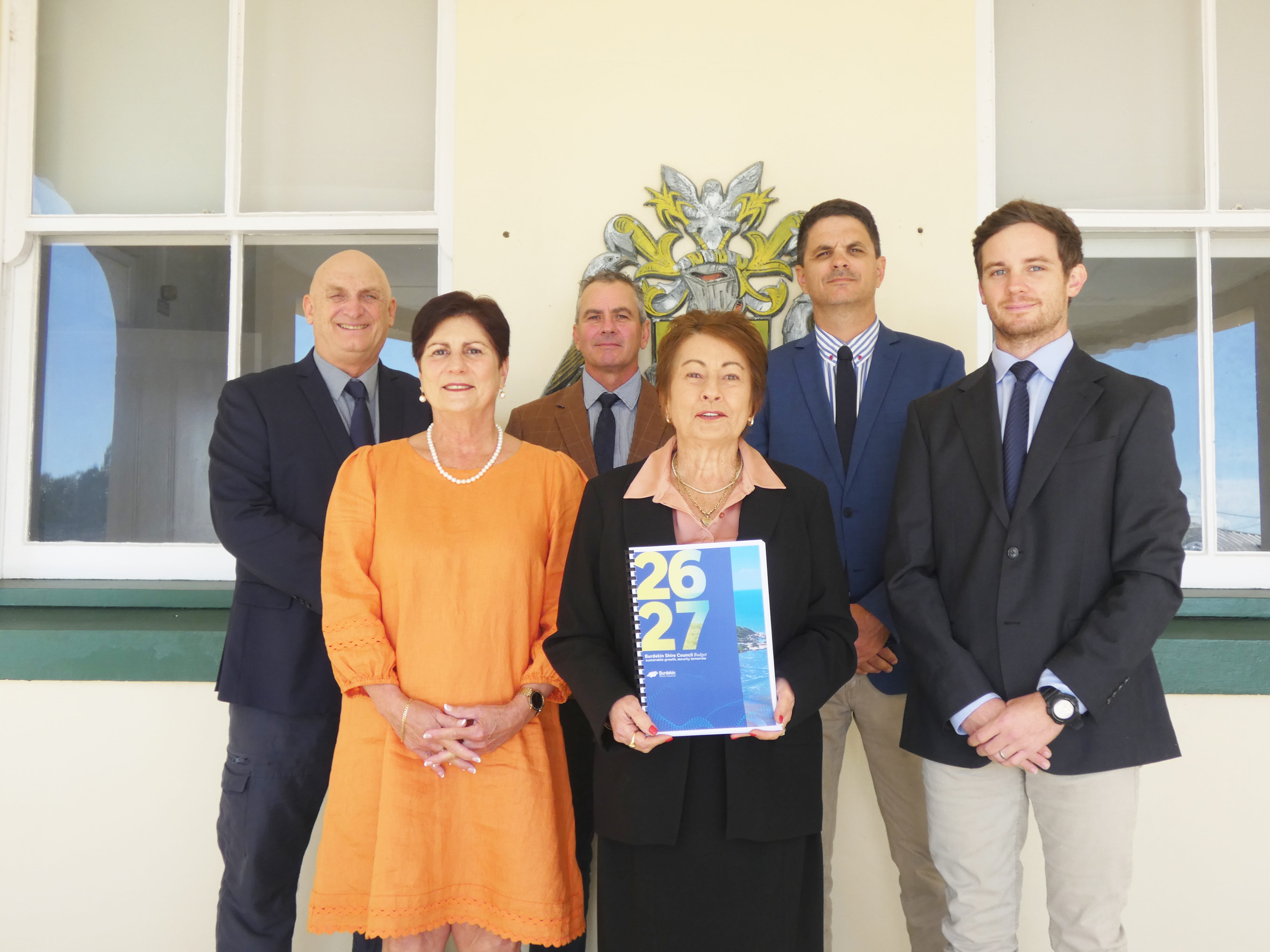
Burdekin Shire Council has handed down a $106.9 million budget for 2026/27, introducing a 1.5 per cent general rate rise to fund major upgrades to roads, drainage, and water infrastructure. The “Sustainable Growth, Security Tomorrow” budget allocates $36.2 million for capital works and $70.7 million for operational activities. While waste services rates will remain steady, residents face a 3 per cent increase in water access charges and a 6 per cent hike in sewerage charges to fund the ongoing delivery of high-quality services. Mayor Pierina Dalle Cort said the budget adopts a practical, forward-looking approach that balances financial pressures on households with the need to maintain essential services. “Sustainable Growth, Security Tomorrow is about investing in the infrastructure our community needs now while preparing for the future,” Mayor Dalle Cort said. “We understand the financial pressures many households are facing, and this Budget has been carefully planned to balance those pressures with the need to continue delivering essential services.” More than $24.6 million will flow directly into the region's transport and flood mitigation networks. Key projects include a $5 million road and kerb reconstruction at the Ayr Industrial Estate, a $2.8 million upgrade to Upper Haughton Road, and a $1.15 million sealing project on Thompson Road. The drainage network will also receive a major boost in the form of $3.6 million Ayr Town Drain improvements and a $1.6 million drainage upgrade at Wickham Street Anzac Park. Mayor Dalle Cort said strengthening these networks is critical to the local economy and agricultural productivity. “Our road and drainage networks are essential to the functioning of our community and economy,” she said. “This year’s program focuses on strengthening infrastructure, improving flood resilience and supporting future growth across the Shire, while also supporting local industry and agricultural productivity through improved access and freight reliability.” Essential water and sewer services comprise another major pillar of the budget. Council has allocated $1.96 million specifically for sewerage infrastructure upgrades alongside significant drinking water investments. Major water utility projects include the $1.5 million South Ayr Water Treatment upgrade, a $1.2 million pipeline augmentation in Home Hill, and a $1 million sewer relining and manhole rehabilitation project. “While often out of sight, these services play a vital role in our community, from supporting public health to protecting the environment and ensuring everything runs safely and reliably,” Mayor Dalle Cort said. Community liveability and lifestyle projects will progress under the budget, backed by state and federal funding programs. Notable allocations include $1.2 million for the Home Hill Swimming Pool upgrades, $500,000 for the Burdekin Be-Active Trail, and $440,000 for the Plantation Park Nature Based Play Area carpark. CAPTION: Burdekin Shire Councillors John Furnell (back-left), Max Musumeci (back-centre), Callan Oar (back-right), Fina Vasta (front-left) and Michael Detenon (front-right) with Mayor Dalle Cort (front-centre) at the conclusion of the 2026/27 budget meeting. Missing: Councillor Amanda Hall. Photo credit: Jacob Casha
Read the full story

The Government has announced a suite of measures aimed at supporting Australia’s farmers, fishers and producers as global conflict continues to place pressure on supply chains and costs.
In response to disruptions linked to the conflict in the Middle East, the Government is working to maintain export flows, stabilise input costs and strengthen the nation’s food production system.
A key measure includes deferring the phased transition to full cost recovery for export regulatory services by 12 months, now set to commence on 1 July 2027. The move is designed to provide greater certainty for farmers and producers already facing rising input costs.
The Government is also establishing a new Fertiliser Supply Working Group, bringing together key agencies and industry representatives including Fertilizer Australia and the National Farmers Federation. The group will build on existing efforts to improve fertiliser availability, including monitoring supply chains and engaging alternative suppliers.
Additional support is being delivered through financial assistance programs, with more than $1.29 billion invested in rural support and resilience funding since July 2022. This includes the rollout of a new Drought Hardship Loan and expanded access to the Rural Financial Counselling Service.
Minister for Agriculture, Fisheries and Forestry Julie Collins said the Government remained focused on supporting the sector through ongoing challenges.
“We are working day and night with our farmers, fishers and producers to help manage this impact of the conflict in the Middle East,” Ms Collins said.
“Our farmers and producers feed millions of people both here and abroad, but events like the conflict in the Middle East reaffirm why we cannot be complacent.
“That’s why we’ve taken immediate action to help safeguard Australia’s food production system, and to support our farmers and producers – including to help get fuel and fertiliser into our regions.
“We recognise the disruption the conflict in the Middle East has had on our farmers and producers, which is why we are deferring the commencement of the phased transition to full cost recovery for export regulatory services for one year.
“Our Government will never leave farmers behind who are facing hardship.”
CAPTION: New support measures aim to provide certainty for farmers and producers, helping safeguard Australia’s food supply and export strength during ongoing global disruptions. Photo source: Shutterstock

I hope everyone had a safe and restful Easter break. Whether you spent the long weekend fishing down the river, hosting a big family lunch, or simply enjoying a few quiet days at home, there’s a certain stillness that settles over the Burdekin during the holidays that reminds us how lucky we are to call this district home.
I want to extend a massive congratulations to the organisers, players, and volunteers behind the Canefield Ashes in Home Hill at the end of March.
Once again, the event proved why it is a standout on our local calendar. Seeing the community come together at the Home Hill Cricket Club with that unique backdrop of our sugar industry is always a highlight. The atmosphere was fantastic, the cricket was as competitive (and entertaining) as ever, and the economic boost to our local businesses is a great win for the community. It’s events like these that stitch our community together, and I’m already looking forward to next year’s toss.
As we move past the Easter break, Council is back into full swing. We are currently in the middle of budget discussions and there is plenty of road works happening around town as the sun is finally shining.

I hope everyone enjoyed a safe and relaxing Easter, whether you stayed close to home or travelled further afield. The Easter period is always a valuable opportunity to slow down, spend time with family and friends, and recharge before settling back into routine.
I am getting ahead of time to remind the community that the 2026 Census will take place this August. Census staff will be seeking local volunteers, and I encourage anyone interested to get involved.
Completing the Census is vital for the Burdekin. The information collected directly influences how government funding is distributed to our region. Every response counts and helps ensure we receive our fair share for essential services such as transport, schools, health care, and community infrastructure.
There will be multiple ways to complete the Census, and assistance will be available for anyone who needs help. I strongly encourage all residents to take part, no matter their circumstances. A few minutes of your time can make a lasting difference to the future of our community.
Should you wish to reach out, don’t hesitate to contact me directly by phone at 0447 150 582, or feel free to send an email to mayor@burdekin.qld.gov.au.

Wilmar Sugar and Renewables has thrown its support behind a new roadmap aimed at unlocking bioenergy investment across regional Queensland, following the release of recommendations from the Queensland Parliament’s Inquiry into Sugarcane Bioenergy Opportunities.
The company says the report outlines a practical pathway to drive new jobs, investment and energy capability across the state’s sugar regions.
“The Committee, regional communities and industry have delivered a strong and practical roadmap to unlock the sugar industry’s bioenergy potential, and support new investment and jobs in regional Queensland,” said Head of Wilmar Sugar and Renewables, Shayne Rutherford.
“The next step is for the Queensland and Australia Governments to act and deliver the policy settings needed to make it a reality.”
The recommendations align with several proposals put forward by Wilmar, including government co-funding for feasibility studies, investment in shovel-ready projects, and stronger support for biofuels such as ethanol.
“This is a comprehensive plan to secure the future of Australia’s sugar industry, which supports around 20,000 jobs, while strengthening the nation’s fuel and energy security now and into the future,” Mr Rutherford said.
Wilmar has highlighted opportunities to expand bioenergy production through increased cogeneration, producing black pellets from bagasse as a coal alternative, and boosting ethanol output for transport and aviation fuel.
“Biofuels will be an important part of that transition, particularly where Australia already has the capability to produce them at scale,” Mr Rutherford said.
He said Australia already had the capacity to produce more low-carbon fuels, but policy changes were needed to unlock that potential.
“Sugar factories have anchored regional economies for generations and remain a critical economic asset across regional Queensland,” he said.
“With the right policy settings, the industry can build on its existing factory assets… strengthening its long-term viability.”
Wilmar says it will continue working with industry and government to turn the recommendations into tangible outcomes for regional communities.
CAPTION: Photo source: Wilmar Sugar and Renewables
By Queensland Farmers’ Federation CEO Jo Sheppard
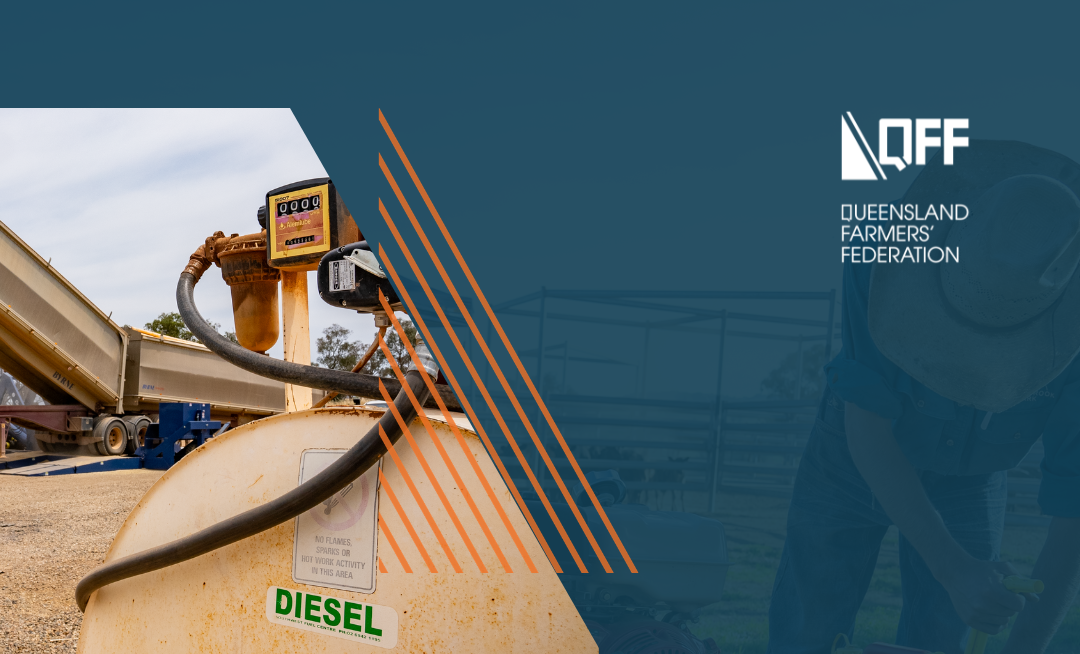
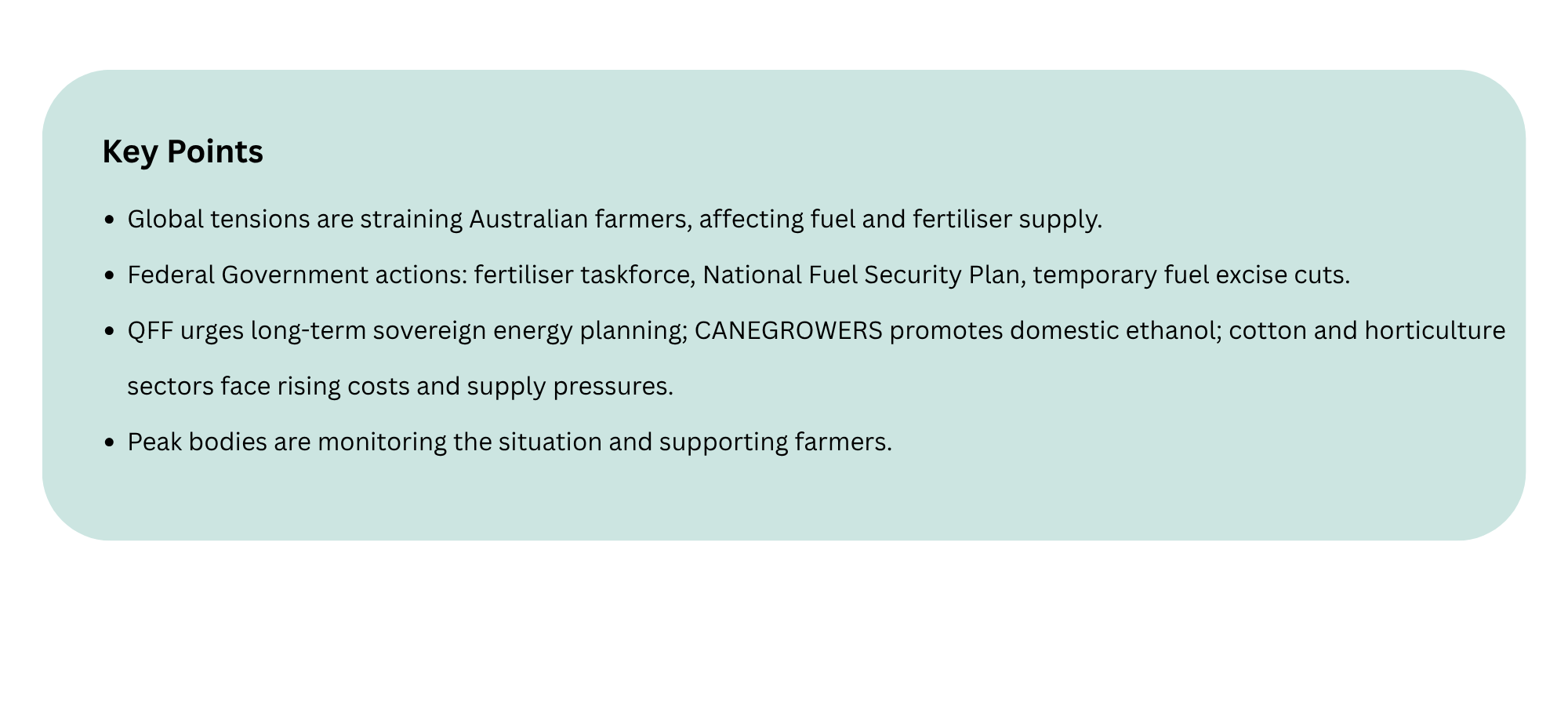
The Queensland Farmers’ Federation, our peak body members and corporate partners remain concerned by the on-farm impacts of global tensions in the Middle East.
The Federal Government recently committed to establishing a dedicated fertiliser taskforce and is exploring mechanisms to underwrite fertiliser shipments to stabilise supply chains. National Cabinet also agreed to the National Fuel Security Plan aimed at coordinating a consistent response across the Commonwealth, States and Territories. The Plan outlines indicative policy settings across four levels, outlining individual, Commonwealth and State and Territory actions, including the potential for fuel rationing at level four.
The Government has also halved the fuel excise, reducing the cost of petrol and diesel by 26.3 cents for three months, with the heavy road user charge also reduced to zero during the same period to relieve freight costs.
QFF CEO Jo Sheppard said that while the reduction in the fuel excise will do little to assist farmers, QFF supports the government’s clear message acknowledging the importance of diesel and fertiliser to the national economy, noting that planning ahead is essential if we are to be in a position to support Australians through the impact of the global energy shock.
“Australia is lucky enough to be home to some of the best energy resources in the world – gas, oil, coal, sun, wind and a significant bio-energy opportunity. A National Fuel Security Plan should not just be something we pull out during times of crisis but should be a long-term strategy with key implementable milestones so that we are continually building our sovereign energy capability,” Ms Sheppard said.
“As a nation we have been complacent. We can be complacent no more.”
CANEGROWERS Australia Chief Executive Dan Galligan said the situation highlights how exposed Australia remains to global fuel shocks.
“Australia imports the vast majority of the fuel we use, and much of it moves through some of the most volatile regions in the world,” Mr Galligan said. “Ethanol made from Australian crops like sugarcane can replace a portion of imported petrol and provide a reliable domestic supply. An enforced E10 mandate would mean around 10% of the fuel Australians use could be produced right here at home rather than shipped in from the other side of the world.”
Cotton Australia General Manager Michael Murray said while most cotton growers appear to be getting their required diesel eventually, the cost is putting huge pressure on financial sustainability.
“We should have learnt a lesson from COVID-19, and we really must learn it now, we must boost our sovereign capability to produce inputs that are vital for our economy,” Mr Murray said.
Queensland Fruit & Vegetable Growers (QFVG) CEO Scott Kompo-Harms GAICD said horticulture producers are already operating under sustained cost pressures, and the current global disruptions are pushing many businesses to breaking point.
“Queensland horticulture growers have been dealing with rising input costs for years, but surging fuel prices, transport levies, and emerging shortages of critical inputs such as plastics and fertilisers are now compounding those pressures in a way that is simply unsustainable,” Mr Kompo-Harms said.
QFF and our peak body members are continuing to seek real time feedback from farmers and communities and are working with industry and government to support practical responses as the situation evolves. Farmers are encouraged to report supply issues to their peak industry body.

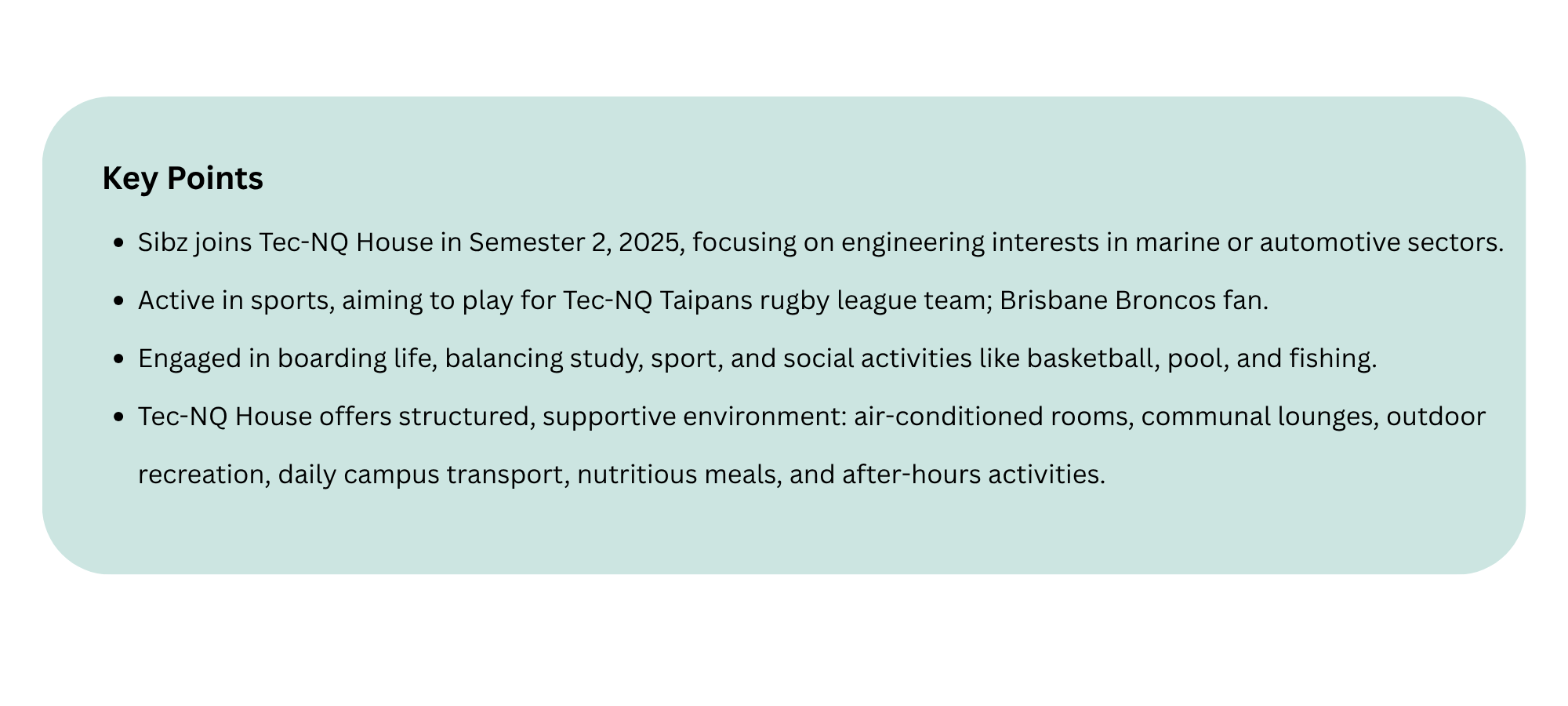
Tec-NQ House Year 10 boarder Sibz began his journey in Semester 2, 2025, quickly finding his feet and setting his sights on a bright future. With a strong interest in engineering, he is exploring where that might take him, whether into the marine sector or the automotive trade.
For now, he’s keeping his options open while focusing on building a solid foundation at school and in boarding life.
“He has already joined in at training,” said Head of Boarding, Dominic Stower.
“He is showing us what he’s made of, and how committed he is already, which is an excellent sign."
Sibz has also set himself a personal sporting goal: to run out for the Tec-NQ Taipans rugby league team this season. A passionate Brisbane Broncos supporter, his favourite player is Jamayne Isaako, and he is eager to contribute to the Taipans’ spirit and success.
Dominic says this level of enthusiasm is exactly what Tec-NQ House is designed to encourage.
“When students arrive with goals, whether that’s academic, sporting, or work-related, we provide the structure and encouragement they need to thrive,” he said.
Life outside the classroom is already busy for Sibz.
“At home I spend my spare time fishing,” he said.
“We go cray fishing when we can.”
That love of the outdoors is matched by his enjoyment of social activities on campus.
“At school I spend my free time playing pool and basketball with my mates,” he added.
Tec-NQ House provides the backdrop for these experiences. Opened in 2022, the purpose-built boys-only residence in Rosslea offers accommodation for up to forty senior students from across regional and remote Queensland. It was designed to feel welcoming and homely, while also maintaining the structure that young people need to succeed.
The facility includes air-conditioned double-occupancy rooms, modern communal lounges with streaming services and computer access, and a secure outdoor recreation area with BBQ facilities and a basketball court.
An on-site professional chef prepares nutritious meals that keep the boys fuelled for school, sport, and work placements. Transport is provided daily to the Tec-NQ Douglas co-educational campus, with staff also driving students to and from workplaces when required.
Dominic says that these elements make a real difference.
“Boarding gives young people independence with a safety net,” he explained.
“We set expectations around learning, wellbeing and behaviour, and the boys thrive with consistency. They gain confidence, communication skills and accountability; habits that prepare them for the workplace.”
After-hours activities are another highlight. Staff organise sport, excursions and social opportunities that help students build strong friendships and balance study with relaxation. For students like Sibz, that sense of belonging is especially important.
“First-year boarders do well when there is a clear rhythm to the week,” Dominic said.
“Routines of study, sport, and social time help them settle quickly.”
For Sibz, it is a promising start. He has embraced Semester 2, 2025 with energy, already training with the Taipans, exploring his trade options, and making the most of boarding life. With career pathways ahead of him, sporting ambitions in sight, and a supportive community around him, Sibz is kicking off his Tec-NQ journey with determination.
Contributed with thanks to Tec-NQ
Caption: Tec-NQ House Year 10 boarder Sibz began his journey in Semester 2, 2025, quickly finding his feet and setting his sights on a bright future. Photo supplied
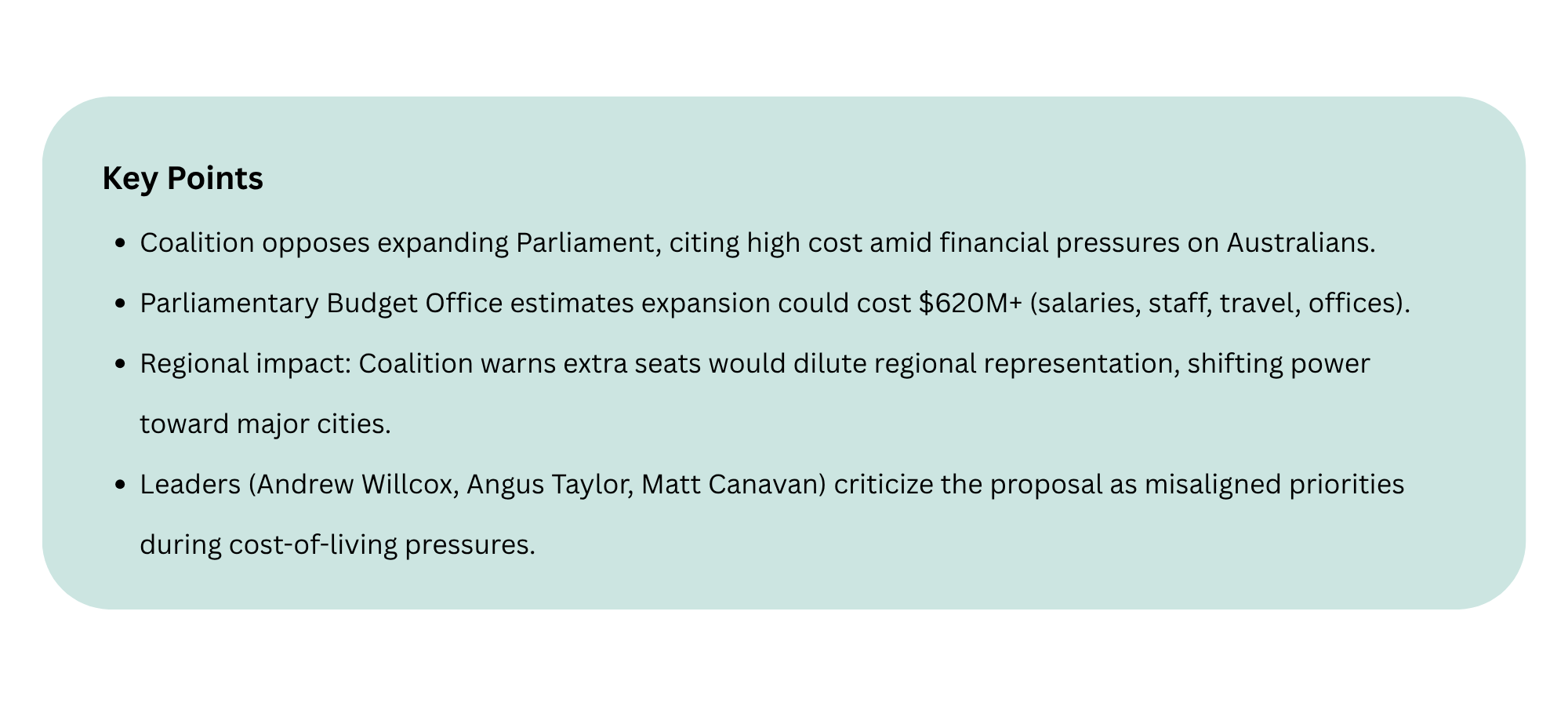
The Coalition will strongly oppose any move by the Albanese Government to increase the size of the Australian Parliament; warning it would come at significant cost to taxpayers at a time Australians are already under severe financial pressure.
Analysis from the Parliamentary Budget Office shows that expanding the Parliament could cost taxpayers more than $620 million, including salaries, staff, travel, and office costs. Federal Member for Dawson, Andrew Willcox, said the proposal is a direct threat to the representation of regional Queensland.
Leader of the Opposition, Angus Taylor, said the Government had its priorities completely wrong.
“At a time when Australian families are tightening their belts, the last thing they should be asked to fund is more politicians,” Mr Taylor said.
“This is a Government that cannot manage the economy, cannot control spending, and now wants to make Australians pay for a bigger Parliament. This is more spending, more bureaucracy, and more pressure on the budget at exactly the wrong time.”
Leader of The Nationals, Matt Canavan, said the proposal showed how out of touch the Government had become.
“People in regional Australia are doing it tough. They are paying more for fuel, groceries, and power,” Senator Canavan said.
“They do not want more politicians in Canberra; they want practical help with the cost of living.
“This Government is focused on itself; the Coalition is focused on Australians.”
Mr Willcox said that increasing the number of seats would further diminish the voices of regions like Dawson by shifting the balance of power toward the major cities.
“This is a calculated Labor tactic to stack the deck in their favour.
“By adding more seats to urban areas with high levels of immigration and a heavy reliance on government services, they are effectively diluting the voting power of our regions,” Mr Willcox said.
“More seats in the cities means more voting power for urban centres, and that diminishes the voices of our farmers, miners, and regional small business owners.
“This city-centric ideology is already strangling the country, it will be detrimental to an Australian-made future.”
As the Shadow Assistant Minister for Manufacturing and Sovereign Capability, Mr Willcox warned that the move would erode the national identity.
“Our sovereign capability relies on a strong, independent regional Australia.
“The more we pander to imported ideologies and urban-focused agendas, the more we lose our national identity.
“The Coalition will always back our regions and fight to ensure that Dawson is not left behind by Labor’s bureaucratic expansion.”
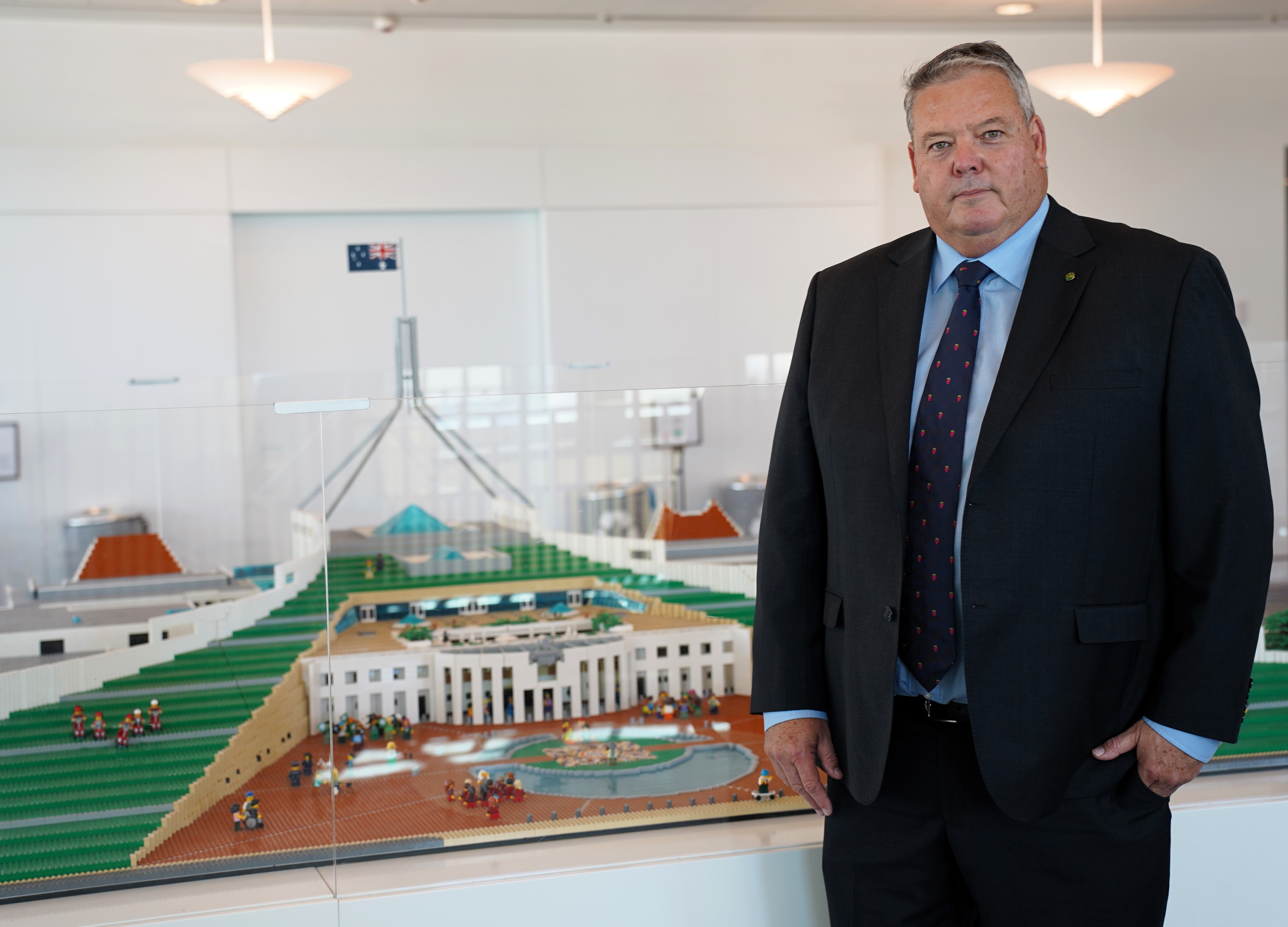
Caption: Andrew Willcox MP says making room for 28 additional politicians in Parliament won’t be as easy as simply dismantling and rebuilding this impressive LEGO model of Parliament House, which is on display inside Canberra’s Parliament House. Photo supplied
.jpg)
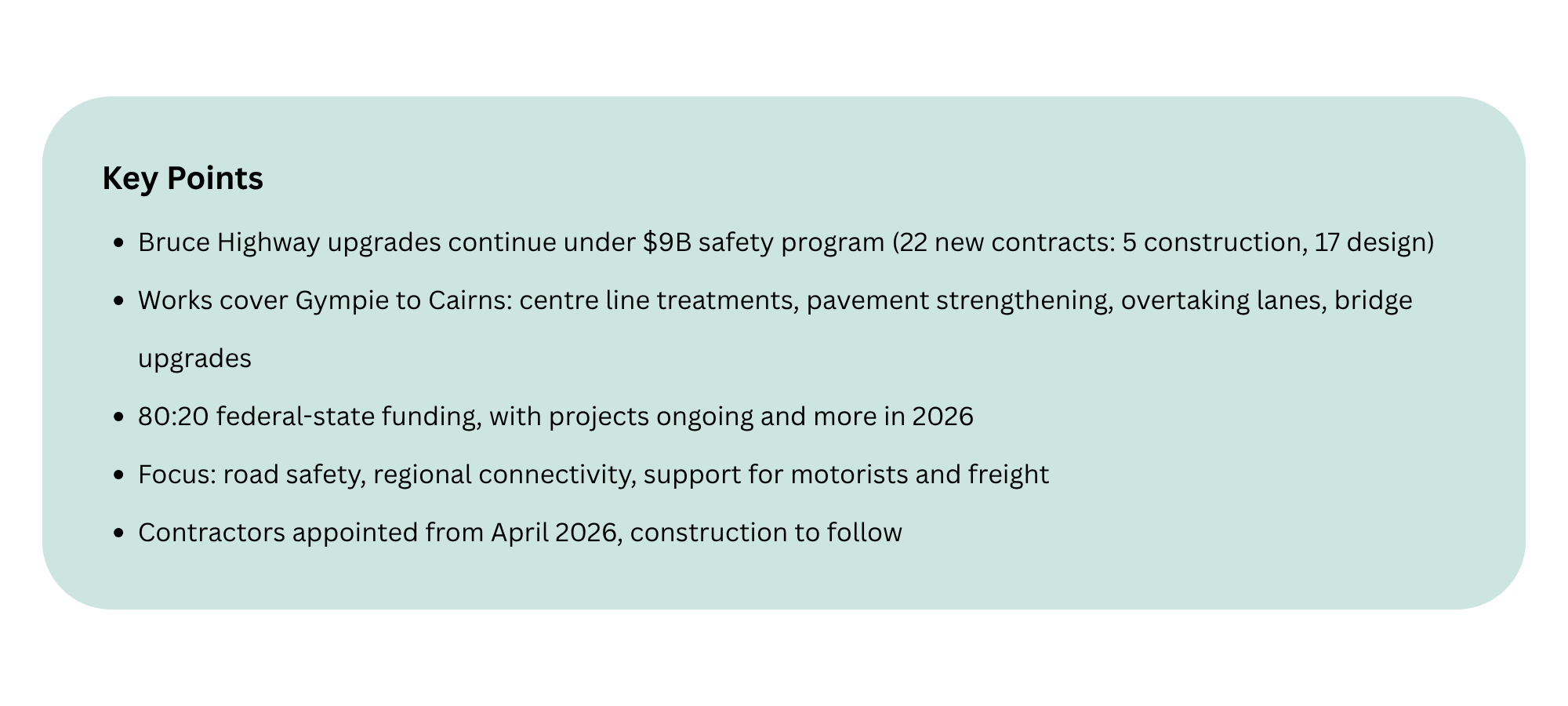
Major safety upgrades along Queensland’s Bruce Highway are continuing to gather pace, with 22 new contracts released under the $9 billion Bruce Highway Targeted Safety Program.
The latest package includes five construction procurement and 17 design contracts, covering key sections of the highway between Gympie and Cairns. Works will deliver more than 100 kilometres of wide centre line treatments, 50 kilometres of pavement strengthening and overtaking lanes, and five narrow bridge upgrades in North Queensland.
The program, jointly funded by the Australian and Queensland governments on an 80:20 basis, is already underway, with eight projects completed, 17 in progress and a further 13 construction projects set to roll out in 2026.
Federal Minister for Infrastructure, Transport, Regional Development and Local Government Catherine King said the latest contracts marked significant progress.
“This latest activity signals significant progress in delivering the Bruce Highway Targeted Safety Program,” Minister King said.
“The Australian Government is proud to be funding 80 per cent of this $9 billion program, because improving safety on the Bruce Highway will help save lives and support the communities and industries that rely on this critical route.”
Queensland Minister for Transport and Main Roads Brent Mickelberg said the State Government was focused on delivering safer roads.
“The Government is getting on with the job of delivering safer roads for Queensland,” Minister Mickelberg said.
“We’re keeping the momentum up with 22 new contracts moving to market to boost safety along the Bruce Highway.
“We told Queenslanders we are committed to fixing the Bruce and works are already making a real difference for motorists, regional communities and freight operators between Gympie and Cairns."
Assistant Minister for Regional Development Anthony Chisholm said the investment would benefit communities along the entire corridor.
“The Government is delivering record investment to build a better Bruce Highway for Queenslanders,” Senator Chisholm said.
“From here in Burdekin and all the way up to Cairns, we are accelerating the delivery of intersection upgrades, rest area improvements, wide centre line treatments and pavement strengthening.
“These works will make a real difference for drivers, freight operators and regional Queenslanders, and form part of a long-term pipeline of upgrades that will squarely benefit the people who live here.”
Assistant Minister for Northern Australia Nita Green said the upgrades were critical for regional connectivity.
“Regional Queenslanders know just how critical the Bruce Highway is for connecting our communities, supporting our industries and getting people home – these upgrades will help ensure safety,” Senator Green said.
“The Government is connecting and protecting the Queenslanders who drive the Bruce every day.”
State Member for Burdekin Dale Last said the investment was focused on regional needs.
“With every dollar in this program invested outside the South East Corner, we are building the infrastructure regional Queensland needs to support our growing population,” Mr Last said.
“We said we would deliver an upgraded Bruce Highway in an 80:20 split with the Commonwealth, and we are getting on with delivering it.”
State Member for Hinchinbrook Wayde Chiesa said the upgrades would improve safety for all road users.
“These upgrades represent a major boost for North Queensland,” Mr Chiesa said.
“Strengthening the Bruce Highway means safer trips for locals and visitors alike, and it’s great to see real investment backing the growth of our region and helping keep people safe.”
Contractors are expected to be appointed progressively from April 2026, with construction to follow as the program continues to expand.
CAPTION: The $9 billion Bruce Highway Targeted Safety Program will deliver major safety upgrades along Queensland’s Bruce Highway. Photo supplied.

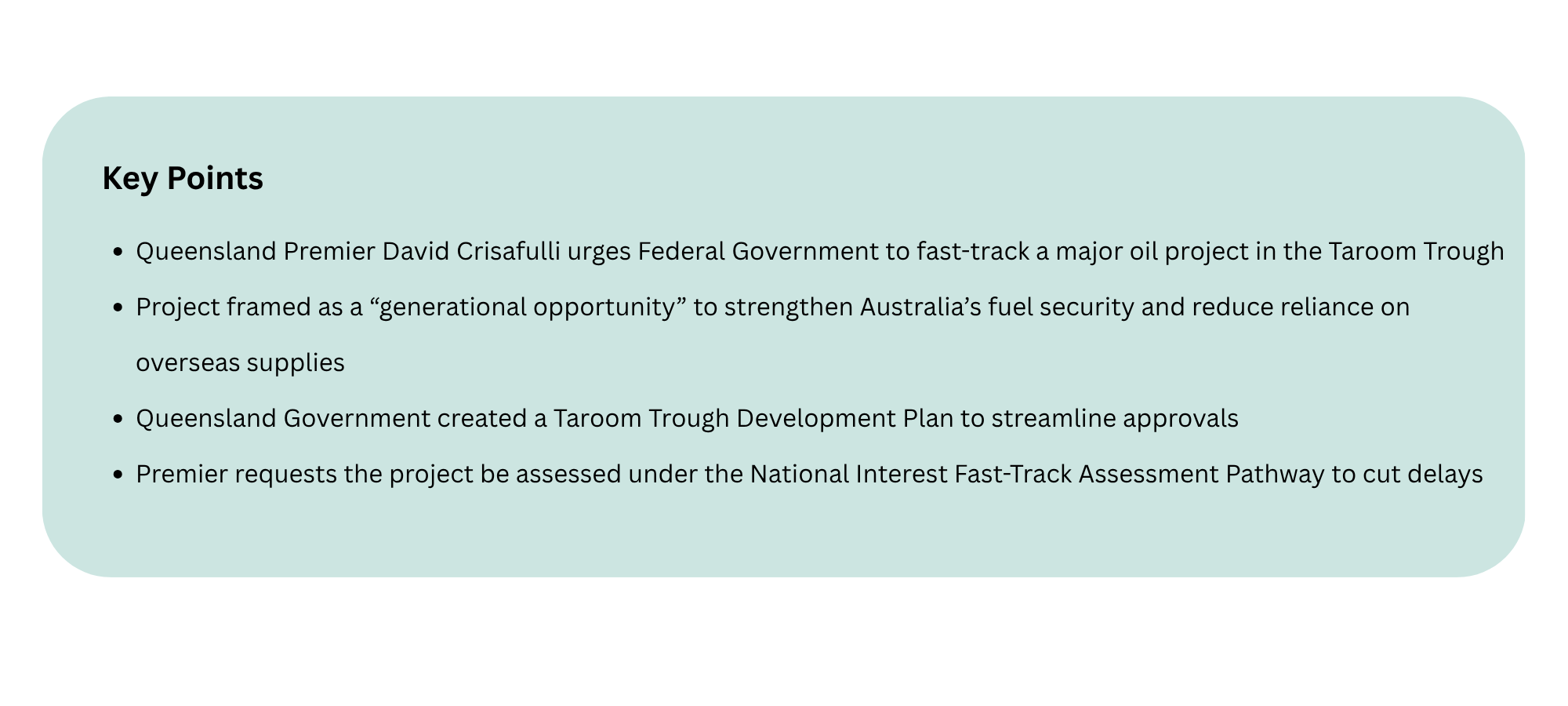
Queensland Premier David Crisafulli has called on the Federal Government to fast-track approvals for a major new oil development in Queensland, describing it as a “generational opportunity” to strengthen Australia’s fuel security.
Speaking from the Taroom Trough, the first oil field developed in Australia in half a century, the Premier said the project would play a critical role in reducing the nation’s reliance on overseas fuel supplies.
“National fuel security is about drilling, refining and storing fuel locally,” Mr Crisafulli said.
“We’re determined to lead the country and make it happen.”
The Queensland Government has moved to accelerate the project through a newly established Taroom Trough Development Plan, aimed at streamlining approvals and cutting delays.
Mr Crisafulli said the state was now urging Canberra to match that approach by placing the project under the National Interest Fast-Track Assessment Pathway.
“We’re asking for it to be assessed under the National Interest Fast-Track Assessment Pathway to remove duplicated approvals and get fuel flowing to Australians quicker,” he said.
The Premier framed the development as a strategic necessity amid growing global uncertainty, warning Australia risks falling behind if it fails to act.
“This is a generational opportunity to ensure we’re not left at the end of a global supply chain,” he said.
If approved, the Taroom Trough project is expected to mark a significant shift in Australia’s domestic energy production, with the potential to bolster both economic growth and national resilience.
CAPTION: Premier David Crisafulli at Taroom Trough in South East Queensland on Wednesday. Photo supplied

A simple act of kindness on Margaret Street has left a sweet impression on the local community, and it all started with an abundance of lemons.
Last week, a resident took it upon themselves to share the surplus from their backyard tree, placing a box of fresh lemons out the front of their home for passersby to take freely.
The small gesture quickly caught the attention of locals, with many taking to social media to express their appreciation for the thoughtful act.
“Great gesture, waste not want not,” one resident wrote online.
In a time where cost of living pressures continue to bite, the humble box of lemons served as a reminder of the power of community spirit, and how even the smallest acts can brighten someone’s day.
Sometimes, it really is as simple as sharing what you have.
CAPTION: A vibrant moment of connection, generosity and neighbourly care blossomed on Margaret Street last week. Photo source: Shutterstock
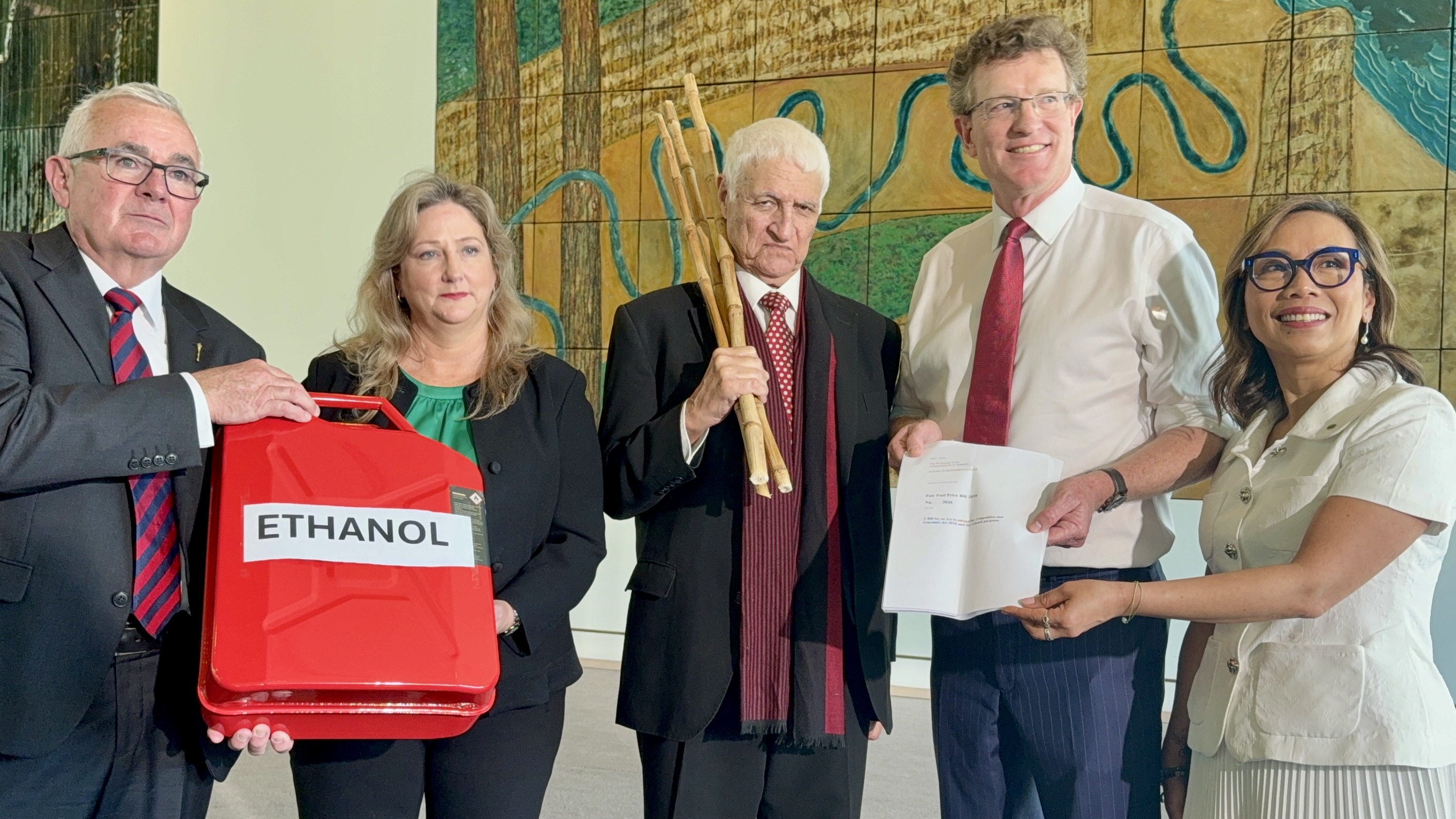
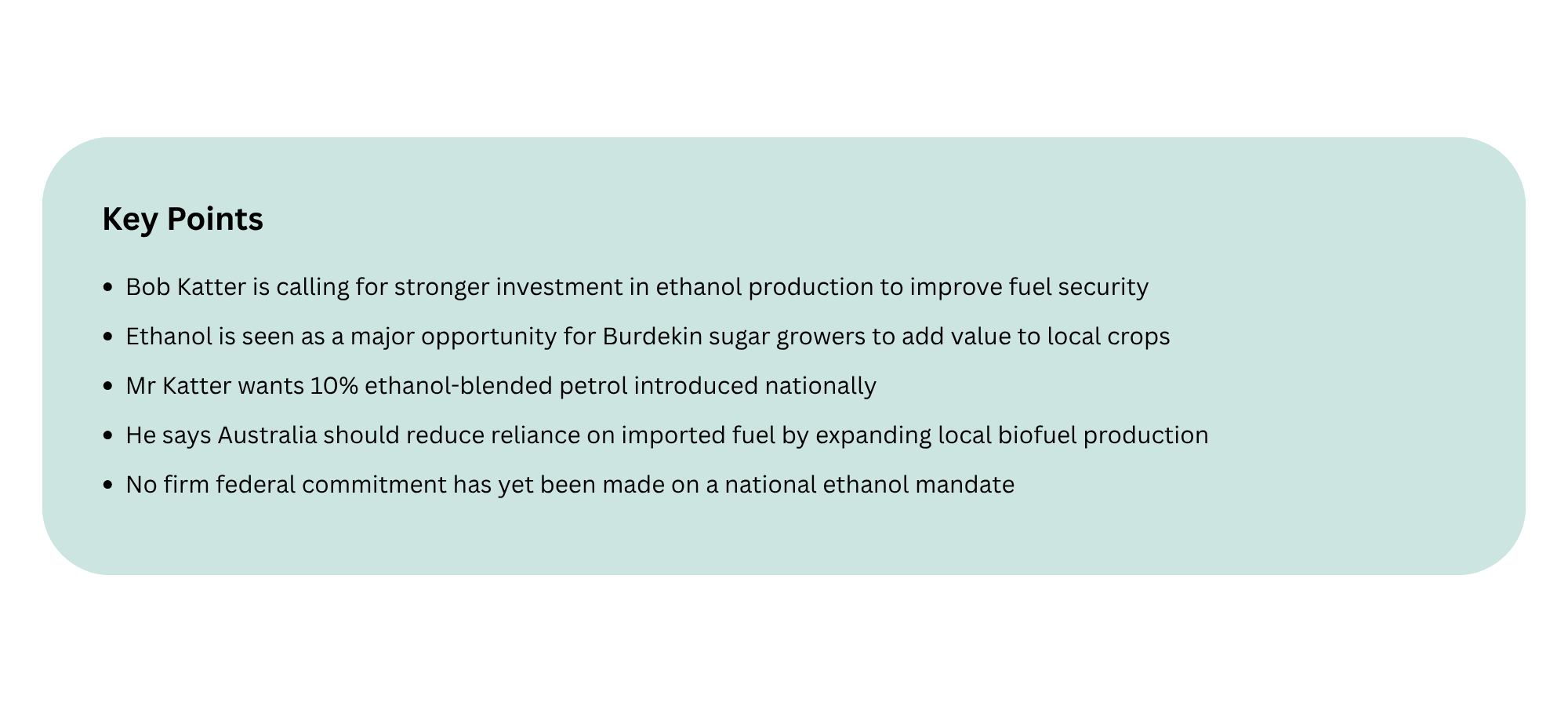
Calls to strengthen Australia’s fuel security are gaining momentum, with Kennedy MP Bob Katter urging the Federal Government to invest in ethanol production as a way to support rural industries, including those in the Burdekin.
Mr Katter joined crossbench MPs from across the country to push for a suite of measures aimed at reducing Australia’s reliance on imported fuel, including expanding the use of domestically produced biofuels such as ethanol and biodiesel.
For agricultural regions like the Burdekin, one of Australia’s key sugar-producing areas, ethanol presents a potential opportunity to add value to locally grown crops while strengthening fuel independence.
“For decades, governments have avoided the enforcement of meagre state mandates for Australian made biofuels and – unlike most other countries – have failed to implement a national mandate to secure our renewable supply of ethanol-blended petrol,” Mr Katter said.
He said Australia’s strong grain and sugar production base positioned the country to play a much larger role in biofuel manufacturing.
“The biggest oil crisis the world has ever seen impels the immediate enforcement, in full, of existing ethanol and biodiesel mandates in Queensland and New South Wales – along with urgent expansion to 10 per cent ethanol-blended petrol nationally – to ensure we use all that we grow in thriving regional industries, whilst reducing our dangerous reliance on dirtier, imported fuels that cost Australians dearly to deliver super-profits to our foreign overlords.”
Mr Katter also questioned why more action had not been taken, given ethanol’s current and potential contribution to national fuel supply.
“Ethanol can right now supply three per cent of Australia's demand. Additionally, four of the recently closed refineries can easily be recommissioned. Why, on these three obvious initiatives, has the Government done nothing?”
While the Federal Government has acknowledged locally produced fuel as part of its broader strategy, no firm commitment has yet been made on a national ethanol mandate.


Australia’s sugar industry has strongly criticised the outcome of the Australia–EU Free Trade Agreement, with CANEGROWERS warning the deal fails to deliver meaningful benefits for cane farmers.
CANEGROWERS CEO Dan Galligan described the agreement as a major setback for the industry, particularly for growers across Queensland.
“This is a horrendous outcome for Australia’s cane growers,” Mr Galligan said.
“For the past decade we have made our needs abundantly clear to the Australian Government and they have not delivered. There is no meaningful commercial access for sugar in this deal.
“The market access Australia has achieved is extremely small – less than 2% of Europe’s import requirement and well below what Brazil and its Mercosur partners secured last year, which was around four times larger than Australia’s outcome.”
Under the agreement, Australia will receive an additional 35,000 tonnes of sugar quota access over three years, adding to an existing allocation of 9,925 tonnes. However, Mr Galligan said the increase falls far short of what is needed to create real commercial opportunities.
“These volumes are not economically meaningful. They will not shift the dial for growers or materially change Australia’s position in the European market.
“This is not what genuine market access looks like.”
He also criticised the lack of long-term growth opportunities within the agreement.
“Compounding this, the agreement delivers no growth, no pathway to expand access and effectively locks growers into a bad deal for the next generation.
“It’s a capitulation to protectionist European sugar interests, plain and simple.”
Mr Galligan said the outcome was particularly disappointing given Europe’s reliance on imported sugar.
“The EU is a net importer of sugar and must bring in significant volumes each year to meet domestic demand.
“Australia can help meet that demand with high-quality, sustainably produced sugar, but instead we have been locked out.”
He added that the deal does little to address the challenges faced by Australian producers, particularly exposure to volatile global prices.
“This deal does nothing to change that position.
“We support trade liberalisation, but it has to be meaningful. Growers need outcomes that create genuine opportunity, not agreements that deliver nothing now and take us backwards when it comes to trade liberalisation.”
CANEGROWERS said it will continue to review the full details of the agreement while advocating for improved global market access and fairer trading conditions for Australia’s sugar industry.
*Stock image from https://www.pexels.com/photo/a-spoonful-of-sugar-11477544/
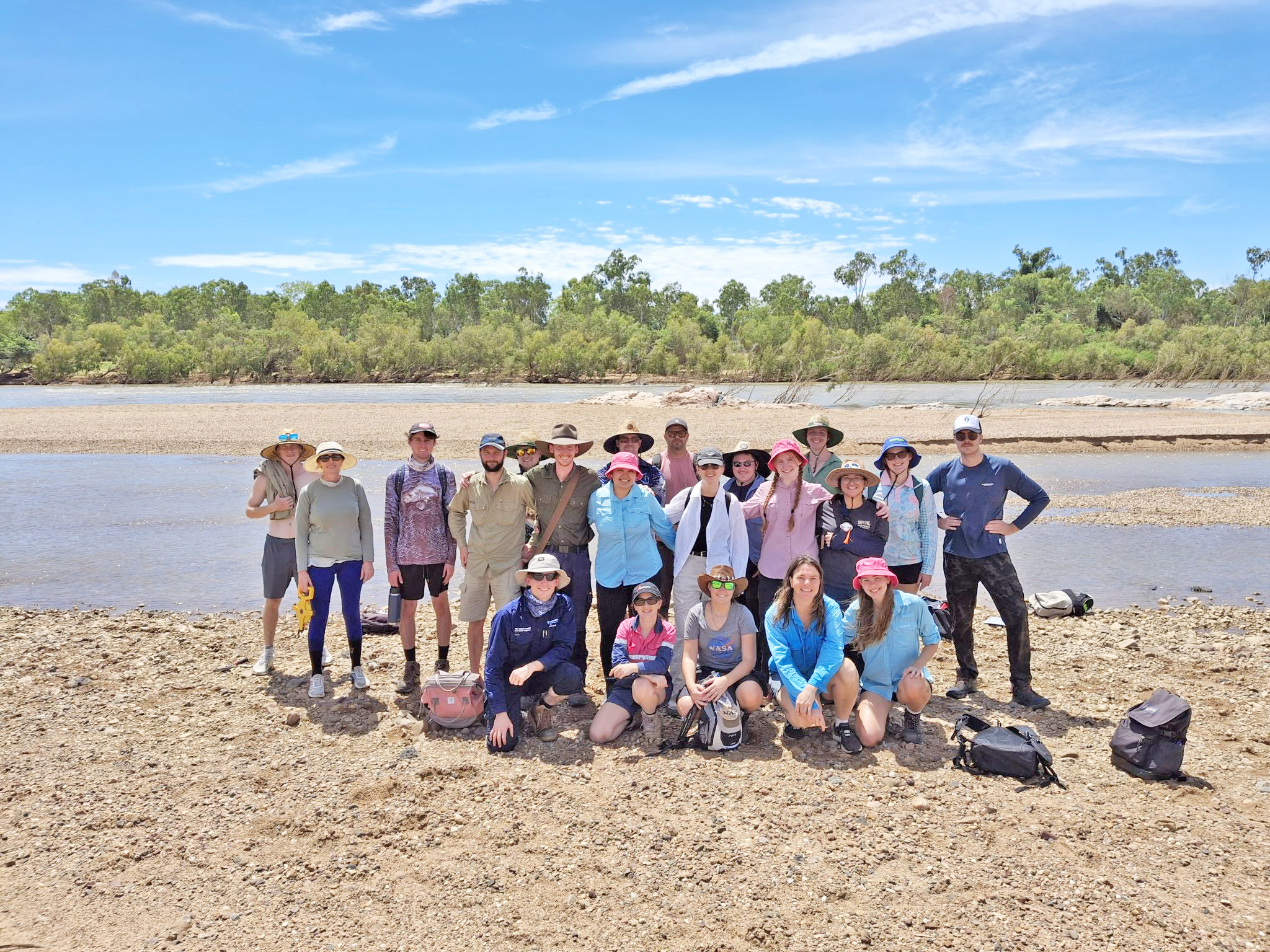
Students from the geoscience faculty at James Cook University (JCU) recently headed to the Burdekin River for a hands-on field trip, gaining real-world experience studying the region’s unique geology.
The group spent the day examining igneous intrusions and striking magma mingling textures, with conditions requiring them to quite literally get their feet wet.
“We had to get our feet wet this year but it was another fantastic geology field trip to the Burdekin River to look at igneous intrusions and spectacular magma mingling textures,” said JCU Senior Lecturer in Geoscience, Helen McCoy-West.
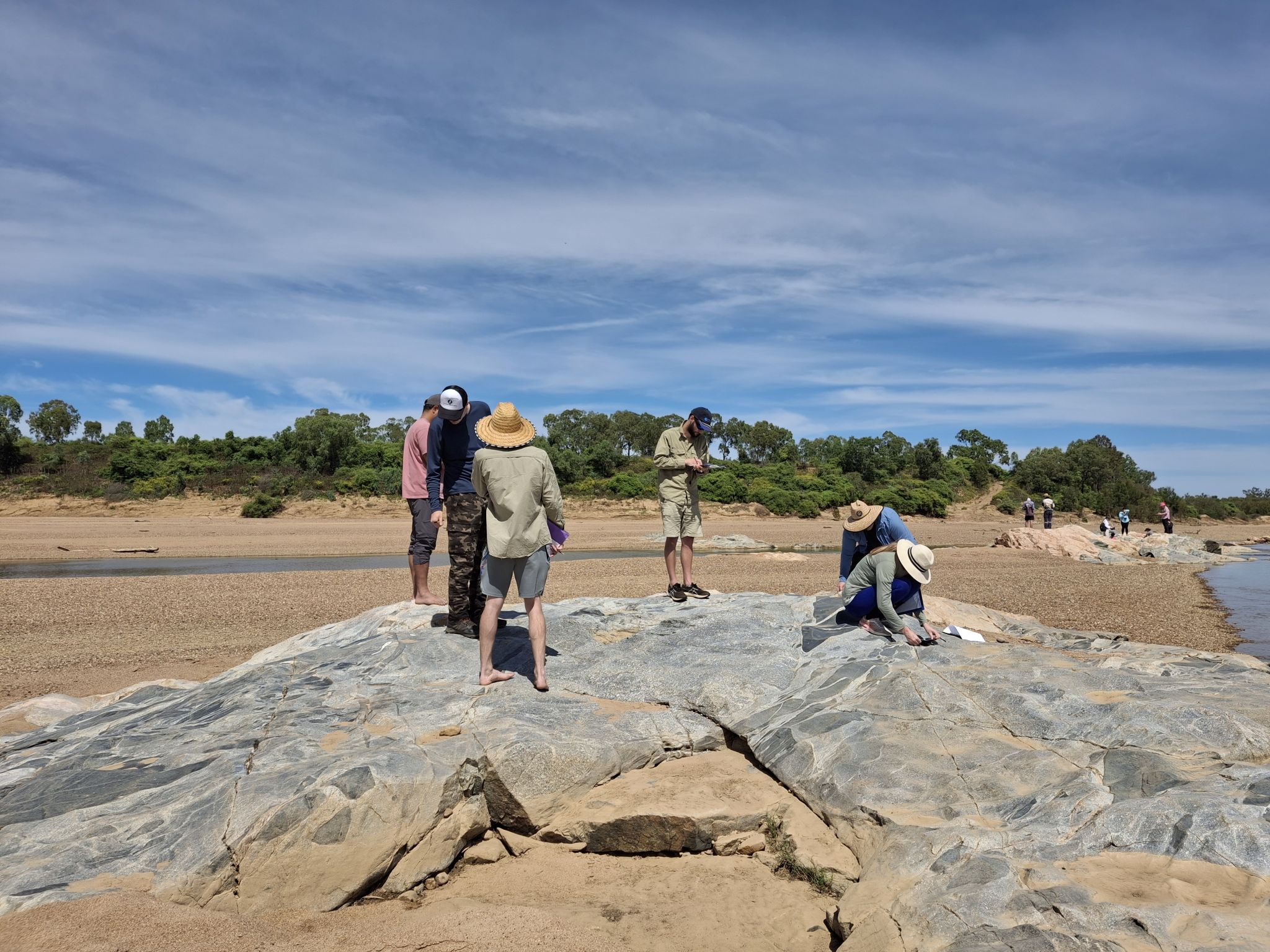
Staff and students described the excursion as a valuable learning experience, offering the opportunity to see geological processes up close while exploring one of North Queensland’s key natural features.
“Thank you to the staff and students for a great day out!”

Primary producers across the Burdekin are set to benefit from a new climate tool designed to better predict the end of the northern wet season.
Developed through the Northern Australia Climate Program, the Northern Rainfall Retreat (NRR) tool identifies the date of the last significant rainfall before the wet season ends—critical information for farmers managing livestock and crops.
The timing of late-season rain can have a major impact on agricultural operations, influencing mustering, livestock transport, stocking rates and crop harvesting. Unseasonal rainfall events can also disrupt harvests, damage infrastructure and affect herd numbers if conditions become extreme.
The tool uses historical rainfall data and climate modelling to pinpoint when rainfall typically “retreats” at a specific location. By analysing cumulative rainfall anomalies from the start of the year, it determines the point when rainfall peaks before transitioning into the dry season.
Local natural resource management group NQ Dry Tropics is one of several organisations involved in delivering the program, alongside partners including the University of Southern Queensland and the Bureau of Meteorology.
The broader program focuses on helping the red meat industry manage drought and climate risk across northern Australia. For Burdekin producers, the NRR tool offers a practical way to reduce uncertainty and make more informed decisions as the region transitions out of the wet season.

Small businesses and community organisations across the Burdekin can now access increased financial support following recent severe weather events, with disaster recovery grants boosted to up to $50,000.
The expanded Exceptional Disaster Assistance Recovery Grants, administered by the Queensland Rural and Industry Development Authority, are available to those directly impacted by the Queensland monsoon trough, Ex-Tropical Cyclone Koji, Cyclone Narelle and associated severe weather from 24 December 2025.
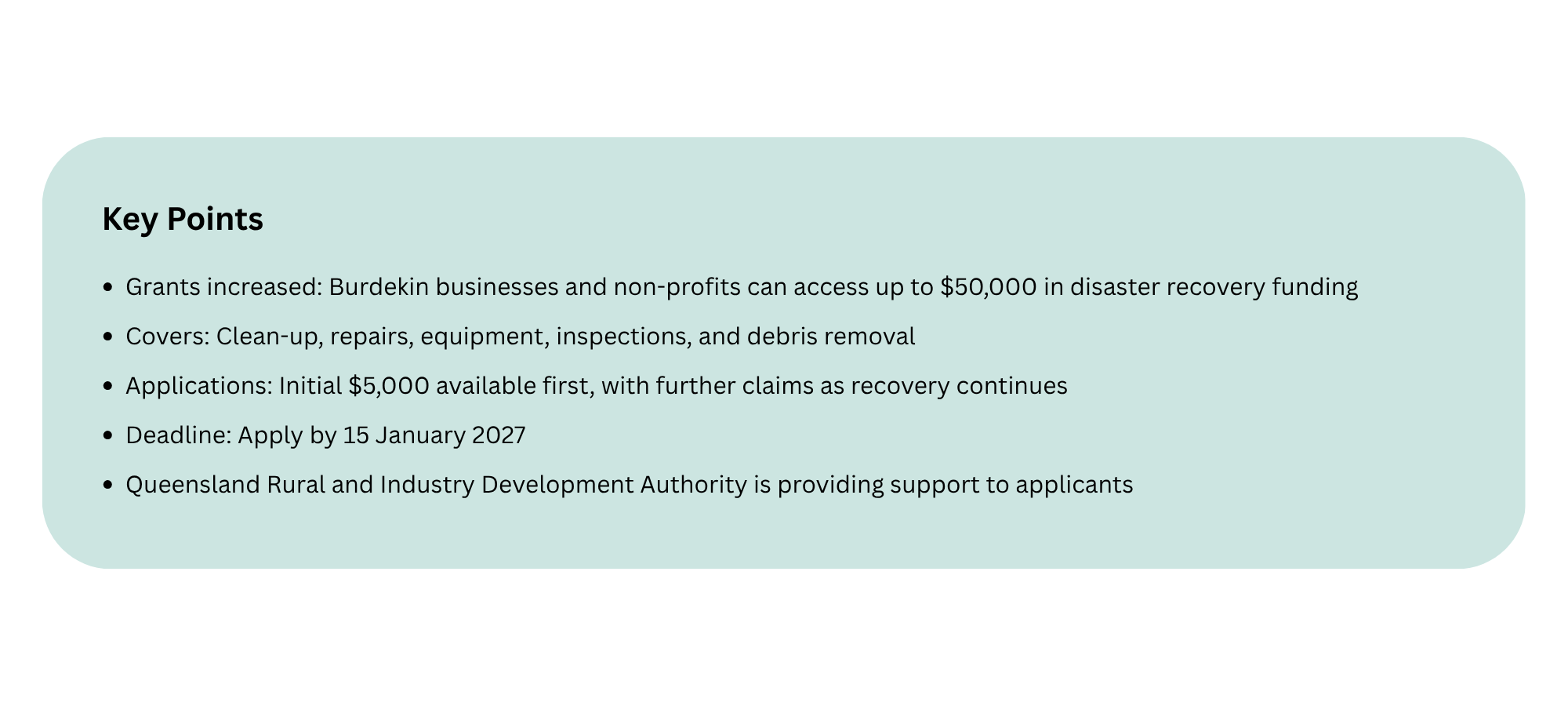
The funding increase doubles the previous maximum of $25,000 and has also been extended to include non-profit organisations, alongside small businesses.
The grants are designed to assist with clean-up and reinstatement costs, including purchasing equipment and materials, hiring tradespeople for safety inspections, and disposing of debris or damaged goods.
Eligible applicants can either apply for an initial payment of up to $5,000 with proof of damage, before claiming further reimbursements as recovery progresses, or submit a single application for expenses up to the full $50,000 with evidence of completed works.
The Burdekin is among a number of local government areas included in the funding rollout, reflecting the widespread impact of recent weather events on regional communities and industries.
Applications remain open until 15 January 2027, giving affected businesses and organisations time to complete recovery works and submit claims.
QRIDA is also offering one-on-one support through its Connect service, with regional staff available to guide applicants through the process online or over the phone.
The grants form part of the jointly funded Commonwealth and Queensland Government Disaster Recovery Funding Arrangements, aimed at helping regional communities rebuild and recover.
Publishers Indemnity. Any individual or entity that places advertising, supplies copy material, or submits editorial content to Core Life Publishing agrees and undertakes to ensure that all such material:- Does not infringe upon any copyright, trademark, or other intellectual property rights;- Is free from any content that could be considered defamatory, libelous, or slanderous;- Does not infringe upon any rights related to privacy or breach of confidence;- Contains no obscene, indecent, or otherwise unlawful material;- Complies fully with the Trade Practices Act and all other applicable laws, regulations, or statutes.Furthermore, by submitting or placing such material, these individuals or entities agree to indemnify and hold harmless the publisher, Core Publishing and Events Pty Ltd, and/or its agents from and against any and all investigations, claims, demands, liabilities, damages, costs, or judgments arising out of or in connection with the material provided. All material is believed to be accurate at the time of printing and remains the copyright of Core Publishing and Events Pty Ltd.
© 2026 Life Publishing Group Pty Ltd.
