
Independently Owned, Locally Grown, Community Loved
.jpg)
Close to 40 disadvantaged young people and job seekers will be given a head start in gaining the skills, confidence and support needed to secure sustainable employment in the Burdekin Electorate. Member for Burdekin Dale Last welcomed the Crisafulli Government’s $215,500 investment in the Burdekin PCYC’s successful Get Set for Work program and the $146,800 investment into WhitsundaySuccess Pathways’ Work Skills Traineeships program to be delivered in Bowen. Included in the $46.2 million round of Skilling Queenslanders for Work Program, the two projects are among 166 across Queensland targeted towards skills shortages in priority industries in our community and region. “The Burdekin PCYC’s Get Set for Work program has already proven a success in our community and this round will see a further 36 disadvantaged young adults receive skills industry-recognised training including First Aid, White Card, RSA, RSG and driver licensing support,” Mr Last said. “By providing the additional wrap around support as part of both the Get Set For Work and the Whitsunday Success Pathways programs, disadvantaged young adults will receive a holistic experience tailored to each of their needs.” “We have already seen the successful results in our community with past participants becoming the skilled workers we need in priority industries like construction, health, community services and hospitality.” Mr Last said the state government funded program had the ability to provide real impacts on communities in regional Queensland that often faced significant skills shortages. “In order to grow our local workforce and bolster our region’s economy, we need to be able to retain young adults in our community and that means ensuring there are positive career pathways available and the ability to obtain the skills needed in our towns,” Mr Last said. “Programs like Skilling Queenslanders for Work demonstrates the Crisafulli Government’s focus of providing better outcomes for workers, employers and local communities.” “This is a great outcome for Burdekin and Bowen communities whose economies ultimately benefit from the addition of skilled, local young workers.” Supplied by the Office of Member for Burdekin Dale Last MP.
Read the full storyA draft 20-year plan released for North Queensland has pledged to protect the Burdekin's productive agricultural land while planning for new housing, infrastructure and economic growth. Burdekin Shire is one of just five council areas directly covered by the North Queensland Regional Plan, meaning decisions made through the planning process will help shape the district's future development. The draft plan is accompanied by a North Queensland Infrastructure Plan, bringing future land use together with planning for transport, water, energy, digital connectivity and social and community infrastructure. For the Burdekin, where agriculture remains a cornerstone of the local economy, Member for Burdekin Dale Last said protecting productive land must remain central to decisions about future growth. “The Burdekin is an agricultural powerhouse and an important contributor to Queensland’s economy and protecting our productive land must remain a priority as the region grows,” Mr Last said. “This draft plan provides an opportunity for local communities, farmers, businesses and industry to have their say on how North Queensland grows over the next two decades.” The regional planning framework is particularly significant for agricultural communities because Queensland's planning system recognises priority agricultural and strategic cropping areas when managing competing land uses. Alongside protecting established industries, the North Queensland planning process is focused on housing supply and economic development and will provide direction for future local planning and development assessment. That gives Burdekin residents and industry an opportunity to weigh in on how growth should be accommodated while retaining the productive land and economic strengths already supporting the district. Farmers, businesses, industry groups and residents can make submissions on the draft plan during the public consultation period. Feedback closes on Tuesday 29th September.
Read the full story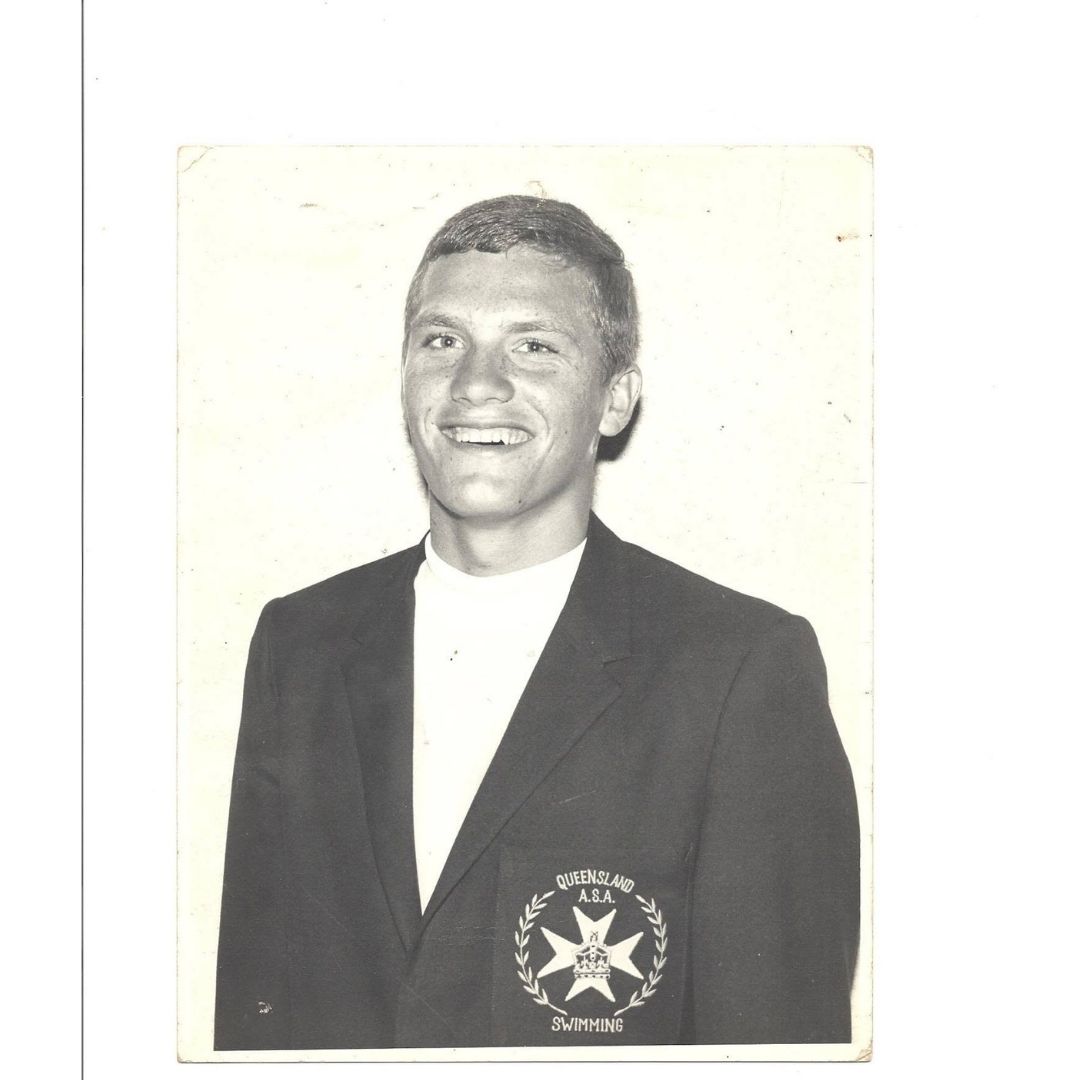
Long before Max Tavasci became a fixture at Lions Club fundraisers and children’s eye screenings across Outback Queensland, he was a young North Queensland swimming star making Australian sporting history. A 1970 Commonwealth Games silver medalist, former sugar cane farmer, and dedicated volunteer, Max passed away suddenly on the 29th of July while traveling out west with his caravan to bring vision screening to school children in Mount Isa and the Gulf country. He was 72. Born and raised in Ayr to Italian farming parents, Battista and Margaret Tavasci, Max grew up on the family property. Encouraged by his mother to stay active, he developed into an elite swimmer alongside his siblings, training in local waters and rubbing shoulders with visiting athletes. His hard work culminated in 1970 when he represented Australia at the Edinburgh Commonwealth Games, claiming a silver medal in the 1500m freestyle while his father served as a race timekeeper. His legacy endures in his hometown, where the 'Max Tavasci Trophy' is still presented annually at the Ayr School Swimming Carnival. Following his athletic success, Max worked on the family farm, laboured in Tasmania and Maryborough, and drove trucks before returning to North Queensland. Known for his love of colourful shirts, fast cars—which his son fondly noted he rarely drove fast—and Meat Loaf records, Max lived a full and colourful life. "He had the heart of a champion, handed down from my dad," said his sister, Paula Dowson. "He died doing what he loved to do." In the second half of his life, Max found a renewed sense of purpose through Lions Australia. Over 18 years of service with the Burnie City, Cleveland Bay, and Townsville Castle Hill Lions Clubs, he became a tireless community worker. Alongside his partner of more than 20 years, former District Governor Michael MacLaren, Max traveled across Queensland conducting paediatric vision checks, running raffles for Lions Assistance Dogs, delivering meals for Eat Up Australia, and assembling disaster relief hampers for flood-affected regions. Remembered by peers as a "true gentleman" and a stable, calm presence on the regional Lions cabinet, Max devoted his final years entirely to service. "I feel Dad found himself and his place with Michael, Lions Australia and the church, evidenced by the lasting happiness he displayed over the last two decades,” said his son, Scott Tavasci. Max is survived by his partner, Michael MacLaren; his son, Scott; his granddaughters, Scarlett and Eloise; his sister, Paula; and his extended family. His funeral was held at Kirwan Uniting Church on the 20th of August. CAPTION: Remembered by peers as a "true gentleman" and a stable, calm presence on the regional Lions cabinet, Max Tavasci devoted his final years entirely to service. Photo:
Read the full story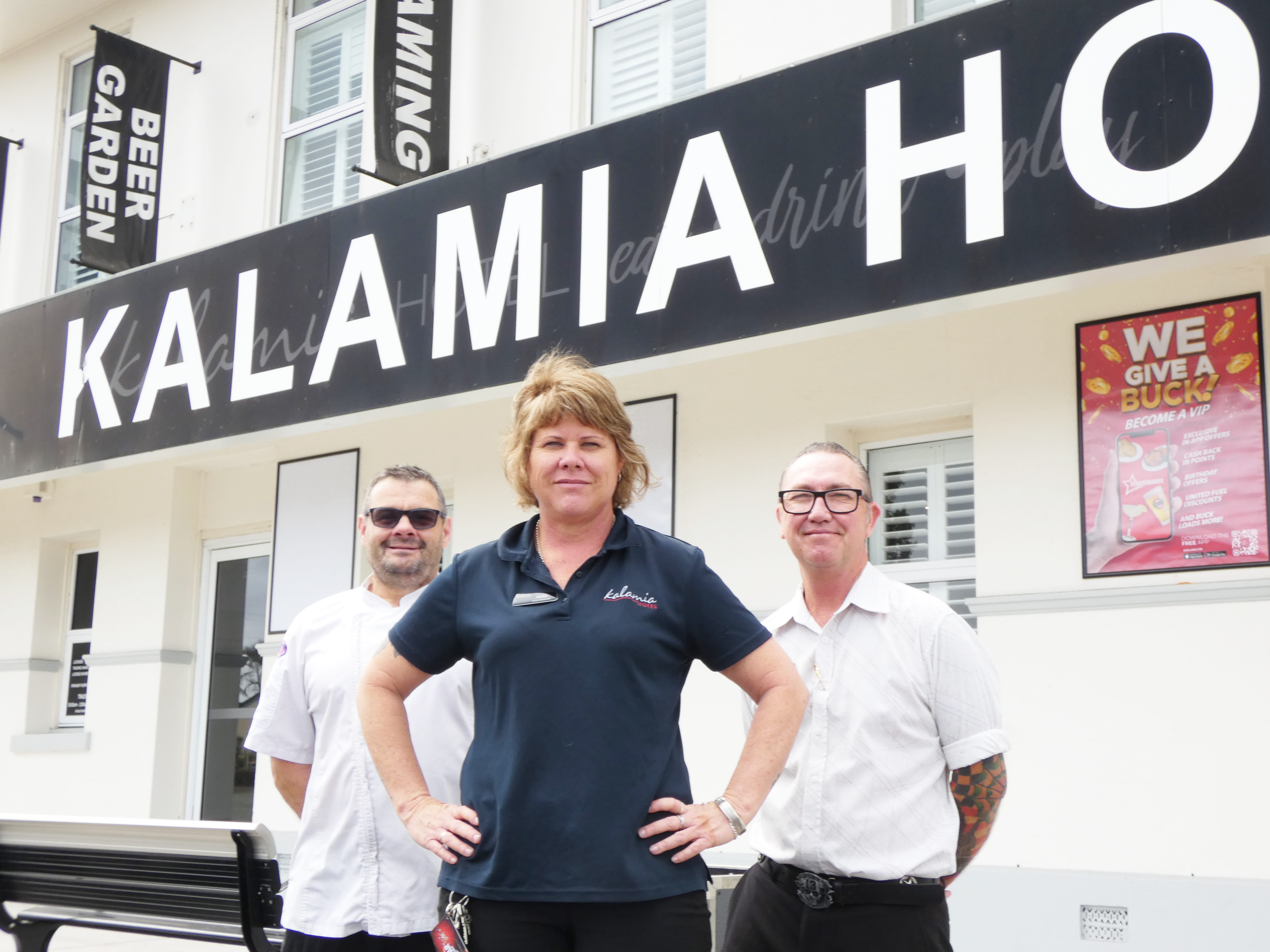
The Kalamia Hotel is turning 100, and it wants the Burdekin there to celebrate. After a century of beers, meals, friendships and memories, ‘The Locals’ Local’ is marking the milestone with a massive day of entertainment, music, prizes and family fun. CAPTION: A century, extensive renovations and multiple ownership changes later, the Kalamia still stands at its original location on Queen Street. Photo: Jacob Casha.
Read the full story

This week, Ayr Bowling Club members were fortunate to return to the green on Wednesday for bowls games after the recent wet weather, which had kept players off the green. Despite the weather, the club’s spirit remains strong.
In game news, nominations for the Men’s Club Championships have now closed for the Fours, A Grade Singles, and B Grade Singles events. The draw is posted on the board in the clubhouse. Nominations for the Country Pennants and Purple Pennants are also displayed on the clubhouse board. Members are encouraged to sign up for these fixtures, with selectors available for any questions.
Wednesday's games saw 18 players turn out, a good turnout considering the very hot weather. The club is especially grateful for the overhead cover during this time of year. Three games of triples were played, with the winning team consisting of Joe Papale, Vince Bettia, and Ron Soper, who defeated Cissco, Lachlan Grantz, and Col Essex.
Looking ahead, pending better weather, the Ladies will also be returning to the green for their bowling games. It is an exciting time for the club as both the men's and women's teams prepare for upcoming competitions.
Saturday's event was proudly sponsored by Phelans Pies, a valued sponsor for many years. The club extends its heartfelt thanks to Phelans Pies, as their sponsorship makes these events possible.
Saturday saw 30 players participate, which was fantastic, with five games of triples played. The results were as follows:
1st place: Linda Guimelli, Merle Nixon, and Anthony Bull, who defeated Bob Young, Lachlan Grantz, and Pam Power.
2nd place: Katarina Stuckler, Beryl Cornford, and Sam Caltabiano, who defeated Paul Vass, Joe Grabbi, and Sandra Stidston.
3rd place: Cissco, Barry Hewson, and Dot Cutting, who defeated Karen Shepherd, Lorraine Wolffe, and Maurie Power.
4th place: Donna Soper, Ron Smythe, and Ron Soper, who defeated Arthur Gauvin, Col Essex, and Wayne Coonan.
The club also continues to host Friday Roll-Ups, which take place every Friday afternoon from 3:00 to 5:30 PM. These casual sessions offer members the opportunity to hone their skills, receive friendly training tips, or simply unwind with a drink. It’s the perfect way to start the weekend and socialize with fellow club members.
For more information, visit Ayr Bowling Club or find us on Facebook.
Contributed with thanks to Ayr Bowling Club.

Saturday 22nd Of February: 1 to 5pm ( Patrol Group B ) Terry Lund, Tramayne Horan, Dylan Carew, Heather Scott, Anita Giddy, Jan Hatherell, Gabriel Hatherell, Toby Wilson, Danny Wilson.
Sunday 23rd Of February: 9am to 5pm ( All Day Patrol Group E ) John Moloney, Anne Moloney, Tony Felesina, Isa Bella Moloney, Jane Jones, Gavin Jones, Sopia Moloney, Alissia Gibson, Billy Gibson, Shaize Christie, Emma Jones.

A week of rain and a late Friday afternoon storm couldn’t stop Home Hill Cricket Club’s generation next as East Ayr State School came to the rescue on Friday afternoon.
Twelve Cricket Blast Challengers (aged 7-11) swapped the grass for the concrete of the school hall for an impromptu game that unleashed plenty of pent-up energy and some impressive skills.
With each batting pair enjoying two overs at the crease, Tait Parker and Oliver Wicks got the Heat off to a flier, blasting 21 runs between them as the team piled on 71 from their eight overs.
Aria Bryant bowled very well for the Stars in her step up from the Rookie-aged ranks (5-7), taking a wicket, while Marshall Parker also impressed in the field, having a hand in three runouts.
In reply, Everly Nicholas and Nicholas Marrinan batted very well to give the Stars a shot at running down the target, showing real improvement thanks to their commitment to training.
But the tight bowling of new player Nate Ryder (one wicket) and Corbett Cross (one wicket), in particular, meant it was the Heat who walked away victors by just seven runs.
Home Hill Junior Cricket express a huge thank you to East Ayr SS for giving their Challengers and Rookies (on Tuesday) the chance to play and train when otherwise the weather would have forced them to cancel.
Antony Stewart with challengers

Recent heavy and persistent rains over the last 1-2 weeks, culminated in floods which forced several road closures and disrupted the Burdekin community. Areas impacted most included Giru, Rita Island, and Plantation Park in Ayr. Roads, schools, hospitals, businesses, and transport were all affected.
Not since the flood of 2019 has Plantation Park and the Bruce Highway, been completely covered with water. As a result, the Burdekin Shire Council in consultation with police and emergency services, opted to close the road.
This had a domino effect, with several businesses, schools, Ayr Hospital, and residents from both sides of the Burdekin River, all caught out and cut off. While the road eventually opened to semi-trailers only, it left many scrambling and seeking alternative options.
To further compound the issue, the Burdekin Dam is currently running at over 203 per cent, exasperating problems and causing more havoc and headaches.
The Bureau of Meteorology (BOM) has advised that current moderate river levels are expected to remain with the Burdekin River at Inkerman Bridge currently above the moderate flood level and could reach over 11.20 metres.
A truck drives through the flooded Bruce Highway near Plantation Park. Photo credit: Mark@BurdekinDrones
As a result of the low tropical storm and the continual deluge, it left many communities without access, while others were forced to rethink plans and seek alternative options.
Many schools ran on skeleton staff and revised curriculums as a result, with both students and teachers being stranded on either side of the Burdekin River and unable to attend. Most resorted to online education, last implemented during covid practices in 2020.
Ayr Health & Hospital Service was forced to transfer some of their patients via Queensland Rail Service, to ensure who they received their daily dialysis.
Meanwhile transport ground to a halt, with trucks and other vehicles stretching up to three kilometres long in places, either side of the bridge. Eventually semi-trailers carrying much needed supplies were allowed to cross, but many other cars and 4wds were turned back.
While rains have currently eased, the BOM advised that major flooding is still possible for Giru and surrounding communities, while council and emergency services recommend keeping up to date via the Burdekin Disaster Dashboard for latest news and updates.
“The LDMG (Local Disaster Management Group) consists of multiple different agencies including Council members who have all been working tirelessly, and in collaboration, to support as best we can for the disaster event. The impact of this event extends beyond the Burdekin, affecting the broader North Queensland region and presenting unique challenges.” Burdekin Shire Mayor, Pierina Dalle Cort said.
“The LDMG is monitoring conditions and are well prepared to act or respond accordingly. As the LDMG has many experienced people, they are assisting to deliver favourable outcomes for the community,” Mayor Dalle Cort assured.
“I urge all residents to stay informed through official sources, including the Burdekin Disaster Dashboard (disaster.burdekin.qld.gov.au). Please continue to follow safety advice, check on your neighbours, and reach out if you need assistance,” Mayor Pierina Dalle Cort added.
Records of large floods at Ayr extend as far back as 1911, and since then 10 major floods have occurred. The most recent major flood was in February 1991, when the river rose to 12.53 metres at the Inkerman Bridge gauge.
At this stage, it appears those levels won’t be reached, however, with so much rain and catchment areas still filling up, residents and businesses are urged to stay vigilant and not become complacent.
Previous Flood Levels*
• 10.5m – In the 2019 floods the Bruce Highway at Plantation Creek was impacted.
• 11.28m – Water flowed over the bank upstream of Inkerman Bridge (Lago’s and Strano’s break) and moved towards farms and Home Hill township.
• 11.58m – Historically, this level impacted lower business section of Home Hill, lower Jarvisfield and Rita Island farms.
• 11.89m – Water commenced to overflow into Sheepstation Creek, which eventually cut Ayr Dalbeg Road and Bruce Highway between Townsville and Ayr. At least half the cane growing area flooded.
• 12.19m – Historically, water came in Home Hill business section and outskirts of Ayr town.
*Information provided courtesy of Burdekin Shire Council and BOM.
Bruce Highway at Plantation Park was swamped with water cutting access and causing massive delays. Photo credit: Mark@Burdekin Drones
The Burdekin River close to the underside of Inkerman Bridge. Photo credit: Mark T. Rasmussen
The long line of trucks and vehicles waiting to cross, stretching almost 3 kilometres. Photo credit: Mark T. Rasmussen
The Burdekin River gauge showing the height of the river. Photo credit: Mark T. Rasmussen
Photos of the flood waters.
Aerial shots taken by Mark@Burdekin Drones
Ground photo credit: Mark T. Rasmussen
Aerial shot shows the flood water across Bruce Highway and Plantation Park
Iluka Rasmussen (3) standing in front of the very high Burdekin River
The 3km long line of trucks and vehicles waiting to cross
The Inkerman Bridge standing above the full Burdekin River
The Inkerman Bridge stands just above the rising full Burdekin River
Aerial shot shows the extent of the flooding
Fisheye photo from up high showing the extent of the floods
Truck braving the waters on a covered Bruce Highway at Plantation Park
Flood waters reaching far and wide
Bruce Highway at Plantation Park was swamped with water
Emergency workers and police on hand watch as trucks drive through the flood waters

So, all that unrelenting rain for what felt like two weeks straight, finally caught up with us all and brought flooding to the region. While on the smaller side in comparison to up north, it still inconvenienced many, with almost no-one immune from road closures that separated towns from one another, disrupted transport routes, interrupted schools and businesses, and forced patients from Ayr hospital to be moved by train.
In fact, we almost didn’t make it home across the bridge ourselves on Saturday after a little venture to Townsville to get some items as we prep for our second baby. Had we come back an hour later, we would have been left on the other side of the bridge in Ayr looking for a place to crash.
“Plano” as I discovered it gets called, was submerged and resembled a big, muddy brown lake more than it did the beautiful Plantation Park precinct. While it made for a fascinating sight to view (as did the very full river), it brought traffic to a halt, with only semi-trailers allowed through.
What is evident, however, is that even with all the unrelenting rains, rising river levels, and daily disruptions, our community spirit remains strong.
While the Burdekin is not quite through it all just yet, the one constant I have been seeing, both on the ground and online, is the willingness of the local community to chip in and help.
Social media has been awash (sorry for the pun), with people going over and above to help their community, to even complete strangers, who like the rest of us have also been left stranded, too.
From a local hotel providing food for Giru residents cut off by floods, to a woman creating a tucker box for truckies, there’s been countless acts of generosity and kindness, and that makes all the difference.
While the rains and floods will eventually ease, long may this community spirit shine bright.

Amid the floods and widespread road closures, truck drivers have become some of the most frequent victims of lengthy traffic jams.
Seeing the toll this took on drivers, Betina Wilks decided to step in. Every morning, she placed a box of snacks as a small gesture to support those stuck in long queues.
Not stopping there, she reached out to the local community on Facebook, asking for any donations of items to add to the box.
Teaming up with her neighbour, Christina Mosby-Na'awi, Betina went a step further, making 45 sandwiches and personally delivering them to the drivers passing by.
Individuals on Facebook thanked the pair for their thoughtfulness and generosity:
“From the wife of a truck driver I say THANK YOU for your beautiful gesture to help all truck drivers,” Leonie Curran stated.
“What I love about this community is the people are amazing,” Mark Vane added.
Betina expressed her gratitude to the truck drivers for their tireless efforts:
“Big thank you to all the truckdrivers for all that they do for us.”
“And not forgetting the emergency workers thank you.”
In trying times, sometimes little acts of kindness can go a long way, well done Betina and Christina.
Betina and Christina handing out items to truckies.
The help yourself box!

The people of Dawson are no strangers to natural disasters, having endured cyclones, fires and floods, but they are also extremely resilient, coming together in the face of adversity.
At the first opportunity when flooding subsided, I jumped in the 4WD and headed north, visiting towns in the Burdekin region including Gumlu, Home Hill, Ayr and Giru, then onto south Townsville at Cungulla and Nome.
Some areas were lucky to only have little to no flood water on their property, but some homes and businesses copped the worst, even though they were well prepared.
Speaking with the locals and small business owners, I was blown away by their strength of character, with their efforts now turned towards the clean up process, knowing there could be further rain and flooding to come. I wanted to ensure my constituents, I was there to listen and offer any assistance, federal or otherwise.
I met with Mayor Dalle Cort and CEO Matthew Magin, of the Burdekin Shire Council to discuss the impact of possible major flooding at Plantation Creek and other small creeks in the shire, and to understand the plans moving forward.
Arriving in Townsville, I attended the Disaster Relief Command Centre where I, along with other leaders and emergency workers, were provided updates on the weather system we were experiencing, before meeting with Queensland Premier, David Crisafulli. It was important that our Premier was made aware on areas of the Dawson electorate that had been affected by this catastrophic event.
Since having the second downpour, I stand ready to return to the Burdekin region, to talk to the people and offer what help I can. In the meantime, if there are questions or issues, I invite residents to contact my office Andrew.willcox.mp@aph.gov.au, and myself and my team, who are more than ready to assist.
Andrew Willcox meets the people affected by the floods to help clean up. Photo credit: Ben Mihan
Andrew Willcox with Burdekin Shire Council Mayor, Pierina Dalle Cort, highlighting flood affected areas and response plans. Photo credit. Ben Mihan
Andrew talking to emergency workers. Photo credit. Ben Mihan

While the effects of weather are hard to predict, the willingness of the community to assist others is something that, according to Member for Burdekin Dale Last, can be relied upon.
Mr Last said emergency services, volunteers, businesses, and individuals had gone ‘above and beyond’ to help locals and visitors to the community as they prepared for and dealt with the effects of the weather event.
“Across the Burdekin district, and beyond, there are everyday people who deserve our thanks,” Mr Last said. “The actions of those people have undoubtedly reduced the pressure on emergency services and helped to restore calm in uncertain times.”
“The local emergency services have shown that their planning and commitment is another reason that we should be both proud of them and thankful for their efforts. We’ve also had staff coming in from other areas to support local staff and I am extremely proud of the way the community has welcomed them and supported them.”
“Our SES volunteers have been extremely active responding to calls for help, helping to resupply isolated people and helping residents with sandbags. Especially considering they are leaving their homes and families to help others; you really need to take your hat off to them.”
“We have also seen locals providing food and drinks to stranded motorists and even a local business providing free hot meals to the locals and emergency services in Giru during the cleanup. That sort of generosity is something you rarely see in many areas and it should be celebrated.”
Mr Last said he expected volunteers to again come to the fore during the clean-up and recovery and reassured locals that the state government was fully committed to supporting those affected.
“This is a widespread event, but support will be made available to those that need it. Even before the rain started, we had teams in place so that in the shortest time possible, the recovery could get underway and we have already seen the results of that forward planning.”
“In addition to financial support for individuals, supporting our key industries is a high priority to ensure that people’s jobs are protected. The Premier has made it very clear that support will continue to be delivered to affected communities until the job is done.”
“There will also be a review of this event in the same way that all disasters are reviewed. That process is about identifying opportunities to better prepare for future events and to ensure that any issues of concern are properly addressed.”
Support for eligible residents in impacted areas is available via the Queensland Disaster Recovery website or by calling 1800 173 349. Packages to support eligible primary industry and small businesses are administered by QRIDA, who can be contacted on 1800 623 946.

OPINION PIECE
Australia’s regional industries are the engine of this country. From sugarcane to prawns, mining, beef and tourism, they keep the lights on and the economy ticking. Where I come from, these industries don’t just generate profits. They sustain families, communities, and our way of life.
But as a new report from the Page Research Centre, A complex, costly web: The regulatory burden on Australia’s regional businesses highlights, every single one of them is up against it. Overregulation is strangling them, and Canberra needs to wake up.
Farmers are more efficient and resourceful than ever. They use million-dollar equipment and modern techniques to grow food for the nation and the world. These people aren’t wasteful. They’re meticulous. Every dollar spent is carefully managed. They don’t damage the land or water. They depend on it. And yet, farmers are treated like they’re the problem. They’re not. They’re the solution. They deserve respect, support, and the right to get on with their job.
In Dawson, we have the largest sugarcane industry in the country. Bowen’s horticultural sector is worth half a billion dollars. It produces the tomatoes, mangoes, and other fresh produce that end up on plates here and overseas. Our aquaculture sector exports live fish to Hong Kong and delivers prawns to Australian dinner tables. Cattle producers in the region supply some of the best beef in the world. In Mackay, the mining and engineering sector drives entire industries. This region is doing the heavy lifting for the national economy.
And what do we get in return? Layers of regulation. Federal, state, and local governments pile rules on top of rules. Compliance costs go up, delays drag on, and businesses suffer.
Environmental, Social, and Governance mandates are out of sync with global trends, making Australian businesses uncompetitive. Taxes and royalties hit industries like coal and mining so hard that investment dries up. Projects that could power entire regional economies are delayed or cancelled because of legal and regulatory roadblocks. It’s madness.
Small businesses are in the same boat. They’re the backbone of regional towns. They create jobs, provide services, and keep communities alive. I’ve been a business owner. I know what it’s like to make payroll, cover the bills, and stay afloat. These people are doing their best, but government interference is making it harder every day.
It’s time for change. Regulations need to be simplified. Federal, state, and local governments must coordinate to reduce duplication and cut costs. ESG mandates must be realistic and aligned with global trends. Taxes and royalties must be reformed.
Queensland’s 2022 coal royalty tiers need to go. Approval times for projects must be capped at 18 months. Public funding for Environmental Defenders Offices, which use legal loopholes to delay projects, must end. Environmental regulations should be straightforward and practical. These aren’t complicated decisions. They’re common sense.
Strong regions mean a strong country. When our industries thrive, we can take care of our seniors, support our veterans, and give young people a future. It’s about making sure everyone, no matter where they live, benefits from Australia’s success.
Australians have always worked hard. Farmers, miners, and business owners don’t need handouts. They need governments to get out of the way. They need Canberra to stop piling on the red tape, green tape, and black tape that make it impossible to get things done. This isn’t about the environment versus the economy. It’s about striking a balance that allows both to succeed.
When regional Australia is strong, the whole country is strong. That’s the bottom line. And it’s about time Canberra understood it.
MP Andrew Willcox holding one of the many great resources in the region. Photo: Supplied.

Flood-affected primary producers, small businesses and not-for-profits in seven North Queensland areas can now apply for concessional loans to support recovery. The loans have been activated for the local government areas (LGAs) including the Burdekin, and are provided through the joint Commonwealth-state Disaster Recovery Funding Arrangements (DRFA).
Disaster Assistance Loans of up to $250,000, and Essential Working Capital Loans up to $100,000, are available to eligible operators.
Disaster-hit primary producers, small businesses and not-for-profits, can now apply for concessional loans to assist with their recovery from the sustained rains and flooding, and will help re-establish operations by covering costs relating to:
• Repairing or replacing damaged plant and equipment
• Repairing or replacing buildings
• Resupplying stock or livestock
Essential Working Capital Loans up to $100,000 are available to help operators carry on business operations, including paying salaries or wages, creditors, rent or rates.
Primary producers can also access freight subsidies up to $5,000 for the movement of stock, feed, machinery, fuel, water, and building or fencing materials.
“Today, I can announce that we are unlocking the support and the funding needed to assist all those communities that have been impacted by this current wet weather event, which as we know, has caused widespread damage all the way from Yarrabah to down here into the Burdekin,” Dale Last, member for Burdekin stated.
“We are absolutely committed to helping these communities get back on their feet, and we will be on the ground. The Premier has been up in affected areas talking with local governments, talking with impacted residents and businesses, to ensure that we're rolling out the support as fast as we possibly can, and to reaffirm the message, we will be doing everything we can to support our primary producers our small businesses, and our not for profits,” Mr Last said.
“We're here listening. We understand the impact right across the region, but in particular in this region where we're meeting with affected primary industries, be it horticulture, be it cane, be it any other industry that's directly impacted, because we need to be on the ground,” Tony Perret, the Minister of Primary Industries said.
“We understand by listening to those affected primary producers the impact that it's having and how government assistance then needs to flow to be able to make certain that their businesses remain viable in the long term, but particularly in the short term, to get the recovery.” Mr Perret said.
Christian Largo, Chairman of QCAR, (Queensland, Cane Agriculture and Renewables) was hopeful this announcement will give growers the confidence to pick up tools, get out of bed the next day, and start with the cleanup and look forward to their 2025 season.
“We've seen a lot of damage to capital and investments, but probably the main worry at the moment, and the immediate priority, is mental health. It's ensuring that farmers have the support they need to get up out of bed each morning and continue with their livelihoods,” Mr Largo said.
“This will be welcomed by the farming community. It just shows government are out there supporting their constituents and that's what we need from our government at this time,” Mr Largo added.
For loan applications visit the QRIDA website, www.qrida.qld.gov.au, or call 1800 623 946.
Primary producers interested in freight subsidies can contact Queensland’s Department of Primary Industries on 13 25 23 or via www.daf.qld.gov.au.
Dale Last, with Christian Lago, Chair of Queensland Cane Agriculture and Renewables (QCAR), and Tony Perrett MP, Minister for Primary Industries. Photo credit: Mark T. Rasmussen

The Ayr Anzac Memorial Club is inviting local sporting clubs, businesses, charities, not-for-profit organisations, and individuals, to apply for their sponsorships. For the 2025/2026 financial year the Ayr ANZAC Memorial Club would like any of the above who require money in any way, shape or form, to make submissions to the club outlining their requirements.
A popular program, it’s not uncommon for the club to receive anywhere between 50-100 applications in any given year. Elmarie van der Schyff, the club’s Administration Manager, goes into details explaining what’s required, while offering up some good tips & tricks to better help your application.
“We usually get quite a lot of applications every year, which is lovely, but unfortunately we can't help everyone. We only have a certain amount that the club is able to allocate. We always encourage everyone to put in an application every year, even if you’ve previously been unsuccessful, as you never know you might be one of the lucky ones this time.”
“All those applications are forwarded to the April committee meeting, at which time the committee then look at all the applications and make their decision,” Elmarie states.
Applications must be mailed by March 31, and include all contact details for follow-up communication. Provided they make the cutoff date, there is no limit on the amount requested, but detailed proposals with quotes are preferred.
“If you need a big heap of money, we need to know what it's for, what you are planning on doing with it. Quotes are very helpful. The more detail you provide, the better,” she says.
This generous sponsorship program is only available to those within the Burdekin, while decisions are based on need and budget availability.
“This is a once-and-only opportunity to obtain sponsorship for the coming year.”
All applications need to be addressed to: John Robinson, Ayr Anzac Memorial Club, PO Box 92, Ayr 4807. (No emails or hand-delivered requests will be accepted, no exceptions).
Ayr Anzac Memorial Club Administration Manager, Elmarie van der Schyff, ready for many sponsorship applications.

Burdekin Catholic High School was abuzz with excitement as they welcomed students back to school for the start of a brand-new school year. With a focus on fostering excellence, supporting student success, and living out Catholic values, the school has been ready to provide a nurturing environment for all learners.
Principal, Lorraine Wolffe, shared her enthusiasm for the year ahead, highlighting the school’s commitment to welcoming new students into the BCHS community.
“Starting a new school year is always a special time. We’ve been thrilled to greet our incoming students and their families and are looking forward to guiding them on this exciting journey. Our mission is to ensure every student feels supported and inspired to achieve their personal and academic goals.”
At BCHS, the staff pride themselves on their dedication and expertise. The team of highly experienced educators is prepared to deliver an engaging curriculum, combining academic rigor with a strong foundation in Catholic faith and values. Through individualised support, innovative teaching practices, and a focus on holistic development, the school aims to help each student reach their full potential.
This year, BCHS is placing an emphasis on fostering a sense of belonging, community, and resilience among students. A variety of programs, extracurricular activities, and pastoral care initiatives are in place to ensure all students feel supported, no matter their goals or interests.
As the school community came together for the start of the term, the excitement was palpable. From the energy of new beginnings to the shared commitment to learning and growth, Burdekin Catholic High School is poised to make 2025 a year of inspiration and success for all.
BCHS classrooms are a hive of activity! Source: BCHS
Students and staff attended a Welcome Mass to officially commence the 2025 school year. Source: BCHS

The recent tropical low that struck North Queensland, causing widespread flooding, has likely resulted in significant emotional and financial hardship for the local community.
To assist those affected, Community Recovery Hubs and State and Commonwealth grants are available for individuals who have been impacted by the disaster.
Two recovery hubs have been set up in the Burdekin district, offering support to residents facing hardship, those unable to apply online or by phone, or those in need of emotional and wellbeing assistance.
Residents are also encouraged to apply for State and Commonwealth grants, which provide financial aid to help with recovery from eligible disasters.
This version refines the flow and structure while keeping the key details intact.
Grants include:
Emergency Hardship Assistance
$180 per person (up to $900 for a family of five or more) for people who are unable to meet their immediate essential needs for temporary accommodation, food, essential clothing and medication. It can take up to five days for payments to reach your bank account.
Essential Household Contents Grant
One-off payment for households who are uninsured or unable to claim insurance as a contribution towards replacing or repairing essential household contents. Up to $1,765 for single adults and up to $5,300 for couples/families.
Essential Services Safety & Reconnection Scheme
To help owner/occupied households reconnect essential services that were damaged by a disaster. Up to $200 towards a safety inspection for each essential service needing reconnection (electricity, gas, water and sewerage or septic system) and up to $4,200 towards repair work.
Structural Assistance Grant
One-off payment towards the cost of repairs to uninsured, owner- occupied homes to ensure the home is habitable, secure and safe. Up to $80,000.
People are encouraged to apply for financial assistance grants online at www.qld.gov.au/DisasterHelp or by calling the Community Recovery Hotline on 1800 173 349.

While sugarcane fields define the Burdekin’s landscape, it’s the region’s property market in 2024 that quietly cultivated sweet success across Regional Queensland.
In 2024, Regional Queensland's property market showed notable growth, with property values increasing by 12.1 per cent over the year. This trend was particularly evident in key regional hubs. According to The Australian Financial Review, Rockhampton led the way with a 9.2 per cent quarterly growth in values, followed by Townsville (8.34 per cent), Gladstone (6.74 per cent), and Mackay (6.19 per cent).
Closer to home, the Burdekin region reflected this upward trend. Known for its rich agricultural heritage, the Burdekin saw steady growth in property values, driven by the ongoing demand for regional lifestyle blocks and family homes. Real Estate Investar reported that Ayr, the region’s main centre, experienced an 8.5 per cent annual rise in median house prices, with increasing interest from both local buyers and those relocating from southern cities. The affordability and strong sense of community in towns like Ayr and Home Hill continue to attract buyers looking for a laid-back lifestyle close to vital amenities.
The demand for property in Regional Queensland was fuelled by several factors. The Australian reported that interstate migration from pricier markets played a key role, as did the appeal of a more affordable and relaxed lifestyle. Moreover, the expansion of business operations into regional areas contributed to the surge.
However, not all parts of Queensland experienced the same momentum. For example, The Courier Mail noted a 20.7 per cent drop in building approvals on the Gold Coast, reflecting challenges in the construction sector despite a broader statewide recovery. This decline is a concerning trend, especially given the ongoing housing shortage in the area.
Overall, 2024 marked a significant year for Regional Queensland's property market, with the Burdekin region standing strong amidst the broader boom. Strong demand, limited supply, and economic shifts played key roles in shaping the market’s positive trajectory.

The Burdekin Local Disaster Management Group (LDMG) is pleased to announce that assistance has been secured to help the community cross the Bruce Highway at Plantation Creek.
Queensland Rail will be deploying a 10-seater Rail Bus to assist the community after its successful use in Ingham. This service will help residents travel between Ayr and Home Hill while floodwaters impact road access.
Passengers will be bused from the Home Hill Comfort Stop to Mirrigan Road, railed across Plantation Creek, and dropped at Ayr Railway Station. From the station, another bus will transport passengers to Graham Street Bus Depot.
Parking is available at both Graham Street Bus Depot, Ayr, and Home Hill Comfort Stop.
Priority seating is given to patients with medical appointments, emergency services staff, healthcare workers (Hospital, Regis Aged Care, pharmacies), school teachers, and other staff required to attend their work place.
The rail cart will be operating until 8pm from Tuesday and Wednesday night, and on Thursday operating until 5pm and Friday as necessary.
Please ensure you meet at the designated departure points in Ayr and Home Hill to be allowed on the rail cart. Do not go to the railway stations, as you will not be permitted to board.
Please consider limiting travel unless necessary.
Publishers Indemnity. Any individual or entity that places advertising, supplies copy material, or submits editorial content to Core Life Publishing agrees and undertakes to ensure that all such material:- Does not infringe upon any copyright, trademark, or other intellectual property rights;- Is free from any content that could be considered defamatory, libelous, or slanderous;- Does not infringe upon any rights related to privacy or breach of confidence;- Contains no obscene, indecent, or otherwise unlawful material;- Complies fully with the Trade Practices Act and all other applicable laws, regulations, or statutes.Furthermore, by submitting or placing such material, these individuals or entities agree to indemnify and hold harmless the publisher, Core Publishing and Events Pty Ltd, and/or its agents from and against any and all investigations, claims, demands, liabilities, damages, costs, or judgments arising out of or in connection with the material provided. All material is believed to be accurate at the time of printing and remains the copyright of Core Publishing and Events Pty Ltd.
© 2026 Life Publishing Group Pty Ltd.
